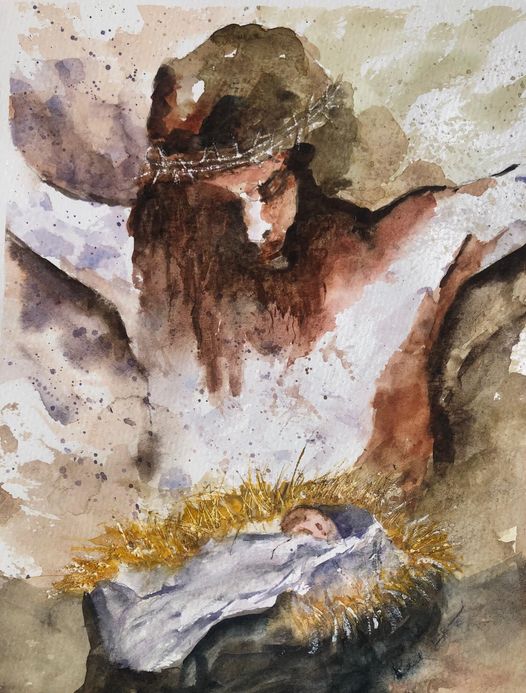
Wrestling With God

Focal Passage: Genesis 32:24-32

When a Bible passage becomes a mirror into your own life, it’s time to sit up and pay attention. I read the story of Jacob in Genesis 32 this week, finding that I identified all too well with him.

How often have I tried to cling to control or run away when facing some hard truth? How often have I simply trusted in my own cleverness more than I trusted in God’s providential care?

Jacob’s story tells me there comes a time when God no longer lets us keep doing things our way. There comes a time when we find ourselves wrestling with a loving God who refuses to let us stay the same.

I wonder if, like me, you can see yourself mirrored in Jacob’s life. Think about it.

*****

Jacob stood alone on the bank of the Jabbok River on a night that probably felt darker than any he had known.

Over the course of the day, he had sent out three separate caravans loaded with lavish gifts, sending them across the river on a march toward his estranged twin brother Esau. Jacob hoped to placate Esau’s anger for his callous and selfish acts of betrayal some 20 years earlier.

Then, just before sunset, Jacob sent his two wives, his children and the remainder of his possessions to set up camp across the river in expectation of Esau’s arrival the next day.

As his family faded into the night Jacob stayed behind in the darkness trying to devise some novel scheme to get out of the mess he created of his life. One good scheme deserved another in Jacob’s eyes.

As a young man, Jacob tricked a desperately hungry Esau into giving away his birthright as the first-born son in exchange for a bowl of stew. With his financial future secure and with the help of their mother Rebecca, Jacob later duped his blind father Isaac into extending to Jacob the family blessing, which again, rightfully belonged to Esau.

Cheated twice out of his heritage, Esau pledged to kill Jacob as soon as their father died. Rebecca, afraid for Jacob’s life, sent him back to Haran to stay with her brother Laban until things in Canaan cooled down a bit. Rather than deal with the consequences of his actions, Jacob ran.

This escape to Haran began a long, difficult 20-year journey of love, labor and deceit. Laban manipulated Jacob’s love for his daughter Rachel, turning it into 20 years of indentured servanthood. Every time Jacob wanted to return home, Laban found another way of keeping him there.

When it finally appeared that Laban might never let him go, Jacob gathered together his family, his servants and his livestock. In the dead of night, he ran.

Jacob spent his whole life manipulating the circumstances of his life in his favor. Trying to take advantage of every situation to gain the upper hand.

So, that night he stood on the bank of the river…con artist who had been conned, a manipulator who had been manipulated…calculating outcomes that might happen if Esau rejected his gifts. I suspect running away rose to the top of the list. It had been his go-to solution every other time circumstances got the better of him.

Jacob was still scheming with one eye looking toward Esau and the other looking for the best escape route. God had other plans. Before Jacob could face Esau, he had to face God. Before he could run away again, he had a run in with God.

You’ll find the passage in Genesis 32.

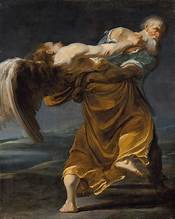
So Jacob was left alone, and a man wrestled with him till daybreak. When the man saw that he could not overpower him, he touched the socket of Jacob’s hip so his hip was wrenched as he wrestled with the man.

Then the man said, “Let me go, for it is daybreak.”

But Jacob replied, “I will not let you go unless you bless me.”

The man said, “What is your name?”

“Jacob,” he answered.

Then the man said, “Your name will no longer be Jacob, but Israel, because you have struggled with God and with humans and have overcome.”

Jacob said, “Please tell me your name.”

But he replied, “Why do you ask my name?” Then he blessed him there. (Genesis 32:24-29)

I don’t want to make it sound like Jacob was a horrible individual. He wasn’t. While he crossed more than one ethical line, there was something inside him that longed for God.

Go back a few chapters in Genesis. Jacob is running as fast as he can to Laban at his mother’s insistence. He’s tired and worn out. The man with a stolen estate has no home in which to sleep. He pulls a flat rock for a pillow and dreams of a stairway to heaven. It’s as if God is saying, “Home may be out of reach right now, but heaven is not. I am here.”

Through his dream God renews with Jacob the covenant he made with his father Isaac and his grandfather Abraham. The land upon which his head rests will be his land and the land for all his descendants. Through his lineage, scripture says, “the people of the world shall be blessed.” Jacob holds on to that promise for two decades.

As Jacob’s wealth increases during his time with Laban, Jacob gives God the glory for every success.

Jacob recognized God’s presence in his life, he just didn’t always trust him. Jacob always felt that if anything good was going to happen, he had to make it happen. He lived up to his name every step of the way… “the heel grabber,” “the grasper,” “the striver.”

God commands Jacob to “return to the land of your fathers” (Genesis 31:3), telling him, “I will be with you.” The closer Jacob gets to the border of Esau’s land, he grows more anxious, worrying about Esau’s retribution.

Jacob didn’t think God was capable on his own of working things out, so he rolled out the gifts. He divided his family and his flock, hoping that one group might escape if Esau attacked the other. He searched through the night for any other advantage that might give him the upper hand.

Jacob left God no other choice. In one of the most understated verses in scripture, a “man wrestled with him until daybreak.”

It’s almost as if Jacob turned to run away again only to be tackled by a man ready to rumble. Theologians debate whether this man was an angel, the pre-incarnate Christ or God himself. As far as Jacob was concerned, “I saw God face to face, and yet my life was spared.” (Gensis 32:30)

It’s almost laughable when you think about it: God wrestling a man. Yet, God and I have gone more than a few rounds over the years. I suspect you have, too. Each of us at one time or another has wrestled with what we know God is calling us to do.

In addition to his more manipulative traits, Jacob was also clever, resourceful, determined and strong-willed. He was all those things, but he was not yet surrendered. God knew it was time for Jacob to stop conniving, to stop running, so they fought it out in a match that lasted all night.

I don’t know about you, but some of my wrestling matches with God last a lot longer. I can put up a quite the fight when I don’t want to do what God wants me to do. I can find excuses or what I think are pretty valid reasons why I’m right and God is wrong. My ideas always seem better.

Notice this, however. Jacob’s bout with God didn’t last until daybreak because he and God were evenly matched. The prolonged struggle lasted as long as it did because God was exposing Jacob’s stubborn independence.

When we are wrestling God for control of our lives, that fight goes on until we recognize our own stubbornness. It will last until we surrender and call him Lord.

The scripture declares clearly the moment Jacob gave in. As the morning approached, I think he still wanted to run away…to do things his way. At that point, with a touch intended to put an end to Jacob’s resistance, God dislocated his hip. Running was no longer an option. Pastor Adrian Rogers put it this way, “God crippled him to conquer him.”

When Jacob realized he had no choice, he surrendered, wrapping his arms around the ankles of the only one who could make things right.

Here’s the interesting thing to me. One moment Jacob is wrestling against God; the next moment he is clinging to God. Jacob, the man who had stolen the blessing of his father, was now begging for the blessing of the Father God.

When Jacob said, “I will not let you go unless you bless me,” it is not defiance, it’s desperation. Jacob quit fighting to win and started depending. Wrestling became an embrace.

In a culture that prizes self-sufficiency and self-reliance, surrender seems a coward’s option. It may well be one’s greatest act of courage. God’s work in us flows best through surrender.

Jacob’s story reflects our own tendency to run from God’s call, conviction or presence. Like Jacob, we are met by God, through circumstances, reflection or divine confrontation. Sometimes, he stops us in our tracks so we can no longer run from him.

Surrender brings transformation.

Your name will no longer be Jacob, but Israel, because you have struggled with God and with men and have overcome. (Genesis 32:28)

It’s not saying he outwrestled God. Jacob overcame his own stubbornness, his own self-reliance.

Theologian Frederick Buechner called Jacob’s divine encounter at the Jabbok River the “magnificent defeat of the human soul at the hands of God.” In Jacob’s story we can easily see our own struggles with our desire to take control of our lives. Our failed efforts to find escape from our own fears and vulnerabilities.

Out of these experiences God offers blessing.

In the end, God did what he had to do. He confronted Esau. He grappled all night for what was truly important. When Jacob could wrestle no longer, he surrendered. He clung to God with greater strength than he resisted, realizing that he could not go on without him.

Jacob’s story invites us to ask simple but searching questions: Why am I still wrestling? Where am I still wrestling with God? The blessing came only when Jacob stopped resisting and held on in surrender. The same is true for us.

God meets us in the places we fear most, not to destroy us, but to reshape us. And though surrender may leave us limping, it also leaves us blessed.

Next time you see me, I hope you see me limping.

Thinking Points

Where in my life am I still trying to manage outcomes instead of trusting God?


What fear or unresolved situation keeps me looking for an escape route?


What would it look like for me to stop wrestling with God and start clinging to him?


What new identity or new way of walking might God want me to embrace when I surrender control to him?


Build an Altar

Focal Passage: Genesis 12:7

I have some friends who are serious hikers. For several years, they head east to hike another leg of the Appalachian Trail. One hopes to complete the last 150 miles of his journey this year. The other still has 750 miles to go.

Robin and I are recreational hikers. Tackling such an ambitious goal is not in the cards or our legs, though we did hike about 15 feet of the Appalachian Trail when we visited the Great Smokey Mountains a couple of years ago. We have just short of 2,190 miles to go!

These hiker buddies tell me getting lost on the trail is a very real danger. To avoid losing the trail on rocky ground, they watch for cairns. A cairn is a pile of stones stacked carefully on top of one another, placed by rangers to guide hikers along the correct path.

We see something similar with altars. God’s people would gather stones to build an altar, not because the stones had significance, but because together they became a marker of an encounter with God—a memorial of faith, obedience or answered prayer. So, in one sense, these altars built of stone would keep them on the righteous path.

Altars are a common theme in the Old Testament, particularly in the story of Abraham’s life. God called him from a distant land, telling him to leave his country, his people and his family and go to a land that God would eventually show him and carrying a promise of blessing.

Eventually, Abraham reached a place called Shechem in Canaanite territory. When he arrived, God affirmed that this was the land he had promised to Abraham and his descendants. In Genesis 12:7 you find a small phrase showing Abraham’s response.

“…so he built an altar there…”

If you keep reading Abraham’s story, the phrase becomes a theme.

Time and time again in Genesis, Abraham builds an altar. Nothing dramatic (with one notable exception). No elaborate ritual. Just ordinary stones stacked in quiet response of God’s faithfulness. Those altars stand as markers along the trail of Abraham’s spiritual journey. In many ways, they show us how a believer grows through promise, identity, restoration, trust and obedience.

Promise

Go back to that passage in Genesis 12:7. Abraham entered Canaan, the land God promised him. Everything he owned he brought with him. The land belonged to others. God told him, “To your offspring I will give this land.”
Notice what Abraham doesn’t do. He doesn’t survey the land. He doesn’t secure its borders. He doesn’t call his men together to talk about conquest.

Instead, he worships in occupied territory. Bows before God in a place that does not yet reflect God’s reign. He stakes the ground spiritually before he ever possesses it physically. The altar at Shechem is built on promise alone. Abram has no deed. No visible guarantee. All he has is God’s word.

This is where faith begins, isn’t it? Before we see fulfillment, before we possess anything tangible, before circumstances shift in our favor, we build an altar on God’s promise alone.

Abraham’s altar is his way of saying, “God has spoken and that’s enough.”

There are seasons of life when God gives a promise, but not possession. In those moments, the question is simply this:

Will we build an altar anyway?

Identity

Afterward worshipping God in Shechem, Abraham moves his herd to a new place between Bethel and Ai. No new promise is given. No dramatic revelation follows. He is doing what a sheep herder does. He moves his flock to new grass. There, he pitches his tent and builds another altar. At this altar, scripture tells us he…

“called upon the name of the Lord.” (Genesis 12:8)

He is not worshiping this time in reaction to something new God has done. It establishes a pattern of worship for Abraham. It marks his identity. Among a people who worship pagan gods and a culture filled with competing loyalties, Abraham builds another altar establishing who he is and to whom he belongs.

You see, before faith is truly tested in the crucible of real life, it must be established, rooted in the fertile soil of God’s presence. The Bethel altar is Abraham declaring, “I belong to the Lord, not just in moments of revelation, but in daily life. It shifts the emphasis from event-driven faith to identity-driven faith.

Shechem is about what God said. Bethel is about who Abram is. There are seasons of life when we must firmly identify ourselves with God. When was the last time you built such an altar as a witness and testimony of the one to whom you belong?

Restoration

After these early steps of faith, Abraham falters. Famine sends him to Egypt where opposition feels formidable. Fear takes over. He misrepresents his relationship with Sarah. Now, the promise seems threatened by Abraham’s compromise.

When he finally returns to Canaan, he goes back to Bethel, the place where he declared his identity. I imagine the altar had fallen into disrepair during his time away. You can almost see Abraham rebuild the altar from fallen stones even as he rebuilt his identity with God. and he again…

“called upon the name of the Lord.” (Genesis 13:4)

This rebuilt altar is not about promises or identity. It is about restoration. Abraham returned to the place where faith burned brightest to rekindle what he had lost.

There is something profoundly hopeful here. The life of faith is not a straight upward climb, is it? The Father of Faith, as the writer of Hebrews describes him, stumbled just like we do. When he did, he repented. He didn’t hide in shame or construct a new path. He went back to first things. First love. First trust. First dependence. Picked up the stones and rebuilt the altar.

Abraham didn’t outgrow the altar. He returned to it. In that moment of worship Abraham found himself restored into fellowship with the God of the promise.

I don’t know about you. I’ve spent my time in Egypt—a time of fear-driven decisions or some other spiritual drift. The altar of restoration is a repentant desire to return. A desire to come back to the Lord.

The beauty of this part of Abraham’s story is there is no rebuke from God. No ending punishment. God simply receives his worship and opens his arms again to Abraham. If you need to reconnect with God today, if you need his restoration, pick up the stones. Rebuild the altar of your identity as a child of God.

Surrender

Just a few verses later, Abraham found himself at a crossroad with his nephew Lot. The land cannot sustain both families. As the elder, Abraham had the right of first choice. Instead, he let Lot decide where he wanted to settle his family and his herds.

Lot chose the lush Jordan Valley, leaving Abraham with the leftovers, land which appeared less desirable. After Lot departed, God reaffirmed his promise to Abraham and his children. Abraham then settled near Hebron and…

“…built an altar to the Lord…” (Genesis 13:18)

Maybe this altar represents surrender. Abraham had every right and reason to grasp what was his. Rather than claim his own, he yielded. He trusted that God’s promise didn’t depend on Abraham’s maneuvering or manipulation.

There is a deep spiritual maturity here. Early faith built an altar after hearing promise. Growing faith built an altar after losing its advantage.

Trust is not tested when everything aligns in our favor, but when we voluntarily relinquish control. The altar at Hebron said, “God’s blessing does not depend on my securing the best position.”

Surrendering means letting go of what looks better. Letting go of my assumed advantage to go where God has placed me. Faith means believing that what God assigns is better than what we could have chosen.

This altar was quieter than the first, but perhaps stronger. Abraham no longer needed visible superiority. He just needed to let go. Could you and I also need to let go of something we think we need in order to receive God’s fullest blessing? If so, let’s build an altar to God.

Obedience

The final altar was the most severe.

God commands Abraham to offer his son Isaac as a sacrifice—the very child through whom that original promise was to be fulfilled. This was no longer about land. It was about the promise itself.

When he arrived at Mt. Moriah, Abraham…

“…built an altar there…” (Gensis 22:9)

On Mt. Moriah, Abraham built another altar, one that would cost him everything. Earlier altars celebrated promise. This altar appeared to contradict it. Yet, Abraham obeyed. With each stone growing heavier in his hands and heart heaving in despair, Abraham’s faith grew deeper, even when he didn’t fully understand.

He didn’t argue. He didn’t delay. He built.

At the final critical moment, God provided a substitute. The altar became a place of revelation: “The Lord will provide.” Obedience revealed provision. Earlier altars revealed trust in God’s word. This one required trust in God’s character.

Faith ultimately laid everything on the altar before God, even everything that God himself had given.

When we step back and watch Abraham, we see a progression of faith.

Promise leads to worship.

Worship leads to identity.

Failure leads to restoration.

Restoration leads to surrender.

Surrender leads to obedience.

Altars mark the decisive moments in Abraham’s spiritual foundation. They are not monuments to achievement. Not even guideposts along the trail, at least not in the most important sense. They are testimonies to dependence on and connection with God.

The quiet message running beneath these passages is that faith is not defined by what we do, but by whom we worship. Abraham’s life was not secured by cleverness or control. It was shaped by repeated acts of worship. A lifestyle of worship.

We may no longer build literal altars of stone, but we need to erect our spiritual altars.

Build them in the place of promise before fulfillment.

Build them in the place where we chose to identify ourselves as children of God.

Build them where we return from wandering to a place of restoration.

Build them where we let go of our desires, surrendering to God’s control.

Build them where we obey without full understanding.

Perhaps the question for us is this simple: Where do you need to build your next altar?


Walk and Be Blameless

Focal Passage: Genesis 17:1

It was one of those Facebook posts you see all the time. Boldface words on a solid yellow background. The post was a single passage of scripture from Genesis. I don’t remember who posted it originally. I only saw the post that one time, but for some reason, the passage kept skipping through my mind like a smooth stone flung across a calm lake.

When Abram was 99 years old, God appeared to him and said, “I am God Almighty; walk before me and be blameless.” (Genesis 17:1)

It is a verse that gets lost in the personal, covenant language that follows as God promises a new relationship with Abram and his people. Like any covenant or promise, it lays out the responsibilities of both parties. God explains in the following verses what he will do. Yet this first verse captures in a nutshell what God expects of Abram.

I heard it all week every time the stone skipped over that water. I am God Almighty. (Skip) Walk before me. (Skip) Be blameless. (Skip)

The words pushed me to slow down and look more carefully at the language itself. The more I looked at the verse the deeper and richer it became. Let me show you what I mean.

The Hebrew word for walk used in the passage is halakh. It’s not like God is telling Abram, “March! Get moving!” Rather, halakh, in one sense, speaks of wandering. Not walking in a straight line. Roaming back and forth.

If that sounds like the aimless meandering of someone who doesn’t know where they’re going, it’s not. It suggests the idea of consistent, purposeful movement. In other words, make a habit of… Develop a pattern of life

When God tells Abram to walk, he’s saying, “As you go about your life…” or “Wherever life takes you…” “In everything you do, no matter where you are…” For one whose life took more than one unexpected turn, that resonates with me. “In the daily routine of life…”

This idea of walking doesn’t end with Abram. The New Testament picks it up and deepens it. Our walk becomes one of the primary ways Paul and John describe our life in Christ.

Paul writes in Ephesians:

I urge you to walk in a manner worthy of the calling you have received. (Ephesians 4:1)

Our walk, according to Paul, is our daily conduct. Our moral direction. It is all about aligning our relationship with Christ with everything we do. Paul encouraged the followers of Christ in the Ephesian church to make sure their life reflected the life and love of Jesus everywhere they went and in all they did.

John also used walk to describe authentic faith.

If we say we have fellowship with him and yet walk in darkness, we lie and do not live by the truth…but if we walk in the light, as he is in the light, we have fellowship with one another… (I John 1:6-7)

What does that walk look like? Genesis 17 offers another word to guide us. Be Blameless. It’s another skip of that rock we’ve tossed across the pond.

The Hebrew word of blameless is tamim. We can relax a bit because it doesn’t mean sinless or morally perfect. Thank goodness!

Tamim means complete. Whole. Undivided. Think faithful, not flawless. David was called a “man after God’s own heart,” yet he sinned. Even so, he was tamim. A man with undivided loyalty to God.

God tells Abram so we can also hear him. “Live your life consistently with an undivided heart, whole and complete. Don’t withhold any part of your life from me. Give me your all. Live it all before me.”

Pause with me here.

Have you ever studied a passage of scripture, thinking you had it nailed down tightly only to have the nagging sense that you were missing something important? That was me last night. Walk. Be blameless. What was I missing?

Here’s what I noticed. God tells Abram to walk or live out his life, but he says walk before me. The phrase before me expresses a nuance I had not considered. The most literal translation from Hebrew translates before me as before my face.

Before whose face?

I am God Almighty. Walk before me…

At first glance in feels like a foreboding call to obedience because God always has his eye on us, just waiting for us to trip up so he can punish us.

I was a good kid, I think. If I’m honest, I was probably better when I knew my parents were watching. That’s human nature, I suppose, but I just don’t think that’s what God is saying here. It makes obedience a fear response. I’ll walk the straight and narrow because I don’t want to get in trouble.

When you look deeper, God Almighty is calling Abram into a covenant relationship with him. A call to personal relationship. God tells Abram wherever you go in life, whatever you do, do it in my presence. “Be with me. Let me be with you.”

There it is. That’s the amazing thing I missed at first glance. God Almighty wants a personal relationship with me. He wants to walk with me wherever I go. I find that far more comforting than uncomfortable.

Jesus made a similar connection in his last intimate message to his disciples before his arrest and crucifixion

Remain in me and I will remain in you. No branch can bear fruit by itself; it must remain in the vine. Neither can you bear fruit unless you remain in me. I am the vine; you are the branches. If a man remains in me and I in him, he will bear much fruit. Apart from me, you can do nothing. (John 15:4-5)

Can you see how this ties so well to Genesis 17? God tells Abram to walk before him. Jesus tells us to remain or abide in him. To dwell in his presence. To live in him. It’s relational. It’s mutual. It’s Jesus’ way of saying live your life continuously and consistently in the presence of God.

Doing so, allows me to not only be in fellowship with God and others, but to bear fruit…to reflect the life of Christ so others can catch a glimpse of who he is and what he promises.

I am God Almighty.

Walk.

Before me.

Be Blameless.

It is a call to live a Christ-like life in every area of life wherever that life takes us. And always in the strength of our God Almighty.

Not perfect. Just present.

Not flawless. Just faithful.

Not alone. Just alongside.

Maybe that’s where this new covenant takes root. Not in the grand spiritual moments, but in our daily walks with undivided hearts in relationship with an almighty God who delights in walking with us.

Maybe that’s why I still keep hearing it, like a stone skipping across the water again and again and again.

Thinking Points

When you hear God’s words, “Walk before me,” do you experience them more as an invitation to a relationship or as a call to performance? Why?


What areas of your life you tend to keep compartmentalized—places where your heart may not feel completely “undivided” before God?


How does understanding blameless as “whole” or “complete” change the way you think about faithfulness?


What might it look like for you this week to live more consciously before God’s face—reveling in His presence rather than fearful of His scrutiny?

Life After Birth

Focal Passage: John 3:1-17

Every time I pull into my drive way and look at the roof above my garage, I see the flashing that has come loose. The glue and nails that once held it in place have weakened and broken free. The sealant intended to keep water from leaking into the frame of the house has visible gaps.

It wouldn’t be hard to fix if it were within easier reach of my 12-foot ladder and my 72-year-old body. Just when I think I can make that repair, I look again at the pitch of that roof and decide that discretion is the better part of valor. Back goes the ladder on its hooks.

I drove into the driveway this week, the flashing laughing again at my cowardice. I had enough. I picked up my phone and called Willie. Willie has done a fair amount of restoration work in my neighborhood. My neighbors tell me his competency comes at a reasonable price.

Every home, regardless of how well it was originally built, will need restoration after a time. This week, weather permitting, Willie will come out and restore the broken pieces of my house. I’ll be grateful.

Restoration.

It sort of became the theme of my thoughts this week. I read a snippet from a book I have in my library called Dancing at My Funeral, written by Maxie Dunnam back in 1973. I bought the book during my sophomore year at Texas Tech University with the discount I got for working part-time as a clerk at the Baptist Bookstore in Lubbock.

The book is Dunnam’s reflection upon the choices that shaped his life…some for the good and some, well, no so much. Dunnam looked back at his life with the freedom of grace that God gave him, finding he could “dance at the funeral of the past that haunted him.”

He comes out of that life reflection able to rejoice because he understands that the Bible is all about restoration. It is a theme that courses through the heart of all scripture. Cover to cover. From “In the beginning” to John’s last “Amen,..” and everything in between.

Dunnam wrote, “All the years since my youth I had been demanding a chance to start over. But, that’s impossible! And unimportant. The fact that you can’t start over is only part of the essential truth. The encouraging and redeeming part is that you don’t need to start over. The need is to start today…right now…living the new life God offers.

“The past,” said Dunnam, “can’t be blotted out, but we don’t have to be shackled by it. And, that is the essence of the gospel.”

Restoration.

You may remember our friend Nicodemus. He’s the Pharisee who first got to hear Jesus say, “For God so loved the world…” Nicodemus heard Jesus teach and preach. His colleagues in the priesthood felt threatened by Jesus’ surprising teachings and his rising popularity. Nicodemus, on the other hand, felt his carefully constructed faith begin to unravel at the seams every time he hear Jesus speak.

The faith Jesus spoke about seemed firmly anchored in concepts of love and grace that transforms ritual into righteousness. Everything Jesus said burrowed in the emptiness of Nicodemus’ religion, cutting away the last remaining strings that held it together.

When he could not rid himself of the drabness of his faith, Nicodemus tiptoed into Jesus’ campsite in the dead of night for a private conversation that would probe his heart at its deepest.

“Rabbi, we know you are a teacher who has come from God. For no one could perform the miraculous signs you are doing if God were not with him.” (John 3:2)

Far more than a polite conversation starter, these opening lines were a veiled plea of a man for whom life and faith had grown stale. To borrow the words of Dunnam’s own experience, the past haunted him.

In reply, Jesus declared, “I tell you the truth; no one can know the kingdom of God unless he is born again.” (John 3:3)

Jesus’ cryptic statement only served to deepen Nicodemus’ despair and increase his anguish. Nicodemus argued the point by incredulously stating that being born again is a physical impossibility. A red-herring of an argument that Nicodemus hoped would buy him time to think.

Maybe it buys us some time as well. Think about it.

Yes, new life comes at birth, but after you’ve made of mess of life, when nothing about your past makes sense, when we can’t break the chains of the past, life just gets hard. It’s not easy climbing out of the ruts cut by our deliberate decision to live life on our terms.

I think deep down Nicodemus wanted this new life Jesus talked about, but didn’t know where or how to find it. This desire to find life after birth brought him to Jesus when every fiber of his being told him to stay away.

Jesus answered, “I tell you the truth, no one can enter the kingdom of God unless he is born of water and the spirit. Flesh gives birth to flesh but the spirit gives birth to spirit…for God so loved the world that he gave his one and only son that whoever believes in him shall not perish but have eternal life. For God did not send his son into the world to condemn the world, but to save the world through him.” (John 3:5-6, 16-17)

Nicodemus wasn’t questioning the desire for restoration. That he wanted more than anything. He was questioning the possibility of restoration.

I understand where Nicodemus is coming from. Like me staring at that ladder, he knew something needed repair, but the risk felt too high and the outcome too uncertain. Yet, he came anyway—quietly and cautiously—because he knew he needed someone else to do the restoration. Jesus was his Willie, the one who could make it new again.

Restoration often begins right there. Where fear and hope meet and hope takes that one small step forward.

Jesus laid it all out there for Nicodemus as he does for us. God loves enough to offer restoration through Christ. He didn’t come to condemn us for our failures to live up to God’s standard, he just wants us to open our hearts to the possibilities that life can be more…that restoration to new life is not only possible, it is powerful.

Paul practically shouts it out in his letter to the Colossian church.

When you were dead in your sins…God made you alive in Christ. He forgave all our sins…he took it away, nailing it to the cross. (Col 2:13-14)

With sins forgiven and nailed to the cross with Christ, we find ourselves restored to new life. We see that message clearly written in 2 Corinthians.

Therefore, if anyone is in Christ, he is a new creation, the old has gone. The new has come. (2 Corinthians 5:17)

I could finish this up with my own thoughts, but I doubt they would be as profound as those penned by Dunnam himself. So, with respect to copyright laws, allow me to quote him.

“I’ve discovered there is a beginning which is common to every experience, no matter what has gone before. This beginning is the point of decisiveness where we turn to God with a new attentiveness, a new openness to his possibilities…To say “yes” to God is the ultimate act of will. To say “yes” is to surrender. Surrender is the pivotal point for becoming a whole person.”

Restoration.

Surrender leads to restoration and restoration is built into ever fiber of God’s word. It found its deepest expression in the death of Jesus on the cross in sacrifice for the mistakes of our past, present and future. For those open to the possibility of restoration…life after birth…it is all the answer we need.

The past need not define or haunt us. The present need not overwhelm us. The future need not frighten us. Every bit of flashing can be resealed. Every nail re-driven. I can…you can…be restored to new life in Christ. All it takes is the courage to tiptoe into Jesus’ campsite…even in the middle of the night when nothing else makes sense.

When we surrender to his will, there is always life after new birth and it is always more.

I have come that they might have life and have it to the full. (John 10:10)

Jesus offers me abundant life beginning now. Regardless of my past mistakes. Regardless of my stubborn desire to live life on my terms. He stands by offering a life overflowing with joy, purpose, peace, and communion with God and others.

Here’s my chance and yours today. Find restoration in God’s grace. Bury the guilt of the past. Toss a flower on its grave. Dance at its funeral.

Let’s express our gratitude to Christ for restoration even as we discover that there is indeed life after birth.

Create in me a pure heart, O God and renew a steadfast spirit within me…Restore to me the joy of your salvation and grant me a willing spirit to sustain me. (Psalm 51:10,12)

Thinking Points

What “loose flashing” in my life have I noticed but avoided addressing because the climb feels risky or uncomfortable?


In what ways might my faith—like Nicodemus’s—be carefully constructed but quietly unraveling at the seams?


Do I believe restoration is something God desires for me, but struggle to believe it is truly possible? Why?


What parts of my past still feel like they haunt me rather than instruct me—and what would it mean to “dance at their funeral?”


What would it look like for me to say a decisive “yes” to God today—not starting over (because I can’t), but starting now?


Man in the Mirror

Focal Passage: James 1:22-25

Like many World War II veterans, Dwight Eisenhower was one of my Dad’s heroes, both as a general and a president. The more I read about Eisenhower’s leadership during the war and his time as president and his compassion for people, the more I admire the man.

Eisenhower was not a man of impulse, but rather a man who gathered information, listened to the advice of others and then acted decisively. He knew there was a time to plan and a time to do.

In his book, An Army at Dawn, Rick Atkinson related this story about Eisenhower. American troops had landed in North Africa in 1942 in an effort to liberate Europe from Hitler’s Nazi Germany. In the earliest days of that invasion, the U. S. Army struggled to gain ground. Eisenhower grew frustrated with what many of his commanders were doing…or more accurately…not doing in the field.

In his notes, Eisenhower wrote, “There is a lot of big talk and desk hammering around this place, but very few doers.”

Don’t you wonder sometimes if God feels the same way when he watches his people today. Surely, he hears a lot of “big talk and desk hammering” from those who profess a love for him, but how many of us are “doers.”

God actually warned us of that tendency when he inspired James to write a letter to the persecution-scattered Christians of the first century. Look at what he says after encouraging his fellow Christians to humbly accept the word planted in you.

Do not merely listen to the word and so deceive yourselves. Do what it says. Anyone who listens to the word but does not do what it says is like a man who looks at his face in the mirror and, after looking at himself, goes away and immediately forgets what he looks like. But the man who looks intently into the perfect law that gives freedom, and continues to do this, not forgetting what he has heard, but doing it—he will be blessed in what he does. (James 1:22-25)

James warns us against lulling ourselves into a false sense of complacency by thinking we’re getting this faith thing right for the Lord when we aren’t really doing the things he teaches us to do.

I love the illustration James uses to drive home his point when he talks about the man who, in his daily routine, sees himself in the mirror, but forgets what he looks like when he walks way. James compares the physical man with the spiritual man who “looks intently” into the “perfect law,” and not forgetting what it reveals, but rather doing what it commands.

James sees God’s word as a perfect mirror, one into which we can look to see the truth as God reveals it to us. The godly man, James says, remembers what God’s law or word says and then does what it commands him to do.

The first man observes, goes away and forgets. The second man studies, perseveres and acts. The first man goes through the motions without meaning and the second man looks with intent at the word of God, continually concentrating on its meaning.

What he learns changes his behavior and compels him to act upon it. Both men listen…which is a good place to start…only the latter ultimately acts.

In Matthew’s account of the Sermon on the Mount, Jesus makes the same point.

Therefore, anyone who hears these words of mine and puts them into practice is like the wise man who built his house on the rock. The rain came down, the streams rose, and the winds blew and beat against the house; yet it did not fall because it had its foundation on the rock. But everyone who hears these words of mine and does not put them into practice is like a foolish man who built his house upon the sand. The rain came down, the streams rose and the winds blew and beat upon the house, and it fell with a great crash. (Matthew 7: 24-27)

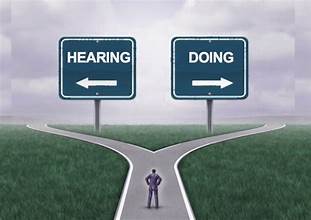
The difference between hearing and doing is huge!

Jesus’ illustration is borne out of his life experiences as a carpenter and craftsman. It is believable that he spent a portion of his life building homes, knowing the critical importance of a good foundation.

Theologian William Barclay wrote, “Only a house whose foundations are firm can withstand the storm; and only a life whose foundations are sure can stand the tests.”

Jesus tells us how to build that foundation…on hearing and on doing.

Jesus places value in the hearing. We cannot act upon what we do not know. Therefore, we must listen to God’s word. It is looking into the mirror of his word and seeing it for what it is. Again, it’s a great first step. Listening with intent takes us deeper than just hearing. The latter acknowledges God’s teaching. The former internalizes it.

Listening with intent to the word of God prepares for Jesus’ next command. Jesus wants us to be doers of his word. Knowledge only becomes relevant when we put it into action. Theory must be applied. Again, as Barclay writes, “Theology must become life.”

My cardiologist today told me to exercise more and lose weight. It does little good to go to the doctor in the first place if I’m not going to at least try to do what she instructs me to do. The same holds with my faith. It does little good to study God’s word if I don’t allow it to change my lifestyle and compel me to act.

It boils down to obedience, doesn’t it? For both my physical and spiritual health.

I have been guilty too many times of not hearing with intent. I suspect you have as well. Many people hear the word of God, but they don’t do anything with it. There are a lot of people who just enjoy listening to good preaching and teaching. That’s as far as it goes. They never really do anything with it. Call them “hearers of the word.” They listen, and listen, and listen — but it never leads them to DO what they’ve heard.

Again, hearing God’s word is a good thing, but it is not the end that God desires for us. James tells us that the one who hears with intent, never forgetting God’s word, the one will be blessed in what he does. This means the obedient person who does what God commands will find favor through a changed life. Will find blessings in the doing itself. Blessings in a life aligned with God’s will.

The blessing received by hearing and doing carries the biblical idea of shalom—being right with God and others. It is relational and spiritual. It also hints at blessings derived from an active and obedient faith that bears fruit in the life of the one who does and the lives of those he or she touches.

There’s the challenge James presents us. If all you and I are doing is hearing or reading or even studying God’s word, we might think we’re being a good follower of Christ, but we’re only deceiving ourselves, looking at ourselves in a mirror and walking away (vs. 22). Maybe it’s time we took the next step to become doers of the word!

Like Michael Jackson sang back in 1987 when he recorded Man in the Mirror:

I’m starting with the man in the mirror.
I’m asking him to change his ways.
And no message could have been any clearer.
If you want to make the world a better place
Just look at yourself then make a change.

May my life and yours be a reflection of Jesus and not a lot of “big talk and desk hammering.”

Thinking Points

When I read or hear God’s word, where do I most often stop short of actually doing what it calls me to do?


In what ways might I be mistaking familiarity with scripture for obedience to scripture?


How does Jesus’ picture of building on rock versus sand challenge the foundation upon which I’m currently building my life?


What is one concrete step I can take this week to move from “hearing” to “doing?”

Treasuring and Pondering

Focal Passage: Luke 2:19

Mary, did you know
that your baby boy would one day walk on water?
Mary, did you know
that your baby boy would save our sons and daughters?
Did you know
that your baby boy has come to make you new?
This child that you delivered
would soon deliver you.

Those words written by Mark Lowry, a comedian, singer and songwriter long associated with the Gaither Family, are the first stanza of what has become my favorite Christmas song. Many artists have recorded it since it was written, but Lowry sings it with unequaled passion.

In the bridge, Lowry’s words to Mary speak of the work of Christ in a building crescendo.

The blind will see.
The deaf will hear.
The dead shall live again.
The lame will leap.
The dumb will speak.
The praises of the lamb.

The as the song closes, the words ask Mary one last question before providing the resounding answer.

Did you know that your baby boy
Is heaven’s perfect lamb?
The sleeping child you’re holding is the great I AM!

Mary, did you know?

*****

The young mother listened to the hearty giggles of her toddler as the boy’s father tossed him playfully into the air, catching him with calloused hands. She laughed to herself as this manly carpenter cooed in baby-speak. She shook her head in awe and returned to the preparation of the evening meal.

The routine task of grinding the wheat into flour for the evening bread freed her mind once again to reflect on the life God had given her.

Luke, the Bible’s historian, put it this way.

But Mary treasured up all these things and pondered them in her heart. (Luke 2:19)

Mary, did you know?

That one little verse, often overlooked, comes at the end of the beloved Christmas narrative. Long after Jesus’ birth, long after the shepherds returned to their fields and flocks, Mary treasured and pondered.

Mary, did you know?

Long after Jesus’ dedication when Simeon praised God for allowing him to see God’s salvation, Mary treasured and pondered.

Mary, did you know?

Long after Anna, a prophetess who served in the temple, took one look at Jesus and told everyone who would listen that this was the child who would bring redemption to Jerusalem, Mary treasured and pondered.

Long after the wise men found a new route home, Mary treasured and pondered.

Mary, did you know?

On that day I imagined, as Mary kneaded the dough and Joseph and Jesus played, what did she treasure? What did she ponder?

Think back to the night the angel told Mary what God planned for her. She would bear a son who would be the Son of the Most High; a son who would reign over the House of David forever. Later, her aunt Elizabeth, filled with the Holy Spirit, reaffirmed the miraculous birth as she called Mary blessed among all women.

Through an immaculate pregnancy and an ordinary birth, Mary saw it all come true, just as God promised. In those first few years, surely the whole experience seemed surreal, almost beyond belief. Mary took it all in. Tried to make sense of the inexplicable. She treasured and she pondered.

The Greek verb translated treasured in this passage doesn’t mean to just remember. It means to carefully preserve, to guard or keep something alive for future understanding.

You and I have had 2,000 years of history. We can hold God’s word in our hand and read the unfolding of his redemptive plan that began its climactic work in a Bethlehem manger.

Two or three years after that day, Mary was still trying to wrap her arms around it. So much of what happened must have seemed to her a mystery. So, she kept the experience in her heart as she watched her child grow, keeping her experience real and alive, hoping to one day understand the how and why?

Mary not only treasured, but she pondered.

Thinking is a broad, general process that tends to be quick and practical. I think about what I’m about to do. Pondering takes thinking to a completely different level. Most of us are thinkers. We don’t ponder enough.

Pondering implies lingering thought. Unhurried. Contemplative. Reflective. Inward. When one ponders one weighs significance. Turning something over and over in your heart and mind, It implies a sense of awe and wonder, seeking to find personal meaning.

The Greek word Luke uses in this passage translated as ponder means to actively bring things together. To compare and contrast. To wrestle with a thought toward understanding. That’s different from daydreaming or passively reflecting on something.

You see, Mary, like any mother, carried fond memories of her child’s birth. The journey from Nazareth. The discomfort of a donkey ride. The worry about finding a place to stay in a crowded city. The pain of childbirth. The pure joy of holding her son in those first magical moments. That’s the precious memory of motherhood.

When Mary pondered, she intentionally reflected on all that was said and all that happened, trying to fit the pieces together. Wrestling with its meaning. Mary wanted to make sense of what felt unexplainable. Mary looked at everything she had experienced to that point…everything we understand as our Christmas story…and treasured and pondered what it all meant.

Mary, did you know?

To her credit, Mary never demanded immediate understanding. Never insisted that if God wanted her participation, he needed to read her in fully on the plan. Mary thought about it…a lot…I imagine. Despite not fully grasping the significance or the how and why, Mary accepted her role in God’s plan with such deep faith and trust.

There it is! In the middle of Mary’s treasuring and pondering lies the lesson I needed as the Advent candles are snuffed out and we pack away the manger for another year.

On this side of Christmas, what do we know? What must we treasure? What must we ponder?

God is at work in my life. He has been at work, is now at work, and will be at work in my life until the day he calls me home. I truly believe that. I have a tendency, though I suspect most of us do, to demand from God an immediate explanation for the things happening in my life…good or bad. I tend to pray for answers before I am willing to act.

I test. I don’t always treasure.

I think. I don’t always ponder.

Mary trusted that God was at work in and through her life, even if she didn’t always know why or how things were going to work out. Her faith held on to and accepted the mystery rather than disregarding it, or worse still, trying to change it. Most importantly, Mary trusted that understanding would come with time and obedience. Her role was to keep listening and waiting…as long as necessary.

I need to learn that faith often means actively treasuring and guarding God’s promises that have not yet been resolved with clarity. To hang on to his word. To keep it viable and constantly in my thoughts for future understanding. To be obedient to it without trying to bend it to my will. To trust that the day will come when he opens my eyes to see with reverence and wonder how he has moved throughout my life.

Mary understood that God’s work in her life required spiritual attentiveness…a whole lot of pondering if you will. Most of the life’s lessons God teaches me require me to wrestle with them until what he is trying to teach me starts making sense. He asks me to dig deeper. To seek his truth. The water of life rarely comes from a shallow well.

Treasuring and pondering take time. What God begins in our lives one day will unfold, but it will unfold in his time, not instantly, but when the time is right. He asks us to wait faithfully on his timing. That’s never easy to do.

When God’s work surpasses our understanding, we are invited…like Mary…to treasure and ponder his work in our lives.

That seems to be the perfect message for the coming New Year.

I will mediate on your precepts and will fix my eyes on your ways. (Psalm 119:15)

Thinking (Pondering) Points

What has God done in my life recently that I need to slow down and ponder?


What practices in my faith walk help me treasure God’s work instead of casually dismissing it?


In what ways does Mary’s quiet, reflective faith challenge my tendency to seek quick answers?


How might God be shaping me during times when he asks me to wait and reflect rather than act?

The Word Became Flesh

Focal Passages: Luke 2:1-14; John 1:1-14

There is no expectant mother traveling to a distant village.

No Bethlehem.

No inn, crowded or otherwise.

There are no shepherds tending their sheep in the fields.

No angels proclaiming good news and glad tidings.

There is no star. No wise men from the east.

There is no baby, wrapped in swaddling clothes and asleep in a manger.

That’s Luke’s story to tell.

When he wrote his gospel, John takes the Bible’s Christmas story to a different level, focusing not on the earthly scene, but on the eternal reality it represents. The first Chapter of John tells the Christmas story from heaven’s viewpoint.

While Matthew and Luke describe how and where Jesus was born, John explains who Jesus was and is: the eternal Word…the Creator…the Light entering darkness…God becoming flesh.

John tells us about the one who came into the world to give us the right to become children of God.

If Matthew and Luke give us the method by which Jesus came to live among us, John shares the divine meaning and purpose behind the baby in a manger. He tells us why. It is no less a Christmas story than the one that will be repeated a million times in the days to come.

In the beginning was the Word, and the Word was with God, and the Word was God. He was with God in the beginning. Through him all things were made; without him nothing was made that has been made. (John 1:1-3)

It’s difficult for finite minds like ours to grasp the true nature of God. John sees the one he calls “the Word” not as an idea or thought, but as the living expression of God himself. The Word did not observe creation from a distance. The same hands that formed the stars would be wrapped in human flesh, grasping the offered forefinger of his mother. The voice that spoke with such clarity as it spoke the universe into existence, would cry in hunger in the middle of the night.

John viewed Jesus as the word of God. God’s revealed word. Present as God and with God from the time before creation.

Christmas is not merely the story of a baby being born—that happens every day. Christmas is the story of the Creator choosing to identify with you and me in every way. Choosing to draw near to his creation, not in the magnificent and extraordinary, but in the mundane and ordinary. The Word chose to come quietly and humbling, as a child.

In those days Caesar Augustus issued a decree that a census should be taken of the entire Roman world. (This was the first census that took place while Quirinius was governor of Syria.) And everyone went to his own town to register. So Joseph also went up from the town of Nazareth in Galilee to Judea, to Bethlehem, the town of David, because he belong to the house and line of David. He went there to register with Mary, who was pledged to be married to him and was expecting a child. (Luke 2:1-5)

An emperor’s powerful decree set history in motion, another phase of God’s ordained and eternal plan. The dusty roads of Galilee and Judea brought a young couple on the path of ancient prophecy. Not human administration, but divine orchestration.

Bethlehem, a small, easily overlooked village, would become the agent of God’s purpose. The Word who shaped time and space, now entered it. A heavenly throne morphed into a manger.

While they were there the time came for the baby to be born, and she gave birth to her firstborn, a son. She wrapped him in cloths and placed him in a manger, because there was no room for them in the inn. (Luke 2:6-7)

No trumpet sounded. No palace gates opened. No one rolled out the red carpet. The Son of God arrived in silent wonder. The Word rested where animals fed. Swaddled in soft and simple cloth, held by the trembling arms of a first-time mother. The world he made had no room for him. His creation failed to recognize his presence.

Heaven, however, watched closely every moment. Heard every cry that echoed with the sound of redemption. Light had entered the darkness.

In him was life, and that life was the light of all men. The light shines in the darkness, but the darkness has not understood it. The true light that gives light to every person was coming into the world. He was in the world , and though to the world was made through him, the world did not recognize him. He came to that which was his own, but his own did not receive him. (John 1:4-5,9-10)

A child was born. He arrived as light and life. Where sin cast its long shadow, he brought truth. Where fear held sway, he brought hope. Where death claimed victory, he brought life.

Shrouded in darkness, the world did not welcome him, but it could not extinguish the light. Heaven chose to amplify it.

That Light arrived not in palaces or courts…not as a gift for kings or a performance limited to the world’s elite. No. It arrived in fields beneath the open sky, announced to unassuming shepherds working in the fields.

And there were shepherds living out in the fields nearby, keeping watch over their flocks by night. An angel of the Lord appeared to them, and the glory of the Lord shone around them, and they were terrified. But the angel said to them, “Do not be afraid. I bring you good news of great joy that will be for all the people. Today in the town of David a Savior has been born to you; he is Christ the Lord. This will be a sign to you: You will find a baby wrapped in cloths and lying in a manger.” Suddenly, a great company of the heavenly hosts appeared with the angel, praising God and saying,

Glory to God in the highest,
And on earth peace to men
on whom his favor rests.”
(Luke 2:8-14)

While the world slept, heaven danced. While the earth remained deaf to the Word, the angels sang. Hear God tell you the same thing he told the shepherds. “Do not be afraid.” Celebrate the good news. Embrace the joy God offers all of us. A savior has been born…Christ the Lord. When your heart’s darkness gets driven out by the light, you can give glory to God. You can find the peace God that only comes from becoming a child of God.

Yet to all who received him, those who believed in his name, he gave the right to become children of God…The Word became flesh and made his dwelling among us. We have seen his glory, the glory of the one and only who came from the father, full of grace and truth. (John 1:11-12,14)

On that night in Bethlehem, grace lay in a manger and truth had a heartbeat. God entered our world to live as we live. To experience what we experience. To show us how to live. To be the Word and Light.

The baby with no permanent place to stay came to bring us home with him. To embrace us as his children.

The Christmas story as told by Luke and amplified by John is the penultimate chapter in what Archbishop Fulton Sheen called “the greatest story every told.” A story culminated with Jesus’ sacrificial death and resurrection. It is God’s gift to you and me.

For God so loved the world, that he gave his one and only son, that whoever believes in him shall not perish, but have eternal life. (John 3:16)

Author’s Note

The world needs Christmas. I hope you find the time to ease the frenetic pace to a slow walk with family and friends. Set aside the worry and the uncertainty and enjoy the moment. I pray that you experience those quieter moments this holiday season.

The world needs Christmas. Not the tinsel and the trees, but the peace and goodwill about which the angels sang. This year may God give you a genuine sense of his presence and his love not just on Christmas morning every day thereafter. May realizing his presence and love bring you and yours his peace and goodwill.

Merry Christmas!

Thinking Points

John presents Christmas from heaven’s perspective, less about the person of Jesus and more about his purpose. How does viewing Jesus as the eternal Word change the way you understand the meaning of Christmas in your own life?


“The world did not recognize him.” In what ordinary, quiet, or unexpected ways might Christ be present today that you are tempted to overlook or ignore?


The angels announced peace to those on whom God’s favor rests. What fears or burdens might you need to release this Christmas in order to truly find the peace Jesus came to bring?

The Prophets’ Christmas

Focal Passage: Isaiah 7:14 & 9:6-7; and Micah 5:2-5

It’s the Christmas season. The time when God stepped into the world with love, grace, humility and hope.

Through the years, I’ve written about Christmas from every angle and angel. I’ve studied the coming of the Messiah through the eyes of his earthly parents, the shepherds, the magi, and paranoid Herod, a priest name Simon and an elderly, devout woman named Anna. I’ve even written a more fanciful piece about the birth of Jesus from the eyes of a lamb.

As I looked to begin my study this year of the moment God sent his son into the world, I want to look at that moment from the eyes of the Old Testament prophets.

Scripture teaches that the moment God opted to grant humanity free will, he knew we would use that freedom to rebel against his plan for our lives. From the beginning of time, then, God had to find a way to bring his lost children back to him, despite the spiritual abyss we would create between us and God by our sinfulness. Before he put the world in place and set it spinning on its axis, he planned on Jesus.

Look at what Paul tells Timothy.

He has saved us and called us to a holy life—not because of anything we have done but because of his own purpose and grace. The grace was given to us in Christ Jesus before the beginning of time, but it has now been revealed through the appearing of our savior Christ Jesus who has destroyed death and brought life and immortality to light through the gospel. (2 Timothy 1:9)

Redemption was not an afterthought or a Plan B. It was purposeful and intentional. Therefore, God needed to convince us of our need for him and introduce to us the one he would send to show us the way home.

Enter the prophets. As God gave them words to speak, he wove through their prophecies a thread of redemptive hope with its beginnings in a Bethlehem manger.

The prophets lived centuries apart from one another. They lived amid completely different circumstances. Led different lives. Wrote in different eras. Served up judgment on a platter to different kings. They spoke God’s word of divine judgment, repentance and restoration to different generations.

Much like the blind men discovering an elephant, each prophet understood God’s Anointed One in part, but never in whole.

They never met Mary or shook the hand of Joseph. They never heard the angels sing. They never walked the streets of Bethlehem. They never felt the joy the shepherds felt. Never marveled alongside the magi. Never held the baby in their arms. Never saw what they foretold come to pass.

Yet, thanks to a revelation from God’s spirit, they all pointed in somewhat different ways to the same moment; to the same someone. They saw who he would be. Knew what he would do. Understood the titles he would carry. They all spoke of Jesus, even when they never knew his name.

And on the night Jesus was born, their words—scattered across centuries—were suddenly fulfilled in the form of a swaddled infant, in the outskirts of an obscure village, in a makeshift crib filled with hay.

The Word became flesh and made his dwelling among us. (John 1:14)

That moment began the fulfillment of every prophetic word spoken for hundreds of years prior to that first Christmas morning.

Isaiah’s Whisper

The prophet Isaiah’s prophetic message almost 750 years before the birth of Jesus came at a time of national fear. His people faced a looming and hostile invasion, political collapse and spiritual confusion. In that sense, Isaiah’s words feel like a quiet voice spoken in a dark moment. Almost a whisper carried to people who were afraid of and unsure about the future.

While he warned of judgment and called for repentance, he promised that God had not forgotten them. He shared with them the hope of the Messiah and the arrival of the kingdom of God. Isaiah spoke about a miraculous moment in time.

A virgin will conceive and bear a son; and they will call his name Immanuel. (Isaiah 7:14)

God’s message through Isaiah didn’t stop there, as if the miraculous birth was the climax of the Creator’s eternal work. God revealed to his prophet another nuanced layer.

To us a child is born, to us a son is given, and the government will be on his shoulders. He will be called Wonderful Counselor, Mighty God, Everlasting Father, Prince of Peace. Of the greatness of his government and peace there will be no end. He will reign on David’s throne and over his kingdom establishing it and upholding it with justice and righteousness from that time on and forever. The zeal of the Lord Almighty will accomplish this. (Isaiah 9:6-7)

Isaiah’s prophecies waited for more than seven centuries. On the night of Jesus’ birth, his words were no longer ink on faded parchment. His words were a baby, born to a faithful carpenter and young woman whose heart found favor with God.

Micah’s Confidence

The prophetic ministries of Isaiah and Micah overlapped in time and circumstance. Micah saw the same corruption in Jerusalem. Felt the same fear of an Assyrian invasion. Yet, he confidently condemned the injustice he saw among leaders and spoke of the pending judgment upon a people who had turned their backs on God.

He stood in the gap and told the people that, despite the hardships to come, God promised a future ruler from Bethlehem who would be their good shepherd and herald a time of peace. This “messianic hope” appears especially in Micah 5:2–5, spoken as reassurance that God would raise a true king after Israel’s failed leadership. Look at the words God gave him to speak.

But you, Bethlehem Ephrathah, though you are small among the clans of Judah, out of you will come for me one who will be ruler over Israel, whose origins are from the old and ancient times. He will stand and shepherd his flock in the strength of the Lord, in the majesty of the name of the Lord his God. And they will live securely, for then his greatness will reach the ends of the earth. And he will be our peace… (Micah 5:2, 4-5)

For generations, the small and unimpressive village of Bethlehem sat unnoticed in the Judean hillside, but God, 700 years before, had written its future. Bethlehem would play a role in God’s plan through the cries of an unlikely king and the redemptive work of Jesus Christ.

Though many other prophets shared God’s word about the ministry and mission of the coming Messiah, Isaiah and Micah are the only two who described details of his birth. Did any of these prophets fully understand the whole picture? I doubt it.

Do you remember when Jesus sent his disciples throughout Galilee, telling them they would be given power to preach and to heal in his name? They returned from that first century mission trip amazed how God had used their preaching and ministry to bring salvation to so many people.

After praying a prayer of gratitude to the Father for the work they had done, Jesus, filled with joy, pulled his disciples aside. Listen to what he told them.

Then he turned to his disciples and said privately, “Blessed are the eyes that see what you see. For I tell you that many prophets and kings wanted to see what you see, but did not see it; to hear what you hear but did not hear it. (Luke 10:23-24)

So, if the prophets never saw or heard the whole picture, why do they matter? Why do the partial images they revealed about Jesus’ birth and life and death and resurrection matter to you and me on this side of that first Christmas?

It matters because Christmas is not an isolated event. It is the beginning of the rest of the story.

Every promise—
every symbol—
every sacrifice—
every prophecy—
every hope—

pointed toward Bethlehem and Immanuel, God with us.

The prophets did not live to see it, but you have. Listen to John’s words again.

The Word became flesh and made his dwelling among us.

Then, look again at the words of Jesus.

Blessed are the eyes that see what you see. Blessed are the ears that hear what you hear.

You see, Isaiah’s world was not a lot different from our own. Hostility. Political uncertainty. Spiritual confusion. His words still feel like a quiet whisper spoken in a dark moment to people unsure of the future.
His message does not change.

To you a child is born. To you a son is given.

Can you see it? Can you hear it?

That’s Christmas!

If you are a believer in Christ, the prophets words link the past to your present. God’s promises are your truth. They are confirmation of God’s plan of redemption through the baby in a manger who grew to be your substitute on a cross–the living and resurrected Jesus. You are blessed to have seen what you have seen and heard what you heard.

If your Christmas lacks the meaning you see in those who believe, the visions of the prophets are your markers. The waypoints on a spiritual journey that will reveal the depth of God’s love for you in the truth of Jesus Christ. The promises of the prophets are fulfilled in Jesus. Their longing can be your joy as it is mine. See it. Hear it. Your blessing awaits.

Let this be our Christmas prayer for 2025.

“Lord, thank you for speaking through the prophets and for fulfilling every promise in Jesus. Let the hope that sustained them also sustain me. Teach me to trust your timing and rejoice that your Word always becomes flesh. Amen.”

Thinking Points

How does thinking about Christmas through the voices of the prophets deepen your understanding of God’s long-planned redemption?


How has the Word “become flesh” in your personal story? In what ways has that baby in a manger changed your heart and your world view?


What keeps me from recognizing the blessings I already “see and hear,” blessings the prophets longed for but never experienced?


How might embracing the continuity between the prophets’ longing and Christ’s coming reshape the way I enter this Christmas season?

A Life of Thanksgiving

Focal Passage: Colossians 3:12-17

In the middle of the United States Civil War on October 3, 1863, President Abraham Lincoln issued a proclamation declaring the last Thursday in November as a Day of Thanksgiving and Praise. Lincoln wrote in that proclamation that the year had been “filled with the blessings of fruitful fields and healthful skies,” blessings he called “gracious gifts of the Most High God.”

While merchants throughout our country blow off Thanksgiving for the more lucrative pursuit of Christmas, we, the people, as Lincoln liked to say, will all pause for a moment, gathered with family or friends, to enjoy a holiday centered on gratitude, generosity and togetherness. Hopefully, for those of us who try to live out our faith, Thanksgiving will grant us a chance for a little honest reflection on the gracious goodness of God.

Just as it is easy for us to get caught up in the trappings of Christmas and fail to sincerely remember God’s greatest gift, it is easy to get caught up in the toppings of Thanksgiving…the dressing, the cranberry sauce, the gravy. In my family, those toppings we focus on might include the cheese, the pico de gallo, the onions, and the guacamole we stuff into our non-traditional Thanksgiving fajitas.

We will quietly express our thanks to God, but I wonder if the words are that meaningful to him amid all the hustle and activity of the day. Let me explain.

I have lost both of my parents. At this ripe old age of 72, that’s not surprising, I suppose. Mom died 27 years ago of cancer at the too young age of 69. At the age of 98, Dad died two years ago of nothing more really than a life lived long and well.

Before they died, I got a chance to thank both of them in private for being the amazing parents they were. Given the sacrifices they made, the role models they were in my life, the life lessons they instilled, everything I said those days felt woefully inadequate. Though I struggled with the words, I think they understood my intent.

I got a similar response from both of them. Smiles shining through watery eyes and hugs they probably wished could be stronger.

My parents held expectations for me and my siblings, not so much on what we might do in life, but in how we chose to live life. As I think back on those precious moments with them, I pray I met those expectations.

As a parent of adult children now, I get it. You raise your children hoping they will be good people. That their lives will reflect the values you tried to instill in them. That they will live their lives with faith in God, love for family, compassion for others and integrity in all things. My sons have lived that life and more. Though they’ve both spoken their words of thanks at times, their lives lived well is all the gratitude I need.

Here’s the point I’m trying to make. We will gather around a table on Thanksgiving. At some point, we will pray and express our gratitude to God for all he’s done for us. I wonder, however, if this is the best way to say thanks to God.

While I’m quite sure our Lord appreciates the words of gratitude, how much more does he appreciate our lives lived as a reflection of his goodness and grace? How much more does he desire that we live our lives in ways that reflect the values he tries to instill in us?

I had the privilege of listening to an inspiring sermon this week delivered by the Rev. Robert Thomas, Jr., of Mt. Olivet Missionary Baptist Church in Houston. The Rev. Thomas spoke powerfully about holy living in a world filled with unholy actions.

In his text in Colossians 3:12, we find Paul saying that every believer in Christ should “clothe ourselves with compassion, kindness, humility, gentleness and patience.” We are to be forgiving because God forgave us, covering all our actions with love. Then, Paul added, “Let the peace of Christ rule in your hearts…and be thankful.”

I pulled out the verse again this week thinking about the upcoming Thanksgiving holiday, focusing on those last two words, “Be thankful.” If you continue reading in that chapter, you’ll find these words that sum up the previous verses. I think it has everything to do with how we express our gratitude to God. Paul said:

And whatever you do, whether in word or deed, do it all in the name of the Lord Jesus, giving thanks to God the Father through him. (Colossians 3:17)

Whatever you do in word or deed…give thanks.

Think about that for a second. I’m not sure Paul just wants us to thank God for giving us the word to say or the deed to do. I think he might mean that we should let our words and deeds be said and done in the name of Christ so well and so faithfully that our words and our deeds becomes an expression of our thanks to God.

When we act in compassion or kindness, when we live humbly, with gentleness toward others and patience in the face of the trouble, when we forgive, and let love drive our every thought or deed…that is an act of thanksgiving to God that means more to him, I believe, than simply saying a heartfelt thanks…as important as those words are to say at times.

When King Saul in the Old Testament disobeyed God but tried to cover it with yet another hastily thrown together sacrifice, God told him through Samuel, “To obey is better than sacrifice; to listen (is better) than the fat of rams.” (I Samuel 15:22)

That seems to be telling me that actions speak louder than words. If I want to thank God for his power, presence, protection and provision in my life, saying the words is important, but living in ways that honor him seems more important.

Let our obedience to his word be our thanksgiving for his goodness and grace. Jesus told his disciples in John 14:15 that if they truly loved him, they would keep his commandments. That we would live as he lived. Our surrender to his will and way then become acts of love and thankfulness.

Scripture teaches us, I think, that gratitude reaches its highest point when it moves beyond feelings and emotion and becomes faithful living. Being obedient to his commands and following his teachings in every aspect of life.

Living out God’s will by loving others, showing compassion toward those who are in need, forgiving those who hurt us, serving those around us—these actions, done in response to God’s redemptive and restorative work in our own lives, become the most sincere expressions of gratitude a believer can offer. A life surrendered to God’s will and way is a spiritual act of thanksgiving.

As he neared the end of his earthly ministry, Jesus consoled his disciples by urging them to stay connected to him. He drew upon a metaphor they would understand.

I am the vine; you are the branches. If a man remains in me and I in him, he will bear much fruit; apart from me you can do nothing…If you remain in me and my words remain in you, ask whatever you wish and it will be given you. This is to my father’s glory that you bear much fruit, showing yourselves to be my disciples. (John 15:5,7-8)

In other words, when we remain in Christ and do his will, we bear fruit. The fruit we bear brings glory to God. Our faithfulness and our work that impacts the lives of others and demonstrates that we are his children is an act of thanksgiving that glorifies God and makes him known to a world so desperately in need of him.

When we allow God’s spirit to shape our character with love, joy, peace, hope, patience, kindness, gentleness, we are expressing our deep gratitude for God’s saving work in our lives. When we, in a loving spirit, oppose actions in our world that run counter to the spirit and message of Christ, we are expressing our gratitude for God’s saving work in our lives.

When I see my sons living out the life God called them to live, when I see evidence of their faithfulness, compassion and Godly integrity, seeing the godly men they have become…that’s really all the gratitude I need. Of course, hearing that word of thanks, wrapped in the occasional hug, warms my heart.

I just feel God might be the same way. Watching you and me live out the lives we’ve been called to live for him, seeing evidence of our faith in our words and deeds, watching us bear fruit in ways that draw others to Christ, living godly lives, that’s what he most desires.

Hearing that word of thanks and giving him that spiritual hug, surely warms his heart.

Here’s my prayer for my life and yours this Thanksgiving holiday. May we recommit our lives to the one who redeemed us and called us to be his disciples, his fruit-bearers. May our lives and the words we speak and the work we do for him be a living expression of our gratitude for all he has done for us. Let’s say our thanks in prayer and live our thankfulness in practice.

I will praise you, O Lord my God, with all my heart; I will glorify your name forever. (Psalm 86:12)

Thinking Points

Who in my life has modeled grateful living? How can I follow their example in my walk with Christ?


In what ways can my everyday words and actions become a genuine expression of thankfulness to God?


Colossians 3 speaks to the qualities of compassion, kindness, humility, gentleness and patience, among others. Which of those traits do I need growth in my life if I want my life to shout my thanks to God for what he has done for me?


How might my life today change and want would it look like if obedience and faithfulness to God became my primary way of expressing gratitude to God?

A Case for Compassion

Focal Passages: Hebrews 13:1-3; and Matthew 25:37-40

When my two boys were young, my wife and I bought all 40 books in Gordon Osborne’s Value Tales series. Using stories of famous historical figures, each book focused on a desirable character trait, traits we wanted to instill in our kids.

There were books about the courage of Harriett Tubman. The determination of Helen Keller. The perseverance of Thomas Edison. The initiative of Frederick Douglass. The books taught children honesty, patience, kindness, responsibility, truth and fair play, humor, love, confidence, and imagination, for instance.

One of the books I remember taught a lesson on compassion using the life of Florence Nightingale, the British nurse who revolutionized nursing care and medical hygiene during the Crimean War.

I was drawn to this book initially because my Mom, whose first name was Florence, was also a nurse with a compassionate heart. (In full disclosure Mom was not fond of the name, preferring to go by Earline.) I found it compelling, also, because it taught compassion, that ability to sense another’s need or suffering, combined with a genuine desire to address the need or suffering. It was a trait I wanted my sons to cultivate.

I thought of that book specifically this week, when I read a summary of a 2025 study on compassion in the United States released by the Muhammad Ali Center in Louisville, KY.

The center surveyed more than 5,000 people from 12 metropolitan areas across the country. According to the survey, Americans believe the country is less compassionate today than it was four years ago. In fact, only 29 percent of those surveyed said they personally feel compassion toward those in need. More than two-thirds of those surveyed acknowledged gaps in their compassion for and empathy toward certain groups of people, including the poor or those of differing ethnic backgrounds.

If that doesn’t disturb you as a believer in Christ, it should. The very nature of Jesus, the one in whom we believe, was compassion.

The writer of Hebrews closed out his letter to the churches by making a case for compassion. Look at what is written.

Keep on loving each other as brothers and sisters. Do not forget to entertain strangers for by doing so some people have entertained angels without knowing it. Remember those in prison as if you were their fellow prisoners, and those who are mistreated as if you yourselves were suffering. (Hebrews 13:1-3)

Compassion demonstrates our faith in practical, relational ways. It is not abstract, rather it is expressed in love, hospitality and solidarity with folks who are struggle with life. Compassion provides ongoing care for a people in need. Acts of kindness and expressions of empathy are sacred acts, commissioned by God and modeled for us in every way by Christ himself.

Keep loving each other isn’t just a casual thought inserted by the writer. It stands as a steadfast, continuing commitment to care for others, reminding us that expressions of God’s love to others are central to our faith.

The writer speaks of a bond, a love shared among siblings or family. It is not sporadic nor conditional. Rather, it flows freely and consistently, an outpouring of God’s love through us because his love is in us.

It involves genuine kindness and support for others within the fellowship of believers and extending into our community at large. This loving expression of compassion means celebrating their joys and mourning losses. Too many people today feel isolated and out of options. As Christians, we ought to commit ourselves to be emotionally and physically available in ways that create opportunities for active grace as a true reflection of the heart of Christ.

Compassion also demonstrates itself in hospitality toward those we may not know. We are challenged by the writer to see every person as valuable and worthy of respect, care and generosity…not just those we broadly consider “family.”

In New Testament times, the practice of welcoming strangers was not just a form of ancient welfare. It was a matter of survival for many. Everything we have is a gift from God to be shared with those in need.

The reference to “entertaining angels unaware” recalls a couple of Old Testament stories, but I think it suggests a deeper sense of reverence today. You and I never know fully the stories of those we encounter along the way. Every person we meet, every person we help, holds significance in God’s eyes beyond our understanding. By being open and generous, we align ourselves with Gd’s heart and his purpose.

As the writer of Hebrews ends his call for compassion, he encourages Christians today, even as he encourages his readers in the first century church, to think of the men, women and children who suffer adversity as if the suffering was also ours to bear. Think empathy in practice. To walk a mile in the shoes of another. To coax us into practical action. To put hands and feet to our prayers.

Someone once said when any one of us suffers, it affects all of us in one way or another. The writer wants us to respond to the hardships of others with compassion and kindness. To see the struggles of others as intimately connected to our shared humanity as a shared sense of what it means to be God’s children.

I find solid truth in what Hebrews tells us as I suspect many who might read this do as well. Yet, in less than five minutes of the nightly news or on an equal time on any social media platform, and you find a society that devalues compassion as a cultural weakness. Too many Christians are at best indifferent and at worst insensitive to the struggles of others.

All we need to do is look to scripture for answers in the life of Christ.

Over five thousand people followed him into the wilderness, listening to him preach and teach. Matthew 14 tells us when Jesus saw the crowd, “he had compassion on them and healed their sick.” Later, they grew hungry. Out of compassion, he fed them.

Early in his gospel, Mark tells the story of Jesus healing a leper, a man ostracized and shunned because of his illness. Mark writes that Jesus, “filled with compassion, reached out his hand and touched the man.” This merciful act set aside the cultural taboo of the day that demanded Jesus stay away. In this tender touch, Jesus restored dignity and a sense of belonging to a man whom society tossed aside as unworthy of their help.

Jesus commands us to love as he loved. To be compassionate as he was compassionate. In his last hours with his disciples, Jesus told a parable about the judgment that awaits all of us. In this parable the king invites some to accept their inheritance and walk into the kingdom. As the reason for their good fortune, he said,

For I was hungry and you gave me something to eat. I was thirsty and you gave me something to drink. I was a stranger, and you invited me in. I needed clothes and you clothed me. I was sick and you looked after me. I was in prison, and you came to visit me.” (Matthew 25:35-36)

The king’s guests said they could not honestly remember every doing any of those things for the king. The king’s reply makes the point for us.

I tell you the truth. Whatever you did for one of the least of these brothers of mine, you did to me.” (Matthew 25:40)

Clearly, the message is that compassion means something. It means something not only to the hungry, the thirsty, the alien (legal or not), the sick, the poor and the prisoner. It means something to God.

Here is what you and I need to recognize in that story, however. The righteous whom God invited into the kingdom received God’s praise, not because they meet God’s needs, but because compassion for the marginalized people was so natural they didn’t notice they were doing something extraordinary for the “least of these.”

Second-nature.

Authentic humility.

Grace-motivated.

Heart-driven.

That kind of compassion.

I think that’s the message the writer of Hebrews was teaching me this week. It is the message Jesus demonstrated every day of his life on earth. In a world where compassion is undervalued and left undone, live it anyway. When the culture seeks to oppress rather than uplift, set aside the taboos and love them anyway.

Make compassion second nature…so much a part of you that you don’t realize you’re doing something extraordinary. The reason is clear. When you do it for the least of his children…

For all the compassion God has shown you and me, that ought to be reason enough.

Thinking Points

When was the last time I showed compassion to someone without realizing it, simply as a natural expression of Christ’s love?

In what ways have I allowed today’s culture or bias to limit my compassion toward certain groups or individuals?


How can I make compassion a second nature response, rather than something I feel forced or obligated to do?


What does Hebrews 13:1-3 teach me about the kind of empathy that honors God?


If Jesus were to evaluate my compassion today as God did those in the parable in Matthew 25, what might he find in my words, actions and attitudes?