His Yoke is Easy

Focal Passage: Matthew 11:28-30

There is a kind of weariness that sleep cannot fix. It settles not in the body but in the soul, where faith is meant to live and breathe. I have felt it at times. I bet you have, too.

Many Christians know this quiet exhaustion—the slow erosion of trust when prayers seem unanswered, obedience feels unnoticed, and God’s promises appear distant. It is not necessarily the weariness of doing too much or trying too hard, although that can happen. It can also manifest itself as we wonder if what we are doing still matters to God.

This spiritual fatigue often grows in the tension between what we believe and what we experience. We know God is good, attentive, and present, yet life can still feel heavy with silence, delay, and ambiguity.

Over time, the heart begins to carry burdens it was never meant to bear—managing outcomes, maintaining appearances of strength, and quietly questioning God’s involvement.

Jesus’ invitation in Matthew 11:28–30 speaks directly to this deep weariness. Christians grow weary sometimes not because faith is flawed, but because we often misunderstand its nature, turning trust into effort and surrender into striving.

Into that self-imposed exhaustion, Jesus offers not more to do, rather, he offers himself as someone to whom we can come.

That offer changes everything.

I think that’s why I gravitated this week to one of the greatest promises of New Testament scripture.

Come to me, all you who are weary and burdened, and I will give you rest. Take my yoke upon you and learn from me, for I am gentle and humble in heart, and you will find rest for your souls. For my yoke is easy and my burden is light. (Matthew 11:28-30)

I know this passage speaks first to a Jewish culture that demanded complete obedience to a wide-ranging system of Pharisaic rules, regulations and expectations. It is an invitation to those who felt the crushing weight of this legalistic religion and floundered in their inability to achieve righteousness through effort.

I also think it speaks to those of us today whose faith, once simple and confident, becomes strained under unmet expectations and prolonged uncertainty.

Jesus calls to those who are weary and burdened. The Greek words for “weary” and “burdened” carry distinct meanings that deepen the nature of Jesus’ invitation to come to him.

The word used for weary (kopiao) means to “grow tired from hard work, to toil to the point of exhaustion.” It is the strenuous effort that drains one physically, emotionally and even spiritually.

It is the same word used in John 5:5 when Jesus told Peter who had been fishing through the night to cast the nets again. Peter responded, “Master, we’ve worked hard all night and haven’t caught a thing.” They had worked and grown weary not only because it was hard work, but because it was all for nothing.

To be “burdened” (phortizo) or heavy ladened, depending on your translation, is to “load down.” Grammatically, it is a perfect passive participle. Literally, “having been loaded down” and remaining in that condition. It also suggests the burden has been placed upon them by an external source.

It speaks of carrying loads not chosen. Loads that cannot be removed without help–the expectations of others, guilt induced by others, obligations repeatedly thrust upon you by circumstances outside one’s control.

It’s the image of someone crushed under a load they didn’t pack and can’t put down. I picture the sway-backed horse or the small boat so fully loaded it sits low in the water with waves washing over its sides.

When Christ bids the weary and burdened to come to him, he promises rest. The Greek word used for “rest” (anapauso) means to find relief after toil, a refreshing that restores strength. So, it’s not ceasing to work as much as it is to be renewed or refreshed after growing weary. To be re-energized to continue the work before you.

You find the same idea in Psalm 23, “He leads me beside still waters…he restores my soul.”

For a people burdened by Jewish legalism like those in Jesus’ audience, Jesus promised an internal reset, not relief from a life of obedience, but freedom from the weight of that burden—a burden he took upon himself at the cross. The same applies to the exhausted Christians today who grow weary of all that life throws at them.

Jesus encourages us to silence all the internal noise that prevents us from seeing God’s hand at work in our lives or the walls that keep us from seeing or sensing God in the first place. We are urged to draw nearer to him to find the inner rest and restoration we need to continue the work to which he has called us.

Paul offers this reminder to the Galatian church.

Let us not become weary of doing good, for at the proper time we will reap a harvest if we do not give up. (Galatians 6:9)

Notice that the rest Jesus speaks about is not about no longer working. It’s about linking or yoking ourselves to him. Deepening our connection and our relationship to one willing to share our burden.

Take up my yoke and learn from me.

In Jewish culture in the first century, taking up one’s yoke meant submitting to authority–the “yoke of the law” or the teachings of a specific rabbi. It meant one would become attached to the teacher and live under his instruction or guidance.

When Jesus asks us to take up his yoke, he asks us to submit our lives to him, fully and completely. To learn from him. His way of life. Jesus is saying, “Come under my instruction. Let me define how you live. Quit trying to figure it all out by yourself. Quit doing things on your own and trust me.”

Jesus offers a different kind of yoke. One not tied to heavy burdens. One not imposed with strict, exhausting interpretations of rules and regulations. A yoke that is not oppressive, but is relational. Gentle. Life-giving.

However, Jesus’ yoke is still a yoke. He didn’t remove a yoke from us in order to send us out to pasture to frolic in the tall, green grass without care or concern. We remain tied to his authority in ways that still carry responsibilities. Ways that still require obedience.

He promises, though, that the labor, the yoke under which we work, will not be crushing or burdensome because he is gentle and humble in heart. Kind, not harsh. Understanding, not a taskmaster. Approachable and compassionate.

I like the Greek word for gentle (praus) used here. It means “strength under control.” The word described a warhorse–strong, powerful, but disciplined and held in check by the reins in the rider’s hands. It describes one who has power, but chooses restraint—not harsh, not domineering, not reactive.

Pair praus with the Greek word for humble (tapeinos) and you get a sweet nuance that testifies to who Jesus is.

Tapeinos usually held a negative tone in the first century. It could mean low status or brought low. Jesus claims the word and applies it to himself, not as a matter of shame, but as a virtue. Humbling himself, as the Son of God, to be like us. This was his inner disposition. This is who he was at the core.

Then, Jesus paints one more word picture for us. Go again to the Greek. The word used here for “easy” (chrestos) is a word that Jesus, as a first century carpenter, would clearly understand. It means “well-fitting.

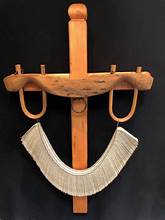
In that day, ox yokes were crafted by a carpenter from wood. The carpenter measured the ox, using those measurements to rough-cut the yoke. The yoke would be tried on, marked and sculpted to fit the shape and form of that ox so it would not rub and chafe. It was tailor-made for that ox.

Do you see that picture for followers of Christ like you and I? Jesus promises his yoke will fit us well. The life he gives us to live is not a burden that will rub and chafe us. Our lives, the work we have been called to do, are made and measured for each of us. Tailor-made by the master carpenter himself.

That thought ought to make the yoke easier to bear, but there is one last thing. Though it’s never explicitly said in this passage, I always picture a double yoke, shaped for a team of two oxen.

Farmers in Jesus’ day and farmers of our not-so-distant past, would often pair an older ox with a younger ox. A stronger ox with the weaker ox. The older, stronger ox would carry the greater burden as the younger, weaker ox learned and grew into its own yoke.

Even if not explicitly stated, the rest of scripture shows that Jesus carried the greater burden in our lives by his suffering and death on the cross for our sins and our mistakes. My burden is lighter because he has carried it and continues to carry it with me, bearing most of the weight of all that confronts me.

Paul, discussing the “thorn in his side,” reminds us that Jesus told him, “My grace is sufficient for you, for my power is made perfect in weakness. (2 Corinthians 12:9)

Jesus offered his invitation at a time when Jewish law, their yoke, had become so oppressive, it caused people to feel unable and incapable of being in right relationship with God. He offered a new yoke, a new way of living in relationship with him that provides rest and recovery from the burdens imposed by others.

That truth is no less relevant today.

There have been times in my life when the eyes staring back at me in the mirror showed signs of quiet exhaustion. Times when I grew tired of doing too much or trying too hard. I have felt the spiritual fatigue of unanswered prayers and distant promises.

I have looked into the eyes of family and friends over the past few weeks. I’ve heard the uncertainty and weariness in their voices. I’ve seen worry etched in their faces and heard it in the timbre of their voices. They carry burdens they were never meant to bear, feeling like they were alone in the middle of the struggle, questioning God’s presence, involvement and even his love.

I don’t know if that’s where you find yourself this week. Bone-weary and in need of rest and recovery. If that’s you, I know where you’ll find it because I found it, time and time again snug in the light and easy yoke of Christ.

The life he has called you to live is custom-made. Carved for your shoulders. The good news of Jesus is that you are yoked together with him and he’s pulling most of the load.

He reminds us in this passage that there is only one thing we need to do.

Come to me, all of you who are weary and burdened and I will give you rest.

Thinking Points

In what aspects of life do you most feel the “quiet exhaustion” your soul carries? What parts of your life feel like a yoke that rubs and chafes rather than one that fits well?

Think of the frustrations you’re experiencing. How much of that frustration comes from unintentionally turning trust into trying or surrender into striving?


Where do you sense Jesus inviting you to stop managing outcomes and simply come to Him?

How might your perspective shift if you pictured Jesus beside you in the yoke, carrying most of the weight?

Is God Calling?

Focal Passage: Mark 3:13-17

“God moves in mysterious ways.”

I found out today, after 72-years of my churchgoing, Sunday School teaching, Bible reading life, that those words cannot be found anywhere in the Bible.

You will find the words expressed, not in scripture, but in an old nineteenth century hymn by William Cowper. It is based on scriptures like the one in Isaiah 55 where God says, “My thoughts are not your thoughts, neither are your ways my ways.”

Whether from the old hymn or a passage of scripture, the way God moves in and through our lives is indeed mysterious. Often, however, when looking back over decades of life, the mysterious becomes a memory book of God’s grace in and calling for our lives.

The Sunday School lesson I taught this week included a passage in Mark 3 where God selected his 12 disciples. He called those men for a specific life and a specific purpose.

As a nine-year-old boy at First Baptist Church in Ropesville, TX, God called me to be one of his children. I made my profession of faith at that time and decided to follow Jesus.

God calls us to salvation, but the call does not end there. He also calls us to serve others in various ways, whether through our work, the church or in the everyday context of community.

The act of selection by Jesus is profound, underscoring his intention to empower ordinary people like you and me to carry his message and ministry to a lost and hurting world.

The passage in Mark seems such a straightforward verse about a specific event in Jesus’ ministry, but it is rich in nuance and meaning for the callings in our lives.

Jesus went up on a mountainside and called to him those he wanted and they came to him. He appointed twelve—designating them apostles—that he might send them out to preach and have authority to drive out demons. (Mark 3:13-15)

When scripture speaks of disciples, it can mean one of the 12 men closest to Jesus. It can also be any of the many followers of Jesus.

A disciple, by definition and practice of the first century, was a “student,” “a learner.” that’s pretty much how education worked in the Greco-Roman and Jewish worlds of the first century. A young man attached himself to a rabbi or teacher, with the intent of sitting at his feet, learning from him, walking beside him, listening to what he said and watching what he did. The idea was to think like, act like and become like the teacher.

Throughout his ministry, Jesus had dozens and dozens of disciples, people who were his students. Who learned from him. Who following his teachings. Who listened and watched what he did.

On that day on the mountainside described in Mark 3, Jesus called 12 men from among those many  disciples to be his apostles.

An apostle by definition is “one sent,” a representative with authority from the master. It was these 12 men, eyewitnesses to Jesus’ life, death and resurrection, who would go on to become foundational leaders of the Christian faith and of the early church.

There’s more to this passage than meets the eye, however. More than a simple list of those Jesus called to be his apostles. An idea, I think, that has deep implications for you and me about our calling.

Look back at verse 13.

Jesus “called to him those he wanted and they came to him.”

The Greek word “proskaleo” is the word Mark chose for “called.” It means “to be summoned.” “To be invited with intent and purpose.”

Jesus did not just look into the crowded of disciples and say with a wave of his hand, “I need 12 of you to come with me.” His choice wasn’t random. It was intentional. Purposeful. They choice of his apostles didn’t start with the disciples. It began with Jesus.

These men didn’t qualify themselves by anything they did. They didn’t fill out a job application.  They didn’t volunteer. Jesus chose them…specifically…individually.  This is consistent with the broader biblical theme found in John 15:16 where Jesus tells his followers,

“You did not choose me—but I chose you and appointed you to go and bear fruit…”

Jesus called those 12 men to be apostles, sent representatives on his behalf to preach the good news of Jesus. He gave them authority to do the same kinds of things he did throughout his ministry.

Here’s why I think that’s important to understand. When Jesus calls you and me, it is not random. He has a plan and a purpose behind the call, whatever it may be. Just as God takes the initiative in our salvation, he also takes the initiative in calling us to service. It is not random. It is intentional. It is purposeful. There is reason behind the call, even when it feels somewhat mysterious and out of character.

Note also that Jesus called them “to him.”

Again, this isn’t Jesus just being a coach and saying, “Okay, men, gather up. I’ve got something to say.” Think relationship before responsibility. Mark tells us earlier in this chapter that the crowds that followed Jesus, these many disciples, came because of “everything he was doing.” They were curious, in need or interested in what he was saying and doing.

As Jesus chose these 12 men, it was a call to move beyond interest to intimacy. From being a part of the crowd to being a part of the committed. Jesus called them to a deeper relationship with him. To know him more personally and intimately. To know his heart. To understand his way.

Jesus called them to know before they could be. Before they could be what Jesus needed them to be, they needed to know him, truly know him, in a deeper, more personal, daily fellowship with him.

Our call feels no different. When Jesus calls us to himself, it is for deeper fellowship. Deeper understanding. To know him and his heart. To become more like him as he equips and enables us to do the work to which he has called us.

You and I don’t have the privilege of literally walking in the footprints and shadow of Jesus like those first apostles did. They could hear his words. The tone of his voice. See the look on his face as he challenged the Pharisees or touched the eyes of the blind man. Those men could sit around a campfire late into the night, asking the Lord of the universe their burning questions as they probed for understanding. Can you imagine?

Yet, we really have the same access if you think about it. His spirit dwells within us. It gives us the same opportunity as we read through scripture to walk in his footprints and shadow. To hear his words and the tone of his voice. To see his face as he challenged the religious establishment and touched the blind.

We have the same chance to sit down with him in prayerful conversation and scripture reading to ask the Lord of the universe our burning questions as we probe for understanding. We don’t have to imagine it. We can live it.

God’s call in our lives is not only intentional and purposeful, it is a call to deeper fellowship and relationship with Jesus.

There is another phrase in this passage that I really love. It says Jesus called to him those he wanted. The Greek word for “wanted” used in this verse is “thelo.” It is an expression of his will, desire or preference. He wanted these particular men for a particular task.

Look at that list of men chosen. Peter, James, John, Andrew, Philip, Bartholomew, Matthew, Thomas, James, the son of Alphaeus, Thaddaeus, Simon, the Zealot, and Judas Iscariot.

Each disciple was chosen individually because of something Jesus saw in each of them. There was nothing outstanding about any of them. We know next to nothing about most of them. The things we know, we mostly infer. There were fishermen. A despised tax collector. One the Romans viewed as a terrorist. One who would eventually go off-rails and betray Jesus.

None of them were impressive by the standards of the world, but Jesus knew their hearts. They were teachable and willing. Open to the possibilities of what God, through Christ, might ask them to do. Jesus saw who they were deep inside and knew he could tap into their potential to accomplish and finish the task God had laid before him.

That’s what I want you to understand. God intentionally called you to be in relationship with him, to grow deeper in your relationship to him, based upon what he saw in your heart. He wanted you. Chose you. Intentionally and purposefully. He called you because he saw something in you that he could use to continue to accomplish and finish the task God has laid out before you.

The pairing of the words proskaleo and thelo…summoning and wanting…is important, I believe. Mark used these words to emphasize God’s personal invitation and his sovereign choice. He invites you. He chooses you. He has a point and a purpose for you.

If you have not yet responded to his salvation call, I pray you will. For that desire to accept Jesus for what he did for you on the cross comes before the call to serve.

I also don’t know what God has called you to do, but I believe he’s called you to a deeper relationship with him and an intentional and purposeful calling that extends well beyond a career. Pray that he will make clear that calling whatever it might be.

Until we meet him face to face, I don’t know if God ever stops calling us to serve. There is always a place for everyone called to God’s service. The call may change during the seasons of life, but it never ends.

God’s call is intentional. It is a call to relationship. In his sovereignty, he chose you. You can hear the call, but refuse to heed it. You can count the cost and abandon it. Joy comes, however, when you embrace it.

When Jesus called to him those he wanted, notice what comes next. Scripture says, “they came to him.”

I’m certain none of these 12 men fully understood what the call of Jesus really meant. I sometimes marvel in a disbelieving way how they so often failed to comprehend what Jesus was trying to teach them about who he was and what he came to do. It took his death and resurrection to drive the point home. That’s when they began to shine.

I’m equally sure there were times when the cost of discipleship seem too high a price to pay. They paid it anyway.

Reflecting on Mark 3:13, you and I are invited to consider our own responses to God’s divine call in our lives. Those times when we feel especially drawn to a purpose or mission. We need to be open and willing to follow where we are led. The verse challenges us to think about those decision points that determine our path through life.

That God chose these ordinary men as apostles should be a source of encouragement for you and me when we feel incapable or overlooked. Our unique gifts and experiences can work in concert with others to tell a broader story…to reach a wider community. We are called to demonstrate his love and compassion by embracing the roles we are meant to play.

The amazing act of Jesus calling his disciples invites us to reflect deeply on our ow lives and our willingness to respond to the beckoning finger that calls us with intention and purpose.

I don’t know what God has called you to do. What I believe for certain is that he called you to serve. He’s chosen you. He wants you. If that call is something unknown or something that seems outside your comfort zone, just know that God moves in mysterious way–but always beside those he calls.

That leaves us with one question. When Jesus calls you, will you come?

Thinking Points

Where in your own life’s story can you look back and now see God’s mysterious ways as moments of calling?


In what way is Jesus inviting you to move from interest to intimacy—moving you from the crowd to committed?


What aspect of the call you feel right now seems random right now? How might your feelings change if you trusted God’s call as intentional and purposeful?


What has God place within you—your temperament, experiences, gifts—that he may be choosing to use in this season of your life?

Walk This Way

Focal Passages: Matthew 4:19, Romans 8-29, I John 2:5b-6

Marty Feldman, the bugged-eyed comic of the 1970s, acted in the role of Igor in the cut comedy classic Young Frankenstein, released in 1974. He and Gene Wilder, starring as Dr. Frederick Frankenstein, played off of each other to perfection.

In one timeless scene, Frankenstein, arrived at the castle to begin his experiments. Igor, the scientist’s assistant with the ever-shifting hump on his back, picked up the doctor’s suitcase and began hobbling away. Hunched over and dragging his right leg behind him. As he led the doctor to his room, Igor said, “Walk this way.”

Wilder, looked a little bemused, but followed Igor, hunched over and dragging his own right leg. Comedy gold, in my book.

Some 50 years later, I still play that scene with my grandkids. “Walk this way,” as I mimic Igor. They just look at me like I’m a crazy man.

I don’t know if Feldman and Wilder realized the biblical truth they accidentally modeled, but in some ways, it matches the familiar call of Jesus to discipleship.

Walk this way becomes an echo of Jesus calling the seeker to “follow me.”

As he called his disciples, Jesus would utter some form of those two words. We see it first in Matthew 4:19. Peter and Andrew were casting their nets in pursuit of the day’s catch. Jesus called to them from shore…

“Follow me. I will make you fishers of men.”

The call to follow promising a new work, a new mission focused on spreading the good news of Christ.

Later in Matthew 8, a man came to Jesus with the desire to become a disciple, but wanted to first take care of some family business. When Jesus said to him, “Follow me…,” the man prioritized his family concerns and walked away. The change required by those words cost too much.

Later, Jesus called Matthew himself from a lucrative job as tax collector. Jesus walked up to the tax booth and said simply, “Follow me.” Matthew left it all behind to follow Jesus.

Commentaries tell me the word Matthew uses for follow in these passages is akoloutheo. It doesn’t mean “just tag along with me.” It means…

“To move in the same way as.”

“To occupy the same road.”

“Not trailing behind, but walking the same path the other walks.”

These first century men, living in the Jewish rabbinic tradition, would understand this word as a call to discipleship. It certainly meant to learn under the tutelage of a master teacher. Still, the word conveys more than the idea of learning from someone. It speaks about total life imitation.

A true disciple watched his rabbi constantly…the way he interpreted scripture, the way he prayed, the way he treated others, the way he dealt with opposition and struggle.

The goal of following was to so completely understand the rabbi’s conduct and character that the rabbi’s way of living in and seeing the world became the disciple’s way of living and seeing the world.

Jesus wasn’t just on the recruiting trail, looking for people who might agree with his theology, he was looking for people willing to walk the same road he walked in the way he walked it. He called people to imitate his obedience to the Father and demonstrate his love for the broken, the hurting and the outcast. He called folks to absolute surrender to the will and way of God. He called his followers to lay everything down, even life itself, for the truth of God’s kingdom.

You see that clearly displayed just weeks prior to the cross and the end of Jesus’ earthly ministry. Jesus began to tell his disciples that he “must go to Jerusalem and suffer many things…that he must be killed and on the third day be raised to life.”

Peter, bless his heart, pulled Jesus aside and–scripture uses a harsh word here–“rebuked” Jesus. In essence, Peter sternly cautioned Jesus, “Quit saying such things! We’ll never let that happen! We’ll walk with you and they wouldn’t dare touch you!”

Jesus fired right back at Peter with a harsh rebuke of his own. “Get behind me, Satan!”

Then, Jesus, turning to all his disciples in another call to continued discipleship, laid out the conditions of discipleship in no uncertain terms.

“If anyone would come after me, he must deny himself, take up his cross and follow me.” (Matthew 16:24)

There it is again, according to the commentaries, akoloutheo,

Follow me.

The word here deepens the meaning of what “following” actually requires. Now, he talks about the cost of following.

Self-denial. Yielding control of life. …all of life… to a sovereign Lord.

Taking up your cross. Investing one’s life…all of one’s life…to the work of God’s kingdom, regardless of the cost.

Follow. Giving your life…all of life…not just in a moment of trust that brings salvation, but in a continuous desire to become more like Christ every day.

Romans 8:29 says that God calls us to be conformed to the likeness of his Son. Paul isn’t just asking us to agree in principle with the teachings of Christ. He isn’t asking us to fall in line in some sort of superficial imitation of Jesus.

Discipleship and the call to follow is to work toward an inward, essential transformation into the same nature, conduct and character of Christ. A lifelong process of living each day just a little more like him.

Theologically, we call that sanctification…the ongoing process of salvation that has as its goal being transformed into the image of Christ. Being Christlike.

Many Christians today think of following Jesus as a belief system to maintain or a set of values by which to live. Thom Rainer, former president and CEO of Lifeway Christian Resources, bemoans this kind of consumer Christianity, a term he used to describe a faith that expects spiritual goods and services rather than sacrificial discipleship.

Following Jesus has never been a position to hold or a label to attach to our resume. Nor is it a political masthead. The call of Christian discipleship is a call to transformation, obedience and service.

The Apostle John answered Jesus’ call to follow. It changed his life forever. In his first letter, John encouraged his readers to live this transformed life of obedience.

We know that we have come to know him if we obey his commands. The man who says, “I know him,” but does not do what he commands is a liar, the truth is not in him. But if anyone obeys his word, God’s love is truly made complete in him. (I John 2:5a)

Then John hits the nail on the head.

This is how we know we are in him: Whoever claims to live in him must walk as Jesus did. (I John 2:5b-6)

So, the question this call begs me to answer…and the question it poses for you, too…is not how deep is my belief in Jesus, but how much does my daily walk look like his?

Now can you see that Feldman/Wilder skit finding its way into the gospel?

Akoloutheo.

Follow me.

Walk this way.

Thinking Points

Where in my daily life am I simply “agreeing with Jesus” rather than actually walking in His ways?

What part of self denial or surrender is Jesus calling me to embrace more fully right now?

How does my response to inconvenience, conflict, or suffering reveal whether I am walking the same road Jesus walked?

What habits, attitudes, or priorities need to be reshaped so that my life increasingly reflects the character of Christ?

Who in my life is watching my walk, and what picture of Jesus are they seeing through me?

Choose Life

Focal Passage: Deuteronomy 30:19-20 and Romans 12:1-2

Baseball entered my bloodstream during the 1961 World Series when the New York Yankees defeated the Cincinnati Reds in five games. The New York dynasty bothered my Dad. He detested the Yankees, and, quite naturally, so did I.

While we grudgingly accepted the greatness of Mickey Mantle and Whitey Ford, both of us had a soft spot for Yogi Berra. Catchers in the Major Leagues are generally among the more intelligent players on the team. Berra sounded like the exception.

“You can observe a lot just by watching.”

“It’s like deja vu all over again.”

Smart in practical, real-world ways, especially about baseball, teamwork, and reading situations quickly, Berra built a reputation for goofy sayings that made him a media darling.

I thought of one of my favorite Yogi quotes this week as I was doing my Bible study. He once said, “When you come to the fork in the road, take it.”

Psychologists say that people make as many as 35,000 decisions or choices of one kind or another every, single day. Rice Krispies or Cheerios? Sensodyne or Crest? Paper clips or staples?

Out of the millions of choices made over our lifetimes, those same psychologists say we make only a few hundred life-altering decisions. Buy or Rent? This job or that one? “I do” or I don’t?

Back in my college days, I asked a friend to tell me whom I should ask out on a date. He suggested one of two girls we knew who happened to be roommates. When I asked him which one, he said, “Just call. Ask the one who answers the phone.” The girl who answered the phone on that February night in 1973 has been my wife for over 50 years now.

Thankfully, sometimes God guides those all-important choices for us.

I might be wrong, but on most days, I’m not sure God cares if I go with the paper clips or staples. In the grand scheme of his plan for my life he’s probably less concerned about whether I use a brand recommended by dentists for sensitive teeth or a brand where I can cheerfully report, “Look, Ma! No cavities.”

There are, however, many choices we face that do matter in God’s will for our lives. Those are the ones to which we must pay attention. There is one choice more important than any other.

The Hebrew people didn’t always make the right choice. No one knew this better than Moses. He has seen Israel long for captivity in Egypt again after God had set them free. He had heard them grumble when they wanted something other than the manna God provided to sustain them in the desert. He stared in disbelief at a golden calf they created when they grew tired of waiting on God.

Moses watched them stand at the point of deliverance in Kadesh Barnea ready to enter the promised land only to back away in fear. Moses witnessed the death of an entire generation in the wilderness because of the choices they made.

This godly leader felt the consequences of poor decisions as he stood a second time on the precipice of the promised land, knowing he would not be allowed to enter because of his own disobedience.

Moses understood that life is full of consequential choices. After all of that history—after rebellion, regret, judgment, and mercy—Moses gathered this new generation of Israelites on the banks of the Jordan telling them they had a choice to make.

Read what he said.

This day I call on heaven and earth as witnesses against you that I have set before you life and death, blessings and curses. Now, choose life… (Deuteronomy 30:19)

When Moses urges them to “choose life,” it is not a poetic flourish. He pleads with a people who have repeatedly chosen a path of destruction, even when another more blessed option was clearly offered.

At first glance it seems a simple choice. Who among us, even today, would not choose life and blessing over death and curses? Most scholars say that’s not really the choice we’re called to make. Life and blessing or death and curses are the results of what we choose.

Moses goes on to explain to the Hebrew people and to us what it looks like to choose life. Read further in the passage.

Choose life…that you may love the Lord your God, listen to his voice and hold fast to him. For the Lord is your life… (Deuteronomy 30:20)

Notice that God does not force the outcome. He invites a response.

Choose life.

The Hebrew word for choose used in this passage means “to select or decide after careful consideration. It is not a casual choice, nor is it an emotional one. It is intentional, suggesting loyal commitment. It is the same word used in covenant language when God “chooses” Israel.

Moses tells the people essentially, “Choose God the way God has chosen you.”

Interestingly, according to one commentary, the Hebrew word translated “life” in this passage is plural. It conveys the idea of life to its fullest; life in every dimension. Spiritual. Relational. Emotional. It mirrors the language of Jesus’ desire when he calls us to experience “abundant life.” Life as it was meant to be in God’s creation.

The people of Israel hear Moses tell them to carefully and deliberately commit to a path that leads to a true, full, God-centered life.

Moses doesn’t stop there. He tells them how to do it. It’s less about 10 commandments etched in stone and more about their relationship to God. Did you see it?

To love him.

To listen to his voice.

To hold fast to him.

There is a passage in Genesis where God declares, “Jacob I loved; Esau I hated.” The Hebrew words for love and hate are not about emotion. They are about choice. God chose Jacob as the one who would receive God’s promises. He did not choose Esau.

We are to choose God. To give him our devotion. Our adoration. Our loyalty. Our worship. Our trust. That’s what it means to love God.

We are to go past hearing God’s voice and deeply listening to his words. God stands ready to teach and guide those who chose him. His word is true and never fails. It is, as the Psalmist says, a “light unto my feet,” intended to guide our daily walk, even when we are surrounded by darkness. We are to listen to his voice.

As we live in relationship with God, we are to hold fast to him. The verb tense of the word suggests that holding on to God is not something done only once or only in difficult times. It means literally to keep on clinging to God. Hold on tightly. Don’t ever let go.

Think about that. Moses said, choose life by loving God, listening to his voice and clinging to him. The reason, he added, is simple. God is life. See it? Choose life. God is life. Therefore, choose God.

For a people about to enter a land where God was neither known nor worshipped, the choice Moses laid out was the only choice that would bring them the life God promised.

Every day, in a thousand small and large ways, you and I stand at Yogi’s fork in the road. Now, we have a choice between good or bad. Good or better. Better or best. Life or death. Blessing or curses.

When you get right down to it, we face the same choice the Hebrew people made long ago.

Will I love and trust God or will I depend on myself?

Will I listen to the voice of God and the whispers of his Holy Spirit or will I ignore what I hear?

Will I cling to Christ despite the circumstances or will I let myself drift away?

The good news is that God not only gives the command to choose—He gives the desire behind it. “Choose life” is not harsh; it is deeply compassionate and reveals the heart of God. Choose life is not an ultimatum, it is his expressed desire for all of us. It is as if God is saying, “This is the path that leads to joy, peace, and purpose. Walk in it, please! Come to me!”

It’s not just an Old Testament concept. Paul urged the Christian believers in Rome to choose life by offering themselves to God.

Therefore, I urge you, brothers, in view of God’s mercy, to offer yourselves as living sacrifices, holy and pleasing to God—this is your spiritual act of worship. Do not conform any longer to the pattern of this world, but be transformed by the renewing of your mind. Then you will be able to test and approve what God’s will is—his good, pleasing and perfect will. (Romans 12:1-2)

In other words, give yourself to God in every way. Choose life.

Today, life will be set before you and I again and again. Not in one dramatic moment, but in a hundred quiet decisions…a hundred forks in the road.

Choose to love Him.

Choose to listen.

Choose to hold fast.

Because He is life.

Thinking Points

What choices have I made recently that indicate what I truly value and trust?

Where am I tempted to choose comfort, familiarity, or self reliance instead of choosing God?

What would it look like today for me to love God intentionally — with loyalty, devotion, and commitment?


How well am I listening for God’s voice rather than merely hearing His words?


In what circumstances do I need to cling to God more tightly instead of drifting or loosening my grip?

Life After Birth

Focal Passage: John 3:1-17

Every time I pull into my drive way and look at the roof above my garage, I see the flashing that has come loose. The glue and nails that once held it in place have weakened and broken free. The sealant intended to keep water from leaking into the frame of the house has visible gaps.

It wouldn’t be hard to fix if it were within easier reach of my 12-foot ladder and my 72-year-old body. Just when I think I can make that repair, I look again at the pitch of that roof and decide that discretion is the better part of valor. Back goes the ladder on its hooks.

I drove into the driveway this week, the flashing laughing again at my cowardice. I had enough. I picked up my phone and called Willie. Willie has done a fair amount of restoration work in my neighborhood. My neighbors tell me his competency comes at a reasonable price.

Every home, regardless of how well it was originally built, will need restoration after a time. This week, weather permitting, Willie will come out and restore the broken pieces of my house. I’ll be grateful.

Restoration.

It sort of became the theme of my thoughts this week. I read a snippet from a book I have in my library called Dancing at My Funeral, written by Maxie Dunnam back in 1973. I bought the book during my sophomore year at Texas Tech University with the discount I got for working part-time as a clerk at the Baptist Bookstore in Lubbock.

The book is Dunnam’s reflection upon the choices that shaped his life…some for the good and some, well, no so much. Dunnam looked back at his life with the freedom of grace that God gave him, finding he could “dance at the funeral of the past that haunted him.”

He comes out of that life reflection able to rejoice because he understands that the Bible is all about restoration. It is a theme that courses through the heart of all scripture. Cover to cover. From “In the beginning” to John’s last “Amen,..” and everything in between.

Dunnam wrote, “All the years since my youth I had been demanding a chance to start over. But, that’s impossible! And unimportant. The fact that you can’t start over is only part of the essential truth. The encouraging and redeeming part is that you don’t need to start over. The need is to start today…right now…living the new life God offers.

“The past,” said Dunnam, “can’t be blotted out, but we don’t have to be shackled by it. And, that is the essence of the gospel.”

Restoration.

You may remember our friend Nicodemus. He’s the Pharisee who first got to hear Jesus say, “For God so loved the world…” Nicodemus heard Jesus teach and preach. His colleagues in the priesthood felt threatened by Jesus’ surprising teachings and his rising popularity. Nicodemus, on the other hand, felt his carefully constructed faith begin to unravel at the seams every time he hear Jesus speak.

The faith Jesus spoke about seemed firmly anchored in concepts of love and grace that transforms ritual into righteousness. Everything Jesus said burrowed in the emptiness of Nicodemus’ religion, cutting away the last remaining strings that held it together.

When he could not rid himself of the drabness of his faith, Nicodemus tiptoed into Jesus’ campsite in the dead of night for a private conversation that would probe his heart at its deepest.

“Rabbi, we know you are a teacher who has come from God. For no one could perform the miraculous signs you are doing if God were not with him.” (John 3:2)

Far more than a polite conversation starter, these opening lines were a veiled plea of a man for whom life and faith had grown stale. To borrow the words of Dunnam’s own experience, the past haunted him.

In reply, Jesus declared, “I tell you the truth; no one can know the kingdom of God unless he is born again.” (John 3:3)

Jesus’ cryptic statement only served to deepen Nicodemus’ despair and increase his anguish. Nicodemus argued the point by incredulously stating that being born again is a physical impossibility. A red-herring of an argument that Nicodemus hoped would buy him time to think.

Maybe it buys us some time as well. Think about it.

Yes, new life comes at birth, but after you’ve made of mess of life, when nothing about your past makes sense, when we can’t break the chains of the past, life just gets hard. It’s not easy climbing out of the ruts cut by our deliberate decision to live life on our terms.

I think deep down Nicodemus wanted this new life Jesus talked about, but didn’t know where or how to find it. This desire to find life after birth brought him to Jesus when every fiber of his being told him to stay away.

Jesus answered, “I tell you the truth, no one can enter the kingdom of God unless he is born of water and the spirit. Flesh gives birth to flesh but the spirit gives birth to spirit…for God so loved the world that he gave his one and only son that whoever believes in him shall not perish but have eternal life. For God did not send his son into the world to condemn the world, but to save the world through him.” (John 3:5-6, 16-17)

Nicodemus wasn’t questioning the desire for restoration. That he wanted more than anything. He was questioning the possibility of restoration.

I understand where Nicodemus is coming from. Like me staring at that ladder, he knew something needed repair, but the risk felt too high and the outcome too uncertain. Yet, he came anyway—quietly and cautiously—because he knew he needed someone else to do the restoration. Jesus was his Willie, the one who could make it new again.

Restoration often begins right there. Where fear and hope meet and hope takes that one small step forward.

Jesus laid it all out there for Nicodemus as he does for us. God loves enough to offer restoration through Christ. He didn’t come to condemn us for our failures to live up to God’s standard, he just wants us to open our hearts to the possibilities that life can be more…that restoration to new life is not only possible, it is powerful.

Paul practically shouts it out in his letter to the Colossian church.

When you were dead in your sins…God made you alive in Christ. He forgave all our sins…he took it away, nailing it to the cross. (Col 2:13-14)

With sins forgiven and nailed to the cross with Christ, we find ourselves restored to new life. We see that message clearly written in 2 Corinthians.

Therefore, if anyone is in Christ, he is a new creation, the old has gone. The new has come. (2 Corinthians 5:17)

I could finish this up with my own thoughts, but I doubt they would be as profound as those penned by Dunnam himself. So, with respect to copyright laws, allow me to quote him.

“I’ve discovered there is a beginning which is common to every experience, no matter what has gone before. This beginning is the point of decisiveness where we turn to God with a new attentiveness, a new openness to his possibilities…To say “yes” to God is the ultimate act of will. To say “yes” is to surrender. Surrender is the pivotal point for becoming a whole person.”

Restoration.

Surrender leads to restoration and restoration is built into ever fiber of God’s word. It found its deepest expression in the death of Jesus on the cross in sacrifice for the mistakes of our past, present and future. For those open to the possibility of restoration…life after birth…it is all the answer we need.

The past need not define or haunt us. The present need not overwhelm us. The future need not frighten us. Every bit of flashing can be resealed. Every nail re-driven. I can…you can…be restored to new life in Christ. All it takes is the courage to tiptoe into Jesus’ campsite…even in the middle of the night when nothing else makes sense.

When we surrender to his will, there is always life after new birth and it is always more.

I have come that they might have life and have it to the full. (John 10:10)

Jesus offers me abundant life beginning now. Regardless of my past mistakes. Regardless of my stubborn desire to live life on my terms. He stands by offering a life overflowing with joy, purpose, peace, and communion with God and others.

Here’s my chance and yours today. Find restoration in God’s grace. Bury the guilt of the past. Toss a flower on its grave. Dance at its funeral.

Let’s express our gratitude to Christ for restoration even as we discover that there is indeed life after birth.

Create in me a pure heart, O God and renew a steadfast spirit within me…Restore to me the joy of your salvation and grant me a willing spirit to sustain me. (Psalm 51:10,12)

Thinking Points

What “loose flashing” in my life have I noticed but avoided addressing because the climb feels risky or uncomfortable?


In what ways might my faith—like Nicodemus’s—be carefully constructed but quietly unraveling at the seams?


Do I believe restoration is something God desires for me, but struggle to believe it is truly possible? Why?


What parts of my past still feel like they haunt me rather than instruct me—and what would it mean to “dance at their funeral?”


What would it look like for me to say a decisive “yes” to God today—not starting over (because I can’t), but starting now?


Man in the Mirror

Focal Passage: James 1:22-25

Like many World War II veterans, Dwight Eisenhower was one of my Dad’s heroes, both as a general and a president. The more I read about Eisenhower’s leadership during the war and his time as president and his compassion for people, the more I admire the man.

Eisenhower was not a man of impulse, but rather a man who gathered information, listened to the advice of others and then acted decisively. He knew there was a time to plan and a time to do.

In his book, An Army at Dawn, Rick Atkinson related this story about Eisenhower. American troops had landed in North Africa in 1942 in an effort to liberate Europe from Hitler’s Nazi Germany. In the earliest days of that invasion, the U. S. Army struggled to gain ground. Eisenhower grew frustrated with what many of his commanders were doing…or more accurately…not doing in the field.

In his notes, Eisenhower wrote, “There is a lot of big talk and desk hammering around this place, but very few doers.”

Don’t you wonder sometimes if God feels the same way when he watches his people today. Surely, he hears a lot of “big talk and desk hammering” from those who profess a love for him, but how many of us are “doers.”

God actually warned us of that tendency when he inspired James to write a letter to the persecution-scattered Christians of the first century. Look at what he says after encouraging his fellow Christians to humbly accept the word planted in you.

Do not merely listen to the word and so deceive yourselves. Do what it says. Anyone who listens to the word but does not do what it says is like a man who looks at his face in the mirror and, after looking at himself, goes away and immediately forgets what he looks like. But the man who looks intently into the perfect law that gives freedom, and continues to do this, not forgetting what he has heard, but doing it—he will be blessed in what he does. (James 1:22-25)

James warns us against lulling ourselves into a false sense of complacency by thinking we’re getting this faith thing right for the Lord when we aren’t really doing the things he teaches us to do.

I love the illustration James uses to drive home his point when he talks about the man who, in his daily routine, sees himself in the mirror, but forgets what he looks like when he walks way. James compares the physical man with the spiritual man who “looks intently” into the “perfect law,” and not forgetting what it reveals, but rather doing what it commands.

James sees God’s word as a perfect mirror, one into which we can look to see the truth as God reveals it to us. The godly man, James says, remembers what God’s law or word says and then does what it commands him to do.

The first man observes, goes away and forgets. The second man studies, perseveres and acts. The first man goes through the motions without meaning and the second man looks with intent at the word of God, continually concentrating on its meaning.

What he learns changes his behavior and compels him to act upon it. Both men listen…which is a good place to start…only the latter ultimately acts.

In Matthew’s account of the Sermon on the Mount, Jesus makes the same point.

Therefore, anyone who hears these words of mine and puts them into practice is like the wise man who built his house on the rock. The rain came down, the streams rose, and the winds blew and beat against the house; yet it did not fall because it had its foundation on the rock. But everyone who hears these words of mine and does not put them into practice is like a foolish man who built his house upon the sand. The rain came down, the streams rose and the winds blew and beat upon the house, and it fell with a great crash. (Matthew 7: 24-27)

The difference between hearing and doing is huge!

Jesus’ illustration is borne out of his life experiences as a carpenter and craftsman. It is believable that he spent a portion of his life building homes, knowing the critical importance of a good foundation.

Theologian William Barclay wrote, “Only a house whose foundations are firm can withstand the storm; and only a life whose foundations are sure can stand the tests.”

Jesus tells us how to build that foundation…on hearing and on doing.

Jesus places value in the hearing. We cannot act upon what we do not know. Therefore, we must listen to God’s word. It is looking into the mirror of his word and seeing it for what it is. Again, it’s a great first step. Listening with intent takes us deeper than just hearing. The latter acknowledges God’s teaching. The former internalizes it.

Listening with intent to the word of God prepares for Jesus’ next command. Jesus wants us to be doers of his word. Knowledge only becomes relevant when we put it into action. Theory must be applied. Again, as Barclay writes, “Theology must become life.”

My cardiologist today told me to exercise more and lose weight. It does little good to go to the doctor in the first place if I’m not going to at least try to do what she instructs me to do. The same holds with my faith. It does little good to study God’s word if I don’t allow it to change my lifestyle and compel me to act.

It boils down to obedience, doesn’t it? For both my physical and spiritual health.

I have been guilty too many times of not hearing with intent. I suspect you have as well. Many people hear the word of God, but they don’t do anything with it. There are a lot of people who just enjoy listening to good preaching and teaching. That’s as far as it goes. They never really do anything with it. Call them “hearers of the word.” They listen, and listen, and listen — but it never leads them to DO what they’ve heard.

Again, hearing God’s word is a good thing, but it is not the end that God desires for us. James tells us that the one who hears with intent, never forgetting God’s word, the one will be blessed in what he does. This means the obedient person who does what God commands will find favor through a changed life. Will find blessings in the doing itself. Blessings in a life aligned with God’s will.

The blessing received by hearing and doing carries the biblical idea of shalom—being right with God and others. It is relational and spiritual. It also hints at blessings derived from an active and obedient faith that bears fruit in the life of the one who does and the lives of those he or she touches.

There’s the challenge James presents us. If all you and I are doing is hearing or reading or even studying God’s word, we might think we’re being a good follower of Christ, but we’re only deceiving ourselves, looking at ourselves in a mirror and walking away (vs. 22). Maybe it’s time we took the next step to become doers of the word!

Like Michael Jackson sang back in 1987 when he recorded Man in the Mirror:

I’m starting with the man in the mirror.
I’m asking him to change his ways.
And no message could have been any clearer.
If you want to make the world a better place
Just look at yourself then make a change.

May my life and yours be a reflection of Jesus and not a lot of “big talk and desk hammering.”

Thinking Points

When I read or hear God’s word, where do I most often stop short of actually doing what it calls me to do?


In what ways might I be mistaking familiarity with scripture for obedience to scripture?


How does Jesus’ picture of building on rock versus sand challenge the foundation upon which I’m currently building my life?


What is one concrete step I can take this week to move from “hearing” to “doing?”

A Life of Thanksgiving

Focal Passage: Colossians 3:12-17

In the middle of the United States Civil War on October 3, 1863, President Abraham Lincoln issued a proclamation declaring the last Thursday in November as a Day of Thanksgiving and Praise. Lincoln wrote in that proclamation that the year had been “filled with the blessings of fruitful fields and healthful skies,” blessings he called “gracious gifts of the Most High God.”

While merchants throughout our country blow off Thanksgiving for the more lucrative pursuit of Christmas, we, the people, as Lincoln liked to say, will all pause for a moment, gathered with family or friends, to enjoy a holiday centered on gratitude, generosity and togetherness. Hopefully, for those of us who try to live out our faith, Thanksgiving will grant us a chance for a little honest reflection on the gracious goodness of God.

Just as it is easy for us to get caught up in the trappings of Christmas and fail to sincerely remember God’s greatest gift, it is easy to get caught up in the toppings of Thanksgiving…the dressing, the cranberry sauce, the gravy. In my family, those toppings we focus on might include the cheese, the pico de gallo, the onions, and the guacamole we stuff into our non-traditional Thanksgiving fajitas.

We will quietly express our thanks to God, but I wonder if the words are that meaningful to him amid all the hustle and activity of the day. Let me explain.

I have lost both of my parents. At this ripe old age of 72, that’s not surprising, I suppose. Mom died 27 years ago of cancer at the too young age of 69. At the age of 98, Dad died two years ago of nothing more really than a life lived long and well.

Before they died, I got a chance to thank both of them in private for being the amazing parents they were. Given the sacrifices they made, the role models they were in my life, the life lessons they instilled, everything I said those days felt woefully inadequate. Though I struggled with the words, I think they understood my intent.

I got a similar response from both of them. Smiles shining through watery eyes and hugs they probably wished could be stronger.

My parents held expectations for me and my siblings, not so much on what we might do in life, but in how we chose to live life. As I think back on those precious moments with them, I pray I met those expectations.

As a parent of adult children now, I get it. You raise your children hoping they will be good people. That their lives will reflect the values you tried to instill in them. That they will live their lives with faith in God, love for family, compassion for others and integrity in all things. My sons have lived that life and more. Though they’ve both spoken their words of thanks at times, their lives lived well is all the gratitude I need.

Here’s the point I’m trying to make. We will gather around a table on Thanksgiving. At some point, we will pray and express our gratitude to God for all he’s done for us. I wonder, however, if this is the best way to say thanks to God.

While I’m quite sure our Lord appreciates the words of gratitude, how much more does he appreciate our lives lived as a reflection of his goodness and grace? How much more does he desire that we live our lives in ways that reflect the values he tries to instill in us?

I had the privilege of listening to an inspiring sermon this week delivered by the Rev. Robert Thomas, Jr., of Mt. Olivet Missionary Baptist Church in Houston. The Rev. Thomas spoke powerfully about holy living in a world filled with unholy actions.

In his text in Colossians 3:12, we find Paul saying that every believer in Christ should “clothe ourselves with compassion, kindness, humility, gentleness and patience.” We are to be forgiving because God forgave us, covering all our actions with love. Then, Paul added, “Let the peace of Christ rule in your hearts…and be thankful.”

I pulled out the verse again this week thinking about the upcoming Thanksgiving holiday, focusing on those last two words, “Be thankful.” If you continue reading in that chapter, you’ll find these words that sum up the previous verses. I think it has everything to do with how we express our gratitude to God. Paul said:

And whatever you do, whether in word or deed, do it all in the name of the Lord Jesus, giving thanks to God the Father through him. (Colossians 3:17)

Whatever you do in word or deed…give thanks.

Think about that for a second. I’m not sure Paul just wants us to thank God for giving us the word to say or the deed to do. I think he might mean that we should let our words and deeds be said and done in the name of Christ so well and so faithfully that our words and our deeds becomes an expression of our thanks to God.

When we act in compassion or kindness, when we live humbly, with gentleness toward others and patience in the face of the trouble, when we forgive, and let love drive our every thought or deed…that is an act of thanksgiving to God that means more to him, I believe, than simply saying a heartfelt thanks…as important as those words are to say at times.

When King Saul in the Old Testament disobeyed God but tried to cover it with yet another hastily thrown together sacrifice, God told him through Samuel, “To obey is better than sacrifice; to listen (is better) than the fat of rams.” (I Samuel 15:22)

That seems to be telling me that actions speak louder than words. If I want to thank God for his power, presence, protection and provision in my life, saying the words is important, but living in ways that honor him seems more important.

Let our obedience to his word be our thanksgiving for his goodness and grace. Jesus told his disciples in John 14:15 that if they truly loved him, they would keep his commandments. That we would live as he lived. Our surrender to his will and way then become acts of love and thankfulness.

Scripture teaches us, I think, that gratitude reaches its highest point when it moves beyond feelings and emotion and becomes faithful living. Being obedient to his commands and following his teachings in every aspect of life.

Living out God’s will by loving others, showing compassion toward those who are in need, forgiving those who hurt us, serving those around us—these actions, done in response to God’s redemptive and restorative work in our own lives, become the most sincere expressions of gratitude a believer can offer. A life surrendered to God’s will and way is a spiritual act of thanksgiving.

As he neared the end of his earthly ministry, Jesus consoled his disciples by urging them to stay connected to him. He drew upon a metaphor they would understand.

I am the vine; you are the branches. If a man remains in me and I in him, he will bear much fruit; apart from me you can do nothing…If you remain in me and my words remain in you, ask whatever you wish and it will be given you. This is to my father’s glory that you bear much fruit, showing yourselves to be my disciples. (John 15:5,7-8)

In other words, when we remain in Christ and do his will, we bear fruit. The fruit we bear brings glory to God. Our faithfulness and our work that impacts the lives of others and demonstrates that we are his children is an act of thanksgiving that glorifies God and makes him known to a world so desperately in need of him.

When we allow God’s spirit to shape our character with love, joy, peace, hope, patience, kindness, gentleness, we are expressing our deep gratitude for God’s saving work in our lives. When we, in a loving spirit, oppose actions in our world that run counter to the spirit and message of Christ, we are expressing our gratitude for God’s saving work in our lives.

When I see my sons living out the life God called them to live, when I see evidence of their faithfulness, compassion and Godly integrity, seeing the godly men they have become…that’s really all the gratitude I need. Of course, hearing that word of thanks, wrapped in the occasional hug, warms my heart.

I just feel God might be the same way. Watching you and me live out the lives we’ve been called to live for him, seeing evidence of our faith in our words and deeds, watching us bear fruit in ways that draw others to Christ, living godly lives, that’s what he most desires.

Hearing that word of thanks and giving him that spiritual hug, surely warms his heart.

Here’s my prayer for my life and yours this Thanksgiving holiday. May we recommit our lives to the one who redeemed us and called us to be his disciples, his fruit-bearers. May our lives and the words we speak and the work we do for him be a living expression of our gratitude for all he has done for us. Let’s say our thanks in prayer and live our thankfulness in practice.

I will praise you, O Lord my God, with all my heart; I will glorify your name forever. (Psalm 86:12)

Thinking Points

Who in my life has modeled grateful living? How can I follow their example in my walk with Christ?


In what ways can my everyday words and actions become a genuine expression of thankfulness to God?


Colossians 3 speaks to the qualities of compassion, kindness, humility, gentleness and patience, among others. Which of those traits do I need growth in my life if I want my life to shout my thanks to God for what he has done for me?


How might my life today change and want would it look like if obedience and faithfulness to God became my primary way of expressing gratitude to God?

What’s Love Got To Do With It?

Focal Passage: I Corinthians 13:1-13

I sang a duet this week with Pop/Soul recording star Tina Turner. She didn’t know it, but I certainly did. Listening to Sirius Radio’s Classic Hits station in my car this week behind the protection of my tinted windows, Tina and I belted out her soulful and defiant rendition of What’s Love Got to Do with It? Personally, I think I nailed it!

While my voice probably added little value to the 1980s hit, Tina’s husky voice gave the song a raw, emotional edge that made it feel lived in rather than just performed. What’s Love Got to Do with It? became Tina’s “anthem of independence,” a song that questioned love’s place in relationships while asserting her own strength.

What’s love got to do with it?

You may find it hard to believe, but that’s essentially the question Paul asked the people in the church at Corinth over 2,000 years ago. Let’s jump back in time for a bit.

Paul established the church in Corinth during his second missionary journey around 50 AD. While the church was doing some good things, it also struggled to stay grounded in Christ as Paul taught them. Some of the believers had a tendency to drift back into their old way of life, indulging in sexual immorality or blending aspects of their former pagan worship into their new beliefs.

Others, gifted by God for ministry in various ways, tended to believe their gifts were of greater value than others and considered themselves better than their fellow church members. Evidently, it led to some nasty arguments among them and more than a little name calling.

When the situation got bad enough, some folks in the Corinthian church, trying to do things the right way, boarded a boat and crossed the Aegean Sea from the port of Cenchreae (near Corinth) to Ephesus, a journey of about 200 nautical miles. They came to Paul, sharing what was happening back home and seeking his counsel.

While they struggled with a great many things, the story of the Christians in Corinth was a sad tale of dissension and disunity. All the infighting within the church damaged their witness for Christ. As a result, Paul sat down and wrote a corrective letter to his “brothers and sisters,” urging them to “end the divisions among you” and to be “perfectly united in mind and thought.” (I Corinthians 1)

At one point Paul addressed the issue of their disunity by explaining that God grants everyone abilities and spiritual gifts to be used to build up each other and the church as they work together to advance the cause of Christ. One gift is not greater than the other, making each person valuable to God’s kingdom.

Then, Paul shows them “the most excellent way” to end their divisiveness. As he did so, he wrote perhaps one of the New Testament’s most memorable passages: I Corinthians 13. Take a look.

If I speak in the tongues of men and of angels, but have not love, I am only a resounding gong or a clanging cymbal. If I have the gift of prophecy and can fathom all mysteries and all knowledge and if I have a faith that can move mountains, but have not love I am nothing. If I give all I possess to the poor and surrender my body to the flames, but have not love, I gain nothing.

Love is patient, love is kind. It does not envy, it does not boast, it is not proud. It is not rude, it is not self-seeking, it is not easily angered, it keeps no record of wrongs. Love does not delight in evil but rejoices with the truth. It always protects, always trusts, always hopes, always perseveres. Love never fails. (I Corinthians 13:1-8a)

It’s difficult to read these verses, as I often do, and not hear wedding bells. In fact, my wife and I chose these verses to be read at our wedding 50 years ago. While they fit quite well shoehorned into a marriage ceremony, it’s not what Paul had in mind when he penned them.

Paul needed the believers in Corinth to start loving each other as Christ loved them. To express love for each other and for the lost as a priority over everything else. Love, Paul believed, is the litmus test of our life in Christ, proving that we are his.

It wasn’t a thought unique to the apostle. Jesus taught his disciples the same thing just prior to his death on the cross.

A new command I give you: Love one another. As I have loved you, so you must love one another. By this shall all me know that you are my disciples, if you love one another. (John 13:34-35)

The love both Jesus and Paul spoke about is selfless love as defined in the Greek word agape. It was modeled by Christ throughout his life and upon his death on the cross for our sins. Self-giving. Sacrificial. Always seeking good for others even when they don’t deserve it.

Given the attitudes of many in the Corinthian church, Paul described not what love is, but how love acts—less descriptive adjective and more active verb. If our love fails to positively engage in the joy and hurt of others, if love fails to extend God’s grace , we accomplish nothing. We gain nothing.

That sounds harsh. There is a Latin phrase—sine qua non—that means essentially, “if you don’t have this, you don’t have anything.” Without love, the rest comes off no better than Professor Harold Hill’s River City Marching Band, a lot of notes, but very little music. Whatever we tried to accomplish gains nothing.

When considered in the context of Paul’s instruction to the Corinthian church, love expressed in patience is our choice to love someone not because of who they are, but in spite of who they are, in spite of what they’ve done to you. It is love that refuses to be offended and chooses again to see potential in others. Patient love does not demand instant understanding, but continues to disciple and teach.

A love expressed in kindness love isn’t just being nice. In the original Greek, the word for kind carries a sense of active gentleness that treats others with worth and dignity. It builds up others rather than tears down. It notices need and acts upon it. It is consistent in deeds, words and tone. It is love with hands and feet…and a gentle voice.

Paul also cites a litany of things love is not. He’s speaking directly to the Corinthians for whom love was, as Tina sang, a “second-hand emotion” forgotten amid the disharmony.

The attitudes of some within the church were envious, boastful, rude, self-seeking and angry toward others they deemed unworthy of their time and help. They diminished their giftedness by their lack of genuine love toward others. These attitudes were tearing apart the church and proving to be an ineffective witness.

“Love never fails,” Paul said. It always wraps its arms around the hurting. Love gives the benefit of the doubt by looking for the good in others. It clings to hope when change, healing or reconciliation is needed. It perseveres through the toughest of times, never giving up on God. Never giving up on others.

It must have hurt the heart of God for the Corinthian church to fall into such a destructive pattern of life. When you read through Paul’s letter, it’s not hard to imagine the hateful exchange of words among the believers who felt justified in their arrogance, believing themselves to be better, more faithful followers of Christ than others.

As I’m imagining their lack of love, I’m reminded of my own failure to extend love and grace to others in times they needed it most. I suspect you’re no different. We must do better.

Though I sometimes fail in that regard, I cringe when professing Christians post angry tirades on social media toward non-believers or even other professing Christians who hold differing views on the social, political or even spiritual topic of the day. I groan at the damage done to the cause of Christ when professing Christians in high political or social positions question with hateful words the faith of others who stand against their programs and policies.

Not everyone who loves is Christian, but every Christian should love always– because God first loved us.

Dear friends, let us love one another, for love comes from God. Everyone who loves has been born of God and knows God. Whoever does not love does not know God, because God is love. (I John 4:7-8)

Therein lies the challenge for our faith in our world today. To set aside the divisions and the disunity among us and love nonetheless. To pray sincerely for a change of heart for those who are so hurt they have to hate. Let love start with me. Let it start with you. As we grow in love, maybe we can love others into loving others.

Paul ends his discussion on the subject of love with this:

And now these three remain: faith, hope and love. But the greatest of these is love. (I Corinthians 13:13)

You see, as critical as faith and hope are to our present days, love supersedes them both. For one day, when we see Christ face to face, faith and hope will no longer be necessary.

Faith is that conviction that anchors us in Christ. Yet, one day in God’s kingdom, faith will give way to sight. We won’t need faith once we see him face to face. Hope, our confident expectation of God’s eternal promises, sustains us through this life. Once we have received what we long for in Christ, hope has served it’s purpose

Love never ceases. Love is not something God gives, it is who he is. In Christ, love will never fail or be replaced in heaven, it will only be perfected. Because love embodies the character of God as shown in Christ, it is our highest expression of spiritual maturity and the truest mark of any disciple.

That’s what Paul told the Corinthian church. It’s what he is telling us today. Measure your spiritual life not by the knowledge you attain, not by your giftedness and not the strength of your faith or the depth of your hope. Love is the proof of a life lived for Christ.

So, what’s love got to do with it?

Simply everything.

Thinking Points

In what ways am I tempted to value certain gifts, accomplishments, knowledge or opinions more than love?

When I am confronted with people who think, believe or act differently than I do, do I lean on active patience and kindness or do I fall back on something else?

Since love is eternal, how should that reshape the way I prioritize my relationships today?

React to this statement. Not everyone who loves is Christian, but every Christian should love? What does it say about our priorities?

Where might God be calling me to put love’s hands and feet into action this week?

Rooted

Focal Passage: Colossians 2:2-7

While visiting California years ago, my wife and I visited the Sequoia National Park, walking among those magnificent redwoods towering toward the sky. After growing up among the mesquite trees on the South Plains of Texas, those trees inspired awe and reverence in God’s amazing creation.

The National Park Service believes the 275-foot tall President’s Tree in the park is among the oldest trees in the world, estimated to be more than 3,200 years old. That means when the President’s Tree sprouted as a seedling, Israel had no king, Samson fought his battles with the Philistines, and God was actively preparing the stage for Samuel, Saul and David.

You probably knew that sequoias don’t have a tap root. Their roots rarely go deeper than 10-12 feet, but they spread as far as 150 feet or more in every direction in search of water and nutrients, intertwining with the root systems of the trees growing around them. It is this interlocking root system that gives them strength, enabling them to stand strong through the centuries despite wind or storm.

Paul would have enjoyed knowing about these redwoods. It would have provided another great illustration to use as he wrote to the churches in Asia Minor.

No firm record exists that the apostle Paul ever personally visited Colossae. The apostle sent Epaphras, his recent convert and companion, to Colossae to preach and teach the gospel in what was likely Epaphras’ hometown.

By the time Paul sent his letter to believers in this once prominent city, the church was already being pressured by false teachers and even well-meaning individuals who misunderstood Paul’s teachings about Christ. Paul intended his letter as an encouragement for the believers in Colossae to stay grounded in the gospel they were taught. Hear his words.

My goal is that they may be encouraged in heart and united in love, so that they may have full riches of complete understanding, in order that they may know the mystery of God, namely Christ, in whom are hidden all the treasures of hidden wisdom and knowledge. I tell you this so no one may deceive you by fine sounding arguments. For though I am absent from you in body, I am present with you in spirit, and delight to see how disciplined you are and how firm your faith in Christ is. (Colossians 2:2-5)

It is what he wrote next that captured my attention.

So, then just as you received Christ Jesus as Lord, continue to walk in him, rooted and built up in him, strengthened in the faith as you were taught, and overflowing with thankfulness. (Colossians 2:6-7)

Paul gave the believers in Colossae a lot to think about in these two verses. Everything it implied to those first century believers applies equally to any 21st century believer in Christ.

Colossian believers received Jesus as Lord through faith alone, not by adding rituals, Greek philosophy or Jewish legalism to the good news they heard proclaimed. He urged them to continue in faith as they were taught when they first received Christ. He implored them to not muddy the waters with things that have no foundation in Christ Jesus.

Depending on the Bible translation you use, Paul told them to keep on “walking” or “living” in Christ every day. The Hebrew word halak, translated here as walk, stands as a metaphor for one’s daily life. In other words, Paul warned them not to add or subtract from their daily walk in Christ some philosophical or mystical experience taught by those trying to draw them away from the faith they first experienced in Jesus.

This idea of walking in Christ reminds us that the way we choose to live—every decision, every thing we do–should flow from our growing relationship with Jesus, rather than from outside influences or teachings of those wanting to adjust the gospel to make it more comfortable or appealing to the world. Let truth, but the truth, Paul might declare. While many in the world might consider the Christian walk limiting, Paul found it liberating.

Paul frequently talked about dying to self in some of his other letters…this idea of a believer in Christ setting aside life unbecoming and less fulfilling for the life to which we’ve been called in Christ. He just a few sentences later in Colossians 3:2-3, Paul wrote,

Set your minds on things above, not on earthly things. For you died (to your old life), and your life is now hidden (secured and protected) with Christ in God.

What the world offered compared poorly with what Paul felt he gained with Christ.

For whatever were gains to me I consider loss for the sake of Christ…I consider them garbage that I might gain Christ and be found in him, not having a righteousness of my own that comes from the law, but that which is through faith in Christ. (Philippians 3:7-9)

If Paul knew about those mighty redwoods in California, he might have drawn from that knowledge to clarify his next words.

Continue to walk in him, rooted and built up in him.

Think about this. In order to grow to its impressive size, a giant sequoia every day takes in about 800 gallons of water and a steady supply of nutrients primarily through its expansive root system. To be rooted is to be fed and nourished.

However, its strength comes from its connection with other trees, by interweaving its roots with the roots of other nearby sequoias. A sequoia could not survive in isolation. The interlocking system of roots prevent it from being toppled in a storm.

Being rooted in our faith carries two distinct meanings for me.

We are to be rooted in the gospel. Our spiritual nourishment comes only when we study God’s word and spend time with him in prayer, seeking his wisdom and understanding in how he wants us to act and react to life. Being soundly rooted in the teachings of Christ enables us to live fully nourished and strong in the face of every foul wind and storm life throws our way.

We need to realize our need for belonging to a community of faith. We can study and pray and never walk into a place of worship, but I don’t believe we will ever be as strong in our faith as we can be if we practice our faith in isolation.

When we try to live our faith without the presence of other believers in our lives, without the fellowship of the church, we risk losing our grip on faith’s foundation when the next big storm arrives. We need to intertwine our faith roots with the roots of our brothers and sisters in Christ.

Faith was never meant to be a solitary walk. Faith grows in the connection with other like-minded believers. This connection holds us up in our times of greatest need.

I know in my own life the church, my church, provides strength, stability and endurance when I need it most. If you’re not present in worship and Bible study on a regular basis you miss out on the strength gained from others who have walked the same road you’re walking, even those who managed to avoid it in the first place.

When we belong to a community of believers, we are not only more rooted in our faith, we’re “built up in him,” as Paul said. I learn a lot in my personal reading when I read and study scripture. God always teaches a new thought or reinforces my study when I listen to my pastor’s sermons. When I’m open to the spirit’s teaching and guidance while in corporate worship. When studying or discussing the Bible with fellow believers. When watching my spiritual heroes live out their faith walk with Christ in the face of life’s challenges and uncertainties.

Paul even affirmed that thought when he encouraged the Colossian church to be “strengthened in the faith as you were taught.” Being rooted and built up in Christ and his church gives me strength to endure. It sustains me in troubled times. It allows me to grow deeper in my faith and relationship with Christ. I thrive on my connection with Christ and those who believe so strongly in him.

This connection is something I pray I never lose and something I desire for my family. Aside to salvation itself, this connection would be the greatest blessing he gives anyone.

Let me encourage you. Since you received Christ as Lord by faith, keep living each day in his footsteps, modeling the things you do and say in the pattern of Christ. Let your roots continue to seek the spiritual nourishment that delving into his word always provides.

Connect yourself with a local congregation of believers. Find a place to worship where they will build and strengthen your faith. Actively join that fellowship of believers in praise, worship and Bible study. I promise it will make a difference in your life just as it has in mine.

Paul added one final word of advice to the church in Colossae at the end of our passage. He encouraged them to overflow with thankfulness. Not just to be thankful, but to overflow. Letting our gratitude to God spill over into our worship, our walk and our witness.

The call to overflow with thankfulness connects deeply with the foundational principles of discipleship and spiritual growth. When we are firmly established in our faith and in Christ, we more easily see his work in our lives—in our salvation, the guidance of his spirit, his daily provision. Gratitude naturally follows.

It is this gratitude that shapes our perspective in difficult times, reminding us that God is at work even in our suffering.

Rejoice always, pray continually and give thanks in all circumstances, for this is God’s will for you in all circumstances. (I Thessalonians 3:18)

As we let our gratitude overflow, make this be our prayer.

May our faith roots be as broad as the redwood, nourishing our souls and transforming us into the mirror image of Christ himself. Connect us more tightly to a community of believers to teach and strengthen us. Through it all, make us more like Jesus in a world that desperately needs to see his face in us.

Thinking Points

1. In what ways are your spiritual “roots” nourished daily, and where might you need to seek deeper connection with Christ through Scripture and prayer?


2. Paul emphasizes being “rooted and built up in Christ” while staying true to the gospel. In what areas of your life might outside influences be subtly reshaping your walk with Christ?


3. How does your relationship with other believers strengthen or challenge your faith, and are there ways you could cultivate more meaningful spiritual connections?


4. How often do you intentionally cultivate gratitude in your life, and how could a practice of “overflowing thankfulness” transform your perspective on daily struggles or blessings?

Overcoming Fear

Focal Passage: 2 Timothy 1:5-7

Holocaust survivor and author of The Hiding Place, Corrie ten Boom understood the power of fear more than most of us. She also understood the power of her God to take away fear. “Never be afraid,” she said, “to trust an unknown future to a known God.”

I thought about what she said this week as someone talked about the current state of affairs in our country and across the world. In his understated way my friend told me that the political and social turmoil left him “a little unsettled.”

Americans feel increasingly pessimistic and uncertain about the future, according to recent polls. Many people suffer from a growing sense of despair and concern about perceived changes in the quality of life and the future of their children or grandchildren.

A recent Gallup poll found 80 percent of Americans anticipate some level of economic difficulty in the near future, with expectations of higher taxes and deeper national deficits. That same poll showed optimism about the next generation’s prospects has declined significantly in recent years. Only 42 percent of Americans believe today’s young people will have a better life than their parents, an 18-point drop since 2019.

As troubling as that sounds, there is more depressing news. A recent Reuters poll reveals that 80% of Americans expressed “fear that the world is spiraling out of control.” In addition, 64 percent of Americans are pessimistic about the country’s moral and ethical standards.

While I understand the feeling and fight its grip on me at times, as an American and a Christian, I find this underlying fear disturbing. Fear cannot be a part of the Christian’s vocabulary, can it? How can we “trust an unknown future to a known God,” as ten Boom said? Thankfully, the Bible has an answer.

Paul found himself in a cold Roman dungeon, chained to a common criminal, isolated from his friends and staring death in the face. Believers in Christ were being persecuted. Preaching God’s word put Jesus followers in opposition to the Jewish faith and to Roman rule. If anyone had a right to fear it was those early Christians.

In his second letter to Timothy, a young pastor he left in ministry in Ephesus, Paul encouraged Timothy to set aside fear in favor of faith. To draw upon the power of God’s spirit in the face of life’s challenges.

I have been reminded of your sincere faith, which first lived in your grandmother Lois and in your mother Eunice and, I am persuaded, now lives in you also. For this reason, I remind you to fan into flame the gift of God, which is in you through the laying on of my hands.” (2 Timothy 1:5-6)

It’s Paul’s next words I needed to hear this week.

“For God did not give us a spirit of fear, but a spirit of power, of love and of self-discipline.” (2 Timothy 1:7)

Paul ordained Timothy to preach and teach Jesus. He wanted him to continue to build up the faithful believers in Ephesus to grow and mature in their own faith…despite the opposition he faced and the persecution Paul knew would come their way.

Perhaps a young Timothy let timidity grab hold, dousing his passion for God’s work. That’s why Paul urged him in verse 6 to fan the flame of his calling. To stoke the fire. To burn again and rekindle his desire to share Christ with others and encourage others to live up to their calling.

Fear and anxiety are not from God. Fear paralyzes. Fear manipulates. Fear destabilizes and prevents us from serving God, from living as Christ lived.

When circumstances grip us in fear and hopelessness, God’s spirit gives us power beyond human experience. When he knew the deep fear the disciples would feel when he was no longer with them, Jesus lets them know they would find power through God’s spirit.

“You will receive power when the Holy Spirit comes upon you. You will be my witnesses, telling people about me everywhere—in Jerusalem, throughout Judea, in Samaria and to the ends of the earth.” (Acts 1:8)

The power to be his people, to stand for him, to share him with those we encounter comes from the presence of the Holy Spirit and his work within us. Divine strength flows to us from the spirit to overcome obstacles and face challenges to boldly proclaim the gospel and live intentionally for him. When filled with fear, we rest on the knowledge that God’s gift of his spirit is greater than our fears.

You find the empowerment in the spiritual gifts which God uses to equip his believers for service and ministry…powerful gifts to proclaim, encourage, and discern. Gifts that extend hospitality and administer his work.

The spirit also empowers us to grow in the fruits of the spirit, the outward demonstration of his work within us. He provides the power to develop kindness, hope, love, faithfulness, gentleness and goodness. In other words, to develop the character of Christ that we would be powerless to accomplish without his presence.

Through his spirit of power, God grants us these gifts to strengthen us to do the work.

Paul also said Gods fills us with a spirit of love that surpasses human understanding. This agape love is a sacrificial love that compels us to reach out to the lost, to forgive those who hurt us and to serve others openly and selflessly.

The Apostle John talks about this spirit of love in one of his letters.

God is love. Whoever lives in love lives in God and God in him. In this way, love is made complete…There is no fear in love. Perfect love drives out fear…And he has given us this command: Whoever loves God must also love his brother.” (I John 4:16-18, 21)

On an earlier occasion Jesus said something similar.

A new command I give to you, that you love one another as I have loved you…By this shall all men know that you are my disciples, that you love one another. (John 13:34-35)

I like what Pastor Dean Courtier said about the power of love granted by the spirit. “When we truly grasp the depth and breadth of God’s love for us, we no longer cower in fear of judgment or condemnation. Instead, we are emboldened to approach God with confidence and to extend love and compassion to others without reservation.’

Paul also talks about the Spirit granting us the power of self-discipline, what other translations call a “sound mind.” It is the power to think clearly, remain grounded in our faith and not be swept away by fear and panic. In this day of misinformation and the sensationalized nature of modern media, that’s not the easiest thing to do on your own.

A Christian nurse working in an overcrowded hospital through the horrors of Covid, talked about how she would pray each morning quoting 2 Timothy 1:7 to herself. So much was unknown early in the pandemic. The threat of infection and death loomed large. She reminded herself that she had not been given a spirit of fear.

She chose instead to show the spirit of power through her unwavering presence, the spirit of love through her care for her patients and a spirit of sound mind or self-discipline by following safety protocols to protect herself, her patients and her colleagues. The sense of peace she experienced after each prayer, she said, became “as contagious” as the virus, serving as an encouragement not only to herself, but to the patients, doctors and nurses in her unit.

Truthfully, there is much going on in this world that might engender fear in my heart. You may feel the same way. Rosa Parks, the civil rights icon, fought a tough battle against racism and discrimination. She said, “I have learned through the years that when one’s mind is made up, this diminishes fear. Knowing what must be done does away with fear.”

Let’s, therefore, make up our minds. There is no room for fear in a Christian’s life even when the world seems to unstable. That’s when the world needs Jesus most. That’s when the world needs us most to be Jesus’ voice, hands and feet. That’s what must be done. That is the life to which we’ve been called. Let our purpose and God’s spirit of power, love and self-discipline within us drive away our fear.

Do not be anxious about anything, but in everything, by prayer and petition, with Thanksgiving, present your requests to God. And the peace of God, which transcends all understanding, will guard your hearts and your minds in Christ Jesus. (Philippians 4:6-7)

Thinking Points

Paul reminded Timothy of his spiritual heritage through his grandmother and mother. What spiritual habits, values and attitudes have you inherited from others and how are you passing those on to future generations?

What gifts or callings in your life have grown dormant by fear, distraction or fatigue? What would it look like if you fanned the flames or rekindled your passion?

How would living in power, love and self-discipline change your response to the challenges and uncertainties in your life?

What would a spirit-empowered life look like in today’s cultural and political climate? Can the church respond to the fear in the world without becoming fearful itself?

*****

Author’s Note: If you want to receive this blog via email, click on this link or go to www.drkirklewis.com. Find the “Subscribe” button and enter your email address. That’s all it takes. Your email is not released to anyone else.