No Better Advocates

Focal Passages: Romans 8:26-34 and Hebrews 7:25

Isn’t it funny the things we remember and what brings them to the surface.

I declared public relations as my major at Texas Tech over 50 years ago without knowing much about the field. I sat in the back of the lecture hall, as was my custom, wearing my cloak of invisibility, hoping to never be called upon to share my limited understanding of the discipline I had chosen for my career.

The professor ambled slowly into class that first day wearing what I soon realized was his daily uniform–a rumpled, gray suit, that I suspect he had worn every day for the past 15 years. He opened his lecture by telling the class, “There is an old joke that defines public relations as the art of putting your best foot forward while lying about the other.” He laughed so we laughed with him.

I learned over the course of that morning and for the next four years that nothing could be further from the truth. A good public relations practitioner or spokesperson will not lie. The role as taught frames the message in a way that reflects the organization’s intentions, values and strengths, even when acknowledging mistakes that may have been made. The spokesperson speaks when the leadership team the pr professional represents is unable or hesitant to speak.

In his explanation, the professor said, “It is the pr practitioner who intercedes with the public on behalf of his or her client or organization.” It was the first time I had heard the word “intercession” outside of the church.

This week, in preparation for a Bible study class I’m teaching at my church on the Nicene Creed, I read these verses in Romans 8.

In the same way the spirit helps us in our weakness. We do not know what we ought to pray for but the spirit himself intercedes for us with wordless groans. And he who searches our hearts knows the mind of the spirit because the spirit intercedes for God’s people in accordance to the will of God. (Romans 8:26-27)

This passage about the spirit’s intercession was familiar to me. However, in my head, I never linked it to the far more familiar verse that followed.

And we know that in all things God works for the good of those who love him, who are called according to his purpose. (Romans 8:28)

I kept reading. Paul continues to talk about believers being called and justified by God, secured in relationship to the father.

Who will bring a charge against those God has chosen? It is God who justifies. Who then is the one who condemns? No one! Christ Jesus who died—more than that, who was raised to life—is at the right hand of God and is interceding for us. (Romans 8:33-34)

Again, this passage feels overshadowed in my head by more familiar verses that followed.

Who then shall separate us from the love of Christ? Shall trouble or hardship or persecution or famine or nakedness or danger or sword?…No, in all these things we are more than conquerors through him who loved us. (Romans 8:35, 37)

It’s that word interceding that intrigued me this week. The Holy Spirit’s interceding is familiar to me. His indwelling presence allows him to speak to God on behalf of his client…me…and you…when we don’t know exactly what to say or how to say it. My divine public relations specialist.

The Greek word Paul used to describe or define the Holy Spirit’s intercession is a word I cannot begin to pronounce…hyperentygchanei. Hyperentygchanei looks like it needs to buy another vowel or two. A few more consonants wouldn’t hurt.

Its root entygchano means to appeal or petition. Its prefix, hyper, can mean on behalf of or as a substitute for.

Paul says, in effect, the Holy Spirit petitions or appeals to the one who knows our hearts (God, the Father) in a strong or urgent way. Literally, to intercede for us with intense pleading, substituting his divine understanding and language for my feeble human insight and futile and ineffective words.

By adding hyper to the root, Paul stacks intensity into the word. This is not casual prayer language. It shows the Holy Spirit stepping into human weakness, translating the inarticulate into divine communication, pleading on our behalf the language of our hearts that we may not even fully understand.

It’s not that the spirit helps us pray better. The spirit carries our weakness into the presence of God and personally advocates on our behalf with divine depth and purpose which is to ensure that the desires we may not fully know or that we can’t fully express align more perfectly with the will of God (vs. 27).

The spirit intercedes for us even when we don’t know what to say or when we can’t see what’s next. Despite not understanding it all and because of the Spirit’s intercession, we can rest in the assurance that in all things God works for the good of those who love him, who are called according to his purpose. (Vs. 28)

I find this connection between the intercession of the spirit and God working for the good most comforting.

Still, here’s the twist that I never saw coming. Jesus also intercedes on my behalf…not just the Holy Spirit.

When Jesus took his place on the right hand of God, I always thought of it as a vindication of his death, a declaration of his victory. God honored him and gave him a name above all names. His presence at the throne of God demonstrated his exalted status as Lord and Savior. I assumed it meant his work was finished…and to a point, that’s correct. His work on the cross is done. The salvation for those who believe in his name has been bought by his blood.

However, Paul opens up a new perspective in verse 34. I’m sure I read the passage in the past, but I’m not sure I ever truly saw it. Jesus, my savior is sitting next to God the Father, speaking words on my behalf. Interceding on my behalf.

The word Paul uses in verse 34 about the intercession of Jesus uses the same word without the hyper prefix used to describe the intercessory work of the Holy Spirit. Here Paul uses just entygchaneito speak on behalf of another, to appeal or petition for another.

Jesus is still at work on my behalf and yours. He sits at the right hand of God, but not with his feet on a ottoman, sipping a glass of iced tea, while some angel waves a feathered fan in his face. He is interceding on my behalf and on your behalf…still.

The writer of Hebrews paints a picture of Jesus as our High Priest, whose job in the Old Testament was to offer atonement for the sins of the people. To serve as an intermediary between God and those who belonged to him.

Jesus is our great High Priest who sympathizes with our weaknesses and gives us confident access to God’s throne of grace. (Hebrew 4:14-16)

His access to God is our access to God through him.

Hebrews emphasizes how Jesus actively intercedes for believers, every time for the purpose and process of salvation. Here’s where the theology gets deep for me. Jesus’ work on the cross, his death and resurrection, made salvation possible for anyone who would confess his name and believe that God raised him from the dead. (Romans 10:9).

Hebrews tells us that for every believer, that work of Christ is done.

He offered one sacrifice for our sins forever and now sits on God’s right hand, his intercession flows from a finished atonement. (Hebrews 10:12-13)

…Intercession flows from a finished atonement…

Here’s what I think that means in a simplistic way. When the spirit convicted me of my sin and I turned to Jesus, the one who offered his life in payment for my sin, I gave my life to him. The finished work of Jesus’ atonement was that moment when he Jesus, sitting at the right hand of God, whispered in the Father’s ear, “Yes, I died for Kirk. His debt has been paid.” Because Jesus interceded on my behalf, God’s poured out his grace on me.

Christ’s intercession for salvation seems pretty straightforward to me. This next part takes me deeper.

Jesus’ intercession on my behalf doesn’t end at that moment of salvation. It continues through sanctification, that beautiful church word that means the process of being made holy…the ongoing, Spirit-enabled transformation of a believer into Christlikeness.

It is that work for which Christ continuously intercedes on our behalf. Hear this word from Hebrews.

Therefore, he is able to save completely (literally, to the uttermost, to the end) those who come to God through him because he always lives to intercede for them. (Hebrews 7:25)

Did you hear that?

…he always lives to intercede…

Christ intercedes to sustain our life in Christ to ensure we don’t collapse under pressure. To guarantee that repentance remains possible even after our failure to live up to his calling. To ensure our continued spiritual growth even amid our own weaknesses. Simply put, Christ intercedes to ensure that our standing with God remains intact while we are being transformed.

This is not a second or recurring atonement. It is a picture of Jesus remaining our advocate, presenting his finished work on our behalf, ensuring that our access to the Father never ends. After I am saved, I still sin. I still need forgiveness in real time. I still live in a broken world. Jesus stands in my corner as my advocate before God, pleading my case.

Hebrews 7:24 is a clear statement of Jesus’ continuous intercession. His work covers the full scope of salvation, not just our initial forgiveness and our becoming more like Christ, but our ongoing security and relationship to God for all eternity.

Maybe the concept is more simple than I first thought. The Holy Spirit’s intercession is experiential. He is at work within us, helping us in our weaknesses in prayer and aligning our hearts with the heart of God. Jesus’ intercession is positional. He represents us before God, securing our standing with him based upon his finished work.

As a former public relations practitioner, I understand the intercession of the spirit and of Christ a little more clearly than I once did. The spirit is my spokesperson who speaks on my behalf when I am unable or unwilling to speak for myself, even when I’m not sure what to say.

Christ speaks for us both when we fail to do things right and when we manage by God’s grace to follow him. He frames our lives in a way that reflects the intentions, values and strengths of Christ himself, even while acknowledging before God the mistakes we’ve made. Both the spirit and Christ, intercede to help us grow in our relationship to God as they transform us into the image of Christ.

We could ask for no better advocates.

Thinking Points

Most of us have found ourselves unable to pray because we did not know what to say or what we should ask for? What has happened once, will happen again. How does Romans 8:26-27 bring comfort in those moments?

How does the Holy Spirit’s intercession help you trust that God is working for your good, even when circumstances feel unclear or painful?

What difference does it make to know that Jesus is not only risen and exalted, but also actively interceding for you?

How does Christ’s ongoing intercession shape your understanding of forgiveness, sanctification, and your secure relationship with God?

In what ways does the image of the Spirit and Christ as advocates deepen your confidence as you approach God in prayer?


Death, Grief and Hope

Focal Passage: Psalm 116:15

Of all the statistics Mr. Wallace shared with us in my sixth-grade social studies class back at Ropes Junior High—and Mr. Wallace loved his statistics—the only one I retained was that the life expectancy of an American male at the time was 72 years. For that 12-year-old back in the spring of 1966, 72 sounded old and seemed long enough.

I’m 72 and one-half years old today, living the last six months by those long remembered actuarial standards, on God’s borrowed time. Today, 72 feels young and those 60 extra years Mr. Wallace gave me decades ago feel woefully short of long enough.

Over the past several months, many of my family and friends have died. If it isn’t my personal loss, several of my family and friends have lost family and friends of their own. While most of those who passed away made it beyond that calculated number, a few were taken from this life far too soon.

The older we are the more we are confronted by death and the grief it brings. Grief, even for a Christian born again in the hope of Christ’s resurrection, is profoundly real.

British theologian C. S. Lewis married for the first and only time when he was in his mid-50s. Joy, his wife for only four short years, died of cancer. Shortly after her death, he wrote a book entitled A Grief Observed. He wrote, “No one ever told me grief felt so like fear.” Lewis said grief is forever tied to love. The deeper we love, the deeper the wound. He added, “Grief reveals how costly love is.”

I have reflected much over these past few months about the sadness I feel at times of death and the very real grief I know others are experiencing after losing ones they love. Grief is messy. It is not polite. It does not fit neatly into our theological narrative about “a better home awaiting.” Grief feels like shock, confusion and disorientation.

You can hear the anguish of the psalmist in Psalm 6:6…

I am worn out from groaning; all night long I flood my bed with weeping and drench my couch with tears.

There is no one among us who cannot relate to the writer’s sense of loss.

Death, according to one commentary I read, occurs under God’s loving care and timing.

I’ll be honest with you here. I’m good with God’s loving care. I struggle sometimes with his timing. I don’t know if God routinely decides when it’s our time to go, but if he does, we’re going to have to talk about that when I see him. I often don’t understand death’s timing.

My Grandma Mills died when I was 13. My memories of her are all sweetness, love and Thanksgiving turkey. She gave such great hugs. She took care of the nursery at her church for years, loving on those babies like they were her own.

A well-meaning woman who attended Grandma’s memorial service told me afterwards that God must have needed her to “take care of those babies in heaven’s nursery.” I didn’t know whether I was hurt more by her insensitivity to the moment or by the thought that God took my grandmother because he needed her in his nursery. I needed her more.

Does our all-knowing and loving God know the number of days we will live? Yes, I believe scripture teaches us so. I find it difficult, however, to believe that an all-knowing and loving God planned for my grandmother to be killed by a drunk driver.

God didn’t create death in the beginning and call it “good.” Death and grief entered his creation as a consequence of human rebellion. Death became our reality when Adam ate his apple. Paul tells us that sin came into the world through one man, and death through sin. (Romans 5:12)

However, here’s the good news. Once sin entered the world, God maintained sovereignty and power over it. It is his power over death and grief that provides hope…not as wishful thinking…but hope as a blessed assurance of life in his presence for always and ever. God through Christ turns our present grief into future joy.

Even as he stared his own death in the face, Jesus, comforted and encouraged his disciples, acknowledging the certainty of what they would experience in the next few days.

I tell you the truth you will weep and mourn while the world rejoices. You will grieve, but your grief will turn to joy. (John 16:20)

I’ve spent the last eight weeks leading a Bible study at my church based on Jeremiah Johnston’s book A Body of Proof. While the book spent most of its pages outlining seven reasons to believe in the resurrection of Jesus, the Bible study guide spent most of its time focused on why the resurrection matters today.

While preparing for our last session, I came across an underlined verse in my Bible in Psalm 116, indicating I once read and noted it for some reason. Perhaps the last time I read it, death was more abstract than it is today because it landed with greater force this time. Read what it says…

Precious in the sight of the Lord is the death of his faithful servants. (Psalm 116:15)

Putting it in its context, Psalm 116 is a personal testimony of deliverance and gratitude. The psalmist praises God for hearing his cries of distress and rescuing him from death itself. Verse 15 sits in the middle of that reflection of God’s care for the faithful, emphasizing his sovereign awareness and his covenant love even at the point of death.

This isn’t a detached theological statement, but a deeply personal assurance that God’s love extends into the reality of death whenever it comes.

I use the word precious sparingly in my everyday conversations. About the only time I utter it is in reference my granddaughters. They are precious…adorable…beloved. Obviously, that’s not how the word is used in this passage. Death is neither adorable nor beloved.

The Hebrew word for precious described in Psalm 116 means costly, weighty or rare in value. It seems to say that God does not take the death of his faithful ones lightly or trivially. God assigns great value to the death of His people—not because death itself is good, but because it matters deeply to Him and is tenderly regarded by him.

Jesus, God’s own son, wept at the death of Lazarus and the anguish and grief of Lazarus’ sisters despite knowing what was about to happen. His tears reveal how much God values human life and especially the lives of those who trust in him.

That’s why in one of his parables about a good and faithful servant Jesus calls us to Come and share your master’s happiness. (Matthew 25:21) It’s also why Paul tells Timothy that he has fought the good fight and there is ready for him a crown of righteousness that will be awarded by the Lord when he dies.

God regards as valuable the life of one who has served him until death. He regards as equally valuable the death of one who has served him through life.

There’s another interesting phrase the psalmist uses in this passage that I find heartwarming.

…in the sight of the Lord…

Jesus tells us God knows when the sparrow falls and he knows the number of hairs on our head. Surely, then, God is keenly aware when one of his children dies. Think about that. When the psalmist said, in the sight of the Lord, that means no believer dies unnoticed or alone. No passing is random or outside the care of God, even if it happens suddenly or unexpectedly.

God is not distant. In the sight of the Lord means he is attentive and present at the time of death. I find that both incredible and incredibly comforting. The death of any believer matters to our Creator God.

Going back to Psalms 116, God can deliver from death. When he doesn’t deliver, he holds us in his presence. Immediately. In the moment that passes between physical death there comes a new awareness. In that instant, we are with him.

That’s why I find joy in a statement Paul makes to the believers in Rome.

For none of us lives to himself alone and none of us dies to himself alone. If we live, we live to the Lord; and if we die, we die to the Lord. So, whether we live or die, we belong to the Lord. For this very reason, Christ died and returned to life so that he might be the Lord of both the dead and the living. (Romans 14:7-9)

It’s true. I’ve lived more years than that old social studies book predicted. Every day now is, as they say in Louisiana, “lagniappe”…a bonus, an unexpected gift, a little something extra. Each day is a gift of grace from God.

He has caused us to be born again into a living hope through the resurrection of Jesus Christ from the dead. (I Peter 1:3)

Like Peter, we can live in that hope. If you are a believer and have put your faith and trust in Jesus, your hope, your assurance, given its certainty in the resurrection of Christ.

That is why the resurrection of Jesus matters. Because of my faith in the resurrection, I know I will share in its promises of atonement, peace and hope for this present day.

Because of the resurrection power given to me by the spirit, I can continue to serve God for as long as he allows me to do so.

Because of resurrection hope, whenever I breathe my last breath, I know I will find myself immediately in the arms of the loving Lord who holds my life and death precious not just in that moment, but for all eternity.

It is a hope in which every believer can rest and rejoice.

Thinking Points

How does Psalm 116:15 reshape my understanding of how God regards the death of His people?


In what ways does the resurrection of Jesus give me hope not only for today’s grief, but for all eternity?


What would it look like to live each “lagniappe” day in resurrection hope? How would it change your approach to grace and purpose?

Love Matters

Focal Passages: Psalm 19:1-2, Psalm 8:1-4 and Mark 12:30

Theology is not always deep, but it is always rich in memory and meaning. Memory and meaning combined over the last few weeks to take me back over five decades.

“In the beginning, God created the heavens and the earth…” (Genesis 1:1)

As a 15-year-old high school student, with the ambition, but probably not the aptitude, to be an astronaut, I sat on the floor of my aunt and uncle’s house in McGregor, Texas, watching a grainy telecast from the tiny Apollo 8 capsule as it orbited the moon on Christmas Eve.

Three men, Frank Borman, James Lovell and Bill Anders, were doing what no one had done before. They were orbiting the moon.

On the fourth orbit, just as they emerged from the far side of moon, Borman began reading the Genesis creation story. I’ll admit now what I tried to hide then. I blinked back tears welling up in my eyes.

There was certainly a sense of awe and pride as a young American watching the impossible unfold before my eyes. However, hearing those words reflecting on God’s handiwork and the awe-inspiring scene unfolding out the windows of that spacecraft affected me in ways I had not imagined possible.

As I watched the moon slide by with our earth so small in the background, I thought about God setting all of the universe in motion. It was as if God was saying, “See, I made all of this for mankind to gaze at and explore. Be good stewards of what I created for you. Live in it and enjoy the works my hands have made.”

God saw all that he had made and it was very good. (Genesis 1:31)

Very good, indeed.

Those Genesis verses came alive and real on that December day in 1968. It matters so little how God created all the beauty and wonder of the universe. That he created it all…that’s enough for me. It was enough on that Christmas Eve long ago. It was enough just days ago.

Today, I have a new memory, filled with meaning that has been refreshed and renewed.

I sat in my own living room last week inspired and in awe again of manned spaceflight. I watched another mind-boggling mission around the moon unfold…this time on an Easter Sunday.

Even one with little interest in the space program must appreciate the courage and professionalism of astronauts Reid Wiseman, Victor Glover, Christina Koch and Jeremy Hansen. I can only imagine the technical skills of all those engineers and scientists behind the effort. Their God-given talents combined to enable an almost flawless mission.

The videos and photographic images sent to earth from crew aboard Artemis II were stunning in detail, context and stark beauty. I found myself studying the images again, with the same sense of wonder I did in 1968. I listened to the conversations between the astronauts and mission-control as they let their enthusiasm get the better of their professionalism. You could hear the joy and amazement in their voices.

I could not look on the scenes unfolding on television without the words from Apollo 8 echoing in my heart.

In the beginning, God created the heavens and the earth…

Victor Glover, pilot of the Artemis II mission, is a man unashamed of his faith. He is a U. S. Navy Captain and NASA astronaut who integrates his faith seamlessly into his work while doing things I only dreamed of doing.

In a recent interview, Glover said, “My career is fed by my faith. Anytime I do something that’s pretty risky, I pray. Before I fly, every time I fly. Definitely when I go sit on top of a rocket ship.”

Glover said that working at NASA has opened doors to talk about creation and faith. Certainly, flying around the moon gave him an unique perspective of God’s creation. In a broadcast from Artemis II as they approached the moon, Glover used that moment to reflect on what it meant to look at both the moon and earth suspended in the blackness of space.

“When I read the Bible, I think of this amazing place that we have—this ‘spaceship called Earth’—that was created to give us a place to live.” He added, “In all of this emptiness, you have this oasis, this beautiful place that we get to exist together.”

Like I did back in 1968, I listened to those heartfelt words, this time with more mature tears in my eyes. I could not help but think of words written by the Psalmist so very long ago.

The heavens declare the glory of God; the skies proclaim the work of his hands. Day after day, they pour forth speech; night after night they reveal knowledge. (Psalm 19:1-2)

The writer seems to be telling us the more we study God’s universe, the more we see his hand in it. The more we see up close all he created, the more we will learn about him. It’s a thought echoed by the Apostle Paul in his letter to the Christians in Rome.

For since the creation of the world God’s invisible qualities—his eternal power and divine nature—have been clearly seen, being understood from what has been made, so that people are without excuse. (Romans 1:20)

God’s fingerprints are present in all creation, teaching us about his handiwork. That truth is readily seen by those with a heart open to his presence.

The psalmist sensed a richer purpose for creation. It’s not just about the glory of creation. There is purpose behind it.

Lord, our Lord, how majestic is your name in all the earth! You have set your glory in the heavens…When I consider your heavens, the work of your fingers, the moon and the stars you have set in place, what is mankind that you are mindful of them, human beings that you care for them? (Psalm 8:1, 3-4)

That’s a heady thought, isn’t it?

God, the creator, is mindful of all humanity.

The phrase in Hebrew suggests more than just thinking about us occasionally. It carries a sense of active remembrance. Paying attention with intent. Caring enough to intervene. In other words, the creator of the universe intentionally keeps you and me in his thoughts in ways that actively demonstrate his love and care for us.

I should celebrate and stand in awe of the beauty and wonder of creation, but that’s not really the point. God pulled creation together to give us a place to live together in relationship to him and to each other because God cares. God loves us.

Glover spoke more about that when he returned to earth. Reflecting on the success of the mission and all he and this crew had seen, Glover said. “As we continue to unlock the mystery of the cosmos, I’d like to remind everyone that love matters.”

He’s so right. As serene as our world seems from space, it is a chaotic place, filled with too much division and hate. It is a world that often fails to see the God who created all this; the God who loves us so much that he sent his son as the atoning sacrifice for your sins and mine.

Loving God and loving one another does matter.

In response to a challenge from an inquisitive Pharisee, Jesus affirmed God’s greatest commandments.

Love the Lord your God with all your heart and with all your soul and with all your mind and with all your strength. The second is this: Love your neighbor as yourself. There are not greater commandments than these. (Mark 12:30)

I think that’s one of the things I took away as the wonders of the universe on display during the Artemis mission. I see that sliver of “blue marble” hanging in space and realize, as Glover said, “Love matters.”

As I said from the start. It’s not the deepest theology, but it may indeed be the richest

Now, it’s just up to you and me to live like love matters.

If we can do that, then I think we can hear God say, “It’s very good!”

Thinking Points

When have I last paused long enough to let creation stir awe in me, and what did that moment reveal about God’s character?


In what ways am I living as a steward of God’s creation — not just the physical world, but the people He has placed around me?


How does knowing that the Creator of the universe is mindful of me reshape the way I see my worth, my worries, and my daily life?


If Jesus says that loving God and loving others are the greatest commandments, what would it look like for me to live this week as if “love matters”?

Wrestling With God

Focal Passage: Genesis 32:24-32

When a Bible passage becomes a mirror into your own life, it’s time to sit up and pay attention. I read the story of Jacob in Genesis 32 this week, finding that I identified all too well with him.

How often have I tried to cling to control or run away when facing some hard truth? How often have I simply trusted in my own cleverness more than I trusted in God’s providential care?

Jacob’s story tells me there comes a time when God no longer lets us keep doing things our way. There comes a time when we find ourselves wrestling with a loving God who refuses to let us stay the same.

I wonder if, like me, you can see yourself mirrored in Jacob’s life. Think about it.

*****

Jacob stood alone on the bank of the Jabbok River on a night that probably felt darker than any he had known.

Over the course of the day, he had sent out three separate caravans loaded with lavish gifts, sending them across the river on a march toward his estranged twin brother Esau. Jacob hoped to placate Esau’s anger for his callous and selfish acts of betrayal some 20 years earlier.

Then, just before sunset, Jacob sent his two wives, his children and the remainder of his possessions to set up camp across the river in expectation of Esau’s arrival the next day.

As his family faded into the night Jacob stayed behind in the darkness trying to devise some novel scheme to get out of the mess he created of his life. One good scheme deserved another in Jacob’s eyes.

As a young man, Jacob tricked a desperately hungry Esau into giving away his birthright as the first-born son in exchange for a bowl of stew. With his financial future secure and with the help of their mother Rebecca, Jacob later duped his blind father Isaac into extending to Jacob the family blessing, which again, rightfully belonged to Esau.

Cheated twice out of his heritage, Esau pledged to kill Jacob as soon as their father died. Rebecca, afraid for Jacob’s life, sent him back to Haran to stay with her brother Laban until things in Canaan cooled down a bit. Rather than deal with the consequences of his actions, Jacob ran.

This escape to Haran began a long, difficult 20-year journey of love, labor and deceit. Laban manipulated Jacob’s love for his daughter Rachel, turning it into 20 years of indentured servanthood. Every time Jacob wanted to return home, Laban found another way of keeping him there.

When it finally appeared that Laban might never let him go, Jacob gathered together his family, his servants and his livestock. In the dead of night, he ran.

Jacob spent his whole life manipulating the circumstances of his life in his favor. Trying to take advantage of every situation to gain the upper hand.

So, that night he stood on the bank of the river…con artist who had been conned, a manipulator who had been manipulated…calculating outcomes that might happen if Esau rejected his gifts. I suspect running away rose to the top of the list. It had been his go-to solution every other time circumstances got the better of him.

Jacob was still scheming with one eye looking toward Esau and the other looking for the best escape route. God had other plans. Before Jacob could face Esau, he had to face God. Before he could run away again, he had a run in with God.

You’ll find the passage in Genesis 32.

So Jacob was left alone, and a man wrestled with him till daybreak. When the man saw that he could not overpower him, he touched the socket of Jacob’s hip so his hip was wrenched as he wrestled with the man.

Then the man said, “Let me go, for it is daybreak.”

But Jacob replied, “I will not let you go unless you bless me.”

The man said, “What is your name?”

“Jacob,” he answered.

Then the man said, “Your name will no longer be Jacob, but Israel, because you have struggled with God and with humans and have overcome.”

Jacob said, “Please tell me your name.”

But he replied, “Why do you ask my name?” Then he blessed him there. (Genesis 32:24-29)

I don’t want to make it sound like Jacob was a horrible individual. He wasn’t. While he crossed more than one ethical line, there was something inside him that longed for God.

Go back a few chapters in Genesis. Jacob is running as fast as he can to Laban at his mother’s insistence. He’s tired and worn out. The man with a stolen estate has no home in which to sleep. He pulls a flat rock for a pillow and dreams of a stairway to heaven. It’s as if God is saying, “Home may be out of reach right now, but heaven is not. I am here.”

Through his dream God renews with Jacob the covenant he made with his father Isaac and his grandfather Abraham. The land upon which his head rests will be his land and the land for all his descendants. Through his lineage, scripture says, “the people of the world shall be blessed.” Jacob holds on to that promise for two decades.

As Jacob’s wealth increases during his time with Laban, Jacob gives God the glory for every success.

Jacob recognized God’s presence in his life, he just didn’t always trust him. Jacob always felt that if anything good was going to happen, he had to make it happen. He lived up to his name every step of the way… “the heel grabber,” “the grasper,” “the striver.”

God commands Jacob to “return to the land of your fathers” (Genesis 31:3), telling him, “I will be with you.” The closer Jacob gets to the border of Esau’s land, he grows more anxious, worrying about Esau’s retribution.

Jacob didn’t think God was capable on his own of working things out, so he rolled out the gifts. He divided his family and his flock, hoping that one group might escape if Esau attacked the other. He searched through the night for any other advantage that might give him the upper hand.

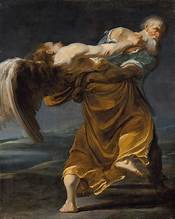
Jacob left God no other choice. In one of the most understated verses in scripture, a “man wrestled with him until daybreak.”

It’s almost as if Jacob turned to run away again only to be tackled by a man ready to rumble. Theologians debate whether this man was an angel, the pre-incarnate Christ or God himself. As far as Jacob was concerned, “I saw God face to face, and yet my life was spared.” (Gensis 32:30)

It’s almost laughable when you think about it: God wrestling a man. Yet, God and I have gone more than a few rounds over the years. I suspect you have, too. Each of us at one time or another has wrestled with what we know God is calling us to do.

In addition to his more manipulative traits, Jacob was also clever, resourceful, determined and strong-willed. He was all those things, but he was not yet surrendered. God knew it was time for Jacob to stop conniving, to stop running, so they fought it out in a match that lasted all night.

I don’t know about you, but some of my wrestling matches with God last a lot longer. I can put up a quite the fight when I don’t want to do what God wants me to do. I can find excuses or what I think are pretty valid reasons why I’m right and God is wrong. My ideas always seem better.

Notice this, however. Jacob’s bout with God didn’t last until daybreak because he and God were evenly matched. The prolonged struggle lasted as long as it did because God was exposing Jacob’s stubborn independence.

When we are wrestling God for control of our lives, that fight goes on until we recognize our own stubbornness. It will last until we surrender and call him Lord.

The scripture declares clearly the moment Jacob gave in. As the morning approached, I think he still wanted to run away…to do things his way. At that point, with a touch intended to put an end to Jacob’s resistance, God dislocated his hip. Running was no longer an option. Pastor Adrian Rogers put it this way, “God crippled him to conquer him.”

When Jacob realized he had no choice, he surrendered, wrapping his arms around the ankles of the only one who could make things right.

Here’s the interesting thing to me. One moment Jacob is wrestling against God; the next moment he is clinging to God. Jacob, the man who had stolen the blessing of his father, was now begging for the blessing of the Father God.

When Jacob said, “I will not let you go unless you bless me,” it is not defiance, it’s desperation. Jacob quit fighting to win and started depending. Wrestling became an embrace.

In a culture that prizes self-sufficiency and self-reliance, surrender seems a coward’s option. It may well be one’s greatest act of courage. God’s work in us flows best through surrender.

Jacob’s story reflects our own tendency to run from God’s call, conviction or presence. Like Jacob, we are met by God, through circumstances, reflection or divine confrontation. Sometimes, he stops us in our tracks so we can no longer run from him.

Surrender brings transformation.

Your name will no longer be Jacob, but Israel, because you have struggled with God and with men and have overcome. (Genesis 32:28)

It’s not saying he outwrestled God. Jacob overcame his own stubbornness, his own self-reliance.

Theologian Frederick Buechner called Jacob’s divine encounter at the Jabbok River the “magnificent defeat of the human soul at the hands of God.” In Jacob’s story we can easily see our own struggles with our desire to take control of our lives. Our failed efforts to find escape from our own fears and vulnerabilities.

Out of these experiences God offers blessing.

In the end, God did what he had to do. He confronted Esau. He grappled all night for what was truly important. When Jacob could wrestle no longer, he surrendered. He clung to God with greater strength than he resisted, realizing that he could not go on without him.

Jacob’s story invites us to ask simple but searching questions: Why am I still wrestling? Where am I still wrestling with God? The blessing came only when Jacob stopped resisting and held on in surrender. The same is true for us.

God meets us in the places we fear most, not to destroy us, but to reshape us. And though surrender may leave us limping, it also leaves us blessed.

Next time you see me, I hope you see me limping.

Thinking Points

Where in my life am I still trying to manage outcomes instead of trusting God?


What fear or unresolved situation keeps me looking for an escape route?


What would it look like for me to stop wrestling with God and start clinging to him?


What new identity or new way of walking might God want me to embrace when I surrender control to him?

The Word Became Flesh

Focal Passages: Luke 2:1-14; John 1:1-14

There is no expectant mother traveling to a distant village.

No Bethlehem.

No inn, crowded or otherwise.

There are no shepherds tending their sheep in the fields.

No angels proclaiming good news and glad tidings.

There is no star. No wise men from the east.

There is no baby, wrapped in swaddling clothes and asleep in a manger.

That’s Luke’s story to tell.

When he wrote his gospel, John takes the Bible’s Christmas story to a different level, focusing not on the earthly scene, but on the eternal reality it represents. The first Chapter of John tells the Christmas story from heaven’s viewpoint.

While Matthew and Luke describe how and where Jesus was born, John explains who Jesus was and is: the eternal Word…the Creator…the Light entering darkness…God becoming flesh.

John tells us about the one who came into the world to give us the right to become children of God.

If Matthew and Luke give us the method by which Jesus came to live among us, John shares the divine meaning and purpose behind the baby in a manger. He tells us why. It is no less a Christmas story than the one that will be repeated a million times in the days to come.

In the beginning was the Word, and the Word was with God, and the Word was God. He was with God in the beginning. Through him all things were made; without him nothing was made that has been made. (John 1:1-3)

It’s difficult for finite minds like ours to grasp the true nature of God. John sees the one he calls “the Word” not as an idea or thought, but as the living expression of God himself. The Word did not observe creation from a distance. The same hands that formed the stars would be wrapped in human flesh, grasping the offered forefinger of his mother. The voice that spoke with such clarity as it spoke the universe into existence, would cry in hunger in the middle of the night.

John viewed Jesus as the word of God. God’s revealed word. Present as God and with God from the time before creation.

Christmas is not merely the story of a baby being born—that happens every day. Christmas is the story of the Creator choosing to identify with you and me in every way. Choosing to draw near to his creation, not in the magnificent and extraordinary, but in the mundane and ordinary. The Word chose to come quietly and humbling, as a child.

In those days Caesar Augustus issued a decree that a census should be taken of the entire Roman world. (This was the first census that took place while Quirinius was governor of Syria.) And everyone went to his own town to register. So Joseph also went up from the town of Nazareth in Galilee to Judea, to Bethlehem, the town of David, because he belong to the house and line of David. He went there to register with Mary, who was pledged to be married to him and was expecting a child. (Luke 2:1-5)

An emperor’s powerful decree set history in motion, another phase of God’s ordained and eternal plan. The dusty roads of Galilee and Judea brought a young couple on the path of ancient prophecy. Not human administration, but divine orchestration.

Bethlehem, a small, easily overlooked village, would become the agent of God’s purpose. The Word who shaped time and space, now entered it. A heavenly throne morphed into a manger.

While they were there the time came for the baby to be born, and she gave birth to her firstborn, a son. She wrapped him in cloths and placed him in a manger, because there was no room for them in the inn. (Luke 2:6-7)

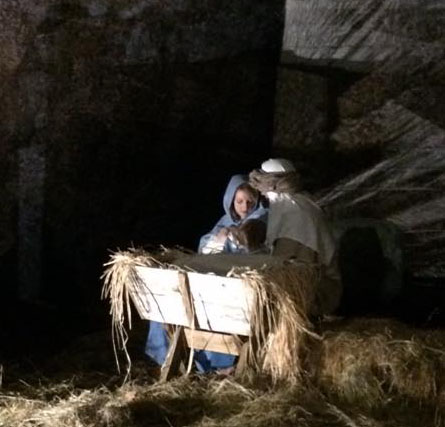
No trumpet sounded. No palace gates opened. No one rolled out the red carpet. The Son of God arrived in silent wonder. The Word rested where animals fed. Swaddled in soft and simple cloth, held by the trembling arms of a first-time mother. The world he made had no room for him. His creation failed to recognize his presence.

Heaven, however, watched closely every moment. Heard every cry that echoed with the sound of redemption. Light had entered the darkness.

In him was life, and that life was the light of all men. The light shines in the darkness, but the darkness has not understood it. The true light that gives light to every person was coming into the world. He was in the world , and though to the world was made through him, the world did not recognize him. He came to that which was his own, but his own did not receive him. (John 1:4-5,9-10)

A child was born. He arrived as light and life. Where sin cast its long shadow, he brought truth. Where fear held sway, he brought hope. Where death claimed victory, he brought life.

Shrouded in darkness, the world did not welcome him, but it could not extinguish the light. Heaven chose to amplify it.

That Light arrived not in palaces or courts…not as a gift for kings or a performance limited to the world’s elite. No. It arrived in fields beneath the open sky, announced to unassuming shepherds working in the fields.

And there were shepherds living out in the fields nearby, keeping watch over their flocks by night. An angel of the Lord appeared to them, and the glory of the Lord shone around them, and they were terrified. But the angel said to them, “Do not be afraid. I bring you good news of great joy that will be for all the people. Today in the town of David a Savior has been born to you; he is Christ the Lord. This will be a sign to you: You will find a baby wrapped in cloths and lying in a manger.” Suddenly, a great company of the heavenly hosts appeared with the angel, praising God and saying,

Glory to God in the highest,
And on earth peace to men
on whom his favor rests.”
(Luke 2:8-14)

While the world slept, heaven danced. While the earth remained deaf to the Word, the angels sang. Hear God tell you the same thing he told the shepherds. “Do not be afraid.” Celebrate the good news. Embrace the joy God offers all of us. A savior has been born…Christ the Lord. When your heart’s darkness gets driven out by the light, you can give glory to God. You can find the peace God that only comes from becoming a child of God.

Yet to all who received him, those who believed in his name, he gave the right to become children of God…The Word became flesh and made his dwelling among us. We have seen his glory, the glory of the one and only who came from the father, full of grace and truth. (John 1:11-12,14)

On that night in Bethlehem, grace lay in a manger and truth had a heartbeat. God entered our world to live as we live. To experience what we experience. To show us how to live. To be the Word and Light.

The baby with no permanent place to stay came to bring us home with him. To embrace us as his children.

The Christmas story as told by Luke and amplified by John is the penultimate chapter in what Archbishop Fulton Sheen called “the greatest story every told.” A story culminated with Jesus’ sacrificial death and resurrection. It is God’s gift to you and me.

For God so loved the world, that he gave his one and only son, that whoever believes in him shall not perish, but have eternal life. (John 3:16)

Author’s Note

The world needs Christmas. I hope you find the time to ease the frenetic pace to a slow walk with family and friends. Set aside the worry and the uncertainty and enjoy the moment. I pray that you experience those quieter moments this holiday season.

The world needs Christmas. Not the tinsel and the trees, but the peace and goodwill about which the angels sang. This year may God give you a genuine sense of his presence and his love not just on Christmas morning every day thereafter. May realizing his presence and love bring you and yours his peace and goodwill.

Merry Christmas!

Thinking Points

John presents Christmas from heaven’s perspective, less about the person of Jesus and more about his purpose. How does viewing Jesus as the eternal Word change the way you understand the meaning of Christmas in your own life?


“The world did not recognize him.” In what ordinary, quiet, or unexpected ways might Christ be present today that you are tempted to overlook or ignore?


The angels announced peace to those on whom God’s favor rests. What fears or burdens might you need to release this Christmas in order to truly find the peace Jesus came to bring?

The Prophets’ Christmas

Focal Passage: Isaiah 7:14 & 9:6-7; and Micah 5:2-5

It’s the Christmas season. The time when God stepped into the world with love, grace, humility and hope.

Through the years, I’ve written about Christmas from every angle and angel. I’ve studied the coming of the Messiah through the eyes of his earthly parents, the shepherds, the magi, and paranoid Herod, a priest name Simon and an elderly, devout woman named Anna. I’ve even written a more fanciful piece about the birth of Jesus from the eyes of a lamb.

As I looked to begin my study this year of the moment God sent his son into the world, I want to look at that moment from the eyes of the Old Testament prophets.

Scripture teaches that the moment God opted to grant humanity free will, he knew we would use that freedom to rebel against his plan for our lives. From the beginning of time, then, God had to find a way to bring his lost children back to him, despite the spiritual abyss we would create between us and God by our sinfulness. Before he put the world in place and set it spinning on its axis, he planned on Jesus.

Look at what Paul tells Timothy.

He has saved us and called us to a holy life—not because of anything we have done but because of his own purpose and grace. The grace was given to us in Christ Jesus before the beginning of time, but it has now been revealed through the appearing of our savior Christ Jesus who has destroyed death and brought life and immortality to light through the gospel. (2 Timothy 1:9)

Redemption was not an afterthought or a Plan B. It was purposeful and intentional. Therefore, God needed to convince us of our need for him and introduce to us the one he would send to show us the way home.

Enter the prophets. As God gave them words to speak, he wove through their prophecies a thread of redemptive hope with its beginnings in a Bethlehem manger.

The prophets lived centuries apart from one another. They lived amid completely different circumstances. Led different lives. Wrote in different eras. Served up judgment on a platter to different kings. They spoke God’s word of divine judgment, repentance and restoration to different generations.

Much like the blind men discovering an elephant, each prophet understood God’s Anointed One in part, but never in whole.

They never met Mary or shook the hand of Joseph. They never heard the angels sing. They never walked the streets of Bethlehem. They never felt the joy the shepherds felt. Never marveled alongside the magi. Never held the baby in their arms. Never saw what they foretold come to pass.

Yet, thanks to a revelation from God’s spirit, they all pointed in somewhat different ways to the same moment; to the same someone. They saw who he would be. Knew what he would do. Understood the titles he would carry. They all spoke of Jesus, even when they never knew his name.

And on the night Jesus was born, their words—scattered across centuries—were suddenly fulfilled in the form of a swaddled infant, in the outskirts of an obscure village, in a makeshift crib filled with hay.

The Word became flesh and made his dwelling among us. (John 1:14)

That moment began the fulfillment of every prophetic word spoken for hundreds of years prior to that first Christmas morning.

Isaiah’s Whisper

The prophet Isaiah’s prophetic message almost 750 years before the birth of Jesus came at a time of national fear. His people faced a looming and hostile invasion, political collapse and spiritual confusion. In that sense, Isaiah’s words feel like a quiet voice spoken in a dark moment. Almost a whisper carried to people who were afraid of and unsure about the future.

While he warned of judgment and called for repentance, he promised that God had not forgotten them. He shared with them the hope of the Messiah and the arrival of the kingdom of God. Isaiah spoke about a miraculous moment in time.

A virgin will conceive and bear a son; and they will call his name Immanuel. (Isaiah 7:14)

God’s message through Isaiah didn’t stop there, as if the miraculous birth was the climax of the Creator’s eternal work. God revealed to his prophet another nuanced layer.

To us a child is born, to us a son is given, and the government will be on his shoulders. He will be called Wonderful Counselor, Mighty God, Everlasting Father, Prince of Peace. Of the greatness of his government and peace there will be no end. He will reign on David’s throne and over his kingdom establishing it and upholding it with justice and righteousness from that time on and forever. The zeal of the Lord Almighty will accomplish this. (Isaiah 9:6-7)

Isaiah’s prophecies waited for more than seven centuries. On the night of Jesus’ birth, his words were no longer ink on faded parchment. His words were a baby, born to a faithful carpenter and young woman whose heart found favor with God.

Micah’s Confidence

The prophetic ministries of Isaiah and Micah overlapped in time and circumstance. Micah saw the same corruption in Jerusalem. Felt the same fear of an Assyrian invasion. Yet, he confidently condemned the injustice he saw among leaders and spoke of the pending judgment upon a people who had turned their backs on God.

He stood in the gap and told the people that, despite the hardships to come, God promised a future ruler from Bethlehem who would be their good shepherd and herald a time of peace. This “messianic hope” appears especially in Micah 5:2–5, spoken as reassurance that God would raise a true king after Israel’s failed leadership. Look at the words God gave him to speak.

But you, Bethlehem Ephrathah, though you are small among the clans of Judah, out of you will come for me one who will be ruler over Israel, whose origins are from the old and ancient times. He will stand and shepherd his flock in the strength of the Lord, in the majesty of the name of the Lord his God. And they will live securely, for then his greatness will reach the ends of the earth. And he will be our peace… (Micah 5:2, 4-5)

For generations, the small and unimpressive village of Bethlehem sat unnoticed in the Judean hillside, but God, 700 years before, had written its future. Bethlehem would play a role in God’s plan through the cries of an unlikely king and the redemptive work of Jesus Christ.

Though many other prophets shared God’s word about the ministry and mission of the coming Messiah, Isaiah and Micah are the only two who described details of his birth. Did any of these prophets fully understand the whole picture? I doubt it.

Do you remember when Jesus sent his disciples throughout Galilee, telling them they would be given power to preach and to heal in his name? They returned from that first century mission trip amazed how God had used their preaching and ministry to bring salvation to so many people.

After praying a prayer of gratitude to the Father for the work they had done, Jesus, filled with joy, pulled his disciples aside. Listen to what he told them.

Then he turned to his disciples and said privately, “Blessed are the eyes that see what you see. For I tell you that many prophets and kings wanted to see what you see, but did not see it; to hear what you hear but did not hear it. (Luke 10:23-24)

So, if the prophets never saw or heard the whole picture, why do they matter? Why do the partial images they revealed about Jesus’ birth and life and death and resurrection matter to you and me on this side of that first Christmas?

It matters because Christmas is not an isolated event. It is the beginning of the rest of the story.

Every promise—
every symbol—
every sacrifice—
every prophecy—
every hope—

pointed toward Bethlehem and Immanuel, God with us.

The prophets did not live to see it, but you have. Listen to John’s words again.

The Word became flesh and made his dwelling among us.

Then, look again at the words of Jesus.

Blessed are the eyes that see what you see. Blessed are the ears that hear what you hear.

You see, Isaiah’s world was not a lot different from our own. Hostility. Political uncertainty. Spiritual confusion. His words still feel like a quiet whisper spoken in a dark moment to people unsure of the future.
His message does not change.

To you a child is born. To you a son is given.

Can you see it? Can you hear it?

That’s Christmas!

If you are a believer in Christ, the prophets words link the past to your present. God’s promises are your truth. They are confirmation of God’s plan of redemption through the baby in a manger who grew to be your substitute on a cross–the living and resurrected Jesus. You are blessed to have seen what you have seen and heard what you heard.

If your Christmas lacks the meaning you see in those who believe, the visions of the prophets are your markers. The waypoints on a spiritual journey that will reveal the depth of God’s love for you in the truth of Jesus Christ. The promises of the prophets are fulfilled in Jesus. Their longing can be your joy as it is mine. See it. Hear it. Your blessing awaits.

Let this be our Christmas prayer for 2025.

“Lord, thank you for speaking through the prophets and for fulfilling every promise in Jesus. Let the hope that sustained them also sustain me. Teach me to trust your timing and rejoice that your Word always becomes flesh. Amen.”

Thinking Points

How does thinking about Christmas through the voices of the prophets deepen your understanding of God’s long-planned redemption?


How has the Word “become flesh” in your personal story? In what ways has that baby in a manger changed your heart and your world view?


What keeps me from recognizing the blessings I already “see and hear,” blessings the prophets longed for but never experienced?


How might embracing the continuity between the prophets’ longing and Christ’s coming reshape the way I enter this Christmas season?

A Bit of Catharsis

Focal Passage: James 3:2-12

Aristotle used his position as philosopher and teacher to analyze and explain Greek drama. In his work Poetics, Aristotle studied Greek tragedy and epic poetry, outlining the principles of plot, character and catharsis.

Catharsis is the process of releasing strong and repressed emotions, leading to a sense of peace and renewal. In psychology, it refers to the expression of pent-up feelings like anger, grief or fear to reduce inner tension. Catharsis is an emotional release that brings clarity and healing.

I wrote a Bible study this week that felt cathartic. It was my gut reaction to all that has happened in our country over the past two weeks. My sadness that yet more acts of violence were committed by someone who thought such heinous acts would provide their catharsis.

Anger at the rhetoric spewing from politicians and presidents that seemed more intent on deepening the hurt than healing it. Anguish that my grandchildren had to hear such language from people in leadership positions. Fear for a nation that has lost its sense of direction and decency.

As I laid in bed last night, reflecting on what I had intended for you to read this morning, it was anything but cathartic. It was…misdirected. There was certainly no clarity or healing. No release of inner tension.

There’s a short passage of scripture in Luke that tells us of a time when Jesus “resolutely set out for Jerusalem,” marching toward the culmination of his ministry, his death on the cross. Jesus sent some disciples ahead of him into a village in Samaria to make plans for an overnight stay.

The people in the village refused to extend hospitality to Jesus. They “did not welcome him because he was heading to Jerusalem.” The political, racial and religious hatred between Samaritans and Jews ran so deep, they put out a “no vacancy” sign and told him to move along.

When the disciples James and John saw this they asked, “Lord, do you want us to call down fire from heaven to destroy them?” But Jesus turned and rebuked them, and they went to another village.” (Luke 9:51-55)

For the Sons of Thunder, as Jesus teasingly once nicknamed James and John, it might have been cathartic to blast the disrespectful villagers, but it would have changed nothing. What I wrote yesterday was my “fire from heaven.” Lying in bed, I felt Jesus’ rebuke.

Less condemnation. More compassion.

Less brimstone. More benevolence.

Followers of Christ must speak with a different voice. All too often these days, that’s not what’s happening. The discarded file in my computer’s trash box is my testimony.

I woke up with this morning with the reminder of how difficult it is to repair the damage done when people who publicly profess a faith in Christ with one breath use the next breath to dehumanize those who believe differently or support policies and programs that marginalize and hurt people. As soon as that happens, our testimony about the life-changing presence of Christ falls on deaf ears.

As Christians, our words must be measured by the grace we’ve been shown by God through Christ. The words I wrote this week were not measured in grace. For that, I ask God’s forgiveness.

That’s why I turned to scripture again this morning to remind me how I am called to live and speak…so I can be the model my grandkids need to see and hear to counter the messages they’re getting from the world out there.

In Colossians 4:6 Paul encouraged the church to be wise in how they act toward others and wise in what we say. It’s a great reminder for today…for me and, I suspect, for all of us.

Let your conversation be always full of grace, seasoned with salt, so that you may know how to answer everyone.

It’s another way of saying, “As you talk to others about anything and everything, let your words, once uttered, leave a good taste in your mouth.”
Paul had spent time immediately before penning those words that our goal is to grow to be more Christ like in how we live and what we say.

But now you must rid yourselves of all such things as these: anger, rage, malice, slander, and filthy language from your lips. Do not lie to each other, since you have taken off your old self with its practices and have put on the new self which is being renewed in knowledge in the image of its Creator. (Colossians 3:8-12)

Then, in his letter to the church in Ephesus, he taught that believers in Christ should take a verbal Hippocratic oath to build and strengthen, to “do no harm” in the things we say to others.

Do not let any unwholesome talk come out of your mouths, but only what is helpful for building others up according to their needs, that it may benefit those who listen.” (Ephesians 4:29)

James, the half-brother of Jesus, who became a driving force in the early church after Jesus’ death and resurrection, wrote his letter to fellow believers encouraging them toward a life characterized by genuine faith that demonstrated itself in good work and good words. As one who once called Jesus “out of his mind,” James knew how easily it is in our sinful humanness to say things that damage the cause of Christ.

Look at what he wrote.

With the tongue we praise our Lord and Father, and with it we curse men who have been made in God’s likeness. Out of the same mouth come praise and cursing. My brothers, this should not be! (James 3:9-10)

We can’t effectively share our testimony of Christ at work in our lives when our next breath demeans and dehumanizes those who challenge us. Our words need to be consistent in sharing Christ’s love. Our sinful nature makes that so incredibly hard to do.

James said that no one can truly tame the tongue. “It is a restless evil, full of deadly poison.”

It is God’s wisdom revealed to us and through us that ultimately tames the tongue, providing the antidote to its poison.

The wisdom that comes from heaven is first of all pure, then peace-loving, considerate, submissive, full of mercy and good fruit, impartial and sincere. Peacemakers who sow in peace raise a harvest of righteousness. (James 4:17-18)

By the same token, Jesus said our words would make clear to others our heart. What we feel in our hearts we will express. We will be accountable to God for the how our talk aligns with our walk. How the speech from our heart aligns with his heart.

“For out of the overflow of the heart the mouth speaks. The good man brings good things out of the good stored up in him. But, I tell you that men will have to give account on the day of judgment for every careless word they have spoken. For by your words you will be acquitted and by your words you will be condemned. (Matthew 12:34-37)

There is a bit of Jewish folklore that makes some sense here. A man, angry at another, went from neighbor to neighbor spreading some vicious rumors about the one who made him so mad. Later, convicted of his own guilt, the man asked his wise rabbi how he could atone for his mistake. “Take your pillow,” advised the rabbi, “cut it open and scatter the feathers on the wind. Once that’s done, gather all the feathers again and stuff them back into the pillowcase.

“That’s impossible,” said the man.

The rabbi answered, “So it is with words once they leave your lips.”

Ultimately, all I can tell my grandchildren is that all of us have a lot of feathers to pick up. I’ve been picking them up all morning.

The goal is to become so Christlike in our talk and walk that each day we find ourselves picking up fewer and fewer feathers.

I find that cathartic.

Thinking Points

How does the way we speak about others–especially those with whom we disagree–shape the witness of our faith?


What makes it so difficult, even for believers, to keep our words consistently filled with grace instead of anger or insult?


If words are like feathers scattered in the wind, what practical steps can we take to repair the damage once they’re spoken?


How might our personal and political discourse change if every Christian lived by Paul’s instruction to let their words be “full of grace and seasoned with salt?

What’s Love Got To Do With It?

Focal Passage: I Corinthians 13:1-13

I sang a duet this week with Pop/Soul recording star Tina Turner. She didn’t know it, but I certainly did. Listening to Sirius Radio’s Classic Hits station in my car this week behind the protection of my tinted windows, Tina and I belted out her soulful and defiant rendition of What’s Love Got to Do with It? Personally, I think I nailed it!

While my voice probably added little value to the 1980s hit, Tina’s husky voice gave the song a raw, emotional edge that made it feel lived in rather than just performed. What’s Love Got to Do with It? became Tina’s “anthem of independence,” a song that questioned love’s place in relationships while asserting her own strength.

What’s love got to do with it?

You may find it hard to believe, but that’s essentially the question Paul asked the people in the church at Corinth over 2,000 years ago. Let’s jump back in time for a bit.

Paul established the church in Corinth during his second missionary journey around 50 AD. While the church was doing some good things, it also struggled to stay grounded in Christ as Paul taught them. Some of the believers had a tendency to drift back into their old way of life, indulging in sexual immorality or blending aspects of their former pagan worship into their new beliefs.

Others, gifted by God for ministry in various ways, tended to believe their gifts were of greater value than others and considered themselves better than their fellow church members. Evidently, it led to some nasty arguments among them and more than a little name calling.

When the situation got bad enough, some folks in the Corinthian church, trying to do things the right way, boarded a boat and crossed the Aegean Sea from the port of Cenchreae (near Corinth) to Ephesus, a journey of about 200 nautical miles. They came to Paul, sharing what was happening back home and seeking his counsel.

While they struggled with a great many things, the story of the Christians in Corinth was a sad tale of dissension and disunity. All the infighting within the church damaged their witness for Christ. As a result, Paul sat down and wrote a corrective letter to his “brothers and sisters,” urging them to “end the divisions among you” and to be “perfectly united in mind and thought.” (I Corinthians 1)

At one point Paul addressed the issue of their disunity by explaining that God grants everyone abilities and spiritual gifts to be used to build up each other and the church as they work together to advance the cause of Christ. One gift is not greater than the other, making each person valuable to God’s kingdom.

Then, Paul shows them “the most excellent way” to end their divisiveness. As he did so, he wrote perhaps one of the New Testament’s most memorable passages: I Corinthians 13. Take a look.

If I speak in the tongues of men and of angels, but have not love, I am only a resounding gong or a clanging cymbal. If I have the gift of prophecy and can fathom all mysteries and all knowledge and if I have a faith that can move mountains, but have not love I am nothing. If I give all I possess to the poor and surrender my body to the flames, but have not love, I gain nothing.

Love is patient, love is kind. It does not envy, it does not boast, it is not proud. It is not rude, it is not self-seeking, it is not easily angered, it keeps no record of wrongs. Love does not delight in evil but rejoices with the truth. It always protects, always trusts, always hopes, always perseveres. Love never fails. (I Corinthians 13:1-8a)

It’s difficult to read these verses, as I often do, and not hear wedding bells. In fact, my wife and I chose these verses to be read at our wedding 50 years ago. While they fit quite well shoehorned into a marriage ceremony, it’s not what Paul had in mind when he penned them.

Paul needed the believers in Corinth to start loving each other as Christ loved them. To express love for each other and for the lost as a priority over everything else. Love, Paul believed, is the litmus test of our life in Christ, proving that we are his.

It wasn’t a thought unique to the apostle. Jesus taught his disciples the same thing just prior to his death on the cross.

A new command I give you: Love one another. As I have loved you, so you must love one another. By this shall all me know that you are my disciples, if you love one another. (John 13:34-35)

The love both Jesus and Paul spoke about is selfless love as defined in the Greek word agape. It was modeled by Christ throughout his life and upon his death on the cross for our sins. Self-giving. Sacrificial. Always seeking good for others even when they don’t deserve it.

Given the attitudes of many in the Corinthian church, Paul described not what love is, but how love acts—less descriptive adjective and more active verb. If our love fails to positively engage in the joy and hurt of others, if love fails to extend God’s grace , we accomplish nothing. We gain nothing.

That sounds harsh. There is a Latin phrase—sine qua non—that means essentially, “if you don’t have this, you don’t have anything.” Without love, the rest comes off no better than Professor Harold Hill’s River City Marching Band, a lot of notes, but very little music. Whatever we tried to accomplish gains nothing.

When considered in the context of Paul’s instruction to the Corinthian church, love expressed in patience is our choice to love someone not because of who they are, but in spite of who they are, in spite of what they’ve done to you. It is love that refuses to be offended and chooses again to see potential in others. Patient love does not demand instant understanding, but continues to disciple and teach.

A love expressed in kindness love isn’t just being nice. In the original Greek, the word for kind carries a sense of active gentleness that treats others with worth and dignity. It builds up others rather than tears down. It notices need and acts upon it. It is consistent in deeds, words and tone. It is love with hands and feet…and a gentle voice.

Paul also cites a litany of things love is not. He’s speaking directly to the Corinthians for whom love was, as Tina sang, a “second-hand emotion” forgotten amid the disharmony.

The attitudes of some within the church were envious, boastful, rude, self-seeking and angry toward others they deemed unworthy of their time and help. They diminished their giftedness by their lack of genuine love toward others. These attitudes were tearing apart the church and proving to be an ineffective witness.

“Love never fails,” Paul said. It always wraps its arms around the hurting. Love gives the benefit of the doubt by looking for the good in others. It clings to hope when change, healing or reconciliation is needed. It perseveres through the toughest of times, never giving up on God. Never giving up on others.

It must have hurt the heart of God for the Corinthian church to fall into such a destructive pattern of life. When you read through Paul’s letter, it’s not hard to imagine the hateful exchange of words among the believers who felt justified in their arrogance, believing themselves to be better, more faithful followers of Christ than others.

As I’m imagining their lack of love, I’m reminded of my own failure to extend love and grace to others in times they needed it most. I suspect you’re no different. We must do better.

Though I sometimes fail in that regard, I cringe when professing Christians post angry tirades on social media toward non-believers or even other professing Christians who hold differing views on the social, political or even spiritual topic of the day. I groan at the damage done to the cause of Christ when professing Christians in high political or social positions question with hateful words the faith of others who stand against their programs and policies.

Not everyone who loves is Christian, but every Christian should love always– because God first loved us.

Dear friends, let us love one another, for love comes from God. Everyone who loves has been born of God and knows God. Whoever does not love does not know God, because God is love. (I John 4:7-8)

Therein lies the challenge for our faith in our world today. To set aside the divisions and the disunity among us and love nonetheless. To pray sincerely for a change of heart for those who are so hurt they have to hate. Let love start with me. Let it start with you. As we grow in love, maybe we can love others into loving others.

Paul ends his discussion on the subject of love with this:

And now these three remain: faith, hope and love. But the greatest of these is love. (I Corinthians 13:13)

You see, as critical as faith and hope are to our present days, love supersedes them both. For one day, when we see Christ face to face, faith and hope will no longer be necessary.

Faith is that conviction that anchors us in Christ. Yet, one day in God’s kingdom, faith will give way to sight. We won’t need faith once we see him face to face. Hope, our confident expectation of God’s eternal promises, sustains us through this life. Once we have received what we long for in Christ, hope has served it’s purpose

Love never ceases. Love is not something God gives, it is who he is. In Christ, love will never fail or be replaced in heaven, it will only be perfected. Because love embodies the character of God as shown in Christ, it is our highest expression of spiritual maturity and the truest mark of any disciple.

That’s what Paul told the Corinthian church. It’s what he is telling us today. Measure your spiritual life not by the knowledge you attain, not by your giftedness and not the strength of your faith or the depth of your hope. Love is the proof of a life lived for Christ.

So, what’s love got to do with it?

Simply everything.

Thinking Points

In what ways am I tempted to value certain gifts, accomplishments, knowledge or opinions more than love?

When I am confronted with people who think, believe or act differently than I do, do I lean on active patience and kindness or do I fall back on something else?

Since love is eternal, how should that reshape the way I prioritize my relationships today?

React to this statement. Not everyone who loves is Christian, but every Christian should love? What does it say about our priorities?

Where might God be calling me to put love’s hands and feet into action this week?

What Will You Ask For?

Focal Passage: I Kings 3:5-12

I was in elementary school the first time I heard about King Midas. Mrs. Wallace, my third-grade teacher, introduced this piece of classical Greek literature to her class of farm kids.

If you recall the story, after extending kindness to one of Dionysus’ servants, the Greek god granted King Midas one wish.

Midas asked that everything he touched would turn to gold. It was a great wish as long as he touched a pile of stones or a palace wall. It was less desirable when he touched a rose or the turkey leg on his plate. It became a horrible curse when his daughter rushed to him in excitement and wrapped him in a hug. Just like the stones and the turkey leg, she, too, turned to gold.

While the story turned out okay in the end, Mrs. Wallace reminded us of the dangers of greed and pride. Then, as if we might find someone willing to grant us anything we wished, she told us to be careful what we ask for. She said it with such mystery in her voice, I don’t think I asked a question of any kind for the rest of that semester.

Midas wasn’t the only one to be granted a wish. It turns out that King Solomon faced a similar decision one night when God, the creator of the universe, came to him in a dream.

King Solomon spent the day offering sacrifices and incense in worship to God. In his exhaustion, he laid down to sleep. At some point in the night God spoke to him in a dream and asked that important question.

Look at I Kings 3:5.

Ask for whatever you want me to give you.

Solomon began with his heart in the right place. He responded to the blank check God offered to write by acknowledging that God had already done so much. He thought of God’s faithfulness and his promises to his father David. He thought about the joy of being David’s son and watching him serve as King of Israel.

Then Solomon got more personal with is gratitude that God had worked through circumstances to make Solomon king.

There is something innocent and intentional in his gratitude to God. Solomon recognizes he is where he is because God is faithful. That God, in his mercy and grace, did as he promised to David and to his people. By acknowledging God’s grace, Solomon expresses what is in his heart. Notice, though, that the grace Solomon senses is not the common grace God extends to all his creation. It is deeply personal.

Solomon, born to David and Bathsheba, was a child born of adultery, abuse of power and murder. Knowing how his life started, Solomon understands that his elevation as king is a clear act of God’s mercy and grace. Solomon knows where he is and who he is only because of God’s grace.

That’s when Solomon proved himself a wiser king than Midas. Look at I Kings 3:7-9. His thoughts express his gratitude.

Now, O Lord, my God, you have made your servant king in place of my father David. But I am only a little child and do not know how to carry out my duties. Your servant is here among the people you have chosen, a great people, too numerous to count or number.

Solomon was given an opportunity of a lifetime. Knowing it was within God’s power to grant, Solomon could go full bore Midas, asking that anything he touched might turn to gold. He could ask for immortality. He could ask for great victories in every battle, building a reputation to be feared and a powerful empire that no one could conquer.

Instead, in a moment of clarity and self-awareness, Solomon shared his vulnerability. He humbled himself before God, acknowledging that the situation overwhelmed him. The burden of leading God’s people weighed heavy on his shoulders and his spirit. Solomon realized his youth and inexperience could be a problem. Setting aside the pride that often comes with kingship, he understood his need for guidance as he governed God’s people.

At that point Solomon gets around to answering God’s question.

So give your servant a discerning heart to govern your people and to distinguish between right and wrong. For who is able to govern this great people of yours? (I Kings 3:9)

Solomon prays for wisdom and a listening heart. There isn’t a modicum of selfishness in the request. It’s not wisdom for wisdom’s sake. It’s not that he wants to be known as a wise king. His concern is for those he rules. That his own actions would reflect God’s will for Solomon and for God’s people.

When Solomon asks God for a discerning heart, he is asking for the ability to distinguish between good and evil, truth and error. To see what is helpful and not harmful. His request involves deep insight, moral sensitivity and spiritual wisdom. Rather than just knowing stuff, Solomon desires wisdom that transcends knowledge.

It’s the kind of wisdom that comes from God alone into a heart that is grateful, humble and focused on doing the will of God as he leads.

I studied this story recently as I prepared to teach my Bible Study class at South Main Baptist Church in Pasadena. Something about the passage caused it to keep resurfacing in my thoughts as if there might be something more I needed to learn. So, I spent some time looking again at the story.

The first thing that struck me this time was that God initiated the conversation during Solomon’s dream. Solomon had yet to voice his insecurities. Unsure if he had the ability to lead God’s people effectively, Solomon surely fretted over every decision. Doubting himself. Second guessing every call he made. Yet, he kept those thoughts to himself.

God, who certainly knew Solomon’s angst and fears, extended an invitation to the king he anointed. In essence, “Ask for whatever you want me to give you.”

Think about that for a second in a broader context that encompasses you and me. God wants to give us what we need to be the person he called us to be. It’s his fervent desire. So much so that he stands ready to provide what we need even before we know to ask for it.

It’s as if he’s telling you and me. “I’m here. I’m ready to help. I sense your struggle. Tell me what you need from me.” I find that both stunning and almost unimaginable!

It’s not that God doesn’t know what we need and is just waiting for us enlighten him. It is that he’s wanting us to reflect honestly on who we are, where we are in life and what we need from God to become the person he wants and needs us to be.

So, the passage tells me that God, in his generosity and grace, approaches his people eager to give us what we need.

Jesus encouraged his disciples with a similar thought. Once, after his disciples were so moved by Jesus’ prayer, they asked him to teach them how to pray as he did. He gave them a example to follow and then he said something that echoes what God shared with Solomon.

So I say to you: Ask and it will be given to you; seek and you will find, knock and the door will be opened to you. For everyone who asks receives; he who seeks finds and to him who knocks, the door will be opened. (Luke 9-10)

But, he didn’t stop there. Jesus, with, I suspect, a playful gleam in his eye and a giggle on his lips, went on to explain that God, like any good father, wants to say yes to our requests if he can.

Which of you fathers if your son asks for a fish, will give him a snake instead? Or if he asks for an egg will give him a scorpion. If you then, though you are evil, know how to give good gifts to your children, how much more will your father in heaven give the Holy Spirt to those who ask him! (Luke 11:11-13)

I don’t know whether the parallel is intentional, but it connected with me. See if this makes sense to you.

Jesus is promising a gift from God greater than anything else he could give us. “How much more will your father in heaven give the Holy Spirit.” That’s God in us. Always. His thoughts. His guidance. His counsel. His wisdom. Available to us if we only open our hearts and listen.

Now look at what God grants Solomon.

The Lord was pleased that Solomon had asked for this. God said to him, “Since you have asked for this and not for a long life or wealth for yourself, nor have asked for the death of your enemies, but for discernment in administering justice, I will do what you have asked. I will give you a wise and discerning heart so that there will never have been anyone like you, nor will there ever be.” (I Kings 3:10-12)

Is it a stretch to believe that the wisdom to discern and administer justice grows from the work of the Holy Spirit in our lives? The spirit of God within us who is our counselor enables us to listen with the ears of God, to act as his hands and feet, to discern right from wrong with the heart of God?

Is seems to me that when Solomon asks for a discerning heart, when he asks for wisdom, he’s asking for God’s spirit to guide his every thought and deed in ways that honor God. And God grants that request, not just to Solomon, but to us when the spirit comes upon us at the moment we give our lives to Christ.

It is this spirit that offers the discernment and wisdom we need to live the life to which he has called us. We just have to break down all our self-created barriers that keep us from accessing the spirit to the fullest.

That’s really the second truth revealed in this passage in I Kings. It goes back to what Mrs. Wallace said. Be careful what you ask for.

It’s Solomon’s response to the blank check he had been given that defines the rest of the story. In response to God’s invitation, Solomon demolished those barriers by sharing openly what was on his mind.

None of us want to be vulnerable, much less show that side of us to the world around us. The king was no different in that regard than each of us. In this critical moment with God’s invitation hanging in the air, Solomon opened his heart to God with the kind of deep humility that only the truly overwhelmed can know.

Look how Eugene Peterson says it in The Message.

And now here I am: God, my god, you have made me, your servant, ruler of the kingdom in place of David my father. I’m too young for this, a mere child! I don’t know the ropes, hardly know the ins and outs of this job. Yet, here I am, set down in the middle of the people you’ve chosen…

In that moment, we’ve invaded the privacy of his mind where Solomon is alone with his thoughts. We see him, at his most vulnerable: lost in his role and admitting to God that he is helpless on his own.

When given the chance to ask for anything, Solomon chose a listening heart. He chose discernment and wisdom. Even in his fragile state, Solomon realizes that his role in God’s kingdom is not about power and might, it is about serving. It’s about leading with love and justice.

Solomon’s humble heart reminds me that I don’t have to know everything. Even if it’s only in my quiet self, I can acknowledge my vulnerabilities and lay them before God, instead of pretending I have it all figured out.

All I need is the spirit’s indwelling presence that imbues me with a heart that listens and discerns truth. A heart dependent upon the wisdom of God available through the spirit’s counsel.

It’s something James, the half-brother of Christ, reminds us about at the beginning of his letter to believers.

If any of you lacks wisdom, let him ask of God, who gives to all liberally and without reproach, and it will be given to him. (James 1:5)

So, the creator of the universe, our father, extends us the same invitation that he extended to Solomon. “Ask for whatever you want me to give you.”

What will you tell him?

Thinking Points

When God tells you, “Ask for whatever you need me to give you?” what is the first thing that comes to your mind? How honest and vulnerable are you willing to be?

How can you cultivate a heart that seeks wisdom and discernment over personal gain or comfort?

In what areas of life do you need to invite God’s indwelling spirit to guide your thoughts and decisions more fully?

What barriers keep you from hearing the spirit’s wisdom and guidance in your daily life?

Independence Day

Focal Passage: Romans 8:1-2

Our nation will gather this weekend in various ways to celebrate the signing of that document on July 4, 1776. Enjoy the fireworks as they light up the sky. Let your flag wave. Hear the patriotic songs echo through the streets. Freedom is a beautiful gift, bought and paid for by the incredible sacrifice of so many men and women through the years.

Let’s enjoy the day and honor that sacrifice. Let’s also pray that our nation’s leaders uphold in every way the freedoms promised to all of us in the Declaration of Independence and those guaranteed in the U.S. Constitution.

President Thomas Jefferson, about a year before his death in 1826, responded to a letter from Henry Lee IV, an early American historian and the son of Revolutionary War hero “Lighthorse Harry” Lee. In a desire to better understand their motivations for seeking freedom from England, Lee asked Jefferson to explain why he felt compelled to write the Declaration of Independence.

Jefferson wrote back and explained. “This was the object of the Declaration of Independence. Not to find out new principles, or new arguments, never before thought of…but to place before mankind the common sense of the subject…” Jefferson said the document was simply to explain to the world why they chose to separate from English rule.

Read the opening two paragraphs of that cherished document through that lens as if Jefferson himself were reading it to you.

“When, in the course of human events, it becomes necessary for one people to dissolve the political bonds which have connected them with another, and to assume among the powers of the earth, the separate and equal station to which the Laws of Nature and of Nature’s God entitle them, a decent respect to the opinions of mankind requires that they should declare the causes which impel them to the separation.

“We hold these truths to be self-evident, that all men are created equal, that they are endowed by their Creator with certain inalienable Rights, that among these are Life, Liberty and the pursuit of Happiness.”

As one who loves history, the Declaration of Independence is a hallowed document for me. While I don’t do it every July 4, I have often read the Declaration in private reflection and gratitude for being blessed to live within the freedoms it holds dear. I believe it contains great words of promise still unfulfilled in some ways. America is still, and I suspect always will be, a work in progress.

Despite our failure at times to live up to the ideals expressed in the Declaration, I cherish those God-given, inalienable rights it holds true…rights that cannot be sold nor surrendered; rights that cannot be transferred or taken away. They belong to each of us fundamentally by the very nature of our citizenship and our existence as God’s creation.
Life, liberty, and the pursuit of happiness.

As a citizen of the United States, I reflected on the Declaration this week based on Lee’s question to better understand why the document was written. As a citizen of God’s kingdom, I think we must explore a much deeper and important question. What is the nature of true freedom? Is there a spiritual declaration of independence that promises life, liberty and the pursuit of happiness to those who live under the blanket of God’s love?

Paul, in his letter to the Romans, talked to them about his personal struggle with sin. He said his inability to obey the commands and laws of God, drove him farther from God, separated him. Sin became as death to Paul.

When I want to do good, evil is right there with me. For in my inner being, I delight in God’s law, but I see another law at work in the members of my body, waging war against the law of my mind and making me a prisoner of the law of sin…in my sinful nature a slave to the law of sin. (Romans 7:21-22, 25)

Paul declares that all of us fall under the tyranny of sin. He didn’t leave us there. Paul goes on to write what one might consider our spiritual Declaration of Independence.

Therefore, there is now no condemnation for those who are in Christ Jesus, because through Christ Jesus the law of the Spirit of life set me free from the law of sin and death. (Romans 8:1-2)

It’s a declaration of independence Paul echoes to the church in Galatia.

It is for freedom that Christ has set us free. Stand firm, then, and do not let yourselves be burdened again by the yoke of slavery (to sin). (Galatians 5:1)

By taking our sins to the cross, Christ has set free from sin all those who put their trust in him. As a child of God, I am free from the penalty of sin because Jesus already paid the price. I am free of the tyranny of sin and claim my independence from sin’s rule, its condemnation and its hold on me. I declare my freedom through Christ to live without fear of judgment and free to walk in righteousness in relationship with God. For each Christian, these verses are the foundation for a new, liberated life in Christ.

So, I can declare that winter day in 1962 when I gave my heart of Jesus as my Spiritual Independence Day. Your day of independence may be different, but it is just as real.

As ones now living in the freedom God provides, these truths then become self-evident. That we, by virtue of being his sons and daughters through Christ, are endowed or gifted by our Creator with certain inalienable rights; rights that cannot be sold, surrendered, transferred or taken away. Among these rights are life, liberty and the pursuit of happiness.

Life

Listen to the words of Jesus…

I am the resurrection and the life. The one who believes in me will live, even though they die.” (John 11:25-26)

God has given us eternal life, and this life is in his son, whoever has the son has life. (I John 5:11-12)

Jesus’ death and resurrection conquered sin and death and provides the gift of life eternal, liberated from the finality of death. However, that’s just the starting point. It offers so much more.

I have come that you might have life and have it more abundantly. (John 10:10)

This is a promise that life is not just eternal. It is, in the present, full of meaning and purpose. Because of Christ, we live in the abundance of God’s love and grace. Because this life is a gift from God through our belief in Christ, one that we don’t have to earn through perfect obedience or good works, we can live with confidence and hope. Eternal life is promised and assured because we belong to him.

That relationship we have with Jesus means that life in Christ is not just about surviving or punching a ticket to heaven. It is a life filled with purpose, joy, peace and an abiding richness for today. It is a life marked by our ability to experience life as God intended it to be, in service to others and overflowing with his grace.

I find that life-changing.

Liberty

To the Jews who had believed in him, Jesus said, “If you hold to my teaching you are really my disciples. Then, you will know the truth, and the truth shall set you free. (John 8:31-32)

When these same people struggled to understand the freedom Jesus offered, he told them.

I tell you the truth, everyone who sins is a slave to sin. A slave has no place in the family, but a son belongs to it forever. So, if the son sets you free, you are free indeed. (John 8:34-36)

When you get right down to it, that last verse is the Christian’s cornerstone of hope. Jesus has the authority and power to break sin’s hold on us. Because of this, when we trust him, he welcomes us into his family as sons and daughters with permanent belonging. It is not just freedom from guilt or punishment, it is a new identity, one that is not only empowering in the present, but secure and eternal for life to come.

I find that liberating.

Pursuit of Happiness

Let’s deepen the definition of happiness to joy…that abiding sense of gladness, well-being and contentment that is grounded in God’s character, his promises and his presence. Paul draws upon this to remind us that this kind of happiness or joy is not determined by circumstances, but through the power of God’s spirit.

I have learned the secret of being content (joyful) in any and every situation. I can do all this through him who gives me strength. (Philippians 4:11-13)

Even in the face of what seems insurmountable, we find joy in Christ because of the strength he gives to endure and overcome.

Let all who take refuge in you rejoice; let them ever sing for joy, and spread your protection over them, that those who love your name may exult in you. (Psalm 5:11)

Joy comes in relationship to God, anchored in knowing him, trusting his love and experiencing his protection and grace. The Psalmist said that all who take refuge in God rejoice or exult. Exult is not a word we use often, but we should in this context. It means a triumphant joy, to be exceedingly glad. It expresses emotional elation and spiritual celebration of all God has done for us.

Jesus knew this kind of joy because of his connection to his father. He longed for his followers to feel the same. When we remain connected to Christ as he was connected to God, listening to his word, being obedient to his teachings, our joy grows. It transcends the circumstances. In Christ we find a joy that is full and complete. A joy that is resilient in the face of difficulty.

“I have told you this so that my joy may be in you and that your joy may be complete. (John 15:11)

I find that makes me happy.

It’s good to celebrate our national independence and remember to hold dear the rights and responsibilities such freedom requires. It is equally important to celebrate our spiritual Independence Day and to hold dear the life, liberty and happiness it promises and to bear the deeper responsibility it requires to live worthy of the freedom it provides.

Thinking Points

When you read the opening words of the Declaration of Independence, what thoughts or emotions stir in you about the freedoms we enjoy today? What can we do to ensure that those freedoms remain for future generations?

Paul writes that “it is for freedom that Christ has set us free.” What does spiritual freedom mean to you personally, and how have you experienced it in your own life?

How do you see the “life, liberty and pursuit of happiness” promised by God through Christ differently from the freedoms promised by our nation?

Reflect upon your own Spiritual Independence Day,” that moment when you gave your heart to Christ. How has that decision changed you and how has it shaped your life since?