Wrestling With God

Focal Passage: Genesis 32:24-32

When a Bible passage becomes a mirror into your own life, it’s time to sit up and pay attention. I read the story of Jacob in Genesis 32 this week, finding that I identified all too well with him.

How often have I tried to cling to control or run away when facing some hard truth? How often have I simply trusted in my own cleverness more than I trusted in God’s providential care?

Jacob’s story tells me there comes a time when God no longer lets us keep doing things our way. There comes a time when we find ourselves wrestling with a loving God who refuses to let us stay the same.

I wonder if, like me, you can see yourself mirrored in Jacob’s life. Think about it.

*****

Jacob stood alone on the bank of the Jabbok River on a night that probably felt darker than any he had known.

Over the course of the day, he had sent out three separate caravans loaded with lavish gifts, sending them across the river on a march toward his estranged twin brother Esau. Jacob hoped to placate Esau’s anger for his callous and selfish acts of betrayal some 20 years earlier.

Then, just before sunset, Jacob sent his two wives, his children and the remainder of his possessions to set up camp across the river in expectation of Esau’s arrival the next day.

As his family faded into the night Jacob stayed behind in the darkness trying to devise some novel scheme to get out of the mess he created of his life. One good scheme deserved another in Jacob’s eyes.

As a young man, Jacob tricked a desperately hungry Esau into giving away his birthright as the first-born son in exchange for a bowl of stew. With his financial future secure and with the help of their mother Rebecca, Jacob later duped his blind father Isaac into extending to Jacob the family blessing, which again, rightfully belonged to Esau.

Cheated twice out of his heritage, Esau pledged to kill Jacob as soon as their father died. Rebecca, afraid for Jacob’s life, sent him back to Haran to stay with her brother Laban until things in Canaan cooled down a bit. Rather than deal with the consequences of his actions, Jacob ran.

This escape to Haran began a long, difficult 20-year journey of love, labor and deceit. Laban manipulated Jacob’s love for his daughter Rachel, turning it into 20 years of indentured servanthood. Every time Jacob wanted to return home, Laban found another way of keeping him there.

When it finally appeared that Laban might never let him go, Jacob gathered together his family, his servants and his livestock. In the dead of night, he ran.

Jacob spent his whole life manipulating the circumstances of his life in his favor. Trying to take advantage of every situation to gain the upper hand.

So, that night he stood on the bank of the river…con artist who had been conned, a manipulator who had been manipulated…calculating outcomes that might happen if Esau rejected his gifts. I suspect running away rose to the top of the list. It had been his go-to solution every other time circumstances got the better of him.

Jacob was still scheming with one eye looking toward Esau and the other looking for the best escape route. God had other plans. Before Jacob could face Esau, he had to face God. Before he could run away again, he had a run in with God.

You’ll find the passage in Genesis 32.

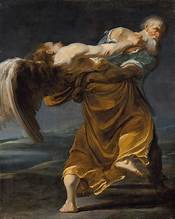
So Jacob was left alone, and a man wrestled with him till daybreak. When the man saw that he could not overpower him, he touched the socket of Jacob’s hip so his hip was wrenched as he wrestled with the man.

Then the man said, “Let me go, for it is daybreak.”

But Jacob replied, “I will not let you go unless you bless me.”

The man said, “What is your name?”

“Jacob,” he answered.

Then the man said, “Your name will no longer be Jacob, but Israel, because you have struggled with God and with humans and have overcome.”

Jacob said, “Please tell me your name.”

But he replied, “Why do you ask my name?” Then he blessed him there. (Genesis 32:24-29)

I don’t want to make it sound like Jacob was a horrible individual. He wasn’t. While he crossed more than one ethical line, there was something inside him that longed for God.

Go back a few chapters in Genesis. Jacob is running as fast as he can to Laban at his mother’s insistence. He’s tired and worn out. The man with a stolen estate has no home in which to sleep. He pulls a flat rock for a pillow and dreams of a stairway to heaven. It’s as if God is saying, “Home may be out of reach right now, but heaven is not. I am here.”

Through his dream God renews with Jacob the covenant he made with his father Isaac and his grandfather Abraham. The land upon which his head rests will be his land and the land for all his descendants. Through his lineage, scripture says, “the people of the world shall be blessed.” Jacob holds on to that promise for two decades.

As Jacob’s wealth increases during his time with Laban, Jacob gives God the glory for every success.

Jacob recognized God’s presence in his life, he just didn’t always trust him. Jacob always felt that if anything good was going to happen, he had to make it happen. He lived up to his name every step of the way… “the heel grabber,” “the grasper,” “the striver.”

God commands Jacob to “return to the land of your fathers” (Genesis 31:3), telling him, “I will be with you.” The closer Jacob gets to the border of Esau’s land, he grows more anxious, worrying about Esau’s retribution.

Jacob didn’t think God was capable on his own of working things out, so he rolled out the gifts. He divided his family and his flock, hoping that one group might escape if Esau attacked the other. He searched through the night for any other advantage that might give him the upper hand.

Jacob left God no other choice. In one of the most understated verses in scripture, a “man wrestled with him until daybreak.”

It’s almost as if Jacob turned to run away again only to be tackled by a man ready to rumble. Theologians debate whether this man was an angel, the pre-incarnate Christ or God himself. As far as Jacob was concerned, “I saw God face to face, and yet my life was spared.” (Gensis 32:30)

It’s almost laughable when you think about it: God wrestling a man. Yet, God and I have gone more than a few rounds over the years. I suspect you have, too. Each of us at one time or another has wrestled with what we know God is calling us to do.

In addition to his more manipulative traits, Jacob was also clever, resourceful, determined and strong-willed. He was all those things, but he was not yet surrendered. God knew it was time for Jacob to stop conniving, to stop running, so they fought it out in a match that lasted all night.

I don’t know about you, but some of my wrestling matches with God last a lot longer. I can put up a quite the fight when I don’t want to do what God wants me to do. I can find excuses or what I think are pretty valid reasons why I’m right and God is wrong. My ideas always seem better.

Notice this, however. Jacob’s bout with God didn’t last until daybreak because he and God were evenly matched. The prolonged struggle lasted as long as it did because God was exposing Jacob’s stubborn independence.

When we are wrestling God for control of our lives, that fight goes on until we recognize our own stubbornness. It will last until we surrender and call him Lord.

The scripture declares clearly the moment Jacob gave in. As the morning approached, I think he still wanted to run away…to do things his way. At that point, with a touch intended to put an end to Jacob’s resistance, God dislocated his hip. Running was no longer an option. Pastor Adrian Rogers put it this way, “God crippled him to conquer him.”

When Jacob realized he had no choice, he surrendered, wrapping his arms around the ankles of the only one who could make things right.

Here’s the interesting thing to me. One moment Jacob is wrestling against God; the next moment he is clinging to God. Jacob, the man who had stolen the blessing of his father, was now begging for the blessing of the Father God.

When Jacob said, “I will not let you go unless you bless me,” it is not defiance, it’s desperation. Jacob quit fighting to win and started depending. Wrestling became an embrace.

In a culture that prizes self-sufficiency and self-reliance, surrender seems a coward’s option. It may well be one’s greatest act of courage. God’s work in us flows best through surrender.

Jacob’s story reflects our own tendency to run from God’s call, conviction or presence. Like Jacob, we are met by God, through circumstances, reflection or divine confrontation. Sometimes, he stops us in our tracks so we can no longer run from him.

Surrender brings transformation.

Your name will no longer be Jacob, but Israel, because you have struggled with God and with men and have overcome. (Genesis 32:28)

It’s not saying he outwrestled God. Jacob overcame his own stubbornness, his own self-reliance.

Theologian Frederick Buechner called Jacob’s divine encounter at the Jabbok River the “magnificent defeat of the human soul at the hands of God.” In Jacob’s story we can easily see our own struggles with our desire to take control of our lives. Our failed efforts to find escape from our own fears and vulnerabilities.

Out of these experiences God offers blessing.

In the end, God did what he had to do. He confronted Esau. He grappled all night for what was truly important. When Jacob could wrestle no longer, he surrendered. He clung to God with greater strength than he resisted, realizing that he could not go on without him.

Jacob’s story invites us to ask simple but searching questions: Why am I still wrestling? Where am I still wrestling with God? The blessing came only when Jacob stopped resisting and held on in surrender. The same is true for us.

God meets us in the places we fear most, not to destroy us, but to reshape us. And though surrender may leave us limping, it also leaves us blessed.

Next time you see me, I hope you see me limping.

Thinking Points

Where in my life am I still trying to manage outcomes instead of trusting God?


What fear or unresolved situation keeps me looking for an escape route?


What would it look like for me to stop wrestling with God and start clinging to him?


What new identity or new way of walking might God want me to embrace when I surrender control to him?
The Cradle, The Child, The Change

Background Passage: Luke 1:26-38; Luke 2:1-52; Matthew 1:20-21, John 3:16-17, Romans 12:2

The Christmas story of the Bible remains one of the world’s most cherished stories for more than one-third of the world’s population. We find a measure of comfort that we are somehow not alone in this world…that God is with us.

I wonder if the story has grown too familiar. Sometimes, it feels as though the luster of God’s amazing gift is dimmed by time and diminished in its telling and retelling. To keep God’s grace gift fresh, I urge you to look beyond the familiar and find…

The Cradle

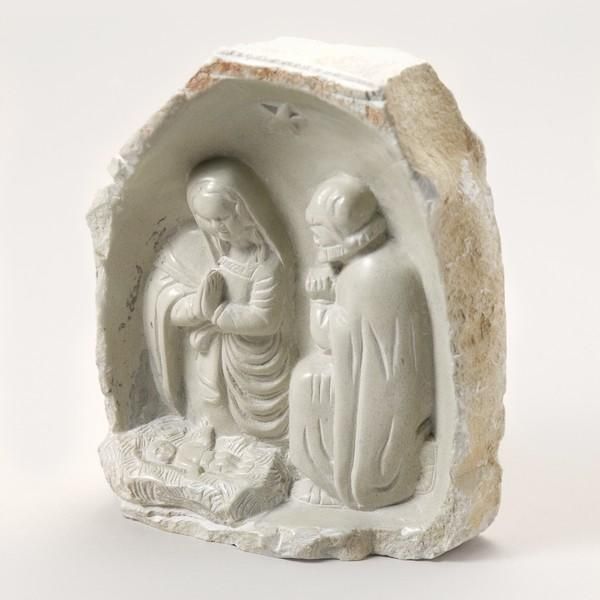
Crudely cut and hastily made, the innkeeper long ago fashioned a stable from the small cave cut into the limestone behind his home. An afterthought. A casual convenience for travelers who needed a place to livery their animals for an evening.

Within the rocky cave, he chiseled a manger from a protruding slab of rock, hollowing out the stone as a roughly cut and casually built feed trough. The man was no craftsman. He took little time to measure its dimensions or smooth its sides. He left it crude and rough around the edges. A coarse creation, suitable only, it seemed, for one insignificant purpose.

A manger.

A feed trough.

A construction scarcely given a second thought. Invisible to the world around it.

Until this day.

Inside the stable, despite the chill of the evening, a young woman lay drenched in sweat, exhausted by days of travel and hours in labor. Her husband, a young carpenter, paced outside the shelter. Though sympathetic to the pain she bore, like most fathers, he was clueless to its intensity.

He heard a midwife urging one more push. With a guttural groan that made the nervous animals scatter in their stalls and pull against their reins, the woman delivered her son. Tears and laughter comingled with each exhausted breath.

The midwife cleaned the baby as he shivered and cried in the night. The old woman rested the swaddled child upon the mother’s chest. The baby’s cries calmed as he heard the reassuring rhythm of her heart.

While Mary sang a lullaby to her child, Joseph quickly swept the stable of its filth-stained dirt. As he pulled the animal-stained hay from the manger, he noticed its sharp edges. A stone mason and carpenter, Joseph pulled a mallet and chisel from the knapsack. With practiced hands, he smoothed the sharp edges and rough bottom, added new hay and a soft blanket. In the glow of that first Christmas morning, the manger, no longer a rough-hewn feed trough, became a cradle.

In one moment beyond comprehension, God entered his creation as a baby born into a world that had grown as spiritually cold as the cave in which he was born. A world as morally crude as the manger in which he rested.

When filled with God’s love personified in the Christ-child, the unsightly manger became the cradle of Life Abundant, transformed in its purpose by the presence of Emmanuel.

God with us.

Perhaps the manger and its crude construction mirror the mess we’ve made in our lives. We hurriedly chisel our life from the stone, giving little thought to the purpose for which we were created. Whether we live a life of irreverent insurrection or one of unintentional indifference, we find our spiritual edges a little too sharp, a little too crude, a little too rough around the edges. A coarse creation, suitable only, it seems, for insignificant purposes.

Yet, in one miraculous birth, in one divine delivery, God changed everything.

When the manger became a cradle, God came to His world as one of us. To offer himself as the perfect portrait of Godly living.

Because the manger became a cradle, the baby would grow into a savior, to offer himself as a perfect sacrifice for a world that lost its way.

Because the manger became a cradle, Christmas means more than the tinsel and trimmings that the world celebrates.

Because the manger became a cradle, the Christ-Child gives us the chance to turn our empty lives into Life Abundant. God smooths the rough edges and transforms our hearts and our purpose through the constant presence of Emmanuel.

God with us.

Then, to keep God’s grace gift fresh, I urge you to look beyond the cradle and find…

The Child

Born to human parents, but also divine. It is a difficult concept to grasp. Impossible to truly understand. So, we who believe accept it by faith just as his earthly parents did.

Though implanted with God’s DNA, to understand the full measure of what it meant to be Savior did not come instinctively to Jesus. He learned. He learned at the feet of Joseph who surely shared his dream.

“Joseph, son of David, do not be afraid to take Mary home as your wife, because what is conceived in her is from the Holy Spirit. She will give birth to a son and you are to give him the name Jesus, because he will save his people from their sins.” (Matthew 1:20-21)

He learned on the lap of his mother who surely shared the angel’s words.

“Do not be afraid, Mary. You have found favor with God. You will conceive and give birth to a son, and you are to call him Jesus. He will be great and will be called the Son of the Most High. The Lord God will give him the throne of his father David, and he will reign over Jacob’s descendants forever; his kingdom will never end.”

As he grew, he learned from the teachers of God’s word. When he turned 12-years-old, he journeyed to the Temple with his parents. The child immersed himself in his father’s word, failing to join his family for the trip home.

“They found him in the temple courts, sitting among the teachers, listening to them and asking questions…” (Luke 2:46)

Jesus spent time learning more about “his Father’s business.” Eventually, he returned with his parents to Nazareth where “Jesus grew in wisdom and stature and in favor with God and men.” (Luke 2:41-52)

God continued to prepare the child for the purpose for which he was sent. This child, who heard his parents’ stories, who studied scripture with the learned men of his day, constantly felt the tug of God’s voice revealing to him who he was and the purpose for which he was sent. This same child, born in a manger, stood as a man at a wedding feast in Cana, looking into the eyes of his mother telling her, “My hour has not yet come.” This same child read in his mother’s eyes and heard her tell the servants, “Do whatever he tells you.” Her way of saying, “It is time.”

From that day forward, Jesus went about doing his father’s business, drawing others to him, performing miracles and teaching them about repentance and the depth of God’s love…teaching them about grace.

That child from the manger sat in an olive grove answering the probing questions of Nicodemus about the path to eternal life. Jesus surely reflected upon his own birth when he said, “You must be born again.”

That child from the manger told that religious leader that he had come to take on the sins of a world because “God so loved the world, that he gave his one and only son, that whoever believes in him shall not perish but have eternal life. For God did not send his son into the world to condemn the world, but to save the world through him.” (John 3:16-17)

That child in a cradle was God’s grace gift of salvation. The man he grew to be…became a savior.

Understanding our relationship to God and his will for our lives is not implanted naturally into our DNA just because we are born to Christian parents or attend church regularly. Our understanding of what God requires of us comes from listening to God’s spirit and following Jesus’ lead.

We learn. We grow. We spend time sitting among the teachers, studying scripture and asking questions with a heart’s desire to grow in wisdom and stature and in favor with God and men…just as Jesus did. We see the child in the cradle and are reminded that God loved us so much that he sent his son to save us and the world around us through him.

Then, to keep God’s grace gift fresh this Christmas, I urge you to look beyond the cradle, see the savior and commit to…

The Change

As Christians, we get pulled into the celebration of the Christmas holiday. We delight in the lights, the decorations and the excited faces of the children opening Santa’s presents. We enjoy our parties with friends and visits with our extended families. It’s easy to be lost in the business and busyness of Christmas.

Those of us who celebrate the birth of Jesus ought to reflect upon its meaning, using the day as a reminder of God’s plan and purpose to bring the world back into relationship with him by sending is Son. It is far too easy for many of us to revel in the birth of the child and forget that God expects more from us.

What do we do after we read that beautiful story for the last time this year? After we snuff out the Advent candles? After we sing the last carol? After we dismantle the Nativity scenes? What do we do after we celebrate the birth of the Christ child? What do we do when Christmas is over? What change does it bring to our lives?

You see, the Christmas story does not end with the birth of Jesus. It doesn’t even end with his death and resurrection. Once the baby is born and a savior’s act complete, the story and its impact should serve as a catalyst for God to change our lives.

Christmas is a reminder that God will work in our lives, but only to the extent that we allow him. Christmas must change our hearts and our minds, not just on the surface, but from the inside out.

Though he didn’t celebrate Christmas as we do, the Apostle Paul would be the first to tell you about being changed. In a blinding revelation on the road to Damascus, he saw before him God’s plan of redemption evidenced in the life of Christ…from his birth to his resurrection and his ever-present spirit. It was a life-changing encounter. It’s one reason he could encourage the Christians in Rome to set aside the ways of the world for the life Christ offers.

“Do not conform to the pattern of the world but be transformed by the renewing of your mind. Then you will be able to test and approve what God’s will is—his good, pleasing and perfect will. (Romans 12:2)

You see, Christmas is just a holiday unless we let God chisel away the rough edges of our lives to make our hearts a comfortable place for the Christ child to rest. It is just a holiday unless we see Jesus as more than a baby in a manger and accept him as a savior and Lord. Christmas is just a holiday unless we allow the child who became savior to transform our hearts and minds in such a way that we are ever obedient to his will in all things.

“You shall call him Jesus, Emmanuel…God with us.”

That’s Christmas to me.