Focal Passages: Psalm 19:1-2, Psalm 8:1-4 and Mark 12:30
Theology is not always deep, but it is always rich in memory and meaning. Memory and meaning combined over the last few weeks to take me back over five decades.
“In the beginning, God created the heavens and the earth…” (Genesis 1:1)
As a 15-year-old high school student, with the ambition, but probably not the aptitude, to be an astronaut, I sat on the floor of my aunt and uncle’s house in McGregor, Texas, watching a grainy telecast from the tiny Apollo 8 capsule as it orbited the moon on Christmas Eve.
Three men, Frank Borman, James Lovell and Bill Anders, were doing what no one had done before. They were orbiting the moon.
On the fourth orbit, just as they emerged from the far side of moon, Borman began reading the Genesis creation story. I’ll admit now what I tried to hide then. I blinked back tears welling up in my eyes.
There was certainly a sense of awe and pride as a young American watching the impossible unfold before my eyes. However, hearing those words reflecting on God’s handiwork and the awe-inspiring scene unfolding out the windows of that spacecraft affected me in ways I had not imagined possible.
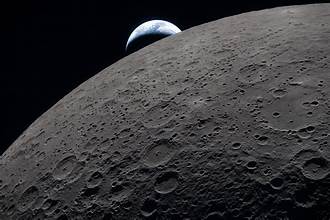
As I watched the moon slide by with our earth so small in the background, I thought about God setting all of the universe in motion. It was as if God was saying, “See, I made all of this for mankind to gaze at and explore. Be good stewards of what I created for you. Live in it and enjoy the works my hands have made.”
God saw all that he had made and it was very good. (Genesis 1:31)
Very good, indeed.
Those Genesis verses came alive and real on that December day in 1968. It matters so little how God created all the beauty and wonder of the universe. That he created it all…that’s enough for me. It was enough on that Christmas Eve long ago. It was enough just days ago.
Today, I have a new memory, filled with meaning that has been refreshed and renewed.
I sat in my own living room last week inspired and in awe again of manned spaceflight. I watched another mind-boggling mission around the moon unfold…this time on an Easter Sunday.
Even one with little interest in the space program must appreciate the courage and professionalism of astronauts Reid Wiseman, Victor Glover, Christina Koch and Jeremy Hansen. I can only imagine the technical skills of all those engineers and scientists behind the effort. Their God-given talents combined to enable an almost flawless mission.
The videos and photographic images sent to earth from crew aboard Artemis II were stunning in detail, context and stark beauty. I found myself studying the images again, with the same sense of wonder I did in 1968. I listened to the conversations between the astronauts and mission-control as they let their enthusiasm get the better of their professionalism. You could hear the joy and amazement in their voices.
I could not look on the scenes unfolding on television without the words from Apollo 8 echoing in my heart.
In the beginning, God created the heavens and the earth…
Victor Glover, pilot of the Artemis II mission, is a man unashamed of his faith. He is a U. S. Navy Captain and NASA astronaut who integrates his faith seamlessly into his work while doing things I only dreamed of doing.
In a recent interview, Glover said, “My career is fed by my faith. Anytime I do something that’s pretty risky, I pray. Before I fly, every time I fly. Definitely when I go sit on top of a rocket ship.”
Glover said that working at NASA has opened doors to talk about creation and faith. Certainly, flying around the moon gave him an unique perspective of God’s creation. In a broadcast from Artemis II as they approached the moon, Glover used that moment to reflect on what it meant to look at both the moon and earth suspended in the blackness of space.
“When I read the Bible, I think of this amazing place that we have—this ‘spaceship called Earth’—that was created to give us a place to live.” He added, “In all of this emptiness, you have this oasis, this beautiful place that we get to exist together.”
Like I did back in 1968, I listened to those heartfelt words, this time with more mature tears in my eyes. I could not help but think of words written by the Psalmist so very long ago.
The heavens declare the glory of God; the skies proclaim the work of his hands. Day after day, they pour forth speech; night after night they reveal knowledge. (Psalm 19:1-2)
The writer seems to be telling us the more we study God’s universe, the more we see his hand in it. The more we see up close all he created, the more we will learn about him. It’s a thought echoed by the Apostle Paul in his letter to the Christians in Rome.
For since the creation of the world God’s invisible qualities—his eternal power and divine nature—have been clearly seen, being understood from what has been made, so that people are without excuse. (Romans 1:20)
God’s fingerprints are present in all creation, teaching us about his handiwork. That truth is readily seen by those with a heart open to his presence.
The psalmist sensed a richer purpose for creation. It’s not just about the glory of creation. There is purpose behind it.
Lord, our Lord, how majestic is your name in all the earth! You have set your glory in the heavens…When I consider your heavens, the work of your fingers, the moon and the stars you have set in place, what is mankind that you are mindful of them, human beings that you care for them? (Psalm 8:1, 3-4)
That’s a heady thought, isn’t it?
God, the creator, is mindful of all humanity.
The phrase in Hebrew suggests more than just thinking about us occasionally. It carries a sense of active remembrance. Paying attention with intent. Caring enough to intervene. In other words, the creator of the universe intentionally keeps you and me in his thoughts in ways that actively demonstrate his love and care for us.
I should celebrate and stand in awe of the beauty and wonder of creation, but that’s not really the point. God pulled creation together to give us a place to live together in relationship to him and to each other because God cares. God loves us.
Glover spoke more about that when he returned to earth. Reflecting on the success of the mission and all he and this crew had seen, Glover said. “As we continue to unlock the mystery of the cosmos, I’d like to remind everyone that love matters.”
He’s so right. As serene as our world seems from space, it is a chaotic place, filled with too much division and hate. It is a world that often fails to see the God who created all this; the God who loves us so much that he sent his son as the atoning sacrifice for your sins and mine.
Loving God and loving one another does matter.
In response to a challenge from an inquisitive Pharisee, Jesus affirmed God’s greatest commandments.
Love the Lord your God with all your heart and with all your soul and with all your mind and with all your strength. The second is this: Love your neighbor as yourself. There are not greater commandments than these. (Mark 12:30)
I think that’s one of the things I took away as the wonders of the universe on display during the Artemis mission. I see that sliver of “blue marble” hanging in space and realize, as Glover said, “Love matters.”
As I said from the start. It’s not the deepest theology, but it may indeed be the richest
Now, it’s just up to you and me to live like love matters.
If we can do that, then I think we can hear God say, “It’s very good!”
Thinking Points
When have I last paused long enough to let creation stir awe in me, and what did that moment reveal about God’s character?
In what ways am I living as a steward of God’s creation — not just the physical world, but the people He has placed around me?
How does knowing that the Creator of the universe is mindful of me reshape the way I see my worth, my worries, and my daily life?
If Jesus says that loving God and loving others are the greatest commandments, what would it look like for me to live this week as if “love matters”?
It is overwhelming, for me, to take in and see God’s handiwork. I shrink in stature at being able to do so and to realizing that I, too, am a part of the Greatest Story Ever Told. I am so thankful for those in the spotlight who turn that spotlight on our Magnificent Creator and remind mankind that He does exist. Thank you for emphasizing what is most important,