Follow the Trail

Focal Passages: Jeremiah 31:31-34; Luke 22:20

Daniel Boone is probably my pioneer hero thanks to Fess Parker and the glory days of NBC. While the television show that aired from 1964 to 1970 was more fiction than fact, Boone did play a significant role in the western expansion of the United States in the late-1700s.

In 1775, Daniel Boone and a team of about 30 axmen hacked their way from Tennessee through the Cumberland Gap into Kentucky and the Ohio River Valley, cutting the Wilderness Road. Along the way, they widened and connected a series of existing Native America paths, opening the door for American settlement on the western side of the Appalachian Mountains.

As he carved this new road, Boone “blazed a trail.” While we use that phrase today as an idiom to mean pioneering a movement or innovating in some new field, to Daniel Boone, “blazing a trail” meant to cut notches (blazes) into trees to point travelers in the right direction.

Historians estimate that roughly 200,000-300,000 people used the Wilderness Road, following Boone’s blaze marks, to reach Kentucky and beyond.

I’ve been reading the gospels in the last week as we approach Easter and found a new way to look at God’s redemptive work, following a trail God blazed long ago. Follow it with me.

This trail began before creation. Paul tells us this much in 2 Timothy 1:9.

He has saved us and called us to a holy life—not because of anything we have done but because of his own purpose and grace. This grace was given us in Christ Jesus before the beginning of time.

There’s our first blaze. We can follow the trail to the Old Testament. The prophet Jeremiah came at a time when the people of God had again fallen away from God. They broke again the old covenant with God and faced a future in captivity and exile. Hopelessly lost in their sin.

What Jeremiah proclaimed was the high point of his prophecies. A deep blaze in the trail of God’s salvation, pointing us toward Jesus and the cross.

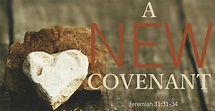
The time is coming, declares the Lord, when I will make a new covenant with the house of Israel and with the house of Judah. It will not be like the covenant I made with their forefathers when I took them out of Egypt, because they broke my covenant though I was a husband to them. (Jeremiah 31:31-32)

Jeremiah declares that a new covenant is coming. This new covenant will be different by recognizing that God’s people would never on their own be able to keep the old covenant. God would provide a new way to restore his bride to himself.

Listen to the words of God that Jeremiah proclaims.

This is the covenant I will make with the house of Israel after that time, declares the Lord. I will put my law in their minds and write it on their hearts. I will be their God and they will be my people. No longer will a man teach his neighbor or a man his brother, saying, “Know the Lord,” because they will all know me from the least of them to the greatest. For I will forgive their wickedness and will remember their sins no more. (Jeremiah 31:33-34)

Can you see the promise of Easter in his words?

This new covenant, sealed with the blood of Christ, says that rather than laws written in stone, God will write his law in their hearts and in their minds. Faithfulness will become less an outward demonstration, but an inward transformation…a change of heart.

When God declares that he will be their God and they will be his people he is encouraging intimacy and belonging. They will have a restored relationship that is not based on compliance, but on connection and grace.

God promised that they will no longer be dependent on priests or intermediaries to know him. The relationship with him in the new covenant will be personal and direct. He will speak to them and they will speak to him. The new covenant will be available to anyone…from the least to the greatest.

The promise of something new has been made. Put a notch on this tree and let it lead us further down the trail.

The thought of this new covenant crossed my mind during a sermon my pastor preached several weeks ago in his series from the Gospel of Mark. Follow me on this path of discovery.

Jesus, confronted by some folks who were upset that Jesus’ disciples didn’t always fast like the really holy people of the day (Mark 2:22), broke into a parable about wineskins. It’s a story that would have left all who heard nodding in agreement. “You don’t pour new wine into old wineskins.”

You see Jesus had come to do, as the prophet said in Isaiah 43:19, “a new thing.” One simply could not pour Jesus’ teachings into a tired, old religious system that led to ruin. Jesus was doing a new thing. Once restricted to the Jewish people, God was prepared to do a new thing. His “new wine” would not only break out of the rigid trap of the Law that limited salvation to a select few, it would be available to all people, both Jew and Gentile. God is doing a new thing.

Cut a notch into that tree and keep blazing the trail.

Later, in Luke 22, Jesus gathered his closest disciples in a non-descript upper room in the heart of Jerusalem to share the Passover meal, hours before his betrayal, arrest and crucifixion. Thick with emotion and meaning, it was unlike any other Passover they had ever experienced.

Jesus shared the bread with those around him, urging them to take and always remember what he had done and what he was about to do.

This is my body given for you. Do this in remembrance of me. (Luke 22:19)

Then, Jesus shared the cup. Listen closely to what he said and watch him cut another notch in the trail.

This cup is the new covenant in my blood which is poured out for you. (Luke 22:20)

The wineskin story ultimately led me to Isaiah’s promise that God is doing a new thing, which in turn led to Jesus’ promise of a new covenant. It is a statement so rich in meaning.

In a biblical sense, a covenant is a promise between God and humanity. The old covenant, set out in Exodus 24, was that God would take Israel as his people. Israel promised to obey the laws God set before them. God upheld his end of the bargain. Israel could not consistently obey the law, thereby breaching the covenant time and time again with their sinfulness. All of the Jewish sacrificial system was established to atone for that sin through blood sacrifice.

Before we get too high on the horse with Israel, we would do no better than they in keeping the law. We would get just as lost in our attempt to follow the old covenant.

So in this teachable moment, Jesus tells his disciples that his death, his blood, will create a new relationship between God and humanity. His sacrifice on the cross replaced the old covenant system based on obedience to the Mosaic law with a new covenant based on forgiveness and grace.

Jesus and his work on the cross lies at the end of the trail this trail. Jeremiah’s beautiful description of what that new covenant would mean to you and me is another blaze along the path. Let’s follow it toward Easter as we look again at the prophecy of Jeremiah through New Testament eyes.

I will put my law in their minds and write it on their hearts. I will be their God and they will be my people. No longer will a man teach his neighbor or a man his brother, saying, “Know the Lord,” because they will all know me from the least of them to the greatest. For I will forgive their wickedness and will remember their sins no more. (Jeremiah 31:33-34)

The old covenant with its laws, sacrifices and temple system required repeated offerings. The new covenant in Jesus is sufficient, final and personal…offered to you and me through his sacrifice on the cross and sealed by his resurrection.

The new covenant offered through Christ will not be some externally driven creed or code. It is a a life lived by the teachings of Christ, written on our hearts and burned in to our minds. It is our turning point. It isn’t an attempt to modify our behavior, but a way of transforming out hearts to be like the heart of Christ. In this new covenant, we don’t conform to the law, we are changed inside to be like Christ.

As a result, we know God in a different more intensely personal way. He is our God and we are uniquely and securely his. No dependence on intermediaries. No barriers beyond those we create through our waywardness. He is not someone we cannot reach. We have this direct relationship with God through Jesus.

Because of Christ’s death for our sins and his resurrection that promises new life, our sins are forgiven and forgotten. God chooses not to remember. Jesus paid the price of atonement on the cross, so we don’t have to suffer the penalty.

That’s the promise of the new covenant and the hope and joy of Easter, isn’t it? Easter is Jesus saying, “By my life and my death, I have opened the door to a new relationship between you and God. I am the forever sacrifice that atones or covers every sin. The trail has been blazed. All you have to do is follow it.”

The Jeremiah passage may be the clearest Old Testament prophecy of what Christians understand as the new covenant fulfilled in Christ.

It shifts the focus from external law to internal change; from a national covenant to a personal relationship; from repeated sacrifice to complete forgiveness.

God planned his redemptive work and set it in motion long before time began, blazing a trail through human history, to bring us to that first Easter morning and the resurrection of the one who died to mark the pathway for us. Jesus is our trailblazer.

I am the way, the truth and the life. No one comes to the Father except through me. (John 14:6)

These are the questions we all must answer. Have you seen the blaze marks he cut for you? Have you followed the trail that leads to this new covenant and to the eternal life he promised you?

I hope you have, but if not, it’s never too late to start walking.

If the trail has already led you to Jesus, have you honored the new covenant he made with you? Are you living your life following Christ as your example?

I hope you have, but if not, that next blaze mark could bring you back to the path he needs you to walk.

Thinking Points

How does this new covenant change the way I view my relationship with God?


How is my faith different when it comes from inner transformation rather than external rules or traditions?


What does it mean for me personally that Jesus’ sacrifice on the cross is sufficient and final?


How can I live out the hope and freedom of the new covenant starting this Easter?


How can I share the reality of God’s personal relationship with others in my life?
 

The Prophets’ Christmas

Focal Passage: Isaiah 7:14 & 9:6-7; and Micah 5:2-5

It’s the Christmas season. The time when God stepped into the world with love, grace, humility and hope.

Through the years, I’ve written about Christmas from every angle and angel. I’ve studied the coming of the Messiah through the eyes of his earthly parents, the shepherds, the magi, and paranoid Herod, a priest name Simon and an elderly, devout woman named Anna. I’ve even written a more fanciful piece about the birth of Jesus from the eyes of a lamb.

As I looked to begin my study this year of the moment God sent his son into the world, I want to look at that moment from the eyes of the Old Testament prophets.

Scripture teaches that the moment God opted to grant humanity free will, he knew we would use that freedom to rebel against his plan for our lives. From the beginning of time, then, God had to find a way to bring his lost children back to him, despite the spiritual abyss we would create between us and God by our sinfulness. Before he put the world in place and set it spinning on its axis, he planned on Jesus.

Look at what Paul tells Timothy.

He has saved us and called us to a holy life—not because of anything we have done but because of his own purpose and grace. The grace was given to us in Christ Jesus before the beginning of time, but it has now been revealed through the appearing of our savior Christ Jesus who has destroyed death and brought life and immortality to light through the gospel. (2 Timothy 1:9)

Redemption was not an afterthought or a Plan B. It was purposeful and intentional. Therefore, God needed to convince us of our need for him and introduce to us the one he would send to show us the way home.

Enter the prophets. As God gave them words to speak, he wove through their prophecies a thread of redemptive hope with its beginnings in a Bethlehem manger.

The prophets lived centuries apart from one another. They lived amid completely different circumstances. Led different lives. Wrote in different eras. Served up judgment on a platter to different kings. They spoke God’s word of divine judgment, repentance and restoration to different generations.

Much like the blind men discovering an elephant, each prophet understood God’s Anointed One in part, but never in whole.

They never met Mary or shook the hand of Joseph. They never heard the angels sing. They never walked the streets of Bethlehem. They never felt the joy the shepherds felt. Never marveled alongside the magi. Never held the baby in their arms. Never saw what they foretold come to pass.

Yet, thanks to a revelation from God’s spirit, they all pointed in somewhat different ways to the same moment; to the same someone. They saw who he would be. Knew what he would do. Understood the titles he would carry. They all spoke of Jesus, even when they never knew his name.

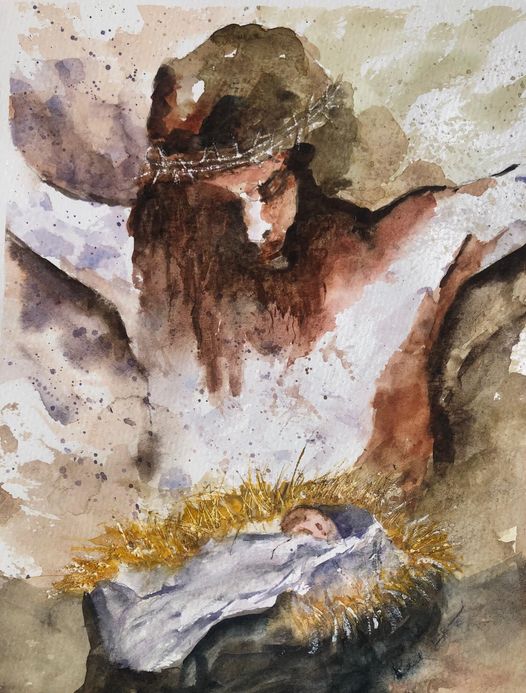
And on the night Jesus was born, their words—scattered across centuries—were suddenly fulfilled in the form of a swaddled infant, in the outskirts of an obscure village, in a makeshift crib filled with hay.

The Word became flesh and made his dwelling among us. (John 1:14)

That moment began the fulfillment of every prophetic word spoken for hundreds of years prior to that first Christmas morning.

Isaiah’s Whisper

The prophet Isaiah’s prophetic message almost 750 years before the birth of Jesus came at a time of national fear. His people faced a looming and hostile invasion, political collapse and spiritual confusion. In that sense, Isaiah’s words feel like a quiet voice spoken in a dark moment. Almost a whisper carried to people who were afraid of and unsure about the future.

While he warned of judgment and called for repentance, he promised that God had not forgotten them. He shared with them the hope of the Messiah and the arrival of the kingdom of God. Isaiah spoke about a miraculous moment in time.

A virgin will conceive and bear a son; and they will call his name Immanuel. (Isaiah 7:14)

God’s message through Isaiah didn’t stop there, as if the miraculous birth was the climax of the Creator’s eternal work. God revealed to his prophet another nuanced layer.

To us a child is born, to us a son is given, and the government will be on his shoulders. He will be called Wonderful Counselor, Mighty God, Everlasting Father, Prince of Peace. Of the greatness of his government and peace there will be no end. He will reign on David’s throne and over his kingdom establishing it and upholding it with justice and righteousness from that time on and forever. The zeal of the Lord Almighty will accomplish this. (Isaiah 9:6-7)

Isaiah’s prophecies waited for more than seven centuries. On the night of Jesus’ birth, his words were no longer ink on faded parchment. His words were a baby, born to a faithful carpenter and young woman whose heart found favor with God.

Micah’s Confidence

The prophetic ministries of Isaiah and Micah overlapped in time and circumstance. Micah saw the same corruption in Jerusalem. Felt the same fear of an Assyrian invasion. Yet, he confidently condemned the injustice he saw among leaders and spoke of the pending judgment upon a people who had turned their backs on God.

He stood in the gap and told the people that, despite the hardships to come, God promised a future ruler from Bethlehem who would be their good shepherd and herald a time of peace. This “messianic hope” appears especially in Micah 5:2–5, spoken as reassurance that God would raise a true king after Israel’s failed leadership. Look at the words God gave him to speak.

But you, Bethlehem Ephrathah, though you are small among the clans of Judah, out of you will come for me one who will be ruler over Israel, whose origins are from the old and ancient times. He will stand and shepherd his flock in the strength of the Lord, in the majesty of the name of the Lord his God. And they will live securely, for then his greatness will reach the ends of the earth. And he will be our peace… (Micah 5:2, 4-5)

For generations, the small and unimpressive village of Bethlehem sat unnoticed in the Judean hillside, but God, 700 years before, had written its future. Bethlehem would play a role in God’s plan through the cries of an unlikely king and the redemptive work of Jesus Christ.

Though many other prophets shared God’s word about the ministry and mission of the coming Messiah, Isaiah and Micah are the only two who described details of his birth. Did any of these prophets fully understand the whole picture? I doubt it.

Do you remember when Jesus sent his disciples throughout Galilee, telling them they would be given power to preach and to heal in his name? They returned from that first century mission trip amazed how God had used their preaching and ministry to bring salvation to so many people.

After praying a prayer of gratitude to the Father for the work they had done, Jesus, filled with joy, pulled his disciples aside. Listen to what he told them.

Then he turned to his disciples and said privately, “Blessed are the eyes that see what you see. For I tell you that many prophets and kings wanted to see what you see, but did not see it; to hear what you hear but did not hear it. (Luke 10:23-24)

So, if the prophets never saw or heard the whole picture, why do they matter? Why do the partial images they revealed about Jesus’ birth and life and death and resurrection matter to you and me on this side of that first Christmas?

It matters because Christmas is not an isolated event. It is the beginning of the rest of the story.

Every promise—
every symbol—
every sacrifice—
every prophecy—
every hope—

pointed toward Bethlehem and Immanuel, God with us.

The prophets did not live to see it, but you have. Listen to John’s words again.

The Word became flesh and made his dwelling among us.

Then, look again at the words of Jesus.

Blessed are the eyes that see what you see. Blessed are the ears that hear what you hear.

You see, Isaiah’s world was not a lot different from our own. Hostility. Political uncertainty. Spiritual confusion. His words still feel like a quiet whisper spoken in a dark moment to people unsure of the future.
His message does not change.

To you a child is born. To you a son is given.

Can you see it? Can you hear it?

That’s Christmas!

If you are a believer in Christ, the prophets words link the past to your present. God’s promises are your truth. They are confirmation of God’s plan of redemption through the baby in a manger who grew to be your substitute on a cross–the living and resurrected Jesus. You are blessed to have seen what you have seen and heard what you heard.

If your Christmas lacks the meaning you see in those who believe, the visions of the prophets are your markers. The waypoints on a spiritual journey that will reveal the depth of God’s love for you in the truth of Jesus Christ. The promises of the prophets are fulfilled in Jesus. Their longing can be your joy as it is mine. See it. Hear it. Your blessing awaits.

Let this be our Christmas prayer for 2025.

“Lord, thank you for speaking through the prophets and for fulfilling every promise in Jesus. Let the hope that sustained them also sustain me. Teach me to trust your timing and rejoice that your Word always becomes flesh. Amen.”

Thinking Points

How does thinking about Christmas through the voices of the prophets deepen your understanding of God’s long-planned redemption?


How has the Word “become flesh” in your personal story? In what ways has that baby in a manger changed your heart and your world view?


What keeps me from recognizing the blessings I already “see and hear,” blessings the prophets longed for but never experienced?


How might embracing the continuity between the prophets’ longing and Christ’s coming reshape the way I enter this Christmas season?

Through God’s Eyes

Background Passage: Ephesians 1:18-19

As the story goes, Cambridge University hosted a debate between a learned science professor, a self-declared atheist, and a Christian pastor. The professor offered his reasoning for asserting God “existed” only as a figment of human imagination. Grounded in rationale thought and scientific understanding, the professor offered that no rationale human being could look at the universe and believe in a Creator God, much less one active in the world.

The Christian pastor countered with a quick argument. Getting the professor to acknowledge that there is still much in the world that science and rationale thought cannot explain, the pastor suggested that it might be possible that God exists within that body of knowledge yet unknown. That someday man might discover through rationale thought and scientific understanding that God does indeed exist. The Christian pastor claimed victory when the scientist agreed to that possibility.

It makes a good story, I suppose, but a God that can be explained by some unknown data set, seems somehow less…Almighty or Sovereign. To prove God’s existence using some aspect of human understanding seems to me to thwart the purpose and power of faith.

Noted theologian C. S. Lewis, sadly no relation, offered a statement in his work entitled, Is Theology Poetry? that hit the nail on the head. He wrote, “I believe in Christianity as I believe that the sun has risen; not only because I see it, but because by it I see everything else.”

Lewis embraced faith over fact because his belief transformed the way he saw the world. Faith internalized and deeply held allows us to see the world around us, and the people within it, through God’s eyes. And that, I feel, is a significantly different world view that seen by those who live without a personal faith in Christ.

Given the chaotic and confused condition of life in the 21st century, we need our faith, our Christianity, our ability to see the world through the eyes of God, to make sense of things. How is a child of God to react when the world around us chooses to confront rather than console? To argue rather than understand? To divide rather than embrace? To hate rather than love?

If we see the world and all within it are, through the lens of the true faith, we accept that we carry an incredible responsibility to live as Christ lived. Instead of taking part in the divisive dialogue, we should encourage one, through our witness and walk, to console. To understand. To embrace. To love as Christ loved us.

The sun’s light illuminates all that we see. Because it does, we know it is real. The Son’s light reveals the world to us in its splendor and its ugliness. We can share its splendor, unleashing its beauty so it can shine in the face of ugliness. If we choose to live in him, we can see the world as he does—using the extraordinary vision with which he blessed us to bridge the distance between the Lord who loves and lost and lonely among us.

I have to admit the world I see today is a shadowy place, filled with uncertainty and chaos. Though I try to see through my Father’s eyes, I have a hard time wrapping my head around hatefulness. Lewis said it is his faith in Christ that opens his eyes. Paul took it a step further when he prayed for the believers in Ephesus.

“I pray that the eyes of your heart may be enlightened in order that you may know the hope to which he has called you, the riches of his glorious inheritance in his holy people, and his incomparably great power for us who believe.” Ephesians 1:18-19.

Without God’s corrective vision, I look at the world and feel…hopeless. Paul tells me it can be different if I let God adjust or enlighten the eyes of my heart. When I can see the world through his eyes, I find hope and purpose.

Scotty Smith, pastor of Christ Community Church in Franklin, TN, writes a blog for The Gospel Coalition. He summed it up better than I ever could in this prayer to God.

“…this text makes a ton of sense to me. Apart from the work of your Spirit and the corrective lens of the gospel, it will be impossible for me to see what you intend for me to see with awe-producing clarity. So, indeed, Lord, open the eyes of my heart. Heal my shortsightedness, my far sightedness and the astigmatism of my soul. I want to see all things from your perspective, including the hope to which you have called us. To see with the eyes of hope means that I will be able to discern your heart and hand at work everywhere.”

I particularly like that last sentence. When we see through the eyes of our Christian faith, the eyes of hope, we can see God at work in all things. We see with awe-producing clarity our place in his redemptive work. Understanding that, I no longer see this world as an ugly place. It is a field ripe for the harvest.