Resurrection Faith

Focal Passage: John 11:1-44

Just as the sun was setting, a breathless messenger found Jesus sitting among his disciples after another day of teaching and ministering to people on the east side of the Jordan River. The messenger, most likely a man Jesus had met previously while visiting in the home of Lazarus and his two sisters, Martha and Mary.

The message was simple. “The one you love is sick.”

What sounds a little cryptic to us was clear to Jesus. His good friend Lazarus was seriously ill. Martha and Mary just knew when Jesus heard those words, he would stop what he was doing and hurry to Bethany to heal their brother, a man Jesus loved like his own brother.

Jesus spoke to he man and the disciples offering a quick word of reassurance that the sickness would not end in death, but that God, and Jesus himself, would be glorified through it.

Then, in a move that may have surprised the messenger, Jesus stayed where he was for two more days, continuing to minister to all who came to him.

After that second day, Jesus began the day’s walk to Bethany.

As he neared the village, Martha ran to meet Jesus. Through scripture we hear an emotional conversation that becomes one of the greatest Easter messages of all time. Listen to the words between Martha and Jesus.

“Lord,” Martha said, “If only you had been here, my brother would not have died. But I know that even now God will give you whatever you ask.”

Jesus said to her, “Your brother will rise again.”

Martha answered, “I know he will rise again in the resurrection at the last day.”

Jesus said to her, “I am the resurrection and life. He who believes in me will live, even though he dies; and whoever lives and believes in me will never die. Do you believe this?” (John 11:21-26)

There is incredible truth in these few words of scripture than drill into the core of Christianity.

Across most of the Christian world, we just observed Easter, the day we celebrate the resurrection of Jesus Christ. According to some estimates, church attendance across America on Easter increases between 50-75 percent.  However, a 2022 survey conducted by Lifeway Research and Ligonier Ministries revealed that slightly over one-third (34 percent) of all professing Christians question whether the physical, bodily resurrection of Jesus actually occurred.

This exchange between Martha and Jesus foreshadows Jesus’ own victory over death and underscores the power of living in resurrection faith.

This passage offers three aspects of the story that really speak to why the resurrection matters today.

Mary and Martha get word that Jesus is near, so Mary, the reflective one, remains behind while Martha, the one that always has to be doing something, runs to meet Jesus. She expresses sorrow and perhaps a little frustration that Jesus didn’t arrive in time to heal her brother.

Look at verses 23-26…

Martha’s words seem less a challenge to Jesus’ late arrival as an expression of sorrow over what might have been. Jesus doesn’t explain. He just offers reassurance.

“Your brother will rise again.”

Mary responds with the only resurrection she knows. The prominent Jewish belief among the religious Jewish priests and people was in a corporate resurrection of God’s people at the end times. She states what she has been taught and what she fervently believes. “I know he’ll rise again in the last day.”

It is here that Jesus speaks words that auger not only his own death and resurrection, but a truth so embedded in the gospel that it resonates 2,000 years later.  

“I am the resurrection and the life…”

Hear that carefully because it is an astounding promise that is the heart of the gospel.

The resurrection changed lives. The disciples when from timid and fearful to tenacious and fearless in their proclamation of the good news. It wasn’t that they just decided to go on the offensive. What they saw and what they experienced when they saw the risen Christ, changed them.

The resurrection is not an abstract belief or just another fact of history. Dr. Jeremiah Johnson, author of Body of Proof, reminds us that the resurrection is A PERSON. Jesus IS the Resurrection and Life.

I don’t know if I ever thought of the resurrection in that exact way.

All the other “I am” statements Jesus makes in the Gospel of John are clear metaphors:

I am the good shepherd.

I am the bread.

I am the light.

I am the gate.

I am the way.

I am the true vine.

Metaphors that share essential truth about Jesus, his nature and his role.

When Jesus said, “I am the resurrection and the life” (John 11:25), it feels different. He’s not just using a metaphor—He’s making a powerful claim that he is the source of resurrection and life, both here and now and after we die. He is the agent of resurrection. Resurrection is not just something He provides, it is something found in Him and only in him. Resurrection is who he is.

It’s as if he is telling Martha, “Resurrection/Life is standing right in front of you. In me, there is no death.”

Because Jesus is the resurrection, it ought to change our outlook on life.

Go back to the initial words of Martha, and for that matter, the first words of Mary when she greets Jesus.

Vs. 21–If only you had been here, my brother would not have died (Martha)

Vs. 32–If only you had been here, my brother would not have died. (Mary)

This was something they talked about in the dark hours after Lazarus died…a feeling they shared. Jesus has demonstrated healing in the past. They had undoubtedly heard of those miracles. They may have even seen his healing power demonstrated in person with others they knew.

The sisters certainly knew he was capable of taking the sickness away. That’s why they asked him to come in the first place. They knew, based on where Jesus was at the time, that he could get to Bethany in two days. Jesus waited under the guidance of the Holy Spirit to reveal something far greater than his healing power. Both Martha and Mary said, “If only…”

Why didn’t you come when you first heard? Why did you wait? You could have done something? He died because you weren’t here to heal him? These are emotional words spoken in loss, uttered by sisters who are hurting.

“If only…” How many times have you and I said the same thing after experiencing a loss of someone we love?

In his book, Johnson urges his readers to turn our regret-filled “if onlys” to a faith-filled “if Jesus.”

If only says it’s too late. It looks backward at what didn’t happen rather than looking forward to what Christ can still do—even in situations that seems final.

“If Jesus” anticipates what can happen today because Jesus is who he is. “If Jesus” tells us that nothing and no one is ever too gone. If Jesus is in our lives, things can still happen. It may not be everything we were hoping, but if Jesus is present, he will bring good from it. Martha understood it to some limited degree…”but even now…”

Seeing Jesus as the source of life, gives us a resurrection outlook that moves from regret to expectation. From a past-perspective to a future trust. From finality to possibility and hope. From spiritual and physical death to abundant life now and for all eternity.

If Jesus is at work in my life, he can still restore, redeem and lead me forward. That’s resurrection outlook.

Experiencing that resurrection outlook matters because it is not dependent on:

  • timing (Jesus arrived after Lazarus died)
  • circumstances (The tomb was already sealed)
  • human conclusions (Everyone else thought it was over)

There is one final thought that we must overlook. Resurrection is personal.

Listen to the next few phrases in vs. 25-26.

“He who believes in me will live, even though he dies”; and whoever lives and believes in me will never die.”

At first glance these statements seem to say the same thing. Commentaries suggest these phrases subtly complement each other.

The first phrase…he who believes in me will live even though he dies…refers to physical death of a believer followed by resurrection. There is a real, future resurrection life. Physical death is temporary. We may die physically, but we will live again. We move from physical death to spiritual life.

The second phrase…whoever lives (in me) and believes in me will never die…refers to never experiencing eternal death or separation from God. Literally, in the Greek, (emphatic and forcefully stated) “he will absolutely never die at all.” This phrase explains what death ultimately cannot do to a believer. It cannot separate a believer from the presence of God. Death is powerless.

Jesus is purposeful in stating these phrases in this order. Jesus acknowledges that death is a reality then he emphatically redefines that reality for believers…death isn’t really death. It’s a gateway to life eternal for the believer. Because we believe in him, we will never, ever be separated again from God who loves us. So, what he says is not repetition, it’s revelation.

These words should be a source of immense comfort to us. This promise is not reserved for a select few but is extended to all who put their faith in Jesus Christ.

When you look back at the scripture, Jesus made his declaration. He explained its meaning. Then, looking straight into Martha’s eyes, he posed the only question that really mattered. In is in this question that resurrection becomes personal.

Look at the end of Vs. 26. “Do you believe this”?

By asking this question, Jesus made it personal for Martha. Martha believes in the Jewish doctrine of resurrection; She knows the dead will one day rise. That’s been taught to her all her life.

Jesus called her personally to take the next step and believe in him as the resurrection in order to:

  1. To deepen her faith before the miracle. He did not want her faith to rest solely on seeing Lazarus raised—He wanted it grounded in who He is.
  2. To reveal His identity clearly. This was one of His strongest claims, I AM THE RESURRECTION AND LIFE. Now that you know who I am, what will you do with that knowledge?
  3. To invite a confession of faith. Martha responded with one of the clearest statements of faith in all of John: “Yes, Lord…I believe you are the Christ, the Son of God.” She believed in him for who he was, not what he might do for her brother.

When Jesus raised Lazarus from the dead he demonstrated and validated his claim about being the resurrection and life. It is guaranteed by his empty tomb on that first Easter Sunday. Jesus’ resurrection is the seal for our salvation and our assurance of eternal life.

Paul reminds of that truth in several ways.

If you confess with your mouth that Jesus is Lord, and believe in your heart that God raised him from the dead, you will be saved. (Romans 10:9)

He (Jesus) was delivered over to death for our sins and was raised to life for our justification.” (Romans 4:25)

If there is no resurrection of the dead, then not even Christ is raised. And if Christ has not been raised, our preaching is useless and so is your faith…your faith is futile and you are still in your sin…But Christ has indeed been raised…(I Corinthians 15:13-14, 17, 20)

A Christian lives and dies with that truth and hope expressed by Paul.

That, my friends, is an act of resurrection faith.

The question is, do you believe it?

Thinking Points

How does seeing Jesus not just as the giver of resurrection but as the Resurrection Himself reshape my view of life and death?


Where am I still living with an “if only” mindset instead of an “if Jesus” faith?


How personally do I take Jesus’ question, ‘Do you believe this,’ and what does my life say about my answer?



Follow the Trail

Focal Passages: Jeremiah 31:31-34; Luke 22:20

Daniel Boone is probably my pioneer hero thanks to Fess Parker and the glory days of NBC. While the television show that aired from 1964 to 1970 was more fiction than fact, Boone did play a significant role in the western expansion of the United States in the late-1700s.

In 1775, Daniel Boone and a team of about 30 axmen hacked their way from Tennessee through the Cumberland Gap into Kentucky and the Ohio River Valley, cutting the Wilderness Road. Along the way, they widened and connected a series of existing Native America paths, opening the door for American settlement on the western side of the Appalachian Mountains.

As he carved this new road, Boone “blazed a trail.” While we use that phrase today as an idiom to mean pioneering a movement or innovating in some new field, to Daniel Boone, “blazing a trail” meant to cut notches (blazes) into trees to point travelers in the right direction.

Historians estimate that roughly 200,000-300,000 people used the Wilderness Road, following Boone’s blaze marks, to reach Kentucky and beyond.

I’ve been reading the gospels in the last week as we approach Easter and found a new way to look at God’s redemptive work, following a trail God blazed long ago. Follow it with me.

This trail began before creation. Paul tells us this much in 2 Timothy 1:9.

He has saved us and called us to a holy life—not because of anything we have done but because of his own purpose and grace. This grace was given us in Christ Jesus before the beginning of time.

There’s our first blaze. We can follow the trail to the Old Testament. The prophet Jeremiah came at a time when the people of God had again fallen away from God. They broke again the old covenant with God and faced a future in captivity and exile. Hopelessly lost in their sin.

What Jeremiah proclaimed was the high point of his prophecies. A deep blaze in the trail of God’s salvation, pointing us toward Jesus and the cross.

The time is coming, declares the Lord, when I will make a new covenant with the house of Israel and with the house of Judah. It will not be like the covenant I made with their forefathers when I took them out of Egypt, because they broke my covenant though I was a husband to them. (Jeremiah 31:31-32)

Jeremiah declares that a new covenant is coming. This new covenant will be different by recognizing that God’s people would never on their own be able to keep the old covenant. God would provide a new way to restore his bride to himself.

Listen to the words of God that Jeremiah proclaims.

This is the covenant I will make with the house of Israel after that time, declares the Lord. I will put my law in their minds and write it on their hearts. I will be their God and they will be my people. No longer will a man teach his neighbor or a man his brother, saying, “Know the Lord,” because they will all know me from the least of them to the greatest. For I will forgive their wickedness and will remember their sins no more. (Jeremiah 31:33-34)

Can you see the promise of Easter in his words?

This new covenant, sealed with the blood of Christ, says that rather than laws written in stone, God will write his law in their hearts and in their minds. Faithfulness will become less an outward demonstration, but an inward transformation…a change of heart.

When God declares that he will be their God and they will be his people he is encouraging intimacy and belonging. They will have a restored relationship that is not based on compliance, but on connection and grace.

God promised that they will no longer be dependent on priests or intermediaries to know him. The relationship with him in the new covenant will be personal and direct. He will speak to them and they will speak to him. The new covenant will be available to anyone…from the least to the greatest.

The promise of something new has been made. Put a notch on this tree and let it lead us further down the trail.

The thought of this new covenant crossed my mind during a sermon my pastor preached several weeks ago in his series from the Gospel of Mark. Follow me on this path of discovery.

Jesus, confronted by some folks who were upset that Jesus’ disciples didn’t always fast like the really holy people of the day (Mark 2:22), broke into a parable about wineskins. It’s a story that would have left all who heard nodding in agreement. “You don’t pour new wine into old wineskins.”

You see Jesus had come to do, as the prophet said in Isaiah 43:19, “a new thing.” One simply could not pour Jesus’ teachings into a tired, old religious system that led to ruin. Jesus was doing a new thing. Once restricted to the Jewish people, God was prepared to do a new thing. His “new wine” would not only break out of the rigid trap of the Law that limited salvation to a select few, it would be available to all people, both Jew and Gentile. God is doing a new thing.

Cut a notch into that tree and keep blazing the trail.

Later, in Luke 22, Jesus gathered his closest disciples in a non-descript upper room in the heart of Jerusalem to share the Passover meal, hours before his betrayal, arrest and crucifixion. Thick with emotion and meaning, it was unlike any other Passover they had ever experienced.

Jesus shared the bread with those around him, urging them to take and always remember what he had done and what he was about to do.

This is my body given for you. Do this in remembrance of me. (Luke 22:19)

Then, Jesus shared the cup. Listen closely to what he said and watch him cut another notch in the trail.

This cup is the new covenant in my blood which is poured out for you. (Luke 22:20)

The wineskin story ultimately led me to Isaiah’s promise that God is doing a new thing, which in turn led to Jesus’ promise of a new covenant. It is a statement so rich in meaning.

In a biblical sense, a covenant is a promise between God and humanity. The old covenant, set out in Exodus 24, was that God would take Israel as his people. Israel promised to obey the laws God set before them. God upheld his end of the bargain. Israel could not consistently obey the law, thereby breaching the covenant time and time again with their sinfulness. All of the Jewish sacrificial system was established to atone for that sin through blood sacrifice.

Before we get too high on the horse with Israel, we would do no better than they in keeping the law. We would get just as lost in our attempt to follow the old covenant.

So in this teachable moment, Jesus tells his disciples that his death, his blood, will create a new relationship between God and humanity. His sacrifice on the cross replaced the old covenant system based on obedience to the Mosaic law with a new covenant based on forgiveness and grace.

Jesus and his work on the cross lies at the end of the trail this trail. Jeremiah’s beautiful description of what that new covenant would mean to you and me is another blaze along the path. Let’s follow it toward Easter as we look again at the prophecy of Jeremiah through New Testament eyes.

I will put my law in their minds and write it on their hearts. I will be their God and they will be my people. No longer will a man teach his neighbor or a man his brother, saying, “Know the Lord,” because they will all know me from the least of them to the greatest. For I will forgive their wickedness and will remember their sins no more. (Jeremiah 31:33-34)

The old covenant with its laws, sacrifices and temple system required repeated offerings. The new covenant in Jesus is sufficient, final and personal…offered to you and me through his sacrifice on the cross and sealed by his resurrection.

The new covenant offered through Christ will not be some externally driven creed or code. It is a a life lived by the teachings of Christ, written on our hearts and burned in to our minds. It is our turning point. It isn’t an attempt to modify our behavior, but a way of transforming out hearts to be like the heart of Christ. In this new covenant, we don’t conform to the law, we are changed inside to be like Christ.

As a result, we know God in a different more intensely personal way. He is our God and we are uniquely and securely his. No dependence on intermediaries. No barriers beyond those we create through our waywardness. He is not someone we cannot reach. We have this direct relationship with God through Jesus.

Because of Christ’s death for our sins and his resurrection that promises new life, our sins are forgiven and forgotten. God chooses not to remember. Jesus paid the price of atonement on the cross, so we don’t have to suffer the penalty.

That’s the promise of the new covenant and the hope and joy of Easter, isn’t it? Easter is Jesus saying, “By my life and my death, I have opened the door to a new relationship between you and God. I am the forever sacrifice that atones or covers every sin. The trail has been blazed. All you have to do is follow it.”

The Jeremiah passage may be the clearest Old Testament prophecy of what Christians understand as the new covenant fulfilled in Christ.

It shifts the focus from external law to internal change; from a national covenant to a personal relationship; from repeated sacrifice to complete forgiveness.

God planned his redemptive work and set it in motion long before time began, blazing a trail through human history, to bring us to that first Easter morning and the resurrection of the one who died to mark the pathway for us. Jesus is our trailblazer.

I am the way, the truth and the life. No one comes to the Father except through me. (John 14:6)

These are the questions we all must answer. Have you seen the blaze marks he cut for you? Have you followed the trail that leads to this new covenant and to the eternal life he promised you?

I hope you have, but if not, it’s never too late to start walking.

If the trail has already led you to Jesus, have you honored the new covenant he made with you? Are you living your life following Christ as your example?

I hope you have, but if not, that next blaze mark could bring you back to the path he needs you to walk.

Thinking Points

How does this new covenant change the way I view my relationship with God?


How is my faith different when it comes from inner transformation rather than external rules or traditions?


What does it mean for me personally that Jesus’ sacrifice on the cross is sufficient and final?


How can I live out the hope and freedom of the new covenant starting this Easter?


How can I share the reality of God’s personal relationship with others in my life?


Resurrection Power

Focal Passage: John 15:1-17

A few years ago, Robin and I took a quick trip with my niece Sarah to Philadelphia. We searched for Toynbee tiles (you’ll have to look it up), ate the perfect Philly cheesesteak and did the traditional historical pilgrimage to the Liberty Bell and Independence Hall.

As I stood at the back of that smaller than imagined assembly hall where the Declaration of Independence was debated and signed, I wished I could have been a fly on the wall just to experience the moments that history failed to record.

To hear quiet conversations. To feel the tension and the emotions of the delegates. To sense what those men were feeling when they signed their names to that amazing document. “To be in the room where it happened,” as they sang in the Boardway musical Hamilton.

Some of God’s greatest lessons find me when I am a fly on the wall in any room or any place I find Jesus in scripture. I found myself in the upper room with Jesus and his disciples this week as I prepared for Easter weekend. A fly on the wall in one of the most critical conversations Jesus had with his closest followers.

Jesus spent his time in the upper room comforting his disciples for the anxiety they would feel after his death on the cross. He also spent time, though, giving them some insight into how they were to live in a post-resurrection world.

As I reflected on the resurrection of Jesus this past week, I read the words of Paul in Philippians 3:10.

I want to know Christ—yes, to know the power of his resurrection…

That’s really where God began to prick my heart this week. What does it mean to live in the power of his resurrection?

Paul would have called this post-resurrection life a life empowered by the resurrection of Christ and marked by personal and spiritual transformation, holiness and hope. That’s a great starting point to see how Jesus encouraged his disciples and us to live in the power of his resurrection.

Jesus spent time in the upper room and on the way to Gethsemane prepping them for the post-resurrection life they were to live. After the meal was completed, Jesus continued to teach them as they walked to the garden. As you read John 15, be the fly. Listen and observe.

Read John 15:1-17

The time for parables had passed. Time would allow no more misunderstanding. So direct was his teaching that one of the disciples even said, “Now you are speaking clearly and without figures of speech. Now we can see…”

Jesus spoke clearly of his death and told them of the turmoil, sadness and fear his death would bring to his followers. These disciples, who lived and breathed Jesus for the past three years began to feel the weight of his words. He offered comfort with promises of his return and the arrival of God’s spirit as a resource for them. A light at the end of this dark and tragic tunnel.

Look at what he tells them in John 15:4.

Remain in me and I will remain in you. No branch can bear fruit by itself; It must remain in the vine. Neither can you bear fruit unless you remain in me. I am the vine. You are the branches. If a man remains in me and I in him, he will bear much fruit; apart from me you can do nothing.

Two quick things emerge from this passage. First, the Greek word remain means more than being physically present. Jesus knew that wasn’t going to happen, no matter how much he or they wanted it to. To remain conveys the idea of being connected, joined. To be dependent upon. It carries the thought of persevering or staying the course.

Watching Jesus die on the cross and seeing that stone rolled in front of the tomb expressed a finality that could easily paralyze their hearts and destroy their resolve. Knowing the outcome promised by his Father, Jesus knew there would be a post-resurrection life. The only way they would survive and not drift away would be to remain in him.

Jesus told them to stay connected. Abide with me. Persevere. The good news is that he promised a “Comforter,” the indwelling presence of the Holy Spirit that not only sustains faith in troubled times but inspires it. Laying upon their hearts and ours today the desire to serve him in all things. To live like Christ.

Secondly, the power of his resurrection is more than just surviving through the difficult times, it is about bearing fruit.

Neither can you bear fruit unless you remain in me. (vs. 4)

The post-resurrection life they were called by Jesus to live required them to stay connected with him and to continue the work he started in them. To do good. To reflect Christ’s character. To grow in discipleship. To proclaim his salvation. To endure all things in faithfulness.

You see this concept reflected in a lot of Paul’s writings.

So that you may live a life worthy of the Lord…bearing fruit in every good work, growing in the knowledge of God. (Colossians 1:10)

The fruit of the spirit is love, joy, peace, patience, kindness, goodness, faithfulness, gentleness and self-control. (Galatians 5:22-23)

Jesus didn’t stop with his encouragement to stay connected and to bear fruit. He mentioned one other thing that represents the power his resurrection provides all believers.

As the father has loved me, so have I loved you. Now remain in my love…My command is this: Love each other as I have loved you. Greater love has no man than this, that he lay down his life for his friends…Love each other. (John 15:9, 12-13, 17)

Living their call and their mission after the resurrection would be the greatest challenge the disciples would face. Jesus explained to them the hardships, the persecution and the death that would come to them when they answered the call. Nothing about living the life God called them to live would be easy.

Love for each other would be the encouragement they needed to stay the course through the days to come. Their ability to minister would rest on the love they shared with all who would believe in Christ. It would be this love that would be the mark of their faith.

Earlier in the upper room, Jesus took on the role of servant, washing his disciple’s feet and telling them to wash each other’s feet. Serve one another. That servant’s attitude stems from their love for each other. His command from the upper room is just as clear as his command on the way to the garden.

A new command I give you: Love one another. As I have loved you, you must love one another. By this shall all men know that you are my disciples, if you love one another. (John 13:34-35)

Jesus had one day to live and he chose to spend that time serving, teaching and loving on those he called to continue his ministry and mission. I find so much of what he shared with the disciples relevant in my life today.

If you had to boil down our responsibilities to God under the power of his resurrection, if you had to state the essence of the life we are called to live for a living Lord, it seems these instructions come together well.

God in Christ asks us to stay connected to him. To live in his presence and let his spirit live in and through us. We are to do good work that gives glory to God by producing fruit, bringing others to Christ and living a Godly life that reflects the character and nature of Jesus. Finally, we are to love one another so fiercely that the world will know without a doubt that we belong to him.

We will have opportunities ever day to live out that lifestyle. Opportunities around every corner.

Easter is first and foremost about the grace gift that God offers the world.

For God so loved the world that he gave his one and only son that whoever believes in him should not perish but have eternal life. (John 3:16)

If you’ve not made that step, if you have never put your faith and trust in Jesus, maybe now is the time to open yourself to the possibility of giving your heart to him. Seek his forgiveness. Make him Lord of your life.

Yet, Easter is also about living a living in the power of his resurrection. The call to live as his disciples and be his voice and his hands in your world.

If, like me, you’ve made that commitment of faith and trust already, maybe it’s time to ask yourself as I’ve asked myself this week, Am I allowing the power of Jesus’ resurrection to work in my life to its fullest sense? If not, what better season to start than Easter.

Thinking Points

Think about what it means to you personally to “remain” in Christ. How do you stay spiritually connected to him during difficult times?

In what ways are you currently bearing fruit in your life—spiritually, relationally or in service to others? In what area of your life could the Holy Spirit help you grow?

How does the command to love others “as I have loved you” challenge your relationships and daily interactions with others?

In the current season of your life, whatever that may be, what does living a post-resurrection life look like? Are there areas in which you need to grow or persevere more intentionally?

My Lord and My God

Background Passages: John 20:24-29; I Corinthians 15:14-15,17, 19

Nokolai Ivanovich Bukharin was once one of the most powerful men on earth. An ardent communist and a leader in the Bolshevik Revolution in 1917, Bukharin became the editor of Pravada, the Soviet newspaper and a full member of the Soviet Politburo. 

Bukharin was sent to Kiev in 1930 to deliver a major address on atheism to a huge assembly of Communist Part officials. He spent much of his time attacking Christianity, arguing against its influence and hurling insults at those who embraced it’s beliefs. 

When he finished he asked if anyone had a question or comment. After a period of deafening silence a solitary man approached the platform and walked to the microphone. After scanning the crowd. He uttered three words in a strong voice he uttered the traditional greeting of the Russian Orthodox Church. “Christ is risen!”

To the astonishment and embarrassment of Bukharin, the entire assembly rose and shouted in a thundering chorus, “He is risen, indeed!”

Such is the power of Easter. “Christ is risen!”

Of the various accounts of Christ’s resurrection recorded in the gospels, I find myself drawn time and time again not to the reaction of Mary, or Peter and John, or even to the the two men on the Road to Emmaus. 

I find in Thomas the most honest response to the resurrection. 

If you remember, the followers of Jesus sought comfort from one another in the hours immediately after Jesus’ death and burial. They huddled together in fear of Roman or Jewish retribution. Even after the women reported that they had seen Jesus, the others were slow to grasp its truth. 

Then, Jesus appeared among them, revealing his nail scarred hands and feet, munching on a piece of bread, as physically present as he had been the last time they were with him in the Garden of Gethsemane. 

Though we are not told why, Thomas was not with them when Jesus first showed himself to the disciples. 

It would be within his character to believe the worst. I can see Thomas, the hood of his robe draped low across his face, walking without purpose or direction through the streets of Jerusalem. Hands thrust in his pockets, trying to make sense of the horror he had witnessed from a distance and the things he thought he understood. Where would he go now that everything for which he had hoped was lost?

As he wearily climbs the steps into the upper room where he left the disciples in despair, he hears excited voices and laughter. It was not what he was expecting. 

When he enters, John rushes to him, lifts him in a big bear hug, spinning him around, “He is risen! He is risen, Thomas! We’ve seen Jesus! We have seen the Lord!”

I think their excitement confounded Thomas. As they tried to explain what they had seen, none of it made sense. All of it filled him with doubt and anxiety. Finally, Thomas throws up his hands exasperated, confused, maybe even a little embarrassed and guilt-ridden. 

He said to them, “Unless I see the nail marks in his hands and put my finger where the nails were, and put my hand into his side, I will not believe.”

He stewed in that uncertain misery for seven long days, unable to join in the excitement of his friends. John tells us in his gospel…

A week later, the disciples were in the house again, and Thomas was with them. Though the doors were locked, Jesus came and stood among them, and said, “Peace be with you!”

For seven days, Thomas probably sat in the corner of the room, listening to the buzz of excitement, hearing the testimony of the two men from Emmaus who very nearly busted the door open in their desire to tell their story. 

The cloud that settled over Thomas grew darker every day until Jesus stood again in the middle of the room, greeting all those who saw him and rushed to his side. Can you put yourself in Thomas’ sandals now? Stunned to see the truth that others proclaimed and instantly filled with shame and regret for not believing them. 

As Jesus patiently greeted those who swarmed around him, his eyes searched the room for Thomas. Finding him, Jesus quietly excused himself, pushed through the throng and stood before his pessimistic disciple, stretching out his hands. 

Then, he said to Thomas, “Put your finger here. See my hands. Reach out your hand and put into my side. Stop doubting and believe. Thomas said to him, “My Lord and my God.”

Despite his pessimism, despite his struggle to believe, Thomas offered the only response to Jesus that really matters. “My Lord and my God.” 

What a superb and perfectly simply declaration of faith. The resurrection matters. “He is risen” is more than a religious catchphrase, it is the cornerstone of all we believe. It is what made Paul lay it on the line with the Corinthian church.

If Christ has not been raised, then our preaching is useless and so is your faith. More than that, we are then proved to be false witnesses about God, for we have testified about God that he raised Christ from the dead. If Christ has not been raised, then your faith is futile and you are still in your sins. If only for this life we have hope in Christ, we are of all people most to be pitied. (I Corinthians 15:14-15, 17,19)

So what made the difference for this tough and hard-nosed disciple? What precipitated this radical change from skeptic to believer?

Simply, he saw Jesus. 

Some consider Jesus response to Thomas’ declaration an admonition of some sort. “Tsk, tsk. You had to see to believe. Such little faith.”  

I don’t see it that way. Look at what he said.

Jesus said to him, “Because you have seen me, you have believed. Blessed are those who have not seen, and yet have believed.”

Jesus rejoiced that for Thomas “seeing was believing.” I think he showed up that day in the upper room for that reason only. To show himself to Thomas. To bring him back into the fold because he wanted and needed Thomas to believe. 

Though we may not see Jesus in the flesh as did Thomas, we “see” him in his words recorded in the Bible as they come to life under the inspired presence of his spirit as it convicts us of our need for him. We “see” him in the faith and witness of others whose lives reflect his image. 

When we finally “see” him for who he is, our response ought to be the same response proclaimed boldly by Thomas, “My Lord and my God.”

That’s the blessing Jesus refers to at the end of the passage. Blessed, happy and content are those who don’t get the chance to see as Thomas saw and yet still put their faith and trust in him. 

I will be far from home on this Easter Sunday, sailing somewhere off the coast of southern Argentina, on a day on which my oldest granddaughter Lena will be baptized because several months ago she “saw” Jesus and made him her Lord and her God. 

Thanks to the technology of live streaming, Robin and I will get to rejoice with her in that special moment.

Her testimony of God’s saving grace in Christ Jesus is a blessing to her and to our entire family as we are reminded again that Easter celebrates a risen and living Lord.

Blessed are those who have not seen (as you did Thomas), but still believed.”

Christ is risen!

The Proper Response to Easter

Background Passages: Philippians 3:9-10; Ephesians 1:19-20; Ephesians 3:20; John 15:5,7

A week after we celebrated Easter with friends and family at our home church, we found ourselves experiencing Easter again while on vacation in eastern Europe. The majority of folks in that part of the world are Eastern Orthodox Christians who use the Julian calendar on which Easter falls one week later than it does in the States.

It was interesting to see and participate in some of their Eastern traditions. One local guide shared with us that they decorate eggs with their children just as we do. When we asked if they hide their eggs for the children to find, she gave us a look of shock and asked, “Why would you do that?” I guess it sounded mean-spirited to her.

Another Croatian family invited us to participate in their traditional “egg war.” To play this game you each hold an egg and tap the two eggs end to end. Usually, one egg will break and the other will not. The one whose egg does not break continues to test the egg against other members of the family. If yours is the last egg unbroken you are assured of one year of good luck. I lost quickly only to find out that our host was using a wooden egg.

The people we visited with indicated they would be attending church at midnight on Easter Eve and then again early Easter morning. The rest of the day would be spent with family. Our guide told us the churches would be quite full Easter Sunday, but she said, once Easter is over very few people would attend church again until Easter rolls around again.

Like those churches in eastern Europe, Easter is the most well-attended Sunday of the year in most American churches. And like those European churches, far too many American worshippers will not return to church until the following Easter holiday.

It is a sad reality of faith that far too many people acknowledge the death and resurrection of Jesus Christ but find too little time to understand what it means to live as though it mattered.

So, the question every believer must answer is what is my proper response to Easter? What is my proper response to the resurrection?

The Bible records the reactions of the individuals who encountered the resurrection. Depending on the person, the response was disbelief, fear, confusion, paralysis, and at some point, joy and celebration. For the person committed to Christ, the resurrection must be a call to action.

In his letter to the Philippian church, Paul told them that everything he had gained in life up to that point was “garbage” when compared to what he had gained in Christ. He also knew he had not received everything that Christ could offer. His life as a follower of Christ continued to be shaped and molded by the work of Christ in him. He recognized he still had much to learn so he turned to the source of all knowledge.

“I want to know Christ–yes, to know the power of his resurrection and participation in his sufferings, becoming like him in death, and so, somehow attaining the resurrection of the dead. Not that I have already obtained all this, or have already arrived at my goal, but I press on to take hold of that for which Christ Jesus took hold of me.” (Philippians 3:10-11)

It is an interesting turn of phrase in this verse that I’ve not given a great of thought to prior to the past few days. “…to know the power of his resurrection…” As a believer in Christ, we accept by faith that the resurrection Jesus’ experienced will be ours someday. That the promise of eternal life is the hope of all who believe.

The power of the resurrection is a future reality for every Christian, but I don’t think that was what Paul was thinking here. Before we can explore what he meant by the phrase, though, Paul said the surest way to avoid having an Easter-only faith is to harbor a deep desire to know the resurrected Lord. Not simply to acknowledge who he is, but to know him personally and intimately.

You hear the longing in his note to the Philippians. “I want to know Christ.” Paul’s idea of knowing Christ was to connect with him, to interact with him on a personal level. It was his passion. Absent the opportunity to walk with Jesus as his disciples did, Paul longed to see into the heart of Jesus. To understand how he could love so deeply, care so tenderly and live so faithfully. Paul earnestly and passionately wanted to have an intimate relationship with Jesus.

Any good relationship takes time spent with the one to whom we wish to connect. To get to know Jesus, takes that faith commitment as a starting point and then spends time learning the things he taught, figuring out how to apply what he taught to our lives. It speaks to the idea of following so closely in his footsteps that we become like him in the way we think, behave and the way we minister and relate to others.

To know Christ is the heartfelt goal toward which we ought to set our own lives, knowing that he is the perfect example of kindness, justice and righteousness. God said as much to Jeremiah,

“Let not the wise boast of their wisdom, or the strong boast of their strength or the rich boast of their riches but let the one who boasts boast about this: that they have the understanding to know me, that I am the Lord, who exercises kindness, justice and righteousness on earth, for in these I delight.” (Jeremiah 9:23-24)

So, our first response to the resurrection is to do what it takes to know God, to know Christ. The second part of it is to know the power of his resurrection. As I said earlier, it seems to me that Paul uses that phrase not to suggest an eternal answer, but to suggest a “here and now” experience. Paul talks about knowing the power of Jesus’ resurrection…as if it is a power and strength available to us if we can just find a way to plug into it.

I’m pretty sure we won’t find a way to connect to the power of the resurrection dressed in our Sunday best once a year on Easter.

Paul’s realization is my own. None of us has exhausted the possibilities of what God is willing to do in and through us when we plug into the power of the resurrection of Christ. Take a look at another letter Paul wrote in which he lays claim to that promise.

His opening prayer for the church in Ephesus was for enlightened hearts that see and understand the hope to which they were called and the inheritance they would receive as God’s children. He defined the hope and inheritance as…

“…the immeasurable greatness of his power toward us who believe…that he worked in Christ when he raised him from the dead.: (Ephesians 1:19-20)

The power of the resurrection.

Paul prayed that the Ephesian Christians would come to understand and tap into the unfathomably awesome power stored up for those who believe in Jesus Christ as Lord…the same power that God used to raise Jesus from the dead.

With the power of God Almighty already at work within us, we can do all things, anything, everything, he desires us to do. Just look at what he says just a little later in Ephesians.

“God is able to do far more abundantly than all that we ask or think, according to the power at work within us.” (Ephesians 3:20)

Paul is telling us we most often dream too small. Limit what we think we can do. Never really knowing what we might accomplish for God if we just plugged into the source of our strength and power or fully committed to the work he puts in front of us.

Famed 19th century theologian Charles Spurgeon called the act of raising Jesus from the tomb “as great a work as creation itself.” Jesus entered the tomb a captive of death. By the power of God, he exited the tomb as a conqueror.

Spurgeon said Paul’s desire to know the power of the resurrection was less about the power displayed in the resurrection as it was about the power that derives from it. That’s the power that Paul wanted to tap into. The power available to us today.

The power that allows us to do more than we dream we could is the power of God that he worked through Christ when he raised him from the dead. The power that allowed Jesus to conquer death is the same power available to equip us to do “far more abundantly than all we ask or think.” It is the power that enables us to be used by God to accomplish his will and purpose in and through us.

If you’re wondering how to tap into the power of the resurrection, Jesus explained it clearly to his disciples.

“I am the vine; you are the branches. If you remain in me and I in you, you will bear much fruit; apart from me you can do nothing…If you remain in me and my words remain in you, ask whatever you wish, and it will be done for you.” (John 15:5,7)

It is the connection to the vine that enables the branch to bear fruit. The branch gains its strength through its connection to the vine, its source of growth and power. The power of the resurrection is available to those who attach themselves to the vine, to Christ, drawing our growth and strength through him.

What is our proper response to Easter? What is our proper response to the resurrection?

First, we must know Christ. Not just acknowledging his presence and who he is but getting to know him personally and intimately. Striving to become more like him every day. God’s word reveals Christ in every way that matters. Hearing God’s word proclaimed every week, studying his word regularly and deeply, provides insight we need to his character and his way. Spending time with him in conversation about our hopes, our fears, our joy and our sorrow, provides that intimate connection to our Creator and Lord.

Second, we must tap into the power of his resurrection. When you read that original passage, Paul isn’t asking for more power. He’s asking for the power already available to him. We have all this power at our fingertips, but we keep acting as if we are too weak…as if we are still slaved to our past. It’s probably the biggest reason we go to church only on Easter Sunday. We have not plugged into the power at our fingertips.

The power of the resurrection…our response to the resurrection… ought to be directed more outwardly. Christianity is not just about forgiveness and overcoming sin. The Christian faith is not just an eternal solution to our sin problem. God saved us for a reason, a purpose. We are to be his agents in the world…his voice, his hands, his feet. And he gives us the power to make it so.

Through our knowing God and making that intimate connection with him, we tap into the power to not only defeat sin and gain everlasting victory over death, but we get to share in his message of love and grace to the world, to minister to the hurting and disconnected…not in our own power, but the power of the resurrected Lord.

I think that’s the idea Paul is leading us to understand. You’ll never find it in an Easter-only world. Living in the middle of all of it all…that’s the proper response to Easter.

Passion Week-Sunday: Risen Indeed

Background Passages: John 20:1-16, I Corinthians 15

The universe and all that it will be was little more than a glint in the eyes of Creator God. His hand poised over an empty void like the conductor of a massive orchestra, God scripted the placement of each galaxy and star…every ocean and mountain on every planet…every molecule of life. He harbors in his heart the highlight of his creation…man and woman. God created us in his image. Even as he conceived us perfectly formed, he gave us free knowing we would fall short of his desire for us.

Armed with that knowledge, he built into his creation a plan of perfect redemption. A way to bridge the distance between a sinful me and a sinless God. Before the universe was formed, he made the call to send his son into the world to die on a cross for my sin and to be resurrected. He timed it perfectly.

“When the set time had fully come, God sent his son, born of a woman, born under the law.” (Galatians 4:4)

“For he was chosen before the creation of the world, but was revealed in these last times for your sake. Through him you believe in God who raised him from the dead and glorified him so your faith and hope are in God. (I Peter 1:20—21)

That seems an odd place to begin on this Resurrection Sunday, but I find it incredibly consequential that Good Friday and Easter were not a back-up plan for a God who didn’t see the need coming. Rather, the cross and the empty tomb were slipped into history as intentional acts of sacrifice and love offered by a God who deeply desires a relationship with you and me.

The crucifixion and the resurrection go hand in hand. One without the other makes little sense. One without the other doesn’t work. Together the cross and the empty tomb serve as the very foundation of the Christian faith…central to what we believe. The heart and soul of the gospel…the good news of Christ.

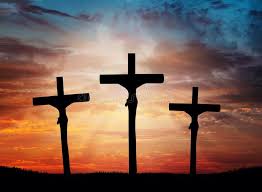
Look first to the cross. Sin separated us from God. We had no way of working our way back to him. No way of reconnecting once we distanced ourselves from him. Jesus took on himself my sin and yours as he hung on the cross. A sacrificial lamb whose blood erased our sin so we could again enter again into right relationship with him as we were intended…reconnected by God’s grace, through our faith in Jesus Christ. The cross is our salvation.

His resurrection sealed the deal. Locked it in place. The events of that day confirmed it.

*****

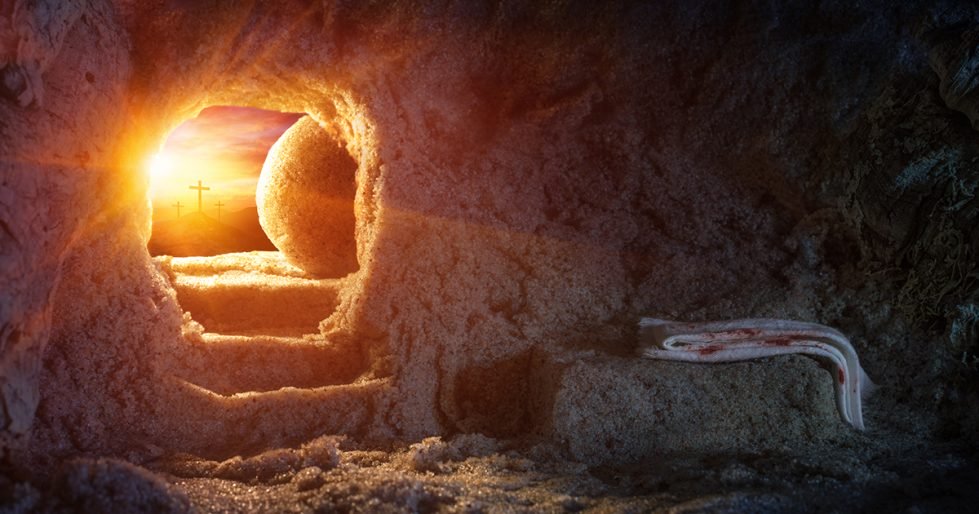
Mary Magdalene and a few other women who followed Jesus rose early on Sunday morning intent upon finishing the burial process which could not be completed before the Sabbath. They arrived at dawn to find the heavy stone rolled aside.

Timidly and fearfully, they peeked inside. The only items in the tomb were a few hastily spread spices and ointments Joseph and Nicodemus had placed on Friday and the neatly folded linens in which Jesus had been wrapped. Jesus was gone.

One of the women scurried back to the disciples with a frantic report. Peter and John raced to the tomb. After a quick inspection, the men confirmed that Jesus was missing. As most of the morning’s visitors returned home, some of the women stayed behind.

Two angels sought to comfort their crying and their fears. Confounding them by letting them know that Jesus had risen from the dead. Mary Magdalene, shocked and disoriented, turned and almost ran into Jesus, mistaking him for the gardener.

“Sir, if you’ve carried him away, tell me where you have put him and I will go to him.”

Jesus replied to her, “Mary.” (John 20:15-16)

At the sound of her name, Mary knew. The tomb was empty because Jesus was standing before her. Alive! Well! Risen!

*****

Over the course of the next 40 days, Jesus appeared to more than 500 people, according to scripture. Five hundred people who could testify to his resurrection. Five hundred people who could declare with certainty, “He is risen! He is risen, indeed!”

So, in our belief in Jesus as savior and Lord, the question is not do you believe in the resurrection? The questions are: What does it mean to you? What are you going to do with it?

Here’s my take on this continuing miracle in our lives.

Firstly, you and I can have the relationship we have with God because of the resurrection. He planned it that way. He made it happen. Jesus died on the cross for the forgiveness of our sins…past, present and future. It is the only way our sins can be erased.

“For the wages of sin is death, but the gift of God is eternal life.” (Romans 6:23)

The resurrection of Jesus confirmed that God accepted Jesus’ death as our substitute. We don’t have to pay the price because Jesus did. The resurrection is validation of Jesus’ work on the cross and a promise to us that once we put our faith in Jesus we no longer face the ultimate consequence of our sin. Hallelujah!

Secondly, the resurrection is our hope.

Physical death is the enemy of a sinful man. The mortality rate is, for all practical purposes, 100 percent…give or take Elijah and Jesus. No amount of medical technology or wealth changes that immutable fact.

It does not have to be the case with spiritual death. Christ rose from the grave because God is more powerful than death itself. Jesus’ resurrection shows that death has lost its grip on us. We do not need to fear it because, through Christ, we have been raised to new life.

“O Death, where is your victory? O Death, where is your sting? But, thanks be to God! He gives us the victory through our Lord Jesus Christ.” (I Corinthians 15:55-57)

Chapter 15 of 1 Corinthians explains that eternal life is ours. Whether we meet a physical death before Christ returns or whether we are present when he comes, Jesus will gather us all to him for eternity in the presence of the Father.

This is the basis for Christian hope. The world uses the word hope to express a desire for something to be true. “I hope she loves me.” “I hope I get that new job.” For Christians, hope in Christ is an assurance. An absolute. Hope in Christ guarantees life beyond our physical death, without question or pause. Everlasting life in the arms of God is assured.

Thirdly, the resurrection confirms that we serve a living savior.

No other faith tradition makes such a claim. In every other faith tradition, the principle head of that faith died, was buried and remains in the grave to this day. Only Jesus lives. The many witnesses of the risen Lord testified to his resurrection. They saw him alive. They touched his nail-scarred hands and pierced side. They saw him breathing. They saw him eating. They heard him speak. They heard him laugh.

Those witnesses are hard to refute. However, the greatest witness to his living presence is the Holy Spirit whom he sent to be with us in his place. In the hours before the cross Jesus offered comfort to his disciples. Sharing with them that he must return to the Father, but he would not leave them alone. He told them,

“I will ask the Father and he will give another Comforter to be with you forever—the Spirit of Truth…You know him for he lives with you and will be in you. I will not leave you as orphans. I will be with you.” (John 14:17-18)

It is the indwelling Holy Spirit that testifies to the living presence of Jesus in our lives today.

“When the Helper comes, whom I will send to you from the Father, that is the Spirit of truth who proceeds from the Father, he will testify about me.” (John 15:26)

The old hymn declares the promise. “We serve a living savior who’s in the world today. I know that he is living, whatever men may say. I see his hand of mercy. I hear his voice of cheer. And just the time I need him, he’s always near. He lives!”

Finally, if the resurrection means we have an eternal relationship with God…one that gives victory over death and a hope that endures forever…that we serve a living savior who lives within us through his spirit…then we bear a great responsibility to be faithful.

“Therefore, my dear brothers, stand firm. Let nothing move you. Always give yourselves fully to the work of the Lord because you know your labor in the Lord is not in vain.” (I Corinthians 15:58)

Our Passion Week closes. The dark days replaced by the eternal light of God’s love in living Lord.

He is risen!

He is risen, indeed!

Author’s Note: I hope you’ve found as much meaning in this week’s Easter series as I did during my study. May God bless you all.

Passion Week-Saturday: Remember

Background Passage: Luke 23:56

Jesus is dead. Hurriedly buried in a borrowed tomb. Now, it is Saturday of Passion Week. Sabbath day on the Jewish calendar.

It is pure speculation on our part. It is not, however, hard to imagine the turmoil of the disciples and the handful of Jesus followers in the hours after his death on the cross.

One by one, those brave enough to venture to Golgotha peeled away, leaning on each other for support. Some went their separate ways. Others huddled together in a room, isolated in fear, burdened by grief.

All we know of Jesus’ followers actions on the day after Jesus’ death is found in one simple verse.

“Then they went home and prepared spices and perfumes. But they rested on the Sabbath in obedience to the commandment.” (Luke 23:56)

I don’t know about you, but the death of a loved one is unsettling. In the best of times, there is a measure of reflective memories of good times shared together. When the loved one fell victim of a particularly difficult death, there is a lingering replay of every image of the last moments…real and imagined.

How could it have been any different for the disciples of Jesus or for these women who loved him?

I suspect many of them followed Jesus to Calvary, pushing their way through a jeering crowd, hoping against hope that this was just a horrible dream. They saw him fall beneath the weight of the cross, weak from the scourging he just endured. They watched the soldiers viciously manhandle him as they stripped him of his clothes and nailed him to the cross. They could not turn away as he hung from the cross, watching each agonizing breath until it was finished.

Now, in the darkness of the evening, they replayed all those images in their minds over and over again. Through the night they could not shake those images. They could not shake the despair.

When Sabbath dawn broke that next morning, they abandoned all pretense of the sleep that never came. I imagine them looking to one another as they picked at their breakfast. “What now?”

In a telling moment, when their hearts were heavy with grief, fear and despair, they had every reason to abandon their faith. After all, the one in whom they had placed their trust was gone. But, when they were lost and as hopeless as they had ever been…despite the horrific memories…scripture says they observed the Sabbath.

They did in that moment what they did with Jesus every Sabbath he was with them. They stayed true to what Jesus taught them. They read God’s word. They prayed. They honored God.

I like that. It’s probably worthy of our attention. They honored God. They honored their memory of Jesus by doing what he would have done.

A week of study brought us to the foot of the cross. On this day between the cross and the empty tomb, perhaps it’s good that we remember the suffering of Jesus as a demonstration of the incredible love of God to send his son to die for us.

But even as we remember the horror, we honor God by our worshipful spirits on this day and our knowledge that the darkness of that night made the light of his resurrection shine that much brighter.

Via Delarosa by Lea Salonga, 2011

Passion Week-Friday: Renewal

Background Passages: John 18:1-19:37, John 3:16-17, Ephesians 2:8, John 19:38-42, and John 12:32

Nine hours.

540 minutes.

32,400 seconds.

That’s all the time it took the religious leaders to arrest Jesus and to nail him on the cross. Nine hours. When Jesus whispered, “It is finished,” and breathed a sigh of release, the religious leaders patted each other on the back and breathed a sigh of relief. It was finished. They had won.

In one of the world’s best examples of a kangaroo court, Caiaphas, the high priest, and other religious officials, manufactured the evidence and brow beat a Roman governor to bend him to their will. By killing Jesus, they protected their standing among the Jewish people. Brutally efficient. Politically effective.

Little did they realize that they played right into God’s hand. Scripture tells us when the time was right, the sovereign God sent his son to live among his creation, to teach them what it means to be a part of his kingdom and to die as a substitute for the failures of a sinful world.

In those nine hours, God expressed his deepest love.

“For God so loved the world that he gave his one and only son that whoever believes in him should not perish but have eternal life. For God did not send his son into the world to condemn the world, but to save the world through him.” (John 3:16-17)

In those nine hours, we learn the very definition of grace.

“For it is by grace you are saved through faith—and this not from yourself. It is a gift from God. (Ephesians 2:8)

In those nine hours, we see the deepest love and the greatest gift of all time. In those nine hours, we see the beginning of Easter.

This will not be a typical Easter weekend. In the middle of this pandemic, our churches will be mostly empty, despite the creative ways congregations find to worship. Easter will be less public and more private. More personal. Maybe that’s not altogether bad thing.

It’s a hard truth. Most Easter Sundays find churches with their pews filled with faces who rarely enter the church doors throughout the year. Believers, for the most part, for whom the cross gets stuffed in the closet after Easter service along with their new dresses, suits and shoes. They’ll pull it out again next year, but what about the months between?

I really don’t intend for that to sound harsh or critical, though I suspect it does. I attend church almost every weekend and I know I’ve failed God more times that I care to admit. It’s not about our failures. It’s about what we do from this moment on with the cross. How do we let it change our lives?

Caiaphas and the other religious leaders rejoiced at Jesus’ death. Though they read the scriptures regularly. They clearly misunderstood the words. They projected their own interpretation of God’s word and created an image of the Messiah that Jesus did not fit. As a result, they nailed him to a cross and mocked him. “If you really are the chosen one, prove it to us once and for all by coming down from the cross.” When Jesus did nothing, they laughed, patted each other on the back and went on their way.

One thief joined the religious elite, mocking Jesus and telling him to get all of them off the cross if he was who he claimed to be. The repentant thief, on the other hand, scolded his partner in crime for his shameful words. Though he knew he deserved the death to which he had been sentenced, he recognized in the things Jesus said and did while on the cross that Jesus was innocent. He saw enough in Jesus to repent of his own sin and give his life to him, “Remember me when you come into your kingdom.”

Each of us as believers in Christ had to get to that point. Convicted of our own sin and seeing into the heart of Jesus, we gave our lives to him. Too often, we let the genuine thrill of that experience fade with time. We trust him as savior, try to live according to his word, but, whether out of embarrassment or fear, we hide our faith from others…stepping from the shadows to light only on Easter or when it is convenient for us.

What do we do with the cross? I hope we do what Joseph of Arimathea did.

Joseph was a Pharisee, a member of the ruling council. Luke describes him as a “good and upright man.” John tells us Joseph was a follower of Jesus. He had heard Jesus teach and believed in who he was. Joseph accepted Jesus as his savior, his Messiah. But, and this is still too often true today of many believers, Joseph kept his relationship to Christ private. He was afraid of what the Jewish leaders would do to him.

When Jesus died on the cross, Joseph came alive spiritually. His fear forgotten, Joseph of Arimathea approached Pilate, the man who sentenced Jesus to die, asking the governor’s permission to take Jesus from the cross and bury him properly. The cowardice and fear that kept his faith silent vanished. His bold and public request testified for Jesus in a way that everyone, including the religious leaders, could see.

Jesus had been dead less than an hour and already his words proved true.

“But if I be lifted up from the earth, I will draw all men to myself.” (John 12:32)

Joseph, who privately made his faith commitment, found himself drawn to the cross of Christ, decided it was time to make his relationship to Christ public. Time for a re-commitment.

This will not be our typical Easter. Despite creative ways to celebrate the death and resurrection of Jesus, most churches will remain closed. The pews, normally full of people, will remain empty. The word of God will be proclaimed this weekend in many ways. We will see Jesus on the cross, high and lifted up.

Be drawn to him. Wherever we have been reticent to express our faith and trust in him, let’s leave that hesitation at the foot of the cross. It’s my prayer this weekend that we all be drawn to the cross, recommitted to live and work for him each day. It’s my prayer that we all let the cross change us. May we use the incredibly sacrifice of Jesus to renew our faith commitment and boldly proclaim to the world that we are his.

For God so loved the world…

Passion Week-Thursday: Never Alone

Background Passages: John 14:1-27; John 16:12-33 and John 17: 6-26

The events of the day were emotionally charged and brutally devastating. Though the day began easily enough for Jesus’ disciples, it would soon take a very different turn. They surely felt the ground was giving out from under them.

Their emotions were set on edge as Jesus washed their feet, teaching them about a servant’s heart and their need to love and care for one another…especially in the days ahead.

  • They reeled in shock as Jesus blindsided them with the idea that one of them would betray him…that others would abandon him.
  • Later in the day, they would grow weary in the garden, sleeping while Jesus agonized in prayer.
  • They would be startled awake by the torches and shouts of the temple guards as they arrested Jesus.

If they thought their world was tilting in the Upper Room, by midnight, their world had turned upside down.

As intriguing as each of those episodes are, I find myself captivated by the conversation Jesus shared with his disciples after their Passover dinner together. Knowing the inevitable outcome, this would be Jesus’ last chance to tell them what they needed to hear. To give them words that might protect and sustain them in the horror that was to come.

Put in the disciple’s sandals, what would you need to hear? What do we need to hear at a time in our world where it seems the ground around us is falling away? I found three things compelling in the dialogue between Jesus and his disciples.

Trust

“Do not let your hearts be troubled. Trust in God. Trust also in me.” Peace I leave with you; my peace I give you. I do not give to you as the world gives. Do not let your hearts be troubled and do not be afraid. (John 14:1, 27)

Jesus could sense the growing anxiety. He could see it etched on their faces. All this talk about Jesus going away made them fearful. For three years he had been their rock and a constant presence. Thomas vocalized what all were feeling. “We don’t know where you’re going so how can we know the way?” Jesus was still among them and already they were feeling lost and alone.

Jesus sought to reassure them, asking for them to trust God…to trust him…despite their misgivings and fears.

Never Alone

Jesus had led them every step of the way for years. They were unsure of their own ability. Unsure of what lay ahead. Unsure of what they were to do in his absence. Jesus promised them they would not be alone. That they would not forget all he has taught them.

“I will ask the Father and he will give you another Comforter to be with you forever—the Spirit of Truth. You know him for he lives with you and will be in you. I will not leave you as orphans.” (John 14:15-16)

“All of this I have spoken to you while I was still with you. But the Counselor, the Holy Spirit who the Father will send in my name, will teach you all things and will remind you of everything I have said to you.” (John 14:25-26)

Jesus followed up that promise as he continued to talk to them.

“I have much more to say to you, more than you can now bear. But when he, the Spirit of Truth, comes, he will guide you in all truth. He will not speak on his own; he will speak only what he hears and he will tell you what is yet to come. He will bring glory to me by taking from what is mine and making it known to you. (John 16:12-14)

The disciples have been told they need to carry on without his physical presence. Jesus would not be there for them to pose a question or seek clarification. How frightening must that have been? Yet, he told them. You are not alone and you need not worry. The Holy Spirit will be your companion and will remind you of everything you learned from me. That’s significant reassurance, even if they weren’t totally prepared to understand it.

Overcoming

Jesus tells the disciples they will face persecution and death if they continue to follow him and do the things he’s commanded them to do. His promise is that through the difficult times that lay ahead, they will have the Counselor and Comforter whispering in their ears just as if Jesus was present with them.

“Then the disciples said, ‘Now you are speaking clearly and without figures of speech. Now we can see that you know all things and that you do not even need to have anyone ask you questions. This makes us believe that you came from God.” (John 16:29-30)

It was the response from his friends that Jesus needed to hear. The response that gave him the lift he needed to press on to the work that lay before him.

“You believe at last!” Jesus answered. “…I have told you these things so that in me you may have peace. In this world you will have trouble. Take heart! I have overcome the world. (John 16:33)

Prayer

Finally, Jesus concludes the evening before heading out to the Garden of Gethsemane with prayer (John 17:6-19) asking God…

  • to bolster their faith and connection with God.
  • to protect them.
  • To grant them a full measure of the joy Jesus had in his heart.
  • To ground them in his word.

Though the days ahead would be dark and difficult for the disciples, the hard conversation with Jesus had the desired impact. For that moment, they were comforted and strengthened.

*****

There is something reassuring to me in this passage. There is comfort.

Trouble and turmoil are a part of life. It always has been. It always will be. Faced with so much uncertainty today, it is easy to become anxious. What does today hold for me and my family? What will tomorrow look like? How will we survive?

Jesus reminds us. Trust in God. Trust in him. He is faithful and he is in control. He is working in my life and yours…even today.

The same promise he made to his disciples is a promise he makes to us. We have a Counselor, a Comforter, with us today. Bringing peace, a contentment, solid in the realization that God is with us. He did not abandon us in our time of distress. If we seek him, he will remind us of all he has taught us, all he has said and all he needs us to know. We are not alone.

Whatever happens around us, this passage also teaches that the victory is already ours. The world cannot beat or break us. Trouble will come, but Jesus has overcome the world. So, it circles back around. Because he has overcome the world, we find the peace that only he can give. Rest in the middle of chaos.

Then, there is one final piece to this expansive narrative that ought to bring you hope in all things. After Jesus prayed for his disciples. He prayed for me. He prayed for you.

“My prayer is not for them alone. I pray for those who will believe in me through their message, that all of them will be one, Father, just as you are in me and I am in you. May they also be in us so that the world may believe that you have sent me… I have made you known to them and will continue to make you known in order that the love you have for me may be in them and that I myself may be in them.” (John 17:20-26)

That’s it! That’s amazing! The sacrifice of Jesus on the cross is why we are never alone in the world no matter what surrounds us. The day before he went to the cross, Jesus was thinking of me. He was thinking of you. Praying that you and I would put our faith and trust in him so that we might be one…connected by grace with every believer and with God…to this day.

When you read that prayer, the cross becomes more than history. It becomes personal.

Passion Week-Wednesday: Betrayal

Background Passages: Matthew 26:14-16, Matthew 27:1-5, Romans 5:6-8, and 2 Corinthians 5:21

Jesus had to be a little grateful for his Wednesday. A quiet day. After the confrontations with the Pharisees and dawn to dusk teaching, Wednesday was more peaceful. His time in the temple was without controversy or confrontation. His time with his disciples laid back and easy.

Yet, in the back rooms of religious hierarchy where decisions are made, sinful men were plotting his death. In the bosom of his own fellowship, a disillusioned disciple made a choice.

Whether one betrays a country, principle or person the act of betrayal isn’t easily forgiven or forgotten. The names of history’s most infamous traitors remain on the tips of our tongues.

Brutus.

Benedict Arnold.

Judas Iscariot.

None of these names surprise to you. Had I asked you to name the three most infamous traitors, most of you would name these three men. Most of us would put Judas at the top of the list. How did he get there?

Judas is an enigmatic character. When Jesus called he followed. He must have recognized something different in Jesus. His words. The miracles he performed. Everything about Jesus convinced Judas that this was the Messiah for whom his people had waited.

Along the way, the words Jesus preached seemed less like the warrior king he wanted and more like one afraid to do what was necessary to free his people. Judas pushed and prodded his master, but Jesus’ message never strayed.

Knowing it would take money to feed the rebellion he desire, Judas let greed consume him. Two things happened that pushed Judas over the edge. When a woman anointed Jesus with precious perfume, John tells us that Judas protested what he felt was extravagant waste.

“Why wasn’t it sold and the money given to the poor?” objected Judas. John explains that Judas motives were not honorable. That Judas cared little about the poor and wanted the money for himself. (John 12:4-6)

Then after another of Jesus’ private sessions with the disciples on the Mount of Olives, Jesus told them plainly that his hour had come. That in two days he would be handed over to be crucified. (Matthew 26:2) It was the straw that broke the camel’s back for Judas.

The last three years had been a waste. The man he thought would rid them of the Roman occupation, the man he had thought would elevate him to a position of authority in a new kingdom, admitted he would die. Judas had enough.

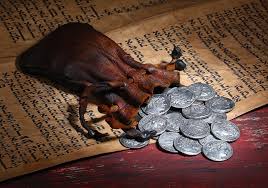
Whether motivated by pure greed or by the desire to bend Jesus to Judas’ will, the traitor went to the religious leaders and bartered away Jesus’ life. He pocketed their thirty pieces of silver and waited for the right time to turn him in to the authorities. (Matthew 26:14-16)

Some will say Judas had no choice. That this was his destiny. Judas had a choice. He just chose poorly. Had Judas honored his commitment to Christ, the religious leaders would have found another way to get rid of Jesus. They had met that very night in the house of Caiaphas, the chief priest, plotting and planning his arrest and death. Judas just made it infinitely easier.

No. Judas made his choice. And, here’s the rub. He made the same mistake I make almost every day of my life when I reject the will of God and try to bend him to my will. And, together we put Jesus on the cross.

Wednesday night, you see, was the night the last piece of God’s plan to bring salvation to a rebellious world fell in place. The countdown clock was ticking and the only thing that would stop it was if Jesus turned his back on God and walked away. (Jesus also had a choice.)

For us up to this point in our weekly study, Jesus’ death on the cross has been hidden in the mist. Too unpleasant to think about. Pushed in the background of his continued teaching and life-changing lessons about love and devotion to God.

But, the week now takes a darker turn.

We tend to throw Judas at the top of the list of history’s traitors, making him a scapegoat, minimizing the role we played in Jesus’ death.

“You see, at just the right time, when we were still powerless, Christ died for the ungodly…But God demonstrated his own love for us in this: While we were still sinners, Christ died for us.” (Romans 5:6-8)

Judas betrayed Jesus in a despicable way. We’re just as guilty of betraying Jesus as anyone. Turning our backs on him for 30 pieces of selfish desire. Our rebellion. Our sin. While we were yet sinners…

“God made him who knew no sin to be sin on our behalf, so that in him we might become the righteousness of God.” (2 Corinthians 5:21)

Judas stood with the soldiers in the Garden of Gethsemane as they arrested Jesus. He watched from a distance as the religious leaders manipulated the system. Jesus was sentenced to death on the cross.

Seized with remorse for betraying “innocent blood,” Judas tossed the 30 pieces of silver at the feet of the priests and elders. In his grief he found a tree on the outskirts of town and hung himself. (Matthew 27:1-5)

How’s that for a bit of irony? Both Judas and Jesus hung from a tree. Both bearing guilt. Judas dying for his own guilt. Jesus dying for the guilt all who would put their faith and trust in him. He died for me. He died for you. Sinners and betrayers all.

Jesus died for the sins of the world…to give each of us the chance and that choice to “become the righteousness of God.” To live in right relationship with him.

Though Wednesday was for Jesus a quiet day before his crucifixion, it brings with it a brutal reminder of our role in sending Jesus to the cross. It’s not a lesson we like to hear. It is one we need to remember. It is by God’s grace that we are saved.

Thank God for his provision. Thank God that from the moment of creation itself he planned a way to take away my guilt and my betrayal forever. Thank God for Jesus Christ his son.