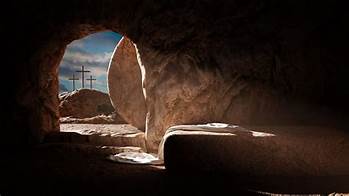
Resurrection Faith

Focal Passage: John 11:1-44

Just as the sun was setting, a breathless messenger found Jesus sitting among his disciples after another day of teaching and ministering to people on the east side of the Jordan River. The messenger, most likely a man Jesus had met previously while visiting in the home of Lazarus and his two sisters, Martha and Mary.

The message was simple. “The one you love is sick.”

What sounds a little cryptic to us was clear to Jesus. His good friend Lazarus was seriously ill. Martha and Mary just knew when Jesus heard those words, he would stop what he was doing and hurry to Bethany to heal their brother, a man Jesus loved like his own brother.

Jesus spoke to he man and the disciples offering a quick word of reassurance that the sickness would not end in death, but that God, and Jesus himself, would be glorified through it.

Then, in a move that may have surprised the messenger, Jesus stayed where he was for two more days, continuing to minister to all who came to him.

After that second day, Jesus began the day’s walk to Bethany.

As he neared the village, Martha ran to meet Jesus. Through scripture we hear an emotional conversation that becomes one of the greatest Easter messages of all time. Listen to the words between Martha and Jesus.

“Lord,” Martha said, “If only you had been here, my brother would not have died. But I know that even now God will give you whatever you ask.”

Jesus said to her, “Your brother will rise again.”

Martha answered, “I know he will rise again in the resurrection at the last day.”

Jesus said to her, “I am the resurrection and life. He who believes in me will live, even though he dies; and whoever lives and believes in me will never die. Do you believe this?” (John 11:21-26)

There is incredible truth in these few words of scripture than drill into the core of Christianity.

Across most of the Christian world, we just observed Easter, the day we celebrate the resurrection of Jesus Christ. According to some estimates, church attendance across America on Easter increases between 50-75 percent.  However, a 2022 survey conducted by Lifeway Research and Ligonier Ministries revealed that slightly over one-third (34 percent) of all professing Christians question whether the physical, bodily resurrection of Jesus actually occurred.

This exchange between Martha and Jesus foreshadows Jesus’ own victory over death and underscores the power of living in resurrection faith.

This passage offers three aspects of the story that really speak to why the resurrection matters today.

Mary and Martha get word that Jesus is near, so Mary, the reflective one, remains behind while Martha, the one that always has to be doing something, runs to meet Jesus. She expresses sorrow and perhaps a little frustration that Jesus didn’t arrive in time to heal her brother.

Look at verses 23-26…

Martha’s words seem less a challenge to Jesus’ late arrival as an expression of sorrow over what might have been. Jesus doesn’t explain. He just offers reassurance.

“Your brother will rise again.”

Mary responds with the only resurrection she knows. The prominent Jewish belief among the religious Jewish priests and people was in a corporate resurrection of God’s people at the end times. She states what she has been taught and what she fervently believes. “I know he’ll rise again in the last day.”

It is here that Jesus speaks words that auger not only his own death and resurrection, but a truth so embedded in the gospel that it resonates 2,000 years later.  

“I am the resurrection and the life…”

Hear that carefully because it is an astounding promise that is the heart of the gospel.

The resurrection changed lives. The disciples when from timid and fearful to tenacious and fearless in their proclamation of the good news. It wasn’t that they just decided to go on the offensive. What they saw and what they experienced when they saw the risen Christ, changed them.

The resurrection is not an abstract belief or just another fact of history. Dr. Jeremiah Johnson, author of Body of Proof, reminds us that the resurrection is A PERSON. Jesus IS the Resurrection and Life.

I don’t know if I ever thought of the resurrection in that exact way.

All the other “I am” statements Jesus makes in the Gospel of John are clear metaphors:

I am the good shepherd.

I am the bread.

I am the light.

I am the gate.

I am the way.

I am the true vine.

Metaphors that share essential truth about Jesus, his nature and his role.

When Jesus said, “I am the resurrection and the life” (John 11:25), it feels different. He’s not just using a metaphor—He’s making a powerful claim that he is the source of resurrection and life, both here and now and after we die. He is the agent of resurrection. Resurrection is not just something He provides, it is something found in Him and only in him. Resurrection is who he is.

It’s as if he is telling Martha, “Resurrection/Life is standing right in front of you. In me, there is no death.”

Because Jesus is the resurrection, it ought to change our outlook on life.

Go back to the initial words of Martha, and for that matter, the first words of Mary when she greets Jesus.

Vs. 21–If only you had been here, my brother would not have died (Martha)

Vs. 32–If only you had been here, my brother would not have died. (Mary)

This was something they talked about in the dark hours after Lazarus died…a feeling they shared. Jesus has demonstrated healing in the past. They had undoubtedly heard of those miracles. They may have even seen his healing power demonstrated in person with others they knew.

The sisters certainly knew he was capable of taking the sickness away. That’s why they asked him to come in the first place. They knew, based on where Jesus was at the time, that he could get to Bethany in two days. Jesus waited under the guidance of the Holy Spirit to reveal something far greater than his healing power. Both Martha and Mary said, “If only…”

Why didn’t you come when you first heard? Why did you wait? You could have done something? He died because you weren’t here to heal him? These are emotional words spoken in loss, uttered by sisters who are hurting.

“If only…” How many times have you and I said the same thing after experiencing a loss of someone we love?

In his book, Johnson urges his readers to turn our regret-filled “if onlys” to a faith-filled “if Jesus.”

If only says it’s too late. It looks backward at what didn’t happen rather than looking forward to what Christ can still do—even in situations that seems final.

“If Jesus” anticipates what can happen today because Jesus is who he is. “If Jesus” tells us that nothing and no one is ever too gone. If Jesus is in our lives, things can still happen. It may not be everything we were hoping, but if Jesus is present, he will bring good from it. Martha understood it to some limited degree…”but even now…”

Seeing Jesus as the source of life, gives us a resurrection outlook that moves from regret to expectation. From a past-perspective to a future trust. From finality to possibility and hope. From spiritual and physical death to abundant life now and for all eternity.

If Jesus is at work in my life, he can still restore, redeem and lead me forward. That’s resurrection outlook.

Experiencing that resurrection outlook matters because it is not dependent on:

  • timing (Jesus arrived after Lazarus died)
  • circumstances (The tomb was already sealed)
  • human conclusions (Everyone else thought it was over)

There is one final thought that we must overlook. Resurrection is personal.

Listen to the next few phrases in vs. 25-26.

“He who believes in me will live, even though he dies”; and whoever lives and believes in me will never die.”

At first glance these statements seem to say the same thing. Commentaries suggest these phrases subtly complement each other.

The first phrase…he who believes in me will live even though he dies…refers to physical death of a believer followed by resurrection. There is a real, future resurrection life. Physical death is temporary. We may die physically, but we will live again. We move from physical death to spiritual life.

The second phrase…whoever lives (in me) and believes in me will never die…refers to never experiencing eternal death or separation from God. Literally, in the Greek, (emphatic and forcefully stated) “he will absolutely never die at all.” This phrase explains what death ultimately cannot do to a believer. It cannot separate a believer from the presence of God. Death is powerless.

Jesus is purposeful in stating these phrases in this order. Jesus acknowledges that death is a reality then he emphatically redefines that reality for believers…death isn’t really death. It’s a gateway to life eternal for the believer. Because we believe in him, we will never, ever be separated again from God who loves us. So, what he says is not repetition, it’s revelation.

These words should be a source of immense comfort to us. This promise is not reserved for a select few but is extended to all who put their faith in Jesus Christ.

When you look back at the scripture, Jesus made his declaration. He explained its meaning. Then, looking straight into Martha’s eyes, he posed the only question that really mattered. In is in this question that resurrection becomes personal.

Look at the end of Vs. 26. “Do you believe this”?

By asking this question, Jesus made it personal for Martha. Martha believes in the Jewish doctrine of resurrection; She knows the dead will one day rise. That’s been taught to her all her life.

Jesus called her personally to take the next step and believe in him as the resurrection in order to:

  1. To deepen her faith before the miracle. He did not want her faith to rest solely on seeing Lazarus raised—He wanted it grounded in who He is.
  2. To reveal His identity clearly. This was one of His strongest claims, I AM THE RESURRECTION AND LIFE. Now that you know who I am, what will you do with that knowledge?
  3. To invite a confession of faith. Martha responded with one of the clearest statements of faith in all of John: “Yes, Lord…I believe you are the Christ, the Son of God.” She believed in him for who he was, not what he might do for her brother.

When Jesus raised Lazarus from the dead he demonstrated and validated his claim about being the resurrection and life. It is guaranteed by his empty tomb on that first Easter Sunday. Jesus’ resurrection is the seal for our salvation and our assurance of eternal life.

Paul reminds of that truth in several ways.

If you confess with your mouth that Jesus is Lord, and believe in your heart that God raised him from the dead, you will be saved. (Romans 10:9)

He (Jesus) was delivered over to death for our sins and was raised to life for our justification.” (Romans 4:25)

If there is no resurrection of the dead, then not even Christ is raised. And if Christ has not been raised, our preaching is useless and so is your faith…your faith is futile and you are still in your sin…But Christ has indeed been raised…(I Corinthians 15:13-14, 17, 20)

A Christian lives and dies with that truth and hope expressed by Paul.

That, my friends, is an act of resurrection faith.

The question is, do you believe it?

Thinking Points

How does seeing Jesus not just as the giver of resurrection but as the Resurrection Himself reshape my view of life and death?


Where am I still living with an “if only” mindset instead of an “if Jesus” faith?


How personally do I take Jesus’ question, ‘Do you believe this,’ and what does my life say about my answer?


Don’t Squander Your Inheritance

Background Passages: Genesis 25:27-34 and Romans 8:15b-17

Using some borrowed cash and his personal savings, Frank Winfield Woolworth bought some discounted merchandise to sell to the general public at reduced cost. He opened his first Woolworth’s Great Five Cent Store in Utica, NY, in 1879. Though that first store went out of business, he kept working and reopened again in Pennsylvania to greater success.

Eventually, Woolworth built his business into a retail corporation worth $25.9 billion in its heyday. Over the years, the company was handed down through the family until the last Woolworth’s closed its doors in 1997. Though the company lives on with a smaller, more targeted product line under the name of Foot Locker, Woolworth’s, as a corporation, no longer exists.

At one point, Woolworth’s granddaughter Barbara Hutton assumed leadership in the corporation. Many people point fingers at Hutton as the first of the Woolworths to start squandering her inheritance. Even though they were the biggest name in business, patriarch F. W Woolworth’s granddaughter knew nothing about making money, and instead vowed never to work a day in her life. By the time she was on her seventh husband, she had lost almost her entire fortune.

All of us would like to leave something of substantial value for our children. If we’re blessed enough to do so, we hope we’ have raised them well enough that they do not misuse the gift they have been given.

Sadly, it is not uncommon to see the second or third generation squander in a season all of the hard work, value, and wealth created by the first generation. When the sons or daughters spend away all which they’ve been given, it’s usually because they take for granted what they have, possessing a sense of entitlement.

What is true in this temporal and material world takes on even greater important in the eternal and spiritual realm. As the beneficiary of a spiritual inheritance of immense value, I know how easy it can be to squander all that God has given us. When I read the Woolworth story this week and wrapped it in spiritual terms, I had to ask myself as I’m asking you, “Are we squandering our God-gifted inheritance?”

It is, I think, a viable question.

*****

He dragged himself back home, weary and filthy after days hunting wild game. He comes empty-handed. Other than one scrawny rabbit, he killed nothing. The long trek home was nothing short of miserable. His quiver empty of arrows and his stomach roiling with hunger as he crested the ridge overlooking his father’s encampment.

The hunter caught the aroma of a rich lentil stew carried on the smoke from the open pit near his father’s tent. Hunger drove him forward.

Young. Impetuous. Famished. Esau rushed to the tent where his brother Jacob sat stirring the pot, sampling from his ladle the tasty broth.

As Jacob sampled the stew, he saw his twin brother making a beeline for the fire pit. Normally quiet and reserved, Jacob did not enjoy confrontation, but something about Esau always set Jacob’s teeth on edge. Seeing the ravenous look on his brother’s face, Jacob’s devious streak flashed.

“Mmmmmm,” Jacob overplayed the taste of the stew, adding a pinch more salt, a look of rapture on his face. “This is soooo good,” he said to himself, knowing that Esau would hear.

Esau plopped to the ground beside the boiling pot, his mouth watering in anticipation. “Quick, let me have some of that red stew! I’m famished!”

Jacob sat back on his heels, giving Esau a sad look. “I don’t know,” he said. “I made this for Father. Maybe you can have the leftovers.”

“There were no deer anywhere,” complained Esau. “I’ve not eaten in days. Give me some stew!”

“I tell you what,” said Jacob, pouring some of the stew into a wooden bowl and wafting it under Esau’s nose. “First, sell me your birthright.”

“Look, I’m about to die,” Esau said. “What good is a birthright to me?”

“Swear to me first,” insisted Jacob. Grudgingly uttering an oath, Esau surrendered his birthright to Jacob.

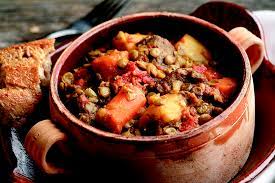
“Then, Jacob gave Esau some bread and some lentil stew. He ate and drank and then got up and left. So Esau despised his birthright.”

One has to wonder how often Esau regretted his impetuous disregard of his inheritance. He was hungry, but not starving. For a morsel of food and the temporary satisfaction of a full belly, he gave up that to which he was legally entitled.

I suspect as the years passed, he forgot about it most days, perhaps thinking that Jacob would regard the transaction as a joke between brothers. I doubt either son ever told Isaac of the deal they had made. For his part, Jacob kept the oath in his robe pocket, ready to pull it out when the time was right.

Let’s talk first about this birthright. Thought it is an inheritance, there is no strong 21st century equivalent to the ancient birthright. Our culture is not wired the same way.

In the Hebrew culture, the birthright was a matter of wealth and status. Upon his death, the father’s possessions were divided equally among all the male children, except the firstborn son received a double portion. Under ordinary circumstances when Isaac died, Esau, as the oldest son, would be entitled to two-thirds of Isaac’s wealth. Jacob would receive the final one-third.

This whole situation seems deceitful and completely unfair. Jacob took advantage of his brother in a weak moment to strip him of his inheritance. It makes us cringe a little. However, God knows the heart. When Rebekah became pregnant with the twins, God revealed to Isaac and his wife that the younger son would be the prominent son.

“Two nations are in your womb, and two peoples from within you will be separated. one people will be stronger than the other and the older will serve the younger.” (Genesis 25:23)

We tend to look down on Jacob for his duplicity, but God’s plan depended on the man Jacob would become, not the man he was at the time. He knew how Esau would disregard is birthright.

It is an intriguing story, but how does it answer our initial question? Are we squandering our God-gifted inheritance? Are we doing something that would strip us of God’s blessing?

Let’s first establish our right to a godly inheritance.

In the New Testament, believers in Christ are called the “children of God.” Look at John 1:12-13.

“Yet to all who receive him, to those who believed in his name, he gave the right to become children of God—children born not of natural descent, nor or human decision or a husband’s will, but born of God.”

Being born again through our faith in Jesus Christ and the grace of God, we become his heirs, worthy of our inheritance.

“…but you received the spirit of sonship. And by Him we cry, ‘Abba. Father.’ And the Spirit himself testifies with our spirit that we are God’s children. Now if we are children, then we are heirs—-heirs of God and co-heirs with Christ.” (Romans 8:15b-17)

Clearly, scripture teaches that all believers in Christ receive an inheritance by virtue of being a child of God. It is an inheritance with benefits in the here and now as well as in the eternal. We are asked to honor that inheritance with our lives.

“Whatever you do, work at it with all your heart, as working for the Lord, not for men, since you know that you will receive an inheritance from the Lord as a reward.” (Colossians 3:23)

Hebrew culture allowed the father to strip the eldest son of his first-born rights if the father felt him unworthy.

With our spiritual inheritance guaranteed by Christ, we are still asked to live lives worthy of the gift. How might we squander that which we’ve been given? One of the keys is that almost parenthetical sentence in Genesis 25:34.

“So Esau despised his birthright.”

Culture and tradition all but guaranteed Esau a double portion of his father’s inheritance, yet we’re told he “despised his birthright.” It is not that Esau hated the whole idea of getting a double portion. In Hebrew, to despise something, to hate something, is a matter of choice. To despise your inheritance means you put other things ahead of it. To choose something else. In the heat of the moment, Esau chose a single bowl of bean soup over that to which he was entitled.

Other translations say that Esau “profaned his birthright.” That word takes on a different connotation in the 21st century, speaking primarily to crude and vulgar language. In Scripture the term suggests a broader scope. The idea conveys a lack of holiness. To take something that is righteous and good and treat it with contempt.

Esau profaned his God-given and special birthright by trading it for something cheap and ordinary…as if it meant nothing to him.

I wonder how many times I’ve approached my birthright as a child of God with the same level of disregard as Esau demonstrated. How often have I taken my spiritual inheritance for granted? How often have I treated my spiritual birthright too casually? Trading it in for something so inconsequential as a bowl of stew…satisfying in the moment, but with no lasting value.

Paul told the Colossians, “Whatever you do, work at it with all your heart, as working for the Lord…” I will not do that if I value a bowl of stew more than I value God’s provision, plan and purpose for my life.

Consider the writer of Hebrews as he posed a rhetorical question to his readers. If the world becomes more important to us that the inheritance God provides then “how shall we escape (God’s judgment) if we ignore such a great salvation?”

The world promises us that the stew is going to taste so good that everything else pales in comparison. It’s going to promise us that if we just eat the stew the hunger will never return. It’s going to promise that the stew…the wealth, the fame, the power, the position will mean more to us that anything God offers.

Here’s the deal though. Stew is not salvation. It’s just stew.

We squander our God-given inheritance when the stew is more important than the salvation. We squander our inheritance when we give too little thought to God and his purpose and will for our lives. We squander our inheritance when we fail to give God’s grace gift the value it deserves. We squander our inheritance when we fail to live as if it matters more than anything else in this world.

This is the lesson I learn from Esau. I can never forget, not for a minute, that God and his promises are holy. I am his and he is mine. When I forget that simple fact, or when I give that relationship anything less than the highest priority in my life, I squander the chance to experience the blessings he promises me.

Claim that inheritance offered through Jesus Christ. Through your witness and your work, increase its value. Frank Woolworth’s daughter squandered her inheritance. Don’t squander the inheritance God gave you no matter how tasty the stew looks.

Amen?

Amen!

Camelot and the Cross

Background Passages: Mark 15:21-47; Phil. 2:6-8; John 3:16

The legend of King Arthur and Camelot reads as a favorite of many since it first appeared on the French literary scene in the 12th century. As a movie, released in 1967, the tale gained popular acclaim. In the movie’s climatic scene, King Arthur discovered the adulterous relationship between Queen Guinevere and Lancelot, the king’s most trusted and loved knight. Though Lancelot escaped capture, Guinevere, having broken the laws of Camelot, is tried and convicted, sentenced to burn at the stake. Arthur, deeply torn between his devotion to the laws of his beloved kingdom and his passion for Guinevere, faces an unholy predicament.

Mordred, King Arthur’s scheming, illegitimate son, dances in glee at Arthur’s “magnificent dilemma.” He says, “Let her die, your life is over. Let her live, your life’s a fraud. Which will it be, Arthur? Do you kill the queen or kill the law?” As the tragedy unfolds, Arthur stoically sacrifices his true love, “Let justice be done.”

The king watches in horror, heart shattered, as the guards lead Guinevere into the castle courtyard. The executioner chains her to the stake, waiting with his torch for the king’s signal to set the pyre ablaze. In the gripping agony of love, Arthur gives into his breaking heart. “I cannot let her die.” Mordred, relishing the downfall of the king, mutters, “Well, you are human after all, aren’t you, Arthur? Human and helpless.”

Guinevere is spared, but the dream of Camelot crumbles.

In his book, Windows of the Soul, Ken Gire compares the cross of Calvary with that climatic scene in the castle courtyard of Camelot. Think about it. God created his world and all within it and called it “good.” He loved his people so much that he made with them a covenant of relationship, a promise never broken by the Father. He loved them with all his being.

He handed them a set of principles by which they should live, asking for their obedience and commitment. Time and time again the world proved unfaithful, lost in the quagmire of its self-interest, rebellion and sin. Time and time again, the world was tried, convicted and deserving of death.

In the shadows, Satan gleefully watched as God faced his magnificent dilemma. “Let the world die, your life is over. Let the world live, your life’s a fraud. Which will it be, God? Do you kill the world or kill the law?”

Satan saw only a no-win scenario. God must turn away from his call to righteousness and ignore the sin of the world or hold to his principles and punish the world he loved. Either way. Satan wins. God loses. God, heart heavy in sorrow said, “I cannot let them die.” Satan smiled, relishing what he saw as the downfall of the Heavenly King. Helpless. But God was not finished with his redemptive act.

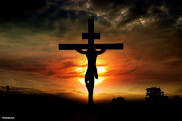
Filled with love for his created, the King left his throne. Took off his crown. Laid aside his scepter. Shrugged the royal robe from his shoulders. Traded his castle for a cross.

“Who, being the very nature God, did not consider equality with God something to be grasped, but made himself nothing, taking the very nature of a servant, being made in human likeness. And being found in appearance as a man, he humbled himself and became obedient to death-even death on the cross!” Phil. 2:6-8

God took the sins of the world upon himself through his “only begotten son.” A sacred, sacrificial substitute for a world that deserved to die. Today, we still find it difficult to comprehend because we are incapable of loving anything as God so loved his children. For those of us who accept by faith the grace that is the cross, we find a promise of life eternal in the arms of a living Lord who loves us as no other loves us. God’s third option remains the hope for the world.

In a story of love and justice, Camelot ends in tragedy. Gire said it best, “When love and justice collide, only the Cross offers a happy ending.”

“For God so loved the world that he gave his only son that whosoever believes in him should not perish but have everlasting life.” John 3:16