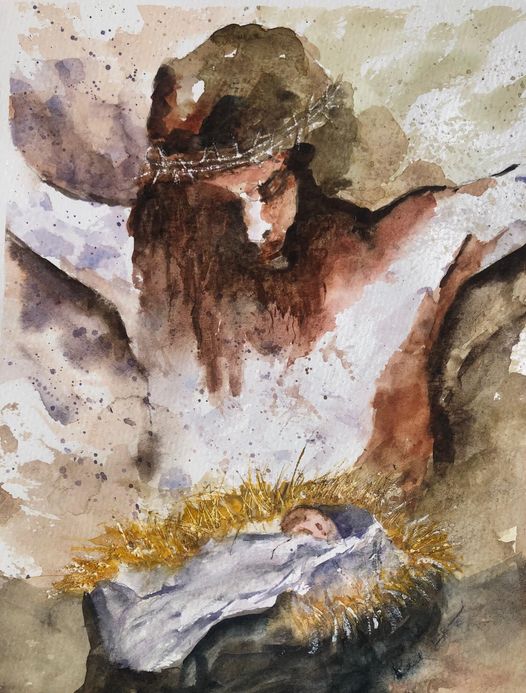
The Prophets’ Christmas

Focal Passage: Isaiah 7:14 & 9:6-7; and Micah 5:2-5

It’s the Christmas season. The time when God stepped into the world with love, grace, humility and hope.

Through the years, I’ve written about Christmas from every angle and angel. I’ve studied the coming of the Messiah through the eyes of his earthly parents, the shepherds, the magi, and paranoid Herod, a priest name Simon and an elderly, devout woman named Anna. I’ve even written a more fanciful piece about the birth of Jesus from the eyes of a lamb.

As I looked to begin my study this year of the moment God sent his son into the world, I want to look at that moment from the eyes of the Old Testament prophets.

Scripture teaches that the moment God opted to grant humanity free will, he knew we would use that freedom to rebel against his plan for our lives. From the beginning of time, then, God had to find a way to bring his lost children back to him, despite the spiritual abyss we would create between us and God by our sinfulness. Before he put the world in place and set it spinning on its axis, he planned on Jesus.

Look at what Paul tells Timothy.

He has saved us and called us to a holy life—not because of anything we have done but because of his own purpose and grace. The grace was given to us in Christ Jesus before the beginning of time, but it has now been revealed through the appearing of our savior Christ Jesus who has destroyed death and brought life and immortality to light through the gospel. (2 Timothy 1:9)

Redemption was not an afterthought or a Plan B. It was purposeful and intentional. Therefore, God needed to convince us of our need for him and introduce to us the one he would send to show us the way home.

Enter the prophets. As God gave them words to speak, he wove through their prophecies a thread of redemptive hope with its beginnings in a Bethlehem manger.

The prophets lived centuries apart from one another. They lived amid completely different circumstances. Led different lives. Wrote in different eras. Served up judgment on a platter to different kings. They spoke God’s word of divine judgment, repentance and restoration to different generations.

Much like the blind men discovering an elephant, each prophet understood God’s Anointed One in part, but never in whole.

They never met Mary or shook the hand of Joseph. They never heard the angels sing. They never walked the streets of Bethlehem. They never felt the joy the shepherds felt. Never marveled alongside the magi. Never held the baby in their arms. Never saw what they foretold come to pass.

Yet, thanks to a revelation from God’s spirit, they all pointed in somewhat different ways to the same moment; to the same someone. They saw who he would be. Knew what he would do. Understood the titles he would carry. They all spoke of Jesus, even when they never knew his name.

And on the night Jesus was born, their words—scattered across centuries—were suddenly fulfilled in the form of a swaddled infant, in the outskirts of an obscure village, in a makeshift crib filled with hay.

The Word became flesh and made his dwelling among us. (John 1:14)

That moment began the fulfillment of every prophetic word spoken for hundreds of years prior to that first Christmas morning.

Isaiah’s Whisper

The prophet Isaiah’s prophetic message almost 750 years before the birth of Jesus came at a time of national fear. His people faced a looming and hostile invasion, political collapse and spiritual confusion. In that sense, Isaiah’s words feel like a quiet voice spoken in a dark moment. Almost a whisper carried to people who were afraid of and unsure about the future.

While he warned of judgment and called for repentance, he promised that God had not forgotten them. He shared with them the hope of the Messiah and the arrival of the kingdom of God. Isaiah spoke about a miraculous moment in time.

A virgin will conceive and bear a son; and they will call his name Immanuel. (Isaiah 7:14)

God’s message through Isaiah didn’t stop there, as if the miraculous birth was the climax of the Creator’s eternal work. God revealed to his prophet another nuanced layer.

To us a child is born, to us a son is given, and the government will be on his shoulders. He will be called Wonderful Counselor, Mighty God, Everlasting Father, Prince of Peace. Of the greatness of his government and peace there will be no end. He will reign on David’s throne and over his kingdom establishing it and upholding it with justice and righteousness from that time on and forever. The zeal of the Lord Almighty will accomplish this. (Isaiah 9:6-7)

Isaiah’s prophecies waited for more than seven centuries. On the night of Jesus’ birth, his words were no longer ink on faded parchment. His words were a baby, born to a faithful carpenter and young woman whose heart found favor with God.

Micah’s Confidence

The prophetic ministries of Isaiah and Micah overlapped in time and circumstance. Micah saw the same corruption in Jerusalem. Felt the same fear of an Assyrian invasion. Yet, he confidently condemned the injustice he saw among leaders and spoke of the pending judgment upon a people who had turned their backs on God.

He stood in the gap and told the people that, despite the hardships to come, God promised a future ruler from Bethlehem who would be their good shepherd and herald a time of peace. This “messianic hope” appears especially in Micah 5:2–5, spoken as reassurance that God would raise a true king after Israel’s failed leadership. Look at the words God gave him to speak.

But you, Bethlehem Ephrathah, though you are small among the clans of Judah, out of you will come for me one who will be ruler over Israel, whose origins are from the old and ancient times. He will stand and shepherd his flock in the strength of the Lord, in the majesty of the name of the Lord his God. And they will live securely, for then his greatness will reach the ends of the earth. And he will be our peace… (Micah 5:2, 4-5)

For generations, the small and unimpressive village of Bethlehem sat unnoticed in the Judean hillside, but God, 700 years before, had written its future. Bethlehem would play a role in God’s plan through the cries of an unlikely king and the redemptive work of Jesus Christ.

Though many other prophets shared God’s word about the ministry and mission of the coming Messiah, Isaiah and Micah are the only two who described details of his birth. Did any of these prophets fully understand the whole picture? I doubt it.

Do you remember when Jesus sent his disciples throughout Galilee, telling them they would be given power to preach and to heal in his name? They returned from that first century mission trip amazed how God had used their preaching and ministry to bring salvation to so many people.

After praying a prayer of gratitude to the Father for the work they had done, Jesus, filled with joy, pulled his disciples aside. Listen to what he told them.

Then he turned to his disciples and said privately, “Blessed are the eyes that see what you see. For I tell you that many prophets and kings wanted to see what you see, but did not see it; to hear what you hear but did not hear it. (Luke 10:23-24)

So, if the prophets never saw or heard the whole picture, why do they matter? Why do the partial images they revealed about Jesus’ birth and life and death and resurrection matter to you and me on this side of that first Christmas?

It matters because Christmas is not an isolated event. It is the beginning of the rest of the story.

Every promise—
every symbol—
every sacrifice—
every prophecy—
every hope—

pointed toward Bethlehem and Immanuel, God with us.

The prophets did not live to see it, but you have. Listen to John’s words again.

The Word became flesh and made his dwelling among us.

Then, look again at the words of Jesus.

Blessed are the eyes that see what you see. Blessed are the ears that hear what you hear.

You see, Isaiah’s world was not a lot different from our own. Hostility. Political uncertainty. Spiritual confusion. His words still feel like a quiet whisper spoken in a dark moment to people unsure of the future.
His message does not change.

To you a child is born. To you a son is given.

Can you see it? Can you hear it?

That’s Christmas!

If you are a believer in Christ, the prophets words link the past to your present. God’s promises are your truth. They are confirmation of God’s plan of redemption through the baby in a manger who grew to be your substitute on a cross–the living and resurrected Jesus. You are blessed to have seen what you have seen and heard what you heard.

If your Christmas lacks the meaning you see in those who believe, the visions of the prophets are your markers. The waypoints on a spiritual journey that will reveal the depth of God’s love for you in the truth of Jesus Christ. The promises of the prophets are fulfilled in Jesus. Their longing can be your joy as it is mine. See it. Hear it. Your blessing awaits.

Let this be our Christmas prayer for 2025.

“Lord, thank you for speaking through the prophets and for fulfilling every promise in Jesus. Let the hope that sustained them also sustain me. Teach me to trust your timing and rejoice that your Word always becomes flesh. Amen.”

Thinking Points

How does thinking about Christmas through the voices of the prophets deepen your understanding of God’s long-planned redemption?


How has the Word “become flesh” in your personal story? In what ways has that baby in a manger changed your heart and your world view?


What keeps me from recognizing the blessings I already “see and hear,” blessings the prophets longed for but never experienced?


How might embracing the continuity between the prophets’ longing and Christ’s coming reshape the way I enter this Christmas season?

A Case for Compassion

Focal Passages: Hebrews 13:1-3; and Matthew 25:37-40

When my two boys were young, my wife and I bought all 40 books in Gordon Osborne’s Value Tales series. Using stories of famous historical figures, each book focused on a desirable character trait, traits we wanted to instill in our kids.

There were books about the courage of Harriett Tubman. The determination of Helen Keller. The perseverance of Thomas Edison. The initiative of Frederick Douglass. The books taught children honesty, patience, kindness, responsibility, truth and fair play, humor, love, confidence, and imagination, for instance.

One of the books I remember taught a lesson on compassion using the life of Florence Nightingale, the British nurse who revolutionized nursing care and medical hygiene during the Crimean War.

I was drawn to this book initially because my Mom, whose first name was Florence, was also a nurse with a compassionate heart. (In full disclosure Mom was not fond of the name, preferring to go by Earline.) I found it compelling, also, because it taught compassion, that ability to sense another’s need or suffering, combined with a genuine desire to address the need or suffering. It was a trait I wanted my sons to cultivate.

I thought of that book specifically this week, when I read a summary of a 2025 study on compassion in the United States released by the Muhammad Ali Center in Louisville, KY.

The center surveyed more than 5,000 people from 12 metropolitan areas across the country. According to the survey, Americans believe the country is less compassionate today than it was four years ago. In fact, only 29 percent of those surveyed said they personally feel compassion toward those in need. More than two-thirds of those surveyed acknowledged gaps in their compassion for and empathy toward certain groups of people, including the poor or those of differing ethnic backgrounds.

If that doesn’t disturb you as a believer in Christ, it should. The very nature of Jesus, the one in whom we believe, was compassion.

The writer of Hebrews closed out his letter to the churches by making a case for compassion. Look at what is written.

Keep on loving each other as brothers and sisters. Do not forget to entertain strangers for by doing so some people have entertained angels without knowing it. Remember those in prison as if you were their fellow prisoners, and those who are mistreated as if you yourselves were suffering. (Hebrews 13:1-3)

Compassion demonstrates our faith in practical, relational ways. It is not abstract, rather it is expressed in love, hospitality and solidarity with folks who are struggle with life. Compassion provides ongoing care for a people in need. Acts of kindness and expressions of empathy are sacred acts, commissioned by God and modeled for us in every way by Christ himself.

Keep loving each other isn’t just a casual thought inserted by the writer. It stands as a steadfast, continuing commitment to care for others, reminding us that expressions of God’s love to others are central to our faith.

The writer speaks of a bond, a love shared among siblings or family. It is not sporadic nor conditional. Rather, it flows freely and consistently, an outpouring of God’s love through us because his love is in us.

It involves genuine kindness and support for others within the fellowship of believers and extending into our community at large. This loving expression of compassion means celebrating their joys and mourning losses. Too many people today feel isolated and out of options. As Christians, we ought to commit ourselves to be emotionally and physically available in ways that create opportunities for active grace as a true reflection of the heart of Christ.

Compassion also demonstrates itself in hospitality toward those we may not know. We are challenged by the writer to see every person as valuable and worthy of respect, care and generosity…not just those we broadly consider “family.”

In New Testament times, the practice of welcoming strangers was not just a form of ancient welfare. It was a matter of survival for many. Everything we have is a gift from God to be shared with those in need.

The reference to “entertaining angels unaware” recalls a couple of Old Testament stories, but I think it suggests a deeper sense of reverence today. You and I never know fully the stories of those we encounter along the way. Every person we meet, every person we help, holds significance in God’s eyes beyond our understanding. By being open and generous, we align ourselves with Gd’s heart and his purpose.

As the writer of Hebrews ends his call for compassion, he encourages Christians today, even as he encourages his readers in the first century church, to think of the men, women and children who suffer adversity as if the suffering was also ours to bear. Think empathy in practice. To walk a mile in the shoes of another. To coax us into practical action. To put hands and feet to our prayers.

Someone once said when any one of us suffers, it affects all of us in one way or another. The writer wants us to respond to the hardships of others with compassion and kindness. To see the struggles of others as intimately connected to our shared humanity as a shared sense of what it means to be God’s children.

I find solid truth in what Hebrews tells us as I suspect many who might read this do as well. Yet, in less than five minutes of the nightly news or on an equal time on any social media platform, and you find a society that devalues compassion as a cultural weakness. Too many Christians are at best indifferent and at worst insensitive to the struggles of others.

All we need to do is look to scripture for answers in the life of Christ.

Over five thousand people followed him into the wilderness, listening to him preach and teach. Matthew 14 tells us when Jesus saw the crowd, “he had compassion on them and healed their sick.” Later, they grew hungry. Out of compassion, he fed them.

Early in his gospel, Mark tells the story of Jesus healing a leper, a man ostracized and shunned because of his illness. Mark writes that Jesus, “filled with compassion, reached out his hand and touched the man.” This merciful act set aside the cultural taboo of the day that demanded Jesus stay away. In this tender touch, Jesus restored dignity and a sense of belonging to a man whom society tossed aside as unworthy of their help.

Jesus commands us to love as he loved. To be compassionate as he was compassionate. In his last hours with his disciples, Jesus told a parable about the judgment that awaits all of us. In this parable the king invites some to accept their inheritance and walk into the kingdom. As the reason for their good fortune, he said,

For I was hungry and you gave me something to eat. I was thirsty and you gave me something to drink. I was a stranger, and you invited me in. I needed clothes and you clothed me. I was sick and you looked after me. I was in prison, and you came to visit me.” (Matthew 25:35-36)

The king’s guests said they could not honestly remember every doing any of those things for the king. The king’s reply makes the point for us.

I tell you the truth. Whatever you did for one of the least of these brothers of mine, you did to me.” (Matthew 25:40)

Clearly, the message is that compassion means something. It means something not only to the hungry, the thirsty, the alien (legal or not), the sick, the poor and the prisoner. It means something to God.

Here is what you and I need to recognize in that story, however. The righteous whom God invited into the kingdom received God’s praise, not because they meet God’s needs, but because compassion for the marginalized people was so natural they didn’t notice they were doing something extraordinary for the “least of these.”

Second-nature.

Authentic humility.

Grace-motivated.

Heart-driven.

That kind of compassion.

I think that’s the message the writer of Hebrews was teaching me this week. It is the message Jesus demonstrated every day of his life on earth. In a world where compassion is undervalued and left undone, live it anyway. When the culture seeks to oppress rather than uplift, set aside the taboos and love them anyway.

Make compassion second nature…so much a part of you that you don’t realize you’re doing something extraordinary. The reason is clear. When you do it for the least of his children…

For all the compassion God has shown you and me, that ought to be reason enough.

Thinking Points

When was the last time I showed compassion to someone without realizing it, simply as a natural expression of Christ’s love?

In what ways have I allowed today’s culture or bias to limit my compassion toward certain groups or individuals?


How can I make compassion a second nature response, rather than something I feel forced or obligated to do?


What does Hebrews 13:1-3 teach me about the kind of empathy that honors God?


If Jesus were to evaluate my compassion today as God did those in the parable in Matthew 25, what might he find in my words, actions and attitudes?

Let God Finish

Publishers note: Due to a glitch in the technology or my own lack of technical skill, it is possible that this post was not sent to my email subscribers this morning. Now that the system has been fixed, I am reposting upon request. –KL

Focal Passage: James 1:2-4

Have you ever wondered why we say some of the things we say?

The truth in old adages and pithy maxims get repeated so often that we often quote them when the circumstances seem to find and call them to mind.

Take this one, for instance.

“Grin and bear it!”

Two times within an hour this weekend, and in completely different circumstances, I heard someone tell another, “Grin and bear it!” In both instances, someone was dealing with a gnawing issue beyond their control.

The phrase first appeared in Evelina, a 1778 novel written by Fanny Burney, in which the title character is entering London society for the first time, learning to navigate its manners and absurdities. Facing another socially awkward and frustrating situation, she resigns herself to endure things politely rather than protest too much.

This stoic, ‘grin and bear it” attitude sort of evolved in American culture as a mixture of Puritan faith, frontier toughness, Victorian restraint filtered through a heavy sieve of Protestant work ethic. It became a symbol, I guess, of self-reliance and moral strength.

I’ve often thought “grin and bear it” was the appropriate Christian response to difficult circumstance over which you had no control, especially when I saw my Dad react so unflappably to another hail storm that ruined yet another cotton crop. That internal stoicism was the first thing I was taught in Public Relations 101 in college, “Never let them see you sweat.”

When I opened my Bible to the Book of James this morning, I read this verse:

Consider it pure joy, my brothers and sisters, whenever you face trials of many kinds, for you know the testing of your faith produces perseverance. Let perseverance (steadfastness) finish its work, so that you might be mature and complete, lacking in nothing. (James 1:2-4)

My first paraphrase, in light of the comments overheard this weekend, was:

Grin and bear, my brothers and sisters…

I don’t think that’s exactly what James had in mind. It isn’t a flippant resignation that shrugs its shoulders and says, “Keep a stiff upper lip.” “Bite the bullet.” “Roll with the punches.” Nor is it my personal fallback to any adversity, “Hang in there.”

The attitude James expresses is far more purposeful and practical. Less “grin and bear it.” More “endure and rejoice with purpose.”

Despite the promises of the “prosperity gospel,” trials will come. It’s a given. If you have not experienced the kind of sorrows or adversity that knocks you to your knees, then, thank God for your good fortune, but I’m guessing you’re also young. Live long enough and life happens. With life comes circumstances that test our faith in sometimes brutal ways.

Lest you think James is really Debbie Downer for declaring that truth, Paul doubles down on it.

We glory in our sufferings, because we know that suffering produces perseverance; perseverance, character and character, hope.” (Romans 5:3-4)

The testing of your faith, James and Paul said, produces perseverance. Perseverance is sometimes translated steadfastness. I like that thought.

Steadfastness conveys this idea of firm, unwavering faith. It is the quality of being fixed in purpose, devotion or direction, despite the hardships or obstacles in our way. To be so grounded in Christ that our faith never fails, even when circumstances might give us the right to feel overwhelmed. Think of it as spiritual staying power.

James tells us to “rejoice” in those difficulties. Paul tells us to “glory in our suffering.” When I hear these words, it’s not that these pillars of faith are telling me to force a smile on my face and pretend nothing has happened to darken my day. “Grin and bear it, Kirk.”

They are telling me to find joy in the faith I have in Christ, knowing that God, in his purposeful grace, will be at work in and through every difficulty to grow me into the person he needs me to be, despite the hardships I face.

Here’s real beauty in our focal passage…at least it’s beautiful to me.

Let perseverance (steadfastness) finish its work, so that you might be mature and complete, lacking in nothing. (James 1:4)

If we truly believe the promises of God in Romans that he will work through every circumstance of life— feast or famine, good or bad, sorrows self-inflicted or hardship beyond our control—to the good of those who love him and are called according to his will and purpose, then we must allow him his time and our open hearts to let steadfastness finish its work.

In other words, don’t give up on God. Don’t let circumstances drive you away from your faith. Don’t walk away from the work God is doing to mature you in your faith. These words serve as a call for us to cooperate with God’s refining work in our lives, rather than resisting or ignoring the lessons he can teach through it all.

Persevering comes with the idea of learning from God through every circumstance. Letting faith mature. The Greek word used here for “complete” (teleios) is the same root of the word Jesus breathed from the cross when he declared before his death, “It is finished.” My work is done. In both cases, it is God finishing his work in us.

James would tell you and me to not give up on God in the face of life’s most difficult moments.

There is a scene in Season 4 of The Chosen where Jesus has just told his disciples that he was sending them out on mission. They would be given, Jesus said, the power to preach, teach and heal.

As Jesus is leaving, he is approached by Little James, the disciple in the Bible we know as James, son of Alphaeous, or James, the Lesser, to distinguish him from James, the brother of John. Dallas Jenkins, the writer of the series, took creative license and depicted Little James as disabled, unable to walk without a walking staff.

James comes to Jesus and marvels at this idea of being able to heal others when Jesus had not bothered to heal him of his disability. It’s an incredibly poignant moment that I’ve attached to this study for you to see. James asks Jesus, “Why haven’t you healed me?”

While the scene may not be biblically true, Jesus’ response is a powerful biblical truth. It is a six-minute clip, but I encourage you to watch it. Then, come back and finish your reading. Click on this link.

Why Haven’t You Healed Me? (The Chosen Scene)

Did you catch it? Jesus explains to Little James why he will not heal him.

“To know how to proclaim to praise God in spite of this…to know how to focus on all that matters so much more than the body…to show people that you can be patient with your suffering here on earth, because you know you’ll spend eternity with no suffering…not everyone can understand that.

“How many people do you think the father and I trust with this?

“So many people need healing to believe in me. Or they need healing because their hearts are so sick. That does not apply to you,” Jesus says as he taps James on his chest.

“Hold on a little longer. And when you discover yourself by finding your true strength because of your weakness; when you do great things in my name despite of this, the impact will last for generations.”

I love that scene for the encouragement it gives James and ultimately to every one of us who is suffering or loves someone who is.

I know many people of faith who find themselves in this same situation. Burdened with circumstances that would break the heart and soul of most people. Desiring to be healed or removed from overwhelming hardship.

How wonderful it would be if we could, in the middle of our struggles, hold on a little longer. Discover ourselves by finding our true strength in Christ amid our weaknesses. Find ourselves doing great things for Christ and his kingdom in ways that remains impactful for generations to come. That’s the real healing, is it not?

If healing is slow in coming or doesn’t come at all, if the hardship continues, trust in his God’s steadfast and enduring love for us.

The steadfast love of our Lord never ceases; his mercies never come to an end; they are new every morning. Great is your faithfulness. (Lamentations 3:22-23)

God’s steadfast and persevering and enduring love and mercy never end. His work is fresh and new in us every morning. Let God work. No matter what you and I might be going through, let God finish his work.

Jesus might tell us to focus on what matters more than the current situation in which we find ourselves. Finding joy and peace in knowing that God is at work even in the middle of what seems insurmountable. When we find our true strength and do great things for God because and in spite of our circumstance, the impact can truly last for generations.

If we do, we’ll lack nothing.

“For I know the plans I have for you,” declares the Lord, “plans to prosper you and not to harm you, plans to give you hope and a future.” (Jeremiah 29:11)

Thinking Points

How does the idea of “grin and bear it” differ from the attitude James encourages as we face trials? What does this teach us about purposeful endurance in faith?

In what ways can hardship produce perseverance, steadfastness and spiritual maturity in our lives?

How might we find joy or glory in the midst of suffering without dismissing or minimizing the very real pain of our circumstance?

How does the story of Little James in The Chosen illustrate the principle of discovering strength through weakness? Is there a parallel application to our own challenges?

What does it mean to “cooperate with God’s refining work” in our lives? How can we practically allow steadfastness or perseverance to finish its work in our faith journey?

What’s Next?

Focal Passages: Jeremiah 29:11-13 and Proverbs 3:1-6

Graduation from either high school or college is a beautiful moment of celebration—a capstone of years of study, late nights, tests and struggle.

I sat through 147 of them in my career and only two of them were mine. Every graduation I attended buzzed with excitement and emotion. Classmates hugged or slapped each other on the backs, relieved that that piece of paper they’d been working toward for so long had been signed, sealed and delivered.

I watched thousands of graduates cross the stage each year, thrilled to see the unadulterated joy in the faces of the students as they held the diploma high, searching the crowd for their proud parents. As I sat on that stage year after year, I also noticed as each graduate sat back down waiting to toss those mortar boards into the air, there was a moment when the smile faded, replaced by that 1,000-yard stare. I could almost read their minds as they pondered, “What’s next?”

Equally exciting and terrifying, that question is relevant and filled with more uncertainty that anyone cares to admit. Those of us who have made that journey through life know how our best laid plans often morph into something unexpected.

What’s next? What would you tell that graduate you know?

At a time like this, it is easy to look inward for guidance and understanding. What are my dreams? What do I enjoy doing? What do I want out of life? Where do I go from here?

Scripture, however, points us not inward, but upward. Solomon’s wise words in Proverbs 3:1-6 provide comfort in the uncertainty of ‘what’s next.” He also offers practical wisdom for how to step forward with confidence and faith. In Solomon’s words to his son, you hear God’s voice speaking to all of us.

“Do not forget my teaching. Keep my commands in your heart…” (Proverbs 3:1)

Solomon’s tone is tender, wise and equally urgent. Standing on the threshold of uncertainty, stay grounded in what you’ve been taught. Remember what is truth. It’s not an academic reminder. It’s spiritual.

Whether we grew up in our faith or came to it later in life, this word reminds us to cling to the commands of God and his word. The world constantly works to reshape our identity, telling us that our worth is in our grade point average, our income, our popularity or fame, or our most recent accomplishment. God says otherwise. Remember what you’ve been taught about his character and his love and the way he wants us to live.

“Let love and faithfulness never leave you; bind them around your neck, write them on the tablet of your heart.” (Proverbs 3:3)

Love and faithfulness are the very character of God. Make them a part of who you are, engrave them on your heart and in your soul. Let them be the compass that guides your decisions and your actions as you navigate the foggy terrain of life. Allowing your life to be driven by selfish ambition or fear leads nowhere. Instead, allow your love for God and others to shape our next steps, to inform your every choice and decision.

Then, we see the more familiar part of this passage.

“Trust in the Lord with all your heart and lean not on your own understanding; in all your ways submit to him and he will make your paths straight.” (Proverbs 3:5-6)

Left to our own thoughts, success makes us feel invincible. Uncertainty makes us feel invisible. Our understanding, even of what is best for us, is limited, shaped by fleeting emotions, cultural noise and incomplete knowledge. When we can’t see around the bend, God sees the entire path. He knows where every road leads.

Because he knows the path we’re walking and he knows where he wants to so go, God offers a promise in this passage. Submit to him. That doesn’t mean your life becomes easy, without its share of difficulty and heartache. It means it will be “straight.” Your life aligned with God’s perfect will and desire for your life, always leading to his purpose and desired outcome. Always anchored in his love.

It is a thought echoed in Jeremiah 29:11.

“I know the plans I have for you, declares the Lord, plans to prosper you and not to harm you, plans to give you hope and a future.”

We too often make this passage a motivational poster: God’s got this! Everything will be fine. Nothing bad will happen to me.

See the passage in its context, though. These words are spoke to exiles—people ripped from their homes, living in a far away land, wondering if God had forgotten them. They had every reason to ask, “What’s next?”—not out of excitement, but out of despair.

God’s words through his prophet are meant to encourage and reassure them. “I know the plans…,” he says, not you. Not, you can figure them out on your own. “I know…” You see, when we don’t know what’s next, God knows. His plans for us are intimate, intentional and infinite, far greater in purpose and meaning than anything we could come up with on our own.
His plans will bring about spiritual and relational prosperity.

Despite the difficulty of the path, even if the journey is hard, God’s plan will never destroy us. Rather, they will always bring about hope and a future. It’s not vague reassurance. It is a divine guarantee.

Here’s the catch and one we don’t see if we don’t keep reading in Jeremiah.

“Then you will call on me and come and pray to me, and I will listen to you. You will seek me and find me when you seek me with all your heart.” (Jeremiah 29:12-13)

The promises of Jeremiah 29:11 find fulfillment only when we chase after God in wholehearted pursuit. He isn’t calling us to sit back passively and wait for his direction. He’s inviting us to pray. To actively look for him and his path. To seek him passionately and persistently.  To connect with him. To follow him with all our heart.

Florence Nightingale grew up in a wealthy British family in Embley Park in Southampton. She was well-educated, fluent in multiple languages and expected to marry well and live a life of social refinement and leisure—hosting dinners, engaging in cultural events and managing the household estate.

When she turned 16, Florence wrote in her diary of a divine calling, sensing that God was leading her off the linear path she thought she was on to serve him as a nurse. At the time, pursuing a career in nursing was a scandalous choice for a woman of wealth. Elite English society and her family opposed her decision, deeming it beneath her station.

Her diary entry said, “God called me in the morning and asked me if I would do good for him alone without reputation.”

Shifting from a life of comfort to a life of purpose and sacrifice was central to her legacy. She became the founder of modern nursing and dedicated her life to reforming health care, improving hygiene and training nurses, all as an outgrowth of her Christian faith and conviction. She revolutionized nursing during the Crimean War by working tirelessly in harsh conditions taking care of wounded soldiers…a real-life Margaret Houlihan in a 19th century M*A*S*H unit.

If you had asked her at 15 years-of-age to tell you what’s next, she would have described a very different life than what she lived when she submitted to God’s plans to “prosper her, not to harm her and to give her hope and a future.” What a difference she made in the lives of so many when she let go of her plans and aligned her purpose to God’s will!

Graduation is the beginning. It is not the end. It is the start of a long, winding journey of growth challenge and purpose. That’s what those of us who have been there, done that, want our graduates to understand.

However, I don’t care if you are graduating high school, college or doing whatever it is you do decades after you got that diploma. Here’s the message for all of us when life leaves us asking, “What’s next?”

The joy we find in life…the meaning we find in life… is at its deepest when we’re doing what God calls us to do. When we remember his words and bind them in our hearts. When we set aside what we think we know and what we think we want. When we put our lives in his hands and submit to his will. When we seek him out in prayer and Bible study for his direction and guidance in life.

Our joy and our purpose come when we make him Lord of our lives.

May this be our prayer:

Thank you, God, for walking me through every season of life…from the classroom to the unknown. Help me trust you fully, even today, and lean not on my own understanding. I surrender my plans, my worries and my future into your hands. Lead me on the path you have prepared. When I stray from it, bring me back. Help me seek you with all my heart. I pray this in the strong name of Jesus Christ, Amen!

THINKING POINTS

Proverbs 3:3 says, “Let love and faithfulness never leave you.” What might it look like in your life right now to make love and faithfulness your guide in decisions about your future—especially when the world measures success differently?

Jeremiah 29:11 is a favorite verse for many, but verses 12-13 speak of seeking God with your whole heart. How are you actively seeking God’s direction in this season of your life? How could you pursue him more fully?

Is there a dream or opportunity in your heart that might require stepping away from what’s easy in order to pursue what’s godly?

Think back on what you’ve been taught about God’s character and promises. How can remembering those truths help you navigate the pressure and uncertainty of what’s next in life?

*****

Author’s Note: If you want to receive this blog via email, click www.drkirklewis.com. Find the “Subscribe” button and enter your email address. That’s all it takes. Your email will not be released to anyone else.

I Must Become Less

Background Passages: John 1:29-31; John 3:23-30; Matthew 16:24-26

The classical music world generally considers Italian conductor Arturo Toscanini as the greatest and most influential musician of the late 19th and early 20th centuries. Known for his intensity and his quest for musical perfection, he had an ear for orchestral detail, He was, at various times, the orchestra director for La Scala in Milan, Italy, and the New York Philharmonic Orchestra.

One evening after a performance of Beethoven’s Ninth Symphony, the audience gave Toscanini and the orchestra a prolonged standing ovation. Filled with great emotion, Toscanini turned to his musicians and whispered, “I am nothing. You are nothing.” Then, in a reverent tone, the conductor said, “But Beethoven…Beethoven is everything!”

For the gifted conductor, he and the amazingly talented musicians of the orchestra shined only as instruments through which the genius of Beethoven could be heard. Their presence and performance were subordinate to the music so brilliantly put together by the famed composer.

It’s a humility that John the Baptist understood in his relationship to Jesus.

In his Bible dictionary compiled in 1901, Dr. William Smith calls John the Baptist “the most theologically significant individual in the Bible” apart from Jesus Christ. Like Jesus, his birth is meticulously recorded in scripture and carried with it a miraculous conception reminiscent of Abraham and Sarah with its divine proclamation and intervention.

John is the only person recorded in scripture, other than Jesus as the fully divine expression of the Holy Trinity, to experience the indwelling presence of the Holy Spirit from conception. Luke told us so as he described the angel’s message to John’s frightened father.

He will be a joy and delight to you and many people will rejoice because of his birth, for he will be great in the sight of the Lord. He is to never take wine or other fermented drink and he will be filled with the Holy Spirit even before he is born. (Luke 1:14-16)

Prior to Pentecost, God’s spirit came to specific people for a specific time and a specific purpose. When that time and purpose had been accomplished or when the person turned away from God’s calling as Saul did, the Spirit left them. In John’s case, he lived his life from birth to death with God’s spirit ever present in his life.

Born into a priest’s home in Jerusalem, John the Baptist was Jesus’ cousin. Separated by the distance between Jerusalem and Nazareth, I doubt that the cousins saw each other much more than once a year when Jesus’ parents brought him to the holy city for Passover. Though they had much in common, they were intensely different people.

If Jesus’ mother Mary was like my mom, she would have lovingly called John an “weird onion” as she hugged his neck. He lived life differently from most boys. John might have teased Jesus about his studious love of scripture and Jesus might have joked with John about his camel-haired sense of style and his penchant for snacking on honeyed locusts. (Matthew 2:4) It would have been a fun relationship to watch develop over the years.

John began his public ministry before Jesus as a “voice crying out in the wilderness” preparing the way for the coming Messiah. He preached repentance to the Jewish people, telling them that the days in which they were living marked the culmination of the law and the prophets and heralded the dawn of God’s kingdom.

As a result of his ministry, people flocked to John’s side, listening and responding to his message. Hundreds, if not thousands, sincerely turned back to God and were baptized by John in the Jordan River. His was a simple, but powerful message. Someone asked him one day if he was the promised Messiah. In his response, you get a sense of John’s understanding of his role in God’s plan.

After me comes the one more powerful than I, the straps of whose sandals I am not worthy to stoop down and untie. I baptize you with water, but he will baptize you with the Holy Spirit. (Mark 1:7-8)

Now, imagine this day. John stood waist deep in the river, water dripping from his camel-hair shirt, as he baptized one person after another who confessed their sin and asked for God’s forgiveness. As he looked up to welcome the next person into the water, he saw the crowd part as Jesus walked carefully down the slippery riverbank.

In the booming voice of a wilderness evangelist, John declaresdto all who can hear…

Look, the Lamb of God, who takes away the sin of the world. Reminding them of his earlier proclamation, John said, “This is the one I meant when I said, ‘A man who comes after me has surpassed me because he was before me.'” I did not know him, but the reason I came baptizing with water was that he might be revealed to Israel. (John 1: 29-31)

Jesus smiled as he stepped into the water in front of John and asked to be baptized. Dumbfounded, John couldn’t imagine any way that Jesus’ request made sense. Drenched in unworthiness. John refused.

“I need to be baptized by you, and yet, do you come to me?

I can see Jesus taking his cousin by the shoulders, staring intently but gently into his eyes.

“Let it be so now; it is proper for us to do this to fulfill all righteousness.” (Matthew 3:14-16)

Afterward, John continued his ministry in the wilderness, calling the people to repentance and pointing the way to Jesus. At the same time, Jesus began to teach and preach. His teaching and his miracles drew crowds equal to and sometimes greater than John’s.

While John was baptizing at Aenon near Salim, along the Jordan River, about midway between Judea and Galilee, an argument developed between John’s disciples and a Jew over ceremonial washing. The Jewish man came to John and indicated that Jesus, whom John baptized, had been baptizing also and seemed to be drawing people away from John’s following.

It’s hard to tell whether the man was genuinely curious about what he felt like were competing ministries or whether he was trying to sew discord between John and Jesus. It could be that he was trying to pit one against the other for the benefit of the Jewish religious leaders who perceived both men as threats to their standing with the people.

John’s response caught my attention this week despite having read the passage many times. Listen to it.

A person can receive only what is given them from heaven. You yourselves can testify that I said, “I am not the Messiah but am sent ahead of him.” The bride belongs to the bridegroom. The friend who attends the bridegroom waits and listens for him and is full of joy when he hears the bridegroom’s voice. That joy is mine, and it is now complete. He must be greater: I must become less. (John 3:23-30)

Because of God’s spirit within him, John the Baptist knew he played the role of best man in this story. Jesus was the bridegroom and those who believe in him his bride. That Jesus had now burst on the scene brought joy to John’s heart. Then, he said a few words you and I need to say every day.

He must be greater; I must become less.

Those eight words are easy for us to say, but so incredibly hard for us to live. Yet they need to be a constant refrain in our hearts.

If we’re honest with ourselves, we want Jesus to increase in importance to the world, but we kind of want to increase along with him. To decrease, to become less, makes us feel unimportant or forgotten. John took none of that into consideration. He wanted to live in such a way that people didn’t think of him at all. He wanted to live so people would think only of Jesus.

In those words, he challenged us to make Jesus greater in our lives, to take a back seat and let the light shine on Jesus. To let others see Jesus in and through us. Subordinating our will to his. Then, as John expressed, to find joy when we hear his voice louder than we hear our own.

John the Baptist expressed words of humility and I don’t always do humility well. Yet, the way of decrease is deeply engrained in scripture.

For by the grace given me I say to every one of you: Do not think of yourself more highly than you ought, but rather think of yourself with sober judgment, in accordance with the faith God has distributed to each of you. (Romans 12:3)

Your attitude should be the same as that of Christ Jesus. Who, being the very nature God, did not consider equality with God something to be grasped, but made himself nothing, taking the very nature of a servant, being made in human likeness. Being found in appearance as a man, he humbled himself and became obedient to death—even death on the cross. (Philippians 2:5-8)

Paul recognized his need to decrease in his life committed to Christ, telling the people of Galatia…

I have been crucified with Christ and I no longer live, but Christ lives in me. The life I lie in the body, I live by faith in the Son of God, who loved me and gave himself for me. (Galatians 2:20)

If I am to put Christ first in my life, let him increase, that means surrendering my will to the will of God. Becoming more like Jesus as I follow him. Living my life in complete and absolute faith in him.

You hear Paul’s words stemming from Jesus’ own words to his disciples as he explained the life God requires of all believers. It resonates just as clearly today.

Then Jesus told his disciples, “If anyone would come after me, he must deny himself and take up his cross and follow me. For whoever wants to save his life will lose it, but whoever loses his life for me will find it. For what good will it be for a man if he gains the whole world yet forfeits his soul? Or what can a man give in exchange for his soul?” (Matthew 16:24-26)

When I am willing to share the cross with Christ and follow his lead; when I am willing to lose myself in Christ’s shadow, only then will I find the abundant life he promised.

The praise of this world means little absent the presence of God in our lives. Putting him first. “Magnifying his name,” as Paul says when he sent his letter to the Philippian church.

When we use the word “magnify” today, we talk about making something bigger or larger like with a telescope or microscope. It was Paul’s desire that Christ would be magnified (made larger than Paul), so Christ would be honored, exalted and lifted up before all people.

Had he lived long enough to know Paul as the mighty missionary he came to be, John the Baptist would have agreed with him. To magnify Jesus means we must decrease while he must increase.

It is a sobering thought when I realize I’ve not always lived that way. With every temptation to exalt myself, I need to paraphrase the words of Toscanini. “I am nothing. You are nothing. But, Jesus…Jesus is everything.”

Let’s pray that God might help us live with the echo of John’s words in our hearts. “I must decrease; he must increase.”

Amen?

Amen.

Deep Roots

Background Passages: Matthew 13:1-23

Reading through the Bible gives us a marvelous glimpse into the teachings of Christ. The truth revealed remains as universally true today as it was then. However, I can’t help but feel that every conversation recorded in the Bible that Jesus has with the people who followed him from place to place is a concisely edited synopsis of what was actually discussed.

I enjoy reading between the lines and imaging the scene unfold. Jesus spent some time one day telling a parable about how differently God’s truth is received by those who hear it. As the day closed, his disciples struggled to understand so Jesus took the time to explain the truth they needed to know.

I sometimes like to put myself around the campfire, listening in on the conversations Jesus had with others. Read the passage in Matthew 13. Then, read the story below. Don’t worry about the format. I promise it’s not poetry. It’s just style.  I certainly don’t know if it happened this way, but it seems to be in keeping with my image of my Lord.

“Like locusts,”
Peter marveled,
“descending on a field of grain.”
The disciple commented on the crowd
gathering for the Master’s teaching.
Another day.
Another multitude.

James.
A disciple of Christ.
The son of Alphaeus.
Not the fisherman.
Raised his head.
Glanced back at the mass of humanity
spreading out across the mountain.
Muttered his agreement.
“Give them credit,” said James.
“They’ve come a long way in this heat
just to hear his words of wisdom.”

James watched Jesus working his way
among the crowd.
So full of energy.
Eager to engage each person on a personal level.

Stretching almost as far as he could see,
hundreds of men, women and children
congregated on the dusty hillside.
Turned its landscape into a
blossoming field of flowing robes.
Stretching their necks to catch a glimpse of the man who…
Worked miracles.
Fed thousands.
Healed the infirmed.
Spoke more clearly than any rabbi.

James shook his head in wonder.
Leaning hard against the prow of the boat,
He and Peter
pushed the small fishing vessel
into the warm waters of the Sea of Galilee.
Gave their Master a platform from which to speak.

The multitude settled at last to understand more about
the carpenter turned rabbi.
Many shouted out.
Sought answers to their most pressing questions.
“Who are you exactly?”
“Why are you here?”
“What must we do?”

Questions James heard since the
Jewish leaders began their disinformation campaign
accusing Jesus of every type of heresy under the Law.

James watched.
Jesus waited.
The tide of questions ebbed.
Amid the silence of anticipation,
Jesus pointed to the distant hillside.
“See that farmer?”

The crowd turned to look.
James chuckled under his breath
at the sound of rustling robes turning in unison.

A Farmer.
Stood straight against the weight of the
heavy seed bag tied around his waist.
Every two or three steps he stopped.
Dipped his hand into the sack.
With a casual and practiced flick of his wrist,
he cast seeds across his small plot of land.

“My work is much like his,” said Jesus,
“Sowing seeds of God’s truth to those who will hear.”
As the crowd turned back, he asked,
“Will you listen?”

“A farmer went out to sow his seed…”

James sat at Jesus’ feet as he always did.
Mesmerized
by every word.
Marveled
that the simplest illustration held such elaborate truth.
Awestruck that Jesus could pull a lesson of
immortal value from the
most mundane acts of life.

Sermon ended.
Service began.
Jesus and the disciples moved through the crowd.
Helping in any and every way they could.

James thought about the parable
throughout the day as he worked.
Unsettled.
Uncertain.
Uneasy.
He missed something.
He was sure of it.

At last,
the crowd dispersed.
Jesus sat around the campfire surrounded by
his most trusted followers.
Exhausted from the day’s ministry.
As was their habit,
they sat around the campfire…
Talking quietly.
Reflecting privately.
Discussing intimately.
Debating meaning and intent of the words they heard.

Jesus.
Rested against a fig tree.
Arms across his chest.
Head back.
Eyes closed.
Listening, but not looking.

James.
Shuffled from group to group.
Listened intently to the conversations.
Contributed little as he processed what he heard.
He found himself standing beside the tree where Jesus sat.
More nervous than usual when alone with Jesus.
Kicked the toe of his sandal against a root,
hoping that Jesus would notice his presence.

Finally, he cleared his voice.
“Jesus.
Are you asleep?”

Jesus.
Didn’t move a muscle though
a rueful grin broke across his face.
One weary eye opened.
One eyebrow raised.
“I wish!” He groaned.
Glancing up at the young disciple,
“What do you need,
my friend?”
.
James looked sheepishly at the others around the fire,
feeling inside that they knew things he did not know.
“That parable you told today…
about the farmer…
What exactly did it mean?”

Jesus arched his back.
Pushed away from the trunk of the tree.
Grasp his knees and pulled them to his chest.
Speaking in a voice loud enough for all the disciples to hear,
“Among all men, you are fortunate.
The secrets of the Kingdom of God have been revealed to you.”
James chuckled again as the rustle of their robes
reminded him of the crowd on the hillside.

Closing his eyes as if thinking of the multitude,
Jesus shook his head.
“The others…the people…
I speak in parables to help them understand.
So they can see what they may not see.
Hear what they may not understand.”

He paused for a moment.
Searched their eyes.
Sensed their uncertainty.

“This is what the parable means…”

The explanation.
Lengthy and to the point.
The disciples listened.
Some nodded in agreement.
Some probed with further questions.
James sat silently.
Getting the point,
but still sensing a gap in his understanding.
Innate shyness prevented him from pushing for clarity.

Later.
Jesus leaned again,
alone against his tree.
The others congregated in small clusters around the camp.
Again in quiet conversation.

James.
Paced the edge of darkness.
Hands behind his back.
Deep in thought.
He found himself once again
standing beside the tree.
Silent.
Still.

Jesus again wearily opened one eye.
Raised one eyebrow.
Smiled slightly at the timid intrusion.
Spoke in a quiet, reassuring voice.
“Something bothering you, James?”

The young disciple
leaned against the tree.
Facing east to Jesus’ south.
Slid quietly to the ground,
letting the course bark scratch his back.
He settled in silence into a comfortable spot.

Always patient,
Jesus waited for his friend to speak.
After a moment, James said,
“I get most of it, I think.
You’re the farmer…at work in your world.
The seed…God’s truth. His word.
The different kinds of soil…hearers of His word.
Hard.
Rocky.
Thorny.
Fertile.”
James paused again,
unsure of his next thought.

James pressed Jesus for clearer understanding.
Deeper insight.
About the soil…the listeners.
“How can they hear the same word so differently?”

“What do you think?” Jesus asked,
“always answering a question with a question.”

“The hard soil.
On the surface, no pun intended,” he smiled.
“it seems to talk about the…
Determined opponent of God.
Disinterested in godly things.
Hard. Bitter. Beaten down by life.
Refusing to let any ounce of truth penetrate the surface.
Hardened to any possibility of faith.
Clearly, an unbeliever.”

“But, I think there’s more to it than that.”
Turning to Jesus he said,
“Isn’t it possible a person could be so wrapped up in doing good,
that he may no longer hear a new word from God?
So focused on his ministry that he misses other opportunities to serve?

Jesus.
Eyes still closed.
He said,
“True enough.
Look at the Pharisees.
So busy with ritual they never get to know God intimately.
So involved in ‘worship’ they never practice what they preach.
Worship must be personal.
Must breech the hardness of our hearts
or it’s meaningless.”

Encouraged,
James pressed on.
“The soil on top of rocky ground…
Enough sustenance to sprout.
Not enough to grow.
Some listeners,
excited about the work of God,
try to live it daily.
Yet when crisis comes,
when they fall upon hard times,
they fall away.
Faith withers and dies.”

Jesus nodded.
“We must be grounded,
rooted in our faith,
if we are to withstand the difficulties
we will inevitably face.
Life is not easy.
A true life of faith even more difficult.
Setting our roots means we must be so grounded
in our study of God’s word
that we never lack for spiritual nourishment that sustains.”

James quietly quoted something Jesus said
in another time,
another place.
“If I say I love God and don’t evidence it in my life,
I’m a liar.”

Jesus laughed,
“You have been listening.”

The two men sat in silence for a while as James thought
deeply about what Jesus said.
The disciple took another deep breath.
“Let’s talk about the third soil…
Full of weeds and thorns.
Choking the life out of the good grain.
Bad attitudes and actions strangle life.
Good intentions get choked out by disbelief.”

James.
Energized.
Engaged.
Eager.
Sat cross legged now facing Jesus.
Hands gesturing to punctuate his excitement.
“Lives get smothered by things that ultimately don’t matter.
We nit-pick each other over inconsequential things.
Kill our own spirit and the
spirits of those around us.”

Jesus.
Fully awake and animated
mirrored James’ posture.
Cross legged and leaning toward his friend.
He reached across the distance between them.
Slapped him on the knees.
“Now, you’re getting it!”

Jesus added,
“There is a tendency to lose the joy of salvation.
The dogs of life nip at our heels.
We let bias and prejudice get in the way of loving relationships.
Arguments over things…
great or small…
just don’t matter in the end.
It chokes our relationships.
Get in the way of our ability to love one another.”

Jesus’s eyes danced.
“Go on, James,” he urged,
“What about the good soil?”

James sat for a minute.
Stunned that he was enmeshed in this conversation.

“The good soil…
Fertile.
Rich.
Bountiful.

“Represents those of us who get it.
Those who understand what God desires of us.
Understand more clearly who you are.”
Those who take part in the harvest.
Bringing people to know you.
To accept your truth.”

Jesus.
Shook his head.
“The kingdom needs more people
connected to the vine and
producing fruit.”

James sat back,
basking in Jesus’ praise.
It was a good feeling.

Jesus stared at him with an intensity
he had never sensed from his master.
“Think, James.
“It’s deeper than that. There’s more.
Keep digging.”

James found himself…
Prodded.
Probed.
Propelled beyond
convenience and conventional wisdom.
His mind raced.
Vaguely aware that other disciples had gathered around.
Listening intently to the dialogue.

His finger punched in frustration at the ground beneath him.
“I don’t understand.
You’re not making sen…”
James stopped in mid-sentence.
Sat back.
Mouth opening and closing like a fish out of water.
His mind processing a new thought.

Quietly.
Thinking aloud.

“The farmer broadcast his seed in the field.
The field…
The field…
It’s the same field…
All of the soils.
Hard packed.
Shallow.
Thorny.
Fertile.
They’re all in the same field!”

Jesus leaned in…
Broad smile on his face…

“Sooooo…”

James looked at Jesus.
Tears of understanding welled in his eyes.
“They’re all me.
Every soil is me.
It’s not about how the multitude responds to the gospel,
it’s about how I respond.

I can be at times too hard…
too busy even in service to be of service.
I can be shallow and artificial in faith…
fainting at the first sign of adversity.
I can be overly concerned with things
that don’t matter in God’s grand scheme.
Hypercritical of others.
Or,
I can be productive, fertile…
fully responsive to the will of God in my life.

Jesus looked at James.
Eyes sympathetic and understanding.
“Knowing our capacity for failure is the
first step in avoiding the pitfalls.
Like I said before,
‘All have sinned and fallen short of the
glory of God.”

James wiped away tears with the sleeve of his tunic.
Embarrassed by his display of emotion.

Jesus.
Grasp the hand of his disciple.
Firm and reassuring.
“Don’t worry about the tears, James.
You’re in the good soil now.
You’re just watering your roots.”

I’m not sure about you. This parable speaks to my faith…crisply and clearly. Identifying my life, at best, as a spasmodic attempt to respond to the call of God.

Any honest evaluation of my life shows that I am sometimes…self-absorbed. Too busy acting good, rather than doing good. Sometimes…false and artificial. Exhibiting a show of faith, without the substance of faith. Sometimes…Nit-picky and hypocritical. Judging the speck of sawdust in the eyes of others, while ignoring the plank in my own.

Sometimes…fertile and productive. Stretching my roots into the deep, loamy soil of God’s truth. Fully responsive to his will.

My prayer for me and for you is simply this. That we find time to listen to the voice that tells us we’re missing something important in God’s word. To find the courage to sit at the tree where Jesus sits, asking for clarity and understanding. To dig deeper into familiar scripture. To sink our roots into the fertile soil of truth.

May our tears of understanding water the roots of our faith.

Author’s note: Life intervened this week. While I studied God’s word as I normally do, I could not find the time to write a new word. So, this is a slightly edited version of a study I wrote back in 2016. It served as a great reminder to me to keep digging for God’s truth.

Choose to Remember

Background Passages Lamentations 3:21-26,40; Romans 15:13

If you opened my Bible, you’d find the margins dotted with editorial comments of lessons learned from personal Bible studies and notes taken from sermons preached by my pastors over the years. It is study method I learned from my parents who both taught Sunday School. I watched them make those margin notes and began to follow their lead.

It got me in trouble with my pastor when I was 10 years old. I sat with some other children near the front of the sanctuary listening to the sermon. The pastor said something I thought was significant so I jotted it down in the margin of my Bible, just like my Dad often did.

After the sermon the pastor fussed at me for writing in my Bible. I needed to treat it more reverently, he said. I remember being near tears as he scolded me. I’m pretty sure my Dad had a “come to Jesus” meeting with the pastor after I told him what happened. He had that look in his eye.

Dad just told me to keep taking notes as long I was writing things that I felt like God was teaching me. He said, “I’m quite sure God won’t mind.”

Today, the margins of some books in my Bible are a jumbled mess of handwritten notes and lines drawn from one verse to another. A few books in my Bible are dotted with little more than a scattering of comments notated in the margin.

Lamentations is one of those books. Obviously, I’ve not spent a lot of time in Lamentations and, frankly, not many of my pastors over the years delivered a sermon with Lamentations as its source.

Most Bible scholars believe Jeremiah wrote Lamentations. As a witness to the destruction of Jerusalem and its temple in 586 B.C.E., his grief over Israel’s loss was palatable.

The name of the book in Hebrew is “ekah,” literally “How…,” the characteristic beginning of a funeral dirge. It makes sense as Jeremiah’s sorrow expressed his laments as he witnessed the political and spiritual death of his beloved nation. The word Lamentations derives from the book title as it appears in the Greek Septuagint and the Latin Vulgate translations of the Bible.

A lament is a crying out…a song of sorrow. More than simply crying, a lament is a form of prayer. A conversation with God about the pain you’re experiencing. The hopeful outcome of a lament is trust. A recognition that God hears your sorrow and remains present throughout the experience.

Mark Vroegop, a pastor in Indianapolis, said “Laments turn toward God when sorrow tempts you to run from him.” He said there are four essential elements to a lament. Turning to God by laying your heart at his feet. Sharing your sorrows and fears. It is the moment when a person who is pain chooses to talk to God.

A lament brings a complaint to God and asks boldly for his help in finding a path through the circumstances. Sorrow is when we give in to despair or denial and find no hope. A lament dares to hope in God’s presence and promises.

The final element of a lament is a sense of renewed hope. It is an invitation to renew our trust in God amid the brokenness we feel.

The first verse of Lamentations sets the stage for the prophet’s internal suffering.

How deserted lies the city once so full of people! How like a widow is she who once was great among the nations! (Lamentations 1:1)

Jeremiah’s feelings run downhill from that somber beginning. As you read through the verses, you hear the shock and despair in the prophet’s voice. The devastation he witnessed was real.

To make matter worse, Israel brought this destruction upon itself, by its own rebellion and sin. That’s the burden heard in the prophet’s lament. The author knows that the Babylonians who conquered the people of Israel served as human agents of God’s divine punishment because of the sinfulness of the Hebrew people. It is a bitter pill.

The value of Lamentations to modern day Christians is its underlying belief in God’s redemptive and restoring work in our lives. The hope of a lament recognizes that God is both sovereign and good. Vroegop said lamenting is one of the most “theologically informed things a person can do.”

Life is messy and hard. Most of us have witnessed the destruction of our metaphorical Jerusalem. Circumstances and events don’t turn out as we planned. Relationships fracture as bridges burn in the background. Physical suffering saps our strength. People we love die. The hurt we feel drills deep into our soul.

Under those circumstances it might be far easier to feel embittered and angry. Expressing pain and confusion to God rather than becoming resentful and cynical requires a spiritual strength we can’t always muster. Laying our troubles at the throne of God and asking God repeatedly for his help requires a faith grounded in his word.

After reading through Lamentations this week, I found Jeremiah’s words both instructive and encouraging. Knowing that I can lay the cries of my heart at God’s feet, even when I am responsible for my circumstances, provides a sense of comfort. Hearing the words of hope and promise from Jeremiah’s own heart gives me hope that my cries will be heard.

Jeremiah struggled with the things he witnessed. The destruction. The suffering. The confusion. The judgment that came as God allowed Israel to suffer the consequences of their spiritual rebellion. He detailed his misery in verse after verse until he gets to my favorite verses in the entire book.

This I call to mind and, therefore, I have hope. Because of the Lord’s great love we are not consumed, for his compassions never fail. They are new every morning; great is your faithfulness. 

I say to myself: “The Lord is my portion, therefore I will wait for him.” The Lord is good to those whose hope is in him, to the one who seeks him; It is good to wait quietly for the salvation of the Lord. (Lamentations 3:21-26)

Hear the beauty of the passage. That which the prophet remembers gives hope. What he remembers is not all he reported in the previous verses. What gives him hope is the truth he shares next.

He remembers “God’s great love.”  Other translations use “God’s steadfast love.” Steadfast suggests something that is firmly fixed or immovable. Something unshakable.

This steadfast love keeps Jeremiah from feeling consumed. With all that happened, every step Jeremiah takes is labored. It would be easy for the prophet to feel as if he hangs precariously at the end of his rope. Unable to go on. God’s unshakable love does not lead him into a dark place that overwhelms, but to a hope that endures. It is the silver lining in the storm clouds over his head.

Jeremiah’s life experience tells him that God’s compassions…his mercies…his grace…never failed him in the past. He sees no reason why they would fail him now, even in this most personal loss.

In the beauty of passage, Jeremiah says that God’s compassion renews every morning. Every new day is a reminder of God’s faithful love and his desire to extend his grace and mercy to all who seek him. God is a faithful and fair even when it is unmerited.

As a result of this understanding, Jeremiah knows God is sufficient in all things….his portion. It allows him to wait, even in his distress, for God to reveal himself…for God to bring an end to the suffering. For God to bring him through. He rests his hope in the promise of God’s goodness, trusting that God will cover him through his sorrow and trouble.

That’s the truth I often need to hear. You can find example after example of God’s extended love, compassion and grace toward those who are hurting in both the Old Testament and the New Testament.

I think the key in this is what Jeremiah says in the beginning of this passage. Do you see it?

“This I call to mind…”

After all the horror and pain he shared from his opening words until this point in Chapter 3, Jeremiah said, “This I call to mind…” or “This I choose to remember…”

What is he calling to mind?

His declaration points forward to God’s great love and mercy. To God’s faithfulness and goodness. To his sufficiency and salvation. This is what he chooses to call to mind.

There isn’t a Christian among us who hasn’t dealt with tears. Our world is broken and brings its own special brand of hardships that we all must bear…believers and non-believers. It often consumes our thoughts. Darkens our spirit.  Often our sorrows make us feel we cannot take another step.

It seems the difference is what we choose to remember. What we choose to call to mind. You can dwell on the sorrow or you can dwell on God.

Dealing with the struggles and trouble of life will always be easier when we choose to remember God’s steadfast love and his mercy that renews itself with each new day. When we choose to remember God’s faithfulness instead of dwelling on our sorrow, we will find hope, as Jeremiah did, instead of bitter despair.

I love the truth this teaches. Life’s circumstances may make us feel as if we can’t go on, but God is not done. He is not finished. You will not fail because his love and compassion never fail.

I don’t know where your heart is today. If it is breaking…if it is filled with sorrow and despair. As real as that pain may feel, choose to trust in God’s great love and compassions that renew every morning. Choose to wait on him to work his will in your life. Trust his timing. Choose to remember God’s faithfulness.

As you make that choice, even in the middle of life’s most troublesome times, you will find hope in a Creator God who loves you without reservation.

May the God of hope fill you with all joy and peace as you trust in him, so that you may overflow with hope by the power of the Holy Spirit (Romans 15:13)

Check Your Plumb Line

Background Passages: Amos 7:7-9; Isaiah 28:16-17; Matthew 5:1-12

I have a vague recollection of my Dad building some kind of shed near the barn on our farm. The extent of my help on the project was dragging a 2 x 4 from a nearby pile, handing him a few nails, and picking up the hammer he dropped.

What I do have a memory of is watching him determine that the walls were absolutely vertical by using a plumb line.

A builder might use a plumb line as an alternative to a level to find a straight vertical line. In simplest form, a plumb line consists of a piece of string with a weight called a bob at the bottom.

When you hang the line downward, the weight, with an assist from gravity, pulls the string taut and creates a straight, vertical line. Measure your wall against that line and, if it’s equal top to bottom, your wall is plumb.

We know the ancient Egyptians used plumb lines thousands of years ago. I suspect they were used by others long before the Egyptians.

The prophet Amos, a sheepherder and farmer of figs from Tekoa, would have known how to use a plumb line. It’s natural that God would use a plumb line to reveal an important truth to his prophet.

Amos told the people of Israel that they were headed in the wrong direction. He said they “sold the righteous for silver and the poor a pair of sandals.” (Amos 2:6)

God was pronouncing judgment against Israel for its continued rebelliousness as they failed to live up to his standards and had failed to repent and return to God.

Twice as God declared his intent to punish his people, Amos begged him to relent. God then spoke to Amos a third time.

This is what he showed me. The Lord was standing by a wall that had been built true to plumb, with a plumb line in his hand. And the Lord asked me, “What do you see, Amos?”

“A plumb line,” I replied.

Then the Lord replied, “I am setting a plumb line against my people Israel. I will spare them no longer. The high places of Isaac will be destroyed, and the sanctuaries of Israel will be ruined. With my sword I will rise against the house of Jeroboam.” (Amos 7:7-9)

It’s not my intent to talk about the prophecies of Amos and how God followed through on his punishment. This passage intrigued me in what it says about God’s plumb line.

“I am setting a plumb line against my people Israel.”

I think it serves as a great reminder for us to make sure we measure up to God’s standard.

Rodney Johnson, pastor of New Light Christian Church in Kansas City, called God’s plumb line the standard by which God measures our faithfulness; our righteousness.

He said, “The kinds of instruments we use to measure our life will often determine what we uncover and how we face life in general.

“When we begin to examine our plumb lines, if they are faulty – based on the world’s standard of right and wrong – our assessments of where we are will be faulty. When our assessments are off – when they are different from God’s assessments – we cannot course correct to mirror our plumb lines to God’s.”

Years ago, I built a four-foot brick wall to shield my pool equipment from the pool. I used a plumb line. It only took a few rows of bricks to see that something was off. When I looked closer, the bob at the end of the plumb line was just barely resting on the ground. I was basing the uprightness of my wall on a faulty plumb line.

I think this is what Johnson was talking about. We too often measure our righteousness, our uprightness, if you will, by a faulty standard…parental expectations, cultural morality, friendships, legal requirements. In every one of those situations, the plumb bob is touching the ground, skewing the standard. Until and unless we use God’s plumb line, we will never measure up.

So, what’s the plumb line? What’s the standard?

In his prophetic message, Isaiah gave us a hint.

So this is what the Sovereign Lord says:

“See, I lay a stone in Zion, a tested stone, a precious cornerstone for a sure foundation; one that relies on it will never be stricken with panic.” (Isaiah 28:16)

“A tested stone,” one already measured against God’s plumb line, will become the “cornerstone for a sure foundation,” level and plumb. Isaiah is talking about the coming Messiah…Jesus Christ.

You see, if we’re trying to live by God’s standard, his plumb line, then we have to be able to see it. God revealed his plumb line through Jesus and through his word. To see Jesus as he lived, to hear God’s word as he preached and taught, to be able now to listen to the voice of God through the words of the Bible…that’s the plumb line against which our lives are measured.

Isaiah continues with the illustration.

I will make justice the measuring line and righteousness the plumb line…” (Isaiah 28:17)

Righteousness can be defined as “living in right relationship with God” or living “upright and obedient lives.” Letting our words and our deeds measure up to God’s plumb or standard.

It is a theme that runs throughout the New Testament. Paul told the Ephesians, “Therefore, be imitators of God, as beloved children; and walk in love, just as Christ also loved you and gave himself up for us… (Ephesians 5:1-2)

We live up to God’s standard when we imitate the life of Christ and walk in love for one another.

John’s first letter declares the same. “This is how we know we are in him: Whoever claims to live in him must live as Jesus did.” (I John 2:6)

The life of Jesus, his faithful obedience, his servant’s heart, make him the perfect plumb line against which we can test our own lives. We should strive to be like him.

“To this you were called, because Christ suffered for you, leaving you an example, that you should follow in his steps.” (I Peter 2:21)

Clearly Jesus is the standard for even Peter asks us to emulate Jesus as our perfect example of how to live our lives.

Jesus is not the only way God tests us against his plumb line. He uses his word to assess how well we are following his commands.

Look at 2 Timothy 3:16-17.  It says,

“All scripture is given by inspiration of God, and is profitable for doctrine, for reproof, for correction, for instruction in righteousness. That the man of God may be perfect, thoroughly furnished unto all good works.”

It is his word that tells us how we are to live our lives as his hands and feet in ministry.

You don’t need to read a lot of scripture to find this truth. It is there, at the turn of every page, a guide to tell us how to live, how to be measured against God’s standard and not found to be out of plumb.

It sounds so easy. Walk in Jesus’ footsteps.  Live in his image. Read the Bible. One of my favorite authors explained this in his book God’s Mirror Image:

“To live in the image of God seems to be such a deep theological concept. Yet, the promise of Jesus resonates in its simplicity. “If you have seen me, you have seen the Father.”

Once we get past the wonder of Emmanuel, “God with us,” and embrace the character and teachings of Christ, we can see exactly how we are to exist as God’s reflected image in the world. We mirror the image of God by imitating the character of Christ.”

What is the character of Christ? Look no further than the Beatitudes in Matthew 5. Look at this passage and then think about the life of Christ. He modeled every character trait described in those verses in his daily walk.

Every instance of Jesus’ life and ministry on earth recorded in the Bible is a blueprint on how we should live our lives. It’s up to us to live as he lived.

Here’s my thought. God has a plumb line and his message to Israel long ago and to us today is that he uses it as his standard to measure our faithfulness, our obedience and our righteousness.

God knows his will for us, where he wants us to be and how we should get there. The standard modeled in the life of Jesus and reflected in God’s word tells him if we’re in plumb. If not, his plumb line shows us how far we must go to get back on track.

When I read that passage this week, I had to think about that plumb line in my life. I had to make sure the plumb line I was using was not something other than the life of Jesus and God’s word.

If I’m honest, my plumb bob has been dragging the ground a bit and the what I’m trying to build of my life has been a little off vertical.

Let me go back to what the Rev. Johnson wrote. “When we begin to examine our plumb lines, if they are faulty – based on the world’s standard of right and wrong – our assessments of where we are will be faulty. When our assessments are off – when they are different from God’s assessments – we cannot course correct to mirror our plumb lines to God’s.”

I discovered I need a course correction. I need to make sure God’s plumb line is unobstructed, free to show me where I don’t measure up to his standard. In those areas of my life where I am off, I need to get back into proper alignment with his will and way for my life. That’s my commitment this week.

How about you? When’s the last time you checked the plumb line in your life? How well do you measure up to God’s standard?

It feels like a question all of us should ask every day.

Pushing the Right Buttons

Hebrews 10:22-25; I Corinthians 12: 12-26

My son Andrew has always been pretty good at pushing buttons. He had a way, particularly as a toddler, of getting under his older brother’s skin.

After one particularly troublesome morning where two-year-old Andrew repeatedly pestered four-year-old Adam, we heard a muffled scream from the playroom. Andrew came around the corner crying. He declared with righteous indignation through incredulous tears, “Adam hit me back.” It was the “hit me back” part of that statement that had Robin and I fighting back the laughter. Adam had finally had enough, and our toddler had implicated himself in his own words.

The episode didn’t cure him of being that annoying little brother at times. In the honesty of days gone by, they both were pretty good about stirring each other up, one action invariably leading to retaliation until they both were in trouble.

I guess all little brothers or little sisters have that tendency. I was a middle child. I’d like to think I was different, but I suspect my older brother would disagree.

The truth is the selfishness that is natural for a young child, tends to stay with us as adults. We’re all pretty good about pushing buttons when we’re feeling neglected, hurt or out of sorts.

The writer of Hebrews seemed to recognize that most of us are button pushers. He offered some affirming words on the subject.

The writer of Hebrews is unknown. For lack of any other name and in an effort to keep my word count low, rather than always referring to the writer of Hebrews, I’ll call him Syntakti. It means author in Greek.

Whomever Syntakti is, he is one who speaks with the authority of one who knows and understands the teachings of Jesus. The theology of his message throughout Hebrews lines up well with everything that Jesus and his disciples taught. His practical application rivals that of Paul.

One of the main theological themes of Hebrews is that Jesus is greater…the greater priest than Israel’s high priest and the greater sacrifice than any gift man might present as an atonement offering.

Shortly after making his case that Jesus is the greater priest and sacrifice, Syntaki states there is no longer a need for sacrifices offered under the law because of the price Jesus paid in blood upon the cross. Since the final sacrifice has been made and the Jesus now stands as the “great priest over the house of God” (Hebrews 10:21), the author, Syntaki, offers instruction on how to practically persevere in the faith. One of the keys, he says, is to “push somebody’s buttons” (my words, not his)

Let’s read what he says.

“Let us draw near to God with a pure heart and with the full assurance that faith brings, having our hearts sprinkled to cleanse us with a guilty conscience and our bodies washed with pure water. Let us hold unswervingly to the hope we possess, for he who promised is faithful.

“And, let us consider how we may spur one another on toward love and good deeds, not giving up meeting together as some are in the habit of doing, but encouraging one another—and all the more as you see the Day approaching. (Hebrews 10:22-25)

Did you see it in verse 25? “Spur one another on…” Another translation says we should “Stimulate one another to love…” The author tells us to figure out how we can poke, prod and push one another toward love and good deeds. To push each other’s buttons so we learn to love each other and do the good work to which we have been called.

Our present context for “pushing buttons” is a negative one, falling more in line with the annoying little brother. We push until it triggers the explosive reaction we hoped to provoke. Syntakti encourages us to push the right buttons that spur one another or stimulate one another to do the things our great priest desires us to do.

If you’re anything like me, you don’t like to be pushed or prodded to do anything…even if it’s good for me or beneficial in some way. When someone pushes my buttons…even the good buttons…I tend to push back and do nothing or worse, do the exact opposite. The author shows us how to push in the right way.

Syntakti says before we push anyone’s buttons we must “draw near to God” with a pure heart and the full assurance that faith brings. It’s an idea that speaks to our confidence and trust in the greatness and “graceness” of our Father in heaven. Because we have in Jesus direct access to the Father, because we are beneficiaries of his amazing grace, we can go directly to him with our joys, concerns, sorrows and fears in absolute confidence and trust. We have that privilege because what we find in his word and what we see in his character is true. He is the same “yesterday, today and tomorrow.” Our life experiences prove it time and time again.

Drawing near to God speaks to our personal interaction with him. While we certainly draw near to him in corporate worship, we must also find intimacy with God through our private time with him. Bible study. Prayer. Listening. Walking with him every day. Paying attention to the Spirit’s leading. Such commitment cannot be a one-time thing.

The author also tells us to “hold unswervingly to the hope we possess” in Christ. Never let go of the hope we have in Christ. Why? Because he has proven himself faithful time and time again. Keep trusting in his faithfulness. Keeping a tight grip on the promises he has kept to us. His word reminds us of his constant, undivided love.

Holding without fail to our hope presents the idea of extreme focus on the things of God to the exclusion of the ways of the world. Unwavering trust when things are going well, knowing he will never ignore us. Unwavering trust in the most difficult times of life, knowing that he will never abandon us.

So, before we can push each other to do what God wants us to do, we have to have our hearts and mind in the right place. Only then can we “consider how to spur one another toward love and good deeds.” Without that foundation of faith governing our words and actions, we will almost invariably push the wrong buttons. At the very least, it will come across as a holier-than-thou attitude.

The word “consider” used in this passage means to “think carefully about…” “To figure things out…” “To be intentional” in thinking about new ways to encourage each other to live as we should. We are to light a fire under each other and push the buttons that will trigger the love within us and move toward doing good.

Syntakti knew his audience well. In the hindsight provided by the Spirit, I think he knew us pretty well, too.

Life was not easy for those first century readers. In many ways, it is no easier for us to live for Christ in our world today. The hardships they faced tempted them to drift away from the fellowship of believers. As the world discounts so much of what we hold dear, are we not also tempted to drift away?

Since the pandemic, the exodus from the church has had staggering implications on church attendance and ministry. Like those first century Christians, it seems we find it safer and easier to worship in isolation or not at all.

The author of Hebrews knows the danger of separating ourselves from the body of believers. He wants us to spur each other to love one another and to do the good work and ministry of the church. We can’t push the right buttons if we’re isolated at home. We can only encourage one another if we meet regularly together. If we join in corporate worship. If stand by each other in ministry.

Look again at verse 25.

“And, let us consider how we may spur one another on toward love and good deeds, not giving up meeting together as some are in the habit of doing, but encouraging one another.”

Here’s what I’ve found to be true in my personal experience. My best days of worship happen when someone pushes my buttons. The congregational and choral music inspires. The preaching challenges. The teaching makes me think. Someone uses the gifts God gave them to encourage me to keep living for Christ. To spur me on to love others more deeply. To push me to keep serving him. To prod me to keep meeting the needs of others.

I need that encouragement in my life as I suspect you do. I need them to push my buttons. It’s true that one can practice faith in isolation, but others miss out on your testimony and witness. If you are not “meeting together,” you’re depriving others of the gifts you bring to the table. You’re depriving them of the blessings you have to offer. If I’m not present, I’m depriving you of the blessings I have to offer.

In I Corinthian’s 12, Paul plants his tongue in his cheek and tells us how much we need each other.

Now if the foot should say, “Because I am not a foot, I don’t belong to the body,” it would not be a reason to not belong to the body. And if the ear should say, “Because I am not an eye, I do not belong to the body,” it would not for that reason stop being a part of the body. If the whole body were an eye, where would the sense of hearing be? If the whole body were an ear, where would the sense of smell be?…Now you are the body of Christ, and each one of you is part of it. ” (I Corinthians 12:15-17, 27)

The point of that humorous illustration is that God gifts us in unique ways to be a part of the body of believers. The kingdom of God only flourishes when every part of that body is present and working together.

If you’re an ear, I need you to be a great ear. If you’re a foot, put your best foot forward. By being who God called you to be, I am encouraged to use my God-given gifts in service to God and others. I am encouraged to love and do good deeds. And, maybe, just maybe, as I do those things, I am an encouragement to you.

My boys pushed a lot of buttons in their childhood and, especially during their teenage years. Even in those times, we knew they cared for each other. They did enjoy pushing those buttons, though.

However, in the years since, they’ve pushed the right buttons for each other. The deep love and friendship they have for one another stands in remarkable juxtaposition to the arguments of youth. They have been there for each other in some incredibly difficult times over and over again, encouraging one another, much to the delight of their parents.

I am grateful for all the people God placed in my life to push all the right buttons in me. You have spurred me to love more deeply and serve more intentionally.

Let me encourage you to draw nearer to God. To hold unswervingly to the hope in Christ that you possess. Then, let’s consider together ways that we can together push each other’s buttons so we can love with the love of Christ and do the good work he has called us to do.

Seems to be a good prayer for today.

Amen!

When Doubt Creeps In

Background Passage: Luke 7:18-28; John 16:33; and I Corinthians 15:58

Being discouraged is a common human experience. If you’re not discouraged now about something happening in your life, you haven’t lived long enough, or you’re exceptionally blessed. Truthfully, in my experience, if you’re not discouraged now, just hang on. You will be at some point. Our faith gets tested time and time again by life’s challenging circumstances.

Discouragement feeds off of itself as it drives us to do or not do things that make our situation worse, spiraling into doubt and despair. In the end, we grow frustrated about what has happened or fearful of what might happen.

Noted Christian theologian and author C. S. Lewis wrote The Screwtape Letters in 1942. Screwtape, a upper management demon offers advice to his nephew, a novice demon looking to work his way up in the devil’s kingdom. Screwtape shares his wisdom in a series of letters that offer keen insight into the human condition.

In one such letter, Screwtape advises his nephew to sew fear and discouragement into the hearts of those who follow God, whom he called their Enemy. Screwtape writes, “We want him (the human) to be in the maximum uncertainty, so that his mind will be filled with contradictory pictures of the future, everyone one of which arouses hope or fear. There is nothing like suspense and anxiety for barricading a human’s mind against the Enemy. The Enemy wants men to be concerned with how they live. Our business is to keep them thinking about what will happen to them.”

If we enter our relationship with Christ expecting a trouble-free life, discouragement is a given. At some point, we will worry about what will happen to us. Jesus warns us that our time on earth will have “many trials and sorrows.” He doesn’t leave us there, however. He adds, “Take heart because I have overcome the world.” (John 16:33) Experiencing discouragement and doubt in troubled times is a natural response when answers don’t come quickly or when the answer is not what we expected or wanted.

You can read passage after passage in scripture about exceptional men and women of faith who grew discouraged at what life threw at them. This week I came across a passage in Luke that I’ve read but not considered deeply. In this passage, John the Baptist’s experience provides a fresh take on how we are to respond to doubts that creep in from time to time.

Can you imagine any time that John the Baptist, that fiery, locust-eating preacher and prophet, would be discouraged and filled with doubt? Here’s a guy about whom Jesus offered high praise. Talking to a crowd about John the Baptist, Jesus said,

“What did you go out into the wilderness to see? A reed swayed by the wind? If not, what did you go out to see? A man dressed in fine clothes? No, those who wear expensive clothe and indulge in luxury are in palaces. But what did you go out to see? A prophet? Yes, I tell you, and more than a prophet. This is the one about whom it is written: “I will send my messenger ahead of you, who will prepare your way before you.” I tell you, among those born of women there is not one greater than John…” (Luke 7:24b-28)

To Jesus, John was rock solid, called by God to set the stage for the final act of God’s redemptive plan. Let’s think about John the Baptist. (To make it less cumbersome, I’ll just call him John from now on.)

Jesus and john were kinfolk. John was born to Zachariah and Elizabeth, Mary’s relative, just months before Jesus was born. It is John whom the spirit made jump for joy while still in his mother’s womb as Mary told Elizabeth about the things God told her about her own baby. He’s safe in the womb and John’s already “preparing the way of the Lord.”

Since they lived in different towns, I doubt that Jesus and John were everyday playmates as children, but I can certainly see them playing together as children when the families gathered. I can imagine John and Jesus having some interesting conversations about life and faith as they grew to be teenagers. I can certainly hear the deeper and more substantial theological conversations as they stood on the threshold of their respective ministries.

This is the same John to whom Jesus came when he felt the need to be baptized in the Jordan River. Hear John make this strong declaration about Jesus in the moment.

“Look! The Lamb of God who takes away the sin of the world!…I have seen and I testify that this is God’s Chosen One.” (John 1:29,34)

It is John who stood waist deep in the Jordan with Jesus, hearing the voice of God declare,

“This is my Son, the one I love. I am very pleased with him.” (Matthew 3:16-17)

If anything could cement his faith and trust in Jesus, that should be it.

It was John whose strong preaching called for repentance, urging God’s people to turn back to him. It was John who told his disciples that Jesus must increase while he (John) must decrease. It was John who chastised the rich and powerful for ignoring God’s word. It was John who was unafraid to call sin a sin, even if it meant confronting Herod, the most powerful man in Judea.

Still, as solidly as John was grounded in his faith and belief, he had a moment of doubt and despair when his life took that unexpected twist.

After calling out Herod for committing adultery with his brother’s wife, the despot had enough. Herod arrested John, shackled him and tossed him into a small, dark cell, until the king’s new wife and step-daughter conspired to have John beheaded.

While languishing in prison, John heard from some of his disciples of Jesus’ growing popularity. They told him about Jesus healing the son of a Roman centurion and raising from the dead a widow’s only son. Here’s how Luke tells the story.

“John’s disciples told him about all these things. Calling two of them, he sent them to the Lord to ask, “Are you the one who is to come, or should we expect someone else?” When the men came to Jesus they said, “John the Baptist sent us to you to ask, “Are you the one who is to come, or should we expect someone else?”

“At that very time Jesus cured many who had disease, sickness and evil spirits, and gave sight to many who were blind. So he replied to the messengers, “Go back and report to John what you have seen and heard: The blind receive sight, the lame walk, those who have leprosy are cleansed, the deaf hear, the dead are raised, and the good news is proclaimed to the poor. Blessed is anyone who does not stumble on account of me.” (Luke 7:18-23)

Did you hear John’s question? “Are you the one who is to come, or should we expect someone else?” John earlier declared Jesus “God’s Chosen One.” He already testified that Jesus was the Messiah. What caused his apparent change of heart?

I think the reason for his question was personal. John had done the right thing…always. He had dotted all the i’s and crossed all the t’s just as God led him to do, but he still found himself in prison with no way out. John could no longer do what he felt called to do.

This prophet of God faced a death sentence because he proclaimed what he thought was God’s truth. He wanted and needed to know his suffering was worth it. In his mind, everything he did that brought him to this dark place seemed in vain. Somewhere in the back of his mind, Screwtape was whispering lies that led to discouragement, doubt and despair.

It wasn’t supposed to end like this. He was supposed to see God’s kingdom restored. He sure didn’t expect to be locked away in prison while Jesus took what seemed to be a less aggressive and less controversial path.

John’s question is one I’ve asked many times when life took its unexpected and nasty twist or when I’ve been confused and confronted with the will of God that runs counter to my own desire. Is Jesus really the one? Is Jesus who I believed him to be? Do I really trust him with my life even in the middle of this mess I’m in?

When struggling with questions of life and faith, most of us don’t go to Jesus…at least not at first. We don’t go to the source of life. We like to wallow in our misery for a bit.

Yet, in his most troubled moment John, whether he knew it or not, teaches us a lesson about what to do when doubt creeps in. When his faith wavered, John did one thing right. In the middle of his despair, John took his doubts directly to Jesus.

John’s disciples posed the prophet’s question to Jesus. Jesus didn’t blink. He didn’t roll his eyes at John’s confusion. The scripture says, “At that very time Jesus cured many diseases, sicknesses and evil spirits…”

In other words, Jesus suggested, “Why don’t you guys just take a seat and watch for a while.” Then he went about doing what Jesus always did. He took care of the people he encountered. When he finished his work, he instructed those two disciples to go back and tell John what they had seen and heard.

That Jesus touched the lives of people was a clear message to John designed to reassure his downcast heart. The people to whom John had also preached were seeing God’s kingdom at work. More than that, however, the work Jesus did as those disciples watched matched specifically several Old Testament prophecies about the Messiah that John, in his wisdom, would know by heart.

When Jesus talked of making the blind see and the deaf hear, John could recall Isaiah 35:5. When Jesus spoke of sharing the good news to the poor, John would hear the echo of Isaiah 61:1. When Jesus talked about raising the dead, John could quote Isaiah 26:19. Each and every one prophesied about the coming Messiah.

You see, as John sat in the filth of that prison, he needed to be reminded of the servant Messiah’s true nature. Jesus loved and cared for the people and proclaimed the good news to them, building upon the repentance John preached. In all he did in that moment, coupled with the references to Old Testament prophecies, Jesus validated John’s good work of preparing the way for God’s anointed. Jesus was exactly who John thought he was. He did those things that John, in his heart, knew the Messiah was called to do.

In the prison of our discouragements, whatever they may be, we need to take our worries to Jesus. To find truth in the answers to all of life’s questions embedded in God’s word. To remind ourselves of all Jesus has done for us and for those around us. To see his work and the impact that work made in our lives and the lives of others. To have our lives, our faith and our work validated through the grace God offers to all of us. Going to Jesus in prayer and studying his word helps us see past the bars of whatever prison in which we we’ve locked ourselves.

At the end of his message to John, Jesus offered an encouraging and kind rebuke to his kin. He told those two disciples to tell John, “Blessed is anyone who does not stumble on account of me.” Here’s what I think that meant to John, and, by extension, what I think it means to you and me.

Jesus says, “I’m the one. If you’re questioning that, don’t. Don’t look for anyone else. Just don’t lose faith just because I’m not doing things the way you think I should or because things aren’t going your way. Just be who you were called by God to be. Trust my will and my way.”

That’s the rub, isn’t it? In the middle of our discouragement and doubt, we want God to do things the way we think he should. Fit him into our Messianic mold. That’s never the right answer to the troubles that eat at our souls.

I keep going back to that verse in John where Jesus was trying to comfort his disciples at the reality of his sacrifice hit them square in the face.

“I have said these things to you, that in me you may have peace. In the world you will have trouble. But take heart; I have overcome the world.” (John 16:33)

“Take heart. I have overcome the world.”

No matter what words old Screwtape is whispering in your ears, know this. With God’s victory guaranteed, no mess we find ourselves in can separate us from his love and grace.

In the middle of our discouragement, we can find peace and take heart in who he is and what he is doing in our lives. And if our prayers seem unanswered, if our lives have taken that unexpected turn as John’s did, we need only to take our fears to Jesus. He is the one. You don’t need to look for anyone or anything else.

“Therefore, my beloved brothers, be steadfast, immovable, always abounding in the work of the Lord, knowing that in the Lord your labor is not in vain.” I Corinthians 15:58)

I think John would say amen to that.