Build an Altar

Focal Passage: Genesis 12:7

I have some friends who are serious hikers. For several years, they head east to hike another leg of the Appalachian Trail. One hopes to complete the last 150 miles of his journey this year. The other still has 750 miles to go.

Robin and I are recreational hikers. Tackling such an ambitious goal is not in the cards or our legs, though we did hike about 15 feet of the Appalachian Trail when we visited the Great Smokey Mountains a couple of years ago. We have just short of 2,190 miles to go!

These hiker buddies tell me getting lost on the trail is a very real danger. To avoid losing the trail on rocky ground, they watch for cairns. A cairn is a pile of stones stacked carefully on top of one another, placed by rangers to guide hikers along the correct path.

We see something similar with altars. God’s people would gather stones to build an altar, not because the stones had significance, but because together they became a marker of an encounter with God—a memorial of faith, obedience or answered prayer. So, in one sense, these altars built of stone would keep them on the righteous path.

Altars are a common theme in the Old Testament, particularly in the story of Abraham’s life. God called him from a distant land, telling him to leave his country, his people and his family and go to a land that God would eventually show him and carrying a promise of blessing.

Eventually, Abraham reached a place called Shechem in Canaanite territory. When he arrived, God affirmed that this was the land he had promised to Abraham and his descendants. In Genesis 12:7 you find a small phrase showing Abraham’s response.

“…so he built an altar there…”

If you keep reading Abraham’s story, the phrase becomes a theme.

Time and time again in Genesis, Abraham builds an altar. Nothing dramatic (with one notable exception). No elaborate ritual. Just ordinary stones stacked in quiet response of God’s faithfulness. Those altars stand as markers along the trail of Abraham’s spiritual journey. In many ways, they show us how a believer grows through promise, identity, restoration, trust and obedience.

Promise

Go back to that passage in Genesis 12:7. Abraham entered Canaan, the land God promised him. Everything he owned he brought with him. The land belonged to others. God told him, “To your offspring I will give this land.”
Notice what Abraham doesn’t do. He doesn’t survey the land. He doesn’t secure its borders. He doesn’t call his men together to talk about conquest.

Instead, he worships in occupied territory. Bows before God in a place that does not yet reflect God’s reign. He stakes the ground spiritually before he ever possesses it physically. The altar at Shechem is built on promise alone. Abram has no deed. No visible guarantee. All he has is God’s word.

This is where faith begins, isn’t it? Before we see fulfillment, before we possess anything tangible, before circumstances shift in our favor, we build an altar on God’s promise alone.

Abraham’s altar is his way of saying, “God has spoken and that’s enough.”

There are seasons of life when God gives a promise, but not possession. In those moments, the question is simply this:

Will we build an altar anyway?

Identity

Afterward worshipping God in Shechem, Abraham moves his herd to a new place between Bethel and Ai. No new promise is given. No dramatic revelation follows. He is doing what a sheep herder does. He moves his flock to new grass. There, he pitches his tent and builds another altar. At this altar, scripture tells us he…

“called upon the name of the Lord.” (Genesis 12:8)

He is not worshiping this time in reaction to something new God has done. It establishes a pattern of worship for Abraham. It marks his identity. Among a people who worship pagan gods and a culture filled with competing loyalties, Abraham builds another altar establishing who he is and to whom he belongs.

You see, before faith is truly tested in the crucible of real life, it must be established, rooted in the fertile soil of God’s presence. The Bethel altar is Abraham declaring, “I belong to the Lord, not just in moments of revelation, but in daily life. It shifts the emphasis from event-driven faith to identity-driven faith.

Shechem is about what God said. Bethel is about who Abram is. There are seasons of life when we must firmly identify ourselves with God. When was the last time you built such an altar as a witness and testimony of the one to whom you belong?

Restoration

After these early steps of faith, Abraham falters. Famine sends him to Egypt where opposition feels formidable. Fear takes over. He misrepresents his relationship with Sarah. Now, the promise seems threatened by Abraham’s compromise.

When he finally returns to Canaan, he goes back to Bethel, the place where he declared his identity. I imagine the altar had fallen into disrepair during his time away. You can almost see Abraham rebuild the altar from fallen stones even as he rebuilt his identity with God. and he again…

“called upon the name of the Lord.” (Genesis 13:4)

This rebuilt altar is not about promises or identity. It is about restoration. Abraham returned to the place where faith burned brightest to rekindle what he had lost.

There is something profoundly hopeful here. The life of faith is not a straight upward climb, is it? The Father of Faith, as the writer of Hebrews describes him, stumbled just like we do. When he did, he repented. He didn’t hide in shame or construct a new path. He went back to first things. First love. First trust. First dependence. Picked up the stones and rebuilt the altar.

Abraham didn’t outgrow the altar. He returned to it. In that moment of worship Abraham found himself restored into fellowship with the God of the promise.

I don’t know about you. I’ve spent my time in Egypt—a time of fear-driven decisions or some other spiritual drift. The altar of restoration is a repentant desire to return. A desire to come back to the Lord.

The beauty of this part of Abraham’s story is there is no rebuke from God. No ending punishment. God simply receives his worship and opens his arms again to Abraham. If you need to reconnect with God today, if you need his restoration, pick up the stones. Rebuild the altar of your identity as a child of God.

Surrender

Just a few verses later, Abraham found himself at a crossroad with his nephew Lot. The land cannot sustain both families. As the elder, Abraham had the right of first choice. Instead, he let Lot decide where he wanted to settle his family and his herds.

Lot chose the lush Jordan Valley, leaving Abraham with the leftovers, land which appeared less desirable. After Lot departed, God reaffirmed his promise to Abraham and his children. Abraham then settled near Hebron and…

“…built an altar to the Lord…” (Genesis 13:18)

Maybe this altar represents surrender. Abraham had every right and reason to grasp what was his. Rather than claim his own, he yielded. He trusted that God’s promise didn’t depend on Abraham’s maneuvering or manipulation.

There is a deep spiritual maturity here. Early faith built an altar after hearing promise. Growing faith built an altar after losing its advantage.

Trust is not tested when everything aligns in our favor, but when we voluntarily relinquish control. The altar at Hebron said, “God’s blessing does not depend on my securing the best position.”

Surrendering means letting go of what looks better. Letting go of my assumed advantage to go where God has placed me. Faith means believing that what God assigns is better than what we could have chosen.

This altar was quieter than the first, but perhaps stronger. Abraham no longer needed visible superiority. He just needed to let go. Could you and I also need to let go of something we think we need in order to receive God’s fullest blessing? If so, let’s build an altar to God.

Obedience

The final altar was the most severe.

God commands Abraham to offer his son Isaac as a sacrifice—the very child through whom that original promise was to be fulfilled. This was no longer about land. It was about the promise itself.

When he arrived at Mt. Moriah, Abraham…

“…built an altar there…” (Gensis 22:9)

On Mt. Moriah, Abraham built another altar, one that would cost him everything. Earlier altars celebrated promise. This altar appeared to contradict it. Yet, Abraham obeyed. With each stone growing heavier in his hands and heart heaving in despair, Abraham’s faith grew deeper, even when he didn’t fully understand.

He didn’t argue. He didn’t delay. He built.

At the final critical moment, God provided a substitute. The altar became a place of revelation: “The Lord will provide.” Obedience revealed provision. Earlier altars revealed trust in God’s word. This one required trust in God’s character.

Faith ultimately laid everything on the altar before God, even everything that God himself had given.

When we step back and watch Abraham, we see a progression of faith.

Promise leads to worship.

Worship leads to identity.

Failure leads to restoration.

Restoration leads to surrender.

Surrender leads to obedience.

Altars mark the decisive moments in Abraham’s spiritual foundation. They are not monuments to achievement. Not even guideposts along the trail, at least not in the most important sense. They are testimonies to dependence on and connection with God.

The quiet message running beneath these passages is that faith is not defined by what we do, but by whom we worship. Abraham’s life was not secured by cleverness or control. It was shaped by repeated acts of worship. A lifestyle of worship.

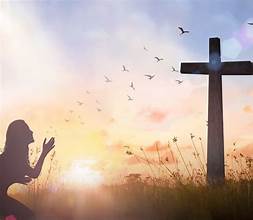
We may no longer build literal altars of stone, but we need to erect our spiritual altars.

Build them in the place of promise before fulfillment.

Build them in the place where we chose to identify ourselves as children of God.

Build them where we return from wandering to a place of restoration.

Build them where we let go of our desires, surrendering to God’s control.

Build them where we obey without full understanding.

Perhaps the question for us is this simple: Where do you need to build your next altar?


Life After Birth

Focal Passage: John 3:1-17

Every time I pull into my drive way and look at the roof above my garage, I see the flashing that has come loose. The glue and nails that once held it in place have weakened and broken free. The sealant intended to keep water from leaking into the frame of the house has visible gaps.

It wouldn’t be hard to fix if it were within easier reach of my 12-foot ladder and my 72-year-old body. Just when I think I can make that repair, I look again at the pitch of that roof and decide that discretion is the better part of valor. Back goes the ladder on its hooks.

I drove into the driveway this week, the flashing laughing again at my cowardice. I had enough. I picked up my phone and called Willie. Willie has done a fair amount of restoration work in my neighborhood. My neighbors tell me his competency comes at a reasonable price.

Every home, regardless of how well it was originally built, will need restoration after a time. This week, weather permitting, Willie will come out and restore the broken pieces of my house. I’ll be grateful.

Restoration.

It sort of became the theme of my thoughts this week. I read a snippet from a book I have in my library called Dancing at My Funeral, written by Maxie Dunnam back in 1973. I bought the book during my sophomore year at Texas Tech University with the discount I got for working part-time as a clerk at the Baptist Bookstore in Lubbock.

The book is Dunnam’s reflection upon the choices that shaped his life…some for the good and some, well, no so much. Dunnam looked back at his life with the freedom of grace that God gave him, finding he could “dance at the funeral of the past that haunted him.”

He comes out of that life reflection able to rejoice because he understands that the Bible is all about restoration. It is a theme that courses through the heart of all scripture. Cover to cover. From “In the beginning” to John’s last “Amen,..” and everything in between.

Dunnam wrote, “All the years since my youth I had been demanding a chance to start over. But, that’s impossible! And unimportant. The fact that you can’t start over is only part of the essential truth. The encouraging and redeeming part is that you don’t need to start over. The need is to start today…right now…living the new life God offers.

“The past,” said Dunnam, “can’t be blotted out, but we don’t have to be shackled by it. And, that is the essence of the gospel.”

Restoration.

You may remember our friend Nicodemus. He’s the Pharisee who first got to hear Jesus say, “For God so loved the world…” Nicodemus heard Jesus teach and preach. His colleagues in the priesthood felt threatened by Jesus’ surprising teachings and his rising popularity. Nicodemus, on the other hand, felt his carefully constructed faith begin to unravel at the seams every time he hear Jesus speak.

The faith Jesus spoke about seemed firmly anchored in concepts of love and grace that transforms ritual into righteousness. Everything Jesus said burrowed in the emptiness of Nicodemus’ religion, cutting away the last remaining strings that held it together.

When he could not rid himself of the drabness of his faith, Nicodemus tiptoed into Jesus’ campsite in the dead of night for a private conversation that would probe his heart at its deepest.

“Rabbi, we know you are a teacher who has come from God. For no one could perform the miraculous signs you are doing if God were not with him.” (John 3:2)

Far more than a polite conversation starter, these opening lines were a veiled plea of a man for whom life and faith had grown stale. To borrow the words of Dunnam’s own experience, the past haunted him.

In reply, Jesus declared, “I tell you the truth; no one can know the kingdom of God unless he is born again.” (John 3:3)

Jesus’ cryptic statement only served to deepen Nicodemus’ despair and increase his anguish. Nicodemus argued the point by incredulously stating that being born again is a physical impossibility. A red-herring of an argument that Nicodemus hoped would buy him time to think.

Maybe it buys us some time as well. Think about it.

Yes, new life comes at birth, but after you’ve made of mess of life, when nothing about your past makes sense, when we can’t break the chains of the past, life just gets hard. It’s not easy climbing out of the ruts cut by our deliberate decision to live life on our terms.

I think deep down Nicodemus wanted this new life Jesus talked about, but didn’t know where or how to find it. This desire to find life after birth brought him to Jesus when every fiber of his being told him to stay away.

Jesus answered, “I tell you the truth, no one can enter the kingdom of God unless he is born of water and the spirit. Flesh gives birth to flesh but the spirit gives birth to spirit…for God so loved the world that he gave his one and only son that whoever believes in him shall not perish but have eternal life. For God did not send his son into the world to condemn the world, but to save the world through him.” (John 3:5-6, 16-17)

Nicodemus wasn’t questioning the desire for restoration. That he wanted more than anything. He was questioning the possibility of restoration.

I understand where Nicodemus is coming from. Like me staring at that ladder, he knew something needed repair, but the risk felt too high and the outcome too uncertain. Yet, he came anyway—quietly and cautiously—because he knew he needed someone else to do the restoration. Jesus was his Willie, the one who could make it new again.

Restoration often begins right there. Where fear and hope meet and hope takes that one small step forward.

Jesus laid it all out there for Nicodemus as he does for us. God loves enough to offer restoration through Christ. He didn’t come to condemn us for our failures to live up to God’s standard, he just wants us to open our hearts to the possibilities that life can be more…that restoration to new life is not only possible, it is powerful.

Paul practically shouts it out in his letter to the Colossian church.

When you were dead in your sins…God made you alive in Christ. He forgave all our sins…he took it away, nailing it to the cross. (Col 2:13-14)

With sins forgiven and nailed to the cross with Christ, we find ourselves restored to new life. We see that message clearly written in 2 Corinthians.

Therefore, if anyone is in Christ, he is a new creation, the old has gone. The new has come. (2 Corinthians 5:17)

I could finish this up with my own thoughts, but I doubt they would be as profound as those penned by Dunnam himself. So, with respect to copyright laws, allow me to quote him.

“I’ve discovered there is a beginning which is common to every experience, no matter what has gone before. This beginning is the point of decisiveness where we turn to God with a new attentiveness, a new openness to his possibilities…To say “yes” to God is the ultimate act of will. To say “yes” is to surrender. Surrender is the pivotal point for becoming a whole person.”

Restoration.

Surrender leads to restoration and restoration is built into ever fiber of God’s word. It found its deepest expression in the death of Jesus on the cross in sacrifice for the mistakes of our past, present and future. For those open to the possibility of restoration…life after birth…it is all the answer we need.

The past need not define or haunt us. The present need not overwhelm us. The future need not frighten us. Every bit of flashing can be resealed. Every nail re-driven. I can…you can…be restored to new life in Christ. All it takes is the courage to tiptoe into Jesus’ campsite…even in the middle of the night when nothing else makes sense.

When we surrender to his will, there is always life after new birth and it is always more.

I have come that they might have life and have it to the full. (John 10:10)

Jesus offers me abundant life beginning now. Regardless of my past mistakes. Regardless of my stubborn desire to live life on my terms. He stands by offering a life overflowing with joy, purpose, peace, and communion with God and others.

Here’s my chance and yours today. Find restoration in God’s grace. Bury the guilt of the past. Toss a flower on its grave. Dance at its funeral.

Let’s express our gratitude to Christ for restoration even as we discover that there is indeed life after birth.

Create in me a pure heart, O God and renew a steadfast spirit within me…Restore to me the joy of your salvation and grant me a willing spirit to sustain me. (Psalm 51:10,12)

Thinking Points

What “loose flashing” in my life have I noticed but avoided addressing because the climb feels risky or uncomfortable?


In what ways might my faith—like Nicodemus’s—be carefully constructed but quietly unraveling at the seams?


Do I believe restoration is something God desires for me, but struggle to believe it is truly possible? Why?


What parts of my past still feel like they haunt me rather than instruct me—and what would it mean to “dance at their funeral?”


What would it look like for me to say a decisive “yes” to God today—not starting over (because I can’t), but starting now?


Take Up Your Cross

Background Passage: Mark 8:31-37

Passing a large church in the Philippines several years ago, a pastor from the United States spotted a number of vendors selling incense, candles, veils and rosaries. That’s not really what caught his attention.

His eyes were drawn to two young boys running through the crowd selling small wooden crosses. Hawking their goods with enthusiasm, he heard them calling, “Crosses!. Cheap crosses for sale! Buy a cheap cross!”

It’s a painful reality, isn’t it? That’s exactly what many of us do. We want a cheap cross, one that demands little of us. All celebration and no commitment.

The cross of Christ was no cheap cross. It came at an unbelievable cost as a ransom for my sin…and yours.

Jesus and his disciples just returned from a staff retreat in Caesarea Philippi where Jesus earnestly began teaching them about the role God sent him to play. When Peter, in a moment of clarity, declared that Jesus was the Messiah, the Christ, God’s Anointed One, he got the title right. Despite his confession, he and the others still failed to understand exactly what that meant.

From that moment on, Jesus spoke more plainly to them about the suffering that was to come. Mark records the moment.

He then began to teach them that the Son of Man must suffer many things and be rejected by the elders, chief priest and teachers of the law, and then he must be killed and after three days rise again. He spoke plainly about this, and Peter took him aside and began to rebuke him. (Mark 8:31-32)

Peter missed the whole point of the lesson learned in Caesarea Philippi. Comfortable in his preconceived notions about what a Messiah should look like and how a Messiah should act, he pulled Jesus aside and fussed at him for saying anything contrary to his idea of a political deliverer. “This is not the way to win friends and influence people, Jesus.”

Peter’s response must have broken Jesus’ heart. Jesus glanced back at the disciples who still looked a little shellshocked at Jesus’ description of the work ahead and then at Peter’s “better listen to me” scowl. The whispered rebuke to his strongest disciple must have pierced Peter’s heart.

But when Jesus turned and looked at his disciples, he rebuked Peter, “Get behind me, Satan! he said. “You do not mind the things of God, but the things of men!” (Mark 8:33)

After a brief standoff, Jesus shook his head and sauntered back to the crowd that stood nearby. After a glance back at his disciples to make sure they were paying attention, Jesus laid his heart open for all to see.

If anyone would come after me, he must deny himself and take up his cross and follow me. For whomever wants to save his life will lose it, but whoever loses his life for me and for the gospel will save it. What good is it for a man to gain the whole world, yet forfeit his soul? Or what can a man give in exchange for his soul? (Mark 34-37)

Jesus seemed to tell them, “You call me Messiah, but have no clue what it means for me or for you…let me be clear.” Don’t you imagine the words he preached burned like hot coals into the core of Peter’s soul!

I can see Jesus looking straight into Peter’s eyes when he started his message. “If anyone would come after me…” These words speak to a decision point. More literally in the Greek, the phrase suggests, “to come to a point of being with…”

Jesus is telling them if you’re truly with me, if you’re going to walk with me, if that’s what you decide to do, then understand clearly the price you must pay.

When Jesus talks about denying oneself, he speaks of changing out one’s selfish heart with one that looks toward a greater good. Understanding what God needs you to do and not getting in his way. Moving away from being served toward serving.

You see, Peter’s picture of the Messiah was drastically different than the one Jesus was painting. The path he thought he was following far different from the one for which Jesus was preparing Peter and the rest of the disciples.

To deny oneself is to realize life is no longer all about me. No longer about my personal agenda. It is about the one to whom I belong. It’s about my service to others. It is about losing myself in Christ. It’s about allowing God to work in and through the gifts he gave me so Christ is revealed in me. Giving God custody and control of my life.

Paul hinted at this when he said, “…You are not your own; you were bought at a price. Therefore, honor God with your body.” (I Corinthians 6:19-20)

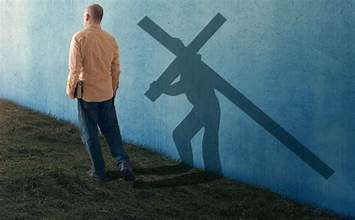
To take up one’s cross conjured up a horrific image within the context of those first century, would-be disciples. The cross stood as Rome’s unique and cruel form of public punishment and humiliation designed to keep the population in check. Its brutality was on display for all to see.

Undoubtedly, almost all, if not all, of those present that day with Jesus had witnessed its barbarity on display. They clearly understood the implications of what Jesus demanded of them.

If you make the decision to be with me, you must be prepared to give your life for my sake. There is nothing cheap about this cross. It was a cost too many, even in Jesus’ day, were unprepared to pay.

I think of the rich, young ruler who chased Jesus down and honestly shared his faithfulness to the teachings of scripture and his devotion to prayer and the slew of good thing he did for others. Jesus looked in his heart and saw that his lifestyle consumed him. Jesus suggested that if this rich, young man wanted to come with Jesus, he had to give up the lifestyle he enjoyed. (Matthew 19:16-22)

I think of the three men who came to Jesus while he was traveling, pledging to follow him wherever he went. The first turned back when he discovered the Jesus life would be a bit uncomfortable. The second man wanted to wait until his father died. The third man just needed a bit more time with his family and friends. (Luke 9:57-62)

Each in their own way threw up obstacles that prevented them from committing their all to Jesus. The cost of discipleship was too steep. It wasn’t a cheap cross then and it isn’t any less expensive today.

I’ve heard some trivialize this passage by interpreting the cross as some burden they have to bear…a physical illness, a soured relationship, a thankless job. It becomes little more than some aspect of life that is little more than a symbolic annoyance.

To the first century follower of Christ to take up the cross expressed the willingness to make the ultimate sacrifice for the cause of Christ. It didn’t mean everyone who followed Christ would die on the cross, but it meant a full surrender to that possibility. To give your life completely to him.

Jesus certainly understood the cost as he agonized over it in the Garden of Gethsemane. As he endured its painful reality at Calvary. But, when Jesus spoke the words, asking us to take up our cross, I believe Jesus thought less about the dying and more about surrendering. Yielding to whatever God asked of him. Asking us to yield to whatever God asks of us.

You can’t do that with a divided heart, holding on to a distorted or watered down version of what following Christ means. We must submit our hearts absolutely and without reservation to the call of Christ. It is a call of self-sacrifice and surrender. Paul called it “dying to self.”

Look how Jesus described the cross-bearing life in Luke 8:35. He said we gain life in all its abundance and fullness when we lose or surrender our lives to “me and to the gospel.” Absolute devotion to Christ and to the sharing of the gospel, the good news, of the grace offered through Jesus.

The questions Jesus then posed to the crowd conveyed the seriousness of that decision.

What good is it for a man to gain the whole world, yet forfeit his soul? Or, what can a man give in exchange for his soul?

The ancient Hebrew viewed the soul as the entire inner nature of man, the eternal and imperishable essence of every being. Based on our faith commitment to Christ it is that part of us that endures in the everlasting presence of God or separated from him for all eternity.

The passage ends with the consequence of the choice we make when we don’t take up the cross. We could gain all there is to gain in this world…all its wealth and power…all its beauty and bounty…yet when we die, we’ll find our souls outside the eternal presence of God, unable to share in his glory for all time.

Jesus said even if we gained the wealth of the whole world, it would not be enough to purchase what Jesus so freely gave.

Late in the nineteenth century, Justin Van DeVenter struggled with the decision to leave his teaching career and enter the ministry. He describes a pivotal turning point in his life when he gave in to God’s call.

“A new day was ushered into my life,” said Van DeVenter. “I discovered deep down in my soul a talent hitherto unknown to me. God had hidden a song in my heart and, touching a tender chord, caused me to sing.”

It was a song that would profoundly influence Billy Graham’s early ministry. I suspect his words touched many of us as well.

All to Jesus I surrender;
All to him I freely give.
I will ever love and trust him,
In his presence daily live.
I surrender all.
I surrender all.
All to thee my blessed Savior,
I surrender all.

Jesus calls us to take up our cross. To do so means surrendering all to him. I’d like to say I do that every day, but I don’t. It’s easier to hide behind an obstacle, make an excuse or convince myself that I know better. I’ll surrender some things but hold tightly to others.

Then, I hear those words again. “What good is it for a man to gain the whole world, but forfeit his soul?” The answer is clear. No good at all. The cross is not cheap.

Let’s allow that old hymn resonate knowing full well the cost.

All to Jesus I surrender.

I surrender all.

In the Potter’s Hands

Background Passages: Jeremiah 18:1-6; 2 Chronicles 1:7,10; Luke 22:42 Ephesians 2:10

A confluence of disconnected spiritual thoughts joined into one idea this week…rivulets of scripture and song flowing from different places to form one lesson, one powerful reminder of what it means to live a life obedient to God’s will. See if you can follow the path of my warped mind.

……….

Sunday’s Random Thought…

It came to mind again this week when I was lost in thought while exercising. Out of nowhere, I thought of the song, Have Thine Own Way, by Adelaide Pollard. The lines that kept repeating in my head were:

“Have Thine own way, Lord.
Have Thine own way.
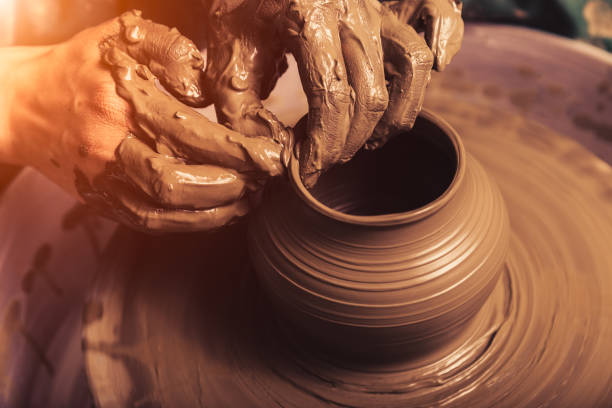
Thou art the potter,
I am the clay.
Mold me and make me,
after thy will,
while I am waiting,
yielded and still.”

It seems that after graduating from college in Boston, Pollard moved to Chicago to teach in a girl’s school there. In frail health, she was drawn to first a faith healer and then to an evangelist who preached only about the end times and the second coming of Christ.

She moved back to New England feeling called to be a missionary in Africa. A series of health setbacks, detours and roadblocks derailed her plans. Despondent, she attended a prayer meeting one evening and heard an elderly woman pray: “It doesn’t matter what you bring into our lives, Lord, just have your own way with us.”

Before the evening was over, Pollard penned the words to the song that kept repeating in my brain.

“Have Thine own way…mold me and make me…Thou art the potter. I am the clay.”

It is a metaphor not uncommon in scripture. Jeremiah used it to make a point. Paul hinted at it several times in his letters.

Let that tickle the corners of your heart for a bit. We’ll come back to it.

……….

Tuesday’s Random Thought…

They had been a rebellious people. Having grown indifferent to the covenant they made with God, the people of Israel grew obstinate and defiant toward the word of the Lord. Shedding the commands of God like a dirty cloak, they held God’s law in contempt, comfortable doing their own thing.

God called them “stiff-necked.” Stubborn. Intractable. Hard to lead.

I find the term descriptively appropriate to my life at times. “Stiff-necked” was a term intimately familiar to the Jewish people. Most farmed small plots to feed their families and livestock. With oxen to pull the plow, they used an ox-goad, a pointed stick or metal rod to poke the ox to direct its path. The stubborn or stiff-necked ox would ignore the prod and go where it wanted to go.

The Hebrew people lived a roller coaster life of obedience and stubbornness. This was one of those moments at the bottom of the ride. God called Jeremiah to give a word of warning to his stiff-necked people.
Weary of their rebelliousness, God told Jeremiah to “go to the potter’s house” and wait for his word. Jeremiah sat down beside the potter and watched him work the wheel.

“But the pot he was shaping from the clay was marred in his hands; so the potter formed it into another pot, shaping it as it seemed best to him.” Then the word of the Lord came to me. He said, “Can I not do with you, Israel, as this potter does? Like clay in the hand of the potter, so are you in my hand, Israel.” (Jeremiah 18:1-6)

I like that idea. When I am misshapen, God can form me into another pot as it seems best to him.

Let that germinate in your fertile soil for a little while.

……….

Thursday’s Random Thought…

The day had been a glorious day. Jesus’ entry into the City of David found him surrounding by an adoring multitude, waving palm branches and singing praises. They wanted nothing more than to be near the one who had done so many miraculous things. Jesus spent the day preaching and teaching all who would listen.

After an evening meal that left his closest followers bewildered and perplexed, Jesus took them back out of the city into the Garden of Gethsemane to pray. Settling his weary band of disciples onto the rocky hillside, Jesus took a handful of his closest friends a little farther up the hill. “Come, pray with me,” he implored them.

Jesus walked a few steps away before falling on his knees. Leaning against a boulder with his head searching the heavens, Jesus prayed for a way out of the horror that awaited him.

“Father, if you are willing,” he prayed, “let this cup pass from me.”

I can only imagine Jesus recalling Abraham, hovering over his son, Isaac, with a knife prepped and ready to take his life in sacrifice to God. As Jesus recalled how God stayed the hand of Abraham, telling him to find the ram trapped in the thicket as a substitute for his son, I can see Jesus hoping that God would find a ram to take his place.

No new word came from above. No ram in the garden. Jesus, ever obedient to his father, prayed, what Bill Wilson, with the Center for Healthy Churches, calls the “prayer of holy indifference.”

“Yet, not my will, by thine be done.” (Luke 22:42)

Such sweet surrender. A sobering thought for any day. Take a moment. Consider its implications.

……….

Friday’s Random Thought…

In a recent study of Solomon’s life, we find him taking the reins of leadership from his father David. The task ahead must have seemed daunting. His first official act was to bring the people together to worship. A thousand sacrifices were made. Prayers voiced. Songs played and sung in adoration of their Creator God. Deliverer. Lord Almighty.

God honored Solomon’s worship. That evening he spoke to the new king and offered him a blank check of God’s promise.

“Ask me whatever you want me to give you.” Solomon answered God, “…Give me wisdom and knowledge, that I might lead this people, for who is able to govern this great people of yours.” (2 Chronicles 1:7,10)

God delivered in a significant way. Through his life, Solomon was noted for his wisdom. Scripture tells us kings and queens from all over the known world journeyed to Jerusalem to sit in counsel with the man. To pick his brain.

“All the kings of the earth sought audience with Solomon to hear the wisdom God had put on his heart.” (2 Chronicles 9:23)

Solomon allowed God to teach him. To reveal truth to him. To apply that truth to everyday life. Solomon looked at the world around him and understood how much he did not know about governing…about life…about how to be who God needed him to be. His prayer for wisdom and knowledge reveals his humility before God. In praying for God’s help, he made himself clay in the potter’s hands, a person to be molded and shaped.

Hang on to that bit of wisdom just a moment longer.

……….

There you go. Four seemingly random thoughts entering my brain at different times and for very different reasons. Let me share with you, if I can, where these streams of thought came together.

If I’m honest, I suspect my life is not that different from the lives of those who frustrated God and Jeremiah. One minute faithful. The next minute faithless. One moment seeking God. The next moment scorning God. While I want to believe I live my life more in those faithful, seeking moments, those times when I am faithless and scorning haunt me profoundly. Create more turmoil than necessary.

That’s why I the words of Have Thine Own Way resonate so deeply. Adelaide Pollard nailed it. Despite the turmoil in her life, despite every obstacle that kept her from going where she wanted to go, she penned words that speak to me every time I hear them.

“Thou art the potter. I am the clay.
Mold me. Make me.
After thy will.”

That’s the prayer of one hoping to let go of the arrogance and ignorance that tends to walk it’s own road, unwilling to listen to either the still, small voice or the clap of thunder.

The sweetest times of life come when I make myself pliable enough for God to begin again to shape me into the man he desires me to be. I see myself sitting next to Jeremiah, learning a valuable lesson from the potter. When my life is marred in God’s hands, I am glad he reshapes it as a “another pot,” remolding me in ways that seem “best to him.”

That only happens when let go of my stubborn pride and my stiff-necked attitude.

That’s where I draw inspiration from Solomon. God offered Solomon anything…everything. Yet, Solomon did not ask for riches. He did not ask for possessions or honor. He did not ask for the death of his enemies. He did not ask for a long life.

Solomon asked for God’s wisdom. I shudder to think of my response if I were allowed to rub God’s genie lamp and claim my wish. Seeking God’s will for our lives is the ultimate act of wisdom. Understanding that God’s skill at the potter’s wheel outshines our clumsy attempts to shape our own lives. Think about Pollard’s fervent prayer of submission. Solomon’s humble request for wisdom.

Then, we find ourselves in the Garden of Gethsemane. Listening to Jesus plead for God to find another way that would not take him to the cross. Spending hours agonizing over that which he was called to do.

As he prayed and listened for his Father’s word, he got to a decision point where he could walk on or walk away. His prayer was perfect. A prayer indifferent to his own will and wish. “Not my will, but yours be done.”

In the silence immediately after that prayer, I believe a calm settled in Jesus’ heart. A peace in knowing that if he remained obedient, all would be well. That God’s purpose and plan for his life and for the world, would be satisfied.

So, recognizing my tendency to be stiff-necked when it comes to what God desires of me, I lean upon a song that asks God to mold me, like a potter, after his will, not mine. I seek his wisdom, knowing his understanding far exceeds my limited abilities. When submission and humility united, the prayer of holy indifference is so much easier to pray.

Nevertheless, Father, not my will, but yours be done. weet surrender of one completely in God’s will.

Today’s Last Random Thought…

As I finished this meandering idea, hoping it would make sense, one more verse came to mind. One more random…God-inspired…thought.

Paul, writing to the church in Ephesus, reminded them that the grace gift of salvation that God provided gave them divine purpose. He said,

“We are God’s workmanship, created in Jesus Christ, to do good works, which he determined in advance for us to do.’” (Ephesians 2:10)

The word Paul uses for “workmanship” can be translated “work or art” or “masterpiece.” I like that idea, particularly in light of my other random thoughts.

The potter is also an artist. As capable with a cup as with a sculpture. As the works of God’s hand, carefully shaped and molded into a masterpiece of his will and way, we are called then to do the good work he has planned for us to do. Capable of doing it well. Capable of doing it right. Capable of doing it consistently.

All it required is submission, humility, surrender and the willingness to let the potter work.

Now, you catch a glimpse of how my mind works. I just hope there is a clear message buried in the meandering madness.

What’s In Your Hand?

Background Passages Exodus 4:1-5; Romans 12:6-8; Ecclesiastes 9:10

The bedouin stood on calloused, bare feet with his sandals in his hand, trembling in the glow of the burning bush. Seeing its light. Feeling its heat. Listening to the voice from its flame.

The 80-year-old shepherd heard these words and more…

“I am the God of Abraham, Isaac and Jacob…I’ve heard the cries of my people…I am sending you to Pharaoh to bring my people out of Egypt.”

Moses hid in the desert for 40 years after an unceremonious exit from Egypt. Face to face with the oppression of the people of his birth, he reacted in the heat of the moment, killing the offending Egyptian. Once the son of the Pharaoh’s daughter. Now a old man, tending sheep that didn’t even belong to him. O, how the mighty had fallen.

God spoke to Moses on the slopes of Mount Horeb from a burning bush that was not consumed. The God of his fathers called him to a mission of eternal importance. It was the next phase of God’s redemptive plan. To make it happen, he needed to get his people out of Egypt and back to the land he had promised them. He needed Moses.

This unbelievable experience in the wilderness should have lifted his spirits and emboldened Moses to act. Instead, the miracle on the mountain left him filled with anxiety, offering one excuse after another.

“Who am I? I am no one. Pharaoh will not listen. I know the man.”

God said, “Go!”

“To the Hebrew people, I’m nothing. When they ask who sent me…and they will ask…what do I tell them”

“Tell them I am who I am! Now, go!”

“They’re not going to believe this…not the Hebrew people and certainly not Pharaoh.”

God chose this moment to ask Moses a critical question.

“What is in your hand, Moses?”

Moses looked at his right hand. Fingers wrapped around the thick shepherd’s staff, worn smooth by years of use. His mind raced. This was the tool of his trade. A staff for protection. A staff for balance. A staff for herding. Just a stick.

I wonder at that moment if Moses saw a flash of something more ominous in the staff he held. He was once a prince of Egypt. Perhaps, in that moment, the staff served as a symbol of all that had gone wrong in his life. The perfect manifestation of his failure. He had traded a scepter for a shepherd’s crook so he could herd a flock of sheep that weren’t even his. As he heard God ask his question, “What is in your hand?” Perhaps Moses felt unworthy, certain that God could choose a better man.

Moses swallowed the lump in his throat and said simply…

“A staff.”

Nothing more. Nothing less. An old tree branch whittled and shaped to serve his needs. God knew it could represent something new and different. He just needed Moses to see it, too.

“Throw it on the ground, Moses.”

Moses let it drop. As it bounced on the rocky soil, the staff transformed into a snake. Startled, he took two steps back and stared.

“Now, pick it up.”

As soon as Moses lifted the snake from the ground, it turned back into a staff.

Moses looked in awe at the bush.

“This,” said the Lord, “is so that they may believe that the Lord, the God of their fathers…the God of Abraham, the God of Isaac and the God of Jacob has appeared to you.”

What is in your hand?

What a great question!

I wonder how many of us have starred at the burning bush and heard the voice of God telling us, “I’ve got something I need you to do for me. It’s important. I need you to go….”

I wonder how often you have done what I’ve done and responded immediately with every excuse in the book to avoid doing what God needs us to do. My excuses sound remarkably similar to the ones Moses muttered into the face of a burning bush.

Who am I that you would ask this of me?

  • I’m not capable.
  • I’ve made too many mistakes.
  • I am no longer the man I once was.
  • I’m too old.
  • No one would listen to me.
  • They’re just going to laugh in my face.
  • Find someone else…please.

How like Moses I am at times. Too comfortable in my place. Too embarrassed of my failures. Too willing to believe my mistakes trump my potential. Too unwilling to open myself to God’s transformative power.

Then, the question comes to me just as it came to Moses.

“What’s in your hand?”

When you get down to it, that’s an intriguing question. If we’re honest with ourselves, it’s a question we’ve all heard at some point in our lives. When God asks the question, it deserves an honest look.

Scripture is filled with stories of individuals who possessed no extraordinary gifts. That which they held in their hands was ordinary. Yet, God called. When they quit making excuses, God began to use them. Consider these examples.

Gideon defeated the Midianites with trumpets and lanterns.
Samson slaughtered the Philistines with the jawbone of a donkey.
David took down Goliath with a sling and a stone.
A child with a small basket of bread and fish fed a multitude.

So I ask again, the burning bush question.

What is in your hand?

One of the greatest mistakes we make as believers in Christ is to underestimate who we are and what we have. We hold an old whittled stick…an ability to carry a tune, the skill to bake a cake, the temperament for a kind word, the sensitivity to encourage a troubled soul. Yet, we deem it insufficient, weak, small in comparison to abilities we see in others.

Then, the excuses flow. Maybe, it doesn’t matter as much exactly what is in our hand. Maybe all that really matters is, as one writer said, “how much God is in your stick.”

And, there’s the lesson Moses learned. As long as you hold on to your stick, God can’t demonstrate his power. You’ve got to throw it down. Let it go. Surrender it to God. Once God is in it, his power flows through it.

Then, your ability to carry a tune inspires. Your skill in baking brings comfort. Your kind word changes another person’s outlook on the day. Your encouragement lifts a burden from a neighbor’s shoulders. There is nothing insufficient, weak or small about that.

Whatever is in your hands, when surrendered to God, gets infused with his power that makes a difference. And, people will see what is in your hand and know that God is present in your life.

So, what is in your hand?

The truth is, I can’t tell you. It is a matter between you and God. But, know this. There is something there. God has put something in your hand. It may look ordinary to you, but it was given to you for a purpose. He has gifted all of us, placed something in our hand, to use toward the glory of his kingdom.

Whatever God has placed in our hands we are to use it. Paul wrote about it extensively.

“We have different gifts, according to the grace given to each of us. If your gift is prophesying, then prophesy in accordance to your faith. If it is serving, then serve. If it is teaching, then teach. If it is to encourage, then give encouragement. If it is in giving, then give generously. If it is to lead, do it diligently. If it is to show mercy, do it cheerfully.” (Romans 12:6-8)

I don’t know what your gift may be, but it does no one any good if you never use it. Each of us has been gifted by God so he can send us wherever he needs us to go. To do what he needs us to do. When we surrender that gift to God, when we throw it down, God’s power is alive through us.

Whatever your hand finds to do; do it with all your might. (Ecclesiastes 9:10)

An unknown poet penned a bit of prose a few years ago entitled, “It Depends Whose Hands It’s In.” It’s not Shakespeare or Byron, but it holds a pretty good message. This is how it starts off.

“A basketball in my hands is worth about $19
A basketball in Michael Jordan’s hands is worth about $33 million.
It depends whose hands it’s in.”

As one who has missed his share of lay-ups, I ask you…

What is in your hand?