Build an Altar

Focal Passage: Genesis 12:7

I have some friends who are serious hikers. For several years, they head east to hike another leg of the Appalachian Trail. One hopes to complete the last 150 miles of his journey this year. The other still has 750 miles to go.

Robin and I are recreational hikers. Tackling such an ambitious goal is not in the cards or our legs, though we did hike about 15 feet of the Appalachian Trail when we visited the Great Smokey Mountains a couple of years ago. We have just short of 2,190 miles to go!

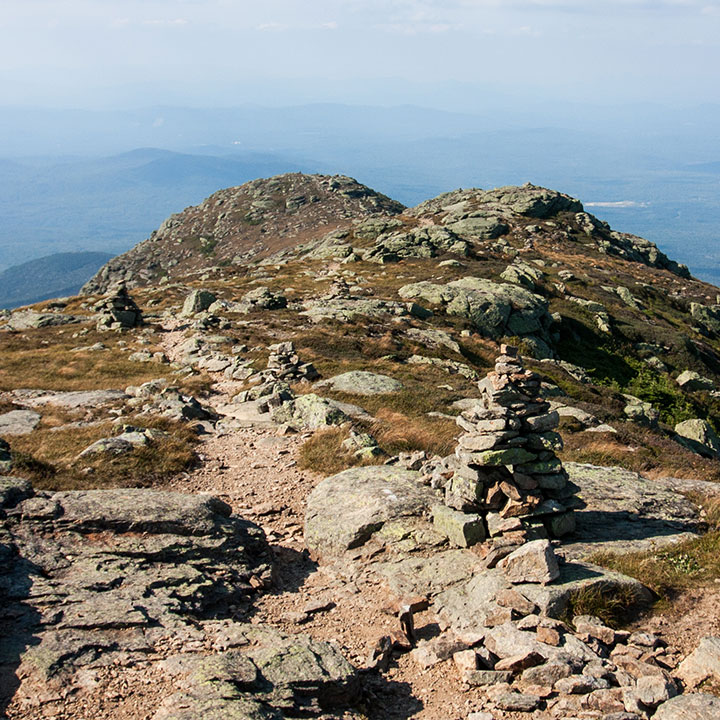
These hiker buddies tell me getting lost on the trail is a very real danger. To avoid losing the trail on rocky ground, they watch for cairns. A cairn is a pile of stones stacked carefully on top of one another, placed by rangers to guide hikers along the correct path.

We see something similar with altars. God’s people would gather stones to build an altar, not because the stones had significance, but because together they became a marker of an encounter with God—a memorial of faith, obedience or answered prayer. So, in one sense, these altars built of stone would keep them on the righteous path.

Altars are a common theme in the Old Testament, particularly in the story of Abraham’s life. God called him from a distant land, telling him to leave his country, his people and his family and go to a land that God would eventually show him and carrying a promise of blessing.

Eventually, Abraham reached a place called Shechem in Canaanite territory. When he arrived, God affirmed that this was the land he had promised to Abraham and his descendants. In Genesis 12:7 you find a small phrase showing Abraham’s response.

“…so he built an altar there…”

If you keep reading Abraham’s story, the phrase becomes a theme.

Time and time again in Genesis, Abraham builds an altar. Nothing dramatic (with one notable exception). No elaborate ritual. Just ordinary stones stacked in quiet response of God’s faithfulness. Those altars stand as markers along the trail of Abraham’s spiritual journey. In many ways, they show us how a believer grows through promise, identity, restoration, trust and obedience.

Promise

Go back to that passage in Genesis 12:7. Abraham entered Canaan, the land God promised him. Everything he owned he brought with him. The land belonged to others. God told him, “To your offspring I will give this land.”
Notice what Abraham doesn’t do. He doesn’t survey the land. He doesn’t secure its borders. He doesn’t call his men together to talk about conquest.

Instead, he worships in occupied territory. Bows before God in a place that does not yet reflect God’s reign. He stakes the ground spiritually before he ever possesses it physically. The altar at Shechem is built on promise alone. Abram has no deed. No visible guarantee. All he has is God’s word.

This is where faith begins, isn’t it? Before we see fulfillment, before we possess anything tangible, before circumstances shift in our favor, we build an altar on God’s promise alone.

Abraham’s altar is his way of saying, “God has spoken and that’s enough.”

There are seasons of life when God gives a promise, but not possession. In those moments, the question is simply this:

Will we build an altar anyway?

Identity

Afterward worshipping God in Shechem, Abraham moves his herd to a new place between Bethel and Ai. No new promise is given. No dramatic revelation follows. He is doing what a sheep herder does. He moves his flock to new grass. There, he pitches his tent and builds another altar. At this altar, scripture tells us he…

“called upon the name of the Lord.” (Genesis 12:8)

He is not worshiping this time in reaction to something new God has done. It establishes a pattern of worship for Abraham. It marks his identity. Among a people who worship pagan gods and a culture filled with competing loyalties, Abraham builds another altar establishing who he is and to whom he belongs.

You see, before faith is truly tested in the crucible of real life, it must be established, rooted in the fertile soil of God’s presence. The Bethel altar is Abraham declaring, “I belong to the Lord, not just in moments of revelation, but in daily life. It shifts the emphasis from event-driven faith to identity-driven faith.

Shechem is about what God said. Bethel is about who Abram is. There are seasons of life when we must firmly identify ourselves with God. When was the last time you built such an altar as a witness and testimony of the one to whom you belong?

Restoration

After these early steps of faith, Abraham falters. Famine sends him to Egypt where opposition feels formidable. Fear takes over. He misrepresents his relationship with Sarah. Now, the promise seems threatened by Abraham’s compromise.

When he finally returns to Canaan, he goes back to Bethel, the place where he declared his identity. I imagine the altar had fallen into disrepair during his time away. You can almost see Abraham rebuild the altar from fallen stones even as he rebuilt his identity with God. and he again…

“called upon the name of the Lord.” (Genesis 13:4)

This rebuilt altar is not about promises or identity. It is about restoration. Abraham returned to the place where faith burned brightest to rekindle what he had lost.

There is something profoundly hopeful here. The life of faith is not a straight upward climb, is it? The Father of Faith, as the writer of Hebrews describes him, stumbled just like we do. When he did, he repented. He didn’t hide in shame or construct a new path. He went back to first things. First love. First trust. First dependence. Picked up the stones and rebuilt the altar.

Abraham didn’t outgrow the altar. He returned to it. In that moment of worship Abraham found himself restored into fellowship with the God of the promise.

I don’t know about you. I’ve spent my time in Egypt—a time of fear-driven decisions or some other spiritual drift. The altar of restoration is a repentant desire to return. A desire to come back to the Lord.

The beauty of this part of Abraham’s story is there is no rebuke from God. No ending punishment. God simply receives his worship and opens his arms again to Abraham. If you need to reconnect with God today, if you need his restoration, pick up the stones. Rebuild the altar of your identity as a child of God.

Surrender

Just a few verses later, Abraham found himself at a crossroad with his nephew Lot. The land cannot sustain both families. As the elder, Abraham had the right of first choice. Instead, he let Lot decide where he wanted to settle his family and his herds.

Lot chose the lush Jordan Valley, leaving Abraham with the leftovers, land which appeared less desirable. After Lot departed, God reaffirmed his promise to Abraham and his children. Abraham then settled near Hebron and…

“…built an altar to the Lord…” (Genesis 13:18)

Maybe this altar represents surrender. Abraham had every right and reason to grasp what was his. Rather than claim his own, he yielded. He trusted that God’s promise didn’t depend on Abraham’s maneuvering or manipulation.

There is a deep spiritual maturity here. Early faith built an altar after hearing promise. Growing faith built an altar after losing its advantage.

Trust is not tested when everything aligns in our favor, but when we voluntarily relinquish control. The altar at Hebron said, “God’s blessing does not depend on my securing the best position.”

Surrendering means letting go of what looks better. Letting go of my assumed advantage to go where God has placed me. Faith means believing that what God assigns is better than what we could have chosen.

This altar was quieter than the first, but perhaps stronger. Abraham no longer needed visible superiority. He just needed to let go. Could you and I also need to let go of something we think we need in order to receive God’s fullest blessing? If so, let’s build an altar to God.

Obedience

The final altar was the most severe.

God commands Abraham to offer his son Isaac as a sacrifice—the very child through whom that original promise was to be fulfilled. This was no longer about land. It was about the promise itself.

When he arrived at Mt. Moriah, Abraham…

“…built an altar there…” (Gensis 22:9)

On Mt. Moriah, Abraham built another altar, one that would cost him everything. Earlier altars celebrated promise. This altar appeared to contradict it. Yet, Abraham obeyed. With each stone growing heavier in his hands and heart heaving in despair, Abraham’s faith grew deeper, even when he didn’t fully understand.

He didn’t argue. He didn’t delay. He built.

At the final critical moment, God provided a substitute. The altar became a place of revelation: “The Lord will provide.” Obedience revealed provision. Earlier altars revealed trust in God’s word. This one required trust in God’s character.

Faith ultimately laid everything on the altar before God, even everything that God himself had given.

When we step back and watch Abraham, we see a progression of faith.

Promise leads to worship.

Worship leads to identity.

Failure leads to restoration.

Restoration leads to surrender.

Surrender leads to obedience.

Altars mark the decisive moments in Abraham’s spiritual foundation. They are not monuments to achievement. Not even guideposts along the trail, at least not in the most important sense. They are testimonies to dependence on and connection with God.

The quiet message running beneath these passages is that faith is not defined by what we do, but by whom we worship. Abraham’s life was not secured by cleverness or control. It was shaped by repeated acts of worship. A lifestyle of worship.

We may no longer build literal altars of stone, but we need to erect our spiritual altars.

Build them in the place of promise before fulfillment.

Build them in the place where we chose to identify ourselves as children of God.

Build them where we return from wandering to a place of restoration.

Build them where we let go of our desires, surrendering to God’s control.

Build them where we obey without full understanding.

Perhaps the question for us is this simple: Where do you need to build your next altar?


Life After Birth

Focal Passage: John 3:1-17

Every time I pull into my drive way and look at the roof above my garage, I see the flashing that has come loose. The glue and nails that once held it in place have weakened and broken free. The sealant intended to keep water from leaking into the frame of the house has visible gaps.

It wouldn’t be hard to fix if it were within easier reach of my 12-foot ladder and my 72-year-old body. Just when I think I can make that repair, I look again at the pitch of that roof and decide that discretion is the better part of valor. Back goes the ladder on its hooks.

I drove into the driveway this week, the flashing laughing again at my cowardice. I had enough. I picked up my phone and called Willie. Willie has done a fair amount of restoration work in my neighborhood. My neighbors tell me his competency comes at a reasonable price.

Every home, regardless of how well it was originally built, will need restoration after a time. This week, weather permitting, Willie will come out and restore the broken pieces of my house. I’ll be grateful.

Restoration.

It sort of became the theme of my thoughts this week. I read a snippet from a book I have in my library called Dancing at My Funeral, written by Maxie Dunnam back in 1973. I bought the book during my sophomore year at Texas Tech University with the discount I got for working part-time as a clerk at the Baptist Bookstore in Lubbock.

The book is Dunnam’s reflection upon the choices that shaped his life…some for the good and some, well, no so much. Dunnam looked back at his life with the freedom of grace that God gave him, finding he could “dance at the funeral of the past that haunted him.”

He comes out of that life reflection able to rejoice because he understands that the Bible is all about restoration. It is a theme that courses through the heart of all scripture. Cover to cover. From “In the beginning” to John’s last “Amen,..” and everything in between.

Dunnam wrote, “All the years since my youth I had been demanding a chance to start over. But, that’s impossible! And unimportant. The fact that you can’t start over is only part of the essential truth. The encouraging and redeeming part is that you don’t need to start over. The need is to start today…right now…living the new life God offers.

“The past,” said Dunnam, “can’t be blotted out, but we don’t have to be shackled by it. And, that is the essence of the gospel.”

Restoration.

You may remember our friend Nicodemus. He’s the Pharisee who first got to hear Jesus say, “For God so loved the world…” Nicodemus heard Jesus teach and preach. His colleagues in the priesthood felt threatened by Jesus’ surprising teachings and his rising popularity. Nicodemus, on the other hand, felt his carefully constructed faith begin to unravel at the seams every time he hear Jesus speak.

The faith Jesus spoke about seemed firmly anchored in concepts of love and grace that transforms ritual into righteousness. Everything Jesus said burrowed in the emptiness of Nicodemus’ religion, cutting away the last remaining strings that held it together.

When he could not rid himself of the drabness of his faith, Nicodemus tiptoed into Jesus’ campsite in the dead of night for a private conversation that would probe his heart at its deepest.

“Rabbi, we know you are a teacher who has come from God. For no one could perform the miraculous signs you are doing if God were not with him.” (John 3:2)

Far more than a polite conversation starter, these opening lines were a veiled plea of a man for whom life and faith had grown stale. To borrow the words of Dunnam’s own experience, the past haunted him.

In reply, Jesus declared, “I tell you the truth; no one can know the kingdom of God unless he is born again.” (John 3:3)

Jesus’ cryptic statement only served to deepen Nicodemus’ despair and increase his anguish. Nicodemus argued the point by incredulously stating that being born again is a physical impossibility. A red-herring of an argument that Nicodemus hoped would buy him time to think.

Maybe it buys us some time as well. Think about it.

Yes, new life comes at birth, but after you’ve made of mess of life, when nothing about your past makes sense, when we can’t break the chains of the past, life just gets hard. It’s not easy climbing out of the ruts cut by our deliberate decision to live life on our terms.

I think deep down Nicodemus wanted this new life Jesus talked about, but didn’t know where or how to find it. This desire to find life after birth brought him to Jesus when every fiber of his being told him to stay away.

Jesus answered, “I tell you the truth, no one can enter the kingdom of God unless he is born of water and the spirit. Flesh gives birth to flesh but the spirit gives birth to spirit…for God so loved the world that he gave his one and only son that whoever believes in him shall not perish but have eternal life. For God did not send his son into the world to condemn the world, but to save the world through him.” (John 3:5-6, 16-17)

Nicodemus wasn’t questioning the desire for restoration. That he wanted more than anything. He was questioning the possibility of restoration.

I understand where Nicodemus is coming from. Like me staring at that ladder, he knew something needed repair, but the risk felt too high and the outcome too uncertain. Yet, he came anyway—quietly and cautiously—because he knew he needed someone else to do the restoration. Jesus was his Willie, the one who could make it new again.

Restoration often begins right there. Where fear and hope meet and hope takes that one small step forward.

Jesus laid it all out there for Nicodemus as he does for us. God loves enough to offer restoration through Christ. He didn’t come to condemn us for our failures to live up to God’s standard, he just wants us to open our hearts to the possibilities that life can be more…that restoration to new life is not only possible, it is powerful.

Paul practically shouts it out in his letter to the Colossian church.

When you were dead in your sins…God made you alive in Christ. He forgave all our sins…he took it away, nailing it to the cross. (Col 2:13-14)

With sins forgiven and nailed to the cross with Christ, we find ourselves restored to new life. We see that message clearly written in 2 Corinthians.

Therefore, if anyone is in Christ, he is a new creation, the old has gone. The new has come. (2 Corinthians 5:17)

I could finish this up with my own thoughts, but I doubt they would be as profound as those penned by Dunnam himself. So, with respect to copyright laws, allow me to quote him.

“I’ve discovered there is a beginning which is common to every experience, no matter what has gone before. This beginning is the point of decisiveness where we turn to God with a new attentiveness, a new openness to his possibilities…To say “yes” to God is the ultimate act of will. To say “yes” is to surrender. Surrender is the pivotal point for becoming a whole person.”

Restoration.

Surrender leads to restoration and restoration is built into ever fiber of God’s word. It found its deepest expression in the death of Jesus on the cross in sacrifice for the mistakes of our past, present and future. For those open to the possibility of restoration…life after birth…it is all the answer we need.

The past need not define or haunt us. The present need not overwhelm us. The future need not frighten us. Every bit of flashing can be resealed. Every nail re-driven. I can…you can…be restored to new life in Christ. All it takes is the courage to tiptoe into Jesus’ campsite…even in the middle of the night when nothing else makes sense.

When we surrender to his will, there is always life after new birth and it is always more.

I have come that they might have life and have it to the full. (John 10:10)

Jesus offers me abundant life beginning now. Regardless of my past mistakes. Regardless of my stubborn desire to live life on my terms. He stands by offering a life overflowing with joy, purpose, peace, and communion with God and others.

Here’s my chance and yours today. Find restoration in God’s grace. Bury the guilt of the past. Toss a flower on its grave. Dance at its funeral.

Let’s express our gratitude to Christ for restoration even as we discover that there is indeed life after birth.

Create in me a pure heart, O God and renew a steadfast spirit within me…Restore to me the joy of your salvation and grant me a willing spirit to sustain me. (Psalm 51:10,12)

Thinking Points

What “loose flashing” in my life have I noticed but avoided addressing because the climb feels risky or uncomfortable?


In what ways might my faith—like Nicodemus’s—be carefully constructed but quietly unraveling at the seams?


Do I believe restoration is something God desires for me, but struggle to believe it is truly possible? Why?


What parts of my past still feel like they haunt me rather than instruct me—and what would it mean to “dance at their funeral?”


What would it look like for me to say a decisive “yes” to God today—not starting over (because I can’t), but starting now?


A Seat at His Table

Background Passages: I Samuel 30:1-6; 2 Samuel 9:1-12; I Peter 1:4; and Romans 1:17

I was probably 12 years old when it happened. During our extended family gatherings, the children piled their plates with food and sat around folding tables in my grandmother’s living room, listening surreptitiously to the adult conversations in the dining room next door, longing for the day when we could sit at the big table.

There was something maturing about sitting among the adults. The teasing among cousins in the “kid’s room” gave way to the easy listening to life lessons and good-natured banter among my parents and my uncles and aunts. I found it riveting. I also found it much easier to reach the ham and coconut cream pie.

I thought of that today when in my Bible study I came across I story I read long ago and forgot. It’s a great reminder today about why we get to sit at the big table.

Bad news travels fast.
Israel’s army routed.
Saul and Jonathan slain in battle.
As the news breaks,
panic ran rampant throughout the encampment.

We’ll call her “Eglah.”
A nursemaid for Jonathan’s son,
Mephibosheth.
The young maiden scooped the frightened five-year-old
into her arms,
raced passed the tents,
pushed through the throng of terrified people.

Into the hills they escaped,
as far from the battlefield as possible.
As she climbed the rocky path carrying the young child,
Eglah tripped on a tree root.
Stumbled and fell to the ground,
crushing the child between her and the unyielding rocks.

He shrieked in pain.
Both ankles broken,
twisted at unnatural angles.

Alone and scared,
Eglah wrapped the shattered bones as best she could,
lifted the sobbing child again into her arms
and continued her flight to the east.
Five days later, the two refugees crossed the Jordan River
Finding a safe haven in the home of a friend in Lo Debar.
A nothing place.
Off the beaten path.
A great place to hide.

Eglah.
A simple maiden.
Knew enough of the world to know
that a new king
would seek out all descendants of the old ruler
to eliminate every threat to his reign.

In terror they hid in Lo Debar
Fearful of every stranger
who chanced upon their village.
In hiding for 15 years.
Mephibosheth’s feet never healed properly,
Leaving him a cripple both in body and spirit.

Meanwhile, across the Jordan in a
conquered Jerusalem…

King David.
Stood on the balcony of his palace
overlooking the valley below.
The journey to this place difficult.
Anointed by God as a child.
The future king of Israel.
A youth spent avoiding the insanity of Saul.
Fighting battles with the Philistines.
Leading armies against the
Moabites and the Edomites.

Finally, after years of war,
surveyed the land he now controlled from Jerusalem’s walls
and declared peace.
Standing at last where God
called him to stand.

Yet on a day when all was right,
his heart rang hollow…empty.
He always envisioned sharing moments like this
with his best friend Jonathan.
David still mourned his death
after so many years.
Jonathan’s friendship had been a
God-given gift.

Standing on the balcony this day,
David remembered the promise Jonathan
asked of David so long ago.

“Please show to me your unfailing kindness
like the Lord’s kindness
as long as I live,
so that I may not be killed,
and do not ever cut off your kindness from my family…”
(I Samuel 20:14-15)

David intended to honor that covenant.
Calling for his advisors,
David asked,

“Is there anyone still left of the house of Saul
to whom I can show kindness for
Jonathan’s sake?”
(2 Samuel 9:1)

And the search began.

Eventually, David discovered Mephibosheth,
living under the radar,
out of sight,
in a nothing place on the
outer edge of the kingdom.

Read the rest of the story for yourself.

“When Mephibosheth, son of Jonathan, son of Saul,
came to David, he bowed down to pay him honor.

“David said, ‘Mephibosheth!’

“’Your servant,’ he replied.

“’Don’t be afraid,’ David said to him,
‘for I will surely show you kindness
for the sake of your father Jonathan.
I will restore to you all the land that
belonged to your grandfather Saul,
and you will always eat at my table.’

“Mephibosheth bowed down and said,
‘What is your servant,
that you should notice a dead dog like me?’

“So Mephibosheth ate at David’s table
like one of the king’s sons.”

(2 Samuel 9:6-8, 11)

I find in this heart-warming Bible story, a clear message of God’s desire for a relationship with a broken and self-isolated world. I find common ground with Mephibosheth. Any believer redeemed by God should relate to the experience of being granted grace undeserved by a king. The budding relationship between God and Mephibosheth is a perfect picture of God’s relationship to you and me.

Nothing in the realm of world politics required David to care for Mephibosheth. In fact, David’s advisors surely warned him against bringing Saul’s grandson into the city. For his part, Mephibosheth understood enough to know his life was not his own. He harbored no illusions that if he were ever discovered by the king, his life was forfeit. Kingdom politics at play. When he dragged his useless feet into the throne room, bowed before the king in sincere humility, he knew mercy was his only hope.

Nothing in the spiritual realm requires God to reach out to a sinful humanity. He is the Creator God. Our rebellion deserved punishment. Yet, he made a covenant of grace with his people. A promise he would eternally keep. Kingdom reality at play. While we deserved death, he found a way to give us new life. Mercy is our only hope.

For his part, David made a promise long ago to Jonathan, a man he viewed as a brother. It was a covenant rooted in love and watered by grace. Once he got wind of a living child of Jonathan, David found him in a desolate place…disabled, disheartened, defeated by the cruelty of life. But when he looked into his eyes, he saw the eyes of Jonathan and his heart leapt with joy. “Mephibosheth!”

It is the same celebration enjoyed by the Father and his angels when a sinner repents. God looks into the eyes of the sinner and sees the eyes of Jesus and his heart leaps with joy. “Kirk!” God celebrated in the same way when every believer bowed before the king. He longs to celebrate with every lost child who now lives in Lo Debar fearful of being discovered by a God whose heart he does not understand.

David did two things for Mephibosheth so illustrative of God’s compassion and grace toward us. First, he returned his dignity. Living so long in his nothing place, Mephibosheth saw himself equal to his surroundings. A bundle of self-loathing on crutches. Wretched. Crippled. Unworthy. A mirror image of every humiliating taunt the misguided attached to his name. In his own words, a “dead dog.” Dogs were detested in Jewish culture, considered unclean. A dead dog was a double whammy.

David did the unthinkable. He called him by name. No longer “crippled.” No longer “damaged goods.” No longer “lost,” “forgotten,” or “alone.” Look at it in the scripture. He was “Mephibosheth!” With an exclamation point, not a question mark or a simple period.

The first gift David gave to Mephibosheth was to return to him his dignity. The first gift God gives to us is to call us by name and declare us worthy of his love through the sacrificial death and miraculous resurrection of his son, Jesus Christ. All dignity we lost as sinners returned when he called us by name.

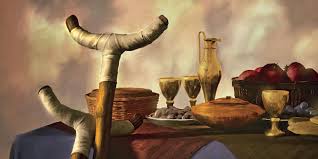
Secondly, David restored Mephibosheth all he had lost. By adopting him into his family, David restored his inheritance and gave him a seat at the king’s table. Think prodigal son. The father, watching every day, praying for his son’s return. Seeing him returning on the horizon he calls for the ring and robe and prepared a banquet in his honor. Returning him to the seat he once occupied. Far more than Mephibosheth could have hoped. Far more, he knew, than he deserved.

Is that not an amazing example of God’s grace toward us?

In his great mercy he has given us new birth into a living hope through the resurrection of Jesus Christ from the dead, and into an inheritance that can never perish, spoil or fade…kept in heaven for you…” (I Peter 1:4)

Now, if we are children, then we are heirs…heirs of God and co-heirs with Christ, if indeed we share in his sufferings in order that we may share in his glory.” Romans 1:17

Through the salvation he offers, he grants us an eternal seat at his table. Forever a child of the king. A place of belonging.

Grace is not an easy concept to grasp. We define it with two words. “Unmerited favor.” We trust it as the basis of our salvation. Though we sing it with fervor I’m not sure we understand how amazing it truly is.

God painted this beautiful picture of grace and the story of Mephibosheth was its canvas. All I know is that I was Mephibosheth and Mephibosheth was me. And today, by the good grace of God, I have a place at the king’s table.

His Mercy is More

Background Passages: I Corinthians 15:17; Romans 6:4

The scene painted a great portrait of God’s Kingdom.

There we sat…A tired collection of English-speaking Americans from Baptist churches scattered over several states, sitting in the pews of a Peruvian Lutheran church, listening to songs sung and a sermon delivered by a Scottish-born pastor speaking, at times, in both English and Spanish. Our time of fellowship and worship transcended the diversity of its context.

Sunday worship kicked off an eight-day mission effort offering Vacation Bible School, medical care, work training and home construction for families in Collique, a proud, but high-poverty community north of Lima. Our efforts were directed by Operation San Andreas, a missionary effort organized by retired Houston cardiologist, Dr. Luis Campos.

I returned this week, exhausted from the work and the travel, only to find loved ones in the hospital for treatment and surgery. On the heels of medical issues, I found myself out of town on family business that needed my assistance. All of those issues turned out fine, but did little to remove the fatigue from my body and soul. This was my frame of mind entering Easter weekend. Not exactly ideal.

With hours on the road to return home, I reflected on my time in Collique and all that happened in the last week. Easter was made for this.

As a time to remember Christ’s death on the cross and a time to celebrate his resurrection, Easter offers hope in its fullest form. It is on this week of Jesus’ life upon which my faith rests. The faith that sustains me through difficult circumstances finds its expression in a resurrected Jesus. Paul said as much when he told the Corinthian church…

“If Christ has not been raised, your faith is futile, and you are still in your sins.” (I Cor. 15:17)

While worshiping at The Union Church of Lima, the Rev. Angus Lamont led us in a song I had never heard. Each verse of His Mercy is More resonated with truth I needed to hear. The final verse, though, reached inside my heart and reminded me of God’s great give of love through his son, Jesus Christ.

“What riches of kindness He lavished on us,
His blood was the payment His life was the cost.
We stood ‘neath a debt we could never afford.
Our sins they are many,
His mercy is more.”

And, thus is the definition of God’s grace. While I have done nothing to merit God’s love, he loved just the same. When I look in the mirror, I see too often a reflection of my failure rather than the image of Christ who is in me.

Yet, God does not require my perfection, just my persistence. My daily desire to live as he leads. The song’s chorus speaks as strongly as the verses.

“Praise the Lord.
His mercy is more.
Stronger than darkness
New every morn.
Our sins they are many,
His mercy is more.”

As that song echoed in my ears, I found my body still weary, but my soul no longer worn. Easter is resurrection. Easter is restoration. Easter is revival.

Easter is my reminder that faith is not futile. I find in Easter my hope of salvation. I find in Easter my hope of eternal life.  Like the Apostle Paul, I find in Easter my hope for life abundant in the now.

“We were buried therefore with him by baptism into death, in order that, just as Christ was raised from the dead by the glory of the Father, we too might walk in newness of life.” (Rom. 6:4)

Driving down the road toward home, I found in Easter my joy.

It is my prayer Easter speaks to you in the same way it speaks to me.

*****

Enjoy His Mercy is More offered beautifully by Matt Boswell and the Boyce College Choir.