Finding Peace

Background Passages: Philippians 4:6-9; John 14:26-27

Sarah Winchester began the construction of her new home in San Jose in 1884, shortly after the death of her husband William, the firearms magnate. For 38 years until her death in 1922, the 22,000 square foot home was under constant construction or renovation.

There are more than 10,000 windows and 160 rooms in the Winchester Mansion. The result of this haphazard design is a maze-like structure with doorways and stairways that lead nowhere.

Teams of carpenters, masons and other trades were employed around the clock to address Sarah’s eccentric ideas. The design mattered less than the need to keep building. Sarah, it seems, struggled with her husband’s life work. She believed that she and her home would be haunted by the ghosts of those killed by her husband’s rifles unless he kept building her house.

It’s estimated that Sarah spent $70 million largely on pointless construction, all in a desperate search for peace that never came.

The world seeks peace today in pursuits just as fruitless as the one attempted by Sarah. Pursuing such paths will never bring peace.

We know there exists a difference in peace as viewed by the world and peace that comes from God. The world speaks of absence of conflict, calm, harmony, and happiness. Humanity’s quest for peace seems always just out of reach. Those who understand the term at a spiritual level acknowledge that God is the only true source of peace.

In the Old Testament, peace seems to be the greatest good that men could wish for each other. Ancient greetings reflect this. Even Judah’s enemy Nebuchadnezzar wrote, “Unto all people, nations and languages, that dwell in all the earth, peace be multiplied to you.” (Daniel 4:1)

Jewish greetings always wished peace. The Hebrew word translated as peace is a familiar term. It is shalom. It means completeness, soundness and welfare. Its root means to make whole or complete. Having shalom meant being in a state of wholeness or completeness, lacking nothing of importance.

The New Testament form of the word for peace is eirene (i-ray’-nay). It means unity, being one, quietness and rest. Its root means to tie together as a whole. It speaks to reconciliation, to come back together. To be complete.

So, God’s peace will always be different from peace sought by the world. Biblical peace speaks to a restored relationship with God through Christ Jesus. It is a state of wholeness and completeness experienced by those who are living in right relationship with God.

So, at the eternal level, peace with God requires a relationship with him. The path to peace begins with our declaration that Jesus is Lord of our lives…that we have put our faith and trust in him and him alone.

I don’t know about you, but it’s rarely that simple. I put my faith and trust in Christ as a nine-year-old boy who had not known the deepest struggles of life and faith that come from life experiences.

So, on a practical level, how do we find the peace of God amid the turmoil that comes as we live each day? I find some answers, I think, in Paul’s letter to the Philippian church.

“Don’t worry about anything; instead pray about everything. Tell God what you need and thank him for all he has done. Then, you will experience God’s peace, which exceeds anything we can understand. His peace will guard your hearts and minds as you live in Christ Jesus. (Philippians 4:6-7)

Don’t worry. Pray. Pray about everything. Now, I’ve never really subscribed to the idea that God cares which toothpaste I use. I supposed that there might be a specific point and time where my toothpaste choice might matter to the point where I make that a matter of prayer, but generally, I’m not sure God cares.

I think Paul says the path to peace begins in conversation with the father about the things we need…really need…in life. And, he adds, that a great starting point in that process begins by thanking him for all he has done for us in the past. The brightest light in the darkness of life is not the light at the end of the tunnel, but the light shining from behind us…where hindsight is 20/20…the light that shines on the path I’ve already traveled. The one that illuminates the footsteps of the Father walking beside us through those difficult times.

Paul chooses his words carefully, writing in ways that make connections with his first century readers. Philippi was situated near the coast of Greece. As such, it was a sentry city, of sorts, for the inland areas of the region. Since many of the residents of Philippi were retired Roman soldiers, they understood the danger of attack.

As a result, a sentry worked throughout the night in Philippi…24/7. While the people slept, the sentry, the phulasso, kept watch for enemy soldiers, thieves and wild animals. While the phulasso was on guard, the people could sleep in peaceful slumber.

Paul used this imagery to talk about a peace beyond our understanding. Paul says talking to God about what troubles us is a sure way of finding a peace we cannot easily comprehend. A peace that protects or guards (like a phulasso will guard) our hearts and minds from dredging up the past we cannot change and the worst future we can imagine. A peace that keeps us from believing that our mansion is haunted by our past and that we must keep building a stairway to nowhere. A peace that comes only as we live in Christ Jesus.

So, how do we live in Christ Jesus?

And now, dear brothers and sisters, one final thing. Fix your thoughts on what is true, and honorable, and right, and pure, and lovely and admirable. Think about things that are excellent and worthy of praise. Keep putting into practice all you learned and received from me—everything you heard from me and saw me doing. Then, the God of peace will be with you.” (Philippians 4:8-9)

Martin Luther once said, “While you cannot prevent birds from flying over your head, you can prevent them from building nests in your hair.”

Our minds are constantly churning. Left to our own imaginations, it’s easy to get fixated on something that causes us anxiety and worry. It is easy to let our thoughts center on guilt, anger, pain, uncertainty, loss, worry, hurt, danger and a host of other negative things. Paul knew how easy it was to fall into this trap…how easy it is to let the birds build a nest in our hair.

Rather than allow the negativity to set in, Paul said to “fix your thoughts…” focus intently on…to meditate…to dwell…on the thoughts of Christ. He lists a collection of filters through which all our thoughts must run.

Dwell on what is true, honorable, right, pure, lovely, and admirable. Meditate on the excellent things of life and things that are worthy of praise. We must run our thoughts through these traits. If any thought that enters our mind does not pass the test, we should reject it. We are to make our thoughts obedient to Christ.

Paul lived his life in obedience to Christ. The things he said and did, the way he chose to live, the things he taught…all of these things were built upon the model of Christ, revealing what Christ taught him that he passed on to the Philippians. He encouraged them to focus on the things of Christ and put into practice his teachings…to live a Christlike life.

Here’s where I think the rubber meets the road.

Jesus’ death and resurrection reconciled those who trust in him to God. Being in right relationship with him puts us on the path to wholeness and completeness. The difficulties of life pull us every day in the opposite direction. The worry and anxiety that creeps in at these times can be set aside by talking with the one who loved us enough to die for our sins.

When we can talk to him and recall all that he has done to carry us through difficult times in our lives, we can experience his peace…that sense of connection and completeness that only comes when we are in close contact with our father. It is this peace that protect us from the onslaught of thoughts that spiral into the depths of despair and desperation. It is peace and wholeness that comes only through a life of focused discipleship.

I don’t know if Mark Twain was a Christian. Based on his writings, he was put off by the lack of practice in what was preached.

A wealthy businessman from Boston with a reputation for ruthlessness and unethical behavior once told Twain that his dream was to visit the Holy Land before he died. His desire was to climb Mount Sinai with his Bible and read the 10 Commandments.

“I have a better idea,” Twain responded with his typical wit. “Why don’t you stay in Boston and keep them.”

Twain has a point. We tend to think we’ll find peace in some great mountaintop experience rather than daily obedience.

So, we are to focus on what we have been taught in scripture about living as Christ lived. Following his example. Passing all our thoughts through the life of Christ. Discarding what is undesirable and obeying his teachings. It is in that obedience that we find wholeness. Completeness. Peace.

Such behavior and thinking comes with a promise not only of the peace that protects and guards our thoughts, but with the presence of the comforting Father.

Look at the past phrase of Paul’s message in verse 9.

“Then, the God of peace will be with you.”

I think I always read that as “God’s peace be with you,” but that’s not what he says here. Paul already told us that we can have the peace that protects and guards when we talk to God. Now, he’s telling us that the God who is peace, the author of peace and reconciliation, will be with you. His presence in our lives brings peace.

In their most troubled time in the upper room listening as Jesus explained his imminent death on the cross, the disciples heard Jesus make this promise.

“All I have spoken while still with you. But the Counselor, the Holy spirit, whom the Father will send in my name, will teach you all things and will remind you of everything I have said to you. Peace I leave with you; my peace I give you. I do not give to you as the world gives. Do not let your hearts be troubled; do not be afraid.” (John 14:26-27)

It is impossible for us to understand fully in this present world with all its struggles the complete peace that comes only from God. The comforting thing to me is that God sent the Holy Spirit to those who believe as a constant reminder of his teachings and the daily presence of the God of peace.

I built my fair share of stairways and doorways that lead nowhere as I struggled with the life experiences I faced. When I lay those struggles at the feet of Christ and talk to him about my needs, peace comes. That sense of connection and completeness follows. When I can turn aside those negative thoughts and focus instead on what it means to live a Christlike life, I can experience and feel the presence of the God of peace.

“Do not let your hearts be troubled. Do not be afraid.”

Shalom.

Fan or Follower?

Background Passages: Matthew 16:13-24; Luke 5:1-11; Matthew 4:18-22 and Luke 16:25-26

It’s baseball playoff season. I think I’m finally over the baseball strike of 1994-95 and find myself watching the games again with interest. I know. That’s a long time to hold a grudge.

It’s also the middle of the college football season and I love to watch college football.

I am a fan of the Houston Astros. I enjoy watching their games and I might even do a fist pump when they win. I rarely lose sleep if they blow the game in the ninth inning. I’m a fan of the Houston Astros.

I am a follower of the Texas Tech Red Raiders. I wear the shirt. I watch the games. I celebrate when they win. I will toss a pillow and lose hours of sleep with every defeat. During the week, I’ll check out a few Red Raider websites to get a perspective on last week’s game. I’ll read about the players and coaches. I’ll fret over next week’s game. Cut me and I’m pretty sure I bleed scarlet and black. I am a follower of Texas Tech.

Jesus talked a little about being a fan or being a follower.

Jesus and his disciples left the region of Caesarea Philippi after a brief retreat north of the Sea of Galilee. The deep discussion elicited a confession from Peter who declared the understanding of his heart.

While looking at the throng of people milling about that pagan city, Jesus asked those with him what the people were saying about him after almost three years of ministry.

The disciples shared a few names as if the rumors were laughable.

“Some say John the Baptist. Others say Elijah. Still others Jeremiah or one of the prophets.” (Matthew 16:13-14)

Then, Jesus asked the question he really wanted to ask.

“But what about you? Who do you say I am?”

While the others stared blankly at the ground, Peter declared with strength of conviction,

“You are the Christ, the Son of the living God.” (Matthew 16:16)

With that confession, Jesus gathered his disciples and began the journey back to Galilee, but the dialogue didn’t get easier. The teaching grew more intense as Jesus began to talk more plainly about his death on the cross.

Peter didn’t like the way this conversation was going.

“Peter took him aside and began to rebuke him. ‘Never, Lord! This shall never happen to you!’

“Jesus turned and said to Peter, ‘Get behind me Satan! You are a stumbling block to me; you do not have in mind the things of God, but the things of men.’

“Then Jesus said to his disciples, ‘If anyone would come after me, he must deny himself and take up his cross and follow me.” (Matthew 16:22-24)

It was those last two words that caught my attention this week. “Follow me.”

My church has been in a six-week long Bible study about discipleship. While family matters have kept me from attending every session, I have kept up with the study.

I underlined these words in the study guide. “Following Jesus is a serious, weighty calling. Taking up our cross means putting to death our desires and goals and following Jesus wherever he leads. Christians are supposed to look increasingly like Jesus.”

When Jesus told his disciples to take up the cross and follow him, it wasn’t the first time they had heard the call to follow.

At the beginning of his ministry, Jesus spent the early morning talking with a crowd that followed him down the coast of the Sea of Galilee. He came across a group of fishermen cleaning their nets after an unsuccessful night on the water where the fish were nowhere to be found.

Jesus climbed into Peter and Andrew’s boat and asked them to push off a few feet from shore so the water would add its acoustic effect to his voice.

“When he finished speaking, Jesus said to Peter, ‘Put into deep water and let down your nets for a catch.’ Peter answered, ‘Master, we’ve worked hard all night and haven’t caught anything. But, because you say so, I will let down the nets.

“When they had done so, they caught such a large number of fish that their nets began to break. …When Simon Peter saw this, he fell at Jesus’ knees and said, ‘Go away from me, Lord, I am a sinful man!’ For he and all his companions were astonished at the catch of fish they had taken, and so were James and John, the sons of Zebedee, Simon’s partners.”

Then, combining this passage with what we read in Matthew 5, Jesus said to Peter, Andrew, James and John, “Follow me and I will make you fishers of me.” (Luke 5:1-11 and Matthew 4:18-22)

There’s the phrase again, “Follow me.”

He said the same words to Matthew when he called him from the tax collector’s booth. To Phillip when he pulled him from a crowd. He said the same words to a rich, young ruler after he told him to rid himself of all the material things that stood between him and Jesus. “Follow me.”

I suspect they were words he extended in every conversation shared and every invitation given. “Follow me.”

What is behind this idea of following Jesus?

The Greek word akoloutheo gets translated in most versions of the Bible as follow, but it has a broader range of meanings. It can mean accompany, assist, pursue or attend. So, if the word can also mean assist or pursue, for instance, Jesus was not calling people to simply tag along. He called for personal engagement.

Akoloutheo is written in present tense meaning the action is in the here and now and its voice is active. So, when Jesus calls his people to follow, he means they are to do so in every moment of life. It is something they are to do. They can’t send someone to do it for them.

Jesus didn’t want his disciples to just listen and believe in him from a distance. He invited them to draw near, to join him, join and commit to the mission. Jesus wanted his disciples to be fully engaged with him in both learning and doing the work of God.

From the beginning of their call to the critical times near the end of Jesus’ earthly ministry, Jesus asked them to follow.

Think about what that meant for those first disciples. From the moment they began their journey with Jesus he taught and trained them. He sent them to preach as he preached. He asked them to serve those with great need. He prepared them to continue his work after his ministry was completed. He expected them to spread the gospel throughout the world.

Jesus is still inviting you and me to be his disciples. His followers. To personally join him, learn from him, and help him in gospel ministry. There is nothing passive about being a follower of Christ.

Timothy Keller founding pastor of Redeemer Presbyterian Church in New York City, put it this way, “Jesus says, ‘I want you to follow me so fully, intently, so enduringly that all other attachments in your life look weak by comparison.’”

We can’t be a disciple or difference maker until we are willing to deny ourselves…to set aside the life that matters to us and pick up the life that matters to God. To put God on the throne and make him Lord of our life. To make Christlike living our passion.

We can’t be a disciple or difference maker until we are willing to take up our cross. We tend to trivialize Jesus’ death on the cross if we think this term means simply facing stoically the difficulties of life that all experience, whether a follower of Christ or not.

It speaks to the complete obedience and devotion to the cause of Christ, no matter where it leads. To yield our hearts fully to his. After asking them to take up the cross and follow, Jesus spoke to the eternal value one gains by following him.

“For whoever wants to save his life will lose it, but whoever loses his life for me will find it. What good will it be for a man if he gains the whole world, yet forfeits his soul?” (Luke 16:25-26)

Jesus tells them that nothing in this life is worth keeping if it means missing out on eternity. So, when we deny ourselves and take up our cross all that’s left is to invest our lives completely into the kingdom of God. To follow.

New Testament theologian Scot McKnight put it this. way, “Those who aren’t following Jesus aren’t his followers. It’s that simple. Followers follow, and those who don’t follow aren’t followers. To follow Jesus means to follow Jesus into a society where justice rules, where love shapes everything. To follow Jesus means to take up his dream and work for it.”

I’m a fan of the Houston Astros. I’m a follower of the Texas Tech Red Raiders. But, there is more at stake than my athletic affiliations.

If I’m a fan of Jesus Christ, I might profess my faith in comfortable settings. I might toss a few dollars into the offering plate when it’s passed. I might even listen to a sermon or two. If I’m a fan of Christ, however, I am rarely personally invested in the work, sacrificing little time and energy for the cause of Christ.

If I am a follower of Christ, I cannot just passively believe in him. Being a follower is all about digging deeply into his teachings. Understanding how Jesus reacted to different situations in life. It is all about imitating him, his example and his works. It is all about being Christlike. It’s all about being a difference maker.

When you get right down to it, the question Jesus asked his disciples in Caesarea Philippi may have been as basic as that.

Will you be a fan or a follower?

It’s a decent question for us to answer.

Beware the Slippery Slope

Background Passage: Revelation 2:12-17; John 6:48-50

I knew I was in trouble the minute I saw those Girl Scouts standing by the exit to Lowe’s. I just bought some random piece of hardware needed for a home project. As the glass doors slid open, I read the lips of the older one as she whispered to her friend, “Here’s an easy mark!” She had me pegged from the moment she saw me glance at the table.

“Could we interest you in some Thin Mints, Peanut Butter or Samoa cookies,” she asked as they launched into some pre-rehearsed sales pitch about the virtues of helping her troop get to some distant camp in Iowa. I held my palm up to silence them and reached for my wallet. “You had me at Thin Mints,” I replied as I bought three boxes.

Thin mints and orange juice. It just doesn’t get any more sinful than that.

Satan inspired Thin Mints, as devil disks designed to break one’s will to lose weight and live a healthier lifestyle. I buy them knowing I’m perched at the top of a slippery slope. Once I open that first sleeve…taste that perfect blend of minty freshness and chocolate covering infusing that delectable morsel of pure crunch…I kiss all restraint goodbye. One cookie leads to the whole sleeve. One sleeve leads to one box. It is a slippery slope.

I know eating that first Thin Mint has fewer consequences than other poor life choices I’ve made. It is, however, a nice metaphor for the allure and temptation of sin. Taking that first bite out of sin’s apple is a quick ticket out of the garden of grace. Rarely do I jump in to sin with both feet. More often than not I make a subtle compromise with sin that begins my slide down that slippery slope of disobedience. I think Jesus had this in mind when he spoke through John to the early church in Pergamum.

A slippery slope is an idea or course of action which will eventually lead to additional actions until some undesirable consequence inevitably follows. One domino falls causing another to fall and then another and then another.

John, in the Book of Revelation, heard the voice of Jesus sharing a word with seven churches in what is now modern-day Turkey. Though obedient in doing good, the church in Ephesus forgot their love of Christ and their love for one another. They acted out of a sense of obligation rather than love. In Smyrna, Jesus simply encouraged the church to persevere in the face of the coming persecution. To keep the faith despite the hostility around them.

The church in Pergamum found itself flirting with disaster, standing on a slippery slope of compromise…giving in to the subtle sins that opened the door to deeper depravity. The first domino had already fallen as a few had been led astray. One by one others believers succumbed to their influence.

“These are the words of him who has the sharp, double-edged sword. I know where you live—where Satan has his throne. Yet, you remain true to my name. You did not renounce your faith in men, even in the days of Antipas, my faithful witness, who was put to death in our city—where Satan lives.

“Nevertheless, I have a few things against you: You have people there who hold to the teaching of Balaam, who taught Balak to entice the Israelites to sin by eating food sacrificed to idols and by committing sexual immorality. Likewise, you also have those who hold to the teaching of the Nicolaitans.

“Repent, therefore! Otherwise, I will soon come to you and will fight against them with the sword of my mouth.

“He who has an ear to hear let him hear what the spirit says to the churches. To him who overcomes, I will give some of the hidden manna. I will also give him a white stone with a new name written on it, known only to him who receives it.” (Revelation 2:12-17)

Jesus introduced himself to this church as the one with a sharp, double-edged sword, presenting himself as qualified to serve as their judge and jury. The believers in Pergamum did so many things well, despite the harsh culture around them. Jesus praised them for being an oasis of faith surrounding by hostile desert. A light in a dark world.

An historic capital of Asia, Pergamum served as the intellectual center of the region, surpassed in influence only by Athens and Alexandria. The city stood as a religious center with temples, shrines and altars dedicated to Zeus and other Greek gods, including Asklepios, the god of healing. As a result of this particular god, one might consider Pergamum the Mayo Clinic of its day.

To make matters worse for the church, Pergamum embraced the idea of the imperial cult even before Rome did. Its citizens built the first temple to Caesar Augustus in AD 29, proclaiming him a living god. Pergamum became the birthplace of emperor worship. Failure to worship the emperor was a crime punishable by death. Antipas, one of the early church leaders in Pergamum, refused to bow before the emperor and was martyred for his faith.

“I know where you live,” Jesus said. He knew their circumstances. He knew they lived in the shadow of Satan’s throne. Jesus was empathetic to their situation. Temptations and pressure to sublimate their faith for the sake of self-preservation were intensely felt. Surely Antipas was not the sole believer killed by the emperor’s sense of self-importance. One must assume that other Christians lost their lives.

Their faithfulness unto death caught Jesus’ attention. You face death every day, he said, “Yet you remain true to my name.” Despite the ever-present danger to their lives, they would not forsake the name of Jesus.

What a spectacular testimony. Nothing could persuade them to renounce Jesus. Jesus lifted up the church in Pergamum for being faithful in that which mattered most. Sadly, the story doesn’t end there.

Despite their insistence on not bowing down to the emperor, some of them stood on that slippery slope. Some people in the church had, in fact, already taken the plunge. If you’ve just received a word of praise from heaven, the last word you want to hear next is “Nevertheless.” The tone of the passage changes dramatically from one of commendation to condemnation.

“Nevertheless, I have a few things against you.”

Though they were faithful in the big thing, they let the little things seduce them. Some of the folks could not stop at one Thin Mint. They ate one, then ate another and another.

Sin wraps itself in attractive packaging. Covers its hideousness. Disguises its affects. Surrounded by the allure of sin, some of the Christians at Pergamum yielded to temptation. Jesus’ reference to Balaam is an Old Testament Jewish moral tale warning against listening to the siren songs of those who would forget to whom they belonged. Scripture tells us Balaam found a way to seduce Israel away from God, not in some explosive act of disobedience, but by inching step by step toward disobedience until sin’s dominos started to fall one right after another.

In ancient Israel’s case they violated God’s laws by eating meat offered to idols and embraced the sexual immorality prevalent in their culture. I don’t know if these were the specific sins of the Pergamum Christians, but they began to be disobedient in the little things. They confessed a faith in Christ, but didn’t live like it on a daily basis.

In addition, some among the congregation In Pergamum fell victim to false teaching. The Nicolaitans taught a twisted distortion of the gospel. Subtle deviations from gospel that made disobedience permissible. What they practiced was what Dietrich Bonhoeffer called “cheap grace.” Grace that only emphasizes the good or easy parts of the gospel without the truth regarding the more difficult aspects of true discipleship.

Jesus reminded them there is only one solution to sin. He called these wayward Christians to repent. To turn away from the little things they’ve been doing wrong and get their life right with God. Get off that slippery slope and live again the life in Christ to which they had been called.

There are certainly times in my life where I feel like a citizen of Pergamum. To my recollection, I’ve never denied my relationship to Jesus. Never renounced my faith in him. Though challenged from time to time, I can say with Antipas, “He is my Lord.” I am faithful in the BIG thing.

Man, can I identify with those men and women in Pergamum who found themselves on the slippery slope to sin. It’s just so easy to take the first wrong step and find yourself on a path you never intended to take. What we focus on or fret over become or idols, substituting for our dependence on God. It feels easier to walk the well-travelled road of convenience than the narrow path of righteousness. Faith, we feel, just shouldn’t be this hard. So, we compromise. We give in.

Even a cursory look at the actions and beliefs of many Christians yields evidence that they swallowed the lies of the world hook, line and sinker. Sadly, every foray into the shadow is another step down a slippery slope that leads to additional actions until some undesirable consequence inevitably follows. I know. I’ve been there.

Jesus closed his letter to the church in Pergamum with a series of promises to those who overcome the slippery slope despite having to claw their way back up the muddy hillside into the arms of Jesus.

To those overcomers, he offers bread, a stone and a name. I love this metaphor as explained by a pastor friend of mine.

John likely remembered the conversation Jesus had with a crowd he had just miraculously fed. Awed by the miracle and wanting more, they followed Jesus around the Sea of Galilee asking for more. He told them this.

“I am the bread of life. Your fathers ate the manna in the wilderness and they died. This is the bread that comes down from heaven so that one may eat of it and not die. I am the living bread that came down from heaven. If anyone eats of this bread, he will live forever. ” (John 6:48-50)

Jesus is the bread of life. The all-sustaining, eternal manna from heaven. In him we have all we need. We don’t need what the world offers.

He also offered a white stone. The meaning may be less clear, but most commentaries point to the judicial courts that may have handed a white stone to those declared innocent. Other scholars suggested that the white stone may have signified an invitation to a wedding.

Either idea fits within the context of this passage. God’s grace declares the repentant heart innocent of falling down that slippery slope, wiping the slate clean by the forgiveness purchased at the cross. It could be that those who repent find themselves invited again to the feast, to rejoice in a renewed relationship with Jesus.

I like that thought because the stone has my name written on it. It has your name written on it. When we present that stone to Jesus, he knows our name. It stands as a personal invitation to share an intimacy with Jesus that we might otherwise miss.

The symbolism is powerful. Eternal provision and divine satisfaction. A permanent transformation from guilt to innocence. Individual intimacy with the Father.

Those with an ear to hear are told to listen to what Jesus was telling the Christians in Pergamum. He calls us to stand firm. Most of us don’t struggle too much with the faith confession. We struggle with daily conduct, the seduction of compromise.

A look at the church in Pergamum begs the question. Are we also susceptible to the same spiritual schizophrenia? Willing to defend the faith, but failing to see the moral compromises we make?

Let’s pray it is not so. Put the Thin Mints away. Avoid the slippery slope.

To every overcomer, eat a little manna, take hold of that white stone with your name on it and accept the invitation to live in right relationship to the one who loves you so much that he gave his life to compensate for every time you skated that slippery slope.

What’s In Your Hand?

Background Passages Exodus 4:1-5; Romans 12:6-8; Ecclesiastes 9:10

The bedouin stood on calloused, bare feet with his sandals in his hand, trembling in the glow of the burning bush. Seeing its light. Feeling its heat. Listening to the voice from its flame.

The 80-year-old shepherd heard these words and more…

“I am the God of Abraham, Isaac and Jacob…I’ve heard the cries of my people…I am sending you to Pharaoh to bring my people out of Egypt.”

Moses hid in the desert for 40 years after an unceremonious exit from Egypt. Face to face with the oppression of the people of his birth, he reacted in the heat of the moment, killing the offending Egyptian. Once the son of the Pharaoh’s daughter. Now a old man, tending sheep that didn’t even belong to him. O, how the mighty had fallen.

God spoke to Moses on the slopes of Mount Horeb from a burning bush that was not consumed. The God of his fathers called him to a mission of eternal importance. It was the next phase of God’s redemptive plan. To make it happen, he needed to get his people out of Egypt and back to the land he had promised them. He needed Moses.

This unbelievable experience in the wilderness should have lifted his spirits and emboldened Moses to act. Instead, the miracle on the mountain left him filled with anxiety, offering one excuse after another.

“Who am I? I am no one. Pharaoh will not listen. I know the man.”

God said, “Go!”

“To the Hebrew people, I’m nothing. When they ask who sent me…and they will ask…what do I tell them”

“Tell them I am who I am! Now, go!”

“They’re not going to believe this…not the Hebrew people and certainly not Pharaoh.”

God chose this moment to ask Moses a critical question.

“What is in your hand, Moses?”

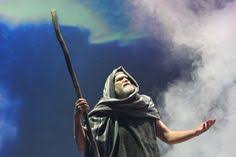
Moses looked at his right hand. Fingers wrapped around the thick shepherd’s staff, worn smooth by years of use. His mind raced. This was the tool of his trade. A staff for protection. A staff for balance. A staff for herding. Just a stick.

I wonder at that moment if Moses saw a flash of something more ominous in the staff he held. He was once a prince of Egypt. Perhaps, in that moment, the staff served as a symbol of all that had gone wrong in his life. The perfect manifestation of his failure. He had traded a scepter for a shepherd’s crook so he could herd a flock of sheep that weren’t even his. As he heard God ask his question, “What is in your hand?” Perhaps Moses felt unworthy, certain that God could choose a better man.

Moses swallowed the lump in his throat and said simply…

“A staff.”

Nothing more. Nothing less. An old tree branch whittled and shaped to serve his needs. God knew it could represent something new and different. He just needed Moses to see it, too.

“Throw it on the ground, Moses.”

Moses let it drop. As it bounced on the rocky soil, the staff transformed into a snake. Startled, he took two steps back and stared.

“Now, pick it up.”

As soon as Moses lifted the snake from the ground, it turned back into a staff.

Moses looked in awe at the bush.

“This,” said the Lord, “is so that they may believe that the Lord, the God of their fathers…the God of Abraham, the God of Isaac and the God of Jacob has appeared to you.”

What is in your hand?

What a great question!

I wonder how many of us have starred at the burning bush and heard the voice of God telling us, “I’ve got something I need you to do for me. It’s important. I need you to go….”

I wonder how often you have done what I’ve done and responded immediately with every excuse in the book to avoid doing what God needs us to do. My excuses sound remarkably similar to the ones Moses muttered into the face of a burning bush.

Who am I that you would ask this of me?

  • I’m not capable.
  • I’ve made too many mistakes.
  • I am no longer the man I once was.
  • I’m too old.
  • No one would listen to me.
  • They’re just going to laugh in my face.
  • Find someone else…please.

How like Moses I am at times. Too comfortable in my place. Too embarrassed of my failures. Too willing to believe my mistakes trump my potential. Too unwilling to open myself to God’s transformative power.

Then, the question comes to me just as it came to Moses.

“What’s in your hand?”

When you get down to it, that’s an intriguing question. If we’re honest with ourselves, it’s a question we’ve all heard at some point in our lives. When God asks the question, it deserves an honest look.

Scripture is filled with stories of individuals who possessed no extraordinary gifts. That which they held in their hands was ordinary. Yet, God called. When they quit making excuses, God began to use them. Consider these examples.

Gideon defeated the Midianites with trumpets and lanterns.
Samson slaughtered the Philistines with the jawbone of a donkey.
David took down Goliath with a sling and a stone.
A child with a small basket of bread and fish fed a multitude.

So I ask again, the burning bush question.

What is in your hand?

One of the greatest mistakes we make as believers in Christ is to underestimate who we are and what we have. We hold an old whittled stick…an ability to carry a tune, the skill to bake a cake, the temperament for a kind word, the sensitivity to encourage a troubled soul. Yet, we deem it insufficient, weak, small in comparison to abilities we see in others.

Then, the excuses flow. Maybe, it doesn’t matter as much exactly what is in our hand. Maybe all that really matters is, as one writer said, “how much God is in your stick.”

And, there’s the lesson Moses learned. As long as you hold on to your stick, God can’t demonstrate his power. You’ve got to throw it down. Let it go. Surrender it to God. Once God is in it, his power flows through it.

Then, your ability to carry a tune inspires. Your skill in baking brings comfort. Your kind word changes another person’s outlook on the day. Your encouragement lifts a burden from a neighbor’s shoulders. There is nothing insufficient, weak or small about that.

Whatever is in your hands, when surrendered to God, gets infused with his power that makes a difference. And, people will see what is in your hand and know that God is present in your life.

So, what is in your hand?

The truth is, I can’t tell you. It is a matter between you and God. But, know this. There is something there. God has put something in your hand. It may look ordinary to you, but it was given to you for a purpose. He has gifted all of us, placed something in our hand, to use toward the glory of his kingdom.

Whatever God has placed in our hands we are to use it. Paul wrote about it extensively.

“We have different gifts, according to the grace given to each of us. If your gift is prophesying, then prophesy in accordance to your faith. If it is serving, then serve. If it is teaching, then teach. If it is to encourage, then give encouragement. If it is in giving, then give generously. If it is to lead, do it diligently. If it is to show mercy, do it cheerfully.” (Romans 12:6-8)

I don’t know what your gift may be, but it does no one any good if you never use it. Each of us has been gifted by God so he can send us wherever he needs us to go. To do what he needs us to do. When we surrender that gift to God, when we throw it down, God’s power is alive through us.

Whatever your hand finds to do; do it with all your might. (Ecclesiastes 9:10)

An unknown poet penned a bit of prose a few years ago entitled, “It Depends Whose Hands It’s In.” It’s not Shakespeare or Byron, but it holds a pretty good message. This is how it starts off.

“A basketball in my hands is worth about $19
A basketball in Michael Jordan’s hands is worth about $33 million.
It depends whose hands it’s in.”

As one who has missed his share of lay-ups, I ask you…

What is in your hand?

When the Axe Head Floats

Background Passages: 2 Kings 6:1-7; Proverbs 3:5-6

I don’t remember exactly when the tree in my in-laws’ back yard died or when they chopped it down. I just remember that the stump was in the way of a wooden deck they wanted to build.

I took my turn among the brothers-in-law wielding an axe, chopping through the thick roots of the once thriving oak. At one point as I pulled the axe over my head, the axe head came off and flew across the yard, leaving me holding the handle.

I have no idea why I thought about that this week. Somewhere in the back of my mind I remembered a similar story in the Bible. I had to search to find it, but I did. Some of God’s greatest lessons come from unexpected sources.

One reason to read the Bible is that we sometimes find practical life lessons through relatively unknown passages. God has a way of using the obscure to teach the what ought to be obvious. Timothy tells us as much, “All scripture is God-breathed and is useful for teaching, rebuking, correcting and training in righteousness.” (2 Timothy 3:16)

I found one of those nuggets of truth from the life of the prophet Elisha.

Elisha spent some of his time in ministry training a new group of God’s prophets. Who wouldn’t want to learn from this incredible man of God? God rewarded Elisha’s leadership by sending more and more men to sit at his feet.

At one point, the students came to the master and requested that they be allowed to cut down a few trees to build a new meeting house for they had outgrown the place where they were.

“Let us go to the Jordan and each of us get a pole and let us build a place there where we can meet.”

They were willing to do the work required. Commendable.

Elisha liked the idea and gave his permission.

The men held Elisha in such great respect that they asked him to accompany them to the Jordan River to find the best timber for the task. Elisha made the journey with them.

Here’s where the story gets interesting. One of the young prophets didn’t own an axe. Eager to be a part of what they must have considered God’s work, the man found a neighbor willing to lend him an axe.

When they arrived at the Jordan, each man found a suitable tree to cut down and the riverbed echoed with the sounds of iron on wood.

I can picture our young prophet wielding his axe, sending the chips flying as he cut into the timber. Then, in the middle of a powerful back swing, the axe head slipped from the handle, the force of the swing flinging it into the river with a heavy splash. The tool he borrowed buried itself in the muddy bottom of the Jordan.

“Oh no, my lord!” he cried out. “It was borrowed!”

It seems a small problem to us, but to this poor, young prophet it loomed large. Not only could he not finish his task, but the loss represented a significant financial burden. In those days, you see, an iron axe was a precious and expensive commodity. According to Old Testament law, if a man lost or damaged another man’s property, he was required to replace it or pay the cost of a new one. Chances are if he had to borrow it in the first place, he had no means of paying to replace it.

Many of our problems are like the one encountered by this young prophet. Through no fault of our own…at a time we least expect it…even while doing good work…we find ourselves facing a situation. We lose something of value entrusted to us. We find ourselves in financial difficulty beyond our means. We encounter illness or injury that collapses our world and leaves us wondering what we can possibly do.

That’s probably why the prophet cried to his master in such obvious distress. “Oh, my lord!” That’s probably why in our times of despair we cry out, “Oh, my Lord!”

Here’s the first lesson that comes to me from this story. It’s always best to learn to trust God before the problem comes. These young prophets were assigned an important task. When Elisha gave his permission, he didn’t intend to go with them. However, they trusted Elisha and needed his presence as they went about their task. As a result, when trouble came, when this man cried out in despair, his master was already there.

We fail ourselves, more often than not, when we think we are capable of dealing with life…both the good and bad times…without asking God to go with us. At the beginning of each new day, new task or circumstance, we ought to thank God in advance for his work in our lives. To being open to his guidance in every aspect of what we say and do. Then, when the crisis comes, we can cry out to him and knowing…trusting…that he is there.

The writer of Proverbs expressed it this way…

“Trust in the Lord with all your heart and lean not on your own understanding. In all your ways acknowledge him and he shall direct your paths. (Proverbs 3:5-6)

I can picture the man diving in the murky water to retrieve what he could not see. Hands groping along the bottom with the faint hope of touching the metal object. Each time he comes out of the water empty-handed.

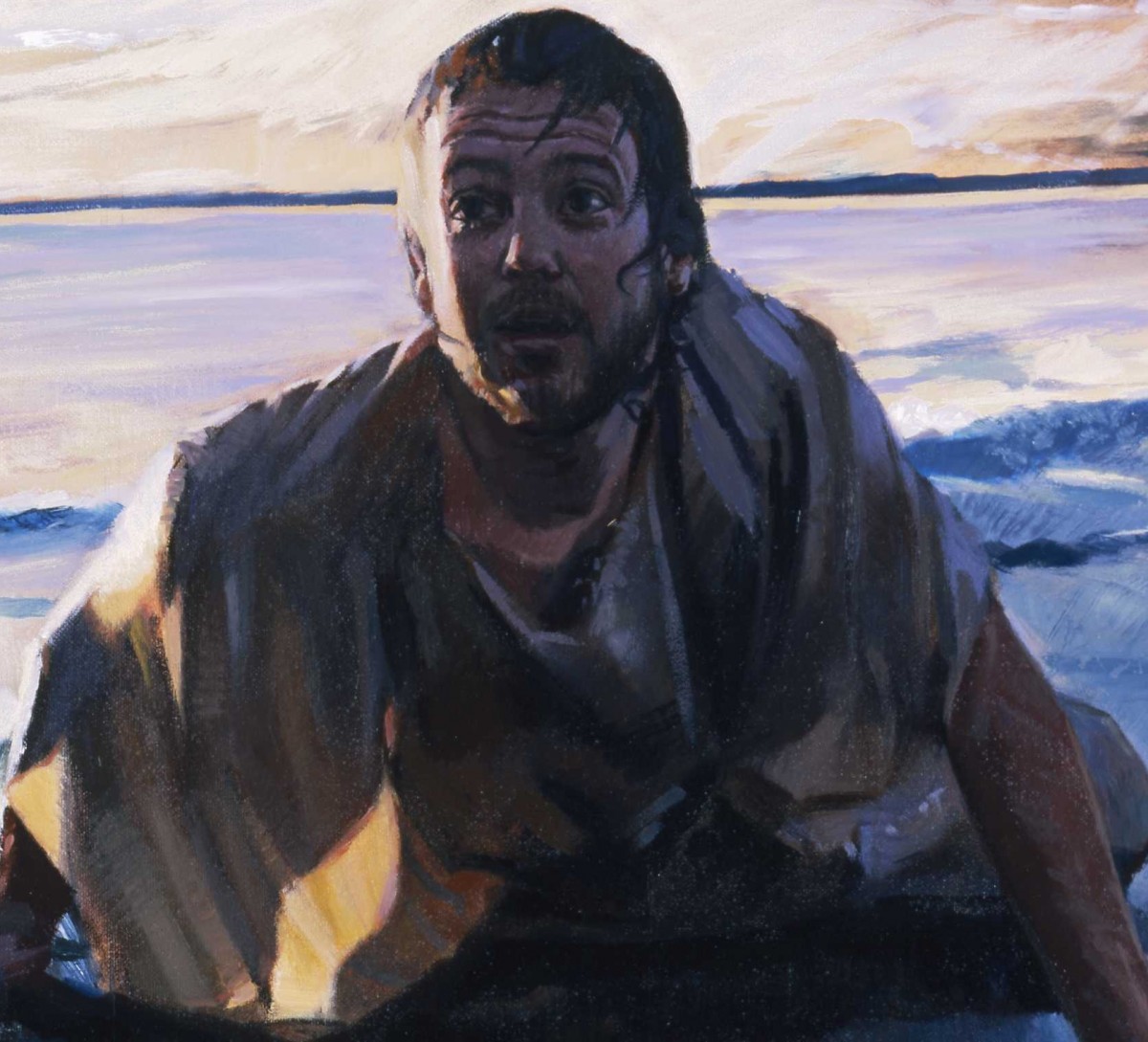
He stands chest-deep in the river, water dripping down his face and off his beard. Anxiety written in his eyes. When he looked hopelessly at his teacher, Elisha asked him a question.

“Where did it fall?”

When the man pointed to the general spot in which the axe head sank, Elisha threw a stick in the river and…the iron axe head floated to the surface. How’s that for defying nature, Archimedes?

Then, in a remarkably practical moment, God’s prophet turned to the young man and said, “Lift it out.” He didn’t levitate into his hands. He didn’t pick it up himself. He asked the young man to do his part in the miracle.  The man waded through the water and grabbed what had been lost. After a moment of relief and celebration, the young prophet repaired the damaged handle and got back to work.

So, what’s the point?

I’ve never seen a floating axe, but I’m quite certain God has worked his wonders in my life…and in yours. He put people in my life at just the time I needed them, but I needed to take their hand. He opened doors of opportunity, but I had to walk through them. He whispered in my heart’s ear the solution to many a problem, but I still had to act. You see, God will meet our needs, but only as far as necessary for us to do our part.

Here’s how the story speaks to me.

Every day I rise, before I take a step, I need to ask God to walk with me through the day, trusting that he will honor that request. Believing in his presence brings a sense of hope, peace and purpose in the face of every problem I encounter. God will toss the stick in the waters of my life and give me the choice to pick up the floating chunk of iron or let it sink back to the bottom. He promises to do his part, but I must do mine, ever obedient to the leadership of the Holy Spirit in my life.

God will work faithfully in the lives of his children in our times of trouble and despair…in those times we cry out “Oh, my Lord!”

It’s my hope we all understand and embrace this truth long before the axe head falls in the water. Sooner or later, though, it will fall. So, next time you see the axe head floating on the water, pick it up.

The Last Boat to Tarshish

Background Passages: Jonah 1:1-4:11; John 3:16; Matthew 9:36

The stranger boarded the last boat to Tarshish.

Incognito.
Cloak pulled tightly around his shoulders.
Face hooded and hidden.

Mysterious.
With a furtive glance to the east,
he slipped below deck without a word.

Secretive.
“Paid his fare,” the Captain said.
“Don’t ask questions.
Let him be.”

Enigmatic.
Jonah, a man of God,
a fugitive fighting a deep burden of guilt.

How did it come to this?

*****

Israel.
His home. His country.
Ruled by Jeroboam II,
sinful and self-centered like its king,
but regaining military strength.
Misinterpreted God’s leniency
for God’s approval.

Nineveh.
A great city. Powerful and ruthless.
Capital of cruelty.
Wicked and wasteful.
Brutal and bloodthirsty.
Arrogant and aggressive.

Jonah.
Israel personified.
Zealously patriotic.
Lover of his country and its people.
His people.

National pride blinded faith.
Quick to offer God’s grace to the Hebrews.
Slow to offer God’s grace to an ancient enemy.
Provincial.
Predictable.
Prejudiced.

Jonah wrapped his existence in the Hebrew’s
special relationship with God,
the Father.
He lived in a resurgent nation
under imminent threat from the dreaded Assyrians.
That was his world.
Entitled.
Infallible.
In denial.

*****

God said to Jonah,
“Go to Nineveh.
Cry out against it for I have seen their wickedness.”

It sounded simple enough.
Grab your passport,
take a trip.
Admonish their sin.
Call them to turn from evil.
Show God’s mercy.
Encourage them.
Help them survive.

But Jonah heard,
“My blessing is for all people…
even the enemies of the Chosen…
even those who rejected the God of Moses and Abraham…
even those who kill for the sport of killing…
even those you despise with every fiber of your being.
Go!
Let them know I love them.”

Jonah knew the voice of God when he heard it.
He heard,
but refused to listen.

God asked too much!

Assyria.
An historic and mortal enemy.
Nothing good can come from Nineveh.
Forget this!

So, he slipped away in the dead of night,
walked in solitude to Joppa,
boarded the last boat to Tarshish.

Jonah,
the Father’s instrument of salvation to a lost city,
turned his back on his mission.
In response to a call from the Father, Creator,
Jonah opted for a cruise of
disobedience and defiance.

*****

Tarshish.
Not the end of the world,
but you could see it from there.
Jonah paid his fare.
Settled in his cabin for a pleasant cruise across the Great Sea.
To the far corner of the earth.
Far from Nineveh.
As far from God, as a man could go.
A futile attempt to avoid God’s call.

A storm of biblical proportions erupted!
A battered and shattered ship tossed on the waves,
its crew desperately fighting to survive.
While Jonah slept fitfully in the hold,
restless in his dreams,
the gale outside raged as wildly as
the tempest within his heart.

Unanswered prayers to unhearing gods.
Desperate for deliverance,
they cast lots to cast blame.
Jonah drew the short straw.
The weight of the storm
fell squarely on his shoulders.

Tossed overboard in a last ditch effort to placate the vengeful gods,
Jonah embraced Death,
finding it infinitely more desirable
than embracing Nineveh.

Into the waves and into the belly of the monstrous fish.
Three days and three nights Jonah wallowed in his misery,
until he had a change of heart.
Sort of.

“Salvation is from the Lord,”
he half-heartedly prayed.
Yet, Jonah experienced God’s forgiveness,
half dead, washed up on a beach,
bathed in a disgusting pool of fish vomit.

*****

With the reluctant heart,
God’s prophet admitted defeat and
trudged into the city of his enemies.
For three days he mumbled God’s message under his breath,
hoping no one would hear.

“In 40 days, Nineveh will be destroyed.”
No mention of repentance.
No mention of grace.
Simply a much-deserved destruction of the people he despised.

So, after three days, Jonah dusted the dirt from his sandals.
Shortchanged God’s call for repentance.
Nineveh had 37 more days to repent,
37 more days to hear the message,
but as far as Jonah was concerned,
if they didn’t hear the first time,
“Shame on them.”

To the possibilities of forgiveness for the despised Assyrians,
Jonah turned a cold heart.
Clinging to past atrocities of the people of Nineveh,
Jonah climbed to the top of the hill overlooking the great city,
privately praying for fire and brimstone.
Absolute annihilation.

Yet, deep in the marrow of his bones,
he knew God’s grace was sufficient.
“Slow to anger, abounding in love and faithfulness.”
This was the God Jonah knew.
If Nineveh heard,
Nineveh would respond.

In sackcloth and ashes,
Nineveh repented.
God relented.
Jonah resented.

Counting God’s grace to Nineveh as evil,
the prophet’s anger burned.
Jonah, the world’s worst missionary,
needed a lesson in priorities.

A fast-growing gourd for shade.
Jonah rejoiced.
A hungry worm and a withered plant.
Jonah raged.

God reminded him.
People are more valuable than gourds.
God, the Almighty,
offers mercy and forgiveness
to all people who repent and turn to Him.
Otherwise is human hubris.

Compassion

The contrast between
Jonah’s all-consuming anger.
God’s all-encompassing love.
The contrast between them
so vividly illustrated in Jonah’s story.
Human Capriciousness
versus
Divine Compassion.

God desires relationship with all people.
Jonah detested the Assyrians.
Prejudice colored his judgment.
God’s call to Nineveh ran counter to
every emotion in his heart.
He could not bring himself to obey.

How like Jonah we are!
God calls us to do something
outside our comfort zone.
We hate the way that feels.
Run in the opposite direction as fast as we can go.

How many storms and raging seas
would we avoid if we just
did what God wanted us to do
the first time He called?
How much heartache do we suffer needlessly
because we defy God’s will for our lives?

To make matters worse,
sin is so incredibly convenient.
If we want to run from God,
we can always find a boat waiting at the dock,
ready to take us wherever we think our Father cannot find us.
We climb aboard a seductive sailing ship to sin,
headed 180 degrees from where the
Father wants us to go.

We go to Tarshish.
Our rebellion.
Our choice.
Our will.

In the midst of our disobedience
and the storms that ensue,
we find God to be a God of second chances.
A God of compassion.

No matter how far we run,
how big a mess we make of our own lives,
God continually calls us back.
Jonah found a spiritual second chance in the form of a big fish
sent by the loving Father to a prodigal son.

We find second chances around every corner.
God never gives up on us.
Not when we’re evil.
Not when we run away.
Not when we shake our fists at him.
Not when we mope on the top of a hill
waiting for God to judge the sinners around us.

Jonah is the anti-hero of his own story.
He is, however, fully human.
He ran.
He argued.
He bargained.
He whined.
He fumed.

He developed a convenient truth…
The men, women and children of Nineveh should die.
They are Assyrians.
No other reason is needed.

Like Jonah,
we quickly condemn the evil in the world.
Rapidly relegate the sinner to the trash heap.
If they don’t look or act like us,
we react even slower to be the personal agent of
God’s forgiveness.
Basking in the glow of the salvation offered to us.
Balking at sharing that same grace to others.

In a perfect example of our humanity,
Jonah causes us to hang our heads.
We are so like him!
In perfect example of His deity,
God causes us to lift our heads.
He gives us chance after chance
to love more as He loves.

So when we hesitate,
He teaches.
Somewhere in our most reluctant hours,
the Creator of the universe quietly plants a gourd,
sharing a lesson in the priority of grace,
desiring that we finally understand
how deep
and broad
and rich
His love can be.

God’s character causes Him to act on behalf of Creation.
Compassion for the Ninevites.
Compassion for you and me.
Compassion that compels us to make known
the deepest desire of God’s heart.

The Old Testament proclaims.
“Salvation is of the Lord.”

The New Testament promises.
“God so loved the world that He gave His only Son
that whosoever believes in Him shall not perish,
but have everlasting life.”–John 3:16

Go.
Tell.
Your Nineveh waits.

*****

When he saw the crowds, he had compassion on them,
because they were harassed and helpless,
like sheep without a shepherd. –Matthew 9:36

Author’s Note: “The Last Boat to Tarshish” is just one of nine stories shared in my first book, Put Away Childish Things. The book offers a deeper look at some of your favorite children’s Bible stories. Put Away Childish Things, and my other books–The Chase: Our Passionate Pursuit of Life Worth Living and God’s Mirror Image—are all available from Amazon, Barnes and Noble or any online bookstore. I also have a few copies I can ship to you.

Chase the Lion

Background Passages: II Samuel 23:20; Jeremiah 29:11

The list of places to see and things to do on our imaginary bucket list grows shorter each year. One particular trip remains unchecked. We want to go on a photo safari to Africa. After far too many trips to the zoo, I’d really like to see these magnificent animals in the wild…the way God intended them to be.

Certain movies create that kind of visceral response. The Ghost and the Darkness, a 1996 movie starring Michael Douglas and Val Kilmer, is one of those movies that triggers primal fear within me. The Ghost and the Darkness is based on a true story about the Tsave Man-Eaters…two African lions that terrorized the workers on the Uganda-Mombasa Railroad in western Kenya in 1898. Atypical of most lion attacks, Ghost and Darkness would stalk the campsite and drag their victims from the tents into the tall grass.

Work on the project ceased when the workers refused to enter the area. The railroad company hired famed British hunter, John Henry Patterson to track and kill the lions. In the story of man versus beast, the hunter became the hunted as the animals began intentionally stalking Patterson. Every time I watch it I find it absolutely terrifying. That we have yet to go on our photo safari may best be explained by that movie and my irrational fear of being mauled by a lion.

Maybe that’s why an obscure verse in II Samuel caught my eye.

“Benaiah, son of Jehoiada, was a valiant fighter from Kabzeel who performed great exploits. He struck down two of Moab’s best men. He also went down into a pit on a snowy day and killed a lion.” (II Sam. 23:20)

I don’t know why Benaiah felt compelled to jump into the pit with a lion when most of us would run the other way. It was cold. Snowing. Perhaps the lion’s ordinary prey grew scarce in the frigid temperatures. Maybe the lion was terrorizing the village. Regardless, Benaiah took it upon himself to chase the animal down. When it fell into a pit or tried to hide in a cave (depending on your translation), Benaiah jumped in after him.

If you stayed outside the pit like I would, you would probably hear the frightening roar of the angry lion and the shouts of a determined man. The sounds of a life and death struggle would echo from the depths. Then, silence. You might hear the scratching of someone or something scrambling up the walls of the pit. As you start backing away, you see a hand grab the overhanging tree branch. Benaiah drags himself out of the pit. He lies in the grass catching his breath, scratched and bloodied, but victorious.

In his book, Chase the Lion, author Mark Batterson uses this little known scripture to challenge the reader to face fear and chase the will of God even when the path looks far too difficult. He writes, “In every dream journey there comes a moment when you have to quit living as if the purpose of life is to arrive safely at death. You have to go after the dream that is destined to fail without divine intervention.”

As Christians we are taught from the beginning that God has a plan and purpose for our lives. What most of us find is that the dream he gives us scares us. His will looks far too difficult. Our natural tendency is to reject what looks too hard. We look for an easier path. But, Jesus told his disciples, “If anyone would come after me, let him deny himself and take up his cross daily and follow me.” (Luke 9:23) In other words, I should set aside my own will and desire to follow the more difficult path God has chosen for me…the one that requires me to take up his cross every day.

He doesn’t call us to play it safe. If that was his intention, we would have little need for him. No. The life he chose for us will not be easy, but the victory is already won. Later Jesus said, “I have said these things to you, that in me you may have peace. In the world you will have tribulation. But take heart; I have overcome the world.” (John 16:33)

God’s plan for each of us requires us to chase the lion. That’s not always the most comfortable thing to do. We see the path God has laid out in front of us. Solitary lion tracks in the snow. A distant blood-curdling roar. Suddenly, we see clearly that God’s path takes us outside our comfort zone, especially when the path we want to take looks well-traveled. Smooth. Secure. Safe.

The Bible gives us examples beyond Benaiah of those who chose to chase…

Noah chased his lion onto the ark.
David chased his lion to Goliath.
Jesus chased his lion to the cross.
Peter chased his lion onto the water.
Paul chased his lion to Rome.

Lest we think such courage is best left to Bible characters…

Martin Luther tacked his lion’s carcass to the door of the cathedral.
The Pilgrims chased their lion to a new world.
Dietrich Bonhoeffer chased his lion to a Nazi concentration camp.
Martin Luther King chased his lion to Selma.
Billy Graham chased his lion across the earth.

Knowing the difficulty of the task to which God called them, each of these biblical and modern day heroes of faith probably wished to run the other way at some point. Instead, they chose to chase the lion. Maybe at some point, they heard the same voice Joshua heard when he fearfully scanned the Promised Land from the safety of his bank of the Jordan River. Maybe they, too, heard the voice of God saying,

“Have I not commanded you? Be strong and of good courage. Don’t be afraid. Do not be discouraged, for the Lord your God will be with you wherever you go.” (Joshua 1:9)

I don’t know what lions you’re facing. I know they all look frightening. I have faced a few of my own. All I know is that God wants us to chase his will. To follow where he leads. When we turn and run the other way, we’re missing out on the best God has to offer simply because it is his plan and not one we dreamed up on our own.

“I know the plans I have for you,” declares the Lord. “Plans to prosper you and not to harm you. Plans to give you hope and a future.” (Jeremiah 29:11)

So when you hear the lion roar, know that his blessing comes in the chase. Our victory comes in the pit. Gather your courage and jump on in.

Wherever He Leads

Background Passages: Mark 8:27-36; Luke 9:18-25

Jesus slipped to the grass from the flat rock upon which he sat as he spent the last hour in prayer. The canopy of trees under which he now reclined with his back against the rock sheltered him from the late afternoon sun. Jesus glanced at his disciples gathered in a loose cluster about 40 feet further down the hill. As they finished their prayers one by one, they talked quietly among themselves, breaking out a small loaf of bread and passing it around, satisfying their hunger.

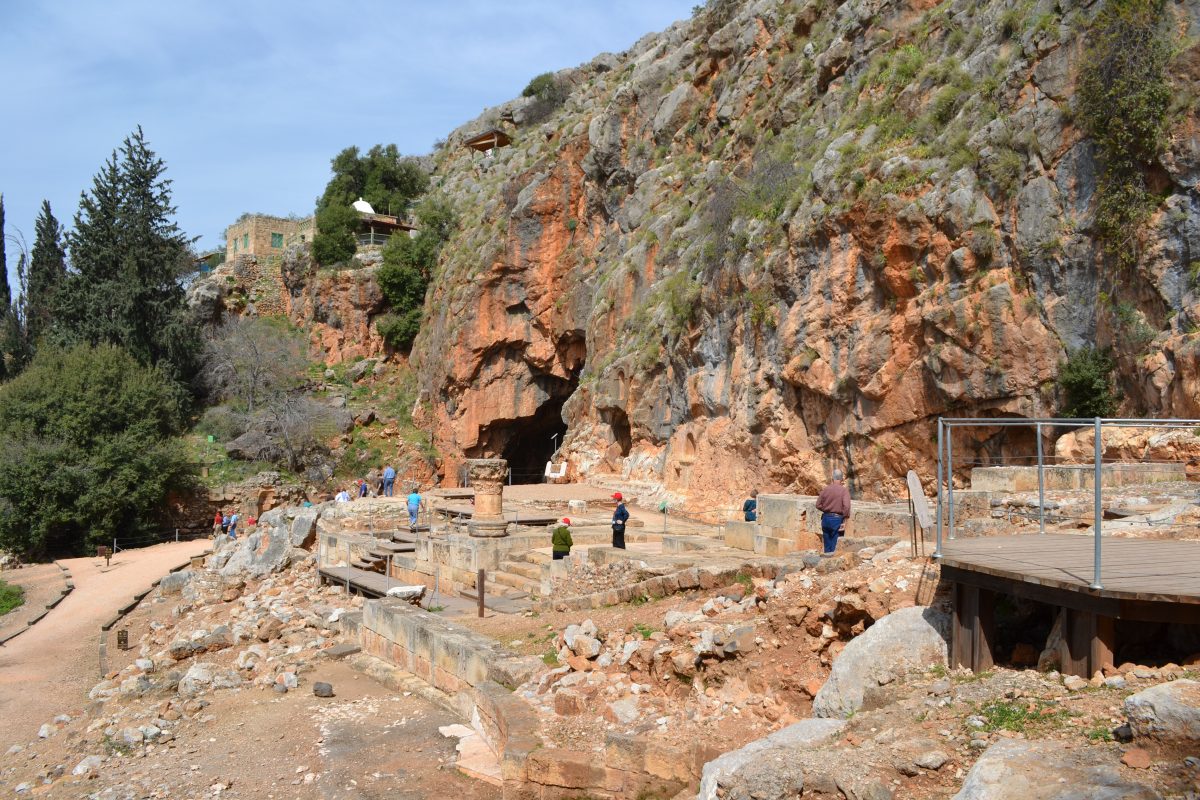
Jesus looked from his disciples down into the town of Caesarea Philippi, a bustling city 30 miles north of the region of Galilee. He watched the frenetic pace of the people as they finished the work of the day and headed home. He lifted his eyes toward the sheer cliff on the north side of the city. It rose 150 feet above the lush, green valley below. He knew the streamlet gushing from the massive grotto on the western edge of the cliff were the headwaters of the Jordan River as it flowed south to the Sea of Galilee.

The cavern was said to be the birthplace of Pan, the Greek god of nature. Worshippers still brought their offerings of fruit and grain, laying them at the altar.

His vision shifted to the gleaming temple of white marble which Philip, the region’s ruler, dedicated to Caesar Augustus, the Roman emperor whom the people considered a god. Before these temples and altars were built, Jesus knew his history well enough to know the whole area stood as a center dedicated to the worship of Baal, the ancient Canaanite god.

It was a deeply reflective moment. Jesus contemplated the scene spread across the valley below. Considered all he had done during his ministry. Felt his gut tighten when he thought about the cross to come. Had anything he said and done made a difference? Before he began his final journey to the cross Jesus needed to know. Did anyone really know who he was?

He turned to his disciples quietly talking and laughing in the ease of friendships forged by common experiences. His words cut through the comfortable conversation. “Who do the crowds say I am?”

They turned toward Jesus in a rustle of robes and shuffling feet. They were used to his probing. Knew an answer was required. “John the Baptist,” one blurted. “One of the old prophets brought back to life,” announced another. “Elijah,” another proclaimed.

Jesus glanced again at the city below, lost in thought for a moment. Then, he turned back to his disciples. “But what about you? Who do you say I am?”

Jesus held his breath, looking into the eyes of each of his closest friends. Their answers would make all the difference. Would he see blank stares of incomprehension? Would he catch so much as a spark of understanding that meant he had at least lit a torch in their hearts. He waited. Felt his heart thump anxiously in his chest.

How his soul must have soared when Peter stood among them, looked at his friends, then to Jesus, knowing that he answered for all of them. “You are the Messiah. The Anointed One of God.”

That moment sealed the deal for Jesus. He then taught them intently about the events to come. Suffering. Rejection. Death. Resurrection. Prophecies that left them frightened and confused. Then, he challenged them with words that echo still in the ears of every believer today.

“If anyone would come after me, he must deny himself and take up his cross daily and follow me. For whoever wants to save his life will lose it, but whoever loses his life for me will save it. What does it profit a man to gain the whole world and yet lose or forfeit his very soul?”

The call of Christ demands that we deny self. It’s not a matter of dismissing our lives as unworthy or inconsequential in the grand scheme of God’s plan. Denying ourselves means to set aside our egos. Deliberately subordinating our will to the will of God. Opening our lives to the possibility that his plan for us is greater and more meaningful than the one we planned for ourselves. It means turning from where we wish to go to follow the path he lays before us.

The call of Christ demands that we take up his cross. Not just any cross…his cross. Jesus knew the horror of what lay before him. When Jesus was a boy, a Jewish rebellion in Sepphoris, just four miles from Nazareth, ended badly for those who fought against the Roman empire. Historians tell us more than 2,000 rebels were crucified, set in lines along the roadside as a frightful reminder of the power of Rome.

To face the cross was a vicious reality burned into the back of his mind. He, as well as anyone, knew what it meant to take up the cross. It stood as the inevitable certainty he faced by declaring a kingdom of God that rocked the boats of the pious and the political.

Today, taking up the cross of Christ means to live our life with the same focused commitment to God’s purpose that Jesus did. It means preparing for rejection in a world that does not understand. Letting nothing… no thought of ridicule, persecution, or embarrassment…prevent us from doing that which we know God desires us to do. It means looking at a world that dismisses Jesus as irrelevant and proclaiming in word and deed, “I belong to Christ!”

Denying ourselves. Taking up his cross. These are steps in the right direction. If we stop there, however, we miss that which matters most. The call of Christ demands we follow. It means spending our lives, not hoarding it. It means giving of ourselves, not taking from others. It means not playing it safe, but doing the right thing at all times and in all situations. It means not getting by with as little as we can for the cause of Christ, but investing ourselves completely in his ministry.

The way of the world always seeks to gain advantage over another. The goal of the world is to amass more wealth, power and glory than the guy next door. Jesus would answer that unbridled ambition with this question. Where is the eternal profit in that way of life? Jesus said one saves his life when he loses it in service to others.

As believers in Christ we have been called to follow the lead of Christ, not always knowing where it will take us. Doors open and doors close. Following his lead is not always easy, but it is always best.

I’m reminded of the old invitational hymn, Wherever He Leads, I’ll Go, written in 1936 by Baylus Benjamin McKinney. He penned the words to his poem after meeting with the Rev. R.S. Jones, a South American missionary who had been pulled from service. Because of a serious illness, he would not be allowed to return.

“What will you do?” McKinney asked his friend.

“I don’t know, but wherever he leads, I’ll go.”

From a simple conversation between two old friends poured the words that challenge us…challenge me…today.

“Take up thy cross and follow me,”
I heard my master say;
“I gave my life to ransom thee,
Surrender your all today.”

He drew me closer to his side,
I sought his will to know,
And in that will I now abide,
Wherever he leads I’ll go.

It may be through shadows dim,
Or o’er the stormy sea,
I take my cross and follow him
Wherever he leadeth me.

My heart, my life, my all I bring,
To Christ who loves me so;
He is my master, Lord and king.
Wherever he leads I’ll go.

The chorus of the song declares, “I’ll follow my Christ who loves me so.”

Wherever he leads, let’s go.


Come, Let Us Reason Together

Background Passage Isaiah 1:11-18

He was the coolest guy in town, wearing his jeans, a white t-shirt and leather jacket. A snap of his fingers called six attractive girls to his side. A tap of his fist or a quick kick turned on the jukebox. If a kid from another high school was threatening his friends, his mere presence sent the bully running for the exit of the malt shop.

Arthur Fonzarelli. He was the Fonz. As a leading character of the popular 1970s sitcom Happy Days, the Fonz, played by Henry Winkler, dispensed his brand of street wisdom to his group of wide-eye followers, Richie Cunningham, Ralph, “the Mouth”, and Potsie. In their eyes, Fonzie could do no wrong.

The Fonz rarely made a mistake so sitcom writers gave him an endearing quirk. He had a hard time admitting he was wrong. He would start to confess his mistake to Richie or Ralph and invariably stumble over the word. “I was wwwrr…” After a pause to collect himself, he would again stutter, “I was wroonn…” Trying again and again to communicate his mistake, he would change his approach and finally admit, “I wasn’t exactly right.”

Nothing stings as much as the sudden realization that we are wrong. I suspect it happens in our lives more often than we’d like to admit. I know it does in mine. Like the Fonz, we struggle to admit we are wrong. The words catch in our throats.

At no time is that fault more evident than when we sin against God. In our attempts to live our lives in our own strength, we fail miserably at times to live up to the standard of Jesus Christ, making a mess of our days. Even when confronted with our sin, we use every excuse, every reason to justify our behavior. Only when the earth gives way beneath us and our world starts to crumble, do we admit that we were “wwwrr…,” “,,,Wroonn.” “…Not exactly right.”

God knows this struggle within us and stands ready to talk it out.

The people of Israel in the days of Isaiah gave lip service to worship of the One God. They went through the motions of honoring their God. Offering their sacrifices. Singing their praises. Conducting their religious festivals. Spreading out their arms in prayer. Because God knew the insincerity of their hearts, he called them to task for their sin.

“The multitude of your sacrifices, what are they to me?” says the Lord. “I have more than enough of burnt offerings.” God called their offerings “meaningless” and their assemblies “unbearable.” He said, “I will hide my eyes from you. I will not listen to your prayers.” God, their Father, challenged them. “ Stop doing wrong, learn to do right! Seek justice, encourage the oppressed. Defend the cause of the fatherless, plead the case for the widow.”

Then, he offered something that only a loving Father would offer. An offer he still makes to us today. He said,

“Come, let us reason together.”

Imagine that. Our God, our Creator, the Almighty, wants to sit down with us to talk it out. Another translation of this passage says, “Come, let us argue it out.” God’s word here is not an offer to negotiate our decisions and choices. It is so much more. God extends an invitation to us to talk about our lives, the things with which we struggle, the things that break our hearts, the things we do to try and control our lives on our own. He calls us to engage in thoughtful and honest conversation.

Why would a sovereign Lord seek time with us about the things we do that run counter to his teaching and his will for our lives? When we make an argument before God in an attempt to justify our sin, and when we sincerely listen to his counter arguments, God knows that at some point in that conversation we’re going to open our eyes and our hearts and realize he was right and we were wrong. In an honest dialogue with God, that outcome is inevitable.

Within that debate, if we’re honest with ourselves, God’s logic, his evidence, his arguments against our chosen lifestyle will simply be too convincing and compelling. We will have no choice but to admit our guilt. Oh, we’ll struggle to say it out loud. We will pussyfoot around it. We’ll admit, “I wasn’t quite right,” before we finally bow down before him and say it. “I was wrong.” “I have sinned.”

God doesn’t just want us to admit our mistakes, he wants us to turn away from them. To repent and reclaim his promises. And, he offered restoration. He told the people of Israel,

“Though your sins are as scarlet, they shall be as white as snow. Though they are red like crimson, they shall be like wool.”

The conversation God invites us to enter with him, the dialogue that ensues, doesn’t leave us begging for forgiveness that will never come. It always leads to redemption and restoration. Admitting our guilt is step one. Turning from our ways to full obedience and trust sets us back on the proper path of God’s will for our lives. And, it all starts with the conversation. “Come, let us reason together,” says the Lord.

Understand clearly, in the balance between our God-given freedom and his divine sovereignty, our obedience does not force God to forgive. If it did, we would control his forgiveness. God forgives, not because our obedience requires him to, but because he wants to forgive. It is the desire of his heart. Just ask David or Jonah or a host of others throughout the Bible. God is the God of do overs and second chances.

I saw a poster recently. Paraphrased, it said, “Nothing stinks more than that moment during an argument when you realize you’re wrong.”

There may be an element of truth in that statement as it pertains to our worldly relationships. We just don’t like to be wrong. But, in our relationship to God, there is nothing sweeter than that moment when our conversation with the Father convinces us of our mistakes and draws us back under his will and way.

“Come, let us reason together.” What a life changing conversation that can be!

***

Dr. Kirk Lewis is author of two unique devotional books–Put Away Childish Things and The Chase: Our Passionate Pursuit of Life Worth Living. Learn more about author and his books at www.drkirklewis.com. 

Dip Your Toes in the Jordan

Background Passage: Joshua 1:1-9

I walked on stage this year again as a part of yet another high school graduation. After a 30-year career in public education, I’ve participated in one form or another in more than 120 commencement exercises and watched roughly 65,000 young people end their high school careers. That means I’ve seen my share of beach balls. Heard my share of air horns. Watched my share of impromptu dances across the stage.

The faces of these graduates as they received that cherished piece of parchment paper reflected a mixture of joy and excitement, tinged with an underlying sense of dread. Each of them undoubtedly realized in the hours after they walked the stage that they faced a future that remained largely unknown despite all their plans and dreams.

As I watched the evenings unfold each year, the ceremony always reminded me of my own graduation from high school. The scope and venue were certainly different. NRG Stadium in Houston compared to my high school auditorium in Ropesville. Standing among classes ranging in size from 450 to 900 students compared to my class of 33.

The graduation ceremonies, regardless of time, place and size, mean the same today as they did in our yesterday. Each graduate ends that which is familiar to begin a future that will unfold before them in unexpected ways, taking them down paths beyond anything they can truly imagine. It will be confusing and chaotic. Exciting and exhilarating. Filled with joy and pain. Some will thrive amid the challenges of life. Others will wither under its pressure.

So, we watch these young people graduate from high school with a prayer on our lips and hope in our hearts that God will lead, guide and protect them through each day of their lives. I am certain, whether they know it or not, they will need his presence every step of the way.

Our culture calls it commencement. A beginning. I like to think of it as a commissioning. A challenge set before them to be all God needs them to be in whatever call of life he sets before them.

He faithfully served his God under the leadership of Moses. Chosen among the leaders of his tribe to sit among Moses’ council of advisors, Joshua played a significant role in leading the Hebrew people into the promised land. As a spy, Joshua refused to see the land of Canaan as a place of unconquerable giants and impenetrable fortress cities as others did. Rather, Joshua saw the land God promised as a land of milk and honey.

Because of his trust and faith in God, Joshua was given the task originally assigned to Moses. I picture him standing ankle deep in the slow current of the River Jordan, staring across the valley in the direction of Jericho. It is three days before he would give the command to his people to cross the river and enter the land of promise.

If he was anything like most of us, and I suspect he was, he fought an internal battle with his doubts and fears, voicing a prayer for strength and wisdom he did not feel. Joshua surely understood his future would be at times confusing and chaotic. Exciting and exhilarating. Filled with joy and pain. A future in which he could thrive amid the challenges and stumble under the pressure. Like our graduates today, I suspect the butterflies in Joshua’s stomach seemed as large as eagles.

God chose that moment as his commencement. His commissioning. The Old Testament tells us that God gave his charge to the leader of his people as he stood with his toes in the Jordan. As a commission to those he calls to serve it can encourage our graduates equally well as they prepare to encounter life after high school. And, it is good news indeed.

God said to Joshua…

“Be strong and very courageous. Obey the laws Moses gave you. Do not turn away from them and you will be successful in everything you do. Study this book of the Law continually. Meditate on it day and night so you may be sure to obey all that is written in it. Only then will you succeed. I command you…be strong and courageous! Do not be afraid or discouraged. For the Lord you God is with you wherever you go.” (Joshua 1:7-9)

To our graduates know that God has a purpose for your life, just as he did when he told Joshua, “You will lead my people to possess all the land I promised to give their ancestors.” His plan is unique to you, to the heart he has given you, the skill sets you have learned and the talents you acquire along the way. I can almost guarantee you the plan will take you places you never thought you’d go. Watch for the doors that open and don’t hesitate to walk through them.

Following God’s path will not always be easy. Life will hit with cold reality that will lead to disappointment and discouragement. Yet it will also bless in glorious ways. God encouraged Joshua to “be strong and very courageous.” The door he opens may not be the threshold you wanted to cross. Step through it anyway with courage, conviction and confidence in the Father. The door may appear to be blocked. Overcome. Persevere and rest on the promises of God.

God reminds us in this passage that success is contingent on our understanding of and obedience to the word of God. We leave high school and home desiring to exert our personal independence, to make our own choices and chart our own course in life. That’s the whole point of growing up.

Free of someone who wakes you on Sunday morning for church, it will be easy to sleep in…to set aside your faith. A word of caution. Now is not the time to express your independence from God. As you enter college or head into the work force to establish a home of your own, you will choose whether to abandon the relationship you have with Christ or to draw more deeply upon it. You have that choice.

God reminded Joshua not to stray from the teachings of God. To hold the word of God close to his heart. To meditate upon it. To study it. To draw from scripture the wisdom of God that enables us to deal with both the good and difficult times of life. This is the key to success.

Be careful also to recognize success through the eyes of God and not the eyes of the world. Success hinges upon your ability to stay focused and obedient to the plan God has for you. When we walk in his steps we walk on firm ground, able to experience joy and contentment in a life of service to the Father and to others.

As you can imagine and as the scripture tells us, Joshua and his people had to fight for all that God promised. The path God chose for Joshua was not easy. The hardships and heartaches were real. The difficulties must have seemed insurmountable at times where Joshua struggled with which way to turn and what he should do. He must have felt terribly alone at times.

You will almost certainly face hardships and heartaches throughout your life, hopefully in the measured grace of God’s blessings. You will face some of life’s hardest decisions, uncertain about which way to turn and what you should do.

Know this. God promised his presence. “…the Lord your God is with you wherever you go.” It is a promise as true today as it was when Joshua stood with his toes in the Jordan River. Trust the promise. Trust in the one who made it. God will be with you wherever you go.

So the message of Joshua speaks these four things as clearly to me today as it should to you as a high school graduate.

God has a plan and purpose for each of us…in every phase of life.

He calls us to walk with strength and courage in obedience to his plan and purpose regardless of where it leads us.

We find that strength and courage and discover his will and wisdom only when we seek him and immerse ourselves in his word.

Despite the difficulties that will most assuredly come, we can rest each day knowing that he will be with us wherever we go.

Here’s the thing I’ve learned and the one of which I am reminded with every graduation I attend. The challenge of graduation isn’t a one-time event. After you’ve tossed the cap and hung the tassel from the mirror of your car, you will take the next step in the life God has planned for you. You will dip your toes in the Jordan and step into the land he has promised. From that day forward, you will find another Jordan to cross. And another. And another. And another.

To every graduate out there, whether with the Class of 2017 or any class back through time, celebrate this special day. When it is over, dip your toes in the Jordan. You can’t imagine what God has planned for you!