Abide in Me

Background Passages: John 15:1-11; Galatians 5:22

When I enrolled at Texas Tech University many years ago, I left a high school with 120 students to enter a college with more than 20,000 students. It was a little intimidating. My brother, who was already a senior at Tech, shared some great words of advice.

He simply said to make the enormous a little smaller by creating a connection with a group on campus.

Made sense.

I chose to make the Baptist Student Union my connection. I made great friends, discovered tremendous spiritual mentors and found Robin, my wife. As far as I am concerned it was the social trifecta of my college experience.

I maintain peripherally connected to this day. I follow the Tech BSM on Facebook, receiving information about the ways that organization continues to minister to its students.

I saw a post this week about one of those programs that encourages students to pray for their friends, their campus and the world. The BSM is encouraging alumni and others to pray as well. That, I can do. The program is called ABIDE.

After reading that post, that word kept creeping back into my thoughts this week. When that happens, it’s usually a sign that God has something he wants me to learn. That became the focus of my devotional thoughts this week.

Abide is not a word we use much anymore. At least, I don’t.

The dictionary calls it an “Old English word.” That must be why the translators of the King James Version of the Bible (living and breathing old English men) loved the word. They used it often.

By definition “abide” carries the meaning of “await, remain, lodge, sojourn, dwell, continue and endure.”

The word points me to a beautiful passage in John 15:1-11. Rather than using the more archaic “abide,” my New International Version uses “remain.” Let’s break it down.

Jesus and his disciples just left the solemn confines of the upper room. Jesus sought to ease their creeping sense of anxiety and uncertainty. As he frequently did, he drew a parable from a familiar life experience to focus their thoughts on the point he needed them to understand.

“I am the true vine and my father is the gardener. He cuts off every branch in me that bears no fruit, while every branch that does bear fruit he prunes so it will be even more fruitful. You are already clean because of the word I spoke to you. Remain in me as I also remain in you. No branch can bear fruit by itself. It must remain in the vine. Neither can you bear fruit unless you remain in me.”

Jesus wanted, needed, them to understand that even though he would go away, the connection he had with them was strong. He had already told them about the Comforter he would send in his place, but here he reminded them that the gardener had already pruned them for fruitfulness by the “word” he spoke to them.

John called Jesus the Word back in Chapter 1. The truth he shared with them, the truth they learned from him would serve them through every step of life as long as they allowed the word to remain. Everything Jesus had taught them for three years was to prepare them for this moment. If they never forgot what they had been told and put those words into practice, they would bear fruit.

Isn’t the same true for us? The pull to walk our own path grows strong when we forget what we’ve learned about God’s truth…his way and his word. When we ignore God’s word because it doesn’t fit with our personal desires.

We remain in him and he in us when we immerse ourselves in his word, putting into practice all he has taught us through the years.

So Jesus says, “Abide in me.”

“I am the vine and you are the branches. If you remain in me and I in you, you will bear much fruit. Apart from me you can do nothing…if you remain in me and my words remain in you, ask whatever you wish and it will be done for you. This is to my father’s glory, that you bear much fruit, showing yourselves to be my disciples.”

Jesus’ illustration of the vine and branches is brilliant imagery. Our ability to be fruitful hinges on our connection with the one, true vine. If we claim that all things are possible through Christ, we must also accept that nothing meaningful and lasting value is possible without him. When we pull away from the vine, we cannot bear fruit.

Galatians gives us a great idea of what that fruit might be.

“But the fruit of the spirit is love, joy, peace, patience, kindness, goodness, faithfulness, gentleness and self-control.” (Galatians 5:22)

By remaining and abiding in Christ, we find our lives demonstrate the character of Christ. We become more Christ-like. When our lives take on the character of Christ, it glorifies God and tells the world of the transforming nature of Christ. Without wearing the t-shirt, a sinful world will know are his disciples.

So Jesus says, “Abide in me.”

“As my Father has loved me, so I have loved you, now remain in my love. If you keep my commandments, you will remain in my love, just as I have kept my father’s commands and remain in his love. I have told you this so my joy may be (remain) in you and that your joy may be complete.”

Jesus knew the disciples would soon have the bottom drop out of their world. These words were meant to reassure them.

“I have loved you…remain in my love.” What must it have meant to his closest followers to hear those words? During the darkest of hours yet to come, the disciples heard Jesus remind them to cherish and cling to his love. It is the same sustaining love you and I experience when the bottom drops out of our world.

When Jesus told his disciples, “If you keep my commandments,” he wasn’t saying his freely offered love was conditional on their obedience. God’s love is always unconditional. He was saying to the disciples and to us that our obedience keeps us from drifting so far from him that we can no longer feel his love.

Everything I learn of God through his Son, his Spirit and his word, reminds me of all I’ve gained through my relationship with him.

I hear those final words spoken as clearly to me as if I were standing among those shaken disciples. I hear the promise of abiding joy, utter contentment, at the life God has given me and in the future he has planned for me.

And here is the real kicker. Hear what Jesus said in this passage. “…remain in my love…” “so that my joy may be in you…” Did you hear it? My love. My joy. That’s what he wishes for us.

No one this world has known love more deeply, more authentically, than did Jesus. No one this world has loved more deeply, more authentically, than did Jesus. His joy was absolute contentment, despite the difficult circumstances and the horrendous task he faced.

It is the fullness of that love and joy that he desires for us. Not the feeble imitation offered by the world. His love. His joy. We gain access to that depth of feeling when we remain in him.

So Jesus says, “Abide in me.”

I join in prayer with those college students at Tech who seek that connection with the Father, through his Son. Those who desire a connection with the vine. Those who wish to be pruned in order to be fruitful to the glory of God.

Jesus told us how. It simple remains for us to listen. Make the connection real and personal. Allow Jesus to “await,” “remain,” “lodge,” “sojourn,” “dwell,” “continue” and “endure”within our hearts throughout our lives. Then, do our best to “await,” “remain,” “lodge,” “sojourn,” “dwell,” “continue” and “endure” in him.

If that sounds too complicated, let’s keep it simple and go old school grounded in the old English.

“Abide in me as I abide in you.”

No Where Else To Go

Background Passage: John 14:23-27

I spent the bulk of my professional career trying to put the right words together to explain things. I always felt I did it fairly well. Today, I’m at a loss to explain what’s happening in our country.

It’s not that the events of the past year have caught me by surprise. It’s just that it all seems so senseless. The ideologies and actions of a radical left and radical right keep tearing at the fabric of our republic.

I have no words to ease the angst of my adult children who wonder what kind of world their children will inherit. I certainly have no words to adequately answer the questions of my nine-year-old grandson whose innocent heart cannot comprehend hatred and bitterness.

I am at a loss. All I can do for them is listen and love.

We’ve become a people who call others blind because of the sawdust in their eyes without paying heed to the plank obscuring our own vision. A people unable to see that spiritually an “eye for an eye and a tooth for a tooth” gave way to “turning the other cheek” or “walking the extra mile.”

An essay published by the Lincoln Home National Historic Site shared information about President Lincoln’s thoughts on the eve of the Civil War.

Step back in time and travel the world in 1860. Visiting every continent, every country, you would find monarchies, dictatorships and authoritarian rule. When you return home and set foot on American soil after all your travels, you would have found only one republic established on democratic rule. The United States of America.

France tried shortly after the American Revolution, but mob rule and the guillotine determined outcomes more than the ballot box. If we are honest with ourselves, it is a startling comparison to our present circumstance when taking over a downtown or storming our Capitol building are accepted as necessary by factions of our population, each declaring that the end would justify the means.

President Abraham Lincoln led our nation at a time when the world’s monarchists and tyrants watched our Civil War with glee, hoping to see the end of this unnatural democratic experiment in the dissolution of the United States.

Lincoln understood this well. It was not simple political rhetoric when he described America as “the world’s last best hope.” Lincoln believed if the war were lost, it would be the end of America. If America ceased to exist as a united nation, it would end the hope of people everywhere for any form of democratic government.

I suspect there are foreign nations today dancing with joy at the discord so prevalent among our people.

When he was most overwhelmed, Lincoln found the only answer available to him. It’s the only answer I can find to my current inadequacies. Lincoln turned to prayer.

During the worst days of the Civil War, Lincoln met privately with his friend and journalist Noah Brooks. The president told him, “I have been driven many times upon my knees by the overwhelming conviction that I had no where else to go. My own wisdom and that of all about me seemed insufficient for that day.”

“Driven to my knees…” When the politics fail, when our own understanding fails us, maybe it’s time to hear those words from President Lincoln. Maybe today, we have “no where else to go” except to our knees in prayer to our Father in heaven.

On March 4, 1861, at his first inaugural address, with his nation divided and on the brink of Civil War, Lincoln offer this prayer for peace.

“Almighty God, who has given us this good land for our heritage;
We humbly beseech Thee that we may always prove ourselves
a people mindful of Thy favor and glad to do Thy will.

“Bless our land with honorable ministry, sound learning, and pure manners. Save us from violence, discord, and confusion,
from pride and arrogance, and from every evil way.

“Defend our liberties, and fashion into one united people,
the multitude brought hither out of many kindreds and tongues.

“Endow with Thy spirit of wisdom those whom in Thy name
we entrust the authority of government, that there may be
justice and peace at home, and that through obedience to Thy law, we may show forth Thy praise among the nations of the earth.

“In time of prosperity fill our hearts with thankfulness,
and in the day of trouble, suffer not our trust in Thee to fail;
all of which we ask through Jesus Christ our Lord.”

It was the perfect prayer for an imperfect era of discord 160 years ago. It’s a good prayer for this day of uncertainty. I claim it for our nation today and ask you to join me in praying for our country, our leaders, our people and our future.

Prayer is something I can do. It is prayer that will bring me the peace I need to feel.

As a politically divided nation, peace is at a premium. Trying to find peace in the events of this world is a fruitless effort. Life’s circumstances and events might bring a welcomed calm, but, ultimately, nothing that happens around us will ever bring peace. We must look upward and inward for that.

Jesus’ words to his disciples in the Upper Room hours before his arrest and crucifixion offered instruction, hope and encouragement. He knew the disciples were about to have the rug pulled out from under their feet. He knew how dark their days would grow and how burdened their hearts would be. He knew exactly what they needed to hear.

What I know in this moment is that God knows my struggles and burdens of my heart. He knows how dark these days feel to me at times. That’s why his words to his disciples bring comfort to my heart. He knows what I need to hear.

“Anyone who loves me will obey my teaching…but the Advocate, the Holy Spirit, whom my father will send in my name, will teach you all things and remind you of everything I have said to you. Peace I leave with you. My peace I give you. I do not give as the world gives. Do not let your hearts be troubled and do not be afraid.” John 14:23-27)

Don’t worry, he says, about what is happening around you. Just stay true to all I’ve taught you. Be who I have called you to be. Remember all I’ve taught you and don’t be influenced by others to abandon your faith and your hope.

In the middle of life’s turmoil, trust me. Trust my peace, not as the world understands it, but peace as you have experienced  in the past. Do not be afraid.

I don’t know about you, but it is God’s peace we need as a people and a nation. It is a peace that comes only on bended knee.

The Uncomfortable Christian

Background Passage: Acts 20:7-12, 2 Timothy 15

I thoroughly enjoy college sports. As a graduate of Texas Tech, I am a Red Raider through and through. While I suffer a bit each fall while our football team tries to find its way, my blood runs with a healthy mixture of scarlet and black during baseball and basketball season. A trip to the final four and to the national championship will do that to you.

Michelle Trotter, the girls’ basketball coach in the Crosby Independent School District, is a committed Christian. She posts motivational moments on her Facebook pages that speak as much to life as to the game she loves. She recently posted an interview with Chris Beard, the head men’s basketball coach at Tech. In it, Coach Beard talked about the value of staying uncomfortable.

“Comfortable gets you beat. You see it all the time in sports. Life’s the same way. You have a great day, a great win, and it takes the edge off. It takes a special person, we use the term “elite,” to remain uncomfortable…Everyone has high expectations and focus in times of adversity. Only the elite people can push themselves each day to stay uncomfortable. Uncomfortable is where growth comes from.”

He’s got a point. As soon as we get comfortable, we get complacent. When we’re complacent, we don’t work as hard. To adapt his phrase. Complacency gets you beat, in sports, in life and in faith.

There is a rather obscure passage of scripture in Acts that may speak to this idea…at least in my weirdly wired mind.

Paul is leaving Philippi to head back through Macedonia for another round of preaching and teaching. Along the way, he spent a week in Troas on the coast. Gathering the believers together on his last day in the city, he began to impart his words of wisdom on redemption and responsibility.

I can imagine this kind of meeting happened frequently in the early church. They needed to be taught the fundamental truths of the teachings of Jesus, the theology of their faith. They also needed to learn how to put that faith in practice, the organization and structure of their ministry. It would require a great deal of teaching and reteaching. I’m guessing this was a reteaching moment.

Luke tells us that Paul called the people together for a mid-day meal. It was a working lunch. As they ate, Paul talked and taught. He had a lot to say to the standing-room-only crowd. As the sun set, the apostle was still going strong speaking past midnight.

As the night wore on, we find Eutychus perched in a third-story window, one leg in and one leg out, his back against the narrow window frame. Perhaps it was his short stature (think Zacchaeus) that made him think the third-story window was a good idea. Yet, there he was, high above the crowd listening to the apostle speak.

Is it possible that God’s word and work can feel so ordinary…so comfortable…to us that grow complacent in our understanding, believing that we know everything we need to know? That our reading and study of scripture become too routine? That we take our knowledge of God’s grace and love as that of an ever-present friend that we take for granted? Is it possible that we hear a scripture explained to us one time and assume that is all God has to reveal? Is it possible to believe you know it all and don’t need to hear the same message again?

I don’t know if that was Eutychus’ problem or if he was just tired after a long day, but Luke tells us he fell asleep. As he drifted off, he fell, sadly, out the window and to his death. It seems not only does comfortable get you beat, it also gets you killed.

The good news is that Paul, with the power of the Holy Spirit, gave life again to the young man in a miracle reminiscent of those performed by Jesus. When Paul finally wrapped up his presentation, the sun was peeking over the horizon. Eutychus walked home with his family and friends, rejoicing in God’s goodness.

It’s a peculiar story set in scripture, one in which there is no spiritual truth obviously revealed. No incident of any deep, historical significance. We see God working a miracle through Paul’s undying faith, but there is no direct message. So, in absence of a more direct word from God, you have to open your heart to the spirit’s leading.

So, I want to talk about this idea of staying uncomfortable. Avoiding complacency.

You and I have both seen people who come to know Christ as older adults. Their passion for this new, redeemed life, infuses their hearts and minds. Every passage of scripture is eye-opening. Every lesson they hear energizing. They hunger for God’s truth.

You and I have also seen people who allow time to diminish their hunger and thirst. Their salvation is a one-time thing, guaranteed by scripture, but they never engage in the process of salvation…the on-going growth and development of our spiritual selves. What they read and hear in scripture is no longer profound. This little light of truth gets hidden under their bushel. They no longer let it shine. They get too comfortable in doing church.

I recognize those people because I’ve been those people. I know how easy it is to fall into that trap. Complacency leaves us feeling empty. As one pastor wrote, “When we are complacent, our life of faith becomes just about God, not (a life) for God. Not (a life) with God.”

The problem gets magnified when too many of us grow comfortable in our faith. When too many of us rest on our own understanding, the church begins to suffer and slide. Attendance drops. Membership falls. Worship rarely inspires. Our outreach suffers. People find other things to do.

It is the “elite” Christian who learns to remain uncomfortable. We do tend to sharpen our focus in difficult times and allow it to dim when things are going well. If we can push ourselves each day to stay uncomfortable, we can growth in spiritual maturity.

To remain uncomfortable in our faith is to remain open to being taught. Avoiding complacency in our faith allows us to grow. It’s choice. It’s intention.

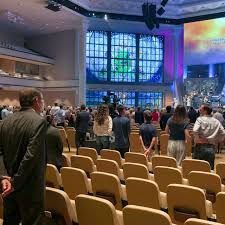
Our church has a series of stained-glass windows depicting the seven “I am” statements of Jesus. Our pastor is now preaching a sermon series on these statements. In his almost 40-year tenure with us, Dr. Lyles has preached on these “I am” statements at least five times, he said.

If I’m a comfortable, complacent Christian, I might write off the sermon series. “I’ve heard it before. There is nothing new here I need to learn.” Been there. Heard that. Bought the t-shirt.

If I am uncomfortable, open and willing to be taught, the message will resonate under the inspiration of the Holy Spirit with truth I need to hear and apply in this time of my life. Being uncomfortable is what makes us hunger and thirst for more of God’s instruction. It is what gives our faith its life.

Paul gave words of advice to his pastoral protege Timothy. The words are helpful for the uncomfortable Christian.

“Do your best to present yourself to God as one approved, a worker who does not need to be ashamed and correctly handles the word of truth.” (2 Timothy 2:15)

Most of us learned that verse from the King James Version of the Bible translated into English in 1611. It starts off with the phrase, “Study to show thyself approved…” in the 17th century, the word “study” carried the meaning of “striving” or “being diligent.”

So Paul is reminding Timothy and us to do our best. You see, being an “elite” Christian, like the “elite” athlete, requires hard work. Daily practice. Intense study. Commitment to fundamentals. Willingness to learn a new way of doing things. To avoid the complacency of the routine and embrace the idea of being uncomfortable in the moment.

“Blessed is he who hungers and thirsts for righteousness…” Jesus could easily be saying, in my less poetic terms, “The happy person is the one who knows he doesn’t know and diligently keeps his heart open for the next tidbit of spiritual wisdom and insight that God wants to reveal.”

Blessed are the uncomfortable.

Coach Beard values hard work from his players. He demands it. They practice hard in order to play hard. His recruits are not always the most talented, but they are workers. He finds people knowing that if they put in the work, they will grow to be better basketball players, better people.

Paul would understand this. This passage from Paul to Timothy tells him to be a worker. We know people among our circle of friends or within our church who are workers. They cannot sit idle. If there is work to be done, you’ll find them in the crew.

We also know people steeped in scripture who never quit studying the Bible. These people are constantly trying to work at this business of spiritual growth and maturity to ensure their lives are lived consistent with God’s word of truth. Workers are never complacent with their relationship with God in word or deed.

Based on all of that, this is the part of the Eutychus story I like. Paul ran to the young man who fell from the window. Gathered his lifeless form in his arms. When Paul wrapped his arms around Eutychus, he said, “There is still life in him.” In the next moment Eutychus is awake and walking.

I hope that when I fall victim to my own complacency that the Holy Spirit will wrap his arms around me and declare, “There is still life in him.” I hope that spiritual hug gets me up and walking again in faith.

Eutychus got a second chance at life. God is a great God of second chances. When we grow too comfortable, it might be time to shake the tree. To move our faith to the edge of our comfort zone and beyond with a sense of wonder about what God will reveal to you tomorrow.

So, if you’re feeling a little too comfortable in your faith, this much I know. There is still life in you.

What’s In Your Hand?

Background Passages Exodus 4:1-5; Romans 12:6-8; Ecclesiastes 9:10

The bedouin stood on calloused, bare feet with his sandals in his hand, trembling in the glow of the burning bush. Seeing its light. Feeling its heat. Listening to the voice from its flame.

The 80-year-old shepherd heard these words and more…

“I am the God of Abraham, Isaac and Jacob…I’ve heard the cries of my people…I am sending you to Pharaoh to bring my people out of Egypt.”

Moses hid in the desert for 40 years after an unceremonious exit from Egypt. Face to face with the oppression of the people of his birth, he reacted in the heat of the moment, killing the offending Egyptian. Once the son of the Pharaoh’s daughter. Now a old man, tending sheep that didn’t even belong to him. O, how the mighty had fallen.

God spoke to Moses on the slopes of Mount Horeb from a burning bush that was not consumed. The God of his fathers called him to a mission of eternal importance. It was the next phase of God’s redemptive plan. To make it happen, he needed to get his people out of Egypt and back to the land he had promised them. He needed Moses.

This unbelievable experience in the wilderness should have lifted his spirits and emboldened Moses to act. Instead, the miracle on the mountain left him filled with anxiety, offering one excuse after another.

“Who am I? I am no one. Pharaoh will not listen. I know the man.”

God said, “Go!”

“To the Hebrew people, I’m nothing. When they ask who sent me…and they will ask…what do I tell them”

“Tell them I am who I am! Now, go!”

“They’re not going to believe this…not the Hebrew people and certainly not Pharaoh.”

God chose this moment to ask Moses a critical question.

“What is in your hand, Moses?”

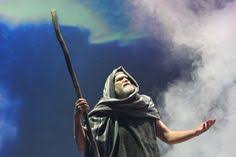
Moses looked at his right hand. Fingers wrapped around the thick shepherd’s staff, worn smooth by years of use. His mind raced. This was the tool of his trade. A staff for protection. A staff for balance. A staff for herding. Just a stick.

I wonder at that moment if Moses saw a flash of something more ominous in the staff he held. He was once a prince of Egypt. Perhaps, in that moment, the staff served as a symbol of all that had gone wrong in his life. The perfect manifestation of his failure. He had traded a scepter for a shepherd’s crook so he could herd a flock of sheep that weren’t even his. As he heard God ask his question, “What is in your hand?” Perhaps Moses felt unworthy, certain that God could choose a better man.

Moses swallowed the lump in his throat and said simply…

“A staff.”

Nothing more. Nothing less. An old tree branch whittled and shaped to serve his needs. God knew it could represent something new and different. He just needed Moses to see it, too.

“Throw it on the ground, Moses.”

Moses let it drop. As it bounced on the rocky soil, the staff transformed into a snake. Startled, he took two steps back and stared.

“Now, pick it up.”

As soon as Moses lifted the snake from the ground, it turned back into a staff.

Moses looked in awe at the bush.

“This,” said the Lord, “is so that they may believe that the Lord, the God of their fathers…the God of Abraham, the God of Isaac and the God of Jacob has appeared to you.”

What is in your hand?

What a great question!

I wonder how many of us have starred at the burning bush and heard the voice of God telling us, “I’ve got something I need you to do for me. It’s important. I need you to go….”

I wonder how often you have done what I’ve done and responded immediately with every excuse in the book to avoid doing what God needs us to do. My excuses sound remarkably similar to the ones Moses muttered into the face of a burning bush.

Who am I that you would ask this of me?

  • I’m not capable.
  • I’ve made too many mistakes.
  • I am no longer the man I once was.
  • I’m too old.
  • No one would listen to me.
  • They’re just going to laugh in my face.
  • Find someone else…please.

How like Moses I am at times. Too comfortable in my place. Too embarrassed of my failures. Too willing to believe my mistakes trump my potential. Too unwilling to open myself to God’s transformative power.

Then, the question comes to me just as it came to Moses.

“What’s in your hand?”

When you get down to it, that’s an intriguing question. If we’re honest with ourselves, it’s a question we’ve all heard at some point in our lives. When God asks the question, it deserves an honest look.

Scripture is filled with stories of individuals who possessed no extraordinary gifts. That which they held in their hands was ordinary. Yet, God called. When they quit making excuses, God began to use them. Consider these examples.

Gideon defeated the Midianites with trumpets and lanterns.
Samson slaughtered the Philistines with the jawbone of a donkey.
David took down Goliath with a sling and a stone.
A child with a small basket of bread and fish fed a multitude.

So I ask again, the burning bush question.

What is in your hand?

One of the greatest mistakes we make as believers in Christ is to underestimate who we are and what we have. We hold an old whittled stick…an ability to carry a tune, the skill to bake a cake, the temperament for a kind word, the sensitivity to encourage a troubled soul. Yet, we deem it insufficient, weak, small in comparison to abilities we see in others.

Then, the excuses flow. Maybe, it doesn’t matter as much exactly what is in our hand. Maybe all that really matters is, as one writer said, “how much God is in your stick.”

And, there’s the lesson Moses learned. As long as you hold on to your stick, God can’t demonstrate his power. You’ve got to throw it down. Let it go. Surrender it to God. Once God is in it, his power flows through it.

Then, your ability to carry a tune inspires. Your skill in baking brings comfort. Your kind word changes another person’s outlook on the day. Your encouragement lifts a burden from a neighbor’s shoulders. There is nothing insufficient, weak or small about that.

Whatever is in your hands, when surrendered to God, gets infused with his power that makes a difference. And, people will see what is in your hand and know that God is present in your life.

So, what is in your hand?

The truth is, I can’t tell you. It is a matter between you and God. But, know this. There is something there. God has put something in your hand. It may look ordinary to you, but it was given to you for a purpose. He has gifted all of us, placed something in our hand, to use toward the glory of his kingdom.

Whatever God has placed in our hands we are to use it. Paul wrote about it extensively.

“We have different gifts, according to the grace given to each of us. If your gift is prophesying, then prophesy in accordance to your faith. If it is serving, then serve. If it is teaching, then teach. If it is to encourage, then give encouragement. If it is in giving, then give generously. If it is to lead, do it diligently. If it is to show mercy, do it cheerfully.” (Romans 12:6-8)

I don’t know what your gift may be, but it does no one any good if you never use it. Each of us has been gifted by God so he can send us wherever he needs us to go. To do what he needs us to do. When we surrender that gift to God, when we throw it down, God’s power is alive through us.

Whatever your hand finds to do; do it with all your might. (Ecclesiastes 9:10)

An unknown poet penned a bit of prose a few years ago entitled, “It Depends Whose Hands It’s In.” It’s not Shakespeare or Byron, but it holds a pretty good message. This is how it starts off.

“A basketball in my hands is worth about $19
A basketball in Michael Jordan’s hands is worth about $33 million.
It depends whose hands it’s in.”

As one who has missed his share of lay-ups, I ask you…

What is in your hand?

The Still, Small Voice

Background: I Kings 19:11-12

Back in 2003, Natalie Gilbert, a 13-year-old girl, was scheduled to perform the National Anthem at an NBA basketball game. She had a beautiful voice and frequently sang the anthem at other public events. This time was different, though. As she began to sing, her memory failed her. The familiar words to The Star-Spangled Banner would not come.

Gilbert stood in front of the packed arena crowd and a live television audience in silence, shocked and humiliated…in front of God and everybody.

As the music played unaccompanied by words, Maurice Cheeks, then coach of the Portland Trailblazers walked up and stood beside Gilbert with his arm around her shoulders. He bent over and began to whisper the words in her ear. As she picked up the song, he stood and sang with her, a little off-key, waving to the 20,000 in attendance to join in.

Cheeks, in his compassion, cared so much for a scared girl he did not know so he whispered the words she needed to hear. “I just didn’t want her to feel alone,” he later said.

That whisper reminded me of another quiet voice directed toward a scared individual who felt all alone. I’ve written about it before.

Back on July 28, 2018, I wrote a devotional entitled, “What Are You Doing Here,” using the biblical text found in I Kings 19. Elijah, the great prophet of God called down the thunder and lightning on the false priests of Baal, demonstrating the reality of the God of creation that he served.

His little show brought out the wrath of Queen Jezebel who put a bounty on Elijah’s head. The mighty prophet lost his nerve and ran as far away as his feet would take him.

Troubled and despondent, Elijah huddled in a cave on Mount Horeb wishing for death to come when God drew him out of his despair by asking a simple question. “What are you doing here, Elijah?” God reminded the prophet that he was not finished with him yet. There was still work to do.

It was a reminder I needed at the time. (If you’re interested, you can find it in the archives of my website.  http://wordpress.drkirklewis.com/2018/07/

I found myself again in I Kings this week reading the same story. As he often does, God chose to teach me a new thing. A different lesson from the same set of verses.

Elijah huddled in the corner of his cave wrapped in a blanket of self-pity, determined to make the cave his crypt. God, in his understanding of the human soul, urged Elijah to get up.

“Go out and stand on the mountain in the presence of the Lord, for the Lord is about to pass by.” (I Kings 19:11)

Whether he climbed this mountain on purpose or by providence, God’s prophet found himself on Mount Horeb…Mount Sinai. The same mountain where God revealed himself to Moses in the lightning, smoke and thunder as he was leading the Hebrew people from captivity in Egypt.

God would again use this place to open the eyes of his servant.

Before Elijah could rise from his hiding place to do as God asked, a raging wind tore boulders from the cliff, threatening to trap him inside. An earthquake rattled the ground beneath and above him, showering him in dust and fragments of stone. An inferno scoured the landscape below him, consuming everything in its path.

Though Moses experienced God’s presence in the storm, Elijah would not find God in the terrifying display of nature’s power. But…

“…after the fire came a gentle whisper” (I Kings 19:12)

At the sound of a still, small voice, Elijah  gathered himself and walked out of the cave onto the ledge of the mountain. God opened his eyes to the possibility that there was still work to be done.

It is in that whisper that God had another lesson to teach me this week. Have you ever wondered how God speaks to us today…or even if he speaks?

God brought the consuming lightning to the altar on Mount Carmel, giving Elijah the victory over the pagan prophets. He spoke in the power of that moment.

Bold.

Brash.

Brilliant.

We want God’s word to us to be equally clear. We want the bold and the dramatic so we can’t possibly miss what God wants us to do…what he’s trying to say to us.

Give us a burning bush.

Manna from Heaven.

A whirlwind.

But God is not always into the bold and dramatic. He’s not always making the big splash that we want him to make. The voice does not call out to us from the clouds, “This thou shalt do…,” though that would be infinitely easier on us.

God’s word is not always dramatic. Sometimes, its a whisper.

Silent.

Soft.

Subtle.

The contrast of the tumult outside the cave and gentle murmur tickling the ear reminds me that God speaks most often in his way. If we only wait for God to speak to us in the extraordinary and uncommon, we will rarely hear his voice in the ordinary and common moments of life.

If we’re waiting for the king’s proclamation following the blast of trumpets and the shout of angels, we will miss the stifled cry of a baby, wrapped in ragged clothes and laying in a manger of smelly hay.

If we’re waiting for the battle cry of rebellion against the forces of evil, will will miss the soft voice from the cross, “It is finished.”

If we’re waiting for God to stand outside the tomb and shout, “I’m back!” we’ll miss him quietly asking us, “Whom do you seek?”

How does God speak to his people today? With every tool at his disposal from the miraculous to the mundane, I know he has many ways. This story of Elijah tells us just one. But, this one way, I believe, is his most prominent way, of speaking to me. I’ve found it to be true in my life.

God speaks to me in the still, small voice inside my heart and head. It is the voice that tells me that person at the table with the sad eyes needs to hear a word of encouragement. The man with the angry face needs my presence today. That homeless man on the corner could really use that $20 in my wallet. That child sitting alone at lunch needs me to sit with them for a while. MY wife needs a hug today.

God speaks through the unseen actions of his people. The random and intentional acts of kindness that provide meals for the family of the one with cancer. With every tree cleared from a stranger’s driveway in the aftermath of a devastating storm. With every step of progress made toward social justice that makes a nation better than it was before. God speaks through his people in the every day, nitty-gritty reality of life.

God speaks to me through the quiet voice of his spirit that guides me down a path I would not otherwise choose because he knows that place is the best place for me to be.

It is less important how God speaks to us than what we do with what he says.

The voice that whispered to Elijah is the same voice that whispers to me and you. We have an opportunity Elijah didn’t have. Elijah could not look upon the Lord. He was not permitted.

Because God became flesh and dwelt among us, because he lived, died and was resurrected, because Jesus words were written in scripture and made available to all of us, we can see and hear the one who speaks to us by reading his word, hearing his voice pour out of the printed page and into our hearts.

I think back on the times of my life when I stood frozen at center court, unable to speak or move. Amid the awkwardness, God’s voice whispers in my ear a word of purpose and encouragement, giving me the words to sing. As my faltering voice catches in my throat, I hearing him sing the words beside me.

God could speak to me in the thunder and lightning, but I find comfort and peace in the whispered words of a God whose compassion runs too deep to leave me standing there alone.

So, when you can hear nothing else, listen. Listen for the still, small voice of God.

He Went About Doing Good

Background Passage: Acts 10:28; Galatians 6:9-10; Galatians 5:22-23, 25

I no longer watch much news. And in this era of rampant social media, I carefully pick and choose the type of post I read. I find myself listening less and blocking more and more posts, not because I disagree with them, but for their tone.

Both mainstream and social media fill the air and their column inches with bad news, hateful rhetoric and intolerance. Ending each newscast with a snippet of “good news,” does little to offset the divisiveness previously portrayed.

Don’t get me wrong. I truly believe there is far more good in this world than bad. Our urgency to celebrate the good and correct the bad needs to be foremost in our hearts and minds. Yet, when you listen to the voices of the world, it seems as though no one is trying to make a positive difference. No one is doing anything good.

The offhand comment spoken by Peter to Cornelius, an inquisitive, God-fearing Roman centurion, gets buried in a lengthy narrative about the work of God through Jesus Christ. I find it crucially important, especially in today’s world. Peter said of Jesus:

“…he went about doing good…” (Acts 10:28)

Peter encapsulated the entire ministry of Jesus in those five simple words. “He went about doing good.”

He healed. He fed. He comforted. He touched. He taught. He led. He encouraged. He restored. He challenged. Along his path and in his time, lives changed.

If we are to use Jesus as our role model, then we, too, must go about “doing good.”

In his letter to the churches in Galatia…modern day Turkey…, Paul spent time encouraging their behavior toward one another. Using tender words that speak of a doctor setting a broken bone so it would heal properly, Peter talked about restoring the sinner…healing the broken. He told these early Christians that a man will reap what he sows. That one who plants the seeds of sinfulness will reap the consequences of those actions and that one who lives by the spirit of God will find eternal life.

Then, his words encouraged the believers to “do good.”

“Let us not become weary in doing good, for at the proper time we will reap a harvest if we do not give up. Therefore, as we have opportunity, let us do good to all people…” (Galatians 6:9-10)

What is this “doing good” that Paul addresses?

For Paul, doing good had everything to do with living by the spirit of God. He addressed what it means to live by the spirit in the fifth chapter of his Galatian letter.

“So I say, live by the spirit and you will not gratify the desires of the sinful nature.” (Galatians 5:16)

For all practical purposes in our doctrine of the Trinity, there is no spiritual difference in God, the Father, Jesus, the Son, or the Holy Spirit. They are one and the same. Therefore, living by the spirit is to live as Jesus lived. To live as God desires us to live.

After running a long list describing our sinful natures, Paul added this:

“But the fruit of the spirit is love, joy, peace, patience, kindness, goodness, faithfulness, gentleness and self-control.” (Galatians 5:22-23)

In other words, “doing good.” These are the attitudes of the heart that prompt our doing good. The condition of our hearts compels us to heal, feed, comfort, touch, teach, lead, encourage, restore, challenge and change lives…just as Jesus did.

Paul told the believers that these acts were not one time deeds. You cannot spend just one day loving. We must love every day. We cannot do one kind thing. We must be kind continuously. If lives are to be changed, we must make the effort always. We must keep on doing good each day we live. Paul ended this part of the discussion by saying:

“Since we live by the spirit, let us keep in step with the spirit.” (Galatians 5:25)

Walking in relationship with the Father, through our trust in the Son and the influence of his Spirit. Every step of the way.

Paul said, “Do not grow weary of doing good.” If living in step with the spirit and doing good is such a high calling why would we ever grow weary of doing good?

We may find ourselves alone in the work. Criticized by those who do not understand. We may see our good deeds rebuffed, our efforts ignored. We may lose our own enthusiasm and start going through the motions. We may be doing the work in our own strength or for our own glory. We may lose faith that God is at work. We may grow discouraged because we cannot see the results of our labor.

What it boils down to is this. We grow weary of doing good because we lose sight of the ultimate goal of our work…to draw all to Christ. It is the reason for every act of goodness and its purpose is has eternal consequences for all we encounter.

Paul’s words pull us back to what matters most in our desire to do good.

When we explore the life of Jesus, we see it at every turn. Every action had a purpose. An intent. Everything Jesus did was meant to draw someone to accept the grace gift of salvation. He healed to remedy an affliction, but he did so hoping that the healed might believe.

He comforted to ease the suffering, but he did so hoping that the comforted might believe. He fed to erase the hunger pangs of the starving, but he did so hoping that the satisfied might believe. His deeds were an extension of who he was…an extension of his faith and trust in the Father.

Our doing good, modeled after Jesus, should have the same intent and purpose. Our actions ought to reflect our faith and trust in him. Every good we do ought to meet a need, hoping that those we helped will be drawn to God. That’s the aim of doing good. And it requires us to keep our eyes on that goal.

Florence Chaddick waded into the sea off Catalina Island 21 miles off the coast of California on July 4, 1951 with every intention of being the first woman to swim to the mainland. Swimming long distances was not new to her. She was the first woman to swim the English Channel in both directions just a few years earlier.

The challenge before her was less the distance than the chilly waters of the Pacific. On the morning of her swim, a dense, thick fog descended upon the ocean reducing visibility to a mere feet. Two boats accompanied her to keep her on track and to protect her from sharks. Her mother stood in the lead boat while her trainer followed behind.

She swam for hours never seeing beyond the lead boat. After a time, Florence began to complain about the water and the cold. She was ready to quit. Her mother provided encouragement and cheered her on. Florence continued to swim. When she would lag behind, her trainer in the back boat pushed her. Soon, she said she was done, unable to swim any longer. Her mother and trainer would not let her quit.

She struggled for a time more. After 15 bone chilling hours in the sea, Florence gave up. She climbed into the boat only to realize she had quit within a quarter of a mile of the coast. Later, she told a reporter, “If I could have seen land, I might have made it.”

Chadwick returned to Catalina Island the next year to try again. Though greeted by another foggy day, she dove in. She achieved her goal this time, remarkably besting the men’s record by more than two hours. On this occasion she made it by telling herself over and over again that the land was there. She just had to keep swimming.

Here’s my take away. Do not grow weary of doing good. Keep swimming. Trust that as you live by the spirit…on the course you’ve taken…that land is not that far away. In God’s appointed time, we will “reap a harvest if we do not give up.” Our work is not for naught. God is at work in our doing good.

I’ll simply end by echoing Paul’s final encouragement to look for every chance we have to do what is good and right.

“Therefore, as we have opportunity, let us do good to all people.” (Galatians 6:10)

Seasons of Our Lives

Background Passage: Ecclesiastes 3:1-14; Ecclesiastes 1:9

It’s one of the few commercials I enjoy. Veteran actor J. K Simmons in his persona as an agent for a national insurance company, leads a client through their Hall of Claims. He describes a bizarre and unlikely happening once covered under their policy…like the Three-Ringed Fender Bender, an accident caused by a clown car rear-ending another vehicle.

He typically ends the tour with the tagline, “We know a thing or two because we’ve seen a thing or two.”

The writer of Ecclesiastes, in his infinite wisdom, had a similar thought. He had seen it all.

“What has been will be again. What has been done will be done again. There is nothing new under the sun.” (Ecclesiastes 1:9)

Solomon, the last king of a united Israel and the youngest son of David, is generally credited with writing some of the Psalms, the Song of Solomon and most of Ecclesiastes. In the beginning of Ecclesiastes, the writer is called “The Preacher” in some translations or “The Teacher” in others. His words are always instructive.

“What has been will be again.” This statement sounds pessimistic, resigned to the inevitable. “There is nothing new under the sun.”

I think it’s wisdom that comes with age where one begins to recognize how often history and life repeat. It is a wisdom that knows that nothing, and I mean nothing, surprises our God.

Shortly after the start of the riots in Minneapolis, Seattle, Portland and other major urban centers, one of my sons expressed how unsettled he felt as he watched what was happening. He recognized the validity of the protests and the need for progress in civil rights, but struggled with the violence associated with it.

I told him I felt the same way as I watched all that transpired in the 60s and 70s. The need for change was real. The destruction was a tragic waste and did more harm than good. We got through those years by taking some tough steps forward. We can and must do the same this time. There is nothing new in the unsettled feelings we’re feeling.

Pandemics come and go throughout history. Depression and joblessness recur in a cyclical nature. Periods of civil unrest lead to important social change. Hotly contested elections play out in front of us with lies, half-truths and innuendo. Whatever we are experiencing, we’ve been there before. There really is nothing new under the sun.

As life unfolds around us we learn that there is a season for all things in God’s created world. Chaos exists in our world. Resolution comes. The pattern repeats, not because God has lost control, but because that is life.

The teacher of Ecclesiastes would tell us that every thing happens in its time and that the God of the universe works within the chaos and the calm for a purpose, even when we don’t know what he’s doing or why.

Listen to the Preacher’s poetry (Ecclesiastes 3:1-8).

There is a time for everything—
and a season for every activity under heaven.
A time to be born and a time to die.
A time to plant and a time to uproot.
A time to kill and a time to heal.
A time to tear down and a time to build.
A time to weep and a time to laugh.
A time to mourn and a time to dance.
A time to scatter stones and a time to gather them.
A time to embrace and a time to refrain from embracing.
A time to search and a time to give up.
A time to keep and a time to throw away.
A time to tear and a time to mend.
A time to be silent and a time to speak.
A time to love and a time to hate.
A time for war and a time for peace.

See in the phrasing…his choice of words…the order and balance of God’s creation. The contrasting couplets give evidence that life has its seasons, its time, for all things. Yet, the couplets are not sequential. They fall randomly in the poem as they fall randomly in life. They represent the broad spectrum of life as we live it from birth to death. Not all roses and lemonade. Not all darkness and doom.

It is all we experience in the dash between the day of our birth and the day of our death. It is life. In life God grants us the time to do what he needs us to do. To experience the living…the good and the bad of it…to make memories and to have experiences that draw us closer to the God who loves us.

God wants us to spend our time wisely in that to which he calls us. Time is his gift to us. How we use it during the seasons of our life ought to matter to us because it matters to God.

Most of the time when we read or hear these verses we stop at the end of the poem. Yet, to stop at the end of the poem is accepting the vagaries of life as if the Creator set the world in motion and let it run unattended since the dawn of time.

In such a world we exist as flotsam, adrift in a placid ocean that turns stormy with each wisp of wind. To stop at the end of the poem is defeatist. Little more than life left to the arbitrary whim of a callous and uncaring god.

The wise writer of Ecclesiastes refused to believe that. He had more to say. And, to me, it is the heart of the matter.

“What do workers gain from their toil? I have seen the burden God has laid on the human race. He has made everything beautiful in its time. He has also set eternity in the human heart; yet no one can fathom what God has done from beginning to end.” (Ecclesiastes 3:9-11)

Life is a series of contrasting events…the inevitable good and bad times. It is what we do with it and the attitude we carry that makes a difference. Here’s a tremendous take away.

This verse is written by a man who has seen the hurricane hide the sunset. A man who suffered the storm and watched the dawning of a bright, new day. The older I get and the more hardships I encounter, I know that “this, too, shall pass.”

Solomon recognized that through the good and the bad of life, God “makes everything beautiful in its time.” These are words written by a man who knows that even in the darkest of nights and the deepest of despair, God is at work.

And, it’s not just an Old Testament construct. Paul said, “And we know that in all things God works for the good of those who love him, who have been called according to his purpose.” (Romans 8:28)

The ugly becomes beautiful in the hands of a loving God and that is a mystifying process beyond our comprehension…a God-worked mystery “no one can fathom…from beginning to end.” I can know God is at work without ever seeing his hand until the storm passes. That’s why we must find time in our busy days to reflect on where we’ve been and what has transpired. Hindsight is 20/20. (Aren’t we all ready to see 2020 in our hindsight.)

To Solomon, the teacher, the king, life boiled down to this. It is not complicated. It is not abstract. It is profound in its simplicity.

“I know there is nothing better than for people to be happy and to do good while they live. That each of them shall eat and drink and find satisfaction in all their toil—that is the gift of God. I know that everything God does will endure forever; nothing can be added to it and nothing can be taken from it.” (Ecclesiastes 3:14)

Ecclesiastes teaches us to enjoy God’s gifts today. Being content with life regardless of circumstance is a gift of God to those who make “doing good” a priority. Focusing our attention on doing good and enjoying life can help us accept the balance between the seasons of mourning and the seasons of dance. Between the good days and the bad.

Paul echoed the sentiment to the church at Philippi, declaring that God continually grants him the strength to find peace in every season.

“I am not saying this because I am in need for I have learned to be content whatever the circumstances. I know what it is to be in need and I know what it is to have plenty…I can do all this through him who gives me strength.” (Philippians 4:11-13)

In what season do you find yourself today? The answer will be different for each of us. Some will be at war and others at peace. Some will be keeping and others throwing away. Some will be searching and others will give up. Some will gather stones while others are scattering them to the wind.

I don’t know in what season you find yourself, but I know this. God knows a thing or two because he’s seen a thing or two. He is at work in your season and you are not alone.

When we live for him, God’s way is both manageable and meaningful. Rather than complaining about our circumstances, about the things we don’t have or the bad times we’re going through; rather than crawling in our foxholes in the vain hope that the difficulties will pass over our heads; let’s enjoy the time he has granted us to live. Let us find that which God is teaching us and celebrate it.

“There is a time for everything and a season, a purpose, for every activity under heaven.”

Somewhere in Your Silent Night

Background Passages: Psalm 69; Luke 15:1-6; Ephesians 3:14-19

On the one hand…

You can see the anxiety in the eyes behind the masks. You can sense the anguished emotions in social media posts announcing the hospitalization or death of a loved one or friend from the coronavirus.

You can feel the desperation as you drive past empty businesses, stores and restaurants representing the livelihood of people who own the establishment or work within the organization.

There is palpable unease among educators and parents at the prospects of in person school or another semester of online learning.

On the other hand…

A foreboding sense of frustration exists among those who struggle with the restrictions imposed during this time of pandemic. Their hearts, not personally touched by the tragedies caused by the virus, long for a return to normal. A cacophony of mixed messages create distrust of any word that runs counter to their hopes. They find it hard to believe in anything.

It doesn’t take a long look at social media to see that a great many people are at their breaking point. Two sides of the same coin. Both struggling for answers.

The Psalmist would understand these feelings of distress.

“Save me, O God, for the waters have come up to my neck. I sink in the miry depths where there is no foothold…I am worn out calling for help. My throat is parched. My eyes fail looking for my God…Answer me, Lord, out of the goodness of your love. In your mercy turn to me. Do not turn your face from your servant; answer me quickly, for I am in trouble. Come near and rescue me…I looked for sympathy but there was none, for comforters, but I found none.” (Psalm 69:1-3; 16-18, 30)

In a world experiencing such uncertainty, a roiling tension simmers just beneath the surface threatening to consume us. In such a place it is easy to feel out of sorts. Isolated. Lonely. Agitated. Anxious.

His undying hope in the Lord was his answer.

“I will praise God’s name in song and glorify him with thanksgiving…you who seek God, may your hearts live!” (Psalm 69:30,32)

Have you noticed that we tend to revive our hope during Christmas? Despite the issues we’ve faced during the year, the celebration of that day when hope came to live among us, changes our perspective. Sadly, for far too many, the feeling dissipates with the aging of the new year. It seems to be the case in 2020.

Maybe we need a little Christmas this July.

I’m trying to exercise more amid the weirdness going on around me. I listen to music as I walk or swim as a way of breaking up the repetitive nature of my workouts. I usually set my player on “shuffle” to get a variety of tunes. This week, for the first time, one of the songs that popped up was from a Christmas album by Casting Crowns.

When the music began playing during a recent walk, I started to click past it. It’s way too early for Christmas, I thought. For whatever reason, I let it play. I heard a song with a message too beautiful for one season.

Listen to Somewhere in Your Silent Night.

It is not hard to imagine a great many of us laboring with our thoughts as we lie in bed in the middle of the night. Minds racing. Unable to sleep. Amid the stillness and quiet, our hearts are troubled by the circumstances in which we find ourselves. A country that feels like it’s tearing itself apart. All authority questioned. People at odds with one another. A deadly and debilitating illness threatening every family. Our lives turned upside down.

In the escalating tension of our lives, it’s hard to find life’s joy and peace. As the song says, “you feel too far gone and too far out of reach.” Like the Psalmist, our broken hearts cry out for relief. We long for comfort.

The lyrics remind us that in the middle of the silence, heaven hears our broken hearts. Hope is here. Love comes to find us in the form of the baby in a manger who grew to be the man on the cross.

Here are the words that spoke so clearly during my walk.

“From heaven’s height to manger low,
There is no distance the Prince of Peace won’t go.
From manger low to Calvary’s hill
When your pain runs deep his love runs deeper still.

“Lift your head. Lift your heart.
Emmanuel will meet you where you are.
He knows your hurt.
He knows your name.
You’re the very reason that he came.”

The Bible tells it in a beautiful story in Luke of the shepherd tending his flock. As he frequently did, the shepherd counted them all to make sure none were lost. This time he found one sheep missing. Immediately, he scoured the hillside. Crawled through the gullies and crevices. Tore through the thicket of thorns. Braved the lion’s den.

He searched through the night until he found the one who was lost. Tending to its needs, he carried the animal in his arms, ensuring that no harm would come. When he placed the lamb back into the fold, he rejoiced.

God is there for his flock, but he will go to great lengths to find the lost and broken.

This is an unusual time, but none of this weirdness caught God by surprise. No matter how deep your hurt, God’s love is deeper still. No matter how lost you feel in the moment, he will never stop calling your name. In the middle of your anxiousness, his love will find you.

No. It’s not Christmas. If, however, Christmas is a time to remember our hope in the God who is ever-present in this hurting world, then now is as good a time as any to put out the Nativity and sing a few carols of joy and peace.

Now is as good a time as any to celebrate that he came and that he remains with us. Now is as good as time as any to allow God to find you where you are because you are the reason he came.

Desperate times call for desperate measures. Just call on his name and…

Love will find you.

Paul’s prayer for the church in Ephesus seems appropriate today. It is my closing prayer for you.

“For this reason I kneel before the Father…I pray that out of his glorious riches he may strengthen you with power through his spirit in your inner being, so that Christ may dwell in your hearts through faith. And I pray that you, being rooted and established in love, may have power, together with all the Lord’s holy people, to grasp how long and wide and high and deep is the love of Christ, and to know this love that surpasses knowledge—that you may be filled to the measure of all the fullness of God.” (Ephesians 3:14-19)

Amen and again, Amen.

Dancing with God

Background Passages: John 10:10; Psalm 116:13-14, Deuteronomy 30:19-20; Psalm 30:11

Have you ever noticed how you can find connections in random things? I read four seemingly unrelated things this week and found a connection I’d like to share. I hope it make sense when I put it on paper. Let’s play connect the dots

Dot One

As a part of my devotional studies this week I read a passage out of John. It is a lengthy story that is a part of the “I am…” statements of Jesus.

The man, blind since birth, dipped his hands into the Pool of Siloam as he was instructed, carefully washing the mud ball from his eyes. After he had done so, “the man went home seeing.” His rejoicing captured the attention of friends, neighbors and Pharisees. Because it was the Sabbath, a quick investigation ensued, leading the religious elite to Jesus. After a bit of verbal wrangling, Jesus explained to them…

“I have come that they might have life and have it abundantly.”

John 10:10 is one of my favorite verses, hinting at a life Jesus promises all who put their faith and trust in him. It’s hard to explain that concept to one who doesn’t believe in Christ. When we try to live life on our own it is easy to get disillusioned and disoriented. The chaos that confronts us at every turn saps the life right out of us.

Life with Christ, on the other hand, becomes worth the pain of living. Our relationship to Christ brings with it the possibility of a new joy, a new vitality, in the face of life’s troubles…if we embrace it.

Hang on to that thought.

Dot Two

My uncle, the Rev. Leslie Lewis, is the pastor of a Lutheran church in a farming community near Lubbock. One of his published devotional thoughts this week talked about taking up the cup of salvation as described by the songwriter in Psalm 116.

Leslie wrote about taking up the cup. “That’s the nature of relationship. All we can do is take the cup. The cup being life, with all its circumstances as it comes to us. For God comes to us as our life.”

Think about that for a second. “God comes to us as our life.” Life is messy, isn’t it? Disordered? Chaotic? God with us amid the chaos.

We find ourselves in a global pandemic, restricted in what we can do and where we can go. Unable to reach out and touch those we love. Even in the middle of something as broad as this, the other burdens of living don’t go away. Fractured relationships. Missing paychecks. Poor decisions. Sickness. Misunderstandings. Life easily becomes unbearable and disorienting if we let it. It is relentless in its attack. Each day brings new burdens to face. Doesn’t sound all that abundant, does it?

Leslie continued, “Sometimes we see life coming at us and are tempted to pray as our lord did, ‘If it be possible let this cup pass from me.’ But the relationship with life demands we take the cup…take responsibility for what is coming to/at us. A loving relationship with God is no more than willingly accepting the cup; the person, the circumstance of life as an invitation to dance with God.”

I love that! “An invitation to dance with God.” Abundant living is not the absence of all the issues that life throws at us for this life we’ve been given to live is both beautiful and ugly at the same time. Nor is it hiding ourselves behind a veil of religiosity.

Leslie shared that we Christians tend to hide behind pious platitudes, made empty because we don’t live the truth buried deeply inside them. “God is in control.” “God will never give us more than we can handle.” When life has us in its talons, our heart is not in them. We live on the surface of our faith, not in its depths. Hide behind the curtain of pious living.

Jesus later said as much to the Pharisees.

“You hypocrites! You clean the outside of the cup and dish but inside they are full of greed and self-indulgence. First, clean the inside…” (Matthew 23:25-26)

Taking up the cup means embracing all that life holds and finding a way to dance our way through it with the Father. Leslie added, “Life is not for sissies. Those who only want to play it safe will never know the riches of his love.” Never know what it means to live the abundant life.

Hold on to this dot and let me take you to another.

Dot Three

I picked up a book this week from my personal library which I have not read in more than 45 years. Dancing at My Funeral, written by Maxine Dunnam in 1973, is about the joy that comes in the present from living an authentic, Christ-filled life.

In her book, Dunnam argues that the thirst for real life is as old as creation itself. That God built within us the desire to experience life at its fullest…in abundance. In Deuteronomy, God, through Moses, tells the Hebrew people…

“I have set before you life and death, blessings and curses. Now, choose life so that you and your children may live and that you may love the Lord your God, listen to his voice and hold fast to him. For the Lord is your life…” (Deuteronomy 30:19-20)

Dunnam writes, “Here ‘life’ and ‘death’ don’t signify ‘existence’ and ‘nonexistence.’ Rather, they hold a promise that existence can be enriched and thereby become real life.” Authentic life. Abundant life. “You can have a dead life or a real life—one that is lived in confidence, hope and gratitude.” And, if we’re truthful, we’ve all known Christians who were the “walking dead,” those who allowed life to suck the joy out of their relationship to God. That’s not what God intended.

Like my uncle, Dunnam argues that Christians tend to cloister behind the walls of the church or wrap ourselves in the cloak of spirituality to avoid the hazards of the world. Dunnam says real life is not in the avoidance of problems, but in our dynamic relationship to God. Staying connected to him while facing the world as it comes and ministering through the problems and the pitfalls. Abundant life is God’s gift in the middle of the messiness of life.

God offers us the same as he offered the Hebrew children. Choose life! Choose abundance!

Dot Four

Real and abundant life is an experience. The work of God is making us real. In the story of the Velveteen Rabbit, written by Margery Williams, the worried rabbit is told by the wise old Skin Horse that it takes a long time to become real.

“It doesn’t happen to people who break easily, or have sharp edges, or who have to be carefully made. Generally, by the time you are real, most of your hair has been loved off, and your eyes drop out and you get loose in the joints and very shabby. But these things don’t matter at all, because once you are real you can’t be ugly, except to people who don’t understand.”

God’s call to abundant living is a call to love and serve others. Those acts of service will often leave us with hair loved off, eyes dropped out and a little loose in the joints. You may look ugly in the sight of the world, but they don’t understand. God loves our mangy, bug-eyed shabbiness that comes from an abundant life of sacrifice.

Connect the dots

What does abundant life mean to me? It means desiring the fullness of life that only a relationship with God can provide. Willingly serving and loving others. It means embracing our cup…this life…as it comes with all its joy and despair…all its turmoil and tests…all its passion and grace. It means to choose this life…to love God, to listen to his words and hold tightly to him at all times. It means living a real, authentic faith evidenced by a cup as clean on the inside as it is on the outside. It means full joy and contentment in a relationship with a loving Father.

It means dancing with God.

“You have turned for me my mourning into dancing; You have loosened my sackcloth and girded me with gladness.: (Psalm 30:11)

Our Season of Uncertainty

Background Passage: John 20:19-21

Easter lies just around the corner. I began this week reading the extraordinary verses about Jesus’ journey to the cross, his death and his resurrection. The meaning of this time of year goes straight to the heart. I found something new as I read about the days between the cross and the resurrection. A word that has a message for us in this most unusual time of life…the season of uncertainty.

As we’ve moved from a period of self-quarantine to mandatory stay at home, we have seen the Covid-19 virus continue to spread across the country and across the world. The number of cases rise every day. The situation leaves us…

…uncertain

…isolated

…troubled.

…no longer in control of our circumstances.

Everything that is routine in our world has been turned sideways and upside down. Such disruption impacts each of us differently, depending on our personalities and our life situations. We know one thing for sure. Nothing is normal.

Those of us who profess faith in God know in our hearts that he is still in control. That while our lives have been temporarily and, in some cases, tragically changed, God has not changed one iota…the same, yesterday, today and tomorrow.

We have spent the last several weeks trying to figure out how to response and live faithfully amid this pandemic. Join me in the upper room. There are lessons in its shadows.

Jesus followers found their life irrevocably changed after they laid Jesus in the tomb. Everything that was routine in their world was turned sideways and upside down. Some of them claimed they had seen the risen Lord, scarcely believing their own eyes. The others dared not hope.

They heard rumors that the Jewish authorities were preparing to arrest any follower of the man they had crucified. So, they locked the doors. Shuttered the windows and rarely ventured outside the walls of the upper room.

The situation left them…

…uncertain.

…isolated.

…troubled.

…no longer in control of their circumstances.

What we know from scripture is that nothing that was happening was normal.

“On the evening of the first day of the week, when the disciples were together, with the doors locked for fear of the Jews…”

Does it sound familiar? In the days following Jesus’ death most of the disciples found themselves in self-quarantine, huddled together in the upper room with a few other faithful followers of Christ. It was not a comfortable time for any of them.

I find my first lesson in this description, “…when the disciples were together…” They were able to quarantine together, locked away in the upper room…but, they were together. They found some comfort in contact with each other.

Certainly, the same applies to us. While we’re isolated in our homes, physically separated from friends and family, we have the great luxury of technology that keeps us connected…that allows us to stay in touch with one another. Telephone calls. Cards. Social media posts, Facebook messaging. Text messages. Facetime.

The point is there are many ways to reach out to friends and family other than through work, play, social gatherings or church. We can sit back and fret over our lack of touch or we can connect differently. No person within our community should go without some contact on any given day. Think about those who are truly alone. Make that a priority in your life to find ways to “be together.”

“…Jesus came and stood among them and said, ‘Peace be with you’…”

Jesus appeared to the disciples because they needed to see him. They needed to feel his presence. They needed the peace that only he could give them. Imagine how calming those words were when uttered by their Messiah.

It should come as no surprise to us that Jesus, through his Holy Spirit, stands in our midst during our most trying times. How easy it is for us to forget this central truth of the Bible. God is with us. His presence brings peace in the middle of any storm…or pandemic.

“After he said this, he showed them his hands and side. The disciples were overjoyed when they saw the Lord.”

Peace brings joy. When Jesus came into their midst, a sense of calm came over them. In that moment, sorrow and uncertainty became pure, unadulterated joy. When they were in the presence of their Lord, their worries disappeared.

It’s hard to imagine in today’s circumstances that we can find joy. We find joy in the presence of the Lord. We bask in the inner contentment knowing that we belong to him.

“Again Jesus said, ‘…As the Father has sent me, I am sending you.”

Jesus did not want the disciples to let fear overwhelm them. He knew they could not stay locked away in the upper room forever. He needed them to do the things he called them to do. They had a purpose and he needed them to get on with it.

I know this take away from John is not what was intended. It is a message that reminds us that we serve a resurrected and living savior who died as an atonement for sin for all who put their faith and trust in him. That’s the gospel…the good news…of Jesus Christ.

I also know that the Holy Spirit can bring a secondary application to even the most straightforward of passages.

Being sequestered in our homes for a time undetermined does not mean our ministry ends. I suppose it might even open doors we might never have seen. Jesus stands with us, offer his peace and tells us he is sending us still to do his work.

I don’t know where or how God will use me and you during our unusual season, but I know he is sending us to bring a sense of certainty to the uncertain…to be a point of connection to the isolated…to offer a virtual hug and a word of comfort to the troubled.

God calls us to remind those who feel they have lost control of their lives that God is still on his throne…that he remains in control and will continue to work through us to bring good from the bad that threatens us.

And to that I say, “Amen.”

*****

Author’s Note: When we can do little else, we can pray for the strength and safety of the health care workers and all those who continue to work those jobs that provide needed and necessary services to the rest of us. Pray for those who have lost loved ones and for those who are sick. Pray for the families who cannot visit a loved one who is in the hospital. That time of separation makes everyone anxious. Pray for wise decisions and solutions to resolve and lessen the impact of the coronavirus and the economic burden it brings. Pray for anyone you know who lives alone. Pray that God’s church emerges on the other side of this with a renewed enthusiasm for being the heart, hands and feet of God in our world.

Reach out through any means available to you to stay in contact with one another. Love one another.