Treasuring and Pondering

Focal Passage: Luke 2:19

Mary, did you know
that your baby boy would one day walk on water?
Mary, did you know
that your baby boy would save our sons and daughters?
Did you know
that your baby boy has come to make you new?
This child that you delivered
would soon deliver you.

Those words written by Mark Lowry, a comedian, singer and songwriter long associated with the Gaither Family, are the first stanza of what has become my favorite Christmas song. Many artists have recorded it since it was written, but Lowry sings it with unequaled passion.

In the bridge, Lowry’s words to Mary speak of the work of Christ in a building crescendo.

The blind will see.
The deaf will hear.
The dead shall live again.
The lame will leap.
The dumb will speak.
The praises of the lamb.

The as the song closes, the words ask Mary one last question before providing the resounding answer.

Did you know that your baby boy
Is heaven’s perfect lamb?
The sleeping child you’re holding is the great I AM!

Mary, did you know?

*****

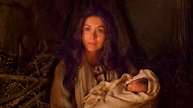
The young mother listened to the hearty giggles of her toddler as the boy’s father tossed him playfully into the air, catching him with calloused hands. She laughed to herself as this manly carpenter cooed in baby-speak. She shook her head in awe and returned to the preparation of the evening meal.

The routine task of grinding the wheat into flour for the evening bread freed her mind once again to reflect on the life God had given her.

Luke, the Bible’s historian, put it this way.

But Mary treasured up all these things and pondered them in her heart. (Luke 2:19)

Mary, did you know?

That one little verse, often overlooked, comes at the end of the beloved Christmas narrative. Long after Jesus’ birth, long after the shepherds returned to their fields and flocks, Mary treasured and pondered.

Mary, did you know?

Long after Jesus’ dedication when Simeon praised God for allowing him to see God’s salvation, Mary treasured and pondered.

Mary, did you know?

Long after Anna, a prophetess who served in the temple, took one look at Jesus and told everyone who would listen that this was the child who would bring redemption to Jerusalem, Mary treasured and pondered.

Long after the wise men found a new route home, Mary treasured and pondered.

Mary, did you know?

On that day I imagined, as Mary kneaded the dough and Joseph and Jesus played, what did she treasure? What did she ponder?

Think back to the night the angel told Mary what God planned for her. She would bear a son who would be the Son of the Most High; a son who would reign over the House of David forever. Later, her aunt Elizabeth, filled with the Holy Spirit, reaffirmed the miraculous birth as she called Mary blessed among all women.

Through an immaculate pregnancy and an ordinary birth, Mary saw it all come true, just as God promised. In those first few years, surely the whole experience seemed surreal, almost beyond belief. Mary took it all in. Tried to make sense of the inexplicable. She treasured and she pondered.

The Greek verb translated treasured in this passage doesn’t mean to just remember. It means to carefully preserve, to guard or keep something alive for future understanding.

You and I have had 2,000 years of history. We can hold God’s word in our hand and read the unfolding of his redemptive plan that began its climactic work in a Bethlehem manger.

Two or three years after that day, Mary was still trying to wrap her arms around it. So much of what happened must have seemed to her a mystery. So, she kept the experience in her heart as she watched her child grow, keeping her experience real and alive, hoping to one day understand the how and why?

Mary not only treasured, but she pondered.

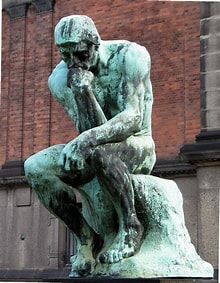
Thinking is a broad, general process that tends to be quick and practical. I think about what I’m about to do. Pondering takes thinking to a completely different level. Most of us are thinkers. We don’t ponder enough.

Pondering implies lingering thought. Unhurried. Contemplative. Reflective. Inward. When one ponders one weighs significance. Turning something over and over in your heart and mind, It implies a sense of awe and wonder, seeking to find personal meaning.

The Greek word Luke uses in this passage translated as ponder means to actively bring things together. To compare and contrast. To wrestle with a thought toward understanding. That’s different from daydreaming or passively reflecting on something.

You see, Mary, like any mother, carried fond memories of her child’s birth. The journey from Nazareth. The discomfort of a donkey ride. The worry about finding a place to stay in a crowded city. The pain of childbirth. The pure joy of holding her son in those first magical moments. That’s the precious memory of motherhood.

When Mary pondered, she intentionally reflected on all that was said and all that happened, trying to fit the pieces together. Wrestling with its meaning. Mary wanted to make sense of what felt unexplainable. Mary looked at everything she had experienced to that point…everything we understand as our Christmas story…and treasured and pondered what it all meant.

Mary, did you know?

To her credit, Mary never demanded immediate understanding. Never insisted that if God wanted her participation, he needed to read her in fully on the plan. Mary thought about it…a lot…I imagine. Despite not fully grasping the significance or the how and why, Mary accepted her role in God’s plan with such deep faith and trust.

There it is! In the middle of Mary’s treasuring and pondering lies the lesson I needed as the Advent candles are snuffed out and we pack away the manger for another year.

On this side of Christmas, what do we know? What must we treasure? What must we ponder?

God is at work in my life. He has been at work, is now at work, and will be at work in my life until the day he calls me home. I truly believe that. I have a tendency, though I suspect most of us do, to demand from God an immediate explanation for the things happening in my life…good or bad. I tend to pray for answers before I am willing to act.

I test. I don’t always treasure.

I think. I don’t always ponder.

Mary trusted that God was at work in and through her life, even if she didn’t always know why or how things were going to work out. Her faith held on to and accepted the mystery rather than disregarding it, or worse still, trying to change it. Most importantly, Mary trusted that understanding would come with time and obedience. Her role was to keep listening and waiting…as long as necessary.

I need to learn that faith often means actively treasuring and guarding God’s promises that have not yet been resolved with clarity. To hang on to his word. To keep it viable and constantly in my thoughts for future understanding. To be obedient to it without trying to bend it to my will. To trust that the day will come when he opens my eyes to see with reverence and wonder how he has moved throughout my life.

Mary understood that God’s work in her life required spiritual attentiveness…a whole lot of pondering if you will. Most of the life’s lessons God teaches me require me to wrestle with them until what he is trying to teach me starts making sense. He asks me to dig deeper. To seek his truth. The water of life rarely comes from a shallow well.

Treasuring and pondering take time. What God begins in our lives one day will unfold, but it will unfold in his time, not instantly, but when the time is right. He asks us to wait faithfully on his timing. That’s never easy to do.

When God’s work surpasses our understanding, we are invited…like Mary…to treasure and ponder his work in our lives.

That seems to be the perfect message for the coming New Year.

I will mediate on your precepts and will fix my eyes on your ways. (Psalm 119:15)

Thinking (Pondering) Points

What has God done in my life recently that I need to slow down and ponder?


What practices in my faith walk help me treasure God’s work instead of casually dismissing it?


In what ways does Mary’s quiet, reflective faith challenge my tendency to seek quick answers?


How might God be shaping me during times when he asks me to wait and reflect rather than act?
The Prophets’ Christmas

Focal Passage: Isaiah 7:14 & 9:6-7; and Micah 5:2-5

It’s the Christmas season. The time when God stepped into the world with love, grace, humility and hope.

Through the years, I’ve written about Christmas from every angle and angel. I’ve studied the coming of the Messiah through the eyes of his earthly parents, the shepherds, the magi, and paranoid Herod, a priest name Simon and an elderly, devout woman named Anna. I’ve even written a more fanciful piece about the birth of Jesus from the eyes of a lamb.

As I looked to begin my study this year of the moment God sent his son into the world, I want to look at that moment from the eyes of the Old Testament prophets.

Scripture teaches that the moment God opted to grant humanity free will, he knew we would use that freedom to rebel against his plan for our lives. From the beginning of time, then, God had to find a way to bring his lost children back to him, despite the spiritual abyss we would create between us and God by our sinfulness. Before he put the world in place and set it spinning on its axis, he planned on Jesus.

Look at what Paul tells Timothy.

He has saved us and called us to a holy life—not because of anything we have done but because of his own purpose and grace. The grace was given to us in Christ Jesus before the beginning of time, but it has now been revealed through the appearing of our savior Christ Jesus who has destroyed death and brought life and immortality to light through the gospel. (2 Timothy 1:9)

Redemption was not an afterthought or a Plan B. It was purposeful and intentional. Therefore, God needed to convince us of our need for him and introduce to us the one he would send to show us the way home.

Enter the prophets. As God gave them words to speak, he wove through their prophecies a thread of redemptive hope with its beginnings in a Bethlehem manger.

The prophets lived centuries apart from one another. They lived amid completely different circumstances. Led different lives. Wrote in different eras. Served up judgment on a platter to different kings. They spoke God’s word of divine judgment, repentance and restoration to different generations.

Much like the blind men discovering an elephant, each prophet understood God’s Anointed One in part, but never in whole.

They never met Mary or shook the hand of Joseph. They never heard the angels sing. They never walked the streets of Bethlehem. They never felt the joy the shepherds felt. Never marveled alongside the magi. Never held the baby in their arms. Never saw what they foretold come to pass.

Yet, thanks to a revelation from God’s spirit, they all pointed in somewhat different ways to the same moment; to the same someone. They saw who he would be. Knew what he would do. Understood the titles he would carry. They all spoke of Jesus, even when they never knew his name.

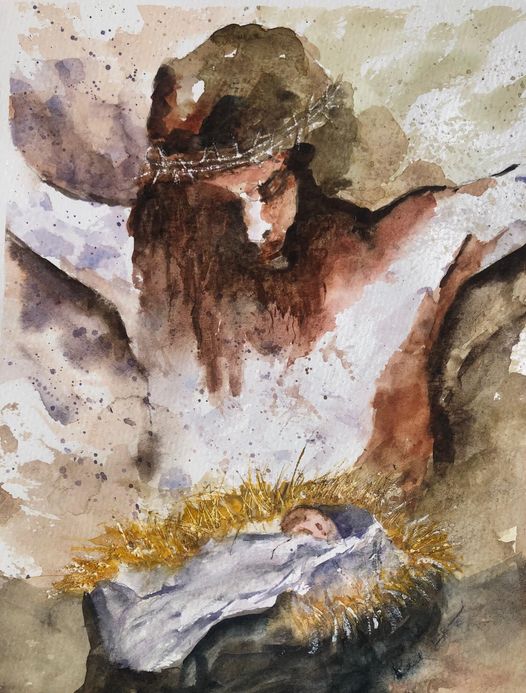
And on the night Jesus was born, their words—scattered across centuries—were suddenly fulfilled in the form of a swaddled infant, in the outskirts of an obscure village, in a makeshift crib filled with hay.

The Word became flesh and made his dwelling among us. (John 1:14)

That moment began the fulfillment of every prophetic word spoken for hundreds of years prior to that first Christmas morning.

Isaiah’s Whisper

The prophet Isaiah’s prophetic message almost 750 years before the birth of Jesus came at a time of national fear. His people faced a looming and hostile invasion, political collapse and spiritual confusion. In that sense, Isaiah’s words feel like a quiet voice spoken in a dark moment. Almost a whisper carried to people who were afraid of and unsure about the future.

While he warned of judgment and called for repentance, he promised that God had not forgotten them. He shared with them the hope of the Messiah and the arrival of the kingdom of God. Isaiah spoke about a miraculous moment in time.

A virgin will conceive and bear a son; and they will call his name Immanuel. (Isaiah 7:14)

God’s message through Isaiah didn’t stop there, as if the miraculous birth was the climax of the Creator’s eternal work. God revealed to his prophet another nuanced layer.

To us a child is born, to us a son is given, and the government will be on his shoulders. He will be called Wonderful Counselor, Mighty God, Everlasting Father, Prince of Peace. Of the greatness of his government and peace there will be no end. He will reign on David’s throne and over his kingdom establishing it and upholding it with justice and righteousness from that time on and forever. The zeal of the Lord Almighty will accomplish this. (Isaiah 9:6-7)

Isaiah’s prophecies waited for more than seven centuries. On the night of Jesus’ birth, his words were no longer ink on faded parchment. His words were a baby, born to a faithful carpenter and young woman whose heart found favor with God.

Micah’s Confidence

The prophetic ministries of Isaiah and Micah overlapped in time and circumstance. Micah saw the same corruption in Jerusalem. Felt the same fear of an Assyrian invasion. Yet, he confidently condemned the injustice he saw among leaders and spoke of the pending judgment upon a people who had turned their backs on God.

He stood in the gap and told the people that, despite the hardships to come, God promised a future ruler from Bethlehem who would be their good shepherd and herald a time of peace. This “messianic hope” appears especially in Micah 5:2–5, spoken as reassurance that God would raise a true king after Israel’s failed leadership. Look at the words God gave him to speak.

But you, Bethlehem Ephrathah, though you are small among the clans of Judah, out of you will come for me one who will be ruler over Israel, whose origins are from the old and ancient times. He will stand and shepherd his flock in the strength of the Lord, in the majesty of the name of the Lord his God. And they will live securely, for then his greatness will reach the ends of the earth. And he will be our peace… (Micah 5:2, 4-5)

For generations, the small and unimpressive village of Bethlehem sat unnoticed in the Judean hillside, but God, 700 years before, had written its future. Bethlehem would play a role in God’s plan through the cries of an unlikely king and the redemptive work of Jesus Christ.

Though many other prophets shared God’s word about the ministry and mission of the coming Messiah, Isaiah and Micah are the only two who described details of his birth. Did any of these prophets fully understand the whole picture? I doubt it.

Do you remember when Jesus sent his disciples throughout Galilee, telling them they would be given power to preach and to heal in his name? They returned from that first century mission trip amazed how God had used their preaching and ministry to bring salvation to so many people.

After praying a prayer of gratitude to the Father for the work they had done, Jesus, filled with joy, pulled his disciples aside. Listen to what he told them.

Then he turned to his disciples and said privately, “Blessed are the eyes that see what you see. For I tell you that many prophets and kings wanted to see what you see, but did not see it; to hear what you hear but did not hear it. (Luke 10:23-24)

So, if the prophets never saw or heard the whole picture, why do they matter? Why do the partial images they revealed about Jesus’ birth and life and death and resurrection matter to you and me on this side of that first Christmas?

It matters because Christmas is not an isolated event. It is the beginning of the rest of the story.

Every promise—
every symbol—
every sacrifice—
every prophecy—
every hope—

pointed toward Bethlehem and Immanuel, God with us.

The prophets did not live to see it, but you have. Listen to John’s words again.

The Word became flesh and made his dwelling among us.

Then, look again at the words of Jesus.

Blessed are the eyes that see what you see. Blessed are the ears that hear what you hear.

You see, Isaiah’s world was not a lot different from our own. Hostility. Political uncertainty. Spiritual confusion. His words still feel like a quiet whisper spoken in a dark moment to people unsure of the future.
His message does not change.

To you a child is born. To you a son is given.

Can you see it? Can you hear it?

That’s Christmas!

If you are a believer in Christ, the prophets words link the past to your present. God’s promises are your truth. They are confirmation of God’s plan of redemption through the baby in a manger who grew to be your substitute on a cross–the living and resurrected Jesus. You are blessed to have seen what you have seen and heard what you heard.

If your Christmas lacks the meaning you see in those who believe, the visions of the prophets are your markers. The waypoints on a spiritual journey that will reveal the depth of God’s love for you in the truth of Jesus Christ. The promises of the prophets are fulfilled in Jesus. Their longing can be your joy as it is mine. See it. Hear it. Your blessing awaits.

Let this be our Christmas prayer for 2025.

“Lord, thank you for speaking through the prophets and for fulfilling every promise in Jesus. Let the hope that sustained them also sustain me. Teach me to trust your timing and rejoice that your Word always becomes flesh. Amen.”

Thinking Points

How does thinking about Christmas through the voices of the prophets deepen your understanding of God’s long-planned redemption?


How has the Word “become flesh” in your personal story? In what ways has that baby in a manger changed your heart and your world view?


What keeps me from recognizing the blessings I already “see and hear,” blessings the prophets longed for but never experienced?


How might embracing the continuity between the prophets’ longing and Christ’s coming reshape the way I enter this Christmas season?

You Are What You Think

Background Passages: Psalm 1:1-4, Jeremiah 17:7-8, Philippians 4:8, and 2 Corinthians 10:3-5

The route we typically took to my parents’ house from Pasadena to Ropesville was honestly not the most scenic drive. While there is something to be said for the stark beauty of the endless highway and cotton fields, the trip that we took countless times was little more than the occasional mesa, a random Dairy Queen and a lot of flat, empty space.

I recall making that drive early in our marriage before children as we sat in silence while the country droned by. I felt Robin’s eyes on me long before she asked the question every husband dreads.

“What are you thinking?”

Every husband knows my response. “Nothing.” Also, as every husband knows, that’s exactly what I was thinking in that exact moment and in most moments of solitude. Absolutely nothing.

Comedian Mark Gungor would say, “I was in my Nothing Box.” (If you’ve never seen that YouTube video about how the brains of men and women work, it’s worth the view.)

The Bible talks a lot about our thought life. Though it’s slightly out of context, Solomon lets us know in Proverbs 23:7 that “As a man thinks, so he is.”

In other words, you are what you think. Whatever we choose to concentrate on, spend our time thinking about, will impact the way we choose to live.

Hear the instructive word of the Psalmist.

Blessed is the one who does not walk in step with the wicked or stand in the way sinners take or sit in the company of mockers, but whose delight is in the law of the Lord, and who meditates on his law day and night. That person is like a tree planted by streams of water which yields its fruit in season and whose leaf does not wither—whatever they do prospers. Not so the wicked. They are like chaff that the wind blows away. (Psalm 1:1-4)

As the opening hymn of the Psalm, the passage answers some amazingly deep questions about life. Who am I going to be? Who is God? Where can I find true contentment and happiness? What road should I take in life? What is my purpose?

It is a call to be blessed. To find contentment and joy, regardless of life’s circumstances. The passage puts us squarely in the middle of the fork in the road. The first path is walked by the wicked, the sinners and the mockers of all that is holy.

Jesus might have called it Broadway. He said in Matthew 7:13, “…For wide is the gate and broad is the road that leads to destruction, and many enter through it.”

That first step down the path of the wicked and the way of the sinner always begin with a thought, an idea, a desire that pops in our head that entices and seduces us. We begin to think walking that path would be so much more fun, so much more profitable, so much more popular, that we can’t help but start the journey. As we think, so we are. It doesn’t take long for our thoughts to take hold in our hearts. Now, instead of just thinking about things we shouldn’t, we’re doing them.

Sadly, Paul and I have much in common on this point. I suspect most of us do.

I do not understand what I do. For what I want to do I do not do, but what I hate I do…For I know that good itself does not dwell in me, that is, in my sinful nature. I have the desire to do what is good, but I cannot carry it out. For I do not do the good I want to do, but the evil I do not want to do–this I keep doing. (Romans 7:15,18-19)

We won’t find contentment on the broad road described by Jesus or the way of the wicked described by the Psalmist. Rather, we’ll end up feeling more and more like Paul. We don’t intend to walk that path, but the world makes it look easy and appealing.

Blessedness (joy and contentment) comes, according to Psalm 1, when we don’t follow in the footsteps of those who do evil or take the path sinners take or travel among the scoffers who know nothing of God and his grace or goodness. It is the road to destruction…to chaff. An existence in which we are blown in whatever direction the wind blows. Never truly grounded. Always acting on a whim.

The Psalmist said the one who is blessed will find a different road to travel. In that same passage in Matthew, Jesus tells us to use the narrow gate and the “narrow road that leads to life and only a few find it.” As Robert Frost said, “…the road less traveled.”

Blessedness flows to the one whose “delight is in the law of the Lord, and who meditates on his law day and night.” Delight is a heart response to something or someone of beauty and value, in this case, God’s word and its truth. The word “delight” is used typically in scripture to describe the life in which God’s purpose and choice are in view.

It is joy, pleasure and satisfaction that comes when we abide in his word and will. Such delight comes only from delving deeply into scripture, finding its relevance for our lives and acting daily upon it.

The one who thinks only about the truths and promises of God found in his word is the one who walks in the path of the righteous and stands in the way of the faithful or sits in the company of those who trust in God’s word. You see, as a man thinks, so he is.

If we think of the things of God, those will be the attributes ingrained in us. It is an immutable truth repeated time and time again in scripture.

Since, then, you have been raised with Christ, set your hearts on things above, where Christ is, seated at the right hand of God. Set your minds on things above, not on earthy things. (Colossians 3:1-2)

Then, look at what Paul tells the Philippian church about the way we ought to think.

He begins the passage by exhorting his readers to “rejoice.” To find joy. To find contentment. To find a peace that “transcends all understanding…” Then, he tells them how.

Finally, brothers and sisters, whatever is true, whatever is noble, whatever is right, whatever is pure, whatever is lovely, whatever is admirable—if anything is excellent or praiseworthy—think about such things. Whatever you have learned or received or heard from me, or seen in me—put it into practice. And the God of peace will be with you. (Philippians 4:4-8)

Paul expresses in such a beautiful and poetic way how our thoughts ought to be directed.

Jesus even alludes to it in his Beatitudes when he says, “Blessed are the pure in heart, for they will see God.”

Given that the heart was viewed in the Jewish culture as the center of thought and will, Jesus says those whose thoughts are pure, whose motives for every decision are aligned with God’s word and will—these are the souls who will see God at work in their lives. These are the folks who find God in every circumstance of life—good or bad.

You are what you think.

Paul shared one more thought in his second letter to the Corinthian church which feels applicable here.

Though we live in the world, we do not wage war as the world does. The weapons we fight with are not the weapons of the world. On the contrary, they have divine power to demolish strongholds. We demolish arguments and every pretension that sets itself up against the knowledge of God, and we take captive every thought to make it obedient to Christ. (2 Corinthians 10:3-5)

Don’t you love that last phrase?

…take captive every thought to make it obedient to Christ…

The Greek word used for “take captive” means “to control, to conquer, to bring into submission.” We bring into submission every thought so that it conforms to the teachings of Christ. We conquer our tendency to dwell on things we shouldn’t be thinking about. We control those wicked thoughts by not letting them take root in our heart and soul.

The good news is that the Psalmist tells us how to do this.

We take captive our thoughts ”by meditating on the law day and night.”

Our hearts desire must be to embed ourselves so deeply in God’s word and all that it teaches us that we have little time to think of anything else. To be so grounded in scripture, that every temptation is answered by the Spirit’s whispered reminder of what has been taught us through God’s word…just as Jesus refuted every temptation from Satan with a word from scripture.

It’s not enough to just hear scripture read to you in Sunday School or from the pulpit. We need to spend time during the week studying God’s word, especially when the pervasive garbage of the world tries so hard to infiltrate our every thought.

The Rev. Charles Spurgeon said, “A Bible that is falling apart usually belongs to someone who isn’t.”

I’ll revert to the Proverbs, an ancient equivalent to the modern day “garbage in, garbage out.” Proverbs 15:14 says that “A wise person is hungry for knowledge, while the fool feeds on trash.”

You are what you think.

I like the idea the Psalmist conveys when he says what it is like to be one who immerses himself in God’s word.

That person is like a tree planted by streams of water which yields its fruit in season and whose leaf does not wither—whatever they do prospers.

Jeremiah shares a similar thought.

Bless is the one who trusts in the Lord, whose confidence is in him. They will be like a tree planted by the water that sends out its roots by the stream. It does not fear when heat comes; its leaves are always green. It has no worries in a year of drought and never fails to bear fruit. (Jeremiah 17:7-8)

You must love this tree metaphor as much as I do.

Notice that the tree is planted by the stream. It didn’t grow up there on its own accord. It was planted. Planted means to cause to take root. The Hebrew word used here more closely translates as “transplanted.” To cause to take root after moving from one environment to another more suited for growth.

I love that idea in the context of this Psalm that talks about the way of the wicked opposed to the way of the righteous seen in the one who dwells in God’s word. That person is transplanted from the path of wicked, the sinner and the scoffer to live and grow next to the living water found in God’s word through Christ Jesus.

A tree’s roots run deep, searching always for the moisture and nutrients that fuel its growth. The deeper its roots go, the more sturdy and stable it becomes , more capable of withstanding any wind that blows. (In contrast, it takes very little wind to blow away the chaff.)

That’s how it is with one grounded deeply in scripture. She finds the spiritual water and nutrients to grow and mature in Christ. And, like the tree, that kind of growth takes time. We live in a time of instant gratification, but the Christian life is a process of growing and learning. Each minute we stop looking to the Bible for our strength is a lost moment in our spiritual lives.

Notice also that the tree yields fruit. Our time spend in studying God’s word will always point us to ministry and service. It is the understanding of what God requires of us that propels us to care for and serve others.

The message of this Psalm hit me squarely between the eyes this week.

You are what you think.

As we walk through each day, let’s meditate on God’s word…day and night. Think about the things of God. When we do, it’s so much easier to…

Be the tree.

Drink This Cup

Background Passages: Matthew 20:20-23, Ezekiel 23:33, Psalm 116:13, Psalm 23:5-6

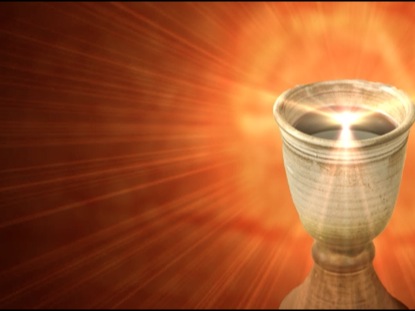
“Drink this cup…”

It was a phrase that tickled my ear several weeks ago during our last celebration of the Lord’s Supper. I wasn’t sure why. I had heard it for years. Understood it, I thought, in it’s context. Yet, it kept whispering to me. Maybe it’s time to listen.

The phrase is not unique to scripture. In an ancient Hebrew wedding tradition, a young man poured wine into his cup and invited the woman to drink from his cup. It was her choice. If she drank from the cup, she accepted the betrothal. It was a covenant act. A promise. The act declared that the woman agreed to experience his life in full…the good as well as the bad.

As a result of this old tradition, the cup came to represent a way of life…one that could be a blessing or a curse. The Old Testament prophets used the phrase to condemn Israel’s life apart from the covenant relationship with God. Ezekiel says that Jerusalem drinks from the “cup of ruin and desolation.” (Ezekiel 23:33).

The Psalmist writes to celebrate the manifold gifts of God. “I will take up the cup of salvation…” (Psalm 116:13), pointing toward the promise of eternal life and reward in God’s kingdom.

Jesus used the phrase in a slightly different way to declare the commitment required to do the will of God, regardless of where that life might lead.

My study this week found me reading a passage that illustrated the trouble the disciples had in grasping the mission and purpose of Christ. This common, but misplaced, image of the promised Messiah had them thinking in political terms rather than spiritual terms…a not uncommon issue today when Christians try to cram Jesus’ teachings into a liberal or conservative bucket. But…I digress.

As the passage reads, Jesus is heading toward Jerusalem and the cross. His disciples still had much to understand. The master teacher shared a parable about workers in a vineyard and spoke to them about accountability to the call of God. As they neared the city, he told them directly for the third time about his impending death and resurrection.

The journey toward Jerusalem and all it entailed painted a picture they either chose to ignore completely or opted to interpret with less troubling undertones.

Later, as Jesus and his entourage rested for the evening, Jesus looked up from the tree he was leaning against and saw James and John walking a step behind their mother who was making a beeline straight to Jesus.

She stood for a moment in front of Jesus suddenly less confident in her purpose. Kneeling at his feet, she struggled to find the words she practiced over and over again during their walk that day.

Jesus undoubtedly engaged her in casual conversation, helping her relax. With a lull in the pleasantries, Jesus cocked his head to the left, smiled, and said,

“What is it you want?”

She looked at her sons sitting beside her, hesitated for a moment, the gravity of her request hitting a little harder than she expected.

“Grant that one of these two sons of mine may sit at the right and the other at your left in your kingdom.”

Nothing surprised Jesus. He knew this was coming, but I suspect, in the deep recess of his heart, he was begging her not to go there. She and her sons missed the point.

Jesus’ eyes bore into the souls of James and John, causing them to shrink back a bit. The sounds of the night seemed to fade into the distance. He shook his head in quiet contemplation.

“You don’t know what you’re asking. Can you drink the cup I am to drink?”

The disciples sat up a little straighter, gaining strength one from the other. They looked back at Jesus.

“We can,” expressing a confidence they probably didn’t completely feel.

I know Jesus saw potential in them they could not see in themselves. He knew the life they were capable of living even when they didn’t yet understand its full implications. I wonder if this is where that fleeting moment of frustration at their lack of understanding turned into a gentler word of compassion and encouragement.

“You will indeed drink from my cup…”

Jesus told them that deciding a place of power and honor was not his decision to make nor their question to ask. Embracing the cup…living the call of Christ…was all that mattered. I always saw it as a rebuke for their misunderstand, focusing on the last part of that passage. Maybe it was instead a word of Godly insight. “You will indeed drink my cup.” It was as if Jesus was telling them, “Give it time. You will indeed answer the call.”

This is the concept my mind latched onto this week. “You will drink from my cup…”

Think with me.

You see, later in the week, Jesus and his disciples ate a meal together in the upper room the night before Jesus was crucified. Jesus broke bread, asking them to always remember him and what he was about to do. It’s possible that when he picked up the cup, he looked directly at James and John with that previous conversation in mind.

“Then, he took the cup and after he had given thanks, he gave it to them saying, ‘Drink from it, all of you…” (Matthew 26:27)

It wasn’t an unfamiliar phrase. Certainly, James and John and all the other disciples had been to a wedding or two in their lives. Some of them most certainly had offered their cup to their betrothed, knowing fully what the cup symbolized. A life committed. A promise made.

Their understanding of what it meant to embrace the life of Christ was grounded in a false Messianic narrative of earthly independence from the Roman occupation. A political rather than spiritual concept. To take the cup in their mind was to accept that to the victor go the spoils.

Jesus is drawing a different picture. “You don’t know what you’re asking. You will drink from my cup”…and then in the upper room, it’s no longer a prediction nor an invitation, it is a command…an encouragement…a hope, “Drink from it, all of you.”

For a long, long time, I thought Jesus was telling them to prepare for the same persecution and death that he faced. They certainly faced the persecution and most of them were martyred for their faithfulness. But, to limit the meaning to that aspect of their lives is the miss the point again, I think.

Jesus commanded his disciples…commands us…to drink of his cup. It’s not the wine within or the grape juice. It’s the cup that is important. The liquid represents the blood of Christ, shed for forgiveness of our sins. It’s worth remembering…as often as we do it. Drinking his cup adds a who new concept

Just as the ancient Hebrew wife accepted the cup to say to her future husband, “Where you go, I will go…” “Whatever is your lot is my lot…” “For better or worse…” Jesus is commanding his disciples to embrace the servant and sacrificial life of Christ as their own, the bad with the good. To live a Christ-like life, wholly and completely devoted to God.

Living that life may lead to suffering. When we accept the cup, the life of Christ, we profess an understanding that life within his plan for our lives will almost certainly contain hardship. Drinking from his cup means we willingly walk the lonely path he walked knowing it will be difficult at times.

Jesus, in the Garden of Gethsemane, asked God to take the cup from him, knowing the consequences of his obedience. When God could not release him from the task, Jesus rested in the will of his father. His cup then speaks to our willingness to endure faithfully whatever twists and turns his will and way lays in front of us.

Drinking his cup is not all sacrifice and endurance. There is also glory in the drinking. Paul tells the Roman church that this life is “not worthy to be compared with the glory which shall be revealed in us.” (Romans 8:18) This means that any struggle we encounter while living a Christ-like life ends in victory and glory.

As we drink of the master’s cup, we should understand it as a cup of privilege and a cup of blessing, thanksgiving and praise. a life lived for Christ recognizes the unmerited blessings granted to us each day. His is a cup of grace. His is a cup of thanksgiving. Each day we are allowed to drink of his cup should be a day of gratitude.

The benefit of drinking from his cup is clear. The blessings grow over time. More plentiful. More deeply felt. The Psalmist expressed it far better than i ever could.

“You prepare a table before me in the presence of my enemies; you anoint my head with oil; my cup runs over. Surely goodness and mercy shall follow me all the days of my life; and I will dwell in the house of the Lord forever. (Psalm 23:5-6)

Drinking the cup of Christ means to live a life wholly committed to him. Every day in every way.

Dr. Benjamin Rush, a signer of the Declaration of Independence, wrote in his diary about the feeling in that Philadelphia courtroom when 56 men signed that treasured document. It was a day in which they all drank from the cup of freedom.

“Do you recollect the pensive and awful silence which pervaded the House when we were called up, one after another, to the table of the President of Congress to subscribe to what was believed by many at the time to be our death warrants?”

Their signatures on the Declaration meant certain death at the hands of the British to all who put pen to paper. They signed without knowing how it all would end.

We don’t know what the future holds, but I can promise you this. Jesus commands each of us who put our faith and trust in him to “drink his cup.” To live the life of sacrifice and service that he lived. It won’t be easy, but it will be worth it. His cup brings with it God’s gift of wisdom, courage, boldness and humility to equip us for the work ahead. The hardships are balanced by his abundant blessing and grace.

It is a cup worth drinking. A cup that will make a difference in our world.

I don’t know about you, but my cup runs over.


Where Does My Help Come From

Background Passage: Psalm 121:1-8

Our muscles ache a bit after hiking eight or so miles each day for the past four days through Big Bend National Park. It’s not that the hikes were particularly strenuous, it’s just that my wife and I did little to get ourselves in shape for four days of hiking in the mountains and canyons in Southwest Texas. 

One of the joys of being retired is the ability to travel in the off-season when everyone else is still at work or school. We found in our hiking that we were often the only people on the trail. Rarely did we encounter any other hikers during our excursions. As a result, every trail, every vista, every mountain, every canyon seemed shrouded in silence and majesty…a place God sculpted just for us to enjoy.

During our first day of hikes, I found myself repeating in my head a verse from Psalms 121.

I lift my eyes to the mountains, where does my help come from? My help comes from the Lord, the maker of heaven and earth.”  

I looked the verse up when I returned from our hike that evening. Psalm 121 is a series of verses that the Israelites recited prior to any journey to the temple of Jerusalem. The psalm implies that the pilgrim is still a distance from the city and pondering the dangers of the journey ahead. He finds peace as he lifts his eyes toward Mount Zion where he believes his God dwells. 

For the pilgrim to Jerusalem the journey was danger-filled. Bandits. Wild animals. Heat. Thirst. It was not an easy trip. These things made him anxious. As he alertly scans the road ahead, he wonders who will help him if he falls into trouble. In his heart he asks, “Where does my help come from?” 

It is question asked and answered by a man of faith. “My help comes from the Lord, the maker of heaven and earth.” No equivocation. No faltering. He knows God is his source of help and protection.

But the psalmist goes on to remind all of Israel of the security they have in God. 

He will not let your foot slip…”

“The Lord is your shade…”

“The Lord will keep you…”

“The Lord will watch over your coming and going…”

The psalmist knows his all-powerful God, the creator of the universe, loves him and will be a constant presence in his life…keeping him on the right path, providing comfort in difficult times, watching his every step. The same holds true for every person of faith.

This psalm brought comfort to the pilgrims facing a long journey to Jerusalem.

I also mind a measure of peace in the psalmists words. The psalm teaches me that…

God is bigger than all my troubles. I see the majesty and beauty of God’s creation laid out along the trail I’m hiking. The creator of all this grandeur is a constant presence in my life. Nothing I encounter in life trumps that. The one who carved the canyon over eons, takes the time to carve out the path in front of me. All I have to do is follow the trail. “He will not let my foot slip.”

God stays close to me. To find relief from the heat of the sun, I must be protected from it by the shade of a rock or tree. That which provides shade must be nearby. It’s not just that God is never far away from me. It’s that he is always by my side. He always stays close…even in the heat of trouble or storm. He is my close protector. 

God watches over me. The creator of the universe loves me so much he that he watches over me. The word doesn’t suggest a casual glance my way from time to time. God doesn’t just check up on us from time to time. It speaks to the ever diligent parent whose eyes never stray from the child at play in the park, constantly scanning the area for signs of any threat. God watches over me. 

God’s concern is constant. Look at the imagery the psalmist uses. “He will not slumber nor sleep.” That’s amazing in itself. With all the evil in the world today, God never takes his eyes off me. He guards my coming and going “now and forevermore.”

Given the words of the psalmist and the truth he reveals, it’s amazing that I still anxious.  I don’t need to worry, but I do from time to time. While such worry may suggest I don’t think God is willing or able to help in my specific circumstance, it’s more often true that I’d just rather do it myself. That’s when I get myself into trouble. 

No the truth is clear. Where does my help come from? It comes from the Lord. 

It just took a few beautiful mountains to remind me.

God’s Perfect Roadmap

Author’s Note: This week finds me in Peru beginning a mission trip with my church in one of the most impoverished area near Lima. The following devotional thought is an excerpt from my third book, God’s Mirror Image: 15 Ways You Can Live A Christ-Like Life.”

Background Passages: Genesis 1:27; John 14:9; Matthew 5:1-12

I pored through a number of old 35mm slides, pictures taken by my parents when my siblings and I were small. I enjoyed sharing those captured memories with my children and grandchildren. Fascination grew as we recognized family resemblances across generations…the power of genetics, I suppose. If I heard it once, I heard it several times, “I see your Dad in his eyes.” “You look so much like your uncle at that age.” “She is the spitting image of your mother.”

There is some measure of joy in knowing that we physically resemble those most dear to us. Then, I wonder, when others look at us, do they see how closely we resemble Christ in spirit and deed? Can the world see Jesus…see God…in us?

“So God created man in his own image,
in the image of God he created him;
male and female he created them.”

On the surface, being created in the image of God seems such a complex theological concept requiring a deeper understanding of the nature and spirit of the Creator himself. But, it’s really not that hard. Jesus told his disciples, “If you have seen me, you have seen the Father.” In other words, we find in the character of Jesus Christ, the very nature and spirit of God. The image of God reflected in the life of Christ. To be the image of God in our world, as we were created to be, simply requires us to be like Jesus.

So, how are we to know what that looks like?

Every gospel story reveals the character of Christ. We can identify in Jesus God’s compassion, love, faith, humility and honesty. We find in his teachings keys to living as the image of God.

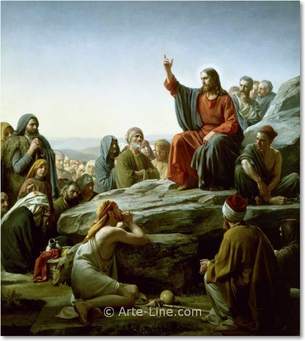
People flocked to Jesus early in his ministry in Galilee, drawn by the candor and consistency of his teaching and the power of his healing. As he left Capernaum one day, the crowd pressed around him to hear his words and feel his touch. Eventually, somewhere on the northeastern shore of the Sea of Galilee, he sat himself down on a rocky hillside and began to teach. Matthew records this event as the Sermon on the Mount.

Rather than being a single event, the Sermon on the Mount may be a collection of ideas that Jesus taught over and over again throughout his ministry captured by Matthew as a summary of his teaching themes. William Barclay, in his commentaries, suggests as much.

One of the most beloved segments of this passage is known as The Beatitudes, a passage that unveils the character demanded of those who desire to be a part of the kingdom of God. When you look at the passage and look at the life of Christ, you’ll find that Jesus modeled each characteristic in his daily walk.

Blessed are the poor in spirit, for theirs is the kingdom of God.
Blessed are those who mourn, for they will be comforted.
Blessed are the meek, for they will inherit the earth.
Blessed are those who hunger and thirst after righteousness,
for they will be filled.
Blessed are the merciful, for they shall be shown mercy.
Blessed are the pure in heart, for they will see God.
Blessed are the peacemakers, for they will be called the sons of God.
Blessed are those who are persecuted because of righteousness,
for theirs is the kingdom of heaven.

Jesus teaches about kingdom living. Think of them as proverbs or declarations. Assuring us that we will feel blessed as a result of our actions or attitudes that align with the expectations of the Father. That demonstrating these character traits leads to promised rewards.

Consider the word “blessed.” Some translations substitute the word “happy” rather than “blessed.” But, “happy” feels too frivolous. Too superficial. Think, rather, in terms of the contentment, joy and peace that comes from being in right relationship with God. It cannot be dampened by external circumstances.

Happiness may be a part of the equation, but take it deeper into the heart of our relationship with the Father. One commentary called being blessed “a pledge of divine reward for the inner spiritual character of the righteous.” I like that. Jesus promises that if we live in such a way as to reflect the character of Christ, we will be filled with inner peace and joy.

Focus on the specific character demanded of those who would be a part of the kingdom of God and the promise that follows. Blessed are…

…the poor in spirit.
To be poor in a financial sense is to be destitute. To be poor in a physical sense is to be oppressed. To be poor in the spirit is to be humbled, to live without arrogance or self-sufficiency. It speaks to the person who recognizes his or her sinful nature; who comes to God each day with a contrite heart; knowing that God’s grace is an unmerited gift that promises a life within the kingdom of God.

…those who mourn.
Everyone in this life will experience sadness and grief. Such mourning is a natural part of the ebb and flow of life. Here, Jesus speaks of those who mourn for a lost world; for the sinfulness that serves as a barrier separating us from God…from the relationship he desired with us when he created us. If we don’t grieve for the lost we will never feel compelled to share the love of Christ with a ruined world. God will provide comfort for those whose hearts break when confronted by sin and disbelief. Comfort which allows us to continue the hard work of reconciling a lost world to the one who loves them so much.

…the meek.
Think of meekness not as passivity or weakness. That is the world’s definition. Its first century meaning carries an idea of self-control…gentleness…kindness…all fruits of the spirit identified by Paul. The meek control their instincts and impulses, harnessing the passion and power within them to build and edify, to lift up rather than tear down. They see all things through the eyes of empathy, hearts free of evil intent and purpose. These are people who treat everyone with respect and dignity regardless of their station in life.

…those who hunger and thirst after righteousness.
Hunger and thirst represent our most primal needs. When truly hungry and thirsty, a body will do almost anything to secure food or drink. Little else seems to matter. To hunger and thirst for righteousness is to demonstrate that strongest spiritual desire to understand and act upon the will of God. Our passion to live for him takes precedence over anything else. Therein lies the promise. The one who seeks after God will have those needs satisfied. His or her life filled with the joy of knowing who walks beside you.

…the merciful.
Mercy is an act of grace. Despite our sinful ways, God offers his forgiveness, requiring only a contrite heart. It is pure, unmerited grace. Mercy is not a quality limited to God alone. As believers in Christ discover his forgiveness, mercy toward others ought to be a natural outgrowth of our hearts. People hurt us. Ignore us. Sin against us. Hate us. Persecute us. We face a choice: retaliate or redeem. Mercy finds expression in the kindness and compassion we extend even to those who hurt us. It is a quality borne out of the mercy God extended toward us even when we hurt him. As we forgive, so are we forgiven. That is the promise of God.

…the pure in heart.
When the Bible speaks of the heart, it speaks to the center of will, the choices we make. Pure in heart means the decisions we make, the desires we hold, the intent of our thoughts and deeds must be unblemished with sin, wholly pleasing to God. The purity of our hearts lies at the center of every characteristic proclaimed in the beatitudes…our mercy, our quest for righteousness, our meekness and humility. Jesus told Nicodemus, “You must be born again” to suggest a spiritual change in his heart. To take that which was unclean and purify it from all self-interests and desires.

Jesus promises those who would listen that the pure in heart would see God. There is certainly within this statement a promise of our life eternal in the presence of the father. It might also suggest that the pure in heart have within them the capacity to see God in every circumstance…seeing his presence in life’s heartbreaks and horrors as well as its blessings and bounty.

…the peacemakers.
The kingdom of God is a kingdom of peace and yet we are too often at war with one another. The broken relationships, the societal divisions, the political acrimony, the racial bigotry drive a wedge between God’s people. Joy comes to those who find ways of bringing people together in the love of Christ, reconciling others to God and to one another. This statement promises the peacemakers will be called “Sons of God.” The Old Testament called angels the Sons of God. Angel may be an apt description of those who act as God’s peacemakers.

…the persecuted.
Living a lifestyle exemplified by the characteristics listed in the beatitudes puts one in a precarious place. The life God demands of his children is a life the world opposes and rejects. All who identify with Christ face a hostile world that tolerates in the best of times and terrorizes in its worst. God offers a promise to those who face such opposition. Hold on. Run the race. Keep the faith. God’s kingdom is yours forever.

I go back to the beginning. We are to live as the image of God. That’s how he created us. We discover how to do that by looking at the life of Christ and paying attention to his teachings. Throughout his ministry Jesus taught us how to live and modeled those choices every day of his life. He lived and breathed every action and attitude he taught in the beatitudes. If we are to live like him, as the image of God, we ought to do the same.

The promise of the beatitudes is not a pie-in-the-sky, wait for it, kind of promise. Barclay writes, “…the beatitudes are not pious hopes of what shall be; they are not glowing but nebulous prophecies of some future bliss; they are congratulations on what is…It is a blessedness (a joy and peace) which exists here and now.”

Live it and claim the promise.

*****

Author’s Note: You can pick up a copy of God’s Mirror Image at the Barnes and Noble Bookstore in Pasadena, Texas, or you can order it online from Amazon.com or any online bookstore. My other books are Put Away Childish Things and The Chase. All are available from Amazon.com or any online bookstore. If none of those options work for you, contact me at kirkallanlewis@yahoo.com. Thanks to all who take the time to read my books and my blog. It’s my prayer that God speaks through each word to each of you.

Look For What’s Chasing You

Background Passages: Psalms 23:1-6

It played out almost as a modern day reality television show. God’s prophet traveled into the Judean hills near Bethlehem to find Jesse, a leading member of the community and the father of several sons. Displeased with Saul’s leadership as king, God told Samuel to anoint a new king from among Jesse’s sons.

After a lengthy sacrificial ceremony, Jesse paraded his sons in front of the prophet starting with the eldest, Eliab. One by one they came. One by one Samuel rejected them. Jesse never bothered calling his youngest from the field where he tended the sheep. Who would have considered the least of his children as the heir apparent to the throne of Israel?

Eventually, servants were dispatched to bring David to the house. As soon as he appeared, God made it clear to Samuel that David was his chosen king. Samuel poured oil upon David’s head, anointing him as the future king of his nation.

Can you even imagine that moment in David’s life? He knelt in front of Samuel more than a little bewildered at the ceremony unfolding around him. The look on his father’s face a blend of astonishment and pride. His brothers’ stood still, shocked at the unlikely turn of events. David bowed his head. Felt the warmth of the oil flow through his hair and down his cheeks. His mind racing. The prayers offered by Samuel were little more than a dull droning in David’s ears.

Then, it was over. With little preparation or fanfare, David packed a few things and followed behind God’s prophet as they returned to Samuel’s home. When they reached the crest of the hill, I suspect David looked over his shoulder at a home to which he would never return.

I wonder how long it took after that unlikely moment for David to realize how drastically his life had changed. The moment the oil streamed down his face, David’s life took a different path. His life would never be as simple. Never as sane. Never the same.

His life unfolded rapidly. Living in Saul’s palace. Slaying a giant. Alternately threatened and embraced by a mercurial king. Running for his life. Forging lasting friendships. Fighting battles. Hiding in the desert with a ragtag group of followers. Crowned as king. Ruling wisely. Making mistakes.

David’s long life passed as a mixture of spectacular achievements and dismal failures. Through his fame and his failures, his faith and his faithlessness, David always returned to his God.

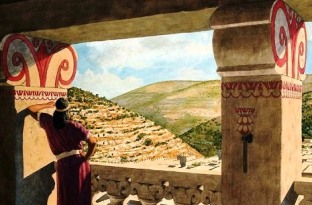
I picture a time late in life as David stood on the rampart of his palace, gazing across the valley at the shepherds herding their sheep into the pen for the night. Maybe he envied the life he once had. Maybe he longed for the day when he could sleep soundly with his head on a shepherd’s rock rather than lying anxiously awake with his head on a king’s pillow.

I think it was a night like that when David wrote Psalms 23. Perhaps it was at the end of a chaotic day, that David remembered the Lord’s shepherding faithfulness throughout his life.

“…I shall not want…”
“…green pastures…quiet waters…”
“…a restored soul…”

“…a guided path…”
“…a troubled walk…”

“…no fear…”
“…you are with me…”
“…you comfort me…”

“…a table prepared…”
“…an overflowing cup…”

I read again this beloved Psalm in the middle of a frenetic and frantic week. I look back, as David did, grateful for God’s shepherding companionship. Then, I read the last verse of David’s familiar song with eyes opened to a thought I never considered.

“Surely goodness and mercy will follow me all the days of my life and I will dwell in the house of the Lord forever.”

The verse always struck me as a doxology, a closing statement meant simply to tie the psalmist’s thought together. David’s “sincerely yours” to those who might read his poem. Yet, this time I noticed so much more.

Note the confidence in his choice of words. David is convinced of God’s constant care in his life. He begins the passage,

“Surely…”

Take it as an absolute certainty…a no-question-about-it, without-a-doubt, kind of word. The psalmist is convinced of the words he speaks next because his life experiences proved its truth over and over again.

“…goodness and love (mercy)…”

David lives each day confident of God’s goodness and love.

What is God’s goodness? Think of every attribute you ascribe to God. Loving. Patient. Wise. Powerful. Truthful. Faithful. Comforting. The list goes on and on. God’s goodness is defined by his total character. All that he is, all that he will ever be, is good. There are other Psalms that express the sentiment.

“Give thanks to the Lord for he is good.”
Psalm 107:1

How great is your goodness which you have stored up for those who fear you.”
Psalm 31:19

David found God’s goodness in his provision…

“…I shall not want…”
“…a prepared table…”
“…an overflowing cup…”

David found God’s goodness in his peace…

“…green pastures…”
“…still waters…”
“…restores my soul…”

David found God’s goodness in his protection…

“…no fear of evil…”
“…rod and staff comfort me…”

The good news is that we can find what David found. God’s goodness remains the same today as it was before. He offers his children his provision, peace and protection. It is his nature. It is who he was yesterday. Who he is today. Who he will be tomorrow. God’s goodness is eternal.

What is God’s love?

David found God’s love, his mercy, in his unsurpassed gift of grace that extended his forgiveness to cover the ugliness of David’s sin. David found God’s love evidenced in his unwillingness to let David go despite his willful ways. David did some despicable things, yet God never gave up on the one who was “after his own heart.”

God’s love is what compels him to leave the 99 sheep to find the one. To turn his house upside down to find a single lost coin. To hike up his robe and sprint down the path when he sees his prodigal returning home. God’s love is found in his willingness to embrace the agony of a cross to redeem the unworthy…just like you. Just like me.

David’s song connects God’s goodness and love. Makes them inseparable. Not goodness by itself. Not love alone. Joined at the hip. Both. Together. As Max Lucado said, “Goodness to provide. Mercy to pardon.”

The picturesque imagery used by David resonates within us. Our eyes behold it and our minds take us where God wants us to go. But, there is still more. What struck me between the eyes this time was that God’s goodness and mercy, and all that it entails, will follow me.

Now, I see this in two ways. I can follow along with those with whom I agree. We walk side by side through life, content in the common things that bind us together. We follow along in step with one another.

God is chasing me in his goodness and love along the path of righteousness when I am so flush in the gifts of God that I run in exuberant joy, frolic in the refreshing shower of his blessings, and dance to the music of God’s grace. He follows me…running, frolicking and dancing… with me. He follows along…beside me…celebrating in delight that I am living in his will.

That makes me smile.

However, the Hebrew word used for “follow” also means “to pursue, to chase.” It conveys the image of a parent pursuing a runaway child. For my love of that child, I run after him to bring him back home. No matter where he goes. No matter how long it takes.

Isn’t that the way God works through my disobedience and trouble? God pursues me, holding forth his goodness and love, as I walk in the shadowed valley of death. When I take faltering steps in the darkness, feeling fearful and alone. As I struggle with my obedience. When I am mired in the mud and muck of my own creation. God hunts me down in the pits of my hell to wrap me in his goodness and love and draw me back to his side.

That makes me think.

Why would an all-powerful God do this?

God wants to ensure that, as one of his children, I will live in the abundance of his goodness and mercy all the days of my life. Because he wants to give me his manifold blessings, he will follow me through my fame and my failures, through my faith and my faithlessness, just like he pursued David.

If, like me, you find yourself standing on the rampart of your palace, longing for a shepherd’s life, know what David knew. God is a God of provision, peace and protection. He is a God that will follow you all the days of your life, no matter what you’ve done or where you go, to ensure that you will dwell in his house forever.

That, I hope, makes you smile.

A Model of Kindness and Hospitality

Mark 1:29-31; Matthew 8:14-15; Luke 4:38-41

Though early in his ministry, Jesus consistently felt the press of the crowd. The constant demand upon his time and energy. Tossed aside by those in his hometown of Nazareth, Jesus found rest from the rigors of his work in the home of Peter and Andrew, two of his most trusted disciples. We find him on several occasions in Capernaum, staying with the family of these close friends.

Men being men, I doubt that Jesus felt most comfortable in this home because of the two brothers who followed him. I suspect his delight in visiting their home in Capernaum arose from the welcome he received every time from Peter’s mother-in-law. Scripture tells us her name was Mary.

Cast aside the flood of mother-in-law jokes told since the beginning of time. Mary must have been one of the good ones. Maybe you picture her as I do. From the moment of her daughter’s betrothal to Peter, she loved him as a son. From that time on, anyone Peter brought home was also her “son.” She was Mom to all of Peter’s friends.

When Peter returned from fishing or from time away with Jesus, she scurried to embrace Peter and his friends every time as if they had been gone for years. The welcome genuine. The hospitality generous. The love evident. Greeting them with a hug, a smile and a warm plate of bread fresh from the oven.

Jesus knew this family. Loved this family. Within these walls Jesus rested. Relaxed. Laughed. Talked about anything and everything that had nothing to do with his work. It was his sanctuary. God’s son spent days as a guest in this…his home away from home away from home.

On this day, after a morning of teaching and healing, Jesus stooped as he pushed through the low door to the small cottage not far from the synagogue. He expelled a deep breath…the burdens he carried dropped from his shoulders as soon as he stepped over the threshold. Today, two steps in, he knew something was wrong. Rather than the typical shriek of joy at welcomed visitors there was only silence. The normal aroma of food cooking in the hearth replaced by the sweet smell of medical ointment.

Peter called out to his mother-in-law, “Mary, where are you?”

Walking to the back room, the disciple found her in bed in the grip of a major fever, tended to by friends. Recognizing intuitively the seriousness of her illness, Peter called to Jesus.

Jesus walked into the room, immediately assessing the situation. Peter asked his master, “Can you help her?”

Jesus knelt by the bed and took the woman’s hand in one of his own. Laid the palm of his other hand on her feverish forehead. He offered a quick prayer as he slid his hand lovingly to her cheek. Her eyes flickered open.

As Jesus rose he helped Mary from her bed. She stood, looked at Jesus with a sparkle in her eyes, tugging gently on his graying beard. “It’s good to see you again, Jesus.”

Her illness forgotten, she laughed with joy at seeing her son-in-law, his brother and friends. With a look of embarrassment, she realized they would be hungry. She had prepared nothing. With a song in her heart, pulled a meal together and waited on them throughout the day.

*****

It’s an obscure scripture reference rarely read. That the story centers on a mother-in-law is even more obscure. Peter’s mother-in-law, Mary, joins Naomi in the Old Testament as the only two mothers-in-law mentioned in scripture.

Reading between the lines, Peter loved his mother-in-law. His concern during her illness evident in his call to Jesus. I can also imagine that every time Jesus visited Capernaum he enjoyed the fellowship of this godly woman…his second mother in every way that mattered.

I read this scripture this week just days after my own mother-in-law’s funeral. It left me feeling with a degree of certainty that Peter’s mother-in-law was not unlike my own. We tend to assign characteristics of Bible characters to the personalities of people we know. It is the way we relate to them on a more personal level. In many ways, I can assign my mother-in-law’s characteristics to Peter’s mother-in-law.

If I do so, I know Jesus didn’t go to Peter’s house for the food. My mother-in-law, Glenna, could not cook. Raw meat loaf. Greasy baloney and potatoes. Canned vegetables and desserts right out of the box. Imagine a home economics major who could not cook. That was Glenna.

If Peter’s mother-in-law was like Glenna she was infinitely gullible, making her the target of good natured ribbing. Though falling for every exaggerated story, she laughed at herself while basking in the love wrapped in the telling. Just when you think you got the better of her, she’d pull out the world’s kindest insult to rattle your cage.

If Peter’s mother-in-law was like my own, she sent Peter and Andrew to sing in the family choir at the synagogue in matching home-made, lime-green, velour sweatshirts, oblivious to the horror-stricken look on their faces. Ugly as sin, the clothing was made with great affection.

Despite those shortcomings, if Peter’s mother-in-law was like my own, she was loved deeply and completely by all of her sons-in-law. She was a second mother to Peter…and to Jesus…as much as Glenna was to me.

Like Peter’s mother-in-law, Glenna opened her heart to everyone. If you wish to define the spiritual gift of hospitality, look no further. My mother-in-law welcomed everyone, even the West Texas boy her daughter brought rather unexpectedly that first time to the family reunion. That was the first time I experienced her warmth, but it was not the last time I felt it or saw it enclose others in its embrace. She had a gift for making people feel valued.

Like Peter’s mother-in-law, Glenna used that gift of hospitality to serve at church, at school and within the community. She was constantly making things for others. Bible bags for children at church. Rag bags for newlyweds. Clothes of extraordinary colors for her grandchildren. She loved to give gifts with a personal touch. If you needed something, she would drop what she was doing to help you. Forever unselfish in her service to others.

Like Peter’s mother-in-law, Glenna knew Jesus. She shared and demonstrated her faith to hundreds of second grade children who passed through her Sunday School class for more than 50 years. She taught the love of Jesus, making him real and personable to so many children. I cannot begin to fathom the number of children, now adults, who placed their trust in Jesus Christ, in part, because of what they learned from Glenna years ago. The wonderful thing is that her faith never wavered, despite the tragedies that struck her heart throughout her life.

Like Peter’s mother-in-law, Glenna’s kindness extended to everyone she met. I knew her for more than 45 years. If she ever had an unkind thought, she never expressed it aloud. I suspect the thought never crossed her mind. She was absolutely the kindest person I ever knew.

Dementia took its toll in her later years. We have all seen that dreaded disease confuse, confound and change the personality of the sufferer. However, it never changed Glenna. Her sweet demeanor…her joy…her ability to sing praises to God (off key)…never changed. When she could not remember the names of those in her family, she could remember every stanza to What a Friend We Have in Jesus.

I will miss my mother-in-law. I cherish her love for me and my love for her. I am also grateful that I see the best of her every day in the life and love of my wife. They are alike in so many ways.

Thanks to Peter’s mother-in-law for reminding me.

Living as the Image of God

Background Passages: Genesis 1:27; John 14:9; Matthew 5:1-12

I pored through a number of old 35mm slides, pictures taken by my parents when my siblings and I were small. I enjoyed sharing those captured memories with my children and grandchildren. Fascination grew as we recognized family resemblances across generations…the power of genetics, I suppose. If I heard it once, I heard it several times, “I see your Dad in his eyes.” “You look so much like your uncle at that age.” “She is the spitting image of your mother.”

There is some measure of joy in knowing that we physically resemble those most dear to us. Then, I wonder, when others look at us, do they see how closely we resemble Christ in spirit and deed. Can the world see Jesus…see God…in us?

“So God created man in his own image,
in the image of God he created him;
male and female he created them.”

On the surface, being created in the image of God seems such a complex theological concept requiring a deeper understanding of the nature and spirit of the Creator himself. But, it’s really not that hard. Jesus told his disciples, “If you have seen me, you have seen the Father.” In other words, we find in the character of Jesus Christ, the very nature and spirit of God. The image of God reflected in the life of Christ. To be the image of God in our world, as we were created to be, simply requires us to be like Jesus.

So, how are we to know what that looks like?

Every gospel story reveals the character of Christ. We can identify in Jesus God’s compassion, love, faith, humility and honesty. We find in his teachings keys to living as the image of God.

People flocked to Jesus early in his ministry in Galilee, drawn by the candor and consistency of his teaching and the power of his healing. As he left Capernaum one day, the crowd pressed around him to hear his words and feel his touch. Eventually, somewhere on the northeastern shore of the Sea of Galilee, he sat himself down on a rocky hillside and began to teach. Matthew records this event as the Sermon on the Mount.

Rather than being a single event, the Sermon on the Mount may be a collection of ideas that Jesus taught over and over again throughout his ministry captured by Matthew as a summary of his teaching themes. William Barclay, in his commentaries, suggests as much.

One of the most beloved segments of this passage is known as The Beatitudes, a passage that unveils the character demanded of those who desire to be a part of the kingdom of God. When you look at the passage and look at the life of Christ, you’ll find that Jesus modeled each characteristic in his daily walk.

Blessed are the poor in spirit, for theirs is the kingdom of God.
Blessed are those who mourn, for they will be comforted.
Blessed are the meek, for they will inherit the earth.
Blessed are those who hunger and thirst after righteousness,
for they will be filled.
Blessed are the merciful, for they shall be shown mercy.
Blessed are the pure in heart, for they will see God.
Blessed are the peacemakers, for they will be called the sons of God.
Blessed are those who are persecuted because of righteousness,
for theirs is the kingdom of heaven.

Jesus teaches about kingdom living. Think of them as proverbs or declarations. Assuring us that we will feel blessed as a result of our actions or attitudes that align with the expectations of the Father. That demonstrating these character traits leads to promised rewards.

Consider the word “blessed.” Some translations substitute the word “happy” rather than “blessed.” But, “happy” feels too frivolous. Too superficial. Think, rather, in terms of the contentment, joy and peace that comes from being in right relationship with God. It cannot be dampened by external circumstances. Happiness may be a part of the equation, but take it deeper into the heart of our relationship with the Father. One commentary called being blessed “a pledge of divine reward for the inner spiritual character of the righteous.” I like that. Jesus promises that if we live in such a way as to reflect the character of Christ, we will be filled with inner peace and joy.

Let’s discuss the specific character demanded of those who would be a part of the kingdom of God and the promise that follows. Blessed are…

…poor in spirit.
To be poor in a financial sense is to be destitute. To be poor in a physical sense is to be oppressed. To be poor in the spirit is to be humbled, to live without arrogance or self-sufficiency. It speaks to the person who recognizes his or her sinful nature; who comes to God each day with a contrite heart; knowing that God’s grace is an unmerited gift that promises a life within the kingdom of God.

…those who mourn.
Everyone in this life will experience sadness and grief. Such mourning is a natural part of the ebb and flow of life. Here, Jesus speaks of those who mourn for a lost world; for the sinfulness that serves as a barrier separating us from God…from the relationship he desired with us when he created us. If we don’t grieve for the lost we will never feel compelled to share the love of Christ with a ruined world. God will provide comfort for those whose hearts break when confronted by sin and disbelief. Comfort which allows us to continue the hard work of reconciling a lost world to the one who loves them so much.

…the meek.
Think of meekness not as passivity or weakness. That is the world’s definition. Its first century meaning carries an idea of self-control…gentleness…kindness…all fruits of the spirit identified by Paul. The meek control their instincts and impulses, harnessing the passion and power within them to build and edify, to lift up rather than tear down. They see all things through the eyes of empathy, hearts free of evil intent and purpose. These are people who treat everyone with respect and dignity regardless of their station in life.

…those who hunger and thirst after righteousness.
Hunger and thirst represent our most primal needs. When truly hungry and thirsty, a body will do almost anything to secure food or drink. Little else seems to matter. To hunger and thirst for righteousness is to demonstrate that strongest spiritual desire to understand and act upon the will of God. Our passion to live for him takes precedence over anything else. Therein lies the promise. The one who seeks after God will have those needs satisfied. His or her life filled with the joy of knowing who walks beside you.

…the merciful.
Mercy is an act of grace. Despite our sinful ways, God offers his forgiveness, requiring only a contrite heart. It is pure, unmerited grace. Mercy is not a quality limited to God alone. As believers in Christ discover his forgiveness, mercy toward others ought to be a natural outgrowth of our hearts. People hurt us. Ignore us. Sin against us. Hate us. Persecute us. We face a choice: retaliate or redeem. Mercy finds expression in the kindness and compassion we extend even to those who hurt us. It is a quality borne out of the mercy God extended toward us even when we hurt him. As we forgive, so are we forgiven. That is the promise of God.

…pure in heart.
When the Bible speaks of the heart, it speaks to the center of will, the choices we make. Pure in heart means the decisions we make, the desires we hold, the intent of our thoughts and deeds must be unblemished with sin, wholly pleasing to God. The purity of our hearts lies at the center of every characteristic proclaimed in the beatitudes…our mercy, our quest for righteousness, our meekness and humility. Jesus told Nicodemus, “You must be born again” to suggest a spiritual change in his heart. To take that which was unclean and purify it from all self-interests and desires.

Jesus promises those who would listen that the pure in heart would see God. There is certainly within this statement a promise of our life eternal in the presence of the father. It might also suggest that the pure in heart have within them the capacity to see God in every circumstance…seeing his presence in life’s heartbreaks and horrors as well as its blessings and bounty.

…the peacemakers.
The kingdom of God is a kingdom of peace and yet we are too often at war with one another. The broken relationships, the societal divisions, the political acrimony, the racial bigotry drive a wedge between God’s people. Joy comes to those who find ways of bringing people together in the love of Christ, reconciling others to God and to one another. This statement promises the peacemakers will be called Sons of God.” The Old Testament called angels the Sons of God. Angel may be an apt description of those who act as God’s peacemakers.

…the persecuted.
Living a lifestyle exemplified by the characteristics listed in the beatitudes puts one in a precarious place. The life God demands of his children is a life the world opposes and rejects. All who identify with Christ face a hostile world that tolerates in the best of times and terrorizes in its worst. God offers a promise to those who face such opposition. Hold on. Run the race. Keep the faith. God’s kingdom is yours forever.

I go back to the beginning. We are to live as the image of God. That’s how he created us. We discover how to do that by looking at the life of Christ and paying attention to his teachings. Throughout his ministry Jesus taught us how to live and modeled those choices every day of his life. He lived and breathed every action and attitude he taught in the beatitudes. If we are to live like him, as the image of God, we ought to do the same.

The promise of the beatitudes is not a pie-in-the-sky, wait-for-it, kind of promise. Barclay writes, “…the beatitudes are not pious hopes of what shall be; they are not glowing but nebulous prophecies of some future bliss; they are congratulations on what is…It is a blessedness (a joy and peace) which exists here and now.”

Blessed are those who live as the image of God. Live it and claim the promise.


How Can I Keep From Singing

Background Passage: Psalm 59:16-17

The hectic nature of life the week brings about a short post. I’m currently with a small group of people from my church this week on a mission trip to Collique, Peru, to build more permanent shelters for some of the families in this impoverished community tucked in the hills northeast of Lima. These are not houses as you and I understand them, but they are homes for families with little more than a roof above their heads.

This is just my second year to participate. Like the others in my group, most of whom have made this trip multiple times, I end each day amazed at how little these wonderful people have and great their joy in comparison.

Their smiles and their constant expressions of gratitude transcend the language barriers and cultural differences between us, serving as a dynamic testimony to the power of Christ to fill a heart with joy. Theirs is a faith that truly sustains through every circumstance.

For me, and I’m certain for others in our group, it is a teachable moment. These people with whom we’ve been blessed to work this week have so little. We have so much. They endure though faced with a life we can scarcely imagine. We need to remember…no, I need to remember…that despite the turmoil I feel at times, God gives me voice to declare my love for him. Our relationship with God should enable us to sing when others…lost without him…can’t hear a note.

British vocalist James Loynes recently recorded a beautiful song written by Robert Lowry, a 19th century Baptist minister and composer. The melody and words resonate on every level. The final stanza offers this word.

The peace of Christ makes fresh my heart,
A fountain ever springing.
All things are mine since I am his,
How can I keep from singing?

Listen to the video. Hear the gentle reminder. How can you keep from singing?