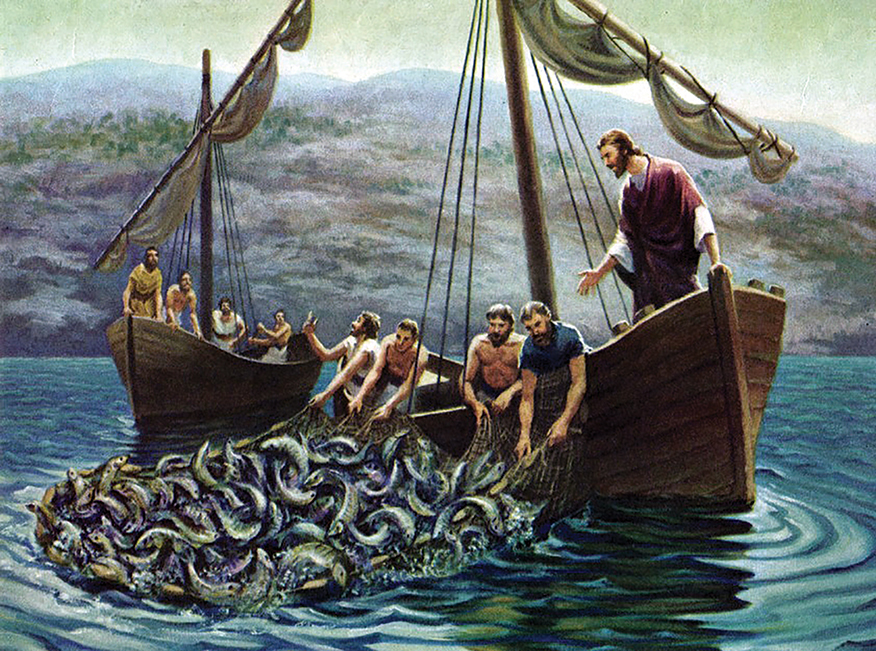
When the Axe Head Floats

Background Passages: 2 Kings 6:1-7; Proverbs 3:5-6

I don’t remember exactly when the tree in my in-laws’ back yard died or when they chopped it down. I just remember that the stump was in the way of a wooden deck they wanted to build.

I took my turn among the brothers-in-law wielding an axe, chopping through the thick roots of the once thriving oak. At one point as I pulled the axe over my head, the axe head came off and flew across the yard, leaving me holding the handle.

I have no idea why I thought about that this week. Somewhere in the back of my mind I remembered a similar story in the Bible. I had to search to find it, but I did. Some of God’s greatest lessons come from unexpected sources.

One reason to read the Bible is that we sometimes find practical life lessons through relatively unknown passages. God has a way of using the obscure to teach the what ought to be obvious. Timothy tells us as much, “All scripture is God-breathed and is useful for teaching, rebuking, correcting and training in righteousness.” (2 Timothy 3:16)

I found one of those nuggets of truth from the life of the prophet Elisha.

Elisha spent some of his time in ministry training a new group of God’s prophets. Who wouldn’t want to learn from this incredible man of God? God rewarded Elisha’s leadership by sending more and more men to sit at his feet.

At one point, the students came to the master and requested that they be allowed to cut down a few trees to build a new meeting house for they had outgrown the place where they were.

“Let us go to the Jordan and each of us get a pole and let us build a place there where we can meet.”

They were willing to do the work required. Commendable.

Elisha liked the idea and gave his permission.

The men held Elisha in such great respect that they asked him to accompany them to the Jordan River to find the best timber for the task. Elisha made the journey with them.

Here’s where the story gets interesting. One of the young prophets didn’t own an axe. Eager to be a part of what they must have considered God’s work, the man found a neighbor willing to lend him an axe.

When they arrived at the Jordan, each man found a suitable tree to cut down and the riverbed echoed with the sounds of iron on wood.

I can picture our young prophet wielding his axe, sending the chips flying as he cut into the timber. Then, in the middle of a powerful back swing, the axe head slipped from the handle, the force of the swing flinging it into the river with a heavy splash. The tool he borrowed buried itself in the muddy bottom of the Jordan.

“Oh no, my lord!” he cried out. “It was borrowed!”

It seems a small problem to us, but to this poor, young prophet it loomed large. Not only could he not finish his task, but the loss represented a significant financial burden. In those days, you see, an iron axe was a precious and expensive commodity. According to Old Testament law, if a man lost or damaged another man’s property, he was required to replace it or pay the cost of a new one. Chances are if he had to borrow it in the first place, he had no means of paying to replace it.

Many of our problems are like the one encountered by this young prophet. Through no fault of our own…at a time we least expect it…even while doing good work…we find ourselves facing a situation. We lose something of value entrusted to us. We find ourselves in financial difficulty beyond our means. We encounter illness or injury that collapses our world and leaves us wondering what we can possibly do.

That’s probably why the prophet cried to his master in such obvious distress. “Oh, my lord!” That’s probably why in our times of despair we cry out, “Oh, my Lord!”

Here’s the first lesson that comes to me from this story. It’s always best to learn to trust God before the problem comes. These young prophets were assigned an important task. When Elisha gave his permission, he didn’t intend to go with them. However, they trusted Elisha and needed his presence as they went about their task. As a result, when trouble came, when this man cried out in despair, his master was already there.

We fail ourselves, more often than not, when we think we are capable of dealing with life…both the good and bad times…without asking God to go with us. At the beginning of each new day, new task or circumstance, we ought to thank God in advance for his work in our lives. To being open to his guidance in every aspect of what we say and do. Then, when the crisis comes, we can cry out to him and knowing…trusting…that he is there.

The writer of Proverbs expressed it this way…

“Trust in the Lord with all your heart and lean not on your own understanding. In all your ways acknowledge him and he shall direct your paths. (Proverbs 3:5-6)

I can picture the man diving in the murky water to retrieve what he could not see. Hands groping along the bottom with the faint hope of touching the metal object. Each time he comes out of the water empty-handed.

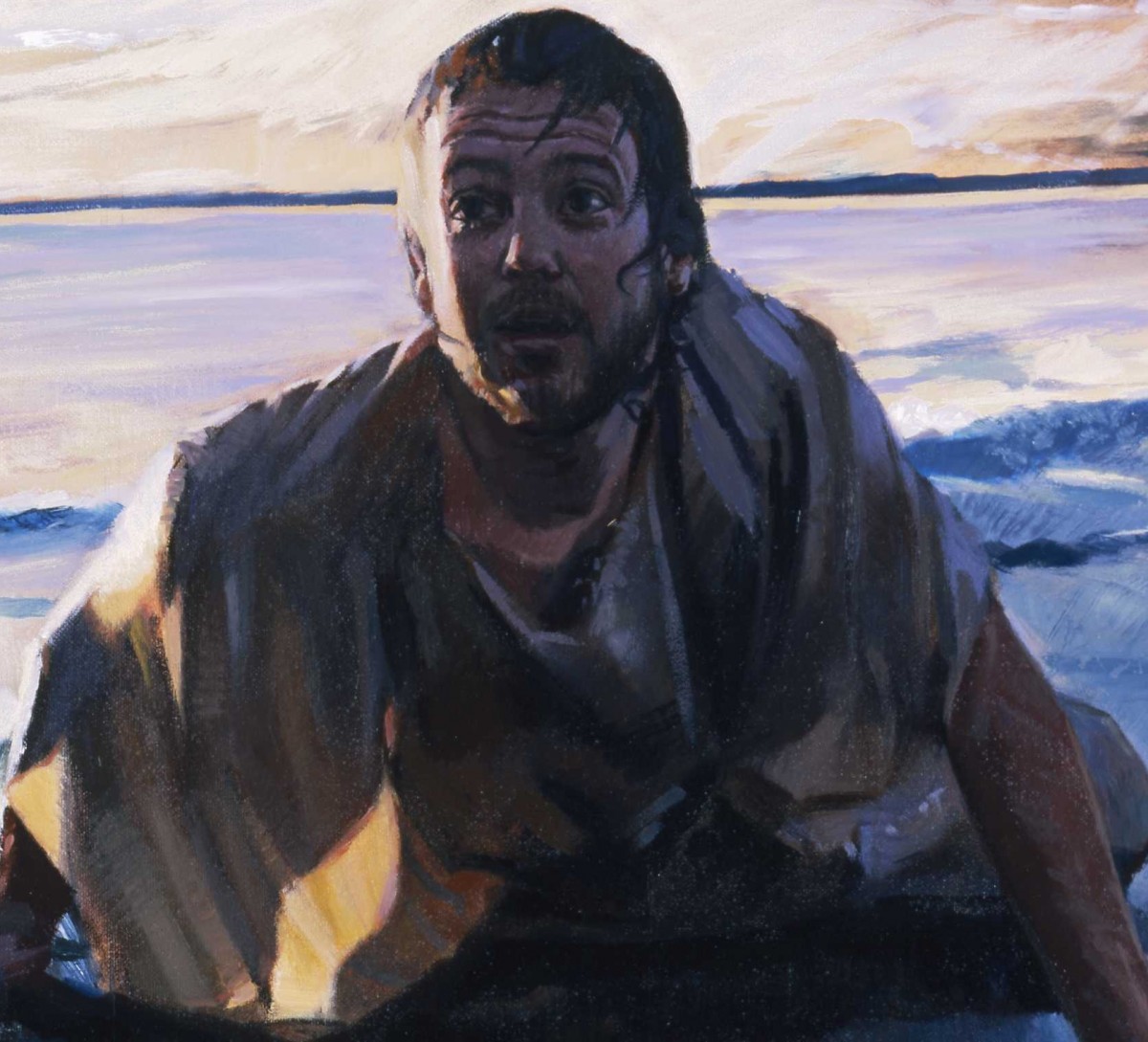
He stands chest-deep in the river, water dripping down his face and off his beard. Anxiety written in his eyes. When he looked hopelessly at his teacher, Elisha asked him a question.

“Where did it fall?”

When the man pointed to the general spot in which the axe head sank, Elisha threw a stick in the river and…the iron axe head floated to the surface. How’s that for defying nature, Archimedes?

Then, in a remarkably practical moment, God’s prophet turned to the young man and said, “Lift it out.” He didn’t levitate into his hands. He didn’t pick it up himself. He asked the young man to do his part in the miracle.  The man waded through the water and grabbed what had been lost. After a moment of relief and celebration, the young prophet repaired the damaged handle and got back to work.

So, what’s the point?

I’ve never seen a floating axe, but I’m quite certain God has worked his wonders in my life…and in yours. He put people in my life at just the time I needed them, but I needed to take their hand. He opened doors of opportunity, but I had to walk through them. He whispered in my heart’s ear the solution to many a problem, but I still had to act. You see, God will meet our needs, but only as far as necessary for us to do our part.

Here’s how the story speaks to me.

Every day I rise, before I take a step, I need to ask God to walk with me through the day, trusting that he will honor that request. Believing in his presence brings a sense of hope, peace and purpose in the face of every problem I encounter. God will toss the stick in the waters of my life and give me the choice to pick up the floating chunk of iron or let it sink back to the bottom. He promises to do his part, but I must do mine, ever obedient to the leadership of the Holy Spirit in my life.

God will work faithfully in the lives of his children in our times of trouble and despair…in those times we cry out “Oh, my Lord!”

It’s my hope we all understand and embrace this truth long before the axe head falls in the water. Sooner or later, though, it will fall. So, next time you see the axe head floating on the water, pick it up.

A Cautionary Fish Tale

Background Passages: Matthew 17:24-27; I Cor. 9:19-22; and Hebrews 4:15

For two days
they fished the Sea of Galilee.
The catch?
A little light in the net.
Good.
Not great.

Josiah hauled the barrel of fish to market.
Eli stayed in the middle of the lake,
casting the nets.

Selling the tilapia and carp in Capernaum
earned the two partners
a four-drachma coin.
Two day’s wages split
two ways.

That afternoon,
Josiah rowed his boat
alongside his brother’s skiff.

“How much?”
asked Eli.

“Barely enough,”
was the disappointed answer.

Josiah pulled the coin from the small bag
hidden in the pocket of his robe.
Handed it to his brother.
They fumbled the exchange and the
coin slipped from their fingers
into the water.

They watched helplessly as the sun glinted off
the silver coin as it twirled and tumbled
deeper into the sea and
out of sight.

Two days’ earnings lost.

The flash of light on silver caught the eye of a
carp swimming beneath the boat.
On instinct the fish struck and swallowed the object,
Cold and hard.
Lodged in the gullet.

And, the fish swam away.

Except for the fishermen who spent the rest of the day kicking themselves for their carelessness, this imagined episode was an insignificant event of life on the Sea of Galilee. Yet, God used this story to explain a critical truth about his son.

Jesus and his disciples arrived in Capernaum at a time when the “temple tax” was due. Once a voluntary gift to support God’s work at the temple in Jerusalem, the Romans twisted it into a mandatory tax to build its own pagan temples. Once a year, collectors set up a table on the outskirts of every Jewish town requiring everyone to pay the equivalent of a day’s wage to the Roman government. An unpopular tax, as you can imagine.

Jesus and his disciples had gained some notoriety among the people of Capernaum. This seaside village was his Galilean base of operation. Peter lived there. It is not unreasonable to assume the tax collector knew Peter well. As the disciple passed that day, the man, perhaps a natural critic and skeptic of Jesus and his work, challenged Peter.

“Does your teacher pay the temple tax?”

Without a glance at the tax man, Peter’s answer was terse and to the point. “Yes.”

Peter walked the streets toward his mother-in-law’s home where Jesus was staying, stewing over Roman arrogance and the abuse of the temple tax. The idea of paying a tax to build a pagan temple offended him. A few minutes later, Peter angrily pushed open the door, banging it against the wall.

Startled, Jesus looked up from the table where he sat eating a fig. With the insight of God’s spirit, Jesus took one look at the disciple’s face and answered the question before it was asked.

“What do you think, Simon? From whom do the kings of the earth collect duty and taxes? From their own children or from others?

Understanding the privileges of power, Peter looked at his feet and mumbled, “from others.”

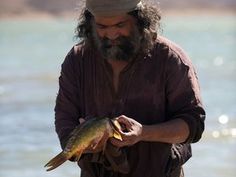
“Then the children are exempt. But, so that we may not cause offense, go to the lake, throw out your line. Take the fish you catch. Open its mouth, you will find a four-drachma coin. Take it and give it to them for my tax and yours.”

What an odd and obscure passage of scripture! It’s no surprise, I guess, that Matthew is the only gospel writer to tell this unusual story. As a former tax collector, it was, after all, in his wheelhouse.

Though I read the passage in the past, I never gave it much thought. When I skimmed it this week, I stopped. The words of the Bible were not written by chance. So, why put these three verses in scripture for us to read?

Barclay tells us in his commentary that the story is a mini-parable. A story. He says Jesus would never use his power for something so mundane as to pay his obligations. Remember the temptations of Christ in the wilderness? Barclay says its Jesus’ way of telling Peter that his followers must pay our lawful debts, even when they find them distasteful. Jesus used this dramatic story to tell Peter, go fish. Earn what we need to earn to pay this tax.

I can buy the idea of a parable, but I’m not sure this commentary’s hammer is hitting its nail squarely.

The parable teaches us about Jesus. Draws our attention to him. Matthew’s gospel addressed the Jewish people who longed for the promised Messiah. It also speaks to all of us in need of the redemption offered by God through Christ. The story is about Jesus. King of the Jews. The atonement for sin. The ransom for the soul to which all the Old Testament and Jewish law pointed. As such, it is an important word.

However, when put in its broader context, maybe there is more we can learn. According to Matthew just a few verses earlier, Peter was among a trio of disciples to recently witness the transfiguration of Jesus on the mountaintop. They heard the affirmation of God declaring his love for his son and his pleasure at his work. When the experience was over, the disciples didn’t want to leave the mountaintop. They wanted to remain in awe-inspired, blissful worship. Jesus and his disciples, though, had more work to do so down in the valley.

With that remarkable experience still fresh on Peter’s mind, the tax collector confronted him in Capernaum. At that moment, I can see Peter bristling at the idea of paying a Roman tax when his master had just been affirmed by God in the presence of Moses and Elijah. There’s a sort of “Don’t you know who he is? or “Don’t you know who I am?” kind of arrogant vibe to the encounter. “This is God’s son you’re hassling, buddy! And I’m his right hand man! Back off!”

Peter really wanted to tell Jesus about the irritating encounter. Before he could get a word out, Jesus,with his keen insight into human nature, opened the conversation. It’s interesting that Jesus used Peter’s old name in this passage. He called him “Simon.” Jesus reverted to Peter’s birth name on those occasions when Peter was not acting like “the rock” he needed him to be. I suspect when Jesus addressed the disciple as Simon it was the same as my Mom calling me, “Kirk Allan.” A “what have I done this time?” moment.

Peter probably answered Jesus’ question tentatively, with uncertainty in his voice, “the others…”, but he answered correctly. The implication from Jesus clear. “On one level, Peter, you’re not wrong. You and I both know I’m the son of God. You heard as much on the mountain. As the son of God I am under no obligation of any kind to man’s law and rule. But, that’s not the point, is it?”

Then, Jesus uttered a phrase that changes Peter’s perspective from a position of holy supremacy to a posture of humble service.

“So that we may not cause offense…”

Those who know tell me that the Greek word used for “offense” in this passage means “to cause someone to stumble.” It suggests that even though Jesus, by nature of who he is, had no obligation to pay this tax, he would pay it so his refusal would not be an obstacle placed before the Jewish people. He didn’t want to create an issue that would distract from the message he preached.

Paul reflected a similar attitude with the Corinthian church.

“For, though I am free from all men, I have made myself a servant to all, that I might win more…I have become all things to all men that I might by all means save some. (I Cor. 9:19-22)

Jesus didn’t come to make a political or cultural point. He came to redeem a world that had lost its way. Throwing up obstacles, creating distractions, would not get it done.

Jesus constantly made conscious decisions throughout his ministry to set aside his position as God’s son consistent with his pattern of grace and sensitivity to the struggles of others. The writer of Hebrews reminds us…

“For we do not have a high priest who is unable to empathize with our weaknesses, but we have one who has been tempted in every way, just as we are…yet he did not sin.” (Hebrews 4:15)

As an act of love, Jesus…

set aside his place as the son of God…
never compromised his message or ministry…
complied with the mundane…
replaced condemnation with forgiveness…

all in an effort to avoid setting obstacles in front of those whom he wanted to place their faith in him.

I wonder if that’s not the best lesson found in this fish tale? As children of God, we see many things in this world that we know are not right. Actions counter to God’s law and his will. It has become so easy to condemn without grace. To set barriers between those who offend our political and cultural convictions and the salvation offered by Jesus’ death and resurrection.

The story causes me to think. What barriers have I erected? What have I said or done in my own arrogance that would stand in the way of my witness to others about Christ?

“So that we might not cause offense…”

It’s a fish tale worth considering.

Faith to Dig a Hole in the Roof

Background Passages: Mark 2:1-12 and Luke 5:17-26

In a world where so many people are hurting, it’s difficult to understand why there are so many empty pews in our churches. Many people blame organized religion for its lack of compassion and concern. Perhaps the fault lies not in the institution but in our individual response to God’s call for ministry and service.

The world seeks help for its problems, but no longer trusts the church to be its answer. When it tries, the world tends to ridicule our efforts, painting them with unintended ulterior motives. As a result, many well-intentioned Christians no longer make the time or effort to heal the brokenness they see in their families, friends and community.

We can learn a valuable lesson from a familiar story in Scripture about what it means to take the initiative in meeting the needs of others and persistently breaking through the barriers that prevent us from doing what we are called to do. Mark and Luke both share an early account of Jesus healing a paralyzed man in Capernaum.

*****

When Jesus taught, people noticed a difference between the words he shared and the hollow recitations cited by the religious leaders of the day. With Jesus, they sensed vitality and life…an authenticity and authority to his teaching that was lacking in the synagogues. Couple his unique teaching with the miracles he shared with the needy and the hurting and Jesus became a national celebrity.

Jesus’ reputation as a master teacher and miracle worker spread across Galilee and Judea like wildfire, prompting people to leave their homes to hear him teach and see him work. Drawn by his compelling words of truth and the hope of healing, crowds followed Jesus wherever he went.

On this particular day, Jesus was invited to teach in a home in Capernaum. It didn’t take long for word to spread. They came from Capernaum and throughout Galilee to hear him speak. Others who had journeyed from Judea, including a group of religious leaders from Jerusalem, caught up to him in this seaside village. As the day progressed, Jesus found himself teaching to a standing-room-only crowd.

The Pharisees took the choice seats in the house where Jesus taught. The rest of the people packed into every nook and cranny, blocking the doorway and leaning in windows trying to catch his words. The crowd eventually spilled out into the street outside, making it impossible for anyone else to get close enough to hear.

Four men traveled for days between villages, constantly following the rumors of Jesus’ location, only to find that he had moved on by the time they arrived. They carried a litter between them, bearing a friend whose body was broken and paralyzed, unable to lift even a finger.

Hearing so much about Jesus’ ability to do the miraculous, they had to get their friend before the great healer. They knew Jesus was their friend’s only hope. As they entered Capernaum, there was a buzz in the town. Jesus was here, teaching in a house near the sea.

Moving through the twisting streets, they followed the crowd to the place where Jesus was teaching. The press of the crowd so great and the people so inconsiderate the men could not get anywhere near the door. Each time they tried to get close they were pushed and shoved to the back of the crowd.

They laid their friend underneath a tree and sat beside him, full of disappointment and despair. One of them kept looking at the house, noticing that they could reach the stairs to the roof. Again picking up their friend, they climbed the steps to the roof of the house. With sticks and fingers, they began to chip away at the mud-covered branches. They work until their fingers began to bleed and they dug some more.

At last, one of them managed to get his hand through the roof. They increased their effort with renewed hope. If they could just get the hole big enough they could lower their friend into the room where Jesus sat.

Inside the room, an arrogant Pharisee looked puzzled and irritated as he brushed the dirt from his sleeve, looking angrily at the ceiling. Jesus, for his part, kept teaching with one eye on the ever-expanding hole above his head.

Finally, even Jesus had to stop what he was doing, the hole and the frenzied activity too great to ignore. With effort, the men began lowering their paralyzed friend by rope into the room until he was resting at the feet of the healer. Perspiring and covered in dirt, they peered into the hole they created and shared the man’s story with Jesus, begging him with such sincere words to heal their friend.

To the chagrin of the religious leaders whose brightly colored robes were flecked with dust and twigs, Jesus acknowledged the great love of these four men who sacrificed their time and energy for their helpless friend. Compassion poured from Jesus’ heart as he knelt beside the stricken man. Nodding in approval of the faith they demonstrated and addressing the man’s deepest need, Jesus held a quiet conversation with the paralyzed man before laying his hand upon his chest in prayer and telling him his sins were forgiven.

The Pharisees muttered to one another in their dusty robes, denouncing Jesus privately for his blasphemy.

“Why does this fellow talk like that? Who can forgive sins but God alone?”

Without hearing their words, Jesus knew their hearts. Never allowing his eyes to leave the man resting on the cot, Jesus responded to their thoughts.

“Which is easier? To say to this paralyzed man, ‘your sins are forgiven,’ or to say, ‘Get up, take your mat and walk?”

After a moment his eyes bore into the hearts and souls of the religious leaders until they cringed under the intensity of his gaze. “I want you to know the Son of Man has authority on earth to forgive sins.”

With a deep breath, he paused and prayed. Then, he smiled at the four men poking their heads through the hole in the roof and extended his hand to the paralyzed man. “Get up,” he said as he pulled him to his feet. “Take your mat and go home.”

Every miraculous healing pointed to the power of God demonstrated in Jesus. For anyone paying attention, each act of healing was proof conclusive of God’s power within him. The people left the home amazed at all they had heard and seen.

*****

The story reveals a lot about Jesus. Like the Pharisees we have much to learn about the power and authority we can find in him. But, I find a more personal message in this cherished story demonstrated by the faith of the four friends.

The accounts of this story we find in Mark and Luke are almost identical. Almost word for word. But Luke, the physician, uses a phrase that Mark does not include. Luke wrote this about Jesus,

“And the power was in him to heal the sick…”

On a day when the Holy Spirit was filling Jesus with great power, there was no one present who needed his help. Jesus’ audience that day consisted of people who loved to hear Jesus teach. There were present also a few religious leaders who felt a little threatened and challenged his every word. Yet, other than this one who was brought to Jesus by four wonderful friends, there is no mention of others who were present in need of healing.

On nearly every other occasion where Jesus taught the crowds, we read about the sick, blind, disabled and demon-possessed so desperately in need of Jesus’ touch. But not this day. Given what happened to these four men and their paralyzed friend, we can surmise that many of the sick and helpless were sent away, pushed to the periphery of the crowd. They were not invited inside.

So, despite having the power in him to heal the sick, there was no one present for him to heal…until four men traveled a great distance and refused to go away. I find that moment when they climbed on the roof instructive for my life as a Christian.

Could it be churches have empty pews because we don’t take the initiative to reach out to those in need and bring them to Jesus? Could it be that we find reasonable excuses to disregard the needs of others?

You see, faith demands that we take initiative to bring others to Christ. It wasn’t as if these four friends lived next door to the house where Jesus taught. The scripture implies that the paralyzed man and his friends journeyed over time and distance until they caught up with Jesus. It was an exhaustive effort to carry their friend across hill and valley to reach Jesus.

They didn’t wait for Jesus to come to their village. They didn’t send a messenger begging for Jesus to come for a visit. They didn’t wait for Jesus to just happen by. They didn’t simply tell their friend to find his own way to Jesus. They dropped what they were doing. They picked up the bed and they carried their friend to Capernaum and cared for his needs along the way.

What could happen in our churches if we took the initiative to bring others to Christ? To be enough of a friend to pick up the litter and carry it over time and distance until our hurting friend found the spiritual healing he or she needed and desired. Faith requires us to take the initiative to bring the lost and hurting to Jesus. Faith without service is no faith at all.

There is more to learn in the example of these four friends.

Could it be that churches have empty pews because Christians give up when challenged? Could it be that those who need our help get turned away at the door because we would rather just listen to God’s word than live it?

When these four friends arrived at the house they found every natural entrance blocked by the crowd. Carrying a paralytic and pushing through the unyielding wall of humanity proved impossible. It seemed they had come all that way for nothing.

They could have blamed the unsympathetic crowd. The poor choice of venue that didn’t allow enough people inside. They might have even blamed the paralyzed friend for hurting himself in the first place. When faced with the obstacles, they could have simply gone home. Their faith would not allow them to give up so easily.

Instead, they refused to let the obstacles stand in the way of the healing their friend needed. They found another way. They climbed to the roof and dug in.

You see, sometimes faith requires us to carry the litter to the roof and start chipping away at the dirt and branches until the hole is big enough to let us lower a hurting soul at the feet of our Lord. Faith demands persistence.

Persistent faith digs through a roof. Persistent faith wraps a rope around our hands to bear the weight of those in need.  Persistent faith often leaves us with dirt on our faces, cuts on fingers and rope-burned hands.

Yet, this much is true. When we take the initiative to bring others to Christ and when our faith is persistent in pushing through every obstacle that might prevent us from introducing others to our savior, good things will happen. We will find the power of Christ available to heal and help those in need.

What would happen to the empty pews in our churches if we took the initiative to introduce the world to Jesus? What would happen to the empty pews in our churches if we never gave up or gave in to the obstacles and distractions that stand in the way of ministry and service.

I suspect we might have a hard time finding a place to sit…and that would be just fine.

The Last Boat to Tarshish

Background Passages: Jonah 1:1-4:11; John 3:16; Matthew 9:36

The stranger boarded the last boat to Tarshish.

Incognito.
Cloak pulled tightly around his shoulders.
Face hooded and hidden.

Mysterious.
With a furtive glance to the east,
he slipped below deck without a word.

Secretive.
“Paid his fare,” the Captain said.
“Don’t ask questions.
Let him be.”

Enigmatic.
Jonah, a man of God,
a fugitive fighting a deep burden of guilt.

How did it come to this?

*****

Israel.
His home. His country.
Ruled by Jeroboam II,
sinful and self-centered like its king,
but regaining military strength.
Misinterpreted God’s leniency
for God’s approval.

Nineveh.
A great city. Powerful and ruthless.
Capital of cruelty.
Wicked and wasteful.
Brutal and bloodthirsty.
Arrogant and aggressive.

Jonah.
Israel personified.
Zealously patriotic.
Lover of his country and its people.
His people.

National pride blinded faith.
Quick to offer God’s grace to the Hebrews.
Slow to offer God’s grace to an ancient enemy.
Provincial.
Predictable.
Prejudiced.

Jonah wrapped his existence in the Hebrew’s
special relationship with God,
the Father.
He lived in a resurgent nation
under imminent threat from the dreaded Assyrians.
That was his world.
Entitled.
Infallible.
In denial.

*****

God said to Jonah,
“Go to Nineveh.
Cry out against it for I have seen their wickedness.”

It sounded simple enough.
Grab your passport,
take a trip.
Admonish their sin.
Call them to turn from evil.
Show God’s mercy.
Encourage them.
Help them survive.

But Jonah heard,
“My blessing is for all people…
even the enemies of the Chosen…
even those who rejected the God of Moses and Abraham…
even those who kill for the sport of killing…
even those you despise with every fiber of your being.
Go!
Let them know I love them.”

Jonah knew the voice of God when he heard it.
He heard,
but refused to listen.

God asked too much!

Assyria.
An historic and mortal enemy.
Nothing good can come from Nineveh.
Forget this!

So, he slipped away in the dead of night,
walked in solitude to Joppa,
boarded the last boat to Tarshish.

Jonah,
the Father’s instrument of salvation to a lost city,
turned his back on his mission.
In response to a call from the Father, Creator,
Jonah opted for a cruise of
disobedience and defiance.

*****

Tarshish.
Not the end of the world,
but you could see it from there.
Jonah paid his fare.
Settled in his cabin for a pleasant cruise across the Great Sea.
To the far corner of the earth.
Far from Nineveh.
As far from God, as a man could go.
A futile attempt to avoid God’s call.

A storm of biblical proportions erupted!
A battered and shattered ship tossed on the waves,
its crew desperately fighting to survive.
While Jonah slept fitfully in the hold,
restless in his dreams,
the gale outside raged as wildly as
the tempest within his heart.

Unanswered prayers to unhearing gods.
Desperate for deliverance,
they cast lots to cast blame.
Jonah drew the short straw.
The weight of the storm
fell squarely on his shoulders.

Tossed overboard in a last ditch effort to placate the vengeful gods,
Jonah embraced Death,
finding it infinitely more desirable
than embracing Nineveh.

Into the waves and into the belly of the monstrous fish.
Three days and three nights Jonah wallowed in his misery,
until he had a change of heart.
Sort of.

“Salvation is from the Lord,”
he half-heartedly prayed.
Yet, Jonah experienced God’s forgiveness,
half dead, washed up on a beach,
bathed in a disgusting pool of fish vomit.

*****

With the reluctant heart,
God’s prophet admitted defeat and
trudged into the city of his enemies.
For three days he mumbled God’s message under his breath,
hoping no one would hear.

“In 40 days, Nineveh will be destroyed.”
No mention of repentance.
No mention of grace.
Simply a much-deserved destruction of the people he despised.

So, after three days, Jonah dusted the dirt from his sandals.
Shortchanged God’s call for repentance.
Nineveh had 37 more days to repent,
37 more days to hear the message,
but as far as Jonah was concerned,
if they didn’t hear the first time,
“Shame on them.”

To the possibilities of forgiveness for the despised Assyrians,
Jonah turned a cold heart.
Clinging to past atrocities of the people of Nineveh,
Jonah climbed to the top of the hill overlooking the great city,
privately praying for fire and brimstone.
Absolute annihilation.

Yet, deep in the marrow of his bones,
he knew God’s grace was sufficient.
“Slow to anger, abounding in love and faithfulness.”
This was the God Jonah knew.
If Nineveh heard,
Nineveh would respond.

In sackcloth and ashes,
Nineveh repented.
God relented.
Jonah resented.

Counting God’s grace to Nineveh as evil,
the prophet’s anger burned.
Jonah, the world’s worst missionary,
needed a lesson in priorities.

A fast-growing gourd for shade.
Jonah rejoiced.
A hungry worm and a withered plant.
Jonah raged.

God reminded him.
People are more valuable than gourds.
God, the Almighty,
offers mercy and forgiveness
to all people who repent and turn to Him.
Otherwise is human hubris.

Compassion

The contrast between
Jonah’s all-consuming anger.
God’s all-encompassing love.
The contrast between them
so vividly illustrated in Jonah’s story.
Human Capriciousness
versus
Divine Compassion.

God desires relationship with all people.
Jonah detested the Assyrians.
Prejudice colored his judgment.
God’s call to Nineveh ran counter to
every emotion in his heart.
He could not bring himself to obey.

How like Jonah we are!
God calls us to do something
outside our comfort zone.
We hate the way that feels.
Run in the opposite direction as fast as we can go.

How many storms and raging seas
would we avoid if we just
did what God wanted us to do
the first time He called?
How much heartache do we suffer needlessly
because we defy God’s will for our lives?

To make matters worse,
sin is so incredibly convenient.
If we want to run from God,
we can always find a boat waiting at the dock,
ready to take us wherever we think our Father cannot find us.
We climb aboard a seductive sailing ship to sin,
headed 180 degrees from where the
Father wants us to go.

We go to Tarshish.
Our rebellion.
Our choice.
Our will.

In the midst of our disobedience
and the storms that ensue,
we find God to be a God of second chances.
A God of compassion.

No matter how far we run,
how big a mess we make of our own lives,
God continually calls us back.
Jonah found a spiritual second chance in the form of a big fish
sent by the loving Father to a prodigal son.

We find second chances around every corner.
God never gives up on us.
Not when we’re evil.
Not when we run away.
Not when we shake our fists at him.
Not when we mope on the top of a hill
waiting for God to judge the sinners around us.

Jonah is the anti-hero of his own story.
He is, however, fully human.
He ran.
He argued.
He bargained.
He whined.
He fumed.

He developed a convenient truth…
The men, women and children of Nineveh should die.
They are Assyrians.
No other reason is needed.

Like Jonah,
we quickly condemn the evil in the world.
Rapidly relegate the sinner to the trash heap.
If they don’t look or act like us,
we react even slower to be the personal agent of
God’s forgiveness.
Basking in the glow of the salvation offered to us.
Balking at sharing that same grace to others.

In a perfect example of our humanity,
Jonah causes us to hang our heads.
We are so like him!
In perfect example of His deity,
God causes us to lift our heads.
He gives us chance after chance
to love more as He loves.

So when we hesitate,
He teaches.
Somewhere in our most reluctant hours,
the Creator of the universe quietly plants a gourd,
sharing a lesson in the priority of grace,
desiring that we finally understand
how deep
and broad
and rich
His love can be.

God’s character causes Him to act on behalf of Creation.
Compassion for the Ninevites.
Compassion for you and me.
Compassion that compels us to make known
the deepest desire of God’s heart.

The Old Testament proclaims.
“Salvation is of the Lord.”

The New Testament promises.
“God so loved the world that He gave His only Son
that whosoever believes in Him shall not perish,
but have everlasting life.”–John 3:16

Go.
Tell.
Your Nineveh waits.

*****

When he saw the crowds, he had compassion on them,
because they were harassed and helpless,
like sheep without a shepherd. –Matthew 9:36

Author’s Note: “The Last Boat to Tarshish” is just one of nine stories shared in my first book, Put Away Childish Things. The book offers a deeper look at some of your favorite children’s Bible stories. Put Away Childish Things, and my other books–The Chase: Our Passionate Pursuit of Life Worth Living and God’s Mirror Image—are all available from Amazon, Barnes and Noble or any online bookstore. I also have a few copies I can ship to you.

Your Servant is Listening

Background Passages: I Samuel 1:1-21

We live in a time when it seems people have a hard time hearing God speak. The noise of our technology, the rattle of the personal and global sabers and the drone of strident political debate drown out God’s voice.

Some might suggest that the low tide of our spiritual lives is a result of God backing away from us. That he has little to say because we have proven ourselves unworthy. Maybe. But, I don’t think that thought is consistent with the character and nature of God. More than likely, we are at fault. When we no longer hear God speaking it’s more likely because too few of us want to listen.

Life in America today reminds me of a distant time in Israel, when too few of God’s people listened for his call and direction.

“…In those days, the word of the Lord was rare; there were not too many visions.” (I Samuel 3:1)

I first heard the story as a child. The passage was sanitized somewhat to protect me from the more sordid details. It is the opening verse in the story of God’s call to Samuel to serve as his prophet in Israel.

You probably remember the story as I do. Samuel forever portrayed as a young child, sleeps in the temple after being dedicated to God’s service by his grateful mother, long unable to have children. As he serves in the tabernacle, he is one night awakened three times from his slumber. Samuel assumed the voice calling his name was his surrogate father and mentor, Eli, the priest. Two times Eli sent him back to bed telling him he was dreaming.

The third time, Eli realized that the boy was being called by God. He told him simply, “If you hear the voice again, answer, “Speak, Lord, for your servant is listening.” For the fourth time, the voice called to Samuel who responded as he had been instructed. “Your servant is listening.”

That childhood lesson ended there. The teaching clear. God calls. I must listen. This is a lesson I still need to hear, even as a senior adult. However, there is more to this story for those who want to take it to the next level.

First, God’s call is personal. When God speaks it is a personal message just for me. If his call were generic and meant for everyone, it would be far too easy to dismiss it. To lay at the feet of someone else. “That task is not for me. Let the church staff do it. That’s why we pay them.” When God calls, he is calling me. His call is applicable to my life. My call to service and ministry. It is personal.

Secondly, his call is penetrating. God does not need to speak in a voice of thunder that can cut through the noise, rattle and droning that dominate our lives. Don’t get me wrong. I’m living testimony that God will sometimes use a 2” x 4” across the nose to get our attention. His quiet call to salvation and service is capable of cutting through the most hardened heart and the most reluctant soul.

Thirdly, God’s voice is persistent. God’s will is not easily thwarted. He does not give up on us without a fight. So, when we don’t hear him the first time, he will call again…and again…and again. He will call out our name. He will tap us repeatedly on the shoulder. If we still do not respond, he will nudge another to remind us to listen, just as he nudged Eli. I’m grateful that he is persistent in drawing me to him.

While the story teaches much about the work of God in making the call, it also teaches us a lot about the response he desires from us.

First, I must make myself available to him. When Samuel heard the voice, he immediately got up from his slumber and responded to it. True, there first few times he didn’t know who was speaking, but he responded. He opened his heart to the possibilities. When God called Isaiah years later to carry a message of repentance to his people, the prophet responded in much the same way as young Samuel, “Here I am. Send me.” It has been the right response for ages. “Here I am.” I am available.

Secondly, Samuel eagerly responded. Each time his name was called, Samuel ran to Eli. He didn’t hesitate. He didn’t walk. He didn’t wait until morning when it was more convenient. He got up and ran to the one he thought was calling with eagerness and anticipation. “Here I am,” he said. His actions said, “What can I do for you?” Samuel possessed a heart that was ready to be moved. A mind open to the possibilities. A spirit willing to act. It’s not enough to be available. We must be ready to respond immediately to God’s instruction.

Finally, Samuel served obediently. The children’s story ends with Samuel available and eager. The message for the rest of us takes it one step further. It calls for obedience.

If we remember the beginning of the chapter, Samuel lived during a time in which the people of God had a hard time hearing him speak.

“…In those days, the word of the Lord was rare; there were not too many visions.”

Israel’s spiritual leaders lost their focus. Eli, the priest, had grown old and complacent in his faith. His sons, also priests, used their positions of power to satisfy their own personal desires. They desecrated the sacrifices. They extorted payments from those who came to worship. To his credit, Eli confronted them about their sin, but they refused to listen. Eli, ultimately, failed to discipline them for their evil deeds, even after being warned of God’s displeasure.

The failure of the spiritual leaders led to the failure of the people to worship God fully. To allow him to lead and direct their lives.

God eventually told Samuel he was about to do a new thing in Israel that will make the “ears of everyone who hears of it tingle.” When God called Samuel, he placed upon him a heavy burden. Change was coming. God would assert his control over the lives of his people in an effort to draw them back to him, but it would come at a cost to Israel…to Eli and his family…and to Samuel. It would be Samuel’s responsibility to announce God’s judgment to Eli, man who served as father and teacher in his life. It would fall upon Samuel to chastise a king and a nation.

Despite the cost, Samuel did as God required. Because of his faithful obedience, scripture tells us,

“The Lord was with Samuel as he grew up and he let none of his words fall to the ground.” Samuel proved trustworthy in the word of God that he proclaimed. As a result, all of Israel knew him as God’s prophet.

Living as we do in a nation that prides itself as a “nation under God,” it’s sometimes hard to find the evidence of it. It feels as though we have drifted away from God and his purpose for our lives. I wonder what it will take for us to return to a place where our words and our actions reflect the will and purpose of God?

God’s message will always be personal, penetrating and persistent…calling us as individuals to respond to his voice. For when enough individuals respond with availability, eagerness and obedience, our words…which are God’s words… will not fall to the ground unheard and unnoticed.

Maybe all it takes are enough of God’s people saying, “Here I am, Lord. Speak, for your servant is listening.”

Why Do You Call Me ‘Lord?’

Background Passages: Matthew 7:24-29; Luke 6:46-49; and James 1:22-25

I listened to Christian comedian Chondra Pierce on my car radio this week. After a serious moment in her show she began talking how she coped with the storms in her life by reading. She pulled out a book and began to read a profound passage from her favorite novel, The Three Little Pigs.

The dread and consternation she emoted while describing the plight of the porky home builders was quite humorous. She lavished such praise on the little pig who had the foresight to build his home, not of straw or sticks, but fire-hardened brick.

Almost immediately, my mind went straight to one of the earliest Bible stories I remember hearing as a child…the story Jesus shared of the men who built their respective homes on rock and sand. Old fairy tales offered a simple moral. Jesus’ parables offered the ordinary to teach the extraordinary.

That he was a carpenter and a stone mason added gravity to his words. For the better part of his adult life, Jesus lived with deep callouses on his hands layered by day after day of swinging hammers, sawing logs and stacking stones. Learning the trade at the side of his father, Jesus understood that the secret to building a sturdy house rested in the quality of its foundation.

The land surrounding Nazareth in Galilee consisted of rocky hills, deep and fertile valleys, interlaced with brooks, streams and dry gullies susceptible to flash flooding during the rainy season. Such storms threatened the unprepared. At an early age, Jesus learned to find bedrock when clearing land for a new home.

When he taught the multitudes, the master storyteller often drew upon his experiences and the familiar experiences of his audience to drive home a spiritual point.

On one such occasion in the hills of Galilee, a large multitude of people from “all over Judea, from Jerusalem and from as far away as Tyre and Sidon” on the coast of the Great Sea, gathered to hear Jesus teach and to be healed of their diseases. And, he taught them a great many things.

“…Blessed are the poor, for yours is the kingdom of God…”

“…Love your enemies; do good to those who hate you…

“…Do to others as you would have them do to you…”

“…Do not judge…Do not condemn…instead forgive…”

“…No good tree bears bad fruit, nor does a bad tree bear good fruit. The good man brings good things out of the good stored up in his heart…”

Jesus looked into the faces of the men and women surrounding him, a good many who were following him wherever he went. He could see the few who grasped the significance of his words. Far more, it seemed, sat waiting for a miracle, with eyes that failed to see beyond their physical need and hearts closed to the truths so freely offered.

As the silence grew uncomfortable, Jesus shook his head, the anguish in his heart evident to those who knew him best.

“Why do you call me ‘Lord, Lord’ and do not do what I say?”

Before him sat a multitude that was really good at hearing the words Jesus preached and very bad about putting those words into practice. With that penetrating question, he shared a story drawn from the pages of their lives.

Jesus told about a man who wished to build a home for his family. He searched his property for the best site upon which to build. He had options. When he found a suitable site, he cleared the land, moved loose rock and soil until he reached the bedrock. Using tools and muscle power, he chipped away at the stone until it was level.

Then, he dug more deeply in the four corners, sinking the foundation firmly upon the rock. Once done, he stacked the stones, building the walls straight and level. After he moved his family into the home he built, a storm came. The winds howled. The streams rose in a torrent and pushed against the house. Because it was so solidly built on its foundation of stone, the house stood through the storm.

Jesus looked again at the crowd around him and made his case. The man who built this house is so much like “the man who comes to me, hears my words and puts them into practice.”

But, there is another man in this story who also wished to build a home for his family. He searched his property for the best site upon which to build. He had options. When he found a suitable site, it looked too much like work so he chose another place where the land was already smooth and level. Raking the loose dirt to prepare it, he stacked the stones, building the walls as straight and level as the soft soil would allow.

After he moved his family into the home he built, the storm came. The wind howled. The stream rose to a torrent and pushed against his house, just as it did the other. This time, though, the water began to wash away the dirt beneath the walls, undercutting their stability. The walls shifted in the wind. The roof fell. The house collapsed with a great crash.

Jesus clucked his tongue against the roof of his mouth in sorrow. This man, he said, is like the “one who hears my words and does not put them into practice.”

His unspoken question lingered in the air, clearly to anyone who was really listening. Which man are you going to be?

It’s a fair question. Not just on the mountainside at Jesus’ feet. It’s a fair question to those of us sitting in the pews of our respective churches.

I think it is important to know that Luke identifies the people who sat on the mountainside that day with Jesus as “disciples.” Not just the 12, but disciples nonetheless. These were not the paparazzi or the curious who just wanted to say they once heard the teacher speak. These were people who recognized the power coming from Jesus both in what he said and what he did. They were followers, learners…disciples.

Yet, like so many of us who are followers, learners…disciples, Jesus’ words were simple platitudes and proverbs that read well when embroidered on a pillow. They were not life-changing, foundational principles upon which they built their lives.

There have certainly been times in my life where I was content in the knowledge of Jesus I gained, neither needing, nor wanting, more. Content to sit in my pew, listen to a sermon, acknowledge the goodness of the words and never letting them direct my actions during the week. Pious platitudes planted in the sand.

It is a fair and justified question! What good is it if we call him “Lord, Lord” and don’t do what he says we must do?

We are called to be so much more. To do so much more. We live our lives doing what feels right at the time. Not listening to the warnings. Ignoring God’s wisdom. Building our lives out of straw and stones on sand that shifts with every raging storm and rising stream. Because our faith is not sufficiently grounded in the bedrock of Christ, life collapses around us.

The good news of God’s forgiveness and grace is that we are not stuck living in the sand. Our house can be rebuilt.

“Do not merely listen to the word, and so deceive yourselves. Do what it says. Anyone who listens to the word but does not do what it says is like someone who looks at his face in a mirror and, after looking at himself, goes away and immediately forgets what he looks like. But whoever looks intently into the perfect law that gives freedom and continues in it…not forgetting what they heard, but doing it…they will be blessed in what they do.” James 1:22-25

These words say essentially the same thing as Jesus said that day on the mountainside. Hearing the word is one thing. Doing what the word demands takes it to a deeper level of commitment. Living as Christ lived…in his image…practicing what we preach…is the call of every believer.

But consider James who wrote this passage. Early in his life the half-brother of Christ heard the words Jesus proclaimed and probably liked the sound of them. Yet, he refused to build on that foundation. At various times, he tried to get Jesus to stop his ministry. Called him crazy.

Yet, after the storm of Jesus’ sacrifice on the cross and his resurrection brought his life crashing down around him, James cleared away the grass and the dirt until he hit bedrock. He rebuilt his life on the firm foundation of Jesus Christ and all he taught. His testimony changed. No longer ashamed to call him “brother,” James now called Jesus, “Lord,” putting into practice every dot, every tittle, every word.

It’s a parable, not a fairy tale. Building our lives on the firm foundation of Christ requires us to dig deeper into his word. Understand what the Holy Spirit is teaching us today. Open our hearts to new truth. And,put into practice all we hear and learn from him in our lives, extending to the lives we encounter each day.

Until we put God’s word into practice, our lives are just straw and sticks and sand.

So, the story begs the question.

Why do you call him “Lord”?

Drinking from Wells I Did Not Dig

Background Passage: Deuteronomy 6:10-12

I came across rather obscure a passage of scripture this week while looking for the focus of my writing. I read it…and moved on, searching for something different. No matter what I read and studied this week, that passage kept invading my thoughts.

In this passage in Deuteronomy, Moses has just wrapped his arms around the stone tablets upon which were etched God’s commands for his people. The list of “thou shalt” and “thou shalt nots” intended as a framework of righteous relationship with the Father and with his people.

Moses reminded them of the great promise of God to Abraham, Isaac and Jacob to give them a land that would belong to them…a land flowing with milk and honey. Then, he encouraged them to claim that promise as their own. The land God promised, according to Moses, held within it everything they needed in life. God would grant them…

“…cities you did not build, good things you did not provide, wells you did not dig, and vineyards and olive groves you did not plant…”

Every time I tried to move away from the passage, I found myself back in Deuteronomy thinking about how the people of Israel would drink from wells they did not dig. Every time I thought about it, I thought about how often I have quenched my thirst for God from wells I did not dig.

I found my first taste of God’s well water from loving parents and a family who made faith a priority. From that little Baptist church in Ropesville where I grew up and a bevy of Sunday School teachers who shared their hearts and souls. From a Baptist Student Union at Texas Tech that served as a cistern of Christian friends who met my needs for fruitful fellowship. From a time serving as a youth minister in Wolfforth where God taught me more than I taught the young people I served.

I drank again from wells I did not dig from a marriage partner whose life is Jesus personified. From children who have matured in their own faith as an encouragement to mine. To a home church in Pasadena with pastors and friends who invested in my life, shaping my witness and my service. To a profession in public education that opened as a calling to help those in need. To a life in which every moment is a testament of God’s grace, forgiveness and purpose.

In each moment, I drank from wells I did not dig. I am grateful for each time I drew water from those wells.

After reminding his people of God’s unmerited gifts that awaited them in the promised land, Moses added a warning.

“…then, when you drink and are satisfied, be careful that you do not forget the Lord who brought you out of Egypt…”

There it is. The reason this passage kept creeping back into my heart. God placed so many people…so many wonderful opportunities…in my life that allowed me to drink and be satisfied. Too often I forget how hard it must have been for those in my life to dig that well. I forget how God’s hand moved in my life so I found every well when when I needed it most.

The living water God promised through his son, Jesus, flowed through the lives of all these people who offered me encouragement, support, discipline, wisdom, hope and love. The clearest, coolest water I have ever had the privilege to drink…and it was all from wells I did not dig.

I sit here today having lived in cities I did not build, enjoying good things I did not produce, drinking for wells I did not dig and eating from vineyards and groves I did not plant. The promised land God gave me.

To all who offered me a taste of their water, thank you. I offer praise to God who provided your shovel and showed you where to dig.

Waiting for What’s Next

Background Passages: John 21:1-19; Luke 5:1-11

Easter has come and gone. For many of us, the act of remembering Jesus death and the celebration of his resurrection represents the pinnacle of God’s redemptive work. The Bible goes to great lengths in Old Testament prophecy and in New Testament teaching about the miraculous saving work of Jesus Christ. He lived. He died for the sins of the world. He rose again, entering the lives of those who believe as a living Savior. Powerful stuff!

However, it would be a big mistake, I think, for us to live in the resurrection. As necessary as that moment was for our spiritual destiny, God calls us for so much more. Look no farther than one of my favorite episodes in the Bible. It took place just a few weeks after the resurrection on the shore of the Sea of Tiberias.

Peter.
James.
John.
Nathaniel.
Thomas.
Two unnamed disciples.

Seven men
sat around a campfire
smoldering on the shore of the
Sea of Tiberias.
“Go to Galilee and wait for me,”
Jesus told them after his resurrection.
So they sat.
They waited.
Waited some more.

The longer they waited,
the less they talked to one another.
The longer they waited,
the more anxious they became.
Fidgeting.
Uncomfortable.
Mindlessly skipping stones
across the placid water.

Unable to contain himself,
Peter stood.
Balled his fists into the stiff muscles of his lower back.
Looked blankly into the distance.
“I’m going fishing,”
He muttered.

Without another word he walked to his boat,
pebbles crunching under his feet.
Six men with nothing else to do
looked at one another…
“Wait up!
We’ll go with you.”

Even Nathaniel and Thomas,
the only non-fishermen in the group,
raced after him,
eager to do anything but sit.
Anything to break up the endless hours of waiting.

As the sun set,
they set out in their boat,
doing what most of them had done
for years before they met Jesus.

All night they toiled.
Cast and pull.
Cast and pull.

Like fisherman who knew their water,
They moved from one favored spot to another
looking for the schools of fish where they always were.
Yet, they caught nothing.

All night they toiled.
Cast and pull.
Cast and pull.

As the sun broke over the mountains
And the morning haze began to lift,
Peter spread the empty net one last time across boat.
Cupped the solitary, squiggling minnow in his hand.
The first “fish” they caught all night.
He tossed the minnow back into the water
with a sigh deeper than the sea itself.
“Let’s go in.”

As they worked to fold the net and stash their gear,
a voice called to them from the beach.
A man stood ankle deep in the water,
waving at them.
“Friends, have you had any luck?”
He asked.
“Did you catch any fish?”

Their reply simple and terse.
“No.”
Without another word,
they returned to the job at hand.

“Throw your net on the right side of the boat
and you’ll find some,”
the voice on shore suggested.

John’s face flushed with weary anger.
His brother James rolled his eyes.
They knew these waters.
They fished all night.
Sometimes, the fish just weren’t there.

“To the right,”
the voice said again.

Peter, John and James
stopped what they were doing.
Something oddly familiar in the challenge.
A look passed between them.
A memory.

A similar night three years earlier.
A fishing outing.
No fish in the nets.
A voice telling them to cast the nets…
one more time.
A haul so large it threatened to
burst their nets.

A smile passed between the three men
as they remembered the day
Jesus called them to be his disciples.
The day he said,
“Follow me.
I will make you fishers of men.”

Without another thought,
they picked up the folded net.
Tossed it again into the sea…
This time on the right side as instructed.

Together they watched the net sink into the dark water.
Waited a moment.
Pulled the net,
Expecting nothing.

“Must have snagged a rock,”
Peter suggested.
Pulled again with all their strength.
With some effort,
the net reached the surface.
Astounded looks.
Excited shouts.

Peter looked at the teeming net.
Looked to the shore.
The man stood laughing,
clapping his hands in delight.

Peter looked back at the fish
thrashing in the net.
Caught the bewildered eyes of James and John.
Looked back again at the laughing man on the beach.
“It’s Jesus,”
He whispered.

“It’s Jesus,”
He shouted!

Peter turned to Thomas,
giving him his corner of the net.
“Here.
Take this.”

Thomas grabbed the net,
nearly pulled overboard
by the unexpected weight of the catch.

Peter pulled on his tunic.
Dove into the water,
swimming to meet Jesus.
His friends rowed the boat toward shore,
dragging a full net behind them.

By the time they arrived,
Jesus had rekindled the fire.
A couple of fish on the grill.
A loaf of bread baking on the heated stone.
The aroma heavenly.

“Bring some of the fish you just caught,”
Jesus called, ready to prepare a feast for his friends.
With a smile warmer than the sun,
he welcomed them.
Boisterous words.
Bear hugs.
“Come and have some breakfast.”

Such a heartwarming story of friendship and belonging. Jesus’ love for his disciples so evident in the tenor of this scene. Their love for him, equally touching. The man for whom they had waited for these difficult days, sat among them, gutted a few fish, tossed them onto the fire, and prepared a meal for them. He offered a prayer of gratitude for God’s provision. They reconnected in the joy of familiar fellowship.

It’s a wonderful story, but…it doesn’t end there. John tells us they finished eating and strolled down the beach together. Their festive breakfast reunion yielding to a quiet conversation of critical importance.

Jesus kicked over a smooth stone with the toe of his sandal.
Bent over.
Picked it up.
Tossed it absently into the water.
Watched the ripples spread from its splash.
A private metaphor for the broadening reach
of his good news.

“Peter,”
he said quietly,
drawing the disciple closer.
“Do you love me more than these?”

Without hesitation.
“Yes, Lord,”
he answered,
“You know that I love you.”

“Feed my lambs.”

Peter shook his head in wonder.
His forehead wrinkled in thought.
“What brought that on?”

A minute later.
“Peter,”
Jesus said again.
The strength of his voice
drew the attention of the other
disciples walking nearby.
“Do you love me?”

Peter stood his ground.
Confused, but determined.
“Yes, Lord!
You know that I love you!”

Jesus’ eyes bore into his soul.
“Take care of my sheep.”

Moments passed.
Everyone lost in thought.
Jesus stopped walking.
The disciples in a semi-circle around him.
He looked at all of them.
Then, looked Peter in the eye.

“Peter,
do you love me?”

Tears filled the disciple’s eyes.
His heart hurt.
Thoughts swirled in his head.
“Does he not believe me?”
“Why does he keep asking?”
“Surely he knows what I feel.”

Peter could not hold the intensity of Jesus’ gaze.
He turned. Stared at a distant fishing boat.
Thinking of the life he once loved.
His mind racing through the last three years.
A montage of images.

He took a deep breath.
Turned back to stare into the
eyes of his Christ.
Emphatic.
“Lord, you know all things.
You know that I love you.”

Two men.
Eyes locked on one another.
Jesus stepped forward.
Draped his arms across Peter’s broad shoulders.
Touched forehead to forehead.
“Feed my sheep.”

Then,
Jesus held Peter at arm’s length.
Flashed a trademark smile
at Peter and the men surrounding them.
He turned Peter around.
Draped his arm around his shoulder.
Grabbed John and did the same.
Walking between them,
He echoed the exact words
he used three years earlier.
To these same men.
On this same beach.

“Follow me.”

Inevitably, we study these two stories—the casting of the net…Jesus’ poignant questioning of Peter…as separate events. Separate truths. Reading through these verses again this week, I view them as one story. As a significant and necessary reminder that we have been called, not just to believe, but to serve.

It is hard to wait on God. It’s hard to wait on Jesus. It’s hard to wait on the Spirit. Think of the time in your life where you wondered, “God, I’m at a crossroad. What comes next?” What do we do when we’re unsure of what to do next?

The disciples were at a crossroad of eternal importance. Their world had been turned upside down. The horror of the cross. Feeling lost and alone. The euphoria of the resurrection. The ground beneath them must have felt like quicksand.

In the days immediately after his resurrection, Jesus sent his disciples to Galilee, promising that he would meet them there. They filtered out of Jerusalem. Headed north. They waited. Days passed and Jesus had not shown up. They had to be wondering, “What’s next for us?”

The disciples went to Galilee facing an uncertain future. Christian writer Elizabeth Elliot suggested in one of her books, “When you don’t know what to do next, do the next thing.” In this moment of waiting, the disciples didn’t know what to do next, so they did what they knew. They climbed into a boat, pushed out to sea and went fishing. Cast and pull. Cast and pull.

Here’s the beauty of how God works in our lives. He uses the familiar to remind us of our connection to him. Every one of us who has committed our lives to Christ can remember that moment with clarity. It is a precious memory. Like us, I imagine each of the disciples could recall the exact moment when Jesus extended his call to them. What they were doing. What he said. How they felt. For most of the disciples on the boat on this particular day, the teeming net served as the trigger that reminded them of Jesus’ call. Reminded them of what they were called to do.

In the middle of their “What’s next?” moment, Jesus used the teeming net to repaint a picture of God’s call to service that had been so vividly etched into their hearts. In doing so, he reminded them of their purpose in life…a purpose muddled by the events in Jerusalem. “I will make you fishers of men.”

Lesson one. When you don’t know what to do next, go back to your beginning with Christ. Remember the joy of your salvation and the purpose to which God called you. Put yourself in the right position…the right attitude…to be receptive to a gentle reminder from God. When that disembodied voice from your past tells you cast your net on the other side, it’s okay to roll your eyes if it makes no sense under the circumstance. But, cast it anyway. You never know what you will catch.

Lesson two. If the disciples didn’t fully grasp the metaphor, Jesus took the opportunity to explain it in words. In John’s follow up to this heartwarming moment in the lives of Jesus and his disciples, we see the men walking along the shore after a hearty breakfast and wonderful fellowship. Jesus posed a question to Peter. “Do you love me?” Three times asked. Three times answered. “You know I love you.”

Now, the questions probably served as an act of redemption for Peter who had denied Christ three times. I can accept that as an ancillary motive for the questioning, but I don’t think it was Jesus’ main purpose.

Casting the net and pulling in that amazing catch allowed the disciples to bask in the warmth of their relationship with a resurrected Christ, but that’s not why they were called. They were called to minister. To serve. To do the work of God. As they walked the shoreline, Jesus refocused them…pointed them outward.

“Feed my lambs.”

“Take care of my sheep.”

“Feed my sheep.”

You see, it’s not enough to live in the glow of the resurrection morning. It’s not enough to celebrate Easter.

After reminding Peter and the other disciples to “feed my sheep,” Jesus said simply. “Follow me.” It’s not enough to love God. If our love doesn’t change the way we live every day…if it doesn’t compel us to serve…if it doesn’t encourage us to live each day as Jesus lived…we’re just going fishing

…and catching nothing.

So, let’s cast our nets. Let’s remember a Christ who died and rose again. Then, let’s find a few sheep to feed.

His Mercy is More

Background Passages: I Corinthians 15:17; Romans 6:4

The scene painted a great portrait of God’s Kingdom.

There we sat…A tired collection of English-speaking Americans from Baptist churches scattered over several states, sitting in the pews of a Peruvian Lutheran church, listening to songs sung and a sermon delivered by a Scottish-born pastor speaking, at times, in both English and Spanish. Our time of fellowship and worship transcended the diversity of its context.

Sunday worship kicked off an eight-day mission effort offering Vacation Bible School, medical care, work training and home construction for families in Collique, a proud, but high-poverty community north of Lima. Our efforts were directed by Operation San Andreas, a missionary effort organized by retired Houston cardiologist, Dr. Luis Campos.

I returned this week, exhausted from the work and the travel, only to find loved ones in the hospital for treatment and surgery. On the heels of medical issues, I found myself out of town on family business that needed my assistance. All of those issues turned out fine, but did little to remove the fatigue from my body and soul. This was my frame of mind entering Easter weekend. Not exactly ideal.

With hours on the road to return home, I reflected on my time in Collique and all that happened in the last week. Easter was made for this.

As a time to remember Christ’s death on the cross and a time to celebrate his resurrection, Easter offers hope in its fullest form. It is on this week of Jesus’ life upon which my faith rests. The faith that sustains me through difficult circumstances finds its expression in a resurrected Jesus. Paul said as much when he told the Corinthian church…

“If Christ has not been raised, your faith is futile, and you are still in your sins.” (I Cor. 15:17)

While worshiping at The Union Church of Lima, the Rev. Angus Lamont led us in a song I had never heard. Each verse of His Mercy is More resonated with truth I needed to hear. The final verse, though, reached inside my heart and reminded me of God’s great give of love through his son, Jesus Christ.

“What riches of kindness He lavished on us,
His blood was the payment His life was the cost.
We stood ‘neath a debt we could never afford.
Our sins they are many,
His mercy is more.”

And, thus is the definition of God’s grace. While I have done nothing to merit God’s love, he loved just the same. When I look in the mirror, I see too often a reflection of my failure rather than the image of Christ who is in me.

Yet, God does not require my perfection, just my persistence. My daily desire to live as he leads. The song’s chorus speaks as strongly as the verses.

“Praise the Lord.
His mercy is more.
Stronger than darkness
New every morn.
Our sins they are many,
His mercy is more.”

As that song echoed in my ears, I found my body still weary, but my soul no longer worn. Easter is resurrection. Easter is restoration. Easter is revival.

Easter is my reminder that faith is not futile. I find in Easter my hope of salvation. I find in Easter my hope of eternal life.  Like the Apostle Paul, I find in Easter my hope for life abundant in the now.

“We were buried therefore with him by baptism into death, in order that, just as Christ was raised from the dead by the glory of the Father, we too might walk in newness of life.” (Rom. 6:4)

Driving down the road toward home, I found in Easter my joy.

It is my prayer Easter speaks to you in the same way it speaks to me.

*****

Enjoy His Mercy is More offered beautifully by Matt Boswell and the Boyce College Choir.


God’s Perfect Roadmap

Author’s Note: This week finds me in Peru beginning a mission trip with my church in one of the most impoverished area near Lima. The following devotional thought is an excerpt from my third book, God’s Mirror Image: 15 Ways You Can Live A Christ-Like Life.”

Background Passages: Genesis 1:27; John 14:9; Matthew 5:1-12

I pored through a number of old 35mm slides, pictures taken by my parents when my siblings and I were small. I enjoyed sharing those captured memories with my children and grandchildren. Fascination grew as we recognized family resemblances across generations…the power of genetics, I suppose. If I heard it once, I heard it several times, “I see your Dad in his eyes.” “You look so much like your uncle at that age.” “She is the spitting image of your mother.”

There is some measure of joy in knowing that we physically resemble those most dear to us. Then, I wonder, when others look at us, do they see how closely we resemble Christ in spirit and deed? Can the world see Jesus…see God…in us?

“So God created man in his own image,
in the image of God he created him;
male and female he created them.”

On the surface, being created in the image of God seems such a complex theological concept requiring a deeper understanding of the nature and spirit of the Creator himself. But, it’s really not that hard. Jesus told his disciples, “If you have seen me, you have seen the Father.” In other words, we find in the character of Jesus Christ, the very nature and spirit of God. The image of God reflected in the life of Christ. To be the image of God in our world, as we were created to be, simply requires us to be like Jesus.

So, how are we to know what that looks like?

Every gospel story reveals the character of Christ. We can identify in Jesus God’s compassion, love, faith, humility and honesty. We find in his teachings keys to living as the image of God.

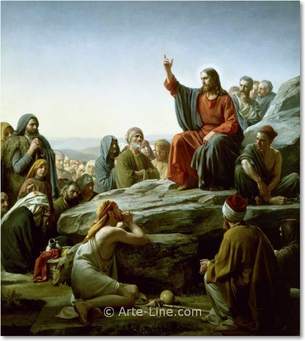
People flocked to Jesus early in his ministry in Galilee, drawn by the candor and consistency of his teaching and the power of his healing. As he left Capernaum one day, the crowd pressed around him to hear his words and feel his touch. Eventually, somewhere on the northeastern shore of the Sea of Galilee, he sat himself down on a rocky hillside and began to teach. Matthew records this event as the Sermon on the Mount.

Rather than being a single event, the Sermon on the Mount may be a collection of ideas that Jesus taught over and over again throughout his ministry captured by Matthew as a summary of his teaching themes. William Barclay, in his commentaries, suggests as much.

One of the most beloved segments of this passage is known as The Beatitudes, a passage that unveils the character demanded of those who desire to be a part of the kingdom of God. When you look at the passage and look at the life of Christ, you’ll find that Jesus modeled each characteristic in his daily walk.

Blessed are the poor in spirit, for theirs is the kingdom of God.
Blessed are those who mourn, for they will be comforted.
Blessed are the meek, for they will inherit the earth.
Blessed are those who hunger and thirst after righteousness,
for they will be filled.
Blessed are the merciful, for they shall be shown mercy.
Blessed are the pure in heart, for they will see God.
Blessed are the peacemakers, for they will be called the sons of God.
Blessed are those who are persecuted because of righteousness,
for theirs is the kingdom of heaven.

Jesus teaches about kingdom living. Think of them as proverbs or declarations. Assuring us that we will feel blessed as a result of our actions or attitudes that align with the expectations of the Father. That demonstrating these character traits leads to promised rewards.

Consider the word “blessed.” Some translations substitute the word “happy” rather than “blessed.” But, “happy” feels too frivolous. Too superficial. Think, rather, in terms of the contentment, joy and peace that comes from being in right relationship with God. It cannot be dampened by external circumstances.

Happiness may be a part of the equation, but take it deeper into the heart of our relationship with the Father. One commentary called being blessed “a pledge of divine reward for the inner spiritual character of the righteous.” I like that. Jesus promises that if we live in such a way as to reflect the character of Christ, we will be filled with inner peace and joy.

Focus on the specific character demanded of those who would be a part of the kingdom of God and the promise that follows. Blessed are…

…the poor in spirit.
To be poor in a financial sense is to be destitute. To be poor in a physical sense is to be oppressed. To be poor in the spirit is to be humbled, to live without arrogance or self-sufficiency. It speaks to the person who recognizes his or her sinful nature; who comes to God each day with a contrite heart; knowing that God’s grace is an unmerited gift that promises a life within the kingdom of God.

…those who mourn.
Everyone in this life will experience sadness and grief. Such mourning is a natural part of the ebb and flow of life. Here, Jesus speaks of those who mourn for a lost world; for the sinfulness that serves as a barrier separating us from God…from the relationship he desired with us when he created us. If we don’t grieve for the lost we will never feel compelled to share the love of Christ with a ruined world. God will provide comfort for those whose hearts break when confronted by sin and disbelief. Comfort which allows us to continue the hard work of reconciling a lost world to the one who loves them so much.

…the meek.
Think of meekness not as passivity or weakness. That is the world’s definition. Its first century meaning carries an idea of self-control…gentleness…kindness…all fruits of the spirit identified by Paul. The meek control their instincts and impulses, harnessing the passion and power within them to build and edify, to lift up rather than tear down. They see all things through the eyes of empathy, hearts free of evil intent and purpose. These are people who treat everyone with respect and dignity regardless of their station in life.

…those who hunger and thirst after righteousness.
Hunger and thirst represent our most primal needs. When truly hungry and thirsty, a body will do almost anything to secure food or drink. Little else seems to matter. To hunger and thirst for righteousness is to demonstrate that strongest spiritual desire to understand and act upon the will of God. Our passion to live for him takes precedence over anything else. Therein lies the promise. The one who seeks after God will have those needs satisfied. His or her life filled with the joy of knowing who walks beside you.

…the merciful.
Mercy is an act of grace. Despite our sinful ways, God offers his forgiveness, requiring only a contrite heart. It is pure, unmerited grace. Mercy is not a quality limited to God alone. As believers in Christ discover his forgiveness, mercy toward others ought to be a natural outgrowth of our hearts. People hurt us. Ignore us. Sin against us. Hate us. Persecute us. We face a choice: retaliate or redeem. Mercy finds expression in the kindness and compassion we extend even to those who hurt us. It is a quality borne out of the mercy God extended toward us even when we hurt him. As we forgive, so are we forgiven. That is the promise of God.

…the pure in heart.
When the Bible speaks of the heart, it speaks to the center of will, the choices we make. Pure in heart means the decisions we make, the desires we hold, the intent of our thoughts and deeds must be unblemished with sin, wholly pleasing to God. The purity of our hearts lies at the center of every characteristic proclaimed in the beatitudes…our mercy, our quest for righteousness, our meekness and humility. Jesus told Nicodemus, “You must be born again” to suggest a spiritual change in his heart. To take that which was unclean and purify it from all self-interests and desires.

Jesus promises those who would listen that the pure in heart would see God. There is certainly within this statement a promise of our life eternal in the presence of the father. It might also suggest that the pure in heart have within them the capacity to see God in every circumstance…seeing his presence in life’s heartbreaks and horrors as well as its blessings and bounty.

…the peacemakers.
The kingdom of God is a kingdom of peace and yet we are too often at war with one another. The broken relationships, the societal divisions, the political acrimony, the racial bigotry drive a wedge between God’s people. Joy comes to those who find ways of bringing people together in the love of Christ, reconciling others to God and to one another. This statement promises the peacemakers will be called “Sons of God.” The Old Testament called angels the Sons of God. Angel may be an apt description of those who act as God’s peacemakers.

…the persecuted.
Living a lifestyle exemplified by the characteristics listed in the beatitudes puts one in a precarious place. The life God demands of his children is a life the world opposes and rejects. All who identify with Christ face a hostile world that tolerates in the best of times and terrorizes in its worst. God offers a promise to those who face such opposition. Hold on. Run the race. Keep the faith. God’s kingdom is yours forever.

I go back to the beginning. We are to live as the image of God. That’s how he created us. We discover how to do that by looking at the life of Christ and paying attention to his teachings. Throughout his ministry Jesus taught us how to live and modeled those choices every day of his life. He lived and breathed every action and attitude he taught in the beatitudes. If we are to live like him, as the image of God, we ought to do the same.

The promise of the beatitudes is not a pie-in-the-sky, wait for it, kind of promise. Barclay writes, “…the beatitudes are not pious hopes of what shall be; they are not glowing but nebulous prophecies of some future bliss; they are congratulations on what is…It is a blessedness (a joy and peace) which exists here and now.”

Live it and claim the promise.

*****

Author’s Note: You can pick up a copy of God’s Mirror Image at the Barnes and Noble Bookstore in Pasadena, Texas, or you can order it online from Amazon.com or any online bookstore. My other books are Put Away Childish Things and The Chase. All are available from Amazon.com or any online bookstore. If none of those options work for you, contact me at kirkallanlewis@yahoo.com. Thanks to all who take the time to read my books and my blog. It’s my prayer that God speaks through each word to each of you.