The Searcher…

Seeing the Big Picture

Background Passages: Genesis 50: 15-21; Jeremiah 29:11

You’ve probably heard the business fable. A story with a moral.

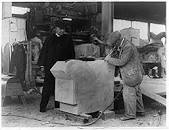
A traveler encountered three stone cutters working in the roadside quarry. Eager to discover what they were working on, the traveler asked the first man what he was doing.

“I’m cutting stone,” he said, returning to his work.

No wiser than before, the traveler walked to the second man. “What are you doing?” He asked.

The second man continued working and gave a more elaborate response. “I’m shaping this stone so it is perfectly square and will fit neatly against that rock over there.”

Still unsure, the traveler approached the third stone cutter. He asked, “What are you doing?”

The stone cutter stopped his work, looked into the distance as if seeing a vision no one else could see. He replied reverently, “I’m building a cathedral.”

I was reminded of this story this week as I visited with a friend of mine who is a hospital administrator. We talked about how hard it is for some people to see how their plans and actions…how their managerial decisions…impact the rest of the organization. We talked about how important it is for leaders to help others see and embrace the bigger picture.

What is true in the business world also rings true in the spiritual realm. There is a real need to see God’s bigger picture.

The selfishness of a sinful world limits our ability to see God’s purpose and plan. Our disobedience, and the sinful choices of those with whom we interact, can put a hiccup in that plan. God continues to guide our lives, however, in ways that work through those misguided and often sinful decisions to put us where he needs us to be at any given point in time doing what he needs us to do to accomplish his will…his big picture.

When we trust enough to look beyond our own desires, God opens our eyes to a deeper meaning and purpose.

Consider the life of Joseph.

Joseph, the first child born to Jacob and his beloved Rachel. Ten older half-brothers, born to different mothers, resented their father’s show of favoritism to their younger sibling. Genesis 37:3 tells it plainly as it sets the stage for all that is about to happen. “Now Israel (Jacob) love Joseph more than any of his other sons…”

Joseph didn’t make it easy on them. The teenager basked in his favored status, wearing his expensive and colorful robe, gifted to him by his father, wherever he went. A constant reminder to his brothers that he was dearly loved and highly favored.

Joseph was a dreamer without a filter. His constant visions and musings painted him as their lord and master…stories he seemed to love sharing with his brothers. He delighted in telling them they would one day bow down to him. Twice he shared similar dreams and scripture says his brothers were jealous, angry and “hated him all the more.”

Taunted by one too many of Joseph’s dreams, the brothers’ resentment took a nasty turn.

You remember the story. Joseph’s brothers were tending the sheep in the rocky hillsides of Judea. After a time, Jacob sent Joseph to find his brothers.

“Go and see if all is well with your brothers and with the flocks and bring word back to me.”

That Joseph was not already with his brothers tending the sheep in the hillside was probably already a source of irritation among the brothers. When they saw him coming in his ornamental jacket, they stewed in murderous contempt. Not wanting to bloody their own hands, they simply dropped Joseph into a deep and dry well, intending to leave him there to die.

The fortuitous passing of a camel caravan presented a more lucrative option. The brothers pulled Joseph from the well and sold him for 20 shekels as a slave to the traders bound for Egypt. With a torn and tattered coat and a little goat’s blood, the brothers returned to their father, false concern etched on their faces, allowing their father to jump to the certain conclusion that his beloved son had been slaughtered by wild animals.

Betrayal.

Joseph probably bears some responsibility for the fractured relationship that existed between he and his brothers, but his brothers violated the expectations of that bond of brothers when they chose bitterness and hate over forgiveness and love.

You probably know the rest of the story as well. Through his God-given gift of interpreting dreams, Joseph rose to a place of prominence in the Pharaoh’s government. During a famine in the land of Israel, the brothers journeyed to Egypt to buy food and came face to face with the unrecognized brother they betrayed. In a series of events to see if his brothers had changed their hearts, Joseph eventually revealed himself to them, extending his forgiveness and inviting the whole family to live in his land of plenty.

It seems that the brothers always expected the heavy foot of revenge to eventually stomp on their heads. They believed that Joseph’s forgiveness and love was a face he put on as long as their father was alive. When Jacob passed away, they just knew Joseph would seek retribution.

They sent word to Joseph offering their lives as slaves. When the brother’s word’s reached Joseph he cried, saddened at the thought that during their time together in Egypt, he had failed to reassure them that they had been forgiven already.

He sent for his brothers. They threw themselves at the feet of Joseph offering again to be his slaves, hoping he would find enough forgiveness in his heart to spare their lives.

Then, he pulled them to their feet and scripture said, “he talked kindly to them.” His words meant to calm and reassure.

“Don’t be afraid. Am I not in the place of God? You intended harm for me, but God intended it for good to accomplish what is now being done, the saving of many lives.”

“God intended it for good…”

I read the story of Joseph and wonder how long it took him to get to that point. How long did it take him to see the bigger picture of God’s purpose and plan?

I suspect there were many nights while enslaved that he choked back the bitterness. Plenty of times when he languished in prison for crimes he did not commit where he blamed his brothers for his plight.

Maybe he began to see what God had in mind as he was called to interpret the Pharaoh’s dream. Maybe he caught a glimpse of God’s purpose when he rose through the ranks to become Pharaoh’s second in command. Maybe he finally saw God’s bigger picture when famine hit the land of Israel and his people came to Egypt for his help. Maybe it wasn’t until he saw the faces of his brothers that he knew how and why God had worked in his life.

Through his life, Joseph teaches us a great lesson. Everyone one of us will face betrayal, hurt, tragedy…a constant litany of struggles that enter and exit our lives. As we live and work through those problems, we have a tendency to focus too closely on the issue at hand…to fail to see the forest for the giant redwood in front of us.

If we’re not looking for the big picture, it’s easier to hold a grudge and more difficult to forgive. Easier to wallow in misery and more difficult to recover. Easier to abandon the joy of life and more difficult to accept and move on.

So how do we get to that point?

We…I…have difficulty at times really understanding that things that happen in life are within the control of an all-powerful and all-knowing God. It’s the old, “why does God let bad things happen to good people” argument. I can accept that all God’s plans are good. I just know that not all of man’s plans are good. Understanding how God can untwist the messes I make and get me back on the path he intended is mind-boggling. Yet, time and time again, I’ve experienced it.

It boils down to trust. It boils down to seeing beyond my situation and trying to see the circumstances of my life through God’s eyes…to see what he wants to accomplish in and through me. I will never get there if I focus on the mess I’ve made or the dirt the world throws in my face.

God’s plan for my life…for your life…is a good one despite the difficulties and hardships we face. It should always be our prayer that God will use whatever happens in our lives to bless our lives and the lives of others.

Jeremiah shared God’s promise to the people of Israel that their exile from their land would not last forever as long as they turned to God. The promise God offered Israel is the same promise he offers us.

“For I know the plans I have for you,” declares the Lord, “plans to prosper you and not to harm you, plans to give you hope and a future.”

God’s plans are always bigger and better than any plan I come up with on my own…a reality for which I am eternally grateful.


Where Does My Help Come From

Background Passage: Psalm 121:1-8

Our muscles ache a bit after hiking eight or so miles each day for the past four days through Big Bend National Park. It’s not that the hikes were particularly strenuous, it’s just that my wife and I did little to get ourselves in shape for four days of hiking in the mountains and canyons in Southwest Texas. 

One of the joys of being retired is the ability to travel in the off-season when everyone else is still at work or school. We found in our hiking that we were often the only people on the trail. Rarely did we encounter any other hikers during our excursions. As a result, every trail, every vista, every mountain, every canyon seemed shrouded in silence and majesty…a place God sculpted just for us to enjoy.

During our first day of hikes, I found myself repeating in my head a verse from Psalms 121.

I lift my eyes to the mountains, where does my help come from? My help comes from the Lord, the maker of heaven and earth.”  

I looked the verse up when I returned from our hike that evening. Psalm 121 is a series of verses that the Israelites recited prior to any journey to the temple of Jerusalem. The psalm implies that the pilgrim is still a distance from the city and pondering the dangers of the journey ahead. He finds peace as he lifts his eyes toward Mount Zion where he believes his God dwells. 

For the pilgrim to Jerusalem the journey was danger-filled. Bandits. Wild animals. Heat. Thirst. It was not an easy trip. These things made him anxious. As he alertly scans the road ahead, he wonders who will help him if he falls into trouble. In his heart he asks, “Where does my help come from?” 

It is question asked and answered by a man of faith. “My help comes from the Lord, the maker of heaven and earth.” No equivocation. No faltering. He knows God is his source of help and protection.

But the psalmist goes on to remind all of Israel of the security they have in God. 

He will not let your foot slip…”

“The Lord is your shade…”

“The Lord will keep you…”

“The Lord will watch over your coming and going…”

The psalmist knows his all-powerful God, the creator of the universe, loves him and will be a constant presence in his life…keeping him on the right path, providing comfort in difficult times, watching his every step. The same holds true for every person of faith.

This psalm brought comfort to the pilgrims facing a long journey to Jerusalem.

I also mind a measure of peace in the psalmists words. The psalm teaches me that…

God is bigger than all my troubles. I see the majesty and beauty of God’s creation laid out along the trail I’m hiking. The creator of all this grandeur is a constant presence in my life. Nothing I encounter in life trumps that. The one who carved the canyon over eons, takes the time to carve out the path in front of me. All I have to do is follow the trail. “He will not let my foot slip.”

God stays close to me. To find relief from the heat of the sun, I must be protected from it by the shade of a rock or tree. That which provides shade must be nearby. It’s not just that God is never far away from me. It’s that he is always by my side. He always stays close…even in the heat of trouble or storm. He is my close protector. 

God watches over me. The creator of the universe loves me so much he that he watches over me. The word doesn’t suggest a casual glance my way from time to time. God doesn’t just check up on us from time to time. It speaks to the ever diligent parent whose eyes never stray from the child at play in the park, constantly scanning the area for signs of any threat. God watches over me. 

God’s concern is constant. Look at the imagery the psalmist uses. “He will not slumber nor sleep.” That’s amazing in itself. With all the evil in the world today, God never takes his eyes off me. He guards my coming and going “now and forevermore.”

Given the words of the psalmist and the truth he reveals, it’s amazing that I still anxious.  I don’t need to worry, but I do from time to time. While such worry may suggest I don’t think God is willing or able to help in my specific circumstance, it’s more often true that I’d just rather do it myself. That’s when I get myself into trouble. 

No the truth is clear. Where does my help come from? It comes from the Lord. 

It just took a few beautiful mountains to remind me.

Cast Your Troubles

Background Passages: Matthew 6:25-34, Luke 12:26-34; John 14:1, Philippians 4:7

The optimism that seems to accompany each new year fades quickly. Most resolutions we make to change the direction of our lives crumble in the reality of old habits and events beyond our control. Within days of our initial optimism we find ourselves mired again in the swamp of anxiety.

Certainly, in our lives and in our world today, we can find reasons to worry without looking very hard.

That could be why many psychologists call our time the “anxious generation.” In New York magazine recently, Jean Twenge, a social researcher from San Diego State University said that anxiety among young people is at an 80-year-high. As bad as it has been since the Great Depression.

Sadly, Christians are not immune to worry, but our faith should provide a buffer to dampen its effect. Jesus said as much during an anxious time for the disciples in the days leading up to his crucifixion.

“Let not your hearts be troubled. Believe in God; believe also in me.” John 14:1

Jesus speaks to the deep trust we must hold in God as we deal with the most difficult times in our lives. But, worry isn’t limited to times of deep crisis, is it? Our tendency is to worry about the little things and the things we cannot control.

I don’t know why Jesus started the conversation we find recorded in Matthew 6 and Luke 12. Scripture doesn’t tell us. It’s not hard to imagine the scene based on the context provided by Luke and Jesus’ introduction to the passage.

Jesus and his disciples just encountered a man who came to Jesus to settle a financial dispute…asking for his inheritance that his brother controlled.  He was a man self-consumed, one who could not see beyond his own desires and the things of this world. He asked Jesus to convince his brother to give him his inheritance immediately. Jesus responded with a parable about those who pursue wealth at all costs, even to the detriment of their eternal condition.

The disciples must have wrestled with its meaning, perhaps even expressing their own fears and apprehensions about the struggles of life. Jesus took the time to explain.

“…I tell you, do not worry about life, what you will eat; or about your body, what you will wear. For life is more than food and the body more than clothes…Who of you by worrying can add a single hour to your life?”

Worry changes nothing.

Jesus spoke to them of the ravens who neither planted nor harvested, yet God provided for them. He talked of the flowers that do not labor or spin yet are clothed more beautifully than the finest garments any king might possess. He talked of the grass in the field that is abundant one day and tossed into the fire the next.

At its heart lied an argument that ran counter to the ways of the world.

Anglican Bishop John Taylor Smith of England autographed his books on the inside of the front cover with the same message every time. The last stanza of his poem alludes to the point Jesus made to his disciples in Luke about living lives not consumed by worry. He wrote:

The worried cow would have lived till now
If she had saved her breath.
But she feared her hay wouldn’t last all day
And she mooed herself to death.

When you see the lilies spinning in distress,
Taking thought to manufacture loveliness;
When you see the little birds build barns for store,
That’s the time for you to worry, not before.

Jesus explained it with less whimsy.

“…you of little faith. Do not set your heart on what you will eat or drink; do not worry about it. For the pagan world runs after such things and your Father knows you need them. But seek his kingdom, and these things will be given to you as well.”

The message: If God’s created order takes care of the smallest of his creatures, how much more will God take care of your needs.

Jesus challenged his disciples to trust in God’s provision and worry less about the things that ultimately do not matter. He encouraged them to focus instead on the kingdom of God and their work within it.

The lesson still rings true, even in our fearful and worrisome world.

In a dramatic statement of “do as I say, not as I do,” it seems to me that we worry when we focus on the wrong things. I’m guilty as charged. Matthew’s retelling of this story adds a word that Luke does not include. Jesus concluded his teaching by stating a sad truth about life.

“Do not worry about tomorrow, for tomorrow will worry about itself. Each day has enough trouble of its own.”

No matter how rose-colored our glasses, each day poses its own unique set of problems we must face.

We worry when we quit living in the present…in the now. Worrying about what has already happened is useless. Worrying about tomorrow is fruitless. We stop worrying when we learn to live in God’s will one day at a time. It is this day and what we do with it that matters.

Theologian William Barclay writes that worry and anxiety are basically irreligious…worldly and not spiritual. He said, “Worry is not caused by external circumstances. In the same circumstance, one man may be absolutely serene and another man worried to death. Both worry and peace come, not from circumstances, but from the heart.”

Jesus said much the same thing in Luke as he ended his teaching. He said,

“For where your treasure is, there your heart will be also.”

What my heart desires is my treasure. So what will I desire for today?

I wish I could say I never worry about things, but I do. Those moments slip up on me when I give no thought to faith. When my faith is lacking. When my heart focuses on worldly things. When I’ve treasured something other than my relationship with a loving Father in heaven who I know deep down will provide whatever is needed through every circumstance.

A new year begins. I’ll offer no petty resolutions I cannot keep. Instead, I’ll offer a renewed commitment to the kind of faith that allows me to walk through life circumstances unafraid of any outcome. I commit to putting my faith and trust in God at the center of my heart. With that comes the kind of peace that crucifies all worry and fear. With that comes peace.

“And the peace of God, which transcends all understanding will guard your hearts and your minds in Christ Jesus.” (Phil. 4:7)

That verses speaks to being content with living in the present when every temptation of the world tries to steal our joy. It offers praises to a loving God who will protect my heart and mind from the agony of anxiety. It is my trust in Christ that carries the day.

May this new year bring you peace through the unmeasured grace of God.

Come To Bethlehem

Background Passages: Luke 2:1-20; Matthew 2:1-12

We often get caught up in the extraordinary events of that first Christmas.

      • An angel’s visit to a chosen, teenage girl.
      • A promised and pristine conception.
      • The birth of the Christ-child.
      • A choir of angels proclaiming “peace and goodwill” to everyone.
      • The shepherds’ worship of a Messiah.
      • The wise men’s gifts to a newborn king.

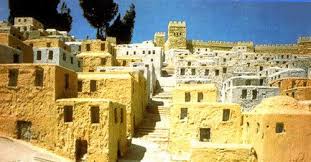
Yet, the Almighty God focused all the extraordinary acts of his perfect plan for the salvation of the world on the obscure, insignificant village of Bethlehem. Chosen from the beginning of creation as the place of the Messiah’s birth, God maneuvered the events of history and enabled the lives of his obedient people to open the gate of a stall and fill its manger with the perfect image of himself.

Sure. Prophecy told us it would be Bethlehem. Israel’s favorite king was born in the little hamlet and herded his sheep in the hills surrounding it. For hundreds of years it slept a few miles from Jerusalem and its Temple Mount. Until the day when Joseph, a direct descendant of David, obediently followed the governor’s law and made a five-day journey from Nazareth to Bethlehem to fill out his census and pay his Roman required tax.

Why Bethlehem?

God could have used any number of better-known cities in Israel to call his king and send his son. Instead, he chose Bethlehem.

If you pay enough attention to God’s work in history, he seldom used the magnificent to achieve his purposes. Far more often, God chose the humble and insignificant. The ordinary and mundane. When it came time to sing the final stanza of salvation that would one day hang on a cross and be raised from the dead, God pointed the world to a tiny village using a star bright enough so all who were willing to follow would find the baby, wrapped in swaddling clothes.

God didn’t send a king. He sent a servant.

God didn’t send a conqueror. He sent a carpenter.

God didn’t choose the temple city of Jerusalem or the royal city of Tiberias. He chose Bethlehem.

Why Bethlehem?

Here’s my thought.

For most of the people of the world, the coming of Jesus to Bethlehem was, and is, a curiosity. A Nativity scene in the courthouse. A painting on a Christmas card. A phrase in a Christmas carol. A tidbit of trivia that changes nothing.

For Mary and Joseph…for the shepherds and the wise men…for me…the coming of Jesus to Bethlehem was, and is, personal and powerful. A God-purposed encounter that changed everything.

God, through his son, Jesus Christ, will never force his way into our lives. Rather, he hangs a star above a stable and invites us to come to Bethlehem. He lets his angels sing and invites us to come to Bethlehem.

We must come to Bethlehem, not for the cold glitter and gold of a palace or cathedral, but for the chance to feel the warmth of a child held in our embrace…God in human form…a child to be adored and loved and worshiped. You see, the where is not nearly as crucial as the why.

Why Bethlehem?

Because Bethlehem is a place where God becomes personal…and powerful. A place where you can find the answer to your greatest longings of heart and soul. A place to see Jesus as God’s gift to you…God’s gift to a hurting world. A chance to embrace Jesus as savior and be forever changed.

Why Bethlehem?

Perhaps its time to come to Bethlehem and see for yourself.

When Jesus Said ‘Thanks’

Background Passages: John 6:11, John 11:41, Luke 10:21, Mark 14:22-24

I married into a family with odd holiday traditions. Pizza on New Year’s Day. Steak on Thanksgiving. Reuben sandwiches on Christmas Eve and Hamburgers on Christmas Day. Nothing against turkey, but I’ve never been wild about dressing, even though everyone else thought a serving of my Mom’s oyster dressing was close to perfection. Adopting the new traditions worked for me.

Our family Thanksgiving meal morphed a little over the years. On this Thanksgiving morning I stood over my grill, cooking chicken and beef fajitas, the new family standard for the holiday.

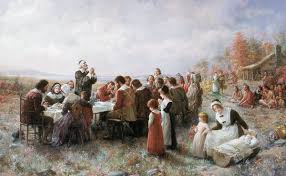
There were 22 people in the house and one-half of them were active, noisy and fun-loving children under the age of nine. At some point after all the running and all the games…after hours of chasing the little ones in circles upstairs…after eating my weight in fajitas, guacamole and coconut cream pie…after having no time to just relax, everyone left. With a cursory effort at straightening the house my wife and I plopped down on the couch in a state of mind we call “blessed exhaustion.” Parents and grandparents know the feeling.

I’m as tired as I’ve ever been, but I am eternally thankful. I love my family and love my time with them. I am thankful for their presence in my life.

Thanksgiving as a holiday was not a tradition in biblical times. Offering thanks to God, however, was a natural part of their worship. It made me wonder about the times Jesus expressed his thanks to God and if those times might be instructive for today’s daily living.

A quick review of my Bible Concordance shows four distinct times when Jesus offered thanks to his father in heaven. Let’s take a look at that for which Jesus was thankful.

*****

Looking out on a sea of hungry people, Andrew tugged at Jesus’ sleeve and introduced him to a young boy who shyly placed a woven basket filled with five loaves of bread and two dried fish into Jesus’ hands…an innocent offering to help the great teacher feed the multitude.

“Jesus then took the loaves, gave thanks, and distributed to those who were seated as much as they wanted. He did the same with the fish,”

In this first instance, Jesus offered thanks to God for his provision. The Bread of Life thankful for the bread of life.

It seems proper to me to be grateful for God’s provision…for food, clothing, health, shelter, family, love, hope…every blessing of God bestowed upon his people. That which I possess in material and spiritual things is far greater than I deserve and far surpassing anything I expected in life. I am thankful to God for his provision.

*****

While ministering to people in Galilee, Jesus received word that Lazarus, one of his best friends, lay gravely ill a great distance away in Judea. With work still to be done where he was and knowing that God was at work in both places, Jesus stayed for two more days before he journeyed to Bethany. In the days it took for Jesus to arrive in Bethany, I believe Jesus spent time praying for his friend and that God would use the circumstance for the glory of God.

As he neared the village days later, Mary and Martha met Jesus with news that their brother Lazarus died. They buried him four days prior. After comforting the sisters of Lazarus, Jesus asked the people to move the stone away from the entrance of the tomb. Jesus stood outside the tomb and prayed again a prayer of thanksgiving.

“Father, I thank you that you have heard me. I knew that you always hear me, but I said it for the benefit of the people standing here, that they may believe that you sent me.”

It never ceases to amaze me the confidence Jesus expressed in the availability of God’s power. In the words, “You have heard me…” Jesus knows God has heard his prayers and will provide him the power to work a miracle in order to give glory to God. His desire was not for personal gain, but that those who witnessed the miraculous could turn toward Jesus as the promised Messiah.

Do you, like me, find it incredible that God, creator of the universe, takes the time to listen to our prayers. I am thankful that, through the intercession of the Holy Spirit, my prayers are heard by an Almighty God. Even when I cannot articulate my need, nor express my feelings, he hears the cry of my heart. Because he hears, God’s power to sustain me in times of greatest need is a prayer away. I am thankful that I can walk through life knowing that God hears my prayers and acts on my behalf.

*****

At one point of his ministry, Jesus paired up 72 of his followers to travel ahead of him proclaiming the good news to the villages and towns. As he commissioned them for the mission work, he told them, “The harvest is plentiful, but the workers are few.” God blessed their efforts and many people put their faith and trust in Jesus. When these disciples returned to report all that God had done through them, Jesus was overjoyed.

“I thank you, Father, Lord of heaven and earth, because you have hidden these things from the wise and learned and revealed them to little children.”

Jesus often chided the Pharisees for relying on the ritual and rule rather than truth and spirit of God’s word. Because they had hardened their hearts against Jesus and could not see who he was, they missed out on the blessings that come with a life lived in faith. Jesus expressed his gratitude that God would reveal his truth to the unlearned, the leper, the tax collector, the sick and afflicted, the sinner. That God would reveal his word to someone like you and me.

On this Thanksgiving, I am thankful for parents, every pastor, every Sunday School teacher, every Bible study leader, every friend who modeled Christ in the way they lived and who introduced me to Jesus. I am thankful for my wife as my spiritual partner. I am eternally thankful for the work of the Holy Spirit in my life as he revealed each new message and meaning of scripture throughout my life.

*****

Jesus offered his final word of thankfulness in the quiet of the upper room, hours before his arrest and crucifixion. Jesus reclined at a table, sharing a meal with his closest followers. He knew without a doubt what the next few days would bring. He knew what his disciples would face in the time to come.

When the moment was right, he got their attention.

“While they were eating, Jesus took bread and when he had given thanks he broke it and gave it to his disciples saying, ‘Take it. This is my body.’ Then, he took the cup, and when he had given thanks, he gave it to them and they all drank from it. ‘This is the blood of my covenant, which is poured out for many.’”

In that prayer of thanks, Jesus acknowledged the sacrificial purpose for which he was sent. Offering his body and his blood for the atonement of the world’s sin. Though he knew what was to come, he expressed his thanks to God for the opportunity to be the agent of salvation to all who would believe. Jesus could have chosen to step away. Instead, he stepped up and allowed himself to be hung on a cross as a sacrifice for the sins of the world.

I am thankful for the work of God’s Son on the cross and the new life he gave to me. I am thankful that he is still at work in the hearts of people around the world. I am eternally grateful for his sacrifice.

Through his words and actions, Jesus teaches us to give thanks. I am grateful this Thanksgiving, not simply for his provision, but also for his desire to hear and answer my prayers. I am thankful that God choses to reveal his truth to anyone willing to listen and learn. I’m thankful for those who serve as his teachers. Finally, I am thankful to God for sending his Son to live among us, to die on the cross and rise as the living Lord of my life since the day I accepted him as savior when I was nine years old. He has been a sustaining presence in my life since that day.

Happy Thanksgiving to you all.

A Different Spirit

Background Verses: Numbers 13:26-33, Numbers 14:20-24, Joshua 14:6-15

At one point about 10 days ago, someone posted a message on Facebook asking for information on Caleb, one of the 12 spies whom Moses sent into the Promised Land on a recon mission. “Was Caleb a good guy?” she asked. She based her question on the feeling that there were not many newborns today named Caleb.

Then, as I picked up the material for teaching my Sunday School class last week, the lesson was on Caleb.

Reflecting on both this disconnected incidents, I looked back at previous writings and resurrected a story I did in January 2016 about Caleb. I enjoyed reading it through again. I thought it might be nice to air it out one more time. The following is a reprint of A Different Spirit.

Flickering firelight
danced across his weathered face
as he paced worriedly behind his brethren.
Caleb.
One of the Twelve.
Scout.
Surveyor.
Spy.

Forty days Canaan.
Time to report.
The Twelve
gathered just outside the tent of Moses.
Circled the campfire.
Considered their conclusions.

For more than an hour
they talked.
The Twelve.
Leaders of their respective tribes.
Extolled the virtues of the land
God promised.
An accurate account of its…
Fullness.
Fertility.
Fruitfulness.

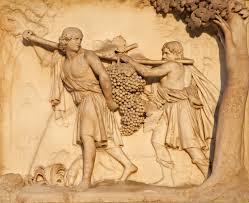
Grape clusters.
Too heavy for one man to carry.
Grain fields.
Bountiful and heavy with seed.
Grassy plains.
Suitable for grazing of vast herds.

They showed and shared the bounty.
Tasted its goodness.
Truly, without question,
a land flowing with
milk and honey.
Just as God promised.

Caleb.
Listened warily.
Prepared for the other shoe to drop.
“A land flowing with milk and honey,” but…

He heard their murmurings
during their journey.
A land of promise, but not potential.
What would be the point?
They would never possess
what they could not conquer.

Daunted
by the fortified cities.
Overwhelmed
by the vast armies.
Intimidated
by the giants in the land.
Caleb knew their hearts to be…
Torn.
Timid.
Terrified.

They grimaced and grumbled.
Fearful.
Fretful.
Worried about facing the descendants of great warrior tribes.
Amalikites.
Hittites.
Jebusites.
Amorites.
Canaanites.

“All too proud.”
“All too powerful.”
“All too much for us to handle.”

Caleb could listen no more.
He winced at the
fury of their faithlessness.
“We cannot attack.
They are stronger than we are.”
Caleb’s frustration boiling over
into an agonizing shout.
“Are you children afraid of the night?”

Every eye turned to the man of Judah.
Shocked at the outburst
from a man ordinarily subdued.
Moses locked eyes with his friend,
a wry glance,
as if to say.
“Okay, you’ve got our attention now…”

Caleb.
Took a deep breath.
Exhaled slowly.
Walked back to the center of the campfire.
Plucked a handful of grapes from the Canaanite cluster.
Voice barely above a whisper.
“Everything you said about the land is true.
We could not ask for more.
Lovely.
Lush.
Everything of which we dreamed while in Egypt.
Everything God promised.

“The people are many.
Cities walled and protected.
The armies experienced and well-equipped.”
Voice growing stronger as he
emphasized his point.

“You are right.
We cannot attack.
They are stronger than us…”
Caleb paused and looked the men squarely in their eyes,
fire of the campfire reflecting in his own.
“But they do not have our God on their side.
We do.

“We should go up.
Take possession of the land…
For with God,
we can surely do it.”

Silence.
The men averted their eyes from Caleb’s steady gaze.
Only Joshua stood with Caleb.
Then…
Arguments.
Counter arguments.
Lasted for hours.
No resolution.
As they disbanded,
Ten of the Twelve
spread panic among the people
until the whole community refused to claim the land
God promised.

*

Rebellion paid its price.
God lost patience with their
constant condemnation
of their covenant with him.
The Lord made a new promise to Moses.
“No one who treated me with contempt
will ever see the Promised Land.
Because my servant Caleb has a
different spirit and
follows me with his whole heart,
he and his descendants will inherit the land.”

For 40 years,
the Israelites wandered in the desert.
Time passed.
A new generation of Israelites prepared to enter
the land of God’s promise.

*

Joshua.
Stood on the hill east of the Jordan River.
Stared across the deep valley into
the rugged terrain of the Negev.
The ancient city of Jericho just below the horizon
lay between the river and the mountains.

Joshua’s task.
Divide the land among the Tribes of Abraham.
Take the land God promised his forefathers.
It would not be easy.

The Israelite leader heard the crunch of
stones under sandal.
Felt his friend of many years
standing at his side.

Joshua glanced to his right.
Nodded his head in simple greeting.
“Caleb.”

Though 85-years-old, Caleb stood…
Straight.
Steady.
Strong.
He smiled at his younger friend.
Let his eyes follow the gaze of Joshua
into the morning haze.
Stared deeply into the distant lands.
Thoughts dwelling upon the people they must defeat.

“Do you remember,”
asked Caleb quietly,
“what the Lord said to Moses about you and me?”
A question in need of no answer.
The two discussed that day many times
during their desert wanderings.

“I let my heart speak then about the possibilities,” said Caleb,
“though our brothers did not see it the same.
Yet, I have always followed God with all my heart and
always trusted his promises.”
He shrugged as if his next statement was a given.
“If God gave the land to us, then they,”
Caleb nodded toward the unseen enemy,
“they cannot defeat us.”

Caleb knelt on his haunches,
pushing aside the pebbles with his knife.
“You know as I do.
Our people fear the Anakites more than any other.
Their cities are fortresses.
Their men strong and tall.
‘Like giants,’ our people said.”
Caleb laughed softly,
knowing there was some truth to their words.

Then, he let out a long breath.
Stood and squared his shoulders.
Pointed to the rugged countryside across the river.
Toward the land of Anak and the giants.

“Give me those mountains.
With the Lord’s help,
I will drive them out just as he promised.”

Joshua.
Amazed at the faith of his old friend.
Nodded in agreement.
Placed his hands on Caleb’s head.
Offered a prayer and blessing for God’s
presence and protection.

Without another word,
Caleb turned and walked away with purpose.
Prepared to claim that which
God promised.

*

The Bible tells us that Joshua assigned Caleb the land he requested. The land filled with giants. The Bible tells us. The Lord helped Caleb defeat every enemy, opening the land to Caleb and his family. As history began to unfold. Caleb’s land became the land that gave life to David. The land that gave birth to the Messiah. Caleb’s faith became a critical cog in the plan and purpose of God.

The Bible tells us. Caleb experienced all God promised “because my servant Caleb has a different spirit. He follows me wholeheartedly.”

Too often we live a timid faith, recognizing the…

beauty of God’s promise.
bounty of God’s provision.
benefit of God’s presence.

But, altogether failing to embrace the role we play in God’s plan. We see the real or imagined giants living in the land we’ve been called by him to conquer…and we cower.

However, because he hold his plan in contempt, we wander the desert of our heart never experiencing the land God’s promised. “My servant Caleb has a different spirit. He follows me wholeheartedly.”

What does this mean?

Conviction.
Ten of the twelve believed God’s promise a lost cause. Though they saw his provision in the land, they lacked the conviction to claim it as their own. Caleb stood convinced that God would finish what he started when he brought them out of Egypt. Convicted of the truth that God would always honor his covenant.

We must recognize that God’s purpose and promise is more than unfilled potential. Our conviction moves us to act. Moves us beyond thinking the task ahead is impossible into a certain realization that all things are possible to those who are called according to his purpose. Conviction creates within us a different spirit.

Confidence.
As one of the twelve, Caleb walked among the same fortified cities. Stood in the shadows of the same giants. Yet around the campfire he demonstrated his complete confidence in the promise of God. “For we can certainly do this.”

Unwavering faith.
Unyielding trust.
Unbridled confidence.

We walk among the walled cities of a sinful world, knowing, without doubt, that we face a difficult battle if we stay on the path God chose for us. Life’s circumstances can seem…

Insurmountable.
Unconquerable.
Invincible.

In our own strength, we remain powerless to overcome. Yet, within the power of God, the indwelling presence of the Holy Spirit, our confidence soars. Even as we walk among life’s giants, our confidence in the Father allows us to walk with a different spirit.

Courage.
Caleb begged Joshua, “Give me those mountains.” He asked for the assignment, not because those mountains represented the most fertile or the easiest enemy to defeat. Caleb wanted those mountains because they were the most difficult and dangerous. It was the land no one else wanted because of the obstacle it represented.

Conviction and confidence allowed Caleb to trust in God. Courage made it possible for him to take that first step toward victory.

Conviction.
Confidence.
Courage.

One leads to the other. All point to a personal God who desires only the best for us. Living wholeheartedly for God, living with a different spirit requires that we live each day convicted of his promise. Confident in his provision. Courageous within his presence.

Whatever walled fortresses prevent us from moving forward, whatever giants cause us to tremble, let us walk as Caleb walked. May God see in us a different spirit.

What’s Your Burning Bush

Background Passages: Exodus 3, Exodus 4, Mark 2:1-12; Mark 5:32-28

Not that it matters, but do you know the name of the instrument used by the ophthalmologist during an eye examination…the gizmo with the chin rest and all the dials and levers? I didn’t know its name either until my last visit with my eye doctor. I asked this time. Now I know. It’s a phoropter.

You’re welcome.

A phoropter is the instrument used to measure refractive error and determine your visual acuity. The patient sits behind the phoropter with chin in place and views an eye chart. The doctor changes lenses and other settings while asking a series of insightful questions.

“Is this better? (Click) Or this?”

As the doctor narrows in on the proper measurements, the distinction gets more difficult to determine. That’s usually when I start feeling like I failed the test. We went through the pattern again during my recent eye exam with the same questions, but this time, as we narrowed down the acuity, he simply asked,

“What can you see?”

It’s a fair question then. It’s an even better question when you look at its deeper, spiritual implications. I found at least one answer in the life of Moses.

This was not his first
brush fire.
A careless ember from a campfire.
A lightning strike.
All it took in the arid wilderness
to start a fire.
He had no idea how this one started.

After 40 years in Midian,
Moses had seen his share of wildfires.
At first glance,
this one looked no different.

Weary from an endless day.
Leading his sheep to
greener pastures
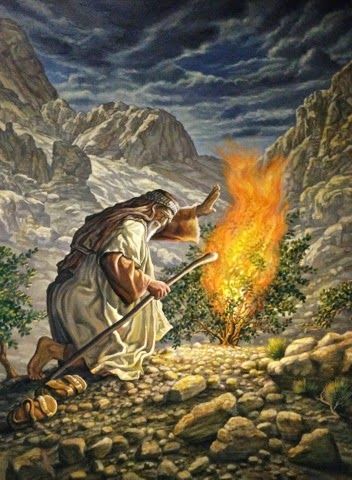
Moses saw the fire as he crested the hill.
A quick assessment deemed it a
minimal threat.
He thought,
“A little sand.
Smother the fire.
Problem solved.”

Moses took a few steps toward the flame.
He stopped abruptly in his tracks.
First,
Cautious.
Curious.
Then,
Confused.
Confounded.

For a long moment,
Moses stared intently into the
heart of the flame.

“Moses saw that,
though the bush was on fire,
it did not burn up.
So Moses thought,
‘I will go over and see this strange sight—
why the bush does not burn up.’

In that moment,
Once Moses saw something more
than a typical fire…
Only then,
did God call out,
“Moses!”

Apparently, Moses wasn’t the excitable type.

In one of the most understated sentences uttered by an Old Testament character, Moses, saw that the bush was not burning. He calmly said, “I will go over and see this strange sight—why the bush does not burn up.”

I’m pretty sure my response would have been a bit more dramatic…something like, “Holy Moses!…”

I’ve heard this story many times since I was a child. Saw it played out on flannel board and in children’s plays. I’ve heard multiple sermons about God calling Moses to lead his people out of Egypt.

What struck me this week about this story was not that God called Moses to do important work, but that God didn’t call Moses’ name until the shepherd noticed something never before seen. The sight itself was not unusual. At first glance, Moses saw a fire that he needed to put out. Nothing more. Then, he noticed something different.

“When Moses saw that, though the bush was on fire, it did not burn up…”

Then, and only then…only when Moses noticed that the bush was not being consumed by the fire did God call his name. God waited to call until Moses opened his eyes.

So I also wonder, after 40 years in the Midianite wilderness…how many signs from God did Moses miss before the burning bush captured his attention?

The question to me becomes personal. What signs from God have I missed? What is it I need to see before God can call me to do important work? What do I need to notice before he calls my name?

Really, what or where or who is my burning bush?

There is a difference between seeing and really seeing, isn’t there? I can see my wife’s shoes and not notice that that they are new. (A fact for which she says she is forever grateful.) I can see her dressed for a night out and not notice how pretty she is. (One of my less than redeeming qualities.)

When you really think about it. Jesus saw things that most people don’t see…ever.

Everywhere the disciples went with Jesus, they saw the crowds that followed. They saw the multitudes of people and the problems they caused. Mouths to feed against their meager resources. “We have no food to feed them. Send them away.”

Andrew, bless his heart, saw a child with five loaves and two fishes. Even in his seeing he didn’t really notice. “What difference will these make among so many?”

Jesus, scripture says, “saw the large crowd and had compassion on them.” He noticed their hurt. Their need. He looked past their empty stomachs and saw into their empty hearts. He glimpsed the same five loaves and fishes and saw an opportunity.

In Mark, Jesus saw the friends leaning over the hole in a roof of a packed house after lowering their paralyzed friend to the floor in front of him. Where I might focus on the man lying in front of me, scripture says Jesus “saw the faith” of his friends. Where I might have noticed a man in need of physical healing, Jesus noticed a man whose sins needed forgiveness. Where I might have been uncomfortable with the Pharisees and scribes mumbling in the background, Jesus saw their devious and wicked thoughts.

Jesus noticed things others couldn’t see.

Give Moses credit. Where I might see a fire, Moses saw a burning bush that was not being consumed. It wasn’t until he noticed the difference that God could speak to an open heart.

So, it begs a question…

What is my burning bush? What is your burning bush?

A neighbor we wave to, but never visit?
A homeless man we’ve passed every day on our way to work?
An estranged son or daughter whose phone call we don’t return?
An unfilled place of service within our church?
The person we know who keeps questioning our faith?
The scripture verse that keeps popping into our thoughts?
A need in our community that goes unmet year after year?

What is it you see every day, but never notice? Who is the person God is using to get your attention? Your burning bush and mine will most probably me different. That’s because he needs us to do different things. To touch different people. He has something special for you and me. The signs are everywhere…if we will just take the time to notice. He can’t call our names until we do because until we notice we won’t hear him call.

Here’s the rest of that story. From the burning bush God called Moses to do an extraordinary thing. A task so great Moses felt unworthy. Think about that. Staring at a bush that wouldn’t burn and hearing God’s voice from its flame, Moses thought of reason upon reason why he shouldn’t or couldn’t do this work.

His excuses are the very ones I use to give myself permission to ignore the call…

Who am I? They won’t listen to me. God says, “I will be with you.”
Who are you? God says, “Tell them, ‘I am who I am.’ Tell them who I am.”
They won’t believe me! God says, “I will give you what you need to show them.”
I don’t talk very well. What would I say? God says, “I’ll give you the words.”

You and I will offer up every excuse to keep from doing what we know God wants us to do. But, God will answer every excuse if we just make ourselves available. Here’s the absolute truth of the matter. God doesn’t show us a burning bush to capture our attention unless we are ready, with his help, to do his work.

William Hazlett, a 19th century English essayist, social commentator and philosopher noted that through mankind’s history “…millions saw an apple fall from a tree, but only Isaac Newton asked why?

Maybe it’s an apple falling from a tree or maybe it’s a burning bush. Whatever it is, take time to look at the world around you and really notice what you’re seeing. When you notice what you’re seeing, I believe you’ll hear God call your name.

No more excuses. No more justifications.

What is your burning bush?

Clanging Cymbals

Background Passages: I Corinthians 13:1-13; I Corinthians 1:4-7; 3:1-2 and I Corinthians 12

Thankfully, I never experienced it.

A friend of mine in college was majoring in electrical engineering. His roommate never seemed to get up in time for that dreaded 7:30 a.m. English class. The snooze button on his alarm was his favorite friend.

Desperate, the roommate asked my friend for help. The future engineer purchased one of those cymbal clanging monkey toys and, with expertise beyond my capability, rigged it up to a clock and the light switch across the room. Then, every morning at the appointed time, the monkey would crash its cymbals incessantly until the roommate got out of bed and turned on the light.

Ingenious and diabolically annoying.

I think the arrangement lasted only three days before the monkey and its cymbals were found in pieces in my friend’s bed like the horse head in The Godfather. Message sent and received.

As I said, thankfully, I never had to experience it. I would not have lasted three days. There is a reason you never hear a cymbal solo in the band or orchestra. A cymbal by itself is just noise.

After Paul founded the church in Corinth, he moved his base of ministry to Ephesus. While spending a couple of years in that city, Paul began to hear disturbing reports about the divisions and factions developing in the church in Corinth. He eventually received a letter from the congregation asking for clarity on a number of issues the divided church faced. Paul penned a response (I Corinthians) designed to instruct and encourage a gifted, but fractured group of people who failed to shake the influence of the dominate culture.

Paul recognized that God gifted the people in Corinth to do the work he required of them, telling them they had been “enriched in every way…in all your speaking and in all your knowledge…” and that they “do not lack any spiritual gift…” (I Cor. 1:4-7) Yet, he admonished them for growing no deeper in their faith and understanding over the years.

Brethren, I could not address you as spiritual but as worldly…mere infants in Christ. I gave you milk, not solid food for you were not yet ready for it. Indeed, you are still not ready.” (I Cor. 3:1-2)

Their shallow understanding of God’s teaching and an egotistic application of their giftedness, split the church. Paul recognized that the people of the church had grown little spiritually over the years. They took the basics of faith taught by Paul and did little to deepen their understanding. They still thought and behaved as spiritual children.

There is a richness to the Christian faith that makes living the life of Christ a process…a necessary investment of time, study and the lifelong application of our experiences with God that challenges our faith and dares us to dig more deeply into his truth.

What I knew of God’s word as a 9-year-old boy who just accepted Christ should not be the same as what I know almost six decades later. Any deeper understanding of God’s teaching requires effort on my part, the desire to learn from his word, from his revelation and through the private rebellions and the personal restorations I experience as a child of God.

Life compels us to ask the question. From the moment we accepted Jesus into our hearts, have we grown in our understanding of what God desires of us? Are we gnawing on the meat and bone of God’s word or are we still drinking the milk, with a stomach unconditioned for the deeper truths.

The lack of personal spiritual growth in the Corinthian church led to a great many issues Paul tried to address. He wrote to them about their struggles with sexual immorality and marriage and their insistence on personal rights that caused others to stumble in their faith. He spoke to them of worship and how to make the ordinance of the Lord’s Supper meaningful.

Then, in I Corinthians 12, he provided a powerful lesson about using their individual giftedness to benefit the work of the church rather than glorifying the gifted.

God has combined the members of the body and has given greater honor to the parts that lacked it, so that there should be no division in the body, but that the parts should have equal concern for each other. If one part suffers, every part suffers with it; if one part is honored, every part rejoices with it. Now you are the body of Christ and each one of you is a part of it. (I Cor. 12:24b-27)

How do you act as one body in Christ, each benefiting from the gifts of the other? Paul answered the question in the “most excellent way.”

“If I speak in tongues of men and angels and have not love, I am only a resounding gong or a clanging cymbal. If I have the gift of prophesy and can fathom the mysteries and all knowledge, and if I have a faith that can move mountains and have not love, I am nothing. If I give all I possess to the poor and surrender my body to the flames, but have not love, I gain nothing.”

Resounding gongs. Clanging cymbals. Screeching clarinets. Paul says the spiritual gifts God shares with his people will grate on people…will annoy to the point of distraction and division… will cause them to close the door to the faith we practice…unless those gifts are grounded and used in the love of Christ.

Loving others as Christ loves may be the greatest mark of our spiritual maturity, particularly in a world in which hatred and division rules and agape love is in such short supply.

As Paul told the Corinthian church he tells us what that love looks like.

“Love is patient. Love is kind. It does not envy. It does not boast. It is not proud. It is not rude. It is not self-seeking. It is not easily angered. It keeps no record of wrongs. Love does not delight in evil but rejoices with the truth. It always protects, always trusts, always hopes, always perseveres. Love never fails.”

The deeper we dig into God’s word…the more we imitate the life of Christ…the more we begin to understand how loving one another in Christ lets us see the needs of those around us with selfless clarity.

Love is everything this world is not. When our words and actions do not reflect the kind of love Paul describes, we are little more than clanging cymbals…spiritually inclined, but annoying and hollow sounding.

The Corinthians needed to learn that the things in which they took pride would fade away. They needed to understand that love reigns supreme. As gifted as we may be, as great as our faith and hope are, love is greater. Theologian William Barclay said, “Faith without love is cold. Hope without love is grim. Love is the fire which kindles faith and love is the light which turns hope into certainty.”

Until love waters our souls, the roots of our faith and hope will never stretch deeper into God’s truth. We will miss every opportunity to shine God’s light into the darkness. Paul knew it was the missing piece in the Corinthian church.

God knows it is one piece of our lives that can keep us from fully experiencing God’s blessings and from extending God’s grace to a lost world.

I don’t know about you, but I needed to hear that word this week.

“And now, these three remain: faith, hope and love. But the greatest of these is love.”

Teach Us To Pray

Background Passage: Luke 11:1-13; I Thessalonians 5:17

As the sun rose, Jesus sat silhouetted against the hills, his back against a fig tree. His disciples watched a short distance away, mesmerized by the intensity of the private conversation between Jesus and his father in heaven. They noticed a difference in the prayers of their master and their own more ritualized mutterings. While Jesus prayed passionately and with purpose, theirs seemed more rote than real.

His daily prayer finished, Jesus walked toward them, smiling brighter than the morning sun. “Let’s eat,” he said as he patted his hungry stomach and clapped his hands to get their attention. Nathaniel walked beside Jesus as they entered the courtyard of the house where they were staying, glancing at Jesus as if he had something on his mind.

Jesus eyed Nathaniel and the other disciples who tried hard to go unnoticed. The master grinned, shrugged his shoulders and asked, “What’s on your mind?”

Voicing the words whispered by other disciples that morning as Jesus prayed, Nathaniel spoke up. “John taught his disciples to pray. We’ve watched you, Jesus. Heard your words. Can you teach us to pray as you do?”

As they settled into breakfast, the lesson began.

“Pray like this,” he said,

“Our Father, in heaven,
Hallowed by your name.
Your kingdom come. Your will be done
on earth as it is in heaven…”

Jesus finished his model prayer and looked at a room filled with blank faces. They didn’t get it. He thought for a minute and told a story, driving home his point. “Think about it this way…

“Suppose one of you has a friend and he goes to him at midnight and says, ‘Friend, lend me three loaves of bread because a friend of mine on a journey has come to me and I have nothing to set before him.’”

A murmur from the disciples let Jesus know that they understood the gravity of the situation.

Unthinkable!

Unpardonable!

Steeped in culture and tradition, a Jewish family could never be caught unprepared when a guest arrived. Such a mistake was not only unthinkable, it was embarrassing and unforgivable. A fresh reminder of cultural duty.

Jesus went on to explain that the man inside did not wish to disturb his family at such a late hour. Turned his friend away at the door. The neighbor continued knocking on the door, pleading for his help, until his friend relented. Grabbing tomorrow morning’s bread from the shelf, the man handed it to the neighbor outside. A heart more filled with bitterness than benevolence.

Jesus stared quietly at his disciples who understood the intensity of that gaze to mean, “Listen up. Here’s the point.”

“I tell you, though he will not get up and give him the bread because he is his friend, yet because of the man’s boldness (shamelessness), he will get up and give him as much as he needs. So, I say to you, ‘Ask and it will be given to you; seek and you will find; knock and the door will be opened to you.’ For everyone who asks receives; he who seeks finds and to him who knocks, the door will be opened.”

Missing the point, one of the disciples probably mumbled at the back of the room. “Does God answer our prayers so reluctantly?” Jesus winked at the disciple who turned red with embarrassment. With a glint of amusement in his eyes and his tongue firmly in his cheek, Jesus answered,

“Which of you fathers, if your son asks for a fish, will give him a snake instead? Or if he asks for an egg will give him a scorpion? If you then, though you are evil (sinful), know how to give good gifts to your children, how much more will your father in heaven give the Holy Spirit to those who ask him.”

There has been a long-standing and not fully answered question in our family about the nature of prayer. Does it demonstrate more faith to go to God just once with my concern, trusting that he will answer in accordance to his will? Or am I to “pray without ceasing,” as Paul admonishes, in effect, pounding on heaven’s door until God responds?

The passage, I think, is instructive.

The disciples recognized the power of Jesus’ prayers. Personal. Passionate. Purposeful. We see Jesus throughout scripture praying in the big moments of life. At the start of his ministry…prior to a miracle…in the Garden of Gethsemane…on the cross. This day held nothing special. No significance. Just an ordinary day. Yet, we see Jesus praying. Prayer was a pattern, a routine part of his day.

As he explained his model prayer to his disciples, he used words that indicated that it was God’s intent for prayer to be a continuous part of life. Grammatically in the language of the New Testament, the verbs “ask,” “seek,” and “knock” should be read as “keep on asking,” keep on seeking” and “keep on knocking.“ Continuously bringing your requests, your concerns, your needs to the father.

Pray without ceasing. Right?

That doesn’t mean that if we are annoyingly persistent that God will give in to our requests just to shut us up. Jesus model prayer speaks to the content of the prayers that God honors. God honors and responds to prayers aligned with his will for our lives. “Your will be done” is not a catch phrase to make a greedy request sound honorable. It’s the crux of the whole thing.

God responds appropriately to the submissive heart that keeps on asking, seeking and knocking that things within the will of God will be made real in a person’s life.

“Give us this day our daily bread” speaks to our desire for God to arm us with all we need to accomplish his will in our lives. It is not a guarantee of a chicken in every pot and a car in every garage. God feeds the sparrow after all. It’s not about hitting the prayer lottery where every want gets fulfilled.

Prayer means knowing that God’s plan for my life is perfect and all I need is that which God requires me to have in order to live faithfully within his will.

“Forgive us our sins as we forgive those who sin against us” is a request for a pure and righteous heart. A desire to stay on the path God laid out for us to travel. It is a petition to put us back on that path when we decide for a moment to go our own way. It is also a request to make forgiveness a lifestyle choice, freely given to those who hurt us.

“Lead us not into temptation” serves as a plea for wisdom to make the right choices. To keep from putting myself in a position to fall away from God’s purpose and plan for my life.

Maybe Jesus is trying to convey the idea that we should be in constant prayer to God for those things that matter most to God. The things that are most important to him. The things he wants most for us.

What if our prayers were for the right words to say to a hurting friend? What if we prayed for wisdom to discern what steps to take in a crisis? What if our prayers sought patience in dealing with a difficult colleague or situation? For a pure heart? The healing of a fractured relationship? To see the good in others? For an extra measure of hope and faith? To act always in accordance to his will and way? To grow beyond my disappointments?

I think God loves it when we pray persistently and with confidence for our spiritual needs. It expresses within us the desire to have God’s help every day in becoming more like Christ.

“What father would give his son a scorpion when he asked for an egg? If a sinful person like you knows how to treat those he loves, how much more will the Father/Creator provide to his children through his spirit? A rhetorical question with an obvious answer. God will never fail to deliver on the prayers of those who ask for the right things with the right heart, at the right time and in the right spirit.

Here’s where I think I’m going with this. Maybe it’s enough for me to pray just once that I get that new job as long as it is in the Father’s will for my life to have it. Maybe I can pray only once that we stay safe in the middle of a storm. Maybe that’s a sign of my faith that God will answer or not answer based upon what’s best for me.

But, I should also pray without ceasing…keep on asking, seeking and knocking persistently…for the things of God. Wisdom. Patience. Faith. Hope. Love. God never tires of us petitioning him for that which makes us more like Christ.

Prayer is not about bending God’s will to the desires of my heart. Prayer is about aligning the desires of my heart with the will of God. God will listen to that prayer all day, every day, and twice on Sunday.

Amen?

An Inconvenient Faith

Background Passages: Jude; Romans 8:28, Luke 14:28-33; Matthew 16:25-26

We live in a culture that carries with it a sense of entitlement to the good life. A belief that the world owes us a certain standard of living. An expected quality of life. There is an increasing number of people in our culture who hold an unrealistic, unmerited and inappropriate expectation that others should extend to them favorable treatment or conditions to make their lives easier. Our culture seems to have abandoned, to a large degree, the idea of personal accountability.

Everyone signs off on the idea of our responsibility of helping others, but we tend to qualify that assistance with “as long as its convenient and benefits me.”

It’s a sad enough perspective when taken at a culture level, when this sense of entitlement creeps into the life of the church it weakens our message and our ministry. Yet, there is a thread of entitlement weaving its way into the gospel turning worship into entertainment and God’s word into a watered down “make me feel good about myself” version of truth.

The brightly colored billboard advertising a mega-church led with this…

“All things work together for good…” (Rom. 8:28)

On its surface, a positive and encouraging message. The snippet suggests that God loves me so much that he will prevent bad things from happening to me. That I am somehow entitled to his blessing. That his will for my life is filled with financial blessing and physical health. That all I need to do is to stay positive. To think positive thoughts. It is the root of the prosperity gospel so prevalent today.

The trouble with faith grounded in entitlement is as life takes a turn for the worse, which it will inevitably do, the roots of our belief barely stretch beyond the topsoil, depriving us of the strength we need in troubled times. When life and faith fail to match our expectations, we question the reality of God’s love.

The problem with the truncated message of the billboard is that it left out the important part.

“For we know that in all things God works for the good of those who love him, who have been called according to his purpose.” (Romans 8:28)

I have learned in my life that God works through tragedy and turmoil to teach me…and grow me…and nurture me…and sustain me. To make his presence known. To allow me to feel his presence through his perpetual love and perfect will for my life. For me to understand his working in my life I must focus my love, faith and trust on him. Whatever the outcome, God’s result will always be better than anything I try to do on my own.

The conflict between authentic faith and convenient faith is not new. It has been an issue for the church from the beginning. The rich young ruler turned away from Jesus because the demands of discipleship were too high. Judas betrayed Jesus because his gospel didn’t fit his world perspective.

Demas, a cohort of Paul’s during his second missionary journey, shirked his responsibilities and abandoned Paul while the apostle languished in a Roman prison. When Demas faced a difficult moment of ministry, God’s way looked too steep. The world’s way looked easier, more prosperous…more convenient…and he walked away.

Yet, there is an answer. Buried in plain view in one of the most obscure books of the New Testament.

Despite its rapid growth, the early Christian church fought through serious issues that challenged the nature of faith. By the time Jude wrote his letter to a group of Jewish converts, the battle for authentic faith hit with full force.

It didn’t take long for folks to try and make the Christian life more convenient by distorting the teachings of Christ. Within a few years of Jesus’ time on earth, there were those who perverted the concept of God’s grace. Since grace trumped the law, they reasoned, then morality doesn’t matter. You can live anyway you please knowing that God’s grace covers all sin. They took this idea so far that these false teachers declared that the more you sinned, the more grace was revealed, adding to your testimony of God’s goodness. As Dana Carvey’s “Church Lady” once proclaimed, “How convenient.”

The early church also wrestled with those who believed that God granted special knowledge to some people that made them more godly than others to whom this knowledge was denied. That true salvation depended upon receiving this special knowledge.

Early in his letter, Jude tells us he intended to write them about the faith they share. Helping them grow deeper in that faith. Because of the issues they faced, his message changed, urging them, instead, to be prepared to defend the faith against those who would distort the truth. Jude recognized that the greatest danger to the Christian faith was not the opposition from outside the church, but from those inside the faith who would lessen the demands of discipleship to make it more palatable…easier…convenient. Jude called these folks, “clouds that drop no rain but are blown away by the wind.”

Authentic faith is never convenient. Authentic faith never promises personal prosperity. It never promises an easier life by the world’s standards. Authentic faith always calls us to step outside our comfort zones to be obedient to his will and to meet the needs of others. To live the life he called us to live. Authentic faith requires us to set aside any sense of entitlement and live in service to others.

The question is how do we do that?

Jude gives us the blueprint.

“But you, beloved, you must build yourselves up on the foundation of your most holy faith; you must pray in the Holy spirit; you must keep yourselves in the love of God; while you wait for the mercy of our Lord Jesus Christ which will bring you life eternal.” {Jude 20-21)

Build our lives on the foundation of faith handed down through Jesus Christ. The person of faith rests his life not on personal opinion or a man-inspired gospel, but upon the words and truth of Jesus. A few verses earlier he called upon his brothers and sisters in Christ to “remember the words of the apostles.” To ground ourselves in scripture. Yet, he adds a clear distinctive. It’s not enough for us to rely on our own interpretations, but to look at the gospel of Christ under the prayerful guidance of the God’s spirit. Testing what we think we think we know against his word and the spirit’s revelation to us.

Jude also teaches that the foundation of our faith will be evidence in our love for God. God loves us unconditionally. His love is a gift of grace. Such grace…such love…demands that we make the effort to stay in close, intimate relationship with the God we love. Pure. Real. Honest. True. Demonstrated by our obedience to his will and the life he calls us to live.

You see, genuine faith is not designed to make the world different, but to make us different. Faith can never be an intellectual belief nor a cultural perspective. It is meant to be a life-changing, moral imperative.

Jesus told us there would be a price to pay for following him.

“For which of you, intending to build a tower, does not sit down first and count the cost, whether he has enough to finish it…so, likewise, whoever of you does not forsake all he has cannot be my disciple. (Luke 14:28, 33)

“For whoever desires to save his life will lose it, but whoever loses his life for my sake will find it. What does it profit a man if he gains the whole world and loses his soul?” (Matthew 16:25-26)

We are called to an inconvenient faith. It will be hard…demanding…difficult…and, if expressed well, more joyous that you can ever hope to experience any other way.