The Searcher…

Finding Hope Amid the Hopelessness

Background Passages: Psalm 31:24, Psalm 33:18, Romans 5:3, Isaiah 40:31, Romans 12:12, Jeremiah 29:11

If our coronavirus, racial-tense, economically stricken world has taught us anything, it’s that the things of this world will confound and confuse us, rust away and lose their luster, or fizzle out and fade away.

Maybe we can handled one or two of those things happening at the same time. When we are hit with a tsunami of negative news and issues seemingly without solution, the feeling of hopelessness can overwhelm us.

I’m a generally optimistic person and I admit I’ve felt it at times during the past five months. We wonder: “Will we survive this?” Or “When will this ever end?”

Two verses provide a message for our worrisome day.

“Be strong and take heart, all you who hope in the Lord.” (Psalm 31:24) “The eyes of the Lord are on those who fear him; on those who hope in his unfailing love.” (Psalm 33:18)

The verses beg the question. What is our source of hope?

Several years ago, psychologist Dr. Shane Lopez began to ask those he encountered what they meant when they talked about hope. To get the conversation started, he asked his friends and clients to take the Head-Heart-Holy test. It starts, he said, by asking the question, “Given your background and all life experiences, where does hope originate?”

The analysis determines whether one’s hope comes from one’s head (That which you believe and think you can control), heart (The emotions that respond to events and guide your actions) or whatever one finds sacred (the belief in God or some higher power at work). Lopez says that most people ascribe hope to the heart…a feeling that comes and goes depending on life events and circumstances.

It seems to me if you’re dependent upon life circumstances as a basis of hope, much of your life will be spent in a frenzied foxhole, hoping to avoid what feels inevitable. For those of us who put our faith and trust in Christ, the origin of hope is found in a leap of faith, especially in the darkest times.

Growing up on a farm 22 miles from the nearest decent sized city, I took for granted the stars in the night sky. I remember looking up late at night and seeing the clear band of the Milky Way spreading across the night sky amid a universe of galactic pinpoints of light. After living almost all my adult life in the suburbs of Houston, it’s a rare night outside when I can see more than a handful of the brightest planets or star clusters.

Stars are amazing and beautiful, but you can only see them at night. The deeper the darkness, the brighter, and more plentiful, the stars.

The stars prove to be an interesting metaphor for Christian hope. We rarely call upon it in the light of prosperity and peace. We hold onto it, but don’t draw upon it. No, we discover hope in the dark night of adversity. Famed pastor C. H. Spurgeon wrote, “Hope is like a star. Often, we only see it when we are facing suffering.”

The point he was trying to make, I think, is that difficult times cause us to call upon our hope in Christ. Paul told the Roman church that the persecution they faced would eventually lead to hope.

“…We know that suffering produces perseverance; perseverance, character; and character, hope.” (Romans 5:3)

If we truly believe that God can find a way to bring about good even in the most difficult circumstance as he tells us in Romans 8:28, then the dark days of pandemic, turmoil and financial stress should elicit the hope within us. It is a trust that God is at work in our lives and in the world and that the final outcome, the final victory is his…and by extension…ours.

If suffering is a part of life, which our experience tells us it is, we get to choose whether or not it will overwhelm us. Our security comes from the one in whom we believe, not from our own feelings or emotions which tend to weaken our knees. The difference between the Christian’s response to trouble and that of one without Christ is hope.

This verse in Isaiah stands to me as one of the most uplifting and poetic passages in all scripture. It speaks to the natural outgrowth of Christian hope.

“…but those who hope in the Lord will renew their strength. They will soar on wings like eagles; they will run and not grow weary. They will walk and not be faint.” (Isaiah 40:31)

When fear and worry begin to gnaw at my soul, that verse echoes off the walls that seem to surround and trap me. I hear it and the difficult steps I have to take get easier, less heavy-footed. My whole demeanor and attitude change.

Troubled times have a season. They will come and go. Ebb and flow. My approach to the trauma of the day becomes one of joyous hope as I try to wait upon God to answer prayers. Yet, this is what is required of me.

“Be joyful in hope; patient in affliction and faithful in prayer.” (Romans 12:12)

For most of those Dr. Lopez surveyed, hope was conditional, framed by the circumstances in which they found themselves or the people with whom they were surrounded. Our hope as Christians is not grounded on circumstance, people or our own personal choices. Hope is found in Christ alone. It is a refrain pronounced by Edward Mote, a 19th century London cabinetmaker turned minister. In 1863, he penned the words of one of the great hymns of all time.

“My hope is built on nothing less
than Jesus blood and righteousness.
I dare not trust the sweetest frame
but wholly lean on Jesus’ name.

“When darkness veils his lovely face,
I rest on his unchanging grace.
In every high and stormy gale,
my anchor holds within the veil.

“On Christ, the solid Rock, I stand.
All other ground is sinking sand.

Hope shines brightest in the darkest storms. If your experiences in this messed up world give you a sense of foreboding, helplessness and hopelessness, know that God’s hope shines brightest in the darkest storm. He is the only solid rock in a quicksand world.

The hope we have is not based on circumstances, people, or even our own choices – hope is found in Christ alone. What a comfort this is to our lonely and hurting hearts! God is faithful and will not disappoint.

Rest your heart upon this word.

“For I know the plans I have for you,” declares the Lord. Plans to prosper you and not to harm you, plans to give you hope and a future.” (Jeremiah 29:11)

Somehow, that makes me feel better. May we all test positive for hope this week.

Painting a Masterpiece

Background Passage: 2 Peter 1:3-10

I decided a year ago to explore my artistic side by learning to paint using watercolors. It’s not an easy medium to master. However, over the past few months I have sold three watercolor paintings. I’m now officially a struggling artist.

Though I took weekly lessons for two months last summer, most of what I’ve learned has been through videos and trial and error. For every painting I like, there are one or two more that get crumpled and tossed into the trash.

Recently, I’ve tried painting portraits of my four grandchildren, Eli, Josiah, Lena and Amelia. To paint in watercolor, I choose a photograph I like, trace the image I want as my foundation. Then, I start with a faded wash, brushing in the background colors.

As I work through the painting, I lay down layer after layer of progressively darker color. The joy of the work is seeing the image slowly emerge as each layer is established. The traced outline that serves as my foundation comes to life as each layer is added. The end result is a more complete image of someone I love.

I think Peter would have understood the illustration. He wrote his second letter to the early Christian church near the end of his ministry as an impassioned plea for them to grow in spiritual maturity. He did not want them to forget the virtues that stand upon the foundation of faith.

Accepting Christ as savior on faith provides the perfect outline for the image we wish to become. Once faith becomes a part of who we are, however, we should continue to grow. To add more layers upon that foundation of faith so a more complete image of the person God created us to be can emerge.

Peter’s world grew complicated with a number of false teachers trying to usurp the message of the early church. These young congregations were in danger of falling victim to a warped gospel. Peter desired to jog their memories and make them think, hoping that they would recall the words he and the other disciples preached and taught. His words are wonderful reminders for today’s Christian who longs to live like Christ.

God’s power, Peter says, gives us all we need for a godly life. His “great and precious” promises, his covenant with us in Jesus Christ, ensures we have the ability to live according to his divine nature. Our task is to meditate on those promises. To make them a part of who we are. Thinking upon the promises of God is often the prelude to finding them fulfilled.

Peter then makes a presumption that the faith of all believers is the basic and fundamental constant…part and parcel to us all. Faith is our foundation. Then, he reminds us to build upon that faith with a set of virtues added to our lives. Each building upon the other.

For this reason, add to your faith goodness; and to goodness, knowledge; and to knowledge, self-control; and to self-control, perseverance; and to perseverance, godliness; and to godliness, mutual affection; and to mutual affection, love.“ (2 Peter 1:5-7)

Peter reminds the people of God that we should not pick and choose from among these seven virtues, but we should add them to the song of our lives. His phrase “add to your faith” speaks to gathering a chorus to sing all parts of a melody. The idea is that if all of these virtues are added to our lives, it will bring our lives into harmony with God and with each other.

Our spiritual journey begins with faith in Jesus. We enter into relationship with God through faith in him and his promises. As we grow toward spiritual maturity we add certain virtues or traits to our faith, each building upon the other. Peter first calls us to demonstrate goodness.

Goodness is an aspect of moral character. Excellent character. It is the idea of our faith being morally sincere and genuine in our relationship with others. It is to model Christ in the things we say and do.

Goodness, Peter says, leads to knowledge. Evil will pursue knowledge of ungodly things. In today’s world, we can easily clutter our minds with things that are not of God. Peter may have placed goodness before knowledge on his list for a reason. As we grow in the spirit, we are to fill our minds with the knowledge of God and his will and way. Paul shares a similar thought with the church in Philippi.

“Finally brothers and sisters, whatever is true, whatever is noble, whatever is right, whatever is pure, whatever is lovely, whatever is admirable…if anything is admirable or praiseworthy, think about these things.” (Philippians 4:8)

To be filled with knowledge is important, but it is not enough. Add to your goodness and knowledge of God, the self-control and discipline to practice what you know to be true. Self-control is what keeps us from misusing the knowledge we gain; from deciding we know better than God how our lives should be lived.

For a Christian, self-control ought to be best expressed as Spirit-controlled. Only when the Spirit rules our lives can we truly be self-controlled.

The fourth element in Peter’s list of virtues is perseverance. Peter speaks here about staying power…our ability to “hang in there” through our times of struggle or doubt. It is endurance and patience rolled into one.

Peter could see the coming persecution of the early church. He knew that a life lived in faith did not protect one from the struggles of life. His challenge was for God’s people to build upon their faith, using their goodness, their knowledge of God and his will and their self-discipline to outlast all that life would throw at them. It is no different today. Life in a sinful world will have its difficult times. Hang in there.

Paul adds his voice.

“Brothers, I do not consider myself yet to have laid hold of it…” (Philippians 3:13a)

He knew he had not reached the pinnacle of spiritual maturity. He still had things to learn and things to do as we all do.

“…Forgetting what is behind and straining toward what is ahead, I press on toward the goal to win the prize of God’s heavenly calling in Christ Jesus. All of us who are mature (or my words, “trying to mature”) should embrace this point of view.” (Philippians 3:13b-14)

Press on. Persevere. Be patient.

To perseverance we are to add the virtue of godliness. There is an expression of deep sincerity in this word. We can’t fake godliness. People will see right through us if we try. The quality comes as we allow God to rule as the boss and Lord of our lives. It is living as the image of Christ so that all who look at us and our lives will see Christ in and through us.

Godliness is not a “holier than thou” kind of thing, it is a “get down in the ditch” kind of thing…like the Good Samaritan meeting the needs of the beaten down and abandoned. It’s seeing the hungry and feeding them. The naked and clothing them. The prisoners and visiting them. It is being Christ’s voice, ears, hands, and feet each and every day you live.

Part of the Christian distinctive is found in the way we treat each other within the body of Christ. Peter calls it “mutual affection.”

Jesus said it this way.

“…As I have loved you, you must love one another. By this everyone will know that you are my disciples, if you love one another.” (John 13:34-35)

This ought to be a distinguishing characteristic of the church. That there is genuine affection and love among God’s people. A kind deed. A hug when it is needed. A welcoming word expressed upon entering God’s church. It is the fervent desire for a Christ-centered relationship with other believers in Christ. Yet, it is sometimes the one thing that drives people away from the church. The way we treat each other ought to be the thing that draws non-believers into the fellowship. Let us love one another.

Once we love one another in the church, we can begin to love the lost as much as God loves them. It is the seventh virtue on Peter’s list. God loved the world so much that he sent his son as a substitute for my sin and yours. Using that act of sacrifice to bridge the distance between God and man. To open the door for a personal, and eternal, relationship between the Creator and his creation.

The love of which Peter speaks is the cornerstone of our Christian faith. Our obligation doesn’t stop with the mutual affection for those who share our beliefs. Our obligation is to light a path to God by loving the world around us. You can’t do that when you judge. You can’t do that when you harbor resentment. You can’t do that when you look down upon others. You can only do that when you see others through God’s eyes and open your heart to love.

The list of seven virtues outlined by Peter build upon each other, layer upon layer, firmly grounded on the bedrock of our faith. They are marks of our spiritual growth and maturity. The apostle promises a benefit for our quest to be more Christ-like.

“For if you possess these qualities in increasing measure, they will keep you from being ineffective and unproductive in your knowledge of our Lord, Jesus Christ. But whoever does not have them is nearsighted and blind, forgetting that they have been cleansed of their past sins…” (2 Peter 8-9)

I like the phrase “increasing measure.” It tells me that our desire for spiritual growth and maturity has no finish line. Even as we add a new layer to the person God called us to be, we can add richness and depth to the color of our lives. Doing so keeps us from becoming unfruitful, ineffective and unproductive to the kingdom of God.

Positively stated, Peter tells us to work on these virtues every day. To add that new layer of paint to the paper. In doing so, you can never go wrong. There will be no room in your life for bitterness, hatred, envy, or prejudice.

“For if you do these things, you will never stumble…” (2 Peter 1:10)

From the basic outline traced on a piece of paper and each successive layer of watercolor added, the portraits I paint begin to emerge. What I end up with is a reasonable likeness of my grandchildren.

God is a far more accomplished artist. If you let him, he will help you add layer upon layer of Christian virtue that will create in you a great masterpiece.

What Does the Lord Require?

Background Passages: Deuteronomy 10:12; Micah 6:8; Matthew 22:37-39

I find myself saddened and distraught by the events of the past week. The senseless death of George Floyd at the hands of a police officer who forgot what it means to “protect and serve” is unnerving on so many levels. The understandable protests demand desperately needed changes in our sense of justice for all people.

Of all the words spoken in the past week, this, it seems, is the core of my distress in these tumultuous times.

Every parent…every grandparent worries about the health and safety of their children and grandchildren. The worries never really end no matter how old those children or grandchildren might be. As a white man in American, one thing I’ve never really worried about is losing a son, daughter, grandson or granddaughter at the hands of a police officer. Never. It is, however, a burden too many of my African-American friends experience every day.

Positive change must come. Of that I’m certain. It must. However, the solutions are not easy. Nothing of magnitude ever is. The root causes run deep in a complicated and almost overwhelming flood of political, social, psychological, emotional and spiritual issues that won’t go away by burying our heads in the sand. Complicated and overwhelming as these issues may be, God’s world will never reflect his will for his people until we find the answers.

During the last 10 years of my professional life as superintendent in a public school system, I felt an enormous sense of responsibility. I taped on my desk in a spot visible only to me a card with one of my favorite Bible verses to remind me that every decision I made impacted a life somewhere. The card, from Micah 6:8 read,

“He has shown you, o mortal, what is good. And what does the Lord require of you? To act justly, to love mercy and to walk humbly with your God.”

Whether I was fully obedient to that challenge during my 10-year tenure is best left to God and to those I tried to serve, but I read that verse often as I struggled to make fair and equitable decisions.

In days like those in which we live today, I think this verse is a good starting point for all of us. It is the core passage of this study. It is a common theme of the Bible for a life lived by faith.

Freed from the oppression and slavery of the Egyptians, the Hebrew people followed Moses on a long march toward the promised land in Canaan. They experienced the parting of the Red Sea to escape an army intent on killing them. Water from a rock to quench their thirst. Manna from heaven to quell their hunger. A whirlwind to guide them by day and a fire to direct them by night. Miracles in the desert.

Despite all they had seen, despite all God had done for them, they grumbled. Then, on the threshold of the promised land, they blinked again, turning away from the one who brought them there.

Moses climbed the mountain to hear from God who provided for his people a code by which they could live. Ten commandments to govern their relationships with the Creator and with their fellow man. While he was gone, the Hebrew people took matters into their own hands and cobbled together enough gold to fashion an idol they could worship.

That act of rebellion led to another 40 years wandering and wondering in the wilderness.

At the end of that time, Moses again climbed the mountain to receive the word from God. God handed down the same commandments again. God’s will for all of us written on two stone tablets. Moses returned and stood before his people. He knew how hardhearted his people could be. He had seen them at their worst. Before reading to them the commandments of God, he tried to help them understand their responsibility under their covenant with the Father.

“And now, Israel, what does the Lord your God require of you but to fear the Lord your God, to walk in obedience to him, to love him, to serve the Lord your God with all your heart and with all your soul, and to observe the Lord’s commands and decrees that I am giving you today for your own good.” (Deuteronomy 10:12)

We see those words for the first time. “…What does the Lord require of you?”

Hundreds of years later, the prophet Micah stood before the people of Israel who had once again charted their own course, living a life of rebellion and disobedience. They worship just about anything and anyone but God. Micah called upon them to repent. To turn back to God and their covenant with him. His instruction was clear and plain.

“…what does the Lord require of you? To act justly, to love mercy and to walk humbly with your God.”

The passages in Deuteronomy and Micah are remarkably similar. However, Bible scholars the English word “require” used in both passages are different words in the Hebrew language with different meanings. In Deuteronomy, the Hebrew word carries the idea of inquiring. It seems to say, “What does the Lord ask of you?” In Micah the word speaks to a mandate, a command. “What does the Lord demand of you.”

When I ask you for something, you have a choice. You can do what I ask or walk away. I look at the passage in Deuteronomy and I see God’s gift of free will at play. God asks that I fear him…hold him and his power in awestruck reverence, knowing that he is worthy of my praise.

God asks that I be obedient to his will. That I follow his lead throughout my life. To do what is right in his eyes, He asks that I love him and serve him with my total being. A complete commitment to his will and way that penetrates my heart and soul and guides my every action.

He asks those things of every one of us, but we have a choice to put our faith and trust in him or to walk away. He asks us to follow him, but he will never force us to do so. We have that free will choice.

The passage in Deuteronomy speaks to our relationship to God. It speaks to the internal change that occurs in our heart and soul when we open ourselves up to a relationship with God, the Father. We are to be transformed in heart and soul and deed.

Things change for us when we make that commitment. Once we place our faith and trust in him, God demands a certain standard of behavior toward others. This is not an option for a believer. If we call ourselves one of his children, he insists that our interactions with others reflect his character. He demands us to live a godly life. The word Micah speaks tells us how we are to embrace the world around us. It tells us how we are to act in relationship with one another regardless of race, ethnicity, sexual orientation, social level or life situation.

As a child of God we are required to act justly. In a general sense to be just is to be righteous. To do what is right in all things so that everything is as it should be…as God intended. To act justly then is to recognize our duty toward God with respect to our relationship to all others. That God calls us to “act justly” means we must see our fellow man as God sees him, according him the respect for his rights…his life, property and reputation.

I Peter 2:17 says we are to “honor all men.” In our relationship to others, we are to reflect the justice and righteousness of God. In every decision we make. In all that we do. We are to apply fairness and equality as the basis of our actions toward others.

It is not enough to talk about justice for all. It is not enough to call for the end of injustice. We can’t just give it lip service. God demands we act justly.

Similarly, it is not enough just to be merciful. To talk about mercy and forgiveness. We must love mercy. That’s taking our relationships to a whole, new level.

Mercy is the forgiveness and grace of God extended to us and then through us to those who have wronged us. Other passages in the Bible reinforce the thought.

“Be kind one to another, tenderhearted, forgiving one another even as God for Christ sake has forgiven you.” (Ephesians 4:32)

“Blessed are the merciful, for they shall obtain mercy.” (Matthew 5:7)

“Forgive us our trespasses even as we forgive those who trespass against us.” (Matthew 6:12)

It is mercy, that Christian grace, that allows us to look at each other in love regardless of the circumstances between us. It is the recognition that each of us has been breathed to life by a God who loves us equally and without reservation. Mercy is an act of godly love expressed to all others through the words and deeds. Mercy is the compelling force of God’s love that enables us to act justly.

Finally, God demands that we walk humbly with God. To walk with God is to stay by his side throughout this life journey. To never stray from the path down which he is leading. To be obedient in all things.

To walk humbly recognizes our place. No one who encountered God in scripture walked away with an inflated sense of personal pride or power. All were humbled.

Moses took off his sandals and buried his face in the sand to avoid looking at the burning bush. Isaiah saw God and cried, “Woe is me!” Daniel had a vision of God and declared, “My beauty has turned to corruption.”

Humility is the Christian grace that makes one think of himself no more highly than he should. An attitude that does not allow one to consider himself better than another. We cannot simply declare ourselves humble. We must walk it. Live it. Be it. Sincerely and without guile.

It is the indwelling presence of the spirit of God that humbles us and gives us the servant heart and the loving eyes of Christ that made no distinction between Jew or Gentile, black or white, rich or poor. Humility is washing the feet of another. Feeding the hungry. Clothing the naked. Visiting the prisoner. Standing up for the oppressed. And it is essential to faithful discipleship.

Jesus sat with a questioning Pharisee who asked him to identify the greatest commandments. Jesus didn’t hesitate. He didn’t need to analyze the pros and cons of each of God’s commands. His answer was immediate for these two governed all others.

“The most important,” Jesus answered, “is this one, ‘Love the Lord your God with all your heart, and with all your soul, and with all your mind, and with all your strength.’ And, the second is this, ‘Love your neighbor as yourself.’ There is no commandment greater than these.” (Matthew 22:37-39)

The trauma of the past few days is real, especially for our African American friends who live it every day. Steps have been made over the years toward social justice, but it is an unfinished work. More must be done.

There are political and social answers to the issues that face our country. They are complex and difficult. Substantive changes in our country will not occur until we, as believers in Christ , comply with the demands of God to act justly, love mercy and walk humbly with him.

The necessary changes will come only when we learn to love our neighbors as ourselves, regardless of their color.

It will not be easy because we are flawed people. The apostle Paul understood his nature and the nature of man.

“For I have the desire to do what is good, but I cannot carry it out. I do not do the good I want to do, but the evil I do not want to do—this I keep on doing.” Romans 7:18b-19

Paul also understood that despite his shortcomings he could not quit trying to live the life he knew God demanded of him. After 30 years in God’s service he wrote an encouraging word to the Philippian church. It is a word that resonates as I think of my responsibilities as a work in progress toward a more just world for all people.

“Brothers and sisters, I do not consider myself yet to have taken hold of it. But one thing I do: Forgetting what is behind and straining for what is ahead. I press on toward the goal to win the prize to which God has called me heavenward in Christ Jesus.” Philippians 3:13-14

I press on to live a Christ-like, spirit-filled life. If enough of us do that, we change the face of justice in our country. Our desire to have our country be a place of social justice and equity is an unfinished and important work. We all have a role to play to make this the country God desires it to be.

Justice. Mercy. Humility. Let’s press on.

Seven Times Seventy

Background: Matthew 18:21-35, I Corinthians 13:5, Ephesians 4:31-32; Luke 6:27-28; Isaiah 43:25

The story may be apocryphal, which means regardless of how much I want it to be true, it probably isn’t. Still, no one wants to let a good story interfere with a great illustration of spiritual truth.

Renaissance man, Leonardo da Vinci painted The Last Supper as a fresco for the Dominican monastery Santa Maria delle Grazie in Milan between 1495 and 1498. It depicts that intriguing moment during that last meal in the upper room when Jesus tells the disciples that one of them will betray him.

Da Vinci felt that “notions of the mind” could be seen in a man’s posture, mannerisms and expressions. Therefore, the expressions on each face of the disciples reveal da Vinci’s interpretation of how each disciple might have reacted based upon their personalities.

The story goes that at the time the artist painted The Last Supper, a bitter feud erupted between da Vinci and a fellow painter. Da Vinci despised the man.

When da Vinci painted the face of Judas Iscariot at the table with Jesus, he used the face of this enemy so that it would be present for ages as the man who betrayed Jesus.

As he worked on the faces of the other disciples, he tried time and time again to paint the face of Jesus, but nothing he depicted felt right.

Over time he realized that his hatred for the other painter kept him from finishing the face of Jesus. Da Vinci sought out and made peace with this fellow painter, erasing his features from the fresco and repainting the face of Judas. Only then was he able to paint the face of Jesus and complete his masterpiece.

Whether the story is true or false, it begs the question. Is our hatred for another, for what they have done to hurt us, keeping us from seeing clearly the face of Jesus? Are our ill feelings for another obstructing our relationship with Christ?

To their credit, the disciples who followed Jesus listened. They had difficulty at times understanding, but they heard what he said. They asked questions. They learned…sometimes the hard way.

In the days immediately following the transfiguration experience, Jesus continued teaching the disciples things they would need to know after his death and resurrection. Given the hostility he knew they would face when he was gone, Jesus spent a lot of time talking about forgiveness.

The Pharisees wrote it down, buried in the numerous laws they added to Jewish life. Their laws told them that one must extend forgiveness to another person three times. Beyond that, if the person offended you a fourth time, your personal grace obligation disappeared. You could simply wipe the dust off his sandals and cut that person out of your life. You had done your part.

At one point, Peter, in an effort to impress Jesus with his gracious spirit, asked and answered the question he was sure would bring him praise.

“Lord, how often should I forgive my brother or sister who sins against me? Up to seven times?”

Peter’s thought seemed to be, “If I just double what the law requires and add one for good measure, I’ll be seen as magnanimous and gracious.”

Jesus answered, “I tell you, not seven times, but seven times seventy.”

Jesus’ thought seemed to be, “How can you not extend forgiveness to anyone who offends you no matter how many times they hurt you since God forgives your every sin?”

Thus began another great parable about kingdom living which taught that forgiveness ought to be a reflection of the mercy God extends to us each and every day.

The story Jesus tells Peter and the other disciples talks about the man who owed his master an enormous debt he could not repay. Touched by the man’s appeal for mercy, the master forgave the debt and sent him on his way.

Later, that forgiven man demanded payment from a poor man who could not repay his debt to him, though the amount he owed was small. Despite the poor man’s plea for mercy, the man to whom the debt was owed, the same man whom the master had forgiven so much, cast the poor man and his family in prison.

The message to the disciples was clear. The well of God’s forgiveness never runs dry for those who truly repent. He asks the same from us. Forgiveness ought to be a part of who we are…infinitely extended as a natural part of our relationship with a loving and merciful father.

Let’s talk about what that means. When someone hurts me, my first reaction is to check my contract with God to find a loophole, any loophole, that allows me to withhold my forgiveness. That’s kind of what Peter was asking. “Surely, there are things I don’t have to forgive. Surely, there is a limit.”

As humans, we can do some despicable things to one another, making the resentment we feel run deep. We might say the words of forgiveness. We might act the part. But we let the bitterness fester and burn. It takes time to process the hurt.

Forgiveness is too easy to say. Much harder to do. Bitterness keeps us from being able to forgive. It is a tap root that burrows deeply into the fertile soil of anger that we’ve trapped inside. We justify our bitterness with frightening ease. “Since I’ve been hurt, I have a right to feel this way. I have a right to retaliate. I have a right to push this person aside, unworthy of my grace and love.”

That beautiful passage in I Corinthians 13:5 tells us that “love keeps no record of wrongs.” Our experience tells us that bitterness keeps a ledger and conceals it in a combination safe behind the haloed painting of Jesus hanging on our wall in our bedroom. We just don’t want to give up our anger.

While the world might agree with us that the hurt we’ve endured entitles us to a certain amount of anger, rage, resentment, and bitterness, we know in our hearts that the longer we harbor resentment, the more it hurts us.

This is not the way of Christ. Love and forgiveness are the only ways to get rid of bitterness that has taken root in our hearts. If we are to live as Christ lived, forgiveness must be our way as well. Paul laid it out there for the church at Ephesus.

“Get rid of all bitterness, rage and anger, brawling and slander, along with every form of malice. Be kind and compassionate to one another, forgiving each other, just as in Christ God forgave you.” Ephesians 4:31-32

Only God’s power and the work of his spirit within us can bring us to a place of being ready and willing to forgive.

Jesus was skilled at forgiveness…It was a God thing. Second nature. A part of who he was. Hanging from a brutal cross and bearing our sins, he cried, “Father, forgive them for they don’t know what they’re doing.”

I always thought this prayer was for the Jews who convicted him and the soldiers to crucified him. I’m convinced now that it was his appeal on my behalf…for my future sins. His willingness to forgive my sins from the cross compels me to forgive others.

So how do we get rid of the bitterness that stands as an obstacle that keeps us from forgiving those who hurt us?

Jesus told his disciples, “You have heard that it was said, ‘Love your neighbor and hate your enemy.’ But I tell you: Love your enemies and pray for those who persecute you.” Luke 6:27-28

There it is — love and pray for your enemies! Love them as God loves them. Pray for those who persecute you. Hurt you. Disrespect you. Disagree with you. Irritate you. Offend you.

Here’s what I’ve learned through the years. My prayers for others may or may not change them, but they always change me…which may be the whole point of prayer in the first place.

There’s one more thing. Several passages in the Bible indicate that God forgives and forgets our sins.

“I, even I, am he who blots out your transgressions, for my own sake, and remembers your sins no more.” Isaiah 43:25

God’s “not remembering” is not what we usually think of as forgetting. God is omniscient. He knows everything. He forgets nothing. “Not remembering” is the equivalent of not acting upon them. He chooses to overlook our sin because the price of that sin has already been paid.

You see, forgiveness is a choice. We may never actually forget the action. We can, through the grace of God, choose to put the painful memories aside. To choose to overlook it. Forgiving as God forgives keeps us from dwelling on the past.

I’ve erased my painting of Judas so many times the plaster is worn out. I don’t know who’s face you’re painting on your forgiveness fresco. I do know that you’ll never clearly see the face of Jesus until you set the bitterness aside and forgive the one who hurt you.

“Seven times seventy.”

A Seat at His Table

Background Passages: I Samuel 30:1-6; 2 Samuel 9:1-12; I Peter 1:4; and Romans 1:17

I was probably 12 years old when it happened. During our extended family gatherings, the children piled their plates with food and sat around folding tables in my grandmother’s living room, listening surreptitiously to the adult conversations in the dining room next door, longing for the day when we could sit at the big table.

There was something maturing about sitting among the adults. The teasing among cousins in the “kid’s room” gave way to the easy listening to life lessons and good-natured banter among my parents and my uncles and aunts. I found it riveting. I also found it much easier to reach the ham and coconut cream pie.

I thought of that today when in my Bible study I came across I story I read long ago and forgot. It’s a great reminder today about why we get to sit at the big table.

Bad news travels fast.
Israel’s army routed.
Saul and Jonathan slain in battle.
As the news breaks,
panic ran rampant throughout the encampment.

We’ll call her “Eglah.”
A nursemaid for Jonathan’s son,
Mephibosheth.
The young maiden scooped the frightened five-year-old
into her arms,
raced passed the tents,
pushed through the throng of terrified people.

Into the hills they escaped,
as far from the battlefield as possible.
As she climbed the rocky path carrying the young child,
Eglah tripped on a tree root.
Stumbled and fell to the ground,
crushing the child between her and the unyielding rocks.

He shrieked in pain.
Both ankles broken,
twisted at unnatural angles.

Alone and scared,
Eglah wrapped the shattered bones as best she could,
lifted the sobbing child again into her arms
and continued her flight to the east.
Five days later, the two refugees crossed the Jordan River
Finding a safe haven in the home of a friend in Lo Debar.
A nothing place.
Off the beaten path.
A great place to hide.

Eglah.
A simple maiden.
Knew enough of the world to know
that a new king
would seek out all descendants of the old ruler
to eliminate every threat to his reign.

In terror they hid in Lo Debar
Fearful of every stranger
who chanced upon their village.
In hiding for 15 years.
Mephibosheth’s feet never healed properly,
Leaving him a cripple both in body and spirit.

Meanwhile, across the Jordan in a
conquered Jerusalem…

King David.
Stood on the balcony of his palace
overlooking the valley below.
The journey to this place difficult.
Anointed by God as a child.
The future king of Israel.
A youth spent avoiding the insanity of Saul.
Fighting battles with the Philistines.
Leading armies against the
Moabites and the Edomites.

Finally, after years of war,
surveyed the land he now controlled from Jerusalem’s walls
and declared peace.
Standing at last where God
called him to stand.

Yet on a day when all was right,
his heart rang hollow…empty.
He always envisioned sharing moments like this
with his best friend Jonathan.
David still mourned his death
after so many years.
Jonathan’s friendship had been a
God-given gift.

Standing on the balcony this day,
David remembered the promise Jonathan
asked of David so long ago.

“Please show to me your unfailing kindness
like the Lord’s kindness
as long as I live,
so that I may not be killed,
and do not ever cut off your kindness from my family…”
(I Samuel 20:14-15)

David intended to honor that covenant.
Calling for his advisors,
David asked,

“Is there anyone still left of the house of Saul
to whom I can show kindness for
Jonathan’s sake?”
(2 Samuel 9:1)

And the search began.

Eventually, David discovered Mephibosheth,
living under the radar,
out of sight,
in a nothing place on the
outer edge of the kingdom.

Read the rest of the story for yourself.

“When Mephibosheth, son of Jonathan, son of Saul,
came to David, he bowed down to pay him honor.

“David said, ‘Mephibosheth!’

“’Your servant,’ he replied.

“’Don’t be afraid,’ David said to him,
‘for I will surely show you kindness
for the sake of your father Jonathan.
I will restore to you all the land that
belonged to your grandfather Saul,
and you will always eat at my table.’

“Mephibosheth bowed down and said,
‘What is your servant,
that you should notice a dead dog like me?’

“So Mephibosheth ate at David’s table
like one of the king’s sons.”

(2 Samuel 9:6-8, 11)

I find in this heart-warming Bible story, a clear message of God’s desire for a relationship with a broken and self-isolated world. I find common ground with Mephibosheth. Any believer redeemed by God should relate to the experience of being granted grace undeserved by a king. The budding relationship between God and Mephibosheth is a perfect picture of God’s relationship to you and me.

Nothing in the realm of world politics required David to care for Mephibosheth. In fact, David’s advisors surely warned him against bringing Saul’s grandson into the city. For his part, Mephibosheth understood enough to know his life was not his own. He harbored no illusions that if he were ever discovered by the king, his life was forfeit. Kingdom politics at play. When he dragged his useless feet into the throne room, bowed before the king in sincere humility, he knew mercy was his only hope.

Nothing in the spiritual realm requires God to reach out to a sinful humanity. He is the Creator God. Our rebellion deserved punishment. Yet, he made a covenant of grace with his people. A promise he would eternally keep. Kingdom reality at play. While we deserved death, he found a way to give us new life. Mercy is our only hope.

For his part, David made a promise long ago to Jonathan, a man he viewed as a brother. It was a covenant rooted in love and watered by grace. Once he got wind of a living child of Jonathan, David found him in a desolate place…disabled, disheartened, defeated by the cruelty of life. But when he looked into his eyes, he saw the eyes of Jonathan and his heart leapt with joy. “Mephibosheth!”

It is the same celebration enjoyed by the Father and his angels when a sinner repents. God looks into the eyes of the sinner and sees the eyes of Jesus and his heart leaps with joy. “Kirk!” God celebrated in the same way when every believer bowed before the king. He longs to celebrate with every lost child who now lives in Lo Debar fearful of being discovered by a God whose heart he does not understand.

David did two things for Mephibosheth so illustrative of God’s compassion and grace toward us. First, he returned his dignity. Living so long in his nothing place, Mephibosheth saw himself equal to his surroundings. A bundle of self-loathing on crutches. Wretched. Crippled. Unworthy. A mirror image of every humiliating taunt the misguided attached to his name. In his own words, a “dead dog.” Dogs were detested in Jewish culture, considered unclean. A dead dog was a double whammy.

David did the unthinkable. He called him by name. No longer “crippled.” No longer “damaged goods.” No longer “lost,” “forgotten,” or “alone.” Look at it in the scripture. He was “Mephibosheth!” With an exclamation point, not a question mark or a simple period.

The first gift David gave to Mephibosheth was to return to him his dignity. The first gift God gives to us is to call us by name and declare us worthy of his love through the sacrificial death and miraculous resurrection of his son, Jesus Christ. All dignity we lost as sinners returned when he called us by name.

Secondly, David restored Mephibosheth all he had lost. By adopting him into his family, David restored his inheritance and gave him a seat at the king’s table. Think prodigal son. The father, watching every day, praying for his son’s return. Seeing him returning on the horizon he calls for the ring and robe and prepared a banquet in his honor. Returning him to the seat he once occupied. Far more than Mephibosheth could have hoped. Far more, he knew, than he deserved.

Is that not an amazing example of God’s grace toward us?

In his great mercy he has given us new birth into a living hope through the resurrection of Jesus Christ from the dead, and into an inheritance that can never perish, spoil or fade…kept in heaven for you…” (I Peter 1:4)

Now, if we are children, then we are heirs…heirs of God and co-heirs with Christ, if indeed we share in his sufferings in order that we may share in his glory.” Romans 1:17

Through the salvation he offers, he grants us an eternal seat at his table. Forever a child of the king. A place of belonging.

Grace is not an easy concept to grasp. We define it with two words. “Unmerited favor.” We trust it as the basis of our salvation. Though we sing it with fervor I’m not sure we understand how amazing it truly is.

God painted this beautiful picture of grace and the story of Mephibosheth was its canvas. All I know is that I was Mephibosheth and Mephibosheth was me. And today, by the good grace of God, I have a place at the king’s table.

Dancing with God

Background Passages: John 10:10; Psalm 116:13-14, Deuteronomy 30:19-20; Psalm 30:11

Have you ever noticed how you can find connections in random things? I read four seemingly unrelated things this week and found a connection I’d like to share. I hope it make sense when I put it on paper. Let’s play connect the dots

Dot One

As a part of my devotional studies this week I read a passage out of John. It is a lengthy story that is a part of the “I am…” statements of Jesus.

The man, blind since birth, dipped his hands into the Pool of Siloam as he was instructed, carefully washing the mud ball from his eyes. After he had done so, “the man went home seeing.” His rejoicing captured the attention of friends, neighbors and Pharisees. Because it was the Sabbath, a quick investigation ensued, leading the religious elite to Jesus. After a bit of verbal wrangling, Jesus explained to them…

“I have come that they might have life and have it abundantly.”

John 10:10 is one of my favorite verses, hinting at a life Jesus promises all who put their faith and trust in him. It’s hard to explain that concept to one who doesn’t believe in Christ. When we try to live life on our own it is easy to get disillusioned and disoriented. The chaos that confronts us at every turn saps the life right out of us.

Life with Christ, on the other hand, becomes worth the pain of living. Our relationship to Christ brings with it the possibility of a new joy, a new vitality, in the face of life’s troubles…if we embrace it.

Hang on to that thought.

Dot Two

My uncle, the Rev. Leslie Lewis, is the pastor of a Lutheran church in a farming community near Lubbock. One of his published devotional thoughts this week talked about taking up the cup of salvation as described by the songwriter in Psalm 116.

Leslie wrote about taking up the cup. “That’s the nature of relationship. All we can do is take the cup. The cup being life, with all its circumstances as it comes to us. For God comes to us as our life.”

Think about that for a second. “God comes to us as our life.” Life is messy, isn’t it? Disordered? Chaotic? God with us amid the chaos.

We find ourselves in a global pandemic, restricted in what we can do and where we can go. Unable to reach out and touch those we love. Even in the middle of something as broad as this, the other burdens of living don’t go away. Fractured relationships. Missing paychecks. Poor decisions. Sickness. Misunderstandings. Life easily becomes unbearable and disorienting if we let it. It is relentless in its attack. Each day brings new burdens to face. Doesn’t sound all that abundant, does it?

Leslie continued, “Sometimes we see life coming at us and are tempted to pray as our lord did, ‘If it be possible let this cup pass from me.’ But the relationship with life demands we take the cup…take responsibility for what is coming to/at us. A loving relationship with God is no more than willingly accepting the cup; the person, the circumstance of life as an invitation to dance with God.”

I love that! “An invitation to dance with God.” Abundant living is not the absence of all the issues that life throws at us for this life we’ve been given to live is both beautiful and ugly at the same time. Nor is it hiding ourselves behind a veil of religiosity.

Leslie shared that we Christians tend to hide behind pious platitudes, made empty because we don’t live the truth buried deeply inside them. “God is in control.” “God will never give us more than we can handle.” When life has us in its talons, our heart is not in them. We live on the surface of our faith, not in its depths. Hide behind the curtain of pious living.

Jesus later said as much to the Pharisees.

“You hypocrites! You clean the outside of the cup and dish but inside they are full of greed and self-indulgence. First, clean the inside…” (Matthew 23:25-26)

Taking up the cup means embracing all that life holds and finding a way to dance our way through it with the Father. Leslie added, “Life is not for sissies. Those who only want to play it safe will never know the riches of his love.” Never know what it means to live the abundant life.

Hold on to this dot and let me take you to another.

Dot Three

I picked up a book this week from my personal library which I have not read in more than 45 years. Dancing at My Funeral, written by Maxine Dunnam in 1973, is about the joy that comes in the present from living an authentic, Christ-filled life.

In her book, Dunnam argues that the thirst for real life is as old as creation itself. That God built within us the desire to experience life at its fullest…in abundance. In Deuteronomy, God, through Moses, tells the Hebrew people…

“I have set before you life and death, blessings and curses. Now, choose life so that you and your children may live and that you may love the Lord your God, listen to his voice and hold fast to him. For the Lord is your life…” (Deuteronomy 30:19-20)

Dunnam writes, “Here ‘life’ and ‘death’ don’t signify ‘existence’ and ‘nonexistence.’ Rather, they hold a promise that existence can be enriched and thereby become real life.” Authentic life. Abundant life. “You can have a dead life or a real life—one that is lived in confidence, hope and gratitude.” And, if we’re truthful, we’ve all known Christians who were the “walking dead,” those who allowed life to suck the joy out of their relationship to God. That’s not what God intended.

Like my uncle, Dunnam argues that Christians tend to cloister behind the walls of the church or wrap ourselves in the cloak of spirituality to avoid the hazards of the world. Dunnam says real life is not in the avoidance of problems, but in our dynamic relationship to God. Staying connected to him while facing the world as it comes and ministering through the problems and the pitfalls. Abundant life is God’s gift in the middle of the messiness of life.

God offers us the same as he offered the Hebrew children. Choose life! Choose abundance!

Dot Four

Real and abundant life is an experience. The work of God is making us real. In the story of the Velveteen Rabbit, written by Margery Williams, the worried rabbit is told by the wise old Skin Horse that it takes a long time to become real.

“It doesn’t happen to people who break easily, or have sharp edges, or who have to be carefully made. Generally, by the time you are real, most of your hair has been loved off, and your eyes drop out and you get loose in the joints and very shabby. But these things don’t matter at all, because once you are real you can’t be ugly, except to people who don’t understand.”

God’s call to abundant living is a call to love and serve others. Those acts of service will often leave us with hair loved off, eyes dropped out and a little loose in the joints. You may look ugly in the sight of the world, but they don’t understand. God loves our mangy, bug-eyed shabbiness that comes from an abundant life of sacrifice.

Connect the dots

What does abundant life mean to me? It means desiring the fullness of life that only a relationship with God can provide. Willingly serving and loving others. It means embracing our cup…this life…as it comes with all its joy and despair…all its turmoil and tests…all its passion and grace. It means to choose this life…to love God, to listen to his words and hold tightly to him at all times. It means living a real, authentic faith evidenced by a cup as clean on the inside as it is on the outside. It means full joy and contentment in a relationship with a loving Father.

It means dancing with God.

“You have turned for me my mourning into dancing; You have loosened my sackcloth and girded me with gladness.: (Psalm 30:11)

Passion Week-Sunday: Risen Indeed

Background Passages: John 20:1-16, I Corinthians 15

The universe and all that it will be was little more than a glint in the eyes of Creator God. His hand poised over an empty void like the conductor of a massive orchestra, God scripted the placement of each galaxy and star…every ocean and mountain on every planet…every molecule of life. He harbors in his heart the highlight of his creation…man and woman. God created us in his image. Even as he conceived us perfectly formed, he gave us free knowing we would fall short of his desire for us.

Armed with that knowledge, he built into his creation a plan of perfect redemption. A way to bridge the distance between a sinful me and a sinless God. Before the universe was formed, he made the call to send his son into the world to die on a cross for my sin and to be resurrected. He timed it perfectly.

“When the set time had fully come, God sent his son, born of a woman, born under the law.” (Galatians 4:4)

“For he was chosen before the creation of the world, but was revealed in these last times for your sake. Through him you believe in God who raised him from the dead and glorified him so your faith and hope are in God. (I Peter 1:20—21)

That seems an odd place to begin on this Resurrection Sunday, but I find it incredibly consequential that Good Friday and Easter were not a back-up plan for a God who didn’t see the need coming. Rather, the cross and the empty tomb were slipped into history as intentional acts of sacrifice and love offered by a God who deeply desires a relationship with you and me.

The crucifixion and the resurrection go hand in hand. One without the other makes little sense. One without the other doesn’t work. Together the cross and the empty tomb serve as the very foundation of the Christian faith…central to what we believe. The heart and soul of the gospel…the good news of Christ.

Look first to the cross. Sin separated us from God. We had no way of working our way back to him. No way of reconnecting once we distanced ourselves from him. Jesus took on himself my sin and yours as he hung on the cross. A sacrificial lamb whose blood erased our sin so we could again enter again into right relationship with him as we were intended…reconnected by God’s grace, through our faith in Jesus Christ. The cross is our salvation.

His resurrection sealed the deal. Locked it in place. The events of that day confirmed it.

*****

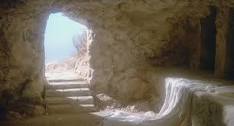
Mary Magdalene and a few other women who followed Jesus rose early on Sunday morning intent upon finishing the burial process which could not be completed before the Sabbath. They arrived at dawn to find the heavy stone rolled aside.

Timidly and fearfully, they peeked inside. The only items in the tomb were a few hastily spread spices and ointments Joseph and Nicodemus had placed on Friday and the neatly folded linens in which Jesus had been wrapped. Jesus was gone.

One of the women scurried back to the disciples with a frantic report. Peter and John raced to the tomb. After a quick inspection, the men confirmed that Jesus was missing. As most of the morning’s visitors returned home, some of the women stayed behind.

Two angels sought to comfort their crying and their fears. Confounding them by letting them know that Jesus had risen from the dead. Mary Magdalene, shocked and disoriented, turned and almost ran into Jesus, mistaking him for the gardener.

“Sir, if you’ve carried him away, tell me where you have put him and I will go to him.”

Jesus replied to her, “Mary.” (John 20:15-16)

At the sound of her name, Mary knew. The tomb was empty because Jesus was standing before her. Alive! Well! Risen!

*****

Over the course of the next 40 days, Jesus appeared to more than 500 people, according to scripture. Five hundred people who could testify to his resurrection. Five hundred people who could declare with certainty, “He is risen! He is risen, indeed!”

So, in our belief in Jesus as savior and Lord, the question is not do you believe in the resurrection? The questions are: What does it mean to you? What are you going to do with it?

Here’s my take on this continuing miracle in our lives.

Firstly, you and I can have the relationship we have with God because of the resurrection. He planned it that way. He made it happen. Jesus died on the cross for the forgiveness of our sins…past, present and future. It is the only way our sins can be erased.

“For the wages of sin is death, but the gift of God is eternal life.” (Romans 6:23)

The resurrection of Jesus confirmed that God accepted Jesus’ death as our substitute. We don’t have to pay the price because Jesus did. The resurrection is validation of Jesus’ work on the cross and a promise to us that once we put our faith in Jesus we no longer face the ultimate consequence of our sin. Hallelujah!

Secondly, the resurrection is our hope.

Physical death is the enemy of a sinful man. The mortality rate is, for all practical purposes, 100 percent…give or take Elijah and Jesus. No amount of medical technology or wealth changes that immutable fact.

It does not have to be the case with spiritual death. Christ rose from the grave because God is more powerful than death itself. Jesus’ resurrection shows that death has lost its grip on us. We do not need to fear it because, through Christ, we have been raised to new life.

“O Death, where is your victory? O Death, where is your sting? But, thanks be to God! He gives us the victory through our Lord Jesus Christ.” (I Corinthians 15:55-57)

Chapter 15 of 1 Corinthians explains that eternal life is ours. Whether we meet a physical death before Christ returns or whether we are present when he comes, Jesus will gather us all to him for eternity in the presence of the Father.

This is the basis for Christian hope. The world uses the word hope to express a desire for something to be true. “I hope she loves me.” “I hope I get that new job.” For Christians, hope in Christ is an assurance. An absolute. Hope in Christ guarantees life beyond our physical death, without question or pause. Everlasting life in the arms of God is assured.

Thirdly, the resurrection confirms that we serve a living savior.

No other faith tradition makes such a claim. In every other faith tradition, the principle head of that faith died, was buried and remains in the grave to this day. Only Jesus lives. The many witnesses of the risen Lord testified to his resurrection. They saw him alive. They touched his nail-scarred hands and pierced side. They saw him breathing. They saw him eating. They heard him speak. They heard him laugh.

Those witnesses are hard to refute. However, the greatest witness to his living presence is the Holy Spirit whom he sent to be with us in his place. In the hours before the cross Jesus offered comfort to his disciples. Sharing with them that he must return to the Father, but he would not leave them alone. He told them,

“I will ask the Father and he will give another Comforter to be with you forever—the Spirit of Truth…You know him for he lives with you and will be in you. I will not leave you as orphans. I will be with you.” (John 14:17-18)

It is the indwelling Holy Spirit that testifies to the living presence of Jesus in our lives today.

“When the Helper comes, whom I will send to you from the Father, that is the Spirit of truth who proceeds from the Father, he will testify about me.” (John 15:26)

The old hymn declares the promise. “We serve a living savior who’s in the world today. I know that he is living, whatever men may say. I see his hand of mercy. I hear his voice of cheer. And just the time I need him, he’s always near. He lives!”

Finally, if the resurrection means we have an eternal relationship with God…one that gives victory over death and a hope that endures forever…that we serve a living savior who lives within us through his spirit…then we bear a great responsibility to be faithful.

“Therefore, my dear brothers, stand firm. Let nothing move you. Always give yourselves fully to the work of the Lord because you know your labor in the Lord is not in vain.” (I Corinthians 15:58)

Our Passion Week closes. The dark days replaced by the eternal light of God’s love in living Lord.

He is risen!

He is risen, indeed!

Author’s Note: I hope you’ve found as much meaning in this week’s Easter series as I did during my study. May God bless you all.

Passion Week-Saturday: Remember

Background Passage: Luke 23:56

Jesus is dead. Hurriedly buried in a borrowed tomb. Now, it is Saturday of Passion Week. Sabbath day on the Jewish calendar.

It is pure speculation on our part. It is not, however, hard to imagine the turmoil of the disciples and the handful of Jesus followers in the hours after his death on the cross.

One by one, those brave enough to venture to Golgotha peeled away, leaning on each other for support. Some went their separate ways. Others huddled together in a room, isolated in fear, burdened by grief.

All we know of Jesus’ followers actions on the day after Jesus’ death is found in one simple verse.

“Then they went home and prepared spices and perfumes. But they rested on the Sabbath in obedience to the commandment.” (Luke 23:56)

I don’t know about you, but the death of a loved one is unsettling. In the best of times, there is a measure of reflective memories of good times shared together. When the loved one fell victim of a particularly difficult death, there is a lingering replay of every image of the last moments…real and imagined.

How could it have been any different for the disciples of Jesus or for these women who loved him?

I suspect many of them followed Jesus to Calvary, pushing their way through a jeering crowd, hoping against hope that this was just a horrible dream. They saw him fall beneath the weight of the cross, weak from the scourging he just endured. They watched the soldiers viciously manhandle him as they stripped him of his clothes and nailed him to the cross. They could not turn away as he hung from the cross, watching each agonizing breath until it was finished.

Now, in the darkness of the evening, they replayed all those images in their minds over and over again. Through the night they could not shake those images. They could not shake the despair.

When Sabbath dawn broke that next morning, they abandoned all pretense of the sleep that never came. I imagine them looking to one another as they picked at their breakfast. “What now?”

In a telling moment, when their hearts were heavy with grief, fear and despair, they had every reason to abandon their faith. After all, the one in whom they had placed their trust was gone. But, when they were lost and as hopeless as they had ever been…despite the horrific memories…scripture says they observed the Sabbath.

They did in that moment what they did with Jesus every Sabbath he was with them. They stayed true to what Jesus taught them. They read God’s word. They prayed. They honored God.

I like that. It’s probably worthy of our attention. They honored God. They honored their memory of Jesus by doing what he would have done.

A week of study brought us to the foot of the cross. On this day between the cross and the empty tomb, perhaps it’s good that we remember the suffering of Jesus as a demonstration of the incredible love of God to send his son to die for us.

But even as we remember the horror, we honor God by our worshipful spirits on this day and our knowledge that the darkness of that night made the light of his resurrection shine that much brighter.

Via Delarosa by Lea Salonga, 2011

Passion Week-Friday: Renewal

Background Passages: John 18:1-19:37, John 3:16-17, Ephesians 2:8, John 19:38-42, and John 12:32

Nine hours.

540 minutes.

32,400 seconds.

That’s all the time it took the religious leaders to arrest Jesus and to nail him on the cross. Nine hours. When Jesus whispered, “It is finished,” and breathed a sigh of release, the religious leaders patted each other on the back and breathed a sigh of relief. It was finished. They had won.

In one of the world’s best examples of a kangaroo court, Caiaphas, the high priest, and other religious officials, manufactured the evidence and brow beat a Roman governor to bend him to their will. By killing Jesus, they protected their standing among the Jewish people. Brutally efficient. Politically effective.

Little did they realize that they played right into God’s hand. Scripture tells us when the time was right, the sovereign God sent his son to live among his creation, to teach them what it means to be a part of his kingdom and to die as a substitute for the failures of a sinful world.

In those nine hours, God expressed his deepest love.

“For God so loved the world that he gave his one and only son that whoever believes in him should not perish but have eternal life. For God did not send his son into the world to condemn the world, but to save the world through him.” (John 3:16-17)

In those nine hours, we learn the very definition of grace.

“For it is by grace you are saved through faith—and this not from yourself. It is a gift from God. (Ephesians 2:8)

In those nine hours, we see the deepest love and the greatest gift of all time. In those nine hours, we see the beginning of Easter.

This will not be a typical Easter weekend. In the middle of this pandemic, our churches will be mostly empty, despite the creative ways congregations find to worship. Easter will be less public and more private. More personal. Maybe that’s not altogether bad thing.

It’s a hard truth. Most Easter Sundays find churches with their pews filled with faces who rarely enter the church doors throughout the year. Believers, for the most part, for whom the cross gets stuffed in the closet after Easter service along with their new dresses, suits and shoes. They’ll pull it out again next year, but what about the months between?

I really don’t intend for that to sound harsh or critical, though I suspect it does. I attend church almost every weekend and I know I’ve failed God more times that I care to admit. It’s not about our failures. It’s about what we do from this moment on with the cross. How do we let it change our lives?

Caiaphas and the other religious leaders rejoiced at Jesus’ death. Though they read the scriptures regularly. They clearly misunderstood the words. They projected their own interpretation of God’s word and created an image of the Messiah that Jesus did not fit. As a result, they nailed him to a cross and mocked him. “If you really are the chosen one, prove it to us once and for all by coming down from the cross.” When Jesus did nothing, they laughed, patted each other on the back and went on their way.

One thief joined the religious elite, mocking Jesus and telling him to get all of them off the cross if he was who he claimed to be. The repentant thief, on the other hand, scolded his partner in crime for his shameful words. Though he knew he deserved the death to which he had been sentenced, he recognized in the things Jesus said and did while on the cross that Jesus was innocent. He saw enough in Jesus to repent of his own sin and give his life to him, “Remember me when you come into your kingdom.”

Each of us as believers in Christ had to get to that point. Convicted of our own sin and seeing into the heart of Jesus, we gave our lives to him. Too often, we let the genuine thrill of that experience fade with time. We trust him as savior, try to live according to his word, but, whether out of embarrassment or fear, we hide our faith from others…stepping from the shadows to light only on Easter or when it is convenient for us.

What do we do with the cross? I hope we do what Joseph of Arimathea did.

Joseph was a Pharisee, a member of the ruling council. Luke describes him as a “good and upright man.” John tells us Joseph was a follower of Jesus. He had heard Jesus teach and believed in who he was. Joseph accepted Jesus as his savior, his Messiah. But, and this is still too often true today of many believers, Joseph kept his relationship to Christ private. He was afraid of what the Jewish leaders would do to him.

When Jesus died on the cross, Joseph came alive spiritually. His fear forgotten, Joseph of Arimathea approached Pilate, the man who sentenced Jesus to die, asking the governor’s permission to take Jesus from the cross and bury him properly. The cowardice and fear that kept his faith silent vanished. His bold and public request testified for Jesus in a way that everyone, including the religious leaders, could see.

Jesus had been dead less than an hour and already his words proved true.

“But if I be lifted up from the earth, I will draw all men to myself.” (John 12:32)

Joseph, who privately made his faith commitment, found himself drawn to the cross of Christ, decided it was time to make his relationship to Christ public. Time for a re-commitment.

This will not be our typical Easter. Despite creative ways to celebrate the death and resurrection of Jesus, most churches will remain closed. The pews, normally full of people, will remain empty. The word of God will be proclaimed this weekend in many ways. We will see Jesus on the cross, high and lifted up.

Be drawn to him. Wherever we have been reticent to express our faith and trust in him, let’s leave that hesitation at the foot of the cross. It’s my prayer this weekend that we all be drawn to the cross, recommitted to live and work for him each day. It’s my prayer that we all let the cross change us. May we use the incredibly sacrifice of Jesus to renew our faith commitment and boldly proclaim to the world that we are his.

For God so loved the world…

Passion Week-Thursday: Never Alone

Background Passages: John 14:1-27; John 16:12-33 and John 17: 6-26

The events of the day were emotionally charged and brutally devastating. Though the day began easily enough for Jesus’ disciples, it would soon take a very different turn. They surely felt the ground was giving out from under them.

Their emotions were set on edge as Jesus washed their feet, teaching them about a servant’s heart and their need to love and care for one another…especially in the days ahead.

  • They reeled in shock as Jesus blindsided them with the idea that one of them would betray him…that others would abandon him.
  • Later in the day, they would grow weary in the garden, sleeping while Jesus agonized in prayer.
  • They would be startled awake by the torches and shouts of the temple guards as they arrested Jesus.

If they thought their world was tilting in the Upper Room, by midnight, their world had turned upside down.

As intriguing as each of those episodes are, I find myself captivated by the conversation Jesus shared with his disciples after their Passover dinner together. Knowing the inevitable outcome, this would be Jesus’ last chance to tell them what they needed to hear. To give them words that might protect and sustain them in the horror that was to come.

Put in the disciple’s sandals, what would you need to hear? What do we need to hear at a time in our world where it seems the ground around us is falling away? I found three things compelling in the dialogue between Jesus and his disciples.

Trust

“Do not let your hearts be troubled. Trust in God. Trust also in me.” Peace I leave with you; my peace I give you. I do not give to you as the world gives. Do not let your hearts be troubled and do not be afraid. (John 14:1, 27)

Jesus could sense the growing anxiety. He could see it etched on their faces. All this talk about Jesus going away made them fearful. For three years he had been their rock and a constant presence. Thomas vocalized what all were feeling. “We don’t know where you’re going so how can we know the way?” Jesus was still among them and already they were feeling lost and alone.

Jesus sought to reassure them, asking for them to trust God…to trust him…despite their misgivings and fears.

Never Alone

Jesus had led them every step of the way for years. They were unsure of their own ability. Unsure of what lay ahead. Unsure of what they were to do in his absence. Jesus promised them they would not be alone. That they would not forget all he has taught them.

“I will ask the Father and he will give you another Comforter to be with you forever—the Spirit of Truth. You know him for he lives with you and will be in you. I will not leave you as orphans.” (John 14:15-16)

“All of this I have spoken to you while I was still with you. But the Counselor, the Holy Spirit who the Father will send in my name, will teach you all things and will remind you of everything I have said to you.” (John 14:25-26)

Jesus followed up that promise as he continued to talk to them.

“I have much more to say to you, more than you can now bear. But when he, the Spirit of Truth, comes, he will guide you in all truth. He will not speak on his own; he will speak only what he hears and he will tell you what is yet to come. He will bring glory to me by taking from what is mine and making it known to you. (John 16:12-14)

The disciples have been told they need to carry on without his physical presence. Jesus would not be there for them to pose a question or seek clarification. How frightening must that have been? Yet, he told them. You are not alone and you need not worry. The Holy Spirit will be your companion and will remind you of everything you learned from me. That’s significant reassurance, even if they weren’t totally prepared to understand it.

Overcoming

Jesus tells the disciples they will face persecution and death if they continue to follow him and do the things he’s commanded them to do. His promise is that through the difficult times that lay ahead, they will have the Counselor and Comforter whispering in their ears just as if Jesus was present with them.

“Then the disciples said, ‘Now you are speaking clearly and without figures of speech. Now we can see that you know all things and that you do not even need to have anyone ask you questions. This makes us believe that you came from God.” (John 16:29-30)

It was the response from his friends that Jesus needed to hear. The response that gave him the lift he needed to press on to the work that lay before him.

“You believe at last!” Jesus answered. “…I have told you these things so that in me you may have peace. In this world you will have trouble. Take heart! I have overcome the world. (John 16:33)

Prayer

Finally, Jesus concludes the evening before heading out to the Garden of Gethsemane with prayer (John 17:6-19) asking God…

  • to bolster their faith and connection with God.
  • to protect them.
  • To grant them a full measure of the joy Jesus had in his heart.
  • To ground them in his word.

Though the days ahead would be dark and difficult for the disciples, the hard conversation with Jesus had the desired impact. For that moment, they were comforted and strengthened.

*****

There is something reassuring to me in this passage. There is comfort.

Trouble and turmoil are a part of life. It always has been. It always will be. Faced with so much uncertainty today, it is easy to become anxious. What does today hold for me and my family? What will tomorrow look like? How will we survive?

Jesus reminds us. Trust in God. Trust in him. He is faithful and he is in control. He is working in my life and yours…even today.

The same promise he made to his disciples is a promise he makes to us. We have a Counselor, a Comforter, with us today. Bringing peace, a contentment, solid in the realization that God is with us. He did not abandon us in our time of distress. If we seek him, he will remind us of all he has taught us, all he has said and all he needs us to know. We are not alone.

Whatever happens around us, this passage also teaches that the victory is already ours. The world cannot beat or break us. Trouble will come, but Jesus has overcome the world. So, it circles back around. Because he has overcome the world, we find the peace that only he can give. Rest in the middle of chaos.

Then, there is one final piece to this expansive narrative that ought to bring you hope in all things. After Jesus prayed for his disciples. He prayed for me. He prayed for you.

“My prayer is not for them alone. I pray for those who will believe in me through their message, that all of them will be one, Father, just as you are in me and I am in you. May they also be in us so that the world may believe that you have sent me… I have made you known to them and will continue to make you known in order that the love you have for me may be in them and that I myself may be in them.” (John 17:20-26)

That’s it! That’s amazing! The sacrifice of Jesus on the cross is why we are never alone in the world no matter what surrounds us. The day before he went to the cross, Jesus was thinking of me. He was thinking of you. Praying that you and I would put our faith and trust in him so that we might be one…connected by grace with every believer and with God…to this day.

When you read that prayer, the cross becomes more than history. It becomes personal.