Focal Passage: Isaiah 7:14 & 9:6-7; and Micah 5:2-5
It’s the Christmas season. The time when God stepped into the world with love, grace, humility and hope.
Through the years, I’ve written about Christmas from every angle and angel. I’ve studied the coming of the Messiah through the eyes of his earthly parents, the shepherds, the magi, and paranoid Herod, a priest name Simon and an elderly, devout woman named Anna. I’ve even written a more fanciful piece about the birth of Jesus from the eyes of a lamb.
As I looked to begin my study this year of the moment God sent his son into the world, I want to look at that moment from the eyes of the Old Testament prophets.
Scripture teaches that the moment God opted to grant humanity free will, he knew we would use that freedom to rebel against his plan for our lives. From the beginning of time, then, God had to find a way to bring his lost children back to him, despite the spiritual abyss we would create between us and God by our sinfulness. Before he put the world in place and set it spinning on its axis, he planned on Jesus.
Look at what Paul tells Timothy.
He has saved us and called us to a holy life—not because of anything we have done but because of his own purpose and grace. The grace was given to us in Christ Jesus before the beginning of time, but it has now been revealed through the appearing of our savior Christ Jesus who has destroyed death and brought life and immortality to light through the gospel. (2 Timothy 1:9)
Redemption was not an afterthought or a Plan B. It was purposeful and intentional. Therefore, God needed to convince us of our need for him and introduce to us the one he would send to show us the way home.
Enter the prophets. As God gave them words to speak, he wove through their prophecies a thread of redemptive hope with its beginnings in a Bethlehem manger.
The prophets lived centuries apart from one another. They lived amid completely different circumstances. Led different lives. Wrote in different eras. Served up judgment on a platter to different kings. They spoke God’s word of divine judgment, repentance and restoration to different generations.
Much like the blind men discovering an elephant, each prophet understood God’s Anointed One in part, but never in whole.
They never met Mary or shook the hand of Joseph. They never heard the angels sing. They never walked the streets of Bethlehem. They never felt the joy the shepherds felt. Never marveled alongside the magi. Never held the baby in their arms. Never saw what they foretold come to pass.
Yet, thanks to a revelation from God’s spirit, they all pointed in somewhat different ways to the same moment; to the same someone. They saw who he would be. Knew what he would do. Understood the titles he would carry. They all spoke of Jesus, even when they never knew his name.
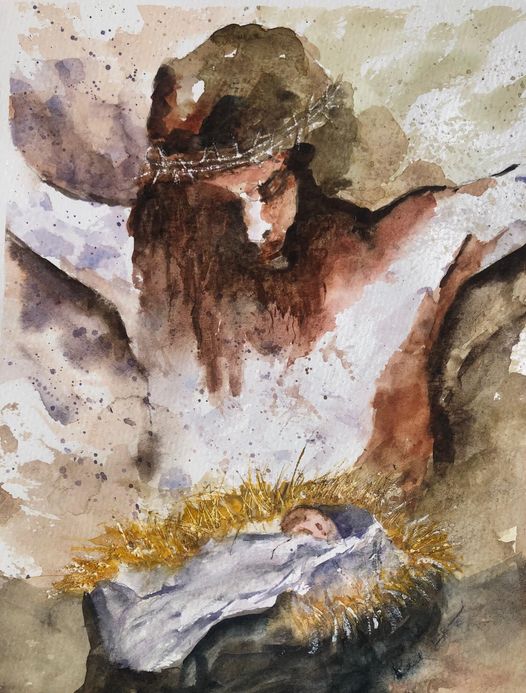
And on the night Jesus was born, their words—scattered across centuries—were suddenly fulfilled in the form of a swaddled infant, in the outskirts of an obscure village, in a makeshift crib filled with hay.
The Word became flesh and made his dwelling among us. (John 1:14)
That moment began the fulfillment of every prophetic word spoken for hundreds of years prior to that first Christmas morning.
Isaiah’s Whisper
The prophet Isaiah’s prophetic message almost 750 years before the birth of Jesus came at a time of national fear. His people faced a looming and hostile invasion, political collapse and spiritual confusion. In that sense, Isaiah’s words feel like a quiet voice spoken in a dark moment. Almost a whisper carried to people who were afraid of and unsure about the future.
While he warned of judgment and called for repentance, he promised that God had not forgotten them. He shared with them the hope of the Messiah and the arrival of the kingdom of God. Isaiah spoke about a miraculous moment in time.
A virgin will conceive and bear a son; and they will call his name Immanuel. (Isaiah 7:14)
God’s message through Isaiah didn’t stop there, as if the miraculous birth was the climax of the Creator’s eternal work. God revealed to his prophet another nuanced layer.
To us a child is born, to us a son is given, and the government will be on his shoulders. He will be called Wonderful Counselor, Mighty God, Everlasting Father, Prince of Peace. Of the greatness of his government and peace there will be no end. He will reign on David’s throne and over his kingdom establishing it and upholding it with justice and righteousness from that time on and forever. The zeal of the Lord Almighty will accomplish this. (Isaiah 9:6-7)
Isaiah’s prophecies waited for more than seven centuries. On the night of Jesus’ birth, his words were no longer ink on faded parchment. His words were a baby, born to a faithful carpenter and young woman whose heart found favor with God.
Micah’s Confidence
The prophetic ministries of Isaiah and Micah overlapped in time and circumstance. Micah saw the same corruption in Jerusalem. Felt the same fear of an Assyrian invasion. Yet, he confidently condemned the injustice he saw among leaders and spoke of the pending judgment upon a people who had turned their backs on God.
He stood in the gap and told the people that, despite the hardships to come, God promised a future ruler from Bethlehem who would be their good shepherd and herald a time of peace. This “messianic hope” appears especially in Micah 5:2–5, spoken as reassurance that God would raise a true king after Israel’s failed leadership. Look at the words God gave him to speak.
But you, Bethlehem Ephrathah, though you are small among the clans of Judah, out of you will come for me one who will be ruler over Israel, whose origins are from the old and ancient times. He will stand and shepherd his flock in the strength of the Lord, in the majesty of the name of the Lord his God. And they will live securely, for then his greatness will reach the ends of the earth. And he will be our peace… (Micah 5:2, 4-5)
For generations, the small and unimpressive village of Bethlehem sat unnoticed in the Judean hillside, but God, 700 years before, had written its future. Bethlehem would play a role in God’s plan through the cries of an unlikely king and the redemptive work of Jesus Christ.
Though many other prophets shared God’s word about the ministry and mission of the coming Messiah, Isaiah and Micah are the only two who described details of his birth. Did any of these prophets fully understand the whole picture? I doubt it.
Do you remember when Jesus sent his disciples throughout Galilee, telling them they would be given power to preach and to heal in his name? They returned from that first century mission trip amazed how God had used their preaching and ministry to bring salvation to so many people.
After praying a prayer of gratitude to the Father for the work they had done, Jesus, filled with joy, pulled his disciples aside. Listen to what he told them.
Then he turned to his disciples and said privately, “Blessed are the eyes that see what you see. For I tell you that many prophets and kings wanted to see what you see, but did not see it; to hear what you hear but did not hear it. (Luke 10:23-24)
So, if the prophets never saw or heard the whole picture, why do they matter? Why do the partial images they revealed about Jesus’ birth and life and death and resurrection matter to you and me on this side of that first Christmas?
It matters because Christmas is not an isolated event. It is the beginning of the rest of the story.
Every promise—
every symbol—
every sacrifice—
every prophecy—
every hope—
pointed toward Bethlehem and Immanuel, God with us.
The prophets did not live to see it, but you have. Listen to John’s words again.
The Word became flesh and made his dwelling among us.
Then, look again at the words of Jesus.
Blessed are the eyes that see what you see. Blessed are the ears that hear what you hear.
You see, Isaiah’s world was not a lot different from our own. Hostility. Political uncertainty. Spiritual confusion. His words still feel like a quiet whisper spoken in a dark moment to people unsure of the future.
His message does not change.
To you a child is born. To you a son is given.
Can you see it? Can you hear it?
That’s Christmas!
If you are a believer in Christ, the prophets words link the past to your present. God’s promises are your truth. They are confirmation of God’s plan of redemption through the baby in a manger who grew to be your substitute on a cross–the living and resurrected Jesus. You are blessed to have seen what you have seen and heard what you heard.
If your Christmas lacks the meaning you see in those who believe, the visions of the prophets are your markers. The waypoints on a spiritual journey that will reveal the depth of God’s love for you in the truth of Jesus Christ. The promises of the prophets are fulfilled in Jesus. Their longing can be your joy as it is mine. See it. Hear it. Your blessing awaits.
Let this be our Christmas prayer for 2025.
“Lord, thank you for speaking through the prophets and for fulfilling every promise in Jesus. Let the hope that sustained them also sustain me. Teach me to trust your timing and rejoice that your Word always becomes flesh. Amen.”
Thinking Points
How does thinking about Christmas through the voices of the prophets deepen your understanding of God’s long-planned redemption?
How has the Word “become flesh” in your personal story? In what ways has that baby in a manger changed your heart and your world view?
What keeps me from recognizing the blessings I already “see and hear,” blessings the prophets longed for but never experienced?
How might embracing the continuity between the prophets’ longing and Christ’s coming reshape the way I enter this Christmas season?
This is fantastic Kirk
As always, I enjoyed this and learned from it. Thank you so much. Merry Christmas.
Thanks, Kirk, for another walk-through of the great story. Hope your Christmas is filled with the love you see in the story.
Amen