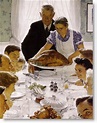
A Life of Thanksgiving

Focal Passage: Colossians 3:12-17

In the middle of the United States Civil War on October 3, 1863, President Abraham Lincoln issued a proclamation declaring the last Thursday in November as a Day of Thanksgiving and Praise. Lincoln wrote in that proclamation that the year had been “filled with the blessings of fruitful fields and healthful skies,” blessings he called “gracious gifts of the Most High God.”

While merchants throughout our country blow off Thanksgiving for the more lucrative pursuit of Christmas, we, the people, as Lincoln liked to say, will all pause for a moment, gathered with family or friends, to enjoy a holiday centered on gratitude, generosity and togetherness. Hopefully, for those of us who try to live out our faith, Thanksgiving will grant us a chance for a little honest reflection on the gracious goodness of God.

Just as it is easy for us to get caught up in the trappings of Christmas and fail to sincerely remember God’s greatest gift, it is easy to get caught up in the toppings of Thanksgiving…the dressing, the cranberry sauce, the gravy. In my family, those toppings we focus on might include the cheese, the pico de gallo, the onions, and the guacamole we stuff into our non-traditional Thanksgiving fajitas.

We will quietly express our thanks to God, but I wonder if the words are that meaningful to him amid all the hustle and activity of the day. Let me explain.

I have lost both of my parents. At this ripe old age of 72, that’s not surprising, I suppose. Mom died 27 years ago of cancer at the too young age of 69. At the age of 98, Dad died two years ago of nothing more really than a life lived long and well.

Before they died, I got a chance to thank both of them in private for being the amazing parents they were. Given the sacrifices they made, the role models they were in my life, the life lessons they instilled, everything I said those days felt woefully inadequate. Though I struggled with the words, I think they understood my intent.

I got a similar response from both of them. Smiles shining through watery eyes and hugs they probably wished could be stronger.

My parents held expectations for me and my siblings, not so much on what we might do in life, but in how we chose to live life. As I think back on those precious moments with them, I pray I met those expectations.

As a parent of adult children now, I get it. You raise your children hoping they will be good people. That their lives will reflect the values you tried to instill in them. That they will live their lives with faith in God, love for family, compassion for others and integrity in all things. My sons have lived that life and more. Though they’ve both spoken their words of thanks at times, their lives lived well is all the gratitude I need.

Here’s the point I’m trying to make. We will gather around a table on Thanksgiving. At some point, we will pray and express our gratitude to God for all he’s done for us. I wonder, however, if this is the best way to say thanks to God.

While I’m quite sure our Lord appreciates the words of gratitude, how much more does he appreciate our lives lived as a reflection of his goodness and grace? How much more does he desire that we live our lives in ways that reflect the values he tries to instill in us?

I had the privilege of listening to an inspiring sermon this week delivered by the Rev. Robert Thomas, Jr., of Mt. Olivet Missionary Baptist Church in Houston. The Rev. Thomas spoke powerfully about holy living in a world filled with unholy actions.

In his text in Colossians 3:12, we find Paul saying that every believer in Christ should “clothe ourselves with compassion, kindness, humility, gentleness and patience.” We are to be forgiving because God forgave us, covering all our actions with love. Then, Paul added, “Let the peace of Christ rule in your hearts…and be thankful.”

I pulled out the verse again this week thinking about the upcoming Thanksgiving holiday, focusing on those last two words, “Be thankful.” If you continue reading in that chapter, you’ll find these words that sum up the previous verses. I think it has everything to do with how we express our gratitude to God. Paul said:

And whatever you do, whether in word or deed, do it all in the name of the Lord Jesus, giving thanks to God the Father through him. (Colossians 3:17)

Whatever you do in word or deed…give thanks.

Think about that for a second. I’m not sure Paul just wants us to thank God for giving us the word to say or the deed to do. I think he might mean that we should let our words and deeds be said and done in the name of Christ so well and so faithfully that our words and our deeds becomes an expression of our thanks to God.

When we act in compassion or kindness, when we live humbly, with gentleness toward others and patience in the face of the trouble, when we forgive, and let love drive our every thought or deed…that is an act of thanksgiving to God that means more to him, I believe, than simply saying a heartfelt thanks…as important as those words are to say at times.

When King Saul in the Old Testament disobeyed God but tried to cover it with yet another hastily thrown together sacrifice, God told him through Samuel, “To obey is better than sacrifice; to listen (is better) than the fat of rams.” (I Samuel 15:22)

That seems to be telling me that actions speak louder than words. If I want to thank God for his power, presence, protection and provision in my life, saying the words is important, but living in ways that honor him seems more important.

Let our obedience to his word be our thanksgiving for his goodness and grace. Jesus told his disciples in John 14:15 that if they truly loved him, they would keep his commandments. That we would live as he lived. Our surrender to his will and way then become acts of love and thankfulness.

Scripture teaches us, I think, that gratitude reaches its highest point when it moves beyond feelings and emotion and becomes faithful living. Being obedient to his commands and following his teachings in every aspect of life.

Living out God’s will by loving others, showing compassion toward those who are in need, forgiving those who hurt us, serving those around us—these actions, done in response to God’s redemptive and restorative work in our own lives, become the most sincere expressions of gratitude a believer can offer. A life surrendered to God’s will and way is a spiritual act of thanksgiving.

As he neared the end of his earthly ministry, Jesus consoled his disciples by urging them to stay connected to him. He drew upon a metaphor they would understand.

I am the vine; you are the branches. If a man remains in me and I in him, he will bear much fruit; apart from me you can do nothing…If you remain in me and my words remain in you, ask whatever you wish and it will be given you. This is to my father’s glory that you bear much fruit, showing yourselves to be my disciples. (John 15:5,7-8)

In other words, when we remain in Christ and do his will, we bear fruit. The fruit we bear brings glory to God. Our faithfulness and our work that impacts the lives of others and demonstrates that we are his children is an act of thanksgiving that glorifies God and makes him known to a world so desperately in need of him.

When we allow God’s spirit to shape our character with love, joy, peace, hope, patience, kindness, gentleness, we are expressing our deep gratitude for God’s saving work in our lives. When we, in a loving spirit, oppose actions in our world that run counter to the spirit and message of Christ, we are expressing our gratitude for God’s saving work in our lives.

When I see my sons living out the life God called them to live, when I see evidence of their faithfulness, compassion and Godly integrity, seeing the godly men they have become…that’s really all the gratitude I need. Of course, hearing that word of thanks, wrapped in the occasional hug, warms my heart.

I just feel God might be the same way. Watching you and me live out the lives we’ve been called to live for him, seeing evidence of our faith in our words and deeds, watching us bear fruit in ways that draw others to Christ, living godly lives, that’s what he most desires.

Hearing that word of thanks and giving him that spiritual hug, surely warms his heart.

Here’s my prayer for my life and yours this Thanksgiving holiday. May we recommit our lives to the one who redeemed us and called us to be his disciples, his fruit-bearers. May our lives and the words we speak and the work we do for him be a living expression of our gratitude for all he has done for us. Let’s say our thanks in prayer and live our thankfulness in practice.

I will praise you, O Lord my God, with all my heart; I will glorify your name forever. (Psalm 86:12)

Thinking Points

Who in my life has modeled grateful living? How can I follow their example in my walk with Christ?


In what ways can my everyday words and actions become a genuine expression of thankfulness to God?


Colossians 3 speaks to the qualities of compassion, kindness, humility, gentleness and patience, among others. Which of those traits do I need growth in my life if I want my life to shout my thanks to God for what he has done for me?


How might my life today change and want would it look like if obedience and faithfulness to God became my primary way of expressing gratitude to God?
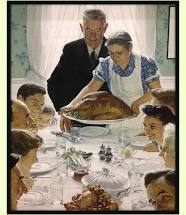
Grateful

Background Passage: Psalm 106:1

We approach the most joyous of holiday seasons from Thanksgiving to Christmas this year under the darkening shadow of Covid-19 as the long-promised fall surge in corona virus cases hits our nation with a vengeance.

We continue to endure a bitter political season that has fractured our country with seemingly no one willing to walk the higher ground. Suspicion invades our hearts, leaving our country teetering in its wake.

Many among us feel…

Isolated and alone.
Divided and angry.
Worried and scared.
Suspicious and accusing.
Pessimistic and hopeless.

That seems to be the condition of the world. I’m not so naive that I cannot see these issues or feel their impact around me. As a Christian, I am not immune to its gravity, but I refuse to let these events steal my joy.

I…we…have so much for which to be grateful even during this uncertain time for God’s gifts and grace transcend pandemic and politics. Surrounded by family, friends and God’s ever-present love, there is a place of peace even in the turmoil of the day. For such things, I am eternally grateful.

So, I remind myself in this week of Thanksgiving to take a deep breath and relax.

We use the term “overwhelmed” to express that feeling of being swamped by the circumstances around us. We rarely, if ever, talk about being simply “whelmed.”

Yes, it’s a word defined in Webster’s Dictionary as “an act or instance of flowing or heaping up abundantly; a surge.”

Rather than feeling overwhelmed, I want us to feel whelmed…to feel a surge of thanksgiving as we reflect on the blessings of life granted by a loving God.

I cannot speak to those things for which you could be grateful. You alone can do that.

As I sit in the quiet of this moment, I am thankful for my parents, my brother and sister, my wife, my two sons and their wives, and my grandchildren. I am grateful for an extended family of “laws and in-laws” who have forever accepted me for who I am. I am grateful for love given and love received.

I am grateful for friends from childhood to present day who, even today, continue to create and share in the best moments of my life.

I am grateful for God’s gift of this community as a place of service and belonging. A people who let me serve and who served me in my times of need.

I am grateful for a church who for four decades has been my spiritual foundation, filled with fellow imperfects who love each other into a more perfect understanding of God’s grace and peace. A people who know their responsibility to be the face, the hands and feet of Christ not just within the walls of the church, but in the city, state, country and world beyond.

I am grateful to my God who saved me and loves me in spite of myself. Whose presence brings healing and comfort to every hurt and need in my life. Whose blessings and grace deepen the joy I feel in my connections and relationships with those I encounter. Whose spirit continues to open my eyes to the vitality of his word.

A host of scripture speaks to our need to express thankfulness to our God. Here are a couple of my favorites.

“Oh, give thanks to the Lord for he is good; for his steadfast love endures forever.” (Psalm 106:1)

The language of the psalm is an imperative, a command. To the believer loved by God, the call to thanksgiving is not an option. Thankfulness ought to be our natural response as recipients of God’s unmerited favor.

We respond with thankfulness because of God’s goodness. Our limited understanding of goodness, tempered as it is through our lens of sin, is a pale facsimile of goodness that is truly in God. Jesus told us as much in Luke 18:19 when he told the rich, young ruler, “no one is good, except God alone.”

To declare that God is good is to know with certainty that his every word and act is always true and right. It is his goodness that offers redemption to a sinful world…the ultimate act of goodness through the sacrifice of his own son.

When you read “steadfast,” think resolute, unwavering. God’s love never fails. Never abandons. Never falters. Never withdraws.

God’s love always provides. Always sustains. Always nurtures. Always remains. Always embraces. Always comforts. Always endures.

Thanksgiving is a good day to remember. If you dig deeper in Psalm 106, you find that the people of God lost their way when they failed to remember what God had done for them.

“…they did not remember your many kindnesses…” (vs. 7)
“…they soon forgot what he had done…” (vs 13)
“…they forgot the God who saved them…” (vs. 21)

I don’t ever want to be guilty of their forgetfulness. I think that’s why the Psalmist makes his statement in the form of a command, “Give thanks…,” as an on-going directive to always remember what God has done for us.

We are a forgetful people with short-term memories and a “what have you done for me lately” mentality. Thanksgiving is remembering in gratitude a God who does not forget his people nor his promises.

Those people I mentioned earlier, the ones for whom I expressed my gratitude, they came into my life sent by God to be a part of my life. They have been before and beside me the face and hands of his steadfast love and his unfathomable goodness all the days of my life.

I am eternally grateful.

Thank you, God.

Drinking from Wells I Did Not Dig

Background Passage: Deuteronomy 6:10-12

I came across rather obscure a passage of scripture this week while looking for the focus of my writing. I read it…and moved on, searching for something different. No matter what I read and studied this week, that passage kept invading my thoughts.

In this passage in Deuteronomy, Moses has just wrapped his arms around the stone tablets upon which were etched God’s commands for his people. The list of “thou shalt” and “thou shalt nots” intended as a framework of righteous relationship with the Father and with his people.

Moses reminded them of the great promise of God to Abraham, Isaac and Jacob to give them a land that would belong to them…a land flowing with milk and honey. Then, he encouraged them to claim that promise as their own. The land God promised, according to Moses, held within it everything they needed in life. God would grant them…

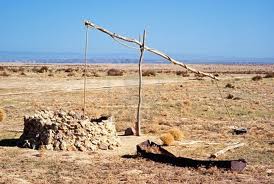
“…cities you did not build, good things you did not provide, wells you did not dig, and vineyards and olive groves you did not plant…”

Every time I tried to move away from the passage, I found myself back in Deuteronomy thinking about how the people of Israel would drink from wells they did not dig. Every time I thought about it, I thought about how often I have quenched my thirst for God from wells I did not dig.

I found my first taste of God’s well water from loving parents and a family who made faith a priority. From that little Baptist church in Ropesville where I grew up and a bevy of Sunday School teachers who shared their hearts and souls. From a Baptist Student Union at Texas Tech that served as a cistern of Christian friends who met my needs for fruitful fellowship. From a time serving as a youth minister in Wolfforth where God taught me more than I taught the young people I served.

I drank again from wells I did not dig from a marriage partner whose life is Jesus personified. From children who have matured in their own faith as an encouragement to mine. To a home church in Pasadena with pastors and friends who invested in my life, shaping my witness and my service. To a profession in public education that opened as a calling to help those in need. To a life in which every moment is a testament of God’s grace, forgiveness and purpose.

In each moment, I drank from wells I did not dig. I am grateful for each time I drew water from those wells.

After reminding his people of God’s unmerited gifts that awaited them in the promised land, Moses added a warning.

“…then, when you drink and are satisfied, be careful that you do not forget the Lord who brought you out of Egypt…”

There it is. The reason this passage kept creeping back into my heart. God placed so many people…so many wonderful opportunities…in my life that allowed me to drink and be satisfied. Too often I forget how hard it must have been for those in my life to dig that well. I forget how God’s hand moved in my life so I found every well when when I needed it most.

The living water God promised through his son, Jesus, flowed through the lives of all these people who offered me encouragement, support, discipline, wisdom, hope and love. The clearest, coolest water I have ever had the privilege to drink…and it was all from wells I did not dig.

I sit here today having lived in cities I did not build, enjoying good things I did not produce, drinking for wells I did not dig and eating from vineyards and groves I did not plant. The promised land God gave me.

To all who offered me a taste of their water, thank you. I offer praise to God who provided your shovel and showed you where to dig.

With Gratitude to the Giver

Background Passage: 2 Corinthians 4:15; Psalm 9:1

I sat in the audience of my grandson Eli’s second grade Thanksgiving program at Turner Elementary School with my cellphone camera on record. The children, dressed in traditional Pilgrim suits made of construction paper and colored with crayons, shared the history of that first Thanksgiving feast among the Pilgrims and Native Americans. They recited their parts and sang a couple of cute songs. Eli, my oldest grandson, nailed the closing speech without stumbling over a single word, making his parents, his little brother and his grandpa quite proud.

The Thanksgiving story they shared with their parents had changed little from the somewhat sanitized version of that first Pilgrim settlement my classmates and I told our parents 58 years ago. No matter. The songs sounded delightful. The kids looked cute. Their excitement more than a little infectious.

One of the songs they sang struck a chord with me. A catchy tune to be sure, filled with expressions of thanks for things young children enjoy…recess, summer, friends, family, etc. It wasn’t so much the things for which they shouted their thanks that made me think. It was the question posed repeatedly within the song. “What are you grateful for?” We won’t quibble with the prepositional grammar. That’s not the point. The use of the word “grateful” rather than “thankful” caught my attention, making me think about the difference in these words we often view as synonymous.

Why is that distinction important to me? Gratitude seems to hold deeper meaning than mere thanks. I can say thank you to someone who opens a door for me when carrying a heavy box. I can express thanks to a friend who gives me a birthday card. I can express my thanks to the cashier at the checkout stand when they give back my change. Though they may be sincere in expression, they are far more often mannerly responses to ordinary acts.

Gratitude, on the other hand suggests a deeper feeling of inner delight that rises unforced from the heart. Not a verbal response, but an emotional outpouring. Gratitude is the feeling of joy that rises in one’s heart when thinking about the giver, not the gift. The doer, not the deed. The actor, not the act.

The apostle Paul, under the inspiration of the Spirit, chose his words carefully…always. I sometimes think those who translated the original scripture into the various translations of the Bible available to us today were less careful, choosing words that fit more readily into the common vernacular of their intended reader.

Paul wrote his second letter to the Corinthian church and spoke of the difficulties faced in presenting the gospel in a hostile world, giving God the glory for every inch of progress made in spreading the gospel of Christ. Paul spoke of his willingness to suffer and the future hope he had in Christ.

“All of this (suffering and effort) is for your benefit, so that the grace that is reaching more and more people may cause thanksgiving to overflow to the glory of God.” (2 Cor. 4:15)

I’m not a Bible scholar learned in Greek. Any insight I have into the scripture, especially as it makes distinctions in the choice of Greek words, is a gift from commentaries and commentators more gifted than I will ever be.

It seems in this passage, the translator’s use of the word thanksgiving missed the mark, the unique play on words, that Paul originally expressed. The Greek word for grace is charis. The Greek word for thanksgiving used in this passage is eucharistian, derived from charis or grace. Eucharistian is often translated gratitude. So Paul essentially says, “so that the grace that is reaching more and more people may cause gratitude to overflow to the glory of God.”

In other words, gratitude grows best in the garden of God’s grace…a direct response to the unmerited gifts from the Father…the feeling of inner joy you hold for one who has graciously given to you.

In Paul’s passage to the Corinthians, Paul knows that as God’s grace draws more and more people to him, those who now recognize themselves as recipients of God’s grace have joy swelled up in their hearts toward the one who extended grace to them. A cycle of grace and gratitude born from God’s extended grace to us that circles back to cause our own heart to jump for joy and gratitude toward the one who was so gracious to us.

So here’s the point I’m probably not making very well. It’s Thanksgiving. During this holiday we take ample opportunity to offer thanks to God for those things in which we delight. Family. Friends. Health. Work. Community. Freedom. Smiles. Laughter. Memories. Hands to hold. Perhaps we find ourselves thankful even for recess and summer. These are among the many blessings for which we give thanks.

Care must be taken that our thanks do not end with the gift. Care must be taken to express our heart-felt gratitude to the giver of all of these blessings. The one who graced us with these life gifts. The God whose grace and gifts are sufficient in every way.

Paul said as the gospel of Christ spreads throughout the world that it causes “gratitude to overflow to the glory of God.” God’s greatest gift of grace through his son, Jesus Christ, causes our gratitude to overflow and glorify God. I like that idea and think it offers great insight into the true nature of Thanksgiving. Our gratitude for the blessing of Christ in our lives, the blessings he gifts us with in life, still must overflow to the glory of God.

So, I’ll ask the question that Eli and his classmates asked, “What are you grateful for?”

When you answer, join me and let your gratitude extend beyond the gifts. Let your gratitude glorify God as the giver of every blessing.

“I will give thanks to you, Lord, with all my heart; I will tell of all your wonderful deeds.” (Psalm 9:1)