Treasuring and Pondering

Focal Passage: Luke 2:19

Mary, did you know
that your baby boy would one day walk on water?
Mary, did you know
that your baby boy would save our sons and daughters?
Did you know
that your baby boy has come to make you new?
This child that you delivered
would soon deliver you.

Those words written by Mark Lowry, a comedian, singer and songwriter long associated with the Gaither Family, are the first stanza of what has become my favorite Christmas song. Many artists have recorded it since it was written, but Lowry sings it with unequaled passion.

In the bridge, Lowry’s words to Mary speak of the work of Christ in a building crescendo.

The blind will see.
The deaf will hear.
The dead shall live again.
The lame will leap.
The dumb will speak.
The praises of the lamb.

The as the song closes, the words ask Mary one last question before providing the resounding answer.

Did you know that your baby boy
Is heaven’s perfect lamb?
The sleeping child you’re holding is the great I AM!

Mary, did you know?

*****

The young mother listened to the hearty giggles of her toddler as the boy’s father tossed him playfully into the air, catching him with calloused hands. She laughed to herself as this manly carpenter cooed in baby-speak. She shook her head in awe and returned to the preparation of the evening meal.

The routine task of grinding the wheat into flour for the evening bread freed her mind once again to reflect on the life God had given her.

Luke, the Bible’s historian, put it this way.

But Mary treasured up all these things and pondered them in her heart. (Luke 2:19)

Mary, did you know?

That one little verse, often overlooked, comes at the end of the beloved Christmas narrative. Long after Jesus’ birth, long after the shepherds returned to their fields and flocks, Mary treasured and pondered.

Mary, did you know?

Long after Jesus’ dedication when Simeon praised God for allowing him to see God’s salvation, Mary treasured and pondered.

Mary, did you know?

Long after Anna, a prophetess who served in the temple, took one look at Jesus and told everyone who would listen that this was the child who would bring redemption to Jerusalem, Mary treasured and pondered.

Long after the wise men found a new route home, Mary treasured and pondered.

Mary, did you know?

On that day I imagined, as Mary kneaded the dough and Joseph and Jesus played, what did she treasure? What did she ponder?

Think back to the night the angel told Mary what God planned for her. She would bear a son who would be the Son of the Most High; a son who would reign over the House of David forever. Later, her aunt Elizabeth, filled with the Holy Spirit, reaffirmed the miraculous birth as she called Mary blessed among all women.

Through an immaculate pregnancy and an ordinary birth, Mary saw it all come true, just as God promised. In those first few years, surely the whole experience seemed surreal, almost beyond belief. Mary took it all in. Tried to make sense of the inexplicable. She treasured and she pondered.

The Greek verb translated treasured in this passage doesn’t mean to just remember. It means to carefully preserve, to guard or keep something alive for future understanding.

You and I have had 2,000 years of history. We can hold God’s word in our hand and read the unfolding of his redemptive plan that began its climactic work in a Bethlehem manger.

Two or three years after that day, Mary was still trying to wrap her arms around it. So much of what happened must have seemed to her a mystery. So, she kept the experience in her heart as she watched her child grow, keeping her experience real and alive, hoping to one day understand the how and why?

Mary not only treasured, but she pondered.

Thinking is a broad, general process that tends to be quick and practical. I think about what I’m about to do. Pondering takes thinking to a completely different level. Most of us are thinkers. We don’t ponder enough.

Pondering implies lingering thought. Unhurried. Contemplative. Reflective. Inward. When one ponders one weighs significance. Turning something over and over in your heart and mind, It implies a sense of awe and wonder, seeking to find personal meaning.

The Greek word Luke uses in this passage translated as ponder means to actively bring things together. To compare and contrast. To wrestle with a thought toward understanding. That’s different from daydreaming or passively reflecting on something.

You see, Mary, like any mother, carried fond memories of her child’s birth. The journey from Nazareth. The discomfort of a donkey ride. The worry about finding a place to stay in a crowded city. The pain of childbirth. The pure joy of holding her son in those first magical moments. That’s the precious memory of motherhood.

When Mary pondered, she intentionally reflected on all that was said and all that happened, trying to fit the pieces together. Wrestling with its meaning. Mary wanted to make sense of what felt unexplainable. Mary looked at everything she had experienced to that point…everything we understand as our Christmas story…and treasured and pondered what it all meant.

Mary, did you know?

To her credit, Mary never demanded immediate understanding. Never insisted that if God wanted her participation, he needed to read her in fully on the plan. Mary thought about it…a lot…I imagine. Despite not fully grasping the significance or the how and why, Mary accepted her role in God’s plan with such deep faith and trust.

There it is! In the middle of Mary’s treasuring and pondering lies the lesson I needed as the Advent candles are snuffed out and we pack away the manger for another year.

On this side of Christmas, what do we know? What must we treasure? What must we ponder?

God is at work in my life. He has been at work, is now at work, and will be at work in my life until the day he calls me home. I truly believe that. I have a tendency, though I suspect most of us do, to demand from God an immediate explanation for the things happening in my life…good or bad. I tend to pray for answers before I am willing to act.

I test. I don’t always treasure.

I think. I don’t always ponder.

Mary trusted that God was at work in and through her life, even if she didn’t always know why or how things were going to work out. Her faith held on to and accepted the mystery rather than disregarding it, or worse still, trying to change it. Most importantly, Mary trusted that understanding would come with time and obedience. Her role was to keep listening and waiting…as long as necessary.

I need to learn that faith often means actively treasuring and guarding God’s promises that have not yet been resolved with clarity. To hang on to his word. To keep it viable and constantly in my thoughts for future understanding. To be obedient to it without trying to bend it to my will. To trust that the day will come when he opens my eyes to see with reverence and wonder how he has moved throughout my life.

Mary understood that God’s work in her life required spiritual attentiveness…a whole lot of pondering if you will. Most of the life’s lessons God teaches me require me to wrestle with them until what he is trying to teach me starts making sense. He asks me to dig deeper. To seek his truth. The water of life rarely comes from a shallow well.

Treasuring and pondering take time. What God begins in our lives one day will unfold, but it will unfold in his time, not instantly, but when the time is right. He asks us to wait faithfully on his timing. That’s never easy to do.

When God’s work surpasses our understanding, we are invited…like Mary…to treasure and ponder his work in our lives.

That seems to be the perfect message for the coming New Year.

I will mediate on your precepts and will fix my eyes on your ways. (Psalm 119:15)

Thinking (Pondering) Points

What has God done in my life recently that I need to slow down and ponder?


What practices in my faith walk help me treasure God’s work instead of casually dismissing it?


In what ways does Mary’s quiet, reflective faith challenge my tendency to seek quick answers?


How might God be shaping me during times when he asks me to wait and reflect rather than act?
The Word Became Flesh

Focal Passages: Luke 2:1-14; John 1:1-14

There is no expectant mother traveling to a distant village.

No Bethlehem.

No inn, crowded or otherwise.

There are no shepherds tending their sheep in the fields.

No angels proclaiming good news and glad tidings.

There is no star. No wise men from the east.

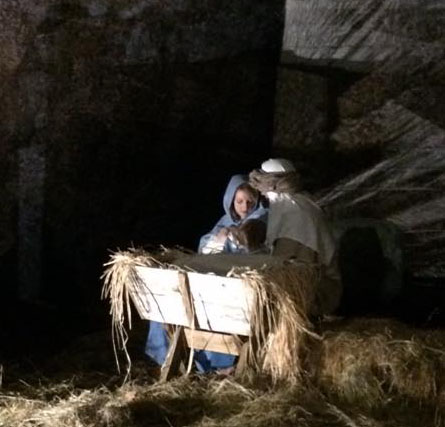
There is no baby, wrapped in swaddling clothes and asleep in a manger.

That’s Luke’s story to tell.

When he wrote his gospel, John takes the Bible’s Christmas story to a different level, focusing not on the earthly scene, but on the eternal reality it represents. The first Chapter of John tells the Christmas story from heaven’s viewpoint.

While Matthew and Luke describe how and where Jesus was born, John explains who Jesus was and is: the eternal Word…the Creator…the Light entering darkness…God becoming flesh.

John tells us about the one who came into the world to give us the right to become children of God.

If Matthew and Luke give us the method by which Jesus came to live among us, John shares the divine meaning and purpose behind the baby in a manger. He tells us why. It is no less a Christmas story than the one that will be repeated a million times in the days to come.

In the beginning was the Word, and the Word was with God, and the Word was God. He was with God in the beginning. Through him all things were made; without him nothing was made that has been made. (John 1:1-3)

It’s difficult for finite minds like ours to grasp the true nature of God. John sees the one he calls “the Word” not as an idea or thought, but as the living expression of God himself. The Word did not observe creation from a distance. The same hands that formed the stars would be wrapped in human flesh, grasping the offered forefinger of his mother. The voice that spoke with such clarity as it spoke the universe into existence, would cry in hunger in the middle of the night.

John viewed Jesus as the word of God. God’s revealed word. Present as God and with God from the time before creation.

Christmas is not merely the story of a baby being born—that happens every day. Christmas is the story of the Creator choosing to identify with you and me in every way. Choosing to draw near to his creation, not in the magnificent and extraordinary, but in the mundane and ordinary. The Word chose to come quietly and humbling, as a child.

In those days Caesar Augustus issued a decree that a census should be taken of the entire Roman world. (This was the first census that took place while Quirinius was governor of Syria.) And everyone went to his own town to register. So Joseph also went up from the town of Nazareth in Galilee to Judea, to Bethlehem, the town of David, because he belong to the house and line of David. He went there to register with Mary, who was pledged to be married to him and was expecting a child. (Luke 2:1-5)

An emperor’s powerful decree set history in motion, another phase of God’s ordained and eternal plan. The dusty roads of Galilee and Judea brought a young couple on the path of ancient prophecy. Not human administration, but divine orchestration.

Bethlehem, a small, easily overlooked village, would become the agent of God’s purpose. The Word who shaped time and space, now entered it. A heavenly throne morphed into a manger.

While they were there the time came for the baby to be born, and she gave birth to her firstborn, a son. She wrapped him in cloths and placed him in a manger, because there was no room for them in the inn. (Luke 2:6-7)

No trumpet sounded. No palace gates opened. No one rolled out the red carpet. The Son of God arrived in silent wonder. The Word rested where animals fed. Swaddled in soft and simple cloth, held by the trembling arms of a first-time mother. The world he made had no room for him. His creation failed to recognize his presence.

Heaven, however, watched closely every moment. Heard every cry that echoed with the sound of redemption. Light had entered the darkness.

In him was life, and that life was the light of all men. The light shines in the darkness, but the darkness has not understood it. The true light that gives light to every person was coming into the world. He was in the world , and though to the world was made through him, the world did not recognize him. He came to that which was his own, but his own did not receive him. (John 1:4-5,9-10)

A child was born. He arrived as light and life. Where sin cast its long shadow, he brought truth. Where fear held sway, he brought hope. Where death claimed victory, he brought life.

Shrouded in darkness, the world did not welcome him, but it could not extinguish the light. Heaven chose to amplify it.

That Light arrived not in palaces or courts…not as a gift for kings or a performance limited to the world’s elite. No. It arrived in fields beneath the open sky, announced to unassuming shepherds working in the fields.

And there were shepherds living out in the fields nearby, keeping watch over their flocks by night. An angel of the Lord appeared to them, and the glory of the Lord shone around them, and they were terrified. But the angel said to them, “Do not be afraid. I bring you good news of great joy that will be for all the people. Today in the town of David a Savior has been born to you; he is Christ the Lord. This will be a sign to you: You will find a baby wrapped in cloths and lying in a manger.” Suddenly, a great company of the heavenly hosts appeared with the angel, praising God and saying,

Glory to God in the highest,
And on earth peace to men
on whom his favor rests.”
(Luke 2:8-14)

While the world slept, heaven danced. While the earth remained deaf to the Word, the angels sang. Hear God tell you the same thing he told the shepherds. “Do not be afraid.” Celebrate the good news. Embrace the joy God offers all of us. A savior has been born…Christ the Lord. When your heart’s darkness gets driven out by the light, you can give glory to God. You can find the peace God that only comes from becoming a child of God.

Yet to all who received him, those who believed in his name, he gave the right to become children of God…The Word became flesh and made his dwelling among us. We have seen his glory, the glory of the one and only who came from the father, full of grace and truth. (John 1:11-12,14)

On that night in Bethlehem, grace lay in a manger and truth had a heartbeat. God entered our world to live as we live. To experience what we experience. To show us how to live. To be the Word and Light.

The baby with no permanent place to stay came to bring us home with him. To embrace us as his children.

The Christmas story as told by Luke and amplified by John is the penultimate chapter in what Archbishop Fulton Sheen called “the greatest story every told.” A story culminated with Jesus’ sacrificial death and resurrection. It is God’s gift to you and me.

For God so loved the world, that he gave his one and only son, that whoever believes in him shall not perish, but have eternal life. (John 3:16)

Author’s Note

The world needs Christmas. I hope you find the time to ease the frenetic pace to a slow walk with family and friends. Set aside the worry and the uncertainty and enjoy the moment. I pray that you experience those quieter moments this holiday season.

The world needs Christmas. Not the tinsel and the trees, but the peace and goodwill about which the angels sang. This year may God give you a genuine sense of his presence and his love not just on Christmas morning every day thereafter. May realizing his presence and love bring you and yours his peace and goodwill.

Merry Christmas!

Thinking Points

John presents Christmas from heaven’s perspective, less about the person of Jesus and more about his purpose. How does viewing Jesus as the eternal Word change the way you understand the meaning of Christmas in your own life?


“The world did not recognize him.” In what ordinary, quiet, or unexpected ways might Christ be present today that you are tempted to overlook or ignore?


The angels announced peace to those on whom God’s favor rests. What fears or burdens might you need to release this Christmas in order to truly find the peace Jesus came to bring?

A Case for Compassion

Focal Passages: Hebrews 13:1-3; and Matthew 25:37-40

When my two boys were young, my wife and I bought all 40 books in Gordon Osborne’s Value Tales series. Using stories of famous historical figures, each book focused on a desirable character trait, traits we wanted to instill in our kids.

There were books about the courage of Harriett Tubman. The determination of Helen Keller. The perseverance of Thomas Edison. The initiative of Frederick Douglass. The books taught children honesty, patience, kindness, responsibility, truth and fair play, humor, love, confidence, and imagination, for instance.

One of the books I remember taught a lesson on compassion using the life of Florence Nightingale, the British nurse who revolutionized nursing care and medical hygiene during the Crimean War.

I was drawn to this book initially because my Mom, whose first name was Florence, was also a nurse with a compassionate heart. (In full disclosure Mom was not fond of the name, preferring to go by Earline.) I found it compelling, also, because it taught compassion, that ability to sense another’s need or suffering, combined with a genuine desire to address the need or suffering. It was a trait I wanted my sons to cultivate.

I thought of that book specifically this week, when I read a summary of a 2025 study on compassion in the United States released by the Muhammad Ali Center in Louisville, KY.

The center surveyed more than 5,000 people from 12 metropolitan areas across the country. According to the survey, Americans believe the country is less compassionate today than it was four years ago. In fact, only 29 percent of those surveyed said they personally feel compassion toward those in need. More than two-thirds of those surveyed acknowledged gaps in their compassion for and empathy toward certain groups of people, including the poor or those of differing ethnic backgrounds.

If that doesn’t disturb you as a believer in Christ, it should. The very nature of Jesus, the one in whom we believe, was compassion.

The writer of Hebrews closed out his letter to the churches by making a case for compassion. Look at what is written.

Keep on loving each other as brothers and sisters. Do not forget to entertain strangers for by doing so some people have entertained angels without knowing it. Remember those in prison as if you were their fellow prisoners, and those who are mistreated as if you yourselves were suffering. (Hebrews 13:1-3)

Compassion demonstrates our faith in practical, relational ways. It is not abstract, rather it is expressed in love, hospitality and solidarity with folks who are struggle with life. Compassion provides ongoing care for a people in need. Acts of kindness and expressions of empathy are sacred acts, commissioned by God and modeled for us in every way by Christ himself.

Keep loving each other isn’t just a casual thought inserted by the writer. It stands as a steadfast, continuing commitment to care for others, reminding us that expressions of God’s love to others are central to our faith.

The writer speaks of a bond, a love shared among siblings or family. It is not sporadic nor conditional. Rather, it flows freely and consistently, an outpouring of God’s love through us because his love is in us.

It involves genuine kindness and support for others within the fellowship of believers and extending into our community at large. This loving expression of compassion means celebrating their joys and mourning losses. Too many people today feel isolated and out of options. As Christians, we ought to commit ourselves to be emotionally and physically available in ways that create opportunities for active grace as a true reflection of the heart of Christ.

Compassion also demonstrates itself in hospitality toward those we may not know. We are challenged by the writer to see every person as valuable and worthy of respect, care and generosity…not just those we broadly consider “family.”

In New Testament times, the practice of welcoming strangers was not just a form of ancient welfare. It was a matter of survival for many. Everything we have is a gift from God to be shared with those in need.

The reference to “entertaining angels unaware” recalls a couple of Old Testament stories, but I think it suggests a deeper sense of reverence today. You and I never know fully the stories of those we encounter along the way. Every person we meet, every person we help, holds significance in God’s eyes beyond our understanding. By being open and generous, we align ourselves with Gd’s heart and his purpose.

As the writer of Hebrews ends his call for compassion, he encourages Christians today, even as he encourages his readers in the first century church, to think of the men, women and children who suffer adversity as if the suffering was also ours to bear. Think empathy in practice. To walk a mile in the shoes of another. To coax us into practical action. To put hands and feet to our prayers.

Someone once said when any one of us suffers, it affects all of us in one way or another. The writer wants us to respond to the hardships of others with compassion and kindness. To see the struggles of others as intimately connected to our shared humanity as a shared sense of what it means to be God’s children.

I find solid truth in what Hebrews tells us as I suspect many who might read this do as well. Yet, in less than five minutes of the nightly news or on an equal time on any social media platform, and you find a society that devalues compassion as a cultural weakness. Too many Christians are at best indifferent and at worst insensitive to the struggles of others.

All we need to do is look to scripture for answers in the life of Christ.

Over five thousand people followed him into the wilderness, listening to him preach and teach. Matthew 14 tells us when Jesus saw the crowd, “he had compassion on them and healed their sick.” Later, they grew hungry. Out of compassion, he fed them.

Early in his gospel, Mark tells the story of Jesus healing a leper, a man ostracized and shunned because of his illness. Mark writes that Jesus, “filled with compassion, reached out his hand and touched the man.” This merciful act set aside the cultural taboo of the day that demanded Jesus stay away. In this tender touch, Jesus restored dignity and a sense of belonging to a man whom society tossed aside as unworthy of their help.

Jesus commands us to love as he loved. To be compassionate as he was compassionate. In his last hours with his disciples, Jesus told a parable about the judgment that awaits all of us. In this parable the king invites some to accept their inheritance and walk into the kingdom. As the reason for their good fortune, he said,

For I was hungry and you gave me something to eat. I was thirsty and you gave me something to drink. I was a stranger, and you invited me in. I needed clothes and you clothed me. I was sick and you looked after me. I was in prison, and you came to visit me.” (Matthew 25:35-36)

The king’s guests said they could not honestly remember every doing any of those things for the king. The king’s reply makes the point for us.

I tell you the truth. Whatever you did for one of the least of these brothers of mine, you did to me.” (Matthew 25:40)

Clearly, the message is that compassion means something. It means something not only to the hungry, the thirsty, the alien (legal or not), the sick, the poor and the prisoner. It means something to God.

Here is what you and I need to recognize in that story, however. The righteous whom God invited into the kingdom received God’s praise, not because they meet God’s needs, but because compassion for the marginalized people was so natural they didn’t notice they were doing something extraordinary for the “least of these.”

Second-nature.

Authentic humility.

Grace-motivated.

Heart-driven.

That kind of compassion.

I think that’s the message the writer of Hebrews was teaching me this week. It is the message Jesus demonstrated every day of his life on earth. In a world where compassion is undervalued and left undone, live it anyway. When the culture seeks to oppress rather than uplift, set aside the taboos and love them anyway.

Make compassion second nature…so much a part of you that you don’t realize you’re doing something extraordinary. The reason is clear. When you do it for the least of his children…

For all the compassion God has shown you and me, that ought to be reason enough.

Thinking Points

When was the last time I showed compassion to someone without realizing it, simply as a natural expression of Christ’s love?

In what ways have I allowed today’s culture or bias to limit my compassion toward certain groups or individuals?


How can I make compassion a second nature response, rather than something I feel forced or obligated to do?


What does Hebrews 13:1-3 teach me about the kind of empathy that honors God?


If Jesus were to evaluate my compassion today as God did those in the parable in Matthew 25, what might he find in my words, actions and attitudes?

You Are God’s Workmanship

Publishers note: Due to a glitch in the technology or my own lack of technical skill, it is possible that this post was not sent to my email subscribers two weeks ago. Now that the system has been fixed, I am reposting upon request. –KL

Focal Passage: Ephesians 2:10

Antonio Stradivari began crafting violins, cellos and violas in the late 1660s in Cremona, Italy. His techniques and varnishes produced instruments known for their powerful, resonant and balanced tones. Musicians since the early 18th century consider the Stradivarius (or Strad) as masterpieces of musical craftsmanship, the gold standard of stringed instruments.

While several hundred of these remarkable instruments exist today in the hands of collectors and museums and top performers, they are worth millions.

Polish-born Roman Totenberg, a Polish-born child prodigy, emigrated to the United States in 1937, where he built his career as a celebrated violinist, teacher and performer. In 1980, while a teacher at the Longy School of Music in Cambridge, MA, Totenberg’s prized Stradivarius, crafted by the master in 1734, was stolen from his office. It remained “lost” for over 30 years. Never played. Never heard. Its music lost for a time.

Totenberg’s Strad was recovered in 2015. Despite its years of disuse, once restored, the violin’s sound was revived. Mira Wang, a former pupil of Totenberg played the instrument in its first public concert following its restoration.  Concert reviews noted that Wang struggled to find the musical “fit” with the instrument. One article quoted a familiar idea among musicians that great instruments have distinct personalities and can be “tricky” until a player and instrument are perfectly matched.

That concept of musical fit runs parallel, I think, with faith and good works.  Many Christians, myself included at various times of my life, feel a disconnect with our faith and our actions. It’s not that we’re doing bad things necessarily. It’s just that we’re not doing much good either. We’re comfortable accepting God’s grace and doing little or nothing with it.

We’re either comfortable being a lost violin or we feel like the ill-matched musician, struggling to find where we fit in God’s work.

Let me explain what I mean from one of my favorite passages in Ephesians. Paul spent a great deal of time in Ephesians 2 talking about God’s gift of grace. For it is by grace you have been saved, through faith—and this not from yourselves, it is the gift of God—not by works so that no one can boast.

Salvation comes by grace through faith. We’ve done nothing to earn it. Theologian William Barclay said, “All the good works in the world cannot put us right with God.”

Once we have been made right with God, Barclay said, “there is something radically wrong with the Christianity which does not issue in good works.” In other words, this unmerited act of grace should propel us to do good works as a natural outgrowth of our relationship with Christ.

Paul said as much in his next breath and it’s this passage that spoke again to me this week.

For we are God’s workmanship, created in Christ Jesus to do good works, which God prepared in advance for us to do.” (Ephesians 2:10)

Let’s break this down a bit.

We are God’s handiwork. His masterpiece. Created with purpose and design.

What a remarkable thing to understand! The Greek work translated “workmanship” comes from the Greek “poiema,” rich in its definition. Though it literally means, “a thing made,” you can find a hint of its intent in a beautiful poem, an artistic masterpiece, or even a Stradivarius.

Think about that. A poet, composer or master craftsman doesn’t just haphazardly slap words or notes on a page or glue strips of wood together. Instead, ever detail is deliberately designed and crafted with care and purpose. Each poem, each song, each instrument unique in form and function.

So, it is with you and me. Every aspect of our lives, our personalities, talents, circumstances, our growth as spiritual beings, stands as a testimony of God’s divine composition. His craftsmanship. When the Psalmist declares that we are “fearfully and wonderfully made,” he’s not just talking about the intricacies of our physical bodies. He’s talking about the totality of us. Everything we are now or have the potential of being is crafted within us, just waiting to be released.

As inspiring as that ought to be, think beyond God’s workmanship in us. The next phrase in our passage adds a deep layer of meaning to our personal and spiritual identity. When we are saved by faith, God creates us once more in Christ Jesus.

Our physical creation is of God and by God, but we are remade spiritually in Christ…his life, death and resurrection. We become a new creation through the grace of God and our faith and trust in his son. This isn’t just a refinement or improvement. It is a new spiritual reality. The limitations of the past give way to godly potential.

Therefore, if anyone is in Christ, he is a new creation, the old has gone, the new has come! (2 Corinthians 5:17)

Being God’s workmanship in Christ Jesus transforms our ordinary human potential into purpose-driven alignment with God’s will and plan for our lives. It isn’t about existing; it’s about fulfilling a calling. If and when we tap into that source in Christ, we are empowered to do the work of Christ.

So, what are we called to do? Paul said it:

…to do good works which God prepared in advance for us to do.

This is where we find the “fit.” We will never be fully content and satisfied in life until we are being obedient to this purpose for us.  Until we are doing the good works he ordained us to do from the very beginning of time.

God’s plan for you and me to do good works existed before he put the first stars in place. He created us to reflect his purpose and his will as adopted sons and daughters through Jesus Christ. He planned from the beginning for each of us to do good works simply as a part of who we are and whose we are. It is not a prerequisite for salvation, but a result of it.

If our lives do not serve others nor serve the cause of Christ, we’re like the poem never read, the painting never seen or the priceless violin never played.

The value of a masterpiece lies in its uniqueness. If the musicians are to be believed, every Stradivarius has a distinct character that must be paired with the right musician to find its tone or voice.

Though a virtuoso in her own right, Wang struggled to make her style and approach fit with Totenberg’s violin. Later, the same violin was placed on loan with Juilliard violinist Nathan Metzler. Commentators and dealers noted the violin’s strong voice, praising its “amazing power and sweetness” once in the hands of a player who could draw that sound out.

Each us of has been uniquely gifted with talents and abilities to serve his kingdom. Finding purpose doesn’t always mean making grand plans or taking bold actions. It means something as simple as living faithfully every day. Ensuring that our actions and words reflect God’s love whether at home, work, in our families and our neighborhoods. Whether among friends or those we hardly know.

If you’re struggling with what “good works” you’re supposed to do, you’re probably being too technical. Good works are less about the act and more about the attitude that generates the act.

Scripture tells us that good works are outward actions that flow from an inward faith and relationship with God. Don’t think specifically of feeding the hungry or helping the sick, though our good works may manifest themselves in exactly that. Think kindness, patience, love, gentleness, peace, joy and self-control motivating the things we do for others. Think Jesus.

True good works are done in obedience to God’s word, through the power of the Holy Spirit, and for the glory of God rather than self. Every act points toward God.

Let your light so shine before men that they may see your good works and glorify the Father in Heaven. (Matthew 5:16)

That’s not all. Our good works, our acts of mercy, justice and compassion, equate to obedience to the teachings of Christ born out of our love for him and gratitude for his atoning sacrifice. John 14:15 tells us we obey his teachings that lead to good works because we love him.

The good news about good works is that in the goodness of God, his spirit empowers us to act. We don’t have to do any of it in our own power. It is God working through us. We just need to make ourselves available to be used and get out of his way.

For it is God who works in you to will and to act in order to fulfill his good purpose. (Philippians 2:13)

My uncle Les Lewis posted his daily devotional last week about faith, but he said something that I think applies here, too. He wrote, “When faith is God behaving in me, my potential is as great as God is great.” God behaving in me. That seems the very definition of “good works,” granting us the potential to make a real difference in the lives of those we encounter.

While our gifts are unique and God fits our gifts with his purpose, working to do good is most effective when done together. When our unique gifts blend in service. In his letter to Titus, Paul encouraged this young minister to ensure that he and those he served worked together to help others.

And I want you to stress these things, so that those who have trusted in God may be careful to devote themselves to doing what is good. These things are excellent and profitable for everyone. (Titus 3:8)

Our good works get magnified when we work in concert with other believers. As Christians we are meant to help each other grow in love and in the work we do for Christ. Walking alongside one another we learn to love better, forgive more, serve selflessly, each using the unique gifts God grants us. Every good deed encourages another.

The writer of Hebrews said almost the same thing.

Let us consider how we may spur one another on toward love and good deeds, not giving up meeting together, as some are in the habit of doing, but encouraging one another… (Hebrews 10:24-25)

Like the Totenberg Stradivarius, our lives and our faith may at times fall silent or out of tune with the purposes of God and the work he calls us to do. God is not only the craftsman that designed us with purpose, he is the virtuoso who plays with “amazing power and sweetness” when we allow him to work in and through us.

If you or I are not yet demonstrating the good work for which he created us, know this. Each one of us, every believer, can be restored, renewed, and brought back to life in him. God, the divine craftsman, not only created us as His workmanship but continues to shape and refine us through His Spirit so that His melody of grace can resonate through our lives, demonstrating his love through our good works.

In the end, we are not meant to sit unused or hidden away. He made us to be instruments of His grace in a life of good works. Now, we just have to let him draw the bow across our strings.

Thinking Points

In what ways might you feel like an “unplayed violin” in your faith journey—and what would it take to let God bring your purpose to life again?


How does understanding yourself as God’s workmanship change the way you see your daily actions and choices?


What “good works” has God already placed before you that may simply require your willingness to act?


How can you better align your unique gifts and temperament with God’s purposes so that his “music” flows naturally through you?

Independence Day

Focal Passage: Romans 8:1-2

Our nation will gather this weekend in various ways to celebrate the signing of that document on July 4, 1776. Enjoy the fireworks as they light up the sky. Let your flag wave. Hear the patriotic songs echo through the streets. Freedom is a beautiful gift, bought and paid for by the incredible sacrifice of so many men and women through the years.

Let’s enjoy the day and honor that sacrifice. Let’s also pray that our nation’s leaders uphold in every way the freedoms promised to all of us in the Declaration of Independence and those guaranteed in the U.S. Constitution.

President Thomas Jefferson, about a year before his death in 1826, responded to a letter from Henry Lee IV, an early American historian and the son of Revolutionary War hero “Lighthorse Harry” Lee. In a desire to better understand their motivations for seeking freedom from England, Lee asked Jefferson to explain why he felt compelled to write the Declaration of Independence.

Jefferson wrote back and explained. “This was the object of the Declaration of Independence. Not to find out new principles, or new arguments, never before thought of…but to place before mankind the common sense of the subject…” Jefferson said the document was simply to explain to the world why they chose to separate from English rule.

Read the opening two paragraphs of that cherished document through that lens as if Jefferson himself were reading it to you.

“When, in the course of human events, it becomes necessary for one people to dissolve the political bonds which have connected them with another, and to assume among the powers of the earth, the separate and equal station to which the Laws of Nature and of Nature’s God entitle them, a decent respect to the opinions of mankind requires that they should declare the causes which impel them to the separation.

“We hold these truths to be self-evident, that all men are created equal, that they are endowed by their Creator with certain inalienable Rights, that among these are Life, Liberty and the pursuit of Happiness.”

As one who loves history, the Declaration of Independence is a hallowed document for me. While I don’t do it every July 4, I have often read the Declaration in private reflection and gratitude for being blessed to live within the freedoms it holds dear. I believe it contains great words of promise still unfulfilled in some ways. America is still, and I suspect always will be, a work in progress.

Despite our failure at times to live up to the ideals expressed in the Declaration, I cherish those God-given, inalienable rights it holds true…rights that cannot be sold nor surrendered; rights that cannot be transferred or taken away. They belong to each of us fundamentally by the very nature of our citizenship and our existence as God’s creation.
Life, liberty, and the pursuit of happiness.

As a citizen of the United States, I reflected on the Declaration this week based on Lee’s question to better understand why the document was written. As a citizen of God’s kingdom, I think we must explore a much deeper and important question. What is the nature of true freedom? Is there a spiritual declaration of independence that promises life, liberty and the pursuit of happiness to those who live under the blanket of God’s love?

Paul, in his letter to the Romans, talked to them about his personal struggle with sin. He said his inability to obey the commands and laws of God, drove him farther from God, separated him. Sin became as death to Paul.

When I want to do good, evil is right there with me. For in my inner being, I delight in God’s law, but I see another law at work in the members of my body, waging war against the law of my mind and making me a prisoner of the law of sin…in my sinful nature a slave to the law of sin. (Romans 7:21-22, 25)

Paul declares that all of us fall under the tyranny of sin. He didn’t leave us there. Paul goes on to write what one might consider our spiritual Declaration of Independence.

Therefore, there is now no condemnation for those who are in Christ Jesus, because through Christ Jesus the law of the Spirit of life set me free from the law of sin and death. (Romans 8:1-2)

It’s a declaration of independence Paul echoes to the church in Galatia.

It is for freedom that Christ has set us free. Stand firm, then, and do not let yourselves be burdened again by the yoke of slavery (to sin). (Galatians 5:1)

By taking our sins to the cross, Christ has set free from sin all those who put their trust in him. As a child of God, I am free from the penalty of sin because Jesus already paid the price. I am free of the tyranny of sin and claim my independence from sin’s rule, its condemnation and its hold on me. I declare my freedom through Christ to live without fear of judgment and free to walk in righteousness in relationship with God. For each Christian, these verses are the foundation for a new, liberated life in Christ.

So, I can declare that winter day in 1962 when I gave my heart of Jesus as my Spiritual Independence Day. Your day of independence may be different, but it is just as real.

As ones now living in the freedom God provides, these truths then become self-evident. That we, by virtue of being his sons and daughters through Christ, are endowed or gifted by our Creator with certain inalienable rights; rights that cannot be sold, surrendered, transferred or taken away. Among these rights are life, liberty and the pursuit of happiness.

Life

Listen to the words of Jesus…

I am the resurrection and the life. The one who believes in me will live, even though they die.” (John 11:25-26)

God has given us eternal life, and this life is in his son, whoever has the son has life. (I John 5:11-12)

Jesus’ death and resurrection conquered sin and death and provides the gift of life eternal, liberated from the finality of death. However, that’s just the starting point. It offers so much more.

I have come that you might have life and have it more abundantly. (John 10:10)

This is a promise that life is not just eternal. It is, in the present, full of meaning and purpose. Because of Christ, we live in the abundance of God’s love and grace. Because this life is a gift from God through our belief in Christ, one that we don’t have to earn through perfect obedience or good works, we can live with confidence and hope. Eternal life is promised and assured because we belong to him.

That relationship we have with Jesus means that life in Christ is not just about surviving or punching a ticket to heaven. It is a life filled with purpose, joy, peace and an abiding richness for today. It is a life marked by our ability to experience life as God intended it to be, in service to others and overflowing with his grace.

I find that life-changing.

Liberty

To the Jews who had believed in him, Jesus said, “If you hold to my teaching you are really my disciples. Then, you will know the truth, and the truth shall set you free. (John 8:31-32)

When these same people struggled to understand the freedom Jesus offered, he told them.

I tell you the truth, everyone who sins is a slave to sin. A slave has no place in the family, but a son belongs to it forever. So, if the son sets you free, you are free indeed. (John 8:34-36)

When you get right down to it, that last verse is the Christian’s cornerstone of hope. Jesus has the authority and power to break sin’s hold on us. Because of this, when we trust him, he welcomes us into his family as sons and daughters with permanent belonging. It is not just freedom from guilt or punishment, it is a new identity, one that is not only empowering in the present, but secure and eternal for life to come.

I find that liberating.

Pursuit of Happiness

Let’s deepen the definition of happiness to joy…that abiding sense of gladness, well-being and contentment that is grounded in God’s character, his promises and his presence. Paul draws upon this to remind us that this kind of happiness or joy is not determined by circumstances, but through the power of God’s spirit.

I have learned the secret of being content (joyful) in any and every situation. I can do all this through him who gives me strength. (Philippians 4:11-13)

Even in the face of what seems insurmountable, we find joy in Christ because of the strength he gives to endure and overcome.

Let all who take refuge in you rejoice; let them ever sing for joy, and spread your protection over them, that those who love your name may exult in you. (Psalm 5:11)

Joy comes in relationship to God, anchored in knowing him, trusting his love and experiencing his protection and grace. The Psalmist said that all who take refuge in God rejoice or exult. Exult is not a word we use often, but we should in this context. It means a triumphant joy, to be exceedingly glad. It expresses emotional elation and spiritual celebration of all God has done for us.

Jesus knew this kind of joy because of his connection to his father. He longed for his followers to feel the same. When we remain connected to Christ as he was connected to God, listening to his word, being obedient to his teachings, our joy grows. It transcends the circumstances. In Christ we find a joy that is full and complete. A joy that is resilient in the face of difficulty.

“I have told you this so that my joy may be in you and that your joy may be complete. (John 15:11)

I find that makes me happy.

It’s good to celebrate our national independence and remember to hold dear the rights and responsibilities such freedom requires. It is equally important to celebrate our spiritual Independence Day and to hold dear the life, liberty and happiness it promises and to bear the deeper responsibility it requires to live worthy of the freedom it provides.

Thinking Points

When you read the opening words of the Declaration of Independence, what thoughts or emotions stir in you about the freedoms we enjoy today? What can we do to ensure that those freedoms remain for future generations?

Paul writes that “it is for freedom that Christ has set us free.” What does spiritual freedom mean to you personally, and how have you experienced it in your own life?

How do you see the “life, liberty and pursuit of happiness” promised by God through Christ differently from the freedoms promised by our nation?

Reflect upon your own Spiritual Independence Day,” that moment when you gave your heart to Christ. How has that decision changed you and how has it shaped your life since?

What’s Next?

Focal Passages: Jeremiah 29:11-13 and Proverbs 3:1-6

Graduation from either high school or college is a beautiful moment of celebration—a capstone of years of study, late nights, tests and struggle.

I sat through 147 of them in my career and only two of them were mine. Every graduation I attended buzzed with excitement and emotion. Classmates hugged or slapped each other on the backs, relieved that that piece of paper they’d been working toward for so long had been signed, sealed and delivered.

I watched thousands of graduates cross the stage each year, thrilled to see the unadulterated joy in the faces of the students as they held the diploma high, searching the crowd for their proud parents. As I sat on that stage year after year, I also noticed as each graduate sat back down waiting to toss those mortar boards into the air, there was a moment when the smile faded, replaced by that 1,000-yard stare. I could almost read their minds as they pondered, “What’s next?”

Equally exciting and terrifying, that question is relevant and filled with more uncertainty that anyone cares to admit. Those of us who have made that journey through life know how our best laid plans often morph into something unexpected.

What’s next? What would you tell that graduate you know?

At a time like this, it is easy to look inward for guidance and understanding. What are my dreams? What do I enjoy doing? What do I want out of life? Where do I go from here?

Scripture, however, points us not inward, but upward. Solomon’s wise words in Proverbs 3:1-6 provide comfort in the uncertainty of ‘what’s next.” He also offers practical wisdom for how to step forward with confidence and faith. In Solomon’s words to his son, you hear God’s voice speaking to all of us.

“Do not forget my teaching. Keep my commands in your heart…” (Proverbs 3:1)

Solomon’s tone is tender, wise and equally urgent. Standing on the threshold of uncertainty, stay grounded in what you’ve been taught. Remember what is truth. It’s not an academic reminder. It’s spiritual.

Whether we grew up in our faith or came to it later in life, this word reminds us to cling to the commands of God and his word. The world constantly works to reshape our identity, telling us that our worth is in our grade point average, our income, our popularity or fame, or our most recent accomplishment. God says otherwise. Remember what you’ve been taught about his character and his love and the way he wants us to live.

“Let love and faithfulness never leave you; bind them around your neck, write them on the tablet of your heart.” (Proverbs 3:3)

Love and faithfulness are the very character of God. Make them a part of who you are, engrave them on your heart and in your soul. Let them be the compass that guides your decisions and your actions as you navigate the foggy terrain of life. Allowing your life to be driven by selfish ambition or fear leads nowhere. Instead, allow your love for God and others to shape our next steps, to inform your every choice and decision.

Then, we see the more familiar part of this passage.

“Trust in the Lord with all your heart and lean not on your own understanding; in all your ways submit to him and he will make your paths straight.” (Proverbs 3:5-6)

Left to our own thoughts, success makes us feel invincible. Uncertainty makes us feel invisible. Our understanding, even of what is best for us, is limited, shaped by fleeting emotions, cultural noise and incomplete knowledge. When we can’t see around the bend, God sees the entire path. He knows where every road leads.

Because he knows the path we’re walking and he knows where he wants to so go, God offers a promise in this passage. Submit to him. That doesn’t mean your life becomes easy, without its share of difficulty and heartache. It means it will be “straight.” Your life aligned with God’s perfect will and desire for your life, always leading to his purpose and desired outcome. Always anchored in his love.

It is a thought echoed in Jeremiah 29:11.

“I know the plans I have for you, declares the Lord, plans to prosper you and not to harm you, plans to give you hope and a future.”

We too often make this passage a motivational poster: God’s got this! Everything will be fine. Nothing bad will happen to me.

See the passage in its context, though. These words are spoke to exiles—people ripped from their homes, living in a far away land, wondering if God had forgotten them. They had every reason to ask, “What’s next?”—not out of excitement, but out of despair.

God’s words through his prophet are meant to encourage and reassure them. “I know the plans…,” he says, not you. Not, you can figure them out on your own. “I know…” You see, when we don’t know what’s next, God knows. His plans for us are intimate, intentional and infinite, far greater in purpose and meaning than anything we could come up with on our own.
His plans will bring about spiritual and relational prosperity.

Despite the difficulty of the path, even if the journey is hard, God’s plan will never destroy us. Rather, they will always bring about hope and a future. It’s not vague reassurance. It is a divine guarantee.

Here’s the catch and one we don’t see if we don’t keep reading in Jeremiah.

“Then you will call on me and come and pray to me, and I will listen to you. You will seek me and find me when you seek me with all your heart.” (Jeremiah 29:12-13)

The promises of Jeremiah 29:11 find fulfillment only when we chase after God in wholehearted pursuit. He isn’t calling us to sit back passively and wait for his direction. He’s inviting us to pray. To actively look for him and his path. To seek him passionately and persistently.  To connect with him. To follow him with all our heart.

Florence Nightingale grew up in a wealthy British family in Embley Park in Southampton. She was well-educated, fluent in multiple languages and expected to marry well and live a life of social refinement and leisure—hosting dinners, engaging in cultural events and managing the household estate.

When she turned 16, Florence wrote in her diary of a divine calling, sensing that God was leading her off the linear path she thought she was on to serve him as a nurse. At the time, pursuing a career in nursing was a scandalous choice for a woman of wealth. Elite English society and her family opposed her decision, deeming it beneath her station.

Her diary entry said, “God called me in the morning and asked me if I would do good for him alone without reputation.”

Shifting from a life of comfort to a life of purpose and sacrifice was central to her legacy. She became the founder of modern nursing and dedicated her life to reforming health care, improving hygiene and training nurses, all as an outgrowth of her Christian faith and conviction. She revolutionized nursing during the Crimean War by working tirelessly in harsh conditions taking care of wounded soldiers…a real-life Margaret Houlihan in a 19th century M*A*S*H unit.

If you had asked her at 15 years-of-age to tell you what’s next, she would have described a very different life than what she lived when she submitted to God’s plans to “prosper her, not to harm her and to give her hope and a future.” What a difference she made in the lives of so many when she let go of her plans and aligned her purpose to God’s will!

Graduation is the beginning. It is not the end. It is the start of a long, winding journey of growth challenge and purpose. That’s what those of us who have been there, done that, want our graduates to understand.

However, I don’t care if you are graduating high school, college or doing whatever it is you do decades after you got that diploma. Here’s the message for all of us when life leaves us asking, “What’s next?”

The joy we find in life…the meaning we find in life… is at its deepest when we’re doing what God calls us to do. When we remember his words and bind them in our hearts. When we set aside what we think we know and what we think we want. When we put our lives in his hands and submit to his will. When we seek him out in prayer and Bible study for his direction and guidance in life.

Our joy and our purpose come when we make him Lord of our lives.

May this be our prayer:

Thank you, God, for walking me through every season of life…from the classroom to the unknown. Help me trust you fully, even today, and lean not on my own understanding. I surrender my plans, my worries and my future into your hands. Lead me on the path you have prepared. When I stray from it, bring me back. Help me seek you with all my heart. I pray this in the strong name of Jesus Christ, Amen!

THINKING POINTS

Proverbs 3:3 says, “Let love and faithfulness never leave you.” What might it look like in your life right now to make love and faithfulness your guide in decisions about your future—especially when the world measures success differently?

Jeremiah 29:11 is a favorite verse for many, but verses 12-13 speak of seeking God with your whole heart. How are you actively seeking God’s direction in this season of your life? How could you pursue him more fully?

Is there a dream or opportunity in your heart that might require stepping away from what’s easy in order to pursue what’s godly?

Think back on what you’ve been taught about God’s character and promises. How can remembering those truths help you navigate the pressure and uncertainty of what’s next in life?

*****

Author’s Note: If you want to receive this blog via email, click www.drkirklewis.com. Find the “Subscribe” button and enter your email address. That’s all it takes. Your email will not be released to anyone else.

Do Not Harden Your Heart

Background Passages: Mark 6:30-52 and Ephesians 1:15-19a

You’ll remember the story.

The disciples just returned to Bethsaida on the shore of the Sea of Galilee after a quick mission trip of their own where they taught and preached the gospel. As they began sharing how God had been at work in their efforts, the bustle of the crowd grew distracting.

Jesus suggested a quick boat ride to the far shore where they could spend a quieter time in reflection, rest and praise.

Their leaving the town did not go unnoticed, however. As their boats rowed across the water, the crowd followed, walking along the shoreline trying to catch up to the teacher and healer. By the time Jesus and his disciples reached the beach, a large crowd had already gathered, hoping to hear the words of the master teacher.

Jesus felt compassion toward them, according to scripture, and began to teach them “many things” about God and what it means to live as his people. As the late afternoon came, one of the disciples interrupted Jesus and suggested he call it a day.

I’m paraphrasing, but they said, “We’re in a remote place and it’s late. These folks are going to be hungry. We need to send them on their way so they can find something to eat.”

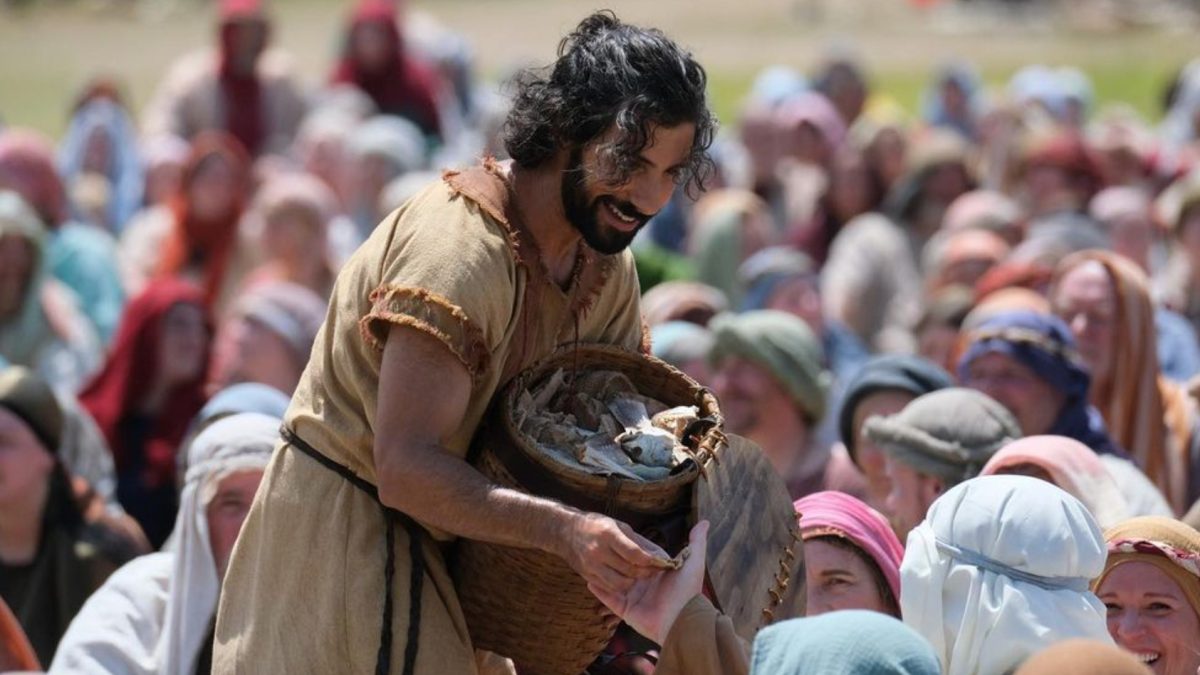
Jesus suggested that rather than send them away, the disciples should feed them. The idea struck them as impossible. The crowd was too large and their funds too small. Jesus asked them what they had which they could share. Andrew, bless his heart, found a young boy with a pouch holding five small loaves of bread and two small fish that his mother had prepared for his lunch that morning. “That’s it, Jesus.” He probably said. “That’s all we could find.”

Sometime later, the disciples stared for a long moment at the 12 baskets of loaves and fishes gathered after Jesus took the boy’s meager meal, blessed it and began giving food to the disciples to distribute to the crowd of 5,000 men and their families.

Can you imagine how stunning it must have been to see the unfolding of this miracle?

After taking care of the hungry, Jesus insisted that the disciples get in the boat to return to Bethsaida. They pushed off from shore, yammering in excitement about what they had just witnessed. After dismissing the crowd, telling them to return home, Jesus found a quiet place on the mountainside to rest and pray, giving thanks to God for the blessings that unfolded that day.

The winds picked up during the early morning hours and the moon glistened off the water below. In the distance, Jesus could see the disciples struggling to make headway against the wind and waves. Scripture tells us they were “straining at the oars.”

Mark picks up the story from there.

Shortly before dawn he (Jesus) went out to them, walking on the lake. He was about to pass by them, but when they saw him walking on the lake, they thought he was a ghost. They cried out, because they all saw him and were terrified.

Immediately he spoke to them and said, “Take courage! It is I. Don’t be afraid.” Then, he climbed into the boat with them, and the wind died down. They were completely amazed, for they had not understood about the loaves; their hearts were hardened.

I went a long way through scripture to get to that last line that I’ve overlooked every time I’ve read this story. “Their hearts were hardened.”

That’s a phrase I most often associate with Pharoah. Moses, on God’s behalf, appealed to Pharoah time and time again to let the people of Israel return to their homeland. Each time the Egyptian king refused, God sent a plague of blood or frogs (that would have done it for me), or gnats, or flies to prove his power and persuade the reluctant ruler.

Each time, however, scripture in Exodus tells us that Pharoah “hardened his heart.” Then, when God had given him every chance in the world to respond positively to him, God took his choice away. God, then “hardened the heart of Pharoah,” sealing his fate.

When we see that term in scripture, it usually means a stubborn refusal to obey God’s teaching or to acknowledge him as Lord. In the Old Testament, it suggests such self-centeredness that one simply turns his back repeatedly on God. Refusing to listen. Refusing to obey.

In the New Testament and even today, to harden one’s heart is to stubbornly and consistently reject Jesus as Savior and Lord, despite every effort the Holy Spirit makes to open one’s heart to the possibility of salvation through Christ. That’s true, the story I just shared suggests there is more to it than that.

In our passage in Mark, we see the disciples sitting in a boat in the middle of the Sea of Galilee with hardened hearts after Jesus demonstrated his power and authority over all things, not once, but twice in the space of 12 hours. His disciples. His followers. People who believe in him.

Once Jesus climbed into the boat, Mark tells us the disciples were “completely amazed.” Whatever Greek word is used in this instance, is evidently not easily translated into English. Different versions of the Bible capture the phrase as “completely overwhelmed,” “completely astounded,” “so baffled they were beside themselves,’ “completely confused,” or “utterly astounded.”

The reason for their profound astonishment was not that Jesus walked on water and calmed the sea. Look what Mark said, “…they had not understood about the loaves.”

Talk about a left turn. I didn’t see that coming. What did they not understand about the loaves?

The disciples were believers. They trusted Jesus as Lord, but they still had much to learn about who he was and what it means to live for him. Such a description sounds eerily familiar to my life…and I suspect to yours.

Though they had come a long way in their understanding, they often missed the point of what Jesus did and why he did it. Jesus did an incredible miracle by creating food for as many as 15,000-20,000 men, women and children from a measly sack lunch. John tells us that Jesus even took the time shortly after this incident to explain that the feeding of the 5,000 was an object lesson, pointing to him as the “bread of life.”

The disciples, however, got in the boat that night, marveling at the miracle, but not truly seeing the one who worked the miracle for who he really is. They missed the revelation of his deity…as God in flesh. It could have been such a turning point in their lives, yet they missed it.

That’s why they were then amazed when he did other God-like things such as walking on the water or calming the sea. Their hearts stubbornly refused to see what was standing right before their eyes, as the water lapped at his ankles. God, through Jesus, is capable of doing anything regardless of the lack of resources or the difficulty of the circumstance.

Their hearts were hardened.

And, there lies the lesson I needed to hear. The language about hardened hearts is usually reserved for God’s enemies, people to whom God is a stranger. Sometimes, those of us who know and trust Jesus as Lord, still have a hard time believing that God is God and that God is still at work.

Stubbornly refusing to believe what we see that reveals his “Godness,” his goodness and his presence in our lives. Hardening our hearts even when we see him doing God things.

Here’s where the story gets so real to me. The disciples didn’t miss the miracle of the loaves. They were in the big middle of it.

They saw Jesus pray. They saw him take the food he had available and turn it into a feast. They handed out basket after basket and each time they returned to Jesus he handed them another basket until everyone was fed.

They saw the grateful faces of the hungry and heard their joy and laughter. They gathered up the leftovers, each loading a full meal to take with them on their journey.

I can be in the middle of God’s work and still miss seeing God in it simply because my heart is not paying attention. I marvel at the miracle and miss the miracle worker.

Paul wrote a letter to the Ephesian church that sounds like a perfect way to focus on keeping our hearts from being hardened to the exceptional grace and work of God in Christ.

“For this reason, ever since I heard about your faith in the Lord Jesus and your love for all God’s people, I have not stopped giving thanks for you, remembering you in my prayers. I keep asking that the God of our Lord Jesus Christ, the glorious Father, may give you the Spirit of wisdom and revelation, so that you may know him better. I pray that the eyes of your heart may be enlightened (in other words, not hardened) in order that you may know the hope to which he has called you, the riches of his glorious inheritance in his holy people, and his incomparably great power for us who believe. (Ephesians 1:15-19a)

It was Paul’s prayer for his friends in Ephesus and 2,000 years later, I’m making it my prayer for my life and for yours.

An Oasis for Authentic Worship

Background Passages: Psalm 84:1-2; Romans 12:1-2

Sitting in Mr. Wallace’s sixth grade world geography class made an impression on this West Texas farm boy. As nice as he could be, he had a dry way of teaching, reminiscent of the economics teacher played by Ben Stein in Ferris Bueller’s Day Off…”Anyone? Anyone?”

While not overly exciting in his presentation, he opened up a world of places I assumed I’d never get to see in person.

While I admit our farm didn’t get a lot of rain, I was fascinated by the world’s great deserts and even more intrigued by the oases that dotted the desert landscape.

The Jubbah oasis sits in the middle of Saudi Arabia’s Nefud Desert, a smudged green basin in an endless sea of sand dunes. Archeological evidence suggests that humans have continuously occupied the site for at least 10,000 years, a testament to changing climate patterns and human resilience.

The freshwater lake at Jubbah exists as it has for thousands of years, an oasis in the middle of a vast desert emptiness thanks to a quirk of local geography.

Due west of Jubbah sits Jebel um Sanman, a massive sandstone formation rising abruptly 1,300 feet above the desert floor. The strong westerly winds rushing across the flat desert terrain hit the rock, breaking around it like water cut by a ship’s bow. For much of human history, the rock has protected the lake, leaving the oasis unscathed, a respite for weary and thirsty travelers.

Can you imagine the nomadic lifestyle of the region that depended upon finding that green oasis in the middle of such a vast and empty space? Your life depended on finding water to drink and shade as a respite from the desert heat. I imagine they longed to see it come into view. Yearned for it.

The thought of oasis came to mind this week as I read Psalm 84. It is a song probably sung by those Jews on pilgrimage to Jerusalem, a trek they were required to make at least once a year for the sole purpose of worshipping at God’s temple. The Psalm is a song of yearning, longing for the chance to be in God’s house to offer sacrifices of praise and worship.

As I read the Psalm, it made me think. Is church, being with God’s people engaged in worship, my oasis?

Do I truly long to be in God’s house? Do I yearn for his fellowship? Is it really my heart’s desire to seek him out, to worship God as Jesus said, “in truth and spirit?” Do I sincerely long to be in his presence?

Look at how the psalmist’s deepest desire is to spend time with God.

How lovely is your dwelling place, O Lord Almighty. My soul yearns, even faints for the courts of the Lord; my heart and my flesh cry out for the living Lord…Blessed are those who dwell in your house. They are ever praising you. (vs. 1-2, 4)

His soul aches so much to be in God’s temple that he grows faint. It’s not just something he wants to do. Worshipping his Lord is something he must do. When his heart cries out for God it expresses the hunger of a starving man or the thirst of one lost in the desert.

Picture a newborn infant, longing for its mother’s milk. That baby cries with its whole body. Arms punch out. Legs kick. Its face a mask of agony, crying out for what it needs. That’s the psalmist’s image. There is such an aching desire to be in God’s house. His whole being screams for it.

When I read those words, I realize how much I take for granted my presence at church every week. While I don’t consider it an obligation, I’m not sure I always approach worship with the same sense of urgency expressed by the psalmist. Where the only bad thing about worshipping in church each Sunday is that I have to count the days before I can do it again.

The psalmist talks about how he envies the birds that make their nests in the temple because they live each day in God’s presence and under God’s protection. I like the image it conveys. The birds lay their eggs and raise their young inside the walls of the temple courts. It is a place for their young to be safe. Isn’t that a great metaphor?

It’s easy as parents of children and teenagers to get so involved in other activities that church becomes less of a priority. My wife and I certainly felt that tug when our boys were young. Still, when Moms and Dads set an example by “building our nests” in God’s presence and under his protection, when our children see the value we place on worship, worship becomes priority for them.

Church ought to be a place for families. It ought to be a place where the “village” helps raise the young. As I grew up in that little First Baptist Church in Ropesville, I knew in some way every adult there was my parent…Sunday School teachers who helped lay out what God required of me. I knew they all wanted me to grow in my understanding of God’s love and grace. I certainly knew if I misbehaved, those “parents” would correct me and then let my parents know of my poor choices. They helped raise me.

Any child raised in the church and loved by God’s people is blessed.

The Valley of Baca referenced in verse 5 translates in the Hebrew more closely to the valley of weeping…a place of trouble and sorrow. The people of God on pilgrimage to Jerusalem to worship in the temple had to pass through this normally dry and barren place. It represents the difficult part of their journey to Jerusalem.

However, along the way, God provided rains that made pools of water that refreshed and rejuvenated the worshippers as they journeyed to meet in God’s house.

Blessed are those whose strength is in you, who have set their hearts on pilgrimage. As they pass through the valley of Baca, they make it a place of springs; the autumn rains also cover it with pools. They go from strength to strength before each appears before God in Zion. (vs. 4-7)

This introduces the concept of God and God’s house as an oasis, a respite from life’s burdens. Blessed…happy…content is the person who finds fulfillment and renewal when worshipping God.

I like what the psalmist said about those whose have “hearts set on pilgrimage.” Our faith journey is a pilgrimage from its beginning until it’s end. Always learning. Always growing. Always gaining understanding about God’s grace and his love for us. Always figuring out from one day to the next what it means to live a Christlike life. The pilgrimage is not always easy, but it is always best when walked with God…when we find God’s house as an oasis in the middle of life’s desert.

As I sit here this week, pondering my own worship experiences, I admit that I don’t always walk into the sanctuary in my church with a heart longing to be in God’s presence. At least, not in the same sense of yearning expressed by the psalmist. I must do better. If my heart is not ready to experience God, I find I don’t always find respite from my troubles.

Here’s the truth, though. God is my oasis. He is that point of renewal and rejuvenation. Just like that desert nomad, however, if I miss the oasis, if I don’t come with a heart yearning for God, I won’t find the waters that quench my thirst or find respite in the shade of God’s loving presence.

It starts with my attitude. It starts in my heart. It starts with my approach to worship.

The passage says essentially, “I can find contentment when the highlight of my week is when I get to worship God within a body of believers who yearn just as much to be in God’s presence as I do. While worship is a matter between God and me, it is greatly enhanced in the presence of others who have also set their hearts on the pilgrimage.

Remember Jebel um Sanman. The 1,300-foot rock redirects the wind and sand that would overwhelm and consume the lake at Jubbah that gives life to those who rest by its waters. Without the rock, there would be no oasis, no life.

Better is one day in your courts than a thousand elsewhere. I would rather be a doorkeeper in the house of my God than dwell in the tents of the wicked. For the Lord is my sun and my shield; the Lord bestows favor and honor; no good thing does he withhold for those whose walk is blameless. Lord Almighty, blessed is the man who trusts in you. (vs. 10,12)

God and his church (the people of faith, not the building) stand as that protective rock that redirects the ill winds that blow our way. Better is one day in worship to God than a thousand days doing anything else. That’s the way it ought to be!

I get another chance tomorrow to find rest in God, my oasis, through Jesus his son. So do you. We’ll find that together only when we come with hearts prepared to worship., yearning for the chance to commune with our father in heaven.

So whether you are with me at South Main Baptist Church or among a congregation of your own choosing, listen as Paul tells us what true worship looks like.

I urge you therefore, brothers, in view of God’s mercy, to offer your bodies as living sacrifices, holy and pleasing to God—this is your spiritual act of worship. Do not conform any more to the pattern of this world but be transformed by the renewing of your mind. Then, you will be able to test and approve what God’s will is—his good, pleasing and perfect will.” (Romans 12:1-2)

I pray you’ll find your oasis this Sunday.

Life After Birth

Background Passages: 2 Corinthians 5:16-20: John 3:1-21

Fifty years ago, while a student a Texas Tech University, I worked as a salesclerk at the Baptist Bookstore in Lubbock. It didn’t pay great, but the flexible hours allowed me to work around my class schedule.

For an avid reader, the downside of working in a place filled with books is that it is a place filled with books, all of which were offered to employees at a sizable discount. found myself spending a good portion of my paycheck each month building my personal library.

I still have many of those books on my library shelf. While straightening one of those shelves this week, I came across a book called Dancing at My Funeral, written by Maxie Dunnam. I probably haven’t read anything from this book in 30 years. With my Dad’s memorial service fresh on my mind, I thumbed through the pages, drawn to a chapter entitled, “I Believe in Life After Birth.”

Because a funeral draws our attention to life after death, I found the title of the chapter intriguing enough to sit and read. Dunnam talked about the danger of sleepwalking through life after making our commitment to Christ. To cut a long chapter short, he wanted his reader to understand that Christians miss the joy of our promised “life abundant” when we don’t let our faith really challenge and change us.

One of the passages of scripture he referenced in 2 Corinthians was a passage I had considered as the basis of my writing this week. It may be coincidence, but I like to think it was a God thing. Here’s the verse.

Therefore, if anyone is in Christ; the new creation has come; the old is gone and the new is here! (2 Corinthians 5:17)

In one sense, what Paul is saying is clear. Once we put our faith and trust in Jesus as savior and boss of our lives, we get to start again. We get to change the patterns of our old life that do not reflect the character and image of Christ to become a new creation…a new person intent upon living for him. The old way of life must pass, letting God lay out a new path before us.

A new creation has come…

Paul’s choice of words here is intentional. It’s like waking up in the morning to a new world. Look at what he wrote earlier in his letter to the church in Corinth.

For God, who said, “Let light shine out of darkness,” made his light shine in our hearts to give us the light of the knowledge of God’s glory displayed in the face of Jesus Christ. (2 Corinthians 4:6)

Can you see the connection Paul tries to make? The God of creation found in Genesis is the same God of our salvation. Just as God spoke all of creation into existence by the power of his word, God speaks in us a new creation through the powerful words of his gospel…through the saving work of Christ, his gospel of truth and the indwelling presence in our hearts of his spirit.

This new person that God creates in us is a light that shines in the darkness of a sinful world. A testimony to the saving and transforming power of Jesus, but only if we allow him to change us from the inside out.

It is here that Dunnam makes a connection I’ve never considered. He equates this “new creation” in 2 Corinthians with “new birth.” Not so much a do-over as a new start. A change. It’s what Jesus tried to explain to Nicodemus in John 3.

You probably know Nicodemus. He’s the Pharisee who came to Jesus late at night to discuss theology and got a lesson in faith. While we often paint the Pharisees dressed in black, hypocrites whose faces look like they bit into a sour lemon, there were some sincere folks among their ranks. Nicodemus stood as one of the good ones. Faithful. Devout. Open. Curious.

That’s why he could not discount the teachings of this Galilean rabbi who said some unsettling things. There was something in Jesus’ words that bore a ring of truth that Nicodemus could set aside.

You see Nicodemus bound his life to the law…every jot and tittle. Obedience to the law and doing good was his path to salvation. Yet, he must have found it stifling. Dull. Drab. Jesus taught differently, challenging everything Nicodemus held dear and promising life in its fullest.

It is somewhat surprising that a man who regarded faith as a measure of obedience to the law and had given his life completely to it would seek out Jesus at all. Though the Bible doesn’t tell us how many times Nicodemus had listened from the edge of the crowd as Jesus taught in the temple or synagogues, he surely heard. What he heard made the religion he practiced pale in comparison to the promises that Jesus taught.

This is what prompted the Pharisee to seek out the teacher. Careful, though, of his standing among the group, Nicodemus wanted a private audience with Jesus, covered by the veil of darkness.

When he arrived at Jesus’ camp, he engaged in a little polite small talk. Nicodemus, impressed with Jesus’ teaching and the miracles he performed, made a point to tell him so. It was his opening statement in what he presumed might become a lively debate. Jesus responded with a statement that led Nicodemus down a rabbit hole into a wonderland of confusion.

Hear the conversation that pushed Nicodemus over the edge.

“I tell you the truth, no one can see the kingdom of God unless he is born again.”

“How can a man be born when he is old?” asked Nicodemus. “Surely, he cannot enter a second time into his mother’s womb to be born.”

Jesus answered, “No one can enter the kingdom of God unless his is born of water and the Spirit. Flesh gives birth to flesh, but the Spirit gives birth to spirt. You should not be surprised at my saying, “you must be born again.” The wind blows wherever it pleases. You can hear the sound, but you cannot tell where it comes from or where it is going. So, it is with everyone born of the spirit.” (John 3:3-8)

As Jesus drew Nicodemus deeper into the truth, Nicodemus struggled to keep up. It was a lot to take in.

“…Just as Moses lifted up the snake in the desert, so the Son of Man must be lifted up that everyone who believes in him may have eternal life. For God so loved the world that he gave his one and only son that whoever believes in him shall not perish but have eternal life. (John 3:15-16)

Jesus told him that no matter how hard you try to obey Moses law, you will fail. The only hope of eternal life is to be born again…to be changed through the unmerited grace and love of God

The truth that Jesus taught Nicodemus is the same truth Paul taught the Corinthians. You must be born again. We must set aside the old us in favor of the new us that is found in Christ.

So, I ask the question again. A question each of us must answer for ourselves.

Is there life after birth?

Jesus says there is life abundant.

I am the gate, whoever enters through me will be saved. They will come in and go out and find pasture. The thief comes to steal and kill and destroy. I have come that they may have life and have it to the full. (John 10:9-10)

Paul said there this life is alive.

When you were dead in your sins and in the uncircumcision of your sinful nature, God made you alive with Christ. (Col 2:13)

Think about the life Christ offers. Abundant. Alive.

It is the life we’ve been promised when we put our faith and trust in Christ. It will never happen, though unless we decide to be open to the possibilities. When we’re ready to surrender the control to which we so desperately cling. To say “Yes.”

Swiss psychologist Paul Tournier said that the “willingness to surrender is the pivotal point for becoming a whole person.” Being born again…becoming a new creation…is a plunge into the unknown. Faith let’s go. Faith surrenders.

Faith surrenders to a new perspective.

In the verse immediately preceding Paul’s thoughts about being a new creation, he calls upon all believers to look at the world differently.

So, from now on, we regard no one from a worldly point of view. Though we once regarded Christ in this way we do so no longer. (2 Corinthians 5:16)

Paul talks about this new creation we become, this life after new birth, so we can look at ourselves differently, though that’s certain a part of it. He also suggests that the new creation we become will enable us to see those around us with new eyes.

From now on, Paul says, we no longer see the world around us, the people around us, from a selfish perspective, but rather through the eyes of a loving father. To be a new creation is to see others…and even ourselves… as worthy of God’s love. That perspective matters. That perspective changes us. If we’re able to make that leap, how much would it change who we are and our perspective of the world around us? How much would it drive or temper our actions?

Faith surrenders to a new purpose.

As a new creation, Paul understood that our purpose changes as we change. Our new outlook propels us into a new purpose, one Paul calls the “ministry of reconciliation.” Look again at what he says in 2 Corinthians.

All of this is from God who reconciled us to himself through Christ and gave us the ministry of reconciliation: that God has reconciled the world to himself through Christ, not counting men’s sins against them. And he has committed us to the message of reconciliation. We are therefore Christ’s ambassadors, as though God was making his appeal through us.” (2 Corinthians 5:18-20)

Christ died so he might fix the broken relationship between us and God. To bring us into a reconciled relationship with our Creator. To be his representative in this alien world. As this new creation, he called us so we might help others be reconciled to God. Through the words we say to others. Through the things we do for others. Through the life we live for others.

Is there life after birth?

I answer with a resounding yes! It comes with a changed perspective and a challenging purpose. When we act accordingly, it is a life that is abundant and alive with possibilities, not just for you, but for all we encounter.

I’ve failed at the task far more often than I care to admit. I expect you have, too. Let’s together pledge to celebrate our life after birth, by committing to our calling in the ministry of reconciliation with a fresh perspective and purpose.

All Who Labor

Background Passages: Genesis 2:15; Ecclesiastes 3:9-13; Colossians 3:23-24; Matthew 11:38

From the time we are children, we eagerly anticipate holidays. Thanksgiving brings us a parade and a feast of turkey and dressing as it reminds us to express gratitude for all God has provided in life. Christmas excites us with its time of gifts and giving, of family and the celebration of Christ’s birth.

New Year’s Day brings its new beginnings and more than its share of doomed resolutions. Easter is a time for hunting eggs with the kids and wearing our Sunday best to church as we remember all Jesus did as his gift of salvation. July 4th is all about picnics and fireworks as it instills its sense of patriotism and love for country.

Then, comes Labor Day…with its day off and the certain knowledge that proper women can no longer wear white.

Labor Day, enacted as a national holiday by President Grover Cleveland in 1882, commemorates the labor rights established to protect workers from the exploitation of way too powerful corporations and greedy industrial moguls concerned only with profit. It recognizes the many contributions workers have made to America’s strength and prosperity. I’m often reminded on Labor Day to express my gratitude for those who do the dirty and necessary work to keeps our society functioning.

I’m grateful for those men and women in my life who taught me the value of hard work. My first examples were my Dad and every other farmer I ever knew in that small West Texas community where I grew up. Hard work was an expectation. A life commitment.

My Mom spent the early years of my life as an equally hard-working farmer’s wife. No one who hasn’t lived that life should scoff at that. It was never easy. Her later years were spent as a medical director of a retirement community where her skill and compassion brought comfort to her elderly patients.

My thoughts this Labor Day weekend are less about the holiday and more about the work we are called to do and how we are called to do it.

Work is hard. Whether we work at home, at school, on a factory floor, in a petrochemical plant, on a farm or in a nice, air-conditioned office, work can be difficult.

Unreasonable deadlines. Computer crashes. Difficult customers. Demanding bosses. Baffling regulations. The list of challenges faced in the workplace is endless. From labor shortages to the difficult decisions to let employees go, it never seems to get easier. Even at home there is always another dinner to cook, another pile of clothes to wash and a lawn that needs mowing.

Despite the fact that we may be doing work that we typically enjoy, there are days when you wonder if it’s worth the effort.

It wasn’t supposed to be this way. In the perfect world God created, work would have been, well, perfect because the workplace was perfect.

“The Lord God took the man and put him in the Garden of Eden to work it and take care of it…” (Genesis 2:15)

The life God planned for us went quickly off the rails because of sin’s devastating folly. The nature of work changed.

“Cursed is the ground because of you, in painful toil you shall eat food from it all the days of your life. It will produce thorns and thistles for you, and you will eat the plants of the field. By the sweat of your brow you shall eat your food until you return to the ground, since from it you were taken. For dust you are and to dust you will return. (Genesis 3:17-19)

Brutal!

The wisdom of Ecclesiastes describes the writer’s work experiences…the disillusionment that comes when his work leaves him unfulfilled.

I hated life because the work that is done under the sun was grievous to me. All of it is meaningless, chasing after the wind. I hated all the things I had toiled for under the sun because I must leave them to the one who comes after me. And who knows whether that person will be wise or foolish? Yet they will have control over all the fruit of my toil in which I have poured my effort and skill under the sun. This too is meaningless. (Ecclesiastes 2:17-18)

If that wasn’t sad enough, the writer continued to share his heart’s despair.

What do people get for all the toil and anxious striving with which they labor under the sun? All their days their work is grief and pain; even at night their minds do not rest. This too is meaningless. (Ecclesiastes 2:22-23)

His lament begins to sound like the gospel of the Rolling Stones, “I can’t get no satisfaction…but I try, and it try, and I try…

Let me stop there or we’ll be too depressed to get out of bed Tuesday morning. The writer of Ecclesiastes doesn’t completely despair. He doesn’t hit the snooze button on his alarm, refusing to get up for work the next morning. He tells us in Chapter 3 that there is a time for every activity under heaven.

What do workers gain from their toil? I have seen the burden God has laid on the human race. He has made everything beautiful in its time. He has set eternity in the human heart; yet, no one can fathom what God has done from beginning to end. I know that there is nothing better for people than to be happy and to do good while they live. That each of them may eat and drink and find satisfaction in all their toil…this is the gift of God. (Ecclesiastes 3:9-13)

What changed in the writer’s heart?

It was the certain understanding that everything God created, even work, had its time, place and purpose. As we learn to trust him in all things, even work, we start seeing the work he has given us through our talent and skills as his work…doing good while we live.

So natural was this idea of work in God’s plan for us that when God sent his son to live and dwell among us, he toiled beside his father and brothers in the family business long before he began his ministry.

While the scripture tells us nothing about the 18 years between Jesus’ appearance in the temple as a 12-year-old and the beginning of his ministry as a man of thirty years, Jewish culture expected boys to begin working as apprentices in their father’s business. Joseph, Jesus’ earthly father was a carpenter, a worker in wood and stone.

It takes little imagination to feel the callouses on Jesus’ hands and see the muscles bulging as a result of many years wielding a hammer. You can see the tiny scars that represent every time the chisel slipped and cut his fingers. It takes little imagination to see the joy on his face as his friends and neighbors delighted in the house or table Jesus built for them with his own hands. It was a good work. A work God called him for when he sent him to Mary and Joseph. A work as much about his Father’s business at that time in his life as the redemptive work he would do later on the cross.

As he preached the gospel, Paul worked as a tentmaker to help pay his way. As someone who took pride in his work, Paul saw his vocation as an extension of his ministry. His way of setting himself apart from others as a witness for Christ. It was a word he extended even to the slaves of his day. This is what he told his brothers and sisters in Christ in the church at Colossae.

“Whatever you do work at it with all your heart, as working for the Lord, not for human masters, since you know that you will receive an inheritance from the Lord as a reward. It is the Lord Christ you are serving.” (Colossians 3:23-24)

We spent easily one-third of our adult lives working. Paul tells us to pour our hearts into our work. Give it our absolute best, even when we might feel mistreated. Work each day as if the Lord himself was your boss because, he says, “It is the Lord Christ you are serving.”

It is the apostle’s way of reminding us that in a broken world, work will never be what it was intended. The good news is that Jesus changes everything. When we begin to see that our work, whatever it may be, is an extension of our ministry and mission given to us by God, then we’ll see the true value of every hour spent in his service.

• Farmers feed and clothe.
• Teachers develop and teach.
• Doctors and nurses heal.
• Industry workers create and build.
• Homemakers love and comfort.
• Police offers and firefighters protect and serve.

I don’t care what you do for a living. Your work is rife with opportunity to be the hands and feet of Jesus, touching the lives of all you encounter. What we do on Monday through Friday cannot be separated from the one we worship on Sunday.

It is the Lord Christ we are serving.

I don’t think I fully appreciated that truth as a young man. Work was work. Ministry was ministry. It didn’t often occur to me that those worlds should exist in the same space. God opened my eyes during a Halloween poster contest at one of the schools in our district.

I had been invited to judge a Halloween mask contest at one of the elementary campuses in my school district where I served in a low administrative role. Most of the masks hanging on the wall were decorated elaborately with obvious parental help.

Standing with the principal who was also judging, we came across one mask that was little more than a Kroger paper shopping bag with a crudely painted face upon it. Holes were raggedly cut for the eyes and mouth.

Thinking nothing of it, I sarcastically told the principal that it was obvious the parents didn’t help on this mask. She gave me a wry smile and told me that the father of the little girl who made this mask was in prison. The girl had been removed from her home because the mother had a severe drug addiction.

That timid, third grade girl had been sent to live with two elderly grandparents. Shortly after her arrival the grandmother died, leaving the little girl in the care of a grandfather who lived his life confined to a wheelchair and a bottle of oxygen.

By the time she finished the story, I fought back the tears of my insensitivity and heard clearly God’s gentle reminder that I was in this business to serve him. That I was to be about his business while doing my business.

I spent a few minutes that morning, my heart broken, but at the same time buoyed, sitting and talking with a smiling little third grade girl whose only refuge in life was the classroom. Whose only stability was her teachers.

God rocked my world that day, opening my eyes to the possibility that every minute of my work was my field…and the field was ripe for harvest. He reminded me that every day presented chances to show his love and grace to people who needed to feel his touch through me.

I hope you’ve had that moment in your career when you began to understand that it is the Lord Christ you are serving no matter what your job or profession might be.

It’s easy to do just enough work to get by. I watched a few people do exactly that during my 40-year career. However, God asks something different of those who he calls his children. As you start your work each day, be reminded that the writer of Ecclesiastes said to recognize our work is a “gift of God and to “do good while we live.”

When the alarm goes off each day, remember that Paul said that “whatever you do, work at it with all your heart,” as if you’re really “working for the Lord.” Find ways to express his love through the work you do.

If you’re doing it right, I’m convinced work will always be difficult, but it will never be drudgery. There will be times when “Thank God It’s Friday” will be less in anticipation of a weekend of celebration and more a prayer of praise that you survived another week. However, if we work each day as if we’re working for God, then the burden will not be all that heavy. There will be joy in the labor.

As a carpenter and stonemason, Jesus knew what it meant to work long, back-breaking hours in the blistering sun. He knew the burden of responsibility would take its toll some days…especially if we remember that it is the Lord Christ we’re serving. I think that’s one reason he told those who would listen…

Come to me, all you who labor and are heavy laden and I will give you rest. (Matthew 11:28)

So as we enter this Labor Day holiday weekend, I pray you find the deserved rest and peace of Christ that will recharge your batteries and enable you to punch the clock on Tuesday with the resolve of one who knows for whom he is working.

Happy Labor Day!