The Still, Small Voice

Background: I Kings 19:11-12

Back in 2003, Natalie Gilbert, a 13-year-old girl, was scheduled to perform the National Anthem at an NBA basketball game. She had a beautiful voice and frequently sang the anthem at other public events. This time was different, though. As she began to sing, her memory failed her. The familiar words to The Star-Spangled Banner would not come.

Gilbert stood in front of the packed arena crowd and a live television audience in silence, shocked and humiliated…in front of God and everybody.

As the music played unaccompanied by words, Maurice Cheeks, then coach of the Portland Trailblazers walked up and stood beside Gilbert with his arm around her shoulders. He bent over and began to whisper the words in her ear. As she picked up the song, he stood and sang with her, a little off-key, waving to the 20,000 in attendance to join in.

Cheeks, in his compassion, cared so much for a scared girl he did not know so he whispered the words she needed to hear. “I just didn’t want her to feel alone,” he later said.

That whisper reminded me of another quiet voice directed toward a scared individual who felt all alone. I’ve written about it before.

Back on July 28, 2018, I wrote a devotional entitled, “What Are You Doing Here,” using the biblical text found in I Kings 19. Elijah, the great prophet of God called down the thunder and lightning on the false priests of Baal, demonstrating the reality of the God of creation that he served.

His little show brought out the wrath of Queen Jezebel who put a bounty on Elijah’s head. The mighty prophet lost his nerve and ran as far away as his feet would take him.

Troubled and despondent, Elijah huddled in a cave on Mount Horeb wishing for death to come when God drew him out of his despair by asking a simple question. “What are you doing here, Elijah?” God reminded the prophet that he was not finished with him yet. There was still work to do.

It was a reminder I needed at the time. (If you’re interested, you can find it in the archives of my website.  http://wordpress.drkirklewis.com/2018/07/

I found myself again in I Kings this week reading the same story. As he often does, God chose to teach me a new thing. A different lesson from the same set of verses.

Elijah huddled in the corner of his cave wrapped in a blanket of self-pity, determined to make the cave his crypt. God, in his understanding of the human soul, urged Elijah to get up.

“Go out and stand on the mountain in the presence of the Lord, for the Lord is about to pass by.” (I Kings 19:11)

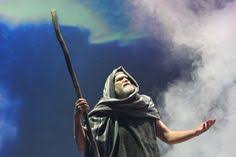
Whether he climbed this mountain on purpose or by providence, God’s prophet found himself on Mount Horeb…Mount Sinai. The same mountain where God revealed himself to Moses in the lightning, smoke and thunder as he was leading the Hebrew people from captivity in Egypt.

God would again use this place to open the eyes of his servant.

Before Elijah could rise from his hiding place to do as God asked, a raging wind tore boulders from the cliff, threatening to trap him inside. An earthquake rattled the ground beneath and above him, showering him in dust and fragments of stone. An inferno scoured the landscape below him, consuming everything in its path.

Though Moses experienced God’s presence in the storm, Elijah would not find God in the terrifying display of nature’s power. But…

“…after the fire came a gentle whisper” (I Kings 19:12)

At the sound of a still, small voice, Elijah  gathered himself and walked out of the cave onto the ledge of the mountain. God opened his eyes to the possibility that there was still work to be done.

It is in that whisper that God had another lesson to teach me this week. Have you ever wondered how God speaks to us today…or even if he speaks?

God brought the consuming lightning to the altar on Mount Carmel, giving Elijah the victory over the pagan prophets. He spoke in the power of that moment.

Bold.

Brash.

Brilliant.

We want God’s word to us to be equally clear. We want the bold and the dramatic so we can’t possibly miss what God wants us to do…what he’s trying to say to us.

Give us a burning bush.

Manna from Heaven.

A whirlwind.

But God is not always into the bold and dramatic. He’s not always making the big splash that we want him to make. The voice does not call out to us from the clouds, “This thou shalt do…,” though that would be infinitely easier on us.

God’s word is not always dramatic. Sometimes, its a whisper.

Silent.

Soft.

Subtle.

The contrast of the tumult outside the cave and gentle murmur tickling the ear reminds me that God speaks most often in his way. If we only wait for God to speak to us in the extraordinary and uncommon, we will rarely hear his voice in the ordinary and common moments of life.

If we’re waiting for the king’s proclamation following the blast of trumpets and the shout of angels, we will miss the stifled cry of a baby, wrapped in ragged clothes and laying in a manger of smelly hay.

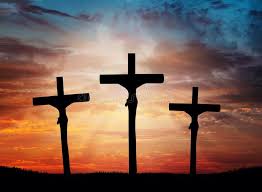
If we’re waiting for the battle cry of rebellion against the forces of evil, will will miss the soft voice from the cross, “It is finished.”

If we’re waiting for God to stand outside the tomb and shout, “I’m back!” we’ll miss him quietly asking us, “Whom do you seek?”

How does God speak to his people today? With every tool at his disposal from the miraculous to the mundane, I know he has many ways. This story of Elijah tells us just one. But, this one way, I believe, is his most prominent way, of speaking to me. I’ve found it to be true in my life.

God speaks to me in the still, small voice inside my heart and head. It is the voice that tells me that person at the table with the sad eyes needs to hear a word of encouragement. The man with the angry face needs my presence today. That homeless man on the corner could really use that $20 in my wallet. That child sitting alone at lunch needs me to sit with them for a while. MY wife needs a hug today.

God speaks through the unseen actions of his people. The random and intentional acts of kindness that provide meals for the family of the one with cancer. With every tree cleared from a stranger’s driveway in the aftermath of a devastating storm. With every step of progress made toward social justice that makes a nation better than it was before. God speaks through his people in the every day, nitty-gritty reality of life.

God speaks to me through the quiet voice of his spirit that guides me down a path I would not otherwise choose because he knows that place is the best place for me to be.

It is less important how God speaks to us than what we do with what he says.

The voice that whispered to Elijah is the same voice that whispers to me and you. We have an opportunity Elijah didn’t have. Elijah could not look upon the Lord. He was not permitted.

Because God became flesh and dwelt among us, because he lived, died and was resurrected, because Jesus words were written in scripture and made available to all of us, we can see and hear the one who speaks to us by reading his word, hearing his voice pour out of the printed page and into our hearts.

I think back on the times of my life when I stood frozen at center court, unable to speak or move. Amid the awkwardness, God’s voice whispers in my ear a word of purpose and encouragement, giving me the words to sing. As my faltering voice catches in my throat, I hearing him sing the words beside me.

God could speak to me in the thunder and lightning, but I find comfort and peace in the whispered words of a God whose compassion runs too deep to leave me standing there alone.

So, when you can hear nothing else, listen. Listen for the still, small voice of God.

What Does the Lord Require?

Background Passages: Deuteronomy 10:12; Micah 6:8; Matthew 22:37-39

I find myself saddened and distraught by the events of the past week. The senseless death of George Floyd at the hands of a police officer who forgot what it means to “protect and serve” is unnerving on so many levels. The understandable protests demand desperately needed changes in our sense of justice for all people.

Of all the words spoken in the past week, this, it seems, is the core of my distress in these tumultuous times.

Every parent…every grandparent worries about the health and safety of their children and grandchildren. The worries never really end no matter how old those children or grandchildren might be. As a white man in American, one thing I’ve never really worried about is losing a son, daughter, grandson or granddaughter at the hands of a police officer. Never. It is, however, a burden too many of my African-American friends experience every day.

Positive change must come. Of that I’m certain. It must. However, the solutions are not easy. Nothing of magnitude ever is. The root causes run deep in a complicated and almost overwhelming flood of political, social, psychological, emotional and spiritual issues that won’t go away by burying our heads in the sand. Complicated and overwhelming as these issues may be, God’s world will never reflect his will for his people until we find the answers.

During the last 10 years of my professional life as superintendent in a public school system, I felt an enormous sense of responsibility. I taped on my desk in a spot visible only to me a card with one of my favorite Bible verses to remind me that every decision I made impacted a life somewhere. The card, from Micah 6:8 read,

“He has shown you, o mortal, what is good. And what does the Lord require of you? To act justly, to love mercy and to walk humbly with your God.”

Whether I was fully obedient to that challenge during my 10-year tenure is best left to God and to those I tried to serve, but I read that verse often as I struggled to make fair and equitable decisions.

In days like those in which we live today, I think this verse is a good starting point for all of us. It is the core passage of this study. It is a common theme of the Bible for a life lived by faith.

Freed from the oppression and slavery of the Egyptians, the Hebrew people followed Moses on a long march toward the promised land in Canaan. They experienced the parting of the Red Sea to escape an army intent on killing them. Water from a rock to quench their thirst. Manna from heaven to quell their hunger. A whirlwind to guide them by day and a fire to direct them by night. Miracles in the desert.

Despite all they had seen, despite all God had done for them, they grumbled. Then, on the threshold of the promised land, they blinked again, turning away from the one who brought them there.

Moses climbed the mountain to hear from God who provided for his people a code by which they could live. Ten commandments to govern their relationships with the Creator and with their fellow man. While he was gone, the Hebrew people took matters into their own hands and cobbled together enough gold to fashion an idol they could worship.

That act of rebellion led to another 40 years wandering and wondering in the wilderness.

At the end of that time, Moses again climbed the mountain to receive the word from God. God handed down the same commandments again. God’s will for all of us written on two stone tablets. Moses returned and stood before his people. He knew how hardhearted his people could be. He had seen them at their worst. Before reading to them the commandments of God, he tried to help them understand their responsibility under their covenant with the Father.

“And now, Israel, what does the Lord your God require of you but to fear the Lord your God, to walk in obedience to him, to love him, to serve the Lord your God with all your heart and with all your soul, and to observe the Lord’s commands and decrees that I am giving you today for your own good.” (Deuteronomy 10:12)

We see those words for the first time. “…What does the Lord require of you?”

Hundreds of years later, the prophet Micah stood before the people of Israel who had once again charted their own course, living a life of rebellion and disobedience. They worship just about anything and anyone but God. Micah called upon them to repent. To turn back to God and their covenant with him. His instruction was clear and plain.

“…what does the Lord require of you? To act justly, to love mercy and to walk humbly with your God.”

The passages in Deuteronomy and Micah are remarkably similar. However, Bible scholars the English word “require” used in both passages are different words in the Hebrew language with different meanings. In Deuteronomy, the Hebrew word carries the idea of inquiring. It seems to say, “What does the Lord ask of you?” In Micah the word speaks to a mandate, a command. “What does the Lord demand of you.”

When I ask you for something, you have a choice. You can do what I ask or walk away. I look at the passage in Deuteronomy and I see God’s gift of free will at play. God asks that I fear him…hold him and his power in awestruck reverence, knowing that he is worthy of my praise.

God asks that I be obedient to his will. That I follow his lead throughout my life. To do what is right in his eyes, He asks that I love him and serve him with my total being. A complete commitment to his will and way that penetrates my heart and soul and guides my every action.

He asks those things of every one of us, but we have a choice to put our faith and trust in him or to walk away. He asks us to follow him, but he will never force us to do so. We have that free will choice.

The passage in Deuteronomy speaks to our relationship to God. It speaks to the internal change that occurs in our heart and soul when we open ourselves up to a relationship with God, the Father. We are to be transformed in heart and soul and deed.

Things change for us when we make that commitment. Once we place our faith and trust in him, God demands a certain standard of behavior toward others. This is not an option for a believer. If we call ourselves one of his children, he insists that our interactions with others reflect his character. He demands us to live a godly life. The word Micah speaks tells us how we are to embrace the world around us. It tells us how we are to act in relationship with one another regardless of race, ethnicity, sexual orientation, social level or life situation.

As a child of God we are required to act justly. In a general sense to be just is to be righteous. To do what is right in all things so that everything is as it should be…as God intended. To act justly then is to recognize our duty toward God with respect to our relationship to all others. That God calls us to “act justly” means we must see our fellow man as God sees him, according him the respect for his rights…his life, property and reputation.

I Peter 2:17 says we are to “honor all men.” In our relationship to others, we are to reflect the justice and righteousness of God. In every decision we make. In all that we do. We are to apply fairness and equality as the basis of our actions toward others.

It is not enough to talk about justice for all. It is not enough to call for the end of injustice. We can’t just give it lip service. God demands we act justly.

Similarly, it is not enough just to be merciful. To talk about mercy and forgiveness. We must love mercy. That’s taking our relationships to a whole, new level.

Mercy is the forgiveness and grace of God extended to us and then through us to those who have wronged us. Other passages in the Bible reinforce the thought.

“Be kind one to another, tenderhearted, forgiving one another even as God for Christ sake has forgiven you.” (Ephesians 4:32)

“Blessed are the merciful, for they shall obtain mercy.” (Matthew 5:7)

“Forgive us our trespasses even as we forgive those who trespass against us.” (Matthew 6:12)

It is mercy, that Christian grace, that allows us to look at each other in love regardless of the circumstances between us. It is the recognition that each of us has been breathed to life by a God who loves us equally and without reservation. Mercy is an act of godly love expressed to all others through the words and deeds. Mercy is the compelling force of God’s love that enables us to act justly.

Finally, God demands that we walk humbly with God. To walk with God is to stay by his side throughout this life journey. To never stray from the path down which he is leading. To be obedient in all things.

To walk humbly recognizes our place. No one who encountered God in scripture walked away with an inflated sense of personal pride or power. All were humbled.

Moses took off his sandals and buried his face in the sand to avoid looking at the burning bush. Isaiah saw God and cried, “Woe is me!” Daniel had a vision of God and declared, “My beauty has turned to corruption.”

Humility is the Christian grace that makes one think of himself no more highly than he should. An attitude that does not allow one to consider himself better than another. We cannot simply declare ourselves humble. We must walk it. Live it. Be it. Sincerely and without guile.

It is the indwelling presence of the spirit of God that humbles us and gives us the servant heart and the loving eyes of Christ that made no distinction between Jew or Gentile, black or white, rich or poor. Humility is washing the feet of another. Feeding the hungry. Clothing the naked. Visiting the prisoner. Standing up for the oppressed. And it is essential to faithful discipleship.

Jesus sat with a questioning Pharisee who asked him to identify the greatest commandments. Jesus didn’t hesitate. He didn’t need to analyze the pros and cons of each of God’s commands. His answer was immediate for these two governed all others.

“The most important,” Jesus answered, “is this one, ‘Love the Lord your God with all your heart, and with all your soul, and with all your mind, and with all your strength.’ And, the second is this, ‘Love your neighbor as yourself.’ There is no commandment greater than these.” (Matthew 22:37-39)

The trauma of the past few days is real, especially for our African American friends who live it every day. Steps have been made over the years toward social justice, but it is an unfinished work. More must be done.

There are political and social answers to the issues that face our country. They are complex and difficult. Substantive changes in our country will not occur until we, as believers in Christ , comply with the demands of God to act justly, love mercy and walk humbly with him.

The necessary changes will come only when we learn to love our neighbors as ourselves, regardless of their color.

It will not be easy because we are flawed people. The apostle Paul understood his nature and the nature of man.

“For I have the desire to do what is good, but I cannot carry it out. I do not do the good I want to do, but the evil I do not want to do—this I keep on doing.” Romans 7:18b-19

Paul also understood that despite his shortcomings he could not quit trying to live the life he knew God demanded of him. After 30 years in God’s service he wrote an encouraging word to the Philippian church. It is a word that resonates as I think of my responsibilities as a work in progress toward a more just world for all people.

“Brothers and sisters, I do not consider myself yet to have taken hold of it. But one thing I do: Forgetting what is behind and straining for what is ahead. I press on toward the goal to win the prize to which God has called me heavenward in Christ Jesus.” Philippians 3:13-14

I press on to live a Christ-like, spirit-filled life. If enough of us do that, we change the face of justice in our country. Our desire to have our country be a place of social justice and equity is an unfinished and important work. We all have a role to play to make this the country God desires it to be.

Justice. Mercy. Humility. Let’s press on.

Passion Week-Friday: Renewal

Background Passages: John 18:1-19:37, John 3:16-17, Ephesians 2:8, John 19:38-42, and John 12:32

Nine hours.

540 minutes.

32,400 seconds.

That’s all the time it took the religious leaders to arrest Jesus and to nail him on the cross. Nine hours. When Jesus whispered, “It is finished,” and breathed a sigh of release, the religious leaders patted each other on the back and breathed a sigh of relief. It was finished. They had won.

In one of the world’s best examples of a kangaroo court, Caiaphas, the high priest, and other religious officials, manufactured the evidence and brow beat a Roman governor to bend him to their will. By killing Jesus, they protected their standing among the Jewish people. Brutally efficient. Politically effective.

Little did they realize that they played right into God’s hand. Scripture tells us when the time was right, the sovereign God sent his son to live among his creation, to teach them what it means to be a part of his kingdom and to die as a substitute for the failures of a sinful world.

In those nine hours, God expressed his deepest love.

“For God so loved the world that he gave his one and only son that whoever believes in him should not perish but have eternal life. For God did not send his son into the world to condemn the world, but to save the world through him.” (John 3:16-17)

In those nine hours, we learn the very definition of grace.

“For it is by grace you are saved through faith—and this not from yourself. It is a gift from God. (Ephesians 2:8)

In those nine hours, we see the deepest love and the greatest gift of all time. In those nine hours, we see the beginning of Easter.

This will not be a typical Easter weekend. In the middle of this pandemic, our churches will be mostly empty, despite the creative ways congregations find to worship. Easter will be less public and more private. More personal. Maybe that’s not altogether bad thing.

It’s a hard truth. Most Easter Sundays find churches with their pews filled with faces who rarely enter the church doors throughout the year. Believers, for the most part, for whom the cross gets stuffed in the closet after Easter service along with their new dresses, suits and shoes. They’ll pull it out again next year, but what about the months between?

I really don’t intend for that to sound harsh or critical, though I suspect it does. I attend church almost every weekend and I know I’ve failed God more times that I care to admit. It’s not about our failures. It’s about what we do from this moment on with the cross. How do we let it change our lives?

Caiaphas and the other religious leaders rejoiced at Jesus’ death. Though they read the scriptures regularly. They clearly misunderstood the words. They projected their own interpretation of God’s word and created an image of the Messiah that Jesus did not fit. As a result, they nailed him to a cross and mocked him. “If you really are the chosen one, prove it to us once and for all by coming down from the cross.” When Jesus did nothing, they laughed, patted each other on the back and went on their way.

One thief joined the religious elite, mocking Jesus and telling him to get all of them off the cross if he was who he claimed to be. The repentant thief, on the other hand, scolded his partner in crime for his shameful words. Though he knew he deserved the death to which he had been sentenced, he recognized in the things Jesus said and did while on the cross that Jesus was innocent. He saw enough in Jesus to repent of his own sin and give his life to him, “Remember me when you come into your kingdom.”

Each of us as believers in Christ had to get to that point. Convicted of our own sin and seeing into the heart of Jesus, we gave our lives to him. Too often, we let the genuine thrill of that experience fade with time. We trust him as savior, try to live according to his word, but, whether out of embarrassment or fear, we hide our faith from others…stepping from the shadows to light only on Easter or when it is convenient for us.

What do we do with the cross? I hope we do what Joseph of Arimathea did.

Joseph was a Pharisee, a member of the ruling council. Luke describes him as a “good and upright man.” John tells us Joseph was a follower of Jesus. He had heard Jesus teach and believed in who he was. Joseph accepted Jesus as his savior, his Messiah. But, and this is still too often true today of many believers, Joseph kept his relationship to Christ private. He was afraid of what the Jewish leaders would do to him.

When Jesus died on the cross, Joseph came alive spiritually. His fear forgotten, Joseph of Arimathea approached Pilate, the man who sentenced Jesus to die, asking the governor’s permission to take Jesus from the cross and bury him properly. The cowardice and fear that kept his faith silent vanished. His bold and public request testified for Jesus in a way that everyone, including the religious leaders, could see.

Jesus had been dead less than an hour and already his words proved true.

“But if I be lifted up from the earth, I will draw all men to myself.” (John 12:32)

Joseph, who privately made his faith commitment, found himself drawn to the cross of Christ, decided it was time to make his relationship to Christ public. Time for a re-commitment.

This will not be our typical Easter. Despite creative ways to celebrate the death and resurrection of Jesus, most churches will remain closed. The pews, normally full of people, will remain empty. The word of God will be proclaimed this weekend in many ways. We will see Jesus on the cross, high and lifted up.

Be drawn to him. Wherever we have been reticent to express our faith and trust in him, let’s leave that hesitation at the foot of the cross. It’s my prayer this weekend that we all be drawn to the cross, recommitted to live and work for him each day. It’s my prayer that we all let the cross change us. May we use the incredibly sacrifice of Jesus to renew our faith commitment and boldly proclaim to the world that we are his.

For God so loved the world…

Passion Week-Thursday: Never Alone

Background Passages: John 14:1-27; John 16:12-33 and John 17: 6-26

The events of the day were emotionally charged and brutally devastating. Though the day began easily enough for Jesus’ disciples, it would soon take a very different turn. They surely felt the ground was giving out from under them.

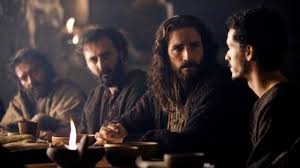
Their emotions were set on edge as Jesus washed their feet, teaching them about a servant’s heart and their need to love and care for one another…especially in the days ahead.

  • They reeled in shock as Jesus blindsided them with the idea that one of them would betray him…that others would abandon him.
  • Later in the day, they would grow weary in the garden, sleeping while Jesus agonized in prayer.
  • They would be startled awake by the torches and shouts of the temple guards as they arrested Jesus.

If they thought their world was tilting in the Upper Room, by midnight, their world had turned upside down.

As intriguing as each of those episodes are, I find myself captivated by the conversation Jesus shared with his disciples after their Passover dinner together. Knowing the inevitable outcome, this would be Jesus’ last chance to tell them what they needed to hear. To give them words that might protect and sustain them in the horror that was to come.

Put in the disciple’s sandals, what would you need to hear? What do we need to hear at a time in our world where it seems the ground around us is falling away? I found three things compelling in the dialogue between Jesus and his disciples.

Trust

“Do not let your hearts be troubled. Trust in God. Trust also in me.” Peace I leave with you; my peace I give you. I do not give to you as the world gives. Do not let your hearts be troubled and do not be afraid. (John 14:1, 27)

Jesus could sense the growing anxiety. He could see it etched on their faces. All this talk about Jesus going away made them fearful. For three years he had been their rock and a constant presence. Thomas vocalized what all were feeling. “We don’t know where you’re going so how can we know the way?” Jesus was still among them and already they were feeling lost and alone.

Jesus sought to reassure them, asking for them to trust God…to trust him…despite their misgivings and fears.

Never Alone

Jesus had led them every step of the way for years. They were unsure of their own ability. Unsure of what lay ahead. Unsure of what they were to do in his absence. Jesus promised them they would not be alone. That they would not forget all he has taught them.

“I will ask the Father and he will give you another Comforter to be with you forever—the Spirit of Truth. You know him for he lives with you and will be in you. I will not leave you as orphans.” (John 14:15-16)

“All of this I have spoken to you while I was still with you. But the Counselor, the Holy Spirit who the Father will send in my name, will teach you all things and will remind you of everything I have said to you.” (John 14:25-26)

Jesus followed up that promise as he continued to talk to them.

“I have much more to say to you, more than you can now bear. But when he, the Spirit of Truth, comes, he will guide you in all truth. He will not speak on his own; he will speak only what he hears and he will tell you what is yet to come. He will bring glory to me by taking from what is mine and making it known to you. (John 16:12-14)

The disciples have been told they need to carry on without his physical presence. Jesus would not be there for them to pose a question or seek clarification. How frightening must that have been? Yet, he told them. You are not alone and you need not worry. The Holy Spirit will be your companion and will remind you of everything you learned from me. That’s significant reassurance, even if they weren’t totally prepared to understand it.

Overcoming

Jesus tells the disciples they will face persecution and death if they continue to follow him and do the things he’s commanded them to do. His promise is that through the difficult times that lay ahead, they will have the Counselor and Comforter whispering in their ears just as if Jesus was present with them.

“Then the disciples said, ‘Now you are speaking clearly and without figures of speech. Now we can see that you know all things and that you do not even need to have anyone ask you questions. This makes us believe that you came from God.” (John 16:29-30)

It was the response from his friends that Jesus needed to hear. The response that gave him the lift he needed to press on to the work that lay before him.

“You believe at last!” Jesus answered. “…I have told you these things so that in me you may have peace. In this world you will have trouble. Take heart! I have overcome the world. (John 16:33)

Prayer

Finally, Jesus concludes the evening before heading out to the Garden of Gethsemane with prayer (John 17:6-19) asking God…

  • to bolster their faith and connection with God.
  • to protect them.
  • To grant them a full measure of the joy Jesus had in his heart.
  • To ground them in his word.

Though the days ahead would be dark and difficult for the disciples, the hard conversation with Jesus had the desired impact. For that moment, they were comforted and strengthened.

*****

There is something reassuring to me in this passage. There is comfort.

Trouble and turmoil are a part of life. It always has been. It always will be. Faced with so much uncertainty today, it is easy to become anxious. What does today hold for me and my family? What will tomorrow look like? How will we survive?

Jesus reminds us. Trust in God. Trust in him. He is faithful and he is in control. He is working in my life and yours…even today.

The same promise he made to his disciples is a promise he makes to us. We have a Counselor, a Comforter, with us today. Bringing peace, a contentment, solid in the realization that God is with us. He did not abandon us in our time of distress. If we seek him, he will remind us of all he has taught us, all he has said and all he needs us to know. We are not alone.

Whatever happens around us, this passage also teaches that the victory is already ours. The world cannot beat or break us. Trouble will come, but Jesus has overcome the world. So, it circles back around. Because he has overcome the world, we find the peace that only he can give. Rest in the middle of chaos.

Then, there is one final piece to this expansive narrative that ought to bring you hope in all things. After Jesus prayed for his disciples. He prayed for me. He prayed for you.

“My prayer is not for them alone. I pray for those who will believe in me through their message, that all of them will be one, Father, just as you are in me and I am in you. May they also be in us so that the world may believe that you have sent me… I have made you known to them and will continue to make you known in order that the love you have for me may be in them and that I myself may be in them.” (John 17:20-26)

That’s it! That’s amazing! The sacrifice of Jesus on the cross is why we are never alone in the world no matter what surrounds us. The day before he went to the cross, Jesus was thinking of me. He was thinking of you. Praying that you and I would put our faith and trust in him so that we might be one…connected by grace with every believer and with God…to this day.

When you read that prayer, the cross becomes more than history. It becomes personal.

Your Servant is Listening

Background Passages: I Samuel 1:1-21

We live in a time when it seems people have a hard time hearing God speak. The noise of our technology, the rattle of the personal and global sabers and the drone of strident political debate drown out God’s voice.

Some might suggest that the low tide of our spiritual lives is a result of God backing away from us. That he has little to say because we have proven ourselves unworthy. Maybe. But, I don’t think that thought is consistent with the character and nature of God. More than likely, we are at fault. When we no longer hear God speaking it’s more likely because too few of us want to listen.

Life in America today reminds me of a distant time in Israel, when too few of God’s people listened for his call and direction.

“…In those days, the word of the Lord was rare; there were not too many visions.” (I Samuel 3:1)

I first heard the story as a child. The passage was sanitized somewhat to protect me from the more sordid details. It is the opening verse in the story of God’s call to Samuel to serve as his prophet in Israel.

You probably remember the story as I do. Samuel forever portrayed as a young child, sleeps in the temple after being dedicated to God’s service by his grateful mother, long unable to have children. As he serves in the tabernacle, he is one night awakened three times from his slumber. Samuel assumed the voice calling his name was his surrogate father and mentor, Eli, the priest. Two times Eli sent him back to bed telling him he was dreaming.

The third time, Eli realized that the boy was being called by God. He told him simply, “If you hear the voice again, answer, “Speak, Lord, for your servant is listening.” For the fourth time, the voice called to Samuel who responded as he had been instructed. “Your servant is listening.”

That childhood lesson ended there. The teaching clear. God calls. I must listen. This is a lesson I still need to hear, even as a senior adult. However, there is more to this story for those who want to take it to the next level.

First, God’s call is personal. When God speaks it is a personal message just for me. If his call were generic and meant for everyone, it would be far too easy to dismiss it. To lay at the feet of someone else. “That task is not for me. Let the church staff do it. That’s why we pay them.” When God calls, he is calling me. His call is applicable to my life. My call to service and ministry. It is personal.

Secondly, his call is penetrating. God does not need to speak in a voice of thunder that can cut through the noise, rattle and droning that dominate our lives. Don’t get me wrong. I’m living testimony that God will sometimes use a 2” x 4” across the nose to get our attention. His quiet call to salvation and service is capable of cutting through the most hardened heart and the most reluctant soul.

Thirdly, God’s voice is persistent. God’s will is not easily thwarted. He does not give up on us without a fight. So, when we don’t hear him the first time, he will call again…and again…and again. He will call out our name. He will tap us repeatedly on the shoulder. If we still do not respond, he will nudge another to remind us to listen, just as he nudged Eli. I’m grateful that he is persistent in drawing me to him.

While the story teaches much about the work of God in making the call, it also teaches us a lot about the response he desires from us.

First, I must make myself available to him. When Samuel heard the voice, he immediately got up from his slumber and responded to it. True, there first few times he didn’t know who was speaking, but he responded. He opened his heart to the possibilities. When God called Isaiah years later to carry a message of repentance to his people, the prophet responded in much the same way as young Samuel, “Here I am. Send me.” It has been the right response for ages. “Here I am.” I am available.

Secondly, Samuel eagerly responded. Each time his name was called, Samuel ran to Eli. He didn’t hesitate. He didn’t walk. He didn’t wait until morning when it was more convenient. He got up and ran to the one he thought was calling with eagerness and anticipation. “Here I am,” he said. His actions said, “What can I do for you?” Samuel possessed a heart that was ready to be moved. A mind open to the possibilities. A spirit willing to act. It’s not enough to be available. We must be ready to respond immediately to God’s instruction.

Finally, Samuel served obediently. The children’s story ends with Samuel available and eager. The message for the rest of us takes it one step further. It calls for obedience.

If we remember the beginning of the chapter, Samuel lived during a time in which the people of God had a hard time hearing him speak.

“…In those days, the word of the Lord was rare; there were not too many visions.”

Israel’s spiritual leaders lost their focus. Eli, the priest, had grown old and complacent in his faith. His sons, also priests, used their positions of power to satisfy their own personal desires. They desecrated the sacrifices. They extorted payments from those who came to worship. To his credit, Eli confronted them about their sin, but they refused to listen. Eli, ultimately, failed to discipline them for their evil deeds, even after being warned of God’s displeasure.

The failure of the spiritual leaders led to the failure of the people to worship God fully. To allow him to lead and direct their lives.

God eventually told Samuel he was about to do a new thing in Israel that will make the “ears of everyone who hears of it tingle.” When God called Samuel, he placed upon him a heavy burden. Change was coming. God would assert his control over the lives of his people in an effort to draw them back to him, but it would come at a cost to Israel…to Eli and his family…and to Samuel. It would be Samuel’s responsibility to announce God’s judgment to Eli, man who served as father and teacher in his life. It would fall upon Samuel to chastise a king and a nation.

Despite the cost, Samuel did as God required. Because of his faithful obedience, scripture tells us,

“The Lord was with Samuel as he grew up and he let none of his words fall to the ground.” Samuel proved trustworthy in the word of God that he proclaimed. As a result, all of Israel knew him as God’s prophet.

Living as we do in a nation that prides itself as a “nation under God,” it’s sometimes hard to find the evidence of it. It feels as though we have drifted away from God and his purpose for our lives. I wonder what it will take for us to return to a place where our words and our actions reflect the will and purpose of God?

God’s message will always be personal, penetrating and persistent…calling us as individuals to respond to his voice. For when enough individuals respond with availability, eagerness and obedience, our words…which are God’s words… will not fall to the ground unheard and unnoticed.

Maybe all it takes are enough of God’s people saying, “Here I am, Lord. Speak, for your servant is listening.”

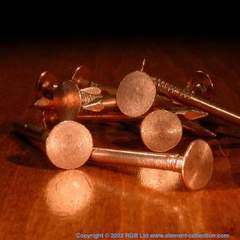
Return the Copper Nails

Background Passage: Psalm 51

A Christian man worked for a shipbuilder. The owner of the company considered himself an atheist. With disdain, he constantly mocking his employee for the futility of his faith, treating him with disrespect and contempt.

The Christian man was building a boat for his family in his backyard for his family. Because he could not afford them, he began stealing copper nails from the shipyard to use on his personal project. At first, just a handful. Then, he stole them whenever he needed more.

Perhaps it was the bosses attitude that convinced him that taking the copper nails was justified. Perhaps he felt he was owed more than he was paid. In every other way, the man’s life was exemplary. Yet, when it came to copper nails, he chose to ignore the voice of God within his heart.

*****

He was God’s chosen king. A faithful servant. Courageous warrior. Slayer of giants. Skilled musician. Leader of men.

David, a shepherd boy from Bethlehem, found himself called by God and anointed by Samuel as King of Israel. Such was the depth of his character that God called him, “A man after my own heart.” David earned that distinction. His reputation for humility, reverence, devotion and faithfulness created an aura about him, recognized by all he encountered.

Yet David, this man of God, experienced moment of abject failures. At times, human weakness consumed him. Consider his actions on a cool and sleepless night.

David walked onto the balcony of his palace overlooking the city below. In the moonlight, he watched as a beautiful woman bathed in the moonlight. Struck by her beauty and consumed with lust, he sent his servants to bring Bathsheba to him. What began as a night of illicit passion ended in pregnancy.

His folly did not end there. In a series of Machiavellian maneuvers, David compounded his sin. He was not swept away by circumstance …simply in the wrong place at the wrong time. Nor did he act on impulse. David’s sin was meticulously planned.

To protect his position, David devised a plan to bring Bathsheba’s husband, Uriah, home from battle to be with his wife. When Uriah refused to indulged in his own desire because his men were still at war, David schemed again. He sent the commander on a suicide mission. When Uriah was killed, David took Bathsheba as his wife, somehow rationalizing his actions as acceptable.

Like David, we face our own crisis of character. Sometimes we find the strength to walk through the danger to the other side. Sometimes we fail to be who we desire to be. Who God intends us to be. We engage in the sin that eats away our moral fiber. Rather than correct our path, we swallow our guilt. Push it deeper into the darkest recesses of our souls.

Such efforts seldom work. There comes a day when we must face the sin. Face the consequences of our choice. Do I keep living this way? Separate from the will of God? Do I repent and find a new way to live?

Sin we bury always rises to the surface when we least expect it. On a beautiful spring day when the prophet Nathan stood before the king, he brought words that would dredge up the long-buried sin David tried to hide from himself and from God.

Nathan spoke of a rich man who hosted an important visitor for an important dinner. As host, the rich man prepared a huge banquet in the honor of his guest. However, rather than slaying one of his own sheep for the table, he ordered his servants to take and butcher the prized lamb of the poor farmer next door. It was this lamb he served to his important guest.

David interrupted before Nathan could finish the story. Incensed. Furious.

“As surely as the Lord lives,
the man who did this deserves to die!
He should pay for the lamb four times over
because he did such a thing and
had no pity.”

The king’s anger echoed in the chamber, his breath coming in ragged gasps. Then, quietly and with no joy, Nathan said,

“You are the man.”

In that instant, the sin David buried in his soul, flashed before his eyes, a painful reminder of his spiritual failure. The burden of guilt welled in his eyes as he struggled with the weight of his mistakes. Hear the agony of his voice.

“Have mercy on me, O God,
According to your unfailing love;
According to your great compassion blot out my transgressions.
Wash away my iniquity and
Cleanse me from my sin.

“For I know my transgressions,
and my sin is always before me.
Against you have I sinned and done
what is evil in your sight.”

David’s story could parallel the hubris and folly in my life and yours a hundred times over. Time and time again we fail to live up to the standards of God. We fail to live up to the image of Christ. Then, in some way the Holy Spirit calls us to drop the pretense and take a good hard look at the face in the mirror.

When the eyes staring back at us break our hearts, maybe it’s time to throw ourselves at the mercy of a Father who loves us deeply. David came down from his throne and knelt before the throne of God with a changed heart, acknowledging his sin. Taking that first step toward reconciliation.

Once he confessed his failure, David knew that God only could take his sin away. Pleading for God to erase the sin from his heart. Seeking forgiveness and restoration.

“Cleanse me with hyssop and I will be clean;
Wash me, and I will be whiter than snow.”

For all his failure, David knew what God required of him. He knew God wanted more from David than someone simply going through the motions. God desired a changed heart.

“You do not delight in sacrifice or
I would bring it.
You do not take pleasure in burnt offerings.
The sacrifices of God are a broken spirit;
A broken and contrite heart.”

It is one thing to acknowledge my sin. I can know that what I’m doing is against God’s will and still do it. Simply going through the motions will not suffice. My life will not change until my stubbornness is crushed. Until God pries opens my heart and breaks down my resistance. I change my life only when my spirit is broken and my heart sincerely open to God’s direction.

A contrite heart doesn’t make excuses or attempt to justify one’s sin. God is not interested in empty apologies or halfhearted resolutions. A contrite heart expresses with real and deep sorrow our personal rebellion against God. A contrite heart desires to live differently. A contrite heart also knows that change is not possible without God’s forgiveness.

David knew the power of forgiveness to renew his life. Consumed by guilt, he asked simply for God to allow him to hear again “joy and gladness;” to allow his “bones to rejoice.” Then in some of the most beautiful verses in all scripture, David expressed his desire to experience a new life in the presence of God.

“Create in me a pure heart, O God,
And renew a steadfast spirit within me.
Restore the joy of your salvation and
grant me a willing spirit to sustain me.”

A pure heart is intent upon living within God’s purpose and plan for its life. Focused on doing right. One where every thought and action reflects the teachings of Christ. It is only then that the joy we experienced when we first allowed Jesus into our lives is restored in perfect purity. It is only then that we find ourselves again content in our own skin. It is only then we can look into the reflection in the mirror and smile.

*****

For weeks the Christian man happily hammered the copper nails into his sailboat. Then, one Sunday, the pastor spoke about the two thieves surrounding Jesus on the cross. From that day forward, every stroke of the hammer pounded his sin more deeply into his heart.

After days of guilt, he laid his sin before God in repentance. He went to his pastor and confessed what he had done. He also knew he should also confess to his boss, but also knew it would give justification for the man’s arguments against his belief in God. He felt he could not confess his sin because it would reinforce the man’s disdain for God.

For weeks he struggled until he finally told his boss everything and paid him back for the copper nails he had taken. The man expected to lose his job. To his surprise his boss accepted his payment and said, “Any God that would cause a man to admit his failure might be a God worth knowing.”

All I know is that in my own life I’ve nailed a few stolen copper nails into my own boat. And, from time to time, I still do. Yet, it is not the way I want to live. When I am right with God and with those around me, I know true joy.

It is good to know that we serve a God who forgives a repentant heart. It’s good to know that our mistakes do not have to define us. God’s forgiveness frees us to serve again.

So God waits patiently for the contrite and broken heart to call out to him…

“Create in me a pure heart;
renew a steadfast spirit within me.
Restore the joy of my salvation.”

It’s time to return the copper nails so we may be useful again. That’s my prayer for all of us.

Here’s Mud In Your Eye

Background Passage: John 9:1-41

God created us with intelligence and natural curiosity. He created us to reason and think. To learn something new every day we live. That’s why I love being around children. In a quest of new discovery, they are willing to ask a thousand questions just to understand one thing more. Learning is a God-given gift.

That’s why I love to study scripture. There is so much of God’s plan and purpose I do not understand, I always feel like a child on the verge of discovery. Seeking new insight. Tossing away old paradigms. I believe there is always something new God can teach me about his nature…about the life he has given me.

That’s probably why I struggle with those who live in such certainty that their faith gets set in concrete leaving them unable and unwilling to test what they know. Dogma is the death of discovery. When it comes to my faith, my certainty rests in my personal experiences, everything else is discovery. Maybe that’s why the blind man in John 9 is one of my favorite Bible characters.

Deep blue skies.
No cloud in sight.
By daily measure…ordinary.
To those walking the streets of Jerusalem…unnoticed.
To the man born blind…remarkable.

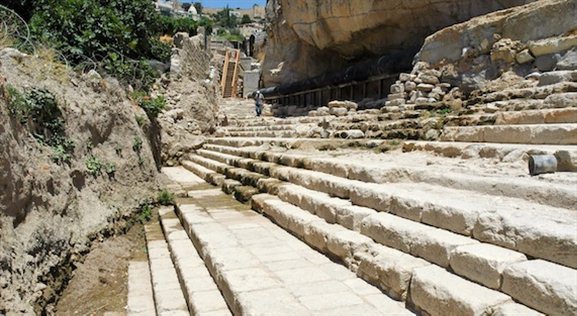
He sat on the stone-lined edge of the Pool of Siloam.
Feet dangling into the water.
Cool.
Clear.
Staring in wonder at his reflection
Framed by the blue heavens above.
His first time to see his own image.
His first time to see anything.
His trembling fingers traced the hollow of his eyes.
Touched the rise of his cheeks
The contour of his nose.
Brushed through his coarse beard.
Ran his fingertips along his sun-baked lips.

Heart racing.
Breath,
a series of ragged gasps.
He lifted his eyes to the world around him
and immediately raised his hands.
Shielded his eyes from the harsh glare
of the mid-morning sun.
He blinked.
Tears running down a face
he had never known.

A world of touch and texture,
brought to life in a
confusion of form and color,
now coalesced around him.

For the first time he saw…
the ripple of wind on water.
The elegance of the portico-covered pool.
The dance of sunlight and shadow.
The beauty of the surrounding hills.
The people…oh, the people.

Slowly, his mind adjusted to this new reality.
Standing awkwardly like a new colt,
steadied by the joyful friend who guided him here from the temple,
the man gradually found his balance…
not an easy task for one blind since birth.

In time,
they danced.
Sang.
Laughed.
Cried.
On his way home…
throughout the streets of Jerusalem…
he shouted to anyone and everyone,
“I can see!
I was blind, but now I see!”

John tells this poignant story in a series of scenes set between two major confrontations between Jesus and the Pharisees. We find Jesus and his disciples leaving their time of worship through the south gate of the Temple. As they walked down the steps, his disciples posed a question steeped in Jewish tradition. Pointing to a man begging on the bottom of the Temple steps, they asked,

“Jesus, who sinned, this man or his parents that he was born blind?”

According to the prevailing belief of the day sin was responsible for all illness and disability. A child sick or disabled since birth either sinned somehow in the womb or the parents’ disobedience caused this infirmity. Jesus often fought this kind of misguided thinking. Seizing this teachable moment, Jesus explained to his disciples.

“Neither this man nor his parents sinned. This happened so the work of God might be displayed in his life…While I am in the world, I am the light of the world.”

Neither God nor man caused this unfortunate circumstance, but God would use this man’s condition as a living metaphor of his ability to turn darkness and despair into light and life.

With that declaration, Jesus approached the man. Sat next to him on the steps. Engaged him in quiet conversation. Sensing the man’s open heart, Jesus spat on the ground and worked his saliva and the light gray limestone soil into a muddy paste that he spread across the man’s eyes. Taking his hands in his own, Jesus stood, lifting the man to his feet.

Now, go,” he said, “wash in the Pool of Siloam.”

With the help of a friend, the man made his way down the slope of the Temple Mount, about a quarter of a mile southward toward the large, terraced pool, fed by the Gihon Spring. The man must have received odd looks as he made his way through the crowd with mud covering his eyes.

He sat on the edge of the water and did has he was instructed. Splashing the cool water on his face, the man wiped the mud from his eyes. I can see him taking a deep breath as he wipe away the water and grim with the sleeve of his robe. Slowly, he opened his eyes to a brand new world.

Over the next few hours and days, the man faced disbelief and disparagement. Some friends thought him an impostor. The Pharisees called him before the council, not to celebrate his healing, but badger him in hopes of accusing Jesus of violating the Sabbath. They sapped the joy of his healing.

Fearing for their own reputation, his own parents refused to stand by him. Ultimately, the Pharisees condemned him as a sinner, eventually excommunicating the man from the synagogue because he refused to deny that Jesus was the one who restored his sight.

In the end, John tells us that Jesus sought out the man whom he healed after learning about the Pharisees’ actions. Face to face with Jesus, the man made a heart-felt confession of faith. At the Pool of Siloam, in the blink of an eye, his physical blindness became 20/20 vision. Over the course of the next 48 hours, he went from being entombed in spiritual darkness to being embraced by the Light of the world.

The power of Jesus echoes throughout this amazing story. But, I also marvel at the authoritative testimony of the man born blind. Standing before a hostile panel of powerful religious leaders who called him a fraud, grilled him mercilessly, challenged his every word, the man never faltered. Never failed to speak the truth.

The Pharisees clamored for him to deny Jesus’ power. Pushed him to denounce his healer. “We know this man is a sinner!” they shouted, challenging him to confirm their accusation. With uncommon strength of character, the man, so unlearned in theology, said simply,

“Whether he is a sinner or not, I don’t know. One thing I do know. I was blind, but now I see.”

What an extraordinary confession of faith!

Imagine the man’s first few moments at the pool. Sights never seen began to fall into context in new ways. Not only were his eyes changed, but God transformed his mind to allow him to interpret and make a sense of what he was seeing for the first time. The miracle changed his heart. A life of resigned despair became a life of renewed hope and endless possibilities.

So what is the take away from this man’s experiences?

There is so much about God’s creation I do not understand. So much about his plan and purpose I cannot comprehend. So much about his nature which remains unknown to me. So much he still must teach me. I don’t know about you, but like the Pharisees, I tend to build a false world around me filled with my plans, my truth and my finite understanding of God and his world based on what I think I know. What I’ve discovered in my life is that that viewpoint is almost always limited. To an extent, that’s okay.

Look at this man’s example. He could not explain what happened. How his eyes were opened remained a mystery to him. He didn’t claim to understand. Nor did he back down in the face of mounting pressure. He merely spoke out with a growing faith borne of powerful, personal experience.

“This one thing I do know. I was blind, but now I see.”

What an extraordinary confession of faith! This man born blind from birth would find ahead of him a life of discovery, not just in the physical world he could now see, but in his budding faith. Knowing what he did not know, he started his new life on what he had experienced with Jesus. That’s a fine place to start.

When I don’t have answers to every question that comes my way, this one thing I do know. I was blind, but now I see.

So, my prayer today is simple. “God, cover my eyes in mud. Let me wash in the Pool of Siloam. Let me understand more clearly, God, who you are and what you need from me. Let me see the world from your perspective. Open my heart and my mind to the discovery of this life you’ve given me. At the end of the day, when the world challenges that which I do not fully know, let me share my personal experiences with you.”

Maybe that’s a prayer that works for you as well.

Here’s mud in your eye.

Chase the Lion

Background Passages: II Samuel 23:20; Jeremiah 29:11

The list of places to see and things to do on our imaginary bucket list grows shorter each year. One particular trip remains unchecked. We want to go on a photo safari to Africa. After far too many trips to the zoo, I’d really like to see these magnificent animals in the wild…the way God intended them to be.

Certain movies create that kind of visceral response. The Ghost and the Darkness, a 1996 movie starring Michael Douglas and Val Kilmer, is one of those movies that triggers primal fear within me. The Ghost and the Darkness is based on a true story about the Tsave Man-Eaters…two African lions that terrorized the workers on the Uganda-Mombasa Railroad in western Kenya in 1898. Atypical of most lion attacks, Ghost and Darkness would stalk the campsite and drag their victims from the tents into the tall grass.

Work on the project ceased when the workers refused to enter the area. The railroad company hired famed British hunter, John Henry Patterson to track and kill the lions. In the story of man versus beast, the hunter became the hunted as the animals began intentionally stalking Patterson. Every time I watch it I find it absolutely terrifying. That we have yet to go on our photo safari may best be explained by that movie and my irrational fear of being mauled by a lion.

Maybe that’s why an obscure verse in II Samuel caught my eye.

“Benaiah, son of Jehoiada, was a valiant fighter from Kabzeel who performed great exploits. He struck down two of Moab’s best men. He also went down into a pit on a snowy day and killed a lion.” (II Sam. 23:20)

I don’t know why Benaiah felt compelled to jump into the pit with a lion when most of us would run the other way. It was cold. Snowing. Perhaps the lion’s ordinary prey grew scarce in the frigid temperatures. Maybe the lion was terrorizing the village. Regardless, Benaiah took it upon himself to chase the animal down. When it fell into a pit or tried to hide in a cave (depending on your translation), Benaiah jumped in after him.

If you stayed outside the pit like I would, you would probably hear the frightening roar of the angry lion and the shouts of a determined man. The sounds of a life and death struggle would echo from the depths. Then, silence. You might hear the scratching of someone or something scrambling up the walls of the pit. As you start backing away, you see a hand grab the overhanging tree branch. Benaiah drags himself out of the pit. He lies in the grass catching his breath, scratched and bloodied, but victorious.

In his book, Chase the Lion, author Mark Batterson uses this little known scripture to challenge the reader to face fear and chase the will of God even when the path looks far too difficult. He writes, “In every dream journey there comes a moment when you have to quit living as if the purpose of life is to arrive safely at death. You have to go after the dream that is destined to fail without divine intervention.”

As Christians we are taught from the beginning that God has a plan and purpose for our lives. What most of us find is that the dream he gives us scares us. His will looks far too difficult. Our natural tendency is to reject what looks too hard. We look for an easier path. But, Jesus told his disciples, “If anyone would come after me, let him deny himself and take up his cross daily and follow me.” (Luke 9:23) In other words, I should set aside my own will and desire to follow the more difficult path God has chosen for me…the one that requires me to take up his cross every day.

He doesn’t call us to play it safe. If that was his intention, we would have little need for him. No. The life he chose for us will not be easy, but the victory is already won. Later Jesus said, “I have said these things to you, that in me you may have peace. In the world you will have tribulation. But take heart; I have overcome the world.” (John 16:33)

God’s plan for each of us requires us to chase the lion. That’s not always the most comfortable thing to do. We see the path God has laid out in front of us. Solitary lion tracks in the snow. A distant blood-curdling roar. Suddenly, we see clearly that God’s path takes us outside our comfort zone, especially when the path we want to take looks well-traveled. Smooth. Secure. Safe.

The Bible gives us examples beyond Benaiah of those who chose to chase…

Noah chased his lion onto the ark.
David chased his lion to Goliath.
Jesus chased his lion to the cross.
Peter chased his lion onto the water.
Paul chased his lion to Rome.

Lest we think such courage is best left to Bible characters…

Martin Luther tacked his lion’s carcass to the door of the cathedral.
The Pilgrims chased their lion to a new world.
Dietrich Bonhoeffer chased his lion to a Nazi concentration camp.
Martin Luther King chased his lion to Selma.
Billy Graham chased his lion across the earth.

Knowing the difficulty of the task to which God called them, each of these biblical and modern day heroes of faith probably wished to run the other way at some point. Instead, they chose to chase the lion. Maybe at some point, they heard the same voice Joshua heard when he fearfully scanned the Promised Land from the safety of his bank of the Jordan River. Maybe they, too, heard the voice of God saying,

“Have I not commanded you? Be strong and of good courage. Don’t be afraid. Do not be discouraged, for the Lord your God will be with you wherever you go.” (Joshua 1:9)

I don’t know what lions you’re facing. I know they all look frightening. I have faced a few of my own. All I know is that God wants us to chase his will. To follow where he leads. When we turn and run the other way, we’re missing out on the best God has to offer simply because it is his plan and not one we dreamed up on our own.

“I know the plans I have for you,” declares the Lord. “Plans to prosper you and not to harm you. Plans to give you hope and a future.” (Jeremiah 29:11)

So when you hear the lion roar, know that his blessing comes in the chase. Our victory comes in the pit. Gather your courage and jump on in.

In Damascus, There Was A Disciple…

Background Passage: Acts 9:1-25; Acts 22:13-16

The light flashed and the world would never be the same.

In one of the most familiar passages in the New Testament, an ambitious and zealous young Pharisee, emboldened by the stoning of Stephen, begged for a chance to carry the persecution of Christians beyond the walls of Jerusalem. With letters of authorization in his pocket, Saul set out for Damascus breathing the fire of fanaticism, intent upon finding the followers of the crucified Christ and dragging them back to Jerusalem for punishment. A man on a malicious mission.

With the walled city of Damascus on the horizon, a blinding light seared his retinas and knocked him to his knees. He cried out in shock and pain only to be silenced by a voice calling his name.

“Saul, Oh, Saul. Why do you persecute me?”

In the course of a powerful conversation on a dusty road, Saul came face to face with the brutality of his deeds and the reality of the living Lord.

“I am Jesus, whom you are persecuting. Go into the city. You will be told what you must do.”

We know this story as the conversion of Saul. The redeemed missionary of God told of his encounter with Christ over and over again. A testimony and tribute to the unmerited grace of God.

The light on the road to Damascus changed the heart of a man who would become the world’s greatest missionary and the agent of redemption to the Gentile world. Saul’s was a life so transformed that he needed a different name. We now know him as Paul. It’s a wonderful story of God’s transforming work in his world.

From that moment on, Paul played a starring role in the spread of the gospel, but his supporting cast contributed to his success. Barnabas. Silas. Timothy. John Mark. We can list name after name of those who traveled with Paul. Assisting in his work. Staying behind in isolated locations to grow the seeds of faith he planted.

One name we tend to overlook took Saul’s hand in his blindness and called him “Brother.” Let me introduce you again to Ananias.

He climbed the narrow stairs
to the roof of his home.

A cool breeze blew in from the sea,
refreshing his body and soul.
From this vantage point,
Ananias could watch the sunrise
cast its reddish glow over the eastern hills,
reflecting onto the wispy clouds streaked across the sky.
On the rooftop.
The perfect way to start each day.

Ananias stretched his arms over his head.
Stood on his tiptoes
to loosen aching muscles,
stiff and sore after a fitful night’s sleep.

Sitting on the parapet of his home,
legs dangling over the side,
Ananias sipped a cup of goat’s milk.
Listened to the familiar sound of his wife
preparing breakfast for the family in the room below.

Despite the peaceful surrounding,
he could not shake the sense of unease
as he thought about last night’s dream.
He could picture it as clearly as if
it actually happened.
Hear the conversation as surely as if
God sat beside him on the wall.
He walked it through again in his mind.

A voice called…

“Ananias.”

“Yes, Lord.”

“Go to the home of Judas on Straight Street.
Ask for the man from Tarsus named Saul,
for he is praying.
In a vision he has seen a man named Ananias come
and place his hands on him to
restore his sight.”

Over and over in his mind, he heard,
“…a man from Tarsus named Saul…”

…”Go…”
“Go…to Saul…”

Ananias felt his stomach roll again.
“This makes no sense…”

Saul’s reputation preceded him.
So much anger in this Pharisee.
So much harm to the saints in Jerusalem.
Ananias knew the rumors.
Saul was coming to Damascus to spread his terror.
To arrest every follower of Jesus that he could find.

The voice in his dream
urged Ananias to go as instructed.

“He is my chosen instrument…”

God had a plan.
Ananias had a part to play
in that plan.

Shaking himself from his reflection,
Ananias took a deep breath.
Climbed down from the roof.
With a faith deeper than his fear,
he walked through town to Judas’ home.

Ananias stopped short at the sight of the temple guards
gathered around the campfire.
Their presence
triggered his desire to run.

He steeled his resolve.
Stepped forward.
Stared straight ahead.
Walked slowly through the soldiers
as they began to rise.
Hands on the hilt of their swords.

The door to the home opened before he knocked.
They had expected him.
Ananias stepped over the threshold.
Closed the door.
Let his eyes adjust to the dim light.

Saul sat facing the fire.
Blind eyes stared vacantly into the flame.
Lost in private pain.
A face etched with guilt.
The once proud Pharisee rocked
absent-mindedly on the small stool.
Lips moved in silent prayer of
remorse and repentance.

Ananias stood without moving.
Fought the desire to turn and go.
But, when he saw the tears well in Saul’s eyes,
the disciple’s heart broke.
For the first time he saw Saul.
Not his fine robes.
Not his rage.
Not his reputation.

He saw Saul.
He saw the broken heart of a
despondent and despairing soul.

Ananias found himself standing beside Saul
without remembering the steps it took to get there.
He followed Saul’s gaze into the fire,
With tears in his own eyes,
he laid his hand gently on Saul’s shoulder.
After a moment of shared silence,
Ananias spoke in a voice soft and sincere,
“Brother Saul…”

With those words
the scales of physical and spiritual blindness
fell from Saul’s eyes.
New sight.
New insight
Into his purpose in life.

Scripture reveals so much about how God used Saul, or Paul, as he was later known, to take his good news to the Gentile world. This former zealous Pharisee became the world’s most ardent servant of Christ and arguably, next to Jesus, the most important man in the Christian faith.

By contrast, we capture what we know of Ananias only in this story and in one small reference in Acts 22. Here he is called simply “a disciple.” In Chapter 22,  a “devout observer of the law” and a “man highly respected by the Jews” in Damascus.

We don’t know when Ananias became a follower of Christ. Maybe he heard Jesus preach and put his trust in him on a Galilean mountainside. Perhaps, he was a Jew who had traveled from his home in Damascus to Jerusalem for Pentecost and heard Peter proclaim the gospel. Maybe, a friend told him about the resurrected Christ he saw in the upper room. Regardless of how it happened, Ananias was a disciple.

Yet, his actions tell us so much more about this follower of Christ. It’s notable to me that he is called a disciple and not a pastor or evangelist. Not a deacon or an elder. A disciple. A follower. A learner. As a man who professed his faith in Jesus Christ, Ananias spent his time trying to figure out what that meant and how he should live as a result. He was a man much like you or me.

Ananias enjoyed a wonderful reputation as a student of Old Testament scripture and one who lived obediently to its teachings, a likely hold over to his Jewish upbringing. When introduced to Jesus either in person or through the witness of others, the encounter changed his life. He accepted Jesus as the Messiah promised in scripture. The passion he held for his faith as a Jewish man found its fulfillment in Jesus.

Despite his break from the prevailing Jewish doctrine, Luke tells us in his account that his reputation among the Jews in Damascus remained unsullied. They could find no fault in him. As followers of Christ we ought to have that glowing reputation in our own communities. The world should know us as a Christ followers. As learners. As people who take the principles of Christian living so seriously that it directs the way we live. We see in this passage, Ananias’ commitment to Christ.

We also see in the lines of this story, the courage of his conviction. The religious leaders in Jerusalem sent Saul to Damascus to rain down havoc. He had papers to prove it. In all likelihood, Ananias was on Saul’s hit list. Christians in Damascus knew Saul was coming. His reputation for ruthlessness frightened them. He brought with him a promise of prison, punishment and death.

I suspect many of the Christians fled the city in advance of Saul’s arrival…but Ananias stayed. We don’t know why. Maybe he thought, “What good is my conviction if I choose to disown it at a difficult time or run from it in the face of adversity?” When others ran, Ananias stayed.

With the call of the Holy Spirit, Ananias not only stayed, but he made himself available to do the brave and the unthinkable. The Lord called and Ananias answered as Samuel did. “Yes, Lord. I’m here.” He did not know the mission…not yet…but he opened himself to the possibility of being used by God.

Ananias may have shown his inner Samuel, but he also channeled his inner Gideon when God told him what he needed him to do. Jesus planted the seed of salvation in Saul’s heart. The Holy Spirit needed Ananias to close the deal. To lay hands upon this broken man and welcome Saul into the fellowship of believers.

“I’m here, Lord, but did I hear you right?” When presented with God’s plan, Ananias sought clarity and understanding. The whole idea of going to Saul was counter intuitive.

“I have heard many reports about this man and all the harm he has done to YOUR saints in Jerusalem. And he has come here with authority from the chief priests to arrest all who call on your name.”

Ananias and I share a common trait with Gideon. Our short-sightedness gets in our way. You see, most of the time our vision is unable to see beyond our fear. God’s perspective…his vision…takes in history and future in a moment’s glance. Our failure to act upon his direction cancels the blessings that come from playing the role God needs us to play.

Sometimes our myopic sight needs clarity that only God can give. I think God delights in our desire for understanding if it comes from the heart. When Ananias questioned the sanity of confronting Saul, God answered, not with recrimination, but with a promise. “Go! This man is my chosen instrument to carry my name before the Gentiles and their kings and before the people of Israel.”

Sprinkling the fleece with dew, God told Ananias, “I need you today. I’m counting on you because this man is a game changer, but he needs to see that my people are willing to embrace the change in his heart. You’re step one in this process, Ananias. I need you to do this for me.” With the fleece sufficiently damp, Ananias went where he was told. We must be ready to do the same.

I’m not sure when Ananias’ heart truly turned. I suspect he was talking himself into doing what the Holy Spirit led him to do before he made the turn down Straight Street. I suspect he didn’t know for sure how he would react when he came face to face with Saul. His heart changed, however, when he saw the man, humbled, hurting and blind, sitting before the fire.

Can’t you hear it in his voice, choking back the emotion of the moment as he placed his hand upon his shoulder, “Brother Saul…” In this moment, in those two words, we underscore the compassion of Ananias. His words, his touch, stitched the open wound of Saul’s remorse that had to be closed and healed before he could be used by God for great and mighty things.

“Brother Saul.” The whole gospel story hinged on those two words and the world would never be the same.

I don’t know about you, but I find it pretty easy to be a disciple of Christ in the broad sense of the word. I enjoy learning about Jesus and how my relationship with him needs to be evidenced in my life. It’s much harder to move beyond the learning and into the listening. To the obeying. To playing the role I hear God calling me to play. Drawing upon the courage of my conviction to risk even as much as a mere insult…I find that much harder to do.

Ananias reminds me that God asks me to be available. To set aside fear and uncertainty to follow where he leads, even if that means walking through a platoon of temple guards to stand face to face before my persecutor. He reminds me to see clarity of God’s intentions and to accept that the view from heaven is infinitely broader and wiser than mine.

I learn from Ananias that the smallest act of obedience can have great significance. The simplest act…calling a troubled soul “my brother…” may be all it takes to change the world.

What Are You Doing Here?

Background Passage: I Kings 18 and I Kings 19: 1-18

Just hours earlier, God’s great prophet called down the fire of God upon the water-soaked altar he built on Mt. Carmel, in defiance of the king who had led Israel down a path of wickedness. Now, Elijah hid in the shadow of the broom bush near Beersheba after a marathon sprint from the place of his greatest victory. Running for his life under the weighty threat of a vengeful queen who shook with anger at the impotence of her gods and impertinence of Israel’s prophet.

What a difference a day makes! One minute he’s basking in the warmth of an all-consuming fire that proved the power of the God who sent him. The next day he’s gasping for breath, unable to face the coming day. Wishing for death to come on his terms, not at the hands of a queen who wants to make him suffer.

Falling into an exhausted slumber, Elijah awoke to God’s messenger offering a meal of hot bread and cool water. After more rest and another meal, the prophet wandered south, away from his fears and toward the same mountain where God once spoke so clearly to Moses.

We find him 40 days later, trembling in the dark recess of a cave halfway up the mountain, knees clutched to his chest, feeding on the fear that gripped his soul. Overwhelmed and feeling alone, Elijah wallowed in self-pity.

Emotionally exhausted.

Spiritually spent.

During the still of the night, the voice of God penetrated the noise of all that troubled his soul, asking one of the most pertinent questions the Creator can ask his created.

“What are you doing here?

On one hand, it sounds like a rebuke. God chastising his prophet for his lack of faith and trust. On the other hand, maybe it’s a gentle nudge. God prodding his prophet to set aside his fear and spend a moment in self-reflection.

Elijah responds, reciting the condition of his soul. “I have been very zealous for the Lord God Almighty. The Israelites have rejected your covenant, torn down your altars, and put your prophets to the death with the sword. I am the only one left, and now, they are trying to kill me, too.”

God, hearing the despair that poured from Elijah’s heart, said simply, “Go. Stand on the mountain for the Lord is about to pass by.”

I can see Elijah as he leaned upon his staff to leverage himself from the ground, the weight of the world upon his back. He limped to the mouth of the cave where he had been hiding and leaned heavily against the rock.

As he stood gripped in his fear, the wind howled, tearing boulders from the cliff. The ground shook with a powerful earthquake. A fire scorched the valley beneath him, searing every tree and bush in sight. Elijah saw evidence of God’s presence, but heard nothing. Then, in the quiet aftermath of an incredible display of power…in a whisper that tickled his ear…God’s quiet voice asked again,

“Elijah, what are you doing here?”

*****

What are you doing here?

What a great question! Elijah witnessed one of the greatest demonstrations of God’s power on Mt. Carmel. He participated in it. Served as the agent through which God accomplished his plan and purpose. For a brief moment in time, Elijah stood on the top of the world certain that everything for which he had worked for the past three years would come to pass. When repentance failed to come and trouble stood on the horizon, Elijah ran away.

Within hours of his great victory, Elijah lost his nerve. Lost his desire to serve. Lost his will to live. The prophet who boldly challenged the king who had led Israel into depravity found himself huddled in a cave wrapped in a cloak of self-pity and discouragement.

How often do we act like Elijah? Filled with the glow of God’s presence and power after a time of ministry and mission. Basking for one minute in the mountain top experiences God grants to those who faithfully serve him only to lose our nerve when faced with the counter circumstances of life and the world’s challenge to our faith.

We run from the mountain top while the sound of God’s latest victory in our lives still echoes from the cliffs. With all the speed we can muster, we move as far as we can from the source of trouble and the source of our power.

Distressed.

Disturbed.

Despondent.

How quickly we allow the tables to turn! We withdraw, feeling like we’re the only one fighting the battle. Ready to quit. Ready to abandon the God who needs our hands and voice. We run until we find ourselves hiding in a cave where we think our enemies and our God cannot find us.

It takes God’s relentless love to draw us back, not through a powerful demonstration of his might, but through a whispered word of quiet rebuke intended not to reprimand, but to cause us to reflect on the choice we just made.

I don’t know about you, but there are times when I have spent so much time in my cave that I have decorated it and called it “home.” Invariably, God finds a way of getting my attention. Then he asks that simple question.

“What are you doing here, Kirk?”

If this is where you find yourself today I suspect, if you listen, you’ll hear the whispered words of a loving father asking you the same question. “What are you doing here?”

Here’s what I know. God still needed Elijah. Once he got his attention, he told him, “Go back from where you came. There is so much more to do. You are not alone.”

He was not finished with Elijah and he is not finished with me or you. When we find ourselves hiding in our cave of our own choosing, God calls us, like he did Elijah, to change our focus. When we see again the world through his eyes, our perspective changes. We quit staring at our circumstances and look again at the possibilities and opportunities still open to us.

So, I ask you the same question I hear all too often, “What are you doing here?”