Finding Your Mephibosheth

Background Passages: 2 Samuel 9:1-7 and Galatians 5:22-23, 25

Small acts of kindness can make a huge impact. A smile, a thoughtful word, a warm muffin found on a desk, or a hug can make the sun shine brighter and the day seem better. That’s the premise behind the idea of Random Acts of Kindness.

Started in Denver, Colorado, in 1995, the idea behind Random Acts is to somehow make the world a better place by making kindness a part of our everyday lives. It’s a nice sentiment. The world needs to be a kinder, gentler place.

As one who has received these random gifts of kindness throughout my life, I understand the impact. To limit kindness to a blueberry muffin, however, diminishes its impact.

Those who study words tell us that “kindness” has its origin in the Middle Ages. In the language of that period “kind” and “kin” were the same. It seems to suggest that to demonstrate kindness was to treat someone like kin…like family. That presents the term in ways that can hardly be random.

As often happens, the idea of kindness has bounced around my brain for a couple of weeks. I was recently asked by my church to share a thought on the character of David at our Wednesday night Bible study. In the course of preparation, I rediscovered the story of David’s interaction with Jonathan’s disabled son, Mephibosheth. The story reveals much more about kindness than any random act.

For years the schizophrenic and paranoid King Saul chased after David to eliminate the one whom God had chosen to take his place. He saw David as a threat. Despite numerous opportunities to do so, David could not raise a hand against Saul or his family because of the deep bond of love and friendship David developed through the years with Saul’s son, Jonathan.

In a particularly difficult time in David’s life, Jonathan went behind his father’s back and told David of Saul’s plan to kill him. David pledged to always look after the family of Saul and Jonathan. Years later, Saul and Jonathan are killed in battle. It now appears that all of Saul’s male descendants have died.

Now king of Israel, David felt the emptiness in his life without Jonathan. Hear David’s heartfelt plea in 2 Samuel 9:1.

“David asked, ‘Is there anyone still left of the house of Saul to whom I may show the kindness of God?’”

“The kindness of God.”

The choice of those words struck me. Why not just, “Is there anyone left of the house of Saul to whom I may show kindness.” David’s kindness. A random act of kindness. Instead, the phrase reads, “kindness of God.”

Let’s go back to the definition. In her book The Kindness of God, Catholic theologian Janet Soskice made the link between “kind” and “kin.” She wrote, “To say that Christ is ’our kind Lord’ is not to say that Christ is tender or gentle, although that may be implied, but to say that he is kin…our kind.”

It’s an interesting twist if indeed to be kind meant to be kin. The kindness of God within this context means that God became my kin…my family…my father. Through Jesus’ sacrifice and my faith commitment, I become part of the family of God.

David’s desire to show the kindness of God indicates his wish to find someone whom he could love and treat as family. As the story unfolds in 2 Samuel 9, David finds a sole survivor…Mephibosheth, a young disabled boy, hiding in fright in a remote village on the other side of the Jordan River.

David had the authority, power and historical permission as the victorious king to put Mephibosheth to death. He didn’t do that. When he found Mephibosheth he called him to Jerusalem, not to enslave him or kill him, but to extend God’s kindness to him.

“Do not be afraid for I will surely show you kindness for the sake of your father Jonathan. I will restore to you all the land that belonged to your grandfather Saul, and you will always eat at my table.” (2 Samuel 9:7)

David did not extend a token gesture. His offer was extravagant. He gave Mephibosheth all that once belong to Saul and a place in his household. What an extreme act of kindness and grace!

What he did demonstrated love toward someone who did not deserve it, could never earn it and would never be able to repay it. His kindness or kin-ness made Mephibosheth a part of David’s family…someone invited to sit at the king’s table.

If this idea of kin-ness is at the heart of kindness, then it seems to require us to see others in the image of God, worthy of our honest connection, regardless of life’s circumstance. It seems the ultimate act of kindness and kin-ness is to invite people to be a part of God’s family…to welcome them to the table.

Kindness, then, is more than a random act. It is that thread of unfailing love that ought to be the lifestyle of any child of God seeking to live as the image of God in a cruel world.

The amazing thing is that God, through his indwelling Spirit, gives us the capacity for exactly that kind of godly kindness. Paul points out that the life of a Christian ought to reflect the character and nature of God as revealed by his Spirit.

“But the fruit of the spirit is love, joy, peace, patience, kindness, goodness, faithfulness, gentleness and self-control…Since we live by the Spirit, let us keep in step with the Spirit.” (Galatians 5:22-23, 25)

The thing about the fruit of the spirit is that, unlike the gifts of the spirit which are given to each of us uniquely and individually, God doesn’t give us different fruit based on our personalities. He does not allow us to pick and choose which fruit we get to live out. He expects us to live out each one…each day…in every circumstance of life…to live by the spirit and keep step with the spirit.

Sadly, we live within a cultural pandemic of condemnation and judgment, characterized by a lack of kindness. Those who live a life of kindness, of kinship, look every day for the next Mephibosheth. They look for someone to show “the kindness of God,” not just as some random act, but as an intentional choice to let someone sit at your table. To build relationships. Meaningful connections. To create opportunities to show the love of Christ in the things we think, say and do for them. To be kind, to be kin, is to love as Christ loved.

Don’t you see, God is kind because he cannot be otherwise. It is his nature. When we give our lives to Jesus and open our hearts to God’s spirit, kindness becomes a part of our new nature. It is the make-up of that “new creation” that Paul talks about in 2 Corinthians 5:17, a reflection of God in us.

The English poet Roberts Burns said, “It is the heart benevolent and kind that most resembles God.” David’s innate and God-inspired kindness was one of the reasons he was called a “man after God’s own heart,” God’s choice to be Israel’s king. His kindness made him a great ruler.

According to Mark Twain, “Kindness is a language which the deaf can hear and the blind can see.” I suspect it is a language that will make even those who find it hard to walk in the presence of the King leap for joy.

What about you? Is there anyone out there to whom you can show the kindness of God? If you keep asking the question, God will bring you one Mephibosheth after another who needs your kindness…your kin-ness.

God simply asks that when we find our Mephibosheths, we invite them to eat at our table.

By Our Love

Background Passages: John 13:31-35; I Corinthians 13:4-8, 13

As Christianity entered its second century, the faith was spreading throughout the Roman Empire, especially in some of the largest cities like Rome and Carthage in North Africa. Though spreading rapidly, Christians were still held in suspicion by neighbors and ruling officials because they had abandoned behaviors associated with the prior pagan lifestyles.

Confusion about Christian teachings and political rumors designed to discredit this new faith caused Tertullian, a church leader in Carthage, to write a document explaining Christian practices and debunking the rumors against them. Tertullian wrote that the Roman government was so unnerved by the growth of the Christian movement that they sent spies into Christian meetings.

The spies, according to Tertullian, reported the following:

“These Christians are very strange. They meet together in an empty room to worship. They do not have an image. They speak of one by the name of Jesus, who is absent, but whom they seem to be expecting at any time. And my, how they love Him and how they love one another.”

After reading this historical footnote this week, I found myself wondering what spies from our government would say about the church today? Would they make the same declaration?

“My, how they love him and how they love one another.”

*****

Jesus had just stunned his disciples by confirming a close betrayal. He then dismissed Judas from the upper room near the end of the Passover feast.

“What you are about to do, do quickly.”

As the door closed, a somber silence filled the room. Seeing the confusion and anxiety on the faces of those he hand-picked to carry on his work, Jesus began to teach his most important lesson.

“Now the Son of Man is glorified, and God is glorified in him. If God is glorified in him, God will glorify the son in himself, and will glorify him at once. My children, I will be with you only a little longer. You will look for me, and just as I told the Jews, so I tell you now. Where I am going, you cannot come.

“A new command I give you. Love one another. As I have loved you so you must love one another. By this everyone will know that you are my disciples, If you love one another.” (John 13:31-35)

What a defining moment! It’s as if Jesus took out his copy of the 10 Commandments and scratched a new word at the bottom of Moses’ list.

“A new command I give you.”

This was no subtle suggestion. No vague hint of something they might try. It was a God-given command written as indelibly on their hearts as the God-etched words inscribed on stone tablets.

“Love one another.”

The idea of loving others was not a new concept or even a new command. Recall the Pharisee who came to Jesus and asked him to identify the greatest and most important of Moses’ commandments.

“The most important one,” answered Jesus, “is this: ‘Hear, O Israel, the Lord our God, the Lord is one. Love the Lord your God with all your heart and with all your soul and with all your mind and with all your strength.’ The second is this: ‘Love your neighbor as yourself.’ There is no commandment greater than these.” (Mark 12:29-31)

Jesus had taught his disciples to love God and to love others. In the hours before his death and his going to a place they “could not come,” Jesus knew they would need each other. He knew that in order to survive the persecution and scattering to come, his disciples and followers would need to love each other. Holding on to their fellow believers for support and aid.

“As I have loved you, love one another.”

How, then, did Jesus love them? How was he asking them to love each other?

Jesus’ love is sacrificial.

Just minutes prior to his declaration, Jesus demonstrated the kind of love they would need. As he took off his tunic, grabbed a bowl of water and a towel, Jesus took on the role of a servant to minister to their needs.

Christ washed the disciple’s feet, as a clear example of Christ’s humble, self-sacrificing love for them.

Then, just hours later, Jesus paid the ultimate price for his disciples and all humankind by dying on the cross for our sins. Jesus’ love for his disciples and for us was born of his humility and self-sacrifice.

What greater love can we learn than by following his example, as Paul proclaimed in Ephesians 5:2.

“Walk in the way of love, just as Christ loved us, and gave himself up for us a fragrant offering and sacrifice to God.”

Jesus’ love is forgiving.

The sacrificial love of Christ brought forgiveness of sin to all who would repent and receive his mercy and grace. Unmerited. Undeserved. Freely given.

If we love like Christ, we can forgive anything that anyone does to us. Nothing someone does to us is so heinous that we cannot forgive if we are acting with the same love with which Christ loved us.

I love this illustration from Baptist pastor and Christian author Wendell C. Hawley on forgiveness. He wrote about a group of Moravian missionaries who spent time among the Inuit tribes in Alaska. In attempting to explain the gospel, the missionaries found no word in the Inuit language for forgiveness. So, they invented one by combining words into “Issumagijoujungnainermik.”

This string of Inuit words strung together shares a beautiful expression of forgiveness that is roughly translated, “not-being-able-to-think-about-it-anymore.”

To love each other as Christ loves us means that the hurt and emotional pain caused by others must be set aside as meaningless. Forgive and forget. Love means not being able to think about it anymore.

“By this everyone will know you are my disciples, if you love one another.”

Jesus’ love is evident to all.

This is exactly the distinguishing love that Tertullian spoke about. “My, how they love him and love one another.” Such real, self-sacrificing, and forgiving love ought to be the mark or brand of a Christian. So evident in our expression of love to one another that others cannot help but note the difference in our behavior and those of the world around us. Because of what God has done for each of us, his love ought to overflow our hearts, naturally expressed to one another. It must be a love deeply felt and plainly seen.

This love is an overflow of what God has done in our hearts. This is to be the distinguishing mark of Christ’s followers. All people will know those who follow Christ if true love is always displayed by Christians. You must be known by your Christ-like love for others.

If loving one another is a command, listen to how Paul says such love is best expressed.

“Love is patient. Love is kind. It does not envy. It does not boast. It is not proud. It does not dishonor others. It is not self-seeking. It is not easily angered. It keeps no record of wrongs. Love does not delight in evil but rejoices with the truth. It always protects, always trusts, always hopes, always perseveres. Love never fails…And now, these three things remain: faith, hope and love. but the greatest of these is love.” (I Corinthians 13:4-8, 13)

One wonders what the world around us thinks when the church does not reflect those things even to other believers. What does the world think when we lose our patience with one another? When we get easily angered by our brothers and sisters? When the world sees us ticking off all the wrongs that have been done against us by a fellow church member?

What must the world think when love fails?

My church is studying a book by Russell Moore entitled Onward: Engaging the Culture Without Losing the Gospel. He begins with the premise that the United States is no longer a Christian nation to and think otherwise is burying our heads in the baptistry. Though we may have once lived in a world that believed the culture should conform to the church, we now live in a world that believes the church should conform to culture.

It makes me wonder if our culture looked at how we treat each other within the faith and decided it could do better without us? If believers in Christ chose to love each other every day as Christ loves us, would our witness in the world be stronger? Could we then engage our culture without compromising or losing the heart of the gospel?

I suspect it took only a few moments after Jesus’ death on the cross for his disciples to realize the truth of his words. Their ability to carry on his ministry and their hope for the days to come depended on their love for one another.

I don’t think it is much different today. Our ability to carry on his ministry today and our hope for the days to come depends on our willingness to love one another as Christ loves us.

“A new command I give you. Love one another. As I have loved you so you must love one another. By this everyone will know that you are my disciples, if you love one another.”

Let’s let the world know to whom we belong.

Let them say about us, “My, how they love him and how they love one another!”

The Cradle, The Child, The Change

Background Passage: Luke 1:26-38; Luke 2:1-52; Matthew 1:20-21, John 3:16-17, Romans 12:2

The Christmas story of the Bible remains one of the world’s most cherished stories for more than one-third of the world’s population. We find a measure of comfort that we are somehow not alone in this world…that God is with us.

I wonder if the story has grown too familiar. Sometimes, it feels as though the luster of God’s amazing gift is dimmed by time and diminished in its telling and retelling. To keep God’s grace gift fresh, I urge you to look beyond the familiar and find…

The Cradle

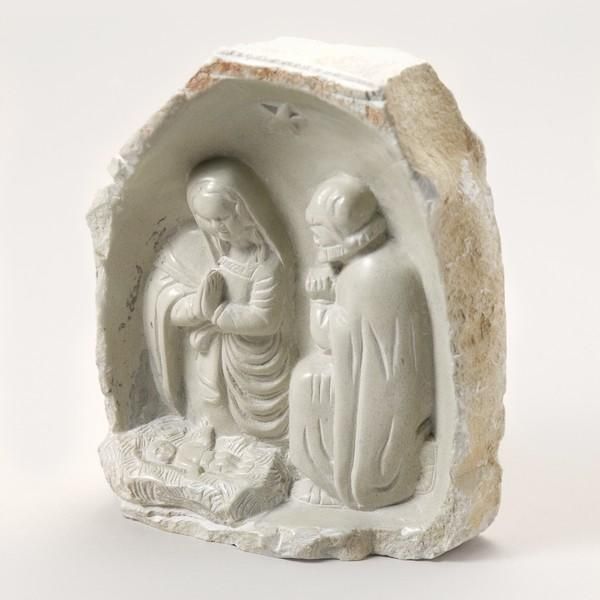
Crudely cut and hastily made, the innkeeper long ago fashioned a stable from the small cave cut into the limestone behind his home. An afterthought. A casual convenience for travelers who needed a place to livery their animals for an evening.

Within the rocky cave, he chiseled a manger from a protruding slab of rock, hollowing out the stone as a roughly cut and casually built feed trough. The man was no craftsman. He took little time to measure its dimensions or smooth its sides. He left it crude and rough around the edges. A coarse creation, suitable only, it seemed, for one insignificant purpose.

A manger.

A feed trough.

A construction scarcely given a second thought. Invisible to the world around it.

Until this day.

Inside the stable, despite the chill of the evening, a young woman lay drenched in sweat, exhausted by days of travel and hours in labor. Her husband, a young carpenter, paced outside the shelter. Though sympathetic to the pain she bore, like most fathers, he was clueless to its intensity.

He heard a midwife urging one more push. With a guttural groan that made the nervous animals scatter in their stalls and pull against their reins, the woman delivered her son. Tears and laughter comingled with each exhausted breath.

The midwife cleaned the baby as he shivered and cried in the night. The old woman rested the swaddled child upon the mother’s chest. The baby’s cries calmed as he heard the reassuring rhythm of her heart.

While Mary sang a lullaby to her child, Joseph quickly swept the stable of its filth-stained dirt. As he pulled the animal-stained hay from the manger, he noticed its sharp edges. A stone mason and carpenter, Joseph pulled a mallet and chisel from the knapsack. With practiced hands, he smoothed the sharp edges and rough bottom, added new hay and a soft blanket. In the glow of that first Christmas morning, the manger, no longer a rough-hewn feed trough, became a cradle.

In one moment beyond comprehension, God entered his creation as a baby born into a world that had grown as spiritually cold as the cave in which he was born. A world as morally crude as the manger in which he rested.

When filled with God’s love personified in the Christ-child, the unsightly manger became the cradle of Life Abundant, transformed in its purpose by the presence of Emmanuel.

God with us.

Perhaps the manger and its crude construction mirror the mess we’ve made in our lives. We hurriedly chisel our life from the stone, giving little thought to the purpose for which we were created. Whether we live a life of irreverent insurrection or one of unintentional indifference, we find our spiritual edges a little too sharp, a little too crude, a little too rough around the edges. A coarse creation, suitable only, it seems, for insignificant purposes.

Yet, in one miraculous birth, in one divine delivery, God changed everything.

When the manger became a cradle, God came to His world as one of us. To offer himself as the perfect portrait of Godly living.

Because the manger became a cradle, the baby would grow into a savior, to offer himself as a perfect sacrifice for a world that lost its way.

Because the manger became a cradle, Christmas means more than the tinsel and trimmings that the world celebrates.

Because the manger became a cradle, the Christ-Child gives us the chance to turn our empty lives into Life Abundant. God smooths the rough edges and transforms our hearts and our purpose through the constant presence of Emmanuel.

God with us.

Then, to keep God’s grace gift fresh, I urge you to look beyond the cradle and find…

The Child

Born to human parents, but also divine. It is a difficult concept to grasp. Impossible to truly understand. So, we who believe accept it by faith just as his earthly parents did.

Though implanted with God’s DNA, to understand the full measure of what it meant to be Savior did not come instinctively to Jesus. He learned. He learned at the feet of Joseph who surely shared his dream.

“Joseph, son of David, do not be afraid to take Mary home as your wife, because what is conceived in her is from the Holy Spirit. She will give birth to a son and you are to give him the name Jesus, because he will save his people from their sins.” (Matthew 1:20-21)

He learned on the lap of his mother who surely shared the angel’s words.

“Do not be afraid, Mary. You have found favor with God. You will conceive and give birth to a son, and you are to call him Jesus. He will be great and will be called the Son of the Most High. The Lord God will give him the throne of his father David, and he will reign over Jacob’s descendants forever; his kingdom will never end.”

As he grew, he learned from the teachers of God’s word. When he turned 12-years-old, he journeyed to the Temple with his parents. The child immersed himself in his father’s word, failing to join his family for the trip home.

“They found him in the temple courts, sitting among the teachers, listening to them and asking questions…” (Luke 2:46)

Jesus spent time learning more about “his Father’s business.” Eventually, he returned with his parents to Nazareth where “Jesus grew in wisdom and stature and in favor with God and men.” (Luke 2:41-52)

God continued to prepare the child for the purpose for which he was sent. This child, who heard his parents’ stories, who studied scripture with the learned men of his day, constantly felt the tug of God’s voice revealing to him who he was and the purpose for which he was sent. This same child, born in a manger, stood as a man at a wedding feast in Cana, looking into the eyes of his mother telling her, “My hour has not yet come.” This same child read in his mother’s eyes and heard her tell the servants, “Do whatever he tells you.” Her way of saying, “It is time.”

From that day forward, Jesus went about doing his father’s business, drawing others to him, performing miracles and teaching them about repentance and the depth of God’s love…teaching them about grace.

That child from the manger sat in an olive grove answering the probing questions of Nicodemus about the path to eternal life. Jesus surely reflected upon his own birth when he said, “You must be born again.”

That child from the manger told that religious leader that he had come to take on the sins of a world because “God so loved the world, that he gave his one and only son, that whoever believes in him shall not perish but have eternal life. For God did not send his son into the world to condemn the world, but to save the world through him.” (John 3:16-17)

That child in a cradle was God’s grace gift of salvation. The man he grew to be…became a savior.

Understanding our relationship to God and his will for our lives is not implanted naturally into our DNA just because we are born to Christian parents or attend church regularly. Our understanding of what God requires of us comes from listening to God’s spirit and following Jesus’ lead.

We learn. We grow. We spend time sitting among the teachers, studying scripture and asking questions with a heart’s desire to grow in wisdom and stature and in favor with God and men…just as Jesus did. We see the child in the cradle and are reminded that God loved us so much that he sent his son to save us and the world around us through him.

Then, to keep God’s grace gift fresh this Christmas, I urge you to look beyond the cradle, see the savior and commit to…

The Change

As Christians, we get pulled into the celebration of the Christmas holiday. We delight in the lights, the decorations and the excited faces of the children opening Santa’s presents. We enjoy our parties with friends and visits with our extended families. It’s easy to be lost in the business and busyness of Christmas.

Those of us who celebrate the birth of Jesus ought to reflect upon its meaning, using the day as a reminder of God’s plan and purpose to bring the world back into relationship with him by sending is Son. It is far too easy for many of us to revel in the birth of the child and forget that God expects more from us.

What do we do after we read that beautiful story for the last time this year? After we snuff out the Advent candles? After we sing the last carol? After we dismantle the Nativity scenes? What do we do after we celebrate the birth of the Christ child? What do we do when Christmas is over? What change does it bring to our lives?

You see, the Christmas story does not end with the birth of Jesus. It doesn’t even end with his death and resurrection. Once the baby is born and a savior’s act complete, the story and its impact should serve as a catalyst for God to change our lives.

Christmas is a reminder that God will work in our lives, but only to the extent that we allow him. Christmas must change our hearts and our minds, not just on the surface, but from the inside out.

Though he didn’t celebrate Christmas as we do, the Apostle Paul would be the first to tell you about being changed. In a blinding revelation on the road to Damascus, he saw before him God’s plan of redemption evidenced in the life of Christ…from his birth to his resurrection and his ever-present spirit. It was a life-changing encounter. It’s one reason he could encourage the Christians in Rome to set aside the ways of the world for the life Christ offers.

“Do not conform to the pattern of the world but be transformed by the renewing of your mind. Then you will be able to test and approve what God’s will is—his good, pleasing and perfect will. (Romans 12:2)

You see, Christmas is just a holiday unless we let God chisel away the rough edges of our lives to make our hearts a comfortable place for the Christ child to rest. It is just a holiday unless we see Jesus as more than a baby in a manger and accept him as a savior and Lord. Christmas is just a holiday unless we allow the child who became savior to transform our hearts and minds in such a way that we are ever obedient to his will in all things.

“You shall call him Jesus, Emmanuel…God with us.”

That’s Christmas to me.

Behold, The Wonder of Christmas

Background Passages: Matthew 1, Luke 2, John 14:27, and Philippians 4:7

I am not sure how I ended up on their email list. Like other unwanted SPAM messages, the first one just appeared. Maybe Alexa overheard a conversation I had with Robin about the definition of some obscure word. When the first email for Word Genius arrived, I opened it.

The daily emails give a “word of the day,” tell its origin and its part of speech, define it, and use it in a sentence. Then, it will show a line graph revealing its height in popularity of usage over the years.

For example, today’s word was illation.

Illation is a noun. It comes from Latin, originating in the 16th century. It’s definition: “An action of inferring or drawing a conclusion; an inference.”

The chart shows that the word illation had its period of highest usage at the turn of the 19th century. It has fallen out of favor over the last 221 years.

If you’ve come to the illation that I decided not to unsubscribe to the Word Genius emails, you are correct.

Other new words I’ve learned from Word Genius recently. Tellurian. Craquelure. Hypocoristic. Precator. I could tell you what these words mean, but if you look them up, you’re more apt to remember. (I just had a flashback to my high school English teacher Mrs. Brown.)

Today, however, I have two much more familiar words for you that come from the story of that first Christmas. Behold. Wonder.

Now, I can’t remember the last time I used the word behold in a sentence before today unless I was quoting the Bible. It just doesn’t come up much in today’s conversation. Take it out of its context in the King James Bible and behold is a rather obscure word in today’s English.

Behold derives from the Latin observo, to keep. Its definition is “to fix the eyes upon, to see with attention, to observe with care.”

Think John 1.

“Behold the lamb of God which taketh away the sin of the world.”

It can also mean “to fix attention upon an object, to attend, direct or fix the mind upon.”

Think Revelation 3

“Behold, I stand at the door and knock.”

Terry Sellars, pastor of First Baptist Church, Ludowici, GA, wrote about the significance of behold in the Christmas narrative. We see the word used most often in the Bible as a directive, expressing command or an exhortation.

I think that’s why the word caught my attention as I read the Christmas story. When we think about the importance of the Christmas story we must first go back to the Old Testament prophets. This whole idea was not a last-minute course correction by God to the world’s troubles. It was part of his plan from the beginning. Isaiah told us so.

“Therefore, the Lord himself shall give you a sign; Behold, a virgin shall conceive, and bear a son, and shall call his name Immanuel.” (Isaiah 7:14)

As the events unfold centuries later, we hear Gabriel breaking the news to Mary.

“And behold, thou shalt conceive in thy womb, and bring forth a son, and shalt call his name Jesus.” (Luke 1:31)

After momentarily processing what Gabriel had revealed to her, Mary responded to the frightful, but delightful, good news.

And Mary said, Behold the handmaid of the Lord; be it unto me according to thy word. And the angel departed from her. (Luke 1:38)

Next we hear the praises of the busy angel who appeared to the shepherds, declaring the wondrous news of the savior’s birth.

“And the angel said unto them, ‘Fear not: for behold, I bring you tidings of great joy, which shall be to all people.” (Luke 2:10)

We hear the word again in the testimony of Simeon who had waited his whole life for this one moment.

“And Simeon blessed them, and said unto Mary his mother, ‘Behold, this child is set for the fall and rising again of many in Israel.”

Behold isn’t just an exclamation. It isn’t God saying to us, “Listen up, please!” It is an imperative. A command. It is a “fix-your-heart-and-mind-upon-this-above-all-else,” moment.

We get so busy doing things at Christmas that the “behold” comes across as a whimpering whisper of a suggestion when it ought to be shouted from the mountaintops with clear authority. For this is that historical moment when God’s love came down with heavenly intent. It’s not just Christmas. It’s the beginning of God’s gift of salvation to a lost and confused world.

Here comes the second word. Wonder. Because we no longer hear the behold as an imperative, we’ve lost the “wonder” that is Christmas.

Wonder is not an archaic word by any means. I often wonder where I left my keys. I wonder when this pandemic will ever end. I wonder why bad things happen to good people. I wonder a great many things.

I am not talking about that kind of wonder. I’m talking about the wide-eye sense of amazement that was so much a part of our lives at Christmas when we were kids. As secularized as Christmas has become over my lifetime, I do remember the absolute wonder of laying out that old Nativity scene under the tree. The wonder inspired by the familiar Christmas carols: Away in a Manger. Silent Night. O, Little Town of Bethlehem.

Those times of being agog and filled with awe of the aura surrounding Christ’s birth was a time when we believed with all our being that God had entered the world for one purpose. To love us so much that he gave his only Son that whoever chose to believe in him would have life abundant and eternal.

We tend to lose that sense of wonder during the hectic moments of life. I find myself struggling to find wonder at a time when my family is hurting. I know others who feel the same worry and angst. Sellers also wrote in a separate piece that in such times as these, we need to remember that even as their worlds turned upside down…

Mary wondered.

Joseph wondered.

The shepherds wondered.

The angels wondered.

The wise men wondered.

While they may have wondered in the sense of trying to figure out what the things they experienced might mean, I think they also experience a sense of wonder…marveling at how blessed they were to be a part of God’s great story. We are a part of God’s great story.

Maybe it’s time to get it back, despite the issues we face, to the wonder of what Christmas means. The Christmas story doesn’t end with the baby in a manger. It doesn’t end with a cross. It doesn’t end with an empty tomb.

It lives on in the faith of those who believe God’s love is strong enough to overcome life’s darkest moments. It lives knowing that, even when life is a struggle, we are not alone. The wonder of Christmas is that God, through Jesus Christ, not only shared his gift of salvation, but also the gifts of his presence and power in the most brutal of times.

“Peace I leave with you; my peace I give to you. Not as the world gives do I give it to you. Let not your hearts be troubled, neither let them be afraid.” (John 14:27)

“And the peace of God, which surpasses all understanding, will guard your hearts and minds in Christ Jesus.” (Philippians 4:7)

In those moments of clarity amid the struggles, I no longer wonder in the context of being uncertain. Instead, I marvel in wonder at the work of God and the peace he can bring when I entrust everything to him.

Behold the Wonder of Christmas.


Our Spiritual Vaccination

Background Passage: Mark 12:28-36, Proverbs 6:16-19, Romans 6:23, Philippians 4:8

One year ago this week, my wife and I traveled to Washington D.C., with our son’s family. We left amid a growing fear of global pandemic none of us really understood. By the time we finished our five days walking the nation’s capital, the World Health Organization label Covid-19 as a “global pandemic.” We arrived home to a vastly different world.

Over the last two weeks my wife and I have both received the first of our two Covid-19 vaccinations and are eagerly awaiting the second. By the end of the month we will be fully immunized against the coronavirus. I don’t know that we expected to feel such a sense of relief after receiving only one dose. I’m hoping the second shot gives us an even greater sense of peace.

I don’t pretend to know exactly how the vaccine works. I’m grateful for the scientists and doctors who do. I do know that the vaccine stimulates the production of white blood cells that attack the virus at the point of infection and block the virus from infecting other cells in my system.

The vaccine helps my body produce T-lymphocytes (memory cells) that hang around in my body in case the same virus tries to return. If that’s not exactly how it works, it is explanation enough for my limited understanding of biology and the human body. I just trust that it works.

I’m not naive. I know every pharmaceutical company rushes to produce a vaccine knowing it will make them a lot of money. Free enterprise. I want to believe though that the scientists and doctors who do the research and develop the countermeasures to defeat a new virus do so because they hate to see the suffering it causes.

Just as those doctors hate a virus that causes physical suffering and death, God hates the sin that causes spiritual suffering and death. Work with me while I try to build something here.

The late Rev. Billy Graham once wrote that God’s love for man prompts him to hate sin with a vengeance. He wrote, “I tell you that God hates sin just as a father hates a rattlesnake that threatens the safety and life of his child…God loathes with a holy abhorrence anything that would hinder our being reconciled to him, wrote Graham.”

So what specifically does God hate? The writer of Proverbs laid out a list of things God detests.

“These six things the Lord hates, yes, seven that are detestable to him: A haughty eye, a lying tongue, hands that shed innocent blood, a heart that devises wicked schemes, feet that are quick to rush into evil, a false witness who pours out lies and a person who stirs up conflict in the community.” (Proverbs 6:16-19)

Consider all these things a spiritual virus that infects the human soul with devastating and eternal results. Then, consider how rampant are each of these sins in our culture and society today. Arrogance. Deceitfulness. Murder. Hatred. Wickedness. Evil. Discord. The Covid-7 of the spirit.

These viruses are at the heart of our cultural dissonance and discontent, making this world more sin sick with each passing day. How eye-opening and frightening would it be to see these sinful attitudes charted on the nightly news. Billions infected. Millions hospitalized. Far too many dying in the sin of their choosing.

It paints a pretty dismal picture.

The good news for the world is that God long ago developed a spiritual vaccine to ward off the spiritually deadly virus of sin. The surest vaccine against the ravages of sin is putting one’s faith and trust in Jesus Christ as Lord.

For the wages of sin is death, but the gift of God is eternal life in Jesus Christ, our Lord.(Romans 6:23)

Here’s how that vaccine works. It changes and protects the heart. Like the T-lymphocytes, God’s spirit stays with us and in us convicting and convincing us of the sin we’re allowing to creep into our hearts.

Paul says the vaccine changes our attitudes and thoughts by attacking those sins that invade our hearts with their positive counterparts. He told the Philippian church:

“Finally, brothers and sisters, whatever is true, whatever is noble, whatever is right, whatever is pure, whatever is lovely, whatever is admirable—if anything is excellent or praiseworthy—think about such things.” (Philippians 4:8)

As much as he detests those notorious sins, don’t you know God loves these things all the more?

For this spiritual vaccine to work best we must take two shots that enable us to change our attitudes and our hearts. It’s a lesson Jesus taught an inquisitive Pharisee. You’ll find the story in Mark 12:28-34.

The teacher of the law came to Jesus, standing in the background as the Sadducees tried their best to trap Jesus with specious arguments and innuendo. Jesus saw right through them. Their questions were insincere, yet Jesus tried to enlighten them to the truth of his teaching. They just didn’t get it. The Pharisee, however, was beginning to see more clearly.

At a break in the conversation, the Pharisee in the background came forward, impressed with Jesus’ words. He had a question of his own. A good question. No intention to trap Jesus. Just a honest effort to pick his brain. To understand.

“Of all the commandments, which is the most important?”

Jesus leaned back against the wall and looked intently into the man’s eyes, gaining a measure of his character and intent. Seeing the honesty in his heart, Jesus answered.

“The most important one is this. ‘Hear, O Israel. The Lord our God; The Lord is one. Love the Lord our God with all your heart and with all your soul and with all your mind and with all your strength.’”

Bam! There it is! Shot 1 of our spiritual vaccination. To avoid those things that God hates, we must inoculate ourselves against them by focusing our love on the God who first loved us. Totally. Completely. With all that we are. In every aspect of life. Without hesitation. Without reservation. Heart. Soul. Mind. Strength.

For we cannot succumb to arrogance if we are loving God with our everything. We cannot easily condone wickedness nor practice it in our own lives, if God is Lord…the boss of our lives. We cannot manipulate the truth, pass along lies as truth; we cannot sow discord among God’s people, if we focus our heart, mind, strength and soul on the will of God in our lives.

Jesus knew that loving God was the first and most critical step. Yet, he knew it was just the beginning. To be fully vaccinated in spirit, however, we can’t stop there. Jesus didn’t. With barely a pause to see if his first statement hit home, Jesus spoke again to the Pharisee.

“The second is this: ‘Love your neighbor as yourself.’ There is no greater commandment than these.”

Shot 2. Just like the medical vaccine, this one has a few side effects. Some of us might feel a l little queasy afterward. It might initially make us uncomfortable.

When we open our hearts to Christ, we find it easy to love God with all we are until we understand that he requires us to love those who disagree with us. Those who look different than us. Those who don’t typically walk in our circle. Yet, his love in us gives us the capacity to open our eyes, to expand our circle to include everyone with whom we come in contact.

Jesus permanently linked together loving God and loving our neighbor, whomever that might be, as the greatest of all his teachings. He knew if we do those things well, sin, our spiritual coronavirus, will never gain a firm foothold on our lives.

That’s the good news of the Bible. As deeply as God hates the sin, he loves the sinner. He sent his son to die so that we might live. The ultimate spiritual vaccine, taken in two inseparable doses, exemplified in our love for God and our love for those around us.

I’m glad I’ve been vaccinated. How about you?

Worthy of the Call

Background Passage: Ephesians 4:1-16; Acts 19:20, 23

Serving as a pastor or minister is a more than a job. For most of the men and women who serve as ministers, their work is a calling. When we speak of a “calling” we tend to speak in reverential tones. It is a beautiful idea of being set apart for service by God.

Many who serve in other capacities speak of their call to service. A police officer who puts his or her life on the line every day to serve a community speaks of a calling. A doctor or nurse feels called into the field to care for the sick and hurting.

Watch a kindergarten teacher work his or her magic while trying to corral 22 five-year-old children. See the middle school teacher fending off the preteen hormones. Follow a high school teacher preparing teenagers for a world that is changing before their eyes. If you do, you know these saints of schools have been called to that profession.

Being God-called to serve in whatever occupational capacity is, in my view, the definition of that which is honorable and noble.

The police officer who violates community trust, the doctor or nurse who turns a callous heart to a suffering patient, or a teacher whose actions diminish the potential of a child, fail to live worthy of the call they received.

If we allow God to rule our lives, I believe that we have been called to the career to which he led us…with godly intent and purpose. The Bible teaches a higher scriptural call for every believer in Christ.

The Bible tells us there will always be a battle between the way of Christ and the way of the world. In this clash of cultures, Christians are called to live distinctive lives, different from the world around us.

Paul, the apostle, spent years in Ephesus sharing the gospel to a diverse group of Gentile and Jewish individuals who, in the real world, stood at odds. In Christ, Paul needed them to love one another and to be united in spirit and faith. In his letter to the Ephesian church he encouraged them to join in relationship with one another and to grow in wisdom and maturity of faith.

When division crept into the church, Paul addressed the issue head on. He knew it was the only way they could distinguish themselves from the cutthroat culture of the community that surrounded them. He told them that God had given them everything they needed to live those distinctive lives.

Ephesus was an important city in the Roman Empire during the first century. Its harbor opened onto the Cayster River of Asia Minor which emptied into the Aegean Sea. At one point, Ephesus, with its 250,000 residents, was a hub of commerce and the second largest city in the known world.

In addition, it was a major religious center. The city boasted a temple dedicated to the Greek goddess, Artemis, (the Roman goddess, Diana) one of the Seven Wonders of the Ancient World.

During Paul’s three-year stay in Ephesus, the gospel of Jesus Christ took hold. Acts 19 tells us that people were abandoning their pagan religion and that “the word of the Lord spread widely and grew in power.” (Acts 19:20)

The clash between the pagan culture and the growing Christian culture shook Ephesus to its core.

“About this time there arose a great disturbance about the Way.” (Acts 19:23)

A silversmith, named Demetrius, who made small shrines to Artemis, complained that this new Christian religion was cutting into his business. He called together his workmen and craftsmen of all related trades stirred up a city-wide riot that threatened the lives of Paul, his pastors and all Christian believers in Ephesus.

It was within this clash of cultures that Paul admonished the believers to keep living distinctive lives.

“I urge you to live a life worthy of the calling you have received.”

What a challenge he presented the followers of Christ 2,000 years ago and today. Live a life worthy of your calling. He wasn’t talking about one’s profession or work. He was talking about the call to live life in the image of Christ. Let Paul explain what that meant.

“Be completely humble and gentle; be patient, bearing with one another in love. Make every effort to keep the unity of the Spirit through the bond of peace.”

What does that kind of life look like? A Christian, in Paul’s definition is one who puts others before self, extending kindness to all he or she encounters, answering the hurts and disappointments inflicted by others with self-control and restraint and showering both friend and enemy in God’s love.

Nothing quite destroys the witness of a Christian or the church as quickly as when humility is replaced with arrogance. Gentleness with Rudeness. Patience with restlessness. Love with hatred. Peace with discontent.

Humility. Gentleness. Patience. Love. Peace. Living lives patterned by these traits…what Paul identifies elsewhere as “fruits of the spirit…” builds unity within the church and enhances our witness in the world.

It’s not just the unity within a local congregation of which Paul speaks. It is our relationship as Christians to all people of faith regardless of social status, political affiliation, or ethnicity. It is our purpose to keep that unity from being disturbed by focusing on that which unites us.

“There is one body and one Spirit…just as you were called to one hope when you were called— one Lord, one faith, one baptism, one God and Father of all…”

There is nothing wrong with our denominational divisions. There is nothing wrong with the varied worship styles. We all belong to one faith. When we allow our differences to overshadow the similarities, we diminish our witness. Baptist. Methodist. Catholic. Male. Female. Black. White. Brown. Saints and sinners. One faith in glorifying God. One faith in Jesus Christ as Savior. One faith in the spirit who guides. One faith in serving our fellowman. One faith in building the kingdom of God in this world.

God desires us to live lives worthy of his calling. God wants to live in unity as believers in Christ. These things are so important to him that he provides us with the means to make it happen.

“…To each one of us grace has been given as Christ apportioned it…he gave some to be apostles, some to be prophets, some to be evangelists, and some to be pastors and teachers to prepare God’s people for works of service so the body of Christ may be built up until we all reach unity in faith…and become mature, attaining to the whole measure of the fullness of Christ.”

You and I have been called to serve in some unique way and given the gifts to be so very good at it. When we use those gifts we’ve been given, the engine that is the Christian faith fires on all cylinders at its utmost efficiency and effectiveness. Every time we live unworthy of the calling nothing in life runs as smoothly as it could.

The clash of cultures between the way of Christ and the way of the world is starkly evident today. Because the world delights in our failure to live up to our calling, we need an extra measure of those distinctive characteristics that set us apart from the world.

Lest we think it’s impossible to live with one another in humility, gentleness, patience, love and unity, we simply must keep our eyes on the one God, the one Lord, the one Spirit and the one faith.

Seek God and his will. Look to serve one another. Set aside that which divides us and open your hearts to love all those who love the Lord. Reach out to the world community in ways that demonstrate the love and compassion of Christ.

“Live a life worthy of the calling you have received.”

I don’t know about you, but it is a reminder I needed to hear and heed.

Amen.


The Greatest of These

Background Passage: I Corinthians 13:1-13

Happy Valentine’s Day!

Its origin traces back to the memory of a saint who was executed on February 14 over 1,500 years ago. Not exactly a Hallmark moment, is it?

Two legends surround St. Valentine, the patron saint of lovers, epileptics and beekeepers. The first story says that Valentine was a Roman priest and physician who was martyred on February 14 during the persecution of Christians by the Roman emperor Claudius II Gothicus in the late third century. Apparently, Valentine defied the emperor’s orders and secretly married couples to spare the husbands from war.

Again, not exactly a Hallmark movie. However, according to the second legend, Valentine befriended his jailer’s daughter whom he had healed from blindness, often exchanging letters from prison that he signed, “from your Valentine.”

Okay, that’s more like it.

Despite this noble beginning, no one celebrated Valentine’s Day for more than 1,000 years. The first valentine still in existence today was a poem written by Charles, Duke of Orleans, to his young wife in 1415. The Duke had been captured at the Battle of Agincourt and jailed in the Tower of London shortly after their marriage.

As such, it was a rather depressing note dated February 14.

My very gentle Valentine,
Since for me you were born too soon,
And I for you was born too late.
God forgives him who has estranged
Me from you for the whole year.
I am already sick of love,
My very gentle Valentine.

I seriously doubt Hallmark will resurrect that one on one of their cards.

Over time, Valentine’s Day has morphed into a time when we celebrate romantic love. And, as a concept, it’s worth celebrating. Romantic love provides the starting point for one of the world’s most cherished relationships between two human beings. It is a gift from God, not to be taken lightly or dismissed easily.

However, anyone who’s marriage lasted beyond the honeymoon stage knows that romantic love gets buried in the messy reality of life. To be sure, healthy relationships dust it off as often as possible in a haphazard and sporadic reminder of the things that brought us together in the first place.

When Robin and I married 45 years ago, we had read at our wedding the beautiful verses found in I Corinthians 1:13, a passage many have used to define married love.

While such definition wasn’t Paul’s intent, it does take love to a new dimension that serves as the spiritual glue that binds two people together.

Paul wrote those words to address the growing discord in the Corinthian church that hampered their relationship with God and with one another. Within their relationship as the body of Christ they each had gifts to share, none more important than the other. All God-given and necessary.

Paul told them that despite all their gifts, they lacked one thing. As a result, all their words and deeds sound as “noisy gongs and clanging cymbals.” Meaningless.

Paul implored them, “Let me show you the most excellent way.” Then, he shared some of the greatest poetry of the New Testament.

“Love is patient. Love is kind. It does not envy, it does not boast, it is not proud. It does not dishonor others, it is not self-seeking, it is not easily angered. It keeps no record of wrongs.

“Love does not delight in evil, but rejoices with the truth. It always protects, always trusts, always hopes, always perseveres. Love never fails.”

All else, Paul reminded the Corinthians, will fall away and disappear, leaving us incomplete. But, all is not lost.

“And now these three remain: faith, hope and love. And the greatest of these is love.”

Here’s the point I’m trying to make, I hope. The love we share with our spouse never reaches its greatest depth absent of the love of God within that relationship. As great as one might think their marriage to be…and it could be marvelous by the world’s standards…it could be infinitely richer and more meaningful when grounded in God’s love.

This “agape,” God-like love that he shares in abundance with us, demonstrates itself in our lives when we love each other as he loves all of us. It is the measuring rod of our spiritual and marital maturity.

When love is patient it never tires of looking out for the well-being of others. When kind, love is tenderhearted in word and deed, never harsh and bitter. Love cannot look at the accomplishments, possessions and abilities of others with jealous intent. It cannot look at its own success with boastful pride.

Love remains approachable, always. Not arrogant or overbearing. Love is courteous and polite. Never selfish or indulgent. Love is slow to anger despite cause and easily forgives, holding no grudges. Taking no offense.

Love cannot inflict pain upon another. Love rejoices when we get it right. Love celebrates truth.

Love believes the best of others and trusts in the other’s intent. Love hopes always that those who fail will not fail again rather than insisting that failure is inevitable. Love always lasts through life’s difficult moments.

When you think about it, love like that is exactly how God loves us. Love like that is exactly as we are to love one another. Love like that is the definition of married love.

Therefore, it seems to me, that married love is at its best when both individuals within that relationship are filled with God’s love to the extent that it flows freely through them and into the heart and soul of the other.

I am grateful that my wife loves me like that, despite my mistakes. I am hopeful that she knows I love her like that.

It’s Valentine’s Day!

I hope you and yours are reminded today of that which brought you together in the first place and God’s love that allows you to grow deeper in love each day.

Abide in Me

Background Passages: John 15:1-11; Galatians 5:22

When I enrolled at Texas Tech University many years ago, I left a high school with 120 students to enter a college with more than 20,000 students. It was a little intimidating. My brother, who was already a senior at Tech, shared some great words of advice.

He simply said to make the enormous a little smaller by creating a connection with a group on campus.

Made sense.

I chose to make the Baptist Student Union my connection. I made great friends, discovered tremendous spiritual mentors and found Robin, my wife. As far as I am concerned it was the social trifecta of my college experience.

I maintain peripherally connected to this day. I follow the Tech BSM on Facebook, receiving information about the ways that organization continues to minister to its students.

I saw a post this week about one of those programs that encourages students to pray for their friends, their campus and the world. The BSM is encouraging alumni and others to pray as well. That, I can do. The program is called ABIDE.

After reading that post, that word kept creeping back into my thoughts this week. When that happens, it’s usually a sign that God has something he wants me to learn. That became the focus of my devotional thoughts this week.

Abide is not a word we use much anymore. At least, I don’t.

The dictionary calls it an “Old English word.” That must be why the translators of the King James Version of the Bible (living and breathing old English men) loved the word. They used it often.

By definition “abide” carries the meaning of “await, remain, lodge, sojourn, dwell, continue and endure.”

The word points me to a beautiful passage in John 15:1-11. Rather than using the more archaic “abide,” my New International Version uses “remain.” Let’s break it down.

Jesus and his disciples just left the solemn confines of the upper room. Jesus sought to ease their creeping sense of anxiety and uncertainty. As he frequently did, he drew a parable from a familiar life experience to focus their thoughts on the point he needed them to understand.

“I am the true vine and my father is the gardener. He cuts off every branch in me that bears no fruit, while every branch that does bear fruit he prunes so it will be even more fruitful. You are already clean because of the word I spoke to you. Remain in me as I also remain in you. No branch can bear fruit by itself. It must remain in the vine. Neither can you bear fruit unless you remain in me.”

Jesus wanted, needed, them to understand that even though he would go away, the connection he had with them was strong. He had already told them about the Comforter he would send in his place, but here he reminded them that the gardener had already pruned them for fruitfulness by the “word” he spoke to them.

John called Jesus the Word back in Chapter 1. The truth he shared with them, the truth they learned from him would serve them through every step of life as long as they allowed the word to remain. Everything Jesus had taught them for three years was to prepare them for this moment. If they never forgot what they had been told and put those words into practice, they would bear fruit.

Isn’t the same true for us? The pull to walk our own path grows strong when we forget what we’ve learned about God’s truth…his way and his word. When we ignore God’s word because it doesn’t fit with our personal desires.

We remain in him and he in us when we immerse ourselves in his word, putting into practice all he has taught us through the years.

So Jesus says, “Abide in me.”

“I am the vine and you are the branches. If you remain in me and I in you, you will bear much fruit. Apart from me you can do nothing…if you remain in me and my words remain in you, ask whatever you wish and it will be done for you. This is to my father’s glory, that you bear much fruit, showing yourselves to be my disciples.”

Jesus’ illustration of the vine and branches is brilliant imagery. Our ability to be fruitful hinges on our connection with the one, true vine. If we claim that all things are possible through Christ, we must also accept that nothing meaningful and lasting value is possible without him. When we pull away from the vine, we cannot bear fruit.

Galatians gives us a great idea of what that fruit might be.

“But the fruit of the spirit is love, joy, peace, patience, kindness, goodness, faithfulness, gentleness and self-control.” (Galatians 5:22)

By remaining and abiding in Christ, we find our lives demonstrate the character of Christ. We become more Christ-like. When our lives take on the character of Christ, it glorifies God and tells the world of the transforming nature of Christ. Without wearing the t-shirt, a sinful world will know are his disciples.

So Jesus says, “Abide in me.”

“As my Father has loved me, so I have loved you, now remain in my love. If you keep my commandments, you will remain in my love, just as I have kept my father’s commands and remain in his love. I have told you this so my joy may be (remain) in you and that your joy may be complete.”

Jesus knew the disciples would soon have the bottom drop out of their world. These words were meant to reassure them.

“I have loved you…remain in my love.” What must it have meant to his closest followers to hear those words? During the darkest of hours yet to come, the disciples heard Jesus remind them to cherish and cling to his love. It is the same sustaining love you and I experience when the bottom drops out of our world.

When Jesus told his disciples, “If you keep my commandments,” he wasn’t saying his freely offered love was conditional on their obedience. God’s love is always unconditional. He was saying to the disciples and to us that our obedience keeps us from drifting so far from him that we can no longer feel his love.

Everything I learn of God through his Son, his Spirit and his word, reminds me of all I’ve gained through my relationship with him.

I hear those final words spoken as clearly to me as if I were standing among those shaken disciples. I hear the promise of abiding joy, utter contentment, at the life God has given me and in the future he has planned for me.

And here is the real kicker. Hear what Jesus said in this passage. “…remain in my love…” “so that my joy may be in you…” Did you hear it? My love. My joy. That’s what he wishes for us.

No one this world has known love more deeply, more authentically, than did Jesus. No one this world has loved more deeply, more authentically, than did Jesus. His joy was absolute contentment, despite the difficult circumstances and the horrendous task he faced.

It is the fullness of that love and joy that he desires for us. Not the feeble imitation offered by the world. His love. His joy. We gain access to that depth of feeling when we remain in him.

So Jesus says, “Abide in me.”

I join in prayer with those college students at Tech who seek that connection with the Father, through his Son. Those who desire a connection with the vine. Those who wish to be pruned in order to be fruitful to the glory of God.

Jesus told us how. It simple remains for us to listen. Make the connection real and personal. Allow Jesus to “await,” “remain,” “lodge,” “sojourn,” “dwell,” “continue” and “endure”within our hearts throughout our lives. Then, do our best to “await,” “remain,” “lodge,” “sojourn,” “dwell,” “continue” and “endure” in him.

If that sounds too complicated, let’s keep it simple and go old school grounded in the old English.

“Abide in me as I abide in you.”

He Went About Doing Good

Background Passage: Acts 10:28; Galatians 6:9-10; Galatians 5:22-23, 25

I no longer watch much news. And in this era of rampant social media, I carefully pick and choose the type of post I read. I find myself listening less and blocking more and more posts, not because I disagree with them, but for their tone.

Both mainstream and social media fill the air and their column inches with bad news, hateful rhetoric and intolerance. Ending each newscast with a snippet of “good news,” does little to offset the divisiveness previously portrayed.

Don’t get me wrong. I truly believe there is far more good in this world than bad. Our urgency to celebrate the good and correct the bad needs to be foremost in our hearts and minds. Yet, when you listen to the voices of the world, it seems as though no one is trying to make a positive difference. No one is doing anything good.

The offhand comment spoken by Peter to Cornelius, an inquisitive, God-fearing Roman centurion, gets buried in a lengthy narrative about the work of God through Jesus Christ. I find it crucially important, especially in today’s world. Peter said of Jesus:

“…he went about doing good…” (Acts 10:28)

Peter encapsulated the entire ministry of Jesus in those five simple words. “He went about doing good.”

He healed. He fed. He comforted. He touched. He taught. He led. He encouraged. He restored. He challenged. Along his path and in his time, lives changed.

If we are to use Jesus as our role model, then we, too, must go about “doing good.”

In his letter to the churches in Galatia…modern day Turkey…, Paul spent time encouraging their behavior toward one another. Using tender words that speak of a doctor setting a broken bone so it would heal properly, Peter talked about restoring the sinner…healing the broken. He told these early Christians that a man will reap what he sows. That one who plants the seeds of sinfulness will reap the consequences of those actions and that one who lives by the spirit of God will find eternal life.

Then, his words encouraged the believers to “do good.”

“Let us not become weary in doing good, for at the proper time we will reap a harvest if we do not give up. Therefore, as we have opportunity, let us do good to all people…” (Galatians 6:9-10)

What is this “doing good” that Paul addresses?

For Paul, doing good had everything to do with living by the spirit of God. He addressed what it means to live by the spirit in the fifth chapter of his Galatian letter.

“So I say, live by the spirit and you will not gratify the desires of the sinful nature.” (Galatians 5:16)

For all practical purposes in our doctrine of the Trinity, there is no spiritual difference in God, the Father, Jesus, the Son, or the Holy Spirit. They are one and the same. Therefore, living by the spirit is to live as Jesus lived. To live as God desires us to live.

After running a long list describing our sinful natures, Paul added this:

“But the fruit of the spirit is love, joy, peace, patience, kindness, goodness, faithfulness, gentleness and self-control.” (Galatians 5:22-23)

In other words, “doing good.” These are the attitudes of the heart that prompt our doing good. The condition of our hearts compels us to heal, feed, comfort, touch, teach, lead, encourage, restore, challenge and change lives…just as Jesus did.

Paul told the believers that these acts were not one time deeds. You cannot spend just one day loving. We must love every day. We cannot do one kind thing. We must be kind continuously. If lives are to be changed, we must make the effort always. We must keep on doing good each day we live. Paul ended this part of the discussion by saying:

“Since we live by the spirit, let us keep in step with the spirit.” (Galatians 5:25)

Walking in relationship with the Father, through our trust in the Son and the influence of his Spirit. Every step of the way.

Paul said, “Do not grow weary of doing good.” If living in step with the spirit and doing good is such a high calling why would we ever grow weary of doing good?

We may find ourselves alone in the work. Criticized by those who do not understand. We may see our good deeds rebuffed, our efforts ignored. We may lose our own enthusiasm and start going through the motions. We may be doing the work in our own strength or for our own glory. We may lose faith that God is at work. We may grow discouraged because we cannot see the results of our labor.

What it boils down to is this. We grow weary of doing good because we lose sight of the ultimate goal of our work…to draw all to Christ. It is the reason for every act of goodness and its purpose is has eternal consequences for all we encounter.

Paul’s words pull us back to what matters most in our desire to do good.

When we explore the life of Jesus, we see it at every turn. Every action had a purpose. An intent. Everything Jesus did was meant to draw someone to accept the grace gift of salvation. He healed to remedy an affliction, but he did so hoping that the healed might believe.

He comforted to ease the suffering, but he did so hoping that the comforted might believe. He fed to erase the hunger pangs of the starving, but he did so hoping that the satisfied might believe. His deeds were an extension of who he was…an extension of his faith and trust in the Father.

Our doing good, modeled after Jesus, should have the same intent and purpose. Our actions ought to reflect our faith and trust in him. Every good we do ought to meet a need, hoping that those we helped will be drawn to God. That’s the aim of doing good. And it requires us to keep our eyes on that goal.

Florence Chaddick waded into the sea off Catalina Island 21 miles off the coast of California on July 4, 1951 with every intention of being the first woman to swim to the mainland. Swimming long distances was not new to her. She was the first woman to swim the English Channel in both directions just a few years earlier.

The challenge before her was less the distance than the chilly waters of the Pacific. On the morning of her swim, a dense, thick fog descended upon the ocean reducing visibility to a mere feet. Two boats accompanied her to keep her on track and to protect her from sharks. Her mother stood in the lead boat while her trainer followed behind.

She swam for hours never seeing beyond the lead boat. After a time, Florence began to complain about the water and the cold. She was ready to quit. Her mother provided encouragement and cheered her on. Florence continued to swim. When she would lag behind, her trainer in the back boat pushed her. Soon, she said she was done, unable to swim any longer. Her mother and trainer would not let her quit.

She struggled for a time more. After 15 bone chilling hours in the sea, Florence gave up. She climbed into the boat only to realize she had quit within a quarter of a mile of the coast. Later, she told a reporter, “If I could have seen land, I might have made it.”

Chadwick returned to Catalina Island the next year to try again. Though greeted by another foggy day, she dove in. She achieved her goal this time, remarkably besting the men’s record by more than two hours. On this occasion she made it by telling herself over and over again that the land was there. She just had to keep swimming.

Here’s my take away. Do not grow weary of doing good. Keep swimming. Trust that as you live by the spirit…on the course you’ve taken…that land is not that far away. In God’s appointed time, we will “reap a harvest if we do not give up.” Our work is not for naught. God is at work in our doing good.

I’ll simply end by echoing Paul’s final encouragement to look for every chance we have to do what is good and right.

“Therefore, as we have opportunity, let us do good to all people.” (Galatians 6:10)

Seven Times Seventy

Background: Matthew 18:21-35, I Corinthians 13:5, Ephesians 4:31-32; Luke 6:27-28; Isaiah 43:25

The story may be apocryphal, which means regardless of how much I want it to be true, it probably isn’t. Still, no one wants to let a good story interfere with a great illustration of spiritual truth.

Renaissance man, Leonardo da Vinci painted The Last Supper as a fresco for the Dominican monastery Santa Maria delle Grazie in Milan between 1495 and 1498. It depicts that intriguing moment during that last meal in the upper room when Jesus tells the disciples that one of them will betray him.

Da Vinci felt that “notions of the mind” could be seen in a man’s posture, mannerisms and expressions. Therefore, the expressions on each face of the disciples reveal da Vinci’s interpretation of how each disciple might have reacted based upon their personalities.

The story goes that at the time the artist painted The Last Supper, a bitter feud erupted between da Vinci and a fellow painter. Da Vinci despised the man.

When da Vinci painted the face of Judas Iscariot at the table with Jesus, he used the face of this enemy so that it would be present for ages as the man who betrayed Jesus.

As he worked on the faces of the other disciples, he tried time and time again to paint the face of Jesus, but nothing he depicted felt right.

Over time he realized that his hatred for the other painter kept him from finishing the face of Jesus. Da Vinci sought out and made peace with this fellow painter, erasing his features from the fresco and repainting the face of Judas. Only then was he able to paint the face of Jesus and complete his masterpiece.

Whether the story is true or false, it begs the question. Is our hatred for another, for what they have done to hurt us, keeping us from seeing clearly the face of Jesus? Are our ill feelings for another obstructing our relationship with Christ?

To their credit, the disciples who followed Jesus listened. They had difficulty at times understanding, but they heard what he said. They asked questions. They learned…sometimes the hard way.

In the days immediately following the transfiguration experience, Jesus continued teaching the disciples things they would need to know after his death and resurrection. Given the hostility he knew they would face when he was gone, Jesus spent a lot of time talking about forgiveness.

The Pharisees wrote it down, buried in the numerous laws they added to Jewish life. Their laws told them that one must extend forgiveness to another person three times. Beyond that, if the person offended you a fourth time, your personal grace obligation disappeared. You could simply wipe the dust off his sandals and cut that person out of your life. You had done your part.

At one point, Peter, in an effort to impress Jesus with his gracious spirit, asked and answered the question he was sure would bring him praise.

“Lord, how often should I forgive my brother or sister who sins against me? Up to seven times?”

Peter’s thought seemed to be, “If I just double what the law requires and add one for good measure, I’ll be seen as magnanimous and gracious.”

Jesus answered, “I tell you, not seven times, but seven times seventy.”

Jesus’ thought seemed to be, “How can you not extend forgiveness to anyone who offends you no matter how many times they hurt you since God forgives your every sin?”

Thus began another great parable about kingdom living which taught that forgiveness ought to be a reflection of the mercy God extends to us each and every day.

The story Jesus tells Peter and the other disciples talks about the man who owed his master an enormous debt he could not repay. Touched by the man’s appeal for mercy, the master forgave the debt and sent him on his way.

Later, that forgiven man demanded payment from a poor man who could not repay his debt to him, though the amount he owed was small. Despite the poor man’s plea for mercy, the man to whom the debt was owed, the same man whom the master had forgiven so much, cast the poor man and his family in prison.

The message to the disciples was clear. The well of God’s forgiveness never runs dry for those who truly repent. He asks the same from us. Forgiveness ought to be a part of who we are…infinitely extended as a natural part of our relationship with a loving and merciful father.

Let’s talk about what that means. When someone hurts me, my first reaction is to check my contract with God to find a loophole, any loophole, that allows me to withhold my forgiveness. That’s kind of what Peter was asking. “Surely, there are things I don’t have to forgive. Surely, there is a limit.”

As humans, we can do some despicable things to one another, making the resentment we feel run deep. We might say the words of forgiveness. We might act the part. But we let the bitterness fester and burn. It takes time to process the hurt.

Forgiveness is too easy to say. Much harder to do. Bitterness keeps us from being able to forgive. It is a tap root that burrows deeply into the fertile soil of anger that we’ve trapped inside. We justify our bitterness with frightening ease. “Since I’ve been hurt, I have a right to feel this way. I have a right to retaliate. I have a right to push this person aside, unworthy of my grace and love.”

That beautiful passage in I Corinthians 13:5 tells us that “love keeps no record of wrongs.” Our experience tells us that bitterness keeps a ledger and conceals it in a combination safe behind the haloed painting of Jesus hanging on our wall in our bedroom. We just don’t want to give up our anger.

While the world might agree with us that the hurt we’ve endured entitles us to a certain amount of anger, rage, resentment, and bitterness, we know in our hearts that the longer we harbor resentment, the more it hurts us.

This is not the way of Christ. Love and forgiveness are the only ways to get rid of bitterness that has taken root in our hearts. If we are to live as Christ lived, forgiveness must be our way as well. Paul laid it out there for the church at Ephesus.

“Get rid of all bitterness, rage and anger, brawling and slander, along with every form of malice. Be kind and compassionate to one another, forgiving each other, just as in Christ God forgave you.” Ephesians 4:31-32

Only God’s power and the work of his spirit within us can bring us to a place of being ready and willing to forgive.

Jesus was skilled at forgiveness…It was a God thing. Second nature. A part of who he was. Hanging from a brutal cross and bearing our sins, he cried, “Father, forgive them for they don’t know what they’re doing.”

I always thought this prayer was for the Jews who convicted him and the soldiers to crucified him. I’m convinced now that it was his appeal on my behalf…for my future sins. His willingness to forgive my sins from the cross compels me to forgive others.

So how do we get rid of the bitterness that stands as an obstacle that keeps us from forgiving those who hurt us?

Jesus told his disciples, “You have heard that it was said, ‘Love your neighbor and hate your enemy.’ But I tell you: Love your enemies and pray for those who persecute you.” Luke 6:27-28

There it is — love and pray for your enemies! Love them as God loves them. Pray for those who persecute you. Hurt you. Disrespect you. Disagree with you. Irritate you. Offend you.

Here’s what I’ve learned through the years. My prayers for others may or may not change them, but they always change me…which may be the whole point of prayer in the first place.

There’s one more thing. Several passages in the Bible indicate that God forgives and forgets our sins.

“I, even I, am he who blots out your transgressions, for my own sake, and remembers your sins no more.” Isaiah 43:25

God’s “not remembering” is not what we usually think of as forgetting. God is omniscient. He knows everything. He forgets nothing. “Not remembering” is the equivalent of not acting upon them. He chooses to overlook our sin because the price of that sin has already been paid.

You see, forgiveness is a choice. We may never actually forget the action. We can, through the grace of God, choose to put the painful memories aside. To choose to overlook it. Forgiving as God forgives keeps us from dwelling on the past.

I’ve erased my painting of Judas so many times the plaster is worn out. I don’t know who’s face you’re painting on your forgiveness fresco. I do know that you’ll never clearly see the face of Jesus until you set the bitterness aside and forgive the one who hurt you.

“Seven times seventy.”