Strain the Camel

Background Passages: Matthew 23:23-24; 2 Timothy 1:7

I don’t much like weeding the garden. Well, that’s not exactly true. I hate weeding the garden.

Recognizing it needs to be done from time to time, I started in one small corner and began pulling up the blanket of milkweed that covered the topsoil. Painstaking and boring. I finished a 10-foot section of ground and looked back on what I had accomplished. All the milkweed was gone. Yet, there in the middle of the flowerbed I just cleared stood a very proud, 18-inch dandelion with a bright, yellow flower on top. So focused on the little weeds, I missed the big, ugly one right in front of me.

I wonder if that was what it was like for the Pharisees as they settled into their comfortable lives. So focused were they on complete obedience to the letter of law that they missed its intent. So comfortable in the routine of religion, they ignored the needs of a lost world, never practicing what they preached.

In other words, they laboriously pulled the milkweed, but ignored the dandelion. Jesus’ call to righteous living put a spotlight on the dandelion.

In the last days of Jesus’ ministry prior to his journey to the cross, we find him spending more and more time grounding his disciples in the deepest fundamentals of faith. The more he talked about the kingdom of God, the more his opponents protested, pressured and plotted to eliminate him.

Instead of a concentrated effort to discern the truth the Pharisees made a concerted effort to discredit every word he spoke. They picked at the minuscule and ignored the material. A master of hyperbole, Jesus challenged their hypocrisy. The religious leaders of the day took great care to cross every “t” and dot every “i” in their quest for religious piety. So focused were they on the legalities of religion, they missed the point of faith.

Jesus acknowledged that they regularly gave their tithes of mint, dill and cumin, but he chided them for failing to practice the important matters of the very law they claimed to obey. Where is justice? Mercy? Faithfulness? “You should have practiced the latter without neglecting the former.”

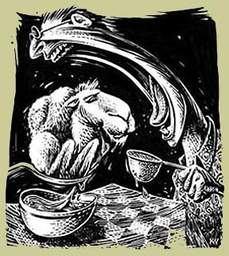
Jesus took them to task for their improper perspective. “You blind guides! You strain out a gnat, but swallow a camel.”

Had I been standing next to Peter and John that day, I’m pretty sure the snicker I failed to choke back would have drawn an ugly glare from the closest Pharisee and a pained glance from Jesus that said, “Really? That’s your contribution to this debate?”

What a powerful commentary Jesus made with a tongue-in-cheek comment. It is a brilliant analysis of the problems preventing the Pharisees from accepting the new truth Jesus brought to the world. They were so driven by the principle of not eating what they deemed unclean that they would use a cloth to strain their drink to make sure they would not accidentally consume the tiny, filthy insect. Yet, they never seemed to see the camel they swallowed whole.

Had I been walking next to Jesus later that afternoon, I suspect I might have apologized and rationalized my inappropriate behavior. “I’m sorry, Jesus, but that was a good line. Pretty funny. Did you see their faces?”

I think Jesus would have put his arm around me and said with a rueful smile, “It might have been funnier if it weren’t also true in your life, too, my friend.” As my mind reeled, I’d hear something about ignoring the 4” x 4” beam in my own eye.

I am, at times, guilty of the same Pharisaical behavior. The Pharisees practiced their faith. They made dedicated effort to comply with the ritual and rules, focusing in extreme measure on the “thou shalts” and the “thou shalt nots,” while spending precious little time on the “love thy neighbor.” Being right was a higher calling than doing right. I may not always be that different.

You and I live in a time when it’s fashionable to be hypercritical. To declare ourselves politically and socially holier than thou. You and I live in a time when pronouncing our truth rides roughshod over proclaiming his truth. When we love the sound of our own voice rather than seeking to sound the voice of love. Such arrogance drives people away from the very one to whom our deeds and our words should point and proclaim.

It’s easy to play the Christian card in a world struggling to do what’s right. Attend church every week. Sing a few songs. Sit through the sermon. Study his word in Sunday School. Gather up a few old clothes to give to the poor every now and again. Now, somehow, I’m better that that other poor soul. It’s not that these things are wrong. Like Jesus reminded the Pharisees, these are things that should not be neglected.

However, when we focus on the “things” of our religion to the exclusion of the crucial matters of our faith…justice, forgiveness, love, compassion, truth…

…we become critical rather than encouraging…

…we divide rather than bring together…

…we falsely elevate our standing in the eyes of God, and…

…we fail in the deeper call of Christ.

We wonder all the time how the Pharisees could be so obtuse, time and time again failing to recognize the truth of Jesus’s words because they threatened to push them out of their comfort zone. The truth is they lived in fear of the kingdom of God that Jesus personified. It upset their apple carts and threatened to pull down their carefully constructed walls that isolated them from a world in need.

Jesus tells them, “You put on a good front. Make a good show of things. But, your heart cannot see what I see. Until it does, you will continue to go through the motions, critical of those less “pious,” feeling safe and comfortable within the walls you built around you.

“Until you see the world through my eyes and move past the ritual and routine, you’ll keep straining that gnat and eating that camel.”

Jesus calls me to keep doing those things I ought to be doing, but to focus on what matters most. I must set aside the fear that keeps me from embracing in love a world that knows no better way. I need to step outside my comfort zone. To challenge what I believe and dig deeper until God teaches me the next thing I need to know to become more like him. Fear stared the Pharisees in the face and gripped their hearts. It does the same to me at times.

When he needed to encourage Timothy, the young pastor of Ephesus, Paul reminded him,

“God did not give us a spirit of timidity and fear, but a spirit of power, of love and of self-discipline.”

I also find that encouraging. My ability to move past the trappings of religion and into a full expression of faith rests not in my own ability, but in the power of God through his spirit within me. My desire to love others will not come from the goodness of my own heart but from a realization of sacrificial love and mercy God extends to me every day. My desire to see the needs of those around me and to, therefore, act, comes from the discipline to be more like Christ every day in every way.

I don’t know if you feel the same way at times, but, if we assume we’re doing pretty well at filtering out our gnats, maybe it’s time we both strain the camel.
Here’s Mud In Your Eye

Background Passage: John 9:1-41

God created us with intelligence and natural curiosity. He created us to reason and think. To learn something new every day we live. That’s why I love being around children. In a quest of new discovery, they are willing to ask a thousand questions just to understand one thing more. Learning is a God-given gift.

That’s why I love to study scripture. There is so much of God’s plan and purpose I do not understand, I always feel like a child on the verge of discovery. Seeking new insight. Tossing away old paradigms. I believe there is always something new God can teach me about his nature…about the life he has given me.

That’s probably why I struggle with those who live in such certainty that their faith gets set in concrete leaving them unable and unwilling to test what they know. Dogma is the death of discovery. When it comes to my faith, my certainty rests in my personal experiences, everything else is discovery. Maybe that’s why the blind man in John 9 is one of my favorite Bible characters.

Deep blue skies.
No cloud in sight.
By daily measure…ordinary.
To those walking the streets of Jerusalem…unnoticed.
To the man born blind…remarkable.

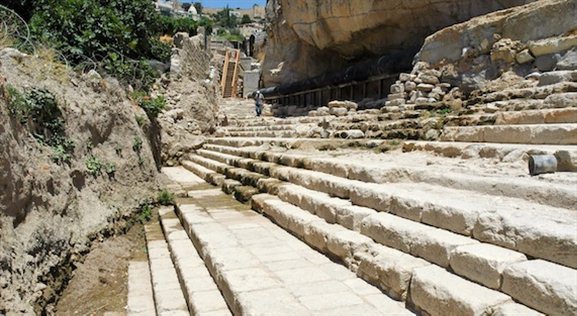
He sat on the stone-lined edge of the Pool of Siloam.
Feet dangling into the water.
Cool.
Clear.
Staring in wonder at his reflection
Framed by the blue heavens above.
His first time to see his own image.
His first time to see anything.
His trembling fingers traced the hollow of his eyes.
Touched the rise of his cheeks
The contour of his nose.
Brushed through his coarse beard.
Ran his fingertips along his sun-baked lips.

Heart racing.
Breath,
a series of ragged gasps.
He lifted his eyes to the world around him
and immediately raised his hands.
Shielded his eyes from the harsh glare
of the mid-morning sun.
He blinked.
Tears running down a face
he had never known.

A world of touch and texture,
brought to life in a
confusion of form and color,
now coalesced around him.

For the first time he saw…
the ripple of wind on water.
The elegance of the portico-covered pool.
The dance of sunlight and shadow.
The beauty of the surrounding hills.
The people…oh, the people.

Slowly, his mind adjusted to this new reality.
Standing awkwardly like a new colt,
steadied by the joyful friend who guided him here from the temple,
the man gradually found his balance…
not an easy task for one blind since birth.

In time,
they danced.
Sang.
Laughed.
Cried.
On his way home…
throughout the streets of Jerusalem…
he shouted to anyone and everyone,
“I can see!
I was blind, but now I see!”

John tells this poignant story in a series of scenes set between two major confrontations between Jesus and the Pharisees. We find Jesus and his disciples leaving their time of worship through the south gate of the Temple. As they walked down the steps, his disciples posed a question steeped in Jewish tradition. Pointing to a man begging on the bottom of the Temple steps, they asked,

“Jesus, who sinned, this man or his parents that he was born blind?”

According to the prevailing belief of the day sin was responsible for all illness and disability. A child sick or disabled since birth either sinned somehow in the womb or the parents’ disobedience caused this infirmity. Jesus often fought this kind of misguided thinking. Seizing this teachable moment, Jesus explained to his disciples.

“Neither this man nor his parents sinned. This happened so the work of God might be displayed in his life…While I am in the world, I am the light of the world.”

Neither God nor man caused this unfortunate circumstance, but God would use this man’s condition as a living metaphor of his ability to turn darkness and despair into light and life.

With that declaration, Jesus approached the man. Sat next to him on the steps. Engaged him in quiet conversation. Sensing the man’s open heart, Jesus spat on the ground and worked his saliva and the light gray limestone soil into a muddy paste that he spread across the man’s eyes. Taking his hands in his own, Jesus stood, lifting the man to his feet.

Now, go,” he said, “wash in the Pool of Siloam.”

With the help of a friend, the man made his way down the slope of the Temple Mount, about a quarter of a mile southward toward the large, terraced pool, fed by the Gihon Spring. The man must have received odd looks as he made his way through the crowd with mud covering his eyes.

He sat on the edge of the water and did has he was instructed. Splashing the cool water on his face, the man wiped the mud from his eyes. I can see him taking a deep breath as he wipe away the water and grim with the sleeve of his robe. Slowly, he opened his eyes to a brand new world.

Over the next few hours and days, the man faced disbelief and disparagement. Some friends thought him an impostor. The Pharisees called him before the council, not to celebrate his healing, but badger him in hopes of accusing Jesus of violating the Sabbath. They sapped the joy of his healing.

Fearing for their own reputation, his own parents refused to stand by him. Ultimately, the Pharisees condemned him as a sinner, eventually excommunicating the man from the synagogue because he refused to deny that Jesus was the one who restored his sight.

In the end, John tells us that Jesus sought out the man whom he healed after learning about the Pharisees’ actions. Face to face with Jesus, the man made a heart-felt confession of faith. At the Pool of Siloam, in the blink of an eye, his physical blindness became 20/20 vision. Over the course of the next 48 hours, he went from being entombed in spiritual darkness to being embraced by the Light of the world.

The power of Jesus echoes throughout this amazing story. But, I also marvel at the authoritative testimony of the man born blind. Standing before a hostile panel of powerful religious leaders who called him a fraud, grilled him mercilessly, challenged his every word, the man never faltered. Never failed to speak the truth.

The Pharisees clamored for him to deny Jesus’ power. Pushed him to denounce his healer. “We know this man is a sinner!” they shouted, challenging him to confirm their accusation. With uncommon strength of character, the man, so unlearned in theology, said simply,

“Whether he is a sinner or not, I don’t know. One thing I do know. I was blind, but now I see.”

What an extraordinary confession of faith!

Imagine the man’s first few moments at the pool. Sights never seen began to fall into context in new ways. Not only were his eyes changed, but God transformed his mind to allow him to interpret and make a sense of what he was seeing for the first time. The miracle changed his heart. A life of resigned despair became a life of renewed hope and endless possibilities.

So what is the take away from this man’s experiences?

There is so much about God’s creation I do not understand. So much about his plan and purpose I cannot comprehend. So much about his nature which remains unknown to me. So much he still must teach me. I don’t know about you, but like the Pharisees, I tend to build a false world around me filled with my plans, my truth and my finite understanding of God and his world based on what I think I know. What I’ve discovered in my life is that that viewpoint is almost always limited. To an extent, that’s okay.

Look at this man’s example. He could not explain what happened. How his eyes were opened remained a mystery to him. He didn’t claim to understand. Nor did he back down in the face of mounting pressure. He merely spoke out with a growing faith borne of powerful, personal experience.

“This one thing I do know. I was blind, but now I see.”

What an extraordinary confession of faith! This man born blind from birth would find ahead of him a life of discovery, not just in the physical world he could now see, but in his budding faith. Knowing what he did not know, he started his new life on what he had experienced with Jesus. That’s a fine place to start.

When I don’t have answers to every question that comes my way, this one thing I do know. I was blind, but now I see.

So, my prayer today is simple. “God, cover my eyes in mud. Let me wash in the Pool of Siloam. Let me understand more clearly, God, who you are and what you need from me. Let me see the world from your perspective. Open my heart and my mind to the discovery of this life you’ve given me. At the end of the day, when the world challenges that which I do not fully know, let me share my personal experiences with you.”

Maybe that’s a prayer that works for you as well.

Here’s mud in your eye.

Chase the Lion

Background Passages: II Samuel 23:20; Jeremiah 29:11

The list of places to see and things to do on our imaginary bucket list grows shorter each year. One particular trip remains unchecked. We want to go on a photo safari to Africa. After far too many trips to the zoo, I’d really like to see these magnificent animals in the wild…the way God intended them to be.

Certain movies create that kind of visceral response. The Ghost and the Darkness, a 1996 movie starring Michael Douglas and Val Kilmer, is one of those movies that triggers primal fear within me. The Ghost and the Darkness is based on a true story about the Tsave Man-Eaters…two African lions that terrorized the workers on the Uganda-Mombasa Railroad in western Kenya in 1898. Atypical of most lion attacks, Ghost and Darkness would stalk the campsite and drag their victims from the tents into the tall grass.

Work on the project ceased when the workers refused to enter the area. The railroad company hired famed British hunter, John Henry Patterson to track and kill the lions. In the story of man versus beast, the hunter became the hunted as the animals began intentionally stalking Patterson. Every time I watch it I find it absolutely terrifying. That we have yet to go on our photo safari may best be explained by that movie and my irrational fear of being mauled by a lion.

Maybe that’s why an obscure verse in II Samuel caught my eye.

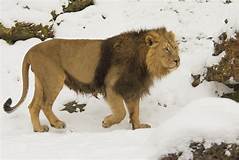
“Benaiah, son of Jehoiada, was a valiant fighter from Kabzeel who performed great exploits. He struck down two of Moab’s best men. He also went down into a pit on a snowy day and killed a lion.” (II Sam. 23:20)

I don’t know why Benaiah felt compelled to jump into the pit with a lion when most of us would run the other way. It was cold. Snowing. Perhaps the lion’s ordinary prey grew scarce in the frigid temperatures. Maybe the lion was terrorizing the village. Regardless, Benaiah took it upon himself to chase the animal down. When it fell into a pit or tried to hide in a cave (depending on your translation), Benaiah jumped in after him.

If you stayed outside the pit like I would, you would probably hear the frightening roar of the angry lion and the shouts of a determined man. The sounds of a life and death struggle would echo from the depths. Then, silence. You might hear the scratching of someone or something scrambling up the walls of the pit. As you start backing away, you see a hand grab the overhanging tree branch. Benaiah drags himself out of the pit. He lies in the grass catching his breath, scratched and bloodied, but victorious.

In his book, Chase the Lion, author Mark Batterson uses this little known scripture to challenge the reader to face fear and chase the will of God even when the path looks far too difficult. He writes, “In every dream journey there comes a moment when you have to quit living as if the purpose of life is to arrive safely at death. You have to go after the dream that is destined to fail without divine intervention.”

As Christians we are taught from the beginning that God has a plan and purpose for our lives. What most of us find is that the dream he gives us scares us. His will looks far too difficult. Our natural tendency is to reject what looks too hard. We look for an easier path. But, Jesus told his disciples, “If anyone would come after me, let him deny himself and take up his cross daily and follow me.” (Luke 9:23) In other words, I should set aside my own will and desire to follow the more difficult path God has chosen for me…the one that requires me to take up his cross every day.

He doesn’t call us to play it safe. If that was his intention, we would have little need for him. No. The life he chose for us will not be easy, but the victory is already won. Later Jesus said, “I have said these things to you, that in me you may have peace. In the world you will have tribulation. But take heart; I have overcome the world.” (John 16:33)

God’s plan for each of us requires us to chase the lion. That’s not always the most comfortable thing to do. We see the path God has laid out in front of us. Solitary lion tracks in the snow. A distant blood-curdling roar. Suddenly, we see clearly that God’s path takes us outside our comfort zone, especially when the path we want to take looks well-traveled. Smooth. Secure. Safe.

The Bible gives us examples beyond Benaiah of those who chose to chase…

Noah chased his lion onto the ark.
David chased his lion to Goliath.
Jesus chased his lion to the cross.
Peter chased his lion onto the water.
Paul chased his lion to Rome.

Lest we think such courage is best left to Bible characters…

Martin Luther tacked his lion’s carcass to the door of the cathedral.
The Pilgrims chased their lion to a new world.
Dietrich Bonhoeffer chased his lion to a Nazi concentration camp.
Martin Luther King chased his lion to Selma.
Billy Graham chased his lion across the earth.

Knowing the difficulty of the task to which God called them, each of these biblical and modern day heroes of faith probably wished to run the other way at some point. Instead, they chose to chase the lion. Maybe at some point, they heard the same voice Joshua heard when he fearfully scanned the Promised Land from the safety of his bank of the Jordan River. Maybe they, too, heard the voice of God saying,

“Have I not commanded you? Be strong and of good courage. Don’t be afraid. Do not be discouraged, for the Lord your God will be with you wherever you go.” (Joshua 1:9)

I don’t know what lions you’re facing. I know they all look frightening. I have faced a few of my own. All I know is that God wants us to chase his will. To follow where he leads. When we turn and run the other way, we’re missing out on the best God has to offer simply because it is his plan and not one we dreamed up on our own.

“I know the plans I have for you,” declares the Lord. “Plans to prosper you and not to harm you. Plans to give you hope and a future.” (Jeremiah 29:11)

So when you hear the lion roar, know that his blessing comes in the chase. Our victory comes in the pit. Gather your courage and jump on in.

Help My Unbelief

Matthew 17:14-21; Mark 9:14-29; Romans 8:26-27

Life can change in a heartbeat. One moment we are dancing on the mountaintop. The next moment we are trudging through the muck in the valley. One moment buoyed in faith. The next set upon by a world cloaked in doubt.

Jesus moved so easily between his mountaintop experiences and those moments that surely sucked the breath from his lungs. We find one such episode following the Transfiguration. Jesus found himself wrapped in the arms of his Father God, strengthened by his Father’s presence. Within moments, he was immersed in a pitched battle of wills that stripped away the deep sense of peace he enjoyed at the top of the mountain.

Halfway down the mountainside
Jesus heard
the first echo of angry shouts.
Glanced at his three trusted friends,
heart beating faster.
Quickening their pace,
they scurried down the slope toward
the sound of madness.
In a heartbeat,
Jesus traded the
tranquility of the transfiguration
for the
frenzy of a fight.

Reaching the bottom of the path,
Jesus pushed through a bewildered crowd
to find his disciples squared off against
an equal number of scribes.
Hurling insults at one another.
Jesus stepped to the center of the melee.
The crowd grew quiet.
Silenced by Jesus’ sudden appearance.
The bitter argument of rivals
Ceased when Jesus stepped into the clearing.

His eyes shifted back and forth between
the scribes and
his disciples.
Jesus turned to Simon the Zealot
standing at the front of the disciples
Fists clenched.
Jaw set in anger.

Tilting his head toward the scribes,
Jesus asked in a wary voice,

“What are you arguing with them about?”

The quarrel erupted anew.
Each side shouting.
Pointing fingers.
Jesus cringed at the hostility.

Before Jesus could silence them,
a man grabbed his arm.
Caught his attention.
Something in his eyes convinced Jesus
to walk with him a short distance
from the heated confrontation.

“I brought you my son today…”

And the words flowed unrestrained.
First a halting trickle of detail.
Then a torrent of despair.
Unburdening his heart to a healer
concerning the nature of the severe illness
that plagued his son for years.
Growing worse with each passing day.
Sapping the boy’s strength.
Threatening his life.

“I asked your disciples to heal him
but they could not.”

The scribes who had followed from a distance,
erupted in laughter.
Seized the opportunity to belittle the disciples
and their master.
The failure of the disciples
opened the door for them to
discredit Jesus for their incompetence.

The disciples.
Seeing the pained look in Jesus’ eyes,
studied the ground at their feet.
Defiance before the scribes turned to
embarrassment and shame.

Jesus ran his left hand through his hair,.
Rubbed his eyes.
Smoothed his beard.
Deep in thought.
The shake of his head almost imperceptible.
A heavy sigh escaped his lips.
The master spoke quietly to his disciples.

“Oh, faithless generation.
How long shall I stay with you?
How long shall I put up with you?”

He turned to the father.
“Bring the boy to me.”

We learn something about Jesus in this passage that instructs us about living in the moment. Jesus just experienced the most moving moment in his earthly life. In the ultimate of mountaintop experiences, Jesus’ work gained affirmation from the father in the presence of Moses and Elijah. For a brief time, Jesus walked in the bright light of God’s presence and praise.

Every one of us can relate for all of us have longed to hear our father’s praise…to hear our father’s words of love. Jesus stood in the middle of a heavenly scene and heard his Father proclaim, “This is my Son, whom I love. Listen to him.”

Can you imagine the overwhelming joy of that personal and poignant moment? More certain than ever of his role in God’s plan to redeem humanity, Jesus committed himself again to the cross. It was the assurance he needed.

Jesus shared that experience with his three closest friends. In the afterglow of the Transfiguration, I can see them standing in a circle with their arms around each other’s shoulders, foreheads almost touching in that prayerful and mind-boggling moment. Expressions of wonder plastered on amazed faces. “Did we see what we just saw? Did we hear what we just heard?”

What a tremendous moment of absolute joy!

Within the hour, though, Jesus found himself in the valley, facing yet another human crisis. He just reaffirmed his commitment to the cross only to find his closest followers baffled and beaten in the task for which he had called them from their tax tables and fishing nets.

In that moment when the disciples could no longer look him in the eye, Jesus must have felt the weight of the world again upon his shoulders. Gone was the aura of glory. In its place, the painful reality of the work that still needed to be done. To go to the cross would be difficult enough. The change human nature might be the more hopeless task. If he could not capture the trust of those closest to him while he was present among them, how could their faith survive the cross?

How often have our mountaintop experiences been followed by that which seemed hopeless? The joy of the mountain rarely survives the walk in the valley. In that moment of crisis, how do we cling to a shaken faith?

Jesus provided an answer. The savior didn’t let his moments of despair overwhelm him. At a time when he surely wondered if mankind would ever find the faith they needed, he did the one thing he knew he could do. He changed the circumstances of a little boy. He changed what he could.

Living as a Christian in an angry, despairing world challenges our faith. Begs us to make a difference. We wonder how we can impact a world that refuses to listen? What can one person do? We lose heart. Lose faith.

Jesus teaches us in this episode that we draw upon the reserves of faith energized on the mountaintop to enable us to deal with the inevitable valley moment. To not let the faithlessness of the world drain our energy or resolve. Jesus shows us that we fight through the episodes that discourage us, finding that thing we can do and doing it, rather than giving in to our despair.

That, my friends, is a lesson I need to learn in this day as I grow so frustrated with the rancid animosity and argument so prevalent in society. When I wonder what I can do to change the world I need only follow Jesus’ example. His example tells me to change what I can. We were not saved by God to stay on the mountain, but to get down in the valley and change what we can.

This passage teaches another great lesson about coming to terms with our struggling faith. God uses even our shrouded faith to accomplish his will. A little is often enough.

Join me back in the story. Jesus asked the father to bring the boy to him. The father obediently carried his boy to Jesus, standing him in front of the great healer. Immediately, the young boy suffered another seizure…violent and terrifying. As the boy fell to the ground trembling, I can imagine Jesus dropping to his knees, placing his hand on the boy’s chest, trying to quiet the tremors.

With his eyes never leaving the boy, Jesus asked the father, “How long has he been like this?” The question was not a medical inquiry. Rather, hear the heartfelt compassion Jesus felt for the misery suffered by an innocent child. The father shared more of the boy’s story and finally asked the favor he wanted to ask of Jesus when he approached the disciples earlier that day. “If you can do anything, take pity on him and help us.”

Jesus looked up at the father, “If you can?…” Hoping to see a glint of faith reflected in the man’s eyes. “Everything is possible for him who believes.”

With tears in his eyes, the father responded, “I do believe, but help me with my unbelief.”

What a true confession of this father’s heart. What a true confession of my own soul. He came seeking Jesus. When Jesus was absent, he thought he found the next best thing…Jesus’ disciples. Whatever faith he brought to the mountain was thrown to the wind by the disciples’ inability to help. The result left him so discouraged that all he could muster when Jesus asked his question was a whispered plea, “If you can…”

Face to face with Jesus, his fragile faith bubbled to the surface. Oh, how his words echo how I feel at times. “I do believe, Jesus. I believe, but I am so discouraged. Doubt is my constant companion. Please, Lord, take away the uncertainty and replace it with unquestioned belief.”

God moves when imperfect faith cries out to a perfect savior. Belief, though flooded with doubt, calls out to the only one who can fix that which is broken. “If you can….” The Father’s prayer is often my prayer. The father’s doubt is my doubt. The father’s reservation is my reservation. I live all too often in this shallow faith, hoping it is enough.

That’s always what I thought this verse taught as if God were saying “If only your faith were stronger, I could act upon your request.” I suspect there is a measure of truth in that interpretation. However, I look at the verse and wonder if Jesus did not hear the father’s profession of doubt-filled faith as sufficient. Might Jesus be telling him, “Listen, everything is possible for him who believes. Give me whatever faith you have, no matter how limited, because my belief in the father is big enough for both of us.”

Follow me again to the story.

Evening comes.
Jesus and his disciples
lay upon the roof of a house,
staring at the stars glittering the night sky.
Tired after a long day.
But sleep will not come.

In the silence surrounding them,
The disciples think about what happened.
Weeks prior they walked two by two
preaching, teaching and healing
in the power of God.
This morning,
when the father lay is son at their feet…
Dismal failure.
Humiliation.
Embarrassment.
From the mountaintop to the valley.

A raspy voice breaks the silence.
Maybe Simon the Zealot.
Mustering all his nerve,
asks the question all wanted to ask.

“Jesus,
Why could we not heal the boy?”

In this teachable moment, Jesus spoke quietly.
“This kind of thing requires prayer.
This kind of thing requires faith.”
Thinking back on the father with feeble,
but sincere faith,
Jesus added,
“Faith as small as a mustard seed
can move a mountain.”

Hyperbole? Maybe. But maybe this story hits upon the central truth of the matter. Jesus doesn’t ask us for perfect faith because we are imperfect. He asks for whatever faith we have to be placed in his hands…If for no other reason that he has enough faith in the grace, goodness and the power of God for all of us as he lifts our needs to the Father in heaven.

Paul shared this with the church in Rome.

“In the same way, the Spirit helps us in our weakness. We do not know what we ought to pray for, but the Spirit himself intercedes for us with groans that words cannot express. He who searches our hearts knows the mind of the Spirit, because the Spirit intercedes for the saints in accordance with God’s will.”

Place at his feet whatever faith we have and he will take it to the throne of God with the perfect faith of the Spirit.

So, I like this story because we can identify at times with Jesus who came off this amazing mountaintop experience only to find disorder and disarray. Next time we come off a spiritual high, we can look amid the inevitable chaos, as Jesus did, for what we can do and we can do it.

Then, if we find our faith blanketed by the mist of doubt, like the father in the story, let’s give Jesus all the faith we hold no matter how small. Declaring before God, “Help us in our unbelief.” And knowing more that his trust in the Father is enough for all of us.

Plant your mustard seed. Move a mountain.


Rest for the Weary

Background Passages: Mark 11:27-33: Mark 12:28-34; Matthew 11: 28-30

I wonder if Jesus ever walked into the temple in Jerusalem desiring only to offer his own prayers to the Father in the privacy of his heart. Did he ever just get to sit in the shade of the portico and listen to the well-versed teaching of the rabbi? If it happened, it did not happen often. His presence seemed always to elicit a response either from the people, begging for his words of truth, or from his persecutors, probing for a weakness in his teaching.

Hours before his arrest, Jesus might have entered the temple just to pray…to clear his mind for what was to come. Instead, he found himself surrounded by hate in a rustle of flowing and elegant robes. No pleasantries exchanged. No effort to pull him from the crowd that gathered that morning for a private talk. Jesus turned full circle studying the 15 or so men who hemmed him in…the chief priests, the most learned scholars of scripture and the temple leadership…each shouting an indignant challenge to the Galilean teacher they viewed as a substantial threat to their way of life.

“By what authority are you doing these things?” they asked. “And who gave you authority to do this?”

Those entering the temple turned on their heels not wishing to be dragged into the confrontation. Others trapped inside retreated to the walls or peaked from behind the broad columns lining the courtyard.

Jesus pursed his lips. Took a deep breath. Looked down at his sandaled feet, sensing the anger in their murmuring. He raised his head, stared intently into the face of the first one to utter the challenge. In a voice as soft as a sprinkle that threatened a downpour, Jesus said, “Let me ask you one question…” When he finished probing for a response, they huddled in confusion, knowing they had stepped into a trap of their own making.

After a minute of deliberation, the best response they came up with was, “We don’t know.”

Jesus turned again full circle with eyes that burned into their souls to see if any of the others could offer a better answer. When no one spoke, Jesus took a step forward, turned sideways and squeezed past the first row of robes as the others parted to give him room, and whispered to no one in particular, “Neither will I tell you by what authority I am doing these things.”

Delightfully cloaked in a religion of rule and regulation, the religious leaders of the day could not fathom the wonder of his miracles or the simplicity of Jesus’ teaching. It ran counter to all in which they believe. Counter to that which elevated them above the ordinary man struggling to comply with the multitude of laws the priests and teachers found so comforting.

These same men, or men just like them, constantly hovered on the fringe of the crowd as Jesus taught. One parable–about a vineyard and the workers who killed the master’s son when he came to collect what was owed–caught their attention. They gnashed their teeth when it became clear to them that Jesus viewed them as the unfaithful tenants.

As their anger grew they threw rapid fire questions at Jesus. “Should we pay taxes to Caesar?” “Will there be marriage after the resurrection?” Jesus answered and avoided their traps with a voice as strong as his accusers.

At one drawn out pause in the cancerous debate, a Pharisee stepped forward, arms stretched in front of him, palms up… a plea, a peace offering. The man looked back at the huddled Sadducees and smiled as if to say, “That was fun to watch.”

Jesus looked at him, puffed out his cheeks and exhaled audibly in relief, willing his heart to slow its beat. “Please. Sit.”

After a brief introduction, the Pharisee spoke with Jesus, intent upon understanding. “Of all the commandments in all the law, which is the most important?”

Jesus, who had spent the last three years trying to break down the wall the law had erected between God and his creation, smiled for the first time all day. Tears welled up in his eyes. At last, here was a question that merited his attention…an arrow that pierced the heart of the matter.

“The most important one,” answered Jesus, “is this: ‘Hear, O Israel, The Lord our God, the Lord is one. Love the Lord your God with all your heart and with all your soul and with all your mind and with all your strength.’ The second is this: ‘Love your neighbor as yourself.’ There is no commandment greater than these. All the Law and the Prophets hang on these two commandments.”

This conversation continued as Jesus and his new friend exchanged similar thoughts and ideas. It ended with a warm embrace and a word of encouragement. Jesus held the Pharisee at arms’ length and said, “You are not far from the kingdom of God.”

Life for the Sadducees and the Pharisees consisted of a set of rigorous rules and regulations no man could reasonably follow. Because their obsessive compulsive minds did it better than most, they held the ordinary man in contempt. Over time, arrogance led them to establish a hierarchy of goodness that carefully and permanently cemented them at the top of the pious pyramid, looking down upon and taking advantage of those failing to meet the stringent requirements the religious leaders imposed.

By the time Jesus arrived on earth, God’s original law and covenant lie buried under hundreds of rules of behavior almost impossible for anyone to obey. The burden of obedience drove people away from God rather than drawing them in. Jesus challenged this distortion of the law.

Noted psychologist Abraham Maslow explained the natural human tendency to be overly dependent on a narrow set of skills and resources when resolving issues in life. Maslow is generally quoted as saying, “I suppose it is tempting, if the only tool you have is a hammer, to treat everything as if it were a nail.”

Rule, ritual and regulation became religion’s hammer in an attempt to beat God’s people into submission. It was all they understood. Jesus addressed the issue as he met constant rejection from the religious leaders and people of Galilee throughout his ministry.

In a similar episode early in Jesus’ ministry, he mourned for the cities of Chorazin, Bethsaida and Capernaum saying that their absolute dependence on rule and ritual blinded them to the new truth of the good news he offered. Trying to help the people get past the legal barrier, Jesus said,

“Come to me, all you who are weary and burdened, and I will give you rest. Take my yoke upon you and learn from me, for I am gentle and humble in heart, and you will find rest for your souls. For my yoke is easy and my burden is light.”

As I read through the scripture I can see the thoughts as they developed in Jesus’ heart and mind. Trying to find a way to make his point, Jesus focused his eyes on a farmer in the distance, walking behind an ox pulling a plow through the rocky hillside. He heard the farmer shout and the animal bellow as they labored to cut through the sunbaked earth.

Jesus thought back to that carpentry shop in Nazareth. Remembered the farmer who came to him in need of a new yoke for his ox. A perfectionist in his craft, Jesus followed the farmer to his field where he sized up the animal, visualizing how he wanted this new yoke to fit upon those muscled shoulders.

He went back to his shop. Jesus took his plane from a shelf and began to shape a piece of oak to match the vision in his head. He sanded it smooth and attached the harness points in perfect balance to keep the reins from pulling the yoke to one side or the other.

I can see him as he hefted the yoke on his shoulder and took it to the farmer, carefully fitting it upon the ox, adjusting it to his shape. He gave the reins to the farmer and watched for a minute as the ox pulled the plow through the field. The yoke made the burden less onerous for both man and beast.

That memory spurred the words. “Come to me, all you who are weary and burdened…For my yoke is easy and my burden is light.”

Jesus spoke every day to people whose shoulders sagged under the remorseless pressure of compliance to a bulky set of rules. The Pharisees lived in a world of “do this…don’t do that,” of “yes to this…and no to that.” The people lived in a world, condemned by arbitrary rule, and ridiculed by the religious leaders for their personal failings.

Religion…faith…became a burden.

He faced the rebuke of the Pharisees when his disciples picked a little grain on the Sabbath to satisfy their hunger. He faced the challenge of religious leaders who chastised him for healing a man with a crippled hand on the Sabbath. Ultimately, in those last days, he battled with an entrenched enemy whose questions never addressed the heart of the matter.

Jesus tried time and time again to tell them. “It doesn’t have to be this hard. Love your God with your whole being. Love those around you as you love yourself.”

I read again this week of a man who said that being a Christian was just a bunch of rules designed to “suck the fun right out of life.” That statement always troubles me. Do we as Christians act like the religious leaders of the day forcing compliance to a set of “laws” we created to separate ourselves from others?

The joy of life is not conditioned by rules and regulations that tell you what you can or cannot do. Joy comes through relationships…first and foremost with God and then with others. If those two things fall into place, that which “sucks the joy out of life” disappears.

Walking with God need not be complicated. It need not be burdensome. When the master carpenter carves out your yoke and places it upon your shoulders, it fits like a glove, the burdens so much lighter.

Jesus countered the prevailing burden with a simple invitation to accept the salvation he offered…the life he offered. “Come to me…” It’s that simple. “…all who are wearied and burdened…” It’s that inclusive. “…I will give you rest…” It’s that rewarding.

Jesus extends a personal invitation to the lost who have not found him and to the found who have lost their way. Come to him. Erase the weariness from your heart. Then, love your God with all your being. Love your neighbor with the love God extends to you. Once done, life becomes joy.

God Is At Work

Habakkuk 1:1-5; 2:4, 14, 20; 3:17-18; and Romans 8:28

Lately, we watch the news with a sense of morbid dread, waiting for another work of wickedness to destroy our comfortable complacency and erode the innate innocence of our children and grandchildren. I must admit God and I had a “come to Jesus” meeting over the past few days.

I shook my fist a little. Lashed out a bit. Questioned how he could sit by and watch events in Florida unfold without intervening. I finished my little fit and waited. Getting no immediate response, I huffed a bit more and went back to my worry and work.

It felt like an Old Testament week as I prepared for this devotional. I was in “an eye for an eye” mood. I scanned pages of scripture and read about Jeremiah complaining bitterly to God about the unfairness in the world around him. How evil men grow powerful and prosper. How righteous suffer. Jeremiah shook his fist at God.

Elijah hid in a cave. The prophet who had just won a major test of faith now cowered in a cave after being threatened by an angry and vengeful Jezebel. He complained balefully that he was the last godly man standing. That God had stepped aside, allowing him to be hounded and chased. Elijah shook his fist at God and wanted to die.

I read again about Job, God’s long-suffering servant. Plagued by calamities not of his making. Criticized by his friends. Struggling with the loss of those he held dear. Job lashed out critically to the Creator. “What does it profit us if we pray to him?” Job shook his fist at God.

I get it Jeremiah. I know where you’re coming from Elijah. I understand Job. That’s exactly how I feel.

Then, my eyes settled on Habakkuk. I didn’t intend to stop here. No one does a devotional on Habakkuk, right? But, this prophet joined me in shaking his fist at God so I kept reading.

In three short chapters, I discovered a God big enough to take my frustration and teach me about his presence and his purpose even in the middle of a perverse week.

Habakkuk spoke at a time when evil men ruled the day, punishing the righteous, inflicting violence upon them. “Why do you make me look at injustice?” lamented the prophet. “Why do you tolerate wrong? How long must I cry for help?”

My heart aches as Habakkuk’s aches. I see innocent children slaughtered again in a world run amuk. “Why, God, do we keep seeing this? Why do you put up with it? How long must we cry out for help?”

God’s answer to Habakkuk started a transformation in his outlook on life…an answer that lifted my own sagging spirit.

“Look at the nations and watch–and be utterly amazed. For I am going to do something in your days that you would not believe, even if you were told.” (Hab. 1:5)

All that questioning I did…this was the start of God’s rebuttal. “Look, Kirk. I didn’t cause the wickedness in the world. Human choice creates catastrophe and chaos. Your choice. Their choice. My job is to work through tragedy using people of faith to restore the broken. Redeem the lost. Rescue the troubled. I know you don’t understand. I could explain it to you, let you in on the secret, but you wouldn’t believe it.

“Know this. You are not alone. Those who are hurting most are not alone. I can carry you, carry them, through this. I will never abandon you. Despite your sorrow and struggles, I will never give up on my children. I am at work even if you can’t see it.”

Every one of us who love and trust God can look back through our lives and see the hand of God at work through the best and worst times of our lives. In those times, when we seemed to be abandoned and alone, we can now see the winding path he guided us down to emerge from the haze into a clearer understanding of his presence in our lives. I think about those times in my life and…God’s right. Had he told me how he planned to bring me through the struggle, I would not have believed it possible.

I kept reading through the book and found these declarations of eternal truth God spoke to the prophet.

“…the righteous will live by his faith…” (Hab. 2:4)

Habakkuk was blind to the work of God as he stood there and complained. God said to him, “Trust me. Have faith in my work even when you see no evidence of it.” Like an arrow, the words pierced the anxiety in my heart.

Living by faith is a hard pill to swallow when we’re sick to our stomachs over what we see happening around us. It sounds so cliché. Yet, faith is often the only answer we have…at least in the beginning. God would eventually use Habakkuk’s voice to bring about his intentional plan for redemption. When I have no answers, faith is enough. Perhaps my faith in him…my trust, my belief…can touch those troubled by tragedy.

Two other verses offered a message of hope and promise to the prophet. The strife caused by evil evaporates in the face of God’s presence. Though the bad seems to reign, its power will fade.

“For the earth will be filled with the knowledge of the glory of the Lord, as the waters cover the sea…The Lord is in his holy temple; let all the earth be silent before him.” (Hab. 2:14,20)

Our pain in the middle of tragedy cannot be denied. I cannot imagine the grief of parents and family in the aftermath of such insanity. While we seldom claim the promise of God’s eternal victory in the middle of tragedy, grief-inspired blindness doesn’t make it any less true. God will conquer. I take heart in understanding in my core the simple truth that pain and suffering around me is temporary and transient…especially when considered on an eternal scale.

God sits on his throne. Like any good ruler he knows his kingdom and his people. His anguish over our suffering is real. When we seek an audience with him to complain bitterly of that which hurts us, he listens. He is big enough to handle our confusion, our anger, our frustration, our disbelief. When our emotion is spent he reminds us that he walks among us through life’s mud and muck.

That’s why the hue and cry to put God back into our schools sits so uneasily in my bones. God never left our schools. There are people of faith teaching and serving in every public school in America. There are prayers lifted up daily on behalf of children and families. There are children and young people who lift up prayers every day in the halls and classrooms across America. Heartfelt prayers far more meaningful than a rote or recited prayer over the intercom.

Still his presence was not enough to prevent another senseless act. Why? Not because we “took God out of our schools.” Evil gets its way because we forced God out of our lives, not out of our schools. Stop making God political. Make him personal. Then, and only then, can he make an impact in and through us.

Here’s the truth I know. God is on his throne. God is present in the lives of all who believe…in school and out. Always has been. Always will be.

Without question, the senseless school shooting in Florida tested my faith this week. I struggle for words in the moment for those most touched by such devastating loss. I struggle for answers on how we might prevent such madness from ever happening again. Right now, I have no words. No answers. While I will keep searching, I have only my faith that “in all things God works for the good of those who love him who have been called according to his purpose.” (Rom. 8:28)

Make no mistake. God is at work today. I may not see it. I may not understand it, but he is at work.

The book of Habakkuk ends with the prophet’s faith renewed and restored. Despite not knowing the end game, Habakkuk rested in the strength of his faith. He accepted as I do that despite every intrusion of wickedness that creeps into our lives, whether by our own design or the horrific act of another, God will create the best plan and path through it.

“Though the fig tree does not bud and there are no grapes on the vines, though the olive crop fails and the fields produce no food, though there are no sheep in the pen and no cattle in the stalls, yet I will rejoice in the Lord, I will be joyful in God my Savior.” (Hab. 3:17-18)

Amen.


God is Faithful

Background Passages: Lamentations 3:22-23; Hebrews 10:23

I recently connected on Facebook with Jesse Owens, a friend of ours from college. We’ve had no contact really since those days long ago. Our lives have gone separate ways. Still, the one good thing about the social platform comes when we find opportunities to connect and reconnect with family and friends.

Jesse and I attended different churches while in school. He went to the Student Ministry program at First Baptist Church, Lubbock, and I served as youth minister at First Baptist Church, Wolfforth. We first met through the Baptist Student Union at Texas Tech. The man’s voice was one to be envied and he was not afraid to use it. If you ever heard him sing, “My Tribute,” backed up by the Student Ministry choir at First Baptist Church, you surely found yourself kneeling before God’s throne.

I guess all of us use the New Year as a way of refocusing our lives. We naturally gravitate toward personal and spiritual reflection. During these first few weeks of the year, I found myself…unsettled. The world seems in chaos with turmoil boiling around us. I keep finding myself trying to see into the future and what the world holds for my four grandchildren. To be honest, I’ve been worried…until this week.

Worrying about tomorrow is not biblical. Losing faith in God’s goodness damages the spirit. Drives me away from doing the things I can do in my part of a troubled world to make it less troubled. Trusting in God, even in an uncertain world, brings peace in the midst of chaos. I was reminded of this truth by a song Jesse posted on Facebook this week. It hit the nail on the head and slammed the 2 x 4 across the bridge of my nose.

“He’s Been Faithful,” sung by the Brooklyn Tabernacle Choir, resounds as a wonderful wake of call to walk daily in faith. Reading the lyrics without the melody speaks loudly to God constant faithfulness.

In my moments of fear,
Through every pain, every tear,
There’s a God who’s been faithful to me.
When my strength was all gone,
When my heart had no song.
Still, in love, he’s proved faithful to me.

Every word he has promised is true.
What I thought was impossible,
I’ve seen my God do.

He’s been faithful, faithful to me.
Looking back, his love and mercy I see.
Though in my heart, I have questioned,
Even failed to believe,
He’s been faithful, faithful to me.

We hear our pastors encourage us to “Have faith in God.” And, we should. God remains in control of a chaotic world around us. Though our sinfulness rests at the heart of the world’s ills, God provides a path through the darkness, enabling us to find ways of turning the bad to good…time and time again.

He does this not because we are faithful, but because he is faithful. The writer of Lamentations described it this way: “The steadfast love of the Lord never ceases; his mercies never come to an end; they are new every morning; great is your faithfulness.” (Lamentations. 3:22-23)

The writer of Hebrews echoed that sentiment when he said, “Let us hold fast the confession of our hope without wavering, for he who promised is faithful.” (Hebrews. 10:23)

I watched our grandchildren play in our house this week. Followed them. Chased them. Hugged them. Let their laughter warm my soul. Celebrated the uniqueness in each of them in ways I seldom had time to do with my own kids. Being a retired grandparent has its advantages.

Most importantly, this week, I prayed for them. I prayed that on the day they accept Christ as their savior that they grasp, at least in part, the unfailing faithfulness of God. For, if they hold even a smidgen of understanding, it doesn’t matter what’s happening in the world. They will have the only resource that matters as they find their way through life.

So, thanks, Jesse, for the reminder.

You read the lyrics without the melody. Now, listen to the two together. May it speak to you today as clearly as it did for me this week.

Whose Neighbor Can I Be

Background Passages: Luke 10:25-37; Mark 12:28-34; Matthew 7:12

“What must I do to inherit eternal life?”

The question, shouted by an expert in the law, quieted the intimate conversation Jesus was having with the small crowd that gathered around the Galilean teacher. Heads turned toward the booming voice coming from the edge of the crowd. The man hiked up his flowing robe, pushed himself away from the large rock he leaned against, moving forward until he towered over Jesus who was sitting on a cedar log.

Jesus had noticed him skirting the periphery of the crowd for the past three days. Listening without hearing. Rolling his eyes. Biting his tongue. Biding his time. He was among a small group of Pharisees tracking Jesus from Jericho on his way to Jerusalem. They weren’t there to understand Jesus and his teaching. They were there to find fault in his words in an effort to discredit him in the eyes of the people.

Though the scribe asked a good question, it lacked in sincerity. Uttered by one who loved to hear his own voice. Seeking a specific answer. Hoping for something heretical. Jesus looked at the man for a moment and smiled. “What does the law say? How do you read it?” giving the man his moment in the spotlight.

The scribe turned to the crowd and confidently proclaimed, “Love the Lord your God with all your heart and with all your soul and with all your strength and with all your mind; and ‘love your neighbor as yourself.’” With a self-satisfied grin, he turned back to face Jesus, challenging him to disagree.

“You’re absolutely right,” Jesus answered. “Do this and you will have eternal life.” Jesus sat silently, his eyes never wavering from the eyes of the Pharisee. As the silence deepened, the scribe shuffled his feet. He did not get the answer he was expecting from the teacher. His eyes flashed as he fell back on his legal training, focusing his attack from a different angle. “Ahh, and just who is my neighbor?”

Jesus’ lips tightened and he let out a slow breath through his nostrils. For all he understood of God’s greatest commandments to his people, the lawyer limited its universal truth by qualify its spirit.

What Jesus speaks next is perhaps one of the most well-known parables he ever shared. The parable of the Good Samaritan transcends religious conversation, working its way into a secular context. Good Samaritan laws protect those who lend assistance in life-threatening situations. Those who go out of their way to help another are called good Samaritans.”

Here’s the gist of the story Jesus told.

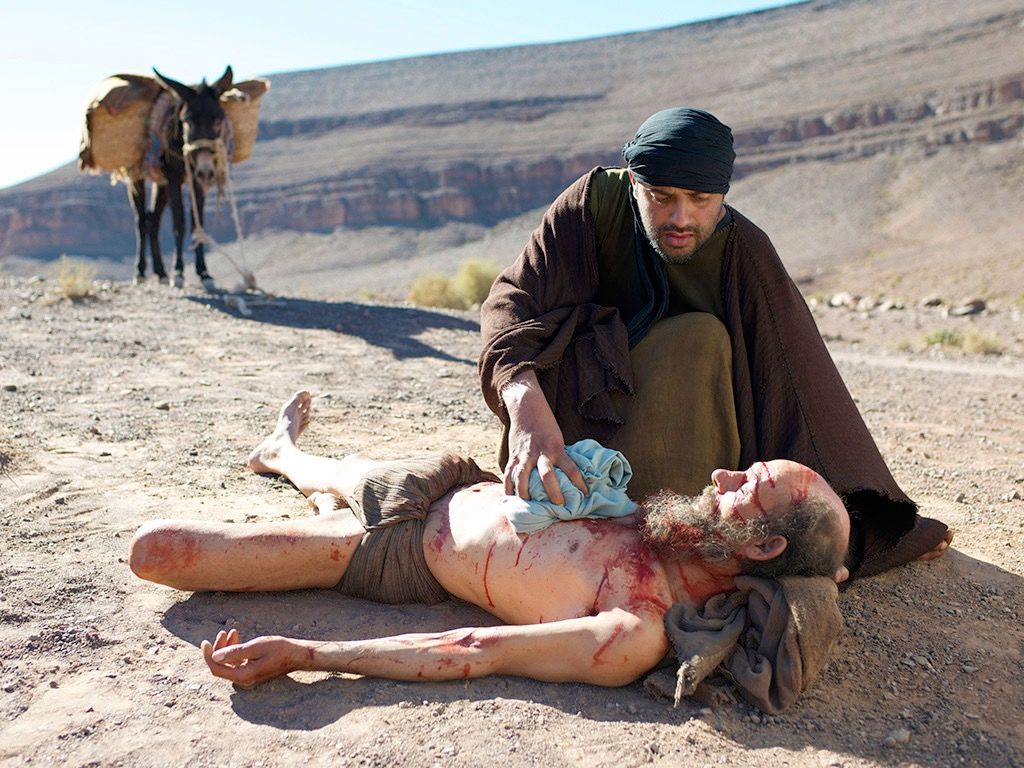
A man traveling alone from Jerusalem to Jericho was attacked by robbers who beat him senseless and took his clothes and his money. They threw him in the ditch next to the road, bleeding , broken and near death. At separate times, a Jewish priest and a temple administrator happened upon the scene of the crime. They pretended not to see the man lying in the ditch. They averted their eyes, shuffled to the other side of the road and quickened their pace, ignoring the man in distress. Out of sight. Out of mind.

Later, a Samaritan on his way to Jericho came across the bleeding man. Compassion ruled the moment and the Samaritan jumped into the ditch to render aid. He cleaned the man’s cuts and bruises with his oil and wine and tore the hem of his garment to bandage the man’s wounds. He lifted the injured man onto his own donkey and walked him miles into the city. He took the man to an inn, nursing his needs throughout the night. The next morning, the Samaritan paid the innkeeper to watch over the man, promising to cover any additional costs the innkeeper incurred when the Samaritan returned.

Jesus told the story to the crowd gathered around him. He looked into the faces of every person around him. Finally, his eyes bore into the eyes of the scribe still standing in the middle. Jesus’ eyes narrowed and his voice lowered an octave. His next question landed like a heavy weight upon the man’s chest, crushing the breath from his lungs. “Which of these three do you think was a neighbor to the man who fell in to the hands of the robbers?”

I picture the man opening and closing his mouth like a fish out of water, fully aware that he had been outfoxed by the master teacher. His brain flashed in overdrive as he tried to think of a snappy comeback. Unable to give credit to a hated Samaritan, he answered in little more than a grudging whisper. “The one who showed mercy on him.”

The lengthy conversation between Jesus and the scribe must have inspired those who sat around and watched it unfold. The parable shared by Jesus subtly suggesting that faith is best demonstrated, not by grand theological arguments, but by the things we do for others. And, it is a message that echoes loudly today. A lesson I still need to learn at times.

Here’s the thing. The scribe asked a great question in the beginning. It is the fundamental question all of us who long for meaning in life should ask. “How do I find eternal life?” Ironically, he gave the same answer that Jesus gave to another group of Pharisees who questioned him about God’s greatest commandments (Mark 12:28-34). Had the man stopped to consider the meaning and spirit of the words he spoke, the whole conversation might have taken a different and better turn.

His second question, however, reveals an exclusionary faith. “Who is my neighbor?” is a question that seeks to limit our compassion…creating boundaries that give us an out. “Who is my neighbor?” suggests that some groups or some individuals are unworthy of my time and effort.

The scribe practiced a ritualized religion based on man-made rules that identified peoples that the law considered unclean and unworthy of God’s love. The Pharisees and scribes knew Jesus frequently associated with tax collectors, Samaritans, Gentiles, lepers, outcasts and outlaws. When the scribe asked his question, I suspect he hoped Jesus might identify as a neighbor one among this group of the unclean which Jewish law excluded from fellowship.

We often fall into the same trap as the scribe. Surely my “neighbor” only includes those people with whom I have a relationship…those who look like me…those who live in my social circle…my own racial subset, those for whom I can give money, but not get my hands dirty…those whose needs do not inconvenience me.

Jesus rejects that view. In Jesus’ parable, the Samaritan showed compassion and mercy to the injured man even though society considered the Samaritan an outcast and unworthy of God’s love. So, from Jesus’ standpoint, the question is not “Who is my neighbor,” but rather, “Whose neighbor can I be?”

It’s not a matter of identifying the person I wish to help. It’s a matter of looking for the unfolding opportunities God places before me where I can serve my God and my fellow man. Determining whose neighbor I can be demands that I step outside my comfort zone…insists that I engage with those whose backgrounds and cultures differ significantly from mine…mandates that I move past the safety of simple charitable giving to immerse myself in the gritty world of need in which others live.

Jesus defined our “neighbor” when he addressed the Pharisees in Mark. “Love your neighbor as you love yourself.” Find the definition also encompassed in the Golden Rule. “Do unto others (your neighbor) as you would have others do unto you.” Both verses suggest an empathy that allows us to see ourselves in the circumstances experienced by someone else. Except for the grace of God we could find ourselves in similar circumstances. That realization should compel us to provide the help and assistance to another in need that we desire in our most desperate times.

In essence Jesus asked the scribe to abandon the smooth road ritualized religion and live in the dirty ditch of practical and powerful faith. Forget about qualifying those we choose to help. Look instead for the chance to change the course of another’s life.

It’s a good question.

Whose neighbor can you be?


From the Author: If you would like to receive these devotional thoughts via email, simply subscribe to “The Searcher” by registering your email on the “Subscription” link on the right side of this page.

Peace on Earth

Background Passages: Luke 2:1-14; John 14:27

The young man leaned against a boulder, resting his head upon his arms as his calloused hands gripped the shepherd’s staff held in front of him. The quiet of the night interrupted by the soft bleating of a ewe calling for his lamb. The nearby campfires set around the hillside illuminated the measured steps of his friends standing watch around the flock. He found comfort in their presence.

Without warning, an angel in radiant garments, appeared among them, night’s shadows chased away by the brilliance of God’s glory. Stricken with fear, the shepherds dropped to the ground. “Do not be afraid,” the angel said with a voice calm and clear. “I bring you tidings of great joy for all the people. Today, in the city of David, a Savior is born to you. He is the Messiah, the Lord.”

As soon as he made his announcement, a great host of angels surrounded them, singing praises to God of his unsurpassed greatness and declaring “peace to all on earth on whom God’s favor rests.”

From the moment the angel declared the birth of God’s own Son, we have longed for the promised peace. When we look past the tinsel and trappings of the season into the world around us, the angel’s words of good cheer and peace seem elusive at best. The fault lies not with the angel’s pronouncement, nor with God’s promise. Rather, the failure lies in our definition of peace.

Jesus’ birth did not usher in a time of peace. The savior was born in a region consumed by strife for hundreds of years. The Roman conquerors, just the latest in a long line of foreign rulers, kept a heavy hand upon Judea. Herod, the appointed king of Judea, feared any and every rival, eventually calling for the death of every child under the age of two. Jesus’ parents fled to Egypt. No, Jesus’ world was hardly a place of peace.

Throughout his life and ministry Jesus encountered suspicion and hatred, ultimately leading to his death on a cross and the persecution of his followers. Upon hearing of the declaration to the shepherds, the casual observer might ask, “Where is the promised peace?”

Nineteen centuries later, the world watched as the United States of America tore itself apart in a ugly Civil War, fought to end the enslavement of one people by another. During this brutal time, the eldest son of Henry Wadsworth Longfellow, the famed American poet, enlisted in the Union army without his father’s permission. Young Wadsworth suffered a severe wound at a battle in Virginia.

As a result, our poet wrote Christmas Bells, a poem later put to music and renamed, I Heard the Bells on Christmas Day. It begins with a declaration of the popular seasonal sentiment of peace on earth before decrying the reality of war and violence. The sullen lyrics proclaim, “And in despair, I bowed my head; ‘There is no peace on earth,’ I said; ‘For hate is strong, and mocks the song of peace on earth, good will to men.’” The casual reader might hear the song and ask, “Where is the promised peace?”

Understand clearly, Jesus’ birth remains one of earth’s most amazing events and marks the beginning of the final expression of God’s plan for bringing salvation to the world. It did not then, and does not now, end the disharmony among men. Turn on the television and listen to the divisive conversations. See the reports of warfare and violence across the globe. The casual observer might ask, “Where is the promised peace?”

God calls us to live in harmony today with one another, to love our neighbors and our enemies, but this is not the peace of Christmas. God’s promised peace is not found in our external relationships. God’s perfect peace is internal…in the heart of every believer…and it is eternal…in the life everlasting he promised through his son, Jesus Christ.

As he prepared for his death on the cross, Jesus comforted his disciples. “Peace I leave with you; my peace I give you. I do not give to you as the world gives.” Then, he echoed the words of the angels to the shepherds, “Do not let your hearts be troubled and do not be afraid.”

While the world’s discord ought to concern us and our lives ought to be about bridging those damaged and fragile relationships, we tend to live in fear of the anger that exists among us. God reminds us often in scripture, “Do not be afraid.” Fear is overcome by living as God desires us to live.

God loves it when we live obedient to his will. It pleases him. We find the peace and contentment he promised while here on earth only when living in the light of his will for our lives. It is not the absence of conflict as the best peace given by the world. It is the peace he gives us as his spirit lives within our hearts in the here and now.

The baby God sent to lie in the manger in Bethlehem, the one the angels proclaimed as the Messiah, brought God’s gift of grace and salvation to a hateful world so that those who would place faith and trust in him would find true peace…not just in the present day, but for all eternity.

In the end, Wordsworth’s expressed pessimism yielded to the promise of the baby in the manger. His last stanza declares our greatest hope. Where is the peace? It is found in these words.

Then rang the bells more loud and deep.
God is not dead, nor doth He sleep.
The wrong shall fail, the right prevail,
With peace on earth, good will to men.

Then ringing, singing on its way,
The world revolved from night to day.
A voice, a chime, a chant sublime
Of peace on earth, good will to men.

Listen to my favorite rendition of this Christmas classic by Casting Crowns.

God is still in control and his victory over all that is wrong is assured. In Christmas we catch a glimpse of what we can be. In Christmas we bury that which divides us to find a brief respite from the rancor that rules the year. In Christmas we find peace that only a life committed to Christ can find. Because of Christmas we rest in God’s promise of eternal peace.

This is my prayer for you this Christmas.

Standing on the Wall

Background Passages: Nehemiah 4:1-14; John 15:13

He walked his horse carefully through the rubble of the fortifications that surrounded his city, out through the Valley Gate toward the Jackal Wall. As he neared the Fountain Gate and the King’s Pool, the walls that once towered above lay now in ruins strewn across the path, forcing the rider to dismount and pick his way through the debris blocking the road.

The scrap of his sandaled feet against the stone echoed in the darkness…an bitter reminder of the complete destruction caused by his enemies and the utter defeat his nation suffered years before. He crawled up the mound of burned and broken rock, ripping the hem of his robe on a sharp shard of stone. Breathing heavily after his arduous climb, he stood in stunned silence staring at the charred remains of the gate and the broken fortress it once guarded. The city…his home…stood defenseless against any and all enemies.

Nehemiah looked over the shattered and shadowed walls of Jerusalem, his sorrow giving way to new resolve.

The next day Nehemiah called together the leaders of Jerusalem, extending to them God’s invitation and his personal challenge. “Come, let us rebuild the walls of Jerusalem and we will no longer be in disgrace.”

Nehemiah offered a new beginning to a once proud people. To their credit, the people of Jerusalem jumped at the chance to resurrect their city and their nation out of the rubble that represented their bitter defeat at the hands of the Babylonians and their long exile from the land of their fathers.

Not everyone in the region took kindly to the restoration project. Judah’s old enemies grumbled among themselves, mocking the people for trying to regain their greatness, and accusing them of rebelling against the new king. They feared Judah’s resurgence and saw it as a threat to their regional power.

These enemy nations allied with one another, determined to attack Jerusalem before its people could repair the walls. “Before they know it or see us, we will be right there among them and will kill them and put an end to their work.”

Nehemiah discovered their plan and responded to the outside threat by standing men on the wall at the “exposed places,” posting them with their swords, spears and bows. “Do not be afraid of them. Remember the Lord who is great and awesome, and fight for your brothers, your sons and your daughters, your wives and your homes.”

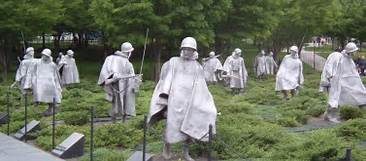
On a weekend in which we honor America’s veterans, Nehemiah reminds us that our nation needs men and women who are willing to stand the wall in defense of home and all it represents.

On a hillside overlooking the Potomac River in Arlington Cemetery, rests the Tomb of the Unknown Soldier. On that spot on November 11, 1921, the United States Army interred the remains of a soldier who died in World War I, a man whose name was lost to history. The first unofficial Armistice Day ceremony came about as an international recognition of the end of the great war just three years prior.

Years later in 1956, after two more major conflicts made it clear that the “war to end all wars” failed to keep its promise, President Dwight Eisenhower changed the name of the holiday to Veteran’s Day to honor all men and women who serve our nation in times of peace or war.

I not sure our nation ever does enough to adequately thank the men and women who serve or have served in our armed forces. Their sacrifice on behalf of our nation is unequaled. They simply go where they are sent and stand between our nation and those who wish to harm us and our way of life.

Most veterans I know speak rarely of their experiences. My father served in the U.S. Navy during World War II. Three of my uncles served in our nation’s military. One in the Marines in Korea. Two in the United States Army, serving in Vietnam and in Europe during the Cold War. A nephew, a U.S. Marine, served two tours of duty in Iraq. None of them talk much of their experiences unless it is to speak of the close friendships they developed during those difficult times.

Most veterans I know seem truly humbled by their service, deferring their honor for those whose sacrifice they believe to be greater than their own. They find themselves choked with emotion for those who gave the ultimate sacrifice at the call of their country.

John Quincy Adams, the fifth president of the United States, echoed the sentiments of many veterans as they reflect on their years of service. Adams said, “You will never know how much it cost my generation to preserve your freedom. I hope you make good use of it.”

It is quite possible that each generation of Americans shares John Quincy Adams feeling that the succeeding generations will never understand the true cost of freedom. Whether it was the baggage of Vietnam or the social upheaval of the day, my generation, as a whole, failed at the time to offer the respect to our nation’s Vietnam veterans. I’m grateful that sentiment has changed in recent years.

Despite today’s anthem protests that have been blown out of proportion, I am strongly encouraged by the patriotism displayed by the younger generation of Americans. Though more culturally diverse, most seem more keenly aware of the cost of freedom and more deeply respectful of the veterans who ensure its future with their service. Each of us bears the responsibility and obligation to, as Adams said, “make good use” of the freedoms they defended through sacrifice and death.

Yet one only needs to spend a few minutes talking to a veteran to know that in the heat of combat, the lofty ideals of freedom give way to the brotherhood of service. Nehemiah understood it clearly when he placed the men on the wall. He did not ask them to fight for Jerusalem or Judah. There was no rally cry of freedom. He asked only that they trust in the power of the Lord and “fight for your brothers, your sons and your daughters, your wives and your homes.”

Jesus, who himself offered the ultimate sacrifice for all of us, told his disciples, “Greater love has no one than this, that he lay down his life for his friend.” It is this attitude of self-sacrifice that lies in the heart of every veteran I have ever known.

A simple “thank you” to our nation’s veterans seems grossly inadequate for the years of service and sacrifice, so I couple my gratitude with my deepest respect and honor. I offer my personal thanks to my family, Gene Lewis, Bill Mills, Leslie Lewis, Ovid Lewis and Erich Schoeffler, and a host of friends who served faithfully and without fanfare.

For all those men and women who stood on the wall for our sake, and all those currently serving around the world, may God bless you and keep you. For the rest of us, let’s make good use of the freedom they helped secure.

*****

Looking for gifts for Christmas. Consider the books written by Dr. Kirk Lewis. Dr. Grear Howard of Truett Seminary said, “Lewis brings genuine humanity to historical Bible stories. To borrow a phrase, his devotional stories ‘comfort the afflicted and afflict the comfortable.’ He sketches out God’s power in these stories, but perhaps more importantly, Lewis shouts to the reader God’s presence in all these interactions.”

Order “Put Away Childish Things” and “The Chase: Our Passionate Pursuit of Life Worth Living” from Amazon.com or barnesandnoble.com.