Treasuring and Pondering

Focal Passage: Luke 2:19

Mary, did you know
that your baby boy would one day walk on water?
Mary, did you know
that your baby boy would save our sons and daughters?
Did you know
that your baby boy has come to make you new?
This child that you delivered
would soon deliver you.

Those words written by Mark Lowry, a comedian, singer and songwriter long associated with the Gaither Family, are the first stanza of what has become my favorite Christmas song. Many artists have recorded it since it was written, but Lowry sings it with unequaled passion.

In the bridge, Lowry’s words to Mary speak of the work of Christ in a building crescendo.

The blind will see.
The deaf will hear.
The dead shall live again.
The lame will leap.
The dumb will speak.
The praises of the lamb.

The as the song closes, the words ask Mary one last question before providing the resounding answer.

Did you know that your baby boy
Is heaven’s perfect lamb?
The sleeping child you’re holding is the great I AM!

Mary, did you know?

*****

The young mother listened to the hearty giggles of her toddler as the boy’s father tossed him playfully into the air, catching him with calloused hands. She laughed to herself as this manly carpenter cooed in baby-speak. She shook her head in awe and returned to the preparation of the evening meal.

The routine task of grinding the wheat into flour for the evening bread freed her mind once again to reflect on the life God had given her.

Luke, the Bible’s historian, put it this way.

But Mary treasured up all these things and pondered them in her heart. (Luke 2:19)

Mary, did you know?

That one little verse, often overlooked, comes at the end of the beloved Christmas narrative. Long after Jesus’ birth, long after the shepherds returned to their fields and flocks, Mary treasured and pondered.

Mary, did you know?

Long after Jesus’ dedication when Simeon praised God for allowing him to see God’s salvation, Mary treasured and pondered.

Mary, did you know?

Long after Anna, a prophetess who served in the temple, took one look at Jesus and told everyone who would listen that this was the child who would bring redemption to Jerusalem, Mary treasured and pondered.

Long after the wise men found a new route home, Mary treasured and pondered.

Mary, did you know?

On that day I imagined, as Mary kneaded the dough and Joseph and Jesus played, what did she treasure? What did she ponder?

Think back to the night the angel told Mary what God planned for her. She would bear a son who would be the Son of the Most High; a son who would reign over the House of David forever. Later, her aunt Elizabeth, filled with the Holy Spirit, reaffirmed the miraculous birth as she called Mary blessed among all women.

Through an immaculate pregnancy and an ordinary birth, Mary saw it all come true, just as God promised. In those first few years, surely the whole experience seemed surreal, almost beyond belief. Mary took it all in. Tried to make sense of the inexplicable. She treasured and she pondered.

The Greek verb translated treasured in this passage doesn’t mean to just remember. It means to carefully preserve, to guard or keep something alive for future understanding.

You and I have had 2,000 years of history. We can hold God’s word in our hand and read the unfolding of his redemptive plan that began its climactic work in a Bethlehem manger.

Two or three years after that day, Mary was still trying to wrap her arms around it. So much of what happened must have seemed to her a mystery. So, she kept the experience in her heart as she watched her child grow, keeping her experience real and alive, hoping to one day understand the how and why?

Mary not only treasured, but she pondered.

Thinking is a broad, general process that tends to be quick and practical. I think about what I’m about to do. Pondering takes thinking to a completely different level. Most of us are thinkers. We don’t ponder enough.

Pondering implies lingering thought. Unhurried. Contemplative. Reflective. Inward. When one ponders one weighs significance. Turning something over and over in your heart and mind, It implies a sense of awe and wonder, seeking to find personal meaning.

The Greek word Luke uses in this passage translated as ponder means to actively bring things together. To compare and contrast. To wrestle with a thought toward understanding. That’s different from daydreaming or passively reflecting on something.

You see, Mary, like any mother, carried fond memories of her child’s birth. The journey from Nazareth. The discomfort of a donkey ride. The worry about finding a place to stay in a crowded city. The pain of childbirth. The pure joy of holding her son in those first magical moments. That’s the precious memory of motherhood.

When Mary pondered, she intentionally reflected on all that was said and all that happened, trying to fit the pieces together. Wrestling with its meaning. Mary wanted to make sense of what felt unexplainable. Mary looked at everything she had experienced to that point…everything we understand as our Christmas story…and treasured and pondered what it all meant.

Mary, did you know?

To her credit, Mary never demanded immediate understanding. Never insisted that if God wanted her participation, he needed to read her in fully on the plan. Mary thought about it…a lot…I imagine. Despite not fully grasping the significance or the how and why, Mary accepted her role in God’s plan with such deep faith and trust.

There it is! In the middle of Mary’s treasuring and pondering lies the lesson I needed as the Advent candles are snuffed out and we pack away the manger for another year.

On this side of Christmas, what do we know? What must we treasure? What must we ponder?

God is at work in my life. He has been at work, is now at work, and will be at work in my life until the day he calls me home. I truly believe that. I have a tendency, though I suspect most of us do, to demand from God an immediate explanation for the things happening in my life…good or bad. I tend to pray for answers before I am willing to act.

I test. I don’t always treasure.

I think. I don’t always ponder.

Mary trusted that God was at work in and through her life, even if she didn’t always know why or how things were going to work out. Her faith held on to and accepted the mystery rather than disregarding it, or worse still, trying to change it. Most importantly, Mary trusted that understanding would come with time and obedience. Her role was to keep listening and waiting…as long as necessary.

I need to learn that faith often means actively treasuring and guarding God’s promises that have not yet been resolved with clarity. To hang on to his word. To keep it viable and constantly in my thoughts for future understanding. To be obedient to it without trying to bend it to my will. To trust that the day will come when he opens my eyes to see with reverence and wonder how he has moved throughout my life.

Mary understood that God’s work in her life required spiritual attentiveness…a whole lot of pondering if you will. Most of the life’s lessons God teaches me require me to wrestle with them until what he is trying to teach me starts making sense. He asks me to dig deeper. To seek his truth. The water of life rarely comes from a shallow well.

Treasuring and pondering take time. What God begins in our lives one day will unfold, but it will unfold in his time, not instantly, but when the time is right. He asks us to wait faithfully on his timing. That’s never easy to do.

When God’s work surpasses our understanding, we are invited…like Mary…to treasure and ponder his work in our lives.

That seems to be the perfect message for the coming New Year.

I will mediate on your precepts and will fix my eyes on your ways. (Psalm 119:15)

Thinking (Pondering) Points

What has God done in my life recently that I need to slow down and ponder?


What practices in my faith walk help me treasure God’s work instead of casually dismissing it?


In what ways does Mary’s quiet, reflective faith challenge my tendency to seek quick answers?


How might God be shaping me during times when he asks me to wait and reflect rather than act?
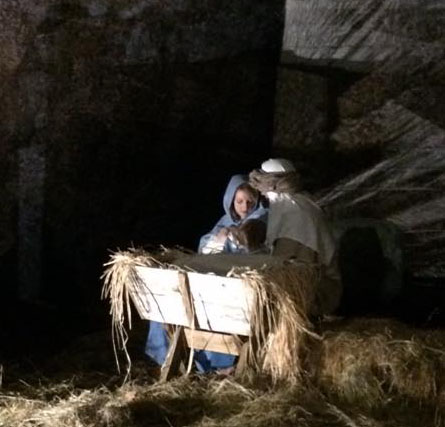
The Word Became Flesh

Focal Passages: Luke 2:1-14; John 1:1-14

There is no expectant mother traveling to a distant village.

No Bethlehem.

No inn, crowded or otherwise.

There are no shepherds tending their sheep in the fields.

No angels proclaiming good news and glad tidings.

There is no star. No wise men from the east.

There is no baby, wrapped in swaddling clothes and asleep in a manger.

That’s Luke’s story to tell.

When he wrote his gospel, John takes the Bible’s Christmas story to a different level, focusing not on the earthly scene, but on the eternal reality it represents. The first Chapter of John tells the Christmas story from heaven’s viewpoint.

While Matthew and Luke describe how and where Jesus was born, John explains who Jesus was and is: the eternal Word…the Creator…the Light entering darkness…God becoming flesh.

John tells us about the one who came into the world to give us the right to become children of God.

If Matthew and Luke give us the method by which Jesus came to live among us, John shares the divine meaning and purpose behind the baby in a manger. He tells us why. It is no less a Christmas story than the one that will be repeated a million times in the days to come.

In the beginning was the Word, and the Word was with God, and the Word was God. He was with God in the beginning. Through him all things were made; without him nothing was made that has been made. (John 1:1-3)

It’s difficult for finite minds like ours to grasp the true nature of God. John sees the one he calls “the Word” not as an idea or thought, but as the living expression of God himself. The Word did not observe creation from a distance. The same hands that formed the stars would be wrapped in human flesh, grasping the offered forefinger of his mother. The voice that spoke with such clarity as it spoke the universe into existence, would cry in hunger in the middle of the night.

John viewed Jesus as the word of God. God’s revealed word. Present as God and with God from the time before creation.

Christmas is not merely the story of a baby being born—that happens every day. Christmas is the story of the Creator choosing to identify with you and me in every way. Choosing to draw near to his creation, not in the magnificent and extraordinary, but in the mundane and ordinary. The Word chose to come quietly and humbling, as a child.

In those days Caesar Augustus issued a decree that a census should be taken of the entire Roman world. (This was the first census that took place while Quirinius was governor of Syria.) And everyone went to his own town to register. So Joseph also went up from the town of Nazareth in Galilee to Judea, to Bethlehem, the town of David, because he belong to the house and line of David. He went there to register with Mary, who was pledged to be married to him and was expecting a child. (Luke 2:1-5)

An emperor’s powerful decree set history in motion, another phase of God’s ordained and eternal plan. The dusty roads of Galilee and Judea brought a young couple on the path of ancient prophecy. Not human administration, but divine orchestration.

Bethlehem, a small, easily overlooked village, would become the agent of God’s purpose. The Word who shaped time and space, now entered it. A heavenly throne morphed into a manger.

While they were there the time came for the baby to be born, and she gave birth to her firstborn, a son. She wrapped him in cloths and placed him in a manger, because there was no room for them in the inn. (Luke 2:6-7)

No trumpet sounded. No palace gates opened. No one rolled out the red carpet. The Son of God arrived in silent wonder. The Word rested where animals fed. Swaddled in soft and simple cloth, held by the trembling arms of a first-time mother. The world he made had no room for him. His creation failed to recognize his presence.

Heaven, however, watched closely every moment. Heard every cry that echoed with the sound of redemption. Light had entered the darkness.

In him was life, and that life was the light of all men. The light shines in the darkness, but the darkness has not understood it. The true light that gives light to every person was coming into the world. He was in the world , and though to the world was made through him, the world did not recognize him. He came to that which was his own, but his own did not receive him. (John 1:4-5,9-10)

A child was born. He arrived as light and life. Where sin cast its long shadow, he brought truth. Where fear held sway, he brought hope. Where death claimed victory, he brought life.

Shrouded in darkness, the world did not welcome him, but it could not extinguish the light. Heaven chose to amplify it.

That Light arrived not in palaces or courts…not as a gift for kings or a performance limited to the world’s elite. No. It arrived in fields beneath the open sky, announced to unassuming shepherds working in the fields.

And there were shepherds living out in the fields nearby, keeping watch over their flocks by night. An angel of the Lord appeared to them, and the glory of the Lord shone around them, and they were terrified. But the angel said to them, “Do not be afraid. I bring you good news of great joy that will be for all the people. Today in the town of David a Savior has been born to you; he is Christ the Lord. This will be a sign to you: You will find a baby wrapped in cloths and lying in a manger.” Suddenly, a great company of the heavenly hosts appeared with the angel, praising God and saying,

Glory to God in the highest,
And on earth peace to men
on whom his favor rests.”
(Luke 2:8-14)

While the world slept, heaven danced. While the earth remained deaf to the Word, the angels sang. Hear God tell you the same thing he told the shepherds. “Do not be afraid.” Celebrate the good news. Embrace the joy God offers all of us. A savior has been born…Christ the Lord. When your heart’s darkness gets driven out by the light, you can give glory to God. You can find the peace God that only comes from becoming a child of God.

Yet to all who received him, those who believed in his name, he gave the right to become children of God…The Word became flesh and made his dwelling among us. We have seen his glory, the glory of the one and only who came from the father, full of grace and truth. (John 1:11-12,14)

On that night in Bethlehem, grace lay in a manger and truth had a heartbeat. God entered our world to live as we live. To experience what we experience. To show us how to live. To be the Word and Light.

The baby with no permanent place to stay came to bring us home with him. To embrace us as his children.

The Christmas story as told by Luke and amplified by John is the penultimate chapter in what Archbishop Fulton Sheen called “the greatest story every told.” A story culminated with Jesus’ sacrificial death and resurrection. It is God’s gift to you and me.

For God so loved the world, that he gave his one and only son, that whoever believes in him shall not perish, but have eternal life. (John 3:16)

Author’s Note

The world needs Christmas. I hope you find the time to ease the frenetic pace to a slow walk with family and friends. Set aside the worry and the uncertainty and enjoy the moment. I pray that you experience those quieter moments this holiday season.

The world needs Christmas. Not the tinsel and the trees, but the peace and goodwill about which the angels sang. This year may God give you a genuine sense of his presence and his love not just on Christmas morning every day thereafter. May realizing his presence and love bring you and yours his peace and goodwill.

Merry Christmas!

Thinking Points

John presents Christmas from heaven’s perspective, less about the person of Jesus and more about his purpose. How does viewing Jesus as the eternal Word change the way you understand the meaning of Christmas in your own life?


“The world did not recognize him.” In what ordinary, quiet, or unexpected ways might Christ be present today that you are tempted to overlook or ignore?


The angels announced peace to those on whom God’s favor rests. What fears or burdens might you need to release this Christmas in order to truly find the peace Jesus came to bring?

The Prophets’ Christmas

Focal Passage: Isaiah 7:14 & 9:6-7; and Micah 5:2-5

It’s the Christmas season. The time when God stepped into the world with love, grace, humility and hope.

Through the years, I’ve written about Christmas from every angle and angel. I’ve studied the coming of the Messiah through the eyes of his earthly parents, the shepherds, the magi, and paranoid Herod, a priest name Simon and an elderly, devout woman named Anna. I’ve even written a more fanciful piece about the birth of Jesus from the eyes of a lamb.

As I looked to begin my study this year of the moment God sent his son into the world, I want to look at that moment from the eyes of the Old Testament prophets.

Scripture teaches that the moment God opted to grant humanity free will, he knew we would use that freedom to rebel against his plan for our lives. From the beginning of time, then, God had to find a way to bring his lost children back to him, despite the spiritual abyss we would create between us and God by our sinfulness. Before he put the world in place and set it spinning on its axis, he planned on Jesus.

Look at what Paul tells Timothy.

He has saved us and called us to a holy life—not because of anything we have done but because of his own purpose and grace. The grace was given to us in Christ Jesus before the beginning of time, but it has now been revealed through the appearing of our savior Christ Jesus who has destroyed death and brought life and immortality to light through the gospel. (2 Timothy 1:9)

Redemption was not an afterthought or a Plan B. It was purposeful and intentional. Therefore, God needed to convince us of our need for him and introduce to us the one he would send to show us the way home.

Enter the prophets. As God gave them words to speak, he wove through their prophecies a thread of redemptive hope with its beginnings in a Bethlehem manger.

The prophets lived centuries apart from one another. They lived amid completely different circumstances. Led different lives. Wrote in different eras. Served up judgment on a platter to different kings. They spoke God’s word of divine judgment, repentance and restoration to different generations.

Much like the blind men discovering an elephant, each prophet understood God’s Anointed One in part, but never in whole.

They never met Mary or shook the hand of Joseph. They never heard the angels sing. They never walked the streets of Bethlehem. They never felt the joy the shepherds felt. Never marveled alongside the magi. Never held the baby in their arms. Never saw what they foretold come to pass.

Yet, thanks to a revelation from God’s spirit, they all pointed in somewhat different ways to the same moment; to the same someone. They saw who he would be. Knew what he would do. Understood the titles he would carry. They all spoke of Jesus, even when they never knew his name.

And on the night Jesus was born, their words—scattered across centuries—were suddenly fulfilled in the form of a swaddled infant, in the outskirts of an obscure village, in a makeshift crib filled with hay.

The Word became flesh and made his dwelling among us. (John 1:14)

That moment began the fulfillment of every prophetic word spoken for hundreds of years prior to that first Christmas morning.

Isaiah’s Whisper

The prophet Isaiah’s prophetic message almost 750 years before the birth of Jesus came at a time of national fear. His people faced a looming and hostile invasion, political collapse and spiritual confusion. In that sense, Isaiah’s words feel like a quiet voice spoken in a dark moment. Almost a whisper carried to people who were afraid of and unsure about the future.

While he warned of judgment and called for repentance, he promised that God had not forgotten them. He shared with them the hope of the Messiah and the arrival of the kingdom of God. Isaiah spoke about a miraculous moment in time.

A virgin will conceive and bear a son; and they will call his name Immanuel. (Isaiah 7:14)

God’s message through Isaiah didn’t stop there, as if the miraculous birth was the climax of the Creator’s eternal work. God revealed to his prophet another nuanced layer.

To us a child is born, to us a son is given, and the government will be on his shoulders. He will be called Wonderful Counselor, Mighty God, Everlasting Father, Prince of Peace. Of the greatness of his government and peace there will be no end. He will reign on David’s throne and over his kingdom establishing it and upholding it with justice and righteousness from that time on and forever. The zeal of the Lord Almighty will accomplish this. (Isaiah 9:6-7)

Isaiah’s prophecies waited for more than seven centuries. On the night of Jesus’ birth, his words were no longer ink on faded parchment. His words were a baby, born to a faithful carpenter and young woman whose heart found favor with God.

Micah’s Confidence

The prophetic ministries of Isaiah and Micah overlapped in time and circumstance. Micah saw the same corruption in Jerusalem. Felt the same fear of an Assyrian invasion. Yet, he confidently condemned the injustice he saw among leaders and spoke of the pending judgment upon a people who had turned their backs on God.

He stood in the gap and told the people that, despite the hardships to come, God promised a future ruler from Bethlehem who would be their good shepherd and herald a time of peace. This “messianic hope” appears especially in Micah 5:2–5, spoken as reassurance that God would raise a true king after Israel’s failed leadership. Look at the words God gave him to speak.

But you, Bethlehem Ephrathah, though you are small among the clans of Judah, out of you will come for me one who will be ruler over Israel, whose origins are from the old and ancient times. He will stand and shepherd his flock in the strength of the Lord, in the majesty of the name of the Lord his God. And they will live securely, for then his greatness will reach the ends of the earth. And he will be our peace… (Micah 5:2, 4-5)

For generations, the small and unimpressive village of Bethlehem sat unnoticed in the Judean hillside, but God, 700 years before, had written its future. Bethlehem would play a role in God’s plan through the cries of an unlikely king and the redemptive work of Jesus Christ.

Though many other prophets shared God’s word about the ministry and mission of the coming Messiah, Isaiah and Micah are the only two who described details of his birth. Did any of these prophets fully understand the whole picture? I doubt it.

Do you remember when Jesus sent his disciples throughout Galilee, telling them they would be given power to preach and to heal in his name? They returned from that first century mission trip amazed how God had used their preaching and ministry to bring salvation to so many people.

After praying a prayer of gratitude to the Father for the work they had done, Jesus, filled with joy, pulled his disciples aside. Listen to what he told them.

Then he turned to his disciples and said privately, “Blessed are the eyes that see what you see. For I tell you that many prophets and kings wanted to see what you see, but did not see it; to hear what you hear but did not hear it. (Luke 10:23-24)

So, if the prophets never saw or heard the whole picture, why do they matter? Why do the partial images they revealed about Jesus’ birth and life and death and resurrection matter to you and me on this side of that first Christmas?

It matters because Christmas is not an isolated event. It is the beginning of the rest of the story.

Every promise—
every symbol—
every sacrifice—
every prophecy—
every hope—

pointed toward Bethlehem and Immanuel, God with us.

The prophets did not live to see it, but you have. Listen to John’s words again.

The Word became flesh and made his dwelling among us.

Then, look again at the words of Jesus.

Blessed are the eyes that see what you see. Blessed are the ears that hear what you hear.

You see, Isaiah’s world was not a lot different from our own. Hostility. Political uncertainty. Spiritual confusion. His words still feel like a quiet whisper spoken in a dark moment to people unsure of the future.
His message does not change.

To you a child is born. To you a son is given.

Can you see it? Can you hear it?

That’s Christmas!

If you are a believer in Christ, the prophets words link the past to your present. God’s promises are your truth. They are confirmation of God’s plan of redemption through the baby in a manger who grew to be your substitute on a cross–the living and resurrected Jesus. You are blessed to have seen what you have seen and heard what you heard.

If your Christmas lacks the meaning you see in those who believe, the visions of the prophets are your markers. The waypoints on a spiritual journey that will reveal the depth of God’s love for you in the truth of Jesus Christ. The promises of the prophets are fulfilled in Jesus. Their longing can be your joy as it is mine. See it. Hear it. Your blessing awaits.

Let this be our Christmas prayer for 2025.

“Lord, thank you for speaking through the prophets and for fulfilling every promise in Jesus. Let the hope that sustained them also sustain me. Teach me to trust your timing and rejoice that your Word always becomes flesh. Amen.”

Thinking Points

How does thinking about Christmas through the voices of the prophets deepen your understanding of God’s long-planned redemption?


How has the Word “become flesh” in your personal story? In what ways has that baby in a manger changed your heart and your world view?


What keeps me from recognizing the blessings I already “see and hear,” blessings the prophets longed for but never experienced?


How might embracing the continuity between the prophets’ longing and Christ’s coming reshape the way I enter this Christmas season?

Gold, Frankincense & Myrrh

Background Passages: Matthew 2:1-12

They have been called, throughout history, magi, wise men, astrologers and kings. While a great many of these royal counselors were sycophants and charlatans trying to stay in good graces with their kings, some were, indeed, learned men, scholars, faithful royal counselors.

Scripture typically paints an ugly picture of astrology, often mocking those who practiced the pseudo-science. (See Jeremiah 8:2 or Isaiah 47:13-15) It is somewhat remarkable that men of this ill-considered standing within the Jewish community found their way to the Bethlehem home of Mary and Joseph, intent upon laying their gifts at the feet of the newborn king of Judea.

Some biblical scholars suggest that God reversed the normal Jewish expectations and drew the stargazers to Judea to open the door, just a crack, for his desire to call Gentiles to Jesus.

Popular images of the magi clash with Matthew’s account. The Christmas hymn We Three Kings gives them titles they did not earn. They were counselors, not kings.

While the travelers from the East brought three gifts, the exact number of wise men who came is not revealed. What is clear in scripture is their numbers were sufficiently large and their quest so politically charged, given Herod’s insecurities, that it clearly created a disturbance throughout Jerusalem.

After Jesus was born in Bethlehem in Judea, during the time of King Herod, magi from the east came to Jerusalem and asked, “Where is the one who has been born king of the Jews? We saw his star when it rose and came to worship him.” When King Herod heard this, he was disturbed and all of Jerusalem with him. (Matthew 2:1-3)

The thought of a new king in the pipeline was an anathema to the paranoid Herod, but it drew a murmur of hope among the Jewish people eager to have a king to push out the Roman occupiers.

It’s a story you know because we see it played out in every Nativity scene. After their visit to the palace, the wise men journeyed on a few more miles to Bethlehem. There they found the toddler Jesus and his parents who had escaped the stable and found more permanent residence in a small house in the village.

On coming to the house, they saw the child with his mother Mary, and they bowed down to worship him. Then, they opened their treasures and presented him with gifts of gold, frankincense and myrrh. (Matthew 2:11)

Throughout history, giving gifts to a king was a long-standing practice. It served as a sign of respect and honor given to one who bore the title and responsibilities of king.

I Kings tells us that the Queen of Sheba brought a caravan of gifts to the newly crowned King Solomon in Israel.

And she gave the king 120 talents of gold, large quantities of spices and precious stones. Never again were so many spices brought in as those the Queen of Sheba gave to King Solomon. (I Kings 10:10)

Within Isaiah’s bold predictions about the coming Messiah, he speaks of these gifts.

They will bring gold and frankincense and proclaim the praises of the Lord. (Isaiah 60:6b)

Though I find them interesting, it’s not the magi who intrigued me this week, but their gifts. Gold. Frankincense. Myrrh.

If Matthew, under the inspiration of the Holy Spirit, took the time to specifically record the gifts, there must be a reason why. Each gift, according to folks smarter than me, matched some characteristic of Jesus and his work.

Gold has always been a precious and valuable metal. Gold was made into crowns, stamped and made into coins to be used as currency, and shaped into jewelry. The wise men brought gifts to a king. We can see the connection between gold for a king and Jesus as the King of Kings. They worshipped him as such.

What about the frankincense? Why is this one of their chosen gifts? Frankincense was used by Jewish priests in temple worship and burned as a sweet offering to God. It may be symbolic of the High Priest role Jesus assumes in our hearts. It is also a gift of worship, recognizing Jesus’ divine nature. Seeing him as one worthy of worship, honor and praise.

Then, there is the myrrh, a perfume connected with death and used in the burial process. In Mark, myrrh, mixed with wine, is offered to Jesus as he languishes on the cross. When the women who followed Jesus went to the tomb on that Easter morning to anoint his body, they carried myrrh with them.

While it is an odd gift to give a child, scholars see it as a hint toward Jesus’ sacrificial death. A gift to anoint his body in preparation for burial.

The scholars are probably right to share what those gifts meant symbolically for Christ. As our King of Kings. As one worthy of worship and praise. As one who came to give his life for the salvation of all who would believe.

The gifts point to who Jesus is. How he would live. What he would ultimately do for all of us.

Still, you know me, I read outside the box and between the lines. My journey to Jesus was not as arduous as the one experienced by the magi thanks to the godly examples of my Mom and Dad.

Though I came to him from West Texas, I still must come to him bearing gifts. If Jesus reigns as my King of Kings, what “gold, frankincense and myrrh” can I bring to him today?

What is my gold?

I could speak of tithes and offerings…returning to God a financial portion of that with which he has blessed me and my family. While I need to do that, I think it’s more than just that.

Gold was that thing valued most in the ancient world. A precious gift fit for a king. Bringing gifts of gold acknowledged the kingship of the one who sat on the throne. Maybe my gold is my willingness to declare Jesus as savior. Not just in that initial faith decision, but in the choice to make him the daily boss of my life. To yield and surrender my will to his each and every day. To declare him my Lord and king.

Then Jesus said to his disciples, “Whoever wants to be my disciple must deny themselves and take up their cross and follow me. For whoever wants to save his life will lose it, but whoever loses his life for me will find it. For what good will it be for someone to gain the whole world but forfeit his soul. (Matthew 16:24-26a)

This is the first nugget of gold I present to Jesus—my heart, my life presented to Christ as I declare him Lord. It is not, however, my last golden gift. Once I declare Jesus as Lord, I give him a life of devotion and obedience.

Do not offer any part of yourself to sin as an instrument of wickedness, but rather offer yourselves to God as those who are brought from death to life and offer every part of yourself to him as an instrument of righteousness. For sin shall no longer be your master because you are not under the law, but under grace. (Romans 6:13-14)

This is the second nugget of gold to lay at the savior’s feet—that the life I offer him becomes an instrument of righteousness.

What Jesus told his disciples and what Paul declared to the Romans is pure gold for my life today. Gold any wise man would give to the Christ-child this Christmas.

What is my frankincense?

The gift of frankincense is about worship, honor and praise. God breathes the sweet aroma of my frankincense when I spend quality time with him. Do I spend time studying his Word and learning how his word applies to my life circumstances? Do I have the kind of conversations with him that reveal my heart and take the time to listen to his spirit? Does my time at church in fellowship with other believers and my time in fellowship with the world around me point always to God? Is the time I give him quality time in devotion and service to him?

This frankincense attitude is the message Paul left with the Ephesians. We give our time and energy to God because he will take that time and do so much more than we think possible. It is to his glory and honor and praise.

Now to him who is able to do immeasurably more than all we ask or imagine, according to his power that is at work within us, to him be the glory in the church and in Christ Jesus throughout all the generations, forever and ever, Amen (Ephesians 3:21-22)

You see, worship is never about us. It is not whether I enjoy the music or the sermon. Worship is about giving glory, honor and praise to God with our whole being…heart, mind, body and soul. It’s about listening for his word, allowing it to make a difference in how we live and treat others.

What better way to worship him and give glory to his name than to walk in his ways? To set aside my own will for his will. To no longer think or act as the world does, but to change my mind and heart to mirror the mind and heart of God.

Therefore, I urge you, my brothers and sisters, in view of God’s mercy, to offer your bodies as a living sacrifice—holy and pleasing to God—this is your true and proper worship. Do not conform to the pattern of this world, but be transformed by the renewing of your mind. Then, you will be able to test and approve what God’s will is—his good, pleasing and perfect will. (Romans 12:1-3)

Presenting my all as a living sacrifice is my frankincense offering to the one who has given me everything.

What, then, is my myrrh?

The myrrh given by the magi represented the sacrificial life and death of Jesus. His great sacrifice of love.

You see, the other gifts of gold and frankincense…my commitment to Christ as savior, my decision to follow him, my choice to worship him in every aspect of life…will be less meaningful if my life is not lived in sacrificial love…my myrrh. Paul says to live without love for God and others is a “clanging cymbal.” All noise. No substance.

The myrrh I give my Jesus means to pour myself unselfishly into the lives of others. To love unconditionally and sacrificially. It is the way Paul chose to serve.

Even if I am to be poured out as a drink offering upon the sacrificial offering of your faith, I am glad and rejoice with you all. Likewise, you also should be glad and rejoice with me. (Philippians 2:17)

Like Paul, our labor for Christ….our gift of myrrh to him…is to pour ourselves into the lives of fellow believers and non-believers. To love them in ways that open the doors for them to come to know Christ as savior and to serve him faithfully.

This is our gift of myrrh.

Committing our life to Christ, worshipping him as one worthy of our praise and adoration and loving unconditionally, without reservation, requires sacrifice of our own desires, our own time, our own energy and effort. It is not easy. The cost of such discipleship is high. Jesus said as much.

Here’s the deal, though. When we give our gold, frankincense and myrrh to Jesus, he does the heavy lifting for us. He offers rest.

Come to me all you who are weary and burdened, and I will give you rest. Take my yoke upon you and learn from me, for I am gentle and humble in heart, and you will find rest for your souls. For my yoke is easy and my burden is light. (Matthew 11:28-20)

The wise men laid their precious gifts at the feet of a two-year-old child in a hovel of a home in Bethlehem, worshipping him as the king.

Their example poses a question for you and for me.

Will you bring your gold, frankincense and myrrh to Jesus?

Peace and Goodwill

Background Passages: Luke 2:9-14; Philippians 2:5-8; Ephesians 2:8; John 14:27; Isaiah 26:3; Philippians 4:11-13

You may know Henry Wadsworth Longfellow as the author of The Song of Hiawatha or Paul Revere’s Ride. One of America’s best and most prolific poets, Longfellow penned many poems, novels and anthologies. I found out recently that he also translated many European literary works into English, including Dante’s The Divine Comedy.

Like many poets, Longfellow experienced his fair share of tragedy. His first wife, Mary Potter, died suddenly while he was overseas. After a long courtship, he married Mary Frances Appleton in 1843. Together, they had six children. By all accounts, the marriage was a happy one until Frances died tragically in a fire in 1861.

With the outbreak of the American Civil war, Longfellow became a stout abolitionist. His oldest son, Charley enlisted on the Union side only to be wounded severely. In December of 1863, Longfellow found himself entering the Christmas season as a widower, with five dependent children and his oldest son on the brink of death.

As he tended to his son’s wounds, imagining the sounds of gunfire and cannon that injured him, he heard the bells of the local church ringing on Christmas morning. Longfellow sat down that evening, intent upon losing himself for a few hours in his writing. The result of that late night session was a poem entitled, I Heard the Bells on Christmas Day. Throughout the poem, the poet seemed to believe that the strife of the world had drowned out all hope of peace on earth and driven out any semblance of goodwill toward men.

Until he penned the last verse.

Then pealed the bells more loud and deep:
“God is not dead, nor doth he sleep;”
The Wrong shall fail,
The Right prevail,
With peace on earth, goodwill to men.

A few years later, the poem was set to music by British organist John Baptiste Calkin, becoming the familiar Christmas carol we know today.

The song, particularly the version sung by Casting Crowns, is beautifully poignant, confronting us of the turmoil of our world while also reminding us that God, through his son, offers peace and goodwill to a troubled world. Luke, the gospel writer, introduces the phrase to us in his account of the birth of Jesus. However, I might suggest to Longfellow that the phrase does not mean what you thought it meant.

When the angels sang their praise, they were not exalting God for bringing about the absence of conflict and harmony among all people. They were praising the father for his steps in bringing about, as Paul says in Philippians 4:7, “a peace that surpasses all understanding.”

Let’s take a closer look at the story as it develops.

After Mary gave birth in the dingy confines of a cave turned stable, God sent an angel…one angel…to announce the birth of his son to shepherds tending their flock in the hills overlooking Bethlehem.

An angel of the Lord appeared to them, and the glory of the Lord shone around them, and they were terrified. But the angel said to them, “Do not be afraid. I bring you good news that will cause great joy for all the people. Today in the town of David a Savior has been born to you; he is the Messiah, the Lord. This will be a sign to you: You will find a baby wrapped in cloths and lying in a manger.” (Luke 2:9-12)

It is after this initial explanation that the angelic host appeared singing in heavenly harmony.

Suddenly a great company of the heavenly host appeared with the angel, praising God and saying, “Glory to God in the highest heaven, and on earth peace to those on whom his favor rests.” (Luke 2:13-14)

Longfellow and the King James Version deeply ingrained the phrase as “peace on earth, goodwill toward men.” The New International Version of the phrase I used here reads differently. However, it is possibly more accurate to the original Greek, according to biblical scholars.

“Glory to God in the highest heaven and on earth peace to those on whom his favor rests.”

Amid his tragic circumstances, I’m not sure peace and goodwill meant the same thing to Longfellow as it did to Luke. As we enter this season of advent, maybe it’s a good idea for us to consider what the angels proclaimed to the shepherds with such joy and happiness.

First, the object of their apparent joy was not the anticipated peace and goodwill, but God who reigns in the highest heaven. By sending his son as a baby born in a lowly manger, God finally put in motion his path of redemption which he had planned before he breathed life into his creation.

Jesus, God’s son, would live his life among us, demonstrating how we are to live the life that God envisioned for us, ultimately giving his life in exchange for my sin and yours.

As Paul is urging the Philippians to model their lives after Christ, he tells them:

…have the same mindset as Christ Jesus: who, being in very nature God, did not consider equality with God something to be used to his own advantage; rather, he made himself nothing by taking the very nature of a servant, being made in human likeness. And being found in appearance as a man, he humbled himself by becoming obedient to death—even death on the cross.” (Philippians 2:5-8)

The angels recognized that the child born in Bethlehem was God’s great gift to a lost and troubled world. It would be this baby wrapped in cloth and resting in a manager filled with hay that would through his life, death and resurrection make joy of salvation available and attainable by all people. (See Luke 2:10)

For God so loved the world that he gave his only son that whoever believes in him shall not perish, but have everlasting life. (John 3:16)

It was this act of great love and grace that brought the angels to their feet in rising chorus to give all the glory and praise to a Father/God for what he had just done. The cries of a child in Bethlehem still reverberate through the lives of all who believe.

Glory to God in the highest heaven!

I was reminded again of the beauty of that gift when my eight-year-old granddaughter Lena called us over Facetime to tell us that she had made her faith commitment to Jesus. As I took in the expression of joy on her smiling face, I could hear the angels sing.

Glory to God in the highest heaven, indeed! For every man, woman and child who trusts Jesus as savior, the angels still sing God’s praise. Jesus told us as much in his parable of the lost coin.

In the same way, I tell you, there is rejoicing in the presence of the angels of God over one sinner who repents. (Luke 15:10)

While the heavens were praising God, the angels acknowledged the peace now available to those who find favor with God. That’s an important distinction. The angel who first appeared to the shepherds told them a child was born in Bethlehem who would be the long-anticipated Messiah. He announced it as good news of great joy to all people. The Messiah. Sent by God. Making salvation available to anyone and everyone.

However, peace is the gift offered to those “on whom his (God’s) favor rests.”

Good news offered to all. Peace offered only to those on whom his favor rests. It begs the question then, on whom does God’s favor rest? God’s favor rests on “whoever believes in him,” according to John 3:16. This is the gospel message that the angels shared. This is the good news.

For by grace you have been saved through faith. And this is not of your own doing, but it is the gift of God. (Ephesians 2:8)

I see a connection here through the definition of grace I learned as a teenager. Grace is defined as God’s unmerited or undeserved favor. When I put my faith and trust in Jesus, I entered into right relationship with God only by his grace. Only when he extended this unmerited favor to me upon my faith commitment to him.

Because that grace was extended, because God rests his favor upon me, I find his promised peace. It’s the same peace Jesus promised his disciples in the upper room before he was crucified.

Peace I leave with you. My peace I give you. I do not give to you as the world gives. Do not let your hearts be troubled and do not be afraid.” (John 14:27)

Every person in this world, whether or not he or she is a believer in Christ, longs for peace. The difference in the peace of a believer and a nonbeliever is where they acquire their peace. A nonbeliever depends on his own resourcefulness or his own resources. He seeks peace through social causes, financial gain or temporary distractions.

Believers find peace not from things the world offers, but from God. Where earthly peace depends on circumstances and individual ability, godly peace does not. God’s peace proclaimed and promised by the angels singing to shepherds transcends our circumstances.

We live lives that can in one moment be divine and in the next be dreadful. The peace God provides goes beyond those up and down seasons of life. This ability to find contentment, to live in the moment in the joy of Christ, regardless of life’s circumstance is completely dependent upon the depth of our faith and trust in God’s presence and promise.

Look at what Isaiah said.

You (God) will keep the mind that is dependent on you in perfect peace, for it is trusting in you. (Isaiah 26:3)

God will keep our hearts and minds at peace when we remain dependent upon him in all things by trusting in him through all things. Peace is not surrendering to the circumstance. Peace is surrendering everything in every circumstance to God. Trusting that he will be with us always…even when we “walk through the valley of the shadow of death.”

Paul addressed the issue in his letter to the Philippian church.

I am not saying this because I am in need, for I have learned to be content whatever the circumstances. I know what it is to be in need, and I know what it is to have plenty. I have learned the secret of being content in any and every situation, whether well-fed or hungry, whether living in plenty or in want. I can do all this through him who gives me strength. (Philippians 4: 11-13)

We find peace and contentment only when we know that God will give us the strength we need to live faithfully in any and every situation. It comes when we listen to the words of Jesus when he says, “Do not let your hearts be troubled.” When he says, “Do not be afraid.”

I’m certain you will read the Christmas story this year or have it read to you. I pray that you will not only hear the angels singing to the shepherds, but that you will join them in giving glory to God in the highest heaven for through his son he gives peace to those on whom his favor rests.

As he listened to those bells on Christmas day, Longfellow understood one thing when faced with all the hardships he encountered. “God is not dead, nor does he sleep.” Because he is ever with us, we can give Glory to God on high for the miraculous gift of his son Jesus. The one who brings peace to those on whom his favor rests. To all who believe in his name.

What’s in a Name?

Background Passages: Luke 1: 28-33; Matthew 1:20-23; John 1:1-14; and Philippians 2:6-8

Parents have some options when it comes to naming their children. They can run with family names, names of cultural significance, or simple alliterative names or nicknames that sound good together. They have choices.

I try to help when I can.

When my cousins Paul and Robbie Jo started their family, I suggested Wyatt, as in Earp, and Walker, as in “Texas Ranger.” It took a few years, but Wyatt eventually made the cut.

When my nephew and niece were expecting their second child, I had a dream that Amy gave birth in a school library. Naturally, I suggested Dewey, as in “decimal system.” It’s hard to believe they went with James.

Before my grandson Eli became Eli, Adam pushed hard from some rather unorthodox options. My first-born grandson could have been Theodore Roosevelt Lewis…or Gilgamesh Lewis…Archimedes, Hannibal or Atila Lewis. I know I would have loved him despite the historical or scientific references, but I’m glad he’s Eli.

In her Shakespearean soliloquy, Juliet, pondered “What’s in a name? That which we call a rose by any other name would smell as sweet.”

Juliet’s love for Romeo was imperiled by the family feud between the Montagues and Capulets. Juliet lamented that she would have chosen a different name for either her or Romeo because any other name would smell as sweet and enable them to openly marry. She didn’t have that choice, however.

“What’s in a name?” asks Juliet.

As we transition from Thanksgiving to Christmas, it’s a great question.

With her heart and mind racing, Mary heard the news from an angel that she would have a baby. A most unexpected child, both in conception and timing. Pledged to be married to Joseph, a local builder, Mary and her family were making plans for a wedding day a few months down the road. Before the marriage was consummated, an angel appeared with a surprising word.

“Greetings, you who are highly favored! The Lord is with you.”

Mary was greatly troubled at his words and wondered what kind of greeting this might be. But the angel said to her, “Do not be afraid, Mary. You have found favor with God. You will conceive and give birth to a son, and you are to call him Jesus. He will be great and will be called the Son of the Most High. The Lord God will give him the throne of his father David, and he will reign over Jacob’s descendants forever. His kingdom will never end.” (Luke 1:28-33)

It’s difficult to understand the depth of faith it took to accept all that the angel told her, but Mary gave herself in obedience to what she had heard. After finding a way to break the news to Joseph, the angel had another bewildered and troubled soul to soothe. Joseph, as honorable a man as one could hope to meet, considered the tough decision to dissolve their relationship quietly, giving Mary options to avoid the scorn that would surely come.

He agonized over the decision into the night until the angel came with words or reassurance.

“Joseph, son of David, do not be afraid to take Mary home as your wife, because what is conceived in her is from the Holy Spirit. She will give birth to a son and you are to give him the name Jesus, because he will save his people from their sins.”

All this took place to fulfill what the Lord had said through the prophet. “The virgin shall conceive and give birth to a son, and they will call him Immanuel” (which means, “God with us.”). (Mattthew 1:20-23)

What’s in the name Jesus?

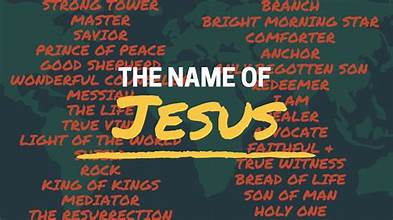
There are many names or titles given to Jesus throughout scripture. Isaiah ran an impressive list of descriptors of the one who would come to save.

He will be called Wonderful Counselor. Mighty God. Everlasting Father. Prince of Peace. (Isaiah 9:6)

Jeremiah refers to the coming “King who will reign wisely” and shares that “This is the name by which he will be called, ‘The Lord is our Righteousness.’”

The descriptors tell us how Jesus would relate to us in our times of need…As counselor amid our troubles. As an all-powerful God amid our weakness. As an eternal father amid our loneliness. As the giver of true contentment and peace amid life’s turmoil. These descriptors speak to his work among us, but the titles don’t tell us much about who he is.

What’s in the name Jesus? Why did God have the angel so strongly make the point that the baby already had a name chosen by his father in heaven since the beginning of time itself? Why were they to call him Jesus.

There is nothing holy or sacred about the arrangement of letters or the phonetic sounds associated with the name of Jesus. Depending on the language one speaks, the name will not sound the same. When it was shared with Mary and Joseph, it was a fairly common name in Judea and Galilee.

Jesus is an English rendering of the Greek name “Iesous,” which is a translation of the ancient Hebrew “Yehoshua.” We see it written also in the English Old Testament as “Joshua.” Jesus. Iesous. Yehoshua. Joshua.

Whether written in English, Greek or Hebrew, the name of Jesus is formed from Hebraic roots suggesting “Jehovah is salvation.” There’s the first hint of who he is. He isn’t some form of salvation. He is salvation personified. While the message would not have been lost on Mary, it was clearly given to Joseph who was told to name him Jesus because “he will save his people from their sins.”

How could this child soon to be born to Mary and Joseph be salvation? How is it possible for this baby to be salvation and ultimately how is it possible for him to achieve what he was sent to do?

Mary and Joseph get this word as well.

While Mary was told to call the baby Jesus, other people will know him as and call him “the Son of the Most High.” Jesus. God’s son. Conceived in her by God’s spirit. Given to her and Joseph to love, care and teach. Make no mistake, though, he is God’s son. While the angel told Joseph to call the child Jesus, he said others will call him Immanuel, “God with us.”

This idea is the message of Christmas found in the gospel of John and reinforced by Paul in his letter to the Philippians.

In the beginning was the Word, and the Word was with God, and the Word was God…The Word became flesh and made his dwelling among us. We have seen his glory, the glory of the one and only Son, who came from the Father, full of grace and truth.” (John 1:1-14)

“Who, being in very nature god, did not consider equality with God something to be used to his own advantage; rather he made himself nothing by taking the very nature of a servant, being made in human likeness. And being found in appearance as a man, he humbled himself by becoming obedient to death—even to death on the cross! (Philippians 2:6-8)

As we end today in the shadow of Thanksgiving and the dawn of the coming Christmas, I find great joy in the name of Jesus. I am thankful to God for sending his son into the world.

Though his life lived 2000 years ago looked markedly different than the life I live today, so much of it still rings the same. The same worries. The same temptations. The same heartaches. The same joys. The same relationships. I’m grateful that through his life he still teaches me how to live. Such remembrance makes this a Happy Thanksgiving.

I find such hope for this Christmas season in the birth of the one God sent as Jesus…the one he promised from the beginning to be our source of salvation. One whose very name reminds me that Jehovah saves. The Son of the Most High. Immanuel. God’s son. God with us. God’s son would be with us.

I find in the name of Jesus the promise of another very Merry Christmas.

Worship and Adore Him

Background Passage: Matthew 2:1-12

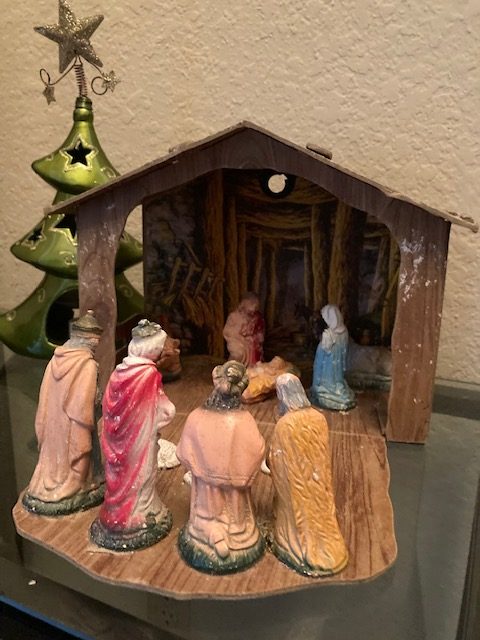
The little fold-up Nativity that sat beneath our Christmas tree when I was a child is now displayed on a small table in the entry of our home. I’m not exactly sure how old it is, but it has been around for as long as I can remember.

Interestingly enough, the old family Nativity appears to show four magi, unless the bald one on the end is a out-of-place shepherd. It’s hard to tell.

That Nativity is one of more than two dozen Nativity sets my wife and I have collected over the years. Almost all of them display the typical scene. Joseph and Mary huddled over the baby in a hay-filled manger, surrounded by cattle and sheep. In a few, you’ll find shepherds off to one side and three wise men bearing their famous gifts of gold, frankincense and myrrh.

It is usually these gifts that give the wise men their claim to fame.
In the case of the magi, maybe it isn’t so much about the gifts. Join me in Bethlehem so many years ago.

*****

The commotion outside brought Joseph to his feet. He and Mary exchanged uncertain looks. Pulling the curtain back, Joseph peaked outside as Mary scooped her toddler in her arms. The baby, unaware of their caution, laughed in delight.

Opening the door Joseph quietly told his wife to remain inside. In the fading light of day, Joseph nodded to his neighbors as they stood in their own doorways, awestruck by the sight of the well-dressed men stepping down from their camels.

The oldest of the men bowed his head and stretched out his arms in greeting. As quiet words were shared, the other men pulled several boxes from the satchels attached to the donkeys carrying their baggage.

“Come,” Joseph said, inviting the men inside his home. The men
stepped through the door of the humble stone house, dimly lit by small oil lanterns. A fire burned in its hearth. The smell of freshly baked bread filled the room.

Joseph crossed the room to stand beside his wife who held a small child on her hip. The child’s large brown eyes darted from his mother to the men, more curious than frightened.

In the quiet broken only by the crackling of the fire, the men stared in amazement at the small boy without speaking. Finally, the elder of the men slowly dropped to one knee, bowing before the child and his family. One by one the others followed their leader until all were on bent knee.

As one they began to offer words of praise and worship to the one they had traveled so far to see…the king they read about in the Hebrew scripture. One by one they shared their offering as tribute…among their gifts were gold, frankincense and myrrh.

In the hours that followed, they told their remarkable story. How they had studied the ancient texts and followed a star, searching for the one who would be king of the Jews.

Mary and Joseph listened. Cherished their words. Affirmed for the visitors their own stories of God’s promises.

As the night grew longer, the men rose to leave, bowing again in worship and adoration before the child, certain in the knowledge that they had found the one for whom they had searched. They knew they found the Messiah.

*****

Almost every manger scene you and I have seen includes three wise men. We sing the popular Christmas carol about the three kings who came to see Jesus bearing expensive gifts. Three kings. Three gifts.

When we read this story in scripture or hear it told, we tend to focus on the gifts. The gold. The frankincense. The myrrh. Reading into each gift a symbol of some deeper meaning.

When we focus on the gifts, I think we miss something fundamental in the story. These magi, these wise men, did not travel the weeks across some 600 miles of awfully desolate land, searching for the king of the Jews, just to bring him gifts.

The desire to worship drove these men to find the Christ child.

What these learned men read in their texts, their interpretation of the star they followed, led them to believe that the child for whom they searched was the “king of the Jews.” Not a king, but the king.

“After Jesus was born in Bethlehem in Judea, during the time of King Herod, magi from the east came to Jerusalem and asked, ‘Where is the one who has been born king of the Jews? We saw his star when it rose and have come to worship him.’” (Matthew 1:1-2)

The phrasing of their question was such that it “disturbed” Herod. As the regional king appointed by the Roman Caesar, a new king would upset his apple cart. The long-promised messianic king who was to set his people free would really throw a wrench into his cushy life.

Herod, fearful of losing his power and position, called together his priests and scholars to ask them where scripture said the Messiah would be born. His reference to the Messiah would seem to indicate that the magi told him they were searching for God’s anointed one.

When their review of scripture pointed toward Bethlehem, he passed the word to the magi, instructing them to find this new king and report back to him so he could also “worship” the Messiah. Herod had no such intentions. He’s intent was to eliminate the competition.

After traveling hundreds of miles, the wise men of the East traveled the last five miles from Jerusalem to Bethlehem. Once in the small village, it didn’t take them long to find the one for whom they had been searching so diligently.

The gifts they brought were secondary. They came to this obscure house in this out-of-the-way village to worship the Messiah.

As we think on this part of the Christmas story, perhaps there are a few things the wise men can teach us about our own worship.

The magi’s ardent desire compelled them to find the Messiah and to worship him. They faced a thousand obstacles and a thousand distractions. Little else mattered to them. Not the difficulty of the journey. Not the weeks of searching. Not Herod’s feelings. Not the humble house of a carpenter. Not the sight of a child without a crown.

None of that mattered once they dismounted their camels and walked through that door. Their hearts were ready for worship.

Our lives during the Christmas season are filled with distractions. The desire to find the perfect gift. The necessary shopping on top of the normal work routine. The parties. The travel.

In this most unusual year, we must add the bizarre political environment, the social disruptions and the pandemic to our list of things that divert our attention from that which God accomplished when he sent his son to be born in a manger.

Worship doesn’t happen without intent. We don’t walk into church, turn on a switch to eliminate the distractions and worship. Worship requires us to deliberately seek him. He is not hiding, making it more difficult for us to find him. We must sift through the distractions of our hearts, set them aside until the only thing in front of us is Jesus.

The magi prepared their hearts by reading God’s word. By listening to his spirit. When face to face with the savior of the world they could bow down before him, without distraction, in sincere worship and praise.

As we approach Christmas, let’s set aside the distractions. Let’s prepare our hearts to worship our king.

When Herod told them the Messiah would be found in Bethlehem, imagine their excitement. As a child, I remember the last five miles to my Grandma’s house through the winding streets of Fort Worth. When we passed the zoo, I was on the edge of my seat in anticipation of her hugs.

I’m guessing the magi felt the same on those final miles to Bethlehem. Image the excitement building over the course of the next couple of hours as they urged their camels onward. In a short time they would be in the presence of the one for whom they were searching. Matthew says as they followed the star it seemed to stop above a small house.

“After they heard the king, they went on their way, and the star they had seen when it rose went ahead of them until it stopped over the place where the child was. When they saw the star, they were overjoyed.” Matthew 2:9-10

Their joy didn’t come because they were saddle sore and could finally get off those camels after such a long trip. Their joy came from their growing excitement and anticipation to see the Messiah…for their chance to worship the one they had read and heard about.

I wonder how often we anticipate our chance to worship our Lord. How often do we enter the sanctuary overjoyed at the prospect of offering our praise to our savior? How different would our worship be if we approached the throne of God with the eager anticipation of the magi?

We sometimes overlook what was truly happening in the that little house in Bethlehem as these Gentile men from the East fell down to worship the King of the Jews. These were men who by their own faith and cultural traditions should have no interest in a Jewish messiah. Yet, here they were. Miles from home. Under the guidance of the Holy Spirit and a star. On bent knee before God in human form.

The enemy of worship works hard to plant seeds of doubt and despair in believers through discord, distraction and distress. The events of 2020 and the impact on churches everywhere can easily divert worship away from the king.

The wise men let nothing get in the way of their worship. Given all we’ve been through this year, what an example the magi have set for all of us.

Christmas will always be “the most wonderful time of the year” for me. Maybe you feel the same. However, if we are not careful, Christmas will be just gold, frankincense and myrrh. Presents given and received.

Let us approach this Christmas especially without the distractions that will tug on our hearts, in eager anticipation of our chance to worship, really worship, the one whom God sent to offer his grace and salvation to a world in need of his touch, his love.

Let us follow the example of the magi. Let us approach this season on bent knee, overjoyed at the chance to worship our king. Let us consider the true worth of the one whom we worship.

Chances are you have at least one manger scene in your home. Maybe, like us, you have dozens. Join me today. Take a moment. Look at the manger scene you have displayed. See the wise men. Be reminded of their deep desire to worship the king of kings.

Let’s pledge to make this Christmas about our personal worship of Jesus. It could well be the best thing to happen in 2020.

Six Little Words

Background Passages: Galatians 4:3-4 and John 3:16

We stitch together the wonderful tapestry of the Christmas story through the beautiful narratives in Luke and Matthew. We see the story played out by children in cute Nativity scenes in the foyers of our churches. The lyrics and melodies of O Holy Night or Mary, Did You Know place us amid the Christmas story, tugging at our hearts.

During this season we hear a series of sermons drawing us into the marvelous works of God unfolded his redemptive plan in the obscure village of Bethlehem.

What verses from the gospel capture your heart as you hear again the Christmas story revealed?

Do you listen in amazement at the faith of a young girl who sees through the frightening appearance of an angel to embrace the role she will play in bringing God’s child into the world? Do you sing with Mary her song of rejoicing as she catches a glimpse of the deeds her son will do? Do you marvel at the strength of Joseph as he defies cultural convention to take as his wife a woman carrying a child that is not his based on little more than an ethereal dream and a trusting heart?

Do you find a tender moment to sit in the depths of a dank and dirty stable as a young mother sings a lullaby to the baby snuggled in her arms? Do you sing with the angels on high as they declare glory to God on high for offering a peace that surpasses our understanding? Do you search the streets of Bethlehem with the shepherds hoping to just catch a glimpse of the promised one? Do you long to offer gifts as precious as gold, frankincense and myrrh to the king lying in a humble manger?

Do you, like Simeon, rest in the assurances of God because you know you’ve seen the savior you’ve waited on all your life? Do you stand with confused parents as another devout servant of the Lord tells you of the hardship that will befall the child? Do you fear for the life of God’s son as the family flees from a bitter despot, intent upon killing him?

What verse captures your heart at Christmas?

I love the story of Christmas as it speaks to the all-encompassing love of a Father in heaven who planned from the beginning to redeem a world that he knew would push him aside. Paul reminds us of God’s intent.

“So, also, when we were children, we were in slavery under the basic principles of the world. But when the time had fully come, God sent his son…” (Gal 4:3-4)

God kept his promises to an unfaithful creation. Continued to love his people. Found ways to temporarily recapture their attention. Welcomed their return time and time again only to see them lose interest and drift away. Despite the constant heartbreak, God never gave up on his cherished creation.

Then, when the time was right…when they were ready…when we were ready…to hear his words of redemption, God offered a new covenant through the life, death and resurrection of his son.

So, as much as I love hearing the familiar Christmas stories in Matthew and Luke, I find the greatest words of Christmas in the gospel of John.

“For God so loved the world that he gave his one and only son, that whoever believes in him shall not perish but have eternal life.” (John 3:16)

The verse starts by noting the actor in this great work of salvation.

“For God…” God, the Almighty One, the Creator of all things, stirred with his finger each moment of history to ensure that which he created did not stray too far from the fold. He played the role of Good Shepherd keeping the wolves at bay until the time was right for him to act in an everlasting way. Man could do nothing to force God to act. Man could do nothing to make it happen on his own. Man invented the holiday, but God originated Christmas as an intentional act.

“…so loved…” It is hard to fathom the depth of that phrase. “For God so loved…” Discover in it a love beyond comprehension. God is the essence of unconditional love. His love will never be dependent on our actions. His love is sacrificial, freely given no matter how much it hurts him. No matter how many times his love is rejected. His love is offered as a grace gift.

“…the world…” Who, then, is the object of such all-encompassing love? The world. Not just a select few. Not just those who are obedient and good. He pours out his love for the just and unjust. The good, the bad and the ugly. We often restrict our love to those who look like us. Believe like us. Act like us. God’s love does not allow him to withhold his love from anyone. The world belongs to him and he loves all of it. That love compelled him to act on behalf of the world he created, the world he loved.

“…that he gave…” Love compelled him to give of himself without condition. A free gift available to all. He required nothing from us. Did not expect us to earn what he offered. No hoops to jump through. Nothing for us to prove. It was simply his present to you, to me and to the world around us.

“…his one and only son…” God’s gift was a part of himself. Wrapped in swaddling clothes and lying in a manger. His son grew up in a disconnected world, finding himself tempted in every way like you and I are tempted to abandon the will of his father. Yet, Jesus found the strength to reject every temptation at every turn. God gave us his beloved son. In his spirit-led humanity, Jesus lived a life of complete devotion to the Father, the perfect role model for when we struggle to live up to God’s standard. Jesus taught us what it means to live in the image of God.

“…that whoever believes in him…” Jesus lived as an example for us to follow. He died as a sacrifice. He died for a purpose. God’s greatest gift was to give a part of himself as a substitute for the sin of the world, an unmerited gift of life that required us to simply open it. To accept it. To trust and believe in the one who gave his life for us.

“…shall not perish but have everlasting life…” Jesus’ resurrection from the dead symbolized the new life available in him. Our belief in Jesus Christ as savior frees us from a spiritual death and an endless separation from the God who loves us so. Our trust in Jesus Christ as savior is an offer of new life eternal. To be wrapped in the arms of God’s love in the now and the forever.

Without a doubt, there is sweetness and wonder in the gospel stories of Jesus’ birth found in Matthew and Luke. The Christmas stories in these gospels lift my spirit, filling my heart with joy and hope. But John shows me how God directed his hand through time to orchestrate one of life’s greatest Christmas carols.

When it comes to explaining the joy and peace of Christmas, the entire Nativity narrative boils down to six little words…

“For God so loved the world…”

Merry Christmas and may God bless us…everyone!

Mary Did You Know

Background Passages: Luke 1:26-38; Luke 2:8-20, 25-33 and John 3:16

It was not so long ago that a slight, little girl dragged through the dirt of her village a ragged bundle of old cloth shaped roughly like a swaddled child. Motherhood little more than a child’s fantasy, innocently oblivious of the hardships she would one day endure.

In what seemed like a blink of an eye, Mary, now a teenager, gently cradled her tiny baby in her arms, keenly aware of the pain of labor and blessed exhaustion that inevitably follows. As the little hands grasped her thumb, I wonder if Mary could ever look upon her child without thinking about the circumstances that brought Jesus into her life.

The Bible tells us that she often…

“Wondered.”

Felt at a loss to explain her experiences. Struggled to make the pieces fit into what she knew of life as it was to unfold.

“Pondered.”

Thought deeply about the implications that which she was told. Opened her heart to the possibilities.

“Treasured.”

Held in her heart as precious and valuable all she learned about her first-born son as she watched him grow into the man he was to become.

It must have been overwhelming at times as this young woman came to grips over time about her son’s role in God’s plan to bring salvation of the world. It must have been disturbing the more she listened as he grew to clearly understand and articulate his purpose and what God required of him.

Later as he faced the cross, all those images must have flashed before her, trying to find a way to deny the reality of what she knew to be true. Trying to figure out a way for him to avoid the suffering they both knew was coming.

As she stood at the foot of the cross, her tear-filled eyes watched her son die an agonizing death. At the end, did she remember how it all began.

I think that’s why words written in 1984 by Mark Lowry and set to music in 1991 by Buddy Greene has become one of Christmas’ most beloved songs. When he wrote Mary Did You Know, Lowry said he wondered if Mary understood the “power, authority and majesty” of the child she bore that first Christmas. He said, “I tried to put into words the unfathomable and thinking of the questions I would have for her if I were to sit down and have coffee with Mary…’What was it like raising God?’ ‘What did you know?’ ‘What didn’t you know?’ Over time, the song just happened.”

Today, more than 400 artists have recorded this beautiful song. Setting the song against the backdrop of Jesus’ ministry drives home the message of the lyrics. The questions asked of Mary could just as easily be asked of you and me. “Did you know?”

Mary, did you know…? Mary had a front row seat to the miracle of Christmas…not just the birth of God’s son, but the meaning behind it revealed through his ministry and his message. “For God so loved the world that he gave his one and only son that whoever believes in him shall not perish but have eternal life.”

We read or hear the Christmas story every year. As Christians, it is deeply etched into our hearts. Yet we too often fail to treasure its meaning as Mary did.

The song asks, “Mary did you know?” But, it begs a greater question for you and me 2,000 years later. Did you know? And, if you know…will it make a difference in what you believe, what you say and how you live your life?


Let Us Go To Bethlehem

Background Passage: Luke 2:1-20

Surely the black of night darkened the shadows as much that night as any night. To the shepherds who lived in the hills outside of Bethlehem, the night began as every night began. Ordinary piled upon ordinary. Armed only with a short sword, a sling and a shepherd’s staff, the men guarded their sheep against man and beast, predators which threatened their flock. They herded the sheep they tended into a rocky enclosure and sat at the entrance, ensuring that the sheep within their care did not get lost in the night. Careful to let nothing in; nothing out.

These were unlearned, solitary men, spending days and weeks alone in the countryside tending their sheep. They worked under the temple authority, contracted to supply the temple with sacrificial lambs for important feasts and ceremonies. Their chosen profession among the animals and far removed from the temple rendered them unclean under Jewish doctrine and seldom granted the time needed to seek repentance and atonement through the sacrifice of the very animals they raised. By virtue of their lifestyle, faith became far more practical and personal than priestly.

Can you imagine their feelings when the night to which they were accustomed, yielded its darkness to the power and glory of God in the form of an angel clothed in radiance, reflecting the majesty of the Father.

These men, who willingly faced lions, bears and thieves to protect their sheep, cowered in fright. Hid their faces in the folds of their robes, trembling at the feet of God’s messenger. The chill of the evening heightened by their anxious hearts, left them shivering as they backed slowly away.

Imagine the calm command of the messenger’s voice, whose words tempered even the startling light that surrounded them, slowing the furious pounding within their chests and quieting their troubled minds.

“Do not be afraid,” he said. With those simple words, their hearts, which had grown faint, found a breath of serenity. They stopped retreating, bent a knee, and listened to the one who carried the greatest news God ever passed down to his creation.

“I bring you good news for all the people. For this night in the City of David, a Savior is born to you. Let this be a sign for you. You will find a baby, wrapped in cloth and lying in a manger.”

Imagine the wonder that filled their eyes as suddenly legions of angels appeared above them singing praises to God and shouting, “Glory to God in the highest heaven, and on earth peace to those on whom his favor rests.”

Imagine their eyes overflowing with tears as joy overwhelmed them. They were caught up in a moment in time like no other…and it ended, as quickly as it began. The light shining around them faded in an instant, leaving them alone again in the dark of night.

Their mouths once open in amazement slowly closed. They waited, hoping that the angels would return and that they could again experience the rapture of the moment. As they waited, the shepherds sat in the darkness and the silence pondering all they had seen and heard.

Then one shepherd whispered in a voice so timid it seemed to hover on the cool night air, “Let us go to Bethlehem and see this thing that has happened, which the Lord has told us about.”

One by one they rose to their feet and hurried off, searching the tiny village until they found Mary and Joseph and the baby.

Imagine that night…not as a pristine performance where cherubic children act out the biblical story with stilted lines and short songs sung cutely off key. Instead, imagine that night…as the turning point it was for a world lost in its own selfishness. Imagine that night…as the greatest gift ever offered to humankind.

Imagine that night…and sit among the shepherds. For, despite living centuries ago, they are not that much different than you and I. Their need for a Savior was no more and no less than our own. They could do nothing to earn salvation, no matter how hard they tried. They lived as much in need of the gift God offered as we do today.

Imagine that night…realize it was part of God’s plan for the world since the dawn of time. Unchanged since creation. It marked the fulfillment of his desire to enter into a redemptive relationship with his creation; a way for him to reach out to each of us by sending a part of himself into a tumultuous world in desperate need of his touch.

The Bible passage shares what we need to know. “Do not be afraid.” The gift God offers is not a curse of narrowly defined parameters, rules and regulations that suck the joy out of life. Rather, it is freedom to live the life God lays before us regardless of the circumstances in which we find ourselves. That is true freedom. In a life lived for him, there is nothing we need fear.

The messenger also said, “I bring good news for all people.” The Savior born in Bethlehem is not the Savior of the few, but the Savior of all people. That is indeed good news. No one is left out. His gift is available to everyone. God’s gift has a global reach.

The messenger heralded the good news to all, but, he added, “A Savior is born to you.” Salvation is not universal by virtue of living in a “Christian nation.” It’s personal. He is born to you. We become a Christian nation only when enough of us, as individuals, make it personal.

Sit among the shepherds and sing praises to God above. For when we live a life without fear, reveling in the good news he shares with everyone and recognize that for us to experience all that God has planned for us since the beginning of time we alone must make that personal choice…only then will we experience the peace the angels promised.

We can never fully grasp the miracle of God’s grace, love and gift of his son Jesus Christ until we first go to Bethlehem. That’s the wonderful thing about Christmas. It is hopefully a time for those who have never placed their faith and trust in Christ to make the journey to Bethlehem where it all started.

Those of us who have committed life to Christ, need to use this time to remind us to live the life he called us to live. Christmas offers no better time or place to rededicate our lives to him and in genuine love and service to each other. So…why do we delay?

Let us go to Bethlehem.