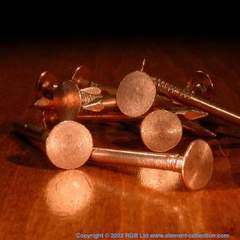
Return the Copper Nails

Background Passage: Psalm 51

A Christian man worked for a shipbuilder. The owner of the company considered himself an atheist. With disdain, he constantly mocking his employee for the futility of his faith, treating him with disrespect and contempt.

The Christian man was building a boat for his family in his backyard for his family. Because he could not afford them, he began stealing copper nails from the shipyard to use on his personal project. At first, just a handful. Then, he stole them whenever he needed more.

Perhaps it was the bosses attitude that convinced him that taking the copper nails was justified. Perhaps he felt he was owed more than he was paid. In every other way, the man’s life was exemplary. Yet, when it came to copper nails, he chose to ignore the voice of God within his heart.

*****

He was God’s chosen king. A faithful servant. Courageous warrior. Slayer of giants. Skilled musician. Leader of men.

David, a shepherd boy from Bethlehem, found himself called by God and anointed by Samuel as King of Israel. Such was the depth of his character that God called him, “A man after my own heart.” David earned that distinction. His reputation for humility, reverence, devotion and faithfulness created an aura about him, recognized by all he encountered.

Yet David, this man of God, experienced moment of abject failures. At times, human weakness consumed him. Consider his actions on a cool and sleepless night.

David walked onto the balcony of his palace overlooking the city below. In the moonlight, he watched as a beautiful woman bathed in the moonlight. Struck by her beauty and consumed with lust, he sent his servants to bring Bathsheba to him. What began as a night of illicit passion ended in pregnancy.

His folly did not end there. In a series of Machiavellian maneuvers, David compounded his sin. He was not swept away by circumstance …simply in the wrong place at the wrong time. Nor did he act on impulse. David’s sin was meticulously planned.

To protect his position, David devised a plan to bring Bathsheba’s husband, Uriah, home from battle to be with his wife. When Uriah refused to indulged in his own desire because his men were still at war, David schemed again. He sent the commander on a suicide mission. When Uriah was killed, David took Bathsheba as his wife, somehow rationalizing his actions as acceptable.

Like David, we face our own crisis of character. Sometimes we find the strength to walk through the danger to the other side. Sometimes we fail to be who we desire to be. Who God intends us to be. We engage in the sin that eats away our moral fiber. Rather than correct our path, we swallow our guilt. Push it deeper into the darkest recesses of our souls.

Such efforts seldom work. There comes a day when we must face the sin. Face the consequences of our choice. Do I keep living this way? Separate from the will of God? Do I repent and find a new way to live?

Sin we bury always rises to the surface when we least expect it. On a beautiful spring day when the prophet Nathan stood before the king, he brought words that would dredge up the long-buried sin David tried to hide from himself and from God.

Nathan spoke of a rich man who hosted an important visitor for an important dinner. As host, the rich man prepared a huge banquet in the honor of his guest. However, rather than slaying one of his own sheep for the table, he ordered his servants to take and butcher the prized lamb of the poor farmer next door. It was this lamb he served to his important guest.

David interrupted before Nathan could finish the story. Incensed. Furious.

“As surely as the Lord lives,
the man who did this deserves to die!
He should pay for the lamb four times over
because he did such a thing and
had no pity.”

The king’s anger echoed in the chamber, his breath coming in ragged gasps. Then, quietly and with no joy, Nathan said,

“You are the man.”

In that instant, the sin David buried in his soul, flashed before his eyes, a painful reminder of his spiritual failure. The burden of guilt welled in his eyes as he struggled with the weight of his mistakes. Hear the agony of his voice.

“Have mercy on me, O God,
According to your unfailing love;
According to your great compassion blot out my transgressions.
Wash away my iniquity and
Cleanse me from my sin.

“For I know my transgressions,
and my sin is always before me.
Against you have I sinned and done
what is evil in your sight.”

David’s story could parallel the hubris and folly in my life and yours a hundred times over. Time and time again we fail to live up to the standards of God. We fail to live up to the image of Christ. Then, in some way the Holy Spirit calls us to drop the pretense and take a good hard look at the face in the mirror.

When the eyes staring back at us break our hearts, maybe it’s time to throw ourselves at the mercy of a Father who loves us deeply. David came down from his throne and knelt before the throne of God with a changed heart, acknowledging his sin. Taking that first step toward reconciliation.

Once he confessed his failure, David knew that God only could take his sin away. Pleading for God to erase the sin from his heart. Seeking forgiveness and restoration.

“Cleanse me with hyssop and I will be clean;
Wash me, and I will be whiter than snow.”

For all his failure, David knew what God required of him. He knew God wanted more from David than someone simply going through the motions. God desired a changed heart.

“You do not delight in sacrifice or
I would bring it.
You do not take pleasure in burnt offerings.
The sacrifices of God are a broken spirit;
A broken and contrite heart.”

It is one thing to acknowledge my sin. I can know that what I’m doing is against God’s will and still do it. Simply going through the motions will not suffice. My life will not change until my stubbornness is crushed. Until God pries opens my heart and breaks down my resistance. I change my life only when my spirit is broken and my heart sincerely open to God’s direction.

A contrite heart doesn’t make excuses or attempt to justify one’s sin. God is not interested in empty apologies or halfhearted resolutions. A contrite heart expresses with real and deep sorrow our personal rebellion against God. A contrite heart desires to live differently. A contrite heart also knows that change is not possible without God’s forgiveness.

David knew the power of forgiveness to renew his life. Consumed by guilt, he asked simply for God to allow him to hear again “joy and gladness;” to allow his “bones to rejoice.” Then in some of the most beautiful verses in all scripture, David expressed his desire to experience a new life in the presence of God.

“Create in me a pure heart, O God,
And renew a steadfast spirit within me.
Restore the joy of your salvation and
grant me a willing spirit to sustain me.”

A pure heart is intent upon living within God’s purpose and plan for its life. Focused on doing right. One where every thought and action reflects the teachings of Christ. It is only then that the joy we experienced when we first allowed Jesus into our lives is restored in perfect purity. It is only then that we find ourselves again content in our own skin. It is only then we can look into the reflection in the mirror and smile.

*****

For weeks the Christian man happily hammered the copper nails into his sailboat. Then, one Sunday, the pastor spoke about the two thieves surrounding Jesus on the cross. From that day forward, every stroke of the hammer pounded his sin more deeply into his heart.

After days of guilt, he laid his sin before God in repentance. He went to his pastor and confessed what he had done. He also knew he should also confess to his boss, but also knew it would give justification for the man’s arguments against his belief in God. He felt he could not confess his sin because it would reinforce the man’s disdain for God.

For weeks he struggled until he finally told his boss everything and paid him back for the copper nails he had taken. The man expected to lose his job. To his surprise his boss accepted his payment and said, “Any God that would cause a man to admit his failure might be a God worth knowing.”

All I know is that in my own life I’ve nailed a few stolen copper nails into my own boat. And, from time to time, I still do. Yet, it is not the way I want to live. When I am right with God and with those around me, I know true joy.

It is good to know that we serve a God who forgives a repentant heart. It’s good to know that our mistakes do not have to define us. God’s forgiveness frees us to serve again.

So God waits patiently for the contrite and broken heart to call out to him…

“Create in me a pure heart;
renew a steadfast spirit within me.
Restore the joy of my salvation.”

It’s time to return the copper nails so we may be useful again. That’s my prayer for all of us.
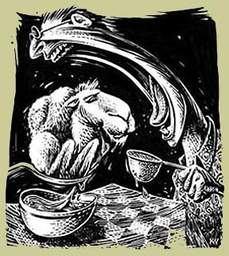
Strain the Camel

Background Passages: Matthew 23:23-24; 2 Timothy 1:7

I don’t much like weeding the garden. Well, that’s not exactly true. I hate weeding the garden.

Recognizing it needs to be done from time to time, I started in one small corner and began pulling up the blanket of milkweed that covered the topsoil. Painstaking and boring. I finished a 10-foot section of ground and looked back on what I had accomplished. All the milkweed was gone. Yet, there in the middle of the flowerbed I just cleared stood a very proud, 18-inch dandelion with a bright, yellow flower on top. So focused on the little weeds, I missed the big, ugly one right in front of me.

I wonder if that was what it was like for the Pharisees as they settled into their comfortable lives. So focused were they on complete obedience to the letter of law that they missed its intent. So comfortable in the routine of religion, they ignored the needs of a lost world, never practicing what they preached.

In other words, they laboriously pulled the milkweed, but ignored the dandelion. Jesus’ call to righteous living put a spotlight on the dandelion.

In the last days of Jesus’ ministry prior to his journey to the cross, we find him spending more and more time grounding his disciples in the deepest fundamentals of faith. The more he talked about the kingdom of God, the more his opponents protested, pressured and plotted to eliminate him.

Instead of a concentrated effort to discern the truth the Pharisees made a concerted effort to discredit every word he spoke. They picked at the minuscule and ignored the material. A master of hyperbole, Jesus challenged their hypocrisy. The religious leaders of the day took great care to cross every “t” and dot every “i” in their quest for religious piety. So focused were they on the legalities of religion, they missed the point of faith.

Jesus acknowledged that they regularly gave their tithes of mint, dill and cumin, but he chided them for failing to practice the important matters of the very law they claimed to obey. Where is justice? Mercy? Faithfulness? “You should have practiced the latter without neglecting the former.”

Jesus took them to task for their improper perspective. “You blind guides! You strain out a gnat, but swallow a camel.”

Had I been standing next to Peter and John that day, I’m pretty sure the snicker I failed to choke back would have drawn an ugly glare from the closest Pharisee and a pained glance from Jesus that said, “Really? That’s your contribution to this debate?”

What a powerful commentary Jesus made with a tongue-in-cheek comment. It is a brilliant analysis of the problems preventing the Pharisees from accepting the new truth Jesus brought to the world. They were so driven by the principle of not eating what they deemed unclean that they would use a cloth to strain their drink to make sure they would not accidentally consume the tiny, filthy insect. Yet, they never seemed to see the camel they swallowed whole.

Had I been walking next to Jesus later that afternoon, I suspect I might have apologized and rationalized my inappropriate behavior. “I’m sorry, Jesus, but that was a good line. Pretty funny. Did you see their faces?”

I think Jesus would have put his arm around me and said with a rueful smile, “It might have been funnier if it weren’t also true in your life, too, my friend.” As my mind reeled, I’d hear something about ignoring the 4” x 4” beam in my own eye.

I am, at times, guilty of the same Pharisaical behavior. The Pharisees practiced their faith. They made dedicated effort to comply with the ritual and rules, focusing in extreme measure on the “thou shalts” and the “thou shalt nots,” while spending precious little time on the “love thy neighbor.” Being right was a higher calling than doing right. I may not always be that different.

You and I live in a time when it’s fashionable to be hypercritical. To declare ourselves politically and socially holier than thou. You and I live in a time when pronouncing our truth rides roughshod over proclaiming his truth. When we love the sound of our own voice rather than seeking to sound the voice of love. Such arrogance drives people away from the very one to whom our deeds and our words should point and proclaim.

It’s easy to play the Christian card in a world struggling to do what’s right. Attend church every week. Sing a few songs. Sit through the sermon. Study his word in Sunday School. Gather up a few old clothes to give to the poor every now and again. Now, somehow, I’m better that that other poor soul. It’s not that these things are wrong. Like Jesus reminded the Pharisees, these are things that should not be neglected.

However, when we focus on the “things” of our religion to the exclusion of the crucial matters of our faith…justice, forgiveness, love, compassion, truth…

…we become critical rather than encouraging…

…we divide rather than bring together…

…we falsely elevate our standing in the eyes of God, and…

…we fail in the deeper call of Christ.

We wonder all the time how the Pharisees could be so obtuse, time and time again failing to recognize the truth of Jesus’s words because they threatened to push them out of their comfort zone. The truth is they lived in fear of the kingdom of God that Jesus personified. It upset their apple carts and threatened to pull down their carefully constructed walls that isolated them from a world in need.

Jesus tells them, “You put on a good front. Make a good show of things. But, your heart cannot see what I see. Until it does, you will continue to go through the motions, critical of those less “pious,” feeling safe and comfortable within the walls you built around you.

“Until you see the world through my eyes and move past the ritual and routine, you’ll keep straining that gnat and eating that camel.”

Jesus calls me to keep doing those things I ought to be doing, but to focus on what matters most. I must set aside the fear that keeps me from embracing in love a world that knows no better way. I need to step outside my comfort zone. To challenge what I believe and dig deeper until God teaches me the next thing I need to know to become more like him. Fear stared the Pharisees in the face and gripped their hearts. It does the same to me at times.

When he needed to encourage Timothy, the young pastor of Ephesus, Paul reminded him,

“God did not give us a spirit of timidity and fear, but a spirit of power, of love and of self-discipline.”

I also find that encouraging. My ability to move past the trappings of religion and into a full expression of faith rests not in my own ability, but in the power of God through his spirit within me. My desire to love others will not come from the goodness of my own heart but from a realization of sacrificial love and mercy God extends to me every day. My desire to see the needs of those around me and to, therefore, act, comes from the discipline to be more like Christ every day in every way.

I don’t know if you feel the same way at times, but, if we assume we’re doing pretty well at filtering out our gnats, maybe it’s time we both strain the camel.

Here’s Mud In Your Eye

Background Passage: John 9:1-41

God created us with intelligence and natural curiosity. He created us to reason and think. To learn something new every day we live. That’s why I love being around children. In a quest of new discovery, they are willing to ask a thousand questions just to understand one thing more. Learning is a God-given gift.

That’s why I love to study scripture. There is so much of God’s plan and purpose I do not understand, I always feel like a child on the verge of discovery. Seeking new insight. Tossing away old paradigms. I believe there is always something new God can teach me about his nature…about the life he has given me.

That’s probably why I struggle with those who live in such certainty that their faith gets set in concrete leaving them unable and unwilling to test what they know. Dogma is the death of discovery. When it comes to my faith, my certainty rests in my personal experiences, everything else is discovery. Maybe that’s why the blind man in John 9 is one of my favorite Bible characters.

Deep blue skies.
No cloud in sight.
By daily measure…ordinary.
To those walking the streets of Jerusalem…unnoticed.
To the man born blind…remarkable.

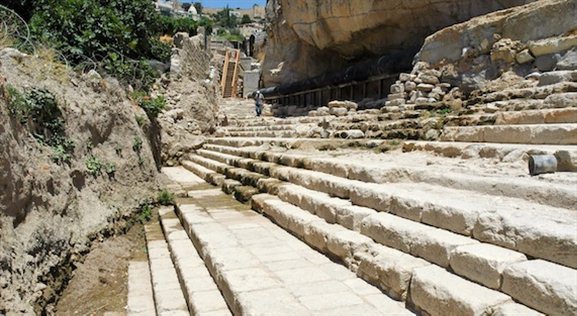
He sat on the stone-lined edge of the Pool of Siloam.
Feet dangling into the water.
Cool.
Clear.
Staring in wonder at his reflection
Framed by the blue heavens above.
His first time to see his own image.
His first time to see anything.
His trembling fingers traced the hollow of his eyes.
Touched the rise of his cheeks
The contour of his nose.
Brushed through his coarse beard.
Ran his fingertips along his sun-baked lips.

Heart racing.
Breath,
a series of ragged gasps.
He lifted his eyes to the world around him
and immediately raised his hands.
Shielded his eyes from the harsh glare
of the mid-morning sun.
He blinked.
Tears running down a face
he had never known.

A world of touch and texture,
brought to life in a
confusion of form and color,
now coalesced around him.

For the first time he saw…
the ripple of wind on water.
The elegance of the portico-covered pool.
The dance of sunlight and shadow.
The beauty of the surrounding hills.
The people…oh, the people.

Slowly, his mind adjusted to this new reality.
Standing awkwardly like a new colt,
steadied by the joyful friend who guided him here from the temple,
the man gradually found his balance…
not an easy task for one blind since birth.

In time,
they danced.
Sang.
Laughed.
Cried.
On his way home…
throughout the streets of Jerusalem…
he shouted to anyone and everyone,
“I can see!
I was blind, but now I see!”

John tells this poignant story in a series of scenes set between two major confrontations between Jesus and the Pharisees. We find Jesus and his disciples leaving their time of worship through the south gate of the Temple. As they walked down the steps, his disciples posed a question steeped in Jewish tradition. Pointing to a man begging on the bottom of the Temple steps, they asked,

“Jesus, who sinned, this man or his parents that he was born blind?”

According to the prevailing belief of the day sin was responsible for all illness and disability. A child sick or disabled since birth either sinned somehow in the womb or the parents’ disobedience caused this infirmity. Jesus often fought this kind of misguided thinking. Seizing this teachable moment, Jesus explained to his disciples.

“Neither this man nor his parents sinned. This happened so the work of God might be displayed in his life…While I am in the world, I am the light of the world.”

Neither God nor man caused this unfortunate circumstance, but God would use this man’s condition as a living metaphor of his ability to turn darkness and despair into light and life.

With that declaration, Jesus approached the man. Sat next to him on the steps. Engaged him in quiet conversation. Sensing the man’s open heart, Jesus spat on the ground and worked his saliva and the light gray limestone soil into a muddy paste that he spread across the man’s eyes. Taking his hands in his own, Jesus stood, lifting the man to his feet.

Now, go,” he said, “wash in the Pool of Siloam.”

With the help of a friend, the man made his way down the slope of the Temple Mount, about a quarter of a mile southward toward the large, terraced pool, fed by the Gihon Spring. The man must have received odd looks as he made his way through the crowd with mud covering his eyes.

He sat on the edge of the water and did has he was instructed. Splashing the cool water on his face, the man wiped the mud from his eyes. I can see him taking a deep breath as he wipe away the water and grim with the sleeve of his robe. Slowly, he opened his eyes to a brand new world.

Over the next few hours and days, the man faced disbelief and disparagement. Some friends thought him an impostor. The Pharisees called him before the council, not to celebrate his healing, but badger him in hopes of accusing Jesus of violating the Sabbath. They sapped the joy of his healing.

Fearing for their own reputation, his own parents refused to stand by him. Ultimately, the Pharisees condemned him as a sinner, eventually excommunicating the man from the synagogue because he refused to deny that Jesus was the one who restored his sight.

In the end, John tells us that Jesus sought out the man whom he healed after learning about the Pharisees’ actions. Face to face with Jesus, the man made a heart-felt confession of faith. At the Pool of Siloam, in the blink of an eye, his physical blindness became 20/20 vision. Over the course of the next 48 hours, he went from being entombed in spiritual darkness to being embraced by the Light of the world.

The power of Jesus echoes throughout this amazing story. But, I also marvel at the authoritative testimony of the man born blind. Standing before a hostile panel of powerful religious leaders who called him a fraud, grilled him mercilessly, challenged his every word, the man never faltered. Never failed to speak the truth.

The Pharisees clamored for him to deny Jesus’ power. Pushed him to denounce his healer. “We know this man is a sinner!” they shouted, challenging him to confirm their accusation. With uncommon strength of character, the man, so unlearned in theology, said simply,

“Whether he is a sinner or not, I don’t know. One thing I do know. I was blind, but now I see.”

What an extraordinary confession of faith!

Imagine the man’s first few moments at the pool. Sights never seen began to fall into context in new ways. Not only were his eyes changed, but God transformed his mind to allow him to interpret and make a sense of what he was seeing for the first time. The miracle changed his heart. A life of resigned despair became a life of renewed hope and endless possibilities.

So what is the take away from this man’s experiences?

There is so much about God’s creation I do not understand. So much about his plan and purpose I cannot comprehend. So much about his nature which remains unknown to me. So much he still must teach me. I don’t know about you, but like the Pharisees, I tend to build a false world around me filled with my plans, my truth and my finite understanding of God and his world based on what I think I know. What I’ve discovered in my life is that that viewpoint is almost always limited. To an extent, that’s okay.

Look at this man’s example. He could not explain what happened. How his eyes were opened remained a mystery to him. He didn’t claim to understand. Nor did he back down in the face of mounting pressure. He merely spoke out with a growing faith borne of powerful, personal experience.

“This one thing I do know. I was blind, but now I see.”

What an extraordinary confession of faith! This man born blind from birth would find ahead of him a life of discovery, not just in the physical world he could now see, but in his budding faith. Knowing what he did not know, he started his new life on what he had experienced with Jesus. That’s a fine place to start.

When I don’t have answers to every question that comes my way, this one thing I do know. I was blind, but now I see.

So, my prayer today is simple. “God, cover my eyes in mud. Let me wash in the Pool of Siloam. Let me understand more clearly, God, who you are and what you need from me. Let me see the world from your perspective. Open my heart and my mind to the discovery of this life you’ve given me. At the end of the day, when the world challenges that which I do not fully know, let me share my personal experiences with you.”

Maybe that’s a prayer that works for you as well.

Here’s mud in your eye.

Intentional Worship

Background Passages: John 4:23-24; Matthew 5:6

A routine visit with my cardiologist this week ended with his admonition and encouragement to gain some control over my diet. He said it so politely I walked out of his office determined to practice what he preached. His advice, “Don’t approach every meal as if it is your last meal. You always want to be a little hungry.”

I sincerely tried to remember that advice over the past few days even when I found myself wanting more. Then, I stumbled across this French proverb, “A good meal ought to begin with hunger.”

There is a measure of truth in that statement. When was the last time you truly enjoyed a meal when you were not hungry? When we’re hungry, we can savor every mouthful, even when the portions are limited. When you’re hungry, everything tastes good…except broccoli. Broccoli will always taste bad…and cauliflower…and Brussels sprouts.

But, we’re not talking about broccoli or Brussels sprouts today. Instead, let’s talk about worship. The Hebrew and Greek words for worship speak to “bowing down.” “Humbling oneself.” “Paying homage.” “Reverence.” “Adoration.” The words convey the idea that we recognize the eternal holiness of God and that he is, by his very nature, worthy of our worship and praise. Worship by definition is the attitude in which we approach God.

Jesus stood one day on the hill overlooking the Sea of Galilee as he spoke to the crowd gathered around him. Every word a nugget of truth penetrating the heart. The one bless by God will be the one whose heart longs for the right relationship with the Creator.

“Blessed is the man who hungers and thirsts after righteousness for they will be filled.”

The spirit that hungers to be in the right and proper relationship with God will find that hunger completely satisfied. What that tells me is we ought to approach worship with the appetite of a starving man. Meaningful worship begins with a genuine hunger to be in the presence of God. To celebrate in song praises to our Lord. To open our hearts in prayer to his words admonition and encouragement. To walk away changed by the experience of fellowship with the Father Creator. To commit ourselves to the life he calls us to live.

When was the last time you hungered for that kind of worship?

We can learn a great deal from an unexpected encounter at the well in Samaria. Tired from his journey, Jesus sat down on the stone edge of the well, leaning his back against the wooden support for the pulley and pail. He sent his disciples into town to buy bread and fruit for the day’s meal. Needing time to himself.

As he rested his eyes, a woman tentatively approached, carrying a large empty jar on her head. Alone and at mid-day…signs that all was not right in her life.

Jesus eased out of the way, allowing her access to the well and the water within. Jesus engaged her in a conversation. The distrust of a woman abused by men and by life and the natural antipathy between Jews and Samaritans led to an intense discussion and debate about life, faith and worship.

When Jesus hit a little too close to home with his insight into her circumstance, she adeptly changed the subject. Challenged by the woman regarding the differences in where the Jews and Samaritans worshiped, Jesus pointed her away from worship based on location and ritual and toward worship centered in the heart.

“Believe me, woman. A time is coming when you will worship the Father neither on this mountain nor in Jerusalem… A time is coming and has now come when the true worshipers will worship the Father in spirit and in truth, for they are the kind of worshipers the Father seeks. God is Spirit and his worshipers must worship in spirit and in truth.”

We must worship God in “spirit and truth.” What does that mean?

It think it means that genuine worship is a deep-seated desire for an intimate and worshipful relationship with God. It is not an act. It is an attitude. Worship isn’t just to be physically present in the place designated for praise and adoration. We won’t find true worship by an act of osmosis or absorption simply because we showed up. We find genuine worship when our spirit participates in the moment.

Theologian William Barclay declared that our God-given spirit is the highest, most noble part of us…the source of our greatest dreams and desires. True worship, according to Barclay, comes when our spirit seeks the highest…a personal and proper relationship with the eternal and holy God.

That kind of devotion cannot be a passive act. It is an ever present hunger to honor God in our hearts and with our lives. It is seeking with purpose and intent his wisdom in how we should live.

Intentional worship is the reason Paul and Silas could sing praises to God while locked in chains, battered and beaten, in a dungeon’s darkness (Acts. 16:23-25). Intentional worship is the reason, a woman whose life was shattered by sin, anointed the feet of Jesus with her most expensive perfume (Luke 7:41-50).

Intentional worship is the reason, a poor and destitute woman unselfishly dropped her last penny into the offering in celebration of everything God had given her (Mark 12:41-44). Intentional worship is the reason, Jesus prayed in the garden, “Not my will, but yours.” (Luke 22:41)

I find in those examples men and women who worshiped in spirit and truth. Despite their circumstances, they hungered to be in God’s presence. They hungered to know his will. When we hunger for righteousness, when we hunger for God in our lives, we can worship in any circumstance, in every way, seeking only to subordinate our will to the will of our Father.

The French said, “A good meal ought to begin with hunger.” For my physical health, that is a lesson I need to learn. Yet, it proclaims loudly a lesson for my spiritual health.

When I walk into that sanctuary each Sunday or open my Bible any day of the week, I need to start with a keen hunger for what I can experience in that moment. I need to approach the throne of God’s grace recognizing who he is and what he has done in my life. I need to declare in my heart that he is worthy of my praise. Worthy of my reverence. Worthy of my love.

It’s Saturday. Are you as hungry as I am to experience God tomorrow and in the week to come?

A Life of Kindness & Love

Background Passage: Titus 3:1-8

Amid the endless jawing that sometimes occurs on talk radio, I heard one pundit refer to a political foe as a “Cretan.” Now that’s not a word you hear bandied about these days, but when it comes to arguing, it is an intelligent insult.

Now, don’t get me wrong, I am not advocating the hurling of insults, intelligent or otherwise, as a means of proper debate and discourse. I’m simply saying, it’s not a word you hear often.

The word originates obviously as a reference to the inhabitants of the island of Crete in the Mediterranean. However, due to two literary references, the name became synonymous with people of ill-repute. Lacking in gravitas or moral character.

Epimenides, a 6th century Greek poet from Crete, insinuated that the people of Crete lacked ethical principles. Branded by their behaviors, he said they were known for stealing, harboring robbers and pirates. A few centuries later, Paul, writing to his friend and pastor, Titus, quoted from Epimenides, calling the people to whom Titus was ministering as “liars, evil beasts and lazy gluttons.”

Hang onto that thought. We’ll get back to it in a minute.

The focus of my personal Bible study in the past year centered on understanding what it means to live in the image of Christ. It was the motivation behind my last book, God’s Mirror Image. Since the book was published, my Bible studies have been more random in topic, but I’m amazed at how often the scripture I find relates to the idea of living in the image of Christ. As I studied the book of Titus this week, those instructive passages jumped out at me again.

Titus, a frequent companion to Paul during his ministry, proved to be a faithful worker and good friend to the apostle. At the beginning of his epistle to Titus, Paul called him “my true son in our common faith.” It’s a comment that suggests Paul might have been the one to lead Titus to Christ…that, as a result of the faith they shared, the bond between them was strong.

Paul commissioned Titus to serve as the pastor of the church in Crete. During the first century, there was a Jewish presence on the island, some of whom were probably present in Jerusalem during Pentecost. In Acts were told that many from Crete believed in Christ as a result of Peter’s teaching. Undoubtedly, they returned home, bringing a dynamic new faith with them.

The task of staying true to the teachings of Christ would not be easy for them in a culture that had a reputation for lacking in moral fiber. The pressure of culture on the church was the reason Paul sent Titus to strengthen the believers. To build their faith. To ground them more deeply in the scripture. To teach them how to live in the image of Christ.

I wonder what Paul might tell Titus today if he commissioned the pastor to minister to the church in the United States? What might he tell Titus today if he commissioned the pastor to minister to those of us in our country who claim to be Christians?

Our culture morphed over time from a people professing a faith and trust in God to one that too often ignores ethical principles. One that lacks in moral character. I’m not so certain that Epimenides’ rebuke of the Cretans might not be apt for Americans today.

That makes Paul’s words to Titus even more relevant for you and me for they describe the character God expects from his own. Look at Chapter 3. Find Paul’s encouragement. He tells Titus, “Remind the people…” Then, he provides Titus with a list of workable sermon titles…

“…Be obedient to authority…”

“…Be ready to do whatever is good…”

“…To slander no one…”

“…To be peaceable and considerate…”

“…To show humility to all men. “

Think about those instructions. Think about how those characteristics describe the nature of Jesus himself. What a great lesson for our personal contributions to the culture around us!

Paul suggests that our Christian humility should stem from the fact that, before Christ came into our lives, we were not that different from the rest of the world….

“…Foolish…”

“…Disobedient…”

“…Deceived and Enslaved…”

“…Living in malice and envy…”

“…Being hated and hating one another…”

As I read this passage so much of what Paul described reminded me of the divisiveness that exists in our world today. Not just the political rhetoric, but the radical anger and resentment we express toward anyone who holds opinions different from our own.

This is not the way Christians are called to live. Paul reminded Titus with a passage that hit me between the eyes. A passage that paints the perfect picture of the life of Christ that we are to model.

“But, when the kindness and love of God our Savior appeared, he saved us, not because of the righteous things we had done, but because of his mercy.”

Remember, those words were written by the man to whom Jesus appeared when he was walking down the road to Damascus to persecute and destroy the church there. The man who held the robes of those who hurled insults and stones at a man who professed a faith in Christ.

Paul saw in that blinding light the appearance of one whose whole being radiated kindness and love. “Why are you persecuting me?” Jesus asked. Less an accusation as it was a challenge to live differently. Paul no longer saw a radical heretic when he looked at Jesus. He saw the love of God staring him right in the eyes…a love so bright it blinded him.

When Jesus, God our Savior, came into this world he was the epitome of kindness and love. He walked as those things personified. It is in kindness and love that we are to live and relate to the world around us. A life lived in the image of God.

Paul gives one further directive to his friend Titus that is so applicable today.

“I want you to stress these things so that those who have trusted in God may be careful to devote themselves to doing what is good. These things are excellent and profitable for everyone.”

The message reverberates through the ages, as relevant in the 21st century as it was in the 1st century. To live as God requires we must take on the very appearance of Christ. Live with kindness and love in our hearts. A kindness and love so bright that it blinds others to the false beauty sin uses to entrap and enslave. Let those characteristics dictate our words and deeds. Devote ourselves to doing good in all things. Healing the broken heart rather than breaking it.

In other words, Paul tells us to stop acting like Cretans and start living like Christians.

And, that, I think, would be excellent and profitable for everyone.

*****

God’s Mirror Image is now available in hard cover, paperback or ebook at Amazon.com and barnesandnoble.com. Copies can also be purchased at the Barnes & Noble Book Store on Fairmont Parkway in Pasadena, TX.

Lord, Teach Us To Pray

Background Passages: Matthew 6: 5-15; Luke 11:1-13

The young disciple laid on his back,
opening his eyes to a new morning.
Rubbing the stubble of his beard,
Jude propped himself up on one elbow.
Surveyed the scene unfolding around him
in the dawn of a new day.

Nathaniel.
Always an early riser,
stoked the fire.

Andrew.
Always helpful,
walked up the path from the Sea of Galilee.
A bucket of water in each hand.

Others engaged in various stages of waking.
Rolled up their sleeping mats.
Folded their blankets.
Tied their sandals.
Only John remained asleep.
Snored heavily while the world came
alive around him.

Jude stood.
Stretched and yawned.
Pressed both fists into the small of his back.
Worked the kinks out of a tired body
that slept all night on the rocky ground.
He nudged John with his toe,
eliciting a grunt and a grumpy,
“Go away,”
from the weary disciple.

“Breakfast, my friend.
You’ll be grumpier if you missed it,”
Jude chuckled.
“Rise and shine.”

Jude scanned the group looking for Jesus.
He spied him a short distance up the hillside,
sitting cross-legged.
Arms held loosely in his lap.
Leaning his head against a rock.
Engaged in his morning prayer.

“Every morning without fail,”
Jude mused,
marveling at how little sleep
their master seemed to need.

The disciples ate a quick breakfast of bread and honey
accompanied by the quiet conversation of close friends.
James wrapped some bread in a cloth,
saving it for Jesus.

The men cleaned the campsite.
Put out the fire.
Then, walked slowly and quietly up the hillside,
unwilling to disturb Jesus during his
morning prayers.
They stopped a few feet away.
Some knelt.
Some bowed their heads.
Some stood silently as their gaze settled on the
placid waters of the Sea of Galilee
far below.

Jude,
for his part,
never took his eyes off Jesus.
Watched his master with a
blend of curiosity and wonder.
No rabbi he had known spent this
kind of time in private prayer.
His whole demeanor so different from
the prayerful posturing of the Pharisees.
Eyes closed.
Arms resting in his lap.
Fingers interlaced,
dangling loosely in front of him.
Jesus was a man at peace.

After a few minutes,
Jesus breathed deeply.
Opened his eyes.
Raised his head.
Smiled at his disciples.
“Good morning.”

Stretching his legs in front of him,
Jesus caught the small loaf of bread,
James flipped his way.
Unwrapped it.
Began to eat.

The disciples probed about his plans for the day.
Tried to get a handle on what to expect.
Jude fidgeted throughout the conversation,
unsettled in heart and mind.
Unable to contain his thoughts any longer,
he blurted,
“Jesus,
I watch you like this every morning.
So deep in prayer.
Always by yourself.
It’s different from anything I’ve seen.
Different from anything we’ve seen.
The Pharisees shout from the rooftops.
You whisper in the wilderness.”

The young man’s observation took the
morning conversation in a new direction.
All eyes now on him.

Jesus nodded.
Encouraged Jude to continue.
“John taught his disciples how to pray.
Teach us to pray as John taught his disciples.”
A request from one seeking to
dip his bucket into the
deep well of faith.

Jesus looked at Jude
in the ensuing silence.
Glanced at the other disciples.
He grinned like an excited teacher
when his students asked the right question.
He leaned back against his rock.
Put his hands behind his head,
wiggled his hips as he settled for what he
hoped to be a fruitful conversation.
“You tell me.
How should we pray?”

A beautiful discussion followed
concerning one of the most
important aspects of Jesus’ life.
The disciples shared their thoughts,
each building upon the other’s understanding.
Finally, when they said all they knew to say,
they waited quietly for Jesus’ response.

Jesus explained that public prayer
should always be a part of worship.
A time to draw hearts to God in times of
reflection and praise.
But such prayer will never replace our private,
intimate conversations with the Father.

Jesus shook his head.
“When you pray,
do not be like the hypocrites.
They love to pray standing in the synagogues.
On the street corners just to be seen by others.
Truly, I tell you, they have received their reward in full.
Instead, when you pray,
go into your room.
Close the door.
Pray to your Father, who is unseen.

“Do not keep babbling like pagans.
They think they will be heard because of
their many words.
Do not be like them. Your Father knows what you need
before you ask.”

Then, he offered an example for their private prayers.
“When you pray, pray like this…

“Our Father in heaven,
hallowed by thy name,
your kingdom come,
your will be done,
on earth as it is in heaven.
Give us this day our daily bread.
And forgive us our debts
as we also have forgiven our debtors.
And lead us not into temptation,
but deliver us from the evil one. “

The disciples looked at Jesus.
Some still struggled.
Jesus elaborated.

“Suppose you have a friend…”
And the lesson continued into the morning.
Jesus challenged them to think about an
unwilling friend,
who repeatedly turned them away in
an hour of great need,
only to reluctantly open the door of his home to them
when they persisted in knocking.

Then another.
What father would give a son
a snake when he asked for a fish.
A scorpion when he asked for an egg.
“The point is this,”
Jesus said.
“If an unwilling friend will eventually help
and an earthly father responds properly to a child’s need,
how much more will your Father in heaven give
the Holy Spirit to those who ask him?”

*****

Within these two passages rest Jesus’ most comprehensive teachings on prayer. Jesus may have taught this lesson twice…once in his Sermon on the Mount and once on another distant hillside. Those scholars who believe the Sermon on the Mount to be a collection of Jesus’ teachings may see these lessons as one incident. Either way, the passages beg a great question.

How should we pray?

I recently visited with my uncle, a Lutheran pastor, about the liturgical use of The Lord’s Prayer in modern worship services. The idea troubled both of us to a degree. What is repeated often can become stale and rote. I began looking at The Lord’s Prayer in the context in which Jesus introduced it to see if it made a difference in my thinking and in my practice.

Look first at the passage in Matthew. When one of his disciples first asked Jesus to teach them to pray, he didn’t immediately launch into The Lord’s Prayer. He first shared thoughts about the attitude in which we should come before the Father. Prayer, whether public or private, is no time of grandstanding. The Pharisees…the hypocrites…who prayed on the steps of the synagogue and street corners loudly proclaimed their righteousness…spoke eloquently, careful in their choice of words…infused their speech with the appropriate number of “thees” and “thous. ”Jesus said they may impress the folks, but they are not impressing God. Their incessant babbling will not be heard by God because they pray for men and not to God. The praise they receive from their fellow Pharisees for their powerful prose is all the reward they receive.

Jesus shared a parable once about the Pharisee and the Tax Collector. The Pharisee stood on the steps of the Temple, shouting his prayer to God, extolling his virtues and thanking God that he was not like the sinners kneeling nearby. The Tax Collector, on the other hand, would not lift his eyes to heaven, but beat upon his chest in remorse for all the sin in his life. He begged God for mercy and forgiveness. One was a self-serving attempt to tell God how righteous he was. The other was a humble plea of one who recognized his failures.

Jesus led them away from such demonstrative prayers. Jesus told his disciple to make prayer a private matter. Go into your room. Close the door. Take an intimate moment with your Father in heaven. But, does that negate the need for public prayer? Does it minimize the role of liturgical prayer?

Absolutely not! Prayer will always be an essential form of worship. Nor is there anything wrong with the liturgy of spoken prayer as long as neither of those become rote or carelessly offered. Prayer is our love language to God. It can and should be expressed in many different ways.

Pate Hughes was a kindly deacon in our church who passed away a few years ago. Frequently called upon to pray, Pate would approach the pulpit with such reverence. He spoke in a whisper, barely audible to the rest of us. I can describe his prayers as “heartfelt.” The rest of us were merely eavesdropping on an incredibly intimate moment between this man and his God.

Guard your attitude in prayer. That was the first point Jesus tried to make with his disciples.

When Jesus gave them this model prayer, I’m not sure his intent was to make it liturgical. I think his intent was to provide a guide as to the content of our prayers. What a model it is!

The prayer begins with two opposing, but delightful concepts. “Our Father.” An intimate phrase that speaks to our unique, personal relationship with one who we approach with reverence, recognizing his unmatched holiness. “Hallowed.” “Holy” is his name.

The next two phrases also run in parallel. “Your kingdom come.” “Your will be done.” These are petitions for God to establish his kingdom within us, to bend us to his will and way, both in the present time and the time to come. It conveys the idea that we desire God to rule in our lives daily.

Jesus also taught his disciples and us that there is a time to ask God for the things that sustain us…”Our daily bread”…and that which will cleanse us…”Forgive our sins.” He follows with a sincere request for God’s protection from the temptations the world puts in front of us and for the strength to resist that which the world makes so appealing. Seeking God’s help in forgiving those who hurt us.

Luke records Jesus’ promise that those things we need will be provided by a willing and loving Father. His story about knocking on the door of a reluctant friend is intended to tell us we don’t need to keep nagging God until we get what we want. Rather, look at the remarkable contrast Jesus offers.

Ask and it shall be given. Seek and you will find. Knock and the door will be opened.”

Those verses stand not as a blank check for all we desire. God doesn’t simply grant all that we ask of him. I too often stopped my reading at verse 12. Look at verse 13.

“If you then, though you are evil (sinful), know how to give good gifts to your children, how much more will your Father in heaven give the Holy Spirit to those who ask him!”

The Holy Spirit is God’s greatest gift since salvation. It is the Holy Spirit that intercedes on our behalf for the deep desires of our hearts even when we have no idea what those desires might be. It is the Holy Spirit that steps between our prayers for things we don’t need and asks God to provide that which we do need. How remarkable that a gracious and loving God, through his Holy Spirit, will take our misguided prayers to give us what we need. Help us find what we seek. Open the doors that need to be opened to take us where he wants us to go.

What a promise he makes!

Prayer is an incredible opportunity to get in touch with a God who desires a close relationship with us. When we talk to God with an attitude of reverence and devotion, when we pray for God’s will to rule in our lives whatever that might mean, when we pray, confident in God’s provision, when we trust the Holy Spirit to carry our hearts to God, then prayer makes a difference.

The question of the disciple should echo in the deepest parts of our souls. “Lord, teach us to pray.”

Amen?

Amen.

A New Thing

Background Passage: Isaiah 43:18-21; Philippians 1:4-6

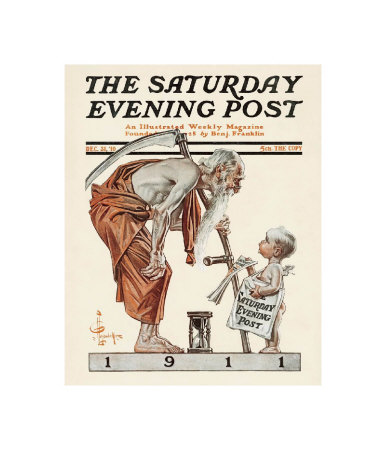
The passing of the annual torch from Father Time to Baby New Year has its roots in America in the fanciful illustrations of Joseph Christian Leyendecker, an early 20th century mentor of Norman Rockwell. Beginning with the December 29, 1906 edition of the Saturday Evening Post, Leyendecker started a 36-year publishing tradition by drawing an innocent, cherubic baby on the cover of the magazine’s last issue of each year in celebration of the arrival of the New Year. Each illustration suggested, “Out with the old. In with the new.”

Out with the old. In with the new. The New Year gives us the opportunity to forget the past and start with a new set of resolutions designed to make us better. I don’t suppose it’s ever a bad thing to reflect on the old year and then make the inevitable inner promises to reinvent ourselves. If you’re anything like me, however, a promise made in January’s daybreak rarely survives its sunset.

Coming so closing after the celebration of Christmas, I also find the New Year serves as a great reminder of the new work God has done in our lives through the birth of his son. A reminder to set aside the sins of the past and to recommit ourselves to the life God desires for us.

Isaiah, preaching to the people of Israel in exile, shared an encouraging word from God to his weary people. This is what he said,

“Forget the former things: do not dwell on the past. See! I am doing a new thing! Now it springs up; do you not perceive it?”

What is done is done. What is past is past. Despite a world of remorse or regret, we can do nothing to change a single moment of this past year. God reminds us through Isaiah, “Put your mistakes behind you. Don’t let them eat at your soul.” That’s always easier said than done. However, the continuous redemptive work of God tells a remorseful heart that the price of our sin has already been paid. Let it go. Look ahead.

When we finally turn our eyes from the failures of our past, when we finally let go of the baggage, we can look forward to the new work of God in our lives.

I love the words God shared with Isaiah. Hear the excitement in God’s voice as he tries to revive the broken hearts of his people. “See! I am doing a new thing!” It’s as if he is saying, “Look! Wake up! Don’t hang your heads! Look at the exciting things in store for you in the year ahead! I’m getting ready to rock your world! Can’t you see it?”

Was 2018 what you hoped it would be? I hope so, but maybe you found the past 12 months filled with pain, uncertainty, heartbreak and grief. Maybe you felt disconnected and alone. Maybe you realize you walked a path of your own choosing that took you too far from God. Maybe you just feel…off somehow. Just not quite right. Hear God’s word of encouragement. “See! I am doing a new thing!”

God’s word to the people of Israel promised restoration. He offers the same to us, especially when we are wandering in our personal wasteland and wilderness. He tells us with genuine excitement in his voice, “Have I got plans for you!”

Don’t make this New Year about resolutions. Make it about re-commitment. Focus on the new thing God is doing in your life. Open your heart to the possibility that this new thing he is doing will be the absolute best thing for your heart.

If you doubt this promise for a minute, consider Paul’s greeting to the Philippian church.

“In all my prayers for all of you, I always pray with joy because of your partnership in the gospel from the first day until now, being confident in this, that he who began a good work in you will carry it to completion until the day of Christ Jesus.”

The one who began this good work, this new thing, in your life will stay with you until it is finished. He will never stop working in our lives. Not in 2019. Not ever. So as we look to this New Year, it’s out with the old and in with this new thing God is doing.

I don’t know about you, but that makes me look forward to what this New Year will bring.

With Gratitude to the Giver

Background Passage: 2 Corinthians 4:15; Psalm 9:1

I sat in the audience of my grandson Eli’s second grade Thanksgiving program at Turner Elementary School with my cellphone camera on record. The children, dressed in traditional Pilgrim suits made of construction paper and colored with crayons, shared the history of that first Thanksgiving feast among the Pilgrims and Native Americans. They recited their parts and sang a couple of cute songs. Eli, my oldest grandson, nailed the closing speech without stumbling over a single word, making his parents, his little brother and his grandpa quite proud.

The Thanksgiving story they shared with their parents had changed little from the somewhat sanitized version of that first Pilgrim settlement my classmates and I told our parents 58 years ago. No matter. The songs sounded delightful. The kids looked cute. Their excitement more than a little infectious.

One of the songs they sang struck a chord with me. A catchy tune to be sure, filled with expressions of thanks for things young children enjoy…recess, summer, friends, family, etc. It wasn’t so much the things for which they shouted their thanks that made me think. It was the question posed repeatedly within the song. “What are you grateful for?” We won’t quibble with the prepositional grammar. That’s not the point. The use of the word “grateful” rather than “thankful” caught my attention, making me think about the difference in these words we often view as synonymous.

Why is that distinction important to me? Gratitude seems to hold deeper meaning than mere thanks. I can say thank you to someone who opens a door for me when carrying a heavy box. I can express thanks to a friend who gives me a birthday card. I can express my thanks to the cashier at the checkout stand when they give back my change. Though they may be sincere in expression, they are far more often mannerly responses to ordinary acts.

Gratitude, on the other hand suggests a deeper feeling of inner delight that rises unforced from the heart. Not a verbal response, but an emotional outpouring. Gratitude is the feeling of joy that rises in one’s heart when thinking about the giver, not the gift. The doer, not the deed. The actor, not the act.

The apostle Paul, under the inspiration of the Spirit, chose his words carefully…always. I sometimes think those who translated the original scripture into the various translations of the Bible available to us today were less careful, choosing words that fit more readily into the common vernacular of their intended reader.

Paul wrote his second letter to the Corinthian church and spoke of the difficulties faced in presenting the gospel in a hostile world, giving God the glory for every inch of progress made in spreading the gospel of Christ. Paul spoke of his willingness to suffer and the future hope he had in Christ.

“All of this (suffering and effort) is for your benefit, so that the grace that is reaching more and more people may cause thanksgiving to overflow to the glory of God.” (2 Cor. 4:15)

I’m not a Bible scholar learned in Greek. Any insight I have into the scripture, especially as it makes distinctions in the choice of Greek words, is a gift from commentaries and commentators more gifted than I will ever be.

It seems in this passage, the translator’s use of the word thanksgiving missed the mark, the unique play on words, that Paul originally expressed. The Greek word for grace is charis. The Greek word for thanksgiving used in this passage is eucharistian, derived from charis or grace. Eucharistian is often translated gratitude. So Paul essentially says, “so that the grace that is reaching more and more people may cause gratitude to overflow to the glory of God.”

In other words, gratitude grows best in the garden of God’s grace…a direct response to the unmerited gifts from the Father…the feeling of inner joy you hold for one who has graciously given to you.

In Paul’s passage to the Corinthians, Paul knows that as God’s grace draws more and more people to him, those who now recognize themselves as recipients of God’s grace have joy swelled up in their hearts toward the one who extended grace to them. A cycle of grace and gratitude born from God’s extended grace to us that circles back to cause our own heart to jump for joy and gratitude toward the one who was so gracious to us.

So here’s the point I’m probably not making very well. It’s Thanksgiving. During this holiday we take ample opportunity to offer thanks to God for those things in which we delight. Family. Friends. Health. Work. Community. Freedom. Smiles. Laughter. Memories. Hands to hold. Perhaps we find ourselves thankful even for recess and summer. These are among the many blessings for which we give thanks.

Care must be taken that our thanks do not end with the gift. Care must be taken to express our heart-felt gratitude to the giver of all of these blessings. The one who graced us with these life gifts. The God whose grace and gifts are sufficient in every way.

Paul said as the gospel of Christ spreads throughout the world that it causes “gratitude to overflow to the glory of God.” God’s greatest gift of grace through his son, Jesus Christ, causes our gratitude to overflow and glorify God. I like that idea and think it offers great insight into the true nature of Thanksgiving. Our gratitude for the blessing of Christ in our lives, the blessings he gifts us with in life, still must overflow to the glory of God.

So, I’ll ask the question that Eli and his classmates asked, “What are you grateful for?”

When you answer, join me and let your gratitude extend beyond the gifts. Let your gratitude glorify God as the giver of every blessing.

“I will give thanks to you, Lord, with all my heart; I will tell of all your wonderful deeds.” (Psalm 9:1)

Chase the Lion

Background Passages: II Samuel 23:20; Jeremiah 29:11

The list of places to see and things to do on our imaginary bucket list grows shorter each year. One particular trip remains unchecked. We want to go on a photo safari to Africa. After far too many trips to the zoo, I’d really like to see these magnificent animals in the wild…the way God intended them to be.

Certain movies create that kind of visceral response. The Ghost and the Darkness, a 1996 movie starring Michael Douglas and Val Kilmer, is one of those movies that triggers primal fear within me. The Ghost and the Darkness is based on a true story about the Tsave Man-Eaters…two African lions that terrorized the workers on the Uganda-Mombasa Railroad in western Kenya in 1898. Atypical of most lion attacks, Ghost and Darkness would stalk the campsite and drag their victims from the tents into the tall grass.

Work on the project ceased when the workers refused to enter the area. The railroad company hired famed British hunter, John Henry Patterson to track and kill the lions. In the story of man versus beast, the hunter became the hunted as the animals began intentionally stalking Patterson. Every time I watch it I find it absolutely terrifying. That we have yet to go on our photo safari may best be explained by that movie and my irrational fear of being mauled by a lion.

Maybe that’s why an obscure verse in II Samuel caught my eye.

“Benaiah, son of Jehoiada, was a valiant fighter from Kabzeel who performed great exploits. He struck down two of Moab’s best men. He also went down into a pit on a snowy day and killed a lion.” (II Sam. 23:20)

I don’t know why Benaiah felt compelled to jump into the pit with a lion when most of us would run the other way. It was cold. Snowing. Perhaps the lion’s ordinary prey grew scarce in the frigid temperatures. Maybe the lion was terrorizing the village. Regardless, Benaiah took it upon himself to chase the animal down. When it fell into a pit or tried to hide in a cave (depending on your translation), Benaiah jumped in after him.

If you stayed outside the pit like I would, you would probably hear the frightening roar of the angry lion and the shouts of a determined man. The sounds of a life and death struggle would echo from the depths. Then, silence. You might hear the scratching of someone or something scrambling up the walls of the pit. As you start backing away, you see a hand grab the overhanging tree branch. Benaiah drags himself out of the pit. He lies in the grass catching his breath, scratched and bloodied, but victorious.

In his book, Chase the Lion, author Mark Batterson uses this little known scripture to challenge the reader to face fear and chase the will of God even when the path looks far too difficult. He writes, “In every dream journey there comes a moment when you have to quit living as if the purpose of life is to arrive safely at death. You have to go after the dream that is destined to fail without divine intervention.”

As Christians we are taught from the beginning that God has a plan and purpose for our lives. What most of us find is that the dream he gives us scares us. His will looks far too difficult. Our natural tendency is to reject what looks too hard. We look for an easier path. But, Jesus told his disciples, “If anyone would come after me, let him deny himself and take up his cross daily and follow me.” (Luke 9:23) In other words, I should set aside my own will and desire to follow the more difficult path God has chosen for me…the one that requires me to take up his cross every day.

He doesn’t call us to play it safe. If that was his intention, we would have little need for him. No. The life he chose for us will not be easy, but the victory is already won. Later Jesus said, “I have said these things to you, that in me you may have peace. In the world you will have tribulation. But take heart; I have overcome the world.” (John 16:33)

God’s plan for each of us requires us to chase the lion. That’s not always the most comfortable thing to do. We see the path God has laid out in front of us. Solitary lion tracks in the snow. A distant blood-curdling roar. Suddenly, we see clearly that God’s path takes us outside our comfort zone, especially when the path we want to take looks well-traveled. Smooth. Secure. Safe.

The Bible gives us examples beyond Benaiah of those who chose to chase…

Noah chased his lion onto the ark.
David chased his lion to Goliath.
Jesus chased his lion to the cross.
Peter chased his lion onto the water.
Paul chased his lion to Rome.

Lest we think such courage is best left to Bible characters…

Martin Luther tacked his lion’s carcass to the door of the cathedral.
The Pilgrims chased their lion to a new world.
Dietrich Bonhoeffer chased his lion to a Nazi concentration camp.
Martin Luther King chased his lion to Selma.
Billy Graham chased his lion across the earth.

Knowing the difficulty of the task to which God called them, each of these biblical and modern day heroes of faith probably wished to run the other way at some point. Instead, they chose to chase the lion. Maybe at some point, they heard the same voice Joshua heard when he fearfully scanned the Promised Land from the safety of his bank of the Jordan River. Maybe they, too, heard the voice of God saying,

“Have I not commanded you? Be strong and of good courage. Don’t be afraid. Do not be discouraged, for the Lord your God will be with you wherever you go.” (Joshua 1:9)

I don’t know what lions you’re facing. I know they all look frightening. I have faced a few of my own. All I know is that God wants us to chase his will. To follow where he leads. When we turn and run the other way, we’re missing out on the best God has to offer simply because it is his plan and not one we dreamed up on our own.

“I know the plans I have for you,” declares the Lord. “Plans to prosper you and not to harm you. Plans to give you hope and a future.” (Jeremiah 29:11)

So when you hear the lion roar, know that his blessing comes in the chase. Our victory comes in the pit. Gather your courage and jump on in.

The God of ‘Even If…’

Background Passage: Daniel 3:1-18; Romans 8:28; Matthew 28:20

Their attitude and hard work earned them more than a few unexpected rewards. From the depths of despair and slavery, they rose through the ranks of service, ultimately gaining significant appointments as administrators in the court of the king. They made it through the worst times to achieve a level of success beyond what they imagined when they were first swept into Babylonian captivity.

Assuming the new names given to them by the king, Hananiah, Mishael and Azariah, became Shadrach, Meshach and Abednego. Their story is a familiar one if you grew up in church as a child. The king passed a decree for all the people of the land to bow down and worship a monstrous monument constructed in the likeness of the monarch. Anyone who refused to kneel faced an unpleasant death.

In an act of spiritual and civil disobedience, the three men who placed their faith and trust in the God of Israel refused to bow down. The king’s jealous advisors, whose hatred for the Hebrew men grew more bitter by the day, knew they would not bow. In fact, they counted on it.

When Shadrach, Meshach and Abednego stood head and shoulders above the kneeling masses, these advisers were quick to arrest and parade them before the king.

Though the king was not pleased that they ignored the decree, he liked these men. Respected their decency. Approved of their approach to business. He wanted desperately to pardon them, but his hands were somewhat tied. He offered them an out. A way that would save their lives and allow the king to save face. “Just bow down now in the privacy of my throne room with no one else looking and all will be forgiven.”

You know they story. They refused. Ended up tossed into a furnace that was hotter than hot. Yet, God protected them from the flame. The king, realizing the power of the Hebrew God, reversed his ruling and freed the men from their punishment, offering homage to their God.

While somewhat gruesome in concept for a seven-year-old, this was one of my favorite Bible stories as a child. I pictured the three not as men, but as boys just older than me. I pictured an unimaginably hot furnace that melted the skin off anyone who got too close. That kind of gore appeals to a young boy. Yet, the story tells of a mystery man of God walking in the flame protecting the three boys who scarcely broke a sweat. An incredible story of courage and faith equal to Gideon and his fleece. Daniel and his lions. David and his giant.

When I read that story today, I’m captured not by the special effects, but by words these men uttered when the king offered them a second chance to fall on their knees and worship him. They faced their king and their judge, expressing their belief that God could deliver them from the blazing furnace if he chose to do so. Complete and utter understanding that God’s power is capable of anything. Such amazing faith!

However, the next words set them apart from most of us who proclaim faith in God. They said, “Even if he does not…we will not serve your gods or worship the image of gold you have set up.”

“Even if…” Faced with the furnace, they boiled their faith down to these two words, “Even if…” That carries it to the next level, doesn’t it? It is one thing to say, “I’m certain God will deliver” and really believe it. That belief is tested to the extreme when deliverance fails to come. It’s another thing to stare into the flames and say, “Even if he doesn’t, it will not change who I am, what I believe or what I will do.”

How do you respond to these “even if” moments?

God, I know you can heal her of this cancer, but even if…

God, I know you can help me land this job, but even if…

God, I know you can protect me from this hurricane, but even if…

God, I know you can walk me through these horrible circumstances unscathed, but even if…

These “even if” moments can make or break us. Make or break our faith. A loved one passes away and we shake our fists certain God doesn’t care. The job we need to provide for our family goes to someone else and God somehow failed us. Wind and water inundate our homes and we question his love and power. Life takes an expected twist and we wonder why we can’t see his presence.

Confident faith comes relatively easily while we’re standing in the palace talking to the king. Demonstrating a furnace kind of faith when you start feeling the heat, well, that’s another matter entirely. But, God is the God of the “even if…”

The Bible tells us this. “And we know that in all things God works for the good of those who love him, who have been called according to his purpose”…even if the outcome is not what we desired. Even if we cannot at that moment feel his presence. Even if it means walking straight into an all-consuming fire. Even if life does not turn out as we thought it would, our faith must remain firmly in the hands of a loving Father for the hope of what life will be once we emerge on the other side.

Take comfort in the promise of Christ. “I will be with you always to the very end of the age.”

I never heard the song before this week. Knowing the unusual and difficult circumstances many of my friends face today, knowing the struggles of those whose homes have been blown apart or wash away, I find the song comforting. I believe God could have calmed the storm, but… Bart Millard, lead singer with MercyMe, wrote this song while dealing with the uncertainty and turmoil of life with a young, diabetic child. “Even If,” reminds us that difficult situations in life sometimes linger without the resolution for which we pray. When it seems we can’t catch a break and no one is listening, God will always be our best and only hope.

The song expresses a powerful message that reminds us of our utter dependence on the Father’s grace. I am particularly drawn to this verse.

“It only takes a little faith to move a mountain.
Well good thing, a little faith is all I have right now.
So, God when you choose to make mountains unmovable.
Give me the strength to be able to sing,
It is well with my soul.

I know you’re able
And I know you can,
Save through the fire
With your mighty hand,
But even if you don’t,
My hope is you alone.”

I don’t know if you’re facing the furnace today. If you’re not there now, you probably have been in the past or you probably will be some time down the road. Know this with all your heart, God is able to do anything we ask of him. But, even if he doesn’t, even if that which we want to avoid falls upon us anyway, God, and God alone, remains our best hope.

Listen to the song and be encouraged. I was.