The Searcher…

Six Little Words

Background Passages: Galatians 4:3-4 and John 3:16

We stitch together the wonderful tapestry of the Christmas story through the beautiful narratives in Luke and Matthew. We see the story played out by children in cute Nativity scenes in the foyers of our churches. The lyrics and melodies of O Holy Night or Mary, Did You Know place us amid the Christmas story, tugging at our hearts.

During this season we hear a series of sermons drawing us into the marvelous works of God unfolded his redemptive plan in the obscure village of Bethlehem.

What verses from the gospel capture your heart as you hear again the Christmas story revealed?

Do you listen in amazement at the faith of a young girl who sees through the frightening appearance of an angel to embrace the role she will play in bringing God’s child into the world? Do you sing with Mary her song of rejoicing as she catches a glimpse of the deeds her son will do? Do you marvel at the strength of Joseph as he defies cultural convention to take as his wife a woman carrying a child that is not his based on little more than an ethereal dream and a trusting heart?

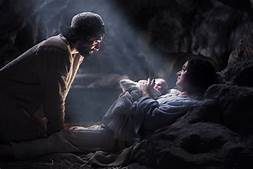
Do you find a tender moment to sit in the depths of a dank and dirty stable as a young mother sings a lullaby to the baby snuggled in her arms? Do you sing with the angels on high as they declare glory to God on high for offering a peace that surpasses our understanding? Do you search the streets of Bethlehem with the shepherds hoping to just catch a glimpse of the promised one? Do you long to offer gifts as precious as gold, frankincense and myrrh to the king lying in a humble manger?

Do you, like Simeon, rest in the assurances of God because you know you’ve seen the savior you’ve waited on all your life? Do you stand with confused parents as another devout servant of the Lord tells you of the hardship that will befall the child? Do you fear for the life of God’s son as the family flees from a bitter despot, intent upon killing him?

What verse captures your heart at Christmas?

I love the story of Christmas as it speaks to the all-encompassing love of a Father in heaven who planned from the beginning to redeem a world that he knew would push him aside. Paul reminds us of God’s intent.

“So, also, when we were children, we were in slavery under the basic principles of the world. But when the time had fully come, God sent his son…” (Gal 4:3-4)

God kept his promises to an unfaithful creation. Continued to love his people. Found ways to temporarily recapture their attention. Welcomed their return time and time again only to see them lose interest and drift away. Despite the constant heartbreak, God never gave up on his cherished creation.

Then, when the time was right…when they were ready…when we were ready…to hear his words of redemption, God offered a new covenant through the life, death and resurrection of his son.

So, as much as I love hearing the familiar Christmas stories in Matthew and Luke, I find the greatest words of Christmas in the gospel of John.

“For God so loved the world that he gave his one and only son, that whoever believes in him shall not perish but have eternal life.” (John 3:16)

The verse starts by noting the actor in this great work of salvation.

“For God…” God, the Almighty One, the Creator of all things, stirred with his finger each moment of history to ensure that which he created did not stray too far from the fold. He played the role of Good Shepherd keeping the wolves at bay until the time was right for him to act in an everlasting way. Man could do nothing to force God to act. Man could do nothing to make it happen on his own. Man invented the holiday, but God originated Christmas as an intentional act.

“…so loved…” It is hard to fathom the depth of that phrase. “For God so loved…” Discover in it a love beyond comprehension. God is the essence of unconditional love. His love will never be dependent on our actions. His love is sacrificial, freely given no matter how much it hurts him. No matter how many times his love is rejected. His love is offered as a grace gift.

“…the world…” Who, then, is the object of such all-encompassing love? The world. Not just a select few. Not just those who are obedient and good. He pours out his love for the just and unjust. The good, the bad and the ugly. We often restrict our love to those who look like us. Believe like us. Act like us. God’s love does not allow him to withhold his love from anyone. The world belongs to him and he loves all of it. That love compelled him to act on behalf of the world he created, the world he loved.

“…that he gave…” Love compelled him to give of himself without condition. A free gift available to all. He required nothing from us. Did not expect us to earn what he offered. No hoops to jump through. Nothing for us to prove. It was simply his present to you, to me and to the world around us.

“…his one and only son…” God’s gift was a part of himself. Wrapped in swaddling clothes and lying in a manger. His son grew up in a disconnected world, finding himself tempted in every way like you and I are tempted to abandon the will of his father. Yet, Jesus found the strength to reject every temptation at every turn. God gave us his beloved son. In his spirit-led humanity, Jesus lived a life of complete devotion to the Father, the perfect role model for when we struggle to live up to God’s standard. Jesus taught us what it means to live in the image of God.

“…that whoever believes in him…” Jesus lived as an example for us to follow. He died as a sacrifice. He died for a purpose. God’s greatest gift was to give a part of himself as a substitute for the sin of the world, an unmerited gift of life that required us to simply open it. To accept it. To trust and believe in the one who gave his life for us.

“…shall not perish but have everlasting life…” Jesus’ resurrection from the dead symbolized the new life available in him. Our belief in Jesus Christ as savior frees us from a spiritual death and an endless separation from the God who loves us so. Our trust in Jesus Christ as savior is an offer of new life eternal. To be wrapped in the arms of God’s love in the now and the forever.

Without a doubt, there is sweetness and wonder in the gospel stories of Jesus’ birth found in Matthew and Luke. The Christmas stories in these gospels lift my spirit, filling my heart with joy and hope. But John shows me how God directed his hand through time to orchestrate one of life’s greatest Christmas carols.

When it comes to explaining the joy and peace of Christmas, the entire Nativity narrative boils down to six little words…

“For God so loved the world…”

Merry Christmas and may God bless us…everyone!

With Gratitude to the Giver

Background Passage: 2 Corinthians 4:15; Psalm 9:1

I sat in the audience of my grandson Eli’s second grade Thanksgiving program at Turner Elementary School with my cellphone camera on record. The children, dressed in traditional Pilgrim suits made of construction paper and colored with crayons, shared the history of that first Thanksgiving feast among the Pilgrims and Native Americans. They recited their parts and sang a couple of cute songs. Eli, my oldest grandson, nailed the closing speech without stumbling over a single word, making his parents, his little brother and his grandpa quite proud.

The Thanksgiving story they shared with their parents had changed little from the somewhat sanitized version of that first Pilgrim settlement my classmates and I told our parents 58 years ago. No matter. The songs sounded delightful. The kids looked cute. Their excitement more than a little infectious.

One of the songs they sang struck a chord with me. A catchy tune to be sure, filled with expressions of thanks for things young children enjoy…recess, summer, friends, family, etc. It wasn’t so much the things for which they shouted their thanks that made me think. It was the question posed repeatedly within the song. “What are you grateful for?” We won’t quibble with the prepositional grammar. That’s not the point. The use of the word “grateful” rather than “thankful” caught my attention, making me think about the difference in these words we often view as synonymous.

Why is that distinction important to me? Gratitude seems to hold deeper meaning than mere thanks. I can say thank you to someone who opens a door for me when carrying a heavy box. I can express thanks to a friend who gives me a birthday card. I can express my thanks to the cashier at the checkout stand when they give back my change. Though they may be sincere in expression, they are far more often mannerly responses to ordinary acts.

Gratitude, on the other hand suggests a deeper feeling of inner delight that rises unforced from the heart. Not a verbal response, but an emotional outpouring. Gratitude is the feeling of joy that rises in one’s heart when thinking about the giver, not the gift. The doer, not the deed. The actor, not the act.

The apostle Paul, under the inspiration of the Spirit, chose his words carefully…always. I sometimes think those who translated the original scripture into the various translations of the Bible available to us today were less careful, choosing words that fit more readily into the common vernacular of their intended reader.

Paul wrote his second letter to the Corinthian church and spoke of the difficulties faced in presenting the gospel in a hostile world, giving God the glory for every inch of progress made in spreading the gospel of Christ. Paul spoke of his willingness to suffer and the future hope he had in Christ.

“All of this (suffering and effort) is for your benefit, so that the grace that is reaching more and more people may cause thanksgiving to overflow to the glory of God.” (2 Cor. 4:15)

I’m not a Bible scholar learned in Greek. Any insight I have into the scripture, especially as it makes distinctions in the choice of Greek words, is a gift from commentaries and commentators more gifted than I will ever be.

It seems in this passage, the translator’s use of the word thanksgiving missed the mark, the unique play on words, that Paul originally expressed. The Greek word for grace is charis. The Greek word for thanksgiving used in this passage is eucharistian, derived from charis or grace. Eucharistian is often translated gratitude. So Paul essentially says, “so that the grace that is reaching more and more people may cause gratitude to overflow to the glory of God.”

In other words, gratitude grows best in the garden of God’s grace…a direct response to the unmerited gifts from the Father…the feeling of inner joy you hold for one who has graciously given to you.

In Paul’s passage to the Corinthians, Paul knows that as God’s grace draws more and more people to him, those who now recognize themselves as recipients of God’s grace have joy swelled up in their hearts toward the one who extended grace to them. A cycle of grace and gratitude born from God’s extended grace to us that circles back to cause our own heart to jump for joy and gratitude toward the one who was so gracious to us.

So here’s the point I’m probably not making very well. It’s Thanksgiving. During this holiday we take ample opportunity to offer thanks to God for those things in which we delight. Family. Friends. Health. Work. Community. Freedom. Smiles. Laughter. Memories. Hands to hold. Perhaps we find ourselves thankful even for recess and summer. These are among the many blessings for which we give thanks.

Care must be taken that our thanks do not end with the gift. Care must be taken to express our heart-felt gratitude to the giver of all of these blessings. The one who graced us with these life gifts. The God whose grace and gifts are sufficient in every way.

Paul said as the gospel of Christ spreads throughout the world that it causes “gratitude to overflow to the glory of God.” God’s greatest gift of grace through his son, Jesus Christ, causes our gratitude to overflow and glorify God. I like that idea and think it offers great insight into the true nature of Thanksgiving. Our gratitude for the blessing of Christ in our lives, the blessings he gifts us with in life, still must overflow to the glory of God.

So, I’ll ask the question that Eli and his classmates asked, “What are you grateful for?”

When you answer, join me and let your gratitude extend beyond the gifts. Let your gratitude glorify God as the giver of every blessing.

“I will give thanks to you, Lord, with all my heart; I will tell of all your wonderful deeds.” (Psalm 9:1)

Chase the Lion

Background Passages: II Samuel 23:20; Jeremiah 29:11

The list of places to see and things to do on our imaginary bucket list grows shorter each year. One particular trip remains unchecked. We want to go on a photo safari to Africa. After far too many trips to the zoo, I’d really like to see these magnificent animals in the wild…the way God intended them to be.

Certain movies create that kind of visceral response. The Ghost and the Darkness, a 1996 movie starring Michael Douglas and Val Kilmer, is one of those movies that triggers primal fear within me. The Ghost and the Darkness is based on a true story about the Tsave Man-Eaters…two African lions that terrorized the workers on the Uganda-Mombasa Railroad in western Kenya in 1898. Atypical of most lion attacks, Ghost and Darkness would stalk the campsite and drag their victims from the tents into the tall grass.

Work on the project ceased when the workers refused to enter the area. The railroad company hired famed British hunter, John Henry Patterson to track and kill the lions. In the story of man versus beast, the hunter became the hunted as the animals began intentionally stalking Patterson. Every time I watch it I find it absolutely terrifying. That we have yet to go on our photo safari may best be explained by that movie and my irrational fear of being mauled by a lion.

Maybe that’s why an obscure verse in II Samuel caught my eye.

“Benaiah, son of Jehoiada, was a valiant fighter from Kabzeel who performed great exploits. He struck down two of Moab’s best men. He also went down into a pit on a snowy day and killed a lion.” (II Sam. 23:20)

I don’t know why Benaiah felt compelled to jump into the pit with a lion when most of us would run the other way. It was cold. Snowing. Perhaps the lion’s ordinary prey grew scarce in the frigid temperatures. Maybe the lion was terrorizing the village. Regardless, Benaiah took it upon himself to chase the animal down. When it fell into a pit or tried to hide in a cave (depending on your translation), Benaiah jumped in after him.

If you stayed outside the pit like I would, you would probably hear the frightening roar of the angry lion and the shouts of a determined man. The sounds of a life and death struggle would echo from the depths. Then, silence. You might hear the scratching of someone or something scrambling up the walls of the pit. As you start backing away, you see a hand grab the overhanging tree branch. Benaiah drags himself out of the pit. He lies in the grass catching his breath, scratched and bloodied, but victorious.

In his book, Chase the Lion, author Mark Batterson uses this little known scripture to challenge the reader to face fear and chase the will of God even when the path looks far too difficult. He writes, “In every dream journey there comes a moment when you have to quit living as if the purpose of life is to arrive safely at death. You have to go after the dream that is destined to fail without divine intervention.”

As Christians we are taught from the beginning that God has a plan and purpose for our lives. What most of us find is that the dream he gives us scares us. His will looks far too difficult. Our natural tendency is to reject what looks too hard. We look for an easier path. But, Jesus told his disciples, “If anyone would come after me, let him deny himself and take up his cross daily and follow me.” (Luke 9:23) In other words, I should set aside my own will and desire to follow the more difficult path God has chosen for me…the one that requires me to take up his cross every day.

He doesn’t call us to play it safe. If that was his intention, we would have little need for him. No. The life he chose for us will not be easy, but the victory is already won. Later Jesus said, “I have said these things to you, that in me you may have peace. In the world you will have tribulation. But take heart; I have overcome the world.” (John 16:33)

God’s plan for each of us requires us to chase the lion. That’s not always the most comfortable thing to do. We see the path God has laid out in front of us. Solitary lion tracks in the snow. A distant blood-curdling roar. Suddenly, we see clearly that God’s path takes us outside our comfort zone, especially when the path we want to take looks well-traveled. Smooth. Secure. Safe.

The Bible gives us examples beyond Benaiah of those who chose to chase…

Noah chased his lion onto the ark.
David chased his lion to Goliath.
Jesus chased his lion to the cross.
Peter chased his lion onto the water.
Paul chased his lion to Rome.

Lest we think such courage is best left to Bible characters…

Martin Luther tacked his lion’s carcass to the door of the cathedral.
The Pilgrims chased their lion to a new world.
Dietrich Bonhoeffer chased his lion to a Nazi concentration camp.
Martin Luther King chased his lion to Selma.
Billy Graham chased his lion across the earth.

Knowing the difficulty of the task to which God called them, each of these biblical and modern day heroes of faith probably wished to run the other way at some point. Instead, they chose to chase the lion. Maybe at some point, they heard the same voice Joshua heard when he fearfully scanned the Promised Land from the safety of his bank of the Jordan River. Maybe they, too, heard the voice of God saying,

“Have I not commanded you? Be strong and of good courage. Don’t be afraid. Do not be discouraged, for the Lord your God will be with you wherever you go.” (Joshua 1:9)

I don’t know what lions you’re facing. I know they all look frightening. I have faced a few of my own. All I know is that God wants us to chase his will. To follow where he leads. When we turn and run the other way, we’re missing out on the best God has to offer simply because it is his plan and not one we dreamed up on our own.

“I know the plans I have for you,” declares the Lord. “Plans to prosper you and not to harm you. Plans to give you hope and a future.” (Jeremiah 29:11)

So when you hear the lion roar, know that his blessing comes in the chase. Our victory comes in the pit. Gather your courage and jump on in.

The God of ‘Even If…’

Background Passage: Daniel 3:1-18; Romans 8:28; Matthew 28:20

Their attitude and hard work earned them more than a few unexpected rewards. From the depths of despair and slavery, they rose through the ranks of service, ultimately gaining significant appointments as administrators in the court of the king. They made it through the worst times to achieve a level of success beyond what they imagined when they were first swept into Babylonian captivity.

Assuming the new names given to them by the king, Hananiah, Mishael and Azariah, became Shadrach, Meshach and Abednego. Their story is a familiar one if you grew up in church as a child. The king passed a decree for all the people of the land to bow down and worship a monstrous monument constructed in the likeness of the monarch. Anyone who refused to kneel faced an unpleasant death.

In an act of spiritual and civil disobedience, the three men who placed their faith and trust in the God of Israel refused to bow down. The king’s jealous advisors, whose hatred for the Hebrew men grew more bitter by the day, knew they would not bow. In fact, they counted on it.

When Shadrach, Meshach and Abednego stood head and shoulders above the kneeling masses, these advisers were quick to arrest and parade them before the king.

Though the king was not pleased that they ignored the decree, he liked these men. Respected their decency. Approved of their approach to business. He wanted desperately to pardon them, but his hands were somewhat tied. He offered them an out. A way that would save their lives and allow the king to save face. “Just bow down now in the privacy of my throne room with no one else looking and all will be forgiven.”

You know they story. They refused. Ended up tossed into a furnace that was hotter than hot. Yet, God protected them from the flame. The king, realizing the power of the Hebrew God, reversed his ruling and freed the men from their punishment, offering homage to their God.

While somewhat gruesome in concept for a seven-year-old, this was one of my favorite Bible stories as a child. I pictured the three not as men, but as boys just older than me. I pictured an unimaginably hot furnace that melted the skin off anyone who got too close. That kind of gore appeals to a young boy. Yet, the story tells of a mystery man of God walking in the flame protecting the three boys who scarcely broke a sweat. An incredible story of courage and faith equal to Gideon and his fleece. Daniel and his lions. David and his giant.

When I read that story today, I’m captured not by the special effects, but by words these men uttered when the king offered them a second chance to fall on their knees and worship him. They faced their king and their judge, expressing their belief that God could deliver them from the blazing furnace if he chose to do so. Complete and utter understanding that God’s power is capable of anything. Such amazing faith!

However, the next words set them apart from most of us who proclaim faith in God. They said, “Even if he does not…we will not serve your gods or worship the image of gold you have set up.”

“Even if…” Faced with the furnace, they boiled their faith down to these two words, “Even if…” That carries it to the next level, doesn’t it? It is one thing to say, “I’m certain God will deliver” and really believe it. That belief is tested to the extreme when deliverance fails to come. It’s another thing to stare into the flames and say, “Even if he doesn’t, it will not change who I am, what I believe or what I will do.”

How do you respond to these “even if” moments?

God, I know you can heal her of this cancer, but even if…

God, I know you can help me land this job, but even if…

God, I know you can protect me from this hurricane, but even if…

God, I know you can walk me through these horrible circumstances unscathed, but even if…

These “even if” moments can make or break us. Make or break our faith. A loved one passes away and we shake our fists certain God doesn’t care. The job we need to provide for our family goes to someone else and God somehow failed us. Wind and water inundate our homes and we question his love and power. Life takes an expected twist and we wonder why we can’t see his presence.

Confident faith comes relatively easily while we’re standing in the palace talking to the king. Demonstrating a furnace kind of faith when you start feeling the heat, well, that’s another matter entirely. But, God is the God of the “even if…”

The Bible tells us this. “And we know that in all things God works for the good of those who love him, who have been called according to his purpose”…even if the outcome is not what we desired. Even if we cannot at that moment feel his presence. Even if it means walking straight into an all-consuming fire. Even if life does not turn out as we thought it would, our faith must remain firmly in the hands of a loving Father for the hope of what life will be once we emerge on the other side.

Take comfort in the promise of Christ. “I will be with you always to the very end of the age.”

I never heard the song before this week. Knowing the unusual and difficult circumstances many of my friends face today, knowing the struggles of those whose homes have been blown apart or wash away, I find the song comforting. I believe God could have calmed the storm, but… Bart Millard, lead singer with MercyMe, wrote this song while dealing with the uncertainty and turmoil of life with a young, diabetic child. “Even If,” reminds us that difficult situations in life sometimes linger without the resolution for which we pray. When it seems we can’t catch a break and no one is listening, God will always be our best and only hope.

The song expresses a powerful message that reminds us of our utter dependence on the Father’s grace. I am particularly drawn to this verse.

“It only takes a little faith to move a mountain.
Well good thing, a little faith is all I have right now.
So, God when you choose to make mountains unmovable.
Give me the strength to be able to sing,
It is well with my soul.

I know you’re able
And I know you can,
Save through the fire
With your mighty hand,
But even if you don’t,
My hope is you alone.”

I don’t know if you’re facing the furnace today. If you’re not there now, you probably have been in the past or you probably will be some time down the road. Know this with all your heart, God is able to do anything we ask of him. But, even if he doesn’t, even if that which we want to avoid falls upon us anyway, God, and God alone, remains our best hope.

Listen to the song and be encouraged. I was.


Help My Unbelief

Matthew 17:14-21; Mark 9:14-29; Romans 8:26-27

Life can change in a heartbeat. One moment we are dancing on the mountaintop. The next moment we are trudging through the muck in the valley. One moment buoyed in faith. The next set upon by a world cloaked in doubt.

Jesus moved so easily between his mountaintop experiences and those moments that surely sucked the breath from his lungs. We find one such episode following the Transfiguration. Jesus found himself wrapped in the arms of his Father God, strengthened by his Father’s presence. Within moments, he was immersed in a pitched battle of wills that stripped away the deep sense of peace he enjoyed at the top of the mountain.

Halfway down the mountainside
Jesus heard
the first echo of angry shouts.
Glanced at his three trusted friends,
heart beating faster.
Quickening their pace,
they scurried down the slope toward
the sound of madness.
In a heartbeat,
Jesus traded the
tranquility of the transfiguration
for the
frenzy of a fight.

Reaching the bottom of the path,
Jesus pushed through a bewildered crowd
to find his disciples squared off against
an equal number of scribes.
Hurling insults at one another.
Jesus stepped to the center of the melee.
The crowd grew quiet.
Silenced by Jesus’ sudden appearance.
The bitter argument of rivals
Ceased when Jesus stepped into the clearing.

His eyes shifted back and forth between
the scribes and
his disciples.
Jesus turned to Simon the Zealot
standing at the front of the disciples
Fists clenched.
Jaw set in anger.

Tilting his head toward the scribes,
Jesus asked in a wary voice,

“What are you arguing with them about?”

The quarrel erupted anew.
Each side shouting.
Pointing fingers.
Jesus cringed at the hostility.

Before Jesus could silence them,
a man grabbed his arm.
Caught his attention.
Something in his eyes convinced Jesus
to walk with him a short distance
from the heated confrontation.

“I brought you my son today…”

And the words flowed unrestrained.
First a halting trickle of detail.
Then a torrent of despair.
Unburdening his heart to a healer
concerning the nature of the severe illness
that plagued his son for years.
Growing worse with each passing day.
Sapping the boy’s strength.
Threatening his life.

“I asked your disciples to heal him
but they could not.”

The scribes who had followed from a distance,
erupted in laughter.
Seized the opportunity to belittle the disciples
and their master.
The failure of the disciples
opened the door for them to
discredit Jesus for their incompetence.

The disciples.
Seeing the pained look in Jesus’ eyes,
studied the ground at their feet.
Defiance before the scribes turned to
embarrassment and shame.

Jesus ran his left hand through his hair,.
Rubbed his eyes.
Smoothed his beard.
Deep in thought.
The shake of his head almost imperceptible.
A heavy sigh escaped his lips.
The master spoke quietly to his disciples.

“Oh, faithless generation.
How long shall I stay with you?
How long shall I put up with you?”

He turned to the father.
“Bring the boy to me.”

We learn something about Jesus in this passage that instructs us about living in the moment. Jesus just experienced the most moving moment in his earthly life. In the ultimate of mountaintop experiences, Jesus’ work gained affirmation from the father in the presence of Moses and Elijah. For a brief time, Jesus walked in the bright light of God’s presence and praise.

Every one of us can relate for all of us have longed to hear our father’s praise…to hear our father’s words of love. Jesus stood in the middle of a heavenly scene and heard his Father proclaim, “This is my Son, whom I love. Listen to him.”

Can you imagine the overwhelming joy of that personal and poignant moment? More certain than ever of his role in God’s plan to redeem humanity, Jesus committed himself again to the cross. It was the assurance he needed.

Jesus shared that experience with his three closest friends. In the afterglow of the Transfiguration, I can see them standing in a circle with their arms around each other’s shoulders, foreheads almost touching in that prayerful and mind-boggling moment. Expressions of wonder plastered on amazed faces. “Did we see what we just saw? Did we hear what we just heard?”

What a tremendous moment of absolute joy!

Within the hour, though, Jesus found himself in the valley, facing yet another human crisis. He just reaffirmed his commitment to the cross only to find his closest followers baffled and beaten in the task for which he had called them from their tax tables and fishing nets.

In that moment when the disciples could no longer look him in the eye, Jesus must have felt the weight of the world again upon his shoulders. Gone was the aura of glory. In its place, the painful reality of the work that still needed to be done. To go to the cross would be difficult enough. The change human nature might be the more hopeless task. If he could not capture the trust of those closest to him while he was present among them, how could their faith survive the cross?

How often have our mountaintop experiences been followed by that which seemed hopeless? The joy of the mountain rarely survives the walk in the valley. In that moment of crisis, how do we cling to a shaken faith?

Jesus provided an answer. The savior didn’t let his moments of despair overwhelm him. At a time when he surely wondered if mankind would ever find the faith they needed, he did the one thing he knew he could do. He changed the circumstances of a little boy. He changed what he could.

Living as a Christian in an angry, despairing world challenges our faith. Begs us to make a difference. We wonder how we can impact a world that refuses to listen? What can one person do? We lose heart. Lose faith.

Jesus teaches us in this episode that we draw upon the reserves of faith energized on the mountaintop to enable us to deal with the inevitable valley moment. To not let the faithlessness of the world drain our energy or resolve. Jesus shows us that we fight through the episodes that discourage us, finding that thing we can do and doing it, rather than giving in to our despair.

That, my friends, is a lesson I need to learn in this day as I grow so frustrated with the rancid animosity and argument so prevalent in society. When I wonder what I can do to change the world I need only follow Jesus’ example. His example tells me to change what I can. We were not saved by God to stay on the mountain, but to get down in the valley and change what we can.

This passage teaches another great lesson about coming to terms with our struggling faith. God uses even our shrouded faith to accomplish his will. A little is often enough.

Join me back in the story. Jesus asked the father to bring the boy to him. The father obediently carried his boy to Jesus, standing him in front of the great healer. Immediately, the young boy suffered another seizure…violent and terrifying. As the boy fell to the ground trembling, I can imagine Jesus dropping to his knees, placing his hand on the boy’s chest, trying to quiet the tremors.

With his eyes never leaving the boy, Jesus asked the father, “How long has he been like this?” The question was not a medical inquiry. Rather, hear the heartfelt compassion Jesus felt for the misery suffered by an innocent child. The father shared more of the boy’s story and finally asked the favor he wanted to ask of Jesus when he approached the disciples earlier that day. “If you can do anything, take pity on him and help us.”

Jesus looked up at the father, “If you can?…” Hoping to see a glint of faith reflected in the man’s eyes. “Everything is possible for him who believes.”

With tears in his eyes, the father responded, “I do believe, but help me with my unbelief.”

What a true confession of this father’s heart. What a true confession of my own soul. He came seeking Jesus. When Jesus was absent, he thought he found the next best thing…Jesus’ disciples. Whatever faith he brought to the mountain was thrown to the wind by the disciples’ inability to help. The result left him so discouraged that all he could muster when Jesus asked his question was a whispered plea, “If you can…”

Face to face with Jesus, his fragile faith bubbled to the surface. Oh, how his words echo how I feel at times. “I do believe, Jesus. I believe, but I am so discouraged. Doubt is my constant companion. Please, Lord, take away the uncertainty and replace it with unquestioned belief.”

God moves when imperfect faith cries out to a perfect savior. Belief, though flooded with doubt, calls out to the only one who can fix that which is broken. “If you can….” The Father’s prayer is often my prayer. The father’s doubt is my doubt. The father’s reservation is my reservation. I live all too often in this shallow faith, hoping it is enough.

That’s always what I thought this verse taught as if God were saying “If only your faith were stronger, I could act upon your request.” I suspect there is a measure of truth in that interpretation. However, I look at the verse and wonder if Jesus did not hear the father’s profession of doubt-filled faith as sufficient. Might Jesus be telling him, “Listen, everything is possible for him who believes. Give me whatever faith you have, no matter how limited, because my belief in the father is big enough for both of us.”

Follow me again to the story.

Evening comes.
Jesus and his disciples
lay upon the roof of a house,
staring at the stars glittering the night sky.
Tired after a long day.
But sleep will not come.

In the silence surrounding them,
The disciples think about what happened.
Weeks prior they walked two by two
preaching, teaching and healing
in the power of God.
This morning,
when the father lay is son at their feet…
Dismal failure.
Humiliation.
Embarrassment.
From the mountaintop to the valley.

A raspy voice breaks the silence.
Maybe Simon the Zealot.
Mustering all his nerve,
asks the question all wanted to ask.

“Jesus,
Why could we not heal the boy?”

In this teachable moment, Jesus spoke quietly.
“This kind of thing requires prayer.
This kind of thing requires faith.”
Thinking back on the father with feeble,
but sincere faith,
Jesus added,
“Faith as small as a mustard seed
can move a mountain.”

Hyperbole? Maybe. But maybe this story hits upon the central truth of the matter. Jesus doesn’t ask us for perfect faith because we are imperfect. He asks for whatever faith we have to be placed in his hands…If for no other reason that he has enough faith in the grace, goodness and the power of God for all of us as he lifts our needs to the Father in heaven.

Paul shared this with the church in Rome.

“In the same way, the Spirit helps us in our weakness. We do not know what we ought to pray for, but the Spirit himself intercedes for us with groans that words cannot express. He who searches our hearts knows the mind of the Spirit, because the Spirit intercedes for the saints in accordance with God’s will.”

Place at his feet whatever faith we have and he will take it to the throne of God with the perfect faith of the Spirit.

So, I like this story because we can identify at times with Jesus who came off this amazing mountaintop experience only to find disorder and disarray. Next time we come off a spiritual high, we can look amid the inevitable chaos, as Jesus did, for what we can do and we can do it.

Then, if we find our faith blanketed by the mist of doubt, like the father in the story, let’s give Jesus all the faith we hold no matter how small. Declaring before God, “Help us in our unbelief.” And knowing more that his trust in the Father is enough for all of us.

Plant your mustard seed. Move a mountain.


In Damascus, There Was A Disciple…

Background Passage: Acts 9:1-25; Acts 22:13-16

The light flashed and the world would never be the same.

In one of the most familiar passages in the New Testament, an ambitious and zealous young Pharisee, emboldened by the stoning of Stephen, begged for a chance to carry the persecution of Christians beyond the walls of Jerusalem. With letters of authorization in his pocket, Saul set out for Damascus breathing the fire of fanaticism, intent upon finding the followers of the crucified Christ and dragging them back to Jerusalem for punishment. A man on a malicious mission.

With the walled city of Damascus on the horizon, a blinding light seared his retinas and knocked him to his knees. He cried out in shock and pain only to be silenced by a voice calling his name.

“Saul, Oh, Saul. Why do you persecute me?”

In the course of a powerful conversation on a dusty road, Saul came face to face with the brutality of his deeds and the reality of the living Lord.

“I am Jesus, whom you are persecuting. Go into the city. You will be told what you must do.”

We know this story as the conversion of Saul. The redeemed missionary of God told of his encounter with Christ over and over again. A testimony and tribute to the unmerited grace of God.

The light on the road to Damascus changed the heart of a man who would become the world’s greatest missionary and the agent of redemption to the Gentile world. Saul’s was a life so transformed that he needed a different name. We now know him as Paul. It’s a wonderful story of God’s transforming work in his world.

From that moment on, Paul played a starring role in the spread of the gospel, but his supporting cast contributed to his success. Barnabas. Silas. Timothy. John Mark. We can list name after name of those who traveled with Paul. Assisting in his work. Staying behind in isolated locations to grow the seeds of faith he planted.

One name we tend to overlook took Saul’s hand in his blindness and called him “Brother.” Let me introduce you again to Ananias.

He climbed the narrow stairs
to the roof of his home.

A cool breeze blew in from the sea,
refreshing his body and soul.
From this vantage point,
Ananias could watch the sunrise
cast its reddish glow over the eastern hills,
reflecting onto the wispy clouds streaked across the sky.
On the rooftop.
The perfect way to start each day.

Ananias stretched his arms over his head.
Stood on his tiptoes
to loosen aching muscles,
stiff and sore after a fitful night’s sleep.

Sitting on the parapet of his home,
legs dangling over the side,
Ananias sipped a cup of goat’s milk.
Listened to the familiar sound of his wife
preparing breakfast for the family in the room below.

Despite the peaceful surrounding,
he could not shake the sense of unease
as he thought about last night’s dream.
He could picture it as clearly as if
it actually happened.
Hear the conversation as surely as if
God sat beside him on the wall.
He walked it through again in his mind.

A voice called…

“Ananias.”

“Yes, Lord.”

“Go to the home of Judas on Straight Street.
Ask for the man from Tarsus named Saul,
for he is praying.
In a vision he has seen a man named Ananias come
and place his hands on him to
restore his sight.”

Over and over in his mind, he heard,
“…a man from Tarsus named Saul…”

…”Go…”
“Go…to Saul…”

Ananias felt his stomach roll again.
“This makes no sense…”

Saul’s reputation preceded him.
So much anger in this Pharisee.
So much harm to the saints in Jerusalem.
Ananias knew the rumors.
Saul was coming to Damascus to spread his terror.
To arrest every follower of Jesus that he could find.

The voice in his dream
urged Ananias to go as instructed.

“He is my chosen instrument…”

God had a plan.
Ananias had a part to play
in that plan.

Shaking himself from his reflection,
Ananias took a deep breath.
Climbed down from the roof.
With a faith deeper than his fear,
he walked through town to Judas’ home.

Ananias stopped short at the sight of the temple guards
gathered around the campfire.
Their presence
triggered his desire to run.

He steeled his resolve.
Stepped forward.
Stared straight ahead.
Walked slowly through the soldiers
as they began to rise.
Hands on the hilt of their swords.

The door to the home opened before he knocked.
They had expected him.
Ananias stepped over the threshold.
Closed the door.
Let his eyes adjust to the dim light.

Saul sat facing the fire.
Blind eyes stared vacantly into the flame.
Lost in private pain.
A face etched with guilt.
The once proud Pharisee rocked
absent-mindedly on the small stool.
Lips moved in silent prayer of
remorse and repentance.

Ananias stood without moving.
Fought the desire to turn and go.
But, when he saw the tears well in Saul’s eyes,
the disciple’s heart broke.
For the first time he saw Saul.
Not his fine robes.
Not his rage.
Not his reputation.

He saw Saul.
He saw the broken heart of a
despondent and despairing soul.

Ananias found himself standing beside Saul
without remembering the steps it took to get there.
He followed Saul’s gaze into the fire,
With tears in his own eyes,
he laid his hand gently on Saul’s shoulder.
After a moment of shared silence,
Ananias spoke in a voice soft and sincere,
“Brother Saul…”

With those words
the scales of physical and spiritual blindness
fell from Saul’s eyes.
New sight.
New insight
Into his purpose in life.

Scripture reveals so much about how God used Saul, or Paul, as he was later known, to take his good news to the Gentile world. This former zealous Pharisee became the world’s most ardent servant of Christ and arguably, next to Jesus, the most important man in the Christian faith.

By contrast, we capture what we know of Ananias only in this story and in one small reference in Acts 22. Here he is called simply “a disciple.” In Chapter 22,  a “devout observer of the law” and a “man highly respected by the Jews” in Damascus.

We don’t know when Ananias became a follower of Christ. Maybe he heard Jesus preach and put his trust in him on a Galilean mountainside. Perhaps, he was a Jew who had traveled from his home in Damascus to Jerusalem for Pentecost and heard Peter proclaim the gospel. Maybe, a friend told him about the resurrected Christ he saw in the upper room. Regardless of how it happened, Ananias was a disciple.

Yet, his actions tell us so much more about this follower of Christ. It’s notable to me that he is called a disciple and not a pastor or evangelist. Not a deacon or an elder. A disciple. A follower. A learner. As a man who professed his faith in Jesus Christ, Ananias spent his time trying to figure out what that meant and how he should live as a result. He was a man much like you or me.

Ananias enjoyed a wonderful reputation as a student of Old Testament scripture and one who lived obediently to its teachings, a likely hold over to his Jewish upbringing. When introduced to Jesus either in person or through the witness of others, the encounter changed his life. He accepted Jesus as the Messiah promised in scripture. The passion he held for his faith as a Jewish man found its fulfillment in Jesus.

Despite his break from the prevailing Jewish doctrine, Luke tells us in his account that his reputation among the Jews in Damascus remained unsullied. They could find no fault in him. As followers of Christ we ought to have that glowing reputation in our own communities. The world should know us as a Christ followers. As learners. As people who take the principles of Christian living so seriously that it directs the way we live. We see in this passage, Ananias’ commitment to Christ.

We also see in the lines of this story, the courage of his conviction. The religious leaders in Jerusalem sent Saul to Damascus to rain down havoc. He had papers to prove it. In all likelihood, Ananias was on Saul’s hit list. Christians in Damascus knew Saul was coming. His reputation for ruthlessness frightened them. He brought with him a promise of prison, punishment and death.

I suspect many of the Christians fled the city in advance of Saul’s arrival…but Ananias stayed. We don’t know why. Maybe he thought, “What good is my conviction if I choose to disown it at a difficult time or run from it in the face of adversity?” When others ran, Ananias stayed.

With the call of the Holy Spirit, Ananias not only stayed, but he made himself available to do the brave and the unthinkable. The Lord called and Ananias answered as Samuel did. “Yes, Lord. I’m here.” He did not know the mission…not yet…but he opened himself to the possibility of being used by God.

Ananias may have shown his inner Samuel, but he also channeled his inner Gideon when God told him what he needed him to do. Jesus planted the seed of salvation in Saul’s heart. The Holy Spirit needed Ananias to close the deal. To lay hands upon this broken man and welcome Saul into the fellowship of believers.

“I’m here, Lord, but did I hear you right?” When presented with God’s plan, Ananias sought clarity and understanding. The whole idea of going to Saul was counter intuitive.

“I have heard many reports about this man and all the harm he has done to YOUR saints in Jerusalem. And he has come here with authority from the chief priests to arrest all who call on your name.”

Ananias and I share a common trait with Gideon. Our short-sightedness gets in our way. You see, most of the time our vision is unable to see beyond our fear. God’s perspective…his vision…takes in history and future in a moment’s glance. Our failure to act upon his direction cancels the blessings that come from playing the role God needs us to play.

Sometimes our myopic sight needs clarity that only God can give. I think God delights in our desire for understanding if it comes from the heart. When Ananias questioned the sanity of confronting Saul, God answered, not with recrimination, but with a promise. “Go! This man is my chosen instrument to carry my name before the Gentiles and their kings and before the people of Israel.”

Sprinkling the fleece with dew, God told Ananias, “I need you today. I’m counting on you because this man is a game changer, but he needs to see that my people are willing to embrace the change in his heart. You’re step one in this process, Ananias. I need you to do this for me.” With the fleece sufficiently damp, Ananias went where he was told. We must be ready to do the same.

I’m not sure when Ananias’ heart truly turned. I suspect he was talking himself into doing what the Holy Spirit led him to do before he made the turn down Straight Street. I suspect he didn’t know for sure how he would react when he came face to face with Saul. His heart changed, however, when he saw the man, humbled, hurting and blind, sitting before the fire.

Can’t you hear it in his voice, choking back the emotion of the moment as he placed his hand upon his shoulder, “Brother Saul…” In this moment, in those two words, we underscore the compassion of Ananias. His words, his touch, stitched the open wound of Saul’s remorse that had to be closed and healed before he could be used by God for great and mighty things.

“Brother Saul.” The whole gospel story hinged on those two words and the world would never be the same.

I don’t know about you, but I find it pretty easy to be a disciple of Christ in the broad sense of the word. I enjoy learning about Jesus and how my relationship with him needs to be evidenced in my life. It’s much harder to move beyond the learning and into the listening. To the obeying. To playing the role I hear God calling me to play. Drawing upon the courage of my conviction to risk even as much as a mere insult…I find that much harder to do.

Ananias reminds me that God asks me to be available. To set aside fear and uncertainty to follow where he leads, even if that means walking through a platoon of temple guards to stand face to face before my persecutor. He reminds me to see clarity of God’s intentions and to accept that the view from heaven is infinitely broader and wiser than mine.

I learn from Ananias that the smallest act of obedience can have great significance. The simplest act…calling a troubled soul “my brother…” may be all it takes to change the world.

Look For What’s Chasing You

Background Passages: Psalms 23:1-6

It played out almost as a modern day reality television show. God’s prophet traveled into the Judean hills near Bethlehem to find Jesse, a leading member of the community and the father of several sons. Displeased with Saul’s leadership as king, God told Samuel to anoint a new king from among Jesse’s sons.

After a lengthy sacrificial ceremony, Jesse paraded his sons in front of the prophet starting with the eldest, Eliab. One by one they came. One by one Samuel rejected them. Jesse never bothered calling his youngest from the field where he tended the sheep. Who would have considered the least of his children as the heir apparent to the throne of Israel?

Eventually, servants were dispatched to bring David to the house. As soon as he appeared, God made it clear to Samuel that David was his chosen king. Samuel poured oil upon David’s head, anointing him as the future king of his nation.

Can you even imagine that moment in David’s life? He knelt in front of Samuel more than a little bewildered at the ceremony unfolding around him. The look on his father’s face a blend of astonishment and pride. His brothers’ stood still, shocked at the unlikely turn of events. David bowed his head. Felt the warmth of the oil flow through his hair and down his cheeks. His mind racing. The prayers offered by Samuel were little more than a dull droning in David’s ears.

Then, it was over. With little preparation or fanfare, David packed a few things and followed behind God’s prophet as they returned to Samuel’s home. When they reached the crest of the hill, I suspect David looked over his shoulder at a home to which he would never return.

I wonder how long it took after that unlikely moment for David to realize how drastically his life had changed. The moment the oil streamed down his face, David’s life took a different path. His life would never be as simple. Never as sane. Never the same.

His life unfolded rapidly. Living in Saul’s palace. Slaying a giant. Alternately threatened and embraced by a mercurial king. Running for his life. Forging lasting friendships. Fighting battles. Hiding in the desert with a ragtag group of followers. Crowned as king. Ruling wisely. Making mistakes.

David’s long life passed as a mixture of spectacular achievements and dismal failures. Through his fame and his failures, his faith and his faithlessness, David always returned to his God.

I picture a time late in life as David stood on the rampart of his palace, gazing across the valley at the shepherds herding their sheep into the pen for the night. Maybe he envied the life he once had. Maybe he longed for the day when he could sleep soundly with his head on a shepherd’s rock rather than lying anxiously awake with his head on a king’s pillow.

I think it was a night like that when David wrote Psalms 23. Perhaps it was at the end of a chaotic day, that David remembered the Lord’s shepherding faithfulness throughout his life.

“…I shall not want…”
“…green pastures…quiet waters…”
“…a restored soul…”

“…a guided path…”
“…a troubled walk…”

“…no fear…”
“…you are with me…”
“…you comfort me…”

“…a table prepared…”
“…an overflowing cup…”

I read again this beloved Psalm in the middle of a frenetic and frantic week. I look back, as David did, grateful for God’s shepherding companionship. Then, I read the last verse of David’s familiar song with eyes opened to a thought I never considered.

“Surely goodness and mercy will follow me all the days of my life and I will dwell in the house of the Lord forever.”

The verse always struck me as a doxology, a closing statement meant simply to tie the psalmist’s thought together. David’s “sincerely yours” to those who might read his poem. Yet, this time I noticed so much more.

Note the confidence in his choice of words. David is convinced of God’s constant care in his life. He begins the passage,

“Surely…”

Take it as an absolute certainty…a no-question-about-it, without-a-doubt, kind of word. The psalmist is convinced of the words he speaks next because his life experiences proved its truth over and over again.

“…goodness and love (mercy)…”

David lives each day confident of God’s goodness and love.

What is God’s goodness? Think of every attribute you ascribe to God. Loving. Patient. Wise. Powerful. Truthful. Faithful. Comforting. The list goes on and on. God’s goodness is defined by his total character. All that he is, all that he will ever be, is good. There are other Psalms that express the sentiment.

“Give thanks to the Lord for he is good.”
Psalm 107:1

How great is your goodness which you have stored up for those who fear you.”
Psalm 31:19

David found God’s goodness in his provision…

“…I shall not want…”
“…a prepared table…”
“…an overflowing cup…”

David found God’s goodness in his peace…

“…green pastures…”
“…still waters…”
“…restores my soul…”

David found God’s goodness in his protection…

“…no fear of evil…”
“…rod and staff comfort me…”

The good news is that we can find what David found. God’s goodness remains the same today as it was before. He offers his children his provision, peace and protection. It is his nature. It is who he was yesterday. Who he is today. Who he will be tomorrow. God’s goodness is eternal.

What is God’s love?

David found God’s love, his mercy, in his unsurpassed gift of grace that extended his forgiveness to cover the ugliness of David’s sin. David found God’s love evidenced in his unwillingness to let David go despite his willful ways. David did some despicable things, yet God never gave up on the one who was “after his own heart.”

God’s love is what compels him to leave the 99 sheep to find the one. To turn his house upside down to find a single lost coin. To hike up his robe and sprint down the path when he sees his prodigal returning home. God’s love is found in his willingness to embrace the agony of a cross to redeem the unworthy…just like you. Just like me.

David’s song connects God’s goodness and love. Makes them inseparable. Not goodness by itself. Not love alone. Joined at the hip. Both. Together. As Max Lucado said, “Goodness to provide. Mercy to pardon.”

The picturesque imagery used by David resonates within us. Our eyes behold it and our minds take us where God wants us to go. But, there is still more. What struck me between the eyes this time was that God’s goodness and mercy, and all that it entails, will follow me.

Now, I see this in two ways. I can follow along with those with whom I agree. We walk side by side through life, content in the common things that bind us together. We follow along in step with one another.

God is chasing me in his goodness and love along the path of righteousness when I am so flush in the gifts of God that I run in exuberant joy, frolic in the refreshing shower of his blessings, and dance to the music of God’s grace. He follows me…running, frolicking and dancing… with me. He follows along…beside me…celebrating in delight that I am living in his will.

That makes me smile.

However, the Hebrew word used for “follow” also means “to pursue, to chase.” It conveys the image of a parent pursuing a runaway child. For my love of that child, I run after him to bring him back home. No matter where he goes. No matter how long it takes.

Isn’t that the way God works through my disobedience and trouble? God pursues me, holding forth his goodness and love, as I walk in the shadowed valley of death. When I take faltering steps in the darkness, feeling fearful and alone. As I struggle with my obedience. When I am mired in the mud and muck of my own creation. God hunts me down in the pits of my hell to wrap me in his goodness and love and draw me back to his side.

That makes me think.

Why would an all-powerful God do this?

God wants to ensure that, as one of his children, I will live in the abundance of his goodness and mercy all the days of my life. Because he wants to give me his manifold blessings, he will follow me through my fame and my failures, through my faith and my faithlessness, just like he pursued David.

If, like me, you find yourself standing on the rampart of your palace, longing for a shepherd’s life, know what David knew. God is a God of provision, peace and protection. He is a God that will follow you all the days of your life, no matter what you’ve done or where you go, to ensure that you will dwell in his house forever.

That, I hope, makes you smile.

Discerning what is Good, Pleasing & Perfect

Background Passages: Romans 12:1-2; I Thessalonians 5:21-22; Romans 7:15-18: Philippians 1:9-10

While eating out after Sunday evening’s service, a friend of mine spilled a little salt on the table. He quickly took a pinch of it and threw it over his left shoulder, while mocking the age-old superstition. I gave that incident no thought until I saw another friend’s Facebook post this week that led with a picture of Di Vinci’s masterpiece The Last Supper.

Leonardo Di Vinci’s The Last Supper is among the most recognized paintings in history. I cannot imagine how many times I’ve viewed that image. Yet, the story posted on Facebook pointed out a small detail in the painting I never noticed. Near Judas’ right elbow on the table is a depiction of a spilled bottle of salt.

The Facebook story reported that spilling salt has been associated with bad luck for centuries, a sign that the person who spilled it was evil or intended evil upon another. Di Vinci took that small stroke of his brush to paint Judas with wicked intent. Now, I don’t know if that was the message Di Vinci intended or if he just wanted to add an element of realism to the scene. It does make an interesting story.

For my purposes, the salt is a sidebar. Here’s where I’m going with this. It amazes me how often we view something without really seeing it. I looked at The Last Supper hundreds of times and never noticed the salt shaker. Not once.

It happens all the time when studying scripture. I can read a passage over and over again and think I understand exactly what it means. I can read it one more time and find new meaning…a fresh gift of insight God prepared just for me. For this time in my life.

I found one of those special gifts this week. I supposed all of us have our “go to” verses. Scripture we return to time and time again to remind us of critical biblical truth we need to hear. I count among my favorite verses Romans 12:2.

“Do not conform to the pattern of this world, but be transformed by the renewing of your mind…”

It reminds me that the world’s ways are not God’s ways. That I am supposed to allow God to transform the way I think and, by extension, the things I do, to separate my thoughts and deeds from those of the world. To live distinctively as a follower of Christ. I’m not always successful at that. I suppose that’s why I have to keep returning to that passage.

When I thumbed across it again this week, my eyes locked on the remainder of the verse that I tend to gloss over. I know I’ve read that part of this verse at points in my life, but it never grabbed me like it did this week.

“…Then you will be able to discern what God’s will is—what is good and pleasing and perfect.”

I get it. Be transformed. Be changed at the deepest level of heart and mind. Allow the spirit of God to help you think differently about the way you see the world and your place in it. It follows on the heels of Paul’s admonition to present ourselves to God as a “living sacrifice.” But, it’s also a verse about using the mind and heart that God has changed to discern what is right for my life…what I can and must do that is good and pleasing and perfect in the sight of God.

The first part is hard enough. Paul acknowledged as much. In explaining our sinful nature, he admitted to the Romans his personal struggle with his choices. “…for what I want to do, I do not do, but what I hate, I do…For I have the desire to do what is good, but I cannot carry it out.”

We are bombarded with options and opinions, most of which do not reflect the nature of God. We live our lives pressured by peers to satisfy our own desires. We spend an inordinate amount of effort qualifying our actions as if the end somehow justifies the means. Who can blame us when national leaders declare to us that “truth isn’t truth?”

How do we discover what is good and pleasing and perfect among the flood of opinions and options inundating our lives? How do we keep from pulling scripture out of context and using it to justify our actions? How do we discern God’s truth?

Let’s start by defining spiritual discernment. Spiritual discernment is the ability to distinguish divine truth from error and half-truth. Right from wrong. Real from fake. Good from bad. Best from better. It is our ability to separate the enticing from the edifying.

Sounds simple so far. Famed pastor Charles Spurgeon believed if one examined everything carefully, the right choice would be obvious. “If one should set a joint of meat on his table and it smells rather high, I would cut a slice and if I put one bite into my mouth. If I found it far gone, I should not find it necessary to eat the whole round of beef to test its sweetness.” One bite should be enough.

That may be true with many things. “Thou shalt not kill.” “Thou shalt not steal.” With other things, it is less obvious. We are pretty good about welcoming the fog that obscures the truth behind its mist. And, sin is pretty good about putting a positive spin on its message.

When the choices grow more complicated, Paul offers a suggestion. He called upon the people in Thessalonica to “Test everything. Retain what is good. Refrain from every kind of evil.” He’s not saying we should dip a toe into sin to measure its temperature. To just give sin a try and then we’ll know for sure. He’s saying to carefully examine what is before you before you dive in.

The Greek word translated “test” in this passage is the same word he uses in Romans for “discern.” Let’s explore that for a minute.

It is a word that speaks to ore that is cleansed by fire. The impurities removed so all that remains is pure, refined metal. The grammatical use of the word also speaks to a continuous process, suggesting that we should constantly pass everything we hear and read, every action we think about doing, through the purifying fire of all scripture to determine if those thoughts and deeds are consistent with biblical teaching. We keep examining those things until that which is being tested is proven to be genuine and trustworthy.

Once we know that which is being tested aligns with God’s word, it ought to make that thing a part of the pattern for our lives, tucked away in our hearts and applied constantly in the things we say and do. If it failed to pass the examination, set it aside as unworthy of our energy and effort.

Paul tells us that determining God’s will in life requires us to pre-program our minds with Scripture, to live in step with God’s spirit, to control and guide our steps and our thinking so that every critical decision in the face of temptation or every critical choice between what is good, better or best, proves our commitment to living a Christ-like life.

The inner voice of God’s spirit within helps in discerning all matters that impact our spiritual lives…separating what is from God from that which is not. This puts every a of aspect of life under the scrutiny.

Our choices.

Our conversation.

Our standard of living.

Our business.

Our entertainment.

Our friendships.

That which we do openly and that which we do behind closed doors.

Maybe Paul’s prayer to the Philippian church should be our own petition for clarity of choice and the courage of our convictions.

“And this is my prayer: that your love may abound more and more in knowledge and depth of insight, so that you may be able to discern (test/examine) what is best and may be pure and blameless for the day of Christ.”

We are surrounded by the things of this world. We cannot remove ourselves from it, especially if we are to be God’s light within it.

Let’s open our hearts to his word and make it our prayer that God will grant us the wisdom to discern and discover all that is good and pleasing and perfect in his eyes.

Amen?

Amen!


Peace, Love & Joy

Background Passages: John 14:20-27; John 15:9-17

They sit in our utility room unopened. Last Christmas, we were asked to hold onto two gifts for my niece. One is a heart-shaped stool that belonged to her grandmother. The other a present for my niece’s daughter. My niece knows they are here. Life circumstances keep getting in the way. Like most of us, when she thinks about it, the time is not convenient to pick up the gifts. Then, it’s out of sight, out of mind.

So, here we are eight months later, the gifts still sit in our house, unclaimed. Hold that thought for a bit. We’ll pick this up again later.

*****

What a strong sense of melancholy Jesus must have felt as he stood in the corner of the upper room listening to the light-hearted banter, a carry-over from the excitement of his triumphant entry into the city that morning. His disciples, buoyed by the throng that met them outside the gates and the welcoming shouts of praise they heard that morning, gathered for the evening meal, exuberant and enthusiastic.

The savior knew his inevitable fate. Knew the echoes of praise now in their ears would ring hollow in the days to come. Scripture tells us the disciples, caught up in the moment, seemed clueless to the end game soon to play out on a hill outside the city. Jesus stood prayerfully in that upper room. So much to say. Would they hear? Would they understand?

Over the course of the evening, the mood grew progressively more serious. More somber.

Washing of feet.

Pronouncing betrayal.

Breaking of bread.

Sharing of wine.

This do in remembrance of me.

Gone was the fervor of the morning. In its place, confusion and concern. It was an evening filled with questions.

Peter. “Where are you going?”

Peter again. “Lord, why can’t I follow you now?”

Thomas. “Lord, we don’t know where you are going, so how can we know the way?”

Philip. “Lord, show us the father and that will be enough for us. “

Jesus spent these last moments available to him to teach again the truth of who he was. Offering comfort that only he could give to those who would, in a matter of hours, find their world flipped upside down. These questions are familiar to us…as are Jesus’ answers.

To Peter. “Where I go you cannot follow…”

To Peter again, “…I tell you the truth, before the rooster crows, you will disown me three times.”

To Thomas. “I am the way, and the truth, and the life…”

To Philip: “Anyone who has seen me has seen the father…I am in the father and the father is in me…”

In response to their growing fears, he promised they would never be alone. That he would send a comforter and counselor. In the middle of that expansive narrative, he offered words we often forget.

“On that day, you will realize that I am in my Father, and you are in me and I am in you.”

Much of my personal Bible study over the past year explored what it means to live in the image of God. How are we to live the Christ-like life we are called to live? Given our sinful nature, it feels almost impossible. Yet, verse after verse of scripture shows us how…revealed in the life of Christ. This verse offers as great a hope that I can live in God’s image as any I’ve discovered. “…I am in my Father, and you are in me and I am in you.”

Living in the image of God is as simple as allowing Jesus, who is in us, to be the boss of our lives. To take control of every aspect of it. Of course, that’s easier said than done. I know. I fail miserably at it each day, it seems. Yet, the greater possibility exists that I can respond to the challenges of this world as God would like for me to respond because his presence in my life is a constant.

Give that some thought. He is in me. He is in you.

As the narrative in John 14 and 15 continued, Jesus touched upon three attributes of his life that he gifts to us when we place our trust in him. These teachings stemmed from yet another question asked by a disciple we don’t hear from often…Judas, not Iscariot, sometimes called Thaddaeus.

“Lord, why do you intend to show yourself to us, but not to the world?”

Thaddaeus missed the point. Jesus tried explaining to him and the other disciples that he reveals himself completely to those who call upon him. Those who place their faith in him. Those who love him. People who live by the world will never understand Jesus until they open their hearts to him.

The teachable moment continued. Jesus gave us more insight into his character, offering that which he possessed to his disciples, and by extension, to us. It comes as a gift, one we will need to accept if we are to live like Christ.

“Peace I leave with you. My peace I give to you. I do not give to you as the world gives. Do not let your hearts be troubled and do not be afraid. “

The world’s idea of peace is the absence of conflict. We know from Jesus’ life that living as he lived will not end struggle, but may in fact, add to it. Jesus said, “My peace I give you.” What is the peace he gives? William Barclay says it conveys the idea that we have all we need for our “highest good.” He wrote, “The peace the world offers is the peace of escape, peace that comes from the avoidance of trouble.” The peace Jesus offers, Barclay says, is the peace which “no experience of life can take from us.” A peace that is not dependent on life’s circumstance.

Jesus lived his whole life under the shelter of this peace, woven into his spiritual DNA. It was an essential part of who he was. Despite all he was sent to do and all he had to endure, Jesus’ spirit was never threatened.

His peace is part and parcel of the gift of salvation. As he lives in us, his peace is gifted to us. Not just any peace, but his peace. The same spirit of peace that carried him through every temptation, every trial, every test exists within us as his gift to those who know him. We just have to claim it and remove it from its box, allowing it to pervade every corner of our being. Living in the image of God, in the image of Christ, means abiding in his peace.

A few verses later in Chapter 15, Jesus continued his teaching to the troubled disciples. He asked them to picture a grapevine, declaring himself the vine and urged them to see themselves as the branches who can and must bear fruit.

Buried in that familiar passage is another verse that speaks to the very nature of Jesus Christ. Jesus personified love. It motivated everything he said and everything he did. He felt the all-encompassing love of his father and passed that love on to those he encountered. Love filled his heart and soul.

“As the father has loved me so I have loved you. Now, remain in my love…love each other as I have loved you.”

He revealed the depth of his love for those who believe in him…“as the father has loved me so I have loved you.” He loved his disciples, he loves us, with all the love the Creator holds for his created. It is not that way in a world without Christ. The world loves until it is disappointed. The world’s love turns quickly to ambivalence or hate, again, based on outside circumstances.

Jesus told his disciples to remain in his love. What is Jesus’ love? He provided the illustration.

“Greater love has no man than this, but to lay down his life for a friend.”

We are called to love one another. That’s not just a call to love other Christians. We are called to extend God’s love to our fellow man. Few of us may be called to mortally sacrifice our lives for another as Jesus did. Each of us, however, is called to personally sacrifice in service to those in need. Such selfless sacrifice provides evidence of our love.

The great news is that because he abides in us, we don’t need to rely on our human capacity to love. We get to draw from the deep well of God’s all-encompassing love within us. What a gift!

We see in the scripture that God has given us his peace and his love. He didn’t stop there. He urged his disciples to remain obedient to all he had taught them; to all God called them to do. Obedience to God’s will opens his gift of joy.

“I have told you this so my joy may be in you and that your joy may be complete.”

Living as the world lives is easy. It requires little stamina. One just floats with the flow regardless of where it leads. Jesus told his disciples that his way was hard. Living in the image of God, standing firm in faith, demands we swim against the prevailing current. Yet, despite the difficulty surrounding the Christian journey, the path we follow ought to be joyous.

There is always joy in doing the right thing. Joy in living a purposeful life. Joy in letting Christ control your day to day living. In knowing you have been true to the commands of Christ.

Jesus lived his life on earth as the personification of peace, love and joy. These fruits of the spirit were embedded within his nature. They are part of the image we hold of him. A part of who he was as a man. Despite the rigors of his mission and ministry, no outward circumstance would ever strip from him that essential part of his spirit and personality.

Peace.

Love.

Joy.

Those life-sustaining characteristics he embraced are now embedded in all who believe in his name. He promised it! “You are in me and I am in you.” He gifted his peace, his love and his joy to each of us.

Here’s the thing. It’s not just that he put the capacity to experience these things into our hearts for us to develop and grow. His peace, love and joy in its fullnes reside within us already fully developed and available through the presence of the Holy Spirit. The indwelling presence of Christ in the form of the Holy Spirit gives us access to the heart of Jesus…to the all-to-often untapped potential and power of Christ in us.

To his peace.

To his love.

To his joy.

These great gifts sit in the utility room of our hearts waiting to be claimed. They will never be enjoyed and experienced until we pick them up. Take them home. Put them to good use. Our unclaimed gifts of the God’s Spirit keep us from living as the image of God.

Jesus said, “My peace, my love and my joy I give to you.”

Maybe, just maybe, it’s time we opened the package.

What Are You Doing Here?

Background Passage: I Kings 18 and I Kings 19: 1-18

Just hours earlier, God’s great prophet called down the fire of God upon the water-soaked altar he built on Mt. Carmel, in defiance of the king who had led Israel down a path of wickedness. Now, Elijah hid in the shadow of the broom bush near Beersheba after a marathon sprint from the place of his greatest victory. Running for his life under the weighty threat of a vengeful queen who shook with anger at the impotence of her gods and impertinence of Israel’s prophet.

What a difference a day makes! One minute he’s basking in the warmth of an all-consuming fire that proved the power of the God who sent him. The next day he’s gasping for breath, unable to face the coming day. Wishing for death to come on his terms, not at the hands of a queen who wants to make him suffer.

Falling into an exhausted slumber, Elijah awoke to God’s messenger offering a meal of hot bread and cool water. After more rest and another meal, the prophet wandered south, away from his fears and toward the same mountain where God once spoke so clearly to Moses.

We find him 40 days later, trembling in the dark recess of a cave halfway up the mountain, knees clutched to his chest, feeding on the fear that gripped his soul. Overwhelmed and feeling alone, Elijah wallowed in self-pity.

Emotionally exhausted.

Spiritually spent.

During the still of the night, the voice of God penetrated the noise of all that troubled his soul, asking one of the most pertinent questions the Creator can ask his created.

“What are you doing here?

On one hand, it sounds like a rebuke. God chastising his prophet for his lack of faith and trust. On the other hand, maybe it’s a gentle nudge. God prodding his prophet to set aside his fear and spend a moment in self-reflection.

Elijah responds, reciting the condition of his soul. “I have been very zealous for the Lord God Almighty. The Israelites have rejected your covenant, torn down your altars, and put your prophets to the death with the sword. I am the only one left, and now, they are trying to kill me, too.”

God, hearing the despair that poured from Elijah’s heart, said simply, “Go. Stand on the mountain for the Lord is about to pass by.”

I can see Elijah as he leaned upon his staff to leverage himself from the ground, the weight of the world upon his back. He limped to the mouth of the cave where he had been hiding and leaned heavily against the rock.

As he stood gripped in his fear, the wind howled, tearing boulders from the cliff. The ground shook with a powerful earthquake. A fire scorched the valley beneath him, searing every tree and bush in sight. Elijah saw evidence of God’s presence, but heard nothing. Then, in the quiet aftermath of an incredible display of power…in a whisper that tickled his ear…God’s quiet voice asked again,

“Elijah, what are you doing here?”

*****

What are you doing here?

What a great question! Elijah witnessed one of the greatest demonstrations of God’s power on Mt. Carmel. He participated in it. Served as the agent through which God accomplished his plan and purpose. For a brief moment in time, Elijah stood on the top of the world certain that everything for which he had worked for the past three years would come to pass. When repentance failed to come and trouble stood on the horizon, Elijah ran away.

Within hours of his great victory, Elijah lost his nerve. Lost his desire to serve. Lost his will to live. The prophet who boldly challenged the king who had led Israel into depravity found himself huddled in a cave wrapped in a cloak of self-pity and discouragement.

How often do we act like Elijah? Filled with the glow of God’s presence and power after a time of ministry and mission. Basking for one minute in the mountain top experiences God grants to those who faithfully serve him only to lose our nerve when faced with the counter circumstances of life and the world’s challenge to our faith.

We run from the mountain top while the sound of God’s latest victory in our lives still echoes from the cliffs. With all the speed we can muster, we move as far as we can from the source of trouble and the source of our power.

Distressed.

Disturbed.

Despondent.

How quickly we allow the tables to turn! We withdraw, feeling like we’re the only one fighting the battle. Ready to quit. Ready to abandon the God who needs our hands and voice. We run until we find ourselves hiding in a cave where we think our enemies and our God cannot find us.

It takes God’s relentless love to draw us back, not through a powerful demonstration of his might, but through a whispered word of quiet rebuke intended not to reprimand, but to cause us to reflect on the choice we just made.

I don’t know about you, but there are times when I have spent so much time in my cave that I have decorated it and called it “home.” Invariably, God finds a way of getting my attention. Then he asks that simple question.

“What are you doing here, Kirk?”

If this is where you find yourself today I suspect, if you listen, you’ll hear the whispered words of a loving father asking you the same question. “What are you doing here?”

Here’s what I know. God still needed Elijah. Once he got his attention, he told him, “Go back from where you came. There is so much more to do. You are not alone.”

He was not finished with Elijah and he is not finished with me or you. When we find ourselves hiding in our cave of our own choosing, God calls us, like he did Elijah, to change our focus. When we see again the world through his eyes, our perspective changes. We quit staring at our circumstances and look again at the possibilities and opportunities still open to us.

So, I ask you the same question I hear all too often, “What are you doing here?”