Focal Passage: John 11:1-44
Just as the sun was setting, a breathless messenger found Jesus sitting among his disciples after another day of teaching and ministering to people on the east side of the Jordan River. The messenger, most likely a man Jesus had met previously while visiting in the home of Lazarus and his two sisters, Martha and Mary.
The message was simple. “The one you love is sick.”
What sounds a little cryptic to us was clear to Jesus. His good friend Lazarus was seriously ill. Martha and Mary just knew when Jesus heard those words, he would stop what he was doing and hurry to Bethany to heal their brother, a man Jesus loved like his own brother.
Jesus spoke to he man and the disciples offering a quick word of reassurance that the sickness would not end in death, but that God, and Jesus himself, would be glorified through it.
Then, in a move that may have surprised the messenger, Jesus stayed where he was for two more days, continuing to minister to all who came to him.
After that second day, Jesus began the day’s walk to Bethany.
As he neared the village, Martha ran to meet Jesus. Through scripture we hear an emotional conversation that becomes one of the greatest Easter messages of all time. Listen to the words between Martha and Jesus.
“Lord,” Martha said, “If only you had been here, my brother would not have died. But I know that even now God will give you whatever you ask.”
Jesus said to her, “Your brother will rise again.”
Martha answered, “I know he will rise again in the resurrection at the last day.”
Jesus said to her, “I am the resurrection and life. He who believes in me will live, even though he dies; and whoever lives and believes in me will never die. Do you believe this?” (John 11:21-26)
There is incredible truth in these few words of scripture than drill into the core of Christianity.
Across most of the Christian world, we just observed Easter, the day we celebrate the resurrection of Jesus Christ. According to some estimates, church attendance across America on Easter increases between 50-75 percent. However, a 2022 survey conducted by Lifeway Research and Ligonier Ministries revealed that slightly over one-third (34 percent) of all professing Christians question whether the physical, bodily resurrection of Jesus actually occurred.
This exchange between Martha and Jesus foreshadows Jesus’ own victory over death and underscores the power of living in resurrection faith.
This passage offers three aspects of the story that really speak to why the resurrection matters today.
Mary and Martha get word that Jesus is near, so Mary, the reflective one, remains behind while Martha, the one that always has to be doing something, runs to meet Jesus. She expresses sorrow and perhaps a little frustration that Jesus didn’t arrive in time to heal her brother.
Look at verses 23-26…
Martha’s words seem less a challenge to Jesus’ late arrival as an expression of sorrow over what might have been. Jesus doesn’t explain. He just offers reassurance.
“Your brother will rise again.”
Mary responds with the only resurrection she knows. The prominent Jewish belief among the religious Jewish priests and people was in a corporate resurrection of God’s people at the end times. She states what she has been taught and what she fervently believes. “I know he’ll rise again in the last day.”
It is here that Jesus speaks words that auger not only his own death and resurrection, but a truth so embedded in the gospel that it resonates 2,000 years later.
“I am the resurrection and the life…”
Hear that carefully because it is an astounding promise that is the heart of the gospel.
The resurrection changed lives. The disciples when from timid and fearful to tenacious and fearless in their proclamation of the good news. It wasn’t that they just decided to go on the offensive. What they saw and what they experienced when they saw the risen Christ, changed them.
The resurrection is not an abstract belief or just another fact of history. Dr. Jeremiah Johnson, author of Body of Proof, reminds us that the resurrection is A PERSON. Jesus IS the Resurrection and Life.
I don’t know if I ever thought of the resurrection in that exact way.
All the other “I am” statements Jesus makes in the Gospel of John are clear metaphors:
I am the good shepherd.
I am the bread.
I am the light.
I am the gate.
I am the way.
I am the true vine.
Metaphors that share essential truth about Jesus, his nature and his role.
When Jesus said, “I am the resurrection and the life” (John 11:25), it feels different. He’s not just using a metaphor—He’s making a powerful claim that he is the source of resurrection and life, both here and now and after we die. He is the agent of resurrection. Resurrection is not just something He provides, it is something found in Him and only in him. Resurrection is who he is.
It’s as if he is telling Martha, “Resurrection/Life is standing right in front of you. In me, there is no death.”
Because Jesus is the resurrection, it ought to change our outlook on life.
Go back to the initial words of Martha, and for that matter, the first words of Mary when she greets Jesus.
Vs. 21–If only you had been here, my brother would not have died (Martha)
Vs. 32–If only you had been here, my brother would not have died. (Mary)
This was something they talked about in the dark hours after Lazarus died…a feeling they shared. Jesus has demonstrated healing in the past. They had undoubtedly heard of those miracles. They may have even seen his healing power demonstrated in person with others they knew.
The sisters certainly knew he was capable of taking the sickness away. That’s why they asked him to come in the first place. They knew, based on where Jesus was at the time, that he could get to Bethany in two days. Jesus waited under the guidance of the Holy Spirit to reveal something far greater than his healing power. Both Martha and Mary said, “If only…”
Why didn’t you come when you first heard? Why did you wait? You could have done something? He died because you weren’t here to heal him? These are emotional words spoken in loss, uttered by sisters who are hurting.
“If only…” How many times have you and I said the same thing after experiencing a loss of someone we love?
In his book, Johnson urges his readers to turn our regret-filled “if onlys” to a faith-filled “if Jesus.”
If only says it’s too late. It looks backward at what didn’t happen rather than looking forward to what Christ can still do—even in situations that seems final.
“If Jesus” anticipates what can happen today because Jesus is who he is. “If Jesus” tells us that nothing and no one is ever too gone. If Jesus is in our lives, things can still happen. It may not be everything we were hoping, but if Jesus is present, he will bring good from it. Martha understood it to some limited degree…”but even now…”
Seeing Jesus as the source of life, gives us a resurrection outlook that moves from regret to expectation. From a past-perspective to a future trust. From finality to possibility and hope. From spiritual and physical death to abundant life now and for all eternity.
If Jesus is at work in my life, he can still restore, redeem and lead me forward. That’s resurrection outlook.
Experiencing that resurrection outlook matters because it is not dependent on:
- timing (Jesus arrived after Lazarus died)
- circumstances (The tomb was already sealed)
- human conclusions (Everyone else thought it was over)
There is one final thought that we must overlook. Resurrection is personal.
Listen to the next few phrases in vs. 25-26.
“He who believes in me will live, even though he dies”; and whoever lives and believes in me will never die.”
At first glance these statements seem to say the same thing. Commentaries suggest these phrases subtly complement each other.
The first phrase…he who believes in me will live even though he dies…refers to physical death of a believer followed by resurrection. There is a real, future resurrection life. Physical death is temporary. We may die physically, but we will live again. We move from physical death to spiritual life.
The second phrase…whoever lives (in me) and believes in me will never die…refers to never experiencing eternal death or separation from God. Literally, in the Greek, (emphatic and forcefully stated) “he will absolutely never die at all.” This phrase explains what death ultimately cannot do to a believer. It cannot separate a believer from the presence of God. Death is powerless.
Jesus is purposeful in stating these phrases in this order. Jesus acknowledges that death is a reality then he emphatically redefines that reality for believers…death isn’t really death. It’s a gateway to life eternal for the believer. Because we believe in him, we will never, ever be separated again from God who loves us. So, what he says is not repetition, it’s revelation.
These words should be a source of immense comfort to us. This promise is not reserved for a select few but is extended to all who put their faith in Jesus Christ.
When you look back at the scripture, Jesus made his declaration. He explained its meaning. Then, looking straight into Martha’s eyes, he posed the only question that really mattered. In is in this question that resurrection becomes personal.
Look at the end of Vs. 26. “Do you believe this”?
By asking this question, Jesus made it personal for Martha. Martha believes in the Jewish doctrine of resurrection; She knows the dead will one day rise. That’s been taught to her all her life.
Jesus called her personally to take the next step and believe in him as the resurrection in order to:
- To deepen her faith before the miracle. He did not want her faith to rest solely on seeing Lazarus raised—He wanted it grounded in who He is.
- To reveal His identity clearly. This was one of His strongest claims, I AM THE RESURRECTION AND LIFE. Now that you know who I am, what will you do with that knowledge?
- To invite a confession of faith. Martha responded with one of the clearest statements of faith in all of John: “Yes, Lord…I believe you are the Christ, the Son of God.” She believed in him for who he was, not what he might do for her brother.
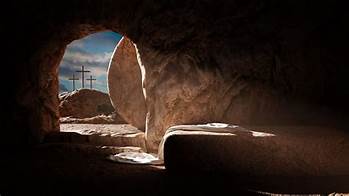
When Jesus raised Lazarus from the dead he demonstrated and validated his claim about being the resurrection and life. It is guaranteed by his empty tomb on that first Easter Sunday. Jesus’ resurrection is the seal for our salvation and our assurance of eternal life.
Paul reminds of that truth in several ways.
If you confess with your mouth that Jesus is Lord, and believe in your heart that God raised him from the dead, you will be saved. (Romans 10:9)
He (Jesus) was delivered over to death for our sins and was raised to life for our justification.” (Romans 4:25)
If there is no resurrection of the dead, then not even Christ is raised. And if Christ has not been raised, our preaching is useless and so is your faith…your faith is futile and you are still in your sin…But Christ has indeed been raised…(I Corinthians 15:13-14, 17, 20)
A Christian lives and dies with that truth and hope expressed by Paul.
That, my friends, is an act of resurrection faith.
The question is, do you believe it?
Thinking Points
How does seeing Jesus not just as the giver of resurrection but as the Resurrection Himself reshape my view of life and death?
Where am I still living with an “if only” mindset instead of an “if Jesus” faith?
How personally do I take Jesus’ question, ‘Do you believe this,’ and what does my life say about my answer?