Publishers note: Due to a glitch in the technology or my own lack of technical skill, it is possible that this post was not sent to my email subscribers two weeks ago. Now that the system has been fixed, I am reposting upon request. –KL
Focal Passage: Ephesians 2:10
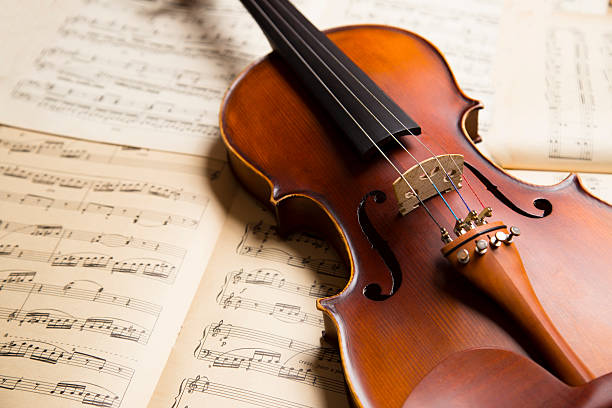
Antonio Stradivari began crafting violins, cellos and violas in the late 1660s in Cremona, Italy. His techniques and varnishes produced instruments known for their powerful, resonant and balanced tones. Musicians since the early 18th century consider the Stradivarius (or Strad) as masterpieces of musical craftsmanship, the gold standard of stringed instruments.
While several hundred of these remarkable instruments exist today in the hands of collectors and museums and top performers, they are worth millions.
Polish-born Roman Totenberg, a Polish-born child prodigy, emigrated to the United States in 1937, where he built his career as a celebrated violinist, teacher and performer. In 1980, while a teacher at the Longy School of Music in Cambridge, MA, Totenberg’s prized Stradivarius, crafted by the master in 1734, was stolen from his office. It remained “lost” for over 30 years. Never played. Never heard. Its music lost for a time.
Totenberg’s Strad was recovered in 2015. Despite its years of disuse, once restored, the violin’s sound was revived. Mira Wang, a former pupil of Totenberg played the instrument in its first public concert following its restoration. Concert reviews noted that Wang struggled to find the musical “fit” with the instrument. One article quoted a familiar idea among musicians that great instruments have distinct personalities and can be “tricky” until a player and instrument are perfectly matched.
That concept of musical fit runs parallel, I think, with faith and good works. Many Christians, myself included at various times of my life, feel a disconnect with our faith and our actions. It’s not that we’re doing bad things necessarily. It’s just that we’re not doing much good either. We’re comfortable accepting God’s grace and doing little or nothing with it.
We’re either comfortable being a lost violin or we feel like the ill-matched musician, struggling to find where we fit in God’s work.
Let me explain what I mean from one of my favorite passages in Ephesians. Paul spent a great deal of time in Ephesians 2 talking about God’s gift of grace. For it is by grace you have been saved, through faith—and this not from yourselves, it is the gift of God—not by works so that no one can boast.
Salvation comes by grace through faith. We’ve done nothing to earn it. Theologian William Barclay said, “All the good works in the world cannot put us right with God.”
Once we have been made right with God, Barclay said, “there is something radically wrong with the Christianity which does not issue in good works.” In other words, this unmerited act of grace should propel us to do good works as a natural outgrowth of our relationship with Christ.
Paul said as much in his next breath and it’s this passage that spoke again to me this week.
For we are God’s workmanship, created in Christ Jesus to do good works, which God prepared in advance for us to do.” (Ephesians 2:10)
Let’s break this down a bit.
We are God’s handiwork. His masterpiece. Created with purpose and design.
What a remarkable thing to understand! The Greek work translated “workmanship” comes from the Greek “poiema,” rich in its definition. Though it literally means, “a thing made,” you can find a hint of its intent in a beautiful poem, an artistic masterpiece, or even a Stradivarius.
Think about that. A poet, composer or master craftsman doesn’t just haphazardly slap words or notes on a page or glue strips of wood together. Instead, ever detail is deliberately designed and crafted with care and purpose. Each poem, each song, each instrument unique in form and function.
So, it is with you and me. Every aspect of our lives, our personalities, talents, circumstances, our growth as spiritual beings, stands as a testimony of God’s divine composition. His craftsmanship. When the Psalmist declares that we are “fearfully and wonderfully made,” he’s not just talking about the intricacies of our physical bodies. He’s talking about the totality of us. Everything we are now or have the potential of being is crafted within us, just waiting to be released.
As inspiring as that ought to be, think beyond God’s workmanship in us. The next phrase in our passage adds a deep layer of meaning to our personal and spiritual identity. When we are saved by faith, God creates us once more in Christ Jesus.
Our physical creation is of God and by God, but we are remade spiritually in Christ…his life, death and resurrection. We become a new creation through the grace of God and our faith and trust in his son. This isn’t just a refinement or improvement. It is a new spiritual reality. The limitations of the past give way to godly potential.
Therefore, if anyone is in Christ, he is a new creation, the old has gone, the new has come! (2 Corinthians 5:17)
Being God’s workmanship in Christ Jesus transforms our ordinary human potential into purpose-driven alignment with God’s will and plan for our lives. It isn’t about existing; it’s about fulfilling a calling. If and when we tap into that source in Christ, we are empowered to do the work of Christ.
So, what are we called to do? Paul said it:
…to do good works which God prepared in advance for us to do.
This is where we find the “fit.” We will never be fully content and satisfied in life until we are being obedient to this purpose for us. Until we are doing the good works he ordained us to do from the very beginning of time.
God’s plan for you and me to do good works existed before he put the first stars in place. He created us to reflect his purpose and his will as adopted sons and daughters through Jesus Christ. He planned from the beginning for each of us to do good works simply as a part of who we are and whose we are. It is not a prerequisite for salvation, but a result of it.
If our lives do not serve others nor serve the cause of Christ, we’re like the poem never read, the painting never seen or the priceless violin never played.
The value of a masterpiece lies in its uniqueness. If the musicians are to be believed, every Stradivarius has a distinct character that must be paired with the right musician to find its tone or voice.
Though a virtuoso in her own right, Wang struggled to make her style and approach fit with Totenberg’s violin. Later, the same violin was placed on loan with Juilliard violinist Nathan Metzler. Commentators and dealers noted the violin’s strong voice, praising its “amazing power and sweetness” once in the hands of a player who could draw that sound out.
Each us of has been uniquely gifted with talents and abilities to serve his kingdom. Finding purpose doesn’t always mean making grand plans or taking bold actions. It means something as simple as living faithfully every day. Ensuring that our actions and words reflect God’s love whether at home, work, in our families and our neighborhoods. Whether among friends or those we hardly know.
If you’re struggling with what “good works” you’re supposed to do, you’re probably being too technical. Good works are less about the act and more about the attitude that generates the act.
Scripture tells us that good works are outward actions that flow from an inward faith and relationship with God. Don’t think specifically of feeding the hungry or helping the sick, though our good works may manifest themselves in exactly that. Think kindness, patience, love, gentleness, peace, joy and self-control motivating the things we do for others. Think Jesus.
True good works are done in obedience to God’s word, through the power of the Holy Spirit, and for the glory of God rather than self. Every act points toward God.
Let your light so shine before men that they may see your good works and glorify the Father in Heaven. (Matthew 5:16)
That’s not all. Our good works, our acts of mercy, justice and compassion, equate to obedience to the teachings of Christ born out of our love for him and gratitude for his atoning sacrifice. John 14:15 tells us we obey his teachings that lead to good works because we love him.
The good news about good works is that in the goodness of God, his spirit empowers us to act. We don’t have to do any of it in our own power. It is God working through us. We just need to make ourselves available to be used and get out of his way.
For it is God who works in you to will and to act in order to fulfill his good purpose. (Philippians 2:13)
My uncle Les Lewis posted his daily devotional last week about faith, but he said something that I think applies here, too. He wrote, “When faith is God behaving in me, my potential is as great as God is great.” God behaving in me. That seems the very definition of “good works,” granting us the potential to make a real difference in the lives of those we encounter.
While our gifts are unique and God fits our gifts with his purpose, working to do good is most effective when done together. When our unique gifts blend in service. In his letter to Titus, Paul encouraged this young minister to ensure that he and those he served worked together to help others.
And I want you to stress these things, so that those who have trusted in God may be careful to devote themselves to doing what is good. These things are excellent and profitable for everyone. (Titus 3:8)
Our good works get magnified when we work in concert with other believers. As Christians we are meant to help each other grow in love and in the work we do for Christ. Walking alongside one another we learn to love better, forgive more, serve selflessly, each using the unique gifts God grants us. Every good deed encourages another.
The writer of Hebrews said almost the same thing.
Let us consider how we may spur one another on toward love and good deeds, not giving up meeting together, as some are in the habit of doing, but encouraging one another… (Hebrews 10:24-25)
Like the Totenberg Stradivarius, our lives and our faith may at times fall silent or out of tune with the purposes of God and the work he calls us to do. God is not only the craftsman that designed us with purpose, he is the virtuoso who plays with “amazing power and sweetness” when we allow him to work in and through us.
If you or I are not yet demonstrating the good work for which he created us, know this. Each one of us, every believer, can be restored, renewed, and brought back to life in him. God, the divine craftsman, not only created us as His workmanship but continues to shape and refine us through His Spirit so that His melody of grace can resonate through our lives, demonstrating his love through our good works.
In the end, we are not meant to sit unused or hidden away. He made us to be instruments of His grace in a life of good works. Now, we just have to let him draw the bow across our strings.
Thinking Points
In what ways might you feel like an “unplayed violin” in your faith journey—and what would it take to let God bring your purpose to life again?
How does understanding yourself as God’s workmanship change the way you see your daily actions and choices?
What “good works” has God already placed before you that may simply require your willingness to act?
How can you better align your unique gifts and temperament with God’s purposes so that his “music” flows naturally through you?