Better Than Biscuits

Background Passages: Ecclesiastes 3:11, Isaiah 40:29-31 and Colossians 1:15-20

I saw this floating story around the social network this week in a Facebook post shared by my friend Kim Pressly. It’s a story about a visiting pastor who attended a men’s breakfast in the middle of a rural farming community, not unlike the one in which I was raised.

An older, sun-baked farmer, decked out in faded bib overalls was asked to say grace for the morning breakfast.

“Lord, I hate buttermilk”, the farmer began. The visiting pastor opened one eye to glance at the farmer and wondered where this was going. The farmer loudly proclaimed, “Lord, I hate lard.” Without missing a beat, the farmer continued, “And Lord, you know I don’t much care for raw, white flour.”

The pastor once again opened an eye to glance around the room and saw that he wasn’t the only one feeling a bit uncomfortable with the farmer’s prayer.

Then the farmer added, “But Lord, when you mix them all together and bake them, I do love fresh, warm biscuits.

“Lord, when things come up that we don’t like, when life gets hard, when we don’t understand what you’re saying to us, help us to just relax and wait until you are done mixing. It’ll probably be even better than biscuits.

“Amen.”

I suspect that little anecdote spoke to me when I first read it this week because there is a lot going on in this world that I don’t like. Current realities make life difficult. I suppose we own much of it. We’ve let those difficulties divide us as a people more deeply than I ever thought possible. The parts we don’t own, those things beyond our control, we sure don’t understand.

I hate what is happening to our country, our world, our churches, our lives. It is too often unattractive, unhealthy and unChristian. I don’t know about you, but I find myself growing tired of the buttermilk and the lard and the raw, white flour.

So maybe that old farmer is right. “God, help us wait until you are done mixing.”

I suppose the first Bible verse that comes to my mind is this:

“He has made everything beautiful in its time. He has also set eternity in the human heart; yet no one can fathom what God has done from beginning to end.” (Ecclesiastics 3:11)

We can’t always see what God has done, nor can we always see what he is doing right now. We do know there is beauty in everything God has created. He orders all things. When we make our mistakes, he is constantly realigning our path with his will. When our world ventures off course, he is there to hold it together until his time is right.

We may not always understand why God allows for things to happen in our lives that cause pain, fear, and worry. However, we can trust that he is constantly at work to reveal his goodness and love amid the troubles of the day.

So, when I don’t like the buttermilk, I just need to realize the Master Baker is still in the kitchen.

If I can accept that God is in control and working through the mess on our behalf, then I can turn to Isaiah 40:29-31 and rest from the struggle and draw strength from his presence.

“He gives strength to the weary and increases the power of the weak. Even youths grow tired and weary and young men will stumble and fall; but those who wait upon the Lord will renew their strength. They will soar on wings like eagles, they will run and not grow weary. They will walk and not grow faint.”

What does it mean to “wait upon the Lord?”

Because we’ve spent so much time in the waiting room of a doctor’s office or in the line at the Department of Motor Vehicles to get our license renewed, we tend to think “waiting” is a passive experience. That we must somehow sit on our hands until God chooses to do something to fix the situation in which we find ourselves. In scripture, however, waiting on the Lord is a call for action.

When these words were spoken by God through Isaiah, the Israelites were in exile in Babylon and Jerusalem lay in ruins, it’s walls and buildings mere rubble. Their hopes and dreams shattered. Tired of their situation, they complained that God no longer seemed interested in their well-being; that he was disinclined to seek justice on their behalf.

Isaiah paints a different picture of God the Creator. He speaks of God giving power to those who are fainthearted and weary. He counters their complaint that God is too small of the situation. Isaiah reminds them, “Have you not known? Have you not heard? The Lord is the everlasting God, the Creator of the ends of the earth.”

God, Isaiah proclaims, “gives power to the faint and strengthens the powerless.” God is ready to share his power with those who call upon his name. All that is required of them is to “wait on the Lord.”

They were not to sit idly by twiddling their thumbs until God acted on their behalf. They were to wait upon him in confident trust and expectation that he was at work to restore them to the place he called them to be. To wait on the Lord is to actively put our hope and trust in him.

Hope, in a biblical sense, is not desperation. It is living out each day in the image of Christ as his hands, heart and voice. It is taking all we know of Christ and his teachings and doing our part to influence a world that’s trending in the wrong direction. It is actively serving and ministering to the hearts of those we encounter along the way.

Despite the turmoil that surrounds us, we are called to a hopeful expectation that God is still in the kitchen mixing together all the ingredients of the life he has called us to live in Him.

If we do our part in the waiting time, God promises to renew our strength. One commentary I read explained that the word used for “renew” in this passage is closer in translation to the word “exchange.” I like that mental picture.

Those who wait on the Lord do more than renew their strength, they exchange, instead, their faint or faltering strength for the unfailing power of God. Our weakness is replaced by his strength…our frailty with the power of the Creator God who never grows tired.

The beautiful imagery that Isaiah used gives perfect illustration to the uplifting power of God.

“They will soar on wings like eagles.”

An eagle soars to great heights not on the power of his own wings, but on the rising air currents that lift it higher and higher. The eagle’s own power gets him airborne, but to soar he needs the wind. Once he finds the current, soaring is effortless.

Our waiting on the Lord, our confident hope, is the personal action that gets us airborne. We soar when we find the Spirit’s wind that lifts us to new heights. When we find God’s spirit with us, soaring is effortless. We will not grow weary of the task laid before us.

Scripture reminds us that God is always mixing things together, working to bring good from every circumstance for those who love him and are called for his purpose. It is God who holds it all together.

The world is in a mess right now. I don’t like what I see and hear. It seems everything we hold dear is falling apart at the seams.

There is still a big part of me, however, that believes God is at work in the chaos.

Paul indicated as much to his letter to the Colossian church.

“He is the image of the invisible God, the firstborn of all creation. For by him all things were created, in heaven and on earth, visible and invisible, whether thrones or dominions or rulers or authorities — all things were created through him and for him. And he is before all things, and in him all things hold together…For in him all the fullness of God was pleased to dwell, and through him to reconcile to himself all things, whether on earth or in heaven, making peace by the blood of his cross.” (Colossians 1:15-20)

Those who wait on the Lord put our confident trust in Christ, the image of the invisible God. That means in times of trouble we can fall back on his teachings to guide us because he has preeminence or authority over all things.

And, here is the part of this passage that speaks to the farmer’s prayer: “…in him all things hold together…and through him to reconcile to himself all things…making peace by the blood of his cross.”

The farmer got it right. All the things in life that I hate, the things I fear are tearing us apart, God knows about all of them. He is in preeminent and is holding life together. Keeping it all in the mix until the time when he can reconcile or bring everything back together to himself. Until we find the peace available through his sacrifice on the cross.

Here’s the deal though. Those things in the mix require one more ingredient. For God to turn those things I hate into something worth tasting, those who wait upon the Lord must be folded into the batter. Confidently expecting God to work in and through us to accomplish his plan and purpose, not only in our lives, but in the world around us. His work through us.

So, don’t grow weary as you look upon the complicated world around you. Our Lord is mixing and holding it all together. Wait upon the Lord. His work…our work…is not done.

I confident when he’s finished, whatever he’s cooked up will be better than biscuits.
Let Us Not Give Up Meeting

Background Passages: Matthew 16:13-19; I Peter 2:4-8; Hebrews 11:24-25

Jesus slipped to the grass from the flat rock upon which he sat as he spent the last hour in prayer. The canopy of trees under which he now reclined with his back against the rock sheltered him from the late afternoon sun. Jesus glanced at his disciples gathered in a loose cluster about 40 feet further down the hill. As they finished their prayers one by one, they talked quietly among themselves, breaking out a small loaf of bread and passing it around, satisfying their hunger.

Jesus looked from his disciples down into the town of Caesarea Philippi, a bustling city 30 miles north of the region of Galilee. He watched the frenetic pace of the people as they finished the work of the day and headed home. He lifted his eyes toward the sheer cliff on the north side of the city. It rose 150 feet above the lush, green valley below. He knew the stream gushing from the massive grotto on the western edge of the cliff were the headwaters of the Jordan River as it flowed south to the Sea of Galilee.

The cavern was said to be the birthplace of Pan, the Greek god of nature. Worshippers still brought their offerings of fruit and grain, laying them at the altar.

His vision shifted to the gleaming temple of white marble which Philip, the region’s ruler, dedicated to Caesar Augustus, the Roman emperor whom the people considered a god. Before these temples and altars were built, Jesus knew his history well enough to know the whole area stood as a center dedicated to the worship of Baal, the ancient Canaanite god.

It was a deeply reflective moment. Jesus contemplated the scene spread across the valley below. Considered all he had done during his ministry. Felt his gut tighten when he thought about the cross to come. Had anything he said and done made a difference? Before he began his final journey to the cross Jesus needed to know. Did anyone really know who he was?

He turned to his disciples quietly talking and laughing in the ease of friendships forged by common experiences. His words cut through the comfortable conversation. “Who do the crowds say I am?” They turned toward Jesus in a rustle of robes and shuffling feet. They were used to his probing. Knew an answer was required. “John the Baptist,” one blurted. “One of the old prophets brought back to life,” announced another. “Elijah,” another proclaimed.

Jesus glanced again at the city below, lost in thought for a moment. Then, he turned back to his disciples. “But what about you? Who do you say I am?”

Jesus held his breath, looking into the eyes of each of his closest friends. Their answers would make all the difference. Would he see blank stares of incomprehension? Would he catch so much as a spark of understanding that meant he had at least lit a torch in their hearts? He waited. Felt his heart thump anxiously in his chest.

How his soul must have soared when Peter stood among them, looked at his friends, then to Jesus, knowing that he answered for all of them. “You are the Messiah. The Anointed One of God.”

I wrote the above narrative almost three years ago. It is a favorite episode of mine from the life of Jesus. At the time I wrote it, I used it to talk about what that kind of faith commitment means. I was reminded of that devotional last week for a different reason when I read the following headline that popped up on my news feed.

“U.S. Membership Falls Below Majority for First Time”

A stunning statement, but not surprising. We’ve all seen the evidence.

The Gallup Poll provides interesting fodder for sociologists and students of American culture. Of the many things it has surveyed over the past 80 years, Gallup annually measures religious affiliations and church membership.

Gallup reported this year that Americans’ memberships in houses of worship dropped below 50 percent for the first time since the data was collected. In 2020, 47 percent of Americans said they belonged to a church, synagogue or mosque, a drop of 23 percent over the last 20 years.

At the same time, Gallup also showed that the United States remains “religious.” More than 70 percent of all Americans affiliate with some type of faith tradition.

So, the question begs to be answered. If 70 percent of us claim to be religious, why are less than half of us a member of a local congregation? Why is it that almost every church has a membership role that far exceeds its regular attendance? What does it mean for the church in the days to come?

I think the answers to those questions go back to that hillside in Caesarea Phillipi. After Peter made that astounding declaration of faith and Jesus breathed his sigh of relief, he turned to Peter with an amazing statement of his own.

“Blessed are you, Simon, son of Jonah, for this was not revealed to you by man, but by my Father in heaven. And I tell you that you are Peter, and on this rock I will build my church, and the gates of Hades will not overcome it.”

Jesus declared to Peter that because of his profession of faith he would be the rock upon which his church would be built. Baptist pastor Michael Stark said, “Our Lord was saying to Peter that he was the beginning of the new Israel, the new people of the Lord, the new fellowship of those believing on His Name. Peter was the first to both understand who Jesus was and to declare openly that truth.”

Peter is spoken of as the rock of the church in the sense that he was the first person to fully comprehend who Jesus was. While the Catholic church elevates Peter to a high status within the church, Peter himself never felt that way. He spoke often of being a “fellow worker” and a “bond slave.”

Don’t take that passage out of context. The rest of scripture declares that it is not just Peter who must be the rock of his church, but all of us. In his one of his own letters to the early church Peter wrote,

“As you come to him, a living stone rejected by men but in the sight of God chosen and precious, you yourselves like living stones are being built up as a spiritual house, to be a holy priesthood, to offer spiritual sacrifices acceptable to God through Jesus Christ.” (I Peter 2:4-8)

Do you hear what he said?

“You, yourselves, like living stones are being built up as a spiritual house…”

You and I, as believers in Christ, are the building blocks of God’s church.

Practically, we know that every building needs a solid foundation and quality materials. God laid a foundation of reconciliation to a sinful world. Jesus’ life and ministry, his work on the cross and his resurrection served as the faith cornerstone of the church.

In light of the Gallup report, how effective can that church be if we remove our stone from its walls?

I don’t know why so many are choosing to leave the organized church. Perhaps, the church has grown too tolerant in some cases; too intolerant in others; too self-righteous to some; and far too political in its extreme.

What I do know is that the cause of Christ is damaged every time one of us says, “I have had enough.”

We are a sinful and imperfect people…both inside and outside the church. When I use that as my measure, viewing the church only as a body of hypocrites, it’s easy to walk away.

I see those in the church as very much like me. Filled with fault. Trying their best to live according to God’s purpose. That’s when I find I most need the church. That’s when I find the church most needs me.

The headline made me think. Why do I stay involved when others choose a different path?

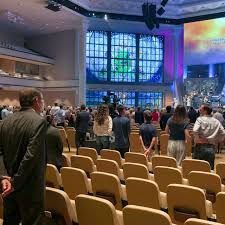
The Bible calls us to corporate worship and good work. We congregate so we can love and be loved. We congregate in order to serve others as Jesus served. In a world that easily rejects everything it means to live for Christ, I need the encouragement of fellow believers to keep from giving in or giving up. I find that encouragement in the gathering of the church.

The writer of Hebrews said it plainly:

“Let us consider how we may spur one another on toward love and good deeds. Let us not give up meeting together, as some are in the habit of doing, but let us encourage one another. (Hebrews 11:24-25)

To be sure, there are many believers of genuine faith who no longer belong to a specific congregation for a variety of reasons. They have given up their habit of meeting together. I don’t question that their faith is real and meaningful. However, I know what I receive by being active and involved in a local congregation. Therefore, I know what they are missing.

As a part of the church, I am loved. With all my faults and mistakes, as a part of the church I am accepted. As a part of the church, I have a place I can serve using the gifts God has given me. As a part of the church, I am taught the things of God. As a part of the church, I know I am where God expects me to be.

We’ve all been hurt by someone in the church at some point in our lives. We’ve all been disappointed and let down. By the same token, we have hurt and disappointed our share of people, I’m sure. Regardless, of how deeply that hurt runs, we cannot abandon the place where God calls us to serve wherever that may be.

You see, my church became the church to me because I became a part of it and, in doing so, it became a part of me…if that makes sense.

To all those believers who have walked away from the for whatever reason, the God needs you now in his church more than ever. Find a place where you can be encouraged. Find a place where you can love and let them love you. Find a place where you can serve God with all the gifts he gave you.

Let us not give up meeting together. Let us keep investing ourselves in his work, participating in his ministry. Now is not the time to walk away. Become a part of a church somewhere that needs your presence and in doing so, let it become a part of you.

What’s In Your Hand?

Background Passages Exodus 4:1-5; Romans 12:6-8; Ecclesiastes 9:10

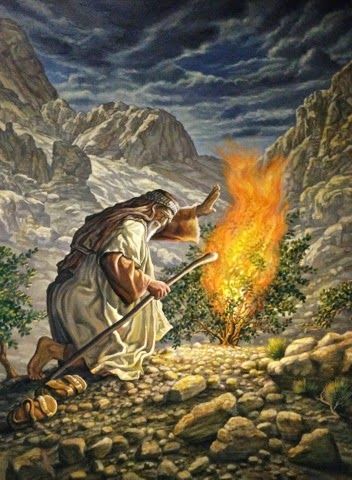
The bedouin stood on calloused, bare feet with his sandals in his hand, trembling in the glow of the burning bush. Seeing its light. Feeling its heat. Listening to the voice from its flame.

The 80-year-old shepherd heard these words and more…

“I am the God of Abraham, Isaac and Jacob…I’ve heard the cries of my people…I am sending you to Pharaoh to bring my people out of Egypt.”

Moses hid in the desert for 40 years after an unceremonious exit from Egypt. Face to face with the oppression of the people of his birth, he reacted in the heat of the moment, killing the offending Egyptian. Once the son of the Pharaoh’s daughter. Now a old man, tending sheep that didn’t even belong to him. O, how the mighty had fallen.

God spoke to Moses on the slopes of Mount Horeb from a burning bush that was not consumed. The God of his fathers called him to a mission of eternal importance. It was the next phase of God’s redemptive plan. To make it happen, he needed to get his people out of Egypt and back to the land he had promised them. He needed Moses.

This unbelievable experience in the wilderness should have lifted his spirits and emboldened Moses to act. Instead, the miracle on the mountain left him filled with anxiety, offering one excuse after another.

“Who am I? I am no one. Pharaoh will not listen. I know the man.”

God said, “Go!”

“To the Hebrew people, I’m nothing. When they ask who sent me…and they will ask…what do I tell them”

“Tell them I am who I am! Now, go!”

“They’re not going to believe this…not the Hebrew people and certainly not Pharaoh.”

God chose this moment to ask Moses a critical question.

“What is in your hand, Moses?”

Moses looked at his right hand. Fingers wrapped around the thick shepherd’s staff, worn smooth by years of use. His mind raced. This was the tool of his trade. A staff for protection. A staff for balance. A staff for herding. Just a stick.

I wonder at that moment if Moses saw a flash of something more ominous in the staff he held. He was once a prince of Egypt. Perhaps, in that moment, the staff served as a symbol of all that had gone wrong in his life. The perfect manifestation of his failure. He had traded a scepter for a shepherd’s crook so he could herd a flock of sheep that weren’t even his. As he heard God ask his question, “What is in your hand?” Perhaps Moses felt unworthy, certain that God could choose a better man.

Moses swallowed the lump in his throat and said simply…

“A staff.”

Nothing more. Nothing less. An old tree branch whittled and shaped to serve his needs. God knew it could represent something new and different. He just needed Moses to see it, too.

“Throw it on the ground, Moses.”

Moses let it drop. As it bounced on the rocky soil, the staff transformed into a snake. Startled, he took two steps back and stared.

“Now, pick it up.”

As soon as Moses lifted the snake from the ground, it turned back into a staff.

Moses looked in awe at the bush.

“This,” said the Lord, “is so that they may believe that the Lord, the God of their fathers…the God of Abraham, the God of Isaac and the God of Jacob has appeared to you.”

What is in your hand?

What a great question!

I wonder how many of us have starred at the burning bush and heard the voice of God telling us, “I’ve got something I need you to do for me. It’s important. I need you to go….”

I wonder how often you have done what I’ve done and responded immediately with every excuse in the book to avoid doing what God needs us to do. My excuses sound remarkably similar to the ones Moses muttered into the face of a burning bush.

Who am I that you would ask this of me?

  • I’m not capable.
  • I’ve made too many mistakes.
  • I am no longer the man I once was.
  • I’m too old.
  • No one would listen to me.
  • They’re just going to laugh in my face.
  • Find someone else…please.

How like Moses I am at times. Too comfortable in my place. Too embarrassed of my failures. Too willing to believe my mistakes trump my potential. Too unwilling to open myself to God’s transformative power.

Then, the question comes to me just as it came to Moses.

“What’s in your hand?”

When you get down to it, that’s an intriguing question. If we’re honest with ourselves, it’s a question we’ve all heard at some point in our lives. When God asks the question, it deserves an honest look.

Scripture is filled with stories of individuals who possessed no extraordinary gifts. That which they held in their hands was ordinary. Yet, God called. When they quit making excuses, God began to use them. Consider these examples.

Gideon defeated the Midianites with trumpets and lanterns.
Samson slaughtered the Philistines with the jawbone of a donkey.
David took down Goliath with a sling and a stone.
A child with a small basket of bread and fish fed a multitude.

So I ask again, the burning bush question.

What is in your hand?

One of the greatest mistakes we make as believers in Christ is to underestimate who we are and what we have. We hold an old whittled stick…an ability to carry a tune, the skill to bake a cake, the temperament for a kind word, the sensitivity to encourage a troubled soul. Yet, we deem it insufficient, weak, small in comparison to abilities we see in others.

Then, the excuses flow. Maybe, it doesn’t matter as much exactly what is in our hand. Maybe all that really matters is, as one writer said, “how much God is in your stick.”

And, there’s the lesson Moses learned. As long as you hold on to your stick, God can’t demonstrate his power. You’ve got to throw it down. Let it go. Surrender it to God. Once God is in it, his power flows through it.

Then, your ability to carry a tune inspires. Your skill in baking brings comfort. Your kind word changes another person’s outlook on the day. Your encouragement lifts a burden from a neighbor’s shoulders. There is nothing insufficient, weak or small about that.

Whatever is in your hands, when surrendered to God, gets infused with his power that makes a difference. And, people will see what is in your hand and know that God is present in your life.

So, what is in your hand?

The truth is, I can’t tell you. It is a matter between you and God. But, know this. There is something there. God has put something in your hand. It may look ordinary to you, but it was given to you for a purpose. He has gifted all of us, placed something in our hand, to use toward the glory of his kingdom.

Whatever God has placed in our hands we are to use it. Paul wrote about it extensively.

“We have different gifts, according to the grace given to each of us. If your gift is prophesying, then prophesy in accordance to your faith. If it is serving, then serve. If it is teaching, then teach. If it is to encourage, then give encouragement. If it is in giving, then give generously. If it is to lead, do it diligently. If it is to show mercy, do it cheerfully.” (Romans 12:6-8)

I don’t know what your gift may be, but it does no one any good if you never use it. Each of us has been gifted by God so he can send us wherever he needs us to go. To do what he needs us to do. When we surrender that gift to God, when we throw it down, God’s power is alive through us.

Whatever your hand finds to do; do it with all your might. (Ecclesiastes 9:10)

An unknown poet penned a bit of prose a few years ago entitled, “It Depends Whose Hands It’s In.” It’s not Shakespeare or Byron, but it holds a pretty good message. This is how it starts off.

“A basketball in my hands is worth about $19
A basketball in Michael Jordan’s hands is worth about $33 million.
It depends whose hands it’s in.”

As one who has missed his share of lay-ups, I ask you…

What is in your hand?

He Went About Doing Good

Background Passage: Acts 10:28; Galatians 6:9-10; Galatians 5:22-23, 25

I no longer watch much news. And in this era of rampant social media, I carefully pick and choose the type of post I read. I find myself listening less and blocking more and more posts, not because I disagree with them, but for their tone.

Both mainstream and social media fill the air and their column inches with bad news, hateful rhetoric and intolerance. Ending each newscast with a snippet of “good news,” does little to offset the divisiveness previously portrayed.

Don’t get me wrong. I truly believe there is far more good in this world than bad. Our urgency to celebrate the good and correct the bad needs to be foremost in our hearts and minds. Yet, when you listen to the voices of the world, it seems as though no one is trying to make a positive difference. No one is doing anything good.

The offhand comment spoken by Peter to Cornelius, an inquisitive, God-fearing Roman centurion, gets buried in a lengthy narrative about the work of God through Jesus Christ. I find it crucially important, especially in today’s world. Peter said of Jesus:

“…he went about doing good…” (Acts 10:28)

Peter encapsulated the entire ministry of Jesus in those five simple words. “He went about doing good.”

He healed. He fed. He comforted. He touched. He taught. He led. He encouraged. He restored. He challenged. Along his path and in his time, lives changed.

If we are to use Jesus as our role model, then we, too, must go about “doing good.”

In his letter to the churches in Galatia…modern day Turkey…, Paul spent time encouraging their behavior toward one another. Using tender words that speak of a doctor setting a broken bone so it would heal properly, Peter talked about restoring the sinner…healing the broken. He told these early Christians that a man will reap what he sows. That one who plants the seeds of sinfulness will reap the consequences of those actions and that one who lives by the spirit of God will find eternal life.

Then, his words encouraged the believers to “do good.”

“Let us not become weary in doing good, for at the proper time we will reap a harvest if we do not give up. Therefore, as we have opportunity, let us do good to all people…” (Galatians 6:9-10)

What is this “doing good” that Paul addresses?

For Paul, doing good had everything to do with living by the spirit of God. He addressed what it means to live by the spirit in the fifth chapter of his Galatian letter.

“So I say, live by the spirit and you will not gratify the desires of the sinful nature.” (Galatians 5:16)

For all practical purposes in our doctrine of the Trinity, there is no spiritual difference in God, the Father, Jesus, the Son, or the Holy Spirit. They are one and the same. Therefore, living by the spirit is to live as Jesus lived. To live as God desires us to live.

After running a long list describing our sinful natures, Paul added this:

“But the fruit of the spirit is love, joy, peace, patience, kindness, goodness, faithfulness, gentleness and self-control.” (Galatians 5:22-23)

In other words, “doing good.” These are the attitudes of the heart that prompt our doing good. The condition of our hearts compels us to heal, feed, comfort, touch, teach, lead, encourage, restore, challenge and change lives…just as Jesus did.

Paul told the believers that these acts were not one time deeds. You cannot spend just one day loving. We must love every day. We cannot do one kind thing. We must be kind continuously. If lives are to be changed, we must make the effort always. We must keep on doing good each day we live. Paul ended this part of the discussion by saying:

“Since we live by the spirit, let us keep in step with the spirit.” (Galatians 5:25)

Walking in relationship with the Father, through our trust in the Son and the influence of his Spirit. Every step of the way.

Paul said, “Do not grow weary of doing good.” If living in step with the spirit and doing good is such a high calling why would we ever grow weary of doing good?

We may find ourselves alone in the work. Criticized by those who do not understand. We may see our good deeds rebuffed, our efforts ignored. We may lose our own enthusiasm and start going through the motions. We may be doing the work in our own strength or for our own glory. We may lose faith that God is at work. We may grow discouraged because we cannot see the results of our labor.

What it boils down to is this. We grow weary of doing good because we lose sight of the ultimate goal of our work…to draw all to Christ. It is the reason for every act of goodness and its purpose is has eternal consequences for all we encounter.

Paul’s words pull us back to what matters most in our desire to do good.

When we explore the life of Jesus, we see it at every turn. Every action had a purpose. An intent. Everything Jesus did was meant to draw someone to accept the grace gift of salvation. He healed to remedy an affliction, but he did so hoping that the healed might believe.

He comforted to ease the suffering, but he did so hoping that the comforted might believe. He fed to erase the hunger pangs of the starving, but he did so hoping that the satisfied might believe. His deeds were an extension of who he was…an extension of his faith and trust in the Father.

Our doing good, modeled after Jesus, should have the same intent and purpose. Our actions ought to reflect our faith and trust in him. Every good we do ought to meet a need, hoping that those we helped will be drawn to God. That’s the aim of doing good. And it requires us to keep our eyes on that goal.

Florence Chaddick waded into the sea off Catalina Island 21 miles off the coast of California on July 4, 1951 with every intention of being the first woman to swim to the mainland. Swimming long distances was not new to her. She was the first woman to swim the English Channel in both directions just a few years earlier.

The challenge before her was less the distance than the chilly waters of the Pacific. On the morning of her swim, a dense, thick fog descended upon the ocean reducing visibility to a mere feet. Two boats accompanied her to keep her on track and to protect her from sharks. Her mother stood in the lead boat while her trainer followed behind.

She swam for hours never seeing beyond the lead boat. After a time, Florence began to complain about the water and the cold. She was ready to quit. Her mother provided encouragement and cheered her on. Florence continued to swim. When she would lag behind, her trainer in the back boat pushed her. Soon, she said she was done, unable to swim any longer. Her mother and trainer would not let her quit.

She struggled for a time more. After 15 bone chilling hours in the sea, Florence gave up. She climbed into the boat only to realize she had quit within a quarter of a mile of the coast. Later, she told a reporter, “If I could have seen land, I might have made it.”

Chadwick returned to Catalina Island the next year to try again. Though greeted by another foggy day, she dove in. She achieved her goal this time, remarkably besting the men’s record by more than two hours. On this occasion she made it by telling herself over and over again that the land was there. She just had to keep swimming.

Here’s my take away. Do not grow weary of doing good. Keep swimming. Trust that as you live by the spirit…on the course you’ve taken…that land is not that far away. In God’s appointed time, we will “reap a harvest if we do not give up.” Our work is not for naught. God is at work in our doing good.

I’ll simply end by echoing Paul’s final encouragement to look for every chance we have to do what is good and right.

“Therefore, as we have opportunity, let us do good to all people.” (Galatians 6:10)

A Different Spirit

Background Verses: Numbers 13:26-33, Numbers 14:20-24, Joshua 14:6-15

At one point about 10 days ago, someone posted a message on Facebook asking for information on Caleb, one of the 12 spies whom Moses sent into the Promised Land on a recon mission. “Was Caleb a good guy?” she asked. She based her question on the feeling that there were not many newborns today named Caleb.

Then, as I picked up the material for teaching my Sunday School class last week, the lesson was on Caleb.

Reflecting on both this disconnected incidents, I looked back at previous writings and resurrected a story I did in January 2016 about Caleb. I enjoyed reading it through again. I thought it might be nice to air it out one more time. The following is a reprint of A Different Spirit.

Flickering firelight
danced across his weathered face
as he paced worriedly behind his brethren.
Caleb.
One of the Twelve.
Scout.
Surveyor.
Spy.

Forty days Canaan.
Time to report.
The Twelve
gathered just outside the tent of Moses.
Circled the campfire.
Considered their conclusions.

For more than an hour
they talked.
The Twelve.
Leaders of their respective tribes.
Extolled the virtues of the land
God promised.
An accurate account of its…
Fullness.
Fertility.
Fruitfulness.

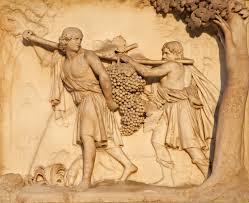
Grape clusters.
Too heavy for one man to carry.
Grain fields.
Bountiful and heavy with seed.
Grassy plains.
Suitable for grazing of vast herds.

They showed and shared the bounty.
Tasted its goodness.
Truly, without question,
a land flowing with
milk and honey.
Just as God promised.

Caleb.
Listened warily.
Prepared for the other shoe to drop.
“A land flowing with milk and honey,” but…

He heard their murmurings
during their journey.
A land of promise, but not potential.
What would be the point?
They would never possess
what they could not conquer.

Daunted
by the fortified cities.
Overwhelmed
by the vast armies.
Intimidated
by the giants in the land.
Caleb knew their hearts to be…
Torn.
Timid.
Terrified.

They grimaced and grumbled.
Fearful.
Fretful.
Worried about facing the descendants of great warrior tribes.
Amalikites.
Hittites.
Jebusites.
Amorites.
Canaanites.

“All too proud.”
“All too powerful.”
“All too much for us to handle.”

Caleb could listen no more.
He winced at the
fury of their faithlessness.
“We cannot attack.
They are stronger than we are.”
Caleb’s frustration boiling over
into an agonizing shout.
“Are you children afraid of the night?”

Every eye turned to the man of Judah.
Shocked at the outburst
from a man ordinarily subdued.
Moses locked eyes with his friend,
a wry glance,
as if to say.
“Okay, you’ve got our attention now…”

Caleb.
Took a deep breath.
Exhaled slowly.
Walked back to the center of the campfire.
Plucked a handful of grapes from the Canaanite cluster.
Voice barely above a whisper.
“Everything you said about the land is true.
We could not ask for more.
Lovely.
Lush.
Everything of which we dreamed while in Egypt.
Everything God promised.

“The people are many.
Cities walled and protected.
The armies experienced and well-equipped.”
Voice growing stronger as he
emphasized his point.

“You are right.
We cannot attack.
They are stronger than us…”
Caleb paused and looked the men squarely in their eyes,
fire of the campfire reflecting in his own.
“But they do not have our God on their side.
We do.

“We should go up.
Take possession of the land…
For with God,
we can surely do it.”

Silence.
The men averted their eyes from Caleb’s steady gaze.
Only Joshua stood with Caleb.
Then…
Arguments.
Counter arguments.
Lasted for hours.
No resolution.
As they disbanded,
Ten of the Twelve
spread panic among the people
until the whole community refused to claim the land
God promised.

*

Rebellion paid its price.
God lost patience with their
constant condemnation
of their covenant with him.
The Lord made a new promise to Moses.
“No one who treated me with contempt
will ever see the Promised Land.
Because my servant Caleb has a
different spirit and
follows me with his whole heart,
he and his descendants will inherit the land.”

For 40 years,
the Israelites wandered in the desert.
Time passed.
A new generation of Israelites prepared to enter
the land of God’s promise.

*

Joshua.
Stood on the hill east of the Jordan River.
Stared across the deep valley into
the rugged terrain of the Negev.
The ancient city of Jericho just below the horizon
lay between the river and the mountains.

Joshua’s task.
Divide the land among the Tribes of Abraham.
Take the land God promised his forefathers.
It would not be easy.

The Israelite leader heard the crunch of
stones under sandal.
Felt his friend of many years
standing at his side.

Joshua glanced to his right.
Nodded his head in simple greeting.
“Caleb.”

Though 85-years-old, Caleb stood…
Straight.
Steady.
Strong.
He smiled at his younger friend.
Let his eyes follow the gaze of Joshua
into the morning haze.
Stared deeply into the distant lands.
Thoughts dwelling upon the people they must defeat.

“Do you remember,”
asked Caleb quietly,
“what the Lord said to Moses about you and me?”
A question in need of no answer.
The two discussed that day many times
during their desert wanderings.

“I let my heart speak then about the possibilities,” said Caleb,
“though our brothers did not see it the same.
Yet, I have always followed God with all my heart and
always trusted his promises.”
He shrugged as if his next statement was a given.
“If God gave the land to us, then they,”
Caleb nodded toward the unseen enemy,
“they cannot defeat us.”

Caleb knelt on his haunches,
pushing aside the pebbles with his knife.
“You know as I do.
Our people fear the Anakites more than any other.
Their cities are fortresses.
Their men strong and tall.
‘Like giants,’ our people said.”
Caleb laughed softly,
knowing there was some truth to their words.

Then, he let out a long breath.
Stood and squared his shoulders.
Pointed to the rugged countryside across the river.
Toward the land of Anak and the giants.

“Give me those mountains.
With the Lord’s help,
I will drive them out just as he promised.”

Joshua.
Amazed at the faith of his old friend.
Nodded in agreement.
Placed his hands on Caleb’s head.
Offered a prayer and blessing for God’s
presence and protection.

Without another word,
Caleb turned and walked away with purpose.
Prepared to claim that which
God promised.

*

The Bible tells us that Joshua assigned Caleb the land he requested. The land filled with giants. The Bible tells us. The Lord helped Caleb defeat every enemy, opening the land to Caleb and his family. As history began to unfold. Caleb’s land became the land that gave life to David. The land that gave birth to the Messiah. Caleb’s faith became a critical cog in the plan and purpose of God.

The Bible tells us. Caleb experienced all God promised “because my servant Caleb has a different spirit. He follows me wholeheartedly.”

Too often we live a timid faith, recognizing the…

beauty of God’s promise.
bounty of God’s provision.
benefit of God’s presence.

But, altogether failing to embrace the role we play in God’s plan. We see the real or imagined giants living in the land we’ve been called by him to conquer…and we cower.

However, because he hold his plan in contempt, we wander the desert of our heart never experiencing the land God’s promised. “My servant Caleb has a different spirit. He follows me wholeheartedly.”

What does this mean?

Conviction.
Ten of the twelve believed God’s promise a lost cause. Though they saw his provision in the land, they lacked the conviction to claim it as their own. Caleb stood convinced that God would finish what he started when he brought them out of Egypt. Convicted of the truth that God would always honor his covenant.

We must recognize that God’s purpose and promise is more than unfilled potential. Our conviction moves us to act. Moves us beyond thinking the task ahead is impossible into a certain realization that all things are possible to those who are called according to his purpose. Conviction creates within us a different spirit.

Confidence.
As one of the twelve, Caleb walked among the same fortified cities. Stood in the shadows of the same giants. Yet around the campfire he demonstrated his complete confidence in the promise of God. “For we can certainly do this.”

Unwavering faith.
Unyielding trust.
Unbridled confidence.

We walk among the walled cities of a sinful world, knowing, without doubt, that we face a difficult battle if we stay on the path God chose for us. Life’s circumstances can seem…

Insurmountable.
Unconquerable.
Invincible.

In our own strength, we remain powerless to overcome. Yet, within the power of God, the indwelling presence of the Holy Spirit, our confidence soars. Even as we walk among life’s giants, our confidence in the Father allows us to walk with a different spirit.

Courage.
Caleb begged Joshua, “Give me those mountains.” He asked for the assignment, not because those mountains represented the most fertile or the easiest enemy to defeat. Caleb wanted those mountains because they were the most difficult and dangerous. It was the land no one else wanted because of the obstacle it represented.

Conviction and confidence allowed Caleb to trust in God. Courage made it possible for him to take that first step toward victory.

Conviction.
Confidence.
Courage.

One leads to the other. All point to a personal God who desires only the best for us. Living wholeheartedly for God, living with a different spirit requires that we live each day convicted of his promise. Confident in his provision. Courageous within his presence.

Whatever walled fortresses prevent us from moving forward, whatever giants cause us to tremble, let us walk as Caleb walked. May God see in us a different spirit.

What’s Your Burning Bush

Background Passages: Exodus 3, Exodus 4, Mark 2:1-12; Mark 5:32-28

Not that it matters, but do you know the name of the instrument used by the ophthalmologist during an eye examination…the gizmo with the chin rest and all the dials and levers? I didn’t know its name either until my last visit with my eye doctor. I asked this time. Now I know. It’s a phoropter.

You’re welcome.

A phoropter is the instrument used to measure refractive error and determine your visual acuity. The patient sits behind the phoropter with chin in place and views an eye chart. The doctor changes lenses and other settings while asking a series of insightful questions.

“Is this better? (Click) Or this?”

As the doctor narrows in on the proper measurements, the distinction gets more difficult to determine. That’s usually when I start feeling like I failed the test. We went through the pattern again during my recent eye exam with the same questions, but this time, as we narrowed down the acuity, he simply asked,

“What can you see?”

It’s a fair question then. It’s an even better question when you look at its deeper, spiritual implications. I found at least one answer in the life of Moses.

This was not his first
brush fire.
A careless ember from a campfire.
A lightning strike.
All it took in the arid wilderness
to start a fire.
He had no idea how this one started.

After 40 years in Midian,
Moses had seen his share of wildfires.
At first glance,
this one looked no different.

Weary from an endless day.
Leading his sheep to
greener pastures
Moses saw the fire as he crested the hill.
A quick assessment deemed it a
minimal threat.
He thought,
“A little sand.
Smother the fire.
Problem solved.”

Moses took a few steps toward the flame.
He stopped abruptly in his tracks.
First,
Cautious.
Curious.
Then,
Confused.
Confounded.

For a long moment,
Moses stared intently into the
heart of the flame.

“Moses saw that,
though the bush was on fire,
it did not burn up.
So Moses thought,
‘I will go over and see this strange sight—
why the bush does not burn up.’

In that moment,
Once Moses saw something more
than a typical fire…
Only then,
did God call out,
“Moses!”

Apparently, Moses wasn’t the excitable type.

In one of the most understated sentences uttered by an Old Testament character, Moses, saw that the bush was not burning. He calmly said, “I will go over and see this strange sight—why the bush does not burn up.”

I’m pretty sure my response would have been a bit more dramatic…something like, “Holy Moses!…”

I’ve heard this story many times since I was a child. Saw it played out on flannel board and in children’s plays. I’ve heard multiple sermons about God calling Moses to lead his people out of Egypt.

What struck me this week about this story was not that God called Moses to do important work, but that God didn’t call Moses’ name until the shepherd noticed something never before seen. The sight itself was not unusual. At first glance, Moses saw a fire that he needed to put out. Nothing more. Then, he noticed something different.

“When Moses saw that, though the bush was on fire, it did not burn up…”

Then, and only then…only when Moses noticed that the bush was not being consumed by the fire did God call his name. God waited to call until Moses opened his eyes.

So I also wonder, after 40 years in the Midianite wilderness…how many signs from God did Moses miss before the burning bush captured his attention?

The question to me becomes personal. What signs from God have I missed? What is it I need to see before God can call me to do important work? What do I need to notice before he calls my name?

Really, what or where or who is my burning bush?

There is a difference between seeing and really seeing, isn’t there? I can see my wife’s shoes and not notice that that they are new. (A fact for which she says she is forever grateful.) I can see her dressed for a night out and not notice how pretty she is. (One of my less than redeeming qualities.)

When you really think about it. Jesus saw things that most people don’t see…ever.

Everywhere the disciples went with Jesus, they saw the crowds that followed. They saw the multitudes of people and the problems they caused. Mouths to feed against their meager resources. “We have no food to feed them. Send them away.”

Andrew, bless his heart, saw a child with five loaves and two fishes. Even in his seeing he didn’t really notice. “What difference will these make among so many?”

Jesus, scripture says, “saw the large crowd and had compassion on them.” He noticed their hurt. Their need. He looked past their empty stomachs and saw into their empty hearts. He glimpsed the same five loaves and fishes and saw an opportunity.

In Mark, Jesus saw the friends leaning over the hole in a roof of a packed house after lowering their paralyzed friend to the floor in front of him. Where I might focus on the man lying in front of me, scripture says Jesus “saw the faith” of his friends. Where I might have noticed a man in need of physical healing, Jesus noticed a man whose sins needed forgiveness. Where I might have been uncomfortable with the Pharisees and scribes mumbling in the background, Jesus saw their devious and wicked thoughts.

Jesus noticed things others couldn’t see.

Give Moses credit. Where I might see a fire, Moses saw a burning bush that was not being consumed. It wasn’t until he noticed the difference that God could speak to an open heart.

So, it begs a question…

What is my burning bush? What is your burning bush?

A neighbor we wave to, but never visit?
A homeless man we’ve passed every day on our way to work?
An estranged son or daughter whose phone call we don’t return?
An unfilled place of service within our church?
The person we know who keeps questioning our faith?
The scripture verse that keeps popping into our thoughts?
A need in our community that goes unmet year after year?

What is it you see every day, but never notice? Who is the person God is using to get your attention? Your burning bush and mine will most probably me different. That’s because he needs us to do different things. To touch different people. He has something special for you and me. The signs are everywhere…if we will just take the time to notice. He can’t call our names until we do because until we notice we won’t hear him call.

Here’s the rest of that story. From the burning bush God called Moses to do an extraordinary thing. A task so great Moses felt unworthy. Think about that. Staring at a bush that wouldn’t burn and hearing God’s voice from its flame, Moses thought of reason upon reason why he shouldn’t or couldn’t do this work.

His excuses are the very ones I use to give myself permission to ignore the call…

Who am I? They won’t listen to me. God says, “I will be with you.”
Who are you? God says, “Tell them, ‘I am who I am.’ Tell them who I am.”
They won’t believe me! God says, “I will give you what you need to show them.”
I don’t talk very well. What would I say? God says, “I’ll give you the words.”

You and I will offer up every excuse to keep from doing what we know God wants us to do. But, God will answer every excuse if we just make ourselves available. Here’s the absolute truth of the matter. God doesn’t show us a burning bush to capture our attention unless we are ready, with his help, to do his work.

William Hazlett, a 19th century English essayist, social commentator and philosopher noted that through mankind’s history “…millions saw an apple fall from a tree, but only Isaac Newton asked why?

Maybe it’s an apple falling from a tree or maybe it’s a burning bush. Whatever it is, take time to look at the world around you and really notice what you’re seeing. When you notice what you’re seeing, I believe you’ll hear God call your name.

No more excuses. No more justifications.

What is your burning bush?

Teach Us To Pray

Background Passage: Luke 11:1-13; I Thessalonians 5:17

As the sun rose, Jesus sat silhouetted against the hills, his back against a fig tree. His disciples watched a short distance away, mesmerized by the intensity of the private conversation between Jesus and his father in heaven. They noticed a difference in the prayers of their master and their own more ritualized mutterings. While Jesus prayed passionately and with purpose, theirs seemed more rote than real.

His daily prayer finished, Jesus walked toward them, smiling brighter than the morning sun. “Let’s eat,” he said as he patted his hungry stomach and clapped his hands to get their attention. Nathaniel walked beside Jesus as they entered the courtyard of the house where they were staying, glancing at Jesus as if he had something on his mind.

Jesus eyed Nathaniel and the other disciples who tried hard to go unnoticed. The master grinned, shrugged his shoulders and asked, “What’s on your mind?”

Voicing the words whispered by other disciples that morning as Jesus prayed, Nathaniel spoke up. “John taught his disciples to pray. We’ve watched you, Jesus. Heard your words. Can you teach us to pray as you do?”

As they settled into breakfast, the lesson began.

“Pray like this,” he said,

“Our Father, in heaven,
Hallowed by your name.
Your kingdom come. Your will be done
on earth as it is in heaven…”

Jesus finished his model prayer and looked at a room filled with blank faces. They didn’t get it. He thought for a minute and told a story, driving home his point. “Think about it this way…

“Suppose one of you has a friend and he goes to him at midnight and says, ‘Friend, lend me three loaves of bread because a friend of mine on a journey has come to me and I have nothing to set before him.’”

A murmur from the disciples let Jesus know that they understood the gravity of the situation.

Unthinkable!

Unpardonable!

Steeped in culture and tradition, a Jewish family could never be caught unprepared when a guest arrived. Such a mistake was not only unthinkable, it was embarrassing and unforgivable. A fresh reminder of cultural duty.

Jesus went on to explain that the man inside did not wish to disturb his family at such a late hour. Turned his friend away at the door. The neighbor continued knocking on the door, pleading for his help, until his friend relented. Grabbing tomorrow morning’s bread from the shelf, the man handed it to the neighbor outside. A heart more filled with bitterness than benevolence.

Jesus stared quietly at his disciples who understood the intensity of that gaze to mean, “Listen up. Here’s the point.”

“I tell you, though he will not get up and give him the bread because he is his friend, yet because of the man’s boldness (shamelessness), he will get up and give him as much as he needs. So, I say to you, ‘Ask and it will be given to you; seek and you will find; knock and the door will be opened to you.’ For everyone who asks receives; he who seeks finds and to him who knocks, the door will be opened.”

Missing the point, one of the disciples probably mumbled at the back of the room. “Does God answer our prayers so reluctantly?” Jesus winked at the disciple who turned red with embarrassment. With a glint of amusement in his eyes and his tongue firmly in his cheek, Jesus answered,

“Which of you fathers, if your son asks for a fish, will give him a snake instead? Or if he asks for an egg will give him a scorpion? If you then, though you are evil (sinful), know how to give good gifts to your children, how much more will your father in heaven give the Holy Spirit to those who ask him.”

There has been a long-standing and not fully answered question in our family about the nature of prayer. Does it demonstrate more faith to go to God just once with my concern, trusting that he will answer in accordance to his will? Or am I to “pray without ceasing,” as Paul admonishes, in effect, pounding on heaven’s door until God responds?

The passage, I think, is instructive.

The disciples recognized the power of Jesus’ prayers. Personal. Passionate. Purposeful. We see Jesus throughout scripture praying in the big moments of life. At the start of his ministry…prior to a miracle…in the Garden of Gethsemane…on the cross. This day held nothing special. No significance. Just an ordinary day. Yet, we see Jesus praying. Prayer was a pattern, a routine part of his day.

As he explained his model prayer to his disciples, he used words that indicated that it was God’s intent for prayer to be a continuous part of life. Grammatically in the language of the New Testament, the verbs “ask,” “seek,” and “knock” should be read as “keep on asking,” keep on seeking” and “keep on knocking.“ Continuously bringing your requests, your concerns, your needs to the father.

Pray without ceasing. Right?

That doesn’t mean that if we are annoyingly persistent that God will give in to our requests just to shut us up. Jesus model prayer speaks to the content of the prayers that God honors. God honors and responds to prayers aligned with his will for our lives. “Your will be done” is not a catch phrase to make a greedy request sound honorable. It’s the crux of the whole thing.

God responds appropriately to the submissive heart that keeps on asking, seeking and knocking that things within the will of God will be made real in a person’s life.

“Give us this day our daily bread” speaks to our desire for God to arm us with all we need to accomplish his will in our lives. It is not a guarantee of a chicken in every pot and a car in every garage. God feeds the sparrow after all. It’s not about hitting the prayer lottery where every want gets fulfilled.

Prayer means knowing that God’s plan for my life is perfect and all I need is that which God requires me to have in order to live faithfully within his will.

“Forgive us our sins as we forgive those who sin against us” is a request for a pure and righteous heart. A desire to stay on the path God laid out for us to travel. It is a petition to put us back on that path when we decide for a moment to go our own way. It is also a request to make forgiveness a lifestyle choice, freely given to those who hurt us.

“Lead us not into temptation” serves as a plea for wisdom to make the right choices. To keep from putting myself in a position to fall away from God’s purpose and plan for my life.

Maybe Jesus is trying to convey the idea that we should be in constant prayer to God for those things that matter most to God. The things that are most important to him. The things he wants most for us.

What if our prayers were for the right words to say to a hurting friend? What if we prayed for wisdom to discern what steps to take in a crisis? What if our prayers sought patience in dealing with a difficult colleague or situation? For a pure heart? The healing of a fractured relationship? To see the good in others? For an extra measure of hope and faith? To act always in accordance to his will and way? To grow beyond my disappointments?

I think God loves it when we pray persistently and with confidence for our spiritual needs. It expresses within us the desire to have God’s help every day in becoming more like Christ.

“What father would give his son a scorpion when he asked for an egg? If a sinful person like you knows how to treat those he loves, how much more will the Father/Creator provide to his children through his spirit? A rhetorical question with an obvious answer. God will never fail to deliver on the prayers of those who ask for the right things with the right heart, at the right time and in the right spirit.

Here’s where I think I’m going with this. Maybe it’s enough for me to pray just once that I get that new job as long as it is in the Father’s will for my life to have it. Maybe I can pray only once that we stay safe in the middle of a storm. Maybe that’s a sign of my faith that God will answer or not answer based upon what’s best for me.

But, I should also pray without ceasing…keep on asking, seeking and knocking persistently…for the things of God. Wisdom. Patience. Faith. Hope. Love. God never tires of us petitioning him for that which makes us more like Christ.

Prayer is not about bending God’s will to the desires of my heart. Prayer is about aligning the desires of my heart with the will of God. God will listen to that prayer all day, every day, and twice on Sunday.

Amen?

Puzzle Pieces

Background Passage: Corinthians 12

Josiah, my youngest grandson, loves to work jigsaw puzzles. The bigger the better. His self-imposed lower limit is 300 pieces. At six-years-old, he has far more patience at the process than do I. His gift for spatial awareness eludes me. He sees a gap in the puzzle, scans the available, intricately designed pieces and almost always finds the right piece. It’s uncanny.

I kept Eli and Josiah by myself for two days this week while their parents prepared for a new school year and Grandma was out of town. Josiah asked me to work a couple of jigsaw puzzles with him. Though not a big fan of puzzles, I joined him. He put in five pieces for each one I found.

At one point, he held a piece between two fingers, remarking about the “uniqueness of its shape.” He handed it to me and said, “It’s easier to find where they go if they’re unique.” Then, he laughed. What I heard was, “Here, Grandpa, even you should be able to find the place for this one.”

But, he’s right. The most difficult puzzles are those where the shape of every piece is exactly the same. Without realizing it, Josiah reminded me of a beautiful biblical truth. We are each uniquely made by a loving Creator who has a place and a purpose for us all.

The Corinthian church struggled with that concept. Paul found a way to address the issue to prevent the first-century church from tearing itself apart.

Step back into the first century.

Corinth sat on a major trade route. People from all over the world entered its gates. Walked its streets. Engaged in commerce. Bringing with them their cultural, social and religious mores. An ethnically and socially diverse community, the blend of culture created an atmosphere of intense immorality and idolatry.

Corinth’s depraved reputation unnerved Paul prior to his first visit there. In I Corinthians 2:3 he admits, “I came to you (that first time) in weakness, with much fear and trembling.”

Though he had been successful in establishing new churches in other Greek communities, he also faced brutal opposition. It is hard to image any situation causing the faithful and powerful disciple to tremble. Along his way to Corinth, the images of Daniel in a lion’s den surely crept to mind.

Though anxious about the reception his message would receive, Paul preached “not with wise and persuasive words (of man), but with the power of the Holy Spirit,” a God-inspired message that fell on receptive ears and believing hearts.

Just a few years later, word came from Corinth about the struggles of the church. It didn’t take long for some in the church to believe their work, their God-given gifts, were of greater worth and value than others. You see, they began to believe that the shape of their jigsaw puzzle piece made them more important than other more ordinary pieces. With each declaration of supremacy, the wedge of bitterness split them apart.

Paul dispelled that notion.

“There are different kinds of gifts, but the same spirit distributes them. There are different kinds of service, but the same Lord. There are different kinds of workings, but in all of them and in everyone the same God at work.”

Paul goes on to list a series of unique spiritual gifts of great benefit to the church, but he adds at the end…

“All of these are the work of one Spirit, and he distributes them to each one just as he determines.”

In other words, God gives to you those gifts he needs you to have at a time in your life when you need to have them. It is for you to use to do the work he needs you to do.

Every gift we’ve been given, Paul writes, has been given to us for “the common good,” as a means of building up the church, its members and reaching out to a lost and misguided world. If God grants that gift for a purpose, no gift is more important than the other. No one role more critical than another.

Jigsaw puzzles didn’t hit the market until 18 centuries after Paul’s letter to the Corinthians so he used a different illustration to make his point.

“Just as the body, though one, has many parts…so it is with Christ…If the whole body were an eye, where would the sense of hearing be? If the whole body were an ear, where would the sense of smell be? But in fact, God has placed the parts, all of them, in the body just as he wanted them to be.”

The eye needs the hand and the head needs the feet, Paul said. Every part of the body has a role to play in God’s purpose and plan. If one part feels superior or one part feels it doesn’t belong, if we push aside a part because we don’t care for its looks, or, if every part of the body is exactly the same, the body loses its God-created uniqueness.

Josiah will tell you the unique pieces of a jigsaw puzzle allow us to pull the puzzle together. Each piece connects with those around it. We build around those easily identifiable pieces, making new connections as we go until the puzzle is a completed picture.

In the same way, our individual strengths allow us to find our place in God’s picture. When we are in the right place, properly using the gifts we’ve been given, it allows others to more easily connect to the body of Christ…to find their place in his picture.

The work of the church ought to be about helping others find their place in God’s picture. Celebrating the God-designed differences. Making those critical connections with one another that draw us together in one body, one spirit, rather than ripping us apart. When we find that unique piece, we ought to be able to fit it into the mission and ministry of the church. As Josiah said, “Even you can do it, Grandpa.”

The challenge before the 21st century church is to make new connections in a Corinthian world. Connecting each other into kingdom work and extending beyond the walls of the church to reach those who do not hear God calling them to be a part of his bigger picture.

The diversity of the church is its strength. Your uniqueness and mine play important and distinctive roles in the kingdom of God. When we don’t play our part, or minimize the part of others, or fail to pull all the pieces together, we create a hole in God’s plan…his work remains unfinished.

We find ourselves in a time when the people of God are being pushed into the corner by the world around us. It’s easy to isolate ourselves from those indifferent or intolerant to our faith. Now is not the time to huddle. Now is the time to reach out and find those unique pieces; to begin putting the puzzle together once more.

Every time he works a jigsaw puzzle, I play a game with Josiah. Somewhere in the process, when he’s not looking, I’ll hide a piece. When the work is done, he discovers a hole in the puzzle. The picture is incomplete. I attempt to save the day by “finding” what I’ve hidden and putting in the last piece. We wrestle and laugh as he takes the piece away from me. Finally, he plugs the final piece into its spot and beams.

The angels in heaven beam every time we connect a new piece to the puzzle that is God’s kingdom. Image the celebration that will occur when the heavenly puzzle is complete.

When the Axe Head Floats

Background Passages: 2 Kings 6:1-7; Proverbs 3:5-6

I don’t remember exactly when the tree in my in-laws’ back yard died or when they chopped it down. I just remember that the stump was in the way of a wooden deck they wanted to build.

I took my turn among the brothers-in-law wielding an axe, chopping through the thick roots of the once thriving oak. At one point as I pulled the axe over my head, the axe head came off and flew across the yard, leaving me holding the handle.

I have no idea why I thought about that this week. Somewhere in the back of my mind I remembered a similar story in the Bible. I had to search to find it, but I did. Some of God’s greatest lessons come from unexpected sources.

One reason to read the Bible is that we sometimes find practical life lessons through relatively unknown passages. God has a way of using the obscure to teach the what ought to be obvious. Timothy tells us as much, “All scripture is God-breathed and is useful for teaching, rebuking, correcting and training in righteousness.” (2 Timothy 3:16)

I found one of those nuggets of truth from the life of the prophet Elisha.

Elisha spent some of his time in ministry training a new group of God’s prophets. Who wouldn’t want to learn from this incredible man of God? God rewarded Elisha’s leadership by sending more and more men to sit at his feet.

At one point, the students came to the master and requested that they be allowed to cut down a few trees to build a new meeting house for they had outgrown the place where they were.

“Let us go to the Jordan and each of us get a pole and let us build a place there where we can meet.”

They were willing to do the work required. Commendable.

Elisha liked the idea and gave his permission.

The men held Elisha in such great respect that they asked him to accompany them to the Jordan River to find the best timber for the task. Elisha made the journey with them.

Here’s where the story gets interesting. One of the young prophets didn’t own an axe. Eager to be a part of what they must have considered God’s work, the man found a neighbor willing to lend him an axe.

When they arrived at the Jordan, each man found a suitable tree to cut down and the riverbed echoed with the sounds of iron on wood.

I can picture our young prophet wielding his axe, sending the chips flying as he cut into the timber. Then, in the middle of a powerful back swing, the axe head slipped from the handle, the force of the swing flinging it into the river with a heavy splash. The tool he borrowed buried itself in the muddy bottom of the Jordan.

“Oh no, my lord!” he cried out. “It was borrowed!”

It seems a small problem to us, but to this poor, young prophet it loomed large. Not only could he not finish his task, but the loss represented a significant financial burden. In those days, you see, an iron axe was a precious and expensive commodity. According to Old Testament law, if a man lost or damaged another man’s property, he was required to replace it or pay the cost of a new one. Chances are if he had to borrow it in the first place, he had no means of paying to replace it.

Many of our problems are like the one encountered by this young prophet. Through no fault of our own…at a time we least expect it…even while doing good work…we find ourselves facing a situation. We lose something of value entrusted to us. We find ourselves in financial difficulty beyond our means. We encounter illness or injury that collapses our world and leaves us wondering what we can possibly do.

That’s probably why the prophet cried to his master in such obvious distress. “Oh, my lord!” That’s probably why in our times of despair we cry out, “Oh, my Lord!”

Here’s the first lesson that comes to me from this story. It’s always best to learn to trust God before the problem comes. These young prophets were assigned an important task. When Elisha gave his permission, he didn’t intend to go with them. However, they trusted Elisha and needed his presence as they went about their task. As a result, when trouble came, when this man cried out in despair, his master was already there.

We fail ourselves, more often than not, when we think we are capable of dealing with life…both the good and bad times…without asking God to go with us. At the beginning of each new day, new task or circumstance, we ought to thank God in advance for his work in our lives. To being open to his guidance in every aspect of what we say and do. Then, when the crisis comes, we can cry out to him and knowing…trusting…that he is there.

The writer of Proverbs expressed it this way…

“Trust in the Lord with all your heart and lean not on your own understanding. In all your ways acknowledge him and he shall direct your paths. (Proverbs 3:5-6)

I can picture the man diving in the murky water to retrieve what he could not see. Hands groping along the bottom with the faint hope of touching the metal object. Each time he comes out of the water empty-handed.

He stands chest-deep in the river, water dripping down his face and off his beard. Anxiety written in his eyes. When he looked hopelessly at his teacher, Elisha asked him a question.

“Where did it fall?”

When the man pointed to the general spot in which the axe head sank, Elisha threw a stick in the river and…the iron axe head floated to the surface. How’s that for defying nature, Archimedes?

Then, in a remarkably practical moment, God’s prophet turned to the young man and said, “Lift it out.” He didn’t levitate into his hands. He didn’t pick it up himself. He asked the young man to do his part in the miracle.  The man waded through the water and grabbed what had been lost. After a moment of relief and celebration, the young prophet repaired the damaged handle and got back to work.

So, what’s the point?

I’ve never seen a floating axe, but I’m quite certain God has worked his wonders in my life…and in yours. He put people in my life at just the time I needed them, but I needed to take their hand. He opened doors of opportunity, but I had to walk through them. He whispered in my heart’s ear the solution to many a problem, but I still had to act. You see, God will meet our needs, but only as far as necessary for us to do our part.

Here’s how the story speaks to me.

Every day I rise, before I take a step, I need to ask God to walk with me through the day, trusting that he will honor that request. Believing in his presence brings a sense of hope, peace and purpose in the face of every problem I encounter. God will toss the stick in the waters of my life and give me the choice to pick up the floating chunk of iron or let it sink back to the bottom. He promises to do his part, but I must do mine, ever obedient to the leadership of the Holy Spirit in my life.

God will work faithfully in the lives of his children in our times of trouble and despair…in those times we cry out “Oh, my Lord!”

It’s my hope we all understand and embrace this truth long before the axe head falls in the water. Sooner or later, though, it will fall. So, next time you see the axe head floating on the water, pick it up.

Your Servant is Listening

Background Passages: I Samuel 1:1-21

We live in a time when it seems people have a hard time hearing God speak. The noise of our technology, the rattle of the personal and global sabers and the drone of strident political debate drown out God’s voice.

Some might suggest that the low tide of our spiritual lives is a result of God backing away from us. That he has little to say because we have proven ourselves unworthy. Maybe. But, I don’t think that thought is consistent with the character and nature of God. More than likely, we are at fault. When we no longer hear God speaking it’s more likely because too few of us want to listen.

Life in America today reminds me of a distant time in Israel, when too few of God’s people listened for his call and direction.

“…In those days, the word of the Lord was rare; there were not too many visions.” (I Samuel 3:1)

I first heard the story as a child. The passage was sanitized somewhat to protect me from the more sordid details. It is the opening verse in the story of God’s call to Samuel to serve as his prophet in Israel.

You probably remember the story as I do. Samuel forever portrayed as a young child, sleeps in the temple after being dedicated to God’s service by his grateful mother, long unable to have children. As he serves in the tabernacle, he is one night awakened three times from his slumber. Samuel assumed the voice calling his name was his surrogate father and mentor, Eli, the priest. Two times Eli sent him back to bed telling him he was dreaming.

The third time, Eli realized that the boy was being called by God. He told him simply, “If you hear the voice again, answer, “Speak, Lord, for your servant is listening.” For the fourth time, the voice called to Samuel who responded as he had been instructed. “Your servant is listening.”

That childhood lesson ended there. The teaching clear. God calls. I must listen. This is a lesson I still need to hear, even as a senior adult. However, there is more to this story for those who want to take it to the next level.

First, God’s call is personal. When God speaks it is a personal message just for me. If his call were generic and meant for everyone, it would be far too easy to dismiss it. To lay at the feet of someone else. “That task is not for me. Let the church staff do it. That’s why we pay them.” When God calls, he is calling me. His call is applicable to my life. My call to service and ministry. It is personal.

Secondly, his call is penetrating. God does not need to speak in a voice of thunder that can cut through the noise, rattle and droning that dominate our lives. Don’t get me wrong. I’m living testimony that God will sometimes use a 2” x 4” across the nose to get our attention. His quiet call to salvation and service is capable of cutting through the most hardened heart and the most reluctant soul.

Thirdly, God’s voice is persistent. God’s will is not easily thwarted. He does not give up on us without a fight. So, when we don’t hear him the first time, he will call again…and again…and again. He will call out our name. He will tap us repeatedly on the shoulder. If we still do not respond, he will nudge another to remind us to listen, just as he nudged Eli. I’m grateful that he is persistent in drawing me to him.

While the story teaches much about the work of God in making the call, it also teaches us a lot about the response he desires from us.

First, I must make myself available to him. When Samuel heard the voice, he immediately got up from his slumber and responded to it. True, there first few times he didn’t know who was speaking, but he responded. He opened his heart to the possibilities. When God called Isaiah years later to carry a message of repentance to his people, the prophet responded in much the same way as young Samuel, “Here I am. Send me.” It has been the right response for ages. “Here I am.” I am available.

Secondly, Samuel eagerly responded. Each time his name was called, Samuel ran to Eli. He didn’t hesitate. He didn’t walk. He didn’t wait until morning when it was more convenient. He got up and ran to the one he thought was calling with eagerness and anticipation. “Here I am,” he said. His actions said, “What can I do for you?” Samuel possessed a heart that was ready to be moved. A mind open to the possibilities. A spirit willing to act. It’s not enough to be available. We must be ready to respond immediately to God’s instruction.

Finally, Samuel served obediently. The children’s story ends with Samuel available and eager. The message for the rest of us takes it one step further. It calls for obedience.

If we remember the beginning of the chapter, Samuel lived during a time in which the people of God had a hard time hearing him speak.

“…In those days, the word of the Lord was rare; there were not too many visions.”

Israel’s spiritual leaders lost their focus. Eli, the priest, had grown old and complacent in his faith. His sons, also priests, used their positions of power to satisfy their own personal desires. They desecrated the sacrifices. They extorted payments from those who came to worship. To his credit, Eli confronted them about their sin, but they refused to listen. Eli, ultimately, failed to discipline them for their evil deeds, even after being warned of God’s displeasure.

The failure of the spiritual leaders led to the failure of the people to worship God fully. To allow him to lead and direct their lives.

God eventually told Samuel he was about to do a new thing in Israel that will make the “ears of everyone who hears of it tingle.” When God called Samuel, he placed upon him a heavy burden. Change was coming. God would assert his control over the lives of his people in an effort to draw them back to him, but it would come at a cost to Israel…to Eli and his family…and to Samuel. It would be Samuel’s responsibility to announce God’s judgment to Eli, man who served as father and teacher in his life. It would fall upon Samuel to chastise a king and a nation.

Despite the cost, Samuel did as God required. Because of his faithful obedience, scripture tells us,

“The Lord was with Samuel as he grew up and he let none of his words fall to the ground.” Samuel proved trustworthy in the word of God that he proclaimed. As a result, all of Israel knew him as God’s prophet.

Living as we do in a nation that prides itself as a “nation under God,” it’s sometimes hard to find the evidence of it. It feels as though we have drifted away from God and his purpose for our lives. I wonder what it will take for us to return to a place where our words and our actions reflect the will and purpose of God?

God’s message will always be personal, penetrating and persistent…calling us as individuals to respond to his voice. For when enough individuals respond with availability, eagerness and obedience, our words…which are God’s words… will not fall to the ground unheard and unnoticed.

Maybe all it takes are enough of God’s people saying, “Here I am, Lord. Speak, for your servant is listening.”