Walk a Mile in Their Shoes

Author’s Note: I originally published this devotional two weeks ago, but my blog site developed some issues. While it posted on my personal webpage, www.drkirklewis.com, it did not get sent to my subscribers or shared on my social media pages. We’ve managed to repair our social media access (I think), but the subscriber links are still down. We’re working on it and hope to have things back in order soon. I sincerely apologize.

Background Passages: Hebrews 13:3; Luke 6:31-36; Philippians 2:5-8

Cecil Rhodes, the British statesman and financier who used his wealth to endow the famous Rhodes Scholarship, had a reputation for his elegant fashion sense and impeccable dress. One year, Rhodes invited one of his scholarship recipients to his home to dine with him and a number of England’s well-to-do.

The young man came from a poor family. He wore his best suit to dinner, though stained and a little too small. He was embarrassed upon his arrival to find all the other guests in full evening dress. Rhodes, dressed in his tuxedo, was about to enter the dining room when he saw the young man and his discomfort. He went back upstairs, appearing at the dining table a few minutes later in a shabby, old blue suit.

Rhodes understood the distress the young man felt. Rather than add to the misery of another, he set aside his personal preference to connect with this young man of promise.

Empathy.

Empathy feels what another feels. Sees the world from another’s perspective. Understands as fully as possible what another experiences. It is one thing to feel, see and understand the life of another. It’s a great first step. But, it seems to me, true empathy compels us to act…to walk an extra mile.

We can imagine horror experienced by the family whose home is wiped out by flood or fire. We have difficulty at times imaging the struggles of learning disabled when learning comes easily to us. We struggle in our response to those who are depressed if we ourselves have never experienced hopelessness. Empathy is difficult.

Empathy is also inconvenient, especially when life is going our way. I can see the plight of the poor and the afflicted, but do not wish to sully my hands in the work it would take to help them work through their own difficulties. We rationalize the distance we keep by blaming them for their own predicament.

As he closed out his letter, the writer of Hebrews exhorted believers to “Remember those in prison as if you were their fellow prisoners and those who are mistreated as if you yourselves were suffering.”

Those encouragements go far beyond simply feeling sorrow or sympathy for those who are troubled. It calls upon us to feel with them as if the suffering were our own. To put ourselves in their shoes. To see the world…and ourselves…through their eyes.

Jesus, the personification of God’s empathy toward a lost world, shows us the full expression of empathy as he introduces to us his concept we know as the Golden Rule. He taught that one could sum up the entire content of the Old Testament law and prophets by “doing to others what you would have them do to you.” To act in ways toward others as you wish others to act toward you.

The concept Jesus introduced was not a new concept. Many other religions and philosophies offer a similar message, though often presented in negative form. In ancient Egypt, the statement read, “That which you hate to be done to you, do not do to another.” In ancient Greece, “Do not do to others that which angers you when they do it to you.” Self-preservation is not empathy.

When Jesus asks us to treat others as we want to be treated, he is not saying: “I’ll scratch your back if you’ll scratch mine.” It’s so much more than that. It is a proactive directive. Empathy takes pre-emptive action to meet the needs of others because we feel the distress as if it were our own. So, we act, treating others as we would hope others would treat us if we found ourselves in similar circumstances.

We’re not simply to avoid doing things that hurt others because we don’t want to be hurt in the same way. Instead, every action toward others should be expressed in the love of Christ. He’s saying: Take the risk of giving your time, your energy, your resources…in essence, giving yourself… to ease the pain of another whether that person is a friend or stranger.

Jesus followed this command by telling us how to live an empathetic life. He explained, “If you love those who love you, what credit is that to you? And if you do good to those who are good to you, what credit is that to you? Even ‘sinners’ do that…Love your enemies, do good to them, and lend to them without expecting to get anything in back…Be merciful (other translations use the words ‘compassionate,’ ’empathetic’), just as your Father is merciful.”

Living a Christ-like life teaches us that religion and faith are not a just set of beliefs. It is not the dogma of the day. Christianity, if it is to be viable and real in our lives, is about what we do for the poor with too little to eat, too little to wear and little or no shelter over their heads. It is about what we do for the sick and the elderly, in desperate need of our touch. It is about what we do for the disenfranchised of society who find themselves distanced from the opportunities we enjoy.

Jesus teaches us that empathy, as difficult and inconvenient as it can be at times, ought to compel us to act differently when we encounter human need. To understand the needs of others as if they were our own.

We have the perfect example in the life of Christ. Paul said as much to the Philippian church.

“Your attitude should be the same as Christ Jesus: Who, being in very nature God, did not consider equality with God something to be grasped, but made himself nothing, taking the very nature of a servant being made in human likeness.” Leaving the throne of God to become man is the ultimate in empathy. A deliberate, purposeful, life-giving act of empathy that led straight to the cross.

Today, it seems most people walk the world blind to the feelings and needs of others. If they disagree with us, if they live differently than us, if they respond to the challenges they face in ways we would not, we chastise them for not reacting as we assume we would react in similar circumstances. I’m not sure we will ever impact the world for Christ until we can walk a mile in their shoes.

I hope God challenges all of us this week to embrace the empathy of Christ as we encounter the needs of the world around.

Let Your Light Shine

Background Passages: Matthew 5:14-16, Proverbs 16:7, and John 16:33

As a child, my parents took us to Carlsbad Caverns. The natural formation descending into the New Mexico prairie was an impressive sight to an eight-year-old. Walking into the cave and among the stalactites and stalagmites, it felt as though I walked in an alien world.

A one point in the guided tour, the park ranger gathered everyone around and turned out the lights. I don’t remember seeing anything so dark as that moment. It was pitch black painted on ebony. I will admit now what I never admitted then. It was frightening. After about 30 seconds of absolute darkness that seemed far longer, he lit a candle. One single candle penetrated the darkness that surrounded us, casting a welcoming glow across the cavern. He then lit the candle held by another ranger and they, in turn, lit candles held by the adults on the tour. By the time all the candles were burning, it was as bright as day…at least to this frightened eight-year-old.

What a metaphor for the power of God’s light in a world smothered in darkness!

We live in an angry and bitter world filled with voices attempting to draw us into a personal and political conflict, baiting us with hateful words saturated with images of a dark world no one wishes to see. Neither side of the issues we face are innocent of the confrontational atmosphere that pervades our conversations and our messages in social or mainstream media. Spiteful words sow the field of discontent. As a result, personal relationships, many of which had lasted a lifetime, litter the trash heap.

Sadly, many in the Christian community get sucked into the vortex and react in ways that surely make our Father wince in pain. How are we to respond when our beliefs, whether religious, personal or political, fall under attack? What is the Christian response to the darkness that surrounds us? I came across three verses this week that seemed to answer those questions for me.

“You are the light of the world. A town built on a hill cannot be hidden, nor does anyone light a lamp and put it under a basket, but on the lamp stand, and it gives light to all who are in the house. Let your light so shine before men in such a way that they may see your good works and glorify your Father who is in heaven.” Matthew 5:14-16

We are called to be a light to the world. It is an expectation…a given. When we accept Christ as our savior, he expects us to live by his standards, obedient to his teaching. He expects us to be stand out from the crowd as a living example of godliness and goodness. We are light to the world when our good works, the things we think, say and do, reflect the glory of the Father… candle that sheds its light and offers its hope. When all Christians behave in that manner, darkness doesn’t stand a chance.

Then in Proverbs 16:7, the wisdom writer says, “When a man’s ways please the Lord, He makes even his enemies to be at peace with him.”

Hateful speech drives a wedge between us. Kindness binds the wound. A man’s ways can only please the Lord when he is living a Christ-centered life–faithful, just and charitable. If that is the life one lives, the world is captivated by the visible testimony of gentleness, empathy and understanding. It is hard to remain angry with someone who listens, who goes the extra mile to serve, who treats others with sincere respect and who loves unconditionally as Christ loved the world. The proverb speaks to the far-ranging influence of goodness—how it inspires friendship and love, offers no grounds for argument, disarms even the most vocal opponent and spreads an atmosphere of peace and understanding. These are reconciling actions we should bring to the world

We are reconciled with those who stand against us only when we are first reconciled to God. When we live the life he requires of us, we cannot remain angry and bitter. When we live the life he requires, even those who believe and behave differently than us, find common ground and find it difficult to stay angry and bitter.

Dealing with a world that is often at odds with Christian beliefs is an important part of life; an important part of our witness. When we treat others right, peace among us is usually the natural response. But, there is more power behind our actions than our own ability to bring about understanding. God blesses our most challenging relationships if we live within his will. Our behavior can certainly mitigate the anger of others, but God can also be at work in the lives of those we encounter to calm the anger within their own hearts.

Peace in our relationship with others sprouts from our own righteousness–not in our hostility, nor our acts of reprisal. Godly living pleases both God and men, but hatefulness fosters more anger, more bitterness. To be that light in the darkness we must live and act in ways that please God.

The final verse I read stands as a promise to all believers weary of the discord that surrounds us. To those of us struggling to find hope in an environment of increasing hopelessness. Jesus shared a needed message with his disciples at a time when they were filled with despair and he shares the same message with us.

“These things I have spoken to you, that in me you may have peace. In the world you will have tribulation, but be of good cheer, I have overcome the world.” John 16:33

If the world falls deeper into despair this week, burn as a light amid the darkness. Make your life a reflection of Christ. If your light doesn’t seem bright enough, rest in the peace that God offers his children, secure in the promise that whatever hold the darkness has upon us today is temporary. He has overcome and, in his arms, so will we.

Keep your candle burning.

The Gilded Cathedral

Background Passages: Matthew 23:25-28; James 2:14-18

My wife and spent the last two weeks celebrating our 40th anniversary on a Baltic Sea cruise. We started with a side trip to Spain before boarding a ship in London for Norway, Denmark, Estonia, Russia, Finland and Belgium. As with most of these European vacations, every stop featured palaces, castles and cathedrals.

I stood before each church and cathedral awestruck by the size and scope of the construction, thinking about how the architects of old created inspiring buildings worthy of God’s presence. Today, these massive facades still rise high above the surrounding neighborhoods, dominating city skylines with ornate spires and mammoth domes that reach toward heaven. Intricate carvings covering the face of each cathedral serve as silent and lasting testimony to the skill of the collection of artisans who spent centuries, in some cases, creating these magnificent houses of worship.

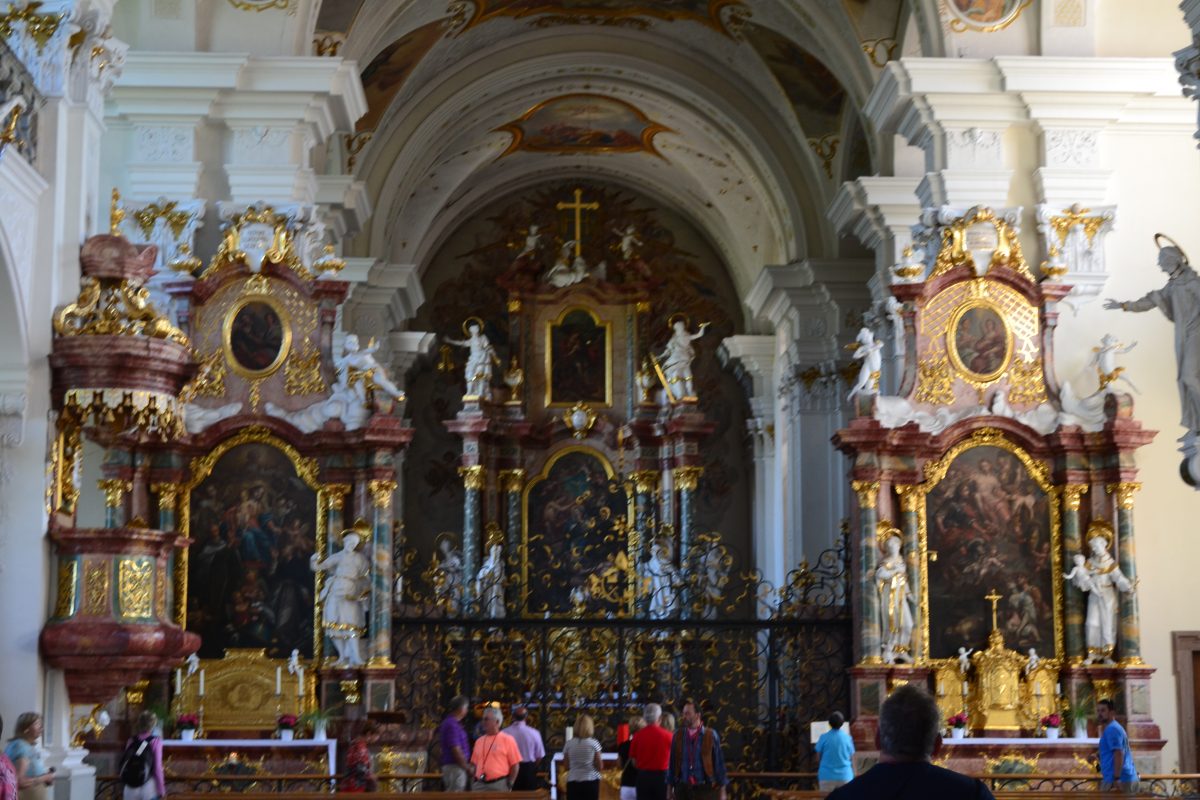
As I stepped inside and allowed my eyes to adjust to the dim lighting within, I marveled at the invaluable artwork that filled each sanctuary, drawing my attention always forward toward the marbled and gilded altars. I find it difficult to wrap my arms around the wealth represented in the gold-plated structures filling these halls.

A thought dawned on me as I stood in the back of the nave of St. Peter and Paul’s Cathedral in St. Petersburg, Russia, staring at the gilded altar rising to the ceiling. Inching my way through the milling throng of tourists snapping pictures, jabbering nosily, jockeying for position to catch a glimpse of whatever the tour guide highlighted, I felt a profound sense of loss. I stood in a magnificent house of worship, yet nothing about the chaotic atmosphere within resembled worship.

I sincerely appreciate the beauty and boldness of these magnificent churches, even though the opulent style challenges my simpler tastes. The beauty is wasted when you realize that few of the cathedrals offered more than the occasional worship service. Most served only a secular function, reflecting the history of time gone by. Museums to extravagance. Mausoleums for a faith dying of apathy.

Statistics tell us that the Christian faith in Europe has been on a steady decline for decades. Fewer than 10 percent of the populations in Norway, Denmark and Finland attend church regularly. Those who profess a faith in Christ stand in absolute minority among the citizens of Scandinavia and northern Europe. Did the extravagance of the buildings contribute in any way to the decline in faith, or was it something more personal?

As I sorted through my distress over the decline of faith and the emptiness of these sanctuaries of worship, I recalled an encounter Jesus had with the Pharisees late in his ministry. The conversation was one of Jesus’ most direct and confrontational messages to the religious leaders of his day.

“Woe to you, teachers of the law and Pharisees, you hypocrites! You clean the outside of the cup and dish, but inside they are full of greed and self-indulgence…You are like whitewashed tombs, which look beautiful on the outside but on the inside are full of dead men’s bones and everything unclean. In the same way, on the outside you appear to people as righteous but on the inside you are full of hypocrisy and wickedness.” –Matthew 23:25-28

With those words Jesus reminds me that the decline of faith evident in Europe and in our own country has far less to do with the physical appearance of our buildings than it does the spiritual application of my heart. Jesus reminds me that I can play the part, speak the words, construct a beautiful façade as I proclaim myself a Christian, and still my heart beats as empty and devoid of worship as those amazing cathedrals. I can gild myself in gold, putting up a grand façade, but never demonstrate God’s love to a lost and dying world.

Cathedrals and churches echo with emptiness across the world because our deeds do not match our faith. James spoke to this.

“What good is it, my brothers and sisters, if someone claims to have faith but has no deeds? Can such a faith save them? Suppose a brother or a sister is without clothes and daily food. If one of you says to them, ‘Go in peace; keep warm and well fed,’ but does nothing about their physical needs, what good is it? In the same way, faith by itself, if it is not accompanied by action, is dead. But some will say, ‘You have faith; I have deeds.’ Show me your faith without deeds, and I will show you my faith by my deeds.” –James 2:14-18

Sadly, I’m sure there are times when those men and women searching for answers to faith’s questions see me as a gilded cathedral. An empty shell hiding behind a gilded face. Christ-like in outside appearance, but without the deeds to back it up. Such is the height of hypocrisy.

A cathedral without worship is a museum. Faith without works a mausoleum. How much better would it be for us to be plain an unattractive to the world, but open to God’s presence as we serve and minister to his people?

At the end of the day, these beautiful cathedrals sit idle because the people forgot what it meant to serve. Forgot what it meant to invest themselves in the lives of those they encountered. Our modern churches run the risk of becoming silent witnesses to our dying faith unless those of us who profess Christ act faithfully on his behalf in service and ministry to those we encounter today and tomorrow.

For the sake of our country and our faith, I pray we’re up to the task.

Breaking Into My Happy Dance

Background Passages: Ephesians 5:1, 15-17; Psalm 118:24, 29

I usually don’t watch the news. I spent far too much of my professional career being interviewed by reporters, hoping that the editing process would maintain the integrity of my comments. Too often full disclosure was sacrificed for a tidy sound bite. As the media grows more politically polarized, corporate bias destroys the objectivity of the press.

With little to do this week because of an empty calendar and heavy rains, I ended up watching more news that I ordinarily watch. The stories were anything but uplifting.

• Devastating earthquakes in Ecuador and Japan.
• Disastrous floods in southeast Texas.
• Deadly acts of terrorism.
• Destructive politics at home and abroad.
• Declining civility toward those whose beliefs differ from our own.

It is any wonder that polls say people are more anxious today about the quality of life than ever in recent history. I must admit to falling victim, at times, to the tone and tenor of today, anxious about tomorrow and the world our children and grandchildren will inherit. As I turned off the news, I remember thinking, “Surely there is a cave on a deserted and isolated island where I can shelter my family from the horrors of the world.”

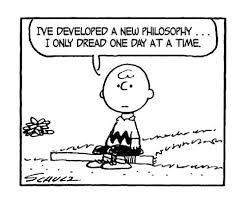
Later that day I stumbled across an old Peanuts cartoon drawn by Charles Schultz. I had grown up with Charlie Brown. I think I read most of the 17,897 comic strips Schultz penned during his 50-year career. In this particular comic strip Charlie Brown sat alone on the curb with that typical forlorn expression on his face, thwarted at every turn by life. With a hint of resigned optimism, Charlie Brown said…

dread 3

The cartoon made me smile and marvel at how God uses such ordinary things to remind us that his presence in our lives trumps every shred of doubt, disquiet and dread. As a Christian in a world in turmoil it is sometimes difficult to walk in confidence. How are we supposed to face life’s uncertainties and our own insecurities when it seems the world around us has gone mad? How do we stop being anxious about all that we see happening around us?

Sorry, Charlie. The answer does not lie in dreading only one day at a time. Paul gave us a clue in his letter to the Ephesian church as they struggled to live in a world in equal turmoil as our own. Look at Ephesians 5:1, 15-17…

“Be imitators of God, therefore, as dearly loved children, and live a life of love, just as Christ loved us…Be very careful, then, how you live—not as unwise but as wise, making the most of every opportunity, because the days are evil. Therefore, do not be foolish, but understand what the Lord’s will is.”

We come to grips with a crazy world by imitating God, living a life of love as modeled by Christ himself. We don’t fix the world’s problems by retreating from it or bemoaning its existence. We heal its sickness by loving it more. By serving it more. By sharing the alternative. Paul tells us that in the midst of evil days, we must live wisely, make right choices, follow the will of God as we understand it. And this might be the key… Our efforts can’t be uninspired or halfhearted. They can’t be judgmental and condemning. We must make the most of every opportunity God gives us to share his grace and love to a lost world.

Making the most of every opportunity allows us to see every day as a gift from God. Another chance to serve him. Another chance to love. Another day to care for those in need. Another day to rejoice. Another day to celebrate.

Charlie Brown suggested that we get the most out of the life when we are thankful for each day. When he discovers how blessed he is he goes into his happy dance…

happy dance

The Psalmist said it this way…

“This is the day that the Lord has made. Let us rejoice and be glad in it. Give thanks to the Lord, for he is good. His love endures forever.” — Psalm 118: 24, 29

God, thank you for this day and the many unmerited blessings you have showered upon us.

Maybe today, instead of watching the news, I’ll just break into my happy dance.

*****

(Author’s Note: Feel free to forward this Bible study to anyone you feel might benefit from its message by clicking on the email icon at the bottom of the page. Encourage your them to subscribe to the blog by entering their email address in the box on the right side of the page. Thank you for sharing.)

Don’t Say ‘Merry Christmas’

We sat on the floor in the middle of my son’s living room on Christmas morning, amid open boxes and scraps of torn wrapping paper. My grandsons, Eli and Josiah, laughed and played with new toys that had quickly become their favorites. Snatching Josiah into her lap as he danced across the floor in delight, my wife, Robin, hugged our youngest grandson and wished him, “Merry Christmas.”

Continue reading “Don’t Say ‘Merry Christmas’”

Religion Is Not Enough

Background Verses: Acts 17:16-34


Paul stood alone.
Deep in the center of the Athenian Agora.

Oblivious, it seemed, to the bustling crowd,

busy commerce,

and boisterous conversations.

Lips formed his words,

yet he uttered no sound.

Stunned by the

sights and sounds

of sinful ignorance.


He stretched out his arms.

Slowly turned full circle.

Intelligent eyes taking his surroundings.

Everywhere he looked,

Every direction he faced,

Glistening granite.

Chiseled marble.

Gilded stone.

Testimony to human confusion and idolatry.


Idol after idol.

Apollo.

Ares.

Demeter

Dionysus.

Gods of the people who worshipped…

Music and healing.

War and chaos.

Fertility and harvest.

Wine and pleasure.


Hera.

Harmonia.

Nemesis.

Zelos.

Gods and goddesses of…

Women and empires.

Harmony and peace.

Revenge and hatred.

Jealousy and rivalry.


He threaded his way through the crowd.

Listened to the debates and arguments

of Athens’ fabled philosophers.

Learned men.

Fumbling with matters of man’s

life,

purpose and

existence.


For several days

Paul walked the marketplace.

Engaged at times in quiet

and lively debate with

Epicurean and Stoic philosophers.

Paul parried their intellectual thrusts.

Countered with his personal beliefs.

Sought to understand the…

Epicureans.

Their “eat, drink and be merry” constructs

that ignored their personal responsibilities.


Sought to know the…

Stoics.

Their deliberate disdain for life and

unending and unjoyful quest for life on a higher plain.


Paul’s introduction of a loving God,

a resurrected Lord,

fell upon curious, but deaf ears.


Despite their general apathy,

the philosophers lived for and loved a good debate.

Liked nothing more than to spend

time talking and listening to the latest ideas.

Invited Paul to voice his strange philosophy to the Areopagus,

The council of the most learned in Athens.

Tomorrow morning.

On a hill in the shadow of the Acropolis.


Paul walked the remainder of the day

considering the challenge before him.

Constantly in prayer for words to share.

How could he convince them of the God he adored?

The God he worshipped?


Head bent.

Focused only on his thoughts.

Paul’s elbow caught the edge of another stone monument,

forcing his attention to his right.

As he rubbed his arm to soothe the discomfort,

he stood face to face with

another idol.

Another altar.


He looked at the whitewashed image.

Carved from stone.

The half-nude body of a man.

Chest bare.

Poised and powerful.

Cloth draped across its left shoulder,

tied around its waist.

Face framed by a laurel wreath.

Void of expression.

Featureless.

Paul’s eyes drifted down to the inscription.

Chuckled at the irony.

Marveled at God’s inspiration.

Chiseled into the base of the statue…

“TO THE UNKNOWN GOD.”


Offering a quiet prayer to Jehovah.

Paul hurried back to his home for the night.

Gathering his thoughts.


*

Early the next morning,

Paul sat quietly on the boulder.

Gazing east.

The rising sun casting a reddish glow onto the low clouds.

The philosophers arrived alone and in small groups.

Eager to begin another day

searching for understanding and knowledge.

Their sole reason for breathing.


After a time,

One of the men whom Paul debated yesterday,

held out his hands.

Gathering the attention and eyes of every man.

With an air of derision and scorn,

he pointed at Paul.

“This stranger among us comes at my invitation.

His babblings in the Agora amused me.

While I find his philosophy little more than the chirping of a bird, others…”

he paused, glaring intently at a group of

more open-minded men sitting to his left…

“others, found his argument a ‘herald of some  new divination.’

So, my friend,” said the philosopher,

“tell us about this new thought you bring for it is strange to us.”

*

Paul stood slowly.

Walked toward the edge of the mountain

Looked down on the Agora.

The streets below.

Stretched out his arm over the city beneath him.

Stared down at the Altar of Apollo,

clearly visible in the distant marketplace.


Voice clear.

Laced with authority.

Paul declared,

“Men of Athens.”

“I see that in every way you are very religious.

For as I walked around.

Looked carefully at your objects of worship.

I saw many altars to many gods.

I even found an altar with this inscription,

‘TO AN UNKNOWN GOD.’”

Paul turned.

Faced the philosophers seated around the Areopagus.

A smile on his face.

A gleam in his eye.

“What you worship as something unknown…

I am going to proclaim to you.”


With an eloquence of speech

And the voice emboldened by the Holy Spirit,

Paul proclaimed the good news of Jesus Christ

and his resurrection.


*


Paul preached the

plan and purpose of God

Summarized in seven short verses

in Acts 17:24-31.


God created.

God rules.

God gives life.


A life of purpose given so…

man could seek him.

Reach out for  him.

Find him.

Not distant on the mythical mountaintop.

Not hidden in the clouds of Olympus.

Not crafted by human hands.

Not an image reflecting our failures and weaknesses.


Rather, we find him

in the warmth of personal relationship.

We belong to him.


He is unique.

The One.

The Only.


He calls us to repentance.

Demands our obedience.

Desires our worship.


Paul looked at the world around him

Made a simple observation.

“I see that in every way you are very religious.”


If he stood on the hill overlooking

our city…

Our lives…

Our hearts…

How many altars could he count dedicated to the

Gods of our own choosing?

How many gods have I created in my image?

How many things have I placed in priority

over my Lord?


Religion…

Goes through the motions.

Plays for appearance.

Creates a false sense of belonging.


Faith focuses our lives, not on what is

unknown or unreal,

but on the

One and Only

that is known to us…


Creator.

Lord.

Indwelling Spirit.

Comforter.

Redeemer.

Restorer of Life Abundant.

 Source: The Searcher

A Unsung Prayer Warrior

Background Verses: Colossians 1:7-8 and 4:12-13

All of us struggle with weighty decisions from time to time. Those issues that tend to keep you awake at night. Whether matters of the heart, matters of health or matters of the soul, we find comfort when we know there are friends and family praying for us. I cannot tell you how many times in my life I have found an element of peace after being told by a friend that they have lifted me up in prayer.

Last night I found myself reading through Colossians within that frame of reference. Here is a first-century church, a group of people from diverse backgrounds, Greek and Jew, master and slave, rich and poor, gathering regularly in someone’s home to hear the gospel proclaimed and to be taught how they should live as followers of Christ in a world that follows a very different moral compass…a church struggling to stay on the right path when those among them are preaching and teaching a tarnished truth blending convenient portions of pagan, Jewish and Christian teaching into a hybrid belief system lacking substance.

Yet, there are good people in the church, trying desperately to hang on to what they have been taught and what they believe. They’re hanging on while their faithful pastor Epaphras serves in Rome offering love and support to an imprisoned Paul, Christianity’s foremost missionary.

Imagine the Christians in Colossae, gathering quickly at a friend’s home. They’ve just been told that Tychius and Mark, two men well-known in the region for their association with Paul and their pastor, have arrived in town bearing a letter from Paul. Men and women of faith gathering in anticipation.

Erastus ducked his head through the door,

out of breath from his dash across town.

Eyes darted from face to face,

Slapping a back in greeting.

Clasping hands with those

not seen since they last gathered for worship.

Many others already sat in boisterous conversation

around the walls of the tidy villa.

Permeating the room was an air of

Energy.

Excitement.

Expectation.

Across the crowded room,

quietly visiting with the man of the house…

Two men he had never met.

Known only by reputation.

Associates of

The Missionary.

Though they looked tired from their journey,

they laughed easily.

Comfortable in their companionship .

Bound together

with those in the room by the

fellowship of faith.

Introductions are made.

Greetings exchanged.

Tychicus,

the elder of the two men took a step back,

yielding to Mark,

 the younger of the two messengers.

Erastus liked him immediately.

No haughtiness.

No pretense.

A calm tone and quiet voice.

A warm smile that spoke volumes

and revealed his heart.

“I have a letter from Paul,” he said,

“and a word from your pastor.”

Mark began to read.

“We always thank God, the Father of our Lord Jesus Christ,

when we pray for you because

we have heard of your faith in Christ Jesus…

the love you have for all God’s people–

the faith and love that springs from the hope stored up for you in heaven…

The gospel is bearing fruit and growing throughout the whole world–

just as it has been doing among you

since the day you heard it and truly understood God’s grace.

You learned it from Epaphras,

our dear fellow servant,

who is a faithful minister of Christ on our behalf,

and who also told us of your love in the Spirit.”

Erastus felt…

Edification.

Encouragement.

Erastus heard…

Warnings about the false doctrines that

wage war against their souls.

Words that inspired him to stand fast.

Hold true to what he had been taught.

 I have to believe Paul’s message met its intended purpose. False teachers had peppered them for months with a new doctrine that sounded right, but felt terribly wrong. Yet, the boldness of their arguments tempted them to abandon what they had been taught by their beloved pastor.

Those individuals who listened to the words read to them by Mark had to find reinforcement and reassurance in their fledgling faith.

Yet, as powerful as Paul’s words might have been, I can’t help but feel there was an unsung hero buried in the text of Paul’s letter. A name that captured their attention and strengthened their resolve by the simply sound of his name and the reminder of his love for them.

 The tone of Mark’s voice changed.

Clearly, the letter was drawing to a close.

Erastus had been lost in thought,

Staring at the floor.

His mind hearing,

but not locking on to the closing words

until the sound of a familiar name

jolted him from this thoughts.

“Epaphras, who is one of you and

a servant of Christ Jesus,

sends greetings.”

The men seated around him,

looked at each other and grinned.

The salutation was like balm on a sunburned back.

“Epahpras is always wrestling in prayer…

for you…

praying that you will stand firm in all the will of God,

mature and fully assured.

He is working hard for you.”

Erastus squared his shoulders.

Leaned back against the wall.

Closed his eyes.

Prayed for the kind of strength for which his pastor prayed.

Faith’s great turning point in his life.

Epaphras was a man of faith who loved his congregation. He saw them not simply as sheep to feed, but friends to love. A man who felt the burden of responsibility to develop their immature belief into a deep abiding faith that sustains. So, every day…every day…he lifted them up to the Father. Notice the words Paul used. “Always wrestling in prayer.” He never failed to remember his people in Colossae. The prayer was never casual, but deep and heartfelt.  Praying as if God might not hear unless his prayer sprung from his gut…fearful that if he did not intercede, God would not know how desperate their situation might be. Incessant. Insistent. Impassioned.

Not only did he pray frequently and deeply, but his prayer was specific. Not given to pious platitudes. The prayers were pointed…that they might “stand firm in all the will of God.” Continuing in their belief, finding in Him righteousness as a model for life; finding in Him strength as a mechanism to cope with any disinformation they might hear. Asking that they be…unwavering in their faith and their understanding of God’s grace and what he desires of them. That their faith might discern his perfect wisdom and desire for their lives. Instilling in them…the truth of what they believe and how that belief is translated into practice. Inspiring them to…demonstrate the courage of their conviction even in the midst of abuse and persecution.

I find value in the life of Epaphras, this unsung bible hero, who cared so deeply for the spiritual security of his friends and neighbors that his spirit groaned in passionate petition for his people. May I be blessed with that kind of prayer warrior lifting me up as I deal with life that God has laid before me. May I be that kind of prayer warrior for those I love and those I serve.

Source: The Searcher

The Obstinate Brother

Background Verses: Luke 15:11-32

Let’s pick up where we left off last time with our study of Jesus’ poignant parable known as “The Prodigal Son.” Jesus shared his message of God’s grace and his redemptive purpose because the religious leaders of his day groused and complained that Jesus spent his time with “tax collectors and sinners.” This detailed parable shared his response, illustrating how God delights in the return of those who have lost their way.

The story and its message didn’t end at the surface. It wasn’t enough to remind the Pharisees of God’s patience and compassion. They needed to be reminded of their own skewed vision of God’s kingdom.

I’m not sure who said it or where I heard it, but someone once remarked that the parable of “The Prodigal Son” had to have received its name from the older brother. The title itself is an accusation, pointing self-righteous fingers at the wanton behavior of the lost. As such, it points out the very heart of those to whom its message was intended…the Pharisees. Drag the intent into the 21st century and we find a message for the church that spews judgment toward the lost in such a manner that it deprives them of the joy God wants them to experience within the fellowship of believers.

Certainly, the story Jesus told condemned the sin of the younger brother. His actions stood as a testimony to the selfishness in our hearts that delights in taking our own path of self-discovery and self-gratification, regardless of who we hurt or disrespect along the way. Lest anyone miss the point of His message, Jesus exposed the self-righteousness of the Pharisees and religious leaders who never seemed to understand that Jesus came to “seek and save that which was lost.” Never able to join in the celebration when the lost sheep, coin or son were found.

Let’s take a peak between the lines at the reaction Jesus described.

He watched absentmindedly.
Reacted on muscle memory.
Driving the small herd of sheep from
pasture to pen.
Shuffling right or left.
Holding out his staff,
with mind-numbing repetition.
Keeping the skittish herd moving down the path.
Returning home at the end of another day.

With constant resentment
simmering beneath the surface
and nothing else to distract his heart,
the man muttered another in a string of curses
directed at his brother for abandoning the family
to pursue his own selfishness.

He spat upon the ground,
recalling how his father would stare down the road his brother traveled,
pining for months for his return.
Why his father had not washed his
brother’s memory from his heart was beyond him.
He had hurt too many people.
Disrepected every tradition.
“Good riddance,”
he breathed for what must have been the 1,000th time.

A distant sound broke through his
personal pity party.
Turned his ear to the wind.
The intermittent sound of a flute so out of place in the pasture
Became less intermittent with each step.
More fluid and melodious
as he topped the crest of the hill.
Sounds of laughter.
Shouts of delight.

The man took off running toward his home…
the source of the revelry,
scattering the sheep and leaving them unattended in the field.

Burst through the gate,
knocking a tray of food from the hands of a servant.
Without apology, he grabbed the young girl’s arm.
“What’s going on? Tell me.”

She looked at him, smile beaming from her face.
“It’s your brother! He’s come home!
Come on in and see.”
Gathering up the tray and rushing toward the door, she called,
“You should see your Father.
I’ve never seen him so happy.”
 
As he watched her open the door to HIS house,
The noise of celebration echoed in the courtyard.
His mind reeled.
Stunned.
Seething.
Shattered.

His feet were as unmoved as his heart.
Unable to bring himself to join the celebration.
Resentful of his brother.
Angry with his Father.
Bitter at his circumstance.

His father opened the door.
Rushed to his side.
Hugging his elder son…
an embrace that was not returned.
With his hand resting on the neck of his son,
eyes glistening with tears, the father said,
“Come. Celebrate.
For your brother who was lost has returned.”

The son pushed him away,
anger burning brighter than the sun.
Hurt and disappointment
evident in every expression.
“I’ve slaved for you…”
“Never disobeyed…”
“You’ve never thrown a party for me…”
“You’re celebrating for
this…this…son of yours who squandered and sinned…”
“What about me?”

 Scripture records Jesus’ words in response to the older brother’s tirade in Luke 15:31-32, “My son, you are always with me and everything I have is yours. Be we had to celebrate and be glad, because this brother of yours was dead and is alive again; he was lost and is found.”

How fortunate that the younger brother was met first by the father and not by his older sibling…who would have turned him away and sent him back into the far country. The older brother lost nothing of his inheritance upon the return of the brother. The Father said, “All if have is yours.” His inheritance remained intact. Instead, he urged him to celebrate the return of “this brother of yours” who was “dead and is now alive, lost and is found.”

I picture Jesus finishing that last statement of his parable, looking into the eyes of the Phraisees who challenged his work among sinners. In this phrase Jesus was making yet another appeal to the blinded religious leaders to open their hearts to what God was doing for those who were lost right in front of their eyes. To the Pharisees, Jesus consorted with “this son of yours” when Jesus wanted them to see these same individuals as “this brother of yours.”

For the religious leaders it was more about the show and less about the substance. Their lack of love toward the lost prevented them from offering an alternative path of faith. In their eyes, the sinners were neither religious nor respectable enough to hear the word of God. Yet, Jesus taught that the show of religion and the pretense of respectability is no substitute for redemption.

As people of faith, we miss our chance to be redemptive when the language we use condemns the sinner and not just the sin. Jesus knew those with whom he shared his time were lost, living lives outside the will of God.  He chose to build relationships and connections with the sinners of the world so they could embrace the salvation he offered. He never put them down. Never called them names. Never suggested they were unworthy of receiving God’s grace.

Yet, that’s exactly the message that the words and behavior of some Christians convey through ugly and malicious messages on Facebook or mainstream media. We must take greater care in the words we use and the message we convey as we speak words of truth to a lost world.

Jesus began his parable as a way of celebrating the redemptive work of God among a world in desperate need of his grace. He concluded the parable with a stern warning to all of us our faith must be more than a show of religion and our lives more than a pretense of respectability.

Think how much better it would be if we worked alongside the father, one eye on the labor and one eye on the road traveled by our lost brother. Praying for the return of the lost to the Father’s loving embrace and joining in the heavenly celebration when our brother returns.


Source: The Searcher