Why Mary? Why Joseph?

Background Passages: Luke 1; Matthew 1:18-24; 2 Timothy 1:9-10a; Galatians 4:4-5

Because I grew up in church, the Christmas story is a familiar one. It never ceases to amaze me how the story never grows stale or repetitive when I let God speak through his word. After Thanksgiving, my study and thoughts turned to Christmas. When I read again the familiar story, I thought “Why Bethlehem?”

God used Bethlehem to remind me that he can use the most insignificant among us to point the world to Jesus. He used Bethlehem to remind me that I cannot be caught sleeping and miss the opportunity to see God at work through Christ. To be Christ at work.

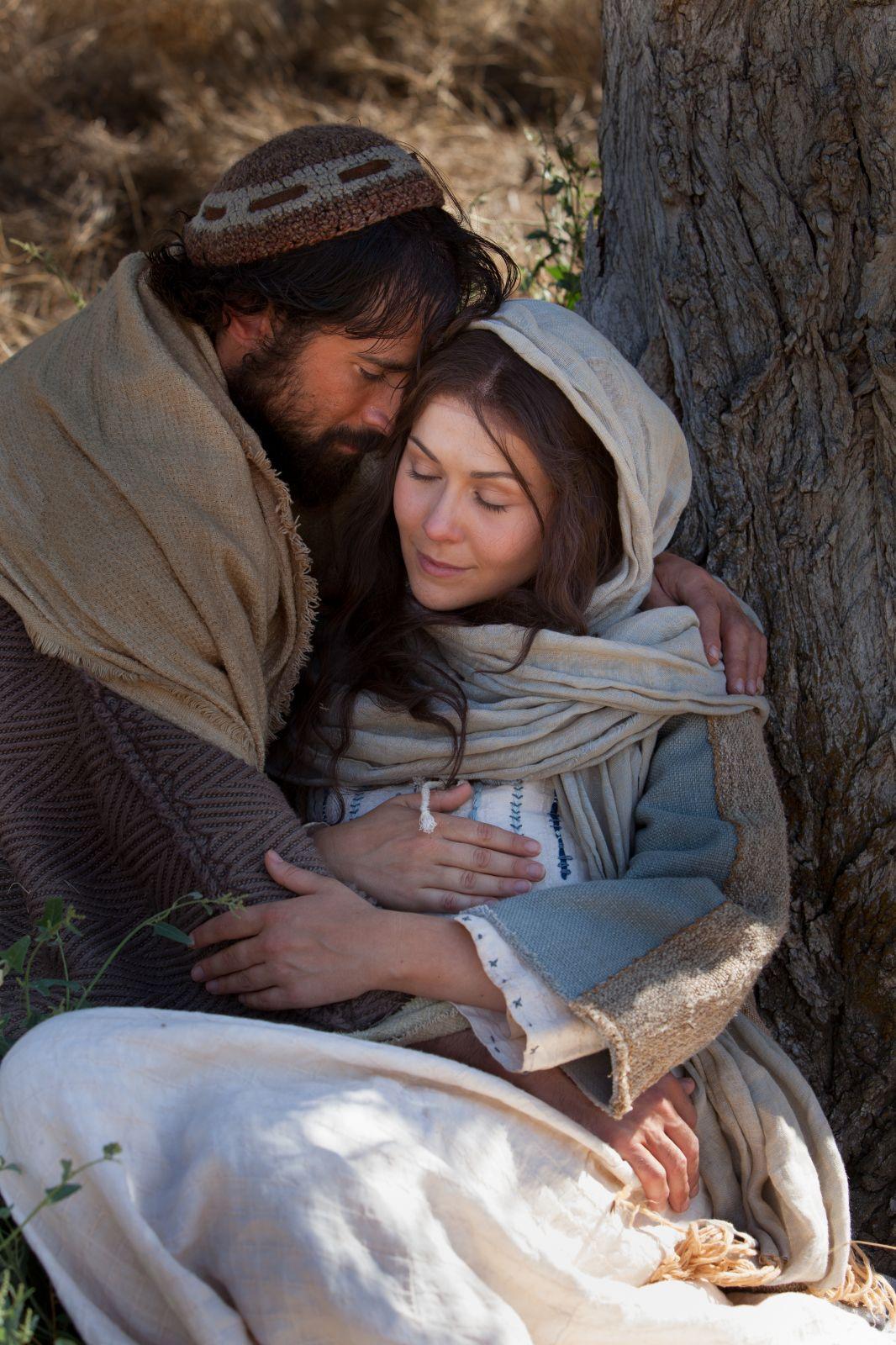
I read the passage in Luke again this week. A new thought jumped out at me. God could have chosen anyone to give birth to his son. Why Mary? He could have chosen any man to step in as Jesus’ earthly father. Why Joseph?

While I’ll never presume to fully understand the mind of God, think with me.

The birth of Jesus Christ was not a plan thrown together at the last minute when God suddenly realized his people had abandoned him. While the primordial ooze was still solidifying throughout his universe, the omniscient Creator set in motion a plan to redeem his creation, destined by his gift of free will to go its own way. The baby in a manger, who would be the savior on a cross, was always the centerpiece of that pre-existent plan.

Paul proclaimed it in his second letter to his protégé Timothy.

He has saved us and called us to a holy life, not because of anything we have done, but because of his own purpose and grace. This grace was given us in Christ Jesus before the beginning of time, but it has now been revealed through the appearing of our savior, Christ Jesus… (2 Timothy 1:9-10a)

God knew when to hatch his plan. He knew he had to wait until just enough of the world was ready to listen with open hearts and minds; ready to receive the gift he would send at that perfect moment in time to redeem those who recognized what he was doing through Jesus Christ.

When the set time had fully come, God sent his Son, born of a woman, born under the law, to redeem those under the law, that we might receive adoption to sonship. (Galatians 4:4-5)

I can almost see the Creator staring into the future in search of the woman who would bear the part of himself that would become the salvation of the world. There must have been thousands upon thousands of suitable women to consider as the mother of God’s son.

One might expect his eyes to fall on a woman like Elizabeth with impeccable credentials from a line of ancestors descending from one of Israel’s patriarchs. A woman married to a prominent rabbi, a man of wealth and influence. Scripture tells us Elizabeth was “righteous in the sight of God, walking blamelessly in all the commandments and requirements of the Lord.” (Luke 1:6) He didn’t choose Elizabeth…or anyone like her for that matter.

Instead, his scrutiny extended beyond the time of the law and prophets, into the time of the Roman occupation until it settled on Mary, Elizabeth’s cousin, a young woman without prominence…from a town with no consequence…in a country of little significance.

So, why Mary?

Certainly, the plan had been laid out for centuries as Paul tells us in Galatians. God pegged her from the beginning. To let us know who he had chosen, God’s prophecies described her in detail. The mother of the Messiah would be a virgin living in Nazareth with a reason to give birth in Bethlehem. She would be descended from David and married to someone from the same Davidic line.

Mary checked off all the boxes laid out in scripture for the mother of Christ, but Luke tells us the real reason she was chosen. When God scanned the future and his eyes settled on Mary, she simply found “favor with God.” The prophecies stood only as the backstory he created to validate his choice.

In the sixth month of Elizabeth’s pregnancy, God sent the angel Gabriel to Nazareth, a town in Galilee, to a virgin pledged to be married to a man named Joseph, a descendant of David. The virgin’s name was Mary. The angel went to her and said, “Greetings, you who are highly favored! The Lord is with you.” Mary was greatly troubled at his words and wondered what kind of greeting this might be. But the angel said to her, “Do not be afraid, Mary; you have found favor with God.” (Luke 1:26-30)

Did you hear it? Did you hear the reason? Before the world began, the Creator’s all-knowing eyes and heart scanned the future and he saw Mary and he liked what he saw in her. He favored her. The Greek word for favor found in these verses is charin. It can also mean favored for this cause, for a purpose.

When God saw Mary, he saw her as someone he could call to serve for the specific purpose he had in mind. He chose to extend his favor to Mary by being with her. (The Lord is with you.) Making his presence known. Standing with her throughout the difficult life to which he called her as the mother of God’s son.

Why Mary? What did God see in her that made him want to extend his favor to her. I think you find it in her response after hearing the news shared by the angel. After the angel told her of her Holy Spirit induced pregnancy and that the child born would be the Son of God, the Messiah, and that his kingdom would know no end, Mary’s response revealed her heart.

After the initial shock wore off and with the soothing reassurance offered by the angel, hear the obedience and trust in her response.

“I am the Lord’s servant,” Mary answered. “May your word to me be fulfilled.” (Luke 1:38)

The Creator God who sees the end from the beginning chose Mary long before the prophecies were uttered because of the depth of her faith and her willing heart. She was the right woman in the right place at the right time with enough faith to be open to God’s call…willing to let him be at work in her life.

Hang on to that thought. We’ll come back to Mary in a moment. Now, consider this.

Why Joseph?

When God first found Mary in his search through the future of humanity, he found her pledged to be married to Joseph. Like Mary, Joseph held no position of power or wealth. He lived an ordinary life, devoid of the prestige one would expect as the father of the Messiah.

Watch how he responds to Mary’s unexpected news.

Mary tried to explain the unexplainable when she shared the shocking news of her pregnancy with Joseph. When he could not imagine the unimaginable, Joseph could have subjected her to public disgrace and even had her stoned to death. However, he never seemed to seriously consider those options.

A righteous and honorable man, Joseph instead decided to handle things privately. Desiring to avoid making Mary an option of ridicule, humiliation and gossip, he chose a quiet divorce.

In Joseph’s private intentions, spoken only in his heart before his head hit his pillow that night, God saw in this simple carpenter the strength of character and unmeasured grace he needed in the one he would choose to be the earthly father of the Son of God. God saw in Joseph a man of compassion, humility, faithfulness and mercy. Characteristics Jesus would see modeled by his earthly father as he grew in wisdom and stature and in favor with God and man. (Luke 2:52)

While scripture doesn’t say it this way, I think Joseph found favor with God…just as Mary did…just as Jesus would someday experience. That’s why God sent his angel to ease Joseph’s mind.

But after he considered this, an angel of the Lord appeared to him in a dream and said, “Joseph son of David, do not be afraid to take Mary home as your wife, because what is conceived in her is from the Holy Spirit. She will give birth to a son, and you are to give him the name Jesus, because he will save his people from their sins”…When Joseph woke up, he did what the angel of the Lord had commanded him and took Mary as his wife. (Matthew 1:20-21, 24)

I hope you see the same obedience, faith and willing heart that I see in Joseph when he woke up the next morning. He no longer doubted Mary’s experience. He heard the same words of comfort she heard, telling him to have no fear of what the future holds. No second-guessing God’s purpose. No second-guessing God’s plan. He just willingly accepted in faith and obedience the role God asked him to play.

So, we look at this couple and ask why?

Why Mary?

Why Joseph?

Mary and Joseph go down in history as simple, ordinary, everyday people through whom God chose to do an extraordinary thing. He chose them because he saw something in them that let him know they were strong enough to handle the difficult role of being the parents of his only son. They had the choice to say yes or no to the call. He chose them because they made themselves available to the will of God in their lives. Willingly and without reservation.

He did the same for all of us. Before time began, he looked into the 21st century and identified me and you and set aside the work he wanted us to do.

We aren’t called to raise the Messiah from the cradle to the cross, but we are called to raise him up through the power of the testimony of what he has done in our lives. To do the things he has called us to do with the same faith, obedience and willing heart demonstrated and modeled by Mary and Joseph.

So, the question is less about why Mary or why Joseph? Here’s the question that matters.

Why you?

Why me?

Whatever he’s called us to do, it was important enough for God to set it before us. Let’s be faithful in the doing. Willingly and without reservation.

Fan or Follower?

Background Passages: Matthew 16:13-24; Luke 5:1-11; Matthew 4:18-22 and Luke 16:25-26

It’s baseball playoff season. I think I’m finally over the baseball strike of 1994-95 and find myself watching the games again with interest. I know. That’s a long time to hold a grudge.

It’s also the middle of the college football season and I love to watch college football.

I am a fan of the Houston Astros. I enjoy watching their games and I might even do a fist pump when they win. I rarely lose sleep if they blow the game in the ninth inning. I’m a fan of the Houston Astros.

I am a follower of the Texas Tech Red Raiders. I wear the shirt. I watch the games. I celebrate when they win. I will toss a pillow and lose hours of sleep with every defeat. During the week, I’ll check out a few Red Raider websites to get a perspective on last week’s game. I’ll read about the players and coaches. I’ll fret over next week’s game. Cut me and I’m pretty sure I bleed scarlet and black. I am a follower of Texas Tech.

Jesus talked a little about being a fan or being a follower.

Jesus and his disciples left the region of Caesarea Philippi after a brief retreat north of the Sea of Galilee. The deep discussion elicited a confession from Peter who declared the understanding of his heart.

While looking at the throng of people milling about that pagan city, Jesus asked those with him what the people were saying about him after almost three years of ministry.

The disciples shared a few names as if the rumors were laughable.

“Some say John the Baptist. Others say Elijah. Still others Jeremiah or one of the prophets.” (Matthew 16:13-14)

Then, Jesus asked the question he really wanted to ask.

“But what about you? Who do you say I am?”

While the others stared blankly at the ground, Peter declared with strength of conviction,

“You are the Christ, the Son of the living God.” (Matthew 16:16)

With that confession, Jesus gathered his disciples and began the journey back to Galilee, but the dialogue didn’t get easier. The teaching grew more intense as Jesus began to talk more plainly about his death on the cross.

Peter didn’t like the way this conversation was going.

“Peter took him aside and began to rebuke him. ‘Never, Lord! This shall never happen to you!’

“Jesus turned and said to Peter, ‘Get behind me Satan! You are a stumbling block to me; you do not have in mind the things of God, but the things of men.’

“Then Jesus said to his disciples, ‘If anyone would come after me, he must deny himself and take up his cross and follow me.” (Matthew 16:22-24)

It was those last two words that caught my attention this week. “Follow me.”

My church has been in a six-week long Bible study about discipleship. While family matters have kept me from attending every session, I have kept up with the study.

I underlined these words in the study guide. “Following Jesus is a serious, weighty calling. Taking up our cross means putting to death our desires and goals and following Jesus wherever he leads. Christians are supposed to look increasingly like Jesus.”

When Jesus told his disciples to take up the cross and follow him, it wasn’t the first time they had heard the call to follow.

At the beginning of his ministry, Jesus spent the early morning talking with a crowd that followed him down the coast of the Sea of Galilee. He came across a group of fishermen cleaning their nets after an unsuccessful night on the water where the fish were nowhere to be found.

Jesus climbed into Peter and Andrew’s boat and asked them to push off a few feet from shore so the water would add its acoustic effect to his voice.

“When he finished speaking, Jesus said to Peter, ‘Put into deep water and let down your nets for a catch.’ Peter answered, ‘Master, we’ve worked hard all night and haven’t caught anything. But, because you say so, I will let down the nets.

“When they had done so, they caught such a large number of fish that their nets began to break. …When Simon Peter saw this, he fell at Jesus’ knees and said, ‘Go away from me, Lord, I am a sinful man!’ For he and all his companions were astonished at the catch of fish they had taken, and so were James and John, the sons of Zebedee, Simon’s partners.”

Then, combining this passage with what we read in Matthew 5, Jesus said to Peter, Andrew, James and John, “Follow me and I will make you fishers of me.” (Luke 5:1-11 and Matthew 4:18-22)

There’s the phrase again, “Follow me.”

He said the same words to Matthew when he called him from the tax collector’s booth. To Phillip when he pulled him from a crowd. He said the same words to a rich, young ruler after he told him to rid himself of all the material things that stood between him and Jesus. “Follow me.”

I suspect they were words he extended in every conversation shared and every invitation given. “Follow me.”

What is behind this idea of following Jesus?

The Greek word akoloutheo gets translated in most versions of the Bible as follow, but it has a broader range of meanings. It can mean accompany, assist, pursue or attend. So, if the word can also mean assist or pursue, for instance, Jesus was not calling people to simply tag along. He called for personal engagement.

Akoloutheo is written in present tense meaning the action is in the here and now and its voice is active. So, when Jesus calls his people to follow, he means they are to do so in every moment of life. It is something they are to do. They can’t send someone to do it for them.

Jesus didn’t want his disciples to just listen and believe in him from a distance. He invited them to draw near, to join him, join and commit to the mission. Jesus wanted his disciples to be fully engaged with him in both learning and doing the work of God.

From the beginning of their call to the critical times near the end of Jesus’ earthly ministry, Jesus asked them to follow.

Think about what that meant for those first disciples. From the moment they began their journey with Jesus he taught and trained them. He sent them to preach as he preached. He asked them to serve those with great need. He prepared them to continue his work after his ministry was completed. He expected them to spread the gospel throughout the world.

Jesus is still inviting you and me to be his disciples. His followers. To personally join him, learn from him, and help him in gospel ministry. There is nothing passive about being a follower of Christ.

Timothy Keller founding pastor of Redeemer Presbyterian Church in New York City, put it this way, “Jesus says, ‘I want you to follow me so fully, intently, so enduringly that all other attachments in your life look weak by comparison.’”

We can’t be a disciple or difference maker until we are willing to deny ourselves…to set aside the life that matters to us and pick up the life that matters to God. To put God on the throne and make him Lord of our life. To make Christlike living our passion.

We can’t be a disciple or difference maker until we are willing to take up our cross. We tend to trivialize Jesus’ death on the cross if we think this term means simply facing stoically the difficulties of life that all experience, whether a follower of Christ or not.

It speaks to the complete obedience and devotion to the cause of Christ, no matter where it leads. To yield our hearts fully to his. After asking them to take up the cross and follow, Jesus spoke to the eternal value one gains by following him.

“For whoever wants to save his life will lose it, but whoever loses his life for me will find it. What good will it be for a man if he gains the whole world, yet forfeits his soul?” (Luke 16:25-26)

Jesus tells them that nothing in this life is worth keeping if it means missing out on eternity. So, when we deny ourselves and take up our cross all that’s left is to invest our lives completely into the kingdom of God. To follow.

New Testament theologian Scot McKnight put it this. way, “Those who aren’t following Jesus aren’t his followers. It’s that simple. Followers follow, and those who don’t follow aren’t followers. To follow Jesus means to follow Jesus into a society where justice rules, where love shapes everything. To follow Jesus means to take up his dream and work for it.”

I’m a fan of the Houston Astros. I’m a follower of the Texas Tech Red Raiders. But, there is more at stake than my athletic affiliations.

If I’m a fan of Jesus Christ, I might profess my faith in comfortable settings. I might toss a few dollars into the offering plate when it’s passed. I might even listen to a sermon or two. If I’m a fan of Christ, however, I am rarely personally invested in the work, sacrificing little time and energy for the cause of Christ.

If I am a follower of Christ, I cannot just passively believe in him. Being a follower is all about digging deeply into his teachings. Understanding how Jesus reacted to different situations in life. It is all about imitating him, his example and his works. It is all about being Christlike. It’s all about being a difference maker.

When you get right down to it, the question Jesus asked his disciples in Caesarea Philippi may have been as basic as that.

Will you be a fan or a follower?

It’s a decent question for us to answer.

In Hot Pursuit

Background Passages: Psalm 23:6; Exodus 33:15:16, 34:5-7

The passage was a familiar one.

The pastor delivering the message at the sweet memorial service for my daughter-in-law’s grandmother this week drew his words from Psalm 23.

“The Lord is my shepherd…”

You can probably quote the rest. Yet, for hours after the service, one verse from that familiar Psalm kept repeating in my heart.

“Surely goodness and mercy shall follow me all the days of my life.” Psalm 23:6

I don’t know about you, but I’ve learned over the years that when a Bible verse keeps coming to mind long after I first heard it, it’s time to stop and give it some thought. To let God teach me one of his life lessons.

So, I did what I usually do when I want to learn something more about anything. I googled it.

Looking first at Psalm 23:6 in other translations, I found the English Heritage Version of the Bible writing the verse in this way.

“Surely God’s goodness and his unfailing love will pursue me all the days of my life.”

I like the clarity of this translation. It’s God’s goodness and unfailing love that follow me. I like it because not everything we experience in life is good. Life is not for the fainthearted. I’m reminded of the refrain sung by Grandpa Jones on the old variety show Hee Haw, right before he delivered his spit-filled raspberry in the face of the show’s guest.

Gloom, despair and agony on me.
Deep dark depression, excessive misery.
If it weren’t for bad luck, I’d have no luck at all.
Gloom, despair and agony on me.”

The verse though doesn’t speak about good things following me. It speaks to God’s goodness chasing after me every day of my life. Intriguing, isn’t it?

In Hebrew, the word translated goodness is radaf. It means to run after, to track down as a hunter might track its prey. To pursue and take captive. It conveys an idea of God, the Good Shepherd of the Psalm, being in relentless pursuit of his sheep with the truth of his goodness and unfailing love…his gift for every day of our existence.

So that led me down another Google trail. What is God’s goodness?

When Moses climbed off Mt. Sinai with those tablets of commands from God, he walked into the middle of a pagan celebration where God’s people were cavorting around a golden calf they had fashioned. An idol to worship. Neither Moses nor God were amused.

Hours later, Moses entered the Tent of Meetings and had a deep dialogue with God. God was ready to wash his hands of the unfaithful and ungrateful people of Israel. He told Moses, he would send them on to the land he promised, but he (God) would not be present with them. Moses understood this as the kiss of death for his people. He pleaded on behalf of the people for God to stay present among them, reminding God, as if he needed reminding, that they were his chosen people. Look at Exodus 33:15-16.

“If your presence does not go with us, do not send us up from here. How will anyone know that you are pleased with me and with your people unless you go with us? What else will distinguish me and your people from all the other people on the face of the earth?” (Exodus 33:15-16)

Being pleased with Moses, God promised to do what Moses asked. Moses asked a lot. He asked God to reveal to him the “glory of God” and God agreed to do so.

“And the Lord said, ‘I will cause all my goodness to pass in front of you, and I will proclaim my name, the Lord, in your presence. I will have mercy on whom I will have mercy and I will have compassion on whom I will have compassion.’” (Exodus 33:19)

Did you catch it. “I will cause my goodness to pass in front of you…” Moses would have the opportunity to see God’s goodness up close and personal. Jump to Exodus 34:5-7.

“Then the Lord came down in a cloud and stood there with him and proclaimed his name, the Lord. And he passed in front of Moses, proclaiming, ‘The Lord. The Lord. The compassionate and gracious God, slow to anger, abounding in love and faithfulness, maintaining love to thousands, and forgiving wickedness, rebellion and sin…”

And, in those words we see that God’s goodness is more than just an attitude or act. It is his very nature. His goodness stems from his core identity. His goodness is wrapped up in the fact that he is Lord. Compassionate and gracious (The same Hebrew root word that gives us “unfailing love.”). His goodness comes with the attribute of being patient and not easily angered, filled with love and faithfulness to his people. Steadfast in his care for his people. Constantly forgiving our shortcomings.

It is this character of God that Moses saw as it passed by from where it had been tracking him down throughout his life.

So, let that marinate for a moment. In a dark time in Moses’ life, God caught up with him. Let his goodness pass before him so Moses could see and feel God’s goodness around him. The Psalmist had experienced God’s goodness and unfailing love so much and so often that he was confident it would “surely” and relentlessly pursue him throughout his days.

There is something about that idea that brings a great deal of comfort to my life in this moment. His goodness is running after me. Chasing me down. Tracking me. Hunting me. In hot pursuit. Taking me captive so I cannot get far away from it. Passing in lock step before my eyes.

Man, did I need to be reminded of this.

I think back over the last year of my life. My son’s stroke. My sister-in-law’s harsh diagnosis of cancer. I must admit that I have been shaking my fist toward heaven and I’m only on the outside looking in at these life circumstances. Why them? Why now? Where were you? Where was your goodness in those moments?

I watch as my son deals with his circumstances with strength and faith, amazed at his dogged determination and grace under a difficult situation. It’s as if God is whispering to me, “See my goodness pass before you? See it in Adam’s response to life.”

I watch the strength of Micki’s faith in dealing with all that life has thrown at her, inspired by the rock-steady trust he places in God, so evident in this her darkest time, as it has been throughout the entirety of her life. I hear God whisper, “See my goodness as it passes before you? See it in Micki’s response to life.”

Through their character and faithful living in circumstances that might shake most of us to our knees, I see God’s goodness and unfailing love pass by. His goodness is never far away from them, from me or from you. It was and remains in dogged, relentless pursuit, always around us throughout our days, just as it has always been.

I remember seeing a post on Facebook this week of Cece Winan’s rendition of The Goodness of God. I didn’t open the post the first time I saw it, but it kept popping up. When I saw it again Friday, I clicked the link and listen to this talented artist celebrate the very thing I needed to hear.

“I love you, Lord.
Oh, your mercy never fails me.
All my days, I’ve been held in your hands.
From the moment that I wake up
Until I lay my head,
I will sing of the goodness of God.
Cause all my life you have been faithful.
All my life you have been so, so good.
With every breath that I am able,
I will sing of the goodness of God.”

The writer and composer of this beautiful song entered a bridge that speaks to God and his goodness in relentless pursuit of his children.

“Your goodness is running after, running after me.
With my life laid down, I surrender now
I give you everything.”

There’s the crux of it. Buried in the bridge. We see God’s goodness only when we lay down our lives in complete surrender to his will and give him everything…every part of our lives. Everything.

I stand only on the outside of the issues facing my son and my sister-in-law, watching them both respond in faith to all that life has dealt them. I am inspired by the strength of faith demonstrated by Adam and Jordan and Micki and Mark.

When I stop long enough to see how God continues to carry them through, I see God’s goodness pass by. It has not been absent. It has not abandoned them or me. I was simply looking in the wrong direction.

Surely God’s goodness has been running after me…all the days of my life.


Can These Dry Bones Live?

Background Passages: Ezekiel 37:1-10; John 4:13-14, Isaiah 42:5

When my sons were children, we enjoyed visiting my parents on the 1,000 acres Dad farmed for much of his life. My boys loved going to the farm to visit their grandparents and to go on their “explores.”

Once they were old enough to be on their own, we told them they could wander the farm wherever they wanted to go as long as they could still see the house. In the broad reaches of the Texas South Plains, that gives two boys a fair amount of freedom.

My Dad kept about 20 head of cattle on a 30-acre grassland pasture, sloping down a modest hill. At the far end of the pasture was a playa lake. For those not accustomed to West Texas, a playa lake is a low spot in the surrounding countryside, typically dry, that collects run-off from those occasional West Texas rains. Most of them were formed when vast herds of buffalo that once grazed the grassland would wallow in the mud to cool down from the oppressive heat.

My boys would walk the pasture in search of artifacts they could collect. Usually, they would come back to the house with an odd collection of bolts, tin cans and rocks.

It was an exciting day, indeed, when they uncovered the dried bones of some long-dead rabbit, skunk or snake. They were most proud the day they returned with a cow’s skull that probably belong to poor Bessie who died at some point during my childhood.

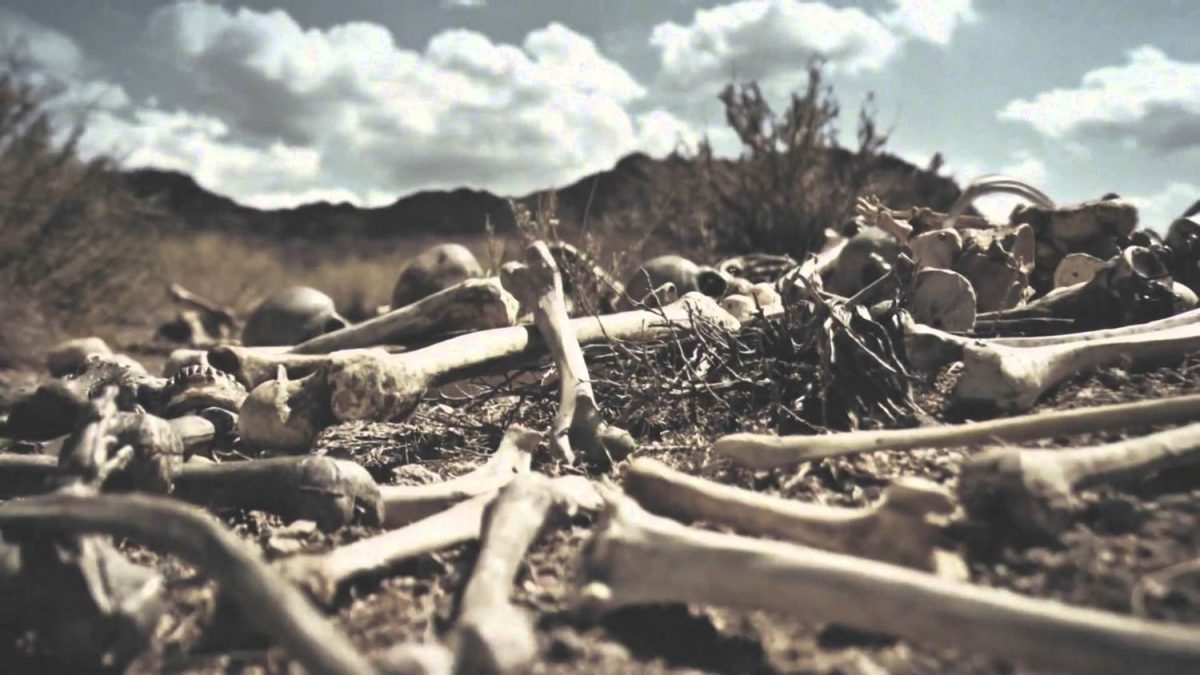
If you spent any time at all walking in that dry playa lake, you could spot the bleached-out cow bones strewn across the dried lakebed by rain or coyote. A graveyard of white, dry, dusty bones.

Think Ezekiel.

For over 100 years, the Jews, the chosen people of God, endured captivity in Egypt. Through a series of miraculous events, God brought them into the Promised Land and gave them a home and a king. He made them a nation again. As they always seemed to do, Israel rebelled, turning against their heavenly father.

As a result, God allowed them to be conquered again. Nebuchadnezzar and his Babylonian horde invaded Israel. They defeated its army, reduced Solomon’s Temple to ashes, and took many of the Jewish people back to Babylon as captives.

The nation of Israel was dead, a valley of dried bones. God did not want them to stay that way. When our spiritual marrow is dry, God doesn’t want us to stay that way either. There is a lesson to be learned from Ezekiel’s experience.

“The hand of the Lord was one me and he brought me out by the Spirit of the Lord and sat me in the middle of a valley. And it was full of bones. He led me back and forth among them, and I saw a great number of bones in the valley, bones that were very dry.

“He asked me, ‘Son of Man, can these bones live?’

“I said, “Sovereign Lord, you alone know.’

“Then he said to me, ‘Prophesy to these bones and say to them, ‘Dry bones, hear the word of the Lord!’

“This is what the Sovereign Lord says to them, ‘I will make breath enter you and you will come to life. I will attach tendons to you and make flesh come upon you and cover you with skin. I will put breath into you and you will come to life. Then you will know I am Lord.’

“So I prophesied as I was commanded. And as I was prophesying, there was a noise, a rattling sound, and the bones came together, bone to bone. I looked and the tendons and flesh appeared upon them and skin covered them, but there was no breath among them.’

“Then, he said to me, ‘Prophesy to the breath, prophesy, Son of Man and say to it, ‘This is what the Sovereign Lord says, ‘Come breath, from the four winds, and breathe into these slain, that they may live. So I prophesied the way he told me, and breath entered them, and they came to life and stood up on their feet—a vast army.’” (Ezekiel 37:1-10)

The valley of dry bones in Ezekiel’s vision reflected the spiritual condition of God’s people. Their defeat at the hands of the Babylonians left them discouraged, down and defeated. In verse 11, they cried out to God saying,

“Our bones are dry. Our hope is lost and we ourselves are cut off!”

The hopelessness grew less from their current condition and more from the fact that they long ago lost their passion for the things of God. They were at the end of their rope, blind to the possibilities of what God could do for them. There was no future. Only a today, filled with misery and hopelessness.

Once so full of vitality and vigor, a picture of God’s presence and power, they took their focus off God. Did their own thing. Drifted away from the father. Their bones were dry.

It’s not unusual as God’s people to find ourselves in what feels like an endless spiritual desert…our faith feeling dry and lifeless. Most of the time, these dry spells don’t come out of nowhere. Circumstances beyond our control dry our bones, leave our faith parched. Choices we make that lead us into the desert, sap our souls of strength, making our trust in God waver and wither.

Sometimes, we get so busy doing things, even good things, that our worship becomes rote and routine, half-hearted and half-felt. Complacency overtakes us, leaving us thirsting for what we’ve lost. In times like these our prayers never seem to rise above the roof. We stare blankly at the pages of our Bible, if we open the pages at all. Our spiritual lives gather dust as the moisture is sucked from our marrow and our bones lay drying in the wilderness.

How closely does this match your life experiences? You look into your life and it’s messy. Every outcome you can see just adds to the confusion and hopelessness. Each wrong step leads to another. Whether caused by random chance or personal choice, it feels like everything has gone wrong. Now, you find yourself blind to the possibilities of what God can do. Your bones are dry.

When you look at your circumstance and all you see is an arid valley of dead, dry bones, it’s hard to imagine life beyond the desert. Hear God ask you the same question he asked Ezekiel. “Can these bones live again?”

What is your answer?

Ezekiel’s response was an honest one. “I don’t see how, but if there is any hope at all, it comes from you, God.” And, that’s as much as God needs to turn things around…just a glimmer of faith in his compassion and love. In the middle of the turmoil in our lives, can we say, “Lord, it’s up to you. I put my life in your hands.”

It is an act of surrender to the will of God. Easier said than done, I know.

God tells Ezekiel to preach a message to the dry bones…our dry bones. The first thing he asks the prophet to tell them…to tell us…is to “Hear the word of God.”

When we’re struggling, when our faith seems dry and stale, we need only to hear the word of God. I don’t mean just sit in the sanctuary while the preacher preaches. I mean really hearing what God is telling you. Listen and obey. When we’re spiritually thirsty, we need to swim in the water of God’s word.

“So then, faith comes by hearing, and hearing by the word of God.” (Romans 10:17)

Jesus sat by a well in the heart of Samaria in deep conversation with a woman in need of living water. He told her,

“Everyone who drinks this water will be thirsty again, but whoever drinks the water I give them will never thirst. Indeed, the water I give them will become in them a spring of water welling up to eternal life.” (John 4:13-14)

God’s word gives life. It gives clarity. It gives peace. All we must do is listen and obey the will of the one who loves us enough to die in our place. Drink it in. Refresh our bones.

Ezekiel gives us one more thought to consider. Beyond hearing the full word of God, he tells us to allow the Holy Spirit to work in our lives. It is the spirit of God who gives our dry bones breath. Listening to God’s word is a great start at bringing our bones together, but we need the spirit within us to bring us to life. It is the Holy Spirit who takes the word of God and gives it the power to give life to a broken heart and a struggling soul.

Allowing the spirit to live within us, lets God give us the chance to be a living instrument to share is grace and to be his hands at work in a hurting world. To be an oasis in a desert of dry bones.

“Thus says God, the Lord, ‘the creator of the heavens and stretched them out, who spreads out the earth and all that springs from it, who gives breath to its people and spirit to those who walk on it: I have called you to righteousness…” (Isaiah 42:5)

Breathe it in. Be right with God. Maybe it’s time to begin living again.

I believe that is a great word of encouragement for those who are struggling today to live out the life God has planned for them. Whether that person is you, me or someone you know. The answers lie in God’s word and in the presence of his spirit in the heart of those who believe and trust in Jesus.

Can these dry bones live?

I believe they can. I’m living proof.

When Suffering Comes

Background Passages: Revelation 2:8-11, Isaiah 43:2, John 16:33, I Peter 1:6-7

I leaned against the hoe at the end of a quarter-mile row of young cotton, fighting back a fit of anger. My Mom was already 30 feet down the four rows she was hoeing, doing what had to be done.

Dad was on the tractor, plowing a different section of the farm. My older brother stayed in the house that morning “suffering” from his convenient hay fever. My younger sister was given different, and by that I mean easier, chores that didn’t involve the tedium of the hoe.

I begged to stay home that morning using the strongest debate point I could muster, “It’s not fair.”

Rather than the customary sympathy I expected from my Mom, she chopped those weeds as she walked away and said with a shake of her head, “Get used to it.”

“It’s not fair.”

I smile inwardly now when I hear those words from my grandchildren. It’s a truth they must learn the hard way. As much as our culture would like it to be, life isn’t always fair. We should never stop trying to make it more so, but it will never be fair in all aspects.

Adults are not immune to the feeling. Our personal world caves in for one reason or another. A loved one gets sick or injured. A disheartening diagnosis comes our way. A promotion is handed to someone else. Your neighbor seems to live a charmed life where everything works out perfectly.

We may not voice it the same way we did as children, but we feel it. When the hard times come as they inevitably do and will—when we suffer–it’s difficult not to fall back on the pained and plaintive cry, “It’s not fair!”

Being Christian does not immunize us against difficult times. All of us face those deep trials eventually. Isaiah recognized the certainty of hardship and suffering. He also knew suffering could not defeat the faithful child of God if for no other reason than we will not make that journey alone.

“When you pass through the waters, I will be with you, and when you pass through the rivers, they will not sweep over you. When you walk through the fire, you will not be burned; the flames will not set you ablaze.” (Isaiah 43:2)

Understanding that promise is what keeps the Christian from becoming a victim to the “life is not fair” culture. We can overcome life’s hardships because the one we trust also overcame.

“I have told you these things,” Jesus said, “so that in me you may have peace. In this world you will have trouble. But, take heart! I have overcome the world.” (John 16:33)

Long time pastor and author Ray Pritchard recalled preparing for a radio broadcast with Jim Warren on Moody Radio for Primetime America. As they discussed some recent heartbreak, Warren shared this thought. “When hard times come,” he said, “be a student, not a victim.”

Pritchard called it one of the most profound statements he ever heard. He said, “Some people go through life as professional victims, always talking about how they have been mistreated. But perpetual victimhood dooms you to a life of self-centered misery because you learn nothing from your trials.

“A victim says, ‘Why did this happen to me?’ A student says, ‘What can I learn from this?’

“A victim looks at everyone else and cries out, ‘Life isn’t fair.’ A student looks at life and says, ‘What happened to me could have happened to anyone.’

“A victim believes his hard times have come because God is trying to punish him. A student understands that God allows hard times to help him grow.”

I think the church at Smyrna would have understood this. Prior to Easter, my last Bible study focused on the word of God to the church at Ephesus. I mentioned at the time, that I would pick up with the messages to six other churches as found in the book of Revelation. We will focus this week on the Christian church in Smyrna. Though these seven churches are historic congregations, the message Jesus delivered to them through John remains relevant to Christians today.

Smyrna, located about 35 miles north of Ephesus on the Aegean Sea. shared a long and storied history that began as a successful Greek colony 1,000 years before Christ. Raided and razed by the Lydeans around 600 BC, Smyrna ceased to exist for the next 400 years, a pile of ruin and rubble. The city rose from its ashes around 200 BC, rebuilt as a planned community with beautifully paved streets and a perfectly protected harbor.

By the time John writes Revelation, Smyrna is a free city, committed with absolute fidelity to Rome. Cicero called it “one of our most faithful and most ancient allies.” It was the first city in the world to erect a temple to the spirit of Rome and the goddess, Roma. The Roman citizens within the city worshipped the emperor as a god and made worshipping any other deity a serious crime.

Jews earned an exception to the rule primarily by placating the Roman authorities and paying large tribute to the emperor to fund public works. The Jewish population grew increasingly hostile toward the Christians, fearing that they would lose their protected status and privileges.

Christians living in Smyrna suffered severe hardship because of their faith. Having none of the legal protections and refusing to call the emperor a god placed them at odds with Rome and with the Jews. The Christians in Smyrna chose not to bow down to the emperor despite the laws of the land. Rome typically ignored their insubordination in a sort of “don’t ask, don’t tell” approach.

In other words, they didn’t look for Christians to persecute, but would investigate if someone complained. Fearing for their favored status among the Romans, the Jews complained often. And, if they had nothing concrete to go on, they made things up.

When Rome was forced to investigate, Christians who refused to kneel before the emperor would be stripped of their possessions, banned from employment and, in some cases, put to death.

Yet, through their growing difficulties, they remained faithful disciples (students) of Jesus rather than victims to the mounting persecution and problems.

Read Jesus’ words to the “angels of the church in Smyrna:”

“These are the words of him who is the First and the Last, who died and came to life again. I know your afflictions and your poverty—yet you are rich! I know the slander of those who say they are Jews and are not, but are a synagogue of Satan.

“Do not be afraid of what you are about to suffer. I tell you the devil will put some of you in prison to test you, and you will suffer persecution for ten days. Be faithful even to the point of death and I will give you the crown of life. (Revelation 2:8-10)

What an encouragement these words must have been to a faithful church oppressed!

Jesus describes himself as the First and Last, as the one who died and is alive again. It is upon the foundation of Christ that the church is built. He was the First. Their cornerstone. Their foundation. He was the Last. The Judge. The one before whom all men must stand in judgment of their actions.

Surely, the church in Smyrna found courage and strength in knowing that, regardless of the pressure put upon them by Rome or the Jews, Jesus was their unshakable foundation. As the one who died and is alive again, Jesus proclaimed his powerful presence among them. He would judge those who persecuted them.

Despite their “afflictions and poverty,” Jesus considers them rich! Impoverished by the world’s standards, they lived in the abundance of God’s grace. As his children, they shared in the riches and glory of God’s kingdom.

Despite the dire circumstances, the church in Smyrna refused to give in. Despite their suffering, they persevered. While God found a flaw among most of the seven churches mentioned in Revelation, he could only commend Smyrna for their strength, courage and perseverance amid their troubles.

Jesus told them the suffering would continue. Persecution was inevitable. He told them they would be tried and tested for their faith. He reassured them that the trials and troubles would last only a little while compared to the eternity that awaited them.

So, in the face of hardship and difficulty, Jesus gave them two commands. “Do not be afraid,” he said, “Be faithful, even unto death.” In other words. Don’t worry about what’s happening in your life. Don’t worry about tomorrow. Remain faithful, even if it kills you.

To anyone of us who has experienced the tragedies of life, that’s a difficult pill to swallow. While we might adopt the “one day at a time” attitude just to get through the struggle, it seldom makes sense. I doubt the people in Smyrna understood any better than we do.

How could they not be afraid? Jesus told them early in this passage. “I too was persecuted. I was put to death. Yet, I am alive again.” In essence he told them whatever your suffering may be, remember I overcame death. If you persevere to the end, you will overcome all things. You will overcome death as well. The worst problems and afflictions in this life pale in comparison to the eternal glory which God shares with his people.

My life has been blessed by God. Most of the difficulties I have experienced have been self-imposed. My mistakes. My decisions. My fault. The sorrow and sadness I’ve felt, the pain and suffering that comes as an inevitable part of life has been temporary and intensely overshadowed by God’s blessings.

I also know difficult times are ahead. It is inevitable. I can either declare life unfair and call myself a victim or I can be a student of a persecuted Lord and Savior who endured the worst the world could offer on my behalf. I suspect you feel the same.

Jesus is our unshakable cornerstone and foundation. As a victor over persecution and death, he lives today. His presence in our lives through his Holy Spirit is real and powerful. His comfort flows freely to those who are frightened and hurting.

In the face of all that is unnerving and painful, he tells us the same thing he told the brothers and sisters in Smyrna. Do not be afraid. Don’t let the troubles of this world keep you from living a life of committed service to the one to whom you owe everything. Do not be afraid. Feel the presence of a risen Lord. Cling to the hope he brings.

Be faithful. Focus on that promise of eternal victory and not on the hardships ahead. Though the troubles may seem difficult and long-lasting, their duration is but a vanishing mist when compared to all eternity. Suffering is temporary. Faith is forever.

Jesus told the persecuted people of the church in Smyrna that those who overcome “will not be hurt at all by the second death.” (Revelation 2:11)

The second death. That’s what Jesus called spiritual separation from the father. God’s victory is final. That’s what I know. When the day of judgment comes and God separates the sheep from the goats, his sheep will not be hurt and will not suffer. Those who never trusted in his name will face a spiritual death that separates them from the goodness and grace of God forever.

Pritchard said, “A victim begs God to remove the problems of life so that he might be happy. A student (a disciple of Christ) has learned through the problems of life that God alone is the source of all true happiness.

That’s the true Christian outlook. We believe so much in the sovereignty of God that when hard times come, we know that God is at work for our good and his glory.

One final point, hardships don’t come because God needs to figure out who his true believers are using some spiritual obstacle course. Rather, our ability to endure and persevere because of our faith shines a light on God for the rest of the world to see. Through our pain we prove the true nature of our faith. Those on the outside looking in witness the power, the presence, the goodness and grace of our father in heaven.

“In this you greatly rejoice, though now for a little while you may have had to suffer grief in all kinds of trials. These have come so that your faith…may be proved genuine and may result in praise, glory and honor when Jesus is revealed.” (I Peter 1:6-7)

I read a quote this week from Caleb Suko, a pastor serving in Ukraine. I think he sums up well the message Jesus shared with the believers in Smyrna. It’s the same message we need to hear today.

Suko said, “If you have Christ then all your pain is temporary. If you don’t, then all your pleasure is temporary.”

As the song goes, “I’d rather have Jesus than anything this world affords today.”


Who Are You Looking For?

Background Passages: Matthew 16:13-23; John 18:3-8, John 20:11-16

It is an essential question for Resurrection Sunday. One that demands an answer.

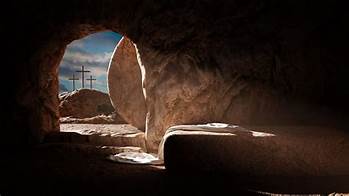
Jesus had been crucified and buried. The heavy slab of granite rolled into the dugout trench, locked his body inside. From Friday until early Sunday morning, those who followed Jesus lived in a state of shock, numb with fear.

Not knowing anything else to do, the women who were closest to him, returned to his tomb to finish preparing the body for burial. Something Sabbath laws had not allowed them to do when he died. When they arrived, they found the stone rolled away, the burial cloth neatly folded and the body of their teacher nowhere to be seen. In a panic, they ran back to tell Jesus’ disciples.

As the sun burned away the morning dew, Mary Magdalene, compelled by grief and overcome with sadness, returned to the empty tomb. She failed to recognize the supernatural aura of the day. Two angels sat inside the tomb their identity lost in her confusion. Still clutching the burial ointments she had brought with her that morning, they asked her…

“Woman, why are you crying?”

“They have taken my Lord away,” she said, “and I don’t know where they have put him.”

Mary heard the rustle of robes behind her. Jesus stood before her, but again in her misery, she failed to recognize the one she loved. Echoing the angels, Jesus asked…

“Woman, why are your crying?”

Then, he got to the heart of the matter.

“Who is it you are looking for?” (John 20:11-15)

There it is. Jesus cuts the soul of everyone who would believe in him as savior and Lord. The fundamental question of Easter. “Who is it you are looking for?”

Easter is the most revered of all Christian Holidays. According to the Pew Research Center, 45 percent of Christians worldwide say they attend worship services on a monthly basis. That number typically increases to about 70 percent on Resurrection Sunday. So, if your church averages about 500 people in attendance every Sunday, you might expect 675-700 people in attendance for Easter services.

Whether you attend church every Sunday or whether your church experience is limited to Christmas and Easter, this is the critical question of we need to ask ourselves. When you walk through the doors of the church, for whom are you searching? Who do you seek?

Just for a moment cast yourself in this story as the thirteenth disciple. Where they go, you go. What they see and hear, you see and hear. What they feel, you feel.

I’m not sure if Peter and the other disciples could have answered that critical question with 100 percent certainty on that first Easter morning so long ago. They had just seen their teacher, their Lord crucified. Their worlds turned inside out and upside down. Little made sense that day. Things had certainly not turned out the way they expected.

It was just a few weeks earlier that Jesus walked his disciples north out of Galilee and into heartbeat of Roman worship. Caesarea Philippi, a Roman city north of the Sea of Galilee, served as the home of a temple to the Roman god Pan.

Needing to get away from the crowds to teach his disciples what would be an unsettling truth, Jesus ventured into a place most Jews would never go.

Can you see them? Jesus and his disciples sat on the side of a hill overlooking Caesarea Philippi, cooking a few fish over the glowing embers of their campfire. Looming below them were pagan temples carved out of the solid sandstone cliff. Torches cast tall, eerie shadows upon the cliffside as the pagan priests scurried to deliver their burnt offerings to the gods.

The muted but friendly conversation of companions fell silent when Jesus, staring down at the temples, asked a simple question.

“Who do men say that the Son of Man is?”

“They replied, ‘Some say John the Baptist; others say Elijah; still others, Jeremiah or one of the prophets.’”

They waited for Jesus to react, the moment growing more uncomfortable for them as Jesus stared into the distance. Then, Jesus turned to face his dearest friends and in a quiet voice and with eyes that bore into their souls, he asked,

“But what about you? Who do you say I am?”

(Do you recognize it? It’s that Easter question in another form. “Who is it you are looking for?”)

The Jewish crowds considered Jesus a new prophet, perhaps John the Baptist, Elijah or Jeremiah returning to set their people free. Jesus needed to know that his disciples understood the truth. “Who am I to you? Who are you looking for?”

With all the pride he could muster, Simon Peter answered, “You are the Messiah, the Son of the Living God.”

Jesus offered a word of measured praise and a prophecy.

“Blessed are you, Simon, son of Jonah, for this was not revealed to you by flesh and blood, but by my Father in heaven. And I tell you that you are Peter, and on this rock I will build my church, and the gates of Hell will not overcome it.“ (Matthew 16:13-18)

To his credit Peter knew who Jesus was. He was the Messiah. God’s anointed one. God’s son. To his shame, he still didn’t fully understand.

Scripture tells us in the next passage that Jesus, in the quietness of that evening, began to tell the disciples that he would travel to Jerusalem and suffer a great deal at the hands of the religious elite. He told them he would be killed and raised again on the third day.

Slightly horrified, Peter, the one who just declared Jesus the Messiah, tugged on his master’s sleeve, pulled him to the side to rebuke him. This was not a casual “tsk-tsk.” This was a strongly worded criticism, expressing Peter’s sharp disapproval of the content of Jesus’ lesson.

“Never, Lord! This shall never happen!”

Jesus narrowed his gaze into Peter’s eyes raised his voice so all the disciples could hear, “Get behind me, Satan! You are a stumbling block to me; you do not have in mind the concerns of God, but merely human concerns.” (Matthew 16:22-23)

The Jews desperately pined for the Messiah to come as a conquering king to drive the occupying Romans from their lands. Peter and the others had a hard time getting past the old narrative. He recognized that Jesus was the Son of God, the Messiah, but fail to understand the nature of God’s redeeming work. He viewed Jesus in political and personal terms. He got the identity right, but not the intent.

Who are you looking for? Jesus asked. Peter was looking for someone different. The wrong kind of Messiah. Looking for the wrong kind of savior.

“Who is it you are looking for?”

Travel now to the Garden of Gethsemane. The hour is late. The disciples are bone tired and weary. Not just from the tiring journey from Caesarea Philippi to Jerusalem, but from the troubling events of the night. The supper shared in the upper room went from celebratory to somber. Jesus’ actions unsettled everyone. Washing the feet. Calling out a betrayer. Launching into a heavy conversation about death at the hands of the civil and religious authorities.

Amid the olive trees, the disciples struggled to stay awake. Jesus knelt farther up the hillside, in fervent prayer. The disciples faded in and out of a sleep induced haze, until they heard the stomp of marching feet. The clatter of sword against shield cutting through the midnight hour. Wide awake now, the disciples form a protective ring around Jesus as a band of soldiers being led by no other but Judas surrounds them, swords drawn.

Jesus gently pushes his way to the front and stands face to face with Judas and the Roman centurion.

“Who is it you want?”

(There it is again. The same probing question. “Who is it you are looking for?”)

“Jesus of Nazareth,” they said.

Jesus answered, “I told you that I am he. If you are looking for me, then let these men go…Then, the detachment of soldiers with its commander and the Jewish officials arrested Jesus. They bound him and brought him first to Annas, who was the father-in-law of Caiaphas, the high priest that year. Caiaphas was the one who had advised the Jewish leaders that it would be good if one man died for the people. (John 18:3-8)

Other passages of scripture tell us that Judas greeted his master with a kiss. Judas joined the disciples, attracted by the message of inclusion and freedom. He heard the words, but never quite got the message. Growing increasingly disillusioned by Jesus’ passive approach, he felt compelled to act. Still believing that Jesus was the man who would start the revolution, Judas tried to force his hand.

The kiss. Perhaps a wink and a slight nod of his head. A lift of the eyebrows. Judas had just created the opportunity to light the fire of rebellion if only Jesus would comply with his wishes.

“Who is it you want?” Judas recognize Jesus’ power. He had seen it in action. He knew Jesus, but he didn’t know his heart. Judas wanted a savior he could manipulate to do his bidding. He wanted to unleash that miraculous power to meet his own desires. Judas didn’t want a savior. He wanted someone he could control.

“Who is it you are looking for?”

Now, let’s go back to the tomb. Hours later in the timeline of Jesus’ life on earth. In the garden outside the tomb, a distraught Mary mistook Jesus for the gardener. Unable to recognize the one she loved so dearly, she heard him ask,

“Who are you looking for?”

In the brief conversation that ensued, Mary’s grieving heart took her the only place her distress could go. With a heart burdened and disoriented, she cried out to him,

“Sir, if you have carried him away, tell me where you have laid him.”

At some point in this conversation, Jesus sought to reassure her. He called her name,

“Mary.”

Something in the sound of his voice broke through the despair and the heartbreak. In that moment of clarity, Mary found the one for whom she was looking.

She fell at his feet and cried.

“Rabboni.”

This Hebrew form of the word is personal, informal and intimate.

“My Teacher.” (John 20:15-16)

Mary understands who he is and acknowledges him as her risen Lord.

You see, when Mary Magdalene ran to tell the disciples that the tomb was empty, she had all the facts right, but she jumped to the wrong conclusion. Peter had done the same in Caesarea Philippi. Judas the same at Gethsemane. Her facts were right. The tomb was empty. She just drew to the wrong conclusion.

We often do the same thing. When faced with troubles and unexplainable tragedy, we mourn. If we understood who we were looking for, we wouldn’t weep at all. Consider this. If Mary had gotten her wish and she found a body in the tomb, we would have no reason to celebrate. There would be no Easter.

The truth of Easter demands an answer from each of us.

“Who is it you are looking for?”

Maybe you’re one of those believers like Peter who initially put your faith and trust in Jesus at an early age. When you think of Jesus, you think of him as savior. You have his identity right, but not his intent. Being saved is more than a point in time reality. Salvation is so much more than that moment in time decision to follow Christ. It’s more than that initial decision you made to trust him. Being saved is knowing Christ daily. Growing in him daily. Making every effort to live a more Christ-like life every day. Letting him be the boss of your life today and always.

Who is it you are looking for? Look for Jesus and make him Lord of your life. Every day.

Maybe your understanding is similar to Judas’ “genie in a lantern” concept of God. Rub the lantern and get three wishes. God is there to answer my prayer. Give me what I want when I want it. There are those who try to mold God into their own image rather than letting God mold them into his. When we try to make God into our own image, he will always disappoint us. Why would we trust a God who is no more perfect than us?

God’s plan for your life is far better than anything you can dream on your own. He wants the best for us. Thank God for the unanswered prayers because he knows what’s best. Thank God when God makes us wait on him because his timing is best.

Who is it you are looking for? Look for Jesus and trust him to meet your needs. Every day.

Maybe this Easter celebration will be meaningful because you get it. Jesus died on a cross as a willing sacrifice for your sins. He rose again. A living Lord. In difficult times, he is your strength. When you don’t know which way to turn, he is your guide. You’ve embraced his presence in your life and recognize that he is still your Rabboni. Personal and Intimate. Your Teacher. Those closest to Christ know that he is still teaching you daily how to live like him.

Who is it you are looking for? Look for Jesus, your strength. Your companion. Your teacher.

Statistics tell us Easter Sunday will draw many to worship. That is my hope and prayer. Every person who walks in the door should be blessed.

I pray that everyone who walks through the sanctuary doors will look for Jesus in all his fullness. It is a choice each of us can make, but it won’t happen unless we come with that question on our hearts.

It won’t happen, unless I am willing to ask the question as I enter to his presence in worship.

“Who is it I am looking for?”

By Our Love

Background Passages: John 13:31-35; I Corinthians 13:4-8, 13

As Christianity entered its second century, the faith was spreading throughout the Roman Empire, especially in some of the largest cities like Rome and Carthage in North Africa. Though spreading rapidly, Christians were still held in suspicion by neighbors and ruling officials because they had abandoned behaviors associated with the prior pagan lifestyles.

Confusion about Christian teachings and political rumors designed to discredit this new faith caused Tertullian, a church leader in Carthage, to write a document explaining Christian practices and debunking the rumors against them. Tertullian wrote that the Roman government was so unnerved by the growth of the Christian movement that they sent spies into Christian meetings.

The spies, according to Tertullian, reported the following:

“These Christians are very strange. They meet together in an empty room to worship. They do not have an image. They speak of one by the name of Jesus, who is absent, but whom they seem to be expecting at any time. And my, how they love Him and how they love one another.”

After reading this historical footnote this week, I found myself wondering what spies from our government would say about the church today? Would they make the same declaration?

“My, how they love him and how they love one another.”

*****

Jesus had just stunned his disciples by confirming a close betrayal. He then dismissed Judas from the upper room near the end of the Passover feast.

“What you are about to do, do quickly.”

As the door closed, a somber silence filled the room. Seeing the confusion and anxiety on the faces of those he hand-picked to carry on his work, Jesus began to teach his most important lesson.

“Now the Son of Man is glorified, and God is glorified in him. If God is glorified in him, God will glorify the son in himself, and will glorify him at once. My children, I will be with you only a little longer. You will look for me, and just as I told the Jews, so I tell you now. Where I am going, you cannot come.

“A new command I give you. Love one another. As I have loved you so you must love one another. By this everyone will know that you are my disciples, If you love one another.” (John 13:31-35)

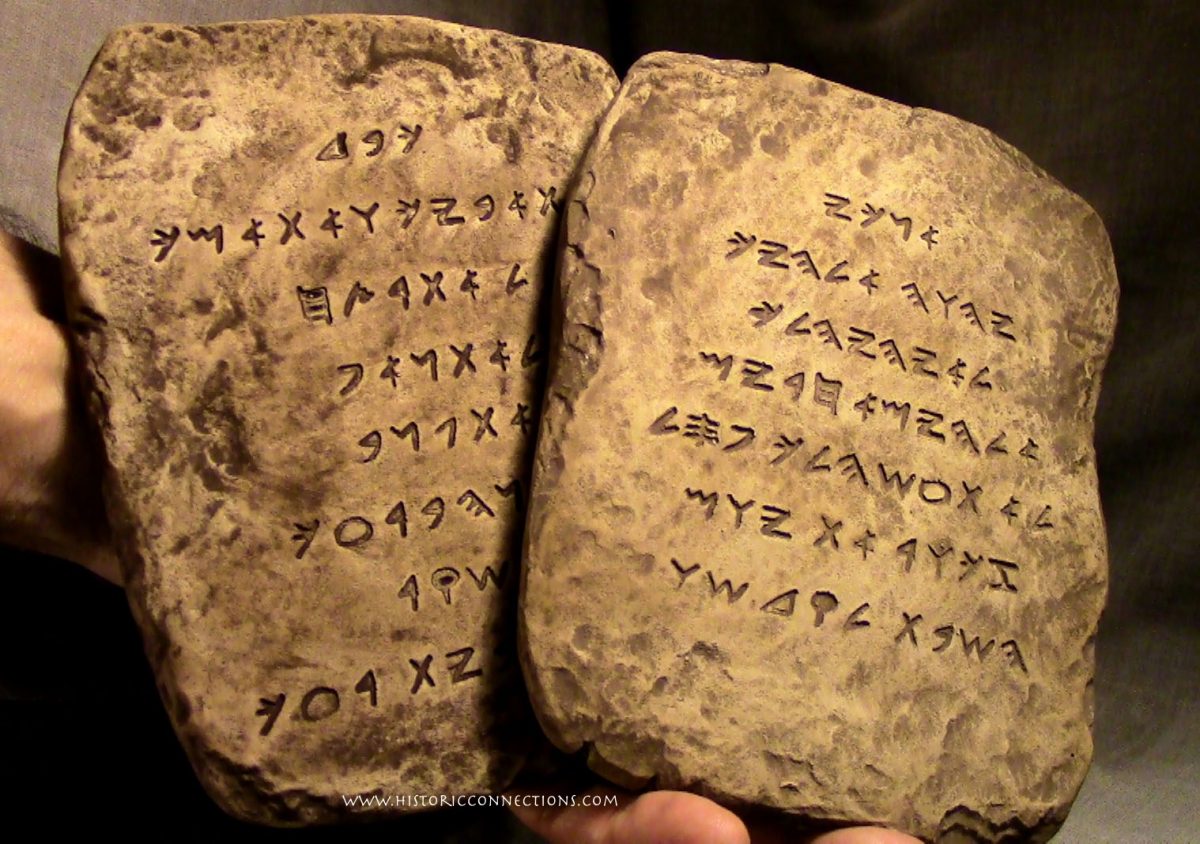
What a defining moment! It’s as if Jesus took out his copy of the 10 Commandments and scratched a new word at the bottom of Moses’ list.

“A new command I give you.”

This was no subtle suggestion. No vague hint of something they might try. It was a God-given command written as indelibly on their hearts as the God-etched words inscribed on stone tablets.

“Love one another.”

The idea of loving others was not a new concept or even a new command. Recall the Pharisee who came to Jesus and asked him to identify the greatest and most important of Moses’ commandments.

“The most important one,” answered Jesus, “is this: ‘Hear, O Israel, the Lord our God, the Lord is one. Love the Lord your God with all your heart and with all your soul and with all your mind and with all your strength.’ The second is this: ‘Love your neighbor as yourself.’ There is no commandment greater than these.” (Mark 12:29-31)

Jesus had taught his disciples to love God and to love others. In the hours before his death and his going to a place they “could not come,” Jesus knew they would need each other. He knew that in order to survive the persecution and scattering to come, his disciples and followers would need to love each other. Holding on to their fellow believers for support and aid.

“As I have loved you, love one another.”

How, then, did Jesus love them? How was he asking them to love each other?

Jesus’ love is sacrificial.

Just minutes prior to his declaration, Jesus demonstrated the kind of love they would need. As he took off his tunic, grabbed a bowl of water and a towel, Jesus took on the role of a servant to minister to their needs.

Christ washed the disciple’s feet, as a clear example of Christ’s humble, self-sacrificing love for them.

Then, just hours later, Jesus paid the ultimate price for his disciples and all humankind by dying on the cross for our sins. Jesus’ love for his disciples and for us was born of his humility and self-sacrifice.

What greater love can we learn than by following his example, as Paul proclaimed in Ephesians 5:2.

“Walk in the way of love, just as Christ loved us, and gave himself up for us a fragrant offering and sacrifice to God.”

Jesus’ love is forgiving.

The sacrificial love of Christ brought forgiveness of sin to all who would repent and receive his mercy and grace. Unmerited. Undeserved. Freely given.

If we love like Christ, we can forgive anything that anyone does to us. Nothing someone does to us is so heinous that we cannot forgive if we are acting with the same love with which Christ loved us.

I love this illustration from Baptist pastor and Christian author Wendell C. Hawley on forgiveness. He wrote about a group of Moravian missionaries who spent time among the Inuit tribes in Alaska. In attempting to explain the gospel, the missionaries found no word in the Inuit language for forgiveness. So, they invented one by combining words into “Issumagijoujungnainermik.”

This string of Inuit words strung together shares a beautiful expression of forgiveness that is roughly translated, “not-being-able-to-think-about-it-anymore.”

To love each other as Christ loves us means that the hurt and emotional pain caused by others must be set aside as meaningless. Forgive and forget. Love means not being able to think about it anymore.

“By this everyone will know you are my disciples, if you love one another.”

Jesus’ love is evident to all.

This is exactly the distinguishing love that Tertullian spoke about. “My, how they love him and love one another.” Such real, self-sacrificing, and forgiving love ought to be the mark or brand of a Christian. So evident in our expression of love to one another that others cannot help but note the difference in our behavior and those of the world around us. Because of what God has done for each of us, his love ought to overflow our hearts, naturally expressed to one another. It must be a love deeply felt and plainly seen.

This love is an overflow of what God has done in our hearts. This is to be the distinguishing mark of Christ’s followers. All people will know those who follow Christ if true love is always displayed by Christians. You must be known by your Christ-like love for others.

If loving one another is a command, listen to how Paul says such love is best expressed.

“Love is patient. Love is kind. It does not envy. It does not boast. It is not proud. It does not dishonor others. It is not self-seeking. It is not easily angered. It keeps no record of wrongs. Love does not delight in evil but rejoices with the truth. It always protects, always trusts, always hopes, always perseveres. Love never fails…And now, these three things remain: faith, hope and love. but the greatest of these is love.” (I Corinthians 13:4-8, 13)

One wonders what the world around us thinks when the church does not reflect those things even to other believers. What does the world think when we lose our patience with one another? When we get easily angered by our brothers and sisters? When the world sees us ticking off all the wrongs that have been done against us by a fellow church member?

What must the world think when love fails?

My church is studying a book by Russell Moore entitled Onward: Engaging the Culture Without Losing the Gospel. He begins with the premise that the United States is no longer a Christian nation to and think otherwise is burying our heads in the baptistry. Though we may have once lived in a world that believed the culture should conform to the church, we now live in a world that believes the church should conform to culture.

It makes me wonder if our culture looked at how we treat each other within the faith and decided it could do better without us? If believers in Christ chose to love each other every day as Christ loves us, would our witness in the world be stronger? Could we then engage our culture without compromising or losing the heart of the gospel?

I suspect it took only a few moments after Jesus’ death on the cross for his disciples to realize the truth of his words. Their ability to carry on his ministry and their hope for the days to come depended on their love for one another.

I don’t think it is much different today. Our ability to carry on his ministry today and our hope for the days to come depends on our willingness to love one another as Christ loves us.

“A new command I give you. Love one another. As I have loved you so you must love one another. By this everyone will know that you are my disciples, if you love one another.”

Let’s let the world know to whom we belong.

Let them say about us, “My, how they love him and how they love one another!”

Encounter with a Prayer Warrior

Background Passages: I Samuel 1:10, Daniel 9:3-4, and James 5:13-16

I’m almost a week late with this Bible study. I sat down several times last week to study and prepare. My heart wasn’t in it. The words wouldn’t come.

I wish I could attribute my delay to writer’s block, but the reason was far more personal. My oldest son was in St. Luke’s dealing with the aftermath of a stroke. The tension of those early, uncertain days hit with full force every time I sat still for any length of time. Clearing my mind sufficiently to write a coherent sentence bordered on the impossible.

Before I go further, I’ll share a praise to God and the doctors and physical therapists he placed in Adam’s life. Our son is home now with his family, his condition and situation vastly improved over this time a week ago. Physical therapy will continue, but the prognosis is incredibly positive for full recovery.

Adam and Jordan dealt with the immediate impact of his situation while we could only stand at a distance, help take care of our grandchildren and pray. As those not directly and immediately impacted by the crisis, we discovered again what we knew to be true, but chose to forget from the last family crisis we experienced. Life goes on. It doesn’t respect our need to process the situation. It keeps coming. That’s not always a bad thing when God is at work.

As a part of my volunteer work in the community, I chair the Steering Committee of the McDonald’s Texas Invitational Basketball Tournament. The role carries with it a responsibility to be present and engaged with sponsors, coaches, officials and volunteers during the three-day event. Unable to go to the hospital due to Covid restrictions, Robin and I attended the games with our hearts troubled and our brains in a deep fog.

The two of us grabbed dinner and sat at an empty table in one of the hospitality rooms. Neither of us said much. Lost in our own thoughts. A woman entered, picked up her dinner and sat at an empty table next to us. Robin invited her to sit with us. She picked up her tray and sat next to me. We began to visit, my mind doing its best to focus on the conversation.

Nzinga Rideaux told us she was a board member for the Houston area Fellowship of Christian Athletes. She was helping man the organization’s booth at Phillips Fieldhouse. The conversation turned to family and I shared with her about Adam and his condition.

In a room filled with 35-40 volunteers, coaches and referees, she pushed her plate aside, grabbed my hand and said, “Let’s pray right now.” The words she spoke for the next two minutes were both heaven sent and heaven directed. The power in her spirit flowed as eloquently as her words. With that final “Amen,” I recall thinking, there is no way God could ignore that petition. So powerful were her words, it seemed God now had little choice but to make Adam well. How could he refuse that woman?

Chinese pastor Watchman Nee might have had a woman like Nzinga in mind when he said, “Our prayers lay the track down on which God’s power can come. Like a mighty locomotive, his power is irresistible, but it cannot reach us without the rails.” In my life last week, Nzinga drove the Golden Spike into God’s trans-spiritual railroad. She lifted my heart from its despair and renewed my hope.

I know Robin and I had prayed fervently for God’s hand upon Adam. I know God heard our prayers. Nzinga, however, is the pure definition of a “prayer warrior.” I’m pretty sure he sped up the process when Nzinga prayed.

A prayer warrior is someone known for regularly interceding before God on behalf of others. Someone who stands between you and the trouble afflicting your life, calling down the presence and power of the Lord. A prayer warrior is someone who knows God’s blessings and knows without doubt those blessings are ours to claim.

Think Hannah.

Barren for years, she prayed for a child. Though years passed, she continued to pray, despite her aching heart. She continued to pray even when she reached the end of her rope.

“And she was in bitterness of soul and prayed to the Lord and wept in anguish.” (I Samuel 1:10)

Hannah prayed intently and purposefully with tears of frustration and sorrow. She prayed persistently and passionately until Samuel was born. It’s nice to know God is not offended by our questioning, our frustrations and our confusion.

Think Daniel.

When God revealed to Daniel as a young man that Israel would be taken into captivity and exiled from their land, Daniel interceded on behalf of his people.

“I set my face toward the Lord God to make request by prayer and supplications, with fasting, sackcloth, and ashes. And I prayed to the Lord my God, and made confession, and said, “O Lord, great and awesome God, who keeps his covenant and mercy with those who love him, and with those who keep his commandments. (Daniel 9:3-4)

This was the prayer of a man who recognize the path he was on and claimed the blessings promised by a faithful father. Daniel’s path would not be easy. Neither will Adam’s path be without challenge.  Still, Daniel knew the path would be paved with the promises of God. Adam knows that as well.

Nzinga’s prayer that night was Hannah and Daniel personified in the presence of an African-American woman with a deep, abiding faith. Intense. Purposeful. Persistent. Passionate.  Confident in the promises of God.

It’s Thanksgiving.

We have much for which to sing praises of gratitude to our God.

When we gathered today as an extended family around our table for our non-traditional Thanksgiving meal of beef and chicken fajitas, Adam sat among us. How could you not be thankful in such a moment?

In the moment of our Thanksgiving prayer, I silently thanked God that we were all together. I thanked him for Adam’s life and his prospects for a full recovery. I thanked God for Adam’s wife, Jordan, who was and is his rock throughout their crisis. She reminds me so much of my Mom. I thanked God for Robin who was my anchor in the storm.

I thanked God for the doctors, physical therapists and caregivers who tended to my son. I thanked God for every word of encouragement and hope they offered.

I thanked God for our church staff and congregation who lifted our family in prayer, interceding on our behalf. I expressed my gratitude for friends at work and at church who wrapped their arms around Adam and his family. I thank him for those individuals in my life whose words and touch sustained Robin and me during our days.

I thanked God for my new friend Nzinga. I know he put her at our table with heavenly intent. I also thanked him for the other prayer warriors I know who stood in the gap between our family and the troubles we faced as they called down the power and presence of God.

This journey for Adam and his family is not over. The extended outpatient therapy will hopefully lead to full recovery in a matter of weeks or short months. I continue to covet your prayers for the days ahead…for stamina, endurance, patience, hope and end result that will give God all the glory.

James spoke about the prayers of the faithful.

“Is anyone among you in trouble? Let them pray. Is anyone happy? Let them sing songs of praise. Is anyone among you sick? Let them call the elders of the church to pray over them and anoint them with oil in the name of the Lord…The prayer of a righteous person is powerful and effective.” James 5:13-14,16b)

I still don’t know if I strung together a cogent sentence today. Forgive a father for his incoherent ramblings and let God share with you what I’m trying to say.

I do, however, know this one thing. I know today how powerful and effective the prayers of a righteous person can be. And, I know without a doubt that God is good.

Happy Thanksgiving to you all.

Be Still and Know

Background Passages: Psalm 46:1-10; 2 Corinthians 12:9; Luke 40:35-41

You hear it all the time when a rookie quarterback is starting his first game. The defense will mix up their coverages, blitz from different angles and players, rush, drop back in coverage. They will do anything to confuse the unfortunate rookie.

At some point the announcer, armed with dozens of sports cliches, will invariably say that the game is moving too fast for the quarterback.

The reason it is a cliché is that it’s true. Time, familiarity with the playbook and game experience will make things easier. It will eventually slow the game down.

There sure have been times in my life when I felt like a rookie quarterback. It is a frenetic and noisy world. No day passes without strident debates and diatribes over issues critical to our culture and country. We see natural disasters taking their toll on our safety and security. When the news cycle hits, I find myself covering my eyes, ears and mouth like the proverbial monkey, hoping to see no evil, hear no evil and speak no evil. The game moves too fast.

It is not a lot different in our personal lives. Even when trying to do what we feel God needs us to do, we find ourselves being pulled in a thousand different directions. It feels like the more we try to live a life of service to God, the more obstacles get thrown in our path. The game moves too fast.

It has been my privilege to serve as a member of our church’s Pastor Search Team charged to find a new pastor for the first time in 40 years. As we met as a team last week, we talked about how many things have come up in our lives as individuals that pull us from the task at hand. We talked about how easy it would be to feel overwhelmed and over our heads were God not a calming presence. The game moves too fast.

Amid the noise I hear in the world and in our lives, I also hear a quieter word from scripture.

“Be still and know that I am God.” (Psalm 46:10)

There will come a day when God will quiet the noise of the world, but until then he reminds us to “be still.”

Isaiah tells us “in repentance and rest is your salvation; in quietness and trust is your strength.”

I don’t think that’s the exact message of the Psalmist. We are not to close our eyes, ears and mouth to the clamor and discord. To be still is not a call to silence. It is a reminder that we will find God in the noise.

We find this verse embedded in a section that speaks to the power and security of God. God smothers our fear, declares the psalmist, because he is our strength and fortress in times of constant trouble.

“Be still.”

I’m certainly no Hebrew scholar, but the commentaries tell me not to interpret the word as “silence.” To be quiet or reverential in God’s presence. While there is always a place for quiet reflection of the nature and presence of God, the Hebrew word speaks more to “cease,” “to slacken” to “stop the frantic activity.”

I find that to be a good word for me. When I am pressed and feeling overwhelmed, I always tend to try to do more. To work harder to try and dig out from under my circumstance.

I think of the serene image of the duck on the pond who seems to swim effortlessly but is paddling furiously under water. That’s how I feel sometimes.

Be still is God’s great reminder to quit fighting battles I can’t win on my own. Being still means to chill out enough so you can see God at work and his “ever-present help in trouble.” (vs. 1)

Think of it another way. To be still is to surrender…surrender control of all that is going on in your world to the Almighty. We must lay down our weapons, drop our shields, give up our desire to lead and surrender to the will of the one who is already victorious. On a personal level, it means giving up my belief that I know better or that I can work my way through anything in my own power or force of will.

Being still, you see, is not a passive act where we sit back and do nothing. Rather, to be still we must stop what we’re doing. Back off. Yield control. Surrender. Give up all efforts at personal control and self-preservation.

Lest you feel that makes you feel weak and less of a Christian, remember that Paul rejoiced in his weakness.

“But he said to me, ‘My grace is sufficient for you, for my strength is made perfect in weakness.’ Therefore, I will boast all the more gladly about my weaknesses, so that Christ’s power may rest on me.” (2 Corinthians 12:9)

Therein lies the reason to surrender our control. “Be still and know that I am God.”

The word “know” suggests we discover by sight. Stopping our well-intentioned efforts allows us to see God at work in the world and in our lives. If we’re so focused on doing things on our own, we’ll miss God’s work. Worse, we may well mistake his results for our own, taking credit where no credit is due.

When we stop all our frantic activity, we suddenly rediscover God is God. We come to know him as our refuge. Our strength. Our help. Our protector. Our comfort. Our warrior. Our exalted one.

The disciples were sailing from one side of the Sea of Galilee to the other when a strong storm interrupted their travel. Weary from a long day’s work, Jesus rested in the stern of the boat. The waves grew higher and the disciples struggled to keep the boat afloat. I suspect it was one of the non-fishermen who crawled to the back of the boat to wake Jesus up.

“Don’t you care if we drown?”

Jesus woke up. Rubbed his eyes. Stood up in the boat and commanded the wind.

“Quiet. Be still.”

The same basic word shared by the psalmist. Cease your frantic efforts.

As the gale turned to gust and to a gentle breeze, Jesus turned to his disciples. “Why are you so afraid? Do you still have no faith?”

Surrendering control to God is the ultimate act of faith. It replaces fear with trust.

In the stillness of that hour, the disciples marveled. “Who is this that even the wind and waves obey him?” It is as if Jesus was saying, “Be still and know that I am God.”

The world is chaotic enough without our feeble efforts adding to it. Our circumstances always rest in the hands of God and when we yield our will to his, he will calm the raging soul within us.

“Do not be anxious about anything (stop trying so hard), but in every situation (when life gets frantic), by prayer and petition, with thanksgiving, present your requests to God. And the peace of God (our ability to be quit fighting it), which transcends all understanding, will guard your hearts and minds in Christ Jesus.” (Philippians 4:6-7 with the Lewis translation thrown in)

“Be still and know that I am God.”

We’re not promised a world without chaos. In fact, it sure seems to be getting noisier. The good news of the gospel is that we don’t have to calm the storm around us. When we quit fighting against the current and surrender our lives without reservation to God, when we are still, we see God for who he is.

It’s funny, isn’t it? When I quit fighting it, the game slows down. When I cease doing things in my own ability, the game slows down. When I surrender my will to God’s will, the game slows down. Only then, can I see and know that God is God.

I say it again if only to remind me of its magnificent truth.

“Be still and know that I am God.”

One Thing

Background Passages: Philippians 1:20-21; Philippians 3:7-14, Psalm 27:4 and John 14:1-6

It’s a dark place in which to find oneself. A dark place I do not understand. I am amazed at those who prefer to dwell in a darkness where life has no real meaning or purpose.

Christian apologist John Blanchard wrote about the meaning of life in his book Does God Believe in Atheists. He explored the bleak thinking of some of the world’s modern philosophers.

In the book, Blanchard quotes Welsh scholar Rheinallt Williams. “There is nothing which arises more spontaneously from man’s nature than the question about life’s meaning. But if to be shoveled underground or scattered on its surface is the end of the journey, then life in the last analysis is a mere passing show without meaning, which no amount of dedication or sacrifice can redeem.”

It was a sentiment echoed by British journalist and novelist Rebecca West later in the book. “I do not believe that any facts exist, or, rather, are accessible to me, which give any assurance that my life has served an eternal purpose.”

I read these quotes and immediately my thoughts go to an image of Curly, that weather-beaten cowboy in that 1991 movie City Slickers. When Mitch, the cowboy wannabe from Manhattan, questioned the grizzled rancher about the meaning of life, Curly pointed his index finger straight in the air and said, “One thing.”

“One thing? What one thing?” Mitch inquired.

Ever cryptic, Curly replied, “That’s what you have to find,”

By the movie’s end, Mitch found his meaning of life in his family.

As much as I liked that movie and as much as my family brings meaning to my life, I would ask Mitch…and those who believe as Rheinallt Williams and Rebecca West…to look a little deeper than that.

People talk about wanting to leave a legacy. It is a noble thought. We want our lives to mean something. Leaving a legacy tells us that this life meant something. However, a legacy is left not in what you did, but what it meant. When you live your life for Christ, your life means something.

Paul, in prison and uncertain what the future held for him, told the Philippian church…

“I eagerly expect and hope that I will in no way be ashamed but will have sufficient courage so that now as always Christ will be exalted in my body, whether by life or death. For to me, to live is Christ and to die is gain” (Philippians 1:20-21)

Later in the letter, Paul said if he looked for meaning in this world all he would find is rubbish, especially compared to his relationship with Jesus Christ. He knew nothing else in this world mattered.

“But whatever were gains to me, I consider everything a loss for the sake of Christ. What is more I consider everything a loss because of the surpassing worth of knowing Christ Jesus my Lord for whose sake I have lost all things. I consider them garbage, that I may gain Christ and be found in him,” (Philippians 3:7-9a)

It is easy to make other things a priority in life. Work. Family. Friends. Good works. Every worthy thing we’ve accomplished pales in comparison to the relationship we have with God. It is that relationship that is indeed the meaning of life.

Scripture tells us that salvation, our relationship with Christ, is a point-in-time moment when we give our lives to him. It also is a process…a becoming. The joy of life is in the becoming. Growing in that relationship with Christ brings meaning to life.

Paul knew that better than anyone.

“I want to know Christ—yes, to know the power of his resurrection and participation in his sufferings…Not that I have already obtained all of this, or have already arrived at my goal, but I press on to take hold of that for which Christ Jesus took hold of me. Brothers and sisters, I do not consider myself yet to have taken hold of it. But one thing I do: Forgetting what is behind and straining toward what is ahead. I press on toward the goal to win the prize for which God has called me heavenward in Christ Jesus.” (Philippians 3:10-14)

Paul loved the process of becoming all God called him to be. But, did you see it? Did you see Paul turn to us with one finger pointed to the sky?

“But one thing I do…”

The good news of this passage is that we don’t have to figure it out like Mitch did. Paul tells us plainly.

“I press on toward the goal to win the prize for which god has called me heavenward in Christ Jesus.”

Paul says the meaning of life is in the pursuit of God’s will for our lives and the promise of eternity with him.

David, too, tells us about the meaning of life. The king of Israel with all his fame and fortune recognized that one thing that made all the difference in the world. What was David’s one thing? What was the meaning of his life? He left us a clue in Psalm 27:4.

“One thing I ask from the Lord, this only do I seek: that I may dwell in the house of the Lord all the days of my life, to gaze on the beauty of the Lord and to seek him in his temple.”

David holds his index finger in the air, pointing toward heaven telling us that the meaning of life is found in one thing and one thing only. It was for him being in the presence of the Lord.

You can see it one more time in that upper room in Jerusalem. Jesus is telling his disciples that the reality of the cross is just hours away. That the next few days will be difficult for them. That he is going away. Look at John 14:1-6.

“Do not let your hearts be troubled. You believe in God; believe also in me…My father’s house has many rooms; if that were not so, would I have told you that I am going there to prepare a place for you? And if I go and prepare a place for you, I will come back and take you to be with me that you also may be where I am. You know the way to the place where I am going.

“Thomas said to him, ‘Lord, we don’t know where you are going, so how can we know the way?’

Can you see it? Jesus hold up his index finger, but this time he points it to his heart.

“I am the way and the truth and the life. No one comes to the Father except through me.”

After the Dallas Cowboys won their first Super Bowl, Tom Landry, their former coach, made this observation. “The overwhelming emotion—in a few days, among the players on the Dallas Cowboy football team—was how empty that goal was. There must be something more.”

As a devote Christian, Landry knew there is a thirst inside us that only God can fill. One thing. When we try to fill it with anything else, it will not satisfy. It will only reveal how empty life can be without Christ.

That passage in John tells us without pause. Jesus is the answer. He is more than the meaning of life. He is life.

With respect to folks like Rheinallt Williams and Rebecca West, they missed the point. Any search for meaning apart from Jesus Christ will always  be fruitless.

We see it time and time again in the Bible. We point our finger to the heavens. Let’s embrace the one thing.