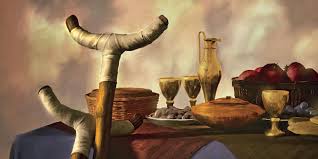
Passion Week-Thursday: Never Alone

Background Passages: John 14:1-27; John 16:12-33 and John 17: 6-26

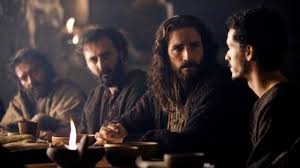
The events of the day were emotionally charged and brutally devastating. Though the day began easily enough for Jesus’ disciples, it would soon take a very different turn. They surely felt the ground was giving out from under them.

Their emotions were set on edge as Jesus washed their feet, teaching them about a servant’s heart and their need to love and care for one another…especially in the days ahead.

  • They reeled in shock as Jesus blindsided them with the idea that one of them would betray him…that others would abandon him.
  • Later in the day, they would grow weary in the garden, sleeping while Jesus agonized in prayer.
  • They would be startled awake by the torches and shouts of the temple guards as they arrested Jesus.

If they thought their world was tilting in the Upper Room, by midnight, their world had turned upside down.

As intriguing as each of those episodes are, I find myself captivated by the conversation Jesus shared with his disciples after their Passover dinner together. Knowing the inevitable outcome, this would be Jesus’ last chance to tell them what they needed to hear. To give them words that might protect and sustain them in the horror that was to come.

Put in the disciple’s sandals, what would you need to hear? What do we need to hear at a time in our world where it seems the ground around us is falling away? I found three things compelling in the dialogue between Jesus and his disciples.

Trust

“Do not let your hearts be troubled. Trust in God. Trust also in me.” Peace I leave with you; my peace I give you. I do not give to you as the world gives. Do not let your hearts be troubled and do not be afraid. (John 14:1, 27)

Jesus could sense the growing anxiety. He could see it etched on their faces. All this talk about Jesus going away made them fearful. For three years he had been their rock and a constant presence. Thomas vocalized what all were feeling. “We don’t know where you’re going so how can we know the way?” Jesus was still among them and already they were feeling lost and alone.

Jesus sought to reassure them, asking for them to trust God…to trust him…despite their misgivings and fears.

Never Alone

Jesus had led them every step of the way for years. They were unsure of their own ability. Unsure of what lay ahead. Unsure of what they were to do in his absence. Jesus promised them they would not be alone. That they would not forget all he has taught them.

“I will ask the Father and he will give you another Comforter to be with you forever—the Spirit of Truth. You know him for he lives with you and will be in you. I will not leave you as orphans.” (John 14:15-16)

“All of this I have spoken to you while I was still with you. But the Counselor, the Holy Spirit who the Father will send in my name, will teach you all things and will remind you of everything I have said to you.” (John 14:25-26)

Jesus followed up that promise as he continued to talk to them.

“I have much more to say to you, more than you can now bear. But when he, the Spirit of Truth, comes, he will guide you in all truth. He will not speak on his own; he will speak only what he hears and he will tell you what is yet to come. He will bring glory to me by taking from what is mine and making it known to you. (John 16:12-14)

The disciples have been told they need to carry on without his physical presence. Jesus would not be there for them to pose a question or seek clarification. How frightening must that have been? Yet, he told them. You are not alone and you need not worry. The Holy Spirit will be your companion and will remind you of everything you learned from me. That’s significant reassurance, even if they weren’t totally prepared to understand it.

Overcoming

Jesus tells the disciples they will face persecution and death if they continue to follow him and do the things he’s commanded them to do. His promise is that through the difficult times that lay ahead, they will have the Counselor and Comforter whispering in their ears just as if Jesus was present with them.

“Then the disciples said, ‘Now you are speaking clearly and without figures of speech. Now we can see that you know all things and that you do not even need to have anyone ask you questions. This makes us believe that you came from God.” (John 16:29-30)

It was the response from his friends that Jesus needed to hear. The response that gave him the lift he needed to press on to the work that lay before him.

“You believe at last!” Jesus answered. “…I have told you these things so that in me you may have peace. In this world you will have trouble. Take heart! I have overcome the world. (John 16:33)

Prayer

Finally, Jesus concludes the evening before heading out to the Garden of Gethsemane with prayer (John 17:6-19) asking God…

  • to bolster their faith and connection with God.
  • to protect them.
  • To grant them a full measure of the joy Jesus had in his heart.
  • To ground them in his word.

Though the days ahead would be dark and difficult for the disciples, the hard conversation with Jesus had the desired impact. For that moment, they were comforted and strengthened.

*****

There is something reassuring to me in this passage. There is comfort.

Trouble and turmoil are a part of life. It always has been. It always will be. Faced with so much uncertainty today, it is easy to become anxious. What does today hold for me and my family? What will tomorrow look like? How will we survive?

Jesus reminds us. Trust in God. Trust in him. He is faithful and he is in control. He is working in my life and yours…even today.

The same promise he made to his disciples is a promise he makes to us. We have a Counselor, a Comforter, with us today. Bringing peace, a contentment, solid in the realization that God is with us. He did not abandon us in our time of distress. If we seek him, he will remind us of all he has taught us, all he has said and all he needs us to know. We are not alone.

Whatever happens around us, this passage also teaches that the victory is already ours. The world cannot beat or break us. Trouble will come, but Jesus has overcome the world. So, it circles back around. Because he has overcome the world, we find the peace that only he can give. Rest in the middle of chaos.

Then, there is one final piece to this expansive narrative that ought to bring you hope in all things. After Jesus prayed for his disciples. He prayed for me. He prayed for you.

“My prayer is not for them alone. I pray for those who will believe in me through their message, that all of them will be one, Father, just as you are in me and I am in you. May they also be in us so that the world may believe that you have sent me… I have made you known to them and will continue to make you known in order that the love you have for me may be in them and that I myself may be in them.” (John 17:20-26)

That’s it! That’s amazing! The sacrifice of Jesus on the cross is why we are never alone in the world no matter what surrounds us. The day before he went to the cross, Jesus was thinking of me. He was thinking of you. Praying that you and I would put our faith and trust in him so that we might be one…connected by grace with every believer and with God…to this day.

When you read that prayer, the cross becomes more than history. It becomes personal.

Passion Week-Tuesday: Devotion

Author’s Note: I’m stepping outside of my normal process during this holy week of our Christian faith. As I began my preparations toward Easter this year, I wanted to walk where Jesus walked during that last week. I wanted to see what I could learn from God’s son at a time in his life that required boundless courage and faith. The parallel accounts in scripture differ minutely in chronology. Don’t get hung up on those minor inconsistencies. We’ll look at the major themes along the way. I will post a devotional study every day during this week, leading up of Easter Sunday. Let’s see together where this journey can take us.

Background Passages: Mark 12:41-44; Mark 13:1-36

Tuesday

From the time he was 12 years of age, Jesus enjoyed going to the temple in Jerusalem. It was a special place. A holy place. His Father’s house. If Jesus was in Jerusalem, one would find him in the temple, typically in the morning hours, teaching and or engaged in deep conversation with priests and people about the nature of the coming kingdom of God. I believe Jesus enjoyed his time in the temple.

This Tuesday of Passion Week was a good day.

We find Jesus again in the temple after another night in Bethany. Later in the day, he gathers his disciples on the Mount of Olives for a private lesson. There were things he still needed to tell them…important things…they would need to remember when he was gone. You’ll find that conversation in Mark 13. There are some good thoughts in that Chapter so you might want to read them on your own. Look for the lessons Jesus teaches them.

      • He warned them against the heresies of false teachers. “Do not be deceived…”. (Vs. 1)
      • He told them to expect to be persecuted for their beliefs. “You will be handed over to local councils and synagogues…” (Vs. 9)
      • He encourage them to depend upon the Holy Spirit for the words to speak. ”Do not worry about what to say…for it is not you speaking, but the Holy Spirit.” (Vs. 11)
      • He reminded them to not let their faith falter in difficult times. ”but he who stands firm to the end will be saved.” (Vs. 13)
      • He reassured them that were taught all they needed to know… ”I have told you everything ahead of time.” (Vs. 23)
      • He encouraged them be diligent in their faith until their death or until he returns. ”Keep watch because you do not know when the owner of the house will return.” (Vs. 35)

We would do well to hear these words of Jesus today. As vital as those words may be, I want to focus on a smaller passage. One that we typically read and move passed with a knowing nod and a smile on our face. I think there is great truth in the story of the widow’s mite.

*****

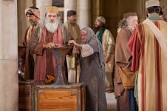
At some point during that morning, Jesus sat on a stone bench and leaned his back against the cool wall in the outer courtyard. Across the way, he could see the people and the priests filing passed a row of 12 offering vases, shaped a little like inverted megaphones.

It started out as people watching. Mindless observation of a routine activity. Then Jesus noticed a small, elderly woman shuffling through the line, waiting for her turn. Standing behind her were two Pharisees with whom Jesus was acquainted from his conversations yesterday. They stood six feet back from the woman, noses wrinkled in disdain.

There was something about this woman that caught Jesus’ eye. He nudged his disciples and nodded in her direction. They all began to watch.

When she reached the coffer, she turned her money bag upside down and emptied its contents into her trembling hand. Two small coins worth little more than a penny in today’s currency. She shook the bag once more, as if hoping for more. Finding nothing extra, the woman bowed her head. A short prayer concluded, she carefully slid the two coins into the container and walked away.

The two Pharisees stood next to the same offering vase, raising their hands, announcing to God and anyone within earshot that they had a grand offering to give. They emptied their money from a heavy, gilded bag, counted out several coins. Lifting their hands high above the opening, they dropped their coins into the metal container, with a rattle heard around the courtyard.

Jesus shook his head and spoke to his disciples.

“I tell you the truth, this poor widow has put more into the treasury than all the others,” pointing to the Pharisees. They all gave out of their wealth; but she, out of her poverty, put in everything—all she had.”

“Out of their wealth.” The words paint a picture of one giving leftovers. Money that remained after they had fulfilled all their other wants and desires. Empty. No meaning behind it. Little more than a showy display of duty.

“Out of her poverty.” These words paint a portrait of a woman who could not care for her basic needs, but still gave her all to God. Her everything. Her all.

Sure, this small passage stuck in the middle of Jesus Passion Week experiences seems almost out of place. It’s a wonderful lesson that shares what should be our attitude toward giving. But you can see it as more.

He saw in this widowed woman a kindred soul. Someone who would deny herself and give her all to God.

Jesus knew the sacrifice he was about to make. To give his whole being and soul on a cross for the salvation of a sinful world. His sacrifice would be total. Complete. Giving his all to God for his will and purpose.

In a week as special as this one in the lives of all Christians, the story of the widow’s mite serves as a remarkable reminder of the depth of God’s love for the world.

Her example and the example of Christ teach us the importance of sacrificially giving ourselves over to the will of God. To do as he commands. Too many Christians live a Sunday kind of faith, making a show of piety that creates a little noise on the weekend, but lives silently during the week.

God asks for our complete devotion, sacrifice and humility, every minute of every day, with every spiritual, emotional, social and financial resource he sees fit to give us. That’s a powerful lesson.

The Bible doesn’t tell us more about this remarkable widow. As the late Grady Nutt would say, “I can’t prove it happened and you can’t prove it didn’t.” After watching what happened, I just believe Jesus searched her out in the crowd, placed a tender hand on her cheek, and blessed her for her sacrifice. They talked about her life and her deep understanding of God’s blessings in a cruel world.

I can see Jesus sharing God’s love for her so that as she left his side she knew the Messiah had come. I believe she put her trust in him that day. As she walked away, I can see Jesus reaching into Judas’ purse, despite the disciple’s shocked expression, and calling her name. When she turned, he smiled and tossed her a bag of coin. “You’ll need this more than us.”

Devotion. Sacrifice. Humility. Those are not words highly valued in today’s world. Too often we find that God takes a back seat to personal desires. That self-serving hearts dictate our words and deeds. That personal pride and the praise of others are what we cherish most.

The story of the widow’s mite tells us that life’s blessings come to those who give themselves wholeheartedly to God, holding nothing back. When we live a life of complete devotion, sacrifice and humility, that’s a life God can honor.

It is the life Jesus lived. It is the life he called us to live.

That’s a great lesson for me to learn.

Tuesday was a good day.

Passion Week-Monday: Love

Author’s Note: I’m stepping outside of my normal process during this holy week of our Christian faith. We often read in scripture about the triumphal entry of Christ on Palm Sunday. Many congregations observe with solemnity Maundy Thursday in remembrance of Jesus’ suffering on the cross. Then, in great celebration of faith we arrive at the resurrection on Easter Sunday. Typically. This year will be different…obviously.

As I began my preparations toward Easter this year, I wanted to walk where Jesus walked during that last week. I wanted to see what I could learn from God’s son at a time in his life that required boundless courage and faith. The parallel accounts in scripture differ minutely in chronology. Don’t get hung up on those minor inconsistencies. We’ll look at the major themes along the way. I will post a devotional study every day during this week, leading up to Easter Sunday. Let’s see together where this journey can take us.

Background Passages: Matthew 21:18 -22:39; Mark 12:28-34

Jesus returned to Bethany at the end of a long and tiring day. It began with his ride into Jerusalem on the back of a donkey to the cheering throng of people throwing their cloaks on the path before him, waving palm trees in celebration and singing praises to the Son of David. Jesus remembered how the praises of the people rang hollow. How he wept as he approached the walls of this great and doomed city. Jesus knew his disciple and the crowd that followed him failed to fully understand the kind of Messiah he came to be.

As he climbed the winding path from the Eastern Gate up the Mount of Olives toward Bethany he felt a wave of mixed emotions. Sorrow in knowing the fate of his people. The righteous anger at the merchants who turned the temple from a place of prayer to a den of thieves. His frustration with the intransigent nature of the religious leaders. His love for the children who sang to him as he left the temple.

As the sun set, Jesus rested that Sunday night in the home of Lazarus and his sisters, finding a respite in their undemanding companionship. He needed that solace in order to face his Monday.

Monday
When Jesus left Galilee a week ago, he set his eyes firmly on Jerusalem knowing beyond a doubt that the cross awaited him. It was for this reason he was sent by his Father. He knew the limits of his time with his closest disciples and how much they still needed to understand. Jesus also knew that the enthusiasm of Palm Sunday had his disciples walking on air, feeling a bit invincible. They had much to learn. The next few days would be difficult for them.

Despite the heavy burden he carried that would leave most of us cowering in bed filled with anxiety, Jesus and his disciples rose early to return to Jerusalem, the dawn of a new day little more than a glimmer on the horizon. It would be a challenging and a full day. Think about the things he endured probably before lunch time.

      • A barren fig tree became a talking point about the emptiness of Israel’s heart and the need for faith and prayer. The agony he felt for his people ran deep within his soul.
      • The Pharisees challenged the authority of Jesus leading to some of the strongest and clearest statements from Jesus about the failure of the religious leaders and the coming of a new kingdom of God built upon genuine faith, service to others and spiritual humility.
      • He battled his detractors with some of the clearest and most pointed parables ever uttered, calling them out for their false piety and wanton indifference toward those in need. He told them they would forfeit their place in God’s kingdom. These were difficult conversations.

After crushing the theological traps set by the Pharisees and Sadducees, an expert in religious law recognized that Jesus was providing great answers to their challenges. He was impressed with the teacher’s knowledge. In a sincere effort to engage Jesus, he posed his own question.

“Teacher, which is the greatest commandment in the Law?

Jesus looked at the man intently. Seeing within him a different heart. He smiled and said,

“Love the Lord your God with all your heart and with all your soul and with all your mind. This is the first and greatest commandment. And the second is like it: Love your neighbor as yourself. All the Law and Prophets hang on these two commandments.”

I imagine the expert in the law laughed out loud and clapped his hands as he glanced at the Pharisees and Sadducees murmuring at the edge of the crowd. “Well said, Teacher,” he replied, engaging in a brief but substantial conversation with Jesus. The man shared his view that those two commands were more important than all the burnt offerings and sacrifices one could offer. Jesus looked knowingly at his disciples because he had shared a similar thought not too long ago.

Jesus nodded his approval. “You are not far from the kingdom of God.” Though scripture doesn’t tell us so, I want to believe a private conversation between Jesus and this legal expert ended in the man giving his heart to our Lord.

It is this story that struck me about Jesus’ last Monday before the cross. It was a ray of hope in an otherwise dismal day. Not only was Jesus carrying the burden of the knowledge of his impending death on the cross, he had faced the bitterness and anger of people who ought to know better. Challenged at every corner. His every word parsed and picked apart by people so busy trying to make a point they probably didn’t hear him anyway.

Then, out of the blue, an associate of the religious leaders who questioned his authority, stepped forward. The conversation was a breath of fresh air. Non-confrontational. Non-threatening. Instead, they talked about what was most important in the middle of these contentious arguments.

Jesus, set those arguments aside. What’s really the greatest commandment God gave us?

I think God knew Jesus needed to end the morning on a positive note. This conversation gave Jesus a chance to refocus his heart and mind. To set aside the discord and the discourse and think about what mattered most. Our relationship with God and with each other.

“Love the Lord with all your heart, soul and mind.” With all that is within you love the Lord. Total and complete. Dominating our emotions. Defined by our actions. That’s the greatest command. Once you’ve tuned your being to the heart of God, the next commandment falls in place.

William Barclay said about this passage, “It is only when we love God that man becomes lovable. Take away our love for God and we can become angry at the man the unteachable; pessimistic about man the unimprovable.” Only when we love God are we able to love your neighbor.

The coronavirus has much of the world on the edge of panic. We sit today sequestered in our houses or working at an appropriate social distance uncertain of what tomorrow might bring. Though I think I’m handling things pretty well, I find myself at random times getting antsy, anxious about tomorrow. It helps to be reminded of what is important.

Jesus had more reason to feel distress in this last week before his crucifixion than any of us could possibly feel today. The weight of the whole world was squarely on his shoulders. God choose a most difficult time to remind him to love.

Perhaps it is a good reminder for us in the middle of a global pandemic. Love God. Love your neighbor. Our hearts, our very being must turn to God with the love of one eternally grateful for his provision and his sacrifice. He provided a way for everlasting security for all who love him and believe. That’s a powerful thing to remember in times of crisis.

It’s also a great reminder that we are called to love others. What better time to do so than when everyone is feeling the strain? When everyone needs a loving touch…even if it is long distance. Demonstrate your love of God this week by calling friends and family to check on their status. Pray for one another. Help where you can.

A neighbor did exactly that for Jesus that evening. Jesus and his disciples returned to Bethany for the evening. The ate supper in the home of Simon the Leper, most likely he was someone Jesus had healed in the past.

During the course of the evening a woman of the house, who intuitively understood the path Jesus walked, was so overwhelmed with love, that she broke open an expensive bottle of perfume and poured it over Jesus’ head…An act Jesus understood as her way of anointing him, honoring him, by symbolically preparing him for burial. An expression of love.

Monday’s message is clear. Forget the struggles of the day. Just love God. Just love your neighbor. As the song says, it’s the only thing there is just too little of.

Our Season of Uncertainty

Background Passage: John 20:19-21

Easter lies just around the corner. I began this week reading the extraordinary verses about Jesus’ journey to the cross, his death and his resurrection. The meaning of this time of year goes straight to the heart. I found something new as I read about the days between the cross and the resurrection. A word that has a message for us in this most unusual time of life…the season of uncertainty.

As we’ve moved from a period of self-quarantine to mandatory stay at home, we have seen the Covid-19 virus continue to spread across the country and across the world. The number of cases rise every day. The situation leaves us…

…uncertain

…isolated

…troubled.

…no longer in control of our circumstances.

Everything that is routine in our world has been turned sideways and upside down. Such disruption impacts each of us differently, depending on our personalities and our life situations. We know one thing for sure. Nothing is normal.

Those of us who profess faith in God know in our hearts that he is still in control. That while our lives have been temporarily and, in some cases, tragically changed, God has not changed one iota…the same, yesterday, today and tomorrow.

We have spent the last several weeks trying to figure out how to response and live faithfully amid this pandemic. Join me in the upper room. There are lessons in its shadows.

Jesus followers found their life irrevocably changed after they laid Jesus in the tomb. Everything that was routine in their world was turned sideways and upside down. Some of them claimed they had seen the risen Lord, scarcely believing their own eyes. The others dared not hope.

They heard rumors that the Jewish authorities were preparing to arrest any follower of the man they had crucified. So, they locked the doors. Shuttered the windows and rarely ventured outside the walls of the upper room.

The situation left them…

…uncertain.

…isolated.

…troubled.

…no longer in control of their circumstances.

What we know from scripture is that nothing that was happening was normal.

“On the evening of the first day of the week, when the disciples were together, with the doors locked for fear of the Jews…”

Does it sound familiar? In the days following Jesus’ death most of the disciples found themselves in self-quarantine, huddled together in the upper room with a few other faithful followers of Christ. It was not a comfortable time for any of them.

I find my first lesson in this description, “…when the disciples were together…” They were able to quarantine together, locked away in the upper room…but, they were together. They found some comfort in contact with each other.

Certainly, the same applies to us. While we’re isolated in our homes, physically separated from friends and family, we have the great luxury of technology that keeps us connected…that allows us to stay in touch with one another. Telephone calls. Cards. Social media posts, Facebook messaging. Text messages. Facetime.

The point is there are many ways to reach out to friends and family other than through work, play, social gatherings or church. We can sit back and fret over our lack of touch or we can connect differently. No person within our community should go without some contact on any given day. Think about those who are truly alone. Make that a priority in your life to find ways to “be together.”

“…Jesus came and stood among them and said, ‘Peace be with you’…”

Jesus appeared to the disciples because they needed to see him. They needed to feel his presence. They needed the peace that only he could give them. Imagine how calming those words were when uttered by their Messiah.

It should come as no surprise to us that Jesus, through his Holy Spirit, stands in our midst during our most trying times. How easy it is for us to forget this central truth of the Bible. God is with us. His presence brings peace in the middle of any storm…or pandemic.

“After he said this, he showed them his hands and side. The disciples were overjoyed when they saw the Lord.”

Peace brings joy. When Jesus came into their midst, a sense of calm came over them. In that moment, sorrow and uncertainty became pure, unadulterated joy. When they were in the presence of their Lord, their worries disappeared.

It’s hard to imagine in today’s circumstances that we can find joy. We find joy in the presence of the Lord. We bask in the inner contentment knowing that we belong to him.

“Again Jesus said, ‘…As the Father has sent me, I am sending you.”

Jesus did not want the disciples to let fear overwhelm them. He knew they could not stay locked away in the upper room forever. He needed them to do the things he called them to do. They had a purpose and he needed them to get on with it.

I know this take away from John is not what was intended. It is a message that reminds us that we serve a resurrected and living savior who died as an atonement for sin for all who put their faith and trust in him. That’s the gospel…the good news…of Jesus Christ.

I also know that the Holy Spirit can bring a secondary application to even the most straightforward of passages.

Being sequestered in our homes for a time undetermined does not mean our ministry ends. I suppose it might even open doors we might never have seen. Jesus stands with us, offer his peace and tells us he is sending us still to do his work.

I don’t know where or how God will use me and you during our unusual season, but I know he is sending us to bring a sense of certainty to the uncertain…to be a point of connection to the isolated…to offer a virtual hug and a word of comfort to the troubled.

God calls us to remind those who feel they have lost control of their lives that God is still on his throne…that he remains in control and will continue to work through us to bring good from the bad that threatens us.

And to that I say, “Amen.”

*****

Author’s Note: When we can do little else, we can pray for the strength and safety of the health care workers and all those who continue to work those jobs that provide needed and necessary services to the rest of us. Pray for those who have lost loved ones and for those who are sick. Pray for the families who cannot visit a loved one who is in the hospital. That time of separation makes everyone anxious. Pray for wise decisions and solutions to resolve and lessen the impact of the coronavirus and the economic burden it brings. Pray for anyone you know who lives alone. Pray that God’s church emerges on the other side of this with a renewed enthusiasm for being the heart, hands and feet of God in our world.

Reach out through any means available to you to stay in contact with one another. Love one another.

Living in Fellowship

Background Passage: Ephesians 4:16

I usually fill this space with a more in-depth Bible study, sharing something I’ve learned from reading and studying God’s word. Allow me this week to share a more personal reflection.

For the past several years, a group of men and women from South Main Baptist Church in Pasadena have spent a week in South Texas, in partnership with Buckner’s ministries, building a home for a deserving family. This was the first year I was able to make the trip.

The work is as fulfilling and meaningful as it is tiring. I like that a family of seven will soon be stepping into a new home, vastly improving their living conditions. I like that my church does this as a mission ministry each year. I even enjoy the manual labor after a long career behind a desk…at least one week of it.

The wonderful side benefit of the trip, however, is the fellowship we enjoy with one another. I get drawn into the lively and spirited banter among friends. The laughter. The good natured insults. The mock indignation. The joy of being among Christian brothers and sisters doing a good work and the warmth of relationships grounded in God’s love.

The Bible doesn’t give you a great deal of insight into the fellowship of Jesus and his disciples. We read the serious words of Christ as he teaches his disciples things they needed to know and it all sounds like King James English, filled with thees, thous and thys. All so very formal.

I seriously doubt Jesus would recognize himself by the way he is portrayed in scripture. We read these things as if that was the limited of the conversation Jesus had with his followers. A few words here and there as they followed quietly along.

I, for one, would have loved being a fly on the wall in those hours between lessons as Jesus developed his relationship with those closest to him. The fellowship. The lively and spirited banter among friends. The laughter. The good natured insults. The mock indignation. The joy among Jesus and his followers doing a good work and the warmth of their relationship grounded in God’s love.

The Bible clearly teaches that God’s grace is sufficient for all our needs. A grace so sufficient that any believer, though sheltered and isolated from all human contact, could still be comforted, encouraged and connected to the God through the work of the Holy Spirit. Even though grace is sufficient, I don’t think we are expected to go it alone…to live in isolation from the corporate body…the church.

My time this week on a construction project in Penitas, TX, reconfirmed that idea for me. I revel in the fellowship and friendships of this group of selfless people

The connections…authentic and real.

The relationships…filled with grace, accepting, devoid of judgment.

Paul encouraged with the church in Ephesus to use the gifts which God gave them to benefit the body of Christ.

“Instead, speaking the truth in love, we will grow to become in every respect the mature body of him who is the head, that is Christ. From him, the whole body held together by every supporting ligament, grows and builds itself up in love, as each part does its work.”

I am grateful as these friends in fellowship teach me to embody the life of Christ through the use of their individual gifts and talents. As limited as my construction skill set may be, they still allow me to be a part of an effort so much greater than myself.

I find myself this week bound and connected by the supporting ligaments within the fellowship of my church. A place of belonging and service. And, as a follower of Christ, I can’t imagine a better place to be.

When God is Silent

Background Passage: Matthew 15:21-28; Mark 7:24-30

It had been an emotionally brutal and tiring time in Jesus’ life. Opponents within the religious hierarchy grew more brazen and belligerent in their handling of Jesus. His popularity challenged their reputations and status with the people of Israel.

Jesus’ disciples struggled with their identity and understanding of his teachings. Inconsistent in their faith. Unsure of the nature of his “kingdom of heaven.” The people who followed him seemed more interested in his miracles than his message.

As he pressed through these things, Jesus received word that John the Baptist, his cousin and the man who so beautifully set the stage for his ministry, had been beheaded at the order of the regional governor. A foreboding reminder of the inevitable outcome of his own life.

Jesus bore the weight of his responsibilities, emotionally and physically spent by the constant demands on his spirit and his time. Jesus needed to get away with his disciples to recharge his batteries and spend a little more time teaching them, opening their eyes to the needs of the Gentile world.

Perhaps that’s the reason he journeyed northwest of Galilee to Sidon and Tyre, a region he rarely traveled. Mark tells us he spent some time in the home of someone he evidently knew…a place where he hoped to find some privacy without the press of the crowd and the pernicious power plays of the Pharisees.

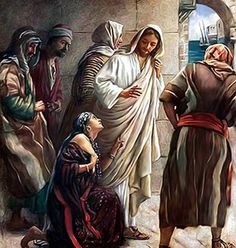
Along the way a Canaanite woman, a Gentile from the area, came to him with a serious problem. Her daughter was sick, suffering terribly from demon possession. The young mother pleaded with Jesus, begging for mercy from the “Son of David,” a popular, political title. She recognized him initially only as a great man of power. Her last hope.

What happens next is unexpected and unusual. The woman calls out to Jesus for mercy and healing…and he ignores her. Scripture says,

“Jesus did not answer a word.”

He continued walking to his destination while the woman continued to follow and beg. Jesus remained unmoved. The verses make us uncomfortable. This is not the Jesus about whom we want to read. The man we’ve seen touch without fear an unclean leper. The man who placed compassionate hands on the eyes of a blind man. That same sensitive and empathetic miracle worker that we know seemed to turn his back on a woman crying out in need.

Despite his silence, the woman stayed after Jesus. So persistent was her pleading that the disciples grew impatient and irritated. “Heal her or don’t,” they seemed to say to Jesus. “Just get rid of her. She’s getting on our nerves.” The implication…she’s not one of us.

Jesus finally speaks. What he tells the disciples, likely overheard by the Gentile woman, seems even more harsh than his silence.

“I was sent only to the lost sheep of Israel.”

The words imply that because the woman is not Jewish, Jesus is not responsible for her need. He has no role to play in this life episode. And, we grow more uncomfortable by his apparent disregard.

Finally, Jesus arrives at the house that was his intended destination. Despite his earlier comment, the woman followed Jesus, still asking for his intervention to save her daughter. The woman didn’t let a doorway stand as an obstacle. She came into the room with Jesus, knelt at his feet. With tears flowing down her cheeks, she cried,

“Lord, help me!”

There is a change in her address and her demeanor. Jesus’ silence and his statement of God’s purpose and plan, the conceptual became reality. “Lord,” she cried. No longer political and popular, but a clearer understanding of the true nature of God’s son. Humility took her to her knees in reverence and worship.

The lessons didn’t end there as Jesus continued to teach. He wanted her to fully embrace this new relationship by challenging her cultural perspectives…by challenging the cultural perspectives of his disciples.

“He replied, ‘It is not right to take the children’s bread and toss it to their dogs.”

No! He didn’t just say that, did he? The Jews’ hatred and prejudice toward any Gentile ran deep. To call a Gentile a “dog” was the pejorative term of the day. An insult of deepest intent. If you weren’t feeling uncomfortable yet, you probably are now.

Thankfully, the true meaning gets lost in our translation. The word Jesus used for “dog” is not the same word interpreted as “cur,” the slanderous meaning used by Jews toward most Gentiles. The term Jesus used is a word that speaks of a puppy, the beloved family pet who was fed from the family table.

I’m betting the woman’s ears picked up on the difference. I’m betting the disciples did as well. She heard his gentle, teasing tone. Saw the light dancing in his eyes. The grin on his face. A playful smile of understanding now on her face, she responded lightly in kind.

“Yes, Lord, but even the dogs eat the crumbs that fall from their master’s table.”

This woman recognized what I often fail to see. Any mercy from a loving God is good grace. She knew that a crumb of grace from Jesus would be life-changing for her daughter. She would not rest until she received even a small portion of his loving mercy.

Jesus reacted to her words with great joy.

“’Woman, you have great faith! Your request is granted.’ And her daughter was healed from that very hour.”

What I’ve come to realize over my lifetime of study is that Jesus never did anything, never went anywhere without a purpose. So in touch was he with the will of his father that nothing surprised him. For example, Jesus once ignored the normal route to Jerusalem by cutting directly south through Samaria. He did so not to save a few steps from a long journey. He did so knowing he would encounter a woman at the well in need of the living water only he could give.

I believe he went to this knowing he would encounter someone along the way who needed his touch. Maybe he didn’t know exactly who would come, but he knew someone would reach out to him. I believe he went to this place to open his disciples eyes to the possibilities of a broader ministry beyond their personal boundaries.

Nevertheless, Jesus did not react to this woman the way he reacted to others who came to him. Jesus wasn’t just having one of those bad days where he didn’t want to deal with anyone. That’s too much…well…too much like me.

We certainly aren’t to just excuse his behavior and write it off as we whisper to one another, “You know, he’s dealing with a lot in his life. We should cut him some slack.” Jesus, the perfect representative of God’s love on earth, didn’t get annoyed like that. That wasn’t who he was at any time of his life on earth.

If his response seems so out of character, there must be a reason. What could make Jesus behave this way?

Let me offer a thought.

As with most of his encounters, Jesus asked questions or led a challenging conversation, or gave a look that required people to scrutinize their own beliefs. To see their relationship to God through a different lens. This woman, and his disciples, needed that lesson.

I see Jesus’ response to the Canaanite woman in the same light. His silence was disconcerting to her. Made her uncomfortable as it would make us. Jesus needed her to look inside her heart to find a true faith. He needed her to understand who he truly was so she could get the most out of this relationship.

The woman had a choice when met with Jesus’ silence. She could have walked away angry. “He doesn’t care.” “He’s not the man I hoped he would be.” “He doesn’t love me.” It’s a natural reaction of the brokenhearted. When my prayer seems to get no response from God, I tend to sit around, impatiently drumming my fingers on my Bible, muttering under my breath, “You promised to”…”You said you would”…always wondering why he is not responding to my petition.

The delay in God’s response, his silence, is sometimes only because my faith needs to catch up to my situation, giving me time to align my will with his. I can’t do that if I walk away from the conversation.

Jesus wanted this Canaanite woman to think about her request. To think about what she was asking of him. To explore her motivation. To reflect on why her heart was calling out to him and why it was telling her this was the man to see. Jesus’ silence made her think and dig more deeply into the relationship she was seeking with him. He was giving her time to let her faith catch up to her need.

Jesus eventually broke his silence, but his response was not what she wanted or expected. Jesus reminded her and his disciples that his God-given purpose was to bring salvation to the Jews first. To fulfill God’s covenant with his people. His disciples were destined, however, to play a different role. They needed to see it modeled in front of their eyes.

Again, it would be out of character for Jesus to turn her away because she was not Jewish. It was as if he was telling her, “Think! This is who I am. What is it you really desire? What will it take for you to understand me.

The woman could have walked away in anger again at this point. “You’re not going to help because I’m not Jewish? Really? Fine, forget you!” Her growing faith and her inquisitive heart wouldn’t let her walk away. Perhaps without knowing why, she knew she had to stay engaged in conversation, trying to understand what Jesus was really telling her.

Isn’t that the way it works with us? When I grow frustrated that my prayers are not answered or my needs are left seemingly unmet, I can turn my back on God and walk away, or I can stay connected and engaged with him, trying to glean a clearer understanding of his will in my life. Rather than walk away, I ought to be saying, “What are you trying to teach me, God? What am I missing here?”

It crystalized for the woman and his disciples when Jesus talked about feeding the puppy from the table scraps. It was at this moment that Jesus seemed to know she was on the precipice of understanding. He dangled the bait one more time, hoping she would take it…hook, line and sinker.

I also think it’s at that moment that the Canaanite woman figured it out. She told Jesus she would be satisfied with just a measure of his mercy. Because of who he was even a morsel of his grace would be sufficient to satisfy her need. That’s when Jesus recognize in her the genuine faith of a true believer.

“Woman, what great faith you have!”

You see, the longer we stay in touch with Jesus…even through the silence and the confusion…we allow ourselves the opportunity to be taught by the master teacher the deeper lessons of faith. The woman’s perseverance and patience in a trying time enabled her to see more clearly what God required of her.

God wants us to have that same kind of faith. Persevering. Patient. Pushing through the silence to get to a deeper understanding of who Jesus is and what he can do in our lives.

The silence of an unanswered prayer eats away at us, especially in a world so accustomed to instant gratification. What we want, we want now. Not tomorrow. Now. When our prayers are met with silence, it is easy to walk away. We do it all the time. We struggle with life and presume God no longer cares. When circumstances take a hard turn, we stop coming to Jesus. When Christian brothers or sisters disappoint us, we criticize the hypocrites and abandon the church.

Some of the best teachers in my life were those who refused to accept my half-hearted efforts, knowing I was capable of more. They pushed, probed and prodded to get me to broaden my understanding. That’s what Jesus was doing for this Canaanite woman. His silence asked her to not give up, to keep seeking, to keep knocking until she found what she needed most.

It’s the same lesson we must learn. When we arrive at that place…when worship is real and genuine…that’s when prayers are answered in a way that matches our will to God’s will. Not the other way around.

Maybe that’s what we need to think about the next time our prayers are met with silence.

Seeing the Big Picture

Background Passages: Genesis 50: 15-21; Jeremiah 29:11

You’ve probably heard the business fable. A story with a moral.

A traveler encountered three stone cutters working in the roadside quarry. Eager to discover what they were working on, the traveler asked the first man what he was doing.

“I’m cutting stone,” he said, returning to his work.

No wiser than before, the traveler walked to the second man. “What are you doing?” He asked.

The second man continued working and gave a more elaborate response. “I’m shaping this stone so it is perfectly square and will fit neatly against that rock over there.”

Still unsure, the traveler approached the third stone cutter. He asked, “What are you doing?”

The stone cutter stopped his work, looked into the distance as if seeing a vision no one else could see. He replied reverently, “I’m building a cathedral.”

I was reminded of this story this week as I visited with a friend of mine who is a hospital administrator. We talked about how hard it is for some people to see how their plans and actions…how their managerial decisions…impact the rest of the organization. We talked about how important it is for leaders to help others see and embrace the bigger picture.

What is true in the business world also rings true in the spiritual realm. There is a real need to see God’s bigger picture.

The selfishness of a sinful world limits our ability to see God’s purpose and plan. Our disobedience, and the sinful choices of those with whom we interact, can put a hiccup in that plan. God continues to guide our lives, however, in ways that work through those misguided and often sinful decisions to put us where he needs us to be at any given point in time doing what he needs us to do to accomplish his will…his big picture.

When we trust enough to look beyond our own desires, God opens our eyes to a deeper meaning and purpose.

Consider the life of Joseph.

Joseph, the first child born to Jacob and his beloved Rachel. Ten older half-brothers, born to different mothers, resented their father’s show of favoritism to their younger sibling. Genesis 37:3 tells it plainly as it sets the stage for all that is about to happen. “Now Israel (Jacob) love Joseph more than any of his other sons…”

Joseph didn’t make it easy on them. The teenager basked in his favored status, wearing his expensive and colorful robe, gifted to him by his father, wherever he went. A constant reminder to his brothers that he was dearly loved and highly favored.

Joseph was a dreamer without a filter. His constant visions and musings painted him as their lord and master…stories he seemed to love sharing with his brothers. He delighted in telling them they would one day bow down to him. Twice he shared similar dreams and scripture says his brothers were jealous, angry and “hated him all the more.”

Taunted by one too many of Joseph’s dreams, the brothers’ resentment took a nasty turn.

You remember the story. Joseph’s brothers were tending the sheep in the rocky hillsides of Judea. After a time, Jacob sent Joseph to find his brothers.

“Go and see if all is well with your brothers and with the flocks and bring word back to me.”

That Joseph was not already with his brothers tending the sheep in the hillside was probably already a source of irritation among the brothers. When they saw him coming in his ornamental jacket, they stewed in murderous contempt. Not wanting to bloody their own hands, they simply dropped Joseph into a deep and dry well, intending to leave him there to die.

The fortuitous passing of a camel caravan presented a more lucrative option. The brothers pulled Joseph from the well and sold him for 20 shekels as a slave to the traders bound for Egypt. With a torn and tattered coat and a little goat’s blood, the brothers returned to their father, false concern etched on their faces, allowing their father to jump to the certain conclusion that his beloved son had been slaughtered by wild animals.

Betrayal.

Joseph probably bears some responsibility for the fractured relationship that existed between he and his brothers, but his brothers violated the expectations of that bond of brothers when they chose bitterness and hate over forgiveness and love.

You probably know the rest of the story as well. Through his God-given gift of interpreting dreams, Joseph rose to a place of prominence in the Pharaoh’s government. During a famine in the land of Israel, the brothers journeyed to Egypt to buy food and came face to face with the unrecognized brother they betrayed. In a series of events to see if his brothers had changed their hearts, Joseph eventually revealed himself to them, extending his forgiveness and inviting the whole family to live in his land of plenty.

It seems that the brothers always expected the heavy foot of revenge to eventually stomp on their heads. They believed that Joseph’s forgiveness and love was a face he put on as long as their father was alive. When Jacob passed away, they just knew Joseph would seek retribution.

They sent word to Joseph offering their lives as slaves. When the brother’s word’s reached Joseph he cried, saddened at the thought that during their time together in Egypt, he had failed to reassure them that they had been forgiven already.

He sent for his brothers. They threw themselves at the feet of Joseph offering again to be his slaves, hoping he would find enough forgiveness in his heart to spare their lives.

Then, he pulled them to their feet and scripture said, “he talked kindly to them.” His words meant to calm and reassure.

“Don’t be afraid. Am I not in the place of God? You intended harm for me, but God intended it for good to accomplish what is now being done, the saving of many lives.”

“God intended it for good…”

I read the story of Joseph and wonder how long it took him to get to that point. How long did it take him to see the bigger picture of God’s purpose and plan?

I suspect there were many nights while enslaved that he choked back the bitterness. Plenty of times when he languished in prison for crimes he did not commit where he blamed his brothers for his plight.

Maybe he began to see what God had in mind as he was called to interpret the Pharaoh’s dream. Maybe he caught a glimpse of God’s purpose when he rose through the ranks to become Pharaoh’s second in command. Maybe he finally saw God’s bigger picture when famine hit the land of Israel and his people came to Egypt for his help. Maybe it wasn’t until he saw the faces of his brothers that he knew how and why God had worked in his life.

Through his life, Joseph teaches us a great lesson. Everyone one of us will face betrayal, hurt, tragedy…a constant litany of struggles that enter and exit our lives. As we live and work through those problems, we have a tendency to focus too closely on the issue at hand…to fail to see the forest for the giant redwood in front of us.

If we’re not looking for the big picture, it’s easier to hold a grudge and more difficult to forgive. Easier to wallow in misery and more difficult to recover. Easier to abandon the joy of life and more difficult to accept and move on.

So how do we get to that point?

We…I…have difficulty at times really understanding that things that happen in life are within the control of an all-powerful and all-knowing God. It’s the old, “why does God let bad things happen to good people” argument. I can accept that all God’s plans are good. I just know that not all of man’s plans are good. Understanding how God can untwist the messes I make and get me back on the path he intended is mind-boggling. Yet, time and time again, I’ve experienced it.

It boils down to trust. It boils down to seeing beyond my situation and trying to see the circumstances of my life through God’s eyes…to see what he wants to accomplish in and through me. I will never get there if I focus on the mess I’ve made or the dirt the world throws in my face.

God’s plan for my life…for your life…is a good one despite the difficulties and hardships we face. It should always be our prayer that God will use whatever happens in our lives to bless our lives and the lives of others.

Jeremiah shared God’s promise to the people of Israel that their exile from their land would not last forever as long as they turned to God. The promise God offered Israel is the same promise he offers us.

“For I know the plans I have for you,” declares the Lord, “plans to prosper you and not to harm you, plans to give you hope and a future.”

God’s plans are always bigger and better than any plan I come up with on my own…a reality for which I am eternally grateful.

Where Does My Help Come From

Background Passage: Psalm 121:1-8

Our muscles ache a bit after hiking eight or so miles each day for the past four days through Big Bend National Park. It’s not that the hikes were particularly strenuous, it’s just that my wife and I did little to get ourselves in shape for four days of hiking in the mountains and canyons in Southwest Texas. 

One of the joys of being retired is the ability to travel in the off-season when everyone else is still at work or school. We found in our hiking that we were often the only people on the trail. Rarely did we encounter any other hikers during our excursions. As a result, every trail, every vista, every mountain, every canyon seemed shrouded in silence and majesty…a place God sculpted just for us to enjoy.

During our first day of hikes, I found myself repeating in my head a verse from Psalms 121.

I lift my eyes to the mountains, where does my help come from? My help comes from the Lord, the maker of heaven and earth.”  

I looked the verse up when I returned from our hike that evening. Psalm 121 is a series of verses that the Israelites recited prior to any journey to the temple of Jerusalem. The psalm implies that the pilgrim is still a distance from the city and pondering the dangers of the journey ahead. He finds peace as he lifts his eyes toward Mount Zion where he believes his God dwells. 

For the pilgrim to Jerusalem the journey was danger-filled. Bandits. Wild animals. Heat. Thirst. It was not an easy trip. These things made him anxious. As he alertly scans the road ahead, he wonders who will help him if he falls into trouble. In his heart he asks, “Where does my help come from?” 

It is question asked and answered by a man of faith. “My help comes from the Lord, the maker of heaven and earth.” No equivocation. No faltering. He knows God is his source of help and protection.

But the psalmist goes on to remind all of Israel of the security they have in God. 

He will not let your foot slip…”

“The Lord is your shade…”

“The Lord will keep you…”

“The Lord will watch over your coming and going…”

The psalmist knows his all-powerful God, the creator of the universe, loves him and will be a constant presence in his life…keeping him on the right path, providing comfort in difficult times, watching his every step. The same holds true for every person of faith.

This psalm brought comfort to the pilgrims facing a long journey to Jerusalem.

I also mind a measure of peace in the psalmists words. The psalm teaches me that…

God is bigger than all my troubles. I see the majesty and beauty of God’s creation laid out along the trail I’m hiking. The creator of all this grandeur is a constant presence in my life. Nothing I encounter in life trumps that. The one who carved the canyon over eons, takes the time to carve out the path in front of me. All I have to do is follow the trail. “He will not let my foot slip.”

God stays close to me. To find relief from the heat of the sun, I must be protected from it by the shade of a rock or tree. That which provides shade must be nearby. It’s not just that God is never far away from me. It’s that he is always by my side. He always stays close…even in the heat of trouble or storm. He is my close protector. 

God watches over me. The creator of the universe loves me so much he that he watches over me. The word doesn’t suggest a casual glance my way from time to time. God doesn’t just check up on us from time to time. It speaks to the ever diligent parent whose eyes never stray from the child at play in the park, constantly scanning the area for signs of any threat. God watches over me. 

God’s concern is constant. Look at the imagery the psalmist uses. “He will not slumber nor sleep.” That’s amazing in itself. With all the evil in the world today, God never takes his eyes off me. He guards my coming and going “now and forevermore.”

Given the words of the psalmist and the truth he reveals, it’s amazing that I still anxious.  I don’t need to worry, but I do from time to time. While such worry may suggest I don’t think God is willing or able to help in my specific circumstance, it’s more often true that I’d just rather do it myself. That’s when I get myself into trouble. 

No the truth is clear. Where does my help come from? It comes from the Lord. 

It just took a few beautiful mountains to remind me.

Cast Your Troubles

Background Passages: Matthew 6:25-34, Luke 12:26-34; John 14:1, Philippians 4:7

The optimism that seems to accompany each new year fades quickly. Most resolutions we make to change the direction of our lives crumble in the reality of old habits and events beyond our control. Within days of our initial optimism we find ourselves mired again in the swamp of anxiety.

Certainly, in our lives and in our world today, we can find reasons to worry without looking very hard.

That could be why many psychologists call our time the “anxious generation.” In New York magazine recently, Jean Twenge, a social researcher from San Diego State University said that anxiety among young people is at an 80-year-high. As bad as it has been since the Great Depression.

Sadly, Christians are not immune to worry, but our faith should provide a buffer to dampen its effect. Jesus said as much during an anxious time for the disciples in the days leading up to his crucifixion.

“Let not your hearts be troubled. Believe in God; believe also in me.” John 14:1

Jesus speaks to the deep trust we must hold in God as we deal with the most difficult times in our lives. But, worry isn’t limited to times of deep crisis, is it? Our tendency is to worry about the little things and the things we cannot control.

I don’t know why Jesus started the conversation we find recorded in Matthew 6 and Luke 12. Scripture doesn’t tell us. It’s not hard to imagine the scene based on the context provided by Luke and Jesus’ introduction to the passage.

Jesus and his disciples just encountered a man who came to Jesus to settle a financial dispute…asking for his inheritance that his brother controlled.  He was a man self-consumed, one who could not see beyond his own desires and the things of this world. He asked Jesus to convince his brother to give him his inheritance immediately. Jesus responded with a parable about those who pursue wealth at all costs, even to the detriment of their eternal condition.

The disciples must have wrestled with its meaning, perhaps even expressing their own fears and apprehensions about the struggles of life. Jesus took the time to explain.

“…I tell you, do not worry about life, what you will eat; or about your body, what you will wear. For life is more than food and the body more than clothes…Who of you by worrying can add a single hour to your life?”

Worry changes nothing.

Jesus spoke to them of the ravens who neither planted nor harvested, yet God provided for them. He talked of the flowers that do not labor or spin yet are clothed more beautifully than the finest garments any king might possess. He talked of the grass in the field that is abundant one day and tossed into the fire the next.

At its heart lied an argument that ran counter to the ways of the world.

Anglican Bishop John Taylor Smith of England autographed his books on the inside of the front cover with the same message every time. The last stanza of his poem alludes to the point Jesus made to his disciples in Luke about living lives not consumed by worry. He wrote:

The worried cow would have lived till now
If she had saved her breath.
But she feared her hay wouldn’t last all day
And she mooed herself to death.

When you see the lilies spinning in distress,
Taking thought to manufacture loveliness;
When you see the little birds build barns for store,
That’s the time for you to worry, not before.

Jesus explained it with less whimsy.

“…you of little faith. Do not set your heart on what you will eat or drink; do not worry about it. For the pagan world runs after such things and your Father knows you need them. But seek his kingdom, and these things will be given to you as well.”

The message: If God’s created order takes care of the smallest of his creatures, how much more will God take care of your needs.

Jesus challenged his disciples to trust in God’s provision and worry less about the things that ultimately do not matter. He encouraged them to focus instead on the kingdom of God and their work within it.

The lesson still rings true, even in our fearful and worrisome world.

In a dramatic statement of “do as I say, not as I do,” it seems to me that we worry when we focus on the wrong things. I’m guilty as charged. Matthew’s retelling of this story adds a word that Luke does not include. Jesus concluded his teaching by stating a sad truth about life.

“Do not worry about tomorrow, for tomorrow will worry about itself. Each day has enough trouble of its own.”

No matter how rose-colored our glasses, each day poses its own unique set of problems we must face.

We worry when we quit living in the present…in the now. Worrying about what has already happened is useless. Worrying about tomorrow is fruitless. We stop worrying when we learn to live in God’s will one day at a time. It is this day and what we do with it that matters.

Theologian William Barclay writes that worry and anxiety are basically irreligious…worldly and not spiritual. He said, “Worry is not caused by external circumstances. In the same circumstance, one man may be absolutely serene and another man worried to death. Both worry and peace come, not from circumstances, but from the heart.”

Jesus said much the same thing in Luke as he ended his teaching. He said,

“For where your treasure is, there your heart will be also.”

What my heart desires is my treasure. So what will I desire for today?

I wish I could say I never worry about things, but I do. Those moments slip up on me when I give no thought to faith. When my faith is lacking. When my heart focuses on worldly things. When I’ve treasured something other than my relationship with a loving Father in heaven who I know deep down will provide whatever is needed through every circumstance.

A new year begins. I’ll offer no petty resolutions I cannot keep. Instead, I’ll offer a renewed commitment to the kind of faith that allows me to walk through life circumstances unafraid of any outcome. I commit to putting my faith and trust in God at the center of my heart. With that comes the kind of peace that crucifies all worry and fear. With that comes peace.

“And the peace of God, which transcends all understanding will guard your hearts and your minds in Christ Jesus.” (Phil. 4:7)

That verses speaks to being content with living in the present when every temptation of the world tries to steal our joy. It offers praises to a loving God who will protect my heart and mind from the agony of anxiety. It is my trust in Christ that carries the day.

May this new year bring you peace through the unmeasured grace of God.

What’s Your Burning Bush

Background Passages: Exodus 3, Exodus 4, Mark 2:1-12; Mark 5:32-28

Not that it matters, but do you know the name of the instrument used by the ophthalmologist during an eye examination…the gizmo with the chin rest and all the dials and levers? I didn’t know its name either until my last visit with my eye doctor. I asked this time. Now I know. It’s a phoropter.

You’re welcome.

A phoropter is the instrument used to measure refractive error and determine your visual acuity. The patient sits behind the phoropter with chin in place and views an eye chart. The doctor changes lenses and other settings while asking a series of insightful questions.

“Is this better? (Click) Or this?”

As the doctor narrows in on the proper measurements, the distinction gets more difficult to determine. That’s usually when I start feeling like I failed the test. We went through the pattern again during my recent eye exam with the same questions, but this time, as we narrowed down the acuity, he simply asked,

“What can you see?”

It’s a fair question then. It’s an even better question when you look at its deeper, spiritual implications. I found at least one answer in the life of Moses.

This was not his first
brush fire.
A careless ember from a campfire.
A lightning strike.
All it took in the arid wilderness
to start a fire.
He had no idea how this one started.

After 40 years in Midian,
Moses had seen his share of wildfires.
At first glance,
this one looked no different.

Weary from an endless day.
Leading his sheep to
greener pastures
Moses saw the fire as he crested the hill.
A quick assessment deemed it a
minimal threat.
He thought,
“A little sand.
Smother the fire.
Problem solved.”

Moses took a few steps toward the flame.
He stopped abruptly in his tracks.
First,
Cautious.
Curious.
Then,
Confused.
Confounded.

For a long moment,
Moses stared intently into the
heart of the flame.

“Moses saw that,
though the bush was on fire,
it did not burn up.
So Moses thought,
‘I will go over and see this strange sight—
why the bush does not burn up.’

In that moment,
Once Moses saw something more
than a typical fire…
Only then,
did God call out,
“Moses!”

Apparently, Moses wasn’t the excitable type.

In one of the most understated sentences uttered by an Old Testament character, Moses, saw that the bush was not burning. He calmly said, “I will go over and see this strange sight—why the bush does not burn up.”

I’m pretty sure my response would have been a bit more dramatic…something like, “Holy Moses!…”

I’ve heard this story many times since I was a child. Saw it played out on flannel board and in children’s plays. I’ve heard multiple sermons about God calling Moses to lead his people out of Egypt.

What struck me this week about this story was not that God called Moses to do important work, but that God didn’t call Moses’ name until the shepherd noticed something never before seen. The sight itself was not unusual. At first glance, Moses saw a fire that he needed to put out. Nothing more. Then, he noticed something different.

“When Moses saw that, though the bush was on fire, it did not burn up…”

Then, and only then…only when Moses noticed that the bush was not being consumed by the fire did God call his name. God waited to call until Moses opened his eyes.

So I also wonder, after 40 years in the Midianite wilderness…how many signs from God did Moses miss before the burning bush captured his attention?

The question to me becomes personal. What signs from God have I missed? What is it I need to see before God can call me to do important work? What do I need to notice before he calls my name?

Really, what or where or who is my burning bush?

There is a difference between seeing and really seeing, isn’t there? I can see my wife’s shoes and not notice that that they are new. (A fact for which she says she is forever grateful.) I can see her dressed for a night out and not notice how pretty she is. (One of my less than redeeming qualities.)

When you really think about it. Jesus saw things that most people don’t see…ever.

Everywhere the disciples went with Jesus, they saw the crowds that followed. They saw the multitudes of people and the problems they caused. Mouths to feed against their meager resources. “We have no food to feed them. Send them away.”

Andrew, bless his heart, saw a child with five loaves and two fishes. Even in his seeing he didn’t really notice. “What difference will these make among so many?”

Jesus, scripture says, “saw the large crowd and had compassion on them.” He noticed their hurt. Their need. He looked past their empty stomachs and saw into their empty hearts. He glimpsed the same five loaves and fishes and saw an opportunity.

In Mark, Jesus saw the friends leaning over the hole in a roof of a packed house after lowering their paralyzed friend to the floor in front of him. Where I might focus on the man lying in front of me, scripture says Jesus “saw the faith” of his friends. Where I might have noticed a man in need of physical healing, Jesus noticed a man whose sins needed forgiveness. Where I might have been uncomfortable with the Pharisees and scribes mumbling in the background, Jesus saw their devious and wicked thoughts.

Jesus noticed things others couldn’t see.

Give Moses credit. Where I might see a fire, Moses saw a burning bush that was not being consumed. It wasn’t until he noticed the difference that God could speak to an open heart.

So, it begs a question…

What is my burning bush? What is your burning bush?

A neighbor we wave to, but never visit?
A homeless man we’ve passed every day on our way to work?
An estranged son or daughter whose phone call we don’t return?
An unfilled place of service within our church?
The person we know who keeps questioning our faith?
The scripture verse that keeps popping into our thoughts?
A need in our community that goes unmet year after year?

What is it you see every day, but never notice? Who is the person God is using to get your attention? Your burning bush and mine will most probably me different. That’s because he needs us to do different things. To touch different people. He has something special for you and me. The signs are everywhere…if we will just take the time to notice. He can’t call our names until we do because until we notice we won’t hear him call.

Here’s the rest of that story. From the burning bush God called Moses to do an extraordinary thing. A task so great Moses felt unworthy. Think about that. Staring at a bush that wouldn’t burn and hearing God’s voice from its flame, Moses thought of reason upon reason why he shouldn’t or couldn’t do this work.

His excuses are the very ones I use to give myself permission to ignore the call…

Who am I? They won’t listen to me. God says, “I will be with you.”
Who are you? God says, “Tell them, ‘I am who I am.’ Tell them who I am.”
They won’t believe me! God says, “I will give you what you need to show them.”
I don’t talk very well. What would I say? God says, “I’ll give you the words.”

You and I will offer up every excuse to keep from doing what we know God wants us to do. But, God will answer every excuse if we just make ourselves available. Here’s the absolute truth of the matter. God doesn’t show us a burning bush to capture our attention unless we are ready, with his help, to do his work.

William Hazlett, a 19th century English essayist, social commentator and philosopher noted that through mankind’s history “…millions saw an apple fall from a tree, but only Isaac Newton asked why?

Maybe it’s an apple falling from a tree or maybe it’s a burning bush. Whatever it is, take time to look at the world around you and really notice what you’re seeing. When you notice what you’re seeing, I believe you’ll hear God call your name.

No more excuses. No more justifications.

What is your burning bush?