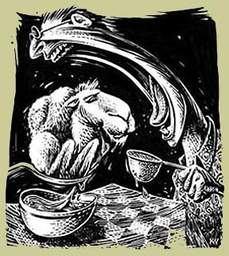
Strain the Camel

Background Passages: Matthew 23:23-24; 2 Timothy 1:7

I don’t much like weeding the garden. Well, that’s not exactly true. I hate weeding the garden.

Recognizing it needs to be done from time to time, I started in one small corner and began pulling up the blanket of milkweed that covered the topsoil. Painstaking and boring. I finished a 10-foot section of ground and looked back on what I had accomplished. All the milkweed was gone. Yet, there in the middle of the flowerbed I just cleared stood a very proud, 18-inch dandelion with a bright, yellow flower on top. So focused on the little weeds, I missed the big, ugly one right in front of me.

I wonder if that was what it was like for the Pharisees as they settled into their comfortable lives. So focused were they on complete obedience to the letter of law that they missed its intent. So comfortable in the routine of religion, they ignored the needs of a lost world, never practicing what they preached.

In other words, they laboriously pulled the milkweed, but ignored the dandelion. Jesus’ call to righteous living put a spotlight on the dandelion.

In the last days of Jesus’ ministry prior to his journey to the cross, we find him spending more and more time grounding his disciples in the deepest fundamentals of faith. The more he talked about the kingdom of God, the more his opponents protested, pressured and plotted to eliminate him.

Instead of a concentrated effort to discern the truth the Pharisees made a concerted effort to discredit every word he spoke. They picked at the minuscule and ignored the material. A master of hyperbole, Jesus challenged their hypocrisy. The religious leaders of the day took great care to cross every “t” and dot every “i” in their quest for religious piety. So focused were they on the legalities of religion, they missed the point of faith.

Jesus acknowledged that they regularly gave their tithes of mint, dill and cumin, but he chided them for failing to practice the important matters of the very law they claimed to obey. Where is justice? Mercy? Faithfulness? “You should have practiced the latter without neglecting the former.”

Jesus took them to task for their improper perspective. “You blind guides! You strain out a gnat, but swallow a camel.”

Had I been standing next to Peter and John that day, I’m pretty sure the snicker I failed to choke back would have drawn an ugly glare from the closest Pharisee and a pained glance from Jesus that said, “Really? That’s your contribution to this debate?”

What a powerful commentary Jesus made with a tongue-in-cheek comment. It is a brilliant analysis of the problems preventing the Pharisees from accepting the new truth Jesus brought to the world. They were so driven by the principle of not eating what they deemed unclean that they would use a cloth to strain their drink to make sure they would not accidentally consume the tiny, filthy insect. Yet, they never seemed to see the camel they swallowed whole.

Had I been walking next to Jesus later that afternoon, I suspect I might have apologized and rationalized my inappropriate behavior. “I’m sorry, Jesus, but that was a good line. Pretty funny. Did you see their faces?”

I think Jesus would have put his arm around me and said with a rueful smile, “It might have been funnier if it weren’t also true in your life, too, my friend.” As my mind reeled, I’d hear something about ignoring the 4” x 4” beam in my own eye.

I am, at times, guilty of the same Pharisaical behavior. The Pharisees practiced their faith. They made dedicated effort to comply with the ritual and rules, focusing in extreme measure on the “thou shalts” and the “thou shalt nots,” while spending precious little time on the “love thy neighbor.” Being right was a higher calling than doing right. I may not always be that different.

You and I live in a time when it’s fashionable to be hypercritical. To declare ourselves politically and socially holier than thou. You and I live in a time when pronouncing our truth rides roughshod over proclaiming his truth. When we love the sound of our own voice rather than seeking to sound the voice of love. Such arrogance drives people away from the very one to whom our deeds and our words should point and proclaim.

It’s easy to play the Christian card in a world struggling to do what’s right. Attend church every week. Sing a few songs. Sit through the sermon. Study his word in Sunday School. Gather up a few old clothes to give to the poor every now and again. Now, somehow, I’m better that that other poor soul. It’s not that these things are wrong. Like Jesus reminded the Pharisees, these are things that should not be neglected.

However, when we focus on the “things” of our religion to the exclusion of the crucial matters of our faith…justice, forgiveness, love, compassion, truth…

…we become critical rather than encouraging…

…we divide rather than bring together…

…we falsely elevate our standing in the eyes of God, and…

…we fail in the deeper call of Christ.

We wonder all the time how the Pharisees could be so obtuse, time and time again failing to recognize the truth of Jesus’s words because they threatened to push them out of their comfort zone. The truth is they lived in fear of the kingdom of God that Jesus personified. It upset their apple carts and threatened to pull down their carefully constructed walls that isolated them from a world in need.

Jesus tells them, “You put on a good front. Make a good show of things. But, your heart cannot see what I see. Until it does, you will continue to go through the motions, critical of those less “pious,” feeling safe and comfortable within the walls you built around you.

“Until you see the world through my eyes and move past the ritual and routine, you’ll keep straining that gnat and eating that camel.”

Jesus calls me to keep doing those things I ought to be doing, but to focus on what matters most. I must set aside the fear that keeps me from embracing in love a world that knows no better way. I need to step outside my comfort zone. To challenge what I believe and dig deeper until God teaches me the next thing I need to know to become more like him. Fear stared the Pharisees in the face and gripped their hearts. It does the same to me at times.

When he needed to encourage Timothy, the young pastor of Ephesus, Paul reminded him,

“God did not give us a spirit of timidity and fear, but a spirit of power, of love and of self-discipline.”

I also find that encouraging. My ability to move past the trappings of religion and into a full expression of faith rests not in my own ability, but in the power of God through his spirit within me. My desire to love others will not come from the goodness of my own heart but from a realization of sacrificial love and mercy God extends to me every day. My desire to see the needs of those around me and to, therefore, act, comes from the discipline to be more like Christ every day in every way.

I don’t know if you feel the same way at times, but, if we assume we’re doing pretty well at filtering out our gnats, maybe it’s time we both strain the camel.

Discerning what is Good, Pleasing & Perfect

Background Passages: Romans 12:1-2; I Thessalonians 5:21-22; Romans 7:15-18: Philippians 1:9-10

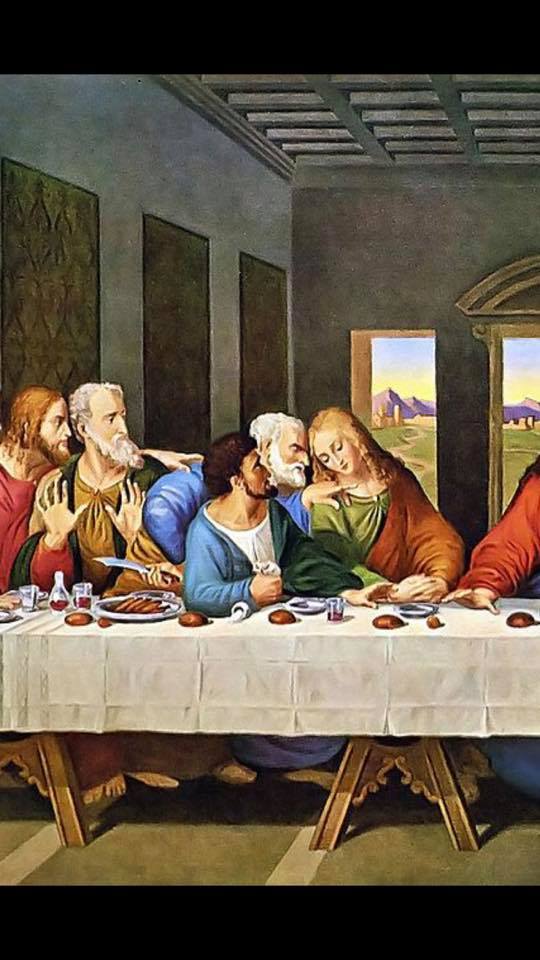
While eating out after Sunday evening’s service, a friend of mine spilled a little salt on the table. He quickly took a pinch of it and threw it over his left shoulder, while mocking the age-old superstition. I gave that incident no thought until I saw another friend’s Facebook post this week that led with a picture of Di Vinci’s masterpiece The Last Supper.

Leonardo Di Vinci’s The Last Supper is among the most recognized paintings in history. I cannot imagine how many times I’ve viewed that image. Yet, the story posted on Facebook pointed out a small detail in the painting I never noticed. Near Judas’ right elbow on the table is a depiction of a spilled bottle of salt.

The Facebook story reported that spilling salt has been associated with bad luck for centuries, a sign that the person who spilled it was evil or intended evil upon another. Di Vinci took that small stroke of his brush to paint Judas with wicked intent. Now, I don’t know if that was the message Di Vinci intended or if he just wanted to add an element of realism to the scene. It does make an interesting story.

For my purposes, the salt is a sidebar. Here’s where I’m going with this. It amazes me how often we view something without really seeing it. I looked at The Last Supper hundreds of times and never noticed the salt shaker. Not once.

It happens all the time when studying scripture. I can read a passage over and over again and think I understand exactly what it means. I can read it one more time and find new meaning…a fresh gift of insight God prepared just for me. For this time in my life.

I found one of those special gifts this week. I supposed all of us have our “go to” verses. Scripture we return to time and time again to remind us of critical biblical truth we need to hear. I count among my favorite verses Romans 12:2.

“Do not conform to the pattern of this world, but be transformed by the renewing of your mind…”

It reminds me that the world’s ways are not God’s ways. That I am supposed to allow God to transform the way I think and, by extension, the things I do, to separate my thoughts and deeds from those of the world. To live distinctively as a follower of Christ. I’m not always successful at that. I suppose that’s why I have to keep returning to that passage.

When I thumbed across it again this week, my eyes locked on the remainder of the verse that I tend to gloss over. I know I’ve read that part of this verse at points in my life, but it never grabbed me like it did this week.

“…Then you will be able to discern what God’s will is—what is good and pleasing and perfect.”

I get it. Be transformed. Be changed at the deepest level of heart and mind. Allow the spirit of God to help you think differently about the way you see the world and your place in it. It follows on the heels of Paul’s admonition to present ourselves to God as a “living sacrifice.” But, it’s also a verse about using the mind and heart that God has changed to discern what is right for my life…what I can and must do that is good and pleasing and perfect in the sight of God.

The first part is hard enough. Paul acknowledged as much. In explaining our sinful nature, he admitted to the Romans his personal struggle with his choices. “…for what I want to do, I do not do, but what I hate, I do…For I have the desire to do what is good, but I cannot carry it out.”

We are bombarded with options and opinions, most of which do not reflect the nature of God. We live our lives pressured by peers to satisfy our own desires. We spend an inordinate amount of effort qualifying our actions as if the end somehow justifies the means. Who can blame us when national leaders declare to us that “truth isn’t truth?”

How do we discover what is good and pleasing and perfect among the flood of opinions and options inundating our lives? How do we keep from pulling scripture out of context and using it to justify our actions? How do we discern God’s truth?

Let’s start by defining spiritual discernment. Spiritual discernment is the ability to distinguish divine truth from error and half-truth. Right from wrong. Real from fake. Good from bad. Best from better. It is our ability to separate the enticing from the edifying.

Sounds simple so far. Famed pastor Charles Spurgeon believed if one examined everything carefully, the right choice would be obvious. “If one should set a joint of meat on his table and it smells rather high, I would cut a slice and if I put one bite into my mouth. If I found it far gone, I should not find it necessary to eat the whole round of beef to test its sweetness.” One bite should be enough.

That may be true with many things. “Thou shalt not kill.” “Thou shalt not steal.” With other things, it is less obvious. We are pretty good about welcoming the fog that obscures the truth behind its mist. And, sin is pretty good about putting a positive spin on its message.

When the choices grow more complicated, Paul offers a suggestion. He called upon the people in Thessalonica to “Test everything. Retain what is good. Refrain from every kind of evil.” He’s not saying we should dip a toe into sin to measure its temperature. To just give sin a try and then we’ll know for sure. He’s saying to carefully examine what is before you before you dive in.

The Greek word translated “test” in this passage is the same word he uses in Romans for “discern.” Let’s explore that for a minute.

It is a word that speaks to ore that is cleansed by fire. The impurities removed so all that remains is pure, refined metal. The grammatical use of the word also speaks to a continuous process, suggesting that we should constantly pass everything we hear and read, every action we think about doing, through the purifying fire of all scripture to determine if those thoughts and deeds are consistent with biblical teaching. We keep examining those things until that which is being tested is proven to be genuine and trustworthy.

Once we know that which is being tested aligns with God’s word, it ought to make that thing a part of the pattern for our lives, tucked away in our hearts and applied constantly in the things we say and do. If it failed to pass the examination, set it aside as unworthy of our energy and effort.

Paul tells us that determining God’s will in life requires us to pre-program our minds with Scripture, to live in step with God’s spirit, to control and guide our steps and our thinking so that every critical decision in the face of temptation or every critical choice between what is good, better or best, proves our commitment to living a Christ-like life.

The inner voice of God’s spirit within helps in discerning all matters that impact our spiritual lives…separating what is from God from that which is not. This puts every a of aspect of life under the scrutiny.

Our choices.

Our conversation.

Our standard of living.

Our business.

Our entertainment.

Our friendships.

That which we do openly and that which we do behind closed doors.

Maybe Paul’s prayer to the Philippian church should be our own petition for clarity of choice and the courage of our convictions.

“And this is my prayer: that your love may abound more and more in knowledge and depth of insight, so that you may be able to discern (test/examine) what is best and may be pure and blameless for the day of Christ.”

We are surrounded by the things of this world. We cannot remove ourselves from it, especially if we are to be God’s light within it.

Let’s open our hearts to his word and make it our prayer that God will grant us the wisdom to discern and discover all that is good and pleasing and perfect in his eyes.

Amen?

Amen!


From Mourning to Ministry

Background Passage: Matthew 14:9-23

No physical pain eclipses the pain of losing a close friend or family member. The grief of personal loss hurts. Shatters our sense of normalcy. Threatens our emotional stability. Chokes the very breath from our souls.

Grief might be tempered by the circumstances of our loss. When a loved one has faced months of pain from an insidious disease, for instance, the believer feels a sense of comfort and release knowing that a mother, a sister or friend is no longer suffering. That realization may lessen the gravity weighing on a sad heart, but it does little to fill the emptiness one feels.

Grief is a process as anyone who has lived it knows. Our reactions to it as individual as our own unique personalities.

In their respected book, On Death and Dying, Elizabeth Kubler-Ross and David Kessler plotted five stages of grief that all must travel. People express themselves in various ways, passing through the stages in different ways or times because our relationship to the one who died was unique to us. The authors suggest we must go through each stage if we are to recover from the sorrow that engulfs us with the loss of someone special.

Kubler-Ross and Kessler define the stages of grief: Denial…a time of shock and emotional paralysis where we tend to avoid our new reality; Anger…a time when all the emotions we bottled up for a time get released; Bargaining…when we look for alternatives to fill the void within us; Depression…when reality weighs us down; and acceptance…finding our way forward into a new normal.

I know two families this week going through the death of a family member. Having walked in their shoes in my own family, forever uncertain what to say, I found myself scanning the scripture for words that might grant all of us a foothold of understanding on the slippery slope of sorrow.

Well-meaning folks like me will offer these families platitudes in the coming days based on our personal experiences. The intent will be appreciated. The care and concern evident.  But the words will most likely fall on a heart too troubled to hear.

Many passages of scripture tells us about God’s comfort during times of despair. There is beauty and value in those verses. As we seek to live in the image of God and if Jesus represents the image of God on earth, then what did Jesus know of our sorrow?

I suspect there were a thousand of unrecorded occasions when Jesus put his arm around a crying widow, offered a prayer for a brother in mourning, took a meal to a neighbor who lost a sister, prayed for a family whose mother died peacefully in her sleep, or stood quietly beside a parent whose child was ravaged by disease when no word would bring comfort. Scripture also tells us Jesus felt the grief resulting from the death of someone for whom he cared deeply.

His experiences with grief were personal, not second hand, full of the emotional trauma death brings. Late in his earthly ministry, his good friend Lazarus died. Though Jesus knew the outcome of this experience would be new life, scripture tells us he wept. His anguish over the loss of someone he loved so real and heart-wrenching.

Yet, another profound encounter with death touched Jesus at the beginning of his ministry. Not too long after Jesus gathered his disciples together and taught them things they needed to know about the kingdom of God, he sent them out, two-by-two, on a mission trip to preach the good news of God’s coming salvation.

At the same time, Herod, the Judean tetrarch, arrested John the Baptist, Jesus’ cousin and early partner in ministry. The Baptist ran afoul of the regional governor when he challenged Herod’s divorce and marriage to his sister-in-law. While John was in prison, Herod, intrigued by his step-daughter, promised her anything she wished. After talking to her conniving mother, the step-daughter asked for John the Baptist’s head on a platter. Herod did not disappoint and ordered John beheaded.

News of this horrific death reached Jesus just as the disciples were returning from their trip. The news was unsettling. Jesus and John, connected by circumstance of birth and passion of ministry, held deep respect for each other.

Jesus once told the crowds who followed him that “among those born of women there is none greater than John,” revealing his level of affection and respect for the tough-minded preacher. Jesus’ love was returned many times over. John stood waist deep in the Jordan when Jesus presented himself to be baptized at the starting point of his earthly ministry. Knowing who he was and the nature of his work, John hesitated. “I’m not worthy to tie your sandals,” he said.

When Jesus heard the news about his cousin, Matthew 14 tells us , “he withdrew by boat privately to a solitary place.” Saddened. Distraught. Struggling with both the loss and the method of his death. Seeing in John’s death, perhaps, a reflection of his own future.

As he so often did when troubled with life, Jesus needed to feel the presence of his heavenly father. In the middle of the excitement of the missionary reports, he moved away from the crowd to find a quiet place to be alone in his thoughts, to deal with his emotions and his grief.

Yet, the crowd would not let him go. Maybe they were unaware of John’s death. Maybe they didn’t understand the connection between the men as cousins. Maybe they were so caught up in their own struggles they couldn’t see into the hurting heart of another person. Whatever possessed them to come, a large crowd circled around the Sea of Galilee to wait as Jesus’ boat came ashore.

Many of us can empathize with Jesus. He needs his time alone…his space to deal with his own breaking heart. Life will not allow it. Jesus had a choice, to look inward or outward. We face the same choice in times like this. We can turn inside ourselves, skirt the crowd and run into the desert alone. Or we can look outside ourselves to the people pressing around us and extend God’s mercy to them.

Matthew tells us Jesus saw the crowd and had “compassion on them.” What an amazing picture this presents! A grieving Christ sees the gathering crowd. When most of us would turned the boat around, Jesus dried his tear-stained cheeks with the sleeve of his cloak, said a new prayer for emotional strength, took in a deep breath and went about his work healing the sick, comforting the sorrowful and feeding the famished.

He spent the rest of the day with them, eventually feeding them with a little bread and fish before sending them on their way. A picture settles in my thoughts. The last family finally turned to leave. Jesus, who set aside his own sorrow for that time, waited until they were out of sight before sagging heavily on a boulder, allowing the emotion pent inside to flow freely.

Scripture says at some point he gathered himself, climbed the wilderness mountain as he had intended to do earlier that day and sought refuge in a father who understood clearly the heaviness of his heart.

So, what does this tell me about grief?  My faith pales in comparison to the faith of Jesus. How hard it is to carry on when all we want to be is carried away. This biblical episode in the life of Jesus tells us life never stops for the grieving. Never slows down. Never considers our emotional state. Life goes on.

The daze of days surrounding the loss of a loved one blow by with little regard to what we want or need. In the days that follow death there will be bills to pay. Places to go where no one knows our anguish. Children tugging at our sleeve who need us to be in the moment with them. Co-workers expecting us to be on our game. Work still to be done. Our ability to find the peace we need, the solitude we crave, gets overshadowed by the press of the crowd around us.

We can push the crowd away or do as Jesus did when he pulled the boat to shore…embrace for a moment the opportunity God puts in front of us to serve him. To testify through our last reserve of faith and strength to the power of the father who gives us the ability to put one foot in front of the other and move when all we want to do is turn the boat around.

I don’t want to minimize the difficulty of walking our grief walk. It is healthy to grieve. Healthy to find time alone to consider the meaning of this personal loss. Healthy to weep.

As Jesus sailed the boat across the Sea of Galilee that day, I suspect the horizon lay unseen in the distance obscured by the tears in his eyes. His vision limited to the prow of the boat as he stared blankly into a tomorrow without his dear friend. That’s the way I feel on days like that.

However deeply Jesus mourned John’s death, he didn’t stay in the boat. He turned grief into the fuel that fired his own sense of mercy and ministry. You see, all the hurt and pain we experience at the death of one we love can empower us to love more deeply, embrace more often and to serve more willingly.

These two friends of mine who mourn this week the loss of a brother and sister, respectively, will be in Collique, Peru, next week on a mission trip. They join others in building small homes for families who possess next to nothing. Despite their personal sorrow, they will step out of their boats on the shore of a dusty hill in South America to share the compassion of Christ to strangers unaware of the grief they bear. What a testimony!

In our most desperate times, our dependence on Jesus Christ serves as dynamic evidence of the power of God’s sustaining love to a lost world with little on which to cling in life’s toughest times.

Grieve because you must.  Mourn for lost love ones. Cherish the memories of love that runs deeply. But, along the way, may our emotions turn ever outward to spirit-inspired, Gospel-driven, compassion.


Always Love

Background Passages: Matthew 12:1-14; Mark 2:23-3:6; and Luke 6:1-12

I read another news account this week about the Baptist church in Kansas staging another protest to condemn with unholy words those they deem to be sinners responsible for the ruin of the world. Citing scripture. Calling names. Their views right. All others wrong. Compassion lost to the certainty of their conviction.

I don’t understand it. How can a people claiming to be of God miss so badly the spirit of God? How can they interpret scripture so strictly that they fail to see the hurt they inflict?

Their actions this week reminded me of a story from scripture. Journey with me to Capernaum.

*****

He watched from the shadow of the alley between two homes as Jesus wound his way through the streets of Capernaum, a gathering crowd surrounding the healer and his closest friends. He darted from house to house, staying just ahead of Jesus, always in shadows cast by the rising sun. Unnoticed. That’s the way he liked it. When people noticed, they stared. When people noticed, they judged.

Without warning, someone grabbed his left arm startling the man. Dark brown eyes under bushy eyebrows, stared into his own. The elegant robe told him all he needed to know. A Pharisee. He recognized him as one of the priests from Jerusalem following in the footsteps of the healer for the past three weeks.

“Come with me,” commanded the priest, pulling him down the alley into deeper darkness. When alone, the priest looked at his withered right hand, dangling uselessly at the end of an arm lacking any strength. Nodding at his infirmity, how did that happen?

“I was kicked by a donkey eight years ago. I can no longer use my hand.”

“I have a proposition for you…” started the Pharisee as he explained his plan. Then, with a furtive glance and a smile that lacked sincerity, he slinked away.

Instructed to go to the synagogue where the healer would teach that morning, the man with the shriveled hand stood by the entrance to the white-stoned building near the market, waiting for Jesus. As Jesus approached, the man stepped out to greet him. “Rabbi, I am in need of your healing.” Words the Pharisee told him to speak.

Jesus smiled. Saw his hand. The need obvious, but sensing more to the story. “Why come to me?”

“I’ve seen what you can do,” said the man. Then, with a nervous glance inside at the Pharisees finding a seat in the crowded synagogue, “They told me you could heal me today.”

Jesus looked at the men who questioned his every move for weeks. “Did they now?”

The man, oblivious to the obvious, continued, “I need to provide for my family. I need to work. I want to work. If there is a chance…” His voice trailed off in all too familiar whisper of hopelessness.

Jesus looked into his eyes. Heart full of compassion. He threw his arm around him, glancing once more at the Pharisees. “Come on in. Find a seat. Let’s see what God will do today.”

Jesus walked to the front of the room. Sat down on the stone bench. Surveyed the packed room filled with the contrite, the curious and the condemning. The stage set for another lesson about the priorities of God.

*****

Read the account of the man with the withered hand in three of the four gospels. The confrontation between the religious leaders and Jesus in the Capernaum synagogue started in the fields that morning on the way to worship. In the end, the Savior’s compassion was both rejected and received. It started as an ordinary Sabbath morning.

Jesus and his disciples rose that morning, intent upon going to the synagogue for the Sabbath time of teaching and worship. The local rabbi requested Jesus lead the discussion, a frequent occurrence early in his ministry.

For days, the Pharisees sent from Jerusalem tagged along everywhere Jesus went, hovering always on the edge of the crowd. Dipping in and out of the conversation when it suited them. Questioning his motives. Probing for answers. Checking Jesus’ words against their own rigid interpretation of scripture. Determined to find reasons to discredit his teaching. Hoping to turn the crowds against him.

As the disciples moved along the country path into the village, they walked along the edge of a wheat field. Through stalks of grain ripe for harvest. In the cool of the morning, they absentmindedly plucked heads of grain from the stalks. Rubbed their hands together to remove the husk from the kernels. Blew into their palms to separate the wheat from the chaff. Popped the morsels into their mouths. Hungry men on the way to church.

On any other day the action of the disciples would raise no eyebrow. Eating another man’s grain along the path was a standard of care for the hungry and weary traveler. But, today was the Sabbath. The Pharisees almost giggled in delight. They caught Jesus’ followers violating the strict rules of the Sabbath regarding work…harvesting, winnowing and preparing food.

They practically ran over the disciples in their haste to confront Jesus for this egregious violation. This blatant disregard for Sabbath law.

Jesus took the opportunity to teach, hoping his words would resonate. “Have you not read…” reminding them that David entered the Temple while under duress and took the consecrated bread in order to feed himself and his hungry men.

He quoted Hosea, “If you had known what these words mean, ‘I desire mercy, not sacrifice,’ you would not have condemned the innocent.”

As the debate ensued, Jesus silenced them. They stood with their mouths opening and closing like a fish out of water. No rebuttal. “The Sabbath is made for man, not man for the Sabbath. For the Son of Man is Lord of the Sabbath.”

The day cannot take precedent over human need. The law cannot substitute for mercy. This whole episode troubled Jesus. The conversation lingered in the Savior’s heart as he began to teach the lesson that day. A lesson about the priorities of God.

The same Pharisees who hassled Jesus during their walk into town laid their trap for him, taking advantage of a man’s disability for personal gain. Dangling him in front of Jesus. A worm on a hook. Begging Jesus to bite. To heal the man so they could challenge Jesus in a public setting about his contempt for the Sabbath.

Can’t you see the Pharisees fidgeting in their seats, waiting for Jesus to take their bait? When he didn’t immediately do so, one of them could no longer contain himself. Interrupting Jesus as he taught, he reminded Jesus of the episode in the grain field. He demanded to know. If, as you say, it’s permissible to harvest on the Sabbath… “Is it lawful to heal on the Sabbath?”

From the moment he met the man with the withered hand outside the synagogue and heard his story, Jesus expected the question. “If any of you has a sheep and it falls into a pit on the Sabbath, will you not take hold of it and lift it out? How much more valuable is a person than a sheep!” The implication clear. “It is lawful to do good on the Sabbath.”

Jesus waited for their response. Jesus expected the question. They didn’t expect that answer. So they sat, tight-lipped and tense.

It’s hard for 100 people to fall silent, but if a pin dropped in the sanctuary at that moment, everyone would hear it. All sat perfectly still. Only their eyes darted back and forth between Jesus and the Pharisees, waiting for the next sandal to fall.

Jesus rose to his feet. Walked to the middle of the room. He looked for the man he met earlier by the door. He found him, sitting in the corner. Hiding behind the town’s burly blacksmith. The savior caught his eye. Motioned for him to come forward. A smile, warm with compassion. An invitation. Jesus stood behind him. Rested his hands on the man’s shoulders. “Stand here with me in front of everyone.” In front of these self-righteous men.

With fire in his eyes stoked by their hard hearts, Jesus bore into the soul of the Pharisees. Hear a heavy sigh in Jesus’ voice as he posed one last question, hoping to elicit a glimmer of understanding from their closed and locked hearts.

“Let me ask you, which is lawful on the Sabbath: to do good or to do evil, to save a life or destroy it?” To do the good I intend to do or the evil you’re now doing?

Every eye in the room drawn to the obvious. The misshapen and shriveled hand, hung uselessly at the man’s side.

In the silence of the Pharisees, more contempt. More condemnation.

Jesus looked toward heaven. Eyes closed. Let out a slow breath to purge his gut of the bile of disgust rising in his throat. When he spoke softly to the man, little more than a whisper in his ear. “Stretch out your hand.”

In the instant the man followed Jesus’ command, the muscle and tendons regained their strength. The gnarled, misshapen fingers relaxed. As he raised his hand in front of his face, his hand was completely restored. Strong and sound like the other. Healthy again. Productive again. The synagogue erupted in shouts of joy from the people gathered to worship.

In a huff unable to celebrate for a life made whole, the Pharisees stormed out to conspire with bitter enemies to plot the death of Jesus.

*****

When you read these stories, we tend to look at them only as episodes chronicling the growing confrontation between Jesus and the religious leaders. If that were all it was, I’m not sure all three gospels would have carried an account of the story. There is a deeper, richer lesson waiting to be learned and it starts with the verse quoted by Jesus from Hosea, “I desire mercy not sacrifice.”

Jesus told the Pharisees, “If you understood what these words mean…” Well, what do they mean? Mercy trumps sacrifice. Compassion trumps dogma. The Pharisees clung so tightly to their “truth” they failed to recognize the need in front of them. Their strict adherence to law served as blinders to the suffering of those around them. We cannot and must not hold our “truth” so tightly that we dismiss how valuable another human being is to God.

Through these two vignettes Jesus suggests that we cannot place every jot and tittle of scripture over our call to serve, care for and forgive. Feed the hungry. Tend to the infirmed.

Think about it. Jesus didn’t dishonor the Sabbath. He was there every Sunday. (If you don’t see the irony of that statement, maybe that’s the problem.) Jesus sat aside the Sabbath as a day of worship to God the Father. As natural to him as breathing, but not if it meant ignoring a need.

We tend to cherry pick our Sabbaths. Taking things out of context without applying the whole of Jesus’ teachings. We cannot condone sin, but, by nature of our own sin, we are also disqualified to judge it in others.

Jesus met the woman caught in the act of adultery by another group of Pharisees. Jesus asked them to reflect upon their own sin. When her accusers faded away in the reality of Jesus’ question, he told her. “Neither do I condemn you…go and sin no more.” Rather than exclude, Jesus chose to love and teach.

Is it possible the social issues of our day have become our Sabbath law? The eating of the grain. The man with the shriveled hand. Depending on your personal beliefs, consider them the ancient equivalent of our attitudes toward whomever we deem undesirable. The Liberal. The Conservative. The Gay. The Transgender. The Straight. The Black. The White. The Brown. The Rich. The Poor. The Gun Owner. The Unarmed. Consider them anyone on whom we pass judgment. Anyone we point to in disdain while channeling our inner Pharisee.

Those in whom we easily see the sawdust in their eye while disregarding the 2 x 4 jutting from our own. Judgment is the easy way. Loving is the hard way. I’m too often guilty of taking the easy way.

If we are to live as the image of God, if we are to be like Christ, we cannot declare our “truth” or value “being right” more than we value lifting our hands to help the broken, the hurting or the drifting. As soon as we do so we lose the heart and spirit of Jesus. For him, it was always truth and right grounded in love. But always love.

In the story, the Pharisees never see themselves as a soiled robe in need of a good scrub. They see themselves as a garment already cleansed by their strict obedience to the law…in need of nothing else…now or ever.

Here’s the really sad thing about these stories. The Pharisees never doubted that Jesus could heal the man. They begged him to do it. Knew he would. They recognized in him God’s sufficient and amazing power and gift of healing. They never questioned his ability to heal, only his timing that broke a rule they created to set them apart from others. Staring them in the face was the chance to join with the Son of God and they could not comprehend it.

Never doubt for a moment that God loves the Liberal and Conservative. The Gay. The Transgender. The Straight. The Black. The White. The Brown. The Rich. The Poor. The Gun Owner. The Unarmed. Let us escape the confinement of our entrenched Pharisaical truths.

Jesus calls us to love. Jesus calls us to serve. This week let’s reach out to the hungry heart and the shriveled soul. It is always lawful to do good.


God Is At Work

Habakkuk 1:1-5; 2:4, 14, 20; 3:17-18; and Romans 8:28

Lately, we watch the news with a sense of morbid dread, waiting for another work of wickedness to destroy our comfortable complacency and erode the innate innocence of our children and grandchildren. I must admit God and I had a “come to Jesus” meeting over the past few days.

I shook my fist a little. Lashed out a bit. Questioned how he could sit by and watch events in Florida unfold without intervening. I finished my little fit and waited. Getting no immediate response, I huffed a bit more and went back to my worry and work.

It felt like an Old Testament week as I prepared for this devotional. I was in “an eye for an eye” mood. I scanned pages of scripture and read about Jeremiah complaining bitterly to God about the unfairness in the world around him. How evil men grow powerful and prosper. How righteous suffer. Jeremiah shook his fist at God.

Elijah hid in a cave. The prophet who had just won a major test of faith now cowered in a cave after being threatened by an angry and vengeful Jezebel. He complained balefully that he was the last godly man standing. That God had stepped aside, allowing him to be hounded and chased. Elijah shook his fist at God and wanted to die.

I read again about Job, God’s long-suffering servant. Plagued by calamities not of his making. Criticized by his friends. Struggling with the loss of those he held dear. Job lashed out critically to the Creator. “What does it profit us if we pray to him?” Job shook his fist at God.

I get it Jeremiah. I know where you’re coming from Elijah. I understand Job. That’s exactly how I feel.

Then, my eyes settled on Habakkuk. I didn’t intend to stop here. No one does a devotional on Habakkuk, right? But, this prophet joined me in shaking his fist at God so I kept reading.

In three short chapters, I discovered a God big enough to take my frustration and teach me about his presence and his purpose even in the middle of a perverse week.

Habakkuk spoke at a time when evil men ruled the day, punishing the righteous, inflicting violence upon them. “Why do you make me look at injustice?” lamented the prophet. “Why do you tolerate wrong? How long must I cry for help?”

My heart aches as Habakkuk’s aches. I see innocent children slaughtered again in a world run amuk. “Why, God, do we keep seeing this? Why do you put up with it? How long must we cry out for help?”

God’s answer to Habakkuk started a transformation in his outlook on life…an answer that lifted my own sagging spirit.

“Look at the nations and watch–and be utterly amazed. For I am going to do something in your days that you would not believe, even if you were told.” (Hab. 1:5)

All that questioning I did…this was the start of God’s rebuttal. “Look, Kirk. I didn’t cause the wickedness in the world. Human choice creates catastrophe and chaos. Your choice. Their choice. My job is to work through tragedy using people of faith to restore the broken. Redeem the lost. Rescue the troubled. I know you don’t understand. I could explain it to you, let you in on the secret, but you wouldn’t believe it.

“Know this. You are not alone. Those who are hurting most are not alone. I can carry you, carry them, through this. I will never abandon you. Despite your sorrow and struggles, I will never give up on my children. I am at work even if you can’t see it.”

Every one of us who love and trust God can look back through our lives and see the hand of God at work through the best and worst times of our lives. In those times, when we seemed to be abandoned and alone, we can now see the winding path he guided us down to emerge from the haze into a clearer understanding of his presence in our lives. I think about those times in my life and…God’s right. Had he told me how he planned to bring me through the struggle, I would not have believed it possible.

I kept reading through the book and found these declarations of eternal truth God spoke to the prophet.

“…the righteous will live by his faith…” (Hab. 2:4)

Habakkuk was blind to the work of God as he stood there and complained. God said to him, “Trust me. Have faith in my work even when you see no evidence of it.” Like an arrow, the words pierced the anxiety in my heart.

Living by faith is a hard pill to swallow when we’re sick to our stomachs over what we see happening around us. It sounds so cliché. Yet, faith is often the only answer we have…at least in the beginning. God would eventually use Habakkuk’s voice to bring about his intentional plan for redemption. When I have no answers, faith is enough. Perhaps my faith in him…my trust, my belief…can touch those troubled by tragedy.

Two other verses offered a message of hope and promise to the prophet. The strife caused by evil evaporates in the face of God’s presence. Though the bad seems to reign, its power will fade.

“For the earth will be filled with the knowledge of the glory of the Lord, as the waters cover the sea…The Lord is in his holy temple; let all the earth be silent before him.” (Hab. 2:14,20)

Our pain in the middle of tragedy cannot be denied. I cannot imagine the grief of parents and family in the aftermath of such insanity. While we seldom claim the promise of God’s eternal victory in the middle of tragedy, grief-inspired blindness doesn’t make it any less true. God will conquer. I take heart in understanding in my core the simple truth that pain and suffering around me is temporary and transient…especially when considered on an eternal scale.

God sits on his throne. Like any good ruler he knows his kingdom and his people. His anguish over our suffering is real. When we seek an audience with him to complain bitterly of that which hurts us, he listens. He is big enough to handle our confusion, our anger, our frustration, our disbelief. When our emotion is spent he reminds us that he walks among us through life’s mud and muck.

That’s why the hue and cry to put God back into our schools sits so uneasily in my bones. God never left our schools. There are people of faith teaching and serving in every public school in America. There are prayers lifted up daily on behalf of children and families. There are children and young people who lift up prayers every day in the halls and classrooms across America. Heartfelt prayers far more meaningful than a rote or recited prayer over the intercom.

Still his presence was not enough to prevent another senseless act. Why? Not because we “took God out of our schools.” Evil gets its way because we forced God out of our lives, not out of our schools. Stop making God political. Make him personal. Then, and only then, can he make an impact in and through us.

Here’s the truth I know. God is on his throne. God is present in the lives of all who believe…in school and out. Always has been. Always will be.

Without question, the senseless school shooting in Florida tested my faith this week. I struggle for words in the moment for those most touched by such devastating loss. I struggle for answers on how we might prevent such madness from ever happening again. Right now, I have no words. No answers. While I will keep searching, I have only my faith that “in all things God works for the good of those who love him who have been called according to his purpose.” (Rom. 8:28)

Make no mistake. God is at work today. I may not see it. I may not understand it, but he is at work.

The book of Habakkuk ends with the prophet’s faith renewed and restored. Despite not knowing the end game, Habakkuk rested in the strength of his faith. He accepted as I do that despite every intrusion of wickedness that creeps into our lives, whether by our own design or the horrific act of another, God will create the best plan and path through it.

“Though the fig tree does not bud and there are no grapes on the vines, though the olive crop fails and the fields produce no food, though there are no sheep in the pen and no cattle in the stalls, yet I will rejoice in the Lord, I will be joyful in God my Savior.” (Hab. 3:17-18)

Amen.


Wherever He Leads

Background Passages: Mark 8:27-36; Luke 9:18-25

Jesus slipped to the grass from the flat rock upon which he sat as he spent the last hour in prayer. The canopy of trees under which he now reclined with his back against the rock sheltered him from the late afternoon sun. Jesus glanced at his disciples gathered in a loose cluster about 40 feet further down the hill. As they finished their prayers one by one, they talked quietly among themselves, breaking out a small loaf of bread and passing it around, satisfying their hunger.

Jesus looked from his disciples down into the town of Caesarea Philippi, a bustling city 30 miles north of the region of Galilee. He watched the frenetic pace of the people as they finished the work of the day and headed home. He lifted his eyes toward the sheer cliff on the north side of the city. It rose 150 feet above the lush, green valley below. He knew the streamlet gushing from the massive grotto on the western edge of the cliff were the headwaters of the Jordan River as it flowed south to the Sea of Galilee.

The cavern was said to be the birthplace of Pan, the Greek god of nature. Worshippers still brought their offerings of fruit and grain, laying them at the altar.

His vision shifted to the gleaming temple of white marble which Philip, the region’s ruler, dedicated to Caesar Augustus, the Roman emperor whom the people considered a god. Before these temples and altars were built, Jesus knew his history well enough to know the whole area stood as a center dedicated to the worship of Baal, the ancient Canaanite god.

It was a deeply reflective moment. Jesus contemplated the scene spread across the valley below. Considered all he had done during his ministry. Felt his gut tighten when he thought about the cross to come. Had anything he said and done made a difference? Before he began his final journey to the cross Jesus needed to know. Did anyone really know who he was?

He turned to his disciples quietly talking and laughing in the ease of friendships forged by common experiences. His words cut through the comfortable conversation. “Who do the crowds say I am?”

They turned toward Jesus in a rustle of robes and shuffling feet. They were used to his probing. Knew an answer was required. “John the Baptist,” one blurted. “One of the old prophets brought back to life,” announced another. “Elijah,” another proclaimed.

Jesus glanced again at the city below, lost in thought for a moment. Then, he turned back to his disciples. “But what about you? Who do you say I am?”

Jesus held his breath, looking into the eyes of each of his closest friends. Their answers would make all the difference. Would he see blank stares of incomprehension? Would he catch so much as a spark of understanding that meant he had at least lit a torch in their hearts. He waited. Felt his heart thump anxiously in his chest.

How his soul must have soared when Peter stood among them, looked at his friends, then to Jesus, knowing that he answered for all of them. “You are the Messiah. The Anointed One of God.”

That moment sealed the deal for Jesus. He then taught them intently about the events to come. Suffering. Rejection. Death. Resurrection. Prophecies that left them frightened and confused. Then, he challenged them with words that echo still in the ears of every believer today.

“If anyone would come after me, he must deny himself and take up his cross daily and follow me. For whoever wants to save his life will lose it, but whoever loses his life for me will save it. What does it profit a man to gain the whole world and yet lose or forfeit his very soul?”

The call of Christ demands that we deny self. It’s not a matter of dismissing our lives as unworthy or inconsequential in the grand scheme of God’s plan. Denying ourselves means to set aside our egos. Deliberately subordinating our will to the will of God. Opening our lives to the possibility that his plan for us is greater and more meaningful than the one we planned for ourselves. It means turning from where we wish to go to follow the path he lays before us.

The call of Christ demands that we take up his cross. Not just any cross…his cross. Jesus knew the horror of what lay before him. When Jesus was a boy, a Jewish rebellion in Sepphoris, just four miles from Nazareth, ended badly for those who fought against the Roman empire. Historians tell us more than 2,000 rebels were crucified, set in lines along the roadside as a frightful reminder of the power of Rome.

To face the cross was a vicious reality burned into the back of his mind. He, as well as anyone, knew what it meant to take up the cross. It stood as the inevitable certainty he faced by declaring a kingdom of God that rocked the boats of the pious and the political.

Today, taking up the cross of Christ means to live our life with the same focused commitment to God’s purpose that Jesus did. It means preparing for rejection in a world that does not understand. Letting nothing… no thought of ridicule, persecution, or embarrassment…prevent us from doing that which we know God desires us to do. It means looking at a world that dismisses Jesus as irrelevant and proclaiming in word and deed, “I belong to Christ!”

Denying ourselves. Taking up his cross. These are steps in the right direction. If we stop there, however, we miss that which matters most. The call of Christ demands we follow. It means spending our lives, not hoarding it. It means giving of ourselves, not taking from others. It means not playing it safe, but doing the right thing at all times and in all situations. It means not getting by with as little as we can for the cause of Christ, but investing ourselves completely in his ministry.

The way of the world always seeks to gain advantage over another. The goal of the world is to amass more wealth, power and glory than the guy next door. Jesus would answer that unbridled ambition with this question. Where is the eternal profit in that way of life? Jesus said one saves his life when he loses it in service to others.

As believers in Christ we have been called to follow the lead of Christ, not always knowing where it will take us. Doors open and doors close. Following his lead is not always easy, but it is always best.

I’m reminded of the old invitational hymn, Wherever He Leads, I’ll Go, written in 1936 by Baylus Benjamin McKinney. He penned the words to his poem after meeting with the Rev. R.S. Jones, a South American missionary who had been pulled from service. Because of a serious illness, he would not be allowed to return.

“What will you do?” McKinney asked his friend.

“I don’t know, but wherever he leads, I’ll go.”

From a simple conversation between two old friends poured the words that challenge us…challenge me…today.

“Take up thy cross and follow me,”
I heard my master say;
“I gave my life to ransom thee,
Surrender your all today.”

He drew me closer to his side,
I sought his will to know,
And in that will I now abide,
Wherever he leads I’ll go.

It may be through shadows dim,
Or o’er the stormy sea,
I take my cross and follow him
Wherever he leadeth me.

My heart, my life, my all I bring,
To Christ who loves me so;
He is my master, Lord and king.
Wherever he leads I’ll go.

The chorus of the song declares, “I’ll follow my Christ who loves me so.”

Wherever he leads, let’s go.


Prayer Warriors

Background Passages: Colossians 1:7-8; 4:12-13; Philemon 23; James 2:14-16

The great Protestant reformer, Martin Luther learned the need for deep spiritual concentration in prayer from his dog, Klutz. Luther said, “If I could only pray the way this dog watches meat …(beyond that one thing) he has no thought, wish or hope.” Effective prayer requires a singular focus.

One such prayer warrior, casually mentioned in scripture, poured his every thought, wish and hope into his passionate prayers for the believers in Colossae. Consider the example of Epaphras.

I suspect the long journey to Rome gave him time to reflect on the troubles plaguing the Colossian church as it resisted the heretical attacks of those who misunderstood and misapplied the gospel of Christ. After his conversion experience in Ephesus experienced at the feet of Paul, Epaphras took his missionary zeal 100 miles west to the cities of Colossae, Laodicea and Hierapolis.

As it was in other areas, the spread of Christianity faced a host of problems caused by those who wished to assimilate Christ’s teachings into the prevailing religions or philosophies of the day. Some Jewish leaders embraced the teachings of Christ to a point, but insisted that Jewish laws, rituals and traditions be embraced as a condition of salvation. Some Gentiles attempted to blend Greco/Roman philosophies with Christian teaching, but proclaiming a “secret knowledge” that made them more in tune with God. Other philosophers tried to meld Christian humility and servanthood with the joyless stoicism of self-denial.

Faced with all of these pressures upon the churches he served, Epaphras boarded a boat to Rome intent upon sharing his concerns with Paul, his spiritual mentor and guide. When Paul heard of the difficulties in the church, he penned a letter addressed to the churches providing instruction from the apostle to the believers. In the book of Colossians, Paul encouraging them to set aside the false teachings and focus instead on the teachings of Christ.

As he closed his letter to the Colossian church, Paul spoke highly of Epaphras, one of only three times this dedicated pastor was mentioned in the Bible. In the brief biblical references to Epaphras, he is called “servant of Christ Jesus,” “our beloved fellow servant,” “faithful minister” and “my fellow prisoner.”

Paul held this man of faith in high esteem, considering him a valuable member of the ministry team and a personal encouragement in his life. However, Paul’s reference to his friend reveals a great deal about Epaphras that I find instructive. He wrote,

“Epaphras, who is one of you and a servant of Christ Jesus, sends greetings. He is always wrestling in prayer for you, that you may stand firm in all the will of God, mature and fully assured. I vouch for him that he is working hard for you and for those in Laodicea and Hierapolis.”

Epaphras understood what we tend to forget. Our prayers tend to be incident specific, offered during times of personal need or want. Our prayers tend to be generic as we intercede for “them,” those whose struggles we see, but never really touch. Epaphras prayed differently.

Paul said, “He is always wrestling in prayer for you…” He offered prayers of intercession, lifting his congregation to the throne of God, laying their needs at the feet of Christ. Knowing what they faced…knowing that great was their need for the Spirit’s presence at a time when false teachers were pulling them in all directions…Epaphras prayed.

I suspect he did more than pray for the generic spiritual health of his church. He knew his people, his friends. He knew the unique struggles each individual faced. He knew their personal hurts, their unique desires, their individual weakness. He knew their joy, their devotion, their strengths. He prayed for each member of his congregation that God’s presence might be felt. God’s voice heard. God’s will obeyed.

How much more effective would our prayer life be if our first thought was not for our own needs or for a faceless crowd, but for the specific needs of the one? Praying not just for the universal needs of the Christian community, but for specific friends and family we know caught between the loving arms of God and the selfish pull of the world. Praying for friends and family that God’s joy might be made complete in them.

We learn another truth from this passage. “He is always wrestling in prayer for you,” Paul wrote. Epaphras prayed persistently and continuously for his people, lifting them up constantly to the Father. So great was his love for his congregation, their situation remained at the forefront of his heart. Though miles separated Rome from Colossae, Epaphras could not take his mind off their struggles. When you know those you care for are under spiritual attack and you cannot stand physically by their side, prayer provides a connection one to the other, linking your heart to theirs.

Thessalonians reminds us to “pray without ceasing,” not so a forgetful God will be reminded of our requests, but that we remain connected to those we love through a spiritual life line. Persistent and continuous prayer for another never allows the needs of another to get buried beneath the bustle of daily life.

Epaphras knew that effective prayer is labor intensive. Paul said, “He is always wrestling in prayer for you.” This servant of Jesus Christ agonized over the souls of those for whom he was responsible. They were that important to him. He carried their burdens as his own and that heavy responsibility left him seeking answers day in and day out, desperate to discover what he could say or do to bolster their faith and give them strength.

The word “wrestle” found in this text comes from a Greek word meaning “to agonize.” In a real sense, it paints a picture of competing for a prize. Figuratively, it suggests fighting an adversary. Both concepts ring true. The false teachers threatened the work of God’s grace, eternity’s highest prize, in the daily life of the Colossians. Those Epaphras opposed stood as enemies of the faith. True adversaries. He would fight them with every spiritual weapon at his disposal. Praying for the Colossians brought heartbreak and pain. The danger to their faith was never more real.

Epaphras labored in prayer over Colossae, Laodicea, and Hierapolis. Stretching his mind, his heart, his spirit and his soul, Epaphras’ prayers consumed his time, drew upon his strength and challenged his commitment.

Prayer that fails to burden the soul echoes as a hollow sound. Epaphras teaches us that prayer should compel us to go to the mat for those in need and should define who we are and that for which we stand.

Epaphras prayed specifically and intelligently for the people. He prayed that in the face of all that opposed them, they might “stand firm” in the will of God. That their faith might be “mature” and “fully assured” as they withstand the assault on their beliefs. We might have prayed for God’s blessing upon them, or God’s peace and presence… and God would hear that prayer. However, Epaphras prayed for specific manifestations of their faith in a troubled time. His prayer came with a stated purpose for personal spiritual growth and confidence that they did not walk alone.

The most effective prayers we utter are those that are backed by our own hard work. Paul reminded the Colossians of their pastor’s tireless effort on their behalf. “I vouch for him that he is working hard for you and those in Laodicea and Hierapolis.” It wasn’t enough to lay his concerns before God, Epaphras set out to make those prayers a reality in the lives of those he loved. He worked. He worked hard as God’s hands and feet to make his prayers a reality.

James tells us of the link between faith and works. “Suppose a brother or sister is without clothes and daily food. If one of you says, ‘Go, I wish you well; keep warm and well fed,’ but does nothing about his physical needs, what good is it?”

I suspect the same is true of our prayers. Casual prayers of blessing for those we know who are struggling sound like we simply wish them well. We need to back our prayers with our actions. In this way we serve as God’s conduit for the answers he provides.

Every day we encounter someone who lives life in turmoil. Will we wrestle constantly in prayer for the heart that is broken? Will we put ourselves to work to ensure that our prayers actually touch a life of another? Can we go to God with such fervor and focus there exists no greater thought, wish or hope beyond that for which we pray?

The lesson taught by this obscure Christian giant is a good one. Whose Epaphras will you be?

*****

Author’s Note: This devotional thought is the third in a series of posts about some of the unsung heroes of the New Testament. These men and women, in many ways, carried the responsibility of the spread of the gospel in first 50 years after the ministry of Christ. By putting together the limited biblical references to their work and filling in the gaps with a little imagination, we find ways in which we, as ordinary Christians, can find in the examples they set our own heart for ministry.

If you read this blog through my feeds on Facebook, Linked In or Twitter, you can subscribe to my blog and receive my blog twice a month via your email. Your email is not shared with anyone. Scroll up the right side of this page to the Subscriber link. Type in your email address and click on the “Subscribe” button. It’s as simple as that. You will then receive an email link every time I post something new. Thanks for reading.


In The Shadow of Saints

Background Passages: Acts 20:4; Romans 15:25-26; Ephesians 6:21-22; Colossians 4:7-8; Philemon 1; Titus 3:12; 2 Timothy 4:12

Hero worship is not the term I want to use. There is a connotation to the phrase that rankles and suggests blind admiration, unbridled trust and unthinking obedience. Susane Curchod Necker, an 18th century French writer, wrote that we should “worship your heroes from afar for contact withers them.” Though we all have heroes in our lives, blind adoration leads inevitably to disappointment. I’m not much for hero worship.

That being said, there are men and women throughout history whose influence changed the world for the better. These folks merit our respect. They have earned a measure of respect and admiration, from whom we can learn much. I suspect if I asked you to create a list of the five most influential people in history, there would be great commonality in our lists.

A social website called Ranker.com, recently published an article as a follow up to a survey they conducting asking people to rank in order history’s most influential people. In order among the top five selected were such notables as Jesus Christ, Isaac Newton, Albert Einstein, Leonardo di Vinci and Aristotle. Though you might include others, it would be hard to argue that assessment.

Look at it from your eyes of faith. If I asked you to list five men and women of faith who changed the world for Christ, I wonder who might fall on your list other than Jesus Christ himself? Whom would you peg as the most influential men and women of faith? Peter? Paul? James? John? As we read through the Bible, we find countless men and women whose acts of faith and witness stand worthy of our respect and admiration. Worthy of matching our actions to theirs. They are men and women from whom we can learn much about a life of service and commitment to the cause of Christ.

I can certainly create a list of godly men and women, but I find myself drawn to those who walk in the shadow of the saints. Outside the limelight, these men and women worked tirelessly to further the kingdom of God. I am convinced that the work of Peter, Paul, James and John would have struggled to find a solid foothold during that first century were it not for a faithful supporting cast.

He’s mentioned five times. Eight verses devoted to his life. Less than 100 words describe him and define his contribution to the spread of the gospel. I ask you to consider the influence of a man who Paul described as a “dear brother” and a “faithful servant.” Consider Tychicus.

From the province of Asia (modern day Turkey), Tychicus is first mentioned in Acts as a companion to Paul on his way back through Macedonia after the near riot in Ephesus caused by the shop owners who felt threatened by Paul and his teaching. Though scripture does not reveal it, I suspect Tychicus and others were equally targeted for sharing the gospel to the residents of Ephesus. Yet, such threats did little to deter his commitment to Christ and his willingness to follow Paul wherever he went.

Putting two and two together, given Tychicus’ service with Paul in Rome, allows us to assume he also accompanied Paul to Jerusalem to deliver the offering gathered among the Macedonian churches for the persecuted brothers and sisters in Christ. Given what we learn later about Tychicus, I suspect his presence encouraged the Jerusalem believers in their dark hours. He seemed to have that gift.

This “faithful servant” stayed with Paul during his imprisonment in Rome, continuing to minister to the apostle, meeting his personal, physical and spiritual needs. His day to day encouragement blessed Paul deeply. So much so that he regarded Tychicus with deep affection as a brother. Through the difficult days, Paul developed an abiding trust in Tychicus and his ability to do the hard work that needed to be done. His ability to handle the more sensitive assignments in leading and correcting a troubled church. Tychicus’ unassuming nature made him Paul’s perfect representative to the churches Paul established prior to his time in prison.

Two additional references to Tychicus find that Paul, desiring time with two young pastors while in Rome, sends his brother to Ephesus and Crete to relieve Timothy and Titus of their pastoral duties so they could visit the apostle in Rome. Paul trusted Tychicus to step in and serve as an interim pastor among two important congregations.

At one point, Tychicus left Rome at Paul’s request to deliver three important letters, two to the churches in Colossae and Ephesus. These early churches struggled in certain aspects of their faith and worried that the spread of the gospel would suffer as Paul languished in jail. Paul closes his letters in Colossians and Ephesians with subtle praise of Tychicus and his honesty and his ability to encourage those whose hearts were troubled.

“Tychicus, our dear brother and faithful servant in the Lord, will tell you everything, so you also may now how I am and what I am doing. I am sending him to you for this very purpose, that you may know how we are and that he may encourage you.”

The final mention of Tychicus may be his most difficult assignment. He did not make the journey to Corinth and Ephesus by himself. His companion along the way was a slave named Onesimus. Onesimus stole money from his master and ran away to Rome where he had a chance encountered Paul. The former slave heard the gospel proclaimed and received Christ as his savior. His love for Paul and his devotion to learning all he could learn about the teachings of Christ, endeared him to the apostle. I also suspect Tychicus served as a mentor to the young man.

Determine to set things right, Onesimus decided to return to his master knowing that his crime merited a death sentence. This was the third letter Tychicus carried in his pouch. Paul wrote the letter to the slave’s former owner, a Christian brother named Philemon, entrusting the inevitable conversation to Tychicus. One can read between the lines and see the encouragement and influence of Tychicus in turning a broken relationship between slave and master into a restored relationship in which the former slave could be regarded as someone who is “very dear to me (Paul) but even dearer to you, both as a man and as a brother in the Lord.”

Few of us will measure our influence on the faith to the level of Billy Sunday or Billy Graham. Few of us will pastor or serve in the country’s largest churches. That we demonstrate our faith in the shadows of faithful giants, or the shadow of a beloved pastor, is a marvelous tribute to the work of Christ in our lives. For if we left the spread of the gospel and the ministry of Christ to the mega-revivalists and the mega-churches, God’s word would fade into the annals of history.

Consider those like Tychicus who see the hungry and give them food; who see the thirsty and give them something to drink; who see the stranger and invite them in; who see the naked and find them clothes; who see the sick and care for them; who see those in prison and visit them; these are the day to day heroes that find a way to encourage those whom Jesus loves. Consider living a life like Tychicus.

In response Jesus says, “I tell you the truth, whatever you did for one of the least of these brothers of mine, you did for me.”

Tychicus sought no praise, no glory and I suspect would be just as happy if the Bible never mentioned his name. Yet, for me, he is a man who influenced the world one person at a time. That, my friends, is my definition of hero.

Author’s Note: This devotional thought is the first in a series of posts about some of the unsung heroes of the New Testament. These men and women, in many ways, carried the responsibility of the spread of the gospel in first 50 years after the ministry of Christ. By studying the words of Paul, we learn about these courageous men and women of faith. By putting together the limited biblical references to their work and filling in the gaps with a little imagination, we find ways in which we, as ordinary Christians, can a heart for ministry in the examples they set. Not all of us are called to the spotlight like Peter or Paul, but all of us can labor for the love of Christ in the shadow of those saints.


What Would Our Lives Be

Background Passage: I Samuel 16:7

Dallan Forgaill, a sixth century Christian poet from Ireland, penned the words to Rob Tú Mo Baile in Old Irish. The poem proclaims a message that has endured for more than a millennium. Legend says that Dallan, a nickname which literally means “little blind one,” lost his sight as a young man because he studied so long and so intensely.

Through the years, monks used his poem as part of the liturgy of the church, it’s words deeply meaningful. More than 1,100 years later in 1905, the poem was finally translated for the first time into English by noted linguist Mary Elizabeth Byrne and adapted as a hymn seven years later by Eleanor Hull. We know the song as Be Thou My Vision.

I came across this version of a song I’ve heard all my life and was reminded again of how often deep spiritual truth is conveyed through words and melody. Too often we see those around us…value them…based upon how they live and what they look like. The lyrics of this song speak to the way Christ sees past the outward circumstances and external appearance straight into the heart. I Samuel 16:7 spells it out with supreme clarity.

Samuel stood confused as God rejected all the brothers of David as king and instructed the priest to anoint David instead, the youngest and smallest among them. “But the Lord said to Samuel, ‘Do not look on his appearance or on the height of his stature, because I have rejected him. For the Lord sees not as man sees: man looks on the outward appearance, but the Lord looks on the heart.”

This rendition of Be Thou My Vision, performed by Eden’s Bridge, a Christian band whose harmonies align well with elements of Celtic music, expresses the profound faith of one whose heart’s desire longs to life unfold through the eyes of Christ. As you listen to the melody, take note also of the lyrics:

“Be thou my vision.” What would it mean to our lives if we looked at the world around us with the eyes of Christ? How would it change the way we treat each other? The love of Christ is unconditional. Love that looks beneath a sometimes ugly surface and sees the heart’s deepest need. A love that sees the deepest need of our fellow man and acts redemptively in that person’s life. The song reminds us when the Lord of our hearts opens our eyes and becomes our best thought of the day his presence can light up the dark places that hide the inner hearts of those around us. Imagine how differently we might think and act.

“Be thou my wisdom.” What would it mean to our lives if we let our thoughts be God’s thoughts? His wisdom our wisdom? How would it change our actions and deeds if we allowed the Holy Spirit to dwell with us every hour of every day? Imagine the struggle we could avoid and the hurt we might no longer cause ourselves and others if we relied on his wisdom instead of our own.

“Be thou my armor.” Amid the onslaught of the world’s temptations, what would it mean to our lives if we stood in the strength of God, allowing his presence in our lives to shield us from the traps into which we stumble and fall? To protect us from the evil we too readily accept in our lives? Imagine what it would mean to us and those we love if we rested daily in the power of Christ?

“Be thou my treasure.” What would it mean to our lives if we spent less time worried about gathering the riches of the world or the praise of others and banked instead on the heavenly inheritance of grace that comes when we accepted Christ as savior? How different would our lives be if we stored up the treasures of heaven rather than the riches of the world? Imagine the freedom that comes from the absence of worry about material things that really don’t matter.

“Be thou my victory.” If we saw the world through the eyes of Christ, victory in life is ours. The joy and contentment only he provides is ours. The eternity he promises is ours. And, nothing that happens in this world, nothing anyone does to you, changes any of that.

“Be thou my vision.” I know. Allowing Christ the kind of access into our hearts to enable us to see the world through his eyes is easier said than done. We fight it so. But, what would our lives be and how would our lives change if we made this song our prayer as we wake each morning?

“Be thou my vision, O Lord of my heart.”

The Tower or the Towel

Background Passages: Genesis 11:1-9; Luke 9:46-48; Matthew 20:20-28 and John 13:1-17

LeBron James, the star of the Cleveland Cavaliers, recently signed an endorsement contract with Nike estimated to be worth a staggering $1 billion. Samsung, Coca-Cola, McDonald’s and Kia pay serious money to the NBA star just for tweeting his fascination with big screen televisions, his love for Diet Coke and a Big Mac. Each time James tweets an endorsement for products produced by any of these firms, he earns $185,000. He has made quite a name for himself.

That companies value his name so much is a witness that ours is a culture obsessed with celebrity. The proliferation of entertainment or sports magazines reflects our interest in the lives of the rich and famous. The world buys what these celebrities sell and gives credence to what they say simply by virtue of their fame.

Celebrities are not the only ones who desire name recognition. Many of us drive ourselves long and hard to achieve great things, motivated by the desire to become famous…to make ourselves a name. It’s not a recent phenomenon. In fact, a look at ancient biblical history takes the concept to absurd heights.

In Genesis, God’s blessing and commission to Noah and his family after the flood was abundantly clear, “Be fruitful and increase in number and fill the earth.” They were to take on the responsibility of raising families and spreading out across the earth to fill it again with people obedient to God the Creator.

Just a few generations later, his descendants thought they had a better idea as they migrated eastward. Genesis 11 tells the intriguing story we know as “The Tower of Babel.” The people made a deliberate choice to stop spreading out across creation as God ordained and instead agreed to come together and “build ourselves a city, with a tower that reaches to the heavens, so that we may make a name for ourselves; otherwise we will be scattered over the face of the whole earth.”

Focusing the story on the tower misses the point. It was never about the tall tower. It was never about joining God in the heavens. It was always a story of the self-centeredness of a rebellious creation that deemed themselves more capable than God of determining their future. Note the statements of hubris evident in the scripture, “Let us make bricks…” “Let us build ourselves a city…” Not a word of honor to God. Not a thought to his will for their lives. Rather, a deep-seated desire to master their own fate and build their own celebrity. “Let us make a name for ourselves.”

In its broader context, we see two opposite views of man’s existence. The people of Babel built a city and a tower to make them great among the people of the world. A chapter later, their egotism is countered when God calls Abram, promising that he (God) would make Abram’s name great. Author David Atkinson writes a central truth that “the prerogative of making a name great belongs to God.”

The story itself points out the futility of our efforts to make ourselves great as understood by our culture. In the story, the people build a tower “to the heavens,” yet God must descend to assess the situation. God’s actions within the story stress the eternal insignificance of anything man might accomplish as he seeks to exalt himself.

It happened all too often among Jesus’ disciples. Their position or status within the group of 12 believers remained a constant source of debate and argument throughout Jesus’ ministry. One day as they walked along the road, Jesus overheard the same tired argument erupt among the 12 about whom among them would be the greatest. Luke tells us that Jesus wrapped a little child in his arms…one whom society deemed of less value. He told them, “Whoever welcomes this little child in my name welcomes me…For it is the one who is least among you all who is the greatest.”

Later, the mother of James and John petitioned Jesus to elevate her sons to positions of honor within his kingdom. She wanted to help make a name for her sons. He chastised the brothers for not fully understanding the implications of their requests. It didn’t take long for the rest of the disciples to discover the end run they had made to put themselves in positions of authority. They were incensed and a divisive argument ensued.

The Master called one of his famous “come to Jesus” meetings. As he gathered them around, he taught them what it meant to be great. It is a powerful message for us in our celebrity-driven culture.

“You know that the rulers of the Gentiles lord it over them, and their high officials exercise authority over them. Not so with you. Instead, whoever wants to become great among you must be your servant, and whoever wants to be first must be your slave, just as the Son of Man did not come to be served, but to serve and to give his life as a ransom for many.”

He later personified that message. Somewhere in an upper room in Jerusalem, Jesus shed his cloak and draped it across his chair. He wrapped a towel around his waist. Poured water into a bowl. As he knelt silently before each disciple, he washed their dusty feet, drying them with his towel.

“Do you understand what I have done for you?” Jesus asked them. “You call me ‘Teacher’ and ‘Lord’ and rightly so, for that is what I am. Now that I have washed your feet, you also should wash one another’s feet. I have set you an example that you should do as I have done for you. No servant is greater than his master, nor is a messenger greater than the one who sent him. Now that you know these things, you will be blessed if you do them.”

There it is. Laid out as plainly as possible. Making a name for oneself does not come from exalting oneself or lording one’s authority over another. Making a name for oneself does not come in ignoring the will of God and doing what you desire. Making a name for oneself doesn’t mean building towers or monuments to your hyper-inflated ego. Making a name for oneself does not mean seeking celebrity and name recognition.

Jesus teaches us that greatness in the eyes of God stems from our obedience to his will and acting with a servant’s heart to minister to those in need. Humility, service and love rest as the foundation for godly living. God marks the greatness within us by the sincerity of our humility, the strength of our service to others in need and the depth of our love to those the world deems unlovable.

It seems to me we have a choice each day we live. We make a name for ourselves by serving the Name above all Names. So, do we choose the tower or the towel?