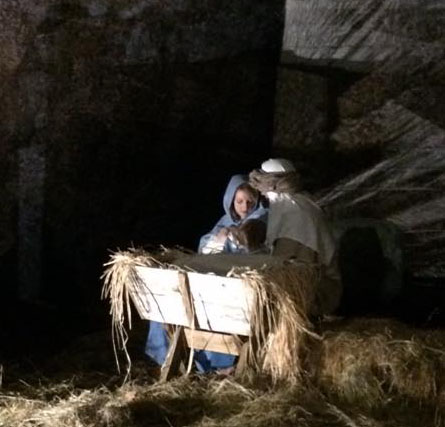
Why a Baby?

Background Passages: Isaiah 7:14-16; Matthew 1::22-23; Hebrew 2:17-18

Why Bethlehem?

Why Mary? Why Joseph?

Over the past few weeks, I’ve read and read again the familiar Christmas story as recorded in Matthew and Luke. Why Bethlehem? Perhaps, the small Judean village was chosen to remind us that God can work in and through the insignificant to accomplish his purposes.

Why Mary? Why Joseph? Perhaps they were chosen to be the parents of Jesus because of their faith and willing hearts. They opened themselves to the possibility of being used by God, even when the task seemed unimaginable and overwhelming.

With Christmas upon us, we believe the creator of heaven and earth chose to reveal himself to his creation as an infant. It begs the question, “Why a baby?”

The Signatry, A Christian foundation based in Overland, Kansas, launched the He Gets Us media campaign in March 2022, to introduce Jesus to those struggling to understand that our Lord understands the struggles of life we all experience. You may have seen or heard the He Gets Us messages via TV, radio, digital ads, billboards and other social media platforms.

According to Signatry, the focus of the $100 million initiative stems from the “desire to see the Jesus of the Bible represented in today’s culture with the same relevance and impact he had 2,000 years ago.”

I don’t know how effective the campaign has been, but it creates a great starting point for a conversation that might answer our question, “Why a baby?”

God could have materialized fully grown, walking into Nazareth to set up a carpenter’s shop. He could have burst on the scene on the steps of the temple in Jerusalem, teaching a message of hope and grace. Jesus didn’t just transport down to earth from heaven. Why a baby?

Once you get past the immaculate conception, the birth of Jesus wasn’t much different from what I observed when my own children were born. Trade our sterilized environment with the sights and smells of an unsanitary cave turned stable…trade a doctor and a bevy of nurses for a last-minute midwife…now the birth of Jesus appeared as normal as any other, except to two people.

I imagine Joseph and Mary stared at the child who came to them in Bethlehem. Their insight into the nature of the swaddled child derived from an angel’s personal message delivered nine months earlier. Cradled in Mary’s arms rested a baby proclaimed by a host of heavenly angels and celebrated by a herd of smelly shepherds.

There in the light of the stars was the Messiah, the subject of prophecies, poems, songs, hopes and dreams of a people to whom God promised his presence. The lump in their throats must have been the size of an apple every time they thought of its implications.

With a nation’s expectations already on his shoulders, it had to be hard for Mary and Joseph to imagine such magnificence when they changed his soiled clothes or listened to his hungry cries. Reality stared them in the face with the unfocused eyes of a newborn.

I admit it. I will never be able to explain how Jesus was fully human and fully divine…simultaneously. Human in every aspect. God in every way. The Apostle John heard it from the source and believed. He tells us at the start of his gospel…

“In the beginning was the Word, and the Word was with God, and the Word was God. He was with God from the beginning…The Word became flesh and made his dwelling among us.” (John 1:1, 14)

I accept that Jesus was wholly God and completely human simply on faith.

That God incarnate would come to earth as a baby was a part of God’s plan from the beginning. When God chastised the serpent for leading Adam and Eve to sin, he said, “I will put enmity between you and the woman. And between your offspring and her offspring, he shall bruise your head, and you shall bruise his heel.” (Genesis 3:15)

God also promised Abraham and David that the Messiah would come from their descendants. In explaining the birth of the Christ child, Matthew makes it a matter of fulfilled prophecy when he quotes Isaiah 7:14-16 in his introduction to his gospel. The passage gives us insight into why God chose to send his son as an infant.

“Therefore, the Lord himself will give you a sign: The virgin shall conceive and bear a son and will call him Immanuel. He will be eating curds and honey when he knows enough to reject the wrong and choose the right.”

The first hint I find is in his name. Immanuel, which Matthew tells us means, “God with us.” Those of us who profess a belief and trust in Jesus know that he is with us, every day, walking with us through the good and bad times of life. But, I wonder if the translation is simpler than that. God is with us. Looking on his life, we know that Jesus experienced life just as we do. He lived it in every way we live it.

Could Immanuel also mean that God is with us…on our side…that he gets us, as Signatry says, because he knows how difficult it is to live life in the face of temptation, heartache and pain. He knew joy and sorrow. Tears and laughter. He dealt with all of it.

Jesus came to us as a baby so he could grow up just like we grow up. So, he could identify with us. Look at Isaiah’s words again. He will be eating curds and honey until he knows enough to discern good from evil. He’ll eat the pablum of childhood until he reaches the age of accountability for his actions. From that point on, Jesus had to choose right from wrong, just as we do. Because he faced those same dilemmas, he can identify with our struggles.

A 12-year-old Jesus astounded the teachers of the law in the temple until Mary and Joseph had to pull him away. But, even then, scripture tells us that Jesus grew in wisdom and stature. It’s comforting to me that as a 12-year-old, Jesus didn’t have all the answers. Like us, he kept increasing in knowledge and understanding of all facets of life.

You see, Jesus had to come as a baby so he could grow up just like us…to become like us…with a full human inclination to go his own way, to fully experience and understand our weaknesses. To live life wrapped in our skin and still not sin. That’s the only way his sacrifice on the cross would make any sense.

“He had to be made like his brothers in every respect so that he might become a merciful and faithful high priest in the service of God, to make propitiation for the sins of the people. For because he himself has suffered when tempted, he is able to help those who are being tempted.” (Hebrews 2:17-18)

Because he dealt perfectly with his temptations as a human being, he can, through his spirit, help us when we are tempted. Only by being flesh and blood could he gain victory over death, opening the doors to eternal life for those who will accept him as Savior and Lord.

Could we follow his footsteps as a man if he had not crawled as an infant? Could we believe he suffered through every temptation we have faced if he had bypassed the struggle to earn adulthood?

Dr. David Jeremiah wrote an article years ago from Crosswalk.com about Jesus coming as a baby. He said, “To make the full sacrifice on our behalf Jesus had to make the full commitment. It would have meant little to us if he had sprung from heaven fully formed, bathed in heavenly glory, saying, ‘Here are my hands and feet. Place me upon the cross, for I am willing to die.’”

Instead, we get to see the child in the manger. The boy in the temple. The carpenter at a wedding in Cana. We see him react to the jealous whispers of the Pharisees and the disbelief of his own brothers. We see him hug the children as he blessed them. We see him unafraid to touch a leper. We see him asking probing questions to a misguided woman at a Samaritan well. We watch amazed has he feeds a multitude. We hear him cry outside the tomb of a dear friend. Above all, we see him love.

In Jesus we see the perfect example of how to love and care for a world lost in its own sin. Because he is Immanuel, God with us, we see in him how we are to live and love. In this baby, we see one who later became a quiet servant of God who began a ministry that would change the course of human history. We see one who changed the lives of all who believed in him.

While the divine Jesus showed us the way to eternal life by dying, his human side showed us all that pleases God by living. He is the example of what it means to live a Christ-like life.

My uncle Les is a retired minister who still writes devotionals from his heart. In a completely uncoordinated effort with mine, the devotional he posted today asked the same question, “Why a baby?”

“I read the story of Jesus’ birth again, and a lovely little grin comes to my face, and a sweet, sentimental feeling overcomes me. Still, I wonder, why a baby? Could it be that since Jesus’ calling was to teach us how to be human and not gods, God’s perfect move was to start at the beginning.”

That’s probably it in a nutshell. He came as a baby. He grew and conquered every challenge so common to all of us so we could see how it is done. The perfect example of what it means to be human in the way God created us to be human.

So, let’s celebrate that this Christmas. Then, we can enter the new year resolved to follow in his footsteps.

Merry Christmas, y’all!
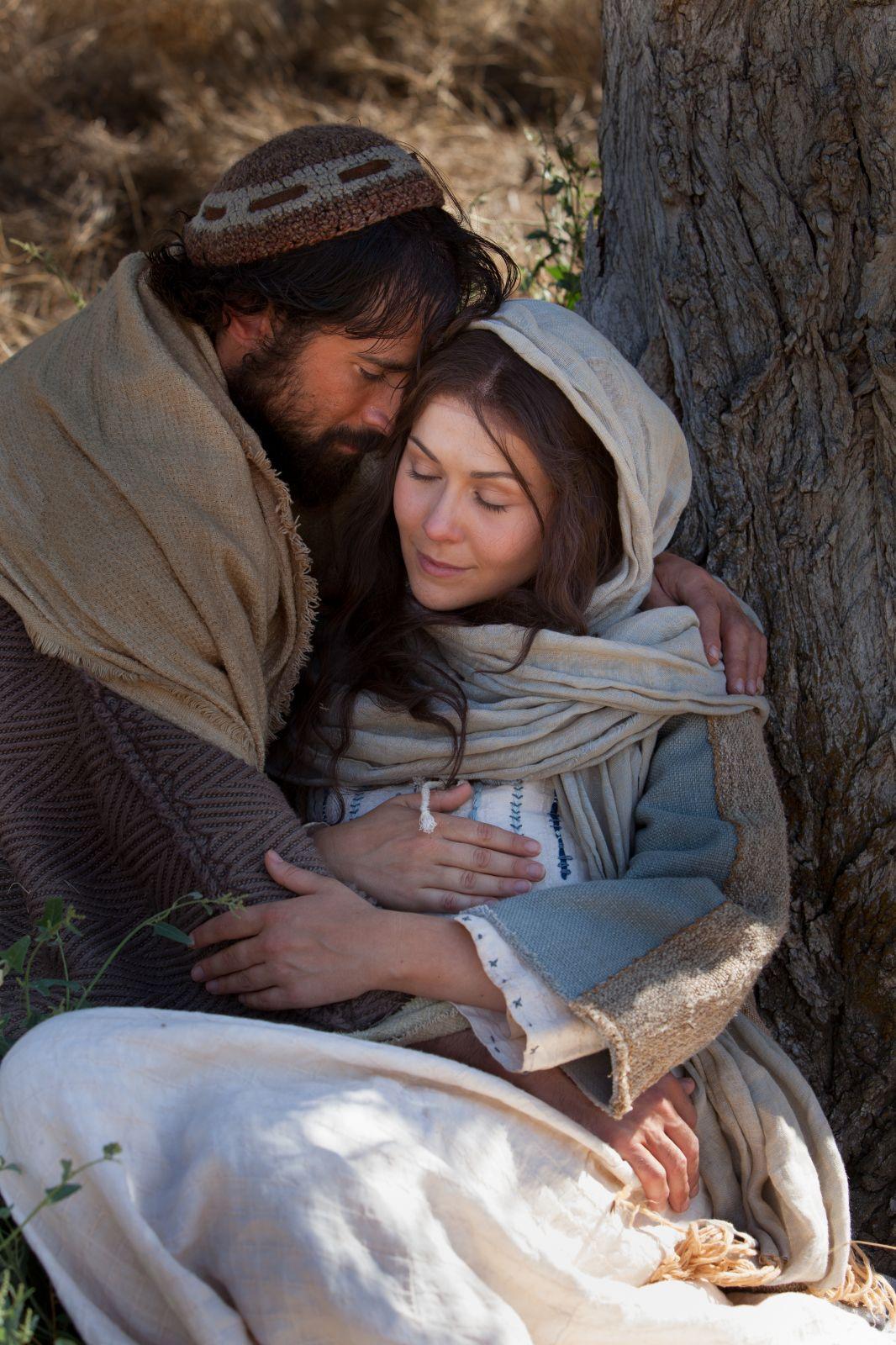
Why Mary? Why Joseph?

Background Passages: Luke 1; Matthew 1:18-24; 2 Timothy 1:9-10a; Galatians 4:4-5

Because I grew up in church, the Christmas story is a familiar one. It never ceases to amaze me how the story never grows stale or repetitive when I let God speak through his word. After Thanksgiving, my study and thoughts turned to Christmas. When I read again the familiar story, I thought “Why Bethlehem?”

God used Bethlehem to remind me that he can use the most insignificant among us to point the world to Jesus. He used Bethlehem to remind me that I cannot be caught sleeping and miss the opportunity to see God at work through Christ. To be Christ at work.

I read the passage in Luke again this week. A new thought jumped out at me. God could have chosen anyone to give birth to his son. Why Mary? He could have chosen any man to step in as Jesus’ earthly father. Why Joseph?

While I’ll never presume to fully understand the mind of God, think with me.

The birth of Jesus Christ was not a plan thrown together at the last minute when God suddenly realized his people had abandoned him. While the primordial ooze was still solidifying throughout his universe, the omniscient Creator set in motion a plan to redeem his creation, destined by his gift of free will to go its own way. The baby in a manger, who would be the savior on a cross, was always the centerpiece of that pre-existent plan.

Paul proclaimed it in his second letter to his protégé Timothy.

He has saved us and called us to a holy life, not because of anything we have done, but because of his own purpose and grace. This grace was given us in Christ Jesus before the beginning of time, but it has now been revealed through the appearing of our savior, Christ Jesus… (2 Timothy 1:9-10a)

God knew when to hatch his plan. He knew he had to wait until just enough of the world was ready to listen with open hearts and minds; ready to receive the gift he would send at that perfect moment in time to redeem those who recognized what he was doing through Jesus Christ.

When the set time had fully come, God sent his Son, born of a woman, born under the law, to redeem those under the law, that we might receive adoption to sonship. (Galatians 4:4-5)

I can almost see the Creator staring into the future in search of the woman who would bear the part of himself that would become the salvation of the world. There must have been thousands upon thousands of suitable women to consider as the mother of God’s son.

One might expect his eyes to fall on a woman like Elizabeth with impeccable credentials from a line of ancestors descending from one of Israel’s patriarchs. A woman married to a prominent rabbi, a man of wealth and influence. Scripture tells us Elizabeth was “righteous in the sight of God, walking blamelessly in all the commandments and requirements of the Lord.” (Luke 1:6) He didn’t choose Elizabeth…or anyone like her for that matter.

Instead, his scrutiny extended beyond the time of the law and prophets, into the time of the Roman occupation until it settled on Mary, Elizabeth’s cousin, a young woman without prominence…from a town with no consequence…in a country of little significance.

So, why Mary?

Certainly, the plan had been laid out for centuries as Paul tells us in Galatians. God pegged her from the beginning. To let us know who he had chosen, God’s prophecies described her in detail. The mother of the Messiah would be a virgin living in Nazareth with a reason to give birth in Bethlehem. She would be descended from David and married to someone from the same Davidic line.

Mary checked off all the boxes laid out in scripture for the mother of Christ, but Luke tells us the real reason she was chosen. When God scanned the future and his eyes settled on Mary, she simply found “favor with God.” The prophecies stood only as the backstory he created to validate his choice.

In the sixth month of Elizabeth’s pregnancy, God sent the angel Gabriel to Nazareth, a town in Galilee, to a virgin pledged to be married to a man named Joseph, a descendant of David. The virgin’s name was Mary. The angel went to her and said, “Greetings, you who are highly favored! The Lord is with you.” Mary was greatly troubled at his words and wondered what kind of greeting this might be. But the angel said to her, “Do not be afraid, Mary; you have found favor with God.” (Luke 1:26-30)

Did you hear it? Did you hear the reason? Before the world began, the Creator’s all-knowing eyes and heart scanned the future and he saw Mary and he liked what he saw in her. He favored her. The Greek word for favor found in these verses is charin. It can also mean favored for this cause, for a purpose.

When God saw Mary, he saw her as someone he could call to serve for the specific purpose he had in mind. He chose to extend his favor to Mary by being with her. (The Lord is with you.) Making his presence known. Standing with her throughout the difficult life to which he called her as the mother of God’s son.

Why Mary? What did God see in her that made him want to extend his favor to her. I think you find it in her response after hearing the news shared by the angel. After the angel told her of her Holy Spirit induced pregnancy and that the child born would be the Son of God, the Messiah, and that his kingdom would know no end, Mary’s response revealed her heart.

After the initial shock wore off and with the soothing reassurance offered by the angel, hear the obedience and trust in her response.

“I am the Lord’s servant,” Mary answered. “May your word to me be fulfilled.” (Luke 1:38)

The Creator God who sees the end from the beginning chose Mary long before the prophecies were uttered because of the depth of her faith and her willing heart. She was the right woman in the right place at the right time with enough faith to be open to God’s call…willing to let him be at work in her life.

Hang on to that thought. We’ll come back to Mary in a moment. Now, consider this.

Why Joseph?

When God first found Mary in his search through the future of humanity, he found her pledged to be married to Joseph. Like Mary, Joseph held no position of power or wealth. He lived an ordinary life, devoid of the prestige one would expect as the father of the Messiah.

Watch how he responds to Mary’s unexpected news.

Mary tried to explain the unexplainable when she shared the shocking news of her pregnancy with Joseph. When he could not imagine the unimaginable, Joseph could have subjected her to public disgrace and even had her stoned to death. However, he never seemed to seriously consider those options.

A righteous and honorable man, Joseph instead decided to handle things privately. Desiring to avoid making Mary an option of ridicule, humiliation and gossip, he chose a quiet divorce.

In Joseph’s private intentions, spoken only in his heart before his head hit his pillow that night, God saw in this simple carpenter the strength of character and unmeasured grace he needed in the one he would choose to be the earthly father of the Son of God. God saw in Joseph a man of compassion, humility, faithfulness and mercy. Characteristics Jesus would see modeled by his earthly father as he grew in wisdom and stature and in favor with God and man. (Luke 2:52)

While scripture doesn’t say it this way, I think Joseph found favor with God…just as Mary did…just as Jesus would someday experience. That’s why God sent his angel to ease Joseph’s mind.

But after he considered this, an angel of the Lord appeared to him in a dream and said, “Joseph son of David, do not be afraid to take Mary home as your wife, because what is conceived in her is from the Holy Spirit. She will give birth to a son, and you are to give him the name Jesus, because he will save his people from their sins”…When Joseph woke up, he did what the angel of the Lord had commanded him and took Mary as his wife. (Matthew 1:20-21, 24)

I hope you see the same obedience, faith and willing heart that I see in Joseph when he woke up the next morning. He no longer doubted Mary’s experience. He heard the same words of comfort she heard, telling him to have no fear of what the future holds. No second-guessing God’s purpose. No second-guessing God’s plan. He just willingly accepted in faith and obedience the role God asked him to play.

So, we look at this couple and ask why?

Why Mary?

Why Joseph?

Mary and Joseph go down in history as simple, ordinary, everyday people through whom God chose to do an extraordinary thing. He chose them because he saw something in them that let him know they were strong enough to handle the difficult role of being the parents of his only son. They had the choice to say yes or no to the call. He chose them because they made themselves available to the will of God in their lives. Willingly and without reservation.

He did the same for all of us. Before time began, he looked into the 21st century and identified me and you and set aside the work he wanted us to do.

We aren’t called to raise the Messiah from the cradle to the cross, but we are called to raise him up through the power of the testimony of what he has done in our lives. To do the things he has called us to do with the same faith, obedience and willing heart demonstrated and modeled by Mary and Joseph.

So, the question is less about why Mary or why Joseph? Here’s the question that matters.

Why you?

Why me?

Whatever he’s called us to do, it was important enough for God to set it before us. Let’s be faithful in the doing. Willingly and without reservation.

Why Bethlehem?

Background Passages: Micah 5:2-4; John 6:25-36

You’ll hear it repeatedly in the weeks leading up to Christmas. One of the most cherished of all Christmas songs, will be sung by congregations and children’s choirs around the world.

“Oh, little town of Bethlehem,
How still we see thee lie,
Above thy deep and dreamless sleep
The silent stars go by,
Yet in the dark streets shineth
The everlasting light
The hopes and fears of all the years
Are met in thee tonight.”

It will be sung as a song of praise and celebration.

In his book Lifestories, Mark Hall, singer and songwriter for Casting Crowns, said he spent nine years trying to compose a new arrangement of Oh, Little Town of Bethlehem.

“I set out to use the hymn’s original lyrics but to spin them into my own version with different chords…I was playing with some chords and realized halfway through the first verse that I was 27 years old and had been singing the song since I was a kid without grasping its meaning.

“Halfway through the first verse, the whole point of the song hit me. They missed it! Bethlehem missed it. They never knew what happened. They had no idea the Messiah, the savior of the world, had fulfilled the prophecy of Micah 5:2 and was sleeping in a feeding trough in their very village.” Said Hall, “They slept through the whole thing.”

Look at the new lyrics written by Hall.

Oh, little town of Bethlehem,
Looks like another silent night.
Above your deep and dreamless sleep
A giant star lights up the sky.
And while you’re lying in the dark,
There shines an everlasting light.
For the King has left his throne
And is sleeping in a manger tonight.

Oh, Bethlehem, what you have missed while you were sleeping,
For God became a man
And stepped into your world today.
Oh Bethlehem, you will go down in history
As a city with no room for its king.

It’s a poignant song. Hall suggests that Bethlehem had no clue what God had done among them that night. Given the continued obscurity it experienced during Jesus’ ministry, he may not be far from the truth. After hearing his interpretation of the song, I could not help but think why would God begin his redemptive work in a village that seemed so unaware?

Why Bethlehem?

I have read enough scripture and experienced enough of God’s amazing work in my own life to know that nothing God does is happenstance. Bethlehem wasn’t chosen by a blindfolded creator who, after the angels spun him around, tossed a heavenly dart at the earth only to have it land in a little-known Judean village. God chose Bethlehem for a purpose. So…

Why Bethlehem?

It would be true, but simplistic, to say that God chose Bethlehem to fulfill a prophecy given to Micah 750 years before Jesus was born.

“But you, O Bethlehem Ephrathah, are only a small village among all the people of Judah. Yet, out of you will come for me one whose origins are from the distant past…And he will stand to lead his flock with the Lord’s strength, in the majesty of the name of the Lord, your God…And he will be the source of peace.” (Micah 5:2, 4)

I think there’s more to it than that. To call it just a fulfilled prophecy removes from the equation the genius of God as a storyteller and communicator. Throughout history God uses imagery to convey his truths. Metaphors. Parables. It’s not a stretch to think he chose Bethlehem specifically so he could point people to Jesus.

Knowing how he wanted the story to end, God did what any great author does when writing a compelling narrative. He dropped clues along the way. He chose Bethlehem to make a point you and I needed to remember every Christmas.

Beth in the Hebrew language means house of. Le’chem is the word for bread. Beth le’chem. Bethlehem…House of Bread.

Bread was survival to ordinary people of the first century. As the main source of nourishment, bread meant life. Priests used bread in Temple worship. It symbolized God’s provision to the Israelites by sending manna after their escape from Egypt and throughout their wilderness years. A gift of bread laid on the altar indicated that God alone was their provider. Their sustainer.

Jesus fed multitudes of people by breaking bread and sharing it with them, letting them eat until they had their fill with many loaves left over. The next day, the crowd found him again on the other side of the Sea of Galilee and they had some questions. Jesus answered them.

“I tell you the truth, you are looking for me, not because you saw miraculous signs but because you ate the loaves and had your fill. Do not work for food that spoils, but for food that endures to eternal life, which the Son of Man will give you.”

“What signs will you do? Our forefathers ate the manna in the desert…”

Jesus answered them, “I tell you the truth, it is not Moses who has given you the bread of heaven, but it is my father who gives you the true bread from heaven. For the bread of God is he who come down from heaven and gives life to the world.”

“’Sir, they replied, from now on, give us this bread.”

Then, Jesus declared, “I am the bread of life. He who comes to me will never go hungry, and he who believes in me will never be thirsty. But as I told you, you have seen me and still you do not believe.” (John 6:25-36)

Why Bethlehem?

Jesus was born in Bethlehem, the house of bread, to remind us that he is our bread of life. He was born in Bethlehem to be our provider. Our sustainer. Jesus was born in Bethlehem to offer himself to the world as bread that never spoils. Bread that brings eternal life.

Why Bethlehem?

Another reason he chose Bethlehem can be found in that prophetic word from Micah. Let’s look at it again.

“But you, O Bethlehem Ephrathah, are only a small village among all the people of Judah. Yet, out of you will come for me one whose origins are from the distant past…And he will stand to lead his flock with the Lord’s strength, in the majesty of the name of the Lord, your God…And he will be the source of peace.” (Micah 5:2, 4)

From the small, quiet and out of the way village, God did a mighty thing. He chose the insignificant to do something that would change the course of history and eternity, bringing his peace to his creation.

Maybe you and I are Bethlehem in that way. God doesn’t need the grand or the grandiose to change the world. He can use the most insignificant among us to point a world to Jesus. To share the bread of life. To be his voice, his hands, his heart in a world that has lost its way.

Why Bethlehem?

God chose Bethlehem to remind us that Jesus is the bread of life. Our provider and our sustainer. He chose Bethlehem to show us that he can use the lowest among us to point the way to the Most High.

Here’s the catch. Here is where we are too often most like Bethlehem. Bethlehem missed a heavenly opportunity. While the angels proclaimed the glory of God in the form of the child he sent to be the salvation of the world, Bethlehem slept right through it. Bethlehem made no room in their hearts for the savior. Mark Hall alludes to it in the final verse of his song.

Mary shivers in the cold, trying to keep the savior warm.
Born among the animals and wrapped in dirty rags because
there was no room for him
in the world he came to save.

Oh, Bethlehem, what you have missed while you were sleeping,
For God became a man
And stepped into your world today.
Oh Bethlehem, you will go down in history
As a city with no room for its king.

Why Bethlehem?

Maybe God chose Bethlehem to remind us that he chose to reveal himself to us. Maybe he chose Bethlehem to remind us that we cannot be sleeping and miss the opportunity to see God at work through Christ. To be Christ at work through that which he has called us to do.

The only way I can do that is to make room for my King…every day…every hour…every minute. I cannot be caught sleeping.

**********

Author’s Note: My church, South Main Baptist Church in Pasadena, hosts A South Main Bethlehem each year. This interactive experience allows you to experience life in the first century as you walk the streets of Bethlehem. Before you leave the village, the Nativity Scene will remind you of the true meaning of Christmas. The event will be from 5:00-8:30 p.m. December 9-11. Come and enjoy the experience. Let it remind you to make room for the King.

I Am That I Am

Background Passages: Exodus 3:1-14, John 8:48-58; Jeremiah 29:11

While exchanging the propane tank for my grill this week, I passed a slightly pudgy man about my age wearing a t-shirt that read, “I YAM WHAT I YAM!” I was instantly transported back to my childhood and my old friend, Popeye, one of my favorite cartoons. Those grainy black and white cartoons that I watched every Saturday morning on that old console television set entertained me.

“I’m strong to the finish ‘cause I eats me spinach…” I bet most of you are singing the song in your head even as you read this.

It’s amazing to me that the old man’s t-shirt bearing Popeye’s famous catchphrase prompted such a warm and vivid memory. “I YAM WHAT I YAM!”

I recall giggling a bit while sitting a Sunday School class long ago as the teacher taught about Moses and the burning bush. I heard the words of Exodus 3:14 and immediately pictured God with bulging biceps and a corncob pipe declaring to Moses in that graveled, mumbled, Popeye voice “I AM THAT I AM,”

It’s funny how God uses everyday encounters to prompt a deeper study of his word. I came home after reading that t-shirt, pulled out my Bible and looked again at a familiar story you know well, I’m sure.

Moses’ abrupt and harrowing escape from Egypt took him as far from Pharaoh as he could reasonably get. The journey of about 300 miles brought him to Midian, a semi-arid region across the Sinai Peninsula on the far side of what we know today as the Gulf of Aqaba.

After marrying into a priestly family, Moses settled into the life of a shepherd. While tending the flock on the side of Mount Horeb, Moses caught a glimpse of a fire in the nearby brush. Instantly wary of any kind of brush fire, Moses approached only to see that the bush was aflame, but it was not being burned.

God called to Moses from within the fiery bush, warning him to draw no closer and remove his sandals for he was standing on holy ground.

“Then, God said, ‘I am the God of your father, the God of Abraham, the God of Isaac and the God of Jacob.’”

Frightened beyond understanding, Moses trembled and turned away from the bush, fearful of catching a glimpse of God, because to do so in the Hebrew culture of the day was to invite death. God continued to speak. In the course of what had to be an unnerving conversation, God called Moses to be his ambassador to Egypt. To demand that Pharaoh release the Hebrew people from slavery and let them return to the Promised Land.

Moses argued against his assignment. “Who am I that I should go to Pharaoh and bring the Israelites out of Egypt?”

When God countered with the promise of his presence. Moses tossed in a new objection.

“Suppose I go to the Israelites and say to them, ‘The God of your fathers has sent me to you,’ and they ask me, ‘What is his name?’ What shall I tell them?”

“God said to Moses, ‘I AM THAT I AM.’ This is what you are to say to the Israelites; ‘I AM has sent me to you.’” (Exodus 3:11-14)

The burning bush always intrigued me less than the cryptic response from God when Moses asked for greater clarity.

“I AM WHO I AM…Tell them ‘I AM has sent me to you.’”

Up to that point in scripture and following, God’s name had been a description. The God of our Fathers. The God of Abraham, Isaac and Jacob. Even the names the Hebrew people used for God were descriptive. Elohim would be the “God of creation.” El Shaddai, “the powerful one who provides blessing and fruitfulness.”

Yet, when Moses asked his name, biblical scholars say God chose “ehyeh asher ehyeh”… I AM THAT I AM. The best meaning, according to some Hebrew scholars, suggests self-existence…having no beginning, no end. The phrase implies eternality and immutability…forever unchanged and unchanging. It is a phrase that speaks to God’s very nature. A footnote in my New International Version of the Old Testament translates the phrase, I will be that I will be.

That phrase alone, though doesn’t convey the simple complexity of I AM. I AM expresses an existence unto itself. He simply IS. A holy being beyond what our finite mind can fully grasp or understand.

As Christians, we strive to learn more about him through his word and the revealed presence of Jesus Christ. As great as that is, as long as we’re hear on earth, what we understand will always be infinitely less than who he really is. God, the I AM THAT I AM, then, is a term given for our practical benefit, but not for our ability to fully comprehend.”

One explanation I read in my study said the Hebrew name of God in scripture could be translated as he who becomes or the becoming one. When God needed to reassure Moses and all of Israel that he would become what they needed him to be, he used the phrase “I AM THAT I AM” to reveal to Moses a promise and a pledge found in his very name.

According to this thought, God said, “I can become whatever you need me to become.” So, as the Hebrew people cried out day and night for a deliverer. God told Moses “I will do that. I will become what you need whenever you need me. I will be your deliverer.”

As I think about how God worked in the lives of his people throughout the Old Testament, it’s a true statement. He was everything his people needed just when they needed him most.

To Job…A Redeemer (Job 19:25)

To David…The Rock of My Salvation (2 Samuel 22:47) and My Shepherd (Psalm 23:1)

To the writer of Proverbs…A Strong Tower (Proverbs 18:10)

To Isaiah…A Sanctuary and The Everlasting Father (Isaiah 8:14 and 9:6)

To Ezekiel…The Lord Who Is Always There (Ezekiel 48:35)

To Jeremiah…The Lord Who Is Righteous (Jeremiah 23:5-6)

He is all of these and so much more even as we live and speak his name today. I AM speaks clearly to the eternal and unchanging nature of God. What he was to these leaders among the Hebrew people, he remains also to us today. He is the I AM who was and has been ever the same.

The strength of the I AM statement translates equally well into the New Testament and the life of Jesus Christ. The very words of Jesus echo the words of his father in heaven and since Jesus tells us, “I and the father are one,” when Jesus tells us “I am,” it harkens back to the words of God to Moses.

In John 8:48-58, Jesus spoke to the religious leaders of his day who accused him of being demon-possessed.

“Are you greater than our father Abraham? He died and so did the prophets. Who do you think you are?”

Jesus responded by telling them they did not truly know God even though they claimed to be his people. That he came to bring glory to God and life to those who would trust in him and obey his word. Then, he invoked the name of Abraham whom they claimed as the father of their faith.

“Your father Abraham rejoiced at the thought of seeing my day; he saw it and was glad.”

“You are not yet fifty years old,” the Jews said to him, “and you have seen Abraham!”

Jesus answered them, “I tell you the truth, before Abraham was born, I AM!

Can’t you hear it? Just as those words surely echoed from the voice of God through a burning bush, when Jesus declared himself the I AM, it had to reverberate with the same power in the hearts of all who heard. In that I AM statement, Jesus identified himself as the God incarnate.

The stained-glass windows of our church depict the seven I AM statements of Jesus recorded throughout the Book of John. In those I AM statements, Jesus claimed the characteristics of God. To the disciples of the first century, steeped in Jewish tradition, the linkage would be far clearer than it is to us today.

Jesus said, “I AM…

“…the bread of life.” God Incarnate, in Jesus, miraculously fed those who were physically hunger. As the bread of life, he is our provision, but not just for the physical things we need to survive, but for the spiritual sustenance that satisfies our deeper longing for a relationship with the God who loves us enough to die for our sin. Those who trust in Jesus have bread that leads to life eternal.

“…the light of the world.” Our world is darkened by sin. It casts its shadow over all of us. In contrast to that darkness, Jesus is the light that prevents darkness from controlling our lives. His light guides down the path he wants us to walk and illuminates his will and direction for our lives.

“…the door (shepherd’s gate).” In Jesus’ day, a shepherd would end his day by gathering his flock into a rock enclosure for the evening, positioning himself at the entrance so they could not wander. Ever vigilant so nothing could threaten them. He was their protector and their salvation. Jesus guards us as a shepherd guards his flock. He offers salvation and protection to all who trust in him.

“…the good shepherd.” Shepherds hired by the owner of a flock of sheep might run at the first sight of danger, leaving the flock defenseless against the threat. Jesus is the good shepherd. The one who stands his ground, willing to sacrifice himself to protect his sheep. He is our salvation.

“…the resurrection and life.” His death and resurrection are the keys to our victory over death and our hope for eternal life. The ultimate statement of biblical hope…that which is not wishful thinking, but a confidence in the truth of Christ. When we accept that Jesus conquered death on our behalf, death no longer has a grip on us. We are free of its sting. Life eternal awaits.

“…the way, the truth and the life.” It has become politically correct to think there are multiple paths to heaven. Jesus declared clearly that no one come to the father except through him (Jesus). He is the path that leads to God’s grace. Obedience and good works are simply not enough. His word is always true and never falters or misleads. He is the source of life abundant to all who believe.

“…the true vine.” He is the sustaining power of our lives. He is our spiritual nourishment. We are to use the nourishment he provides to bear fruit, to produce in us and others a life reflective of God’s grace. As the true vine, he is the reason and power behind our ability to bear the fruit as we do his good work.

So, here’s the thing. The writer of Hebrews later proclaims that God is “the same yesterday, today and forever.” The I AM of the Old Testament is the same I AM of the New Testament. Jesus is the self-existent, eternal, unchanging I AM who died on a cross a sacrifice for the sins of the world and resurrected to live in spirit with us to this day…becoming exactly what we need right when we need him most.

What do you need the I AM to be in your life right now? Provider? Comforter? Fortress? Shepherd? Rock? Light? Salvation? Whatever it is, he is ready to bless us with the full measure of his grace. When we give ourselves completely to the I AM, he promises his presence. He promises to be what we need him to be as he molds us into what he needs us to be.

“For I know the plans I have for you, declares the Lord, plans to prosper you and not to harm you, plans to give you a hope and a future. (Jeremiah 29:11)

It’s a promise you and I can claim. It’s right there in his name.

Finding Peace

Background Passages: Philippians 4:6-9; John 14:26-27

Sarah Winchester began the construction of her new home in San Jose in 1884, shortly after the death of her husband William, the firearms magnate. For 38 years until her death in 1922, the 22,000 square foot home was under constant construction or renovation.

There are more than 10,000 windows and 160 rooms in the Winchester Mansion. The result of this haphazard design is a maze-like structure with doorways and stairways that lead nowhere.

Teams of carpenters, masons and other trades were employed around the clock to address Sarah’s eccentric ideas. The design mattered less than the need to keep building. Sarah, it seems, struggled with her husband’s life work. She believed that she and her home would be haunted by the ghosts of those killed by her husband’s rifles unless he kept building her house.

It’s estimated that Sarah spent $70 million largely on pointless construction, all in a desperate search for peace that never came.

The world seeks peace today in pursuits just as fruitless as the one attempted by Sarah. Pursuing such paths will never bring peace.

We know there exists a difference in peace as viewed by the world and peace that comes from God. The world speaks of absence of conflict, calm, harmony, and happiness. Humanity’s quest for peace seems always just out of reach. Those who understand the term at a spiritual level acknowledge that God is the only true source of peace.

In the Old Testament, peace seems to be the greatest good that men could wish for each other. Ancient greetings reflect this. Even Judah’s enemy Nebuchadnezzar wrote, “Unto all people, nations and languages, that dwell in all the earth, peace be multiplied to you.” (Daniel 4:1)

Jewish greetings always wished peace. The Hebrew word translated as peace is a familiar term. It is shalom. It means completeness, soundness and welfare. Its root means to make whole or complete. Having shalom meant being in a state of wholeness or completeness, lacking nothing of importance.

The New Testament form of the word for peace is eirene (i-ray’-nay). It means unity, being one, quietness and rest. Its root means to tie together as a whole. It speaks to reconciliation, to come back together. To be complete.

So, God’s peace will always be different from peace sought by the world. Biblical peace speaks to a restored relationship with God through Christ Jesus. It is a state of wholeness and completeness experienced by those who are living in right relationship with God.

So, at the eternal level, peace with God requires a relationship with him. The path to peace begins with our declaration that Jesus is Lord of our lives…that we have put our faith and trust in him and him alone.

I don’t know about you, but it’s rarely that simple. I put my faith and trust in Christ as a nine-year-old boy who had not known the deepest struggles of life and faith that come from life experiences.

So, on a practical level, how do we find the peace of God amid the turmoil that comes as we live each day? I find some answers, I think, in Paul’s letter to the Philippian church.

“Don’t worry about anything; instead pray about everything. Tell God what you need and thank him for all he has done. Then, you will experience God’s peace, which exceeds anything we can understand. His peace will guard your hearts and minds as you live in Christ Jesus. (Philippians 4:6-7)

Don’t worry. Pray. Pray about everything. Now, I’ve never really subscribed to the idea that God cares which toothpaste I use. I supposed that there might be a specific point and time where my toothpaste choice might matter to the point where I make that a matter of prayer, but generally, I’m not sure God cares.

I think Paul says the path to peace begins in conversation with the father about the things we need…really need…in life. And, he adds, that a great starting point in that process begins by thanking him for all he has done for us in the past. The brightest light in the darkness of life is not the light at the end of the tunnel, but the light shining from behind us…where hindsight is 20/20…the light that shines on the path I’ve already traveled. The one that illuminates the footsteps of the Father walking beside us through those difficult times.

Paul chooses his words carefully, writing in ways that make connections with his first century readers. Philippi was situated near the coast of Greece. As such, it was a sentry city, of sorts, for the inland areas of the region. Since many of the residents of Philippi were retired Roman soldiers, they understood the danger of attack.

As a result, a sentry worked throughout the night in Philippi…24/7. While the people slept, the sentry, the phulasso, kept watch for enemy soldiers, thieves and wild animals. While the phulasso was on guard, the people could sleep in peaceful slumber.

Paul used this imagery to talk about a peace beyond our understanding. Paul says talking to God about what troubles us is a sure way of finding a peace we cannot easily comprehend. A peace that protects or guards (like a phulasso will guard) our hearts and minds from dredging up the past we cannot change and the worst future we can imagine. A peace that keeps us from believing that our mansion is haunted by our past and that we must keep building a stairway to nowhere. A peace that comes only as we live in Christ Jesus.

So, how do we live in Christ Jesus?

And now, dear brothers and sisters, one final thing. Fix your thoughts on what is true, and honorable, and right, and pure, and lovely and admirable. Think about things that are excellent and worthy of praise. Keep putting into practice all you learned and received from me—everything you heard from me and saw me doing. Then, the God of peace will be with you.” (Philippians 4:8-9)

Martin Luther once said, “While you cannot prevent birds from flying over your head, you can prevent them from building nests in your hair.”

Our minds are constantly churning. Left to our own imaginations, it’s easy to get fixated on something that causes us anxiety and worry. It is easy to let our thoughts center on guilt, anger, pain, uncertainty, loss, worry, hurt, danger and a host of other negative things. Paul knew how easy it was to fall into this trap…how easy it is to let the birds build a nest in our hair.

Rather than allow the negativity to set in, Paul said to “fix your thoughts…” focus intently on…to meditate…to dwell…on the thoughts of Christ. He lists a collection of filters through which all our thoughts must run.

Dwell on what is true, honorable, right, pure, lovely, and admirable. Meditate on the excellent things of life and things that are worthy of praise. We must run our thoughts through these traits. If any thought that enters our mind does not pass the test, we should reject it. We are to make our thoughts obedient to Christ.

Paul lived his life in obedience to Christ. The things he said and did, the way he chose to live, the things he taught…all of these things were built upon the model of Christ, revealing what Christ taught him that he passed on to the Philippians. He encouraged them to focus on the things of Christ and put into practice his teachings…to live a Christlike life.

Here’s where I think the rubber meets the road.

Jesus’ death and resurrection reconciled those who trust in him to God. Being in right relationship with him puts us on the path to wholeness and completeness. The difficulties of life pull us every day in the opposite direction. The worry and anxiety that creeps in at these times can be set aside by talking with the one who loved us enough to die for our sins.

When we can talk to him and recall all that he has done to carry us through difficult times in our lives, we can experience his peace…that sense of connection and completeness that only comes when we are in close contact with our father. It is this peace that protect us from the onslaught of thoughts that spiral into the depths of despair and desperation. It is peace and wholeness that comes only through a life of focused discipleship.

I don’t know if Mark Twain was a Christian. Based on his writings, he was put off by the lack of practice in what was preached.

A wealthy businessman from Boston with a reputation for ruthlessness and unethical behavior once told Twain that his dream was to visit the Holy Land before he died. His desire was to climb Mount Sinai with his Bible and read the 10 Commandments.

“I have a better idea,” Twain responded with his typical wit. “Why don’t you stay in Boston and keep them.”

Twain has a point. We tend to think we’ll find peace in some great mountaintop experience rather than daily obedience.

So, we are to focus on what we have been taught in scripture about living as Christ lived. Following his example. Passing all our thoughts through the life of Christ. Discarding what is undesirable and obeying his teachings. It is in that obedience that we find wholeness. Completeness. Peace.

Such behavior and thinking comes with a promise not only of the peace that protects and guards our thoughts, but with the presence of the comforting Father.

Look at the past phrase of Paul’s message in verse 9.

“Then, the God of peace will be with you.”

I think I always read that as “God’s peace be with you,” but that’s not what he says here. Paul already told us that we can have the peace that protects and guards when we talk to God. Now, he’s telling us that the God who is peace, the author of peace and reconciliation, will be with you. His presence in our lives brings peace.

In their most troubled time in the upper room listening as Jesus explained his imminent death on the cross, the disciples heard Jesus make this promise.

“All I have spoken while still with you. But the Counselor, the Holy spirit, whom the Father will send in my name, will teach you all things and will remind you of everything I have said to you. Peace I leave with you; my peace I give you. I do not give to you as the world gives. Do not let your hearts be troubled; do not be afraid.” (John 14:26-27)

It is impossible for us to understand fully in this present world with all its struggles the complete peace that comes only from God. The comforting thing to me is that God sent the Holy Spirit to those who believe as a constant reminder of his teachings and the daily presence of the God of peace.

I built my fair share of stairways and doorways that lead nowhere as I struggled with the life experiences I faced. When I lay those struggles at the feet of Christ and talk to him about my needs, peace comes. That sense of connection and completeness follows. When I can turn aside those negative thoughts and focus instead on what it means to live a Christlike life, I can experience and feel the presence of the God of peace.

“Do not let your hearts be troubled. Do not be afraid.”

Shalom.

Fan or Follower?

Background Passages: Matthew 16:13-24; Luke 5:1-11; Matthew 4:18-22 and Luke 16:25-26

It’s baseball playoff season. I think I’m finally over the baseball strike of 1994-95 and find myself watching the games again with interest. I know. That’s a long time to hold a grudge.

It’s also the middle of the college football season and I love to watch college football.

I am a fan of the Houston Astros. I enjoy watching their games and I might even do a fist pump when they win. I rarely lose sleep if they blow the game in the ninth inning. I’m a fan of the Houston Astros.

I am a follower of the Texas Tech Red Raiders. I wear the shirt. I watch the games. I celebrate when they win. I will toss a pillow and lose hours of sleep with every defeat. During the week, I’ll check out a few Red Raider websites to get a perspective on last week’s game. I’ll read about the players and coaches. I’ll fret over next week’s game. Cut me and I’m pretty sure I bleed scarlet and black. I am a follower of Texas Tech.

Jesus talked a little about being a fan or being a follower.

Jesus and his disciples left the region of Caesarea Philippi after a brief retreat north of the Sea of Galilee. The deep discussion elicited a confession from Peter who declared the understanding of his heart.

While looking at the throng of people milling about that pagan city, Jesus asked those with him what the people were saying about him after almost three years of ministry.

The disciples shared a few names as if the rumors were laughable.

“Some say John the Baptist. Others say Elijah. Still others Jeremiah or one of the prophets.” (Matthew 16:13-14)

Then, Jesus asked the question he really wanted to ask.

“But what about you? Who do you say I am?”

While the others stared blankly at the ground, Peter declared with strength of conviction,

“You are the Christ, the Son of the living God.” (Matthew 16:16)

With that confession, Jesus gathered his disciples and began the journey back to Galilee, but the dialogue didn’t get easier. The teaching grew more intense as Jesus began to talk more plainly about his death on the cross.

Peter didn’t like the way this conversation was going.

“Peter took him aside and began to rebuke him. ‘Never, Lord! This shall never happen to you!’

“Jesus turned and said to Peter, ‘Get behind me Satan! You are a stumbling block to me; you do not have in mind the things of God, but the things of men.’

“Then Jesus said to his disciples, ‘If anyone would come after me, he must deny himself and take up his cross and follow me.” (Matthew 16:22-24)

It was those last two words that caught my attention this week. “Follow me.”

My church has been in a six-week long Bible study about discipleship. While family matters have kept me from attending every session, I have kept up with the study.

I underlined these words in the study guide. “Following Jesus is a serious, weighty calling. Taking up our cross means putting to death our desires and goals and following Jesus wherever he leads. Christians are supposed to look increasingly like Jesus.”

When Jesus told his disciples to take up the cross and follow him, it wasn’t the first time they had heard the call to follow.

At the beginning of his ministry, Jesus spent the early morning talking with a crowd that followed him down the coast of the Sea of Galilee. He came across a group of fishermen cleaning their nets after an unsuccessful night on the water where the fish were nowhere to be found.

Jesus climbed into Peter and Andrew’s boat and asked them to push off a few feet from shore so the water would add its acoustic effect to his voice.

“When he finished speaking, Jesus said to Peter, ‘Put into deep water and let down your nets for a catch.’ Peter answered, ‘Master, we’ve worked hard all night and haven’t caught anything. But, because you say so, I will let down the nets.

“When they had done so, they caught such a large number of fish that their nets began to break. …When Simon Peter saw this, he fell at Jesus’ knees and said, ‘Go away from me, Lord, I am a sinful man!’ For he and all his companions were astonished at the catch of fish they had taken, and so were James and John, the sons of Zebedee, Simon’s partners.”

Then, combining this passage with what we read in Matthew 5, Jesus said to Peter, Andrew, James and John, “Follow me and I will make you fishers of me.” (Luke 5:1-11 and Matthew 4:18-22)

There’s the phrase again, “Follow me.”

He said the same words to Matthew when he called him from the tax collector’s booth. To Phillip when he pulled him from a crowd. He said the same words to a rich, young ruler after he told him to rid himself of all the material things that stood between him and Jesus. “Follow me.”

I suspect they were words he extended in every conversation shared and every invitation given. “Follow me.”

What is behind this idea of following Jesus?

The Greek word akoloutheo gets translated in most versions of the Bible as follow, but it has a broader range of meanings. It can mean accompany, assist, pursue or attend. So, if the word can also mean assist or pursue, for instance, Jesus was not calling people to simply tag along. He called for personal engagement.

Akoloutheo is written in present tense meaning the action is in the here and now and its voice is active. So, when Jesus calls his people to follow, he means they are to do so in every moment of life. It is something they are to do. They can’t send someone to do it for them.

Jesus didn’t want his disciples to just listen and believe in him from a distance. He invited them to draw near, to join him, join and commit to the mission. Jesus wanted his disciples to be fully engaged with him in both learning and doing the work of God.

From the beginning of their call to the critical times near the end of Jesus’ earthly ministry, Jesus asked them to follow.

Think about what that meant for those first disciples. From the moment they began their journey with Jesus he taught and trained them. He sent them to preach as he preached. He asked them to serve those with great need. He prepared them to continue his work after his ministry was completed. He expected them to spread the gospel throughout the world.

Jesus is still inviting you and me to be his disciples. His followers. To personally join him, learn from him, and help him in gospel ministry. There is nothing passive about being a follower of Christ.

Timothy Keller founding pastor of Redeemer Presbyterian Church in New York City, put it this way, “Jesus says, ‘I want you to follow me so fully, intently, so enduringly that all other attachments in your life look weak by comparison.’”

We can’t be a disciple or difference maker until we are willing to deny ourselves…to set aside the life that matters to us and pick up the life that matters to God. To put God on the throne and make him Lord of our life. To make Christlike living our passion.

We can’t be a disciple or difference maker until we are willing to take up our cross. We tend to trivialize Jesus’ death on the cross if we think this term means simply facing stoically the difficulties of life that all experience, whether a follower of Christ or not.

It speaks to the complete obedience and devotion to the cause of Christ, no matter where it leads. To yield our hearts fully to his. After asking them to take up the cross and follow, Jesus spoke to the eternal value one gains by following him.

“For whoever wants to save his life will lose it, but whoever loses his life for me will find it. What good will it be for a man if he gains the whole world, yet forfeits his soul?” (Luke 16:25-26)

Jesus tells them that nothing in this life is worth keeping if it means missing out on eternity. So, when we deny ourselves and take up our cross all that’s left is to invest our lives completely into the kingdom of God. To follow.

New Testament theologian Scot McKnight put it this. way, “Those who aren’t following Jesus aren’t his followers. It’s that simple. Followers follow, and those who don’t follow aren’t followers. To follow Jesus means to follow Jesus into a society where justice rules, where love shapes everything. To follow Jesus means to take up his dream and work for it.”

I’m a fan of the Houston Astros. I’m a follower of the Texas Tech Red Raiders. But, there is more at stake than my athletic affiliations.

If I’m a fan of Jesus Christ, I might profess my faith in comfortable settings. I might toss a few dollars into the offering plate when it’s passed. I might even listen to a sermon or two. If I’m a fan of Christ, however, I am rarely personally invested in the work, sacrificing little time and energy for the cause of Christ.

If I am a follower of Christ, I cannot just passively believe in him. Being a follower is all about digging deeply into his teachings. Understanding how Jesus reacted to different situations in life. It is all about imitating him, his example and his works. It is all about being Christlike. It’s all about being a difference maker.

When you get right down to it, the question Jesus asked his disciples in Caesarea Philippi may have been as basic as that.

Will you be a fan or a follower?

It’s a decent question for us to answer.

In Hot Pursuit

Background Passages: Psalm 23:6; Exodus 33:15:16, 34:5-7

The passage was a familiar one.

The pastor delivering the message at the sweet memorial service for my daughter-in-law’s grandmother this week drew his words from Psalm 23.

“The Lord is my shepherd…”

You can probably quote the rest. Yet, for hours after the service, one verse from that familiar Psalm kept repeating in my heart.

“Surely goodness and mercy shall follow me all the days of my life.” Psalm 23:6

I don’t know about you, but I’ve learned over the years that when a Bible verse keeps coming to mind long after I first heard it, it’s time to stop and give it some thought. To let God teach me one of his life lessons.

So, I did what I usually do when I want to learn something more about anything. I googled it.

Looking first at Psalm 23:6 in other translations, I found the English Heritage Version of the Bible writing the verse in this way.

“Surely God’s goodness and his unfailing love will pursue me all the days of my life.”

I like the clarity of this translation. It’s God’s goodness and unfailing love that follow me. I like it because not everything we experience in life is good. Life is not for the fainthearted. I’m reminded of the refrain sung by Grandpa Jones on the old variety show Hee Haw, right before he delivered his spit-filled raspberry in the face of the show’s guest.

Gloom, despair and agony on me.
Deep dark depression, excessive misery.
If it weren’t for bad luck, I’d have no luck at all.
Gloom, despair and agony on me.”

The verse though doesn’t speak about good things following me. It speaks to God’s goodness chasing after me every day of my life. Intriguing, isn’t it?

In Hebrew, the word translated goodness is radaf. It means to run after, to track down as a hunter might track its prey. To pursue and take captive. It conveys an idea of God, the Good Shepherd of the Psalm, being in relentless pursuit of his sheep with the truth of his goodness and unfailing love…his gift for every day of our existence.

So that led me down another Google trail. What is God’s goodness?

When Moses climbed off Mt. Sinai with those tablets of commands from God, he walked into the middle of a pagan celebration where God’s people were cavorting around a golden calf they had fashioned. An idol to worship. Neither Moses nor God were amused.

Hours later, Moses entered the Tent of Meetings and had a deep dialogue with God. God was ready to wash his hands of the unfaithful and ungrateful people of Israel. He told Moses, he would send them on to the land he promised, but he (God) would not be present with them. Moses understood this as the kiss of death for his people. He pleaded on behalf of the people for God to stay present among them, reminding God, as if he needed reminding, that they were his chosen people. Look at Exodus 33:15-16.

“If your presence does not go with us, do not send us up from here. How will anyone know that you are pleased with me and with your people unless you go with us? What else will distinguish me and your people from all the other people on the face of the earth?” (Exodus 33:15-16)

Being pleased with Moses, God promised to do what Moses asked. Moses asked a lot. He asked God to reveal to him the “glory of God” and God agreed to do so.

“And the Lord said, ‘I will cause all my goodness to pass in front of you, and I will proclaim my name, the Lord, in your presence. I will have mercy on whom I will have mercy and I will have compassion on whom I will have compassion.’” (Exodus 33:19)

Did you catch it. “I will cause my goodness to pass in front of you…” Moses would have the opportunity to see God’s goodness up close and personal. Jump to Exodus 34:5-7.

“Then the Lord came down in a cloud and stood there with him and proclaimed his name, the Lord. And he passed in front of Moses, proclaiming, ‘The Lord. The Lord. The compassionate and gracious God, slow to anger, abounding in love and faithfulness, maintaining love to thousands, and forgiving wickedness, rebellion and sin…”

And, in those words we see that God’s goodness is more than just an attitude or act. It is his very nature. His goodness stems from his core identity. His goodness is wrapped up in the fact that he is Lord. Compassionate and gracious (The same Hebrew root word that gives us “unfailing love.”). His goodness comes with the attribute of being patient and not easily angered, filled with love and faithfulness to his people. Steadfast in his care for his people. Constantly forgiving our shortcomings.

It is this character of God that Moses saw as it passed by from where it had been tracking him down throughout his life.

So, let that marinate for a moment. In a dark time in Moses’ life, God caught up with him. Let his goodness pass before him so Moses could see and feel God’s goodness around him. The Psalmist had experienced God’s goodness and unfailing love so much and so often that he was confident it would “surely” and relentlessly pursue him throughout his days.

There is something about that idea that brings a great deal of comfort to my life in this moment. His goodness is running after me. Chasing me down. Tracking me. Hunting me. In hot pursuit. Taking me captive so I cannot get far away from it. Passing in lock step before my eyes.

Man, did I need to be reminded of this.

I think back over the last year of my life. My son’s stroke. My sister-in-law’s harsh diagnosis of cancer. I must admit that I have been shaking my fist toward heaven and I’m only on the outside looking in at these life circumstances. Why them? Why now? Where were you? Where was your goodness in those moments?

I watch as my son deals with his circumstances with strength and faith, amazed at his dogged determination and grace under a difficult situation. It’s as if God is whispering to me, “See my goodness pass before you? See it in Adam’s response to life.”

I watch the strength of Micki’s faith in dealing with all that life has thrown at her, inspired by the rock-steady trust he places in God, so evident in this her darkest time, as it has been throughout the entirety of her life. I hear God whisper, “See my goodness as it passes before you? See it in Micki’s response to life.”

Through their character and faithful living in circumstances that might shake most of us to our knees, I see God’s goodness and unfailing love pass by. His goodness is never far away from them, from me or from you. It was and remains in dogged, relentless pursuit, always around us throughout our days, just as it has always been.

I remember seeing a post on Facebook this week of Cece Winan’s rendition of The Goodness of God. I didn’t open the post the first time I saw it, but it kept popping up. When I saw it again Friday, I clicked the link and listen to this talented artist celebrate the very thing I needed to hear.

“I love you, Lord.
Oh, your mercy never fails me.
All my days, I’ve been held in your hands.
From the moment that I wake up
Until I lay my head,
I will sing of the goodness of God.
Cause all my life you have been faithful.
All my life you have been so, so good.
With every breath that I am able,
I will sing of the goodness of God.”

The writer and composer of this beautiful song entered a bridge that speaks to God and his goodness in relentless pursuit of his children.

“Your goodness is running after, running after me.
With my life laid down, I surrender now
I give you everything.”

There’s the crux of it. Buried in the bridge. We see God’s goodness only when we lay down our lives in complete surrender to his will and give him everything…every part of our lives. Everything.

I stand only on the outside of the issues facing my son and my sister-in-law, watching them both respond in faith to all that life has dealt them. I am inspired by the strength of faith demonstrated by Adam and Jordan and Micki and Mark.

When I stop long enough to see how God continues to carry them through, I see God’s goodness pass by. It has not been absent. It has not abandoned them or me. I was simply looking in the wrong direction.

Surely God’s goodness has been running after me…all the days of my life.


Less of Me

Background Passages: John 15:1-3; Matthew 28:18-20; Galatians 5:22-23

Auxano.

Until the past month, this was not a familiar word to me. Greek in its etymology, Auxano means “to grow” or “to increase.” You’ll find the word scattered in verses throughout the New Testament.

When Paul used the word in Ephesians 4:15 or when Peter used “auxano” in I Peter 2:2 and 2 Peter 3:18, it speaks to how Christians are to grow or mature in the faith.

“Instead, speaking the truth in love, we will in all things grow up into him who is the Head, that is, Christ.” (Ephesians 4:15)

“Like newborn babies crave pure spiritual milk, so that by it you may grow up in your salvation, now that you have tasted that the Lord is good.” (I Peter 2:2)

“But grow in the grace and knowledge of our Lord and Savior Jesus Christ.” (2 Peter 3:18)

Couple those concepts with how Luke used the word when he shared the results of the Holy Spirit’s work in the days after Pentecost in Acts 6:7.

“So the word of God spread. the number of disciples in Jerusalem increased rapidly, and a large number of priests became obedient to the faith.”

Auxano, then, speaks to our ability as God’s people to grow in our faith, to live as followers or disciples of Christ, so that we, in turn, can bring more people to Christ and help them grow as disciples.

I first heard the word used this month as our new pastor introduced a Wednesday night initiative we call “Auxano,” designed to build disciples of Christ…to grow deeper in our understanding of what it means to be his disciple and to equip us, then, to share our faith in a relational way with those who do not yet know God’s saving grace.

For me, it’s gut check time. What does being a disciple of Christ mean to me and how well am I fulfilling the promise I made to him when I made my profession of faith as a nine-year-old? I have to admit, my growth as a disciple has been punctuated by a few seasons of drought amid the life-giving rain.

Zach Williams wrote and sings a song on Christian radio these days called Less Like Me. The chorus, I think, points to the goal of discipleship. the lyrics read,

“A little more like mercy, a little more like grace.
A little more like kindness, goodness, love and faith.
A little more like patience, a little more like peace.
A little more like Jesus, a little less like me.”

Being a disciple of Christ does not forfeit the uniqueness of a God-created me. Being me, being you, is still important because he gifted each of us differently and wonderfully for the work he called us to do individually. It does demand, however, that I become a little less like me and a little more like Jesus by growing in his example…a life that exemplifies mercy, kindness, goodness, love, patience and peace. If those words sound familiar it’s because they echo Paul’s words in Galatians.

“But the fruit of the Spirit is love, joy, peace, patience, kindness, goodness, faithfulness, gentleness and self-control. Against such things there is no law.” (Galatians 5:22-23)

As amazing as those God-given gifts may be, you’re only more like Jesus when you use his gifts to produce the spiritual fruit. These are the attitudes, behaviors and traits that someone who believes in Jesus and longs to be his disciple should demonstrate every day. Being a disciple of Christ means that we mature continually to be more like Christ.

Obedience to the teachings of Christ seems to be the key to discipleship. Everything he taught his disciples during his ministry on earth, he taught so they might be equipped to live as he lived. If you sit as a fly on the wall in the upper room, you’ll hear Jesus get serious with his closest followers.

As they finished eating together in the upper room on the night he was arrested, Jesus drew his disciples into a a deep conversation. He spoke of betrayal. He offered words of comfort when they seemed lost and confused. He promised the Holy Spirit as their constant companion in his absence. Then, he laid out the expectations he had for them to continue the work.

Drawing upon the familiar, he talked about the vine, its branches and the fruit it should bear.

“I am the true vine, and my Father is the gardener. He cuts off every branch in me that bears no fruit, while every branch that does bear fruit, he prunes so that it will be even more fruitful. You have already been prepared to bear fruit because of the teaching I have given to you. (John 15:1-3)

Within the imagery Jesus used, the vine is pruned to produce more fruit. A grower will prune extraneous branches that can siphon off the nutrients the plant needs. The main branches then grow stronger and produce more and better fruit. As we grow as Christians, we can let extraneous actions and attitudes sap the life out of our spiritual life. Jesus wants us to rid ourselves of those things that pull us away from living the life he has called us to live. To focus our lives on that which is important for us to do to further the kingdom of God. To be obedient to his teaching. To be his follower. His disciple.

We can’t begin to make that happen without spending time in his word. Paul reminded Timothy as he pastored the church in Ephesus that God’s word is the greatest teacher.

“All scripture is inspired by God and is useful to teach us what is true and to make us realize what is wrong in our lives. It corrects us when we are wrong and teaches us to do what is right. God uses it to prepare and equip his people to do every good work. (2 Timothy 3:16-17)

In her Christian blog, Butterflly Living, Mary Rooney Armand talked about eight elements of spiritual growth and discipleship. She said, “When we understand and practice elements of spiritual growth, it helps us move in the right direction.” The critical elements to discipleship, she says, are to:

Become more selfless.
Adjust how we spend our time.
Be more generous with our resources.
Pursue peace rather than chaos.
Choose to forgive.
Build deeper relationships.
Spend more time with God in prayer and worship.
Focus on the eternal rather than the temporal.

Armand’s list aligns closely to that which Jesus taught in the Beatitudes (Matthew 5:3-10) because it makes us more Christlike…more like a disciple of Christ.

Dietrich Bonhoeffer, a German Lutheran pastor and theologian, wrote extensively about a Christian’s role in a secular world at a time when Hitler was on the rise in Nazi Germany. His resistance to Hitler’s rule cost him his life.

Bonhoeffer wrote Nachfolge in 1937. The book title’s literal English translation is “Following” or “The Act of Following.” English publishers gave it a more dramatic title, translating Nachfolge as The Cost of Discipleship. In this seminal work, Bonhoeffer uses Jesus’ Sermon on the Mount as a call to faithful discipleship in the face of the Nazi’s reign of terror. It’s teaching still resonates well in today’s world when the Christian faith needs to stand for something beyond politics.

Bonhoeffer wrote that “Cheap grace is the mortal enemy of the church. Our struggle today is for costly grace.” Bonhoeffer goes on to define cheap grace.

“Cheap grace is preaching forgiveness without requiring repentance, baptism without church discipline, communion without confession…Cheap grace is grace without discipleship, grace without the cross, grace without Jesus Christ, living and incarnate.”

Part of the struggle of being a disciple of Christ is recognizing that we are made for more than just salvation. That marvelous grace gift is of eternal significance, but it is not the end of God’s work in us. Our gratitude for what God did for us through Jesus Christ should compel us to walk as he walked. Talk as he talked. Grow in our role as disciple. Share the love, grace and purpose of Christ to a lost world.

It is making a conscious decision to auxano…to grow, in grace and knowledge of our Lord and auxano…to increase the number of those entering the kingdom of God.

Being a disciple of Christ should catapult us toward fulfilling every part of the Great Commission, making new disciples and teaching them all those things he is still teaching us.

Auxano.

Grow. Increase.

It seems like a good word to embrace.

Kintsugi and God’s Mercy

Background Passage: Jeremiah 18:2-5; Psalm32:1-2

Life intervened in the past couple of weeks. Finding time to sit down long enough to organize my thoughts into a cogent Bible study just didn’t happen. I did, however, stumble across a four-minute video while surfing the web this week that reminded me of the beauty of God’s forgiveness. So, while I will use fewer words in this week’s devotional thought, the truth is hopefully just as meaningful.

In the 1600s, Japanese shogun Ashikaga Yoshimasa broke a cherished Chinese tea bowl. Because he was able, Yoshimasa returned the shattered pieces to China for repairs. When it was returned with ugly metal staples, Yoshimasa commissioned a Japanese ceramic craftsman to do what he could to restore the bowl to its original beauty.

The craftsman took the pieces, glued them together with lacquer infused with powdered gold. The technique, known as kintsugi treats breakage and repair as part of the history of an object…something to be embraced and celebrated rather than something to disguise.

Isn’t that the way God’s forgiveness works in our lives. Our sin is like the broken vessel. When we come to the Master Craftsman seeking his forgiveness with repentant hearts, God takes the pieces of our self-shattered lives and puts us back together.

Jeremiah understood this when he heard the word of the Lord tell him to go to the potter’s house.

“So I went down to the potter’s house and I saw him working at the wheel. But the pot he was shaping from the clay was marred in his hands; so the potter formed it into another pot, shaping it as it seemed best to him.

Then, the word of the Lord of the Lord came to me: “Oh house of Israel, can I not do with you as the potter does? Like clay in the hand of the potter so are you in my hand.” (Jeremiah 18:2-5)

God made us to be in relationship with him, sculpted to do his work. In the hands of the Father, the kintsugi master, we are reshaped and glued together, made more beautiful by the infused grace of God…a grace more valuable than gold.

The Japanese say that the evidence of breakage and repair should be celebrated as a part of the story of the object. It is a part of my story that I am a recipient of God’s mercy. He has put my broken pieces back together time and time again…every time I ask for his forgiveness. That’s why I can celebrate with the Psalmist.

“Blessed is the one whose transgressions are forgiven, whose sins are covered. Blessed is the one whose sin the Lord does not count against them and in whose spirit is no deceit.” (Psalm 32:1-2)

I tell you the truth…I am blessed. And that, my friends, is worth celebrating.

How about you?

Finding Your Mephibosheth

Background Passages: 2 Samuel 9:1-7 and Galatians 5:22-23, 25

Small acts of kindness can make a huge impact. A smile, a thoughtful word, a warm muffin found on a desk, or a hug can make the sun shine brighter and the day seem better. That’s the premise behind the idea of Random Acts of Kindness.

Started in Denver, Colorado, in 1995, the idea behind Random Acts is to somehow make the world a better place by making kindness a part of our everyday lives. It’s a nice sentiment. The world needs to be a kinder, gentler place.

As one who has received these random gifts of kindness throughout my life, I understand the impact. To limit kindness to a blueberry muffin, however, diminishes its impact.

Those who study words tell us that “kindness” has its origin in the Middle Ages. In the language of that period “kind” and “kin” were the same. It seems to suggest that to demonstrate kindness was to treat someone like kin…like family. That presents the term in ways that can hardly be random.

As often happens, the idea of kindness has bounced around my brain for a couple of weeks. I was recently asked by my church to share a thought on the character of David at our Wednesday night Bible study. In the course of preparation, I rediscovered the story of David’s interaction with Jonathan’s disabled son, Mephibosheth. The story reveals much more about kindness than any random act.

For years the schizophrenic and paranoid King Saul chased after David to eliminate the one whom God had chosen to take his place. He saw David as a threat. Despite numerous opportunities to do so, David could not raise a hand against Saul or his family because of the deep bond of love and friendship David developed through the years with Saul’s son, Jonathan.

In a particularly difficult time in David’s life, Jonathan went behind his father’s back and told David of Saul’s plan to kill him. David pledged to always look after the family of Saul and Jonathan. Years later, Saul and Jonathan are killed in battle. It now appears that all of Saul’s male descendants have died.

Now king of Israel, David felt the emptiness in his life without Jonathan. Hear David’s heartfelt plea in 2 Samuel 9:1.

“David asked, ‘Is there anyone still left of the house of Saul to whom I may show the kindness of God?’”

“The kindness of God.”

The choice of those words struck me. Why not just, “Is there anyone left of the house of Saul to whom I may show kindness.” David’s kindness. A random act of kindness. Instead, the phrase reads, “kindness of God.”

Let’s go back to the definition. In her book The Kindness of God, Catholic theologian Janet Soskice made the link between “kind” and “kin.” She wrote, “To say that Christ is ’our kind Lord’ is not to say that Christ is tender or gentle, although that may be implied, but to say that he is kin…our kind.”

It’s an interesting twist if indeed to be kind meant to be kin. The kindness of God within this context means that God became my kin…my family…my father. Through Jesus’ sacrifice and my faith commitment, I become part of the family of God.

David’s desire to show the kindness of God indicates his wish to find someone whom he could love and treat as family. As the story unfolds in 2 Samuel 9, David finds a sole survivor…Mephibosheth, a young disabled boy, hiding in fright in a remote village on the other side of the Jordan River.

David had the authority, power and historical permission as the victorious king to put Mephibosheth to death. He didn’t do that. When he found Mephibosheth he called him to Jerusalem, not to enslave him or kill him, but to extend God’s kindness to him.

“Do not be afraid for I will surely show you kindness for the sake of your father Jonathan. I will restore to you all the land that belonged to your grandfather Saul, and you will always eat at my table.” (2 Samuel 9:7)

David did not extend a token gesture. His offer was extravagant. He gave Mephibosheth all that once belong to Saul and a place in his household. What an extreme act of kindness and grace!

What he did demonstrated love toward someone who did not deserve it, could never earn it and would never be able to repay it. His kindness or kin-ness made Mephibosheth a part of David’s family…someone invited to sit at the king’s table.

If this idea of kin-ness is at the heart of kindness, then it seems to require us to see others in the image of God, worthy of our honest connection, regardless of life’s circumstance. It seems the ultimate act of kindness and kin-ness is to invite people to be a part of God’s family…to welcome them to the table.

Kindness, then, is more than a random act. It is that thread of unfailing love that ought to be the lifestyle of any child of God seeking to live as the image of God in a cruel world.

The amazing thing is that God, through his indwelling Spirit, gives us the capacity for exactly that kind of godly kindness. Paul points out that the life of a Christian ought to reflect the character and nature of God as revealed by his Spirit.

“But the fruit of the spirit is love, joy, peace, patience, kindness, goodness, faithfulness, gentleness and self-control…Since we live by the Spirit, let us keep in step with the Spirit.” (Galatians 5:22-23, 25)

The thing about the fruit of the spirit is that, unlike the gifts of the spirit which are given to each of us uniquely and individually, God doesn’t give us different fruit based on our personalities. He does not allow us to pick and choose which fruit we get to live out. He expects us to live out each one…each day…in every circumstance of life…to live by the spirit and keep step with the spirit.

Sadly, we live within a cultural pandemic of condemnation and judgment, characterized by a lack of kindness. Those who live a life of kindness, of kinship, look every day for the next Mephibosheth. They look for someone to show “the kindness of God,” not just as some random act, but as an intentional choice to let someone sit at your table. To build relationships. Meaningful connections. To create opportunities to show the love of Christ in the things we think, say and do for them. To be kind, to be kin, is to love as Christ loved.

Don’t you see, God is kind because he cannot be otherwise. It is his nature. When we give our lives to Jesus and open our hearts to God’s spirit, kindness becomes a part of our new nature. It is the make-up of that “new creation” that Paul talks about in 2 Corinthians 5:17, a reflection of God in us.

The English poet Roberts Burns said, “It is the heart benevolent and kind that most resembles God.” David’s innate and God-inspired kindness was one of the reasons he was called a “man after God’s own heart,” God’s choice to be Israel’s king. His kindness made him a great ruler.

According to Mark Twain, “Kindness is a language which the deaf can hear and the blind can see.” I suspect it is a language that will make even those who find it hard to walk in the presence of the King leap for joy.

What about you? Is there anyone out there to whom you can show the kindness of God? If you keep asking the question, God will bring you one Mephibosheth after another who needs your kindness…your kin-ness.

God simply asks that when we find our Mephibosheths, we invite them to eat at our table.