Treasuring and Pondering

Focal Passage: Luke 2:19

Mary, did you know
that your baby boy would one day walk on water?
Mary, did you know
that your baby boy would save our sons and daughters?
Did you know
that your baby boy has come to make you new?
This child that you delivered
would soon deliver you.

Those words written by Mark Lowry, a comedian, singer and songwriter long associated with the Gaither Family, are the first stanza of what has become my favorite Christmas song. Many artists have recorded it since it was written, but Lowry sings it with unequaled passion.

In the bridge, Lowry’s words to Mary speak of the work of Christ in a building crescendo.

The blind will see.
The deaf will hear.
The dead shall live again.
The lame will leap.
The dumb will speak.
The praises of the lamb.

The as the song closes, the words ask Mary one last question before providing the resounding answer.

Did you know that your baby boy
Is heaven’s perfect lamb?
The sleeping child you’re holding is the great I AM!

Mary, did you know?

*****

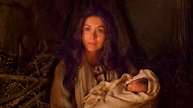
The young mother listened to the hearty giggles of her toddler as the boy’s father tossed him playfully into the air, catching him with calloused hands. She laughed to herself as this manly carpenter cooed in baby-speak. She shook her head in awe and returned to the preparation of the evening meal.

The routine task of grinding the wheat into flour for the evening bread freed her mind once again to reflect on the life God had given her.

Luke, the Bible’s historian, put it this way.

But Mary treasured up all these things and pondered them in her heart. (Luke 2:19)

Mary, did you know?

That one little verse, often overlooked, comes at the end of the beloved Christmas narrative. Long after Jesus’ birth, long after the shepherds returned to their fields and flocks, Mary treasured and pondered.

Mary, did you know?

Long after Jesus’ dedication when Simeon praised God for allowing him to see God’s salvation, Mary treasured and pondered.

Mary, did you know?

Long after Anna, a prophetess who served in the temple, took one look at Jesus and told everyone who would listen that this was the child who would bring redemption to Jerusalem, Mary treasured and pondered.

Long after the wise men found a new route home, Mary treasured and pondered.

Mary, did you know?

On that day I imagined, as Mary kneaded the dough and Joseph and Jesus played, what did she treasure? What did she ponder?

Think back to the night the angel told Mary what God planned for her. She would bear a son who would be the Son of the Most High; a son who would reign over the House of David forever. Later, her aunt Elizabeth, filled with the Holy Spirit, reaffirmed the miraculous birth as she called Mary blessed among all women.

Through an immaculate pregnancy and an ordinary birth, Mary saw it all come true, just as God promised. In those first few years, surely the whole experience seemed surreal, almost beyond belief. Mary took it all in. Tried to make sense of the inexplicable. She treasured and she pondered.

The Greek verb translated treasured in this passage doesn’t mean to just remember. It means to carefully preserve, to guard or keep something alive for future understanding.

You and I have had 2,000 years of history. We can hold God’s word in our hand and read the unfolding of his redemptive plan that began its climactic work in a Bethlehem manger.

Two or three years after that day, Mary was still trying to wrap her arms around it. So much of what happened must have seemed to her a mystery. So, she kept the experience in her heart as she watched her child grow, keeping her experience real and alive, hoping to one day understand the how and why?

Mary not only treasured, but she pondered.

Thinking is a broad, general process that tends to be quick and practical. I think about what I’m about to do. Pondering takes thinking to a completely different level. Most of us are thinkers. We don’t ponder enough.

Pondering implies lingering thought. Unhurried. Contemplative. Reflective. Inward. When one ponders one weighs significance. Turning something over and over in your heart and mind, It implies a sense of awe and wonder, seeking to find personal meaning.

The Greek word Luke uses in this passage translated as ponder means to actively bring things together. To compare and contrast. To wrestle with a thought toward understanding. That’s different from daydreaming or passively reflecting on something.

You see, Mary, like any mother, carried fond memories of her child’s birth. The journey from Nazareth. The discomfort of a donkey ride. The worry about finding a place to stay in a crowded city. The pain of childbirth. The pure joy of holding her son in those first magical moments. That’s the precious memory of motherhood.

When Mary pondered, she intentionally reflected on all that was said and all that happened, trying to fit the pieces together. Wrestling with its meaning. Mary wanted to make sense of what felt unexplainable. Mary looked at everything she had experienced to that point…everything we understand as our Christmas story…and treasured and pondered what it all meant.

Mary, did you know?

To her credit, Mary never demanded immediate understanding. Never insisted that if God wanted her participation, he needed to read her in fully on the plan. Mary thought about it…a lot…I imagine. Despite not fully grasping the significance or the how and why, Mary accepted her role in God’s plan with such deep faith and trust.

There it is! In the middle of Mary’s treasuring and pondering lies the lesson I needed as the Advent candles are snuffed out and we pack away the manger for another year.

On this side of Christmas, what do we know? What must we treasure? What must we ponder?

God is at work in my life. He has been at work, is now at work, and will be at work in my life until the day he calls me home. I truly believe that. I have a tendency, though I suspect most of us do, to demand from God an immediate explanation for the things happening in my life…good or bad. I tend to pray for answers before I am willing to act.

I test. I don’t always treasure.

I think. I don’t always ponder.

Mary trusted that God was at work in and through her life, even if she didn’t always know why or how things were going to work out. Her faith held on to and accepted the mystery rather than disregarding it, or worse still, trying to change it. Most importantly, Mary trusted that understanding would come with time and obedience. Her role was to keep listening and waiting…as long as necessary.

I need to learn that faith often means actively treasuring and guarding God’s promises that have not yet been resolved with clarity. To hang on to his word. To keep it viable and constantly in my thoughts for future understanding. To be obedient to it without trying to bend it to my will. To trust that the day will come when he opens my eyes to see with reverence and wonder how he has moved throughout my life.

Mary understood that God’s work in her life required spiritual attentiveness…a whole lot of pondering if you will. Most of the life’s lessons God teaches me require me to wrestle with them until what he is trying to teach me starts making sense. He asks me to dig deeper. To seek his truth. The water of life rarely comes from a shallow well.

Treasuring and pondering take time. What God begins in our lives one day will unfold, but it will unfold in his time, not instantly, but when the time is right. He asks us to wait faithfully on his timing. That’s never easy to do.

When God’s work surpasses our understanding, we are invited…like Mary…to treasure and ponder his work in our lives.

That seems to be the perfect message for the coming New Year.

I will mediate on your precepts and will fix my eyes on your ways. (Psalm 119:15)

Thinking (Pondering) Points

What has God done in my life recently that I need to slow down and ponder?


What practices in my faith walk help me treasure God’s work instead of casually dismissing it?


In what ways does Mary’s quiet, reflective faith challenge my tendency to seek quick answers?


How might God be shaping me during times when he asks me to wait and reflect rather than act?
Drinking from Wells I Did Not Dig

Background Passage: Deuteronomy 6:10-12

I came across rather obscure a passage of scripture this week while looking for the focus of my writing. I read it…and moved on, searching for something different. No matter what I read and studied this week, that passage kept invading my thoughts.

In this passage in Deuteronomy, Moses has just wrapped his arms around the stone tablets upon which were etched God’s commands for his people. The list of “thou shalt” and “thou shalt nots” intended as a framework of righteous relationship with the Father and with his people.

Moses reminded them of the great promise of God to Abraham, Isaac and Jacob to give them a land that would belong to them…a land flowing with milk and honey. Then, he encouraged them to claim that promise as their own. The land God promised, according to Moses, held within it everything they needed in life. God would grant them…

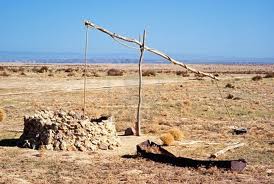
“…cities you did not build, good things you did not provide, wells you did not dig, and vineyards and olive groves you did not plant…”

Every time I tried to move away from the passage, I found myself back in Deuteronomy thinking about how the people of Israel would drink from wells they did not dig. Every time I thought about it, I thought about how often I have quenched my thirst for God from wells I did not dig.

I found my first taste of God’s well water from loving parents and a family who made faith a priority. From that little Baptist church in Ropesville where I grew up and a bevy of Sunday School teachers who shared their hearts and souls. From a Baptist Student Union at Texas Tech that served as a cistern of Christian friends who met my needs for fruitful fellowship. From a time serving as a youth minister in Wolfforth where God taught me more than I taught the young people I served.

I drank again from wells I did not dig from a marriage partner whose life is Jesus personified. From children who have matured in their own faith as an encouragement to mine. To a home church in Pasadena with pastors and friends who invested in my life, shaping my witness and my service. To a profession in public education that opened as a calling to help those in need. To a life in which every moment is a testament of God’s grace, forgiveness and purpose.

In each moment, I drank from wells I did not dig. I am grateful for each time I drew water from those wells.

After reminding his people of God’s unmerited gifts that awaited them in the promised land, Moses added a warning.

“…then, when you drink and are satisfied, be careful that you do not forget the Lord who brought you out of Egypt…”

There it is. The reason this passage kept creeping back into my heart. God placed so many people…so many wonderful opportunities…in my life that allowed me to drink and be satisfied. Too often I forget how hard it must have been for those in my life to dig that well. I forget how God’s hand moved in my life so I found every well when when I needed it most.

The living water God promised through his son, Jesus, flowed through the lives of all these people who offered me encouragement, support, discipline, wisdom, hope and love. The clearest, coolest water I have ever had the privilege to drink…and it was all from wells I did not dig.

I sit here today having lived in cities I did not build, enjoying good things I did not produce, drinking for wells I did not dig and eating from vineyards and groves I did not plant. The promised land God gave me.

To all who offered me a taste of their water, thank you. I offer praise to God who provided your shovel and showed you where to dig.

What Are You Doing Here?

Background Passage: I Kings 18 and I Kings 19: 1-18

Just hours earlier, God’s great prophet called down the fire of God upon the water-soaked altar he built on Mt. Carmel, in defiance of the king who had led Israel down a path of wickedness. Now, Elijah hid in the shadow of the broom bush near Beersheba after a marathon sprint from the place of his greatest victory. Running for his life under the weighty threat of a vengeful queen who shook with anger at the impotence of her gods and impertinence of Israel’s prophet.

What a difference a day makes! One minute he’s basking in the warmth of an all-consuming fire that proved the power of the God who sent him. The next day he’s gasping for breath, unable to face the coming day. Wishing for death to come on his terms, not at the hands of a queen who wants to make him suffer.

Falling into an exhausted slumber, Elijah awoke to God’s messenger offering a meal of hot bread and cool water. After more rest and another meal, the prophet wandered south, away from his fears and toward the same mountain where God once spoke so clearly to Moses.

We find him 40 days later, trembling in the dark recess of a cave halfway up the mountain, knees clutched to his chest, feeding on the fear that gripped his soul. Overwhelmed and feeling alone, Elijah wallowed in self-pity.

Emotionally exhausted.

Spiritually spent.

During the still of the night, the voice of God penetrated the noise of all that troubled his soul, asking one of the most pertinent questions the Creator can ask his created.

“What are you doing here?

On one hand, it sounds like a rebuke. God chastising his prophet for his lack of faith and trust. On the other hand, maybe it’s a gentle nudge. God prodding his prophet to set aside his fear and spend a moment in self-reflection.

Elijah responds, reciting the condition of his soul. “I have been very zealous for the Lord God Almighty. The Israelites have rejected your covenant, torn down your altars, and put your prophets to the death with the sword. I am the only one left, and now, they are trying to kill me, too.”

God, hearing the despair that poured from Elijah’s heart, said simply, “Go. Stand on the mountain for the Lord is about to pass by.”

I can see Elijah as he leaned upon his staff to leverage himself from the ground, the weight of the world upon his back. He limped to the mouth of the cave where he had been hiding and leaned heavily against the rock.

As he stood gripped in his fear, the wind howled, tearing boulders from the cliff. The ground shook with a powerful earthquake. A fire scorched the valley beneath him, searing every tree and bush in sight. Elijah saw evidence of God’s presence, but heard nothing. Then, in the quiet aftermath of an incredible display of power…in a whisper that tickled his ear…God’s quiet voice asked again,

“Elijah, what are you doing here?”

*****

What are you doing here?

What a great question! Elijah witnessed one of the greatest demonstrations of God’s power on Mt. Carmel. He participated in it. Served as the agent through which God accomplished his plan and purpose. For a brief moment in time, Elijah stood on the top of the world certain that everything for which he had worked for the past three years would come to pass. When repentance failed to come and trouble stood on the horizon, Elijah ran away.

Within hours of his great victory, Elijah lost his nerve. Lost his desire to serve. Lost his will to live. The prophet who boldly challenged the king who had led Israel into depravity found himself huddled in a cave wrapped in a cloak of self-pity and discouragement.

How often do we act like Elijah? Filled with the glow of God’s presence and power after a time of ministry and mission. Basking for one minute in the mountain top experiences God grants to those who faithfully serve him only to lose our nerve when faced with the counter circumstances of life and the world’s challenge to our faith.

We run from the mountain top while the sound of God’s latest victory in our lives still echoes from the cliffs. With all the speed we can muster, we move as far as we can from the source of trouble and the source of our power.

Distressed.

Disturbed.

Despondent.

How quickly we allow the tables to turn! We withdraw, feeling like we’re the only one fighting the battle. Ready to quit. Ready to abandon the God who needs our hands and voice. We run until we find ourselves hiding in a cave where we think our enemies and our God cannot find us.

It takes God’s relentless love to draw us back, not through a powerful demonstration of his might, but through a whispered word of quiet rebuke intended not to reprimand, but to cause us to reflect on the choice we just made.

I don’t know about you, but there are times when I have spent so much time in my cave that I have decorated it and called it “home.” Invariably, God finds a way of getting my attention. Then he asks that simple question.

“What are you doing here, Kirk?”

If this is where you find yourself today I suspect, if you listen, you’ll hear the whispered words of a loving father asking you the same question. “What are you doing here?”

Here’s what I know. God still needed Elijah. Once he got his attention, he told him, “Go back from where you came. There is so much more to do. You are not alone.”

He was not finished with Elijah and he is not finished with me or you. When we find ourselves hiding in our cave of our own choosing, God calls us, like he did Elijah, to change our focus. When we see again the world through his eyes, our perspective changes. We quit staring at our circumstances and look again at the possibilities and opportunities still open to us.

So, I ask you the same question I hear all too often, “What are you doing here?”