Treasuring and Pondering

Focal Passage: Luke 2:19

Mary, did you know
that your baby boy would one day walk on water?
Mary, did you know
that your baby boy would save our sons and daughters?
Did you know
that your baby boy has come to make you new?
This child that you delivered
would soon deliver you.

Those words written by Mark Lowry, a comedian, singer and songwriter long associated with the Gaither Family, are the first stanza of what has become my favorite Christmas song. Many artists have recorded it since it was written, but Lowry sings it with unequaled passion.

In the bridge, Lowry’s words to Mary speak of the work of Christ in a building crescendo.

The blind will see.
The deaf will hear.
The dead shall live again.
The lame will leap.
The dumb will speak.
The praises of the lamb.

The as the song closes, the words ask Mary one last question before providing the resounding answer.

Did you know that your baby boy
Is heaven’s perfect lamb?
The sleeping child you’re holding is the great I AM!

Mary, did you know?

*****

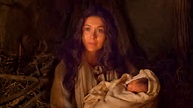
The young mother listened to the hearty giggles of her toddler as the boy’s father tossed him playfully into the air, catching him with calloused hands. She laughed to herself as this manly carpenter cooed in baby-speak. She shook her head in awe and returned to the preparation of the evening meal.

The routine task of grinding the wheat into flour for the evening bread freed her mind once again to reflect on the life God had given her.

Luke, the Bible’s historian, put it this way.

But Mary treasured up all these things and pondered them in her heart. (Luke 2:19)

Mary, did you know?

That one little verse, often overlooked, comes at the end of the beloved Christmas narrative. Long after Jesus’ birth, long after the shepherds returned to their fields and flocks, Mary treasured and pondered.

Mary, did you know?

Long after Jesus’ dedication when Simeon praised God for allowing him to see God’s salvation, Mary treasured and pondered.

Mary, did you know?

Long after Anna, a prophetess who served in the temple, took one look at Jesus and told everyone who would listen that this was the child who would bring redemption to Jerusalem, Mary treasured and pondered.

Long after the wise men found a new route home, Mary treasured and pondered.

Mary, did you know?

On that day I imagined, as Mary kneaded the dough and Joseph and Jesus played, what did she treasure? What did she ponder?

Think back to the night the angel told Mary what God planned for her. She would bear a son who would be the Son of the Most High; a son who would reign over the House of David forever. Later, her aunt Elizabeth, filled with the Holy Spirit, reaffirmed the miraculous birth as she called Mary blessed among all women.

Through an immaculate pregnancy and an ordinary birth, Mary saw it all come true, just as God promised. In those first few years, surely the whole experience seemed surreal, almost beyond belief. Mary took it all in. Tried to make sense of the inexplicable. She treasured and she pondered.

The Greek verb translated treasured in this passage doesn’t mean to just remember. It means to carefully preserve, to guard or keep something alive for future understanding.

You and I have had 2,000 years of history. We can hold God’s word in our hand and read the unfolding of his redemptive plan that began its climactic work in a Bethlehem manger.

Two or three years after that day, Mary was still trying to wrap her arms around it. So much of what happened must have seemed to her a mystery. So, she kept the experience in her heart as she watched her child grow, keeping her experience real and alive, hoping to one day understand the how and why?

Mary not only treasured, but she pondered.

Thinking is a broad, general process that tends to be quick and practical. I think about what I’m about to do. Pondering takes thinking to a completely different level. Most of us are thinkers. We don’t ponder enough.

Pondering implies lingering thought. Unhurried. Contemplative. Reflective. Inward. When one ponders one weighs significance. Turning something over and over in your heart and mind, It implies a sense of awe and wonder, seeking to find personal meaning.

The Greek word Luke uses in this passage translated as ponder means to actively bring things together. To compare and contrast. To wrestle with a thought toward understanding. That’s different from daydreaming or passively reflecting on something.

You see, Mary, like any mother, carried fond memories of her child’s birth. The journey from Nazareth. The discomfort of a donkey ride. The worry about finding a place to stay in a crowded city. The pain of childbirth. The pure joy of holding her son in those first magical moments. That’s the precious memory of motherhood.

When Mary pondered, she intentionally reflected on all that was said and all that happened, trying to fit the pieces together. Wrestling with its meaning. Mary wanted to make sense of what felt unexplainable. Mary looked at everything she had experienced to that point…everything we understand as our Christmas story…and treasured and pondered what it all meant.

Mary, did you know?

To her credit, Mary never demanded immediate understanding. Never insisted that if God wanted her participation, he needed to read her in fully on the plan. Mary thought about it…a lot…I imagine. Despite not fully grasping the significance or the how and why, Mary accepted her role in God’s plan with such deep faith and trust.

There it is! In the middle of Mary’s treasuring and pondering lies the lesson I needed as the Advent candles are snuffed out and we pack away the manger for another year.

On this side of Christmas, what do we know? What must we treasure? What must we ponder?

God is at work in my life. He has been at work, is now at work, and will be at work in my life until the day he calls me home. I truly believe that. I have a tendency, though I suspect most of us do, to demand from God an immediate explanation for the things happening in my life…good or bad. I tend to pray for answers before I am willing to act.

I test. I don’t always treasure.

I think. I don’t always ponder.

Mary trusted that God was at work in and through her life, even if she didn’t always know why or how things were going to work out. Her faith held on to and accepted the mystery rather than disregarding it, or worse still, trying to change it. Most importantly, Mary trusted that understanding would come with time and obedience. Her role was to keep listening and waiting…as long as necessary.

I need to learn that faith often means actively treasuring and guarding God’s promises that have not yet been resolved with clarity. To hang on to his word. To keep it viable and constantly in my thoughts for future understanding. To be obedient to it without trying to bend it to my will. To trust that the day will come when he opens my eyes to see with reverence and wonder how he has moved throughout my life.

Mary understood that God’s work in her life required spiritual attentiveness…a whole lot of pondering if you will. Most of the life’s lessons God teaches me require me to wrestle with them until what he is trying to teach me starts making sense. He asks me to dig deeper. To seek his truth. The water of life rarely comes from a shallow well.

Treasuring and pondering take time. What God begins in our lives one day will unfold, but it will unfold in his time, not instantly, but when the time is right. He asks us to wait faithfully on his timing. That’s never easy to do.

When God’s work surpasses our understanding, we are invited…like Mary…to treasure and ponder his work in our lives.

That seems to be the perfect message for the coming New Year.

I will mediate on your precepts and will fix my eyes on your ways. (Psalm 119:15)

Thinking (Pondering) Points

What has God done in my life recently that I need to slow down and ponder?


What practices in my faith walk help me treasure God’s work instead of casually dismissing it?


In what ways does Mary’s quiet, reflective faith challenge my tendency to seek quick answers?


How might God be shaping me during times when he asks me to wait and reflect rather than act?
A Righteous Woman of Influence

Background Passages: Luke 1: 26-38; Luke 1:46-55; Luke 2:22-40; John 2:1-12; and John 19:25-27

Mother’s Day lies just around the corner. I’m reminded of words spoken by the late Dr. Billy Graham speaking to the unique opportunity God gives women to influene and impact the lives of others in ways that few men can.

“There is nothing in this world more personal, as nurturing or as life-changing as the influence of a righteous woman.”

Don’t get me wrong, I’m not minimizing the man’s role in God’s world. When men allow God to rule their lives and women live out their call to righteous living there is a divine balance that makes the world a better place.

However, as most of us blessed with wonderful mothers can testify, Dr. Graham’s statement rings with the peal of abiding truth. I have felt it in my own life. The righteous influence of godly women…a wife, a mother, aunts, Sunday School teachers, public school teachers and countless friends…absolutely shaped and molded who I am, spiritually, professionally and personally. A new generation of women, led by my two amazing daughters-in-law, continue to teach me the things I need to know about being the man God needs me to be every day.

As I think of the women who influenced my life, I realized how blessed I am to have known so many women who believed in me. Women who supported me. Women who propped me up when I stood on the edge of failure. I think of the women who lifted me up at some point in my life with their presence…their words…their friendship…their touch…just when I needed to hear or feel it. Their influence is a tremendous gift in my life!

I’m convinced God placed these women in my life for a reason. Their influence in my life shifted from the piddling to the powerful because they live each day as righteous women.

So what does it mean to be a righteous woman of influence?

Of all the women of influence in the Bible I point you to Mary, the mother of Jesus. We, Baptists, fail to give Mary the credit she deserves for her unrecognized impact on Jesus’ life. Mary wasn’t perfect. She didn’t walk around with a halo above her head. She was certainly more than a simple vessel God used to carry his Son. To better understand Mary’s role, embrace the humanity of Jesus.

Let me explain. We tend to think of Jesus in the divine. We casually recognize his humanity, but we want to color it heavily with his godliness. We like to think Jesus was pulled from the womb without crying, speaking King James English and turning water into milk.

We don’t think of him as a baby with colic, crying through the night. A toddler who fell and bumped his head on the table Joseph built. A three-year-old disciplined for taking a toy from his little brother. We don’t think of him as a little boy scraping his knee while chasing a friend. As a teenager who thought that little Jewish girl down the street was pretty. We never consider that as a young, apprentice carpenter he one day bashed his thumb with a hammer, biting back the ugly word you and I might say.

If he came into the world to be like us, we have to embrace his human side…acknowledging the perfect way he dealt with all those very human situations. If we can fully accept Jesus’ humanity, that part of his personhood had a very human mother…one amazingly normal, human mother. The mother who lost it at times because she was up three nights in a row with a squalling baby. The mother who swatted the hand of a three-year-old for taking his brother’s toy. The mother who looked at that pretty little Jewish girl as a threat to her son. The mother who kissed the scraped knees and laughed at her son when he swallowed that ugly word after bashing his thumb.

If Mary was an ordinary, very human woman, why did God choose Mary to be the mother of his only begotten son? Why was she so “highly favored?”

I think God chose Mary because he knew the person she was. Knew the kind of mother she would be. God chose Mary because he knew she would love Jesus unconditionally. Knew she would teach him about life and model everything good in it. God chose Mary because she would stand beside him in the darkest hours of his life. He chose Mary above all others because she possessed the mother’s instinct to raise Jesus with the spiritual and moral integrity to tackle the mission God planned for him as the savior of the world.

God chose Mary because she lived as a righteous woman of influence.

Mary’s story begins in bizarre fashion. Not every woman could handle the news she heard. Mary possessed the spiritual depth to believe an implausible message.

It is one thing to accept the unlikely future while the angel speaks. It’s another thing to stay faithful when the angel disappears in the darkness. The rational side of Mary knew her pregnancy would bring a host of life-altering issues…ridicule and disgrace…embarrassment to her family…Joseph’s anger. What strikes me most about Mary’s response to the unexpected visit from the angel is that, in the end, she submits to the will of God with such obedience and trust. She said in response to all she heard,

”May it be to me as you have said.”

What an amazing moment of faith and obedience! Despite knowing the difficulties this decision posed in her life, she allowed God to work his will. How often do you think Jesus heard this story as he was growing up? Imagine the lesson of obedience and faith it taught him.

Still, like the disciples and like us, Mary struggled to understand God’s way of working out his redemptive plan. Her understanding of “Messiah” did not contemplate a tragic death. Though she heard it in the temple when Jesus was born, she did not anticipated a “sword would pierce her soul.” Even though she didn’t have Jesus all figured out, she grappled with the unknown, trusted God, and remained faithful to his call on her life.

More than once we see where Mary “pondered in her heart” all that happened around her. She did more than simply deliberate the meaning of a word or event. Rather, she watched, listened and thought about all that happened around her and her son in light of the message from the angel that night, in light of the words from the rabbi and prophetess in the temple. She constantly made the connections, determining how she could help make God’s plan come to pass in the life of her son. Not content to just let life happen, she laid the groundwork needed to bring it to pass.

At some point in Jesus’ life, Mary’s faith, obedience and trust, stood out as an encouragement to Jesus when he was struggling to follow God’s plan. Can’t you almost hear Mary’s words whispered in the Garden of Gethsemane as Jesus agonized over his impending death on the cross? I believe at such a time, Jesus recalled the words of his mother when she told the angel, “May it be to me as you said.” His prayer says, “Not my will, but yours…” the essence of obedience and trust…Mary’s model of faith that carried him through his most difficult times.

To be a woman of influence requires obedience to God and trust in his plan for your life.

GROUNDED IN AND GUIDED BY SCRIPTURE—MARY’S SONG
We encounter Mary again in scripture when she visits her aunt, Elizabeth. After they share each other’s miraculous stories of God’s blessing, Mary sings a song from her heart. Find in the words of Mary’s song the boldness to call for God’s justice in an oppressive, unjust world. Find in Mary’s song, the words and deeds of Jesus. She sings from Old Testament scripture, the traits of a living God:

“…you are mindful of me in my humble state…” Look at Jesus’ own humility before God.
“…scatters the proud…” Look at Jesus’ challenge to ritualistic faith of the Pharisees.
“…lifts up the humble.”… Look at how Jesus work so fervently for the poor and needy.
“…fills the hungry…” Look how Jesus fed the multitudes both physically and spiritually.
“…he is merciful…” Look how Jesus offered mercy to those who did not deserve it.

This was the image of God that Mary carried in her heart. Things she learned from scripture before the culture really allowed women to study God’s word. She internalized scripture she read or heard to the point where it shaped her life and ultimately the life of Jesus. That was the God she knew. That was the character of God she taught God’s son. I can imagine Mary singing her song to Jesus every night as she laid him in bed as a child, a poignant lullaby…embedding those godly virtues into his very being. Modeling it for him every day. In the end, her influence contributed to his role as the servant Messiah.

To be a righteous woman of influence ground yourself in scripture. Let it guide your actions. Share its meaning with those you love. Live out its lessons as you tend to the needs of others.

ENCOURAGING THE READY…THE WEDDING
We see Mary at the wedding in Cana. Mary tried to work through a potentially embarrassing situation when the host family ran out of wine. She brought the problem to Jesus.

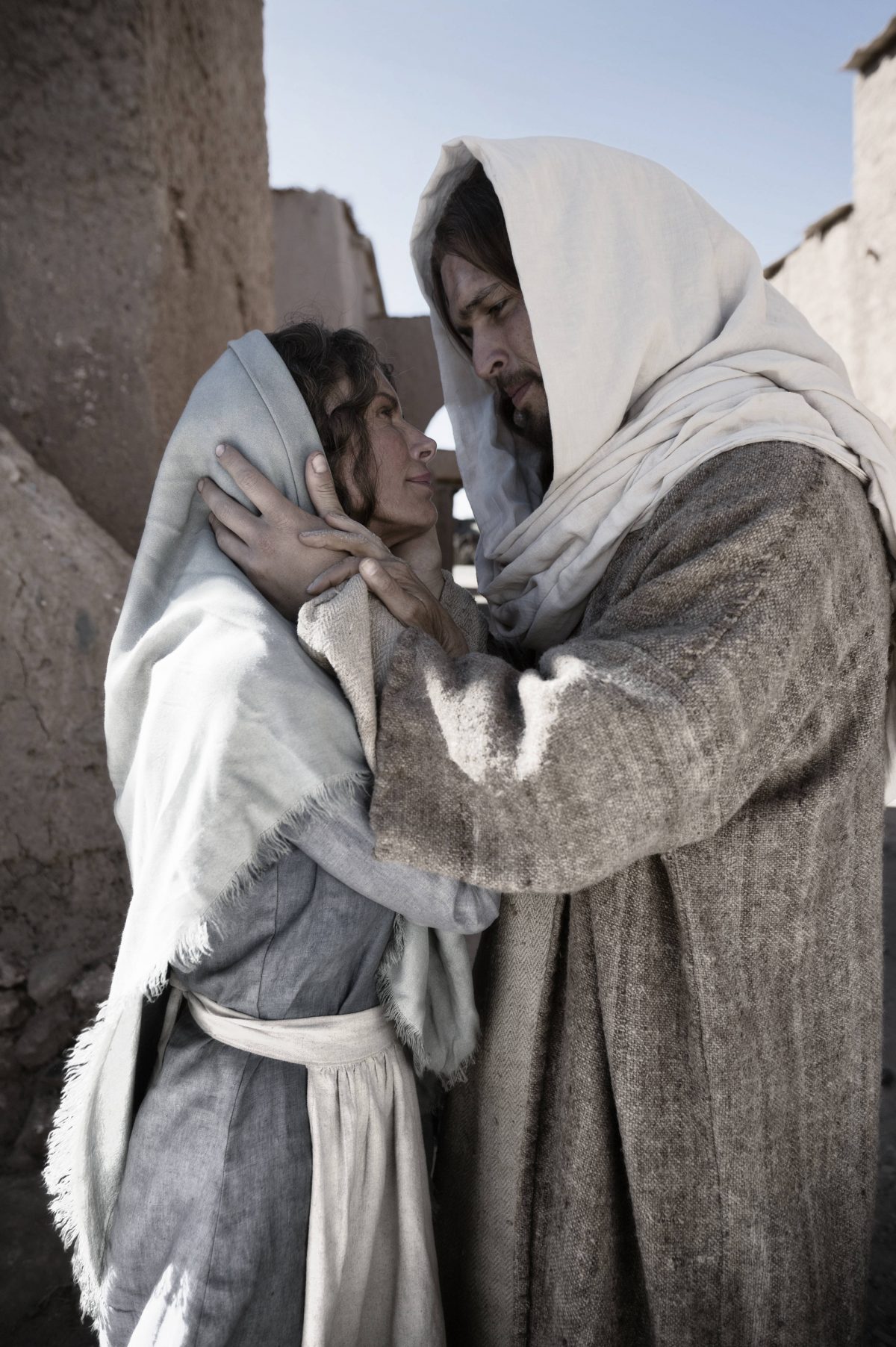
Why would she do that? Jesus even asked her, “Why are you bothering me with this? My time has not come.” My mind sees Mary looking deeply in the eyes of Jesus without saying a word. Never taking her eyes off his, she spoke to the servant beside her, “Do whatever he says to do.” The twinkle in her eye and the crooked smile on her face signaled her belief that Jesus would do the right thing…every time. Her trust in him full and complete. That one look gave Jesus permission to be who he was intended to be. It is as if she were saying, “Now is as good a time as any, my son. I don’t need you as much as the world needs you. What are you waiting for?”

A woman becomes a righteous woman of influence by playing the role she plays…recognizing when it’s time to push the bird from the nest. Knowing when a simple word of encouragement to someone convinces them it is time to get started doing what God called them to do…time to take that leap of faith. Letting them know, “This is your time.”

DEEPLY LOVING AND BEING DEEPLY LOVED
The most endearing and enduring passage concerning Mary takes place at the foot of the cross. Scripture paints a vivid picture of a mother watching the son she raised and loved dying an agonizing death on the cross. A death she could not comprehend. Only a mother who lost a child can begin to fathom the emotional suffering Mary experiences as she hears his ragged breathing. Sees the pain etched on his features. Watches his life flow out with every drop of blood spilled on that rocky soil.

The words of Jesus from the cross whispered to John and Mary tell us everything about Mary’s influence on Jesus. “Behold your Mother.” “Behold your son.”

Jesus’ loved his mother so deeply he could not let death take him without ensuring that Mary would never be alone. Jesus recognized through his own pain the deep sorrow of one who loved him. Surely, while on that cross, there were flashbacks to every embrace, every kiss, every smile. Jesus hung on that cross, feeling like God had abandoned him, looking down on a mother who never could. A mother whose love was endless.

You become a righteous woman of influence when you love others so deeply that you are deeply loved in return.

My mom passed away 20 years ago. I cannot explain the magnitude of her impact on my life…my understanding of who I am…how I relate to others…the focus and purpose of my life.

I learned from her delightfully sarcastic sense of humor. Never mean-spirited, but always catching you off guard. Life needs laughter and it is always easiest to laugh at yourself if for no other reason but to avoid taking yourself too seriously.

She taught me to deeply respect the ability of women to be accomplished in any field, reminding me to keep capable, intelligent and independent women in my life. I loved it when she convinced my sister to leave the nursing field and become a medical doctor because she was smarter than most men with the degree.

She instilled in me an understanding that marriage was a partnership, promising to break my arm if she ever heard that I did not help with the housework.

She taught me about being a beloved grandparent. I loved how every minute she spent with our kids was personal and filled with joy. She was, after all, the one who sat on the floor with my boys and my brother’s girls and taught them to play poker.

Like Mary, my mom was obedient to her God, trusting him in all of life. Demonstrating her faith in the most difficult of times. She was able to do so because she was grounded in and guided by scripture, knowing just how to apply Christ’s teaching in the most practical of ways. Mom encouraged each of her children to pursue our dream and passion, instilling in us the belief that we could do anything. There were times when she pushed us with an impeccable sense of timing to start down the path God intended for us. In the end, Mom was loved deeply because she deeply loved.

Without a doubt, like Mary, my mom was one of those righteous women of influence.

I recently saw a posting on Facebook that said, “The fact that you are a woman doesn’t make you a different kind of Christian, but the fact that you are a Christian ought to make you a different kind of woman.”

Being a righteous woman of influence is a choice. Make it.

Living as a righteous woman of influence is a commitment. Live it.

The responsibility of being a righteous woman of influence is a gift from God. Claim it.


Favor With God

Background Passages: Luke 1:26-38; James 4:6; John 3:16

The young woman bent low in the knees and ducked through the doorway of her father’s home a tall jar of water upon her shoulder. As she turned to place the vessel on the table she stared in fear at the angel standing near the fireplace.

“Greetings, you who are highly favored. The Lord is with you.”

As the jar of water crashed to the floor, Mary back away toward the door in fear and confusion. Quickly, the angel spoke, his voice comforting and concerned, “Do not be afraid. Mary, you have found favor with God.”

As the angel laid out God’s plan for Mary’s life, I cannot fathom the whirlwind of emotions she experienced. Her world turned upside down.

Through God’s great gift of Christmas, the final piece of creation’s puzzle fell in place, planned before time…perfected through the life, death and resurrection to come. Mary heard the words of the angel and struggled to understand the heady revelation that she, an ordinary young woman from an inconsequential village in Galilee, would be the vessel through whom God chose to present himself to the world.

As profound as those words might have been, had I been Mary, I might have wrestled as much with the beginning of the angel’s message…

“You have found favor with God.”

In the world’s language, to show favoritism is to show exceptional kindness to someone, especially in comparison to the treatment of others. Preferential treatment. In the first century, people believed that wealth, health and blessing were signs of God’s favor upon you. That you had done something to earn his favor.

Consider Mary’s life following the angel’s announcement. It hardly speaks to preferential treatment. Her life spun out of control almost immediately.

Joseph had every right to disown her and discredit her publicly. Though he embraced a similar angelic message, others would be less understanding. A few months later, she faced an arduous and uncomfortable journey to Bethlehem in her last trimester. Upon their arrival, the only place available to them was an unholy stable among the animals. She gave birth far from family and friends who might celebrate with her.

A short time later, she fled to a foreign land ahead of a king’s murderous soldiers who were intent upon killing her son. She later watched in dread as her son’s message of God’s forgiveness was met with scorn and hatred by the religious leaders of the day. She heard a bloodthirsty crowd call for his crucifixion. She watched from a distance and felt the echo of each hammer driving nails through the hands and feet of her beloved son. She wept at his feet as blood and life drained from his body.

If she thought at all of the angel’s announcement as she stood near the cross, I doubt she felt favored. This was hardly a life of preferential treatment. What, then, did it mean for Mary to find favor with God?

Nothing in scripture indicates that God’s favor falls upon people simply for their own enjoyment. We find those on whom God’s favor rests given great responsibility so the lives of others may be changed. So God might be glorified. Moses. Abraham. Job. These were men who found God’s favor. Nothing about their lives was easy. All carried the burden of life heavily on their shoulders.

You see, I often thought God chose Mary because of something uniquely righteous within her. That her faith was deeper and her life purer than any other…by extension, deeper and purer than my own life. Seeing Mary in those terms diminishes God’s work of grace. In many ways it cheapens the miracle of Christmas.

Bible scholars tell us that the word in Luke 1:30 which most Bible’s translate as “favor” is the same Greek word from which we get our word for “grace.”

“Mary, you have found God’s grace.”

Mary wasn’t chosen to be the mother of Jesus because her goodness outshone any other. Rather, God extended an offer of grace to Mary to be used by God for something which carried enormous responsibility. The angel’s declaration came, not because she deserved it. It came as a gift. Undeserved. Unmerited.

Mary could have rejected God’s offer. She could have said, “Not me. Find someone else.” Yet, she considered all the angel said and declared, “I am the Lord’s servant. May your word to me be fulfilled.”

With those words, Mary, as a young teenage girl, accepted God’s grace gift and all that it would entail without fully understanding the implications for her own life.

James 4:6 proclaims that “God opposes the proud, but shows favor (grace) to the humble.” It is this thought I had not considered in the Christmas story. That Mary found favor with God had little to do with her goodness and everything to do with her humble spirit. Her desire to be open to the possibilities God presented to her. That idea has implications for my life I had not considered.

I stand today a recipient of God’s favor, his unmerited grace. The offer to accept Jesus Christ as savior came through the conviction of the Holy Spirit, not because I deserved it, but as a gift undeserved. It came as an offer I could have refused. Yet, I considered all the spirit said to me and said in essence, “I am your servant.” With those words, as a nine-year-old boy, I accepted God’s grace gift and all it would entail without fully understanding the implications for my own life.

For any of us to embrace God’s gift of his son, there comes a point when we must humble ourselves before him, recognizing that it is not our goodness that merits his favor. It is through his unfailing love for us that his grace flows.

For those of us who have placed our faith and trust in Jesus, Christmas is a joyous reminder that God so loved the world that he sent his only son to be to be his grace gift to the world.

Mary humbly embraced the role God asked her to play and bore the burden of responsibility it carried with it. Like Mary, in response to God’s grace, may we, in all humility, be open to the possibilities God presents to us.


The Stable Boy

Background Passage: Luke 2:1-20
People flooded Bethlehem
in answer to the governor’s decree.
Returning to their home town to be taxed.
Travel made them…
irritable.
Taxation made them…
irate.Boisterous.
Belligerent.
Bellicose. Families poured into the
 City of David from all directions of the wind.
Swelling the population of the sleepy village,
well beyond its capacity.


Hospitality ruled.
Family and stranger
open home and business to the weary travelers.
Considerate.
Courteous.
Custom.

 A stable boy.
Ten-years old.
All too skinny.
Almost skeletal.
A brush with a Roman chariot as a young boy
left him with a shattered leg that never healed properly.
Twisted at an awkward angle.
Weak and wobbly,
each step aided by a walking stick.

The stable boy
dodged through familiar streets.
Picked his way back and forth
from the town’s only inn
to the stable inside the rocky cave,
behind the mud-bricked building.

He spent his day…
Lugging belongings
to the rooms inside.
Leading beasts of burden
to the stalls out back.
Lifting water jars
to fill the troughs.
Laying fresh hay in the mangers
To feed the livestock.

Seen, but unseen.
Speaking, but never heard.

Long after the sun set,
The stable boy blew out a slow breath.
A sigh heavy with fatigue.
He leaned down.
Picked up a wooden bucket,
Turned it over.
Sat wearily upon it.
Pulled his knees to his chest.
Laid his head on his arms
Fell instantly asleep.

His mind registered the sound
long before his eyes blinked open.
The echoing clip clop of a donkey’s hooves
trudging through the rocky street.

A young man walked out of the shadows.
Broad-shouldered.
Brawny.
The flow of his robe could not conceal that he was
powerfully built by years of hard work.
Physical vitality betrayed only by the
exhaustion in his eyes.

The man led his donkey by a loose halter.
Upon the donkey a young woman.
Pregnant.
Pained.
Spent.
Jostling back and forth with each
labored step of her animal.

The couple stopped at the door to the inn.
The man gently braced the woman
as she slid from the donkey’s back.
A kind smile and a quiet word
let her know they reached their destination.
She leaned against the donkey as
he stepped toward the front door.
With a crooked grin,
he placed a heavy hand on the
stable boy’s shoulder as he passed.
Squeezed it in a way that said,
“We made it,”
Walked inside without another word.

The stable boy stared at the woman.
He could not help himself.
Saw how young she was.
Could not imagine the difficulty of her journey.
Knew enough of the world to know…
she was ready to deliver her child.

She greeted the boy with a wave.
“Good evening.”
After the chaos of his day,
her words sounded like the melody of a meadowlark.
Wistful.
Welcoming.
Warm.

Before he could answer,
Her husband came out of the building
followed on his heels by the apologetic innkeeper
They spoke in whispered and urgent tones.
The stable boy listened to the muted conversation,
deliberately kept quiet and low to
avoid alarming the woman.

“Look at her,”
the man pleaded.
“She is due any day. I must find her a place to stay.
We’ve been everywhere else.
I can find no bed for her rest.”

“We have no room,”
said the man in sympathy,
all too aware of his unfulfilled responsibility as host.
 
The young man looked again at his wife.
Nodded his acceptance of a bad situation.
Shook the innkeeper’s hand.
Stepped toward his wife,
fatigue etched in his face and
his fallen shoulders
All too aware of his unfulfilled responsibility as husband.

“Wait,”
said the innkeeper.
The young man turned back,
a faint glimmer of hope in his eyes.

Continue reading “The Stable Boy”