In Damascus, There Was A Disciple…

Background Passage: Acts 9:1-25; Acts 22:13-16

The light flashed and the world would never be the same.

In one of the most familiar passages in the New Testament, an ambitious and zealous young Pharisee, emboldened by the stoning of Stephen, begged for a chance to carry the persecution of Christians beyond the walls of Jerusalem. With letters of authorization in his pocket, Saul set out for Damascus breathing the fire of fanaticism, intent upon finding the followers of the crucified Christ and dragging them back to Jerusalem for punishment. A man on a malicious mission.

With the walled city of Damascus on the horizon, a blinding light seared his retinas and knocked him to his knees. He cried out in shock and pain only to be silenced by a voice calling his name.

“Saul, Oh, Saul. Why do you persecute me?”

In the course of a powerful conversation on a dusty road, Saul came face to face with the brutality of his deeds and the reality of the living Lord.

“I am Jesus, whom you are persecuting. Go into the city. You will be told what you must do.”

We know this story as the conversion of Saul. The redeemed missionary of God told of his encounter with Christ over and over again. A testimony and tribute to the unmerited grace of God.

The light on the road to Damascus changed the heart of a man who would become the world’s greatest missionary and the agent of redemption to the Gentile world. Saul’s was a life so transformed that he needed a different name. We now know him as Paul. It’s a wonderful story of God’s transforming work in his world.

From that moment on, Paul played a starring role in the spread of the gospel, but his supporting cast contributed to his success. Barnabas. Silas. Timothy. John Mark. We can list name after name of those who traveled with Paul. Assisting in his work. Staying behind in isolated locations to grow the seeds of faith he planted.

One name we tend to overlook took Saul’s hand in his blindness and called him “Brother.” Let me introduce you again to Ananias.

He climbed the narrow stairs
to the roof of his home.

A cool breeze blew in from the sea,
refreshing his body and soul.
From this vantage point,
Ananias could watch the sunrise
cast its reddish glow over the eastern hills,
reflecting onto the wispy clouds streaked across the sky.
On the rooftop.
The perfect way to start each day.

Ananias stretched his arms over his head.
Stood on his tiptoes
to loosen aching muscles,
stiff and sore after a fitful night’s sleep.

Sitting on the parapet of his home,
legs dangling over the side,
Ananias sipped a cup of goat’s milk.
Listened to the familiar sound of his wife
preparing breakfast for the family in the room below.

Despite the peaceful surrounding,
he could not shake the sense of unease
as he thought about last night’s dream.
He could picture it as clearly as if
it actually happened.
Hear the conversation as surely as if
God sat beside him on the wall.
He walked it through again in his mind.

A voice called…

“Ananias.”

“Yes, Lord.”

“Go to the home of Judas on Straight Street.
Ask for the man from Tarsus named Saul,
for he is praying.
In a vision he has seen a man named Ananias come
and place his hands on him to
restore his sight.”

Over and over in his mind, he heard,
“…a man from Tarsus named Saul…”

…”Go…”
“Go…to Saul…”

Ananias felt his stomach roll again.
“This makes no sense…”

Saul’s reputation preceded him.
So much anger in this Pharisee.
So much harm to the saints in Jerusalem.
Ananias knew the rumors.
Saul was coming to Damascus to spread his terror.
To arrest every follower of Jesus that he could find.

The voice in his dream
urged Ananias to go as instructed.

“He is my chosen instrument…”

God had a plan.
Ananias had a part to play
in that plan.

Shaking himself from his reflection,
Ananias took a deep breath.
Climbed down from the roof.
With a faith deeper than his fear,
he walked through town to Judas’ home.

Ananias stopped short at the sight of the temple guards
gathered around the campfire.
Their presence
triggered his desire to run.

He steeled his resolve.
Stepped forward.
Stared straight ahead.
Walked slowly through the soldiers
as they began to rise.
Hands on the hilt of their swords.

The door to the home opened before he knocked.
They had expected him.
Ananias stepped over the threshold.
Closed the door.
Let his eyes adjust to the dim light.

Saul sat facing the fire.
Blind eyes stared vacantly into the flame.
Lost in private pain.
A face etched with guilt.
The once proud Pharisee rocked
absent-mindedly on the small stool.
Lips moved in silent prayer of
remorse and repentance.

Ananias stood without moving.
Fought the desire to turn and go.
But, when he saw the tears well in Saul’s eyes,
the disciple’s heart broke.
For the first time he saw Saul.
Not his fine robes.
Not his rage.
Not his reputation.

He saw Saul.
He saw the broken heart of a
despondent and despairing soul.

Ananias found himself standing beside Saul
without remembering the steps it took to get there.
He followed Saul’s gaze into the fire,
With tears in his own eyes,
he laid his hand gently on Saul’s shoulder.
After a moment of shared silence,
Ananias spoke in a voice soft and sincere,
“Brother Saul…”

With those words
the scales of physical and spiritual blindness
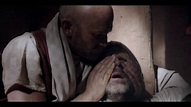
fell from Saul’s eyes.
New sight.
New insight
Into his purpose in life.

Scripture reveals so much about how God used Saul, or Paul, as he was later known, to take his good news to the Gentile world. This former zealous Pharisee became the world’s most ardent servant of Christ and arguably, next to Jesus, the most important man in the Christian faith.

By contrast, we capture what we know of Ananias only in this story and in one small reference in Acts 22. Here he is called simply “a disciple.” In Chapter 22,  a “devout observer of the law” and a “man highly respected by the Jews” in Damascus.

We don’t know when Ananias became a follower of Christ. Maybe he heard Jesus preach and put his trust in him on a Galilean mountainside. Perhaps, he was a Jew who had traveled from his home in Damascus to Jerusalem for Pentecost and heard Peter proclaim the gospel. Maybe, a friend told him about the resurrected Christ he saw in the upper room. Regardless of how it happened, Ananias was a disciple.

Yet, his actions tell us so much more about this follower of Christ. It’s notable to me that he is called a disciple and not a pastor or evangelist. Not a deacon or an elder. A disciple. A follower. A learner. As a man who professed his faith in Jesus Christ, Ananias spent his time trying to figure out what that meant and how he should live as a result. He was a man much like you or me.

Ananias enjoyed a wonderful reputation as a student of Old Testament scripture and one who lived obediently to its teachings, a likely hold over to his Jewish upbringing. When introduced to Jesus either in person or through the witness of others, the encounter changed his life. He accepted Jesus as the Messiah promised in scripture. The passion he held for his faith as a Jewish man found its fulfillment in Jesus.

Despite his break from the prevailing Jewish doctrine, Luke tells us in his account that his reputation among the Jews in Damascus remained unsullied. They could find no fault in him. As followers of Christ we ought to have that glowing reputation in our own communities. The world should know us as a Christ followers. As learners. As people who take the principles of Christian living so seriously that it directs the way we live. We see in this passage, Ananias’ commitment to Christ.

We also see in the lines of this story, the courage of his conviction. The religious leaders in Jerusalem sent Saul to Damascus to rain down havoc. He had papers to prove it. In all likelihood, Ananias was on Saul’s hit list. Christians in Damascus knew Saul was coming. His reputation for ruthlessness frightened them. He brought with him a promise of prison, punishment and death.

I suspect many of the Christians fled the city in advance of Saul’s arrival…but Ananias stayed. We don’t know why. Maybe he thought, “What good is my conviction if I choose to disown it at a difficult time or run from it in the face of adversity?” When others ran, Ananias stayed.

With the call of the Holy Spirit, Ananias not only stayed, but he made himself available to do the brave and the unthinkable. The Lord called and Ananias answered as Samuel did. “Yes, Lord. I’m here.” He did not know the mission…not yet…but he opened himself to the possibility of being used by God.

Ananias may have shown his inner Samuel, but he also channeled his inner Gideon when God told him what he needed him to do. Jesus planted the seed of salvation in Saul’s heart. The Holy Spirit needed Ananias to close the deal. To lay hands upon this broken man and welcome Saul into the fellowship of believers.

“I’m here, Lord, but did I hear you right?” When presented with God’s plan, Ananias sought clarity and understanding. The whole idea of going to Saul was counter intuitive.

“I have heard many reports about this man and all the harm he has done to YOUR saints in Jerusalem. And he has come here with authority from the chief priests to arrest all who call on your name.”

Ananias and I share a common trait with Gideon. Our short-sightedness gets in our way. You see, most of the time our vision is unable to see beyond our fear. God’s perspective…his vision…takes in history and future in a moment’s glance. Our failure to act upon his direction cancels the blessings that come from playing the role God needs us to play.

Sometimes our myopic sight needs clarity that only God can give. I think God delights in our desire for understanding if it comes from the heart. When Ananias questioned the sanity of confronting Saul, God answered, not with recrimination, but with a promise. “Go! This man is my chosen instrument to carry my name before the Gentiles and their kings and before the people of Israel.”

Sprinkling the fleece with dew, God told Ananias, “I need you today. I’m counting on you because this man is a game changer, but he needs to see that my people are willing to embrace the change in his heart. You’re step one in this process, Ananias. I need you to do this for me.” With the fleece sufficiently damp, Ananias went where he was told. We must be ready to do the same.

I’m not sure when Ananias’ heart truly turned. I suspect he was talking himself into doing what the Holy Spirit led him to do before he made the turn down Straight Street. I suspect he didn’t know for sure how he would react when he came face to face with Saul. His heart changed, however, when he saw the man, humbled, hurting and blind, sitting before the fire.

Can’t you hear it in his voice, choking back the emotion of the moment as he placed his hand upon his shoulder, “Brother Saul…” In this moment, in those two words, we underscore the compassion of Ananias. His words, his touch, stitched the open wound of Saul’s remorse that had to be closed and healed before he could be used by God for great and mighty things.

“Brother Saul.” The whole gospel story hinged on those two words and the world would never be the same.

I don’t know about you, but I find it pretty easy to be a disciple of Christ in the broad sense of the word. I enjoy learning about Jesus and how my relationship with him needs to be evidenced in my life. It’s much harder to move beyond the learning and into the listening. To the obeying. To playing the role I hear God calling me to play. Drawing upon the courage of my conviction to risk even as much as a mere insult…I find that much harder to do.

Ananias reminds me that God asks me to be available. To set aside fear and uncertainty to follow where he leads, even if that means walking through a platoon of temple guards to stand face to face before my persecutor. He reminds me to see clarity of God’s intentions and to accept that the view from heaven is infinitely broader and wiser than mine.

I learn from Ananias that the smallest act of obedience can have great significance. The simplest act…calling a troubled soul “my brother…” may be all it takes to change the world.

What Are You Doing Here?

Background Passage: I Kings 18 and I Kings 19: 1-18

Just hours earlier, God’s great prophet called down the fire of God upon the water-soaked altar he built on Mt. Carmel, in defiance of the king who had led Israel down a path of wickedness. Now, Elijah hid in the shadow of the broom bush near Beersheba after a marathon sprint from the place of his greatest victory. Running for his life under the weighty threat of a vengeful queen who shook with anger at the impotence of her gods and impertinence of Israel’s prophet.

What a difference a day makes! One minute he’s basking in the warmth of an all-consuming fire that proved the power of the God who sent him. The next day he’s gasping for breath, unable to face the coming day. Wishing for death to come on his terms, not at the hands of a queen who wants to make him suffer.

Falling into an exhausted slumber, Elijah awoke to God’s messenger offering a meal of hot bread and cool water. After more rest and another meal, the prophet wandered south, away from his fears and toward the same mountain where God once spoke so clearly to Moses.

We find him 40 days later, trembling in the dark recess of a cave halfway up the mountain, knees clutched to his chest, feeding on the fear that gripped his soul. Overwhelmed and feeling alone, Elijah wallowed in self-pity.

Emotionally exhausted.

Spiritually spent.

During the still of the night, the voice of God penetrated the noise of all that troubled his soul, asking one of the most pertinent questions the Creator can ask his created.

“What are you doing here?

On one hand, it sounds like a rebuke. God chastising his prophet for his lack of faith and trust. On the other hand, maybe it’s a gentle nudge. God prodding his prophet to set aside his fear and spend a moment in self-reflection.

Elijah responds, reciting the condition of his soul. “I have been very zealous for the Lord God Almighty. The Israelites have rejected your covenant, torn down your altars, and put your prophets to the death with the sword. I am the only one left, and now, they are trying to kill me, too.”

God, hearing the despair that poured from Elijah’s heart, said simply, “Go. Stand on the mountain for the Lord is about to pass by.”

I can see Elijah as he leaned upon his staff to leverage himself from the ground, the weight of the world upon his back. He limped to the mouth of the cave where he had been hiding and leaned heavily against the rock.

As he stood gripped in his fear, the wind howled, tearing boulders from the cliff. The ground shook with a powerful earthquake. A fire scorched the valley beneath him, searing every tree and bush in sight. Elijah saw evidence of God’s presence, but heard nothing. Then, in the quiet aftermath of an incredible display of power…in a whisper that tickled his ear…God’s quiet voice asked again,

“Elijah, what are you doing here?”

*****

What are you doing here?

What a great question! Elijah witnessed one of the greatest demonstrations of God’s power on Mt. Carmel. He participated in it. Served as the agent through which God accomplished his plan and purpose. For a brief moment in time, Elijah stood on the top of the world certain that everything for which he had worked for the past three years would come to pass. When repentance failed to come and trouble stood on the horizon, Elijah ran away.

Within hours of his great victory, Elijah lost his nerve. Lost his desire to serve. Lost his will to live. The prophet who boldly challenged the king who had led Israel into depravity found himself huddled in a cave wrapped in a cloak of self-pity and discouragement.

How often do we act like Elijah? Filled with the glow of God’s presence and power after a time of ministry and mission. Basking for one minute in the mountain top experiences God grants to those who faithfully serve him only to lose our nerve when faced with the counter circumstances of life and the world’s challenge to our faith.

We run from the mountain top while the sound of God’s latest victory in our lives still echoes from the cliffs. With all the speed we can muster, we move as far as we can from the source of trouble and the source of our power.

Distressed.

Disturbed.

Despondent.

How quickly we allow the tables to turn! We withdraw, feeling like we’re the only one fighting the battle. Ready to quit. Ready to abandon the God who needs our hands and voice. We run until we find ourselves hiding in a cave where we think our enemies and our God cannot find us.

It takes God’s relentless love to draw us back, not through a powerful demonstration of his might, but through a whispered word of quiet rebuke intended not to reprimand, but to cause us to reflect on the choice we just made.

I don’t know about you, but there are times when I have spent so much time in my cave that I have decorated it and called it “home.” Invariably, God finds a way of getting my attention. Then he asks that simple question.

“What are you doing here, Kirk?”

If this is where you find yourself today I suspect, if you listen, you’ll hear the whispered words of a loving father asking you the same question. “What are you doing here?”

Here’s what I know. God still needed Elijah. Once he got his attention, he told him, “Go back from where you came. There is so much more to do. You are not alone.”

He was not finished with Elijah and he is not finished with me or you. When we find ourselves hiding in our cave of our own choosing, God calls us, like he did Elijah, to change our focus. When we see again the world through his eyes, our perspective changes. We quit staring at our circumstances and look again at the possibilities and opportunities still open to us.

So, I ask you the same question I hear all too often, “What are you doing here?”

A Righteous Woman of Influence

Background Passages: Luke 1: 26-38; Luke 1:46-55; Luke 2:22-40; John 2:1-12; and John 19:25-27

Mother’s Day lies just around the corner. I’m reminded of words spoken by the late Dr. Billy Graham speaking to the unique opportunity God gives women to influene and impact the lives of others in ways that few men can.

“There is nothing in this world more personal, as nurturing or as life-changing as the influence of a righteous woman.”

Don’t get me wrong, I’m not minimizing the man’s role in God’s world. When men allow God to rule their lives and women live out their call to righteous living there is a divine balance that makes the world a better place.

However, as most of us blessed with wonderful mothers can testify, Dr. Graham’s statement rings with the peal of abiding truth. I have felt it in my own life. The righteous influence of godly women…a wife, a mother, aunts, Sunday School teachers, public school teachers and countless friends…absolutely shaped and molded who I am, spiritually, professionally and personally. A new generation of women, led by my two amazing daughters-in-law, continue to teach me the things I need to know about being the man God needs me to be every day.

As I think of the women who influenced my life, I realized how blessed I am to have known so many women who believed in me. Women who supported me. Women who propped me up when I stood on the edge of failure. I think of the women who lifted me up at some point in my life with their presence…their words…their friendship…their touch…just when I needed to hear or feel it. Their influence is a tremendous gift in my life!

I’m convinced God placed these women in my life for a reason. Their influence in my life shifted from the piddling to the powerful because they live each day as righteous women.

So what does it mean to be a righteous woman of influence?

Of all the women of influence in the Bible I point you to Mary, the mother of Jesus. We, Baptists, fail to give Mary the credit she deserves for her unrecognized impact on Jesus’ life. Mary wasn’t perfect. She didn’t walk around with a halo above her head. She was certainly more than a simple vessel God used to carry his Son. To better understand Mary’s role, embrace the humanity of Jesus.

Let me explain. We tend to think of Jesus in the divine. We casually recognize his humanity, but we want to color it heavily with his godliness. We like to think Jesus was pulled from the womb without crying, speaking King James English and turning water into milk.

We don’t think of him as a baby with colic, crying through the night. A toddler who fell and bumped his head on the table Joseph built. A three-year-old disciplined for taking a toy from his little brother. We don’t think of him as a little boy scraping his knee while chasing a friend. As a teenager who thought that little Jewish girl down the street was pretty. We never consider that as a young, apprentice carpenter he one day bashed his thumb with a hammer, biting back the ugly word you and I might say.

If he came into the world to be like us, we have to embrace his human side…acknowledging the perfect way he dealt with all those very human situations. If we can fully accept Jesus’ humanity, that part of his personhood had a very human mother…one amazingly normal, human mother. The mother who lost it at times because she was up three nights in a row with a squalling baby. The mother who swatted the hand of a three-year-old for taking his brother’s toy. The mother who looked at that pretty little Jewish girl as a threat to her son. The mother who kissed the scraped knees and laughed at her son when he swallowed that ugly word after bashing his thumb.

If Mary was an ordinary, very human woman, why did God choose Mary to be the mother of his only begotten son? Why was she so “highly favored?”

I think God chose Mary because he knew the person she was. Knew the kind of mother she would be. God chose Mary because he knew she would love Jesus unconditionally. Knew she would teach him about life and model everything good in it. God chose Mary because she would stand beside him in the darkest hours of his life. He chose Mary above all others because she possessed the mother’s instinct to raise Jesus with the spiritual and moral integrity to tackle the mission God planned for him as the savior of the world.

God chose Mary because she lived as a righteous woman of influence.

Mary’s story begins in bizarre fashion. Not every woman could handle the news she heard. Mary possessed the spiritual depth to believe an implausible message.

It is one thing to accept the unlikely future while the angel speaks. It’s another thing to stay faithful when the angel disappears in the darkness. The rational side of Mary knew her pregnancy would bring a host of life-altering issues…ridicule and disgrace…embarrassment to her family…Joseph’s anger. What strikes me most about Mary’s response to the unexpected visit from the angel is that, in the end, she submits to the will of God with such obedience and trust. She said in response to all she heard,

”May it be to me as you have said.”

What an amazing moment of faith and obedience! Despite knowing the difficulties this decision posed in her life, she allowed God to work his will. How often do you think Jesus heard this story as he was growing up? Imagine the lesson of obedience and faith it taught him.

Still, like the disciples and like us, Mary struggled to understand God’s way of working out his redemptive plan. Her understanding of “Messiah” did not contemplate a tragic death. Though she heard it in the temple when Jesus was born, she did not anticipated a “sword would pierce her soul.” Even though she didn’t have Jesus all figured out, she grappled with the unknown, trusted God, and remained faithful to his call on her life.

More than once we see where Mary “pondered in her heart” all that happened around her. She did more than simply deliberate the meaning of a word or event. Rather, she watched, listened and thought about all that happened around her and her son in light of the message from the angel that night, in light of the words from the rabbi and prophetess in the temple. She constantly made the connections, determining how she could help make God’s plan come to pass in the life of her son. Not content to just let life happen, she laid the groundwork needed to bring it to pass.

At some point in Jesus’ life, Mary’s faith, obedience and trust, stood out as an encouragement to Jesus when he was struggling to follow God’s plan. Can’t you almost hear Mary’s words whispered in the Garden of Gethsemane as Jesus agonized over his impending death on the cross? I believe at such a time, Jesus recalled the words of his mother when she told the angel, “May it be to me as you said.” His prayer says, “Not my will, but yours…” the essence of obedience and trust…Mary’s model of faith that carried him through his most difficult times.

To be a woman of influence requires obedience to God and trust in his plan for your life.

GROUNDED IN AND GUIDED BY SCRIPTURE—MARY’S SONG
We encounter Mary again in scripture when she visits her aunt, Elizabeth. After they share each other’s miraculous stories of God’s blessing, Mary sings a song from her heart. Find in the words of Mary’s song the boldness to call for God’s justice in an oppressive, unjust world. Find in Mary’s song, the words and deeds of Jesus. She sings from Old Testament scripture, the traits of a living God:

“…you are mindful of me in my humble state…” Look at Jesus’ own humility before God.
“…scatters the proud…” Look at Jesus’ challenge to ritualistic faith of the Pharisees.
“…lifts up the humble.”… Look at how Jesus work so fervently for the poor and needy.
“…fills the hungry…” Look how Jesus fed the multitudes both physically and spiritually.
“…he is merciful…” Look how Jesus offered mercy to those who did not deserve it.

This was the image of God that Mary carried in her heart. Things she learned from scripture before the culture really allowed women to study God’s word. She internalized scripture she read or heard to the point where it shaped her life and ultimately the life of Jesus. That was the God she knew. That was the character of God she taught God’s son. I can imagine Mary singing her song to Jesus every night as she laid him in bed as a child, a poignant lullaby…embedding those godly virtues into his very being. Modeling it for him every day. In the end, her influence contributed to his role as the servant Messiah.

To be a righteous woman of influence ground yourself in scripture. Let it guide your actions. Share its meaning with those you love. Live out its lessons as you tend to the needs of others.

ENCOURAGING THE READY…THE WEDDING
We see Mary at the wedding in Cana. Mary tried to work through a potentially embarrassing situation when the host family ran out of wine. She brought the problem to Jesus.

Why would she do that? Jesus even asked her, “Why are you bothering me with this? My time has not come.” My mind sees Mary looking deeply in the eyes of Jesus without saying a word. Never taking her eyes off his, she spoke to the servant beside her, “Do whatever he says to do.” The twinkle in her eye and the crooked smile on her face signaled her belief that Jesus would do the right thing…every time. Her trust in him full and complete. That one look gave Jesus permission to be who he was intended to be. It is as if she were saying, “Now is as good a time as any, my son. I don’t need you as much as the world needs you. What are you waiting for?”

A woman becomes a righteous woman of influence by playing the role she plays…recognizing when it’s time to push the bird from the nest. Knowing when a simple word of encouragement to someone convinces them it is time to get started doing what God called them to do…time to take that leap of faith. Letting them know, “This is your time.”

DEEPLY LOVING AND BEING DEEPLY LOVED
The most endearing and enduring passage concerning Mary takes place at the foot of the cross. Scripture paints a vivid picture of a mother watching the son she raised and loved dying an agonizing death on the cross. A death she could not comprehend. Only a mother who lost a child can begin to fathom the emotional suffering Mary experiences as she hears his ragged breathing. Sees the pain etched on his features. Watches his life flow out with every drop of blood spilled on that rocky soil.

The words of Jesus from the cross whispered to John and Mary tell us everything about Mary’s influence on Jesus. “Behold your Mother.” “Behold your son.”

Jesus’ loved his mother so deeply he could not let death take him without ensuring that Mary would never be alone. Jesus recognized through his own pain the deep sorrow of one who loved him. Surely, while on that cross, there were flashbacks to every embrace, every kiss, every smile. Jesus hung on that cross, feeling like God had abandoned him, looking down on a mother who never could. A mother whose love was endless.

You become a righteous woman of influence when you love others so deeply that you are deeply loved in return.

My mom passed away 20 years ago. I cannot explain the magnitude of her impact on my life…my understanding of who I am…how I relate to others…the focus and purpose of my life.

I learned from her delightfully sarcastic sense of humor. Never mean-spirited, but always catching you off guard. Life needs laughter and it is always easiest to laugh at yourself if for no other reason but to avoid taking yourself too seriously.

She taught me to deeply respect the ability of women to be accomplished in any field, reminding me to keep capable, intelligent and independent women in my life. I loved it when she convinced my sister to leave the nursing field and become a medical doctor because she was smarter than most men with the degree.

She instilled in me an understanding that marriage was a partnership, promising to break my arm if she ever heard that I did not help with the housework.

She taught me about being a beloved grandparent. I loved how every minute she spent with our kids was personal and filled with joy. She was, after all, the one who sat on the floor with my boys and my brother’s girls and taught them to play poker.

Like Mary, my mom was obedient to her God, trusting him in all of life. Demonstrating her faith in the most difficult of times. She was able to do so because she was grounded in and guided by scripture, knowing just how to apply Christ’s teaching in the most practical of ways. Mom encouraged each of her children to pursue our dream and passion, instilling in us the belief that we could do anything. There were times when she pushed us with an impeccable sense of timing to start down the path God intended for us. In the end, Mom was loved deeply because she deeply loved.

Without a doubt, like Mary, my mom was one of those righteous women of influence.

I recently saw a posting on Facebook that said, “The fact that you are a woman doesn’t make you a different kind of Christian, but the fact that you are a Christian ought to make you a different kind of woman.”

Being a righteous woman of influence is a choice. Make it.

Living as a righteous woman of influence is a commitment. Live it.

The responsibility of being a righteous woman of influence is a gift from God. Claim it.


Wherever He Leads

Background Passages: Mark 8:27-36; Luke 9:18-25

Jesus slipped to the grass from the flat rock upon which he sat as he spent the last hour in prayer. The canopy of trees under which he now reclined with his back against the rock sheltered him from the late afternoon sun. Jesus glanced at his disciples gathered in a loose cluster about 40 feet further down the hill. As they finished their prayers one by one, they talked quietly among themselves, breaking out a small loaf of bread and passing it around, satisfying their hunger.

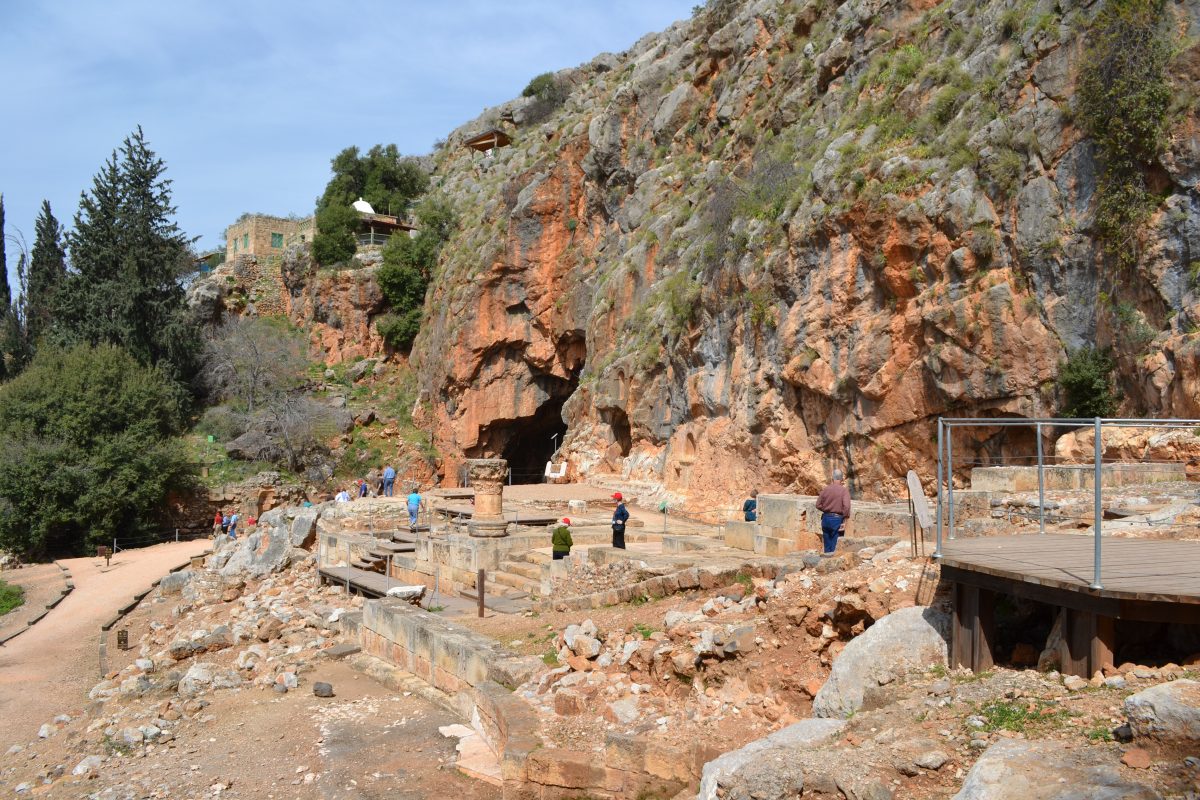
Jesus looked from his disciples down into the town of Caesarea Philippi, a bustling city 30 miles north of the region of Galilee. He watched the frenetic pace of the people as they finished the work of the day and headed home. He lifted his eyes toward the sheer cliff on the north side of the city. It rose 150 feet above the lush, green valley below. He knew the streamlet gushing from the massive grotto on the western edge of the cliff were the headwaters of the Jordan River as it flowed south to the Sea of Galilee.

The cavern was said to be the birthplace of Pan, the Greek god of nature. Worshippers still brought their offerings of fruit and grain, laying them at the altar.

His vision shifted to the gleaming temple of white marble which Philip, the region’s ruler, dedicated to Caesar Augustus, the Roman emperor whom the people considered a god. Before these temples and altars were built, Jesus knew his history well enough to know the whole area stood as a center dedicated to the worship of Baal, the ancient Canaanite god.

It was a deeply reflective moment. Jesus contemplated the scene spread across the valley below. Considered all he had done during his ministry. Felt his gut tighten when he thought about the cross to come. Had anything he said and done made a difference? Before he began his final journey to the cross Jesus needed to know. Did anyone really know who he was?

He turned to his disciples quietly talking and laughing in the ease of friendships forged by common experiences. His words cut through the comfortable conversation. “Who do the crowds say I am?”

They turned toward Jesus in a rustle of robes and shuffling feet. They were used to his probing. Knew an answer was required. “John the Baptist,” one blurted. “One of the old prophets brought back to life,” announced another. “Elijah,” another proclaimed.

Jesus glanced again at the city below, lost in thought for a moment. Then, he turned back to his disciples. “But what about you? Who do you say I am?”

Jesus held his breath, looking into the eyes of each of his closest friends. Their answers would make all the difference. Would he see blank stares of incomprehension? Would he catch so much as a spark of understanding that meant he had at least lit a torch in their hearts. He waited. Felt his heart thump anxiously in his chest.

How his soul must have soared when Peter stood among them, looked at his friends, then to Jesus, knowing that he answered for all of them. “You are the Messiah. The Anointed One of God.”

That moment sealed the deal for Jesus. He then taught them intently about the events to come. Suffering. Rejection. Death. Resurrection. Prophecies that left them frightened and confused. Then, he challenged them with words that echo still in the ears of every believer today.

“If anyone would come after me, he must deny himself and take up his cross daily and follow me. For whoever wants to save his life will lose it, but whoever loses his life for me will save it. What does it profit a man to gain the whole world and yet lose or forfeit his very soul?”

The call of Christ demands that we deny self. It’s not a matter of dismissing our lives as unworthy or inconsequential in the grand scheme of God’s plan. Denying ourselves means to set aside our egos. Deliberately subordinating our will to the will of God. Opening our lives to the possibility that his plan for us is greater and more meaningful than the one we planned for ourselves. It means turning from where we wish to go to follow the path he lays before us.

The call of Christ demands that we take up his cross. Not just any cross…his cross. Jesus knew the horror of what lay before him. When Jesus was a boy, a Jewish rebellion in Sepphoris, just four miles from Nazareth, ended badly for those who fought against the Roman empire. Historians tell us more than 2,000 rebels were crucified, set in lines along the roadside as a frightful reminder of the power of Rome.

To face the cross was a vicious reality burned into the back of his mind. He, as well as anyone, knew what it meant to take up the cross. It stood as the inevitable certainty he faced by declaring a kingdom of God that rocked the boats of the pious and the political.

Today, taking up the cross of Christ means to live our life with the same focused commitment to God’s purpose that Jesus did. It means preparing for rejection in a world that does not understand. Letting nothing… no thought of ridicule, persecution, or embarrassment…prevent us from doing that which we know God desires us to do. It means looking at a world that dismisses Jesus as irrelevant and proclaiming in word and deed, “I belong to Christ!”

Denying ourselves. Taking up his cross. These are steps in the right direction. If we stop there, however, we miss that which matters most. The call of Christ demands we follow. It means spending our lives, not hoarding it. It means giving of ourselves, not taking from others. It means not playing it safe, but doing the right thing at all times and in all situations. It means not getting by with as little as we can for the cause of Christ, but investing ourselves completely in his ministry.

The way of the world always seeks to gain advantage over another. The goal of the world is to amass more wealth, power and glory than the guy next door. Jesus would answer that unbridled ambition with this question. Where is the eternal profit in that way of life? Jesus said one saves his life when he loses it in service to others.

As believers in Christ we have been called to follow the lead of Christ, not always knowing where it will take us. Doors open and doors close. Following his lead is not always easy, but it is always best.

I’m reminded of the old invitational hymn, Wherever He Leads, I’ll Go, written in 1936 by Baylus Benjamin McKinney. He penned the words to his poem after meeting with the Rev. R.S. Jones, a South American missionary who had been pulled from service. Because of a serious illness, he would not be allowed to return.

“What will you do?” McKinney asked his friend.

“I don’t know, but wherever he leads, I’ll go.”

From a simple conversation between two old friends poured the words that challenge us…challenge me…today.

“Take up thy cross and follow me,”
I heard my master say;
“I gave my life to ransom thee,
Surrender your all today.”

He drew me closer to his side,
I sought his will to know,
And in that will I now abide,
Wherever he leads I’ll go.

It may be through shadows dim,
Or o’er the stormy sea,
I take my cross and follow him
Wherever he leadeth me.

My heart, my life, my all I bring,
To Christ who loves me so;
He is my master, Lord and king.
Wherever he leads I’ll go.

The chorus of the song declares, “I’ll follow my Christ who loves me so.”

Wherever he leads, let’s go.