Prayer Warriors

Background Passages: Colossians 1:7-8; 4:12-13; Philemon 23; James 2:14-16

The great Protestant reformer, Martin Luther learned the need for deep spiritual concentration in prayer from his dog, Klutz. Luther said, “If I could only pray the way this dog watches meat …(beyond that one thing) he has no thought, wish or hope.” Effective prayer requires a singular focus.

One such prayer warrior, casually mentioned in scripture, poured his every thought, wish and hope into his passionate prayers for the believers in Colossae. Consider the example of Epaphras.

I suspect the long journey to Rome gave him time to reflect on the troubles plaguing the Colossian church as it resisted the heretical attacks of those who misunderstood and misapplied the gospel of Christ. After his conversion experience in Ephesus experienced at the feet of Paul, Epaphras took his missionary zeal 100 miles west to the cities of Colossae, Laodicea and Hierapolis.

As it was in other areas, the spread of Christianity faced a host of problems caused by those who wished to assimilate Christ’s teachings into the prevailing religions or philosophies of the day. Some Jewish leaders embraced the teachings of Christ to a point, but insisted that Jewish laws, rituals and traditions be embraced as a condition of salvation. Some Gentiles attempted to blend Greco/Roman philosophies with Christian teaching, but proclaiming a “secret knowledge” that made them more in tune with God. Other philosophers tried to meld Christian humility and servanthood with the joyless stoicism of self-denial.

Faced with all of these pressures upon the churches he served, Epaphras boarded a boat to Rome intent upon sharing his concerns with Paul, his spiritual mentor and guide. When Paul heard of the difficulties in the church, he penned a letter addressed to the churches providing instruction from the apostle to the believers. In the book of Colossians, Paul encouraging them to set aside the false teachings and focus instead on the teachings of Christ.

As he closed his letter to the Colossian church, Paul spoke highly of Epaphras, one of only three times this dedicated pastor was mentioned in the Bible. In the brief biblical references to Epaphras, he is called “servant of Christ Jesus,” “our beloved fellow servant,” “faithful minister” and “my fellow prisoner.”

Paul held this man of faith in high esteem, considering him a valuable member of the ministry team and a personal encouragement in his life. However, Paul’s reference to his friend reveals a great deal about Epaphras that I find instructive. He wrote,

“Epaphras, who is one of you and a servant of Christ Jesus, sends greetings. He is always wrestling in prayer for you, that you may stand firm in all the will of God, mature and fully assured. I vouch for him that he is working hard for you and for those in Laodicea and Hierapolis.”

Epaphras understood what we tend to forget. Our prayers tend to be incident specific, offered during times of personal need or want. Our prayers tend to be generic as we intercede for “them,” those whose struggles we see, but never really touch. Epaphras prayed differently.

Paul said, “He is always wrestling in prayer for you…” He offered prayers of intercession, lifting his congregation to the throne of God, laying their needs at the feet of Christ. Knowing what they faced…knowing that great was their need for the Spirit’s presence at a time when false teachers were pulling them in all directions…Epaphras prayed.

I suspect he did more than pray for the generic spiritual health of his church. He knew his people, his friends. He knew the unique struggles each individual faced. He knew their personal hurts, their unique desires, their individual weakness. He knew their joy, their devotion, their strengths. He prayed for each member of his congregation that God’s presence might be felt. God’s voice heard. God’s will obeyed.

How much more effective would our prayer life be if our first thought was not for our own needs or for a faceless crowd, but for the specific needs of the one? Praying not just for the universal needs of the Christian community, but for specific friends and family we know caught between the loving arms of God and the selfish pull of the world. Praying for friends and family that God’s joy might be made complete in them.

We learn another truth from this passage. “He is always wrestling in prayer for you,” Paul wrote. Epaphras prayed persistently and continuously for his people, lifting them up constantly to the Father. So great was his love for his congregation, their situation remained at the forefront of his heart. Though miles separated Rome from Colossae, Epaphras could not take his mind off their struggles. When you know those you care for are under spiritual attack and you cannot stand physically by their side, prayer provides a connection one to the other, linking your heart to theirs.

Thessalonians reminds us to “pray without ceasing,” not so a forgetful God will be reminded of our requests, but that we remain connected to those we love through a spiritual life line. Persistent and continuous prayer for another never allows the needs of another to get buried beneath the bustle of daily life.

Epaphras knew that effective prayer is labor intensive. Paul said, “He is always wrestling in prayer for you.” This servant of Jesus Christ agonized over the souls of those for whom he was responsible. They were that important to him. He carried their burdens as his own and that heavy responsibility left him seeking answers day in and day out, desperate to discover what he could say or do to bolster their faith and give them strength.

The word “wrestle” found in this text comes from a Greek word meaning “to agonize.” In a real sense, it paints a picture of competing for a prize. Figuratively, it suggests fighting an adversary. Both concepts ring true. The false teachers threatened the work of God’s grace, eternity’s highest prize, in the daily life of the Colossians. Those Epaphras opposed stood as enemies of the faith. True adversaries. He would fight them with every spiritual weapon at his disposal. Praying for the Colossians brought heartbreak and pain. The danger to their faith was never more real.

Epaphras labored in prayer over Colossae, Laodicea, and Hierapolis. Stretching his mind, his heart, his spirit and his soul, Epaphras’ prayers consumed his time, drew upon his strength and challenged his commitment.

Prayer that fails to burden the soul echoes as a hollow sound. Epaphras teaches us that prayer should compel us to go to the mat for those in need and should define who we are and that for which we stand.

Epaphras prayed specifically and intelligently for the people. He prayed that in the face of all that opposed them, they might “stand firm” in the will of God. That their faith might be “mature” and “fully assured” as they withstand the assault on their beliefs. We might have prayed for God’s blessing upon them, or God’s peace and presence… and God would hear that prayer. However, Epaphras prayed for specific manifestations of their faith in a troubled time. His prayer came with a stated purpose for personal spiritual growth and confidence that they did not walk alone.

The most effective prayers we utter are those that are backed by our own hard work. Paul reminded the Colossians of their pastor’s tireless effort on their behalf. “I vouch for him that he is working hard for you and those in Laodicea and Hierapolis.” It wasn’t enough to lay his concerns before God, Epaphras set out to make those prayers a reality in the lives of those he loved. He worked. He worked hard as God’s hands and feet to make his prayers a reality.

James tells us of the link between faith and works. “Suppose a brother or sister is without clothes and daily food. If one of you says, ‘Go, I wish you well; keep warm and well fed,’ but does nothing about his physical needs, what good is it?”

I suspect the same is true of our prayers. Casual prayers of blessing for those we know who are struggling sound like we simply wish them well. We need to back our prayers with our actions. In this way we serve as God’s conduit for the answers he provides.

Every day we encounter someone who lives life in turmoil. Will we wrestle constantly in prayer for the heart that is broken? Will we put ourselves to work to ensure that our prayers actually touch a life of another? Can we go to God with such fervor and focus there exists no greater thought, wish or hope beyond that for which we pray?

The lesson taught by this obscure Christian giant is a good one. Whose Epaphras will you be?

*****

Author’s Note: This devotional thought is the third in a series of posts about some of the unsung heroes of the New Testament. These men and women, in many ways, carried the responsibility of the spread of the gospel in first 50 years after the ministry of Christ. By putting together the limited biblical references to their work and filling in the gaps with a little imagination, we find ways in which we, as ordinary Christians, can find in the examples they set our own heart for ministry.

If you read this blog through my feeds on Facebook, Linked In or Twitter, you can subscribe to my blog and receive my blog twice a month via your email. Your email is not shared with anyone. Scroll up the right side of this page to the Subscriber link. Type in your email address and click on the “Subscribe” button. It’s as simple as that. You will then receive an email link every time I post something new. Thanks for reading.


In The Shadow of Saints

Background Passages: Acts 20:4; Romans 15:25-26; Ephesians 6:21-22; Colossians 4:7-8; Philemon 1; Titus 3:12; 2 Timothy 4:12

Hero worship is not the term I want to use. There is a connotation to the phrase that rankles and suggests blind admiration, unbridled trust and unthinking obedience. Susane Curchod Necker, an 18th century French writer, wrote that we should “worship your heroes from afar for contact withers them.” Though we all have heroes in our lives, blind adoration leads inevitably to disappointment. I’m not much for hero worship.

That being said, there are men and women throughout history whose influence changed the world for the better. These folks merit our respect. They have earned a measure of respect and admiration, from whom we can learn much. I suspect if I asked you to create a list of the five most influential people in history, there would be great commonality in our lists.

A social website called Ranker.com, recently published an article as a follow up to a survey they conducting asking people to rank in order history’s most influential people. In order among the top five selected were such notables as Jesus Christ, Isaac Newton, Albert Einstein, Leonardo di Vinci and Aristotle. Though you might include others, it would be hard to argue that assessment.

Look at it from your eyes of faith. If I asked you to list five men and women of faith who changed the world for Christ, I wonder who might fall on your list other than Jesus Christ himself? Whom would you peg as the most influential men and women of faith? Peter? Paul? James? John? As we read through the Bible, we find countless men and women whose acts of faith and witness stand worthy of our respect and admiration. Worthy of matching our actions to theirs. They are men and women from whom we can learn much about a life of service and commitment to the cause of Christ.

I can certainly create a list of godly men and women, but I find myself drawn to those who walk in the shadow of the saints. Outside the limelight, these men and women worked tirelessly to further the kingdom of God. I am convinced that the work of Peter, Paul, James and John would have struggled to find a solid foothold during that first century were it not for a faithful supporting cast.

He’s mentioned five times. Eight verses devoted to his life. Less than 100 words describe him and define his contribution to the spread of the gospel. I ask you to consider the influence of a man who Paul described as a “dear brother” and a “faithful servant.” Consider Tychicus.

From the province of Asia (modern day Turkey), Tychicus is first mentioned in Acts as a companion to Paul on his way back through Macedonia after the near riot in Ephesus caused by the shop owners who felt threatened by Paul and his teaching. Though scripture does not reveal it, I suspect Tychicus and others were equally targeted for sharing the gospel to the residents of Ephesus. Yet, such threats did little to deter his commitment to Christ and his willingness to follow Paul wherever he went.

Putting two and two together, given Tychicus’ service with Paul in Rome, allows us to assume he also accompanied Paul to Jerusalem to deliver the offering gathered among the Macedonian churches for the persecuted brothers and sisters in Christ. Given what we learn later about Tychicus, I suspect his presence encouraged the Jerusalem believers in their dark hours. He seemed to have that gift.

This “faithful servant” stayed with Paul during his imprisonment in Rome, continuing to minister to the apostle, meeting his personal, physical and spiritual needs. His day to day encouragement blessed Paul deeply. So much so that he regarded Tychicus with deep affection as a brother. Through the difficult days, Paul developed an abiding trust in Tychicus and his ability to do the hard work that needed to be done. His ability to handle the more sensitive assignments in leading and correcting a troubled church. Tychicus’ unassuming nature made him Paul’s perfect representative to the churches Paul established prior to his time in prison.

Two additional references to Tychicus find that Paul, desiring time with two young pastors while in Rome, sends his brother to Ephesus and Crete to relieve Timothy and Titus of their pastoral duties so they could visit the apostle in Rome. Paul trusted Tychicus to step in and serve as an interim pastor among two important congregations.

At one point, Tychicus left Rome at Paul’s request to deliver three important letters, two to the churches in Colossae and Ephesus. These early churches struggled in certain aspects of their faith and worried that the spread of the gospel would suffer as Paul languished in jail. Paul closes his letters in Colossians and Ephesians with subtle praise of Tychicus and his honesty and his ability to encourage those whose hearts were troubled.

“Tychicus, our dear brother and faithful servant in the Lord, will tell you everything, so you also may now how I am and what I am doing. I am sending him to you for this very purpose, that you may know how we are and that he may encourage you.”

The final mention of Tychicus may be his most difficult assignment. He did not make the journey to Corinth and Ephesus by himself. His companion along the way was a slave named Onesimus. Onesimus stole money from his master and ran away to Rome where he had a chance encountered Paul. The former slave heard the gospel proclaimed and received Christ as his savior. His love for Paul and his devotion to learning all he could learn about the teachings of Christ, endeared him to the apostle. I also suspect Tychicus served as a mentor to the young man.

Determine to set things right, Onesimus decided to return to his master knowing that his crime merited a death sentence. This was the third letter Tychicus carried in his pouch. Paul wrote the letter to the slave’s former owner, a Christian brother named Philemon, entrusting the inevitable conversation to Tychicus. One can read between the lines and see the encouragement and influence of Tychicus in turning a broken relationship between slave and master into a restored relationship in which the former slave could be regarded as someone who is “very dear to me (Paul) but even dearer to you, both as a man and as a brother in the Lord.”

Few of us will measure our influence on the faith to the level of Billy Sunday or Billy Graham. Few of us will pastor or serve in the country’s largest churches. That we demonstrate our faith in the shadows of faithful giants, or the shadow of a beloved pastor, is a marvelous tribute to the work of Christ in our lives. For if we left the spread of the gospel and the ministry of Christ to the mega-revivalists and the mega-churches, God’s word would fade into the annals of history.

Consider those like Tychicus who see the hungry and give them food; who see the thirsty and give them something to drink; who see the stranger and invite them in; who see the naked and find them clothes; who see the sick and care for them; who see those in prison and visit them; these are the day to day heroes that find a way to encourage those whom Jesus loves. Consider living a life like Tychicus.

In response Jesus says, “I tell you the truth, whatever you did for one of the least of these brothers of mine, you did for me.”

Tychicus sought no praise, no glory and I suspect would be just as happy if the Bible never mentioned his name. Yet, for me, he is a man who influenced the world one person at a time. That, my friends, is my definition of hero.

Author’s Note: This devotional thought is the first in a series of posts about some of the unsung heroes of the New Testament. These men and women, in many ways, carried the responsibility of the spread of the gospel in first 50 years after the ministry of Christ. By studying the words of Paul, we learn about these courageous men and women of faith. By putting together the limited biblical references to their work and filling in the gaps with a little imagination, we find ways in which we, as ordinary Christians, can a heart for ministry in the examples they set. Not all of us are called to the spotlight like Peter or Paul, but all of us can labor for the love of Christ in the shadow of those saints.


Faith Amid the Sorrow

Background Passages: Job 3:24-26; Romans 12:9-13

He sat on the ground covered in the dust, overwhelmed by all that occurred to him. He lost everything and faced rebuilding what remained of a shattered life. Shaken to the core by circumstances beyond his control, Job revealed the anguish in his heart.

“For sighing has become my daily food; my groans pour out like water. What I feared most has come upon me; what I dreaded has happened to me. I have no peace, no quietness; I have no rest, but only turmoil.”

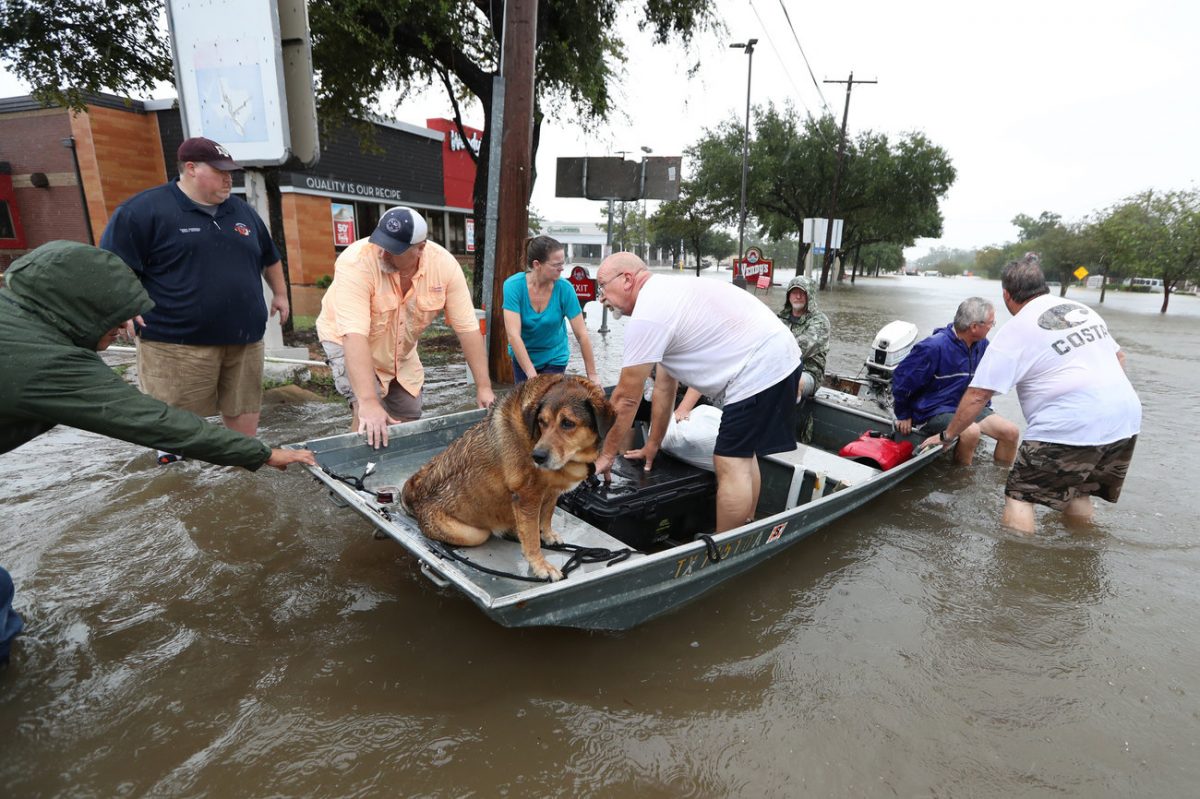
When I offered my last devotional post two weeks ago, my family and my community braced for what our weather forecasters called a “major flood event.” I know enough to know that forecasting remains ever an inexact science with constantly changing variables and frequently reflects the worst case scenario. Their suggestion that rains brought by Tropical Storm Harvey might exceed 50 inches seemed outlandish. This time they pegged it. My neighborhood received in excess of 51 inches. Other areas of Houston experienced more.

My family and I remain thankful our homes did not flood, but many across our area and all of southeast Texas were not as fortunate. During the storm it seemed it would never stop raining. The waters rose and fell in the streets and yards, depending on the strength of the rain at that moment, until the rivers, creeks, bayous and drainage ditches spilled over their banks. Then, the waters just rose.

Some people faced imminent threat to the lives of their families. First responders and complete strangers went out in waves of high water vehicles and small boats to bring thousands trapped in their homes to the relative safety of hastily improvised shelters. Many more thousands huddled on furniture or upstairs as the waters climbed inside their homes. By the time the rains stopped, thousands of homes were flooded.

Those who experienced the flooding stand in a mess not of their making and face rebuilding what remains of their storm-shattered lives. You can read Job’s words etched in their bewildered faces, “For sighing has become my daily food.”

Surveying the damage, many of them feel uncertain as to where to begin the process of cleaning up. What items must be discarded? What can be saved? For those on fixed retirement incomes or those without flood insurance, they wonder how they will find the funds to rebuild what was destroyed or replace what was lost? In the midst of such uncertainty, they find no peace. No quietness. No rest. Only turmoil.

Two things impressed me in Harvey’s aftermath. First, the victims of the flood who I knew to be followers of Christ, though obviously struggling at times to hold it together, remained steadfast in their faith. You see, sorrow and faith are not mutually exclusive. Job’s distress ran deep, but so did his faith. His heart bore the burden of his grief at the same time it welcomed the hope borne of his faith. Our friends and neighbors showed the same faithful resolve while grieving over all that was lost. I found their strength inspiring.

My church, like so many other churches and organizations, like so many individuals, jumped in to provide resources and labor to help victims of the storm begin walking down the road to recovery. Many of our people worked the shelter and processed thousands of requests for supplies of clothing and food donated from across the country. Our “mud out” teams gathered each morning and went to homes in our community to help friends and neighbors clean up from the storm.

God taught another lesson in the two weeks since the storm. Christians do not hold a monopoly on caring. Across the area, there were people of every background helping others in need. Basic humanity compels us to reach out to those who hurt. The world responds to dramatic need out of a sense of community service and charity. However, for followers of Christ, the motivation to help ought to exceed obligations of social concern and benevolence.

The Christian response ought to be grounded in love. The Greek language of the New Testament used four unique words for “love.” There is God’s love (agape) for his creation and his children. There is a romantic or sexual love (eros) and the love for a friend (philia).

Paul offered another word used only this time in the New Testament. It is the word storge. It is a love derived from natural attachment. The love a mother feels the moment she sees her newborn baby for the first time. The love flows automatically because of the natural connection between them.

Paul, in writing to the church in Rome, said the Christian response of human need must surpass social concern or civic duty. When facing human need, followers of Christ ought to demonstrate God’s love to everyone for no other reason than he created them in his image just as he created those of us who call him Savior. It is not a love that can be faked.

Look at what Paul said in Romans 12:9-13.

“Love (storge) must be sincere. Hate what is evil; cling to what is good. Be devoted to one another in love. Honor one another above yourselves. Never be lacking in zeal, but keep your spiritual fervor, serving the Lord. Be joyful in hope, patient in affliction, faithful in prayer. Share with the Lord’s people who are in need. Practice hospitality.”

Throughout the week as teams went into homes to jump start the process of recovery from the storm, this passage manifested itself in the lives of the volunteers time and time again. Not just in the things that were being done, but through whispered words of encouragement. The hug or the arm around a sagging shoulder. The expressions of hope. The prayers voiced aloud and uttered in silence. The sharing of resources.

The countless acts of love demonstrated over the past two weeks did not end the anguish for those who suffered so much. It is my hope that each piece of sheetrock and insulation removed made recovery come a little quicker; a little easier.

As I spent my time at work, I could not help but see God’s love at work as his people put their love and faith in action. Amid the ugly devastation of the past two weeks, I find that beautiful.

*****

Our prayers go out today for all of those in the Caribbean whose lives were forever changed by the devastation in the wake of Hurricane Irma. We pray for safety and comfort for the people of Florida who face the strength of the storm and the inevitable struggle for recovery in the coming days.

‘Little Faith’

Background Passages: Matthew 14:22-36; Mark 6:45-52; John 6:15-21

As I write today from the safety of my home in Pasadena, Texas, Hurricane Harvey slammed into the central Texas coast as a Category 4 storm. Our prayers go out to those most impacted by the storm. Here, the heavy rains began to fall last night and continue off and on this morning.

I’m reminded of friends who have children serving in the United States Coast Guard. Their search and rescue teams prepare themselves for moments like this. As the storm rages, there is all too often a boat unable to outrun the storm, putting lives of those aboard in jeopardy.

I’m amazed at the men and women who fly out in helicopters or battle the breaking waves in Coast Guard vessels to put their lives on the line for those trapped in the storm. I can’t begin to imagine the bravery required to drop into those rough waters to rescue a stranger in despair. Those heroes will tell you that their work is less a matter of bravery as it is focus and training.

The Bible tells us a story of a raging storm that threatened a small boat and its crew of 12 men. I heard it first as a child and it remains one of my favorite Bible stories today. It happened at a time when there was no Coast Guard to offer assistance. The full account of the dramatic event can be found in three of the four gospels.

Hours before this story actually began, Jesus fed more than five thousand people with a prayer and a small basket of bread and fish. The crowd saw his miracles, but missed the meaning of his message. John tells us they wanted to make him king on the spot. Jesus considered such talk a distraction and determined to avoid the temptation to abandon his Father’s purpose. Dismissing the multitude, Jesus sent his disciples across the Sea of Galilee while he went up on the mountain to get away from the distraction and pray. To focus again on what God called him to do.

That night as the disciples headed toward Capernaum on the northwest shore of the sea, a strong wind blew, turning the placid water into an untamed tempest. For hours the 12 disciples fought the storm, water-soaked and weary. They made little headway. Still miles from the safety of the shore, battered by wave and water, tired to the bone, a ghostly apparition approached their vessel. The disciples cried out in terror, certain the figure was an omen of doom.

Above the roar of the storm, they heard a voice, “Take courage! It is I. Do not fear.”

Peter, recognizing the voice of Jesus, asked his master’s permission to join him on the water. Jesus called out to him, “Come.” I cannot imagine the thoughts running through his head as he threw himself overboard into the teeth of the storm. With a hand on the wale of the boat, Peter leaped into the roiling sea at the invitation of Jesus and began to walk on the waves.

Peter sloshed through the waves toward Jesus. Waves crashed around his ankles with every step. The warning cries of his friends turned into stunned silence as Peter walked determinedly through the storm. In one devastating moment, a breaking wave splashed across his face or a flash of lightning and a cascade of thunder drew his attention to the storm swirling around him. Peter took his eyes off his Lord. As he sank into the sea, sputtering in fear as each wave crashed over his head, Peter called out for Jesus to save him.

Matthew says that no sooner had Peter voiced his plea, Jesus stretched out his hand, raising Peter once again to the surface of the waves. Peter clung to Jesus’ arm. He coughed and sputtered, spewing salty seawater from his lungs. Jesus’ words as he lifted Peter into the safety of his arms seemed to condemn the disciple. “You of little faith.” A reprimand. A put down.

According to one commentary, those four little words that seem to convey disappointment in English, are rendered in two words in the original Greek. “Little Faith.” Almost a term of endearment. A lighthearted teasing among great friends. “Why do you doubt?”

Then, Peter, arm and arm with Christ, walked again on water as Jesus took him back to the boat…while the waves continued to crash and the wind continued to blow. It wasn’t until they climbed back aboard that the storm ceased.

This wonderful story reminds me of three things.

Think about it. At that stormy moment when Jesus said, “Come,” the water, to Peter, seemed a safer place to be than the boat. With his eyes locked on Jesus, the wind and waves were less daunting. In fact, with his eyes on Jesus, Peter no longer noticed the storm raging around him.

As Peter jumped from the boat and began walking toward Jesus, the storm kept blowing. The tempest didn’t stop when his feet touched the sea. Rather, Peter quit looking at the obvious and turned his eyes on Jesus. For those few seconds, his faith blocked out the howling wind and the crashing waves.

Following Christ requires a measure of courage. A leap of faith if you will. Heller Keller said, “Life is either a daring adventure, or it is nothing at all.” Born without sight, hearing or speech, Keller overcame every obstacle to inspire millions to live a courageous life.

Peter, like the rest of the disciple band, feared for his life in the worst of the storm. Yet, when his eyes locked on Jesus and he heard his call to “Come,” Peter’s fear evaporated and he threw himself upon the waves without hesitation, another step in a daring adventure. The rest of the disciples continued to cling to the boat under a cloud of dread and despair. Peter’s first step was a courageous act of faith.

Life is a risky endeavor. God calls us to act on faith. Taking steps into the dark waters. Not settling for less. Not accepting the status quo. When we hear the spirit’s call to “Come,” we must jump out of the boat. If God calls, the boat is no longer the safest place for us to be. Those of us who are unwilling to take risks, will never discover the exhilaration of walking on water…of discovering what living in faith is all about. We will never have all the answers before we make our decisions. Faith remains a mystery if we wait until we have all the answers. There is power for us in that first lesson.

There is more this story can teach us.

Whether the water splashed against his cheek or the wind picked up its intensity, Peter lost his focus. When he looked away from Jesus and into the teeth of the storm, he lost his courage. He feared for his life. He sank into the sea. How easy it is to become distracted, especially when the storm around us is raging. Our concentration on Christ breaks. We focus instead on the problems we face.

Life is filled with turmoil. Issues that distract us from that which God wants us to do. In those times, our natural impulse is to allow our fear to trump our faith. We must resist those distractions. If the Coast Guardsman focused on the strength of the waves, he might never jump into the water.

Jesus and Peter provide two ways of dealing with distractions. When, the multitude wished to make Jesus their king, Jesus sent them away. He removed himself from that which might distract him and went up to the mountain to pray. There are certainly times when we can leave the distraction behind and spend time in prayer to the Father.

Like Peter, however, there are times when the distractions press so hard on our hearts that we begin to falter in our faith. The problems are beyond our control and tend to overwhelm our senses. Peter made it through the storm as long as he kept his eyes on Jesus. When the storm intruded into the peace in his heart, Peter lost it. Lost his focus. Lost his connection to Christ. As hard as it may be at times, we must always keep our eyes on our Lord, especially when we’re in the middle of one of life’s many storms.

There is one final message that shines like a beacon in the stormy night. When Peter found himself treading water, he called to Jesus for rescue. In his deepest fear, he knew to whom he must call. With an outstretched arm, Jesus lifted Peter from the water and…here’s a point we often miss…Peter and Jesus walked together, back through the storm, and climbed into the boat. It was only then, that the winds stopped blowing and the waves stopped crashing.

Faith does not dissipate the storm. Just because our fear grips us as the ill wind blows, Jesus does not take the storm away or remove us from its impact. Rather, he lifts us from our deepest despair and walks with us through the waves that would engulf us.

Christ does not abandon his followers to the storm. When needed, he reaches out for us. Challenging us rather than chiding us, he calls us, “Little Faith.” He probes our hearts, “Why do you doubt?” And, to prove his point, he walks with us on top of the water until the winds no longer blow.

So, here are the questions I must ask myself.

When he says to me, “Come,” will I jump from the boat? Will I walk on water?

As I live my life of faith, will I keep my eyes on Jesus or will I let the storms that come distract me from the life he has called me to lead?

When I falter, and I will falter, will I call upon his name and allow him to walk with me through the storm, or will I sink into a new wave of despair, struggling to keep my head afloat?

Those are good questions for all of us. Upon what are you focused today? The storm or the savior?

How Firm A Foundation

Background Passages: Matthew 7: 24-27; Luke 6:46-49

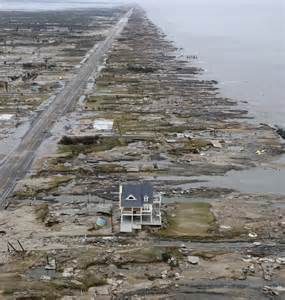
In 2008, Hurricane Ike crashed into the Texas Coast as a strong Category 2 storm, inundating Galveston and the inland counties with 19 inches of rain across a two-day period, winds sustained at 110 miles per hour and a storm surge of about 17 feet. The devastation, particularly along the eastern shore of Galveston Island, was almost total. A single home on Bolivar Peninsula survived the storm. Ike had been a devastating storm.

As we have done for the past 35 years or so, my wife’s family gathers in a rented beach house on Galveston Island to enjoy time together. We began this journey with my wife’s parents and her siblings and a couple of our children. This year, my wife’s siblings and all our children and grandchildren came together…25 of us at one point, including 12 grandchildren, all but one under the age of seven. I can only describe the week as heavenly chaos.

The beach house that is our home this year, sits in a single line of similar houses just yards from the beach. One can sit on the deck of any of these homes as the high tide reaches within 60 feet of their foundations. Ideal in times of calm, I can only imagine the threat a storm like Ike would pose to these beach-front properties.

Strict building codes require thick foundations and deep-set pilings elevating the first livable floor to a height of between 12-15 feet. The key to surviving a storm, according to the architects, is the strength of the foundation. It is a lesson driven home again by the tide surge during Ike.

A carpenter by trade, Jesus taught a similar lesson to all who would listen. He questioned why anyone would call him Lord, the boss of his or her life, and not do as he says. He taught that those who hear and obey are like the wise builder.

“They are like the man building a house, who dug down deep and laid the foundation on rock. When a flood came, the torrent struck that house but could not shake it, because it was well built. But the one who hears my words and does not put them into practice is like a man who built a house on the ground without a foundation (or the man who builds his house upon the sand alone.) The moment the torrent struck that house, it collapsed and its destruction was complete.”

In such a simple illustration, Jesus gives us powerful lessons on what it means to commit ourselves fully to him. First, both houses faced the same storm. Jesus never suggested that the home that withstood the torrent faced a lesser storm than the one that was destroyed. The winds came. The rains fell. The streams flooded. The houses both faced the same dangers. It is not a matter of if the storms will blow. Jesus’ story tells us the storm will come to all of us. Our task is to prepare ourselves for that eventuality. That knowledge takes us to the second point.

Nothing in Jesus’ words leads us believe that the men constructed their houses differently. Unlike the three little pigs in the fairy tale who used different construction materials and methods, we can assume each man built a well-constructed house for his family. Quality materials. Quality workmanship. Yet one man’s house weathered the storm while the other crumbled beneath its strength.

All of us seek to build a quality life. Some focus on philosophy. Some on positive thinking. Some on good works. Yet none of these concepts, in and of themselves, are strong enough to weather the storm.

Jesus identifies only one difference in the homes as they were built. The foundation. The home built on a firm foundation survived the storm when the one built without that solid foundation failed.

It is a simple illustration. It’s not a question of if the storms or troubles will enter our lives. It is a matter of when. Storms are a given. It’s not a question of how strong we are personally. How well we feel our lives are put together. Our strength alone, our philosophy of life, is insufficient in the face of the even the most ordinary pressures of life.

We see the impact of trouble on the lives of friends and family. How does one person survive calamity while another crumbles beneath its weight?

Jesus tells us the answer rests with the foundation upon which each life is built. We make choices. We choose to live life our own way, in our own strength, failing to drive the piling of our faith to the bedrock. Far too many people lay a superficial foundation in something other than Jesus Christ that is insufficient to weather the storms, yet they move in anyway. Living life that way is a risky proposition.

Jesus teaches us that kingdom living requires a solid foundation, based both on listening to his word and acting upon it. Putting his teachings into the practice of daily life. Being obedient. When we set our foundation on his strength rather than our own, when we act upon the knowledge we gain through our experiences with him, when we immerse ourselves in his teaching, the rain, wind and flood cannot shake the foundation of our lives.

Finally, contractors pour the foundation, giving it time to cure before they start erecting the building upon it. There is a measure of truth in letting the foundation of our faith cure. Allowing it to grow in our hearts. Giving it time to cure. Such is the lesson of a lifetime of living in his grace. Jesus spent 30 years preparing his foundation before he began his ministry. God granted him time to drive the pilings deeply so he would be ready for the challenge of the cross.

The real joy of life is taking the time to let Jesus teach us his will and way throughout the years. To sink our foundation pilings deep into the bedrock of his word and resting in the knowledge that nothing can destroy our lives when planted firmly in his grace.

The old hymn, “How Firm Our Foundation” closes with these words:

The soul that on Jesus doth lean for repose,
I will not, I will not, desert to his foes;
That soul, though all hell should endeavor to shake,
I’ll never, no never, no never forsake.”

My prayer is that it our foundation would be that secure all the days of our lives.


What Would Our Lives Be

Background Passage: I Samuel 16:7

Dallan Forgaill, a sixth century Christian poet from Ireland, penned the words to Rob Tú Mo Baile in Old Irish. The poem proclaims a message that has endured for more than a millennium. Legend says that Dallan, a nickname which literally means “little blind one,” lost his sight as a young man because he studied so long and so intensely.

Through the years, monks used his poem as part of the liturgy of the church, it’s words deeply meaningful. More than 1,100 years later in 1905, the poem was finally translated for the first time into English by noted linguist Mary Elizabeth Byrne and adapted as a hymn seven years later by Eleanor Hull. We know the song as Be Thou My Vision.

I came across this version of a song I’ve heard all my life and was reminded again of how often deep spiritual truth is conveyed through words and melody. Too often we see those around us…value them…based upon how they live and what they look like. The lyrics of this song speak to the way Christ sees past the outward circumstances and external appearance straight into the heart. I Samuel 16:7 spells it out with supreme clarity.

Samuel stood confused as God rejected all the brothers of David as king and instructed the priest to anoint David instead, the youngest and smallest among them. “But the Lord said to Samuel, ‘Do not look on his appearance or on the height of his stature, because I have rejected him. For the Lord sees not as man sees: man looks on the outward appearance, but the Lord looks on the heart.”

This rendition of Be Thou My Vision, performed by Eden’s Bridge, a Christian band whose harmonies align well with elements of Celtic music, expresses the profound faith of one whose heart’s desire longs to life unfold through the eyes of Christ. As you listen to the melody, take note also of the lyrics:

“Be thou my vision.” What would it mean to our lives if we looked at the world around us with the eyes of Christ? How would it change the way we treat each other? The love of Christ is unconditional. Love that looks beneath a sometimes ugly surface and sees the heart’s deepest need. A love that sees the deepest need of our fellow man and acts redemptively in that person’s life. The song reminds us when the Lord of our hearts opens our eyes and becomes our best thought of the day his presence can light up the dark places that hide the inner hearts of those around us. Imagine how differently we might think and act.

“Be thou my wisdom.” What would it mean to our lives if we let our thoughts be God’s thoughts? His wisdom our wisdom? How would it change our actions and deeds if we allowed the Holy Spirit to dwell with us every hour of every day? Imagine the struggle we could avoid and the hurt we might no longer cause ourselves and others if we relied on his wisdom instead of our own.

“Be thou my armor.” Amid the onslaught of the world’s temptations, what would it mean to our lives if we stood in the strength of God, allowing his presence in our lives to shield us from the traps into which we stumble and fall? To protect us from the evil we too readily accept in our lives? Imagine what it would mean to us and those we love if we rested daily in the power of Christ?

“Be thou my treasure.” What would it mean to our lives if we spent less time worried about gathering the riches of the world or the praise of others and banked instead on the heavenly inheritance of grace that comes when we accepted Christ as savior? How different would our lives be if we stored up the treasures of heaven rather than the riches of the world? Imagine the freedom that comes from the absence of worry about material things that really don’t matter.

“Be thou my victory.” If we saw the world through the eyes of Christ, victory in life is ours. The joy and contentment only he provides is ours. The eternity he promises is ours. And, nothing that happens in this world, nothing anyone does to you, changes any of that.

“Be thou my vision.” I know. Allowing Christ the kind of access into our hearts to enable us to see the world through his eyes is easier said than done. We fight it so. But, what would our lives be and how would our lives change if we made this song our prayer as we wake each morning?

“Be thou my vision, O Lord of my heart.”

The Elephant in the Room

Background Passages: John 10:30-34; John 14:1-11

Given our difficulty as Christians in handling some of the social issues of the day, it seems we have a hard time understanding the true character and nature of God. We make attempts to classify him by putting God in a box of our own creation. We define him on our terms and, too often, in our image. If we need God to be anti-immigrant, we find a way to make him so. If we need God to take a stance on health care for the poor, we make it for him. If we need God to smite a specific nation, we find a way to justify the smiting.

It has been that way since the beginning. Mankind has always sought to define God. It’s why the ancients worshipped idols. Why they invented a god for every act of nature. Throughout history mankind has defined God within the limits of his understanding. God knew it would happen when he created us, knowing one day he would reveal himself to his creation in a special way.

I remember my third grade teacher, Ms. Wallace, reading a specific poem in class. It made me laugh. John Godfrey Saxe, a 19th century American satirist and poet, penned his poem The Blind Men and the Elephant in 1874, his take on an old Hindu story. Though entertaining, I did not find it particularly provocative until it was read again in my university philosophy class. The poem, as interpreted by a number of West Texas philosophers, became emblematic of the search for moral truth and necessity of religious tolerance.

I stumbled across the poem again this week in my study. Allow me to set aside the extended philosophical and theological debate with apologies to the original Hindu storyteller and to Saxe.

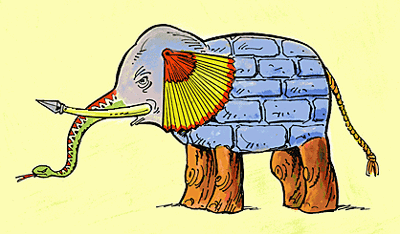
The poem, based on an old Hindu text, tells the story of six blind men who had never encountered an elephant. When given the chance to get up close and personal with the massive beast, they each touched a different part of the animal. One the elephant’s side. Another its tail. One its trunk. Another its ear. And, so on. When asked, then, to describe the elephant, each responded within his only frame of reference. Why, certainly, the elephant was like a wall…a rope…a snake…a fan…

Take a look at the last two stanzas.

And so these men of Indostan
Disputed loud and long,
Each in his own opinion
Exceeding stiff and strong,
Though each was partly in the right,
And all were in the wrong.

So, oft in theologic wars
The disputants, I ween,
Rail on in utter ignorance
Of what each other mean
And prate on about the Elephant
Not one of them has seen!

Work with me here and forgive the metaphor. God wants a relationship with us. He wants us to know him. We were unable to fully grasp his character and nature as long as God stayed in his heaven. So, he became the elephant in the room, introducing himself to the world through his son Jesus Christ. He sent his son into the world to walk among us, to reveal the nature and character to God to us in the words he spoke and the ministry he performed.

Still we struggled to understand. As Jesus prepared his disciples for his death on the cross and the inevitable time when they would carrying on his work without his physical presence among them, the disciples had a hard time putting Jesus and God together.

Jesus offered comfort amid their confusion. “Do not let your hearts be troubled. You believe in God; believe also in me.” He told them he would prepare a place for them in his father’s house and that they knew how to get there. Thomas, ever confused, confessed his lack of understanding. Jesus said, “I am the way, the truth, the life…If you really know me, you will know my Father as well.” In the haze of uncertainty, Phillip asked Jesus to “show us the father. That will be enough.”

Jesus’ sad response to Phillip explains to us how we can begin to know the character and nature of God. “Phillip,” Jesus said, “don’t you know me, even after I have been among you for such a long time? Anyone who has seen me has seen the father…Believe me when I say that I am in the Father and he is in me or at least believe in the evidence of the works themselves.”

So if we have trouble understanding the character and nature of God, we need look no further than the life and ministry of Jesus Christ. Our understanding of him, grows the more we touch him. The more we experience him. So, like the blind men with the elephant, if we limit our experiences with Christ we will never know all we can about who he is…who God is.

You see, God is not passive and silent, forcing us to guess about his nature and what he expects of us. He tells us what he likes and what he expects. God, in Jesus Christ, gave us a standard by which to measure our actions and our thoughts.

We don’t have to grope in the darkness to understand God from a limited perspective. Our understanding comes through the direct revelation of God through Jesus Christ. No other religion makes a similar claim. Jesus declared it clearly and succinctly. “I and my Father are one.” He declared to his disciples, “If you have seen me, you have seen the Father.”

How much more would we learn of God if, unlike the blind men, we didn’t stop with that first touch? God calls us to look beyond the nail-scared hands, as important as that experience might be. Watch, listen, and learn from the one God sent into the world to show us how to live.

Through God’s Eyes

Background Passage: Ephesians 1:18-19

As the story goes, Cambridge University hosted a debate between a learned science professor, a self-declared atheist, and a Christian pastor. The professor offered his reasoning for asserting God “existed” only as a figment of human imagination. Grounded in rationale thought and scientific understanding, the professor offered that no rationale human being could look at the universe and believe in a Creator God, much less one active in the world.

The Christian pastor countered with a quick argument. Getting the professor to acknowledge that there is still much in the world that science and rationale thought cannot explain, the pastor suggested that it might be possible that God exists within that body of knowledge yet unknown. That someday man might discover through rationale thought and scientific understanding that God does indeed exist. The Christian pastor claimed victory when the scientist agreed to that possibility.

It makes a good story, I suppose, but a God that can be explained by some unknown data set, seems somehow less…Almighty or Sovereign. To prove God’s existence using some aspect of human understanding seems to me to thwart the purpose and power of faith.

Noted theologian C. S. Lewis, sadly no relation, offered a statement in his work entitled, Is Theology Poetry? that hit the nail on the head. He wrote, “I believe in Christianity as I believe that the sun has risen; not only because I see it, but because by it I see everything else.”

Lewis embraced faith over fact because his belief transformed the way he saw the world. Faith internalized and deeply held allows us to see the world around us, and the people within it, through God’s eyes. And that, I feel, is a significantly different world view that seen by those who live without a personal faith in Christ.

Given the chaotic and confused condition of life in the 21st century, we need our faith, our Christianity, our ability to see the world through the eyes of God, to make sense of things. How is a child of God to react when the world around us chooses to confront rather than console? To argue rather than understand? To divide rather than embrace? To hate rather than love?

If we see the world and all within it are, through the lens of the true faith, we accept that we carry an incredible responsibility to live as Christ lived. Instead of taking part in the divisive dialogue, we should encourage one, through our witness and walk, to console. To understand. To embrace. To love as Christ loved us.

The sun’s light illuminates all that we see. Because it does, we know it is real. The Son’s light reveals the world to us in its splendor and its ugliness. We can share its splendor, unleashing its beauty so it can shine in the face of ugliness. If we choose to live in him, we can see the world as he does—using the extraordinary vision with which he blessed us to bridge the distance between the Lord who loves and lost and lonely among us.

I have to admit the world I see today is a shadowy place, filled with uncertainty and chaos. Though I try to see through my Father’s eyes, I have a hard time wrapping my head around hatefulness. Lewis said it is his faith in Christ that opens his eyes. Paul took it a step further when he prayed for the believers in Ephesus.

“I pray that the eyes of your heart may be enlightened in order that you may know the hope to which he has called you, the riches of his glorious inheritance in his holy people, and his incomparably great power for us who believe.” Ephesians 1:18-19.

Without God’s corrective vision, I look at the world and feel…hopeless. Paul tells me it can be different if I let God adjust or enlighten the eyes of my heart. When I can see the world through his eyes, I find hope and purpose.

Scotty Smith, pastor of Christ Community Church in Franklin, TN, writes a blog for The Gospel Coalition. He summed it up better than I ever could in this prayer to God.

“…this text makes a ton of sense to me. Apart from the work of your Spirit and the corrective lens of the gospel, it will be impossible for me to see what you intend for me to see with awe-producing clarity. So, indeed, Lord, open the eyes of my heart. Heal my shortsightedness, my far sightedness and the astigmatism of my soul. I want to see all things from your perspective, including the hope to which you have called us. To see with the eyes of hope means that I will be able to discern your heart and hand at work everywhere.”

I particularly like that last sentence. When we see through the eyes of our Christian faith, the eyes of hope, we can see God at work in all things. We see with awe-producing clarity our place in his redemptive work. Understanding that, I no longer see this world as an ugly place. It is a field ripe for the harvest.

Don’t Look Back

Background Passages: Luke 9:57-62 and Philippians 3:12-14

The big day had finally come. To a young boy growing up in the 1960s on a cotton farm, each day brought a series of chores to be done. Most were routine and boring. Those I deemed “exciting,” like jumping on the tractor and plowing the field, were the privileges of age and responsibility. When deemed old enough and responsible enough, my Dad entrusted me with an old, yellow Case 400 tractor and a plow called the “lister.” We used the lister to prepare the fields for planting. By tilling the soil in this way, we cleared the field of weeds and old stalks and built the furrows and ridges, or “beds,” necessary for planting.

Hoeing the field, slopping the hogs, moving the irrigation pipe were mind-numbing work. Driving the tractor stood as a rite of passage…at least it was to this 12-year-old boy. Listing was one of the first “real jobs” my Dad assigned me as I was growing up. “Real” being defined as anything involving a tractor and plow. I remember burying my excitement in a cover of feigned indifference, but inside, I was pumped.

As I drove the tractor to my assigned field, Dad followed in his dusty Dodge pick-up. When we arrived, he jumped from the truck and showed me where he wanted me to begin. He explained the hydraulics and showed me how to drop the disk to mark the next row. Dad set the disk and drove the first few rows, straight as an arrow, with me riding along watching…a “do as I do” moment.

Listing was one of the first steps in the annual farming process. The planter followed the rows created by the lister. The cultivator followed the planter as the cotton grew to remove weeds and mix and incorporate the soil to ensure the growing crop had enough water and nutrients to grow well. So, if the rows created by the lister were not straight, it made the field difficult to work.

I should note that the rows my Dad plowed as my template looked as if they were drawn by a ruler. Straight as an arrow stretching a quarter mile across our West Texas farm. He had a knack for it.

The task appeared simple to me. Align the front wheel of the tractor with the line drawn by the disk and my rows would be as straight as Dad’s. As he climbed off the tractor and bounded toward his truck before leaving me alone to my work, he told me to concentrate on the line ahead of me and “don’t look back.”

Looking behind you as you plowed was the surest way of getting off line. I scoffed inwardly at Dad’s advice. How hard could it be to drive in a straight line?

It turns out that laying that perfect row requires concentration a 12-year-old boy finds difficult to maintain. I remember spending a great deal of time looking behind me, checking on my progress. Every wiggle I saw heightened my anxiety about the quality of work, compelling me to look time and time again where I had travelled.

The more I worried with it, the worse it looked. My quarter mile rows meandered through that red soil like a copperhead snake. Dad laughed when he saw it. I eventually learned the lesson he taught though I was never quite as good as he was.

God reminded me of that moment in my childhood as I read a passage in the Gospel of Luke. It seems Dad’s lesson about farming was as old as the Bible and applies just as neatly to life.

The crowd that followed Jesus generally included his closest disciples and others whose hearts were captured by Jesus message and ministry. They professed a faith in him and a desire to follow wherever he led them. As the 12 disciples discovered, the requirements of discipleship must be wholeheartedly embraced if we are to live to the fullest the life he wills for us.

One day as Jesus journeyed down the road followed by an interested crowd. A man came to Jesus pledging to follow him. Jesus needed him to think seriously about the commitment he was making. Jesus had “no home, no place to lay his head.” Following him meant a life of sacrifice and uncertainty. Jesus wanted more from the man than an ill-considered impulse decision that circumstance made hard to sustain. Count the cost, Jesus suggested, before you make a snap decision.

Jesus called out to a second man in whom he saw great promise. “Follow me.” Though willing, the man felt torn by the needs of his family and the responsibilities of discipleship. Jesus told him to get his priorities straight. God’s call required complete devotion to God.

The third man provoked a harsher response from Jesus. The man promised to follow Jesus but asked for time to say goodbye to those he loved, his heart divided between his desire to do as God asked and his love for his family and friends. He said, “No one who puts his hand to the plow and looks back is fit for service in the kingdom of God.”

The Greek words translated for “looks back” paint a picture of one constantly and continuously looking back at what he left behind. A picture of someone reluctant to let go of the things of the world rather than to fully commit life to God. The more we look back, the more likely we are to walk a wavering line of faith life that constantly strays from the path God intends for us.

The lesson for those of us who follow Christ emerges clearly in the conversation Jesus had with the three would-be followers. We must give ourselves completely to the call of Christ by counting and embracing the cost of discipleship and making God’s work the most important thing in our life. Following Christ has never been easy, but doing so in a fractured world that demeans and diminishes faith grows even more difficult. It is made harder when important things of life pull and tug at us from every direction. We must follow Christ despite the hardships, heavy hearts and home ties that block us from giving ourselves completely to him.

God calls us to put our hands on the plow and get on with the work of faith, creating a straight row that makes it easier for him to accomplish his future work. Human nature and the subtle work of a tempter compel us to look back upon the mistakes we’ve made, those sins in our lives that seek to convince us that God cannot possibly use such a flawed vessel?

Certainly, it may be good to glance behind us on occasion, to revisit our mistakes, as a reminder of how easy it is to fail God. Yet, to dwell in the misery of our past failures inhibits our ability to be useful in service ministry, makes us feel unworthy of the purpose to which we have been called.

Just as troubling are those times when we think wistfully of the “good ol’ days” when life and faith were easier. Today is the time we have been given. Looking back and wishing the world were different prohibits us from seeing in front of us the God-directed opportunities that allow us to demonstrated his love for a world that can no longer plow a straight row.

Don’t look back, Christ says. Give yourself wholly to your call and count the cost. Christ cannot accept our conditional or half-hearted service. Nor can we spend more time looking back at our past, reveling in a simpler time or lamenting our failures. He asks us instead to look forward; to press on. To open ourselves to the possibilities of service and ministry.

Paul captured the same message in his letter to the Philippian church as he declared that he could not fully grasp all that God called him to be. “Brothers, I do not consider myself to have embraced it yet. But this one thing I do: Forgetting what lies behind and straining forward to what lies ahead, I press on…”

*

Experience is a great teacher. I eventually learned to rely upon that handy, pivoting disk on the plow that I raised and lowered as I traversed the field. If I kept my eyes fixed on the line as it ran into the distance, put my tractor wheel in its furrow and followed it to the end, my rows rarely wavered.

For those committed to Christ, Jesus drew the line in the sand with his life as the perfect example to follow. Most of us recognize that our line drifts away from the line Jesus walked. Our mistakes compound when we spend too much time looking behind us. Let’s keep our eyes focused constantly on him and the path of righteousness he walked as an example to all of us.

I promise, it will make the rest of life that much easier to plow.

New Morning, New Mercies

Background Passage: Lamentations 3:1-25

You’ve seen them in magazines at the grocery store checkout line. Heard them listed in television newscasts. It’s that time when we look back upon the preceding 12 months and remember the major news events of the year. Depending on the organization creating the list, you’ll find celebrity marriages and deaths, natural disasters and human tragedies highlighting the lists.

The Associated Press ranked the following among its top 10 world news events this year:

• U.S. Election
• Brexit
• Black Lives Matter
• Worldwide Terror Events
• Attacks on Police
• Democratic Party Email Leaks
• Syrian Civil War
• Supreme Court Vacancy
• Hillary Clinton’s Emails

The thread of turmoil runs within all of these news stories. It’s difficult to determine whether the upheaval these events caused will eventually bring about something good. So, we look with promise of a new year to settle things down again, hoping that any negative consequences of these events do not touch us or our families.

But what about your personal year in review? If you had to list the top news events in your life for 2016, what would they be? Here’s my list (in chronological order).

• Our 40th wedding anniversary
• Retirement from full-time work
• An uncle’s stroke
• A cruise with friends in the Baltic
• Signing with a new book publisher
• Teaching part-time at the university
• Father diagnosed with cancer
• Death of several friends
• Birth of Amelia, our 2nd granddaughter
• Mother-in-law’s stroke

When I thought about this list, the first events I recalled were the bad news events…the diagnoses and the deaths. That’s human nature I suppose. It’s comforting to know that our days are filled with moments of joy amid the personal turmoil created by some life events. Yet, in those times when trouble falls like rain from a thunderstorm, life feels oppressive and overwhelming.

The writer of Lamentations in the Old Testament probably felt much the same way. The crushing nature of life events left him mourning for the nation of Israel and crying out on behalf of the people who faced the consequences of their own rebellion against God. He counted himself among them. Chapter 3 reads like a “Top 10” list of the devastating physical and emotional conditions in which the writer found himself…

• “…I am a man of affliction…”
• “…driven me away…”
• “…besieged and surrounded me with bitterness and hardship…”
• “…dwell in darkness…”
• “…weighed me down in chains…”
• “…made me a target…”
• “…pierced my heart…”
• “…became the laughingstock…”
• “…deprived of peace…”
• “…mocked me in song…”

Yet, the writer of Lamentations refused to abide in the circumstances. Refused to let life events control his spiritual condition. The crux of his faith centers on a confession he makes in Lamentations 3:21-23.

“Yet this I call to mind and therefore I have hope. Because of the Lord’s great love, we are not consumed for his compassions never fail. They are new every morning; great is your faithfulness. I say to him, ‘The Lord is my portion. Therefore, I will wait for him.”

As we must deal at times with events of life that suck the breath from our lungs and threatened to stop our hearts from beating, we must understand what this writer knows. Though the issues bubble never far from our thoughts, we still have hope. How is this possible?

God loves us. Pure and simply. His compassion and mercy flows always in abundance and prevents us from being eaten up or overwhelmed by that which we face. He proved it so in the past and continues to this day. His love never fails. Never.

Here’s the part that I really like. His mercies, his compassions, come new every morning. Fresh. Sustaining. We don’t have to rely on grace remembered that came once and never comes again. The dawn of each new day brings with it God’s abiding and unfailing love. Each day. Every day. God’s faithfulness is sufficient for our needs. So, as the writer declares, “I will wait for him” to carry me through the day…I will rest my hope in him.

Our ability to wait for him is built upon our history with God. Our knowledge of God and who he is strengthens our faith in difficult and uncertain times. For when we know what kind of God it is we trust…one whose mercies arise new each morning…we can remove the baffling and troubling aspects of life from our shoulders and place them instead in his hands.

This is my challenge to you. Reflect upon your year and remember that God’s love never fails. His compassions arise new every morning. Despite the difficulties you’ve experienced and those that are sure to come in 2017, let God be your portion. Wait for him.

May you enjoy a blessed new year.