In God We Trust

Background Passages: Mark 12:13-17; Romans 7:18-21; Isaiah 26:4; Matthew 6:25-26, John 14:1, John 8:41-42 and Proverbs 3:5-6

I will never look at a penny the same way.

A wealthy businessman walked briskly down the street with his young apprentice a step behind, trying hard to keep up. The businessman stopped suddenly, looking down at his feet. All she saw that could have attracted the man’s attention were three nasty cigarette butts and a tarnished penny.

The businessman smiled as he bent down to pick up the coin. He turned the coin in his hand and put it in his pocket without a word, resuming his purposeful stride.

Sitting in the meeting, the apprentice’s mind kept wandering back to the penny. The man had everything…a highly successful business, a beautiful mansion on the lake, cars that cost more than the apprentice’s house and a beautiful, devoted family. Why would such a man bother to pick up a dirty penny?

The two finished their meeting and went to lunch at an exclusive restaurant. Throughout the meal, the scene on the street continue to nag at the young woman. Her curiosity finally got the better of her. She told the man about a coin collection she had as a little girl, wondering if the penny her boss found on the street had some value.

The businessman smiled as he dug the coin from his pocket and wiped the grime from its surface with his linen napkin. He placed the coin in the young woman’s hand.

“Look at it,” he said. “Read what it says.”

She read the words, “United States of America.”

“Go on,” said the businessman.

“One cent,” she answered.

“And?

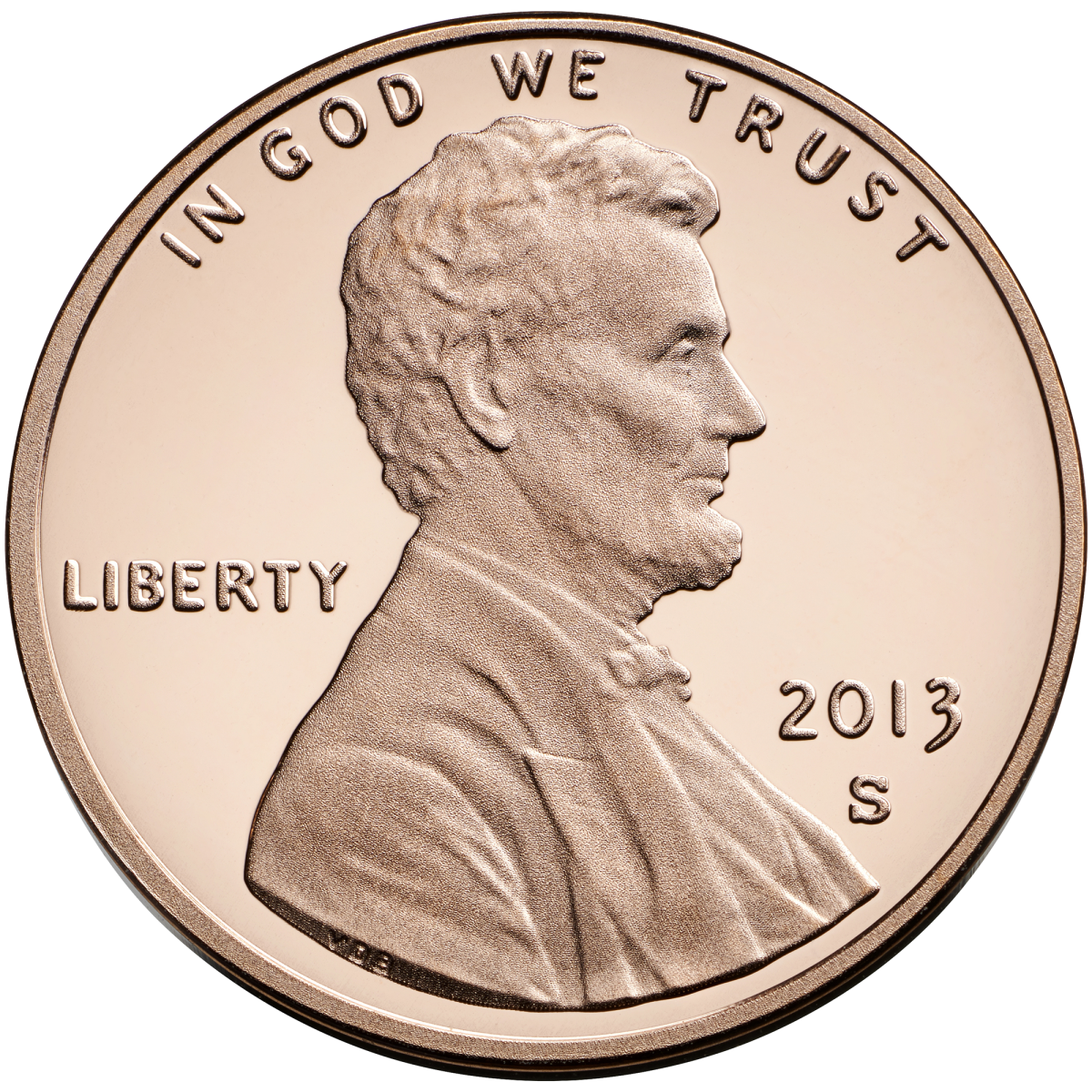
“In God We Trust,” read the young woman.

The businessman took the penny and placed it again in his pocket. “I see that inscription every time I find a coin. It’s written on every single coin in our currency, but we rarely notice it. When I find a coin, I figure God dropped the message at my feet for a purpose…a reminder to trust him. Who am I to pass that up?

He continued, “I use that moment to pray. Stopping for a second to make sure my trust is truly in God at that moment. For that moment, it’s value is more than gold. Lucky for me, sidewalk pennies are plentiful.”

What a powerful reminder! What a beautiful object lesson reminding me of the need to trust the Creator of all things with every aspect of my life!

The story of the penny-finding businessman reminded me of one of those incidents where the Pharisees tried again to trap Jesus in a comment they could use to implicate and discredit him. They asked him a question about paying taxes to Rome which they felt was guaranteed to get him in trouble with either the Jewish people or the Roman authorities.

“But Jesus knew their hypocrisy. ‘Why are you trying to trap me? Bring me a denarius and let me look at it.’ They brought the coin to him and he asked them, “Whose image is this and whose inscription?’

“‘Caesar’s,’ they replied.”

(Can’t you see Jesus flipping the coin back into their hands before he answered.)

“Give back to Caesar what is Caesar’s. Give to God what is God.” (Mark 12:13-17)

Jesus tells them that life in society carries a lot of responsibilities to the world around us. In the end, though, God desires what is due him…our trust.

As Shakespeare said, “Ahhh, there’s the rub!”

Giving ourselves completely over to God in trust isn’t easy. Our own experiences tell us that we are less than trustworthy. Paul knew it.

“For I know that nothing good dwells in me, that is, in my flesh. For I have the desire to do what is right, but not the ability to carry it out. For I do not do the good I want, but the evil that I do not want is what I keep doing. If I do what I do not want, it is no longer I who does it, but sin that dwells in me.” (Romans 7:18-20)

Then, he shares Murphy’s Law of sin.

“So I find it to be a law that when I want to do right, evil lies close at hand.” (Romans 7:21)

Isn’t that the truth? We want to trust God. We want to be obedient, but the temptation to go it alone is always lurking in the shadow. Here is the truth of the Bible, though. God is trustworthy even if we are not. Isaiah called him a rock. Immovable and eternal.

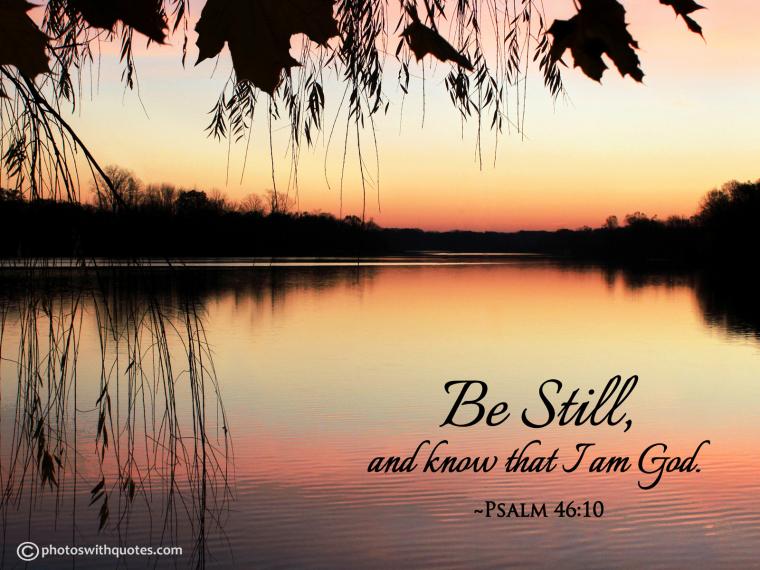
“Trust in the Lord forever, for the Lord God is an everlasting rock.” (Isaiah 26:4)

Jesus issued a challenge to his disciples to quit worrying about life and trust in God’s unfailing love.

“Therefore, I tell you, do not worry about your life, what you will eat or drink; or about your body, what you will wear. Is not life more than food, and the body more than clothes? Look at the birds of the air; they do not sow or reap or store away in barns, and yet your heavenly Father feeds them. Are you not much more valuable than they?” (Matthew 6:25-26)

Later as they struggled with their understanding of his impending sacrifice on the cross, he encouraged them.

“Let not your hearts be troubled. Trust in God. Trust also in me.” (John 14:1)

That’s all well and good, but how do we do that?

Once we trust enough to accept the salvation that comes from our belief in Jesus Christ, we must make the conscious decision to trust him enough to turn our lives over to him completely. Making him Lord, or boss, of our lives. We must put our full confidence in him and his word.

He said, “…If you abide in my word, you are truly my disciples, and you will know the truth and the truth will set you free.” John 8:31-32

To abide in his word is to live it, breathe it, every day. To make his word real in the way we live. As a result, the more we put our trust in him, the more we will follow his lead. The more we see him at work in our lives, the greater our confidence and trust.

We are often our own worst enemy. To give ourselves over completely to God demands that we get out of our own way. Our natural tendency is to handle our own issues…to try to emotionally or rationally work our way through every problem we face. We think we can figure it out on our own.

When I trust in my own abilities alone, it almost always leads to failure. I eventually reach a point where I don’t know where to turn. The writer of Proverbs says it’s God who can make the path clear to us.

“Trust in the Lord with all your heart and lean not on your own understanding. In all your ways acknowledge him and he will make straight your path.” Proverbs 3:5-6

It would be so much easier if I just did that from the beginning. They are at times difficult lessons. Depend on God. Lean not on your own understanding. Get out of your own way.

Perhaps another way of looking at that is that God calls us to rest in him. His promise is that the “weary and burdened” can find rest in him. That only works if we’re willing to get out of our way or let go of our own egos.

Resting in God’s hands is another way of expressing our trust in him. when we rest on the Lord, we are leaning on his strength, learning from him. He willingly carries the load for us as we walk through life. If we grow tired or stressed, we can draw close to Jesus and find comfort and rest because we trust completely in him.

When you get right down to it, we grow in our trust in God by getting to know him.

God reveals himself through the scripture I read. The Bible studies I attend. The sermons I hear. If I’m not availing myself of those opportunities, God has a difficult time breaking through the noise of my life. Those are the places where I learn about God’s faithfulness. His consistent, unchanging nature. The more I understand him, the more I look back on my life and see his work and his presence, the more I trust him.

I wrote most of this study last night. While walking for exercise this morning, I found a penny on the street. I stopped long enough to pick it up. There is was, embossed in the copper alloy right above Abe Lincoln’s head. “In God We Trust.”

I smiled, put it in my pocket and said a prayer of gratitude to God. Like that wealthy businessman, I figure God dropped that message at my feet for a purpose…a reminder to trust him. Who am I to pass that up?

Lucky us. Sidewalk pennies are plentiful.

Go ahead. Pick it up.

Freedom and Responsibility

Background Passages: John 8:31-36, Romans 8:3-4, I Peter 2:16, Galatians 5:13-23, James 2:14-18 and James 1:25

Early in my public relations career, I attended my first out of state business trip. How novel to travel half way across the country on someone else’s dime.

Robin and I drop the boys off with my parents in Ropesville, Texas, and boarded a plane for Pennsylvania. I wasn’t that excited about the conference, but I jumped at the chance to go to Philadelphia over the July 4th holiday.

I attended the obligatory meetings, but as soon as I could shake free, Robin and I walked the historic parts of the city. The Liberty Bell. Independence Hall. Parades. Fireworks. All the trappings of the Fourth of July in an historic city.

Standing behind the rope and staring at the 56 desks in that sweltering room in Independence Hall, I could almost see and hear those men debating their grievances against England and its king.

Samuel and John Adams. Benjamin Franklin. Thomas Jefferson. John Hancock.

Hancock, the president of the Second Continental Congress and governor of Massachusetts, is remembered more for his large and flamboyant signature than his role in leading the Congress.

Though the story is anecdotal, Hancock signed the document with a flourish and remarked, “The British ministry can read that name without spectacles. Let them double their reward.”

He probably didn’t really utter that line, but as they said at the end of the 1962 film, The Man Who Shot Liberty Valence, “When the legend becomes fact, print the legend.”

Though the 56 men representing the 13 colonies agreed in principle to the words of the Declaration on July 4, they didn’t actually sign it until August 2. Still, the significance of the declaration is a call for freedom that we celebrate as a nation today.

I love the words first learned in school.

“…We hold these truths to be self-evident; that all men are created equal, that they are endowed by their Creator with certain unalienable rights, that among these are life, liberty and the pursuit of happiness…”

I sit here today knowing we as a nation have not always lived up to that standard of those words. I sit here knowing that we too often fail to grasp the full weight of the responsibilities that go with freedom and liberty.

I sit here today knowing they may be the most significant words of freedom ever written in a secular, political context. They represent ideals worth celebrating. Ideals worth pursuing with vigor. Ideals worth our best efforts to achieve for all people.

Freedom. Liberty. Rich blessings far too many on earth do not have. Blessings far too easily taken for granted by those who enjoy them.

In the middle of the family and community celebrations this week, let’s remember the true significance of those words.

We ought also to remember God-inspired words which speak to our spiritual liberty and freedom so central to our faith as Christians.

Martin Luther penned a treatise in 1520 called On the Freedom of a Christian. I remember reading parts of his paper in my one year of seminary. He declared in his work that “A Christian is a perfectly free lord of all, subject to none. A Christian is a perfectly dutiful servant, subject to all.”

The statements seemed contradictory, but not to Luther. Our faith and trust in Jesus frees us from being slaves to a salvation doctrine that requires good works.

Luther taught that salvation cannot be earned by doing good things. It is a grace gift, freely given by a loving God to anyone who believes in Jesus Christ. Therefore, Luther says, Christians are completely free, not bound by any law, rule or commandment that we must keep in order to earn salvation.

But, Luther also said there is a flip side to the coin. Though set free in this way from salvation dependent upon good works, we are not set free from doing good works.

With the freedom that exists under Christ, there is great responsibility. Let’s think quickly about both of these ideas.

Jesus sat down with a group of Jews who had believed in him. He began to teach them what it means to be one of his followers. As he taught, he uttered what may be the most significant words of freedom ever written in a spiritual context.

“To the Jews who believed in him, Jesus said, ‘If you hold to my teachings, you are really my disciples. Then, you will know the truth, and the truth shall set you free.” (John 8:31-32)

The Jewish believers struggled with the concept, proud of their national identity and proud of the fact that though they were subjected to foreign occupation throughout their history, they refused to call themselves slaves. Freedom, you see, was trapped within their political reality. It took but a moment for Jesus to drive home his point.

“Everyone who sins is a slave to sin. Now a slave has no permanent place in the family, but a son belongs to it forever. So, if the Son sets you free, you are free indeed.” (John 8:34-36)

Jesus is talking about a reality of life. If we were required to be 100 percent obedient to God’s law in order to obtain salvation, none of us would gain an entry pass to heaven. Paul said it clearly, “For all have sinned and fallen short of the glory of God.”

In the good news of the gospel God made provision for our weakness. We are freed from both the eternal consequences and control of sin.

You see, the truth Jesus spoke about to all who would listen, the truth that sets us free from the burden of perfect compliance, is the grace gift of salvation in Jesus Christ.

“You shall know the truth and the truth shall set you free.” is our spiritual declaration of independence.

Paul told the believers in Rome, “What the law of Moses could not do, God did by sending his own son as an offering for sin, bearing man’s punishment for him so he could be set free from sin and enjoy the fellowship of God.” (Romans 8:3-4)

God through Jesus Christ and our faith in him, bore the consequences of our failure to live up to the standard he set before us. Because of that, we should live differently, trying harder each day to avoid the control of sin in our lives.

Peter encouraged those early Christians with these words.

“Act as free men and do not use your freedom as a covering to do evil, but use it as bondslaves to God. (I Peter 2:16)

In her book, You Learn By Living: Eleven Keys to a More Fulfilling Life,” Eleanor Roosevelt wrote that freedom places its own requirements on all who live under its blanket.

“With freedom comes responsibility. For the person who is unwilling to grow up, the person who does not want to carry his own weight, this is a frightening prospect.”

The liberty we enjoy as a nation sets us free to live pretty much as we choose, but it carries the great responsibility of citizenship. We bear the responsibility protecting our freedoms, respecting the rights of others and ensuring those freedoms extend to all of us. For freedom to work well in society, those who enjoy the freedom must live well. Do right. Care for one another.

Paul said something similar applies to Christ followers. He told a group of struggling Christians in Galatia,

“You, my brothers and sisters, were called to be free. But do not use your freedom to indulge the flesh, rather serve one another humbly in love. For the entire law is fulfilled in this one command, ‘Love your neighbor as yourself.’ If you bite and devour one another, watch out or you will be destroyed by one another.” (Galatians 5:13-15)

Paul urges his fellow believers to “walk in the spirit,” calling them to produce fruit, or evidence of their faith in their daily lives. Things such as “love, joy, peace, forbearance, kindness, goodness, faithfulness, gentleness, and self-control. There is no law against such things.” (Galatians 5:22-23)

Unlike Ms. Roosevelt’s political context, the Bible teaches that with spiritual freedom comes even greater responsibility. To the person unwilling to grow spiritually, the person who does not carry the cross of his testimony in Christ, this is a frightening prospect.

For spiritual freedom to work well, those who enjoy the freedom in Christ must live well. Do right. Care for one another. We must feel compelled by conscience and conviction to do good works.

Jesus taught us all we need to know about living well. His life was the open textbook. Building relationships. Healing the hurting. Feeding the hungry. Caring for the helpless. Opening the doors for an eternal relationship with God to all with eyes to see and ears to hear. His life, full to the brim with faith in his father, was a life spent doing good works.

My Mom was a woman of practical faith. Her faith was not a “Sunday go to meeting with white gloves on” kind of faith where one professed a trust in Christ yet whose deeds showed little evidence of it. She got her hands dirty in God’s good work caring for the elderly in the Lubbock community.

In my favorite passage from James, the writer refutes the idea that faith frees us to do what we please; that we are under no obligation to do good to others.

“What good is it my brothers if someone claims they have faith, but has no deeds? Can such faith save them? Suppose a brother or sister is without clothes and daily food. If one of you says to them, ‘Go in peace, keep warm and well fed,’ but does nothing about their physical needs, what good is it? In the same way, faith by itself, if it is not accompanied by action, it is dead.

“But someone will say, ‘You have faith. I have deeds.’ Show me your faith without deeds and I will show you my faith by my deeds.” (James 2:14-18)

Every good deed, every act of mercy, every act of love extended to another ought to be a natural outgrowth of the freedom we have in Christ. It is within the living of a Christ-like life of love that we find our blessings.

“But anyone who looks intently into the perfect law that gives freedom and continues in it, not forgetting what they heard, but doing it, they will be blessed in what they do.” (James 1:25)

Though I am far from perfect, I am keenly aware of the responsibility my faith carries to live well and do good.

I am grateful today for the freedom I have as an American. I do not take it lightly. I recognize the responsibility that comes with it.

I am, however, far more grateful today for the freedom granted me by the grace of God through my belief in Jesus as my savior.

It is a self-evident truth. “You shall know the truth and the truth shall set you free.”

On this July 4th weekend, that is my spiritual declaration of independence.

The Race Marked Out for Us

Background Passage: Hebrews 12:1-2; Matthew 13:1-23

The passage below falls easily into my list of 10 favorite Bible verses. Born with an athlete’s mind, if not an athlete’s talent, I find I can relate to the imagery suggested by the writer of Hebrews. Hebrews was written to a group of Christian believers who faced the temptation to abandon their faith in the face of fierce opposition and outright persecution.

“Therefore, since we are surrounded by
so great a cloud of witnesses,
let us throw off everything that hinders
and the sin that so easily entangles,
and let us run with perseverance
the race marked out for us.
Let us fix our eyes on Jesus,
the author and perfecter of our faith…”

The astute writer drew upon the life testimonies of men and women we might place in our Hall of Honor for the faith they demonstrated when God called them to serve. He wanted these struggling brothers and sisters to think of these great people as spectators in the crowd, encouraging them in their Christian walk.

Each of us can come up with a list of our personal heroes of faith whose lives inspire, encourage and strengthen our own. When life gets tough, thinking about those who lived through their own share of disappointments, despair and defeat can keep us pressing forward in our own spiritual journey.

To get to where I want to go with this devotional thought, let’s first hit a couple of quick points.

First, we must cast off all that slows us down or trips us up. The language of the passage talks about being weighed down, burdened, or carrying a bulging, heavy load. Using the writer’s imagery, we think about it in terms of a race or athletic contest.

There is a reason why runners take off their warm-up suits before the start their race. There is a reason their track shoes are all sole and little substance. Everything they wear is lightweight. To gain a runner’s edge, they wish to get rid of anything that would slow them down.

I remember my high school football coach putting lead weights around my ankles during practice and making me run the drills. Every move felt like I was slogging through mud. I don’t know if I actually moved faster when the weight was removed, but it sure felt like it.

That is the mental picture the writer of Hebrews is painting. Get rid of what might keep you from running the race God calls us to run. It is easy to see times in my Christian life when I carried weight I didn’t need to carry. Bad habits. Bitterness. Irritation. Regret. Poor choices. Lost focus. Selfishness. Arrogance. It is sin that wraps itself around our hearts and our feet until it causes us to stumble. Sin that trips us up.

Living the kind of life God desires for us requires us to be agile and quick in our response to his call and his will. We simply can’t do that when we carry around our burdens or try to walk with weights on our feet. We can’t move when our feet are trapped in a tangle of sin.

Scripture tells us to throw it off, untangle our feet, and get back in the race.

Secondly, we must be in spiritual shape to stay in the race. It’s easy to stay committed to Christ for a time. It’s much hard to have staying power. The writer of Hebrews says,

“…run with perseverance…”

Depending on your Bible translation, this admonition may read, “…run with patience…” or “run with endurance.”

Those early Christians lived during a time when calling oneself a Christian was dangerous. When faced with economic sanctions and life or death choices, many turned away from the faith to which they were called. Before we get too high on our horse and claim superior faith, we need to think about those times when we set aside our own faith for the convenience of the day. A commitment made to God that we failed to keep. A promise made that we broke. A holy fire within that we let smolder.

Jesus talked about those moments in life when he shared the parable of the sower. He spoke of the farmer’s seed that fell on the thin soil. It sprouted quickly and withered just as fast. He told his disciples later that the plant is like a person who receives God’s word gladly and sets it aside when life gets tough. The faith which grew so promisingly, withered in the heat of the day.

When we give our lives to God and accept his gift of grace, it is not a commitment of convenience that allows us to walk away when challenges come. Salvation does not vaccinate us against a pandemic of problems. Sometimes the best lessons we learn come when we look back on our spiritual walk and see how God worked in our lives during times we struggled most to see him and sense his will.

The writer of Hebrews encourages us, “be patient.” “Persevere.” “Endure.” “Finish what we started.”

Here’s the third point…the idea that caught my attention when reading this passage this time. The writer of Hebrews talked about the “race marked out for us.”

“…the race marked out for us…”

In one sense, we are all running the same race…our spiritual journey is all about following God’s call. Being obedient to his will for our lives. In another sense, we each have our own race to run. You can’t run mine and I can’t run yours. It is my unique call. God, in his wisdom, laid out the track that he asked me to run.

There are some believers in the world who must run a race of real persecution, living out their faith beset by those who would punish them for believing in Jesus. Their race is more difficult than the race I run.

There are some believers who daily face abuse, rejection, poverty, sickness, loneliness. There are Christians who face heartbreak, unimaginable loss and financial ruin. It is not the race they wished for, but it is the race they must run.

God has given me a race to run. He asks me to stay in my lane because that’s where the things I need to learn and his best blessings will be found.

When we were all younger, three of us would meet each evening after our kids were put to bed for a nightly jog. After several months of running three miles a night, one of us, I don’t remember who, had the brilliant idea to run a half-marathon…13 miles and change. That meant some nights we were running five miles and some Saturdays much longer in preparation.

Though all of us were a bit more slender in those days, I didn’t have the runner’s mindset nor the runner’s body. I was forever falling behind. When we began to stretch out those nightly runs, I usually fell behind quite a bit.

At some point, I found a shortcut. About midway through our routine route, we entered a neighborhood that circled around and found the same road on which we had been running. I discovered if I took a left when they went straight, I would meet them coming back, knocking several blocks off my run.

It seemed to be a brilliant strategy as long as I could withstand their less than gentle ribbing. It seemed a good idea until we began our official half-marathon race in the hills of Huntsville, Texas. All those days taking a shortcut took their toll. By they time I finished the race that day, exhausted and spent, they were sipping lemonade and eating bananas in the shade with their feet up. I just wasn’t in as good a physical condition as my friends because I took months of shortcuts.

God, in his infinite will and wisdom, has our life’s course laid out. Every shortcut, every detour we take because it’s easier, erodes our spiritual condition. In “…the race marked out for us” there are no shortcuts that honor God’s purpose and play for our lives.

The good news is that whatever race we have been given to run, and whatever shortcuts we took that put us on the wrong path, the writer of Hebrews gives us the key to finishing well.

“Let us fix our eyes upon Jesus…”

The best runners in the world leave the starting blocks with their eyes on the tape at the finish line. They don’t look at the other runners. They don’t glance into the stands. They run with their eyes on the tape.

The world dangles a lot of attractive philosophies and practices in front of our eyes. We hear the cheers of those who would encourage us to run a different race. The only counter to the siren call of others is to keep our eyes fixed on Jesus.

He is faithful. He is trustworthy. He will never forsake you. This is exactly what the writer of Hebrews is telling his persecuted brothers and sisters. It is the message they needed to hear.

Run the race you’ve been given. Throw off anything that keeps you from running well. Run with patience and endurance. Stay in your lane. Take no shortcuts. Keep your eyes on Jesus.

It is the message I needed to hear.

In the Potter’s Hands

Background Passages: Jeremiah 18:1-6; 2 Chronicles 1:7,10; Luke 22:42 Ephesians 2:10

A confluence of disconnected spiritual thoughts joined into one idea this week…rivulets of scripture and song flowing from different places to form one lesson, one powerful reminder of what it means to live a life obedient to God’s will. See if you can follow the path of my warped mind.

……….

Sunday’s Random Thought…

It came to mind again this week when I was lost in thought while exercising. Out of nowhere, I thought of the song, Have Thine Own Way, by Adelaide Pollard. The lines that kept repeating in my head were:

“Have Thine own way, Lord.
Have Thine own way.
Thou art the potter,
I am the clay.
Mold me and make me,
after thy will,
while I am waiting,
yielded and still.”

It seems that after graduating from college in Boston, Pollard moved to Chicago to teach in a girl’s school there. In frail health, she was drawn to first a faith healer and then to an evangelist who preached only about the end times and the second coming of Christ.

She moved back to New England feeling called to be a missionary in Africa. A series of health setbacks, detours and roadblocks derailed her plans. Despondent, she attended a prayer meeting one evening and heard an elderly woman pray: “It doesn’t matter what you bring into our lives, Lord, just have your own way with us.”

Before the evening was over, Pollard penned the words to the song that kept repeating in my brain.

“Have Thine own way…mold me and make me…Thou art the potter. I am the clay.”

It is a metaphor not uncommon in scripture. Jeremiah used it to make a point. Paul hinted at it several times in his letters.

Let that tickle the corners of your heart for a bit. We’ll come back to it.

……….

Tuesday’s Random Thought…

They had been a rebellious people. Having grown indifferent to the covenant they made with God, the people of Israel grew obstinate and defiant toward the word of the Lord. Shedding the commands of God like a dirty cloak, they held God’s law in contempt, comfortable doing their own thing.

God called them “stiff-necked.” Stubborn. Intractable. Hard to lead.

I find the term descriptively appropriate to my life at times. “Stiff-necked” was a term intimately familiar to the Jewish people. Most farmed small plots to feed their families and livestock. With oxen to pull the plow, they used an ox-goad, a pointed stick or metal rod to poke the ox to direct its path. The stubborn or stiff-necked ox would ignore the prod and go where it wanted to go.

The Hebrew people lived a roller coaster life of obedience and stubbornness. This was one of those moments at the bottom of the ride. God called Jeremiah to give a word of warning to his stiff-necked people.
Weary of their rebelliousness, God told Jeremiah to “go to the potter’s house” and wait for his word. Jeremiah sat down beside the potter and watched him work the wheel.

“But the pot he was shaping from the clay was marred in his hands; so the potter formed it into another pot, shaping it as it seemed best to him.” Then the word of the Lord came to me. He said, “Can I not do with you, Israel, as this potter does? Like clay in the hand of the potter, so are you in my hand, Israel.” (Jeremiah 18:1-6)

I like that idea. When I am misshapen, God can form me into another pot as it seems best to him.

Let that germinate in your fertile soil for a little while.

……….

Thursday’s Random Thought…

The day had been a glorious day. Jesus’ entry into the City of David found him surrounding by an adoring multitude, waving palm branches and singing praises. They wanted nothing more than to be near the one who had done so many miraculous things. Jesus spent the day preaching and teaching all who would listen.

After an evening meal that left his closest followers bewildered and perplexed, Jesus took them back out of the city into the Garden of Gethsemane to pray. Settling his weary band of disciples onto the rocky hillside, Jesus took a handful of his closest friends a little farther up the hill. “Come, pray with me,” he implored them.

Jesus walked a few steps away before falling on his knees. Leaning against a boulder with his head searching the heavens, Jesus prayed for a way out of the horror that awaited him.

“Father, if you are willing,” he prayed, “let this cup pass from me.”

I can only imagine Jesus recalling Abraham, hovering over his son, Isaac, with a knife prepped and ready to take his life in sacrifice to God. As Jesus recalled how God stayed the hand of Abraham, telling him to find the ram trapped in the thicket as a substitute for his son, I can see Jesus hoping that God would find a ram to take his place.

No new word came from above. No ram in the garden. Jesus, ever obedient to his father, prayed, what Bill Wilson, with the Center for Healthy Churches, calls the “prayer of holy indifference.”

“Yet, not my will, by thine be done.” (Luke 22:42)

Such sweet surrender. A sobering thought for any day. Take a moment. Consider its implications.

……….

Friday’s Random Thought…

In a recent study of Solomon’s life, we find him taking the reins of leadership from his father David. The task ahead must have seemed daunting. His first official act was to bring the people together to worship. A thousand sacrifices were made. Prayers voiced. Songs played and sung in adoration of their Creator God. Deliverer. Lord Almighty.

God honored Solomon’s worship. That evening he spoke to the new king and offered him a blank check of God’s promise.

“Ask me whatever you want me to give you.” Solomon answered God, “…Give me wisdom and knowledge, that I might lead this people, for who is able to govern this great people of yours.” (2 Chronicles 1:7,10)

God delivered in a significant way. Through his life, Solomon was noted for his wisdom. Scripture tells us kings and queens from all over the known world journeyed to Jerusalem to sit in counsel with the man. To pick his brain.

“All the kings of the earth sought audience with Solomon to hear the wisdom God had put on his heart.” (2 Chronicles 9:23)

Solomon allowed God to teach him. To reveal truth to him. To apply that truth to everyday life. Solomon looked at the world around him and understood how much he did not know about governing…about life…about how to be who God needed him to be. His prayer for wisdom and knowledge reveals his humility before God. In praying for God’s help, he made himself clay in the potter’s hands, a person to be molded and shaped.

Hang on to that bit of wisdom just a moment longer.

……….

There you go. Four seemingly random thoughts entering my brain at different times and for very different reasons. Let me share with you, if I can, where these streams of thought came together.

If I’m honest, I suspect my life is not that different from the lives of those who frustrated God and Jeremiah. One minute faithful. The next minute faithless. One moment seeking God. The next moment scorning God. While I want to believe I live my life more in those faithful, seeking moments, those times when I am faithless and scorning haunt me profoundly. Create more turmoil than necessary.

That’s why I the words of Have Thine Own Way resonate so deeply. Adelaide Pollard nailed it. Despite the turmoil in her life, despite every obstacle that kept her from going where she wanted to go, she penned words that speak to me every time I hear them.

“Thou art the potter. I am the clay.
Mold me. Make me.
After thy will.”

That’s the prayer of one hoping to let go of the arrogance and ignorance that tends to walk it’s own road, unwilling to listen to either the still, small voice or the clap of thunder.

The sweetest times of life come when I make myself pliable enough for God to begin again to shape me into the man he desires me to be. I see myself sitting next to Jeremiah, learning a valuable lesson from the potter. When my life is marred in God’s hands, I am glad he reshapes it as a “another pot,” remolding me in ways that seem “best to him.”

That only happens when let go of my stubborn pride and my stiff-necked attitude.

That’s where I draw inspiration from Solomon. God offered Solomon anything…everything. Yet, Solomon did not ask for riches. He did not ask for possessions or honor. He did not ask for the death of his enemies. He did not ask for a long life.

Solomon asked for God’s wisdom. I shudder to think of my response if I were allowed to rub God’s genie lamp and claim my wish. Seeking God’s will for our lives is the ultimate act of wisdom. Understanding that God’s skill at the potter’s wheel outshines our clumsy attempts to shape our own lives. Think about Pollard’s fervent prayer of submission. Solomon’s humble request for wisdom.

Then, we find ourselves in the Garden of Gethsemane. Listening to Jesus plead for God to find another way that would not take him to the cross. Spending hours agonizing over that which he was called to do.

As he prayed and listened for his Father’s word, he got to a decision point where he could walk on or walk away. His prayer was perfect. A prayer indifferent to his own will and wish. “Not my will, but yours be done.”

In the silence immediately after that prayer, I believe a calm settled in Jesus’ heart. A peace in knowing that if he remained obedient, all would be well. That God’s purpose and plan for his life and for the world, would be satisfied.

So, recognizing my tendency to be stiff-necked when it comes to what God desires of me, I lean upon a song that asks God to mold me, like a potter, after his will, not mine. I seek his wisdom, knowing his understanding far exceeds my limited abilities. When submission and humility united, the prayer of holy indifference is so much easier to pray.

Nevertheless, Father, not my will, but yours be done. weet surrender of one completely in God’s will.

Today’s Last Random Thought…

As I finished this meandering idea, hoping it would make sense, one more verse came to mind. One more random…God-inspired…thought.

Paul, writing to the church in Ephesus, reminded them that the grace gift of salvation that God provided gave them divine purpose. He said,

“We are God’s workmanship, created in Jesus Christ, to do good works, which he determined in advance for us to do.’” (Ephesians 2:10)

The word Paul uses for “workmanship” can be translated “work or art” or “masterpiece.” I like that idea, particularly in light of my other random thoughts.

The potter is also an artist. As capable with a cup as with a sculpture. As the works of God’s hand, carefully shaped and molded into a masterpiece of his will and way, we are called then to do the good work he has planned for us to do. Capable of doing it well. Capable of doing it right. Capable of doing it consistently.

All it required is submission, humility, surrender and the willingness to let the potter work.

Now, you catch a glimpse of how my mind works. I just hope there is a clear message buried in the meandering madness.

He Went Away Rejoicing

Background: Acts 8:26-40; Isaiah 53:7; John 3:16

Like many children who attend “big” church, Josiah sat each week during the sermon with a pad and pencil. Idly drawing pictures. Working a few math problems. And listening…far more than he seemed to be…to the sermon being preached.

Over the months, I saw him stop what he was doing on more than one occasion, his ears perking up at a particular point being made. Often, that moment of interest became the subject of probing questions asked to patient and understanding parents. An intelligent young boy, Josiah was hungry for answers.

My grandson toyed with his faith commitment for more than a year. His parents always stopping what they were doing to hear his conversation and let his mind and heart work toward his own decision.

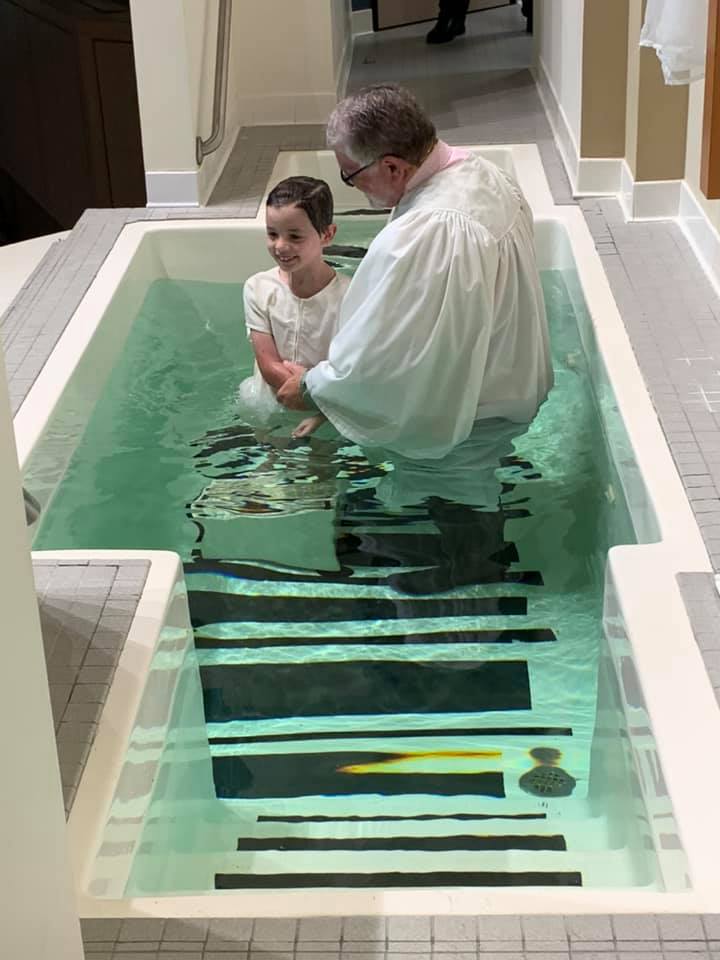
We delighted in Josiah’s decision to accept Christ as savior two weeks ago and celebrated his baptism with him last Sunday, a special moment observed on his eighth birthday. We sat near the back of the worship center, but we could still notice the radiant smile that rose from the baptismal water. I would blame my teary response on allergies, but I don’t think you’d believe me.

This week, that moment reminded me of another new believer in the Bible, who came up from the water rejoicing.

In the days after the Holy Spirit came upon the believers, the early church began to grow in numbers. As it grew, the religious authorities began to crack down on those who professed a faith in the crucified and resurrected Jesus. The persecution caused hardship and misery.

Philip was one of the chosen. A servant and minister. One of seven deacons selected by the 12 to take care of the widows and those in need within the church. After Stephen, one of the seven, was stoned by the zealous Pharisees, many in the early church left Jerusalem, scattered here and there to avoid the coming persecution. Philip went north into Samaria. He preached boldly, leading many to Christ.

In the middle of his ministry in Samaria, Philip felt convicted by the spirit to head south, along the desert road toward the Mediterranean coast. Without knowing why, Philip obediently followed that call.

At the same time, a man from Ethiopia, a Gentile convert to Judaism, spent time in worship at the Temple. He’s described in scripture as a eunuch…and, yes, it means what you think it means. We also know he was a government official, a treasurer in the court of the queen. Trustworthy. Inquisitive. Sincere. Like Josiah, my grandson, hungry for answers.

It’s doubtful this man could have been in Jerusalem and not heard of the commotion surrounding Jesus. His arrest. His drumhead inquisition before Caiaphas, Herod and Pilate. His hasty conviction. His brutal crucifixion. And…the rumors of his resurrection.

The Ethiopian eunuch left Jerusalem with more questions than answers.

Along the way, the man leaned against the frame of the slowly-driven chariot, reading through the Book of Isaiah, the prophet. The words strange and confusing.

“He was lead like a sheep to the slaughter, and as a lamb is silent before its shearer, so He does not open his mouth. In his humiliation he was deprived of justice. Who can speak of his descendants? For his life was taken from the earth.” (Isaiah 53:7)

He read the words again. And again. No matter how many times he read the passage, its meaning escaped him.

“What are you reading?”

The Ethiopian looked up, startled at the question. Walking beside the chariot was a older man, dressed in a humble robe, dusty from days on the road.

“I’m sorry. What did you say?”

Philip smiled, pointed at the scroll. “Do you understand what you’re reading?”

The man shook his head, still bewildered. “Honestly, no,” he answered. “How can I unless someone explains it to me?”

“Maybe I can help.”

The Ethiopian beckoned him to join him. Philip stepped lightly into the chariot. Reverently, the man placed the scroll in Philip’s outstretched hands.

“Tell me, please, who is the prophet talking about? Himself or someone else?”

With that opening, Philip began to share the good news of Jesus, starting with the prophet’s own words.

The most beautiful story ever told unfolded between two strangers from different cultures, different social classes and different lands. The two men settled into a deep conversation. Questions asked and answered. Philip explained all that the prophets declared. All that had been fulfilled in Christ. All he had personally experienced. All he had heard and been taught.

Philip shared the message of grace and mercy of a loving God who worked through time to bring salvation to a lost and misguided world…a grace, not just for Jerusalem, but for Judea, for Samaria and for the ends of the world.

The Ethiopian man listened with an ear open to the words he was hearing and the spirit of God pulling at his heart.

When his soul could bear no more, the man held up his hand, stopping Philip mid-sentence. He pointed to a small oasis on the barren landscape less than a quarter mile in the distance. Its refreshing water shimmering in the afternoon sun.

“Look, here is water,” he said, “What can stand in the way of my being baptized?”

Philip’s grin stretched ear to ear. He clapped him on the shoulder, “Not a thing, my friend. Not a thing.”

The Ethiopian ordered his driver to stop the chariot. He and Philip dismounted and walked with purpose into the pond. With his confession of faith, the man looked at Philip with expectation. Philip bowed in prayer in joy and gratitude to God. Grateful that God had brought him to this place.

Taking the man in his arms, Philip lowered him into the water. As he brought him up again, the water streamed down the man’s face, mingling with tears of joy, his smile as radiant as the sun.

“And he went away rejoicing.”

It’s funny. I have a pretty good imagination. When I read stories like this in the Bible, I can close my eyes and see it happening in vivid color.

When I read this story again this week, I could see the ornate chariot, two Nubian men dressed in fine robes, joined by one who looked more like a Jewish shepherd. I can see them standing waist deep in a green, muddied pond, surrounded by reeds and brush. I see Philip lower this man into the water. I couldn’t, however, for the life of me picture this Ethiopian man as Philip lifted him out. I could not see his face.

All I could see in my mind’s eye was Josiah coming up out of that water with that smile on his face. You only see that kind of smile when someone truly understands what it means to be loved by God. Only when you’ve open the greatest gift ever given.

“For God so loved the world that he gave his one and only son so whoever believes in him shall not perish, but have everlasting life.” (John 3:16)

I saw the same look in his brother Eli’s face two years ago. The same smiles on the faces of my two sons decades ago. And, I suspect if I had a mirror before me in that baptistry in that little church in Ropesville, Texas, some 58 years ago, it would have been the same smile on my face.

I’m grateful  for Adam and Jordan, Josiah’s parents, for being his Philip. They were the ones who asked him, “Do you understand what you’re reading? Do you understand what you’re hearing?” I’m grateful that Josiah asked them to jump in the chariot with him. They were the ones who led him to make the most important decision of his life. I’m equally grateful for his older brother, Eli, who, by his own profession of faith, created a path for Josiah to follow.

I’m grateful for a pastor who preaches the gospel of Christ in truth and love in ways that even an eight-year-old can understand. I’m thankful for Josiah’s Sunday School teachers who taught those significant lessons that opened his eyes and heart. I’m grateful for my church who promises to love him and let him love them in return.

I am especially grateful that Robin and I have a new brother in Christ.

Worthy of the Call

Background Passage: Ephesians 4:1-16; Acts 19:20, 23

Serving as a pastor or minister is a more than a job. For most of the men and women who serve as ministers, their work is a calling. When we speak of a “calling” we tend to speak in reverential tones. It is a beautiful idea of being set apart for service by God.

Many who serve in other capacities speak of their call to service. A police officer who puts his or her life on the line every day to serve a community speaks of a calling. A doctor or nurse feels called into the field to care for the sick and hurting.

Watch a kindergarten teacher work his or her magic while trying to corral 22 five-year-old children. See the middle school teacher fending off the preteen hormones. Follow a high school teacher preparing teenagers for a world that is changing before their eyes. If you do, you know these saints of schools have been called to that profession.

Being God-called to serve in whatever occupational capacity is, in my view, the definition of that which is honorable and noble.

The police officer who violates community trust, the doctor or nurse who turns a callous heart to a suffering patient, or a teacher whose actions diminish the potential of a child, fail to live worthy of the call they received.

If we allow God to rule our lives, I believe that we have been called to the career to which he led us…with godly intent and purpose. The Bible teaches a higher scriptural call for every believer in Christ.

The Bible tells us there will always be a battle between the way of Christ and the way of the world. In this clash of cultures, Christians are called to live distinctive lives, different from the world around us.

Paul, the apostle, spent years in Ephesus sharing the gospel to a diverse group of Gentile and Jewish individuals who, in the real world, stood at odds. In Christ, Paul needed them to love one another and to be united in spirit and faith. In his letter to the Ephesian church he encouraged them to join in relationship with one another and to grow in wisdom and maturity of faith.

When division crept into the church, Paul addressed the issue head on. He knew it was the only way they could distinguish themselves from the cutthroat culture of the community that surrounded them. He told them that God had given them everything they needed to live those distinctive lives.

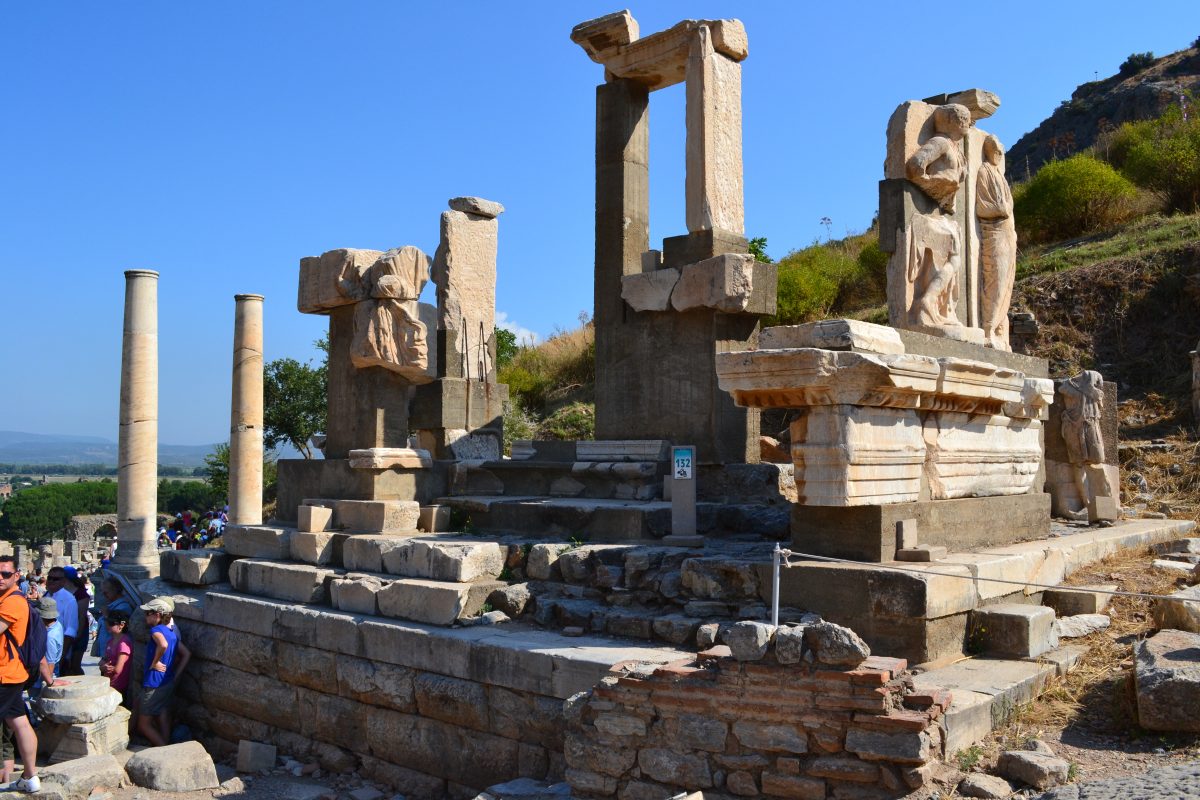
Ephesus was an important city in the Roman Empire during the first century. Its harbor opened onto the Cayster River of Asia Minor which emptied into the Aegean Sea. At one point, Ephesus, with its 250,000 residents, was a hub of commerce and the second largest city in the known world.

In addition, it was a major religious center. The city boasted a temple dedicated to the Greek goddess, Artemis, (the Roman goddess, Diana) one of the Seven Wonders of the Ancient World.

During Paul’s three-year stay in Ephesus, the gospel of Jesus Christ took hold. Acts 19 tells us that people were abandoning their pagan religion and that “the word of the Lord spread widely and grew in power.” (Acts 19:20)

The clash between the pagan culture and the growing Christian culture shook Ephesus to its core.

“About this time there arose a great disturbance about the Way.” (Acts 19:23)

A silversmith, named Demetrius, who made small shrines to Artemis, complained that this new Christian religion was cutting into his business. He called together his workmen and craftsmen of all related trades stirred up a city-wide riot that threatened the lives of Paul, his pastors and all Christian believers in Ephesus.

It was within this clash of cultures that Paul admonished the believers to keep living distinctive lives.

“I urge you to live a life worthy of the calling you have received.”

What a challenge he presented the followers of Christ 2,000 years ago and today. Live a life worthy of your calling. He wasn’t talking about one’s profession or work. He was talking about the call to live life in the image of Christ. Let Paul explain what that meant.

“Be completely humble and gentle; be patient, bearing with one another in love. Make every effort to keep the unity of the Spirit through the bond of peace.”

What does that kind of life look like? A Christian, in Paul’s definition is one who puts others before self, extending kindness to all he or she encounters, answering the hurts and disappointments inflicted by others with self-control and restraint and showering both friend and enemy in God’s love.

Nothing quite destroys the witness of a Christian or the church as quickly as when humility is replaced with arrogance. Gentleness with Rudeness. Patience with restlessness. Love with hatred. Peace with discontent.

Humility. Gentleness. Patience. Love. Peace. Living lives patterned by these traits…what Paul identifies elsewhere as “fruits of the spirit…” builds unity within the church and enhances our witness in the world.

It’s not just the unity within a local congregation of which Paul speaks. It is our relationship as Christians to all people of faith regardless of social status, political affiliation, or ethnicity. It is our purpose to keep that unity from being disturbed by focusing on that which unites us.

“There is one body and one Spirit…just as you were called to one hope when you were called— one Lord, one faith, one baptism, one God and Father of all…”

There is nothing wrong with our denominational divisions. There is nothing wrong with the varied worship styles. We all belong to one faith. When we allow our differences to overshadow the similarities, we diminish our witness. Baptist. Methodist. Catholic. Male. Female. Black. White. Brown. Saints and sinners. One faith in glorifying God. One faith in Jesus Christ as Savior. One faith in the spirit who guides. One faith in serving our fellowman. One faith in building the kingdom of God in this world.

God desires us to live lives worthy of his calling. God wants to live in unity as believers in Christ. These things are so important to him that he provides us with the means to make it happen.

“…To each one of us grace has been given as Christ apportioned it…he gave some to be apostles, some to be prophets, some to be evangelists, and some to be pastors and teachers to prepare God’s people for works of service so the body of Christ may be built up until we all reach unity in faith…and become mature, attaining to the whole measure of the fullness of Christ.”

You and I have been called to serve in some unique way and given the gifts to be so very good at it. When we use those gifts we’ve been given, the engine that is the Christian faith fires on all cylinders at its utmost efficiency and effectiveness. Every time we live unworthy of the calling nothing in life runs as smoothly as it could.

The clash of cultures between the way of Christ and the way of the world is starkly evident today. Because the world delights in our failure to live up to our calling, we need an extra measure of those distinctive characteristics that set us apart from the world.

Lest we think it’s impossible to live with one another in humility, gentleness, patience, love and unity, we simply must keep our eyes on the one God, the one Lord, the one Spirit and the one faith.

Seek God and his will. Look to serve one another. Set aside that which divides us and open your hearts to love all those who love the Lord. Reach out to the world community in ways that demonstrate the love and compassion of Christ.

“Live a life worthy of the calling you have received.”

I don’t know about you, but it is a reminder I needed to hear and heed.

Amen.


No Where Else To Go

Background Passage: John 14:23-27

I spent the bulk of my professional career trying to put the right words together to explain things. I always felt I did it fairly well. Today, I’m at a loss to explain what’s happening in our country.

It’s not that the events of the past year have caught me by surprise. It’s just that it all seems so senseless. The ideologies and actions of a radical left and radical right keep tearing at the fabric of our republic.

I have no words to ease the angst of my adult children who wonder what kind of world their children will inherit. I certainly have no words to adequately answer the questions of my nine-year-old grandson whose innocent heart cannot comprehend hatred and bitterness.

I am at a loss. All I can do for them is listen and love.

We’ve become a people who call others blind because of the sawdust in their eyes without paying heed to the plank obscuring our own vision. A people unable to see that spiritually an “eye for an eye and a tooth for a tooth” gave way to “turning the other cheek” or “walking the extra mile.”

An essay published by the Lincoln Home National Historic Site shared information about President Lincoln’s thoughts on the eve of the Civil War.

Step back in time and travel the world in 1860. Visiting every continent, every country, you would find monarchies, dictatorships and authoritarian rule. When you return home and set foot on American soil after all your travels, you would have found only one republic established on democratic rule. The United States of America.

France tried shortly after the American Revolution, but mob rule and the guillotine determined outcomes more than the ballot box. If we are honest with ourselves, it is a startling comparison to our present circumstance when taking over a downtown or storming our Capitol building are accepted as necessary by factions of our population, each declaring that the end would justify the means.

President Abraham Lincoln led our nation at a time when the world’s monarchists and tyrants watched our Civil War with glee, hoping to see the end of this unnatural democratic experiment in the dissolution of the United States.

Lincoln understood this well. It was not simple political rhetoric when he described America as “the world’s last best hope.” Lincoln believed if the war were lost, it would be the end of America. If America ceased to exist as a united nation, it would end the hope of people everywhere for any form of democratic government.

I suspect there are foreign nations today dancing with joy at the discord so prevalent among our people.

When he was most overwhelmed, Lincoln found the only answer available to him. It’s the only answer I can find to my current inadequacies. Lincoln turned to prayer.

During the worst days of the Civil War, Lincoln met privately with his friend and journalist Noah Brooks. The president told him, “I have been driven many times upon my knees by the overwhelming conviction that I had no where else to go. My own wisdom and that of all about me seemed insufficient for that day.”

“Driven to my knees…” When the politics fail, when our own understanding fails us, maybe it’s time to hear those words from President Lincoln. Maybe today, we have “no where else to go” except to our knees in prayer to our Father in heaven.

On March 4, 1861, at his first inaugural address, with his nation divided and on the brink of Civil War, Lincoln offer this prayer for peace.

“Almighty God, who has given us this good land for our heritage;
We humbly beseech Thee that we may always prove ourselves
a people mindful of Thy favor and glad to do Thy will.

“Bless our land with honorable ministry, sound learning, and pure manners. Save us from violence, discord, and confusion,
from pride and arrogance, and from every evil way.

“Defend our liberties, and fashion into one united people,
the multitude brought hither out of many kindreds and tongues.

“Endow with Thy spirit of wisdom those whom in Thy name
we entrust the authority of government, that there may be
justice and peace at home, and that through obedience to Thy law, we may show forth Thy praise among the nations of the earth.

“In time of prosperity fill our hearts with thankfulness,
and in the day of trouble, suffer not our trust in Thee to fail;
all of which we ask through Jesus Christ our Lord.”

It was the perfect prayer for an imperfect era of discord 160 years ago. It’s a good prayer for this day of uncertainty. I claim it for our nation today and ask you to join me in praying for our country, our leaders, our people and our future.

Prayer is something I can do. It is prayer that will bring me the peace I need to feel.

As a politically divided nation, peace is at a premium. Trying to find peace in the events of this world is a fruitless effort. Life’s circumstances and events might bring a welcomed calm, but, ultimately, nothing that happens around us will ever bring peace. We must look upward and inward for that.

Jesus’ words to his disciples in the Upper Room hours before his arrest and crucifixion offered instruction, hope and encouragement. He knew the disciples were about to have the rug pulled out from under their feet. He knew how dark their days would grow and how burdened their hearts would be. He knew exactly what they needed to hear.

What I know in this moment is that God knows my struggles and burdens of my heart. He knows how dark these days feel to me at times. That’s why his words to his disciples bring comfort to my heart. He knows what I need to hear.

“Anyone who loves me will obey my teaching…but the Advocate, the Holy Spirit, whom my father will send in my name, will teach you all things and remind you of everything I have said to you. Peace I leave with you. My peace I give you. I do not give as the world gives. Do not let your hearts be troubled and do not be afraid.” John 14:23-27)

Don’t worry, he says, about what is happening around you. Just stay true to all I’ve taught you. Be who I have called you to be. Remember all I’ve taught you and don’t be influenced by others to abandon your faith and your hope.

In the middle of life’s turmoil, trust me. Trust my peace, not as the world understands it, but peace as you have experienced  in the past. Do not be afraid.

I don’t know about you, but it is God’s peace we need as a people and a nation. It is a peace that comes only on bended knee.

Happy New Year

Background Passages: Isaiah 43:18-19; Philippians 1:4-6

Julius Caesar and his scholars got it all wrong back in 46 BC, when they put the emperor’s name to the Julian calendar. They did the math and calculated that the solar year lasted 365.25 days, To minimize the impact of that .25 days on the seasons, they added a leap day to February every four years to catch up again.

It turns out they shorted the solar year by 11 minutes. For the next 1500 years or so, those 660 seconds per year created havoc with the calendar, causing it to fall out of sync with the seasons.

That Easter no longer fell near the spring equinox concerned Pope Gregory XIII. Using his papal powers, he ordered Aloysus Lilius, an Italian scientist, to take another look in 1582. Under the Gregorian calendar, Lilius devised a slight variation that adds leap days in years divisible by four, unless the year is also divisible by 100. If that is not complicated enough, if the leap year is also divisible by 400, a leap day is added regardless.

When Pope Gregory XIII made his pronouncement, the world was slow to adopt it. In 1752 the Parliament in Great Britain finally adopted the Gregorian calendar, advancing the calendar from September 2 to September 14 overnight. Protests erupted across London demanding their days back.

On the other side of the pond, however, Benjamin Franklin welcomed the change, writing, “It is pleasant for an old man to be able to go to bed on September 2, and not have to get up until September 14.”

If there was ever a year in which I could stand losing 11 days, it was 2020. It was nice this week to put last year in my rear-view mirror.

The pandemic and its wide-ranging impact on our lives, consumed our thoughts over the past 12 months…and three hours. It certainly tested our faith. I have to admit, I let the weirdness of the year get the better of me at times. Every time it did, it seemed God found a way to remind me of his presence and his love. I’m grateful we worship a God who is bigger than circumstance.

It is fast becoming one of my favorite verses in the Bible throughout the year. However, at the beginning of each new year, it is especially meaningful.

“Forget the former things: do not dwell on the past. See! I am doing a new thing! Now it springs up; do you not perceive it?” (Isaiah 43:18-19)

God spoke those words to Isaiah in the middle of his promise of restoration to the exiled and enslaved Hebrew people.

Hear the excitement in God’s voice as he tries to revive the broken hearts of his people. “See! I am doing a new thing!” It’s as if he is saying, “Look! Wake up! Don’t hang your heads! Look at the exciting things in store for you in the year ahead! I’m getting ready to rock your world! Can’t you see it?”

Maybe you found the past 12 months filled with pain, uncertainty, heartbreak and grief. Maybe you felt disconnected and alone. Maybe you realize you walked a path of your own choosing that took you too far from God. Maybe, like me, you just feel…off…somehow. Just not quite right. Hear God’s word of encouragement. “See! I am doing a new thing!”

When we are wandering in our personal wasteland and wilderness, he reminds us with genuine excitement in his voice, “Have I got plans for you!”

Don’t let the chaos or the Covid-19 distort the reality of your relationship with your God who loves you. Focus on the new thing God is doing in your life. Open your heart to the possibility that this new thing he is doing will be the absolute best thing for your life, your heart and your soul.

If you doubt this promise for a minute, consider Paul’s greeting to the Philippian church.

“In all my prayers for all of you, I always pray with joy because of your partnership in the gospel from the first day until now, being confident in this, that he who began a good work in you will carry it to completion until the day of Christ Jesus.” (Philippians 1:4-6)

The God who began a good work in you will see it to its completion. He will never stop working in our lives. Not in 2021. Not ever. So as we look to this New Year, it’s out with the old and in with this new thing God is doing.

I don’t know about you, but that makes me look forward to what this New Year will bring.

And the good news is that, thanks to Aloysus Lilius, we will have another 26 seconds longer this year than we should for God to get it done.

Happy New Year!

Finding Hope Amid the Hopelessness

Background Passages: Psalm 31:24, Psalm 33:18, Romans 5:3, Isaiah 40:31, Romans 12:12, Jeremiah 29:11

If our coronavirus, racial-tense, economically stricken world has taught us anything, it’s that the things of this world will confound and confuse us, rust away and lose their luster, or fizzle out and fade away.

Maybe we can handled one or two of those things happening at the same time. When we are hit with a tsunami of negative news and issues seemingly without solution, the feeling of hopelessness can overwhelm us.

I’m a generally optimistic person and I admit I’ve felt it at times during the past five months. We wonder: “Will we survive this?” Or “When will this ever end?”

Two verses provide a message for our worrisome day.

“Be strong and take heart, all you who hope in the Lord.” (Psalm 31:24) “The eyes of the Lord are on those who fear him; on those who hope in his unfailing love.” (Psalm 33:18)

The verses beg the question. What is our source of hope?

Several years ago, psychologist Dr. Shane Lopez began to ask those he encountered what they meant when they talked about hope. To get the conversation started, he asked his friends and clients to take the Head-Heart-Holy test. It starts, he said, by asking the question, “Given your background and all life experiences, where does hope originate?”

The analysis determines whether one’s hope comes from one’s head (That which you believe and think you can control), heart (The emotions that respond to events and guide your actions) or whatever one finds sacred (the belief in God or some higher power at work). Lopez says that most people ascribe hope to the heart…a feeling that comes and goes depending on life events and circumstances.

It seems to me if you’re dependent upon life circumstances as a basis of hope, much of your life will be spent in a frenzied foxhole, hoping to avoid what feels inevitable. For those of us who put our faith and trust in Christ, the origin of hope is found in a leap of faith, especially in the darkest times.

Growing up on a farm 22 miles from the nearest decent sized city, I took for granted the stars in the night sky. I remember looking up late at night and seeing the clear band of the Milky Way spreading across the night sky amid a universe of galactic pinpoints of light. After living almost all my adult life in the suburbs of Houston, it’s a rare night outside when I can see more than a handful of the brightest planets or star clusters.

Stars are amazing and beautiful, but you can only see them at night. The deeper the darkness, the brighter, and more plentiful, the stars.

The stars prove to be an interesting metaphor for Christian hope. We rarely call upon it in the light of prosperity and peace. We hold onto it, but don’t draw upon it. No, we discover hope in the dark night of adversity. Famed pastor C. H. Spurgeon wrote, “Hope is like a star. Often, we only see it when we are facing suffering.”

The point he was trying to make, I think, is that difficult times cause us to call upon our hope in Christ. Paul told the Roman church that the persecution they faced would eventually lead to hope.

“…We know that suffering produces perseverance; perseverance, character; and character, hope.” (Romans 5:3)

If we truly believe that God can find a way to bring about good even in the most difficult circumstance as he tells us in Romans 8:28, then the dark days of pandemic, turmoil and financial stress should elicit the hope within us. It is a trust that God is at work in our lives and in the world and that the final outcome, the final victory is his…and by extension…ours.

If suffering is a part of life, which our experience tells us it is, we get to choose whether or not it will overwhelm us. Our security comes from the one in whom we believe, not from our own feelings or emotions which tend to weaken our knees. The difference between the Christian’s response to trouble and that of one without Christ is hope.

This verse in Isaiah stands to me as one of the most uplifting and poetic passages in all scripture. It speaks to the natural outgrowth of Christian hope.

“…but those who hope in the Lord will renew their strength. They will soar on wings like eagles; they will run and not grow weary. They will walk and not be faint.” (Isaiah 40:31)

When fear and worry begin to gnaw at my soul, that verse echoes off the walls that seem to surround and trap me. I hear it and the difficult steps I have to take get easier, less heavy-footed. My whole demeanor and attitude change.

Troubled times have a season. They will come and go. Ebb and flow. My approach to the trauma of the day becomes one of joyous hope as I try to wait upon God to answer prayers. Yet, this is what is required of me.

“Be joyful in hope; patient in affliction and faithful in prayer.” (Romans 12:12)

For most of those Dr. Lopez surveyed, hope was conditional, framed by the circumstances in which they found themselves or the people with whom they were surrounded. Our hope as Christians is not grounded on circumstance, people or our own personal choices. Hope is found in Christ alone. It is a refrain pronounced by Edward Mote, a 19th century London cabinetmaker turned minister. In 1863, he penned the words of one of the great hymns of all time.

“My hope is built on nothing less
than Jesus blood and righteousness.
I dare not trust the sweetest frame
but wholly lean on Jesus’ name.

“When darkness veils his lovely face,
I rest on his unchanging grace.
In every high and stormy gale,
my anchor holds within the veil.

“On Christ, the solid Rock, I stand.
All other ground is sinking sand.

Hope shines brightest in the darkest storms. If your experiences in this messed up world give you a sense of foreboding, helplessness and hopelessness, know that God’s hope shines brightest in the darkest storm. He is the only solid rock in a quicksand world.

The hope we have is not based on circumstances, people, or even our own choices – hope is found in Christ alone. What a comfort this is to our lonely and hurting hearts! God is faithful and will not disappoint.

Rest your heart upon this word.

“For I know the plans I have for you,” declares the Lord. Plans to prosper you and not to harm you, plans to give you hope and a future.” (Jeremiah 29:11)

Somehow, that makes me feel better. May we all test positive for hope this week.

What Does the Lord Require?

Background Passages: Deuteronomy 10:12; Micah 6:8; Matthew 22:37-39

I find myself saddened and distraught by the events of the past week. The senseless death of George Floyd at the hands of a police officer who forgot what it means to “protect and serve” is unnerving on so many levels. The understandable protests demand desperately needed changes in our sense of justice for all people.

Of all the words spoken in the past week, this, it seems, is the core of my distress in these tumultuous times.

Every parent…every grandparent worries about the health and safety of their children and grandchildren. The worries never really end no matter how old those children or grandchildren might be. As a white man in American, one thing I’ve never really worried about is losing a son, daughter, grandson or granddaughter at the hands of a police officer. Never. It is, however, a burden too many of my African-American friends experience every day.

Positive change must come. Of that I’m certain. It must. However, the solutions are not easy. Nothing of magnitude ever is. The root causes run deep in a complicated and almost overwhelming flood of political, social, psychological, emotional and spiritual issues that won’t go away by burying our heads in the sand. Complicated and overwhelming as these issues may be, God’s world will never reflect his will for his people until we find the answers.

During the last 10 years of my professional life as superintendent in a public school system, I felt an enormous sense of responsibility. I taped on my desk in a spot visible only to me a card with one of my favorite Bible verses to remind me that every decision I made impacted a life somewhere. The card, from Micah 6:8 read,

“He has shown you, o mortal, what is good. And what does the Lord require of you? To act justly, to love mercy and to walk humbly with your God.”

Whether I was fully obedient to that challenge during my 10-year tenure is best left to God and to those I tried to serve, but I read that verse often as I struggled to make fair and equitable decisions.

In days like those in which we live today, I think this verse is a good starting point for all of us. It is the core passage of this study. It is a common theme of the Bible for a life lived by faith.

Freed from the oppression and slavery of the Egyptians, the Hebrew people followed Moses on a long march toward the promised land in Canaan. They experienced the parting of the Red Sea to escape an army intent on killing them. Water from a rock to quench their thirst. Manna from heaven to quell their hunger. A whirlwind to guide them by day and a fire to direct them by night. Miracles in the desert.

Despite all they had seen, despite all God had done for them, they grumbled. Then, on the threshold of the promised land, they blinked again, turning away from the one who brought them there.

Moses climbed the mountain to hear from God who provided for his people a code by which they could live. Ten commandments to govern their relationships with the Creator and with their fellow man. While he was gone, the Hebrew people took matters into their own hands and cobbled together enough gold to fashion an idol they could worship.

That act of rebellion led to another 40 years wandering and wondering in the wilderness.

At the end of that time, Moses again climbed the mountain to receive the word from God. God handed down the same commandments again. God’s will for all of us written on two stone tablets. Moses returned and stood before his people. He knew how hardhearted his people could be. He had seen them at their worst. Before reading to them the commandments of God, he tried to help them understand their responsibility under their covenant with the Father.

“And now, Israel, what does the Lord your God require of you but to fear the Lord your God, to walk in obedience to him, to love him, to serve the Lord your God with all your heart and with all your soul, and to observe the Lord’s commands and decrees that I am giving you today for your own good.” (Deuteronomy 10:12)

We see those words for the first time. “…What does the Lord require of you?”

Hundreds of years later, the prophet Micah stood before the people of Israel who had once again charted their own course, living a life of rebellion and disobedience. They worship just about anything and anyone but God. Micah called upon them to repent. To turn back to God and their covenant with him. His instruction was clear and plain.

“…what does the Lord require of you? To act justly, to love mercy and to walk humbly with your God.”

The passages in Deuteronomy and Micah are remarkably similar. However, Bible scholars the English word “require” used in both passages are different words in the Hebrew language with different meanings. In Deuteronomy, the Hebrew word carries the idea of inquiring. It seems to say, “What does the Lord ask of you?” In Micah the word speaks to a mandate, a command. “What does the Lord demand of you.”

When I ask you for something, you have a choice. You can do what I ask or walk away. I look at the passage in Deuteronomy and I see God’s gift of free will at play. God asks that I fear him…hold him and his power in awestruck reverence, knowing that he is worthy of my praise.

God asks that I be obedient to his will. That I follow his lead throughout my life. To do what is right in his eyes, He asks that I love him and serve him with my total being. A complete commitment to his will and way that penetrates my heart and soul and guides my every action.

He asks those things of every one of us, but we have a choice to put our faith and trust in him or to walk away. He asks us to follow him, but he will never force us to do so. We have that free will choice.

The passage in Deuteronomy speaks to our relationship to God. It speaks to the internal change that occurs in our heart and soul when we open ourselves up to a relationship with God, the Father. We are to be transformed in heart and soul and deed.

Things change for us when we make that commitment. Once we place our faith and trust in him, God demands a certain standard of behavior toward others. This is not an option for a believer. If we call ourselves one of his children, he insists that our interactions with others reflect his character. He demands us to live a godly life. The word Micah speaks tells us how we are to embrace the world around us. It tells us how we are to act in relationship with one another regardless of race, ethnicity, sexual orientation, social level or life situation.

As a child of God we are required to act justly. In a general sense to be just is to be righteous. To do what is right in all things so that everything is as it should be…as God intended. To act justly then is to recognize our duty toward God with respect to our relationship to all others. That God calls us to “act justly” means we must see our fellow man as God sees him, according him the respect for his rights…his life, property and reputation.

I Peter 2:17 says we are to “honor all men.” In our relationship to others, we are to reflect the justice and righteousness of God. In every decision we make. In all that we do. We are to apply fairness and equality as the basis of our actions toward others.

It is not enough to talk about justice for all. It is not enough to call for the end of injustice. We can’t just give it lip service. God demands we act justly.

Similarly, it is not enough just to be merciful. To talk about mercy and forgiveness. We must love mercy. That’s taking our relationships to a whole, new level.

Mercy is the forgiveness and grace of God extended to us and then through us to those who have wronged us. Other passages in the Bible reinforce the thought.

“Be kind one to another, tenderhearted, forgiving one another even as God for Christ sake has forgiven you.” (Ephesians 4:32)

“Blessed are the merciful, for they shall obtain mercy.” (Matthew 5:7)

“Forgive us our trespasses even as we forgive those who trespass against us.” (Matthew 6:12)

It is mercy, that Christian grace, that allows us to look at each other in love regardless of the circumstances between us. It is the recognition that each of us has been breathed to life by a God who loves us equally and without reservation. Mercy is an act of godly love expressed to all others through the words and deeds. Mercy is the compelling force of God’s love that enables us to act justly.

Finally, God demands that we walk humbly with God. To walk with God is to stay by his side throughout this life journey. To never stray from the path down which he is leading. To be obedient in all things.

To walk humbly recognizes our place. No one who encountered God in scripture walked away with an inflated sense of personal pride or power. All were humbled.

Moses took off his sandals and buried his face in the sand to avoid looking at the burning bush. Isaiah saw God and cried, “Woe is me!” Daniel had a vision of God and declared, “My beauty has turned to corruption.”

Humility is the Christian grace that makes one think of himself no more highly than he should. An attitude that does not allow one to consider himself better than another. We cannot simply declare ourselves humble. We must walk it. Live it. Be it. Sincerely and without guile.

It is the indwelling presence of the spirit of God that humbles us and gives us the servant heart and the loving eyes of Christ that made no distinction between Jew or Gentile, black or white, rich or poor. Humility is washing the feet of another. Feeding the hungry. Clothing the naked. Visiting the prisoner. Standing up for the oppressed. And it is essential to faithful discipleship.

Jesus sat with a questioning Pharisee who asked him to identify the greatest commandments. Jesus didn’t hesitate. He didn’t need to analyze the pros and cons of each of God’s commands. His answer was immediate for these two governed all others.

“The most important,” Jesus answered, “is this one, ‘Love the Lord your God with all your heart, and with all your soul, and with all your mind, and with all your strength.’ And, the second is this, ‘Love your neighbor as yourself.’ There is no commandment greater than these.” (Matthew 22:37-39)

The trauma of the past few days is real, especially for our African American friends who live it every day. Steps have been made over the years toward social justice, but it is an unfinished work. More must be done.

There are political and social answers to the issues that face our country. They are complex and difficult. Substantive changes in our country will not occur until we, as believers in Christ , comply with the demands of God to act justly, love mercy and walk humbly with him.

The necessary changes will come only when we learn to love our neighbors as ourselves, regardless of their color.

It will not be easy because we are flawed people. The apostle Paul understood his nature and the nature of man.

“For I have the desire to do what is good, but I cannot carry it out. I do not do the good I want to do, but the evil I do not want to do—this I keep on doing.” Romans 7:18b-19

Paul also understood that despite his shortcomings he could not quit trying to live the life he knew God demanded of him. After 30 years in God’s service he wrote an encouraging word to the Philippian church. It is a word that resonates as I think of my responsibilities as a work in progress toward a more just world for all people.

“Brothers and sisters, I do not consider myself yet to have taken hold of it. But one thing I do: Forgetting what is behind and straining for what is ahead. I press on toward the goal to win the prize to which God has called me heavenward in Christ Jesus.” Philippians 3:13-14

I press on to live a Christ-like, spirit-filled life. If enough of us do that, we change the face of justice in our country. Our desire to have our country be a place of social justice and equity is an unfinished and important work. We all have a role to play to make this the country God desires it to be.

Justice. Mercy. Humility. Let’s press on.