With Gratitude to the Giver

Background Passage: 2 Corinthians 4:15; Psalm 9:1

I sat in the audience of my grandson Eli’s second grade Thanksgiving program at Turner Elementary School with my cellphone camera on record. The children, dressed in traditional Pilgrim suits made of construction paper and colored with crayons, shared the history of that first Thanksgiving feast among the Pilgrims and Native Americans. They recited their parts and sang a couple of cute songs. Eli, my oldest grandson, nailed the closing speech without stumbling over a single word, making his parents, his little brother and his grandpa quite proud.

The Thanksgiving story they shared with their parents had changed little from the somewhat sanitized version of that first Pilgrim settlement my classmates and I told our parents 58 years ago. No matter. The songs sounded delightful. The kids looked cute. Their excitement more than a little infectious.

One of the songs they sang struck a chord with me. A catchy tune to be sure, filled with expressions of thanks for things young children enjoy…recess, summer, friends, family, etc. It wasn’t so much the things for which they shouted their thanks that made me think. It was the question posed repeatedly within the song. “What are you grateful for?” We won’t quibble with the prepositional grammar. That’s not the point. The use of the word “grateful” rather than “thankful” caught my attention, making me think about the difference in these words we often view as synonymous.

Why is that distinction important to me? Gratitude seems to hold deeper meaning than mere thanks. I can say thank you to someone who opens a door for me when carrying a heavy box. I can express thanks to a friend who gives me a birthday card. I can express my thanks to the cashier at the checkout stand when they give back my change. Though they may be sincere in expression, they are far more often mannerly responses to ordinary acts.

Gratitude, on the other hand suggests a deeper feeling of inner delight that rises unforced from the heart. Not a verbal response, but an emotional outpouring. Gratitude is the feeling of joy that rises in one’s heart when thinking about the giver, not the gift. The doer, not the deed. The actor, not the act.

The apostle Paul, under the inspiration of the Spirit, chose his words carefully…always. I sometimes think those who translated the original scripture into the various translations of the Bible available to us today were less careful, choosing words that fit more readily into the common vernacular of their intended reader.

Paul wrote his second letter to the Corinthian church and spoke of the difficulties faced in presenting the gospel in a hostile world, giving God the glory for every inch of progress made in spreading the gospel of Christ. Paul spoke of his willingness to suffer and the future hope he had in Christ.

“All of this (suffering and effort) is for your benefit, so that the grace that is reaching more and more people may cause thanksgiving to overflow to the glory of God.” (2 Cor. 4:15)

I’m not a Bible scholar learned in Greek. Any insight I have into the scripture, especially as it makes distinctions in the choice of Greek words, is a gift from commentaries and commentators more gifted than I will ever be.

It seems in this passage, the translator’s use of the word thanksgiving missed the mark, the unique play on words, that Paul originally expressed. The Greek word for grace is charis. The Greek word for thanksgiving used in this passage is eucharistian, derived from charis or grace. Eucharistian is often translated gratitude. So Paul essentially says, “so that the grace that is reaching more and more people may cause gratitude to overflow to the glory of God.”

In other words, gratitude grows best in the garden of God’s grace…a direct response to the unmerited gifts from the Father…the feeling of inner joy you hold for one who has graciously given to you.

In Paul’s passage to the Corinthians, Paul knows that as God’s grace draws more and more people to him, those who now recognize themselves as recipients of God’s grace have joy swelled up in their hearts toward the one who extended grace to them. A cycle of grace and gratitude born from God’s extended grace to us that circles back to cause our own heart to jump for joy and gratitude toward the one who was so gracious to us.

So here’s the point I’m probably not making very well. It’s Thanksgiving. During this holiday we take ample opportunity to offer thanks to God for those things in which we delight. Family. Friends. Health. Work. Community. Freedom. Smiles. Laughter. Memories. Hands to hold. Perhaps we find ourselves thankful even for recess and summer. These are among the many blessings for which we give thanks.

Care must be taken that our thanks do not end with the gift. Care must be taken to express our heart-felt gratitude to the giver of all of these blessings. The one who graced us with these life gifts. The God whose grace and gifts are sufficient in every way.

Paul said as the gospel of Christ spreads throughout the world that it causes “gratitude to overflow to the glory of God.” God’s greatest gift of grace through his son, Jesus Christ, causes our gratitude to overflow and glorify God. I like that idea and think it offers great insight into the true nature of Thanksgiving. Our gratitude for the blessing of Christ in our lives, the blessings he gifts us with in life, still must overflow to the glory of God.

So, I’ll ask the question that Eli and his classmates asked, “What are you grateful for?”

When you answer, join me and let your gratitude extend beyond the gifts. Let your gratitude glorify God as the giver of every blessing.

“I will give thanks to you, Lord, with all my heart; I will tell of all your wonderful deeds.” (Psalm 9:1)

How Can I Keep From Singing

Background Passage: Psalm 59:16-17

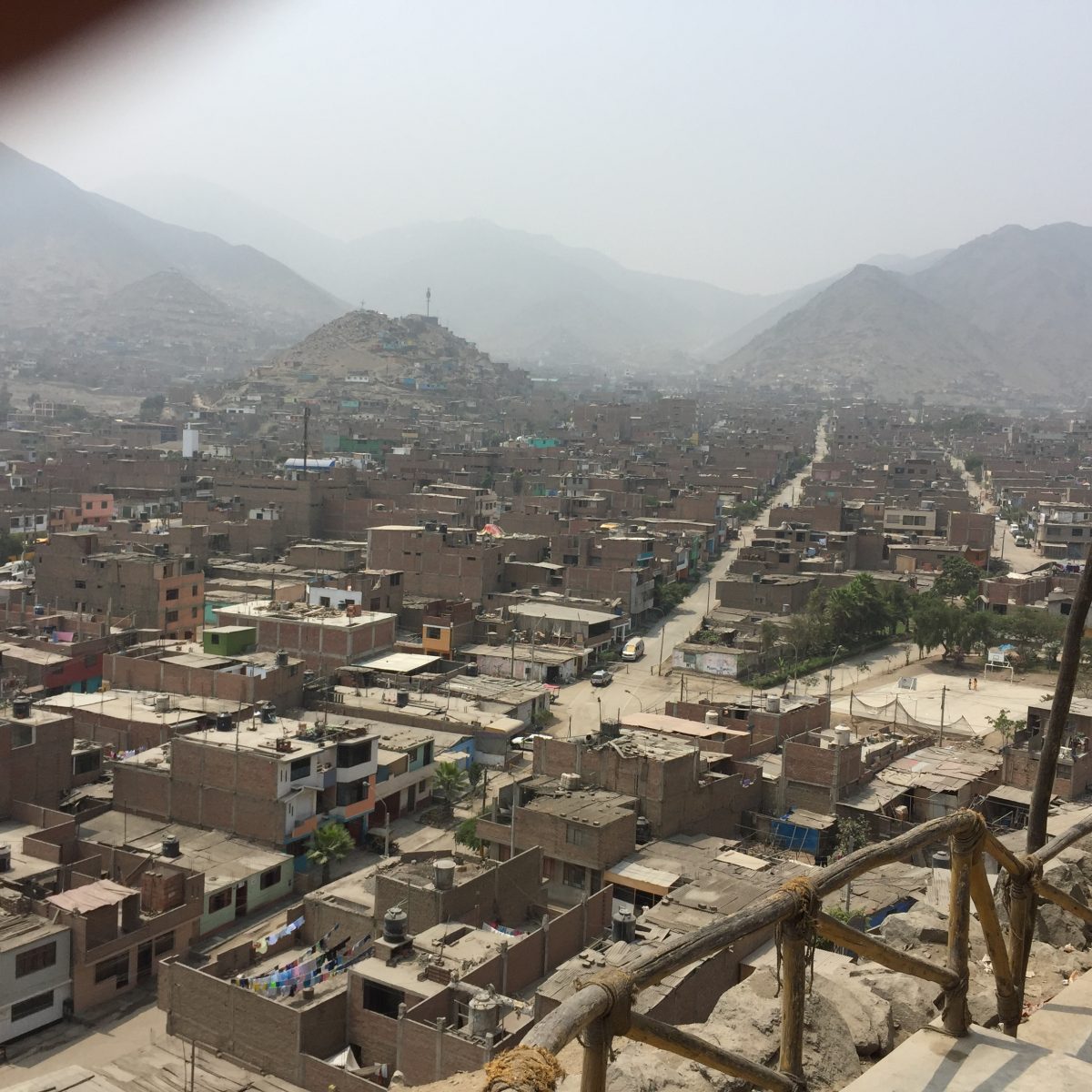
The hectic nature of life the week brings about a short post. I’m currently with a small group of people from my church this week on a mission trip to Collique, Peru, to build more permanent shelters for some of the families in this impoverished community tucked in the hills northeast of Lima. These are not houses as you and I understand them, but they are homes for families with little more than a roof above their heads.

This is just my second year to participate. Like the others in my group, most of whom have made this trip multiple times, I end each day amazed at how little these wonderful people have and great their joy in comparison.

Their smiles and their constant expressions of gratitude transcend the language barriers and cultural differences between us, serving as a dynamic testimony to the power of Christ to fill a heart with joy. Theirs is a faith that truly sustains through every circumstance.

For me, and I’m certain for others in our group, it is a teachable moment. These people with whom we’ve been blessed to work this week have so little. We have so much. They endure though faced with a life we can scarcely imagine. We need to remember…no, I need to remember…that despite the turmoil I feel at times, God gives me voice to declare my love for him. Our relationship with God should enable us to sing when others…lost without him…can’t hear a note.

British vocalist James Loynes recently recorded a beautiful song written by Robert Lowry, a 19th century Baptist minister and composer. The melody and words resonate on every level. The final stanza offers this word.

The peace of Christ makes fresh my heart,
A fountain ever springing.
All things are mine since I am his,
How can I keep from singing?

Listen to the video. Hear the gentle reminder. How can you keep from singing?


Wonderfully Made…For a Purpose

Background Passage: Psalm 139

The brightest minds in Greek and Roman worlds for centuries before and after the time of Christ believed human wisdom, emotion, memory and thought centered in the heart, not the brain. Ancient ideas of physiology and psychology told them that God spoke through the heart; that within the heart lived the essence of man’s soul. They believed the brain was an internal radiator that simply cooled the blood as it circulated through the body.

Influenced by these cultures, the ancient Hebrews understood that the core of who and what they were was centered in the heart. In other words, like the ancient Greeks, they believed the heart was the focus of all rational thought and emotion. So unimportant was the brain in Hebrew thinking that the word is never recorded in scripture…not once.

Scientifically, we know the ancients were wrong. We continue to learn more about the brain as the depth of scientific research grows into the complex role it plays in our how we think, feel and learn. Though we know better, we still speak of “feeling” and “thinking” with our hearts, a metaphorical echo of scientific error relegated to the pages of history.

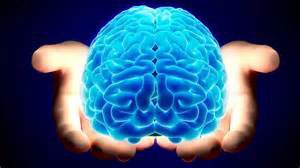
The human brain functions as one of God’s most marvelous creations, yet only in the past 150 years have scientists and physicians made serious efforts to understand how it works. In 1861, French physician Pierre Paul Broca discovered that small region of the left frontal lobe of the brain controls our ability to speak. In subsequent studies since that time, scientists have identified 83 specific areas of the brain that activate when we recognize a face, read a book, think about a specific memory or do certain types of physical work.

Neuroscientists at the University of Washington recently published a new map of the brain, revealing more than 97 previously unknown regions of the brain to add to the 83 areas already familiar to today’s scientists.

A Stanford University study recently used a new imaging technique called array tomography to look more closely at the brain’s neurons and synapses. The data collected produced a three-dimensional picture of these tiny cell connections. The images indicate that the number of synapses in the brain exceed the number of estimated stars in 1,500 Milky Way galaxies combined, making the brain far more complex that previously understood.

These new discoveries caused a few of my own synapses to make a few new connections. I thought of Psalms 139. The Psalmist, in his praise of God, wrote beautiful lyrics about his creative work.

“For you created my inmost being;
you knit me together in my mother’s womb.
I praise you because I am fearfully and wonderfully made;
Your works are wonderful,
I know that full well.”

We are God’s creation. Whether we developed through an evolutionary process or appeared in a molding of clay and bone is really immaterial to me. Neither view changes my understanding of God as Creator. To focus on that debate misses the point of my personal relationship to him. That he gave me this marvelous brain that thinks, acts, reasons, chooses, understands and loves is an amazing gift that governs my relationships to my God and to others. That he gave me the ability to grasp the concept of faith in him is grace in full measure.

That thought led to another. My son and his wife, Melissa, are expecting their second child in December. They have named her Amelia Diane. We saw another ultrasound of her yesterday. Even now as her body is developing inside the womb, God knows her and all she will become. The Psalmist explored that idea, also.

“Your eyes saw my unformed body;
all the days ordained for me were written in your book
before one of them came to be.”

I think of these things not to get into a debate on abortion and the definition of when life starts. Rather, I stand amazed that God already knows my granddaughter. That a God-ordained, perfect plan already exists for her life. That the only things standing in the way of that life are the choices she makes and the positive influence brought to bear through the unconditional love of her Christian parents and all of those who enter her life.

Her intricate and incomparable brain will be imprinted with her God-given uniqueness etched throughout its gray matter. The life he plans for her will unfold as it is imparted by her parents, instructed by gifted teachers at church and at school, and inspired by the love of family and friends that desire only the best for her.

One final thought occurred to me as I read again this familiar scripture. Intellectually, I know our brains, not our hearts, make us who we are. Yet, we must continue to lean upon the understanding of the ancients, like the Psalmist, to express our desire to be all that God wants us to be.

He planted a seed in all of us that longs for a Father. As we allow that seed to grow, God guides our lives through every trial, test and temptation. The seed, that free-will choice of heart and head–creates purpose. We uncover our purpose in God when we honestly seek him and genuinely desire to walk the path he sets out for us. As the Psalmist sang,

“Search me, God and know my heart;
test me and know my anxious thoughts.
See if there is any offensive way in me.
Lead me in the way everlasting.”

Orcas, Octonauts and Walruses

The list of things for which my grandsons are thankful circle the stem of their Thanksgiving pumpkin, spiraling down its side, one thought after another. As you read the list, you find what you would expect to find…Mommy, Daddy, family, boats, planes, doctors, tents, trains, specific toys and Ashley, the “kid-sitter…” because at four and two years of age, respectively, Eli and Josiah do not require a “baby-sitter.”

While most of their gratitude points to ordinary things that might appear on any child’s list, three things stand out…orcas, Octonauts and walruses. Intriguing sea creatures and a cartoon. I doubt any of those three would have made my prayer list.

Their Thanksgiving pumpkin, a family tradition designed to instill a sense of gratefulness to God for his many blessings, reminds me that I frequently take so much for granted. The innocence of children tends to see everything around them as a gift, worthy of the time it takes to say thank you to a God they are only beginning to understand.

As adults we grow jaded to the gifts around us. Preoccupied. Caught up in the chaos of our own choosing. Taking precious little time to think about the orcas, the Octonauts and the walruses. My grandchildren reminded me that the world is full of wonder and worthy of my gratitude.

I am thankful for all God has given me. That which I can touch and that which I can only feel. I have lived a charmed and blessed life, filled with people who love me and whom I love. I am blessed by God in the life He led me to and the life He has planned for me. I am grateful to God for every stroke of His hand that guided me through the choices I have made. I am thankful for the joy of experiencing what can be when you give your life to Him.

“Thankful,” a song written by David Foster and Carole Bayer Sager, and sung by Josh Grobin, speaks plainly to that point.

In preparation for Thanksgiving Day, I share with you the lyrics and the link to a beautiful song. Read the lyrics and listen as the song is sung.

Some days we forget
To look around us
Some days we can’t see
The joy that surrounds us
So caught up inside ourselves
We take when we should give.

So for tonight we pray for
What we know can be.
And on this day we hope for
What we still can’t see.
It’s up to us to be the change
And even though we all can still do more
There’s so much to be thankful for.

Look beyond ourselves
There’s so much sorrow
It’s way too late to say
I’ll cry tomorrow
Each of us must find our truth
It’s so long overdue

So for tonight we pray for
What we know can be
And every day we hope for
What we still can’t see
It’s up to us to be the change
And even though we all can still do more
There’s so much to be thankful for.

Even with our differences
There is a place we’re all connected
Each of us can find each other’s light

So for tonight we pray for
What we know can be
And on this day we hope for
What we still can’t see
It’s up to us to be the change
And even though this world needs so much more

There is so much to be thankful for.

As you celebrate Thanksgiving this week, express your gratitude for the orcas, Octonauts and the walruses. And remember, while the world needs so much of His grace, there is still “so much to be thankful for.”

Click on the link below to see the video.

https://www.youtube.com/watch?v=yoygmylt2iM

Source: The Searcher