The Pit and the Promise

Background Passages: Genesis 37:12-28; 50:20; Isaiah 43:2

How does one rebound from betrayal?

How does one refocus after a dreaded diagnosis?

How does one recover from the loss of a loved one?

In one form or another, I heard those questions asked by three different people…friends and former colleagues…each in their own way trying to put one foot in front of the other in the aftermath of broken hearts, horrible news and sudden death.

Words fall short sometimes. Sympathy and comfort offer little more than a brief respite. At the end of the day, I go on with my life, but my friends face the difficult task of reconciling each today with a new reality. As one of them told me, “It’s the pits.”

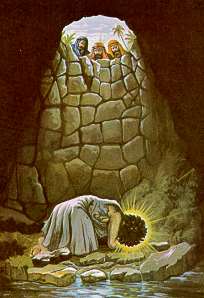
I think of them often and watch their faith sustain them during difficult days. I am reminded of another young man in the Bible who experienced “the pits” both literally and figuratively.

A teenage boy.
Distressed.
Desperate.
Filled with
Dread.

Struggled to suppress the panic
settling around him as thick as the desert dust.
Breath ragged and labored.
Strangled by terror and exhaustion.

He sat against the rough-hewn wall,
knees tucked to his chin,
Scratched.
Scraped.
Bleeding from failed efforts to
climb the rocky walls of the cistern
in which his brothers left him to die.

Joseph.
Yelled again and again.
Begged for rescue.
Throat dry.
Caked with dust.
His hoarse and anguished voice
falling on deaf ears and
hardened hearts.

Betrayed by brothers.
Abandoned by those he loved.
Left to die then
sold to slavery in a distant land.

Joseph found his life
tortured and twisted
beyond reason.
His day gone horribly wrong in an
unexpected, unplanned
turn of events.

It’s a familiar story. One most of us heard as children. The story resonates because somehow we can all relate to waking up one morning with expectations of another wonderful day only to have our world shatter into a million pieces in the blink of an eye.

The innocent part of me wants my people of faith, like Joseph, to stand strong in the face of adversity. To sit patiently in the pit, knowing without doubt that God would miraculously send a caravan of traders to whisk him to Egypt where he knew with certainty he would find favor with Pharaoh and settle into a royal life of luxury.

Despite the dreams of personal power and prestige that David often lorded over his brothers, I suspect he was scared to death while he languished in the pit, overwhelmed by all that happened. His brothers later acknowledged his distress; that Joseph “pleaded with us for his life.” (Gen. 42:21) When, he was dragged from the well and sold to the traders, how could he not dread the turn that life had taken.

Yet, Joseph did what each of us must do when scarred by circumstance and scared by what the future holds. He put one foot in front of the other and lived another day, clinging to a promise of God’s presence, hanging on to faith and allowing God to work in His way and His time. Through his life in Egypt, Joseph’s fortunes rose and fell, landing from time to time again in the pit. Scripture tells us more than once that, “the Lord was with Joseph” in Egypt.

That simple phrase holds the lesson of first life in the pits. The Lord is with us. Others may betray us. God never will. We may face the devastation of incurable disease or the death of one we love, but the Lord will never abandon us to grapple with uncertainty on our own. He is with us…always. We draw strength from his presence.

The second lesson of the pits comes as the story unfolds. Famine hits and Jacob’s family must buy grain from Pharaoh. The elder brothers unknowingly come face to face with Joseph at the storehouse door. Imagine the feelings that washed over Joseph when he saw his brothers for the first time since they brutalized and betrayed him. Thoughts of vindication and payback surely crossed his mind.

I wonder if Joseph could ever foresee repairing the fractured relationship with his brothers when he sat so desolate in the bottom of the pit. When he walked in chains with the traders. When he served an Egyptian master or suffered in an Egyptian dungeon.

We see Joseph near the end of his story, recognizing that God made the most of a bad situation to save Joseph’s family and his people. He told his brothers, “What you intended for harm, God intended for good.” You see, somewhere in the unfolding of time God repaired Joseph’s broken and troubled heart. Allowed him to reconcile his life to his new reality.

Rebounding is never quick. Refocusing never easy. Recovery never without its bumps. Trusting his presence in our lives, we hold on to the truth that what others intend for harm or when life deals us a wicked turn, God will work for good.

What comfort might that provide to my friends who must rebound, refocus and recover from the trials and difficulties they continue to face? I find encouragement for them, and all who are struggling, in this story of an abandoned teenager who found himself in the pits. “The Lord was with Joseph” and he is with you and…he will work to bring good out of any situation.

It is a message echoed by Isaiah 43:2…

“When you pass through the waters,
I will be with you.
When you walk through the fire,
you will not be burned.”

Wonderfully Made…For a Purpose

Background Passage: Psalm 139

The brightest minds in Greek and Roman worlds for centuries before and after the time of Christ believed human wisdom, emotion, memory and thought centered in the heart, not the brain. Ancient ideas of physiology and psychology told them that God spoke through the heart; that within the heart lived the essence of man’s soul. They believed the brain was an internal radiator that simply cooled the blood as it circulated through the body.

Influenced by these cultures, the ancient Hebrews understood that the core of who and what they were was centered in the heart. In other words, like the ancient Greeks, they believed the heart was the focus of all rational thought and emotion. So unimportant was the brain in Hebrew thinking that the word is never recorded in scripture…not once.

Scientifically, we know the ancients were wrong. We continue to learn more about the brain as the depth of scientific research grows into the complex role it plays in our how we think, feel and learn. Though we know better, we still speak of “feeling” and “thinking” with our hearts, a metaphorical echo of scientific error relegated to the pages of history.

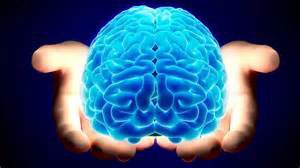
The human brain functions as one of God’s most marvelous creations, yet only in the past 150 years have scientists and physicians made serious efforts to understand how it works. In 1861, French physician Pierre Paul Broca discovered that small region of the left frontal lobe of the brain controls our ability to speak. In subsequent studies since that time, scientists have identified 83 specific areas of the brain that activate when we recognize a face, read a book, think about a specific memory or do certain types of physical work.

Neuroscientists at the University of Washington recently published a new map of the brain, revealing more than 97 previously unknown regions of the brain to add to the 83 areas already familiar to today’s scientists.

A Stanford University study recently used a new imaging technique called array tomography to look more closely at the brain’s neurons and synapses. The data collected produced a three-dimensional picture of these tiny cell connections. The images indicate that the number of synapses in the brain exceed the number of estimated stars in 1,500 Milky Way galaxies combined, making the brain far more complex that previously understood.

These new discoveries caused a few of my own synapses to make a few new connections. I thought of Psalms 139. The Psalmist, in his praise of God, wrote beautiful lyrics about his creative work.

“For you created my inmost being;
you knit me together in my mother’s womb.
I praise you because I am fearfully and wonderfully made;
Your works are wonderful,
I know that full well.”

We are God’s creation. Whether we developed through an evolutionary process or appeared in a molding of clay and bone is really immaterial to me. Neither view changes my understanding of God as Creator. To focus on that debate misses the point of my personal relationship to him. That he gave me this marvelous brain that thinks, acts, reasons, chooses, understands and loves is an amazing gift that governs my relationships to my God and to others. That he gave me the ability to grasp the concept of faith in him is grace in full measure.

That thought led to another. My son and his wife, Melissa, are expecting their second child in December. They have named her Amelia Diane. We saw another ultrasound of her yesterday. Even now as her body is developing inside the womb, God knows her and all she will become. The Psalmist explored that idea, also.

“Your eyes saw my unformed body;
all the days ordained for me were written in your book
before one of them came to be.”

I think of these things not to get into a debate on abortion and the definition of when life starts. Rather, I stand amazed that God already knows my granddaughter. That a God-ordained, perfect plan already exists for her life. That the only things standing in the way of that life are the choices she makes and the positive influence brought to bear through the unconditional love of her Christian parents and all of those who enter her life.

Her intricate and incomparable brain will be imprinted with her God-given uniqueness etched throughout its gray matter. The life he plans for her will unfold as it is imparted by her parents, instructed by gifted teachers at church and at school, and inspired by the love of family and friends that desire only the best for her.

One final thought occurred to me as I read again this familiar scripture. Intellectually, I know our brains, not our hearts, make us who we are. Yet, we must continue to lean upon the understanding of the ancients, like the Psalmist, to express our desire to be all that God wants us to be.

He planted a seed in all of us that longs for a Father. As we allow that seed to grow, God guides our lives through every trial, test and temptation. The seed, that free-will choice of heart and head–creates purpose. We uncover our purpose in God when we honestly seek him and genuinely desire to walk the path he sets out for us. As the Psalmist sang,

“Search me, God and know my heart;
test me and know my anxious thoughts.
See if there is any offensive way in me.
Lead me in the way everlasting.”

The Gilded Cathedral

Background Passages: Matthew 23:25-28; James 2:14-18

My wife and spent the last two weeks celebrating our 40th anniversary on a Baltic Sea cruise. We started with a side trip to Spain before boarding a ship in London for Norway, Denmark, Estonia, Russia, Finland and Belgium. As with most of these European vacations, every stop featured palaces, castles and cathedrals.

I stood before each church and cathedral awestruck by the size and scope of the construction, thinking about how the architects of old created inspiring buildings worthy of God’s presence. Today, these massive facades still rise high above the surrounding neighborhoods, dominating city skylines with ornate spires and mammoth domes that reach toward heaven. Intricate carvings covering the face of each cathedral serve as silent and lasting testimony to the skill of the collection of artisans who spent centuries, in some cases, creating these magnificent houses of worship.

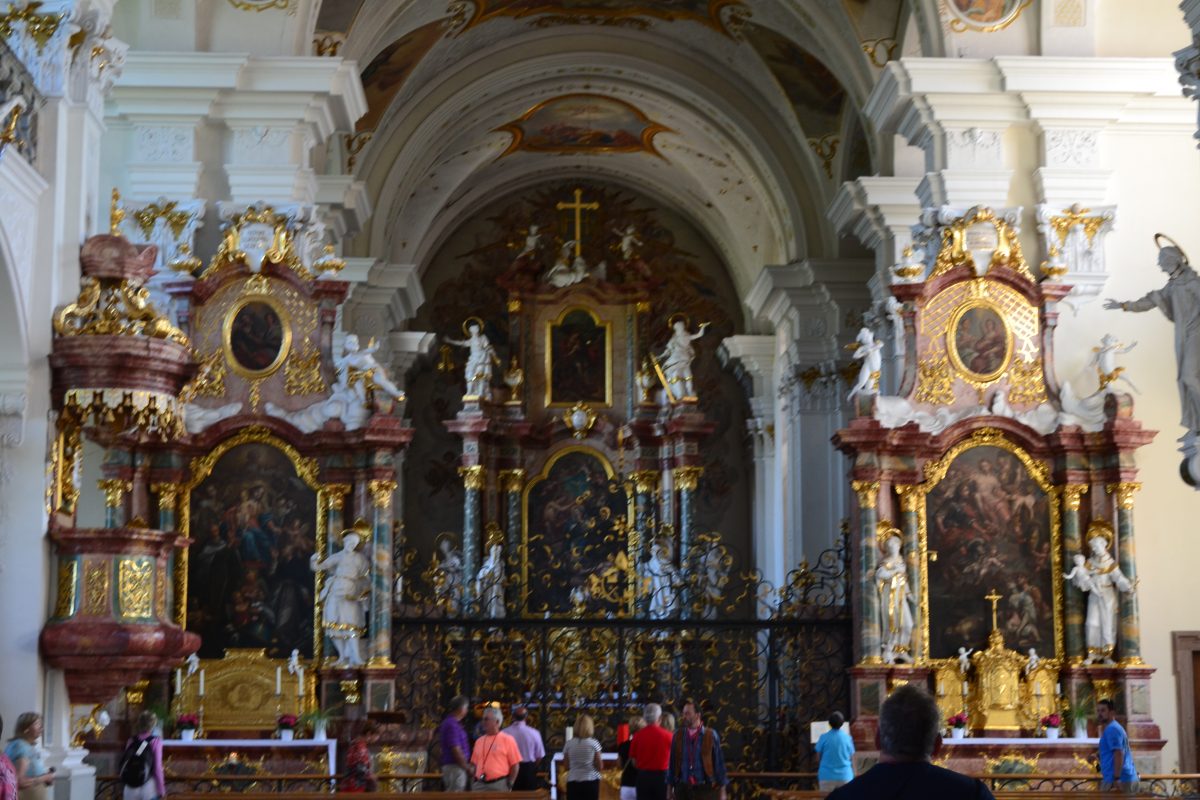
As I stepped inside and allowed my eyes to adjust to the dim lighting within, I marveled at the invaluable artwork that filled each sanctuary, drawing my attention always forward toward the marbled and gilded altars. I find it difficult to wrap my arms around the wealth represented in the gold-plated structures filling these halls.

A thought dawned on me as I stood in the back of the nave of St. Peter and Paul’s Cathedral in St. Petersburg, Russia, staring at the gilded altar rising to the ceiling. Inching my way through the milling throng of tourists snapping pictures, jabbering nosily, jockeying for position to catch a glimpse of whatever the tour guide highlighted, I felt a profound sense of loss. I stood in a magnificent house of worship, yet nothing about the chaotic atmosphere within resembled worship.

I sincerely appreciate the beauty and boldness of these magnificent churches, even though the opulent style challenges my simpler tastes. The beauty is wasted when you realize that few of the cathedrals offered more than the occasional worship service. Most served only a secular function, reflecting the history of time gone by. Museums to extravagance. Mausoleums for a faith dying of apathy.

Statistics tell us that the Christian faith in Europe has been on a steady decline for decades. Fewer than 10 percent of the populations in Norway, Denmark and Finland attend church regularly. Those who profess a faith in Christ stand in absolute minority among the citizens of Scandinavia and northern Europe. Did the extravagance of the buildings contribute in any way to the decline in faith, or was it something more personal?

As I sorted through my distress over the decline of faith and the emptiness of these sanctuaries of worship, I recalled an encounter Jesus had with the Pharisees late in his ministry. The conversation was one of Jesus’ most direct and confrontational messages to the religious leaders of his day.

“Woe to you, teachers of the law and Pharisees, you hypocrites! You clean the outside of the cup and dish, but inside they are full of greed and self-indulgence…You are like whitewashed tombs, which look beautiful on the outside but on the inside are full of dead men’s bones and everything unclean. In the same way, on the outside you appear to people as righteous but on the inside you are full of hypocrisy and wickedness.” –Matthew 23:25-28

With those words Jesus reminds me that the decline of faith evident in Europe and in our own country has far less to do with the physical appearance of our buildings than it does the spiritual application of my heart. Jesus reminds me that I can play the part, speak the words, construct a beautiful façade as I proclaim myself a Christian, and still my heart beats as empty and devoid of worship as those amazing cathedrals. I can gild myself in gold, putting up a grand façade, but never demonstrate God’s love to a lost and dying world.

Cathedrals and churches echo with emptiness across the world because our deeds do not match our faith. James spoke to this.

“What good is it, my brothers and sisters, if someone claims to have faith but has no deeds? Can such a faith save them? Suppose a brother or a sister is without clothes and daily food. If one of you says to them, ‘Go in peace; keep warm and well fed,’ but does nothing about their physical needs, what good is it? In the same way, faith by itself, if it is not accompanied by action, is dead. But some will say, ‘You have faith; I have deeds.’ Show me your faith without deeds, and I will show you my faith by my deeds.” –James 2:14-18

Sadly, I’m sure there are times when those men and women searching for answers to faith’s questions see me as a gilded cathedral. An empty shell hiding behind a gilded face. Christ-like in outside appearance, but without the deeds to back it up. Such is the height of hypocrisy.

A cathedral without worship is a museum. Faith without works a mausoleum. How much better would it be for us to be plain an unattractive to the world, but open to God’s presence as we serve and minister to his people?

At the end of the day, these beautiful cathedrals sit idle because the people forgot what it meant to serve. Forgot what it meant to invest themselves in the lives of those they encountered. Our modern churches run the risk of becoming silent witnesses to our dying faith unless those of us who profess Christ act faithfully on his behalf in service and ministry to those we encounter today and tomorrow.

For the sake of our country and our faith, I pray we’re up to the task.

When Christmas Is Over

The Christmas story of the Bible remains one of the world’s most cherished stories for more than one-third of the world’s population. Those of us who celebrate the birth of Jesus reflect upon its meaning, using the day as a reminder of God’s plan and purpose to bring the world back into relationship with him by sending is Son.  It is far too easy for many of us to revel in the birth of the child and forget that God expects more from us.

What do we do after we read that beautiful story for the last time this year? After we snuff out the Advent candles? After we sing the last carol? After we dismantle the Nativity scenes? What change does it bring to our lives? What do we do after we celebrate the birth of the Christ child?

The Christmas story does not end with the birth of Jesus. Once the baby is born, the story and its impact should serve as a catalyst for God’s power in our lives. What should we do when Christmas is over? We need look no farther than the scripture recorded in Luke 2.

Consider the Parents. The baby promised by the angel was born under those most unusual circumstances , but afterwards,  the new family settled into a routine in Bethlehem, awed daily by the presence of the baby Mary and Joseph held in her arms. Six weeks after baby is born the parents take Jesus five miles to Jerusalem at the required time of purification, commending their first born son to the service of God.

In this we learn our first lesson of Christmas. Joseph and Mary ensured that Jesus started out on the right foot by dedicating him to God from the beginning, the start of a process of “training him up in the way he should go.” So, after we celebrate the birth of Christ, it is a time of recommitting ourselves to God’s service, repaying him for the greatest gift we will ever receive by dedicating ourselves to his will and way. Rededicating ourselves to the worship of our Father.

Consider Simeon.  This “devout and righteous” man of God had been told by the Holy Spirit that the Messiah would come during his lifetime. As he entered the Temple and stumbled upon the purification ceremony for this little baby boy, he knew in his heart that he was looking at the one God had sent to bring salvation to the world. His response was simple (Luke 2:28)…

“Simeon took him in his arms and praised God.”

As Simeon holds on the God’s Son, we experience our second lesson of the season. The days after Christmas ought to be a time when we embrace God’s Son and declare our praise to God for the salvation he offers, not just on that day, but every day. Give him the proper place of prominence in our lives. Hold on to him during the good and difficult times as the sources of our strength.

Consider Anna. This elderly widow worshiped at the Temple day and night, devoting her life to God. Her love for God evident to those who entered the Temple court. Heard her prayers. Listened to her proclaim truth she had been taught. On the day of purification, she was drawn to the young couple holding a little boy. As she heard their story and listened to Simeon’s pronouncement, she believed with all her heart that the child before her was the Messiah. Luke 2:36-36 tells us what she did…

“She gave thanks to God and spoke about the child to all who were looking forward to the redemption of Jerusalem.”

Anna’s lesson is a reminder that we are to be so thankful for the presence of Jesus that we bear witness to those around us of his saving grace, giving testimony to the difference he has made in our lives. Serving him with faithfulness no matter where we live. No matter what we do. To be God’s voice. God’s hands. God’s heart in a troubled world.

Consider Jesus. Born to human parents, but also divine. God’s Son. It’s a hard concept to grasp. So much of it we accept by faith. Jesus may have been born with God’s DNA, but understand the full measure of what it meant to be Savior did not come instinctively. He learned. When he turned 12-years-old, Jesus journeyed to the Temple with his parents. Look at Luke 2:41-52, where we find Jesus…

“spending his time sitting among the teachers,  studying scripture and asking questions…” Learning more about “his Father’s business.” Eventually, he returned with his parents to Nazareth where…“Jesus grew in wisdom and stature and in favor with God and men.”

Understanding our relationship to God and his will for our lives is not implanted naturally into our DNA just because we are born to Christian parents or attend church regularly. Our understanding of what God requires of us comes from following Jesus’ lead. We learn. We grow. We “spend time sitting among the teachers, studying scripture and asking questions.” In the end, our desire is to grow in wisdom and stature and in favor with God and men.

*

Christmas ends. When that last Nativity gets put in its box and stacked in the closet, we can forget its meaning and live our lives ignoring the demands of discipleship,  or we can…

Consider the Parents. Commit ourselves and our lives to God.  Every hour. Each day.

Consider Simeon. Embrace the Son, not just for the holidays, but each and every day. Praise God for sending his Son as our Savior.

Consider Anna. Give thanks for God’s goodness and bearing witness to all we encounter about everything he has given to us.

Consider Jesus. Live as he lived, growing in our understanding of God’s will for our lives and putting into practice all God reveals to us each day.

There is life after Christmas. As we approach the New Year and its resolutions, let’s recognize that Christmas never ends. Rather, it stands as a time of recommitment and rededication as we pursue life worth living.

May you and your family enjoy all of God’s grace and wisdom in the year to come.

The Good Fight

Background Verses: Ephesians 6:12-18, 2 Timothy 4:7, 2 Timothy 2:2-3;

There is no question that the Christian faith is under attack across the world. Brutal persecution of Christians exists in regions of the world dominated by militant Islamic bullies. Often it feels as if too little is being done to protect those helpless, in a physical and political sense, to defend themselves.

While it in no way compares to the persecution Christians face from these extremists, it seems the Christian faith is being pushed into a corner by an American public policy that places parameters on personal and corporate worship, by the nation’s legal system that has broadened the court’s reach into matters of faith and heart and media’s penchant for encouraging controversy for controversy sake.

Yet, I wonder at times if the real and perceived erosion of religious liberty is not also an outgrowth to our strident and un-Christlike reaction to the current political and social climate. Extremist reactions from both sides of the debate drive a wedge between us, forcing us to choose sides in a battle that no one wins.

Scripture tells us in Ephesians 6: 12-18 we will face a battle against all things that run counter to the teachings of Christ. Paul encourages us to “take up the whole armor of God, that you may be able to withstand in the evil day.” In the battle we must wrap ourselves in truth, righteousness, readiness to proclaim the gospel of peace, shielded by faith, equipped with the Spirit and Word of God.

If we face a continual battle, then it is not a question of whether we fight, but how we fight. Do we fight fire with fire and retaliate with the same negative name-calling directed against us, or do we, as Paul decalred in 2 Timothy 4:7, “fight the good fight” by keeping the faith and “enduring the hardship as a good soldier of Christ” (2 Timothy 2:3).

The battle we wage as Christians must look different that the war waged by the world. Look at Ephesians 4:31-5:2.

“Get rid of all bitterness, rage and anger, brawling and slander, along with every form of malice. Be kind and compassionate to one another, forgiving each other, just as in Christ God forgave you. Be imitators of God…and live a life of love, just as Christ loved us and gave himself up for us…”

A recent Facebook recently shared a video produced by The Piano Guys. It was a beautiful instrumental mix of Fight Song by Dave Bassett and Rachel Platten and Amazing Grace.

I doubt the lyrics of Fight Song were never intended to teach spiritual truth. Yet, the context of the song teaches that a small action on our part can create a great movement. That a single word can change a heart. That one spark can cause an explosion. The power we hold in our hands and hearts is not in the strident screaming of outrage at a world that pushes against what we believe and hold dear. The power comes when we let go of the rage and live a life of love.

A life of love is not a passive acceptance of the world’s antipathy, but an active fight…a good fight. As such, the chorus to Platten’s song speaks to the depth of commitment to engage in that good fight.

My power’s turned on.
Starting right now I’ll be strong.
I’ll play my fight song.
And I don’t really care if nobody else believes,
I’ve still got a lot of fight left in me.

Therein is where the musical mix created by The Piano Guys resonates. The power turned on within us derives from the presence of the Spirit of God in our lives. Amazing Grace is our fight song. We win this battle, not with aggressive animosity toward those who do not understand, but by proclaiming the amazing grace of God that is the world’s unclaimed gift.

Listen to the music. I hope it rekindles the fight within you.

It is a good fight.

https://www.youtube.com/watch?v=mOO5qRjVFLw 

Source: The Searcher

Religion Is Not Enough

Background Verses: Acts 17:16-34


Paul stood alone.
Deep in the center of the Athenian Agora.

Oblivious, it seemed, to the bustling crowd,

busy commerce,

and boisterous conversations.

Lips formed his words,

yet he uttered no sound.

Stunned by the

sights and sounds

of sinful ignorance.


He stretched out his arms.

Slowly turned full circle.

Intelligent eyes taking his surroundings.

Everywhere he looked,

Every direction he faced,

Glistening granite.

Chiseled marble.

Gilded stone.

Testimony to human confusion and idolatry.


Idol after idol.

Apollo.

Ares.

Demeter

Dionysus.

Gods of the people who worshipped…

Music and healing.

War and chaos.

Fertility and harvest.

Wine and pleasure.


Hera.

Harmonia.

Nemesis.

Zelos.

Gods and goddesses of…

Women and empires.

Harmony and peace.

Revenge and hatred.

Jealousy and rivalry.


He threaded his way through the crowd.

Listened to the debates and arguments

of Athens’ fabled philosophers.

Learned men.

Fumbling with matters of man’s

life,

purpose and

existence.


For several days

Paul walked the marketplace.

Engaged at times in quiet

and lively debate with

Epicurean and Stoic philosophers.

Paul parried their intellectual thrusts.

Countered with his personal beliefs.

Sought to understand the…

Epicureans.

Their “eat, drink and be merry” constructs

that ignored their personal responsibilities.


Sought to know the…

Stoics.

Their deliberate disdain for life and

unending and unjoyful quest for life on a higher plain.


Paul’s introduction of a loving God,

a resurrected Lord,

fell upon curious, but deaf ears.


Despite their general apathy,

the philosophers lived for and loved a good debate.

Liked nothing more than to spend

time talking and listening to the latest ideas.

Invited Paul to voice his strange philosophy to the Areopagus,

The council of the most learned in Athens.

Tomorrow morning.

On a hill in the shadow of the Acropolis.


Paul walked the remainder of the day

considering the challenge before him.

Constantly in prayer for words to share.

How could he convince them of the God he adored?

The God he worshipped?


Head bent.

Focused only on his thoughts.

Paul’s elbow caught the edge of another stone monument,

forcing his attention to his right.

As he rubbed his arm to soothe the discomfort,

he stood face to face with

another idol.

Another altar.


He looked at the whitewashed image.

Carved from stone.

The half-nude body of a man.

Chest bare.

Poised and powerful.

Cloth draped across its left shoulder,

tied around its waist.

Face framed by a laurel wreath.

Void of expression.

Featureless.

Paul’s eyes drifted down to the inscription.

Chuckled at the irony.

Marveled at God’s inspiration.

Chiseled into the base of the statue…

“TO THE UNKNOWN GOD.”


Offering a quiet prayer to Jehovah.

Paul hurried back to his home for the night.

Gathering his thoughts.


*

Early the next morning,

Paul sat quietly on the boulder.

Gazing east.

The rising sun casting a reddish glow onto the low clouds.

The philosophers arrived alone and in small groups.

Eager to begin another day

searching for understanding and knowledge.

Their sole reason for breathing.


After a time,

One of the men whom Paul debated yesterday,

held out his hands.

Gathering the attention and eyes of every man.

With an air of derision and scorn,

he pointed at Paul.

“This stranger among us comes at my invitation.

His babblings in the Agora amused me.

While I find his philosophy little more than the chirping of a bird, others…”

he paused, glaring intently at a group of

more open-minded men sitting to his left…

“others, found his argument a ‘herald of some  new divination.’

So, my friend,” said the philosopher,

“tell us about this new thought you bring for it is strange to us.”

*

Paul stood slowly.

Walked toward the edge of the mountain

Looked down on the Agora.

The streets below.

Stretched out his arm over the city beneath him.

Stared down at the Altar of Apollo,

clearly visible in the distant marketplace.


Voice clear.

Laced with authority.

Paul declared,

“Men of Athens.”

“I see that in every way you are very religious.

For as I walked around.

Looked carefully at your objects of worship.

I saw many altars to many gods.

I even found an altar with this inscription,

‘TO AN UNKNOWN GOD.’”

Paul turned.

Faced the philosophers seated around the Areopagus.

A smile on his face.

A gleam in his eye.

“What you worship as something unknown…

I am going to proclaim to you.”


With an eloquence of speech

And the voice emboldened by the Holy Spirit,

Paul proclaimed the good news of Jesus Christ

and his resurrection.


*


Paul preached the

plan and purpose of God

Summarized in seven short verses

in Acts 17:24-31.


God created.

God rules.

God gives life.


A life of purpose given so…

man could seek him.

Reach out for  him.

Find him.

Not distant on the mythical mountaintop.

Not hidden in the clouds of Olympus.

Not crafted by human hands.

Not an image reflecting our failures and weaknesses.


Rather, we find him

in the warmth of personal relationship.

We belong to him.


He is unique.

The One.

The Only.


He calls us to repentance.

Demands our obedience.

Desires our worship.


Paul looked at the world around him

Made a simple observation.

“I see that in every way you are very religious.”


If he stood on the hill overlooking

our city…

Our lives…

Our hearts…

How many altars could he count dedicated to the

Gods of our own choosing?

How many gods have I created in my image?

How many things have I placed in priority

over my Lord?


Religion…

Goes through the motions.

Plays for appearance.

Creates a false sense of belonging.


Faith focuses our lives, not on what is

unknown or unreal,

but on the

One and Only

that is known to us…


Creator.

Lord.

Indwelling Spirit.

Comforter.

Redeemer.

Restorer of Life Abundant.

 Source: The Searcher