Come Sit at the Big Table

Background Passages: Luke 2:41-52; Philippians 2:6-7; I Corinthians 3:1-3

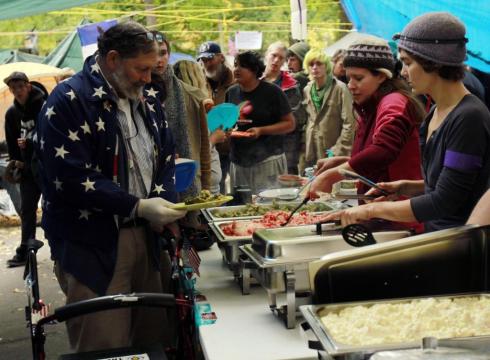
I don’t know if your family gatherings were like mine growing up. Typically, everyone brought a pot luck casserole or vegetable while someone provided the ham. Everyone would meet at Grandma’s house after church on Sunday.

The cousins would play…loudly…while the food was placed on the dining room table, extended to its full length. Card tables sat in the “formal” living room, surrounded by those folding chairs that pinched more than one finger at some point during the day. After a prayer, the adults sat around the dining room table, banishing the kids with their paper plates to the card tables in the next room.

I remember listening from the other to the conversation around the big table. Sometimes it was filled with love and laughter. Sometimes it was serious and somber.

For each of the cousins, we longed for the day when Grandma would point you to a chair at the big table. What a glorious rite of passage! No longer a child. Now, an adult.

I wonder if Jesus felt that way when he entered the temple in Jerusalem when he was 12-years-old. Picture it.

*

Every year of his memory, the boy traveled with his family from Galilee to Jerusalem to celebrate the Passover. His father, devote and upright, would walk with his son into the temple, his hand resting lightly on his son’s shoulder. Each year, the father let his son experience the awe and majesty of the towering white-washed temple stone, glistening in the morning sun.

Then, he would drop to a knee, take the young boy by the shoulders and remind him of his place. Standing with the other children against the wall—to look, listen and learn. Being seen, but never heard. With a smile and a gentle push, Joseph sent Jesus to join the other boys, all who longed for the day when they would be invited among the men to learn at the feet of Jerusalem’s most noted rabbis.

What a difference this year made! Jesus, on the verge of Jewish adulthood, entered his final year of study prior to becoming a “son of the covenant.” This would be his first year to sit among the men in the temple in Jerusalem, a moment about which Jesus dreamed for years.

On this special day, Jesus stood a little straighter beside his father just inside the gates of the inner courtyard. Joseph marveled at the lad who stood nearly as tall as he, the young man’s eyes fixed straight ahead, the slight smile on his face filled with anticipation and yearning. Jesus watched with fond recollection as his father again took a knee, hands resting on the shoulders of his younger brothers…a quiet word and gentle push sending them to stand with the other boys.

As Joseph watched them walk away he brushed the dust from his robe. When all was in order, the father gazed down at his oldest son and grinned. He knew the importance of the day for Jesus. It was all he spoke about for the last six months. With a nod of his head the two walked into the gathering crowd of men. No longer a child. Now, an adult.

The day ended. The thrill of the conversation not lost on Jesus. Throughout the teaching and questioning of the rabbi, Jesus listen. Never uttered a word. Never asked a question. Respectful of the moment. Taking it all in. That night he visited with family, excited by the day, full of questions left unasked at the temple.

The group of family and friends rose bright and early the next morning setting out on a long journey home…all except Jesus. He had every intention of returning home, but in the hustle of the morning, the burning questions in his heart consumed him. Almost without thinking he found himself again inside the temple, sitting on the steps among the men, listening with rapt attention to the words of the rabbi.

No longer overwhelmed by the moment, Jesus could no longer contain himself. He listened. He commented. He sought clarification. He probed with questions of his own that startled the rabbi. When the rabbi turned the tables and asked questions in return, Jesus did not shy away. He thought. He recited passages of scripture to support his thoughts. The dialogue intrigued the rabbis, drawing a larger crowd to hear the dynamic exchange of ideas.

Night fell and Jesus remained again in Jerusalem, finding a family to let him sleep by their fire. The next morning he went again to the temple, finding his place among the rabbi’s disciples. The dialogue deep, rich and instructive.

You know the rest of the story. The next day Jesus sat in the temple astounding everyone with his understanding and his insight. Amazing the learned ones with his questions. Drawing them deeper and deeper into the scripture they often took for granted. Making them think with him. Learning more with each passing hour.

At some point, Jesus felt a heavy hand on his shoulder. Looking behind him he saw the face of his father, a look of relieved anger etched in his eyes. Joseph said nothing. He just crooked his finger, beckoning Jesus to follow. Follow he did. They left the inner courtyard and came face to face with Mary, his mother.

The swirl of robes engulfed him with a mother’s relief of a lost child found. Then, she pushed him away and the anger flashed. Jesus didn’t often see his mother in such a state, but he was smart enough to know to let her speak first.

“Son, why have you treated us so? Your father and I have been looking for you anxiously.”

I suspect there was more to the conversation than Luke records in his gospel. Suffice it to say, Jesus got an earful.

I also suspect there was a more sympathetic and apologetic response from Jesus than scripture records. “I am sorry. I should have asked to stay. I have never felt anything like this. I should have asked to stay. Please don’t be mad. Don’t you know? I must be about my Father’s business.”

In the hugs that followed and the sincere sorrow at the distress he caused, Mary and Joseph both recalled all those things they treasured in their hearts since the angel first visited. With a heavy sigh of forgiveness, Mary embraced her son again, “Please, next time, just let us know what you’re doing.” I can see Jesus reaching out, touching his hand to her check, a gesture of love and affection, “I’m so sorry, Mother. I promise.”

As they began again their journey home, Jesus filled each moment with excited conversation about all he had learned about God’s love, God’s will and God’s purpose.

*

I think we live with the assumption that Jesus was born with the full knowledge of his God-ness. I’m not sure that’s true. The day may come when I understand the duality of Jesus Christ as he lived among us as God and man. That day is not today by any means. I reason it out as best I can, trying to rationalize the omniscient and omnipotent Father encased in human form.

We tend to see Jesus as a four-year-old boy, capable of miracles, knowing completely his purpose and role as God’s Messiah. Yet, scripture tells us Jesus grew in wisdom and stature in the eyes of men and God. Growing in stature comes easily enough. The child became a man. Growing in wisdom complicates things. If he were God in all complete power and knowledge from the moment of birth, how could he grow in wisdom?

I believe Jesus understood to whom he belong. He knew who is Father was. His response to Mary and Joseph was honest. “I must be about my Father’s business.” I just don’t think he had full knowledge of what that meant for him and how it would play out in his life…at least not when he was twelve.
Scholars far more learned than I speak to God imposing personal limits to his own power and knowledge when he took human form so he could be “like us.” Paul said as much in Philippians:

“Though he was in the form of God, he did not count equality with God a thing to be grasped, but he emptied himself, taking the form of a servant.”

Perhaps Jesus emptied himself of the omniscience of the Father. There were some things he did not know. He admitted that some things were hidden from him when he told the disciples in Matthew that he did not know the day of his return:

“Of that day and hour no one knows, not even the angels in heaven, nor the Son, but the Father only. “

If we can buy that idea, we see Jesus’ time in the temple in a new light. Not as God speaking from the mouth of a 12-year-old, enlightening the blindness of the rabbis. Rather, we see the inquisitive nature of a student of God. One who desires to know all there is to know about the nature and work of God. One craving righteousness.

That’s the point of the narrative in my eyes. Jesus preached to the multitude on the mountainside and tells them, “Blessed are those who hunger and thirst for righteousness…” He understood that nature of that blessing because he experienced it himself as an eager boy in the temple. He recalled that longing to know God that compelled him with passion to seek answers to questions to which he had no ready answers. The quest for righteousness drove him to study…to grow in spiritual wisdom…in preparation for the moment when God would release him for ministry.

If we are to live in the image of God we must also hunger and thirst for righteousness as if our lives depended upon its sustenance.

What does that mean for us?

Too many Christians are not eager to understand more about God than they already know. We grow complacent and comfortable in our knowledge. As Paul said, to the Corinthians, “I gave you milk not solid food for you were not ready for it. Indeed, you are still not ready for you are worldly.”

It is a message echoed by the writer of Hebrews. “Although by this time you ought to be teachers, you need someone to teach you the elementary truths of God’s word all over again…Everyone who lives on milk is still an infant, inexperienced in the message of righteousness.”

When we ought to be hungering for righteousness, we often grow too comfortable sitting at the kid’s table, afraid of the conversations that take place in the other room. Hoping we will never be asked to sit at the big table.

Yet, Jesus, as a boy, understood that obedience to God required him to open God’s word. To probe and dig more deeply into its treasure. To be responsive to God’s call today requires us to sink our teeth into God’s scripture. Asking questions. Looking for answers. Reading scripture each day as if it were new. Praying that the Spirit might breathe new truth into an open heart and mind.

I am grateful for the pastors and mentors in my life. I’m grateful for parents and Sunday School teachers who challenged my thinking. Friends who encouraged me to ask questions and to keep asking until the pieces of life’s puzzle began to fit together. I’m grateful to God who shows me sometimes that the puzzle pieces can fit together in a new way, taking me more deeply down the path he needs me to travel.

I am grateful that God invites us daily to sit with him at the big table.

Pull up a chair.

Living as the Image of God

Background Passages: Genesis 1:27; John 14:9; Matthew 5:1-12

I pored through a number of old 35mm slides, pictures taken by my parents when my siblings and I were small. I enjoyed sharing those captured memories with my children and grandchildren. Fascination grew as we recognized family resemblances across generations…the power of genetics, I suppose. If I heard it once, I heard it several times, “I see your Dad in his eyes.” “You look so much like your uncle at that age.” “She is the spitting image of your mother.”

There is some measure of joy in knowing that we physically resemble those most dear to us. Then, I wonder, when others look at us, do they see how closely we resemble Christ in spirit and deed. Can the world see Jesus…see God…in us?

“So God created man in his own image,
in the image of God he created him;
male and female he created them.”

On the surface, being created in the image of God seems such a complex theological concept requiring a deeper understanding of the nature and spirit of the Creator himself. But, it’s really not that hard. Jesus told his disciples, “If you have seen me, you have seen the Father.” In other words, we find in the character of Jesus Christ, the very nature and spirit of God. The image of God reflected in the life of Christ. To be the image of God in our world, as we were created to be, simply requires us to be like Jesus.

So, how are we to know what that looks like?

Every gospel story reveals the character of Christ. We can identify in Jesus God’s compassion, love, faith, humility and honesty. We find in his teachings keys to living as the image of God.

People flocked to Jesus early in his ministry in Galilee, drawn by the candor and consistency of his teaching and the power of his healing. As he left Capernaum one day, the crowd pressed around him to hear his words and feel his touch. Eventually, somewhere on the northeastern shore of the Sea of Galilee, he sat himself down on a rocky hillside and began to teach. Matthew records this event as the Sermon on the Mount.

Rather than being a single event, the Sermon on the Mount may be a collection of ideas that Jesus taught over and over again throughout his ministry captured by Matthew as a summary of his teaching themes. William Barclay, in his commentaries, suggests as much.

One of the most beloved segments of this passage is known as The Beatitudes, a passage that unveils the character demanded of those who desire to be a part of the kingdom of God. When you look at the passage and look at the life of Christ, you’ll find that Jesus modeled each characteristic in his daily walk.

Blessed are the poor in spirit, for theirs is the kingdom of God.
Blessed are those who mourn, for they will be comforted.
Blessed are the meek, for they will inherit the earth.
Blessed are those who hunger and thirst after righteousness,
for they will be filled.
Blessed are the merciful, for they shall be shown mercy.
Blessed are the pure in heart, for they will see God.
Blessed are the peacemakers, for they will be called the sons of God.
Blessed are those who are persecuted because of righteousness,
for theirs is the kingdom of heaven.

Jesus teaches about kingdom living. Think of them as proverbs or declarations. Assuring us that we will feel blessed as a result of our actions or attitudes that align with the expectations of the Father. That demonstrating these character traits leads to promised rewards.

Consider the word “blessed.” Some translations substitute the word “happy” rather than “blessed.” But, “happy” feels too frivolous. Too superficial. Think, rather, in terms of the contentment, joy and peace that comes from being in right relationship with God. It cannot be dampened by external circumstances. Happiness may be a part of the equation, but take it deeper into the heart of our relationship with the Father. One commentary called being blessed “a pledge of divine reward for the inner spiritual character of the righteous.” I like that. Jesus promises that if we live in such a way as to reflect the character of Christ, we will be filled with inner peace and joy.

Let’s discuss the specific character demanded of those who would be a part of the kingdom of God and the promise that follows. Blessed are…

…poor in spirit.
To be poor in a financial sense is to be destitute. To be poor in a physical sense is to be oppressed. To be poor in the spirit is to be humbled, to live without arrogance or self-sufficiency. It speaks to the person who recognizes his or her sinful nature; who comes to God each day with a contrite heart; knowing that God’s grace is an unmerited gift that promises a life within the kingdom of God.

…those who mourn.
Everyone in this life will experience sadness and grief. Such mourning is a natural part of the ebb and flow of life. Here, Jesus speaks of those who mourn for a lost world; for the sinfulness that serves as a barrier separating us from God…from the relationship he desired with us when he created us. If we don’t grieve for the lost we will never feel compelled to share the love of Christ with a ruined world. God will provide comfort for those whose hearts break when confronted by sin and disbelief. Comfort which allows us to continue the hard work of reconciling a lost world to the one who loves them so much.

…the meek.
Think of meekness not as passivity or weakness. That is the world’s definition. Its first century meaning carries an idea of self-control…gentleness…kindness…all fruits of the spirit identified by Paul. The meek control their instincts and impulses, harnessing the passion and power within them to build and edify, to lift up rather than tear down. They see all things through the eyes of empathy, hearts free of evil intent and purpose. These are people who treat everyone with respect and dignity regardless of their station in life.

…those who hunger and thirst after righteousness.
Hunger and thirst represent our most primal needs. When truly hungry and thirsty, a body will do almost anything to secure food or drink. Little else seems to matter. To hunger and thirst for righteousness is to demonstrate that strongest spiritual desire to understand and act upon the will of God. Our passion to live for him takes precedence over anything else. Therein lies the promise. The one who seeks after God will have those needs satisfied. His or her life filled with the joy of knowing who walks beside you.

…the merciful.
Mercy is an act of grace. Despite our sinful ways, God offers his forgiveness, requiring only a contrite heart. It is pure, unmerited grace. Mercy is not a quality limited to God alone. As believers in Christ discover his forgiveness, mercy toward others ought to be a natural outgrowth of our hearts. People hurt us. Ignore us. Sin against us. Hate us. Persecute us. We face a choice: retaliate or redeem. Mercy finds expression in the kindness and compassion we extend even to those who hurt us. It is a quality borne out of the mercy God extended toward us even when we hurt him. As we forgive, so are we forgiven. That is the promise of God.

…pure in heart.
When the Bible speaks of the heart, it speaks to the center of will, the choices we make. Pure in heart means the decisions we make, the desires we hold, the intent of our thoughts and deeds must be unblemished with sin, wholly pleasing to God. The purity of our hearts lies at the center of every characteristic proclaimed in the beatitudes…our mercy, our quest for righteousness, our meekness and humility. Jesus told Nicodemus, “You must be born again” to suggest a spiritual change in his heart. To take that which was unclean and purify it from all self-interests and desires.

Jesus promises those who would listen that the pure in heart would see God. There is certainly within this statement a promise of our life eternal in the presence of the father. It might also suggest that the pure in heart have within them the capacity to see God in every circumstance…seeing his presence in life’s heartbreaks and horrors as well as its blessings and bounty.

…the peacemakers.
The kingdom of God is a kingdom of peace and yet we are too often at war with one another. The broken relationships, the societal divisions, the political acrimony, the racial bigotry drive a wedge between God’s people. Joy comes to those who find ways of bringing people together in the love of Christ, reconciling others to God and to one another. This statement promises the peacemakers will be called Sons of God.” The Old Testament called angels the Sons of God. Angel may be an apt description of those who act as God’s peacemakers.

…the persecuted.
Living a lifestyle exemplified by the characteristics listed in the beatitudes puts one in a precarious place. The life God demands of his children is a life the world opposes and rejects. All who identify with Christ face a hostile world that tolerates in the best of times and terrorizes in its worst. God offers a promise to those who face such opposition. Hold on. Run the race. Keep the faith. God’s kingdom is yours forever.

I go back to the beginning. We are to live as the image of God. That’s how he created us. We discover how to do that by looking at the life of Christ and paying attention to his teachings. Throughout his ministry Jesus taught us how to live and modeled those choices every day of his life. He lived and breathed every action and attitude he taught in the beatitudes. If we are to live like him, as the image of God, we ought to do the same.

The promise of the beatitudes is not a pie-in-the-sky, wait-for-it, kind of promise. Barclay writes, “…the beatitudes are not pious hopes of what shall be; they are not glowing but nebulous prophecies of some future bliss; they are congratulations on what is…It is a blessedness (a joy and peace) which exists here and now.”

Blessed are those who live as the image of God. Live it and claim the promise.


Prayer Warriors

Background Passages: Colossians 1:7-8; 4:12-13; Philemon 23; James 2:14-16

The great Protestant reformer, Martin Luther learned the need for deep spiritual concentration in prayer from his dog, Klutz. Luther said, “If I could only pray the way this dog watches meat …(beyond that one thing) he has no thought, wish or hope.” Effective prayer requires a singular focus.

One such prayer warrior, casually mentioned in scripture, poured his every thought, wish and hope into his passionate prayers for the believers in Colossae. Consider the example of Epaphras.

I suspect the long journey to Rome gave him time to reflect on the troubles plaguing the Colossian church as it resisted the heretical attacks of those who misunderstood and misapplied the gospel of Christ. After his conversion experience in Ephesus experienced at the feet of Paul, Epaphras took his missionary zeal 100 miles west to the cities of Colossae, Laodicea and Hierapolis.

As it was in other areas, the spread of Christianity faced a host of problems caused by those who wished to assimilate Christ’s teachings into the prevailing religions or philosophies of the day. Some Jewish leaders embraced the teachings of Christ to a point, but insisted that Jewish laws, rituals and traditions be embraced as a condition of salvation. Some Gentiles attempted to blend Greco/Roman philosophies with Christian teaching, but proclaiming a “secret knowledge” that made them more in tune with God. Other philosophers tried to meld Christian humility and servanthood with the joyless stoicism of self-denial.

Faced with all of these pressures upon the churches he served, Epaphras boarded a boat to Rome intent upon sharing his concerns with Paul, his spiritual mentor and guide. When Paul heard of the difficulties in the church, he penned a letter addressed to the churches providing instruction from the apostle to the believers. In the book of Colossians, Paul encouraging them to set aside the false teachings and focus instead on the teachings of Christ.

As he closed his letter to the Colossian church, Paul spoke highly of Epaphras, one of only three times this dedicated pastor was mentioned in the Bible. In the brief biblical references to Epaphras, he is called “servant of Christ Jesus,” “our beloved fellow servant,” “faithful minister” and “my fellow prisoner.”

Paul held this man of faith in high esteem, considering him a valuable member of the ministry team and a personal encouragement in his life. However, Paul’s reference to his friend reveals a great deal about Epaphras that I find instructive. He wrote,

“Epaphras, who is one of you and a servant of Christ Jesus, sends greetings. He is always wrestling in prayer for you, that you may stand firm in all the will of God, mature and fully assured. I vouch for him that he is working hard for you and for those in Laodicea and Hierapolis.”

Epaphras understood what we tend to forget. Our prayers tend to be incident specific, offered during times of personal need or want. Our prayers tend to be generic as we intercede for “them,” those whose struggles we see, but never really touch. Epaphras prayed differently.

Paul said, “He is always wrestling in prayer for you…” He offered prayers of intercession, lifting his congregation to the throne of God, laying their needs at the feet of Christ. Knowing what they faced…knowing that great was their need for the Spirit’s presence at a time when false teachers were pulling them in all directions…Epaphras prayed.

I suspect he did more than pray for the generic spiritual health of his church. He knew his people, his friends. He knew the unique struggles each individual faced. He knew their personal hurts, their unique desires, their individual weakness. He knew their joy, their devotion, their strengths. He prayed for each member of his congregation that God’s presence might be felt. God’s voice heard. God’s will obeyed.

How much more effective would our prayer life be if our first thought was not for our own needs or for a faceless crowd, but for the specific needs of the one? Praying not just for the universal needs of the Christian community, but for specific friends and family we know caught between the loving arms of God and the selfish pull of the world. Praying for friends and family that God’s joy might be made complete in them.

We learn another truth from this passage. “He is always wrestling in prayer for you,” Paul wrote. Epaphras prayed persistently and continuously for his people, lifting them up constantly to the Father. So great was his love for his congregation, their situation remained at the forefront of his heart. Though miles separated Rome from Colossae, Epaphras could not take his mind off their struggles. When you know those you care for are under spiritual attack and you cannot stand physically by their side, prayer provides a connection one to the other, linking your heart to theirs.

Thessalonians reminds us to “pray without ceasing,” not so a forgetful God will be reminded of our requests, but that we remain connected to those we love through a spiritual life line. Persistent and continuous prayer for another never allows the needs of another to get buried beneath the bustle of daily life.

Epaphras knew that effective prayer is labor intensive. Paul said, “He is always wrestling in prayer for you.” This servant of Jesus Christ agonized over the souls of those for whom he was responsible. They were that important to him. He carried their burdens as his own and that heavy responsibility left him seeking answers day in and day out, desperate to discover what he could say or do to bolster their faith and give them strength.

The word “wrestle” found in this text comes from a Greek word meaning “to agonize.” In a real sense, it paints a picture of competing for a prize. Figuratively, it suggests fighting an adversary. Both concepts ring true. The false teachers threatened the work of God’s grace, eternity’s highest prize, in the daily life of the Colossians. Those Epaphras opposed stood as enemies of the faith. True adversaries. He would fight them with every spiritual weapon at his disposal. Praying for the Colossians brought heartbreak and pain. The danger to their faith was never more real.

Epaphras labored in prayer over Colossae, Laodicea, and Hierapolis. Stretching his mind, his heart, his spirit and his soul, Epaphras’ prayers consumed his time, drew upon his strength and challenged his commitment.

Prayer that fails to burden the soul echoes as a hollow sound. Epaphras teaches us that prayer should compel us to go to the mat for those in need and should define who we are and that for which we stand.

Epaphras prayed specifically and intelligently for the people. He prayed that in the face of all that opposed them, they might “stand firm” in the will of God. That their faith might be “mature” and “fully assured” as they withstand the assault on their beliefs. We might have prayed for God’s blessing upon them, or God’s peace and presence… and God would hear that prayer. However, Epaphras prayed for specific manifestations of their faith in a troubled time. His prayer came with a stated purpose for personal spiritual growth and confidence that they did not walk alone.

The most effective prayers we utter are those that are backed by our own hard work. Paul reminded the Colossians of their pastor’s tireless effort on their behalf. “I vouch for him that he is working hard for you and those in Laodicea and Hierapolis.” It wasn’t enough to lay his concerns before God, Epaphras set out to make those prayers a reality in the lives of those he loved. He worked. He worked hard as God’s hands and feet to make his prayers a reality.

James tells us of the link between faith and works. “Suppose a brother or sister is without clothes and daily food. If one of you says, ‘Go, I wish you well; keep warm and well fed,’ but does nothing about his physical needs, what good is it?”

I suspect the same is true of our prayers. Casual prayers of blessing for those we know who are struggling sound like we simply wish them well. We need to back our prayers with our actions. In this way we serve as God’s conduit for the answers he provides.

Every day we encounter someone who lives life in turmoil. Will we wrestle constantly in prayer for the heart that is broken? Will we put ourselves to work to ensure that our prayers actually touch a life of another? Can we go to God with such fervor and focus there exists no greater thought, wish or hope beyond that for which we pray?

The lesson taught by this obscure Christian giant is a good one. Whose Epaphras will you be?

*****

Author’s Note: This devotional thought is the third in a series of posts about some of the unsung heroes of the New Testament. These men and women, in many ways, carried the responsibility of the spread of the gospel in first 50 years after the ministry of Christ. By putting together the limited biblical references to their work and filling in the gaps with a little imagination, we find ways in which we, as ordinary Christians, can find in the examples they set our own heart for ministry.

If you read this blog through my feeds on Facebook, Linked In or Twitter, you can subscribe to my blog and receive my blog twice a month via your email. Your email is not shared with anyone. Scroll up the right side of this page to the Subscriber link. Type in your email address and click on the “Subscribe” button. It’s as simple as that. You will then receive an email link every time I post something new. Thanks for reading.


Fearless Love

Background Passages: Romans 12:13; I Peter 4:8-10; I John 4:18-20 and III John

“What should we do if we see one of you doing something wrong?” The question from my oldest son came out of the blue at the dinner table when he was about eight years old. My wife and I looked at each other in stunned silence as my mind raced through all the things I might have said or done since I got home that night.

My wife, unfazed by the question and probably with a cleaner conscious than mine, responded first. “You should tell us.” My son turned to me with a stern look on his face, “She talks to strangers all the time.” It seems our talks about “stranger danger” took hold. All I could do was shake my head and say, “I know. I know.”

What Adam observed is true. Robin will strike up a conversation with the woman she’s never met in the grocery line or the man at the doctor’s office…any time, any place, any one. She is outgoing and friendly to all she encounters. My son was right about her actions, but wrong in his interpretation. To my wife, no one is a stranger and all a potential friend.

I believe her ability to notice people, to make them feel special, is a God-given gift. In biblical terms, she has the gift of hospitality. Christian hospitality isn’t about fancy table settings or sumptuous banquets, it’s about servanthood. It conveys the idea of loving others in the name of Christ. While the Bible teaches all of us to love one another and to practice hospitality (Rom. 12:13), there are those whose spirit captures it in abundance.

“Above all, love each other deeply, because love covers over a multitude of sins. Offer hospitality to one another without grumbling. Each one of you should use whatever gift he has received to serve others, faithfully administering God’s grace in its various forms.” I Peter 4:8-10

At its core, hospitality frames the loving outreach of the Christian faith…with hands, hearts and doors open to the world. It’s more than just unlocking your home to those in need of a place to stay. It speaks more to making connections with those we encounter…even if the connection is brief.

You’ll find the gift present in the families that welcomed into their homes victims of flood, fire and storm. You’ll find it in the woman who gave up a successful career to open a shelter for abused women and children. You’ll find the gift in the foster parent who loves so unconditionally for an uncertain time.

You’ll find the gift among those men and women who meet the needs of the hurting. End the isolation of the lonely, Embrace the rejected. The gift flows naturally because they love…and they love fearlessly.

John reminds us in his first letter, “There is no fear in love. But perfect love drives out fear, because fear has to do with punishment. The one who fears is not made perfect in love. We love because he first loved us.” I John 4:18-19

That leads me back to the first century to a man referenced just once in the Bible. A minor player with a major role to play. John wrote his third letter not to a church nor to a pastor. Rather, III John is the ancient equivalent to a quick text or email from the apostle to a dear friend named Gaius whose fearless love served as evidence of his gift of hospitality.

Let me give you the setting. During the first century the apostles journeyed through the biblical world planting new churches. As they moved on under the leadership of the spirit, they left those fledgling congregations in the hands of local pastoral leaders. To ensure these new believers stayed true to the teachings of Christ, the apostles would periodically send their personal assistants, itinerant pastors, to continue teaching the deeper truths of the gospel, helping them grow toward a more mature faith.

Inevitably, some of these local leaders felt they no longer needed the help of “outsiders.” John tells us of one such man. Diotrephes, a strong-willed man who enjoyed at little too much his prominent position in the church, constantly belittled the apostles and sent away unceremoniously the itinerant preachers sent by John to minster to the people. Diotrephes so loved “being first” he abused his authority, convincing the congregation to kick out of the church any who opposed him in this matter.

Gaius stood in the gap on behalf of these visiting pastors, defying Diotrephes and undoubtedly incurring his wrath. Yet, John encouraged Gaius to continue “walking in truth” (vs. 3) and praised him for his “faithfulness” (vs. 5).

You see, Gaius had the gift. He could make anyone feel welcomed. With Gaius, conversation flowed easily. There was something in his demeanor that instantly turned the stranger he met in the grocery store, the doctor’s office or the steps of his church into a friend. He was the kind of person who drew the lonely from their solitude.

Gaius saw the good in others and cast aside the arrogance of Diotrephes to embrace the teaching of those visiting preachers. To welcome them into his home. To share his food and provision. To invite others to hear their words of encouragement and hope. If that meant loving those he barely knew when other friends and neighbors called him a fool, that’s what he would do.

You see, like my wife, Gaius never met a stranger. He met everyone he encountered with fearless love and the open arms of Christ. Gaius had the gift of hospitality and he used it to God’s glory.

In the words of Jesus, “Whoever claims to love God yet hates a brother or sister is a liar. For whoever does not love their brother or sister, whom they have seen, cannot love God, whom they have not seen.”

Most of us love fearfully, afraid to welcome the strangers we encounter. Always careful to approach only those who look and act like us. Afraid that opening our lives to others make us vulnerable to heartbreak and hurt.

We need to see that John commends Gaius for using his gift of hospitality. Gaius’ heart and home extended comfort and provision to the traveling ministers sent by John to preach and teach in his absence, despite the fact that they were strangers to Gaius. Despite the fact that others turned them away. By opening his home to these brothers, John’s beloved friend became a partner with them for the sake of “the Name” and for “the truth.” Gaius made a difference in sharing the name of Christ and his gospel of truth.

Gaius’ actions thrilled John. He wrote, “I have no greater joy than to hear that my children are walking in the truth.”

We’ve each been called to love because God first loved us. Those he gifted with the spirit of hospitality take love to a new level and it is fearless. What a changed world it would be if we all put it into practice.

*****

Author’s Note: This devotional thought is the second in a series of posts about some of the unsung heroes of the New Testament. These men and women, in many ways, carried the responsibility of the spread of the gospel in first 50 years after the ministry of Christ. By putting together the limited biblical references to their work and filling in the gaps with a little imagination, we find ways in which we, as ordinary Christians, can a heart for ministry in the examples they set.


The Tower or the Towel

Background Passages: Genesis 11:1-9; Luke 9:46-48; Matthew 20:20-28 and John 13:1-17

LeBron James, the star of the Cleveland Cavaliers, recently signed an endorsement contract with Nike estimated to be worth a staggering $1 billion. Samsung, Coca-Cola, McDonald’s and Kia pay serious money to the NBA star just for tweeting his fascination with big screen televisions, his love for Diet Coke and a Big Mac. Each time James tweets an endorsement for products produced by any of these firms, he earns $185,000. He has made quite a name for himself.

That companies value his name so much is a witness that ours is a culture obsessed with celebrity. The proliferation of entertainment or sports magazines reflects our interest in the lives of the rich and famous. The world buys what these celebrities sell and gives credence to what they say simply by virtue of their fame.

Celebrities are not the only ones who desire name recognition. Many of us drive ourselves long and hard to achieve great things, motivated by the desire to become famous…to make ourselves a name. It’s not a recent phenomenon. In fact, a look at ancient biblical history takes the concept to absurd heights.

In Genesis, God’s blessing and commission to Noah and his family after the flood was abundantly clear, “Be fruitful and increase in number and fill the earth.” They were to take on the responsibility of raising families and spreading out across the earth to fill it again with people obedient to God the Creator.

Just a few generations later, his descendants thought they had a better idea as they migrated eastward. Genesis 11 tells the intriguing story we know as “The Tower of Babel.” The people made a deliberate choice to stop spreading out across creation as God ordained and instead agreed to come together and “build ourselves a city, with a tower that reaches to the heavens, so that we may make a name for ourselves; otherwise we will be scattered over the face of the whole earth.”

Focusing the story on the tower misses the point. It was never about the tall tower. It was never about joining God in the heavens. It was always a story of the self-centeredness of a rebellious creation that deemed themselves more capable than God of determining their future. Note the statements of hubris evident in the scripture, “Let us make bricks…” “Let us build ourselves a city…” Not a word of honor to God. Not a thought to his will for their lives. Rather, a deep-seated desire to master their own fate and build their own celebrity. “Let us make a name for ourselves.”

In its broader context, we see two opposite views of man’s existence. The people of Babel built a city and a tower to make them great among the people of the world. A chapter later, their egotism is countered when God calls Abram, promising that he (God) would make Abram’s name great. Author David Atkinson writes a central truth that “the prerogative of making a name great belongs to God.”

The story itself points out the futility of our efforts to make ourselves great as understood by our culture. In the story, the people build a tower “to the heavens,” yet God must descend to assess the situation. God’s actions within the story stress the eternal insignificance of anything man might accomplish as he seeks to exalt himself.

It happened all too often among Jesus’ disciples. Their position or status within the group of 12 believers remained a constant source of debate and argument throughout Jesus’ ministry. One day as they walked along the road, Jesus overheard the same tired argument erupt among the 12 about whom among them would be the greatest. Luke tells us that Jesus wrapped a little child in his arms…one whom society deemed of less value. He told them, “Whoever welcomes this little child in my name welcomes me…For it is the one who is least among you all who is the greatest.”

Later, the mother of James and John petitioned Jesus to elevate her sons to positions of honor within his kingdom. She wanted to help make a name for her sons. He chastised the brothers for not fully understanding the implications of their requests. It didn’t take long for the rest of the disciples to discover the end run they had made to put themselves in positions of authority. They were incensed and a divisive argument ensued.

The Master called one of his famous “come to Jesus” meetings. As he gathered them around, he taught them what it meant to be great. It is a powerful message for us in our celebrity-driven culture.

“You know that the rulers of the Gentiles lord it over them, and their high officials exercise authority over them. Not so with you. Instead, whoever wants to become great among you must be your servant, and whoever wants to be first must be your slave, just as the Son of Man did not come to be served, but to serve and to give his life as a ransom for many.”

He later personified that message. Somewhere in an upper room in Jerusalem, Jesus shed his cloak and draped it across his chair. He wrapped a towel around his waist. Poured water into a bowl. As he knelt silently before each disciple, he washed their dusty feet, drying them with his towel.

“Do you understand what I have done for you?” Jesus asked them. “You call me ‘Teacher’ and ‘Lord’ and rightly so, for that is what I am. Now that I have washed your feet, you also should wash one another’s feet. I have set you an example that you should do as I have done for you. No servant is greater than his master, nor is a messenger greater than the one who sent him. Now that you know these things, you will be blessed if you do them.”

There it is. Laid out as plainly as possible. Making a name for oneself does not come from exalting oneself or lording one’s authority over another. Making a name for oneself does not come in ignoring the will of God and doing what you desire. Making a name for oneself doesn’t mean building towers or monuments to your hyper-inflated ego. Making a name for oneself does not mean seeking celebrity and name recognition.

Jesus teaches us that greatness in the eyes of God stems from our obedience to his will and acting with a servant’s heart to minister to those in need. Humility, service and love rest as the foundation for godly living. God marks the greatness within us by the sincerity of our humility, the strength of our service to others in need and the depth of our love to those the world deems unlovable.

It seems to me we have a choice each day we live. We make a name for ourselves by serving the Name above all Names. So, do we choose the tower or the towel?

Afraid to Let Go

Background Passages: II Samuel 11:1-17 and 12:1-13; Isa. 43:18-19; Psalm 51:19 and Heb. 12:1-2

My brother celebrated one of those milestone birthdays years ago, determined to scratch parachuting from an airplane from his bucket list. With the appropriate time in the classroom, he strap a parachute to his back, climbed into a perfectly fine airplane and took off for his first…and only…static line jump.

In my mind a static line jump fits a on an insanity scale at a level slightly less than skydiving simply because it reduces operator error. Rather than jump, fall and pull your ripcord before you die, you climb out on the wing onto a metal platform with your parachute’s ripcord attached to a static line inside the plane. When you jump, you get two or three seconds of freefall until the line pulls the cord, automatically deploying the parachute. Blind panic assisted by old school technology. Once the canopy fully inflates, you enjoy the magnificent view from above as you glide to a soft landing on the good, green earth below.

My brother found himself standing on the platform flying at 5,000 feet, clutching tightly with both hands to the strut underneath its wing. Buffeted by the wind rushing past him. He waited for his instructor to give him the thumbs up to jump. At the appropriate time, the signal was given. He executed a perfect three-point jump. His feet lifted from the platform and one hand released its death grip. His fourth point, his right hand, refused to release the strut. He flapped wildly in the slipstream underneath the wing, unable to will himself to let go of his hold on that last vestige of safety.

Let’s leave him hanging there and come back to him in a minute and see if I can draw a point from this story.

*

David, God’s chosen king of Israel, did some pretty horrible things in his life. One particular incident would have spawned a salacious investigation in today’s news cycle. An affair with a married woman left her pregnant. David attempted to manipulate the situation by recalling her husband, Uriah, from the front line of battle to create the impression that the baby was a result of her husband’s leave. Her husband unknowingly thwarted the king’s maneuvering by honorably refusing to go home while his brothers were at war. David then compounded his sin by quietly ordering Uriah and his soldiers on a suicide mission where he would most certainly die, giving David the chance to marry the hero’s widow. David did some despicable things.

When God’s prophet challenged the king’s actions, David recognized his sin, feeling the heavy burden of remorse for his actions. He fell on his face in repentance, asking God to forgive him for everything he had done. David’s felt the sting of his guilt, but he would never now release from that heavy burden until he let go of his failed past and accepted the ever=present reassurance of God’s grace and forgiveness. Only then would his relationship with the Father be reconciled and restored.

Two things happen to us who feel genuine remorse when faced with our own sin. We can seek God’s forgiveness and start anew within the grace he provides, much as David did. Too often, however, we never move past remorse to repentance, clinging to our failure with loathing and self-pity, certain that God could never forgive anyone so unworthy.

I was reminded of that fact not too long ago when I visited with a former pastor who had walked far from the path God intended. He was certain he strayed so far that God could never use him again in kingdom work. The work of Christ on the cross cleared the path for forgiveness, but this man could not bring himself to let go of the past and find a new way of serving him. It’s a journey most of us have made at some point in our lives.

When we refuse to accept the grace of God and forgive ourselves, we tend to drag the past behind us like an anchor. Instead God tells us the same thing he told the people of Israel in Isaiah 43:18-19…

“Forget (let go of) the former things; do not dwell on the past. See, I am doing a new thing. Now it springs up; do you not perceive it? I am making a way in the desert and streams in the wasteland.”

The instruction is so clear. Let go of our sin. Release it into God’s forgiving hands. He makes a way in the wasteland of our lives to restore us for a new thing. A new work.

*

Let’s not leave my brother hanging on the wing.

Though it probably seemed like an eternity bouncing around in the slipstream, my brother eventually let go of the strut. The static line pulled the ripcord. The parachute opened. He enjoyed “a new thing.” For minutes on end, he floated lazily on his descent to earth 5,000 feet below with the wondrous panorama of sky and earth laid out before him. He called it “exhilarating,” and “adrenaline rush.” Yet, he only experienced the joy when he let go.

*

There may be nothing as miserable for a Christian who desires to walk the walk than to fail to do right. Walking in that shadow of guilt is debilitating, affecting not only our relationship with God, but our relationships with others. We can fall on our knees earnestly seeking and intellectually accepting God’s forgiveness. We will never experience full release until we let go of the past and accept the next new thing God prepares for us.

David got his life back on track by asking God to “Create in me a clean heart and renew a steadfast spirit within me.” (Psalm 51:19) It is a simple prayer of a fully repentant heart that says, “God, help me set aside my past and stay focused on you.”

The writer in Hebrews puts it another way by telling us to “throw off” or let go of everything that hinders us from serving God to the best of our ability. And, he even tells us how. Look at that remarkable passage in Hebrew 12:1-2.

“…Let us throw off (let go of) everything that hinders us and the sin that so easily entangles us. Let us run with perseverance the race marked out for us. Let us fix our eyes upon Jesus, the author and perfecter of our faith.”

Guilt effectively destroys grace-filled living. Keeps us from believing God can use us in any significant way. I’m convinced when we let go of our guilt we will find life laid out before us in a wondrous panorama of God’s exceptional will for each of us. Exhilarating. An adrenaline rush of eternal proportions.

(Author’s Note: Feel free to forward this Bible study to anyone you feel might benefit from its message. Encourage your them to subscribe to the blog by going to www.drkirklewis.com and entering their email address in the box on the right side of the page. Once registered, you will receive an email announcing each new post. Thank you for sharing.)

The Star

Background Passages: Genesis 1:14-20, Matthew 2:1-2, and 2 Timothy 1:8-10
An  Angel.
Sat beside the Creator.
Stardust smeared across its cheek
after a long day of placing planets and suns in place
under the watchful eye of God Almighty.
It surveyed the heavens.
Smile brightening.
Glancing at the Creator with a twinkle in its eyes,
“It’s good.”


The Creator.
Placed a hand on the Angel’s knee.
Shook His head.
Grinned.
“Not quite yet.”
One more thing to do.
One last heavenly body among
countless points of light.

A quiet word.
Wisps of ice and rock appear
in front of His face.
Spinning slowly.
Suspended
on the backdrop of
space.

The  Creator.
Gathered the formless mass into His hands.
Rolled the aggregate in His palms into a tight ball.
In deep concentration,
He looks into the universe
He just formed on this fourth day of conception.
Triangulating a position in a distant, inconspicuous galaxy
with the third planet from a remote sun
and a precise moment in time yet to come.

He nodded to His Angel.
Pointed into the depths of the cosmos.
“Take it…
there.”

In a flash the Angel carried it across universe and time.

“A little left,”
the Creator instructed.
The Angel shifted its position ever so slightly.
“Perfect,” said God.
“Now…
give it a push.”

The small rock hurtled through space
beginning its protracted,
but crucial journey.
God leaned back.
The Angel suddenly by his side again.
The Creator lifted his chin.
Stretched out his arms
to encompass all He designed that day.
Turned to his Angel.
“Now,”
He said with a smile,
“It’s good.”

*

Eons.
The Angel studied the rock on its course.
Baffled.
Bewildered.
Bemused.
Pondering the point of its
placement at that
precise spot
in the universe.

Such a small object
tumbling through space.
Mundane by any standard.
Especially when compared to the splendor of the
star clusters,
supernovae and
galaxies.

It left him…
wondering.

For time upon time,
the angel would check its progress.
Nothing spectacular.
Nothing of note.
Nothing to indicate its purpose.

It always left him…
Wondering.

One day as the Angel
watched and waited…
The ball of ice and rock,
pulled by the intense gravity of that
distant, yellow star,
reacted to its heat.
Ice cracked.
Broke off from the surface.

As it gained speed it left a
thin trail of frozen particles in its wake.
The residue grew brighter each passing day,
reflecting light from the star.
The tiny ball of ice and rock blossomed into its
God-planned existence as a large comet.
Its entire existence conceived for
this purpose and
this purpose only.

The Comet.
Caught in a death spiral by the gravity of the sun.
Glowed brightly.
Visible day and night.
Its light seemed to stand still
amid the incomparable beauty of a
God-created universe.

Locked for this time…
Inside an
undistinguished galaxy.
In an
isolated solar system.
Near an
indistinct planet.
Over an
insignificant country.
Above an
inconsequential village.

This “star,” to those who observed it more than 2,000 years ago,
pointed to
an inhospitable stable
in which lay an
indescribable child.
God’s only Son.

The Angel.
Watched events unfold.
No longer wondering.
Rather in awestruck wonder
of God’s revealed plan.
It looked in reverence at the Creator
as He looked in Love at the Creation.

The Angel whispered…
“It’s very good.”

*

Think about it.

The Star…
The stable
in Bethlehem.

The Star…
The shepherds
in the fields.

The Star…
The sages
from the East.

The Star…
The Savior
in the manger.

What perfect timing!
What intricate and eternal planning!

With the gentle push of an Angel
eons past,
God planned for the Star to reach that
specific spot in space
at that
special moment in time.
Pointing to the most beautiful
Creation in the entire expanse of
His immeasurable universe.

God sent His Son…
immaculately conceived and
human born…
not as an afterthought to a world that
unexpectedly broke away from Him.
Not as an attempt to correct His
botched effort at a perfect humanity.

No.
The birth of His Son.
Written on God’s heart
as a planned intervention.
Considered
before time existed.
Contemplated
before human creation.
Conceived
before we knew our need for Him.

His Son…
sent to redeem a world He knew from
inception would selfishly refuse the relationship
the Creator most desired with
His most beloved Creation.
You.
Me.

When I look, really look, at
God’s creation…
His majesty evident
in all I see.
His mystery evolving
in so much I don’t fully understand.
It leaves me…
wondering.

When I surrender, really surrender, to
Salvation’s Child…
His mercy evident
in His sacrifice.
Its miracle evolving
in so much I don’t fully understand.
I watch my life unfold…
no longer wondering.
Rather in in awestruck wonder
of God’s grace so freely offered through a Child
whose destiny lay on a cross.
My reconciliation.
My redemption.

Before the world was made.
The Creator put everything in motion.
Designed to come together at a
perfect place and point
in time.

For no other reason but to…
Give me a choice.
Give you a choice.

We can follow our own path or we can…
Follow the Light of the Star.
Find a Savior.

For no other reason…
that makes this a
Merry Christmas.

We look in reverence at the Creator
as He looks in Love at His Creation.
As believers in what He has done,
we whisper as did the Angel…

“It’s very good.”

Continue reading “The Star”

The Stable Boy

Background Passage: Luke 2:1-20
People flooded Bethlehem
in answer to the governor’s decree.
Returning to their home town to be taxed.
Travel made them…
irritable.
Taxation made them…
irate.Boisterous.
Belligerent.
Bellicose. Families poured into the
 City of David from all directions of the wind.
Swelling the population of the sleepy village,
well beyond its capacity.


Hospitality ruled.
Family and stranger
open home and business to the weary travelers.
Considerate.
Courteous.
Custom.

 A stable boy.
Ten-years old.
All too skinny.
Almost skeletal.
A brush with a Roman chariot as a young boy
left him with a shattered leg that never healed properly.
Twisted at an awkward angle.
Weak and wobbly,
each step aided by a walking stick.

The stable boy
dodged through familiar streets.
Picked his way back and forth
from the town’s only inn
to the stable inside the rocky cave,
behind the mud-bricked building.

He spent his day…
Lugging belongings
to the rooms inside.
Leading beasts of burden
to the stalls out back.
Lifting water jars
to fill the troughs.
Laying fresh hay in the mangers
To feed the livestock.

Seen, but unseen.
Speaking, but never heard.

Long after the sun set,
The stable boy blew out a slow breath.
A sigh heavy with fatigue.
He leaned down.
Picked up a wooden bucket,
Turned it over.
Sat wearily upon it.
Pulled his knees to his chest.
Laid his head on his arms
Fell instantly asleep.

His mind registered the sound
long before his eyes blinked open.
The echoing clip clop of a donkey’s hooves
trudging through the rocky street.

A young man walked out of the shadows.
Broad-shouldered.
Brawny.
The flow of his robe could not conceal that he was
powerfully built by years of hard work.
Physical vitality betrayed only by the
exhaustion in his eyes.

The man led his donkey by a loose halter.
Upon the donkey a young woman.
Pregnant.
Pained.
Spent.
Jostling back and forth with each
labored step of her animal.

The couple stopped at the door to the inn.
The man gently braced the woman
as she slid from the donkey’s back.
A kind smile and a quiet word
let her know they reached their destination.
She leaned against the donkey as
he stepped toward the front door.
With a crooked grin,
he placed a heavy hand on the
stable boy’s shoulder as he passed.
Squeezed it in a way that said,
“We made it,”
Walked inside without another word.

The stable boy stared at the woman.
He could not help himself.
Saw how young she was.
Could not imagine the difficulty of her journey.
Knew enough of the world to know…
she was ready to deliver her child.

She greeted the boy with a wave.
“Good evening.”
After the chaos of his day,
her words sounded like the melody of a meadowlark.
Wistful.
Welcoming.
Warm.

Before he could answer,
Her husband came out of the building
followed on his heels by the apologetic innkeeper
They spoke in whispered and urgent tones.
The stable boy listened to the muted conversation,
deliberately kept quiet and low to
avoid alarming the woman.

“Look at her,”
the man pleaded.
“She is due any day. I must find her a place to stay.
We’ve been everywhere else.
I can find no bed for her rest.”

“We have no room,”
said the man in sympathy,
all too aware of his unfulfilled responsibility as host.
 
The young man looked again at his wife.
Nodded his acceptance of a bad situation.
Shook the innkeeper’s hand.
Stepped toward his wife,
fatigue etched in his face and
his fallen shoulders
All too aware of his unfulfilled responsibility as husband.

“Wait,”
said the innkeeper.
The young man turned back,
a faint glimmer of hope in his eyes.

Continue reading “The Stable Boy”

Orcas, Octonauts and Walruses

The list of things for which my grandsons are thankful circle the stem of their Thanksgiving pumpkin, spiraling down its side, one thought after another. As you read the list, you find what you would expect to find…Mommy, Daddy, family, boats, planes, doctors, tents, trains, specific toys and Ashley, the “kid-sitter…” because at four and two years of age, respectively, Eli and Josiah do not require a “baby-sitter.”

While most of their gratitude points to ordinary things that might appear on any child’s list, three things stand out…orcas, Octonauts and walruses. Intriguing sea creatures and a cartoon. I doubt any of those three would have made my prayer list.

Their Thanksgiving pumpkin, a family tradition designed to instill a sense of gratefulness to God for his many blessings, reminds me that I frequently take so much for granted. The innocence of children tends to see everything around them as a gift, worthy of the time it takes to say thank you to a God they are only beginning to understand.

As adults we grow jaded to the gifts around us. Preoccupied. Caught up in the chaos of our own choosing. Taking precious little time to think about the orcas, the Octonauts and the walruses. My grandchildren reminded me that the world is full of wonder and worthy of my gratitude.

I am thankful for all God has given me. That which I can touch and that which I can only feel. I have lived a charmed and blessed life, filled with people who love me and whom I love. I am blessed by God in the life He led me to and the life He has planned for me. I am grateful to God for every stroke of His hand that guided me through the choices I have made. I am thankful for the joy of experiencing what can be when you give your life to Him.

“Thankful,” a song written by David Foster and Carole Bayer Sager, and sung by Josh Grobin, speaks plainly to that point.

In preparation for Thanksgiving Day, I share with you the lyrics and the link to a beautiful song. Read the lyrics and listen as the song is sung.

Some days we forget
To look around us
Some days we can’t see
The joy that surrounds us
So caught up inside ourselves
We take when we should give.

So for tonight we pray for
What we know can be.
And on this day we hope for
What we still can’t see.
It’s up to us to be the change
And even though we all can still do more
There’s so much to be thankful for.

Look beyond ourselves
There’s so much sorrow
It’s way too late to say
I’ll cry tomorrow
Each of us must find our truth
It’s so long overdue

So for tonight we pray for
What we know can be
And every day we hope for
What we still can’t see
It’s up to us to be the change
And even though we all can still do more
There’s so much to be thankful for.

Even with our differences
There is a place we’re all connected
Each of us can find each other’s light

So for tonight we pray for
What we know can be
And on this day we hope for
What we still can’t see
It’s up to us to be the change
And even though this world needs so much more

There is so much to be thankful for.

As you celebrate Thanksgiving this week, express your gratitude for the orcas, Octonauts and the walruses. And remember, while the world needs so much of His grace, there is still “so much to be thankful for.”

Click on the link below to see the video.

https://www.youtube.com/watch?v=yoygmylt2iM

Source: The Searcher

Religion Is Not Enough

Background Verses: Acts 17:16-34


Paul stood alone.
Deep in the center of the Athenian Agora.

Oblivious, it seemed, to the bustling crowd,

busy commerce,

and boisterous conversations.

Lips formed his words,

yet he uttered no sound.

Stunned by the

sights and sounds

of sinful ignorance.


He stretched out his arms.

Slowly turned full circle.

Intelligent eyes taking his surroundings.

Everywhere he looked,

Every direction he faced,

Glistening granite.

Chiseled marble.

Gilded stone.

Testimony to human confusion and idolatry.


Idol after idol.

Apollo.

Ares.

Demeter

Dionysus.

Gods of the people who worshipped…

Music and healing.

War and chaos.

Fertility and harvest.

Wine and pleasure.


Hera.

Harmonia.

Nemesis.

Zelos.

Gods and goddesses of…

Women and empires.

Harmony and peace.

Revenge and hatred.

Jealousy and rivalry.


He threaded his way through the crowd.

Listened to the debates and arguments

of Athens’ fabled philosophers.

Learned men.

Fumbling with matters of man’s

life,

purpose and

existence.


For several days

Paul walked the marketplace.

Engaged at times in quiet

and lively debate with

Epicurean and Stoic philosophers.

Paul parried their intellectual thrusts.

Countered with his personal beliefs.

Sought to understand the…

Epicureans.

Their “eat, drink and be merry” constructs

that ignored their personal responsibilities.


Sought to know the…

Stoics.

Their deliberate disdain for life and

unending and unjoyful quest for life on a higher plain.


Paul’s introduction of a loving God,

a resurrected Lord,

fell upon curious, but deaf ears.


Despite their general apathy,

the philosophers lived for and loved a good debate.

Liked nothing more than to spend

time talking and listening to the latest ideas.

Invited Paul to voice his strange philosophy to the Areopagus,

The council of the most learned in Athens.

Tomorrow morning.

On a hill in the shadow of the Acropolis.


Paul walked the remainder of the day

considering the challenge before him.

Constantly in prayer for words to share.

How could he convince them of the God he adored?

The God he worshipped?


Head bent.

Focused only on his thoughts.

Paul’s elbow caught the edge of another stone monument,

forcing his attention to his right.

As he rubbed his arm to soothe the discomfort,

he stood face to face with

another idol.

Another altar.


He looked at the whitewashed image.

Carved from stone.

The half-nude body of a man.

Chest bare.

Poised and powerful.

Cloth draped across its left shoulder,

tied around its waist.

Face framed by a laurel wreath.

Void of expression.

Featureless.

Paul’s eyes drifted down to the inscription.

Chuckled at the irony.

Marveled at God’s inspiration.

Chiseled into the base of the statue…

“TO THE UNKNOWN GOD.”


Offering a quiet prayer to Jehovah.

Paul hurried back to his home for the night.

Gathering his thoughts.


*

Early the next morning,

Paul sat quietly on the boulder.

Gazing east.

The rising sun casting a reddish glow onto the low clouds.

The philosophers arrived alone and in small groups.

Eager to begin another day

searching for understanding and knowledge.

Their sole reason for breathing.


After a time,

One of the men whom Paul debated yesterday,

held out his hands.

Gathering the attention and eyes of every man.

With an air of derision and scorn,

he pointed at Paul.

“This stranger among us comes at my invitation.

His babblings in the Agora amused me.

While I find his philosophy little more than the chirping of a bird, others…”

he paused, glaring intently at a group of

more open-minded men sitting to his left…

“others, found his argument a ‘herald of some  new divination.’

So, my friend,” said the philosopher,

“tell us about this new thought you bring for it is strange to us.”

*

Paul stood slowly.

Walked toward the edge of the mountain

Looked down on the Agora.

The streets below.

Stretched out his arm over the city beneath him.

Stared down at the Altar of Apollo,

clearly visible in the distant marketplace.


Voice clear.

Laced with authority.

Paul declared,

“Men of Athens.”

“I see that in every way you are very religious.

For as I walked around.

Looked carefully at your objects of worship.

I saw many altars to many gods.

I even found an altar with this inscription,

‘TO AN UNKNOWN GOD.’”

Paul turned.

Faced the philosophers seated around the Areopagus.

A smile on his face.

A gleam in his eye.

“What you worship as something unknown…

I am going to proclaim to you.”


With an eloquence of speech

And the voice emboldened by the Holy Spirit,

Paul proclaimed the good news of Jesus Christ

and his resurrection.


*


Paul preached the

plan and purpose of God

Summarized in seven short verses

in Acts 17:24-31.


God created.

God rules.

God gives life.


A life of purpose given so…

man could seek him.

Reach out for  him.

Find him.

Not distant on the mythical mountaintop.

Not hidden in the clouds of Olympus.

Not crafted by human hands.

Not an image reflecting our failures and weaknesses.


Rather, we find him

in the warmth of personal relationship.

We belong to him.


He is unique.

The One.

The Only.


He calls us to repentance.

Demands our obedience.

Desires our worship.


Paul looked at the world around him

Made a simple observation.

“I see that in every way you are very religious.”


If he stood on the hill overlooking

our city…

Our lives…

Our hearts…

How many altars could he count dedicated to the

Gods of our own choosing?

How many gods have I created in my image?

How many things have I placed in priority

over my Lord?


Religion…

Goes through the motions.

Plays for appearance.

Creates a false sense of belonging.


Faith focuses our lives, not on what is

unknown or unreal,

but on the

One and Only

that is known to us…


Creator.

Lord.

Indwelling Spirit.

Comforter.

Redeemer.

Restorer of Life Abundant.

 Source: The Searcher